 102
GeForce x60: History, Benchmarks, Image Quality
(102 Comments) »Introduction

In the early days of GeForce, NVIDIA's naming was more numerical than philosophical. Cards like the GeForce 9600 GT and GTX 260 used "60" in their names, but they really didn't define a consistent market segment. The GTX 260 in NVIDIA's product stack was high-end, sitting right below the flagship, basically what RTX 5080 is today. This changed in 2010 with the GeForce GTX 460, which was the first card to truly establish what we now think of as "x60": a balanced card, at not-too-high pricing, built with a mainstream GPU that works well for the everyday gamer.
From that moment, the x60-series became a measuring stick for balance—the card meant for most gamers, offering solid performance without the premium price tag. Each generation since has tried to refine that idea, blending new architectures, efficiency improvements, and just enough power to handle the latest games comfortably.
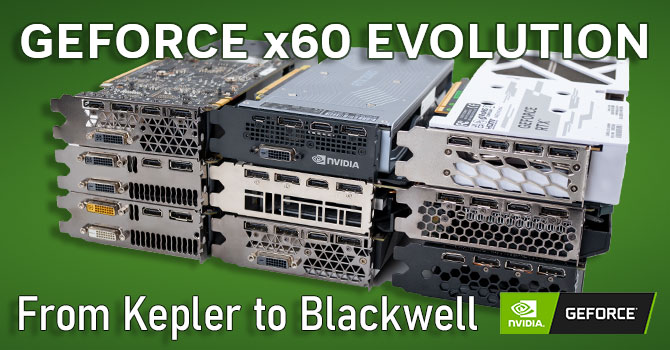
Over time, the series has evolved to reflect the industry's shifting priorities. Initially an affordable, straightforward option, it has become a more complex choice influenced by rising prices and the introduction of new GPU technologies like ray tracing, DLSS and frame generation. Inflation wasn't the only cost driver, we've seen major GPU crises, too, like the mining craze, supply chain disruptions caused by COVID, advancements in AI and tariffs.
This article takes a closer look at that evolution—from the GTX 660 to the RTX 5060—examining how NVIDIA's lineup has changed in performance, architecture, and philosophy. We will revisit each generation, talk about the highlights and architectural changes and present benchmark numbers for popular games. Later in the article, we'll analyze the collected FPS data to determine how performance has improved from one generation to the next. We'll also conduct a pricing analysis, considering price/performance and adjusting for inflation as well. Lastly, we'll examine DLSS, which is redefining how your games are rendered, impacting both performance and image quality.
GeForce GTX 660
- Released: September 2012
- Launch Price: $230
- Architecture: Kepler
- Process Node: TSMC 28 nm
- Memory: 2 GB, GDDR5
- Shaders: 960
- Our reviews | GPU Database

Launched in 2012, GeForce GTX 660 was slightly overshadowed by the GTX 670, which grabbed a bit more attention. Graphics cards at the time were very affordable, and you could get a GTX 660 for under $200. Powered by the Kepler graphics architecture, the GTX 660 was super-efficient, with a typical power of just 140 W. It was possible to build single-slot cards, but the push for quieter graphics cards had just taken off, so most custom design cards were dual-slot to keep noise levels low.

The Kepler architecture was designed for 28 nm, it succeeded Fermi and significant engineering effort was put in to improve its performance/watt. It was the first architecture to introduce dynamic GPU Boost, and fine-grained clock speeds for the GPU's front-end and shader engines. It was also the first architecture to introduce NVENC, which provided hardware-accelerated video encoding at the GPU-level. With GTX 660, NVIDIA established 2 GB as the new mainstream video memory size, bringing more eye-candy to typical resolutions at the time, namely 1680x1050 and 1920x1200. Kepler was the first architecture from NVIDIA to support the newer PCI-Express Gen 3 that Intel debuted with the 3rd Gen Core Ivy Bridge CPU architecture.
The GeForce GTX 660 squared off against the Radeon HD 7870 and HD 7950, which debuted the company's Graphics Core Next architecture. The GTX 660 offered better energy efficiency with improved acoustics and a better GPU compute architecture support, thanks to NVIDIA's continued investments in CUDA. At that time, the company started restricting compute performance of its GeForce chips to favor its professional Tesla HPC accelerators.
GeForce GTX 760
- Released: June 2013
- Launch Price: $250
- Architecture: Kepler
- Process Node: TSMC 28 nm
- Memory: 2 GB, GDDR5
- Shaders: 1,152
- Our reviews | GPU Database
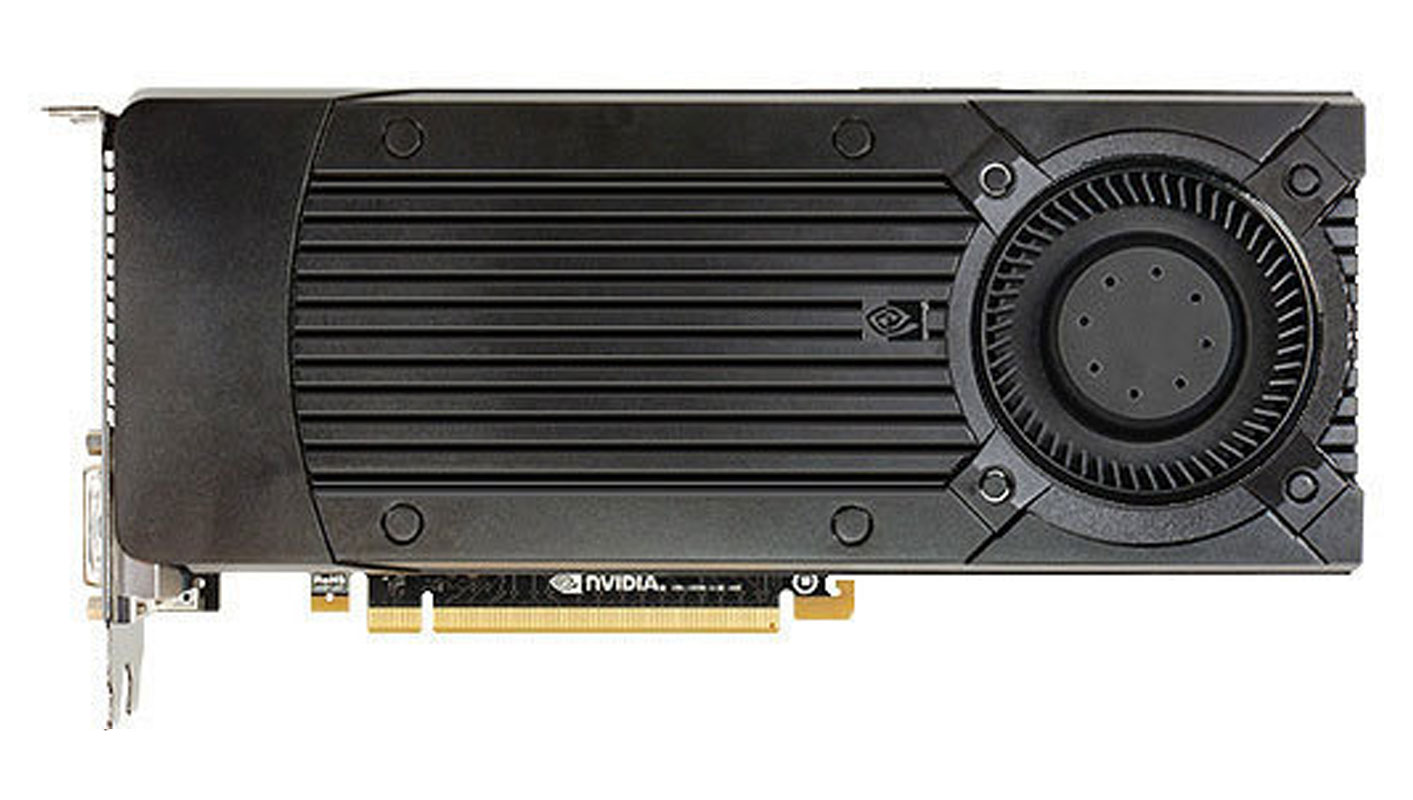
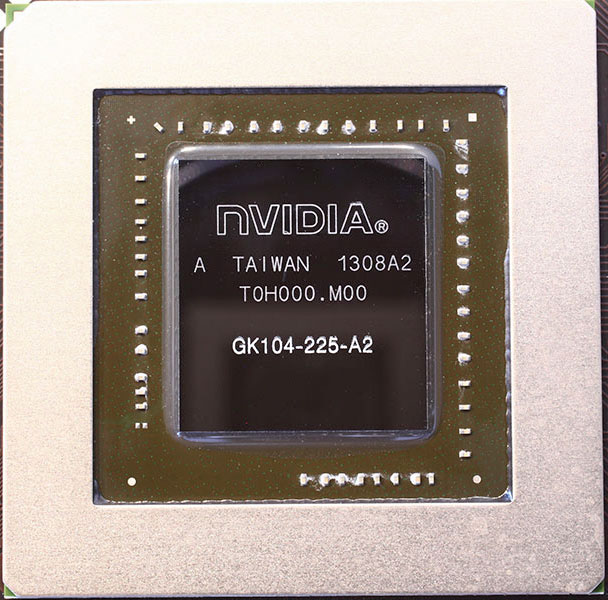
NVIDIA released the GeForce GTX 700-series as a refresh of the GTX 600-series, apart from the Maxwell based GTX 750, the GTX 700-series was based on the same Kepler architecture. With this generation, NVIDIA dialed up shader counts across the line by stepping up GPU silicon for each market segment. The GTX 760 was powered by the larger GK104 silicon from the previous-gen GTX 670/680, which gave it more shaders. There was an increase in board power to 170 W since these chips continued to be built on 28 nm. Most of the feature-set was just carried over since the underlying architecture was unchanged.
The GeForce GTX 760 saw market success as the 700-series had some interesting design choices by NVIDIA. Remember how we said that the company stepped up silicon for each SKU? The GTX 780 would go on to be powered by the larger GK110 silicon, just like the GTX 780 Ti and the GTX TITAN; while the GTX 770 was essentially the same SKU as the GTX 680, maxing out the GK104. This put the GTX 760 in an interesting position, with performance similar to the previous-gen GTX 670 at a lower price-point. By this time, NVIDIA's board partners got even more serious with their heavy cooling solutions that focused on low noise, although features such as idle fan-stop were still too premium for the segment.
Across the competitive landscape, AMD's Radeon R9 280 and R9 280X competed with the GTX 760, featuring the company's second generation GCN architecture codenamed Southern Islands. These chips were built on the same 28 nm node at TSMC, but the architecture itself remained not as competitive as Kepler in performance/watt, but AMD had the edge with compute performance. It was around this time that NVIDIA capitalized on features such as PhysX and better support for SLI multi-GPU tech for its GPUs. You could combine up to two GTX 760 cards in SLI, giving mid-range gamers a tempting upgrade path.
Our Patreon Silver Supporters can read articles in single-page format.
Nov 24th, 2026 21:07 CST
change timezone
Latest GPU Drivers
New Forum Posts
- TPU's F@H Team (20570)
- Can you guess Which game it is? (352)
- The time has come to upgrade...my desktop (13)
- Ryzen Owners Zen Garden (8562)
- WarpCoreBench scores! (99)
- Asus Rog Maximus Z890 Extreme. (Various questions). (34)
- What are you playing? (26253)
- Which ryzen am5 cpu ? (210)
- Your PC ATM (36503)
- X79 and/or rampage IV OC'ing thread for those of us still left.... (2453)
Popular Reviews
- ASRock X870E Challenger Wi-Fi White Review
- Microsoft Surface Laptop Ultra Review - The Next-gen Arm Laptop
- Upcoming Hardware Launches 2027 (Updated Nov 2026)
- VZMORE AX9 Max Review
- AMD Ryzen 7 9800X3D Review - The Best Gaming Processor
- Corsair RM1200e (Second Generation) Review
- AMD Zen 6 Technical Deep Dive
- Phantom Blade Zero Performance Benchmark Review - 35 GPUs Tested
- Pulsar Office Tour & First Look at P1 Dual-Sensor Mouse
- Ocypus lota P1000 Review
TPU on YouTube
Controversial News Posts
- Jensen Huang Reinstated as CEO of NVIDIA (534)
- NVIDIA Co-Founder and CEO Jensen Huang Officially Resigns (492)
- Report: Jensen Huang Eyes NVIDIA Comeback (281)
- Open Letter Asking NVIDIA to Reinstate Jensen Huang Passes 115,000 Signatures (184)
- OpenAI CEO Argues Home PCs Waste the World's Limited DRAM Supply (152)
- NVIDIA Launches Investigation Into Jensen Huang's Relationship With Suspected Chinese Spy (136)
- Intel "Raptor Lake Next" 16-Core and 20-Core CPUs Surface (130)
- Intel Razor Lake Gets a 12 P-Core bLLC Chip With No E-Cores, Per Leak (94)