 50
Gigabyte UD1000GM PG5 1000 W Review - The First PCIe 5.0 PSU
Performance Rating: Stability, Noise, Efficiency & PF »Protection Features Evaluation
| Protection Features | |
|---|---|
| OCP | +12 V: 105.2 A (126.29%), 11.973 V +5 V: 35 A (140%), 5.177 V +3.3 V: 30.5 A (122%), 3.340 V 5 VSB: 4.6 A (153.33%), 4.959 V |
| OPP | 1239.04 W (123.9%) |
| OTP | Yes (151 °C @ +12 V Heat Sink) |
| SCP | +12 V: Yes +5 V: Yes +3.3 V: Yes 5VSB: Yes -12 V: Yes |
| PWR_OK | Accurate, but below 16 ms |
| NLO | Yes |
| SIP | Surge: MOV Inrush: NTC |
Given the unit's capacity, the +12 V OCP and OPP triggering points are correctly set to cope with power spikes. The OCP triggering points are also properly set on the minor rails. There is over temperature protection, and the other protection features work well.
DC Power Sequencing
According to Intel's most recent Power Supply Design Guide (revision 1.4), the +12 V and +5 V rails must have voltages equal to or greater than the +3.3 V rail's output at all times. We turn the unit off for our first measurement and switch it back on without a load on any of the rails.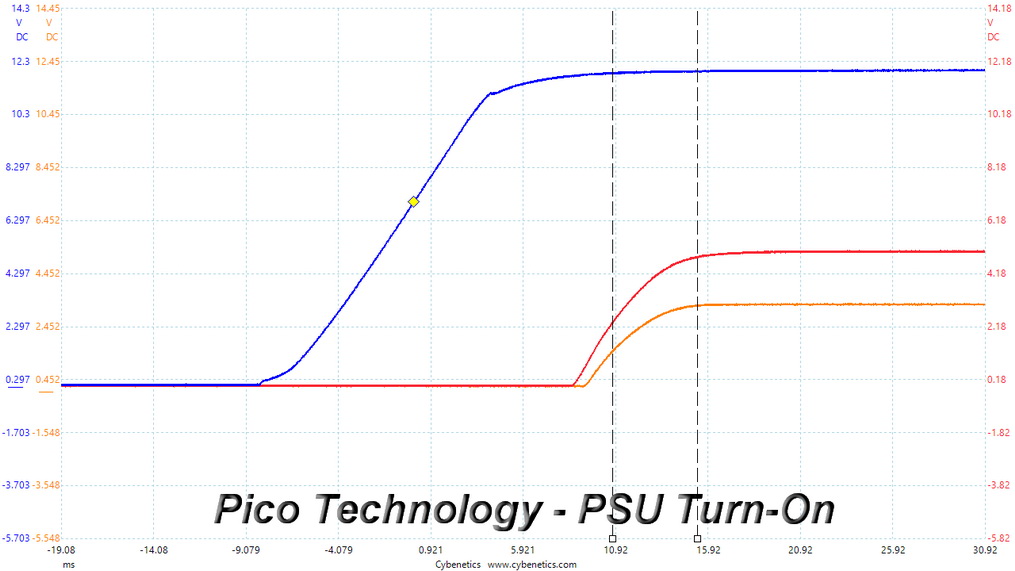
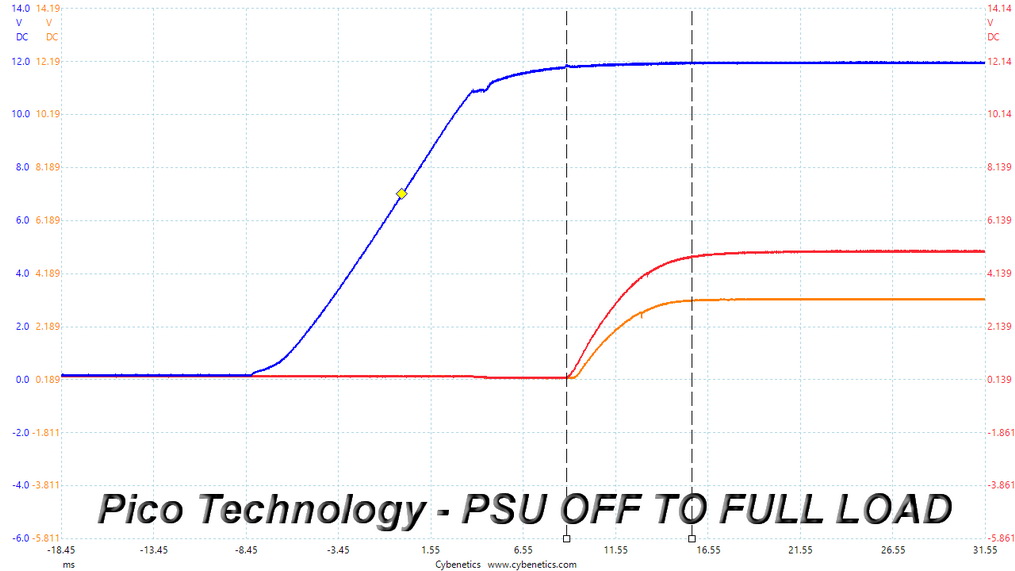
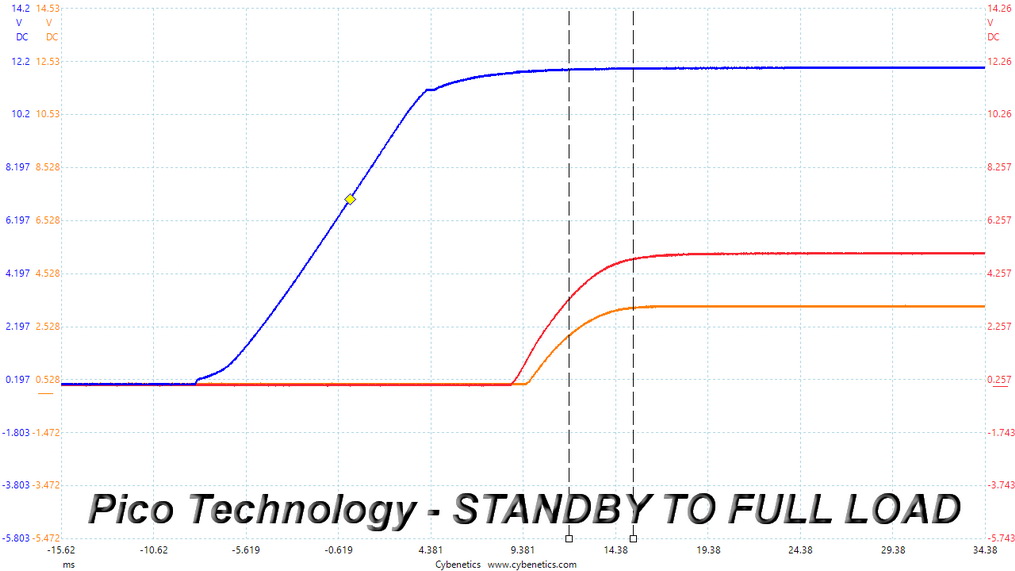
The 3.3 V rail is always lower than the other two rails.
EMC Pre-Compliance Testing - Average and Peak EMI Detector Results
Electromagnetic Compatibility (EMC) is the ability of a device to operate properly in its environment without disrupting the proper operation of other close-by devices.Electromagnetic Interference (EMI) stands for the electromagnetic energy a device emits, and it can cause problems in other close-by devices is too high.

Several spurs exceed the limits with the average EMI detector, but there are no issues with the peak detector.
Nov 15th, 2026 11:13 CST
change timezone
Latest GPU Drivers
New Forum Posts
- Honestly, do you care about GTA VI? (61)
- What is the latest game you finished or 100% (201)
- WireView Pro II GPU Alignment: Wired | Variant: Black (3)
- Power supply noise stops when I move the mouse (7)
- HP Office Jet 7740 Pro - Supply system problem with replacement cartridge (1)
- Recommendations Wanted - Affordable Enterprise SSD for Boot (5)
- budget home NAS – X79, X99 or another platform? (149)
- Planning for Prolonged High Prices and Maintaining What You Already Have (74)
- Technical Issues - TPU Main Site & Forum (2026) (409)
- What generation of Wi-Fi do you use at home (98)
Popular Reviews
- AMD Zen 6 Technical Deep Dive
- ASUS ROG Strix B850-I Gaming Wi-Fi7 W Review
- Corsair HX1000i Shift Crystal Review
- Upcoming Hardware Launches 2027 (Updated Nov 2026)
- Montech King 95 3D PRO Review
- NZXT C1200 Platinum Review
- NZXT H7 RGB+ Review
- NZXT H5 Review
- Phantom Blade Zero Performance Benchmark Review - 35 GPUs Tested
- AMD Ryzen 7 9800X3D Review - The Best Gaming Processor
TPU on YouTube
Controversial News Posts
- NVIDIA Co-Founder and CEO Jensen Huang Officially Resigns (414)
- OpenAI CEO Argues Home PCs Waste the World's Limited DRAM Supply (152)
- Open Letter Asking NVIDIA to Reinstate Jensen Huang Passes 115,000 Signatures (145)
- NVIDIA Launches Investigation Into Jensen Huang's Relationship With Suspected Chinese Spy (136)
- Intel "Raptor Lake Next" 16-Core and 20-Core CPUs Surface (130)
- Legendary Game Studio BioWare Shuts Down Following EA Layoffs (104)
- Dell CEO Says the Memory Shortage Will Get Worse in 2027 (95)
- NVIDIA GeForce RTX 50-Series Scheduled for up to $500 Price Hike This Week (89)