 11
InWin P125 1250 W Power Supply Review
(11 Comments) »Introduction

We would like to thank InWin for supplying the review sample.

InWin's P series consists of five models with capacities ranging from 650 W to 1250 W. All are fully modular with flat cables and use high-quality Japanese capacitors for increased reliability. Moreover, the cooling fan uses a fluid dynamic bearing, a common choice for high-end PSUs. InWin used to have its own PSU production line, but it is more affordable to outsource production for lower quantities, which is why it cooperated with High Power for its P series models. This OEM is usually not that competitive with high-end designs, so I am eager to check on how the P125 featuring 1250 W maximum power output will perform in my extensive testing.
The P125 might not be as powerful as the SilverStone HELA 2050 I reviewed previously; however, 1250 W is enough to handle everything from currently available GPU generations. If you plan on using an Intel i9-12900K or AMD Ryzen 9 5950x and have the money to get an NVIDIA RTX 3090, the P125 will be more than enough. If you decide to wait for the RTX 3090 Ti, you won't have the 12 or 12 + 4 pin connector it will most likely use. Moreover, next-generation NVIDIA GPUs will come with 12 + 4 pin connectors, which will be problematic for current-generation PSUs. Besides different cabling, other changes will also be required to meet their power needs. After a long period of rather minor changes to the ATX12V specification, Intel will implement a few drastic ones, including for the new ATX12VO specification.
Specifications
| Features & Specifications | |
|---|---|
| Max. DC Output | 1250 W |
| PFC | Active PFC |
| Efficiency (230V) | 80 PLUS Gold, Cybenetics Platinum (91–93%) |
| Noise | Cybenetics Standard+ (35–40 dBA) |
| Modular | Yes (fully) |
| Intel C6/C7 Power State Support | Yes |
| Operating Temperature | 0–40 °C |
| Protections | Over Voltage Protection Under Voltage Protection Over Power Protection Over Temperature Protection Over Current Protection Short Circuit Protection |
| Cooling | 135mm fluid dynamic bearing fan (RL4Z S1352512HH) |
| Semi-passive Operation | Yes |
| Dimensions (W x H x D) | 150 x 85 x 160 mm |
| Weight | 1.88 kg (4.14 lb) |
| Compliance | ATX12V v2.52, EPS 2.92 |
| Warranty | 5 years |
| Price at Time of Review (excl. VAT) | $249 |
| Power Specifications | |||||||
|---|---|---|---|---|---|---|---|
| Rail | 3.3 V | 5 V | 12 V | 5 VSB | -12 V | ||
| Max. Power | 22 A | 22 A | 104.1 A | 3 A | 0.3 A | ||
| 120 W | 1250 W | 15 W | 3.6 W | ||||
| Total Max. Power | 1250 W | ||||||
Photos


At the face of the box is the PSU's model number and a series of badges depicting various features, including the Gold efficiency certification. The back offers up more information about the PSU.


Protection inside the box is good, and the PSU is also wrapped in plastic.


The bundle includes fixing bolts, zip ties, and a piece of paper with a QR code for the user manual.


The fan grille could be less restrictive for better airflow. The exhaust/front utilizes a typical honeycomb grille, and the power switch and C14 AC receptacle have also been placed here. For a 1250 W PSU, I would like to see a C20 receptacle instead.


The power specifications label has been put on the bottom of the PSU. On the sides, a sticker describes the model number and capacity.


The modular panel is not very user-friendly. The connectors in the middle sockets are impossible to remove if you don't remove the bottom ones first. With room to spare, the modular sockets could be installed spaced further apart as a solution to this problem.


Measuring only 160 mm deep, this PSU is compact for the capacity.


Some more photos of the PSU from various angles.
Cables and Connectors
| Modular Cables | ||||
|---|---|---|---|---|
| Description | Cable Count | Connector Count (Total) | Gauge | In-Cable Capacitors |
| ATX connector 20+4 pin (650 mm) | 1 | 1 | 18-22AWG | No |
| 4+4 pin EPS12V (660 mm) | 2 | 2 | 16AWG | No |
| 6+2 pin PCIe (600 mm+100 mm) | 4 | 8 | 16-18AWG | No |
| SATA (550 mm+100 mm+100 mm+100 mm) | 3 | 12 | 18AWG | No |
| 4-pin Molex (555 mm+100 mm+100 mm+100 mm) | 1 | 4 | 18AWG | No |
| FDD Adapter (155 mm) | 1 | 1 | 22AWG | No |
| AC Power Cord (1770 mm) - C13 coupler | 1 | 1 | 14AWG | No |


The ATX cable is long at 650 mm, and the same goes for the EPS and PCIe connectors. Overall, plenty of connectors are available, which makes sense since we are talking about 1250 W of power. The EPS and PCIe cables use 16AWG gauges for lower voltage drops. Having no in-cable caps is nice since it makes the cables more flexible.


The only thing I dislike is the short distance between peripheral connectors.
Component Analysis
Before reading this page, we strongly suggest looking at this article, which will help you better understand the insides of a PSU.| In Win P125 Parts Description | |
|---|---|
| General Data | |
| Manufacturer (OEM) | High Power |
| PCB Type | Double-sided |
| Primary Side | |
| Transient Filter | 4x Y caps, 2x X caps, 2x CM chokes, and 1x MOV |
| Bridge Rectifier(s) | 2x HY GBU2506L (600 V, 25 A @ 100 °C) |
| Inrush Current Protection | NTC Thermistor & Relay |
| APFC MOSFETs | 2x Infineon IPW60R099P7 (600 V, 20 A @ 100 °C, Rds (on): 0.099 ohm) |
| APFC Boost Diode | 2x CREE C3D06060A (600 V, 6 A @ 154 °C) |
| Bulk Cap(s) | 2x Rubycon (400 V, 820 uF each or 1,640 uF combined, 3,000 h @ 105 °C, MXK) |
| Main Switchers | 2x Infineon IPA60R080P7 (600 V, 23 A @ 100 °C, Rds (on): 0.08 ohm) |
| APFC Controller | Infineon ICE3PCS01G |
| Switching Controller | Champion CM6901X |
| Topology | Primary Side: APFC, half-bridge & LLC converter Secondary Side: synchronous rectification & DC-DC converters |
| Secondary Side | |
| +12 V MOSFETs | 8x Toshiba TPHR8504PL (40 V, 150 A, Rds (on): 0.85 mOhm) |
| +5 V & +3.3 V | DC-DC Converters: 5x Infineon BSC0906NS (30 V, 40 A @ 100 °C, Rds (on): 4.5 mOhm) PWM Controller:ANPEC APW7159C |
| Filtering Capacitors | Electrolytic: Polymer: |
| Supervisor IC | Weltrend WT2527RA (OCP, OVP, UVP, SCP, and PG) |
| Fan Controller | STC15W408AS |
| Fan Model | Globe Fan RZ4L S1352512HH (135 mm, 12 V, 0.45 A, fluid dynamic bearing fan) |
| 5VSB Circuit | |
| Rectifier(s) | 1x MPVA04N65B (600 V, 4 A, Rds (on): 2.5 ohm) FET & 1x 45R15C SBR |
| Standby PWM Controller | SI8016HSP8 |
| -12V | |
| Rectifier(s) | 1x KEC KIA7912PI |


High Power provides the platform, and it does not look impressive, primarily because the modular board is connected to the main PCB through cables, of which there are many, increasing energy losses and blocking airflow. This technique is outdated. Despite the small PCB and increased capacity, the board is not densely populated, helping airflow. Lastly, the heatsinks are small, especially on the secondary side. All in all, High Power used quality parts, and soldering quality is good.
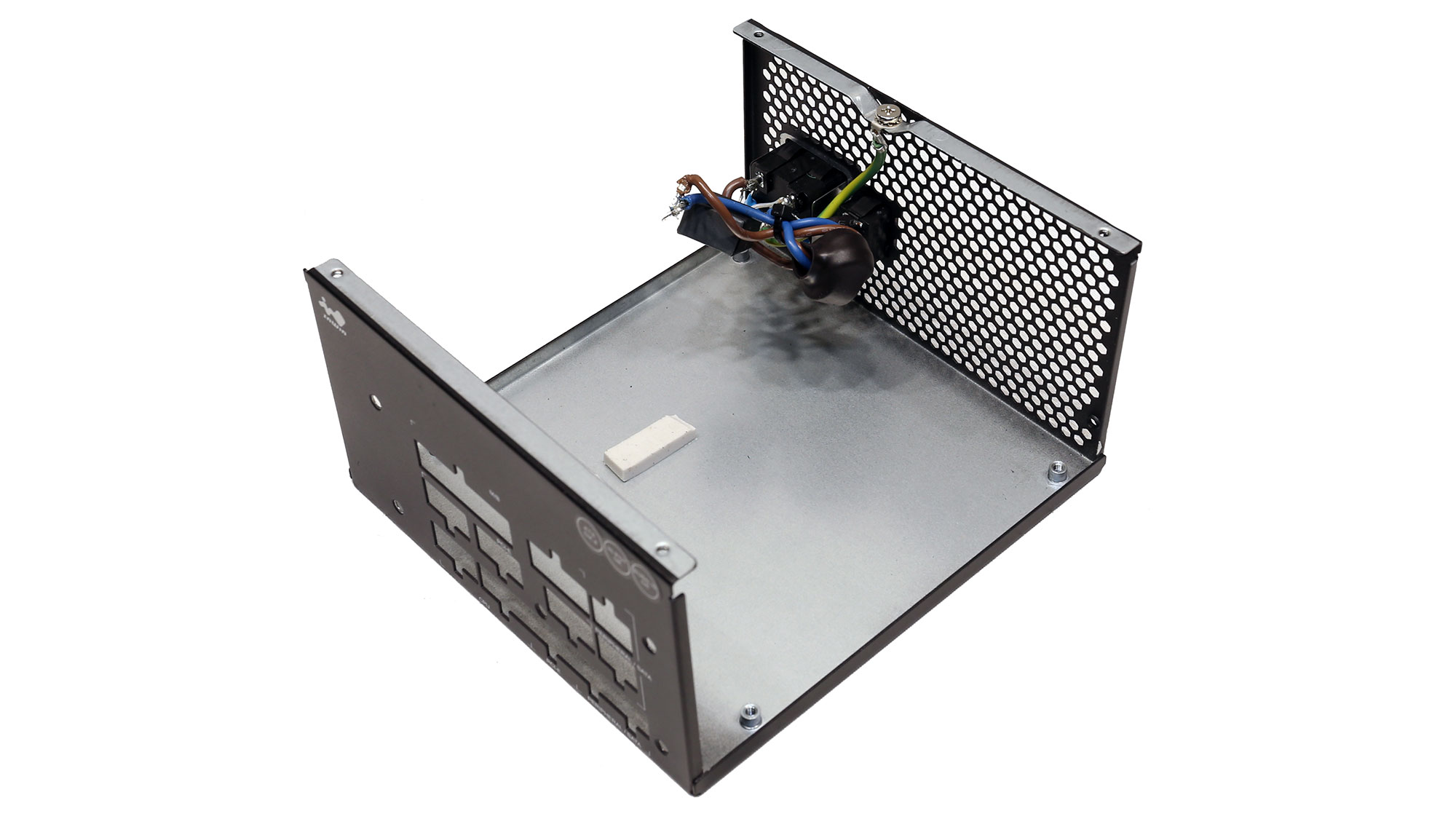
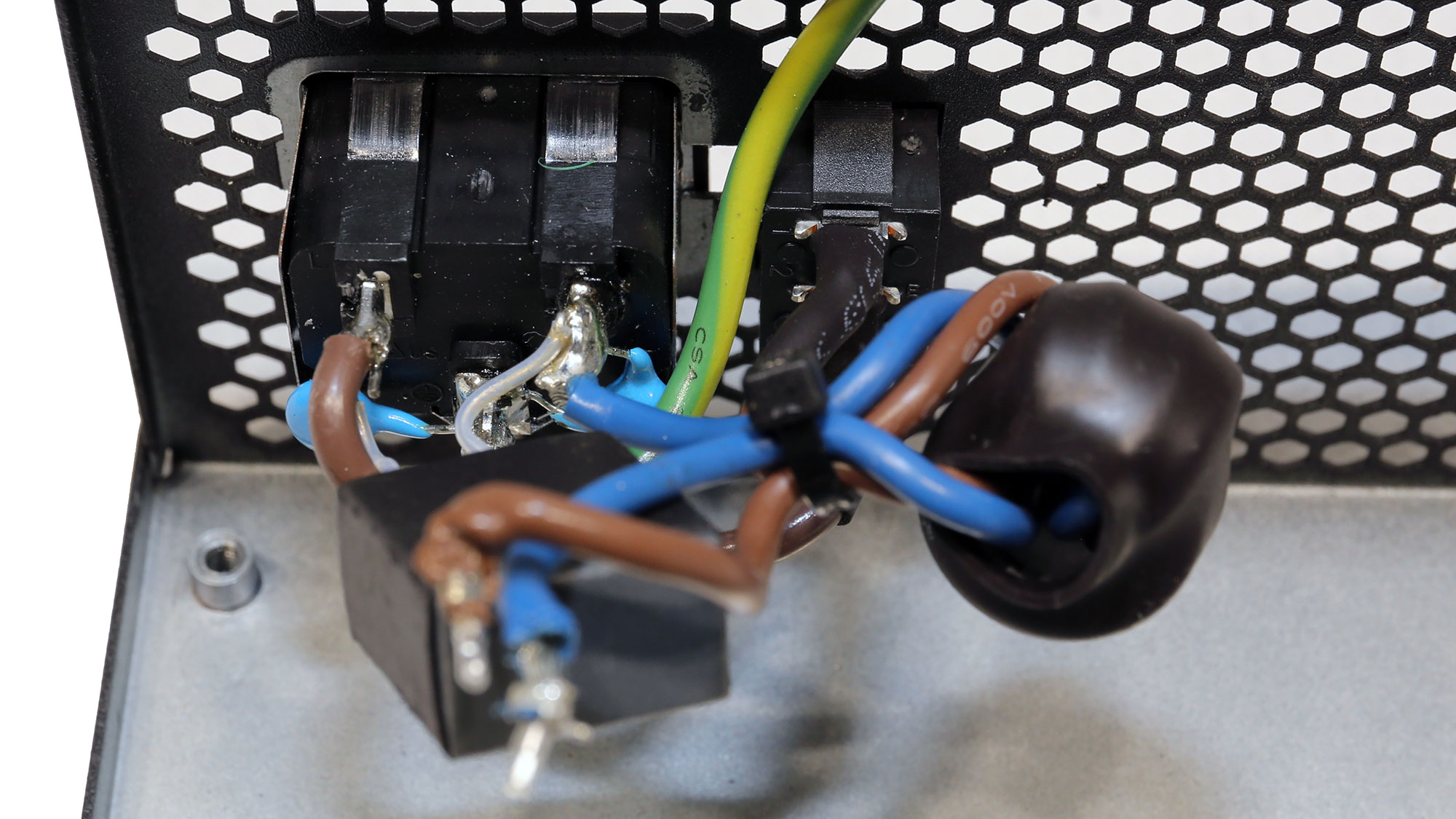

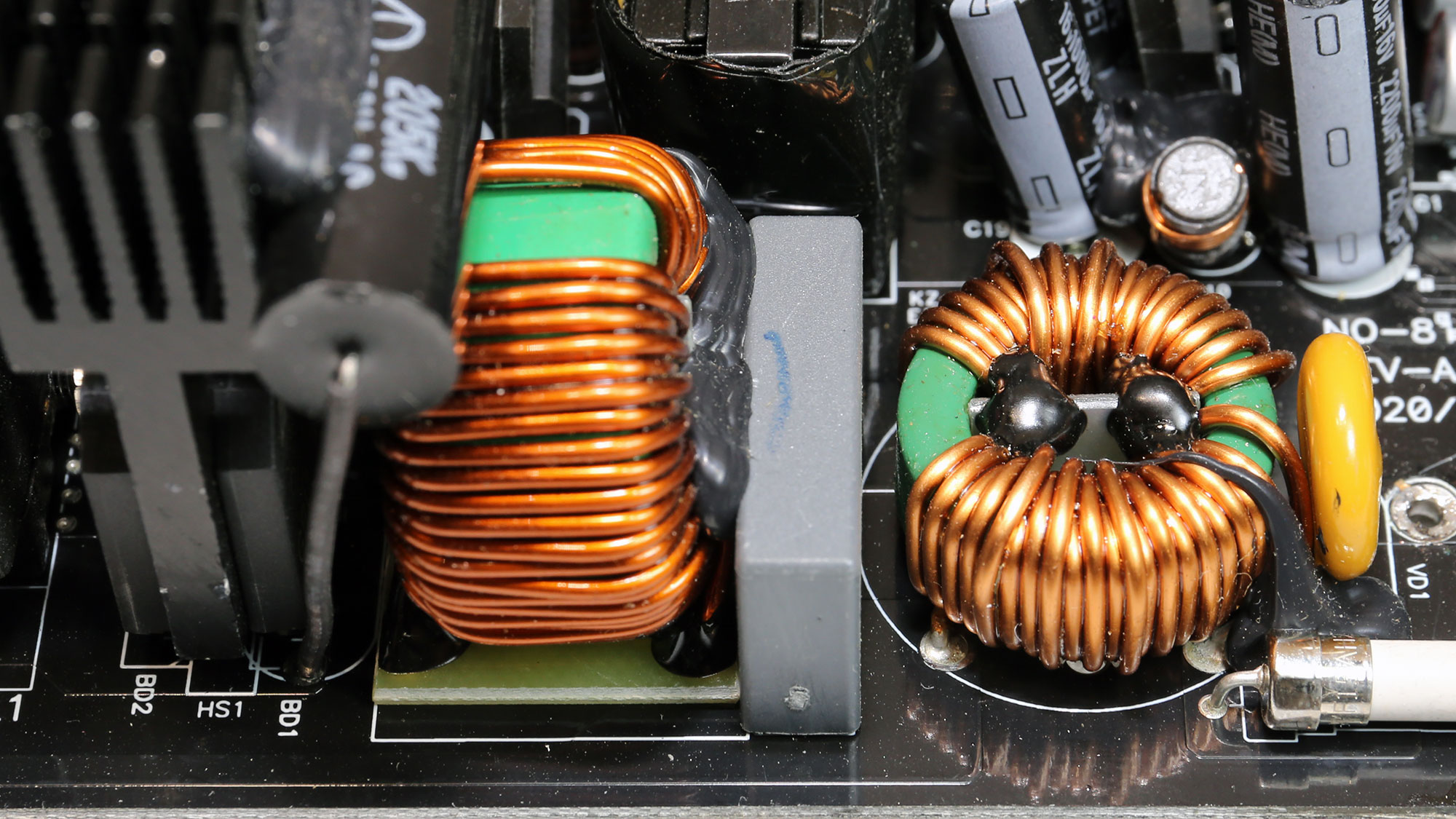
The transient filter starts on the AC receptacle, and its second part is on the main PCB. It does an excellent job.
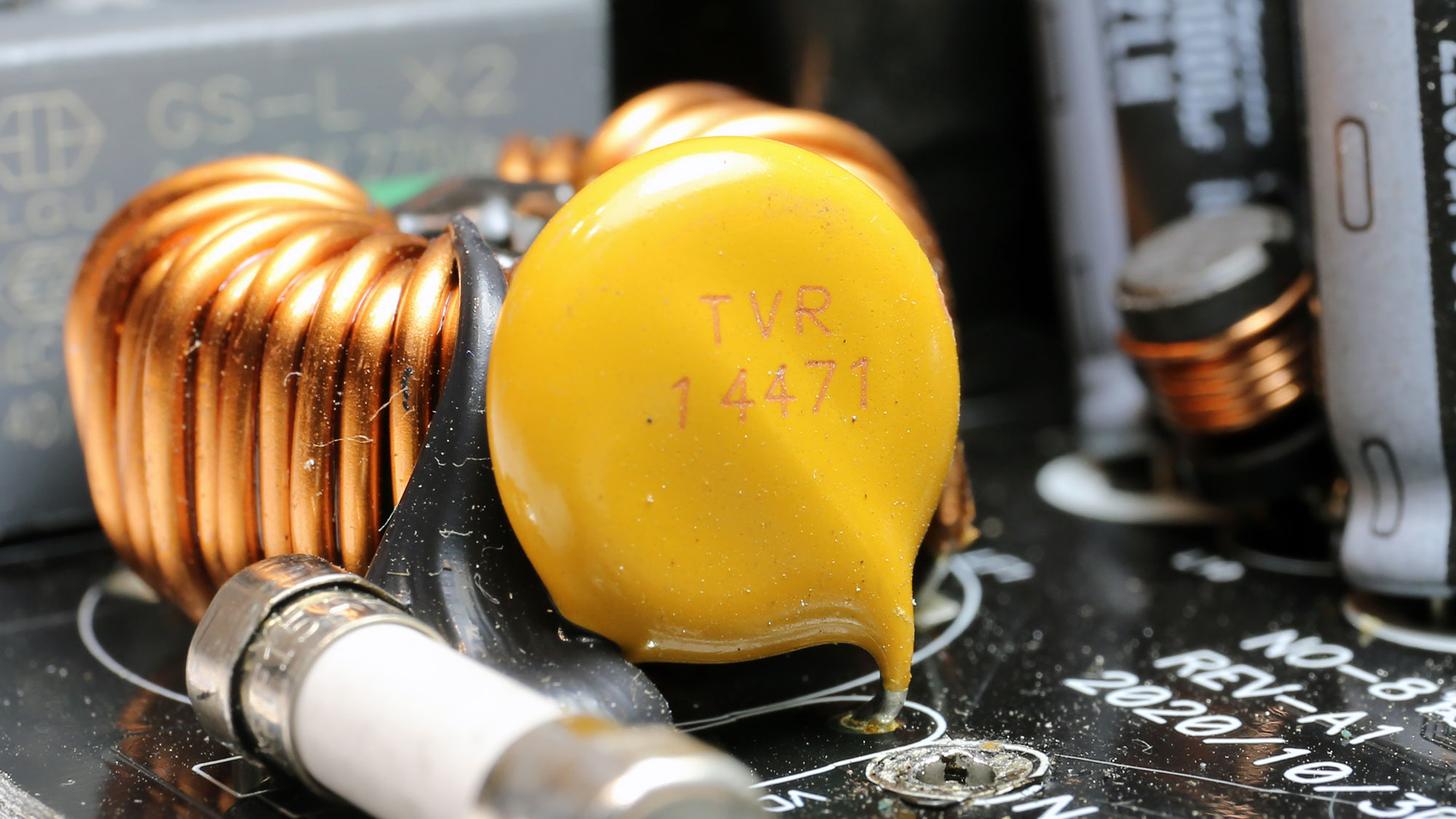
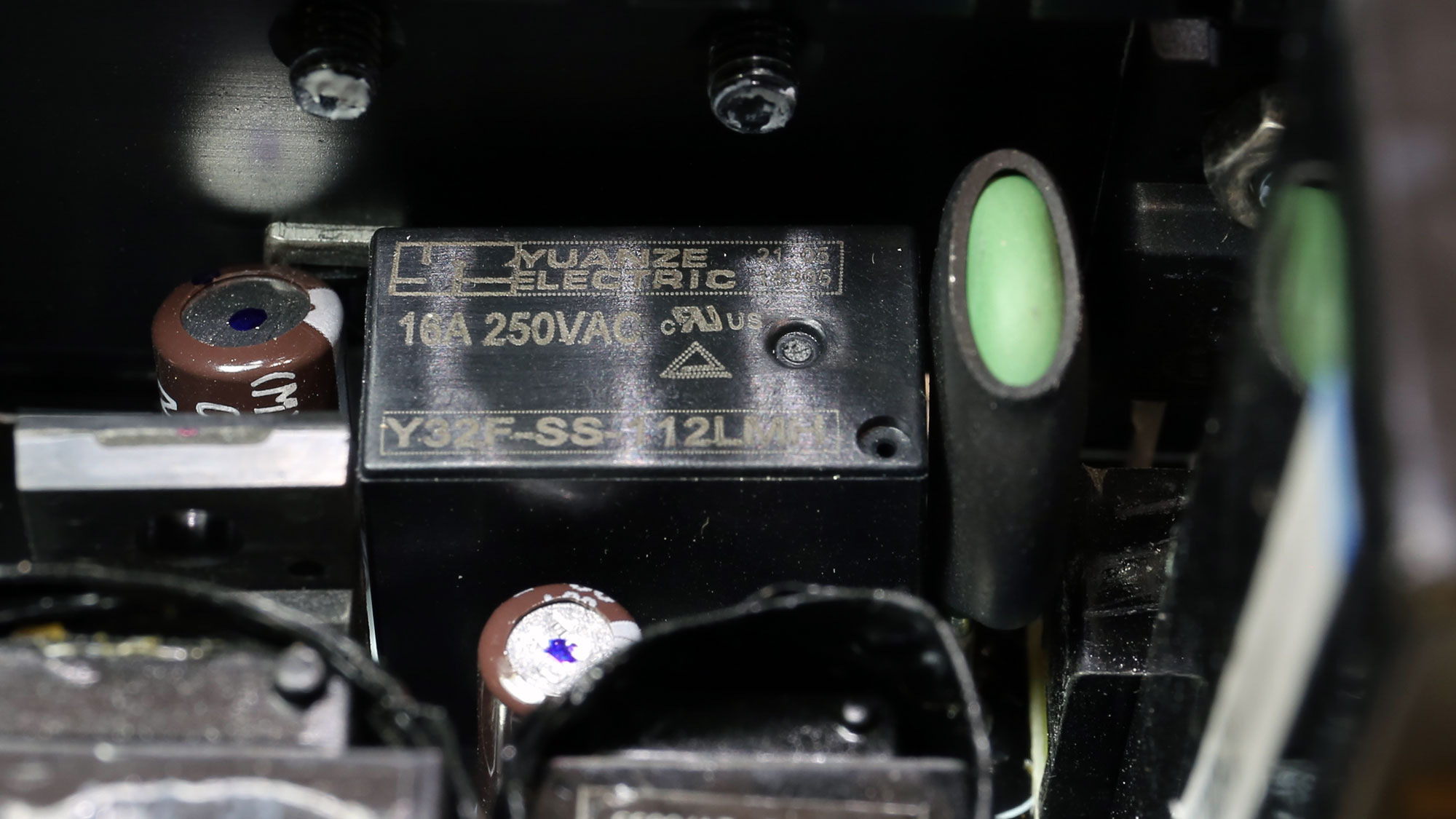
Two metal oxide varistors (MOV) handle voltage surges, while an NTC thermistor suppresses large inrush currents. A bypass relay supports the latter.

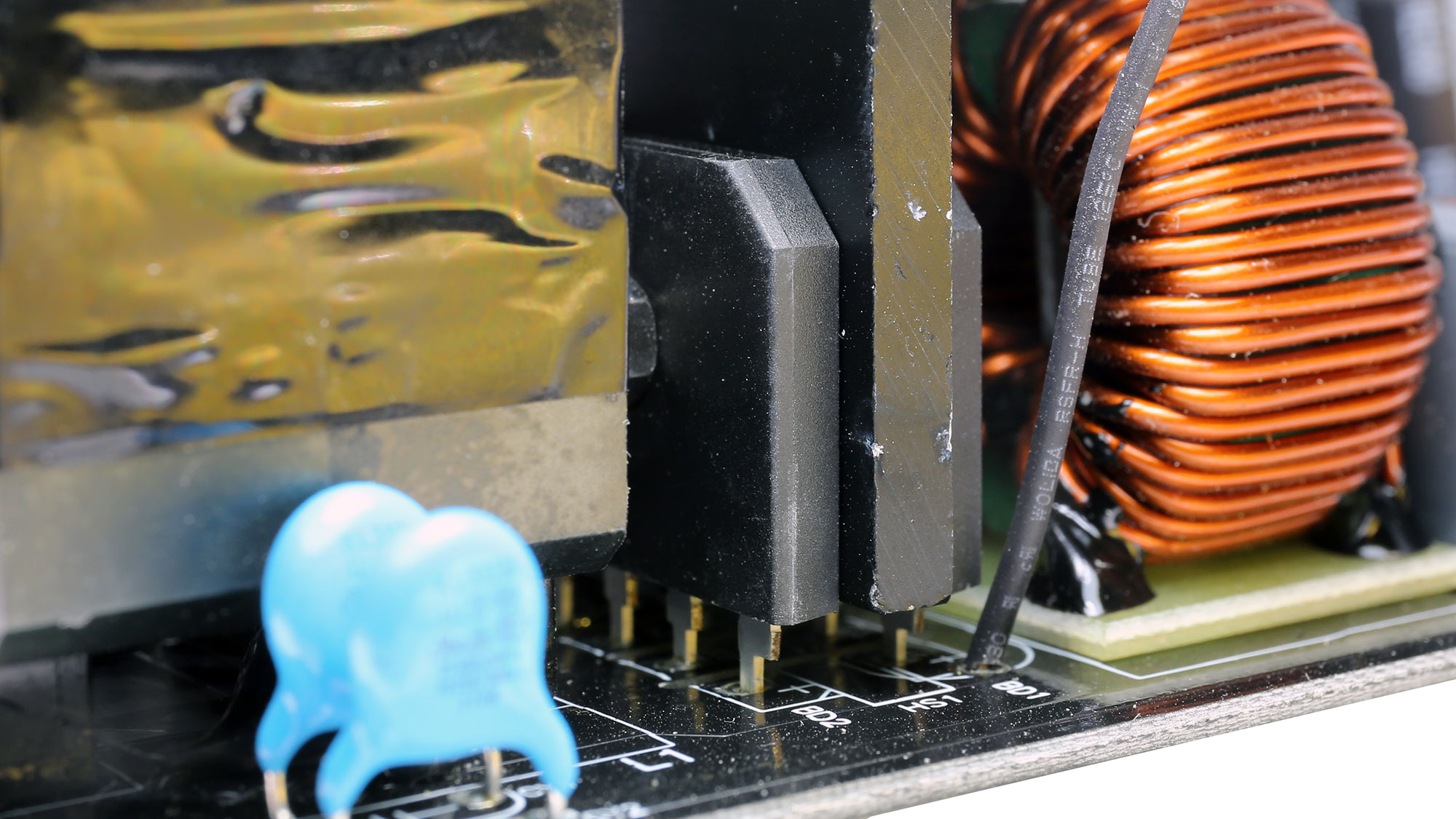
The bridge rectifiers are bolted to the primary heatsink. Combined, they can handle up to 40 A of current.

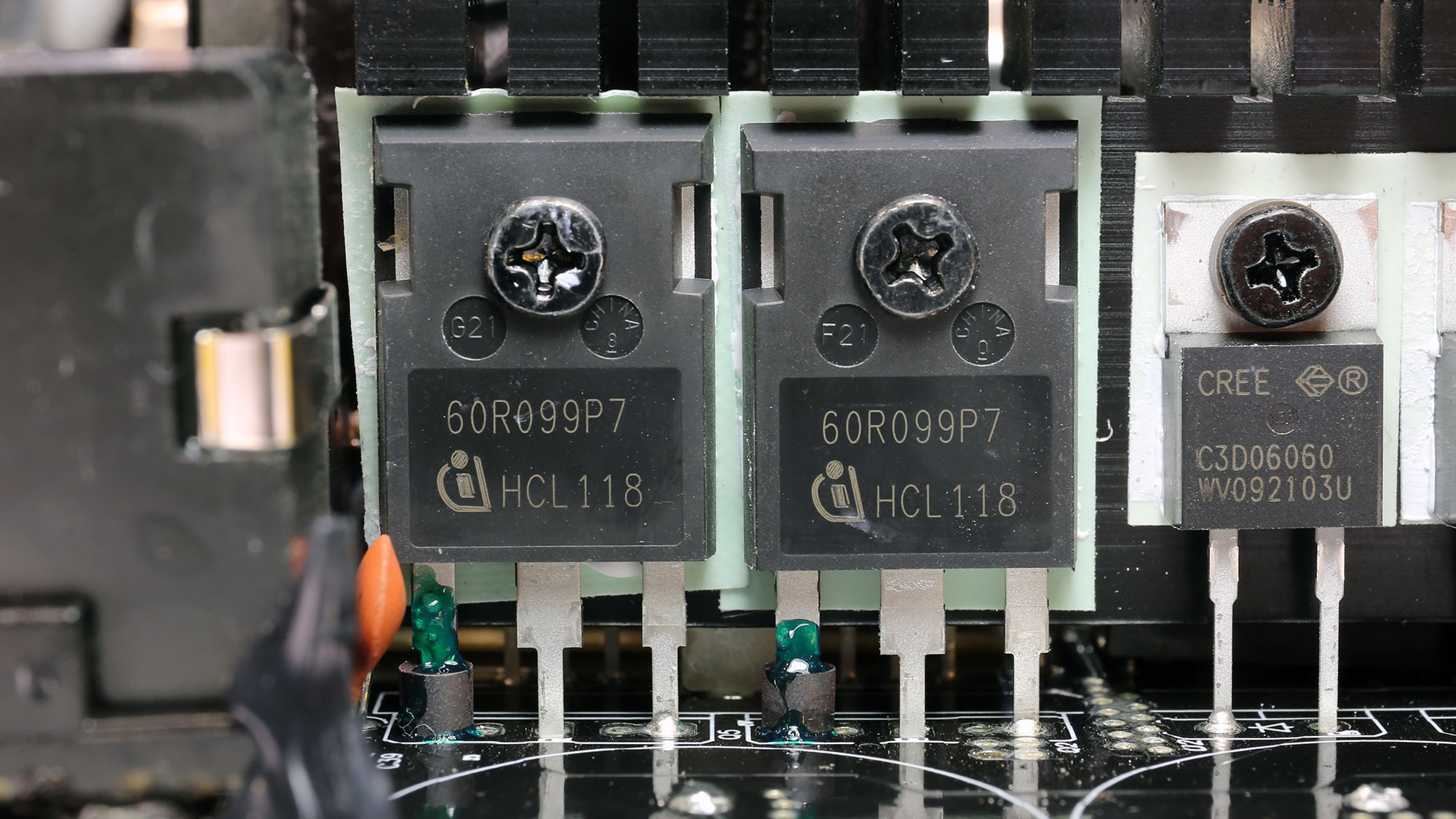
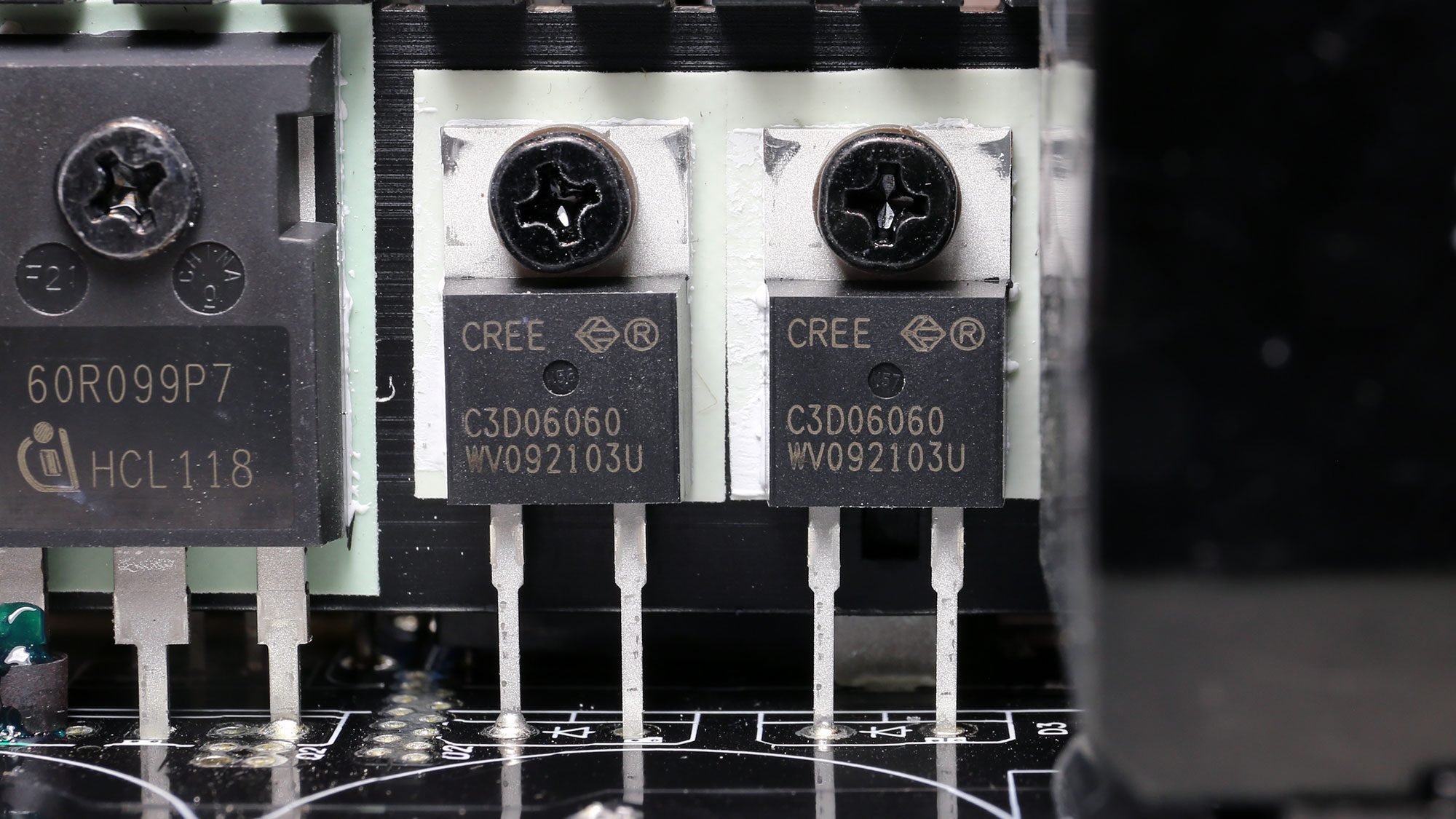
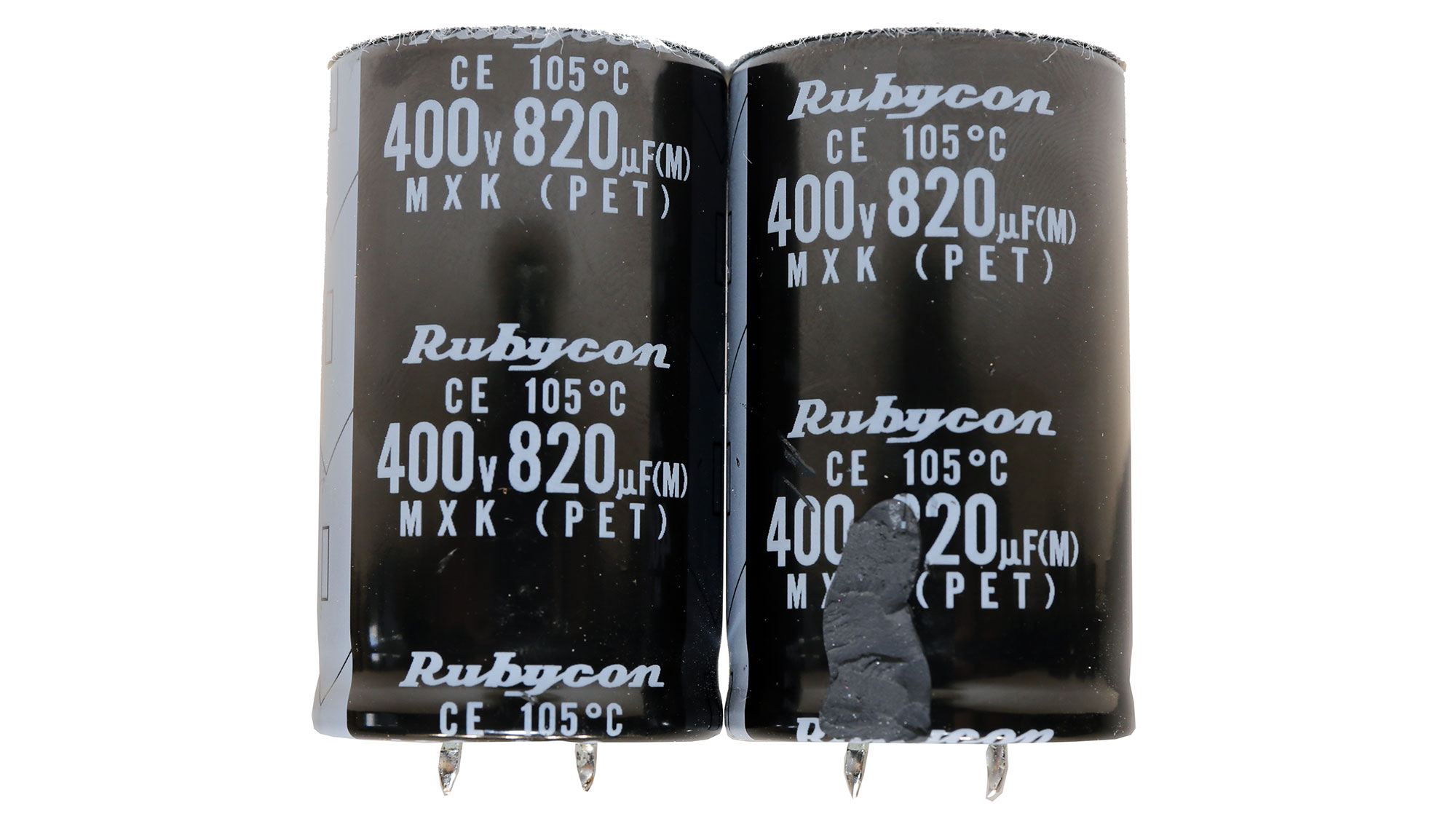
The APFC converter uses two Infineon FETs and two CREE boost diodes. The bulk caps are by Rubycon and offer 1640uF combined capacity. They are rated for 3,000 h at 105 °C, so their quality is topnotch.

The APFC controller is an Infineon ICE3PCS01G.
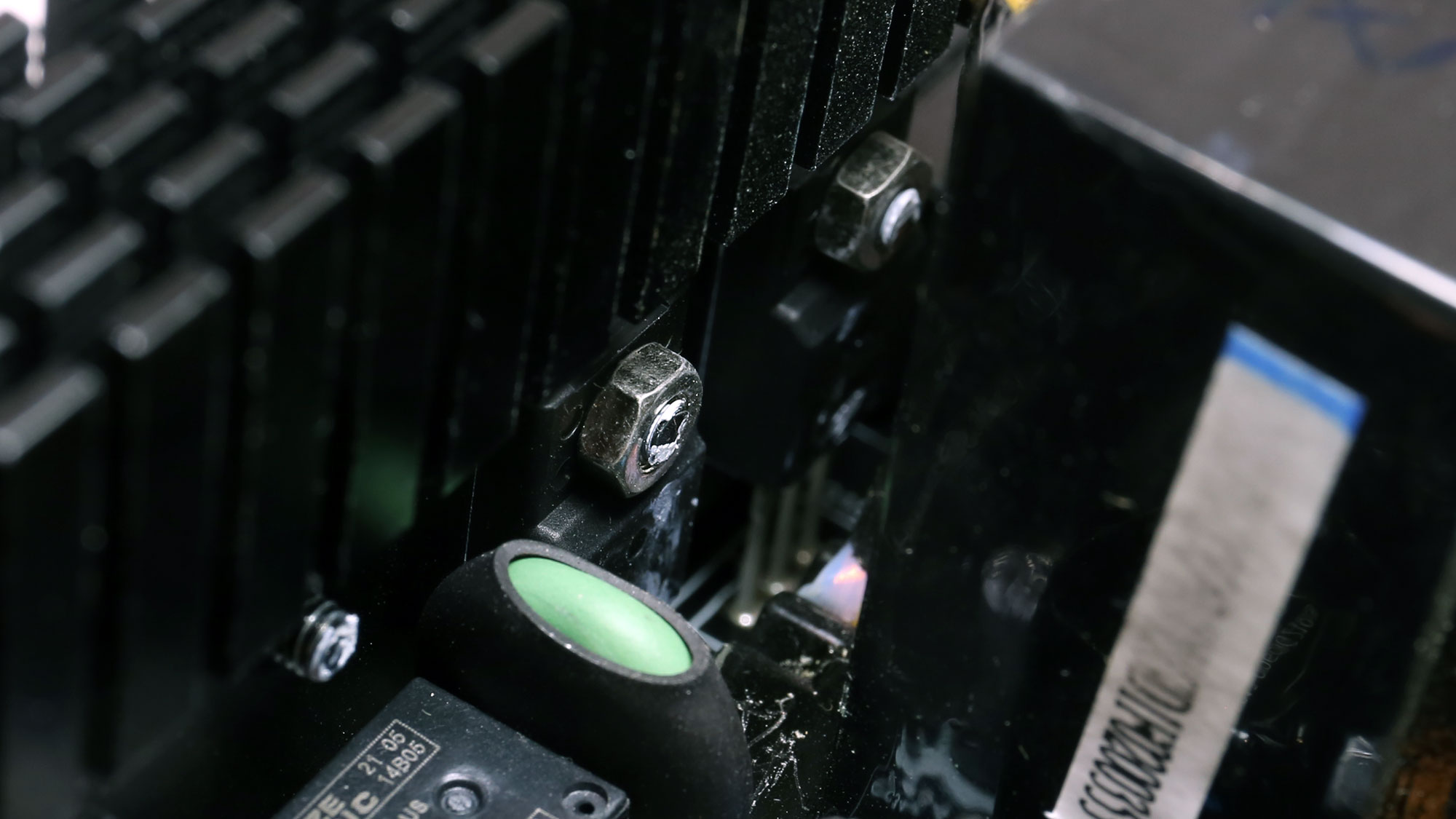
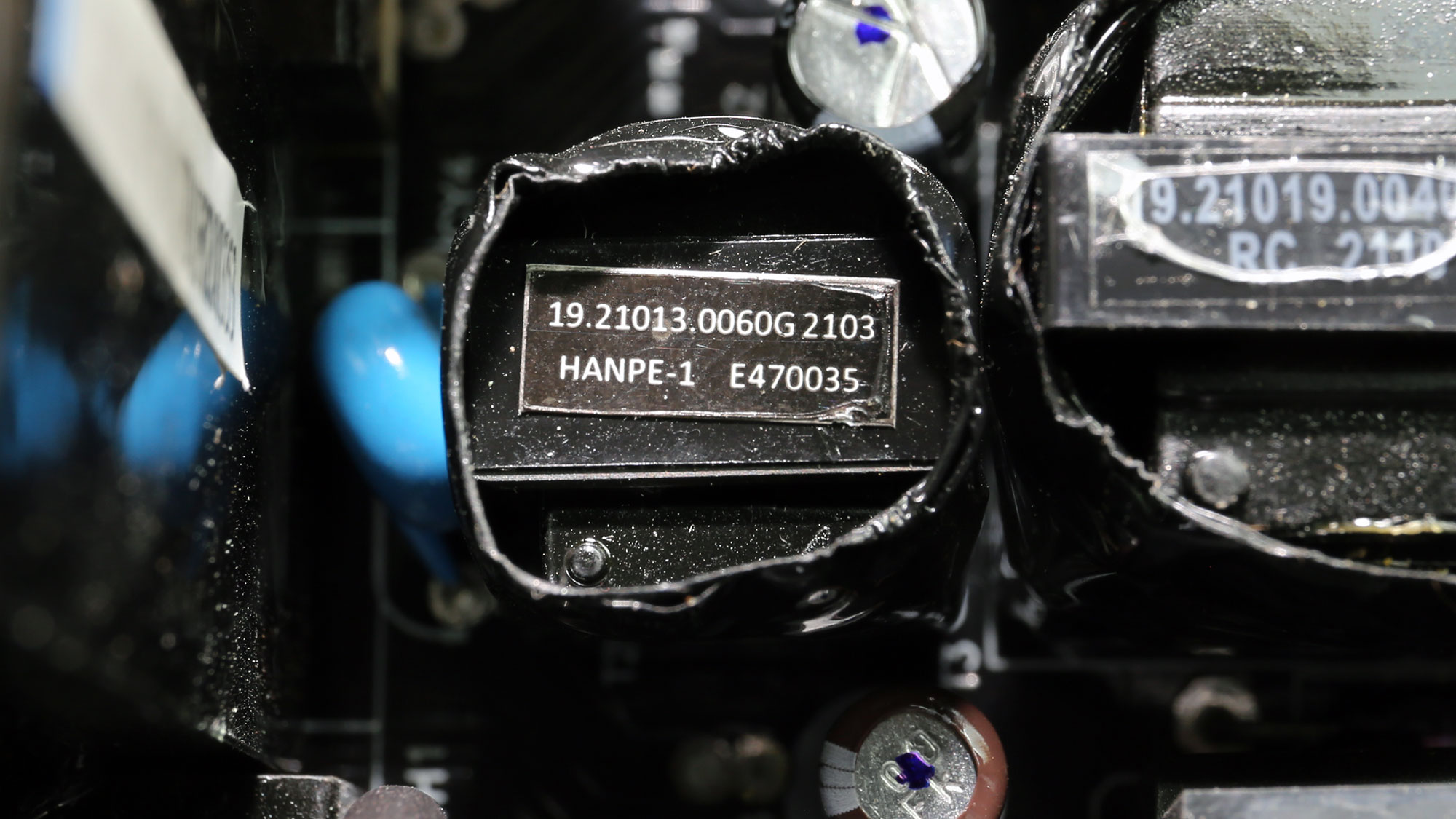
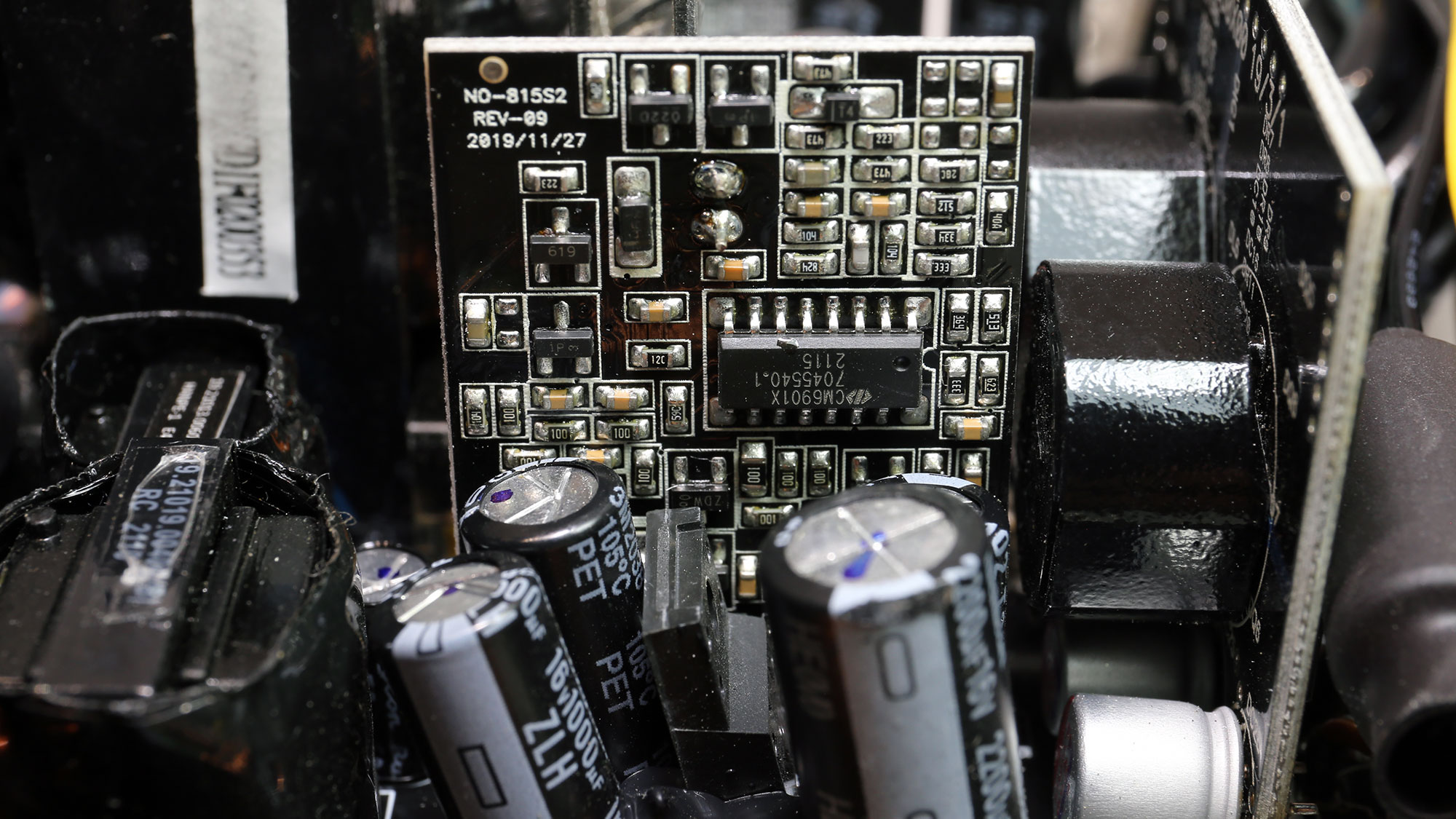
The two main switching FETs are installed in a half-bridge topology, and an LLC resonant converter is used for higher efficiency. The resonant controller is a Champion CM6901X.
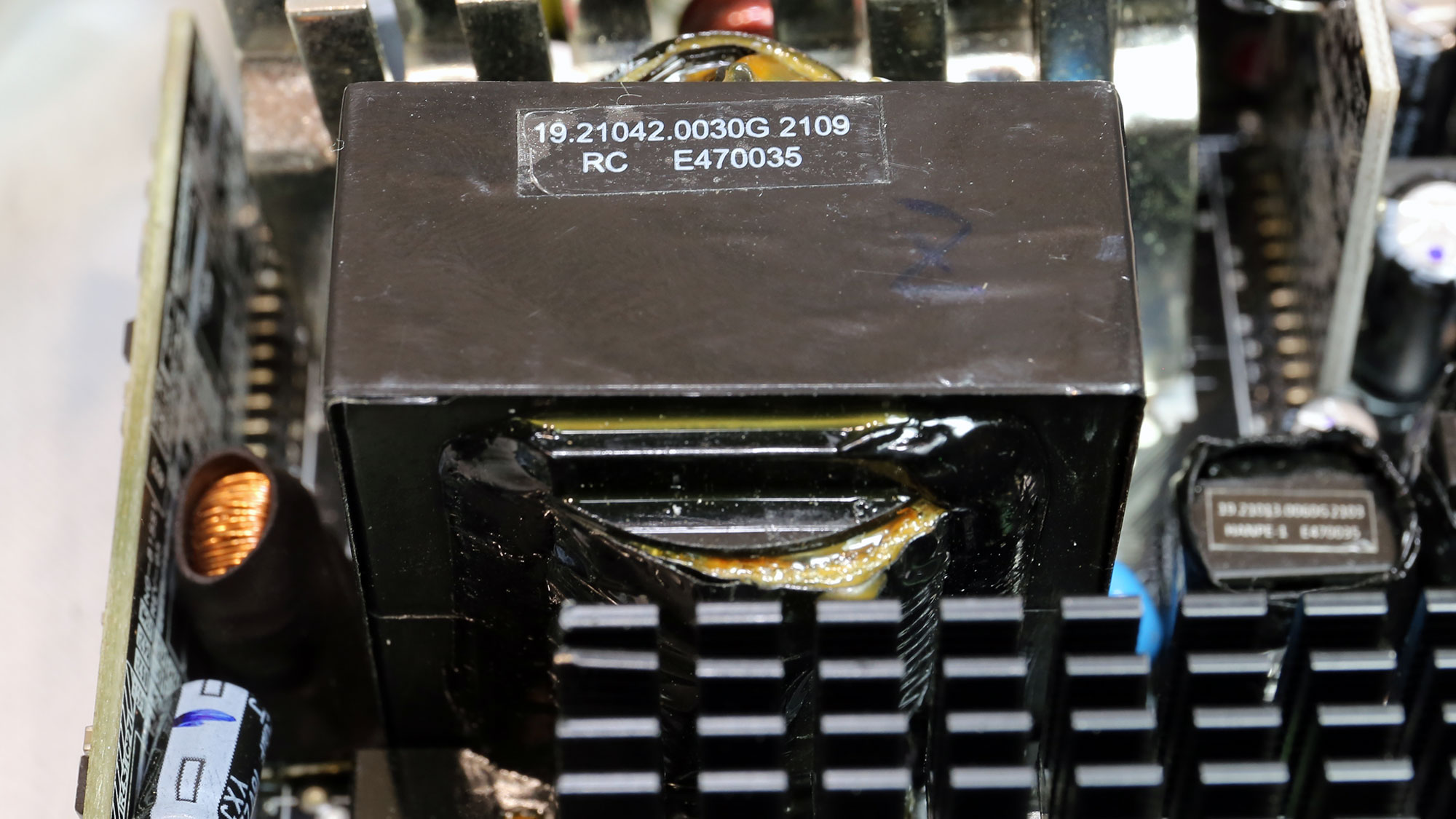
The main transformer lowering the voltage output of the primary side. It also provides electrical isolation between the primary and secondary sides.
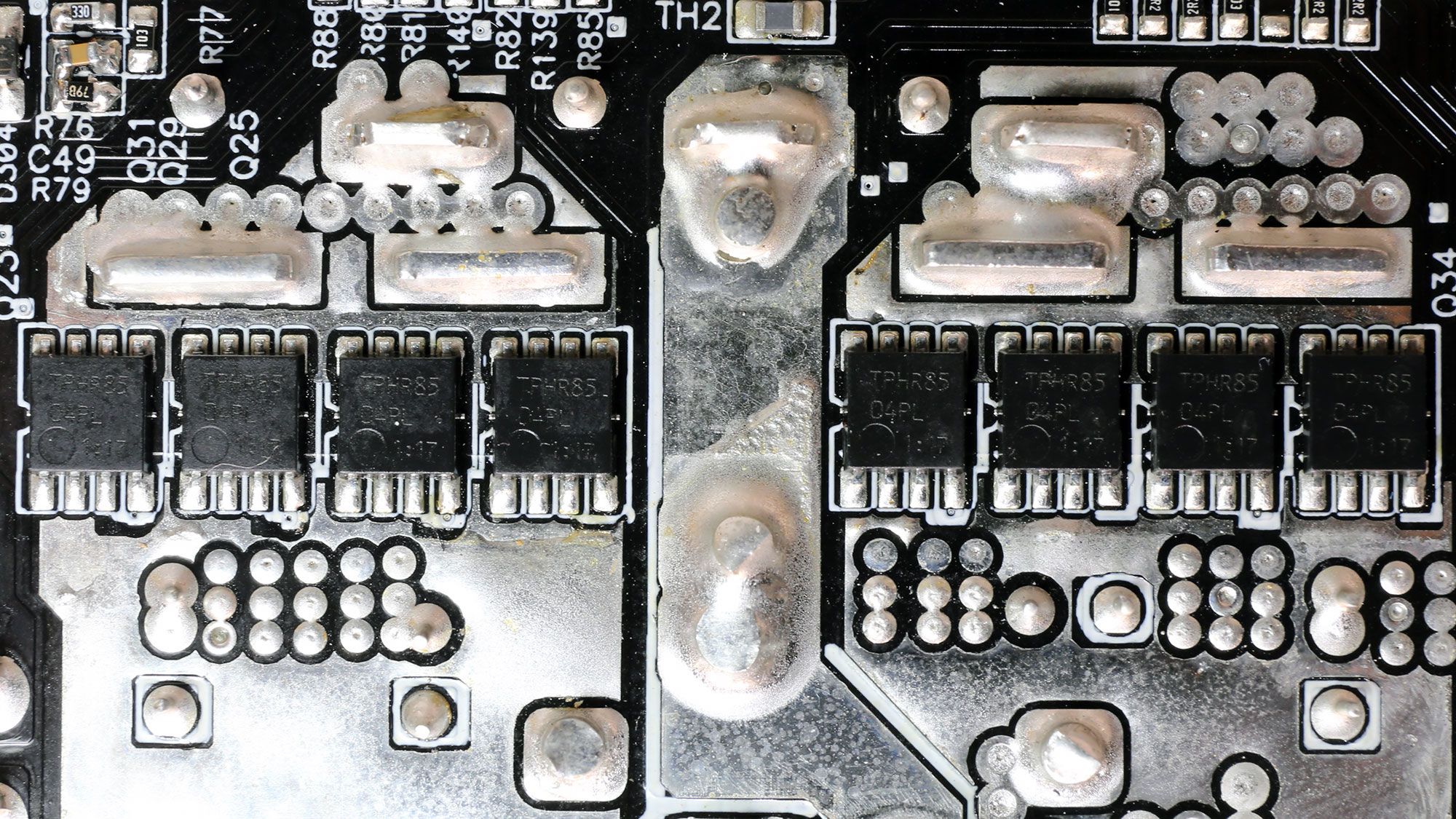
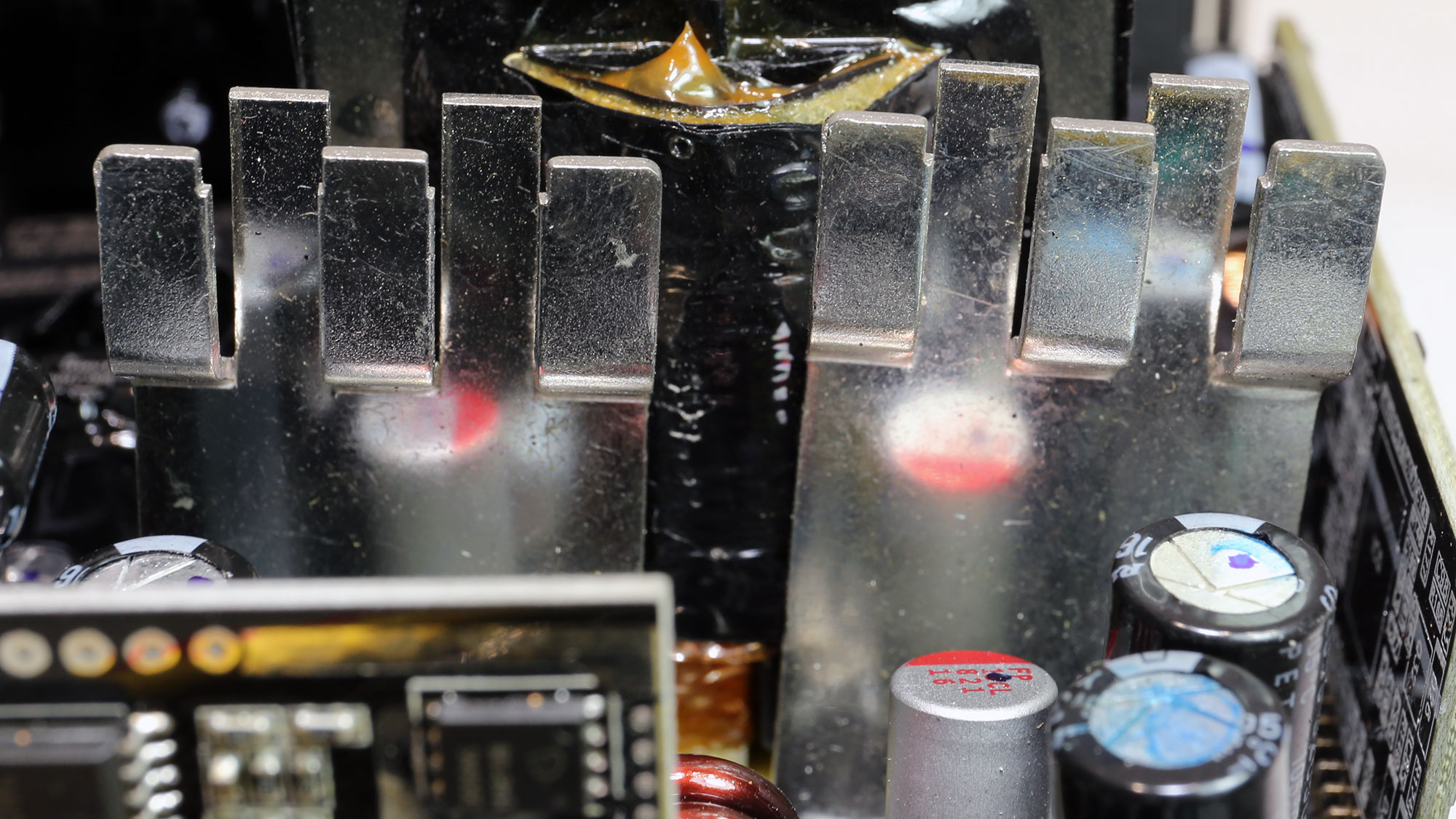
The FETs that regulate the +12 V rail are installed on the solder side of the main PCB. Two heatsinks above keep operating temperatures under control.

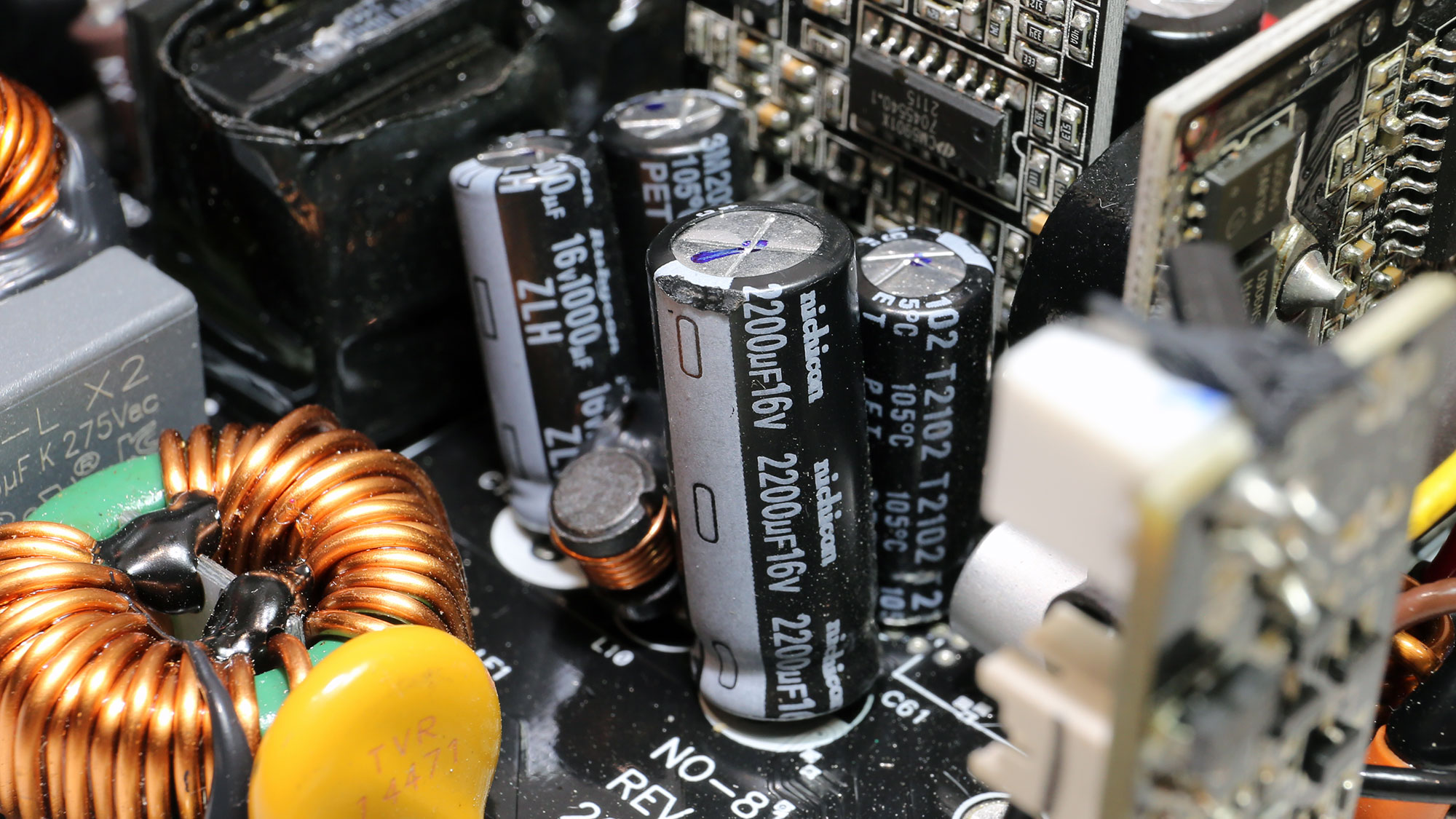
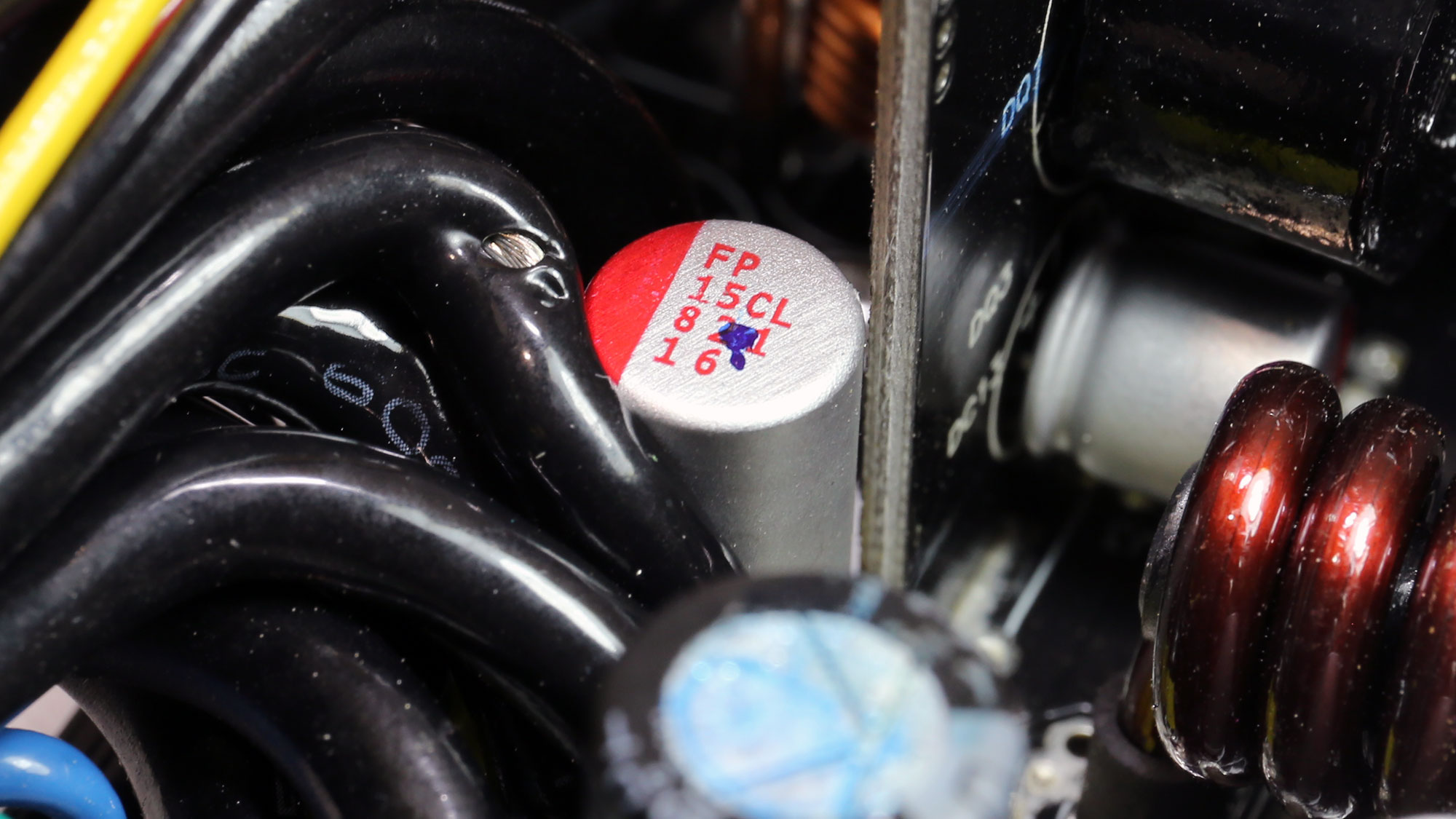
The electrolytic filtering caps are of high quality, and the same goes for the polymer caps.


Two DC-DC converters generate the minor rails. They use five Infineon FETs, and the PWM controller is an ANPEC APW7159C.
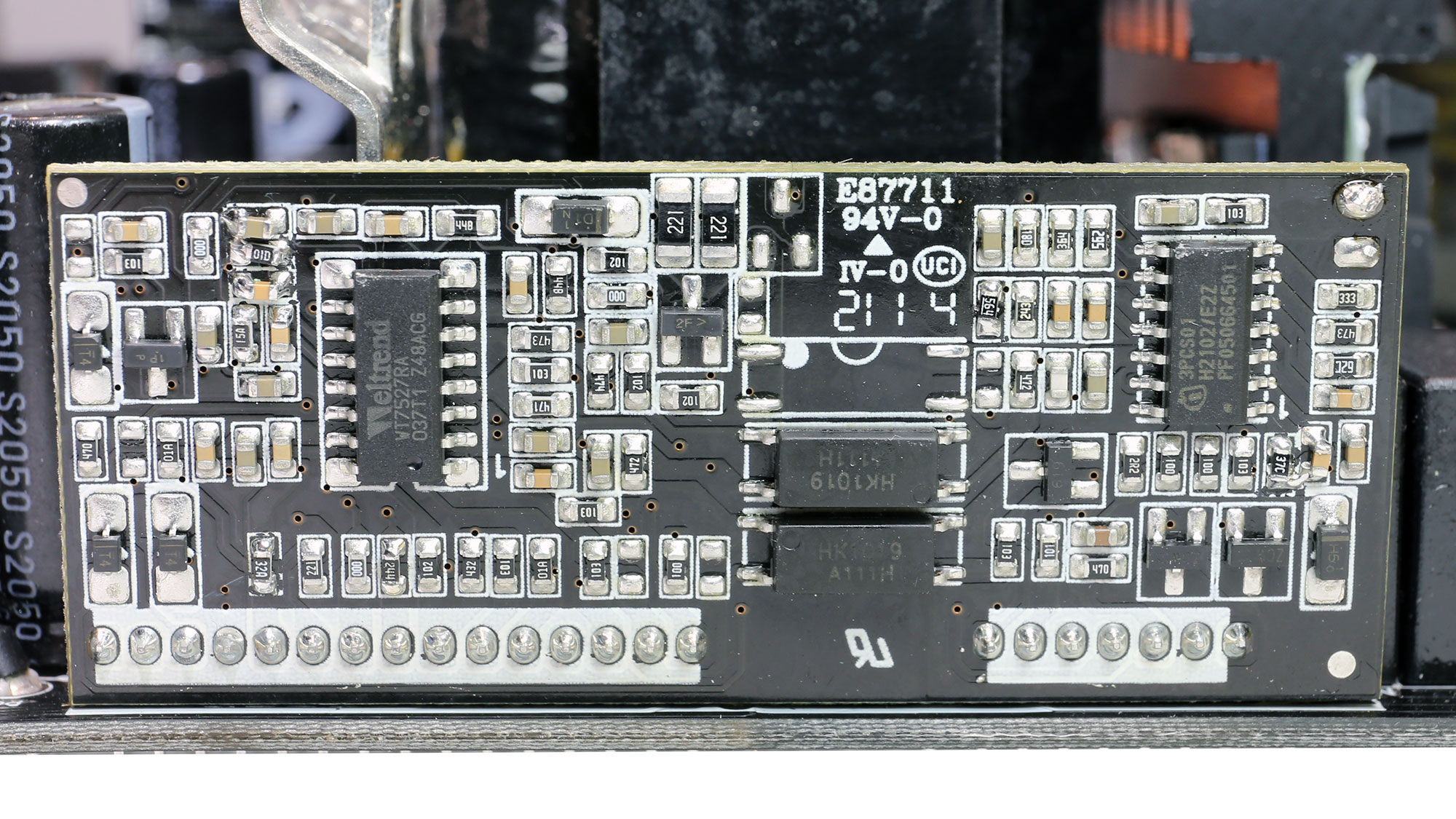
This is the board holding the PFC controller and supervisor IC. The latter is a Weltrend WT2527RA.
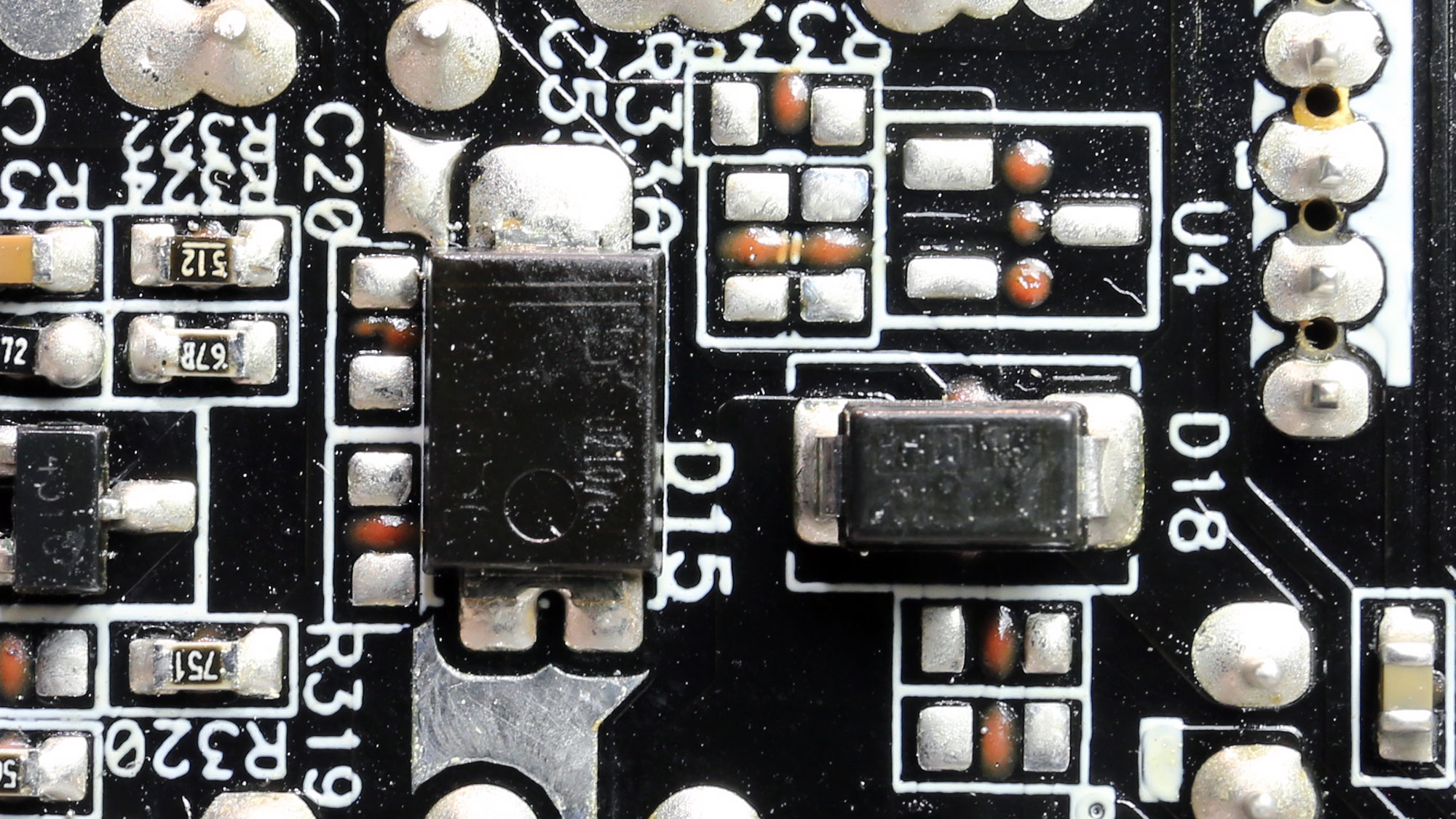
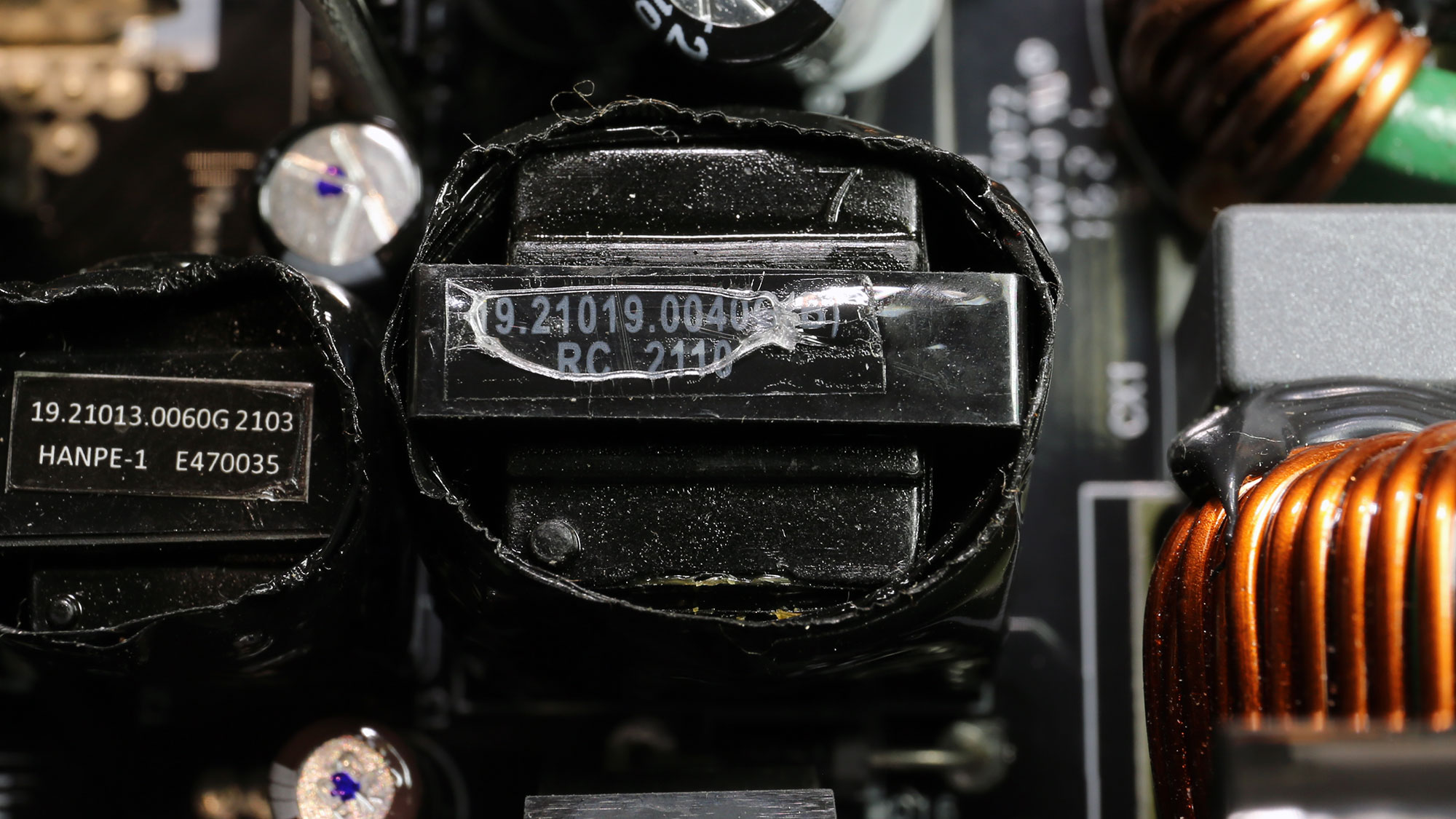
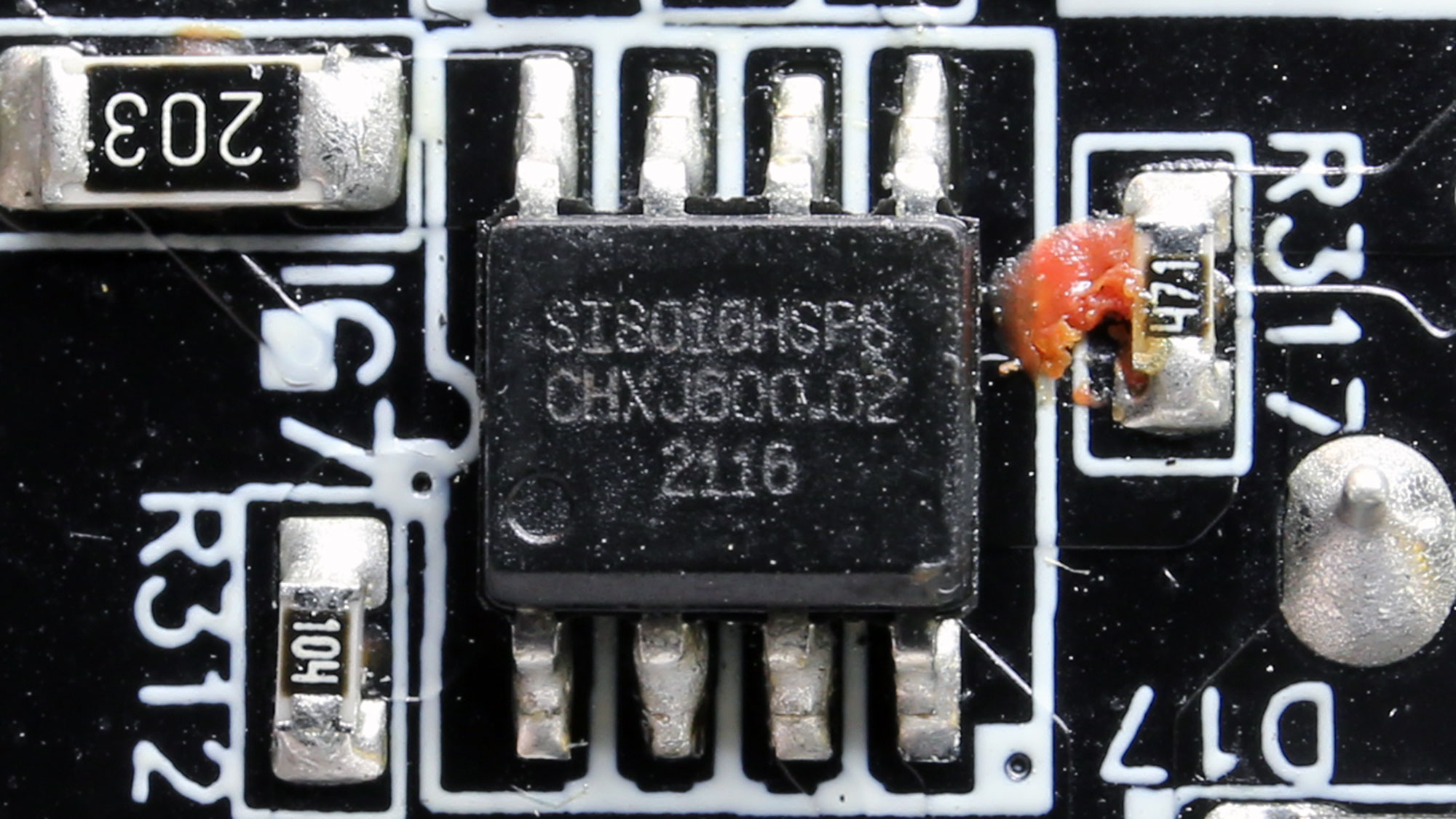
The standby PWM controller is an SI8016HSP8 IC. The 5VSB rail is rectified through an MPVA04N65B FET and 45R15C SBR.

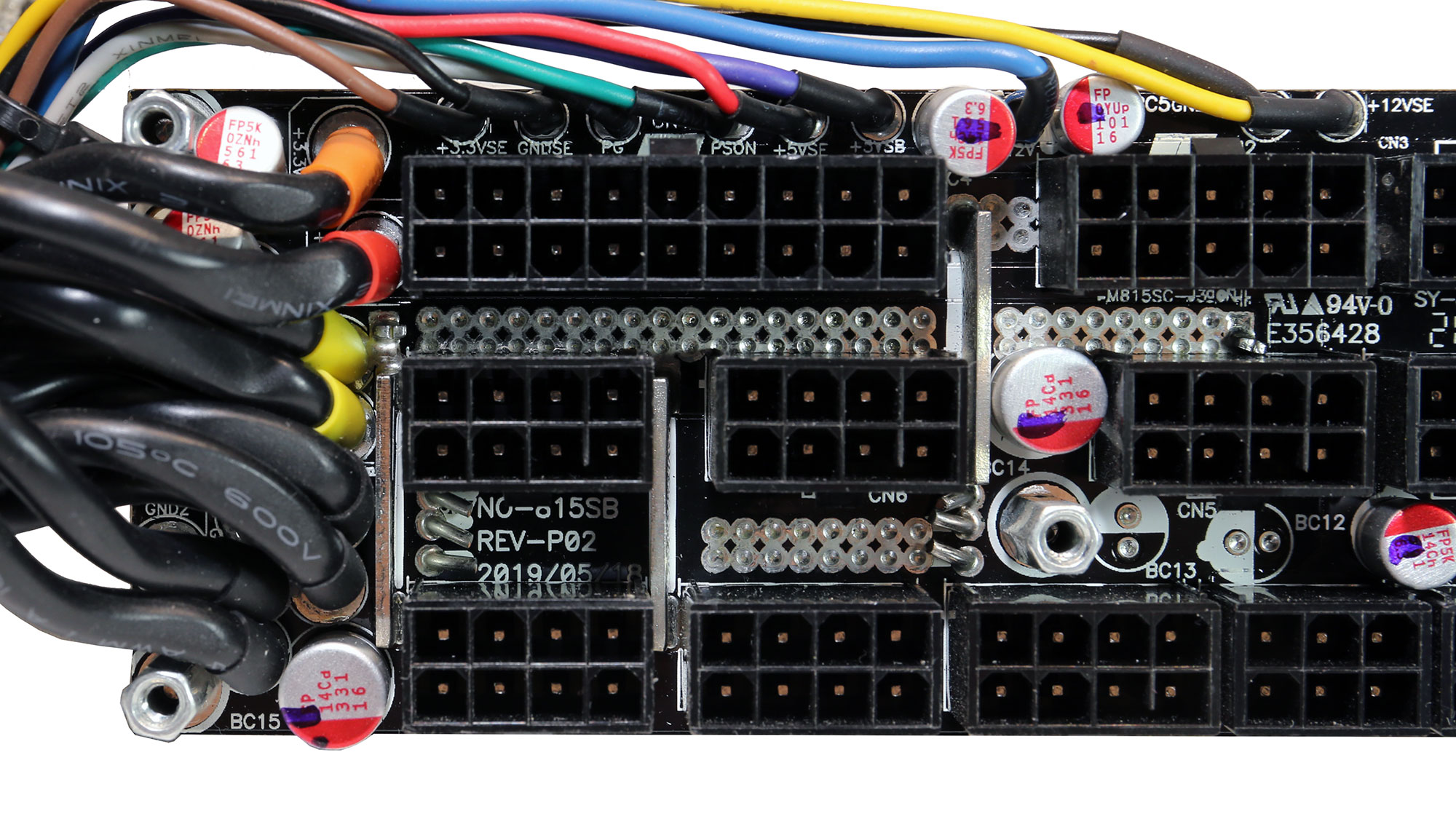
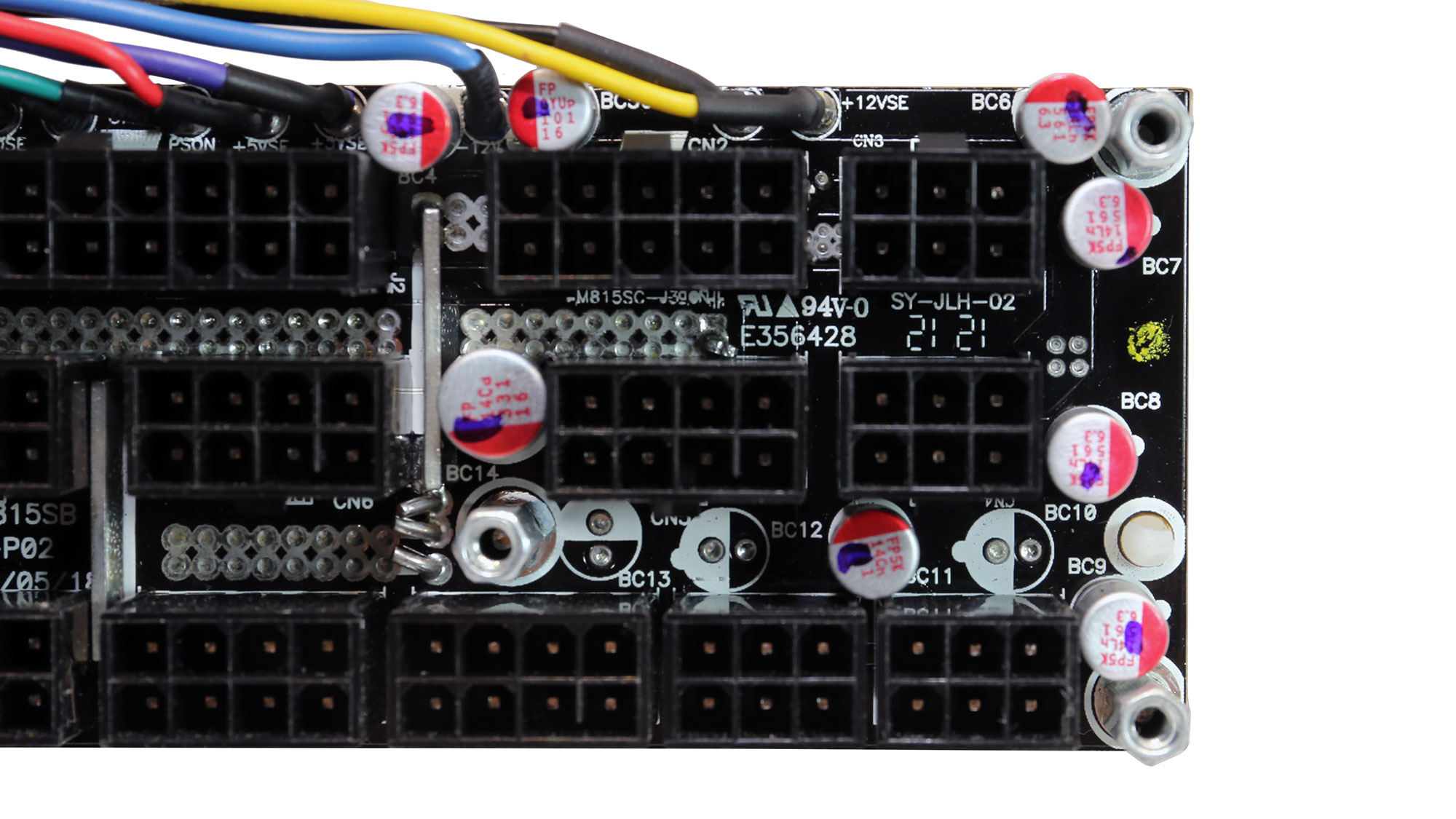
Twelve polymer caps at the face of the modular panel form an extra ripple-filtering layer.

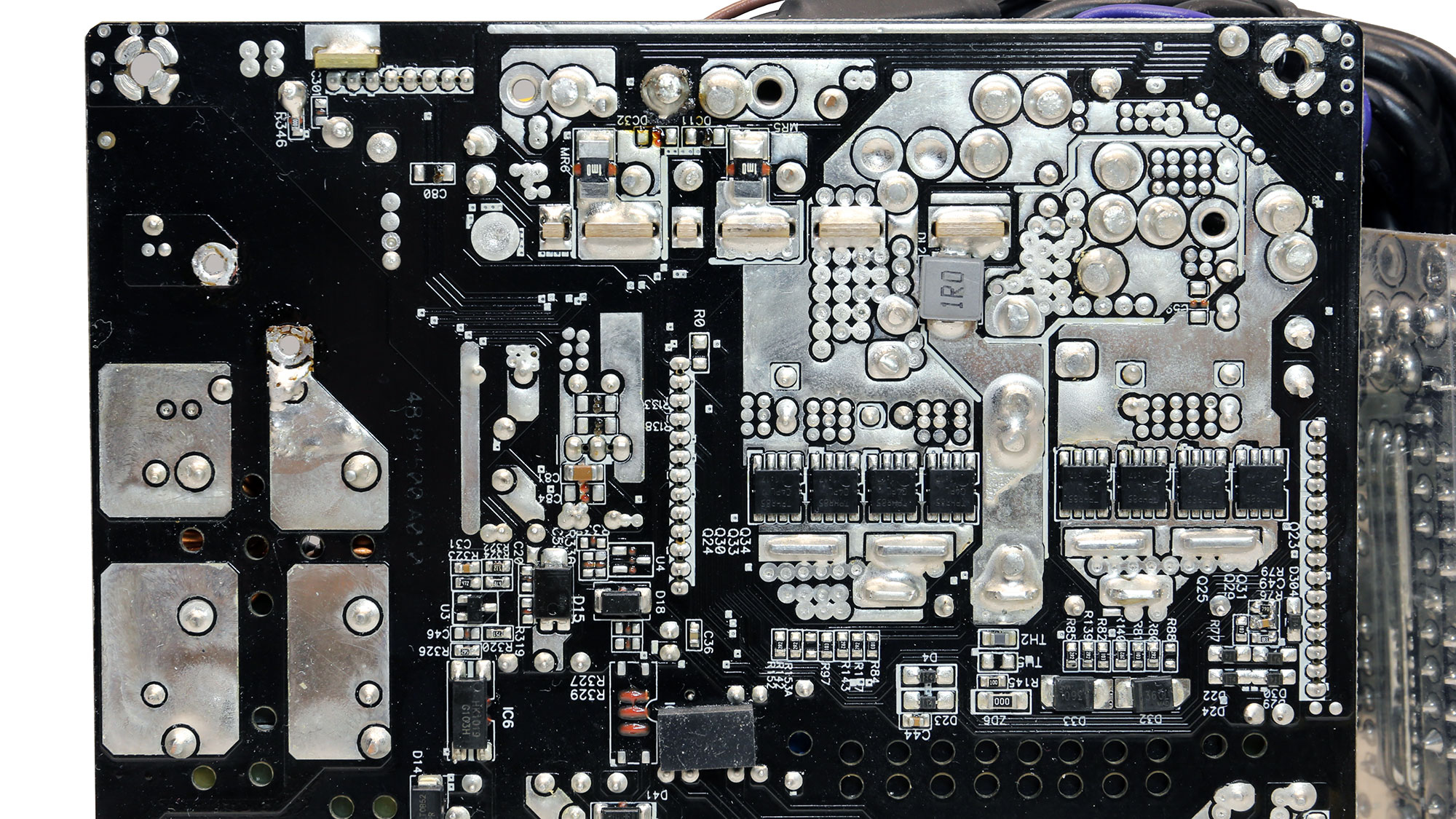
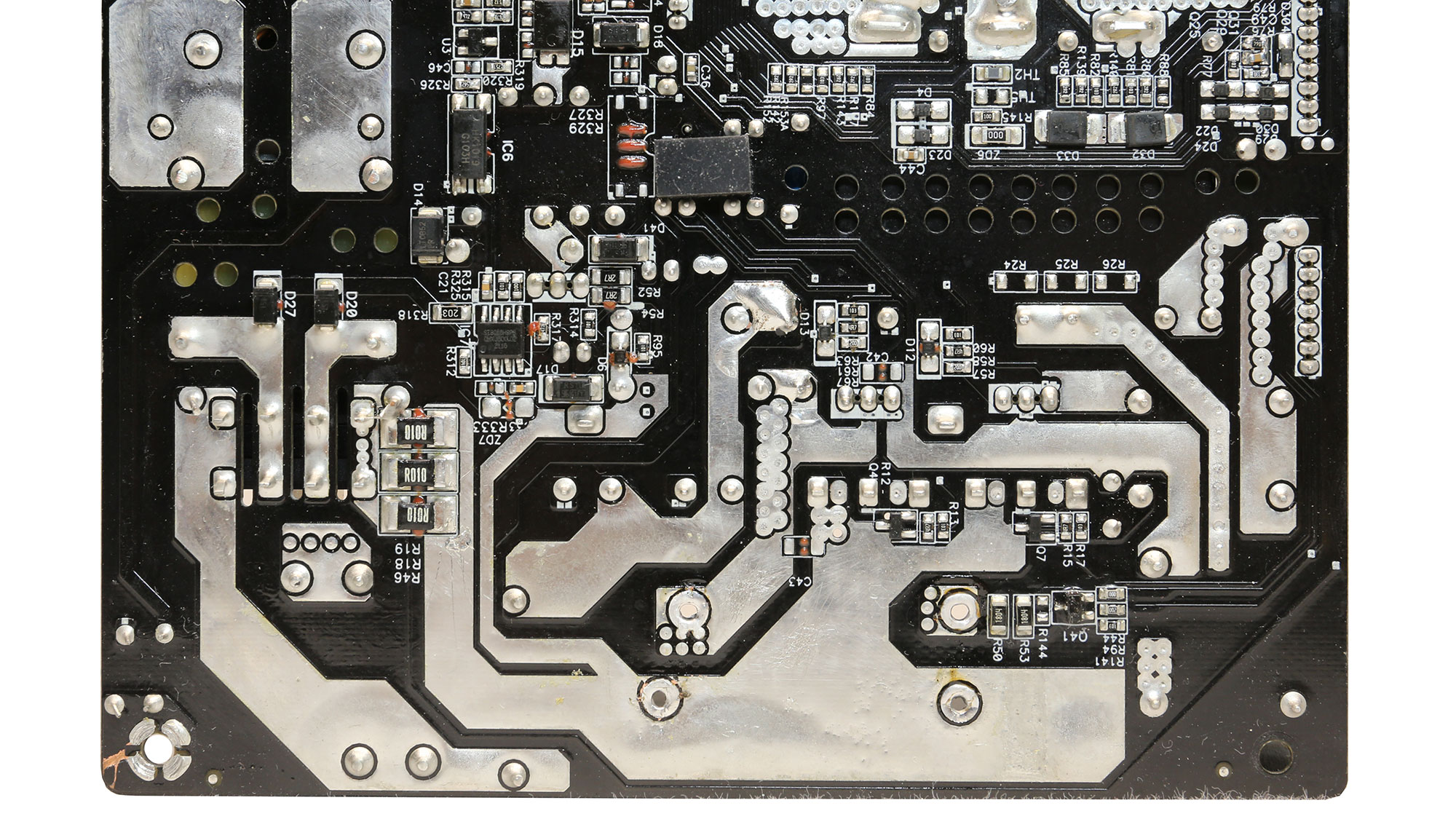
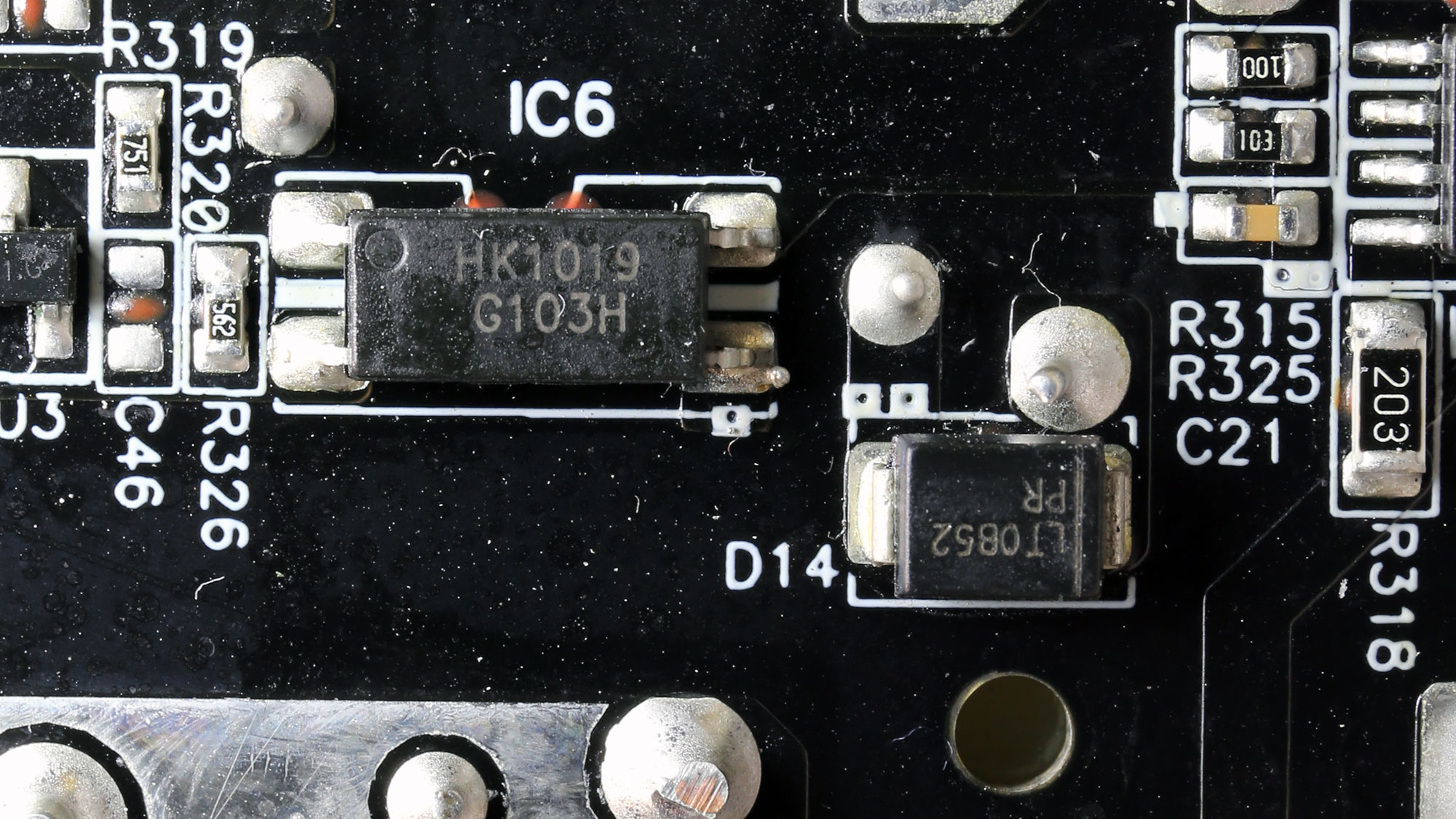
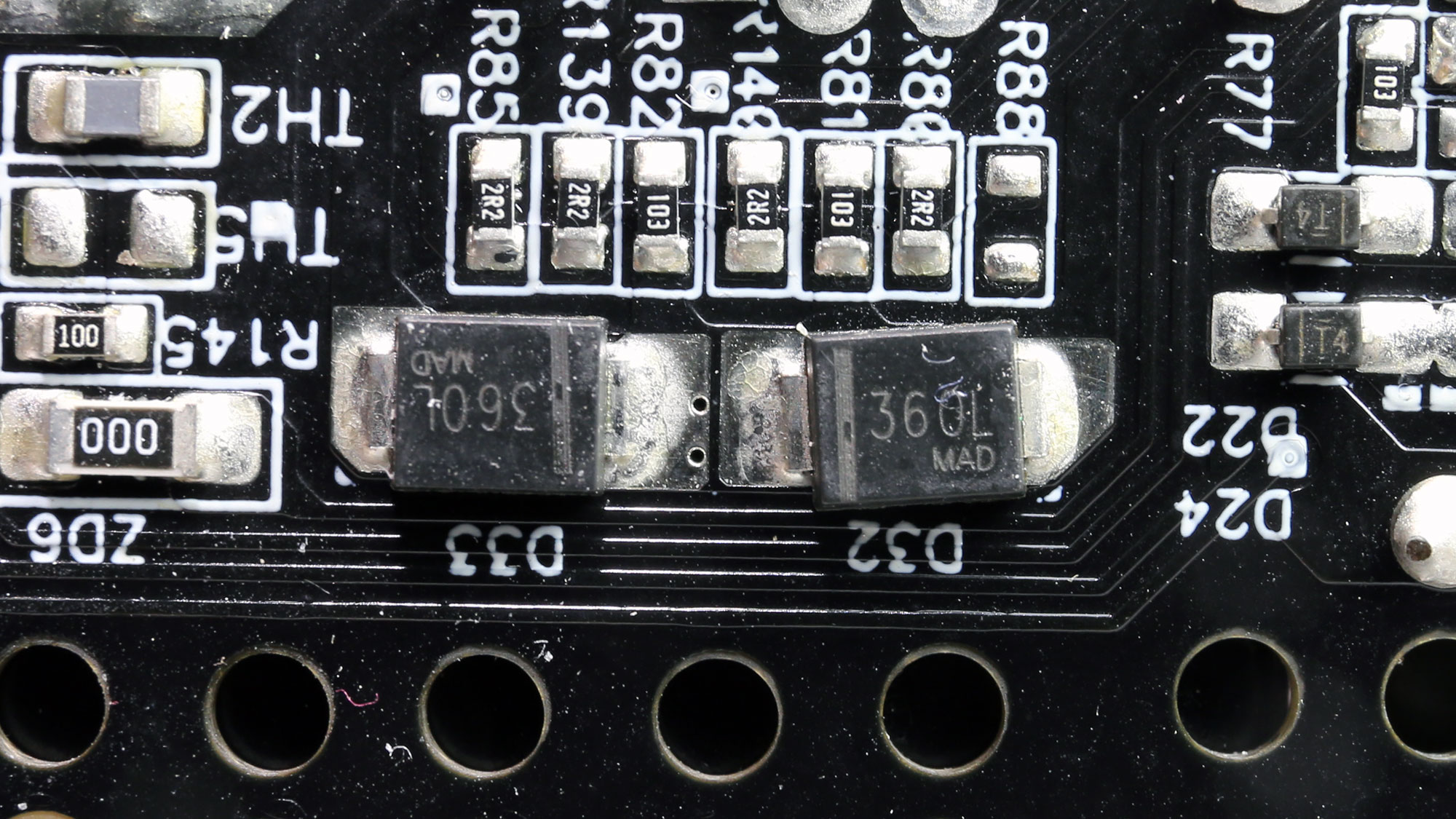
Soldering quality is good.
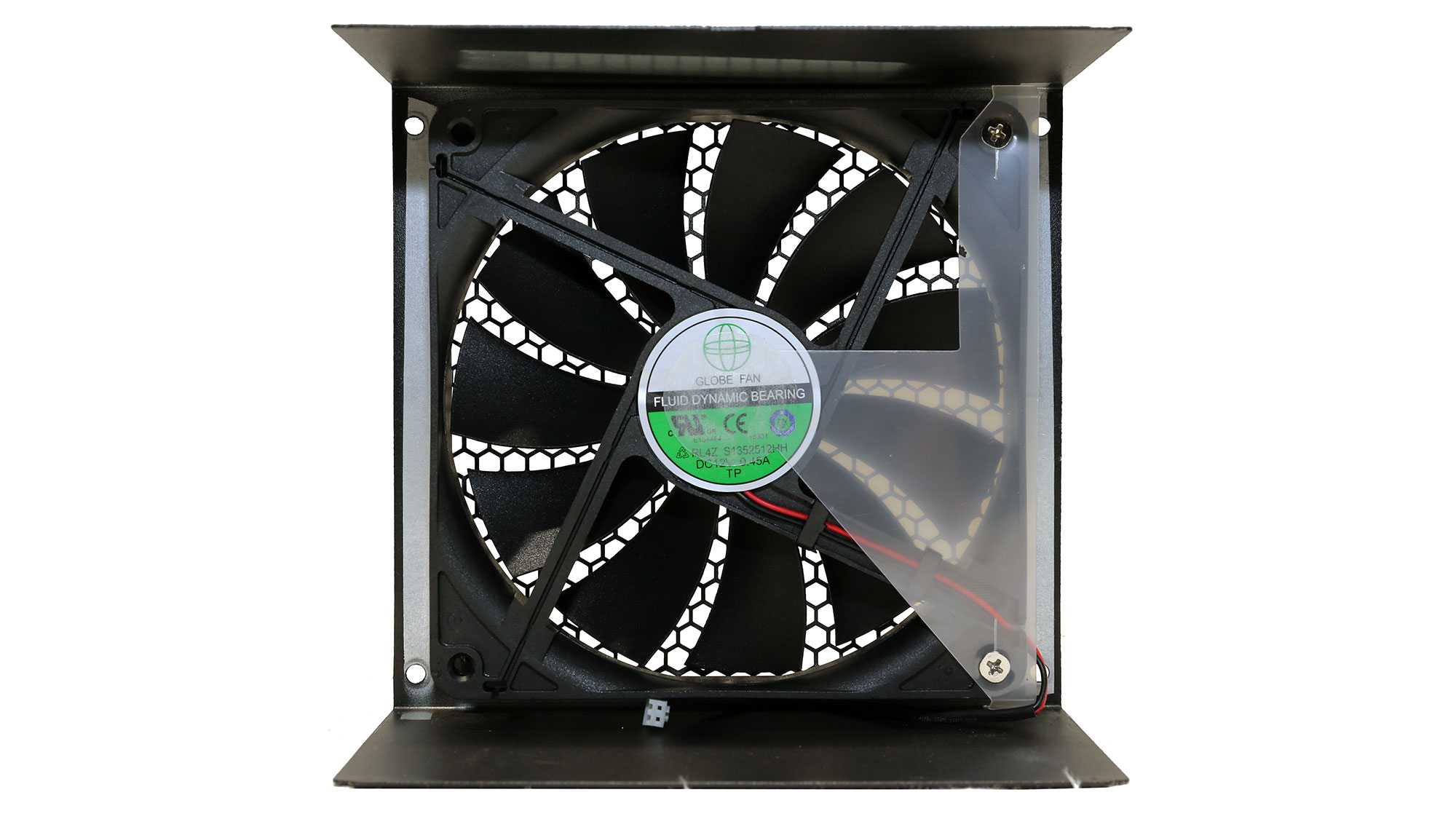
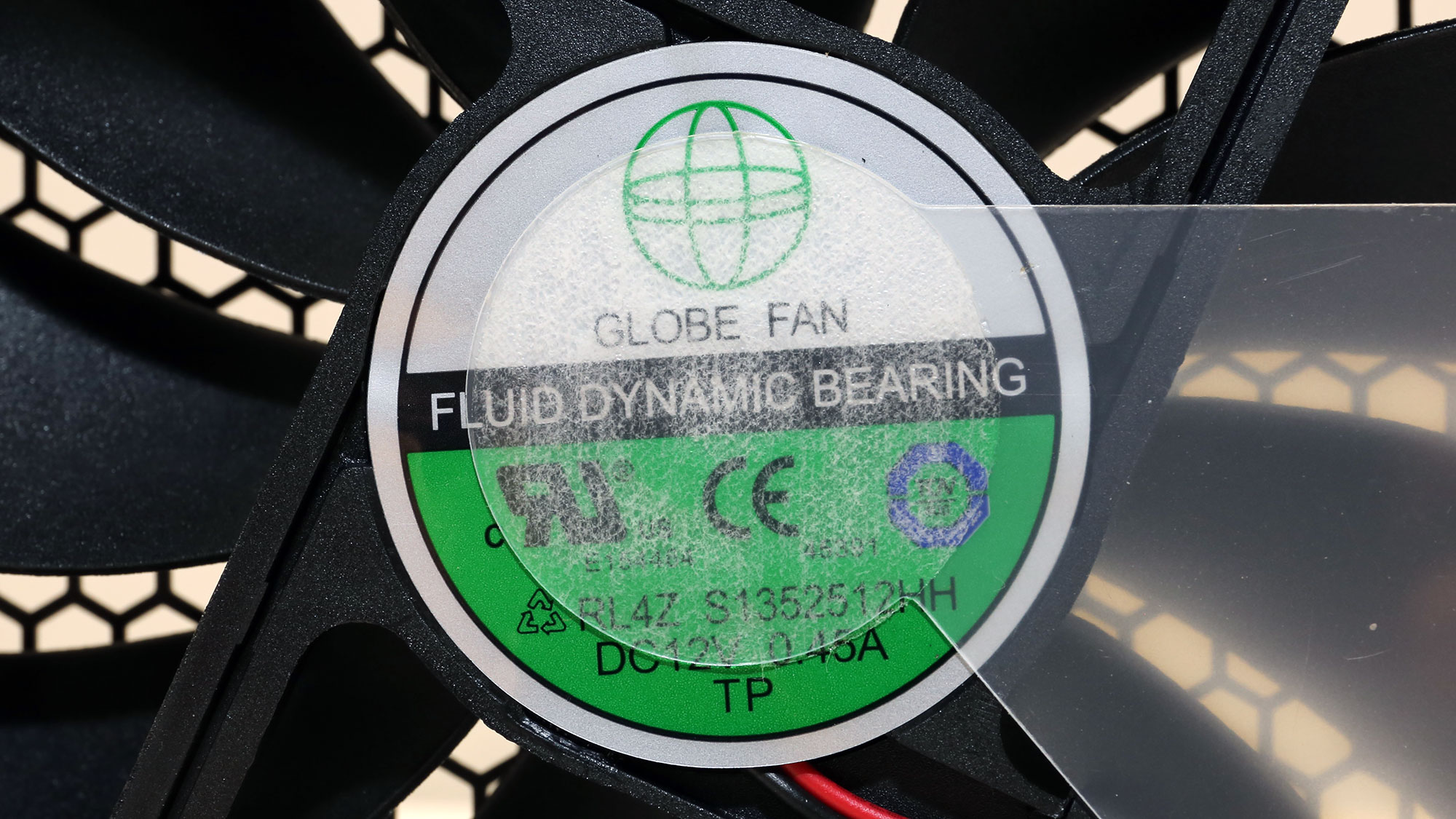
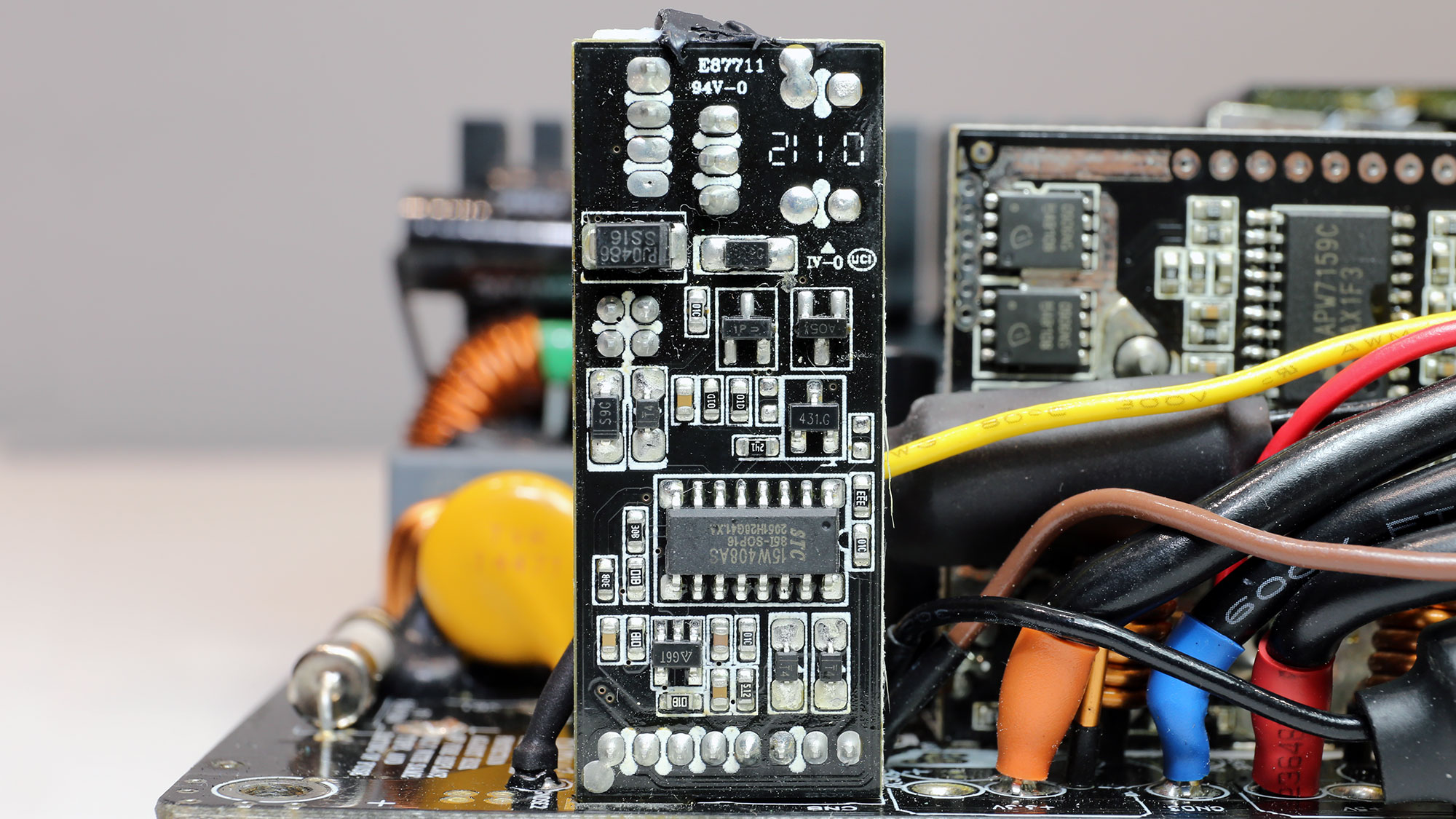
The cooling fan is by Globe Fan, and its model number is RL4Z S1352512HH. The label mentions a fluid dynamic bearing, but the fan's model number indicates a sleeve bearing. We will take Globe Fan's word and mark it down as an FDB fan. An MCU is used to control the fan's speed.
Test Setup
Our Patreon Silver Supporters can read articles in single-page format.
Nov 21st, 2026 12:10 PST
change timezone
Latest GPU Drivers
New Forum Posts
- Can you guess Which game it is? (344)
- UPS what one to get? (22)
- RX 580 2048SP 8GB - SK Hynix - Ardiyes - BIOS Needed (0)
- Zen 3 IF/IMC degradation (243)
- State of the HPC-AI Market 2026: Processing Elements (0)
- 1 - 5 person file storage server equivalent accasible from anywhere + general VM server. (3)
- Honestly, do you care about GTA VI? (225)
- RX 9000 series GPU Owners Club (2251)
- Windows 11 General Discussion (7746)
- How to prevent OLED burn damage due to PC freezes or power outtages? (51)
Popular Reviews
- Microsoft Surface Laptop Ultra Review - The Next-gen Arm Laptop
- Ugreen NASync DXP4800 GT Review
- Corsair RM1200e (Second Generation) Review
- Pulsar Office Tour & First Look at P1 Dual-Sensor Mouse
- Upcoming Hardware Launches 2027 (Updated Nov 2026)
- Acemagic Retro X3 Review
- Biwin Black Opal NV7400 2 TB Review
- AMD Ryzen 7 9800X3D Review - The Best Gaming Processor
- AMD Zen 6 Technical Deep Dive
- Chieftec Iceberg PRO 360 DARK Review
TPU on YouTube
Controversial News Posts
- NVIDIA Co-Founder and CEO Jensen Huang Officially Resigns (492)
- Report: Jensen Huang Eyes NVIDIA Comeback (260)
- Open Letter Asking NVIDIA to Reinstate Jensen Huang Passes 115,000 Signatures (184)
- OpenAI CEO Argues Home PCs Waste the World's Limited DRAM Supply (152)
- NVIDIA Launches Investigation Into Jensen Huang's Relationship With Suspected Chinese Spy (136)
- Intel "Raptor Lake Next" 16-Core and 20-Core CPUs Surface (130)
- NVIDIA GeForce RTX 50-Series Scheduled for up to $500 Price Hike This Week (89)
- Intel Razor Lake Gets a 12 P-Core bLLC Chip With No E-Cores, Per Leak (86)