 22
Kolink Classic Power 400 W Review
(22 Comments) »Introduction

We would like to thank Kolink for supplying the review sample.

Kolink is a Caseking house brand well known for its high bang for the buck products. The Kolink Classic Power PSU line includes four members with capacities ranging from 400 W to 700 W. All of these have fixed cables and come without power cords to keep the cost as low as possible. OEMs tend to charge a lot for power cords, which makes removing them from the bundle to cut the final price by a euro or two a good idea. For a power supply like the Classic Power 400, sold for a mere €40, two euros are a lot.
The Classic Power 400 is a power supply for mainstream PCs with integrated graphics or dedicated graphics cards with low power consumption. Interesting is that it uses DC-DC converters to generate the minor rails, which is usually not the case in this price range. Another interesting fact is that its model number shows the peak power it can deliver for a short period of time, not its maximum continuous power output, which is 50 W lower, actually restricted to 350 W.
The provided warranty is three years long, which is enough for a €40 power supply, and in terms of efficiency, the PSU is 80 PLUS Bronze and Cybenetics Silver certified. All of the above sounds too good to be true, so I am anxious to see where the catch is here as it is a PSU for €40 with DC-DC converters and 80 PLUS Bronze/Silver efficiency. Alright, it doesn't have an AC power cord, but who cares? Most users have several lying around, so why pay extra for it.
Specifications
| Features & Specifications | |
|---|---|
| Max. DC Output | 400 W |
| PFC | Active PFC |
| Efficiency (230 V) | 80 PLUS Bronze, Cybenetics Silver (87%–89%) |
| Noise (230 V) | Cybenetics A (20–25 dBA) |
| Modular | No |
| Intel C6/C7 Power State Support | Yes |
| Operating Temperature | 0–40 °C |
| Protections | Over Voltage Protection Under Voltage Protection Over Power Protection Over Temperature Protection Over Current Protection Short Circuit Protection |
| Cooling | 120 mm sleeve bearing fan (DF1202512SEMI) |
| Semi-passive Operation | No |
| Dimensions (W x H x D) | 150 x 85 x 140 mm |
| Weight | 1.3 kg (2.87 lb) |
| Compliance | ATX12V v2.53, EPS 2.92 |
| Warranty | 3 years |
| Price at Time of Review (excl. VAT) | $45.5 |
| Power Specifications | |||||||
|---|---|---|---|---|---|---|---|
| Rail | 3.3 V | 5 V | 12 V | 5 VSB | -12 V | ||
| Max. Power | 15 A | 15 A | 29 A | 2.5 A | 0.3 A | ||
| 80 W | 348 W | 12.5 W | 3.6 W | ||||
| Rec 24/7 Power | 350 W | ||||||
| Total Max. Power | 400 W | ||||||
Photos

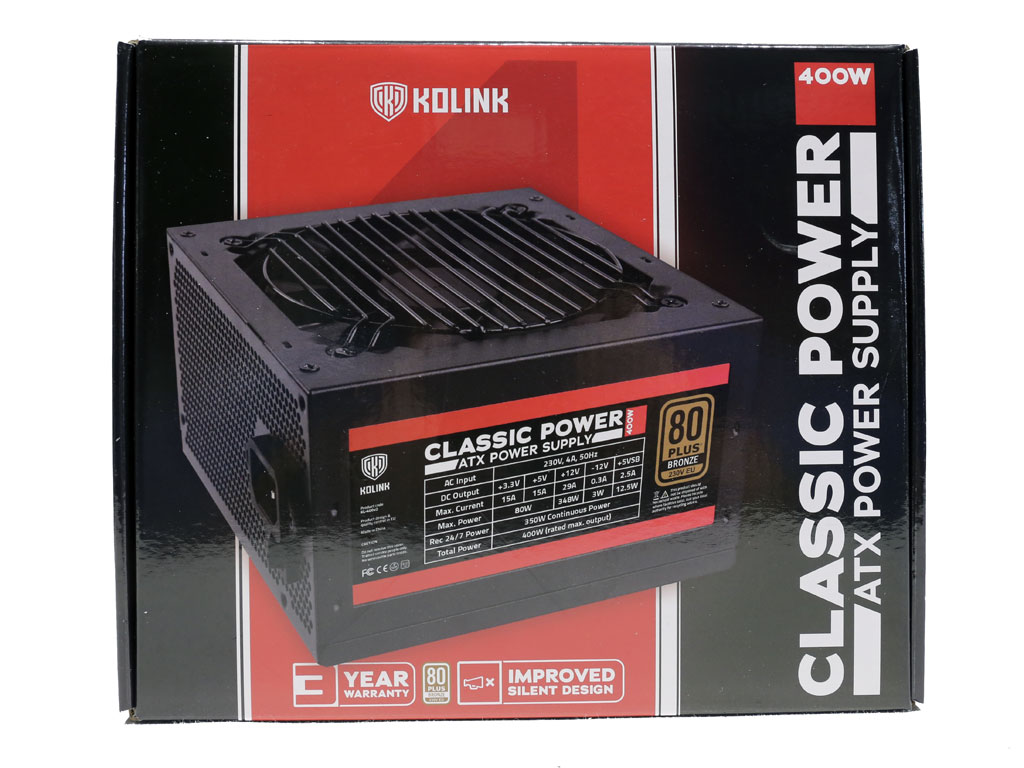
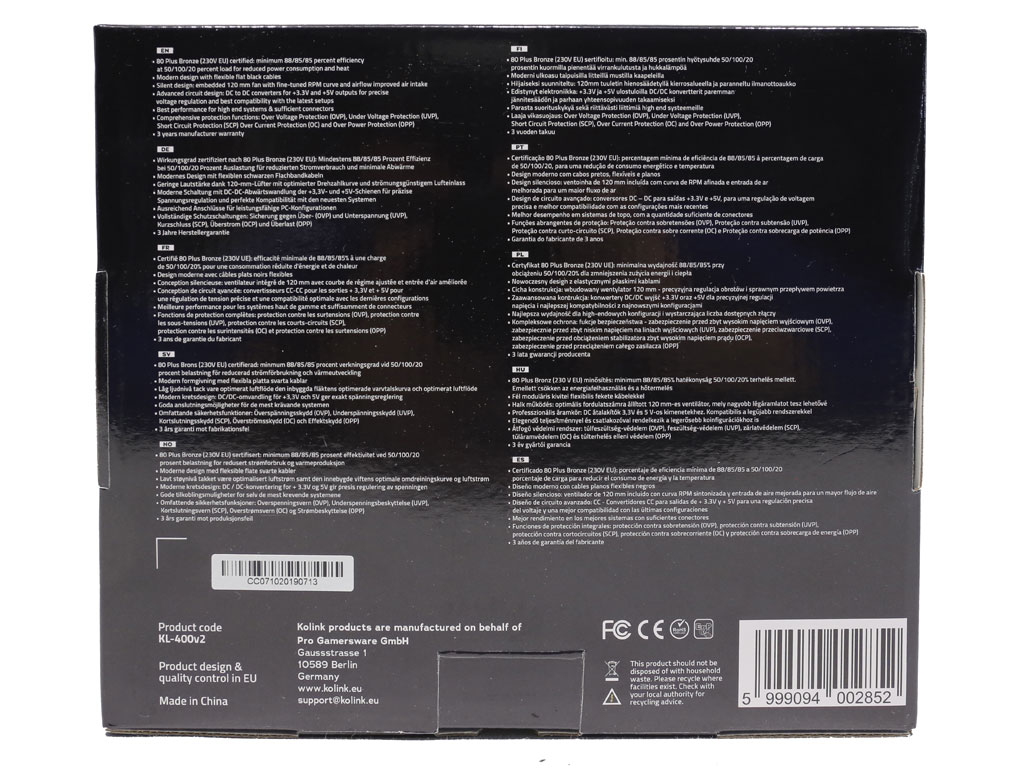
At the face of the box is a photo of the unit, with several bits of information here and there (warranty, maximum power, efficiency, etc.). On the back are no photos or schemes, just a list of features in several languages.
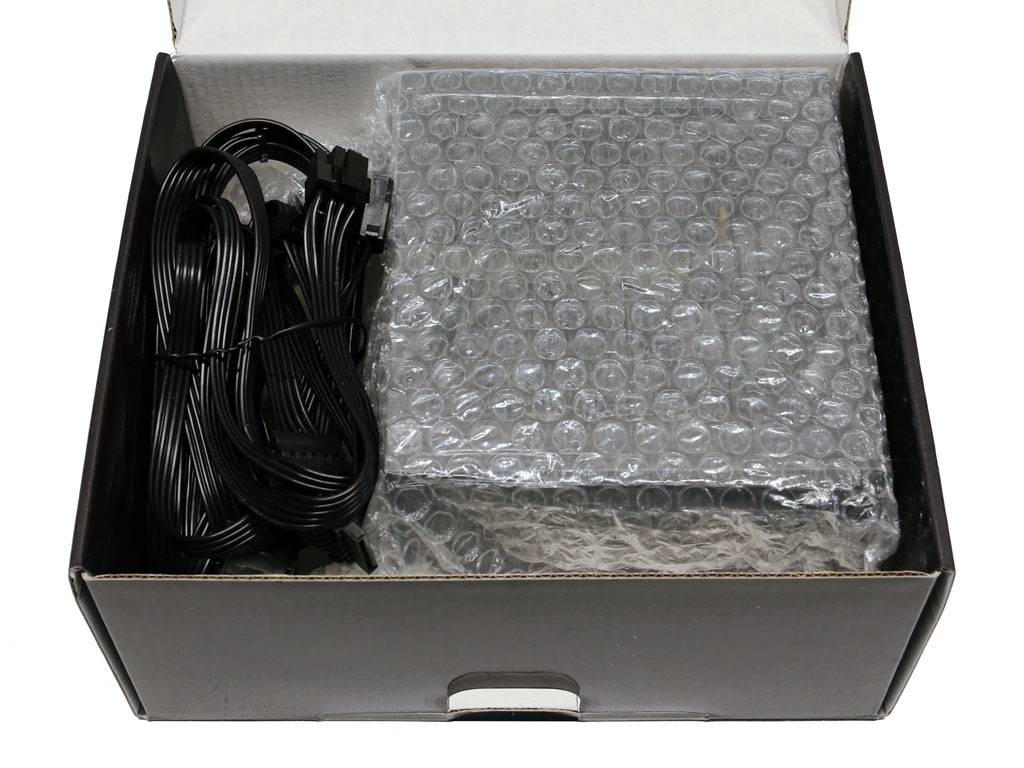
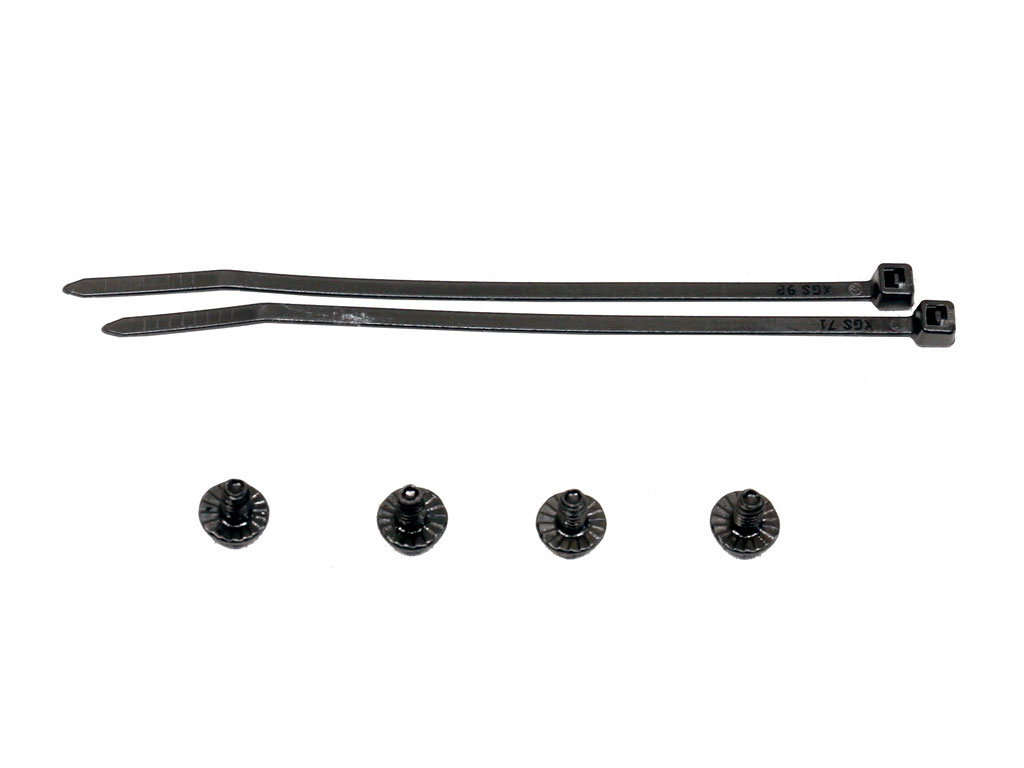
Only a bubble wrap protects the PSU. It would be nice to see foam spacers. The bundle is also basic, with just two cable ties and the required screws.
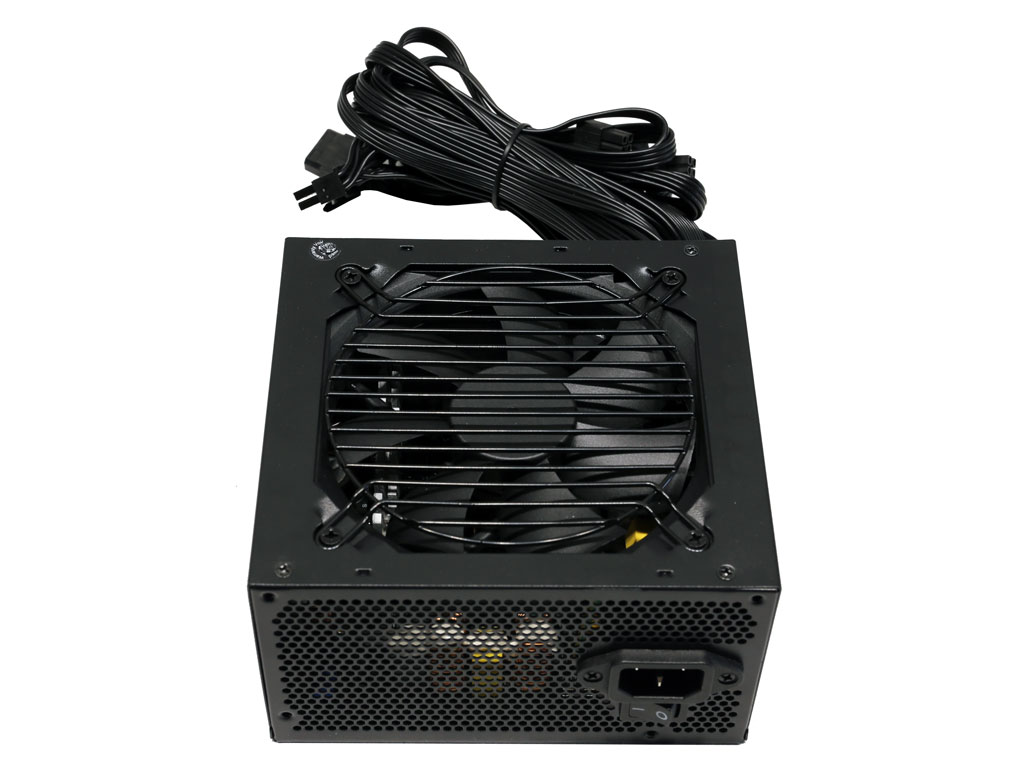
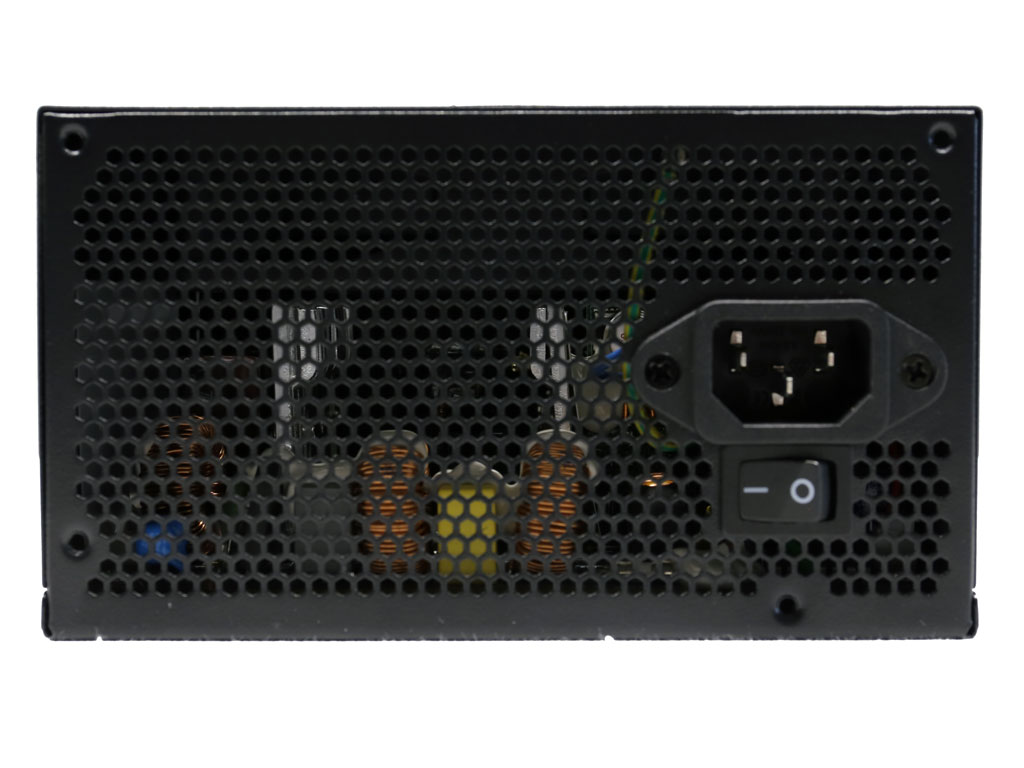
Your typical external design. The fan grille is not restrictive, which is good with mid and low-efficiency PSUs.


The power specifications table has been put one side—the other has the Kolink logo stamped into the chassis.

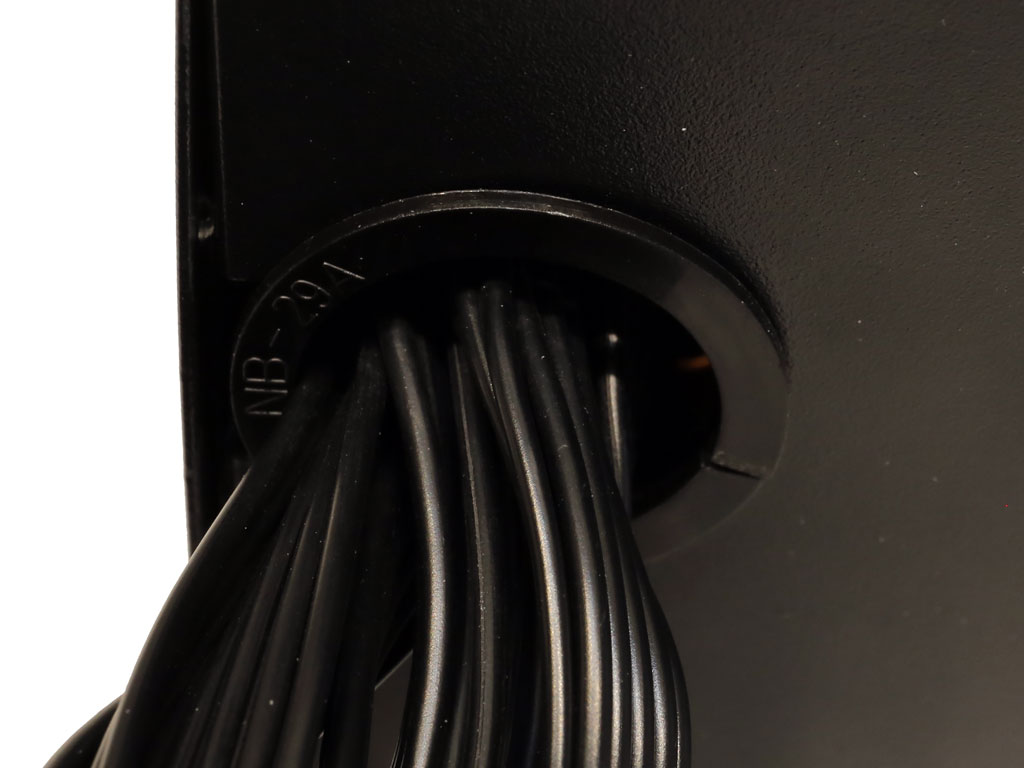
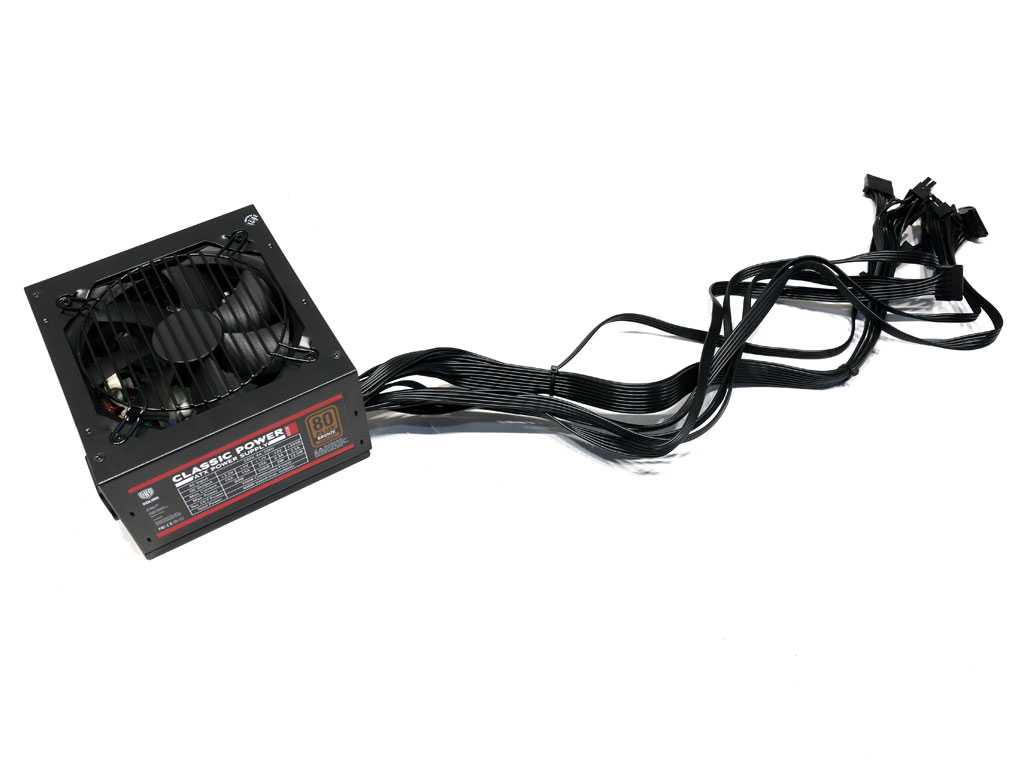
It is always nice to find black, flat cables used with affordable PSUs like this one.
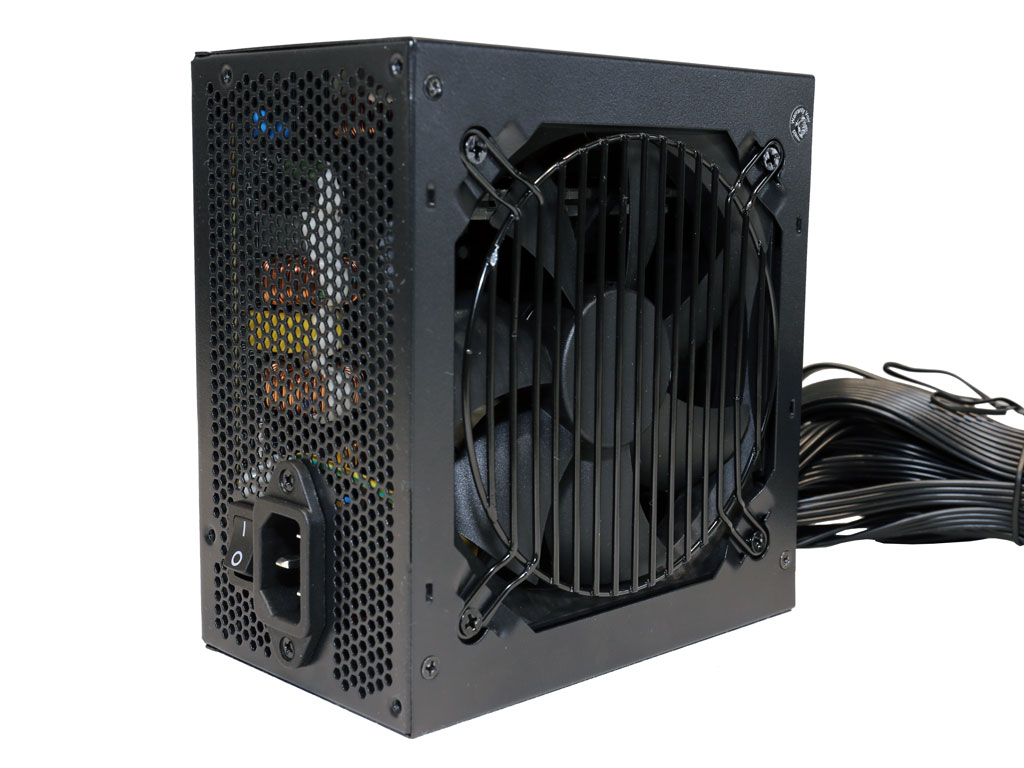
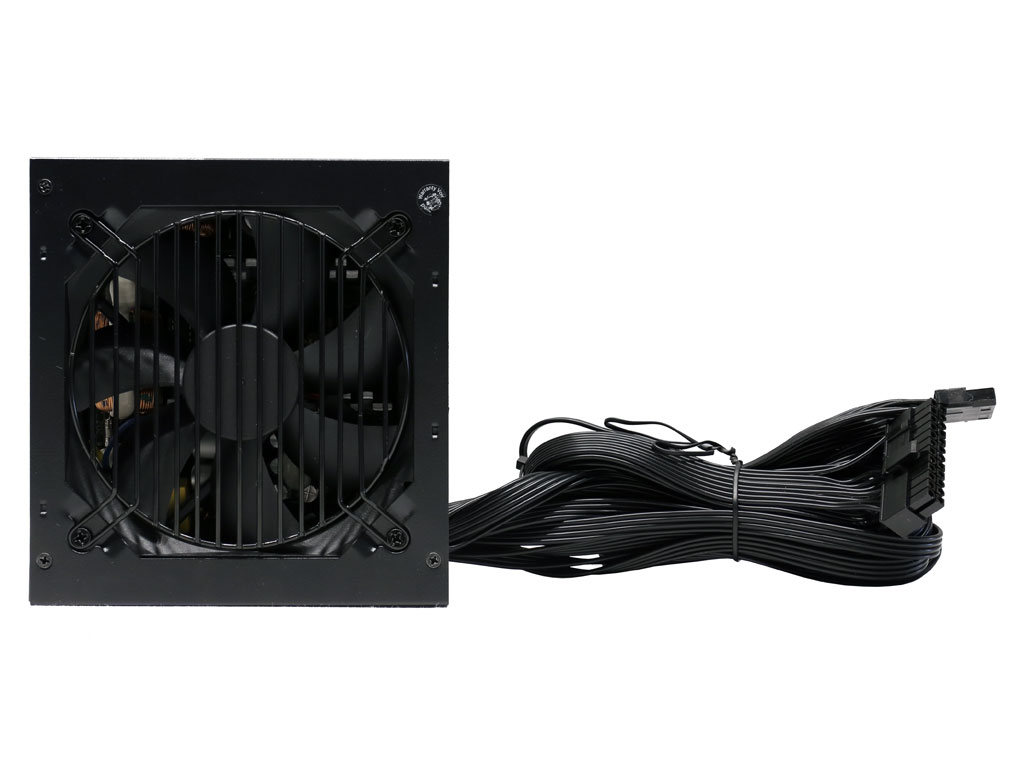
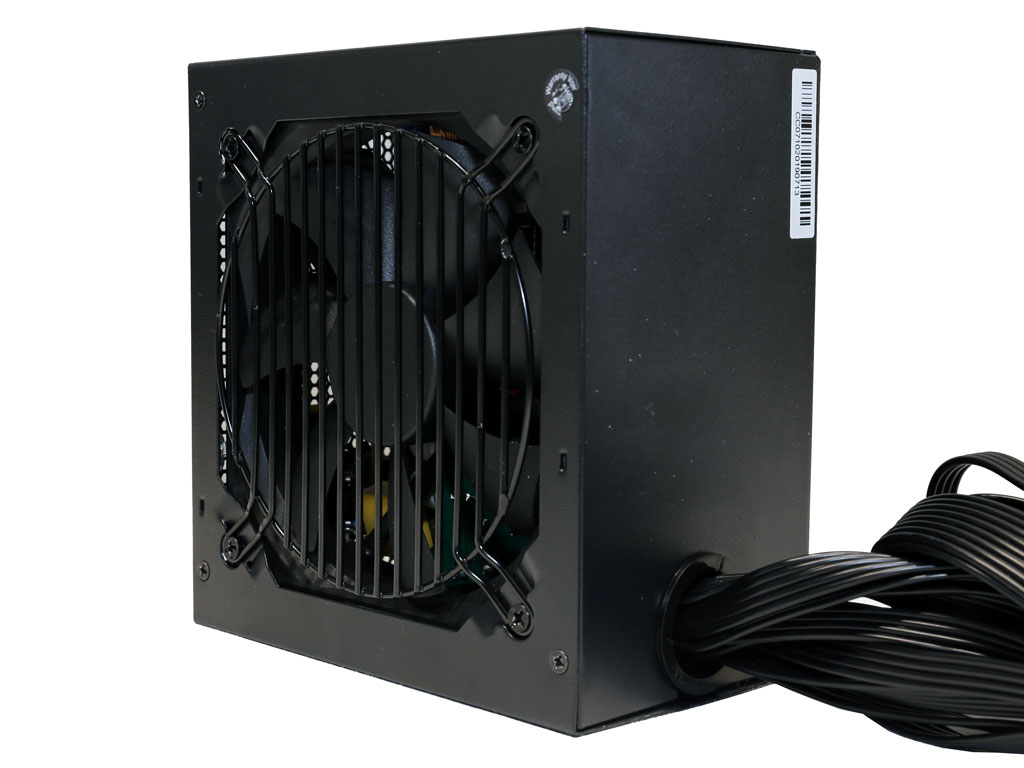
Dimensions are normal since the OEM used the same chassis for all members of the line.
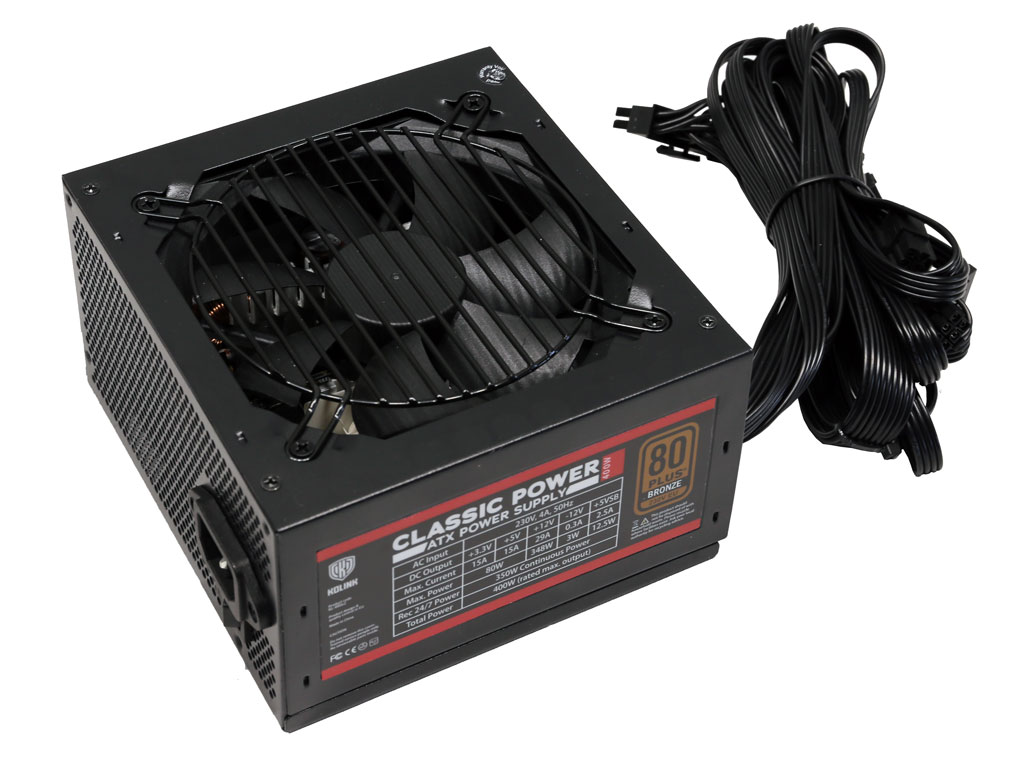
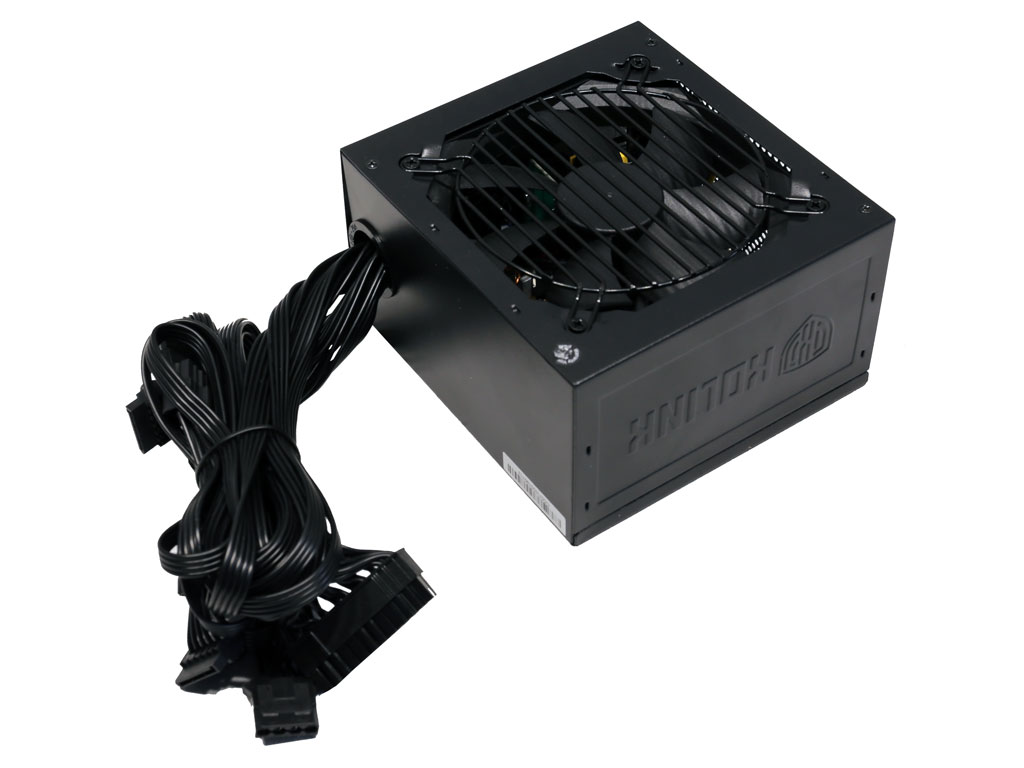
There aren't very many cables, so most users probably won't mind the lack of modularity.
Cables and Connectors
| Captive Cables | ||||
|---|---|---|---|---|
| Description | Cable Count | Connector Count (total) | Gauge | In-cable Capacitors |
| ATX Connector 20+4 pin (500 mm) | 1 | 1 | 18AWG | No |
| 4+4 pin EPS12V (580 mm) | 1 | 1 | 18AWG | No |
| 6+2 pin PCIe (580 mm) | 1 | 1 | 18AWG | No |
| SATA (520 mm+100 mm+100 mm) | 1 | 3 | 18AWG | No |
| 4-pin Molex (520 mm+100 mm) | 1 | 2 | 18AWG | No |
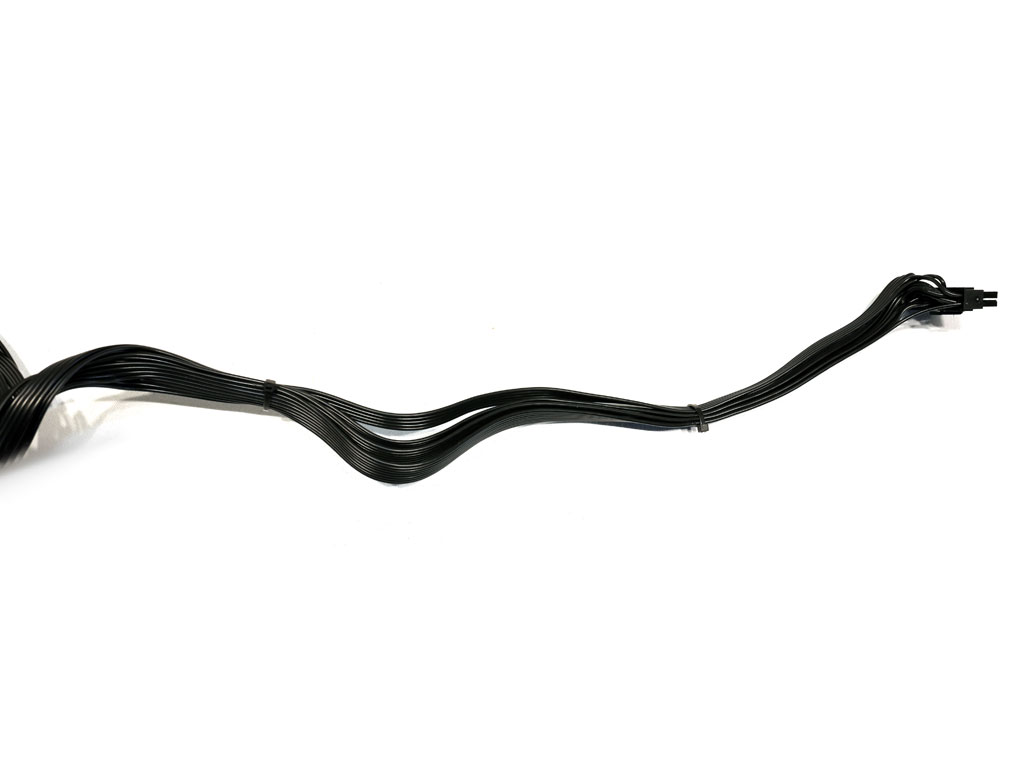
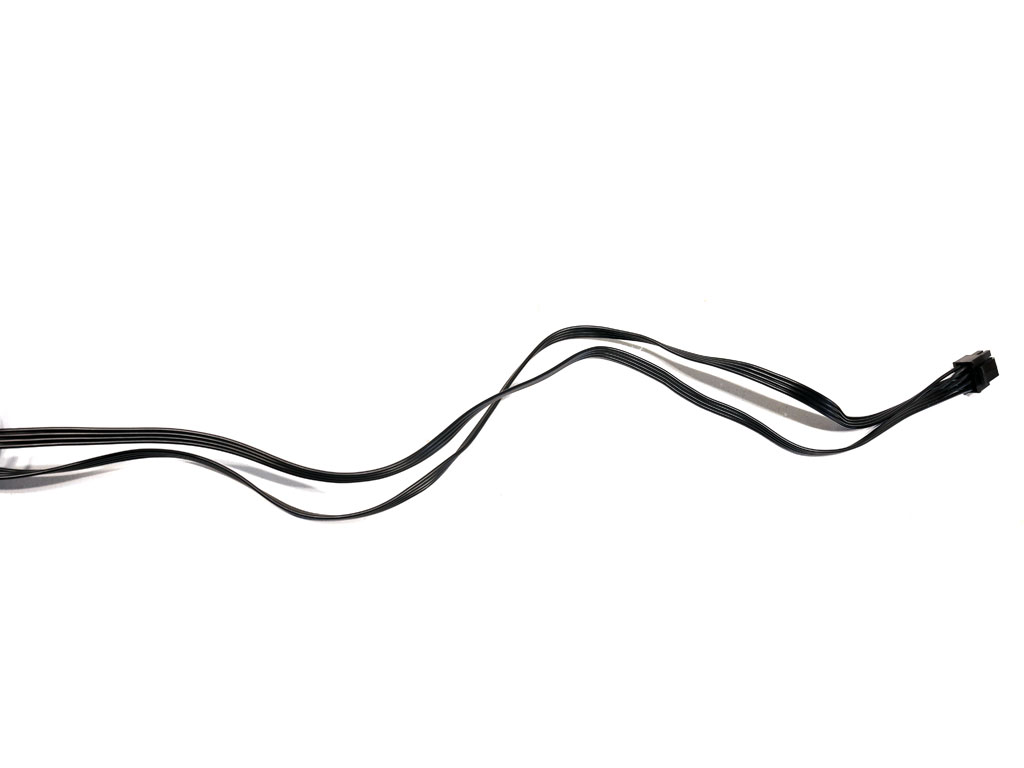
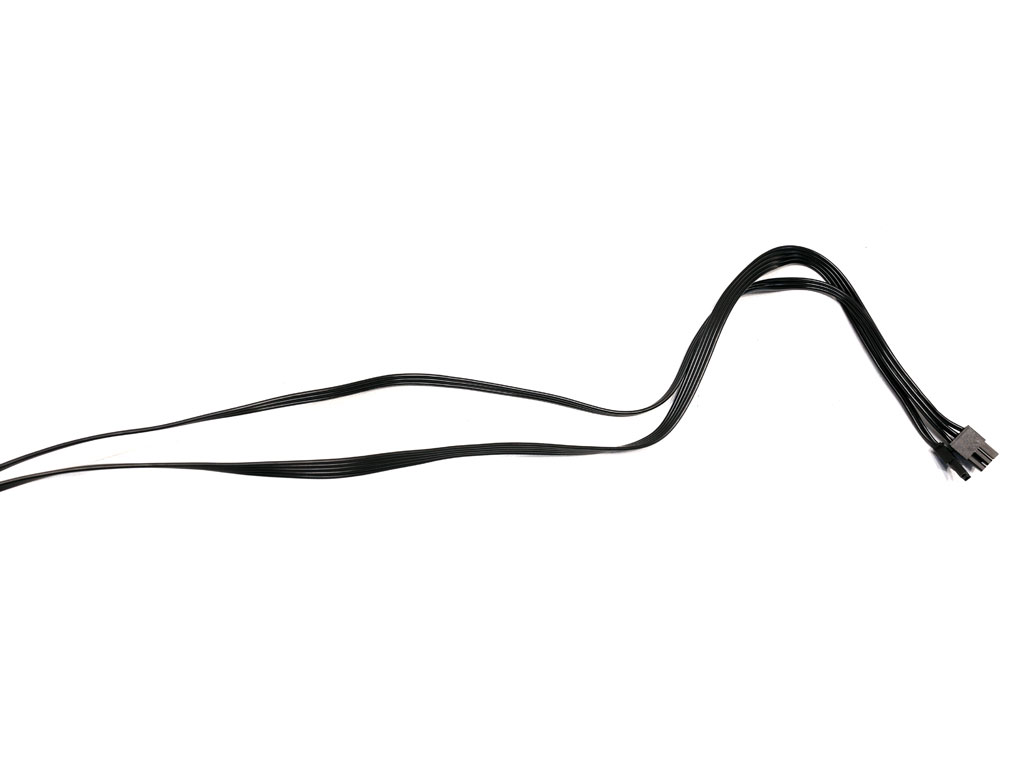
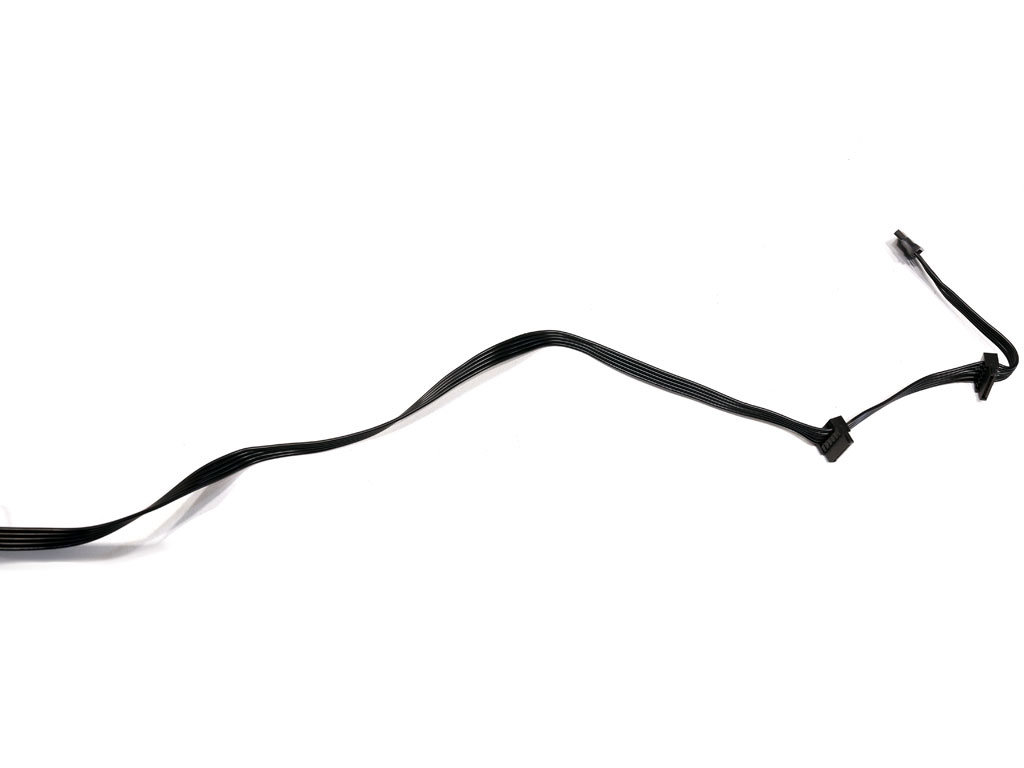
There is only a single PCIe connector, which makes sense since this is a low-capacity PSU. The number of peripheral connectors is satisfactory for a 350 W unit, and all cables are long enough. You won't install this PSU into a large chassis, after all, so I will let the short distance between peripheral connectors slide.
Component Analysis
Before reading this page, we strongly suggest a look at this article, which will help you understand the insides of a PSU better.| Kolink Classic Power 400W Parts Description | |
|---|---|
| General Data | |
| Manufacturer (OEM) | Casecom |
| PCB Type | Single-sided |
| Primary Side | |
| Transient Filter | 4x Y caps, 2x X caps, 2x CM chokes, 1x Champion CM02X (discharge IC) |
| Bridge Rectifier(s) | 1x GBU608 (800 V, 2.8 A @ 100 °C) (without heatsink) |
| Inrush Current Protection | NTC Thermistor MF72-3D11 (3 ohm) |
| APFC MOSFETs | 1x IPS ITA08N50R (500 V, 8 A, Rds (on): 0.9 ohm) |
| APFC Boost Diode | 1x Champion CMPFCD86 (600 V, 8 A @ 140 °C) |
| Bulk Cap(s) | 2x TK (400 V, 120 uF each or 240 uF combined, 105°C, UFWHS) |
| Main Switchers | 2x IPS ITA08N50R (500 V, 8 A, Rds (on): 0.9 ohm) |
| PFC / PWM Combo Controller | Champion CM6800UX |
| Topology | Primary side: APFC, double forward Secondary side: synchronous rectification & DC-DC converters |
| Secondary Side | |
| +12 V MOSFETs | 2x Oriental Semiconductor SFS06R03PF (60 V, 160 A @ 25 °C, Rds (on): 3.5 mOhm) Sync Power SP6019 (driver IC) |
| +5 V & +3.3 V | DC-DC Converters: 4x UBIQ QM3004D (30 V, 40 A @ 100 °C, Rds (on): 8.5 mOhm) PWM Controller: ANPEC APW7159C |
| Filtering Capacitors | Electrolytic: 11x AsiaX (105°C, TMX) Polymer: 2x NJcon |
| Supervisor IC | Grenergy GR8329N (OVP, UVP, OCP, PG, SC) |
| Fan Model | Alpine DF1202512SEMI (120 mm, 12 V, 0.20 A, sleeve bearing fan) |
| 5VSB Circuit | |
| Standby PWM Controller | Developer Microelectronics DP2358 |


The platform uses a double forward topology on the primary side and synchronous rectification on the secondary side, along with a pair of DC-DC converters for the generation of the minor rails, an advanced platform for this price segment. Most PSUs in this price range are group-regulated, with passive rectification for the +12 V rail. The heatsinks are relatively small, but the unit's maximum power output is low. Finally, there is ample space between the components to allow for good airflow. Don't expect to find high-end capacitors. That said, they at least used 105°C electrolytic caps for the APFC converters and the secondary side.


The EMI filter is complete and does a good job suppressing conducted EMI emissions. The only downside here, and a major one, is the lack of an MOV. A line of glue connects all parts to minimize coil whine. I didn't notice any high-pitched noise at any of the various loads throughout testing.

This is the NTC thermistor responsible for lowering inrush currents. As expected, it isn't supported by a bypass relay.

The single bridge rectifier is not bolted to a heatsink. Since this PSU is for 230 V input, this won't cause any issues.


The APFC converter uses a single IPS ITA08N50R FET and a Champion boost diode. The bulk caps are by Toshin Kogyo (TK), which is a Japanese company. Their capacity is low. Still, they offer a decent hold-up time of almost 16 ms.

The combo PFC and PWM controller is a Champion CM6800 IC that was widely used some years ago.


The main FETs, two IPS ITA08N50Rs, are installed into a double-forward topology.


The 12 V rail uses two Oriental Semiconductor SFS06R03PF FETs. The driver IC for these FETs is a Sync Power SP6019.


The two DC-DC converters use four UBIQ QM3004D FETs. The common PWM controller is an ANPEC APW7159C.


The filtering caps are by AsiaX, so they are not of high quality. That said, coming across better filtering caps in this price range doesn't happen often.


The standby PWM controller is a Developer Microelectronics DP2358 IC.

The supervisor IC is a Grenergy GR8329N: It supports all the necessary protection features but OTP.


Soldering quality is not very good, and some component leads are quite long. However, I did not encounter any issues during testing.


The sleeve bearing fan is by Alpine, a brand not that well known but quite large. The same brand makes NZXT's Aer fans.
Our Patreon Silver Supporters can read articles in single-page format.
Nov 18th, 2026 15:29 PST
change timezone
Latest GPU Drivers
New Forum Posts
- Got a new laptop! What should I do with it? (4)
- Dell Workstation Owners Club (3514)
- Making a game in Godot engine (2)
- [Poll] 12V-2x6 Connector Protection: What Are You Using? (WireView / Ampinel / Equalizer / Other / Nothing) (39)
- Last game you purchased? (1406)
- Time to upgrade CPU and MOBO (34)
- Can i play GTA 6 now? (Joke) (7)
- Honestly, do you care about GTA VI? (146)
- What are you playing? (26234)
- Very unusual two gaming-pc scenarios. (12)
Popular Reviews
- Acemagic Retro X3 Review
- Upcoming Hardware Launches 2027 (Updated Nov 2026)
- AMD Zen 6 Technical Deep Dive
- ASUS ROG Strix B850-I Gaming Wi-Fi7 W Review
- Corsair HX1000i Shift Crystal Review
- Biwin Black Opal NV7400 2 TB Review
- Ugreen NASync DXP4800 GT Review
- Pulsar Office Tour & First Look at P1 Dual-Sensor Mouse
- Chieftec Iceberg PRO 360 DARK Review
- AMD Ryzen 7 9800X3D Review - The Best Gaming Processor
TPU on YouTube
Controversial News Posts
- NVIDIA Co-Founder and CEO Jensen Huang Officially Resigns (478)
- Report: Jensen Huang Eyes NVIDIA Comeback (190)
- Open Letter Asking NVIDIA to Reinstate Jensen Huang Passes 115,000 Signatures (184)
- OpenAI CEO Argues Home PCs Waste the World's Limited DRAM Supply (152)
- NVIDIA Launches Investigation Into Jensen Huang's Relationship With Suspected Chinese Spy (136)
- Intel "Raptor Lake Next" 16-Core and 20-Core CPUs Surface (130)
- Legendary Game Studio BioWare Shuts Down Following EA Layoffs (104)
- Dell CEO Says the Memory Shortage Will Get Worse in 2027 (95)