 16
Lian Li B4-mATX Review
Review System Setup »A Closer Look - Inside

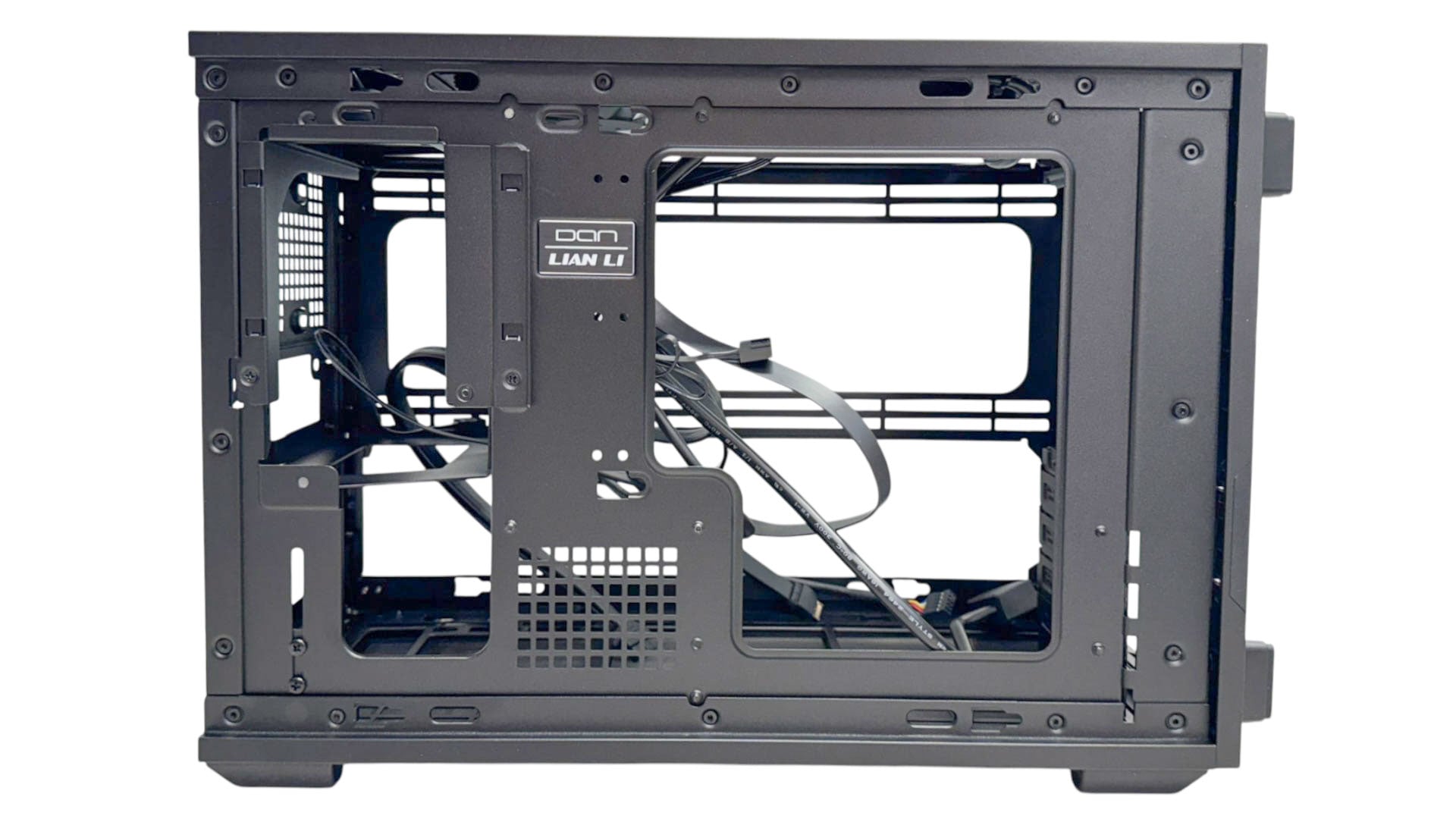
While there are significant differences between it and the A3-mATX, the two Lian Li microATX cases do still share the side-mounted fan frame and basic internal layout. The frame supports 360 mm radiators with the clearance varying depending on the height of the AIO liquid cooler or waterblock and fittings, but ultimately by fittings inside the case, with a maximum of 52 mm total thickness. Unfortunately, the similarities also include the total lack of cable stowage space behind the motherboard tray. This means any excess lengths will need to be secured in the main chamber, but since this isn't visible thanks to the mesh panels, it's not a significant problem at least in terms of aesthetics. The primary cable anchors are located on the side of the PSU shrouds.
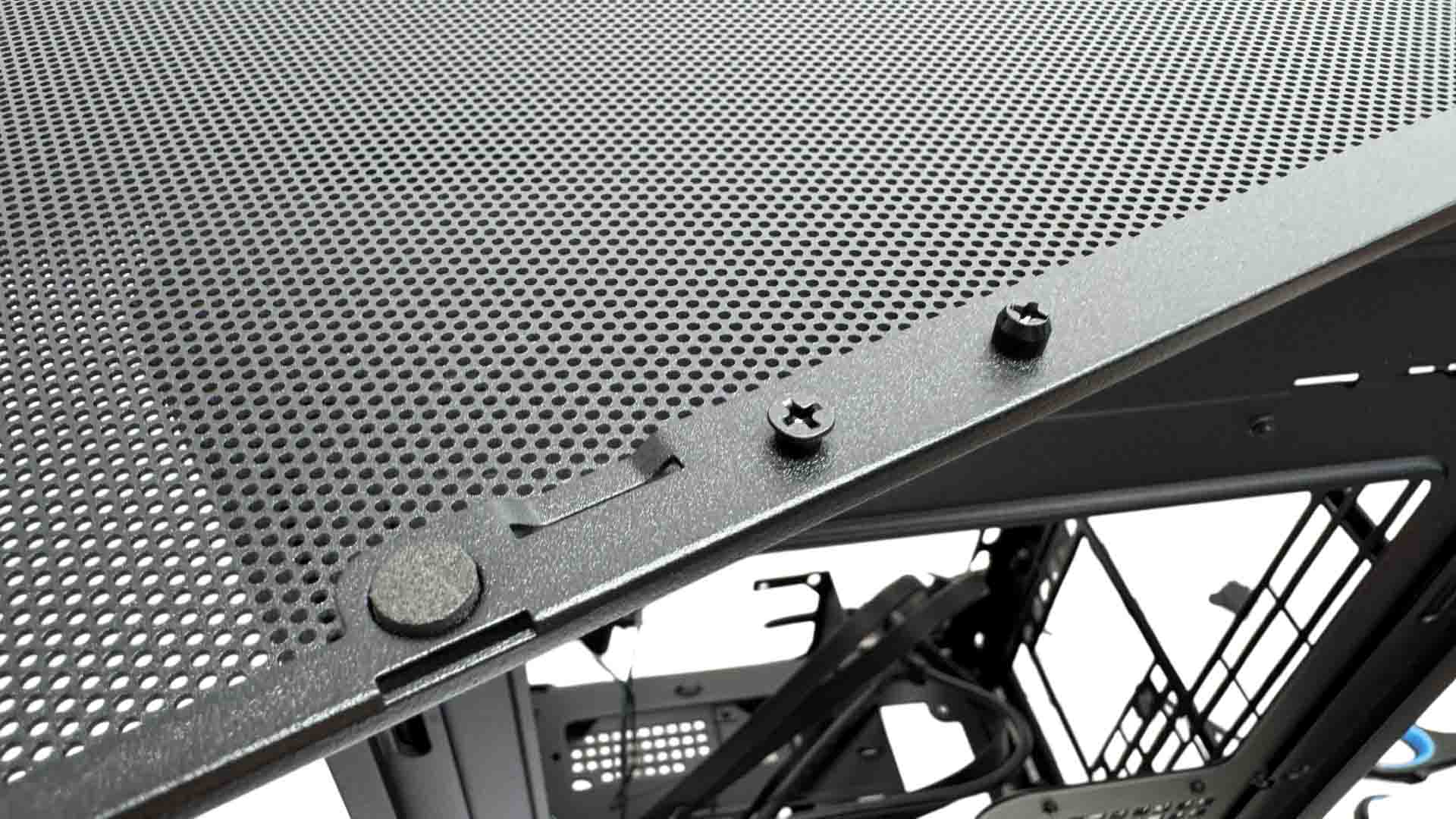
One common criticism of its predecessor was its push-pin side panels being a little rattly. This time Lian Li has apparently addressed this issue either deliberately or by chance, and uses a sliding mechanism with notches and pins. Once the panel is slid in place, anti-vibration rubber mounts serve to prevent any rattling. As the side panels sit behind the I/O panel and slide out, you'll need to remove the latter in order to get at the interior.
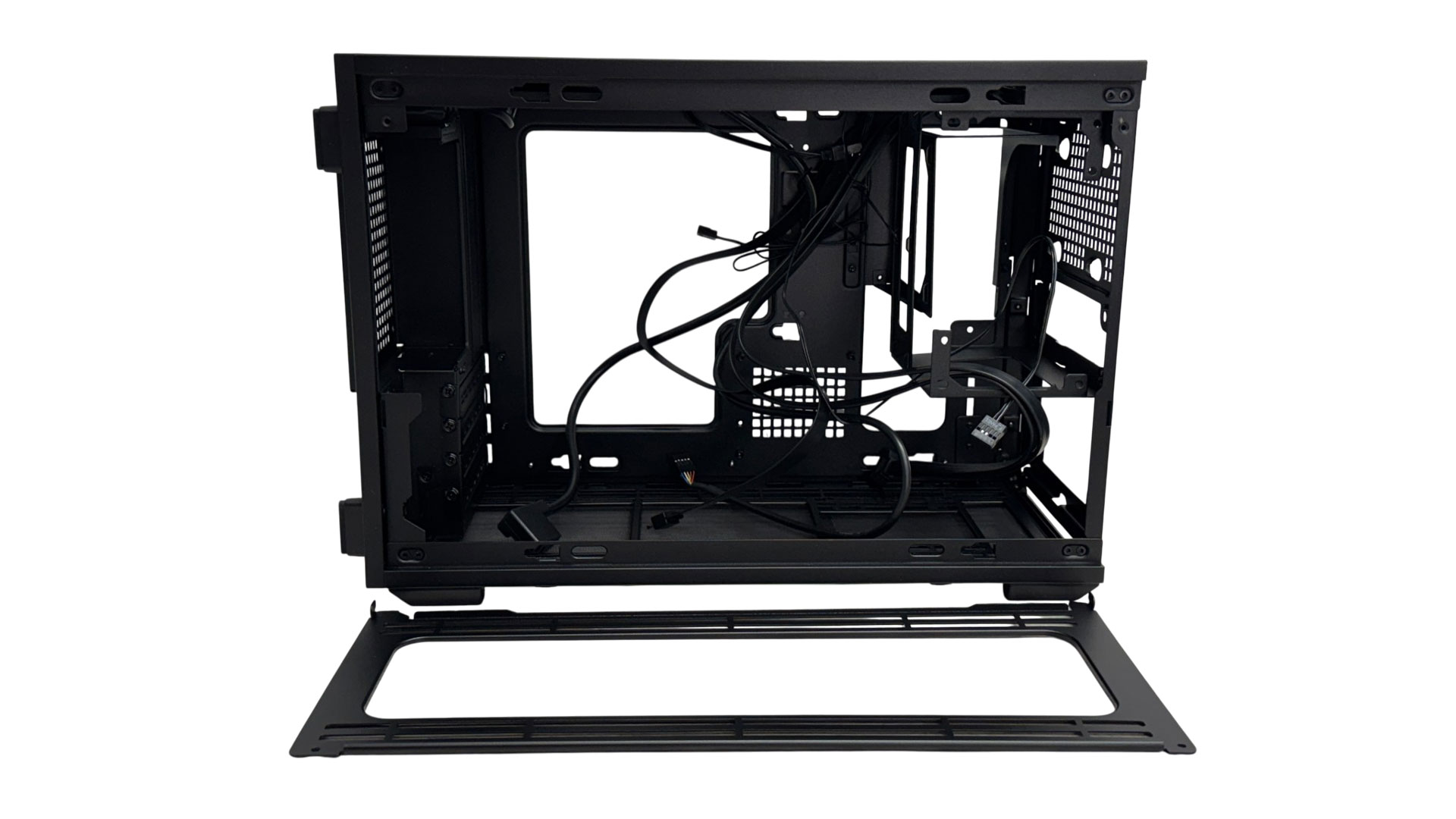
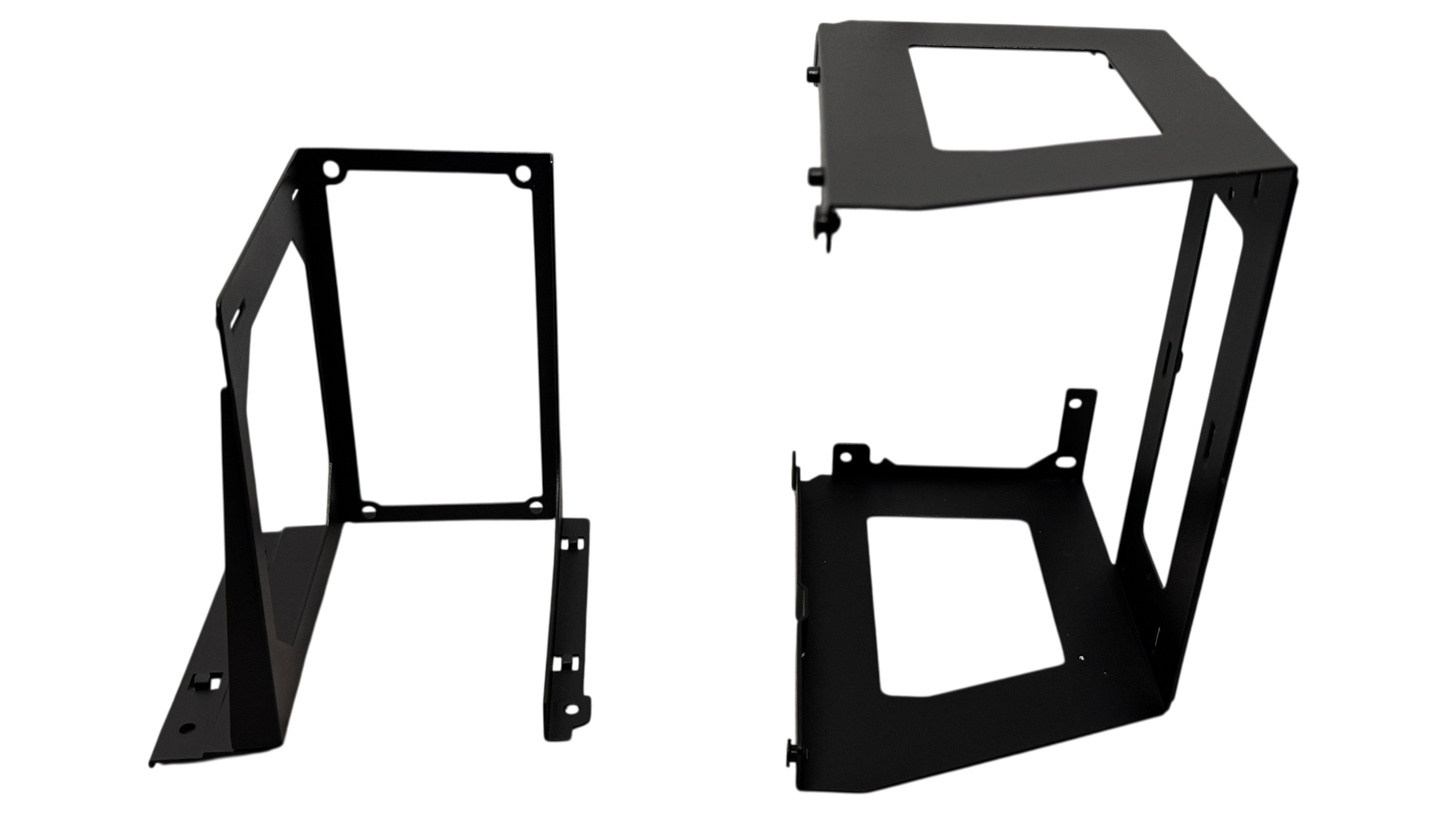
The fan frame secures with two screws and metal flanges and as it's removable, makes installing or lifting out any radiator placed here a lot easier. As it sits over the PSU mounting frames, PSU size has a dramatic impact on cooling. For SFX, you maintain the 360 mm side radiator support, but this falls to 240 mm with an ATX PSU. The latter are also limited to just 140 mm and will make your life harder from a cable tidying point of view too. The two PSU sizes have their own separate fan frames, with both installed out of the box.
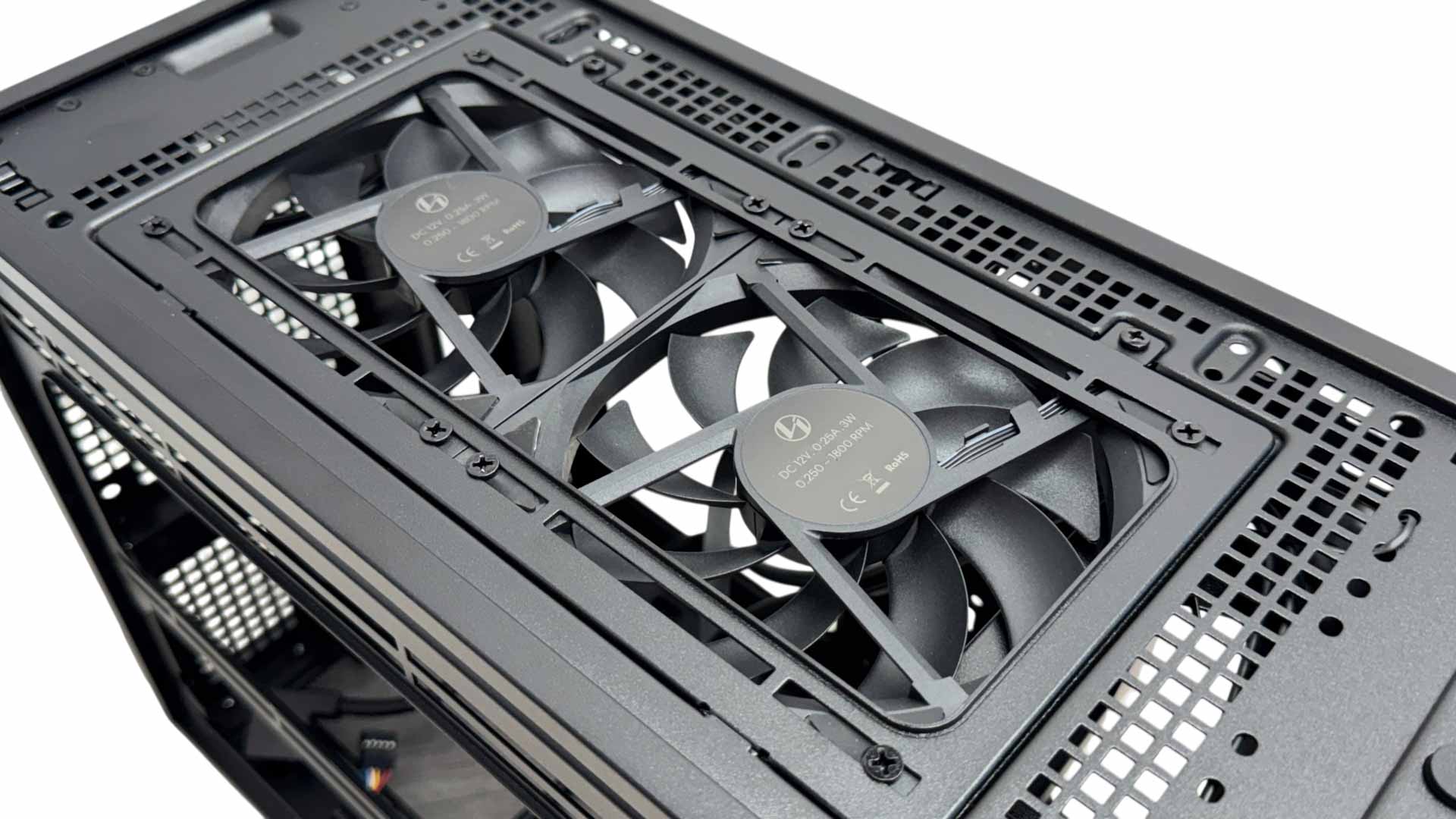
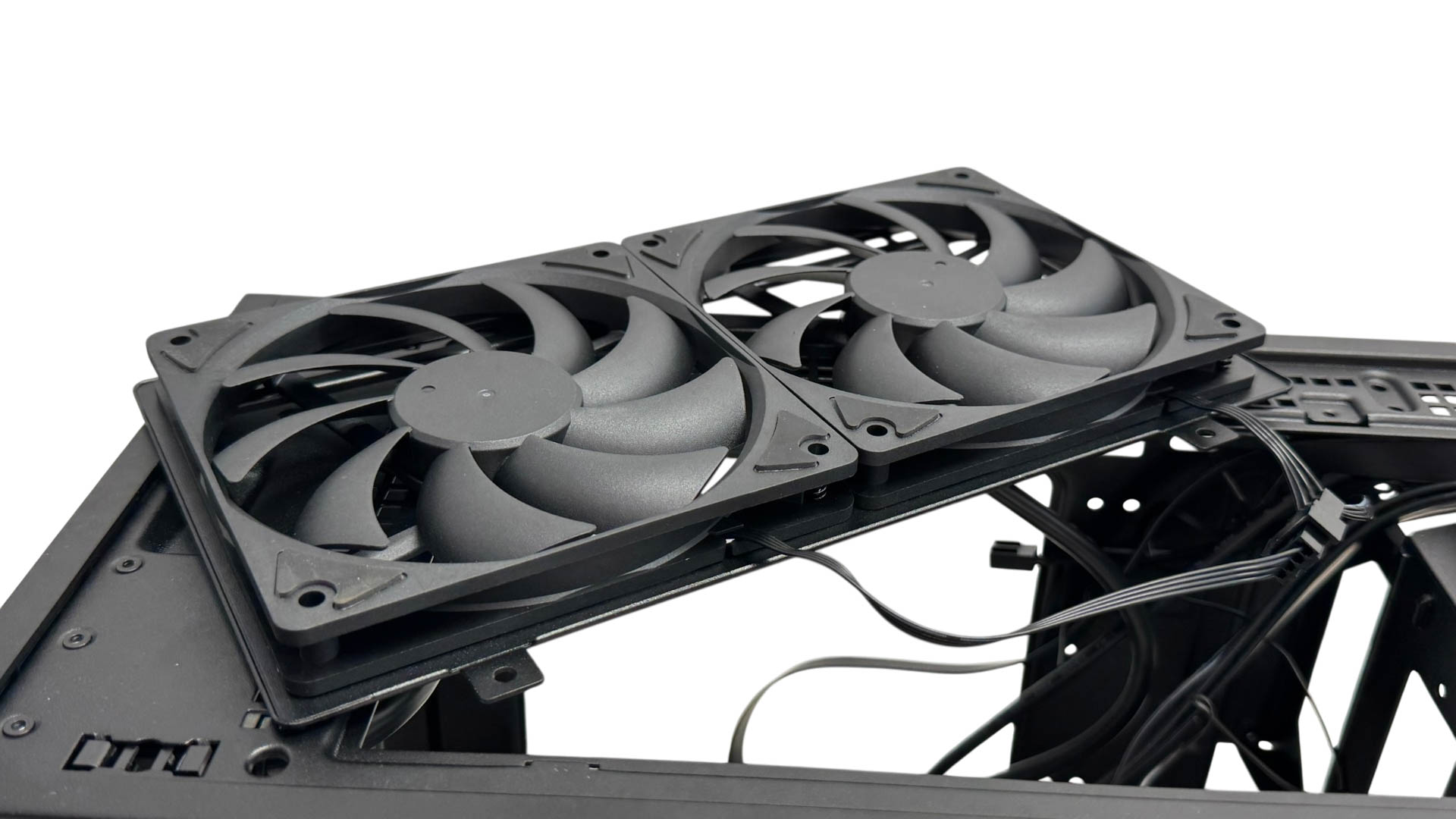
The roof fan frame is removable and lifting this out gives better access to the top of the motherboard for connecting cables. Sadly, the fans do sit recessed directly above the motherboard, so there's no scope for adding a radiator here. The fans appear to be generic, and Lian Li doesn't offer any slim fans on its website either.
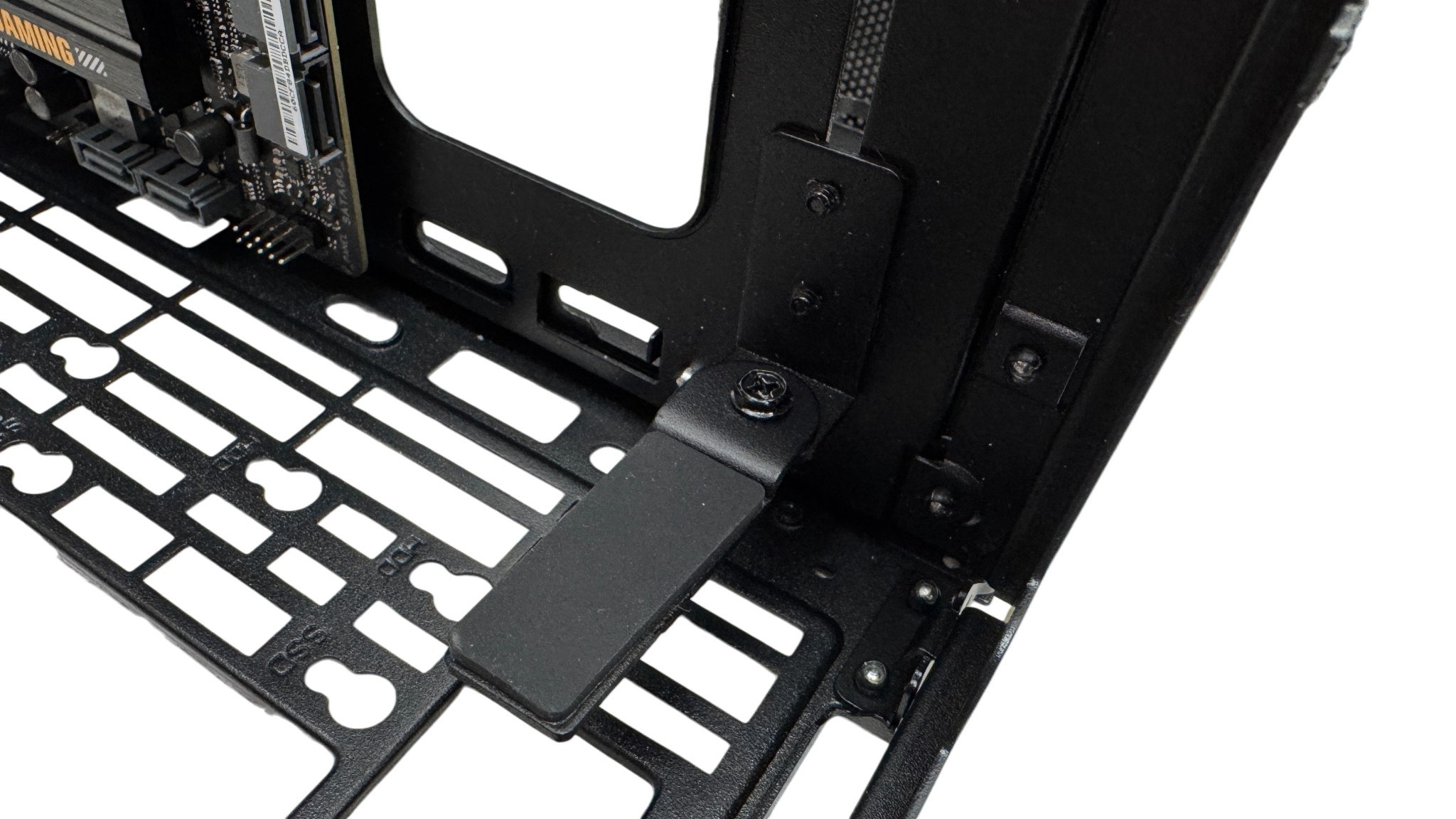
The inclusion of a GPU support is welcome too, especially as the chances are there may be some cables from the PSU above pressing down on it if things are particularly tight. The support is adjustable and can be moved up and down with the rubber-topped support arm able to swing left and right too.
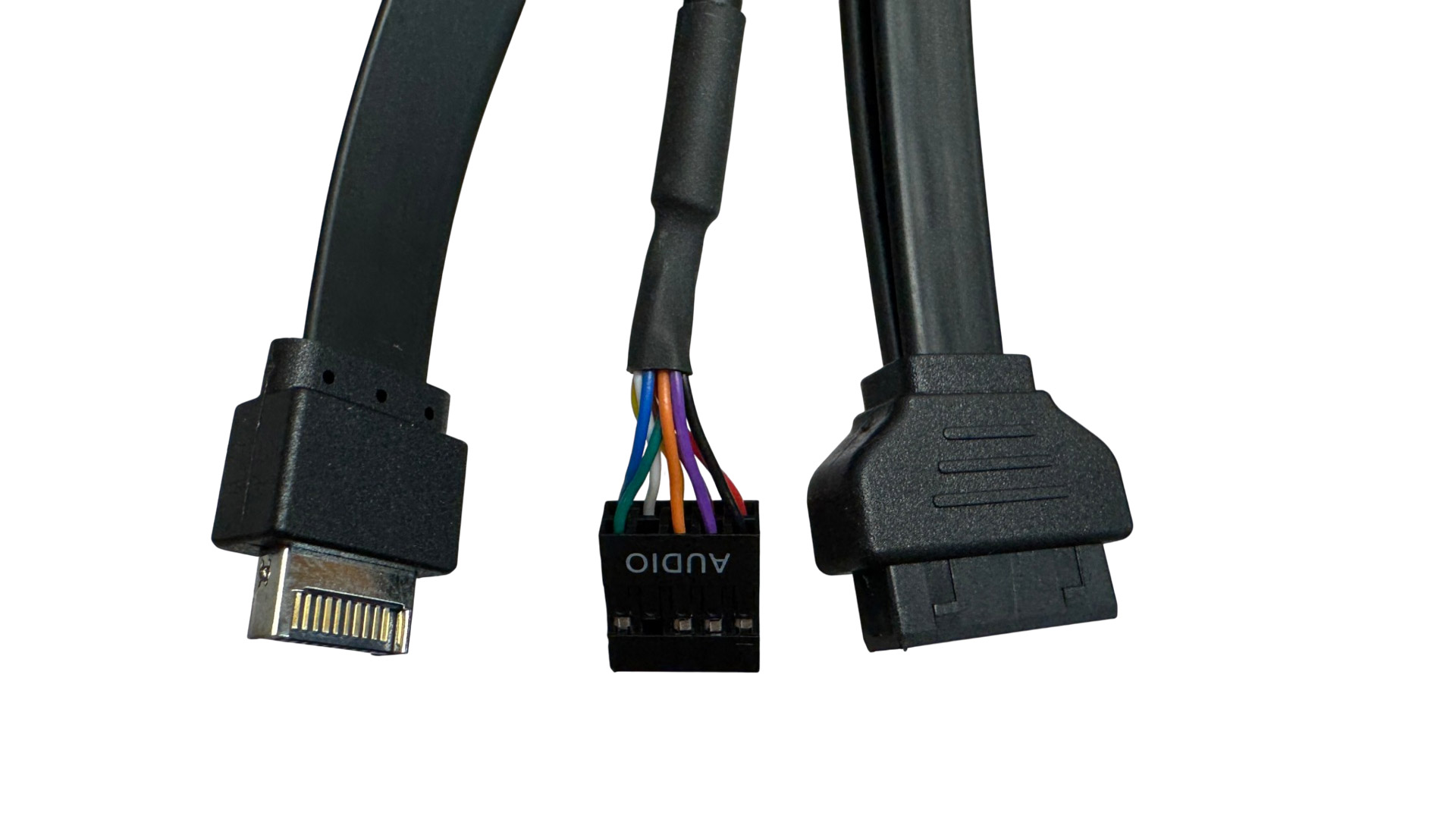
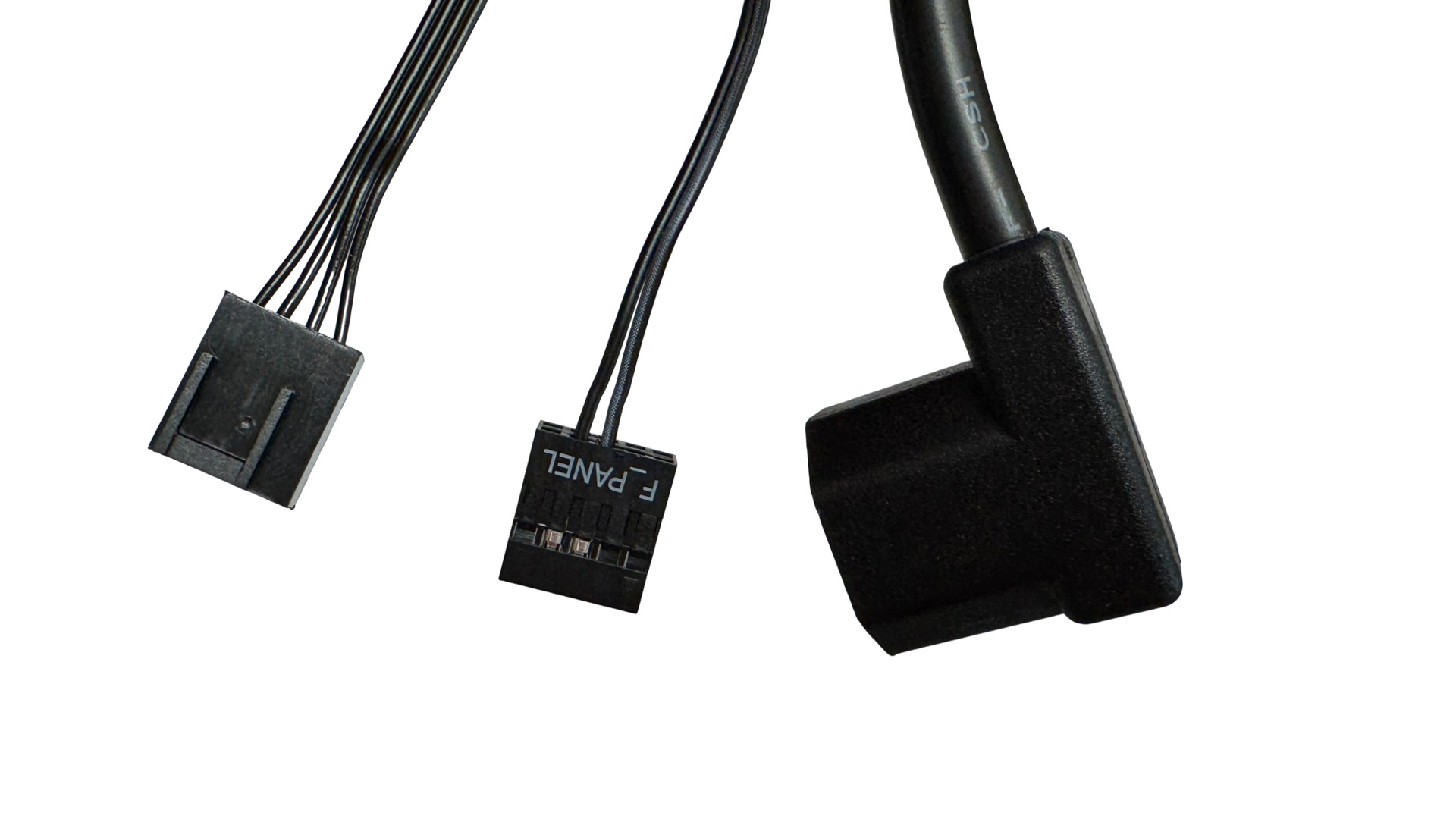
For cabling, we have the USB Type-C header cable, USB 3.0 header cable, audio header and front panel header. The two roof fans are combined using a splitter cable to a single header, with the only other cable being the PSU extension.
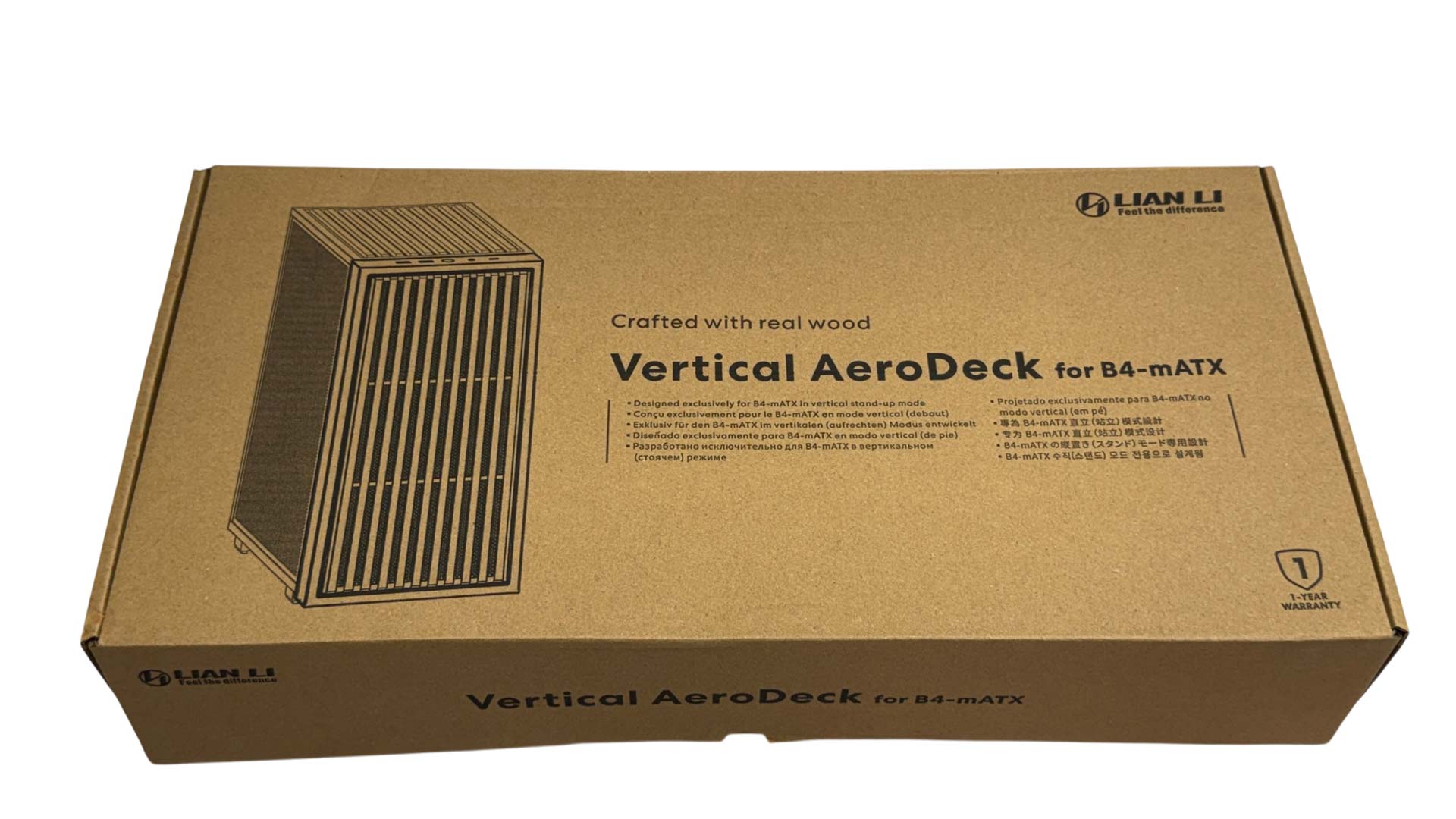
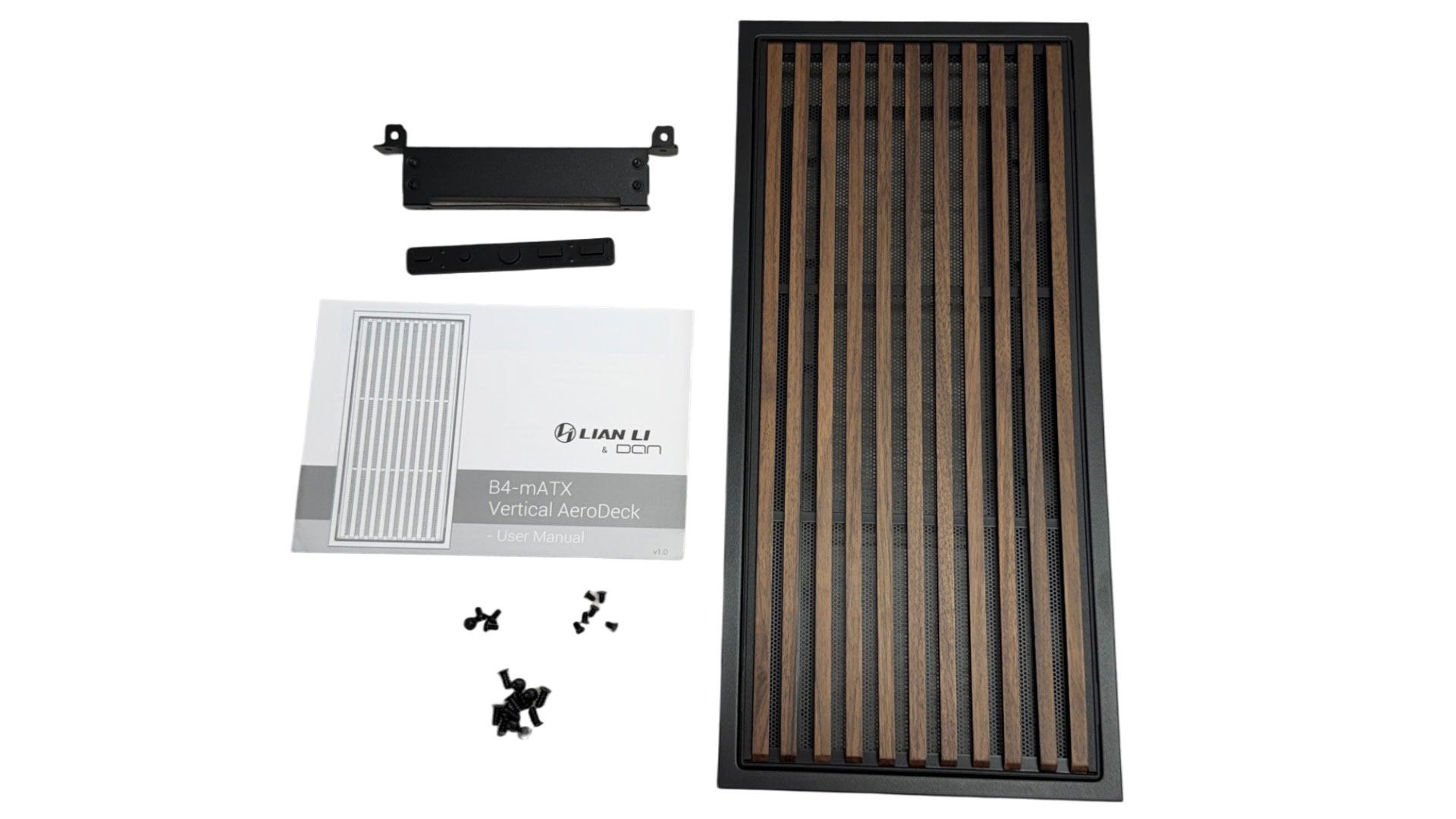
While it's not included with the stock case, the optional Vertical AeroDeck is available for $30 in black or white and Lian Li was kind enough to send one along so we thought we'd at least see how to bolt it on and what it adds to the case. It is essentially a bolt-on fan shroud, adding the option of three 120 mm fans or two 140 mm fans onto what is essentially the bottom of the case. In vertical mode this becomes the front, complete with a new I/O panel location. You'll need to remove the old one and transplant it into the roof of the Vertical AeroDeck.
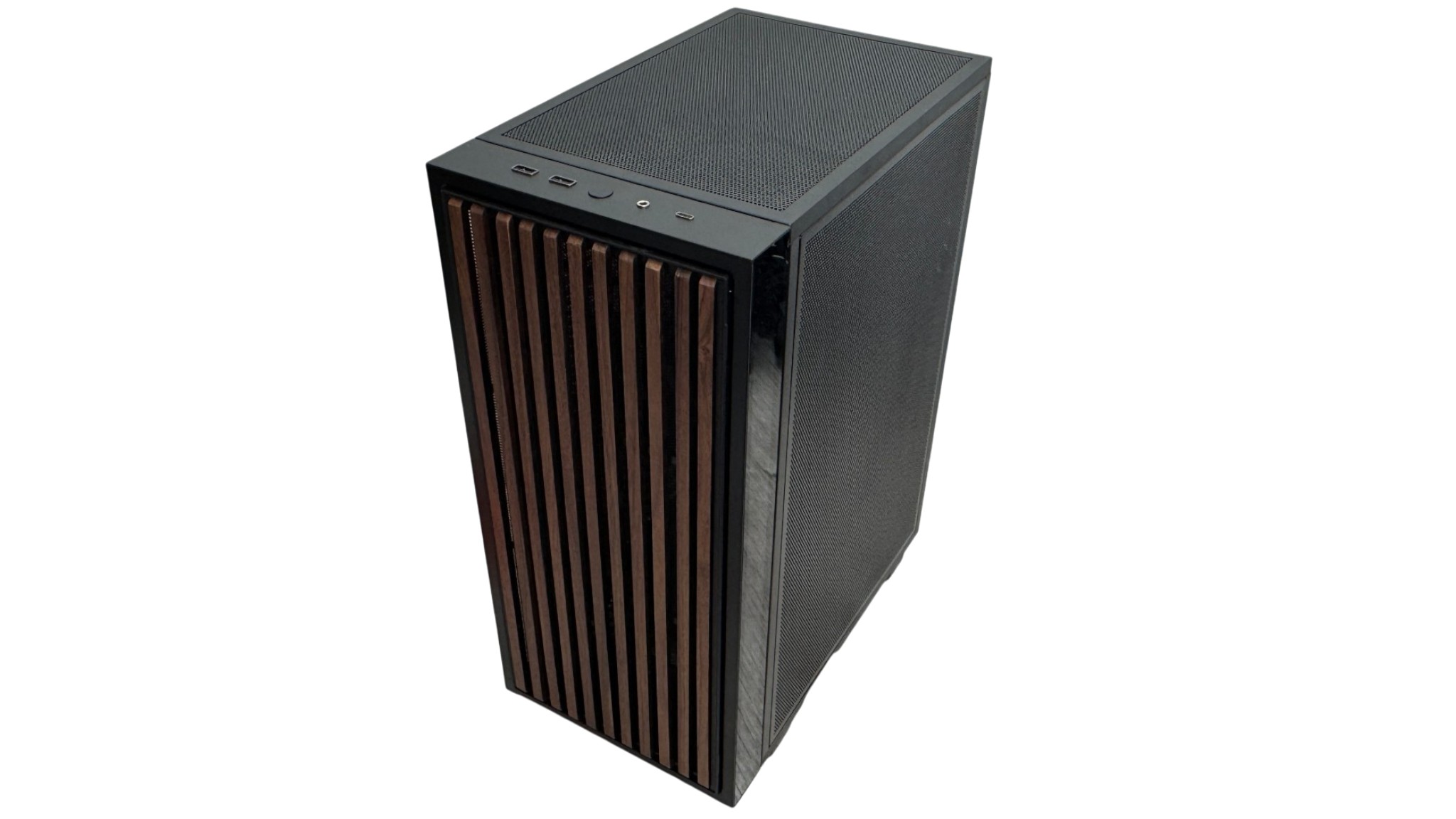
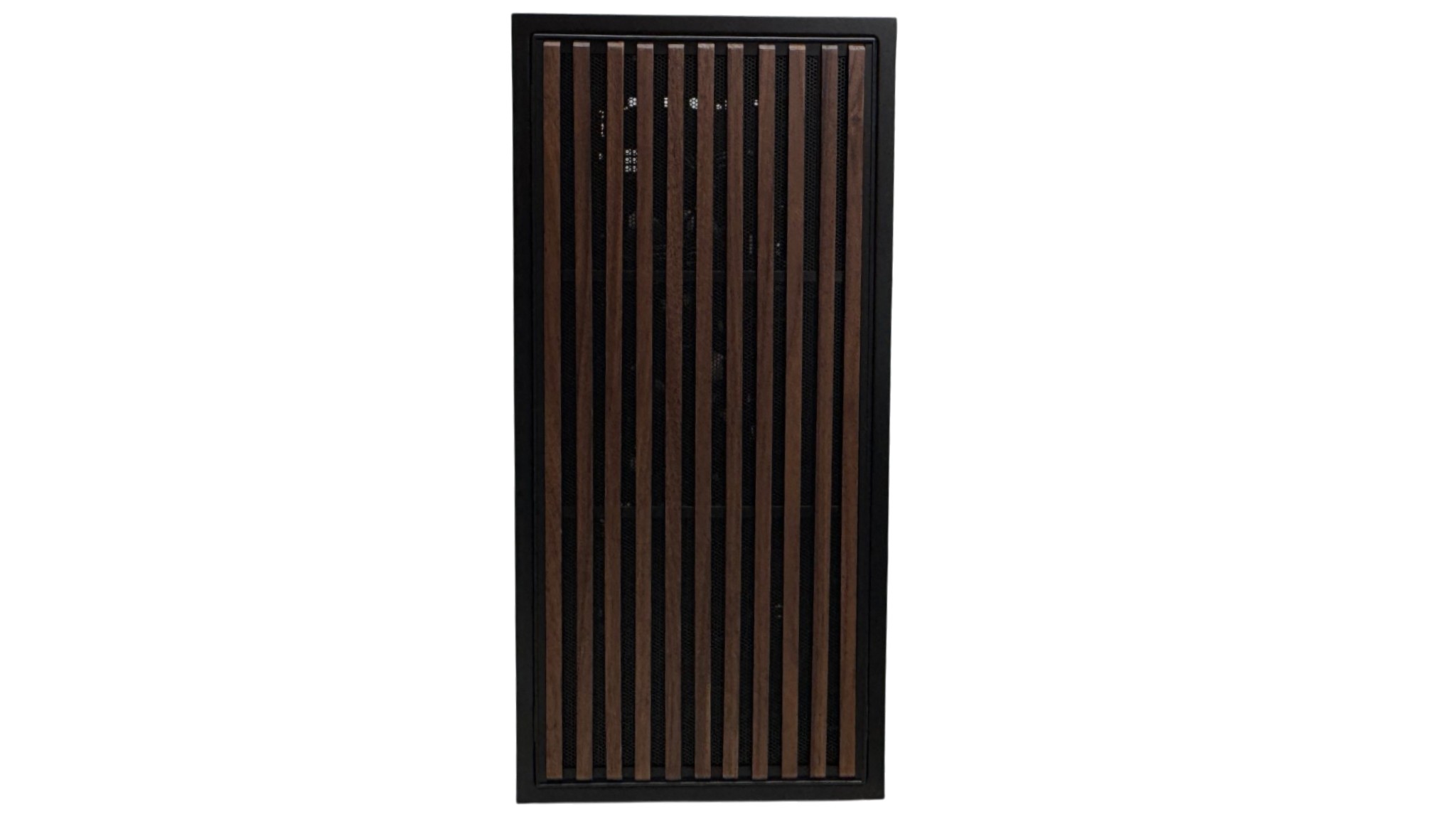
The installation is otherwise fairly painless, but as you have to remove the original I/O panel, it's not something that can be done with your PSU installed. Sadly, while there's extra space beneath your GPU, there's a sizeable gap between the fan mounts on the Vertical AeroDeck and the existing mounts on the case, meaning you can't really add a radiator here. This is a shame as you can fit a 240 mm radiator inside the Vertical AeroDeck. A removable fan mount in the base of the case would have solved this.
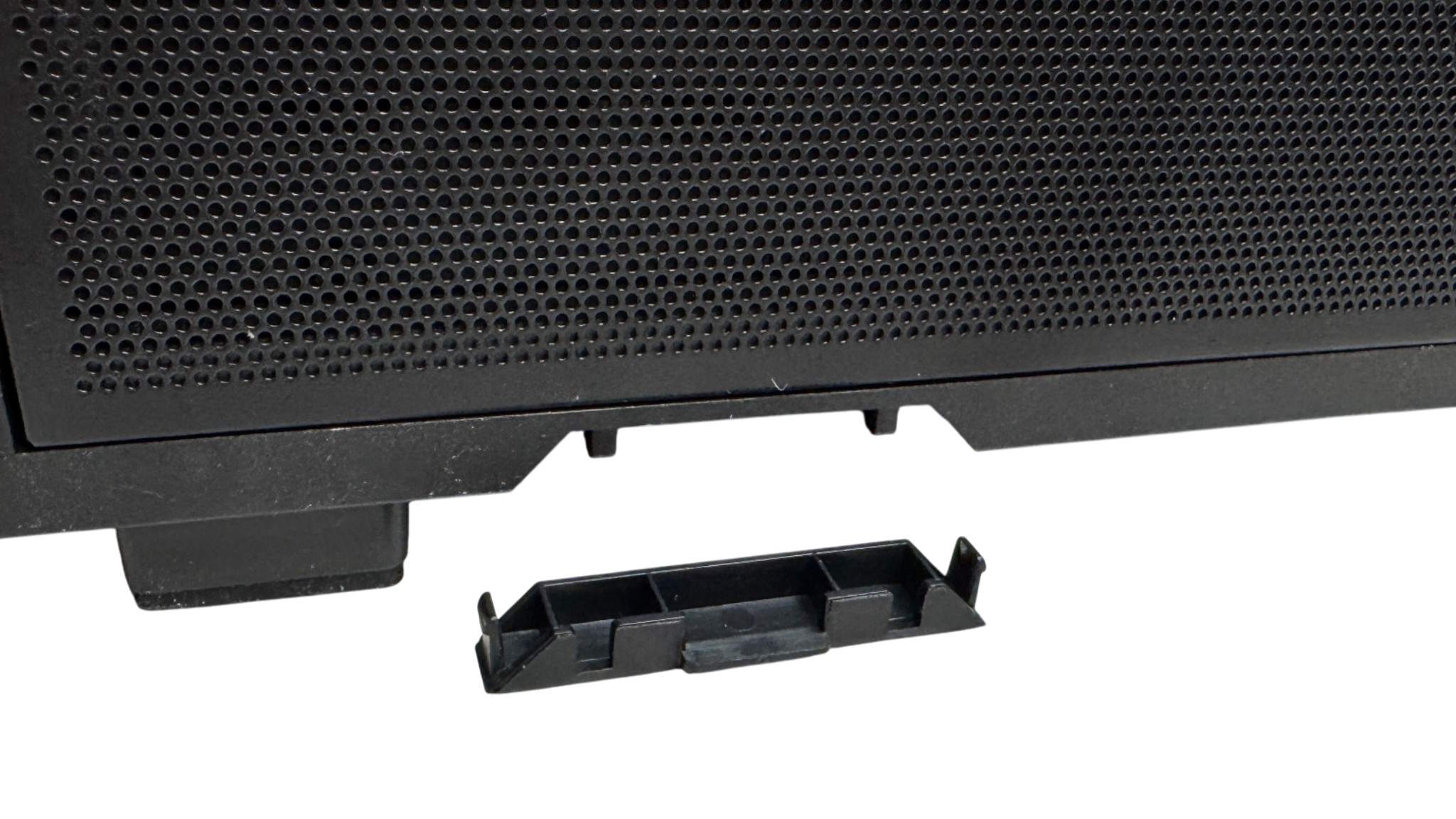
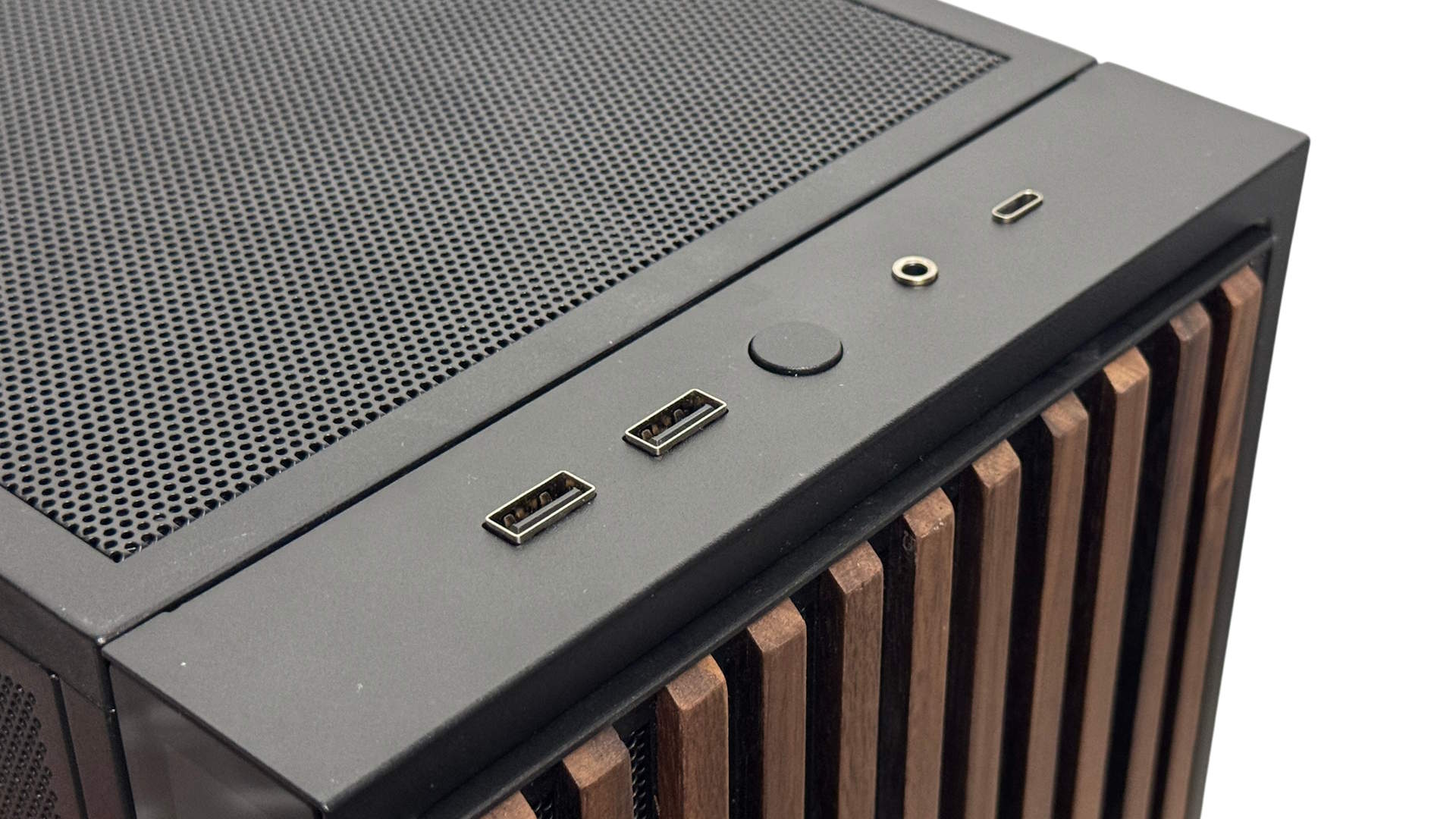
Also, you lose the handy cable clip for gathering rear I/O panel cables. The new front panel blocks this, but there's still enough space for most cables to run out the new back end of the case and Lian Li includes pull-out clip on one side of the case should you have anything larger. The new I/O panel location might not be to everyone's taste, but it's necessary given the glass surrounds on the Vertical AeroDeck and near edge-to-edge wood fascia.
Nov 20th, 2026 12:00 PST
change timezone
Latest GPU Drivers
New Forum Posts
- Very unusual two gaming-pc scenarios. (34)
- How to prevent OLED burn damage due to PC freezes or power outtages? (46)
- Honestly, do you care about GTA VI? (192)
- GeekMagic Ultra Smart WiFi Weather Station (6)
- Anthrophics IPO (16)
- Can i play GTA 6 now? (Joke) (10)
- Last game you purchased? (1410)
- TechPowerUp Screenshot Thread (MASSIVE 56K WARNING) (4387)
- SATA drive 1.4 GBps with Intel X25-E on Windows 98! (35)
- RX 9000 series GPU Owners Club (2245)
Popular Reviews
- AMD Zen 6 Technical Deep Dive
- Ugreen NASync DXP4800 GT Review
- Corsair RM1200e (Second Generation) Review
- Acemagic Retro X3 Review
- Microsoft Surface Laptop Ultra Review - The Next-gen Arm Laptop
- Upcoming Hardware Launches 2027 (Updated Nov 2026)
- Pulsar Office Tour & First Look at P1 Dual-Sensor Mouse
- Biwin Black Opal NV7400 2 TB Review
- AMD Ryzen 7 9800X3D Memory Performance Scaling
- AMD Ryzen 7 9800X3D Review - The Best Gaming Processor
TPU on YouTube
Controversial News Posts
- NVIDIA Co-Founder and CEO Jensen Huang Officially Resigns (490)
- Report: Jensen Huang Eyes NVIDIA Comeback (251)
- Open Letter Asking NVIDIA to Reinstate Jensen Huang Passes 115,000 Signatures (184)
- OpenAI CEO Argues Home PCs Waste the World's Limited DRAM Supply (152)
- NVIDIA Launches Investigation Into Jensen Huang's Relationship With Suspected Chinese Spy (136)
- Intel "Raptor Lake Next" 16-Core and 20-Core CPUs Surface (130)
- Legendary Game Studio BioWare Shuts Down Following EA Layoffs (104)
- Dell CEO Says the Memory Shortage Will Get Worse in 2027 (95)