 12
Memblaze PBlaze7 7A46 6.4 TB Review - Random Write King
(12 Comments) »Introduction

Memblaze is a leading name in the Asian enterprise SSD space, recognized for creating high-performance storage built to meet the demands of datacenters and cloud platforms. With in-house firmware and a focus on real-world efficiency, its drives are designed to deliver speed, reliability, and consistently low latency.

The new Memblaze PBlaze7 7A40 and 7A46 series represent the company's second generation of PCIe 5.0 enterprise SSDs, introducing both 1-DWPD and 3-DWPD models, with the 3-DWPD 7A46 being the unit tested today. These drives feature a Memblaze-designed architecture, built around a new in-house controller known as the "Zhenyue 510," paired with some of the fastest NAND currently available, YMTC 232-layer TLC.
The PBlaze7 7A46, however, is available exclusively in the 2.5-inch U.2 15 mm form factor, with capacities ranging from 3.2 TB to 12.8 TB. Meanwhile, the 1-DWPD variant (7A40) is offered in 3.84 TB and 7.68 TB configurations. Pricing for these enterprise SSDs remains difficult to pin down due to strong market demand, but the average price for both 3.84 TB (1-DWPD) and 6.4 TB (3-DWPD) models has been fluctuating over $1,750 and $3,000 respectively, with significantly lower pricing possible at higher purchase volumes, according to the manufacturer.
As expected, all 7A46 models are rated for 3-DWPD endurance. The 3.2 TB version is rated for approximately 17,520 TBW, while the 6.4 TB model reaches around 35,040 TBW, both over a standard five-year lifespan.
| Specifications: Memblaze PBlaze7 7A46 6.4 TB SSD | |
|---|---|
| Brand: | Memblaze |
| Model: | P7A46DT0640Y00 |
| Capacity: | 6400 GB (5961.63 GB usable) 28% overprovisioning |
| Controller: | T-Head Zhenyue 510 |
| Flash: | YMTC 3D eTLC X3-9070 "WDS" 1 Tb (EET1A) 232-Layer YMN0ATF1B5JFAD |
| DRAM: | 10 GB (5× 2 GB) DDR4-3200 CL-22 SK Hynix H5AG46DXNDX117 |
| Sequential Read Speeds: | 14,100 MB/s |
| Sequential Write Speeds: | 11,200 MB/s |
| Random Read Speeds: | 3,300 K IOPS |
| Random Write Speeds: | 1000 K IOPS |
| Endurance: | 35,040 TBW - 3.0 DWPD |
| MTBF: | 2.5 Million |
| Form Factor: | U.2 15 mm |
| Interface: | PCIe Gen 5 x4, NVMe 2.0 |
| Firmware: | 710MB010 |
| Warranty: | Five-years |
| Price at Time of Review: | ~$3000 |
Packaging

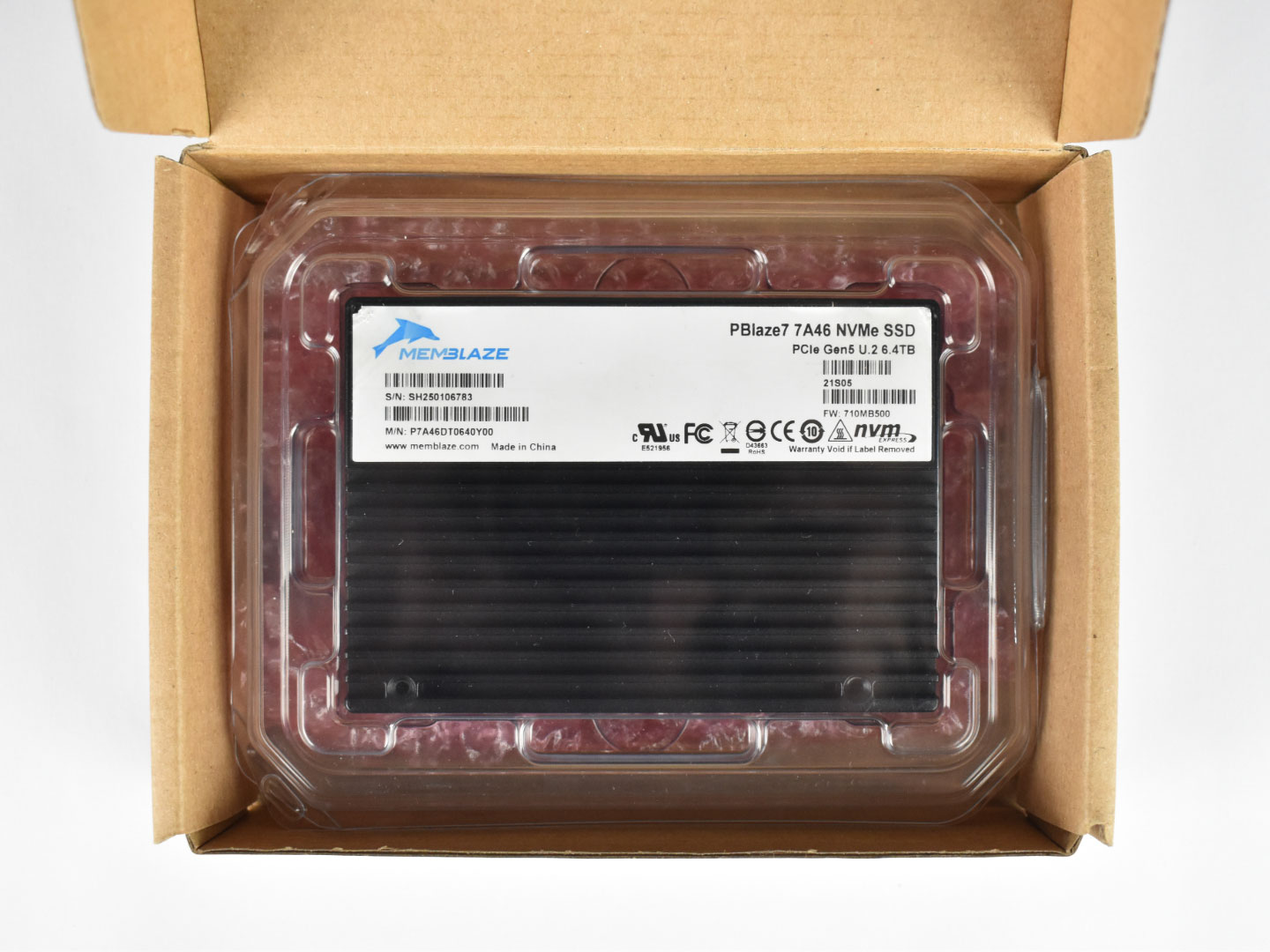
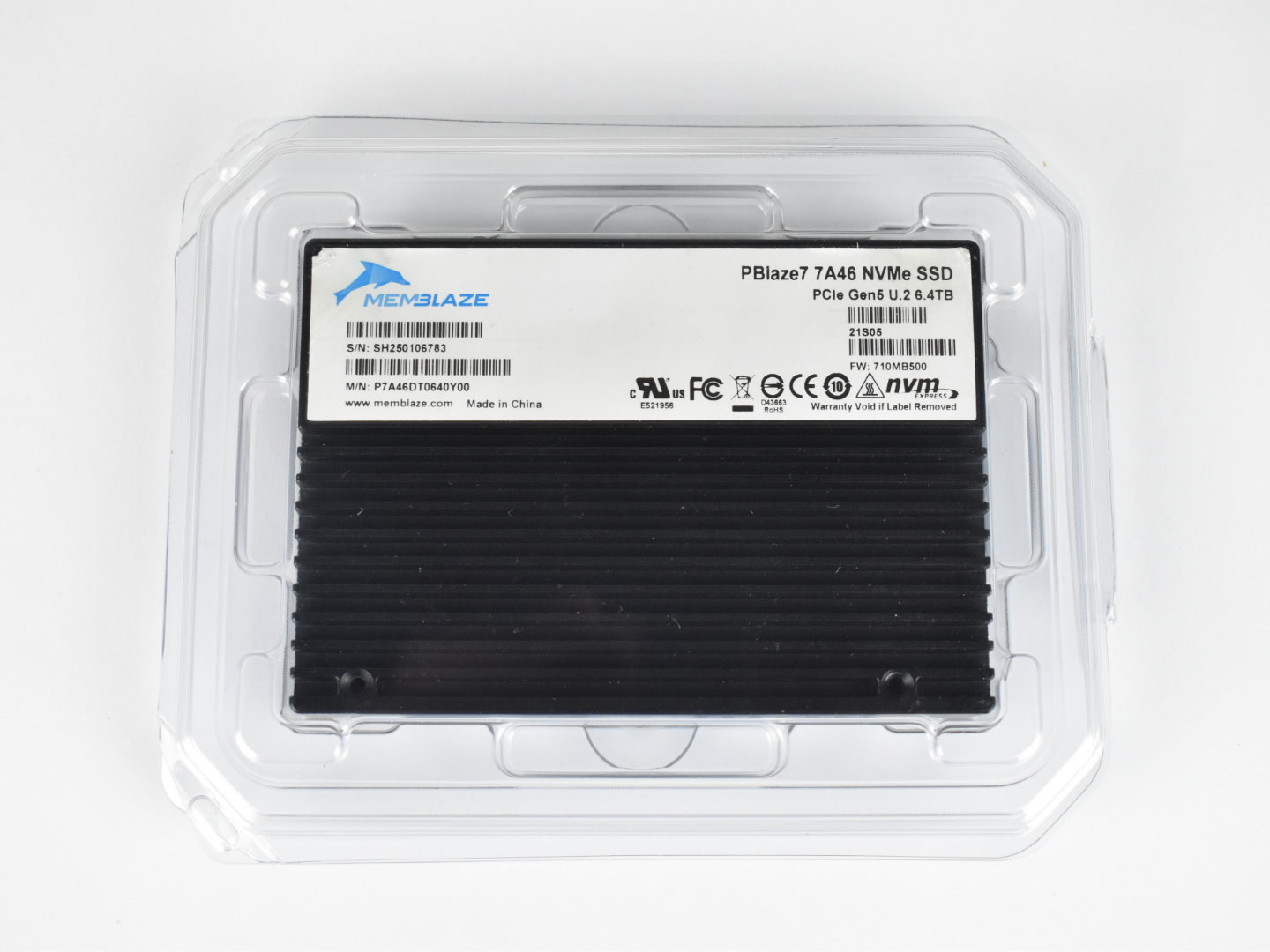
The SSD comes packaged in a very simple cardboard box with no markings. Once opened, the drive is secured inside a plastic blister to prevent damage during transport.
The Drive
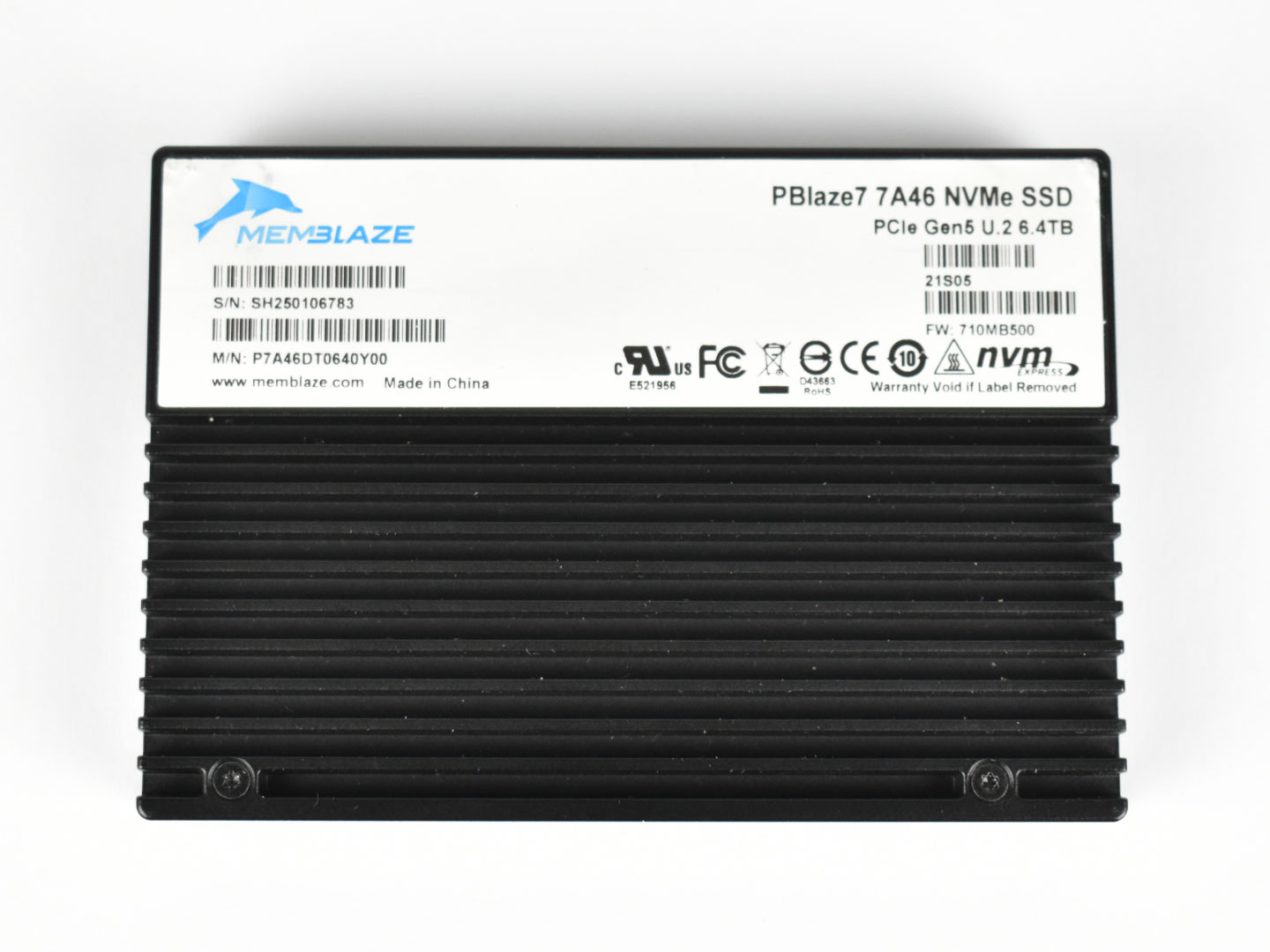
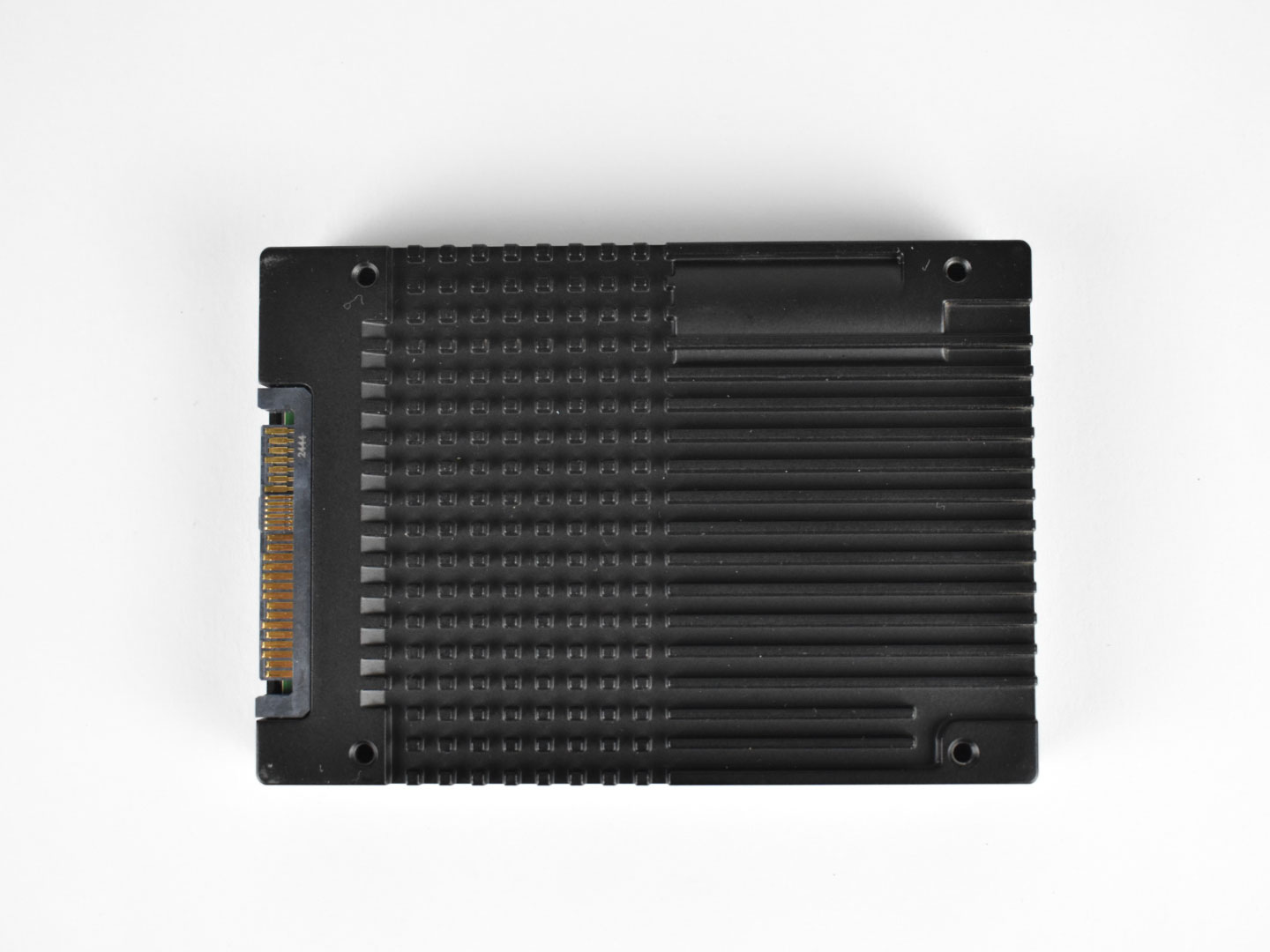
The unit we received uses the U.2 15 mm format with the SFF-8639 connector, since this lineup is only available in this form factor. On the front side, there's a label displaying product details such as the model, serial number, barcodes, and even the factory-installed firmware version. The back of the PCB, on the other hand, is entirely clean, designed with airflow optimization in mind.
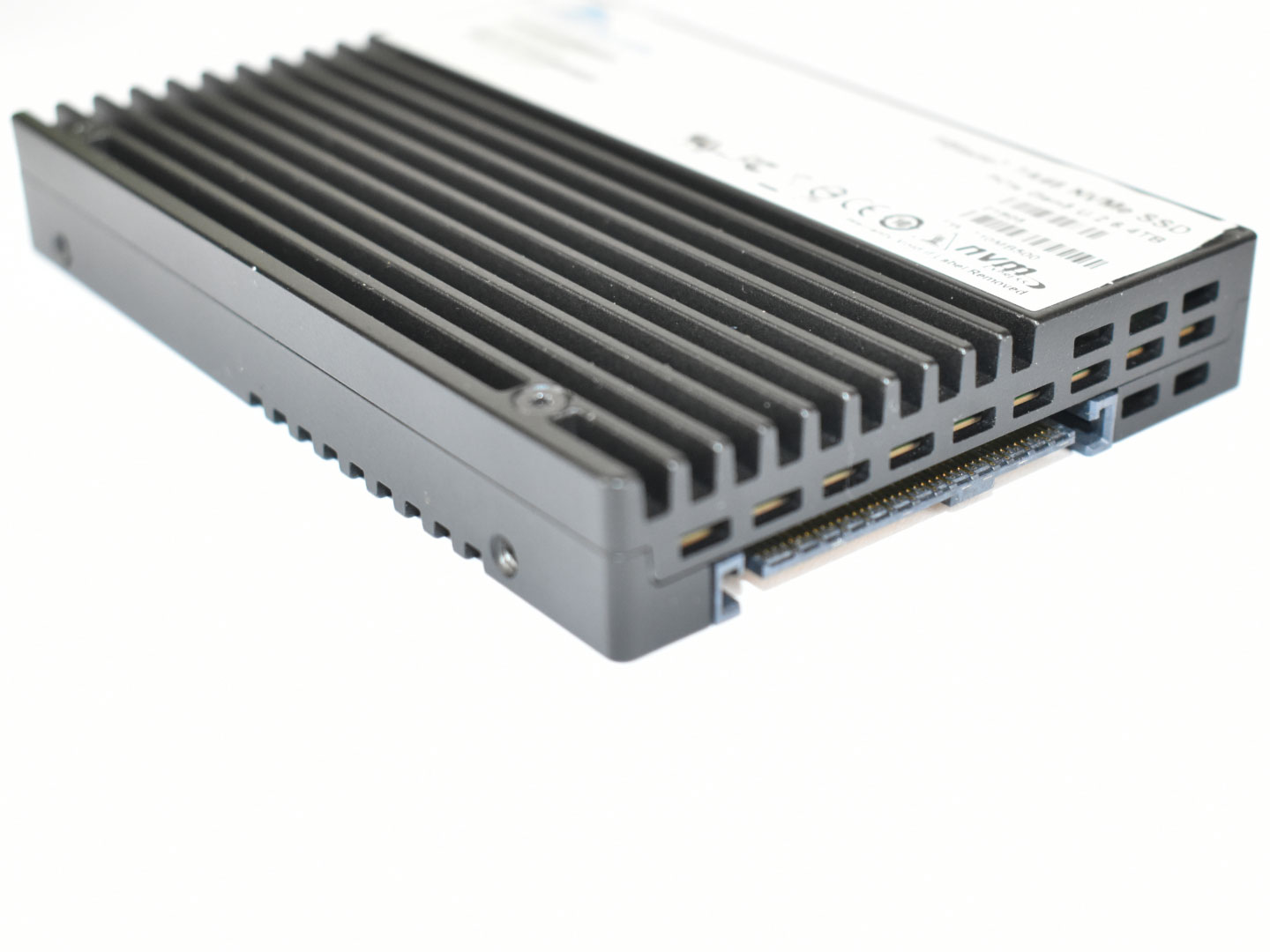
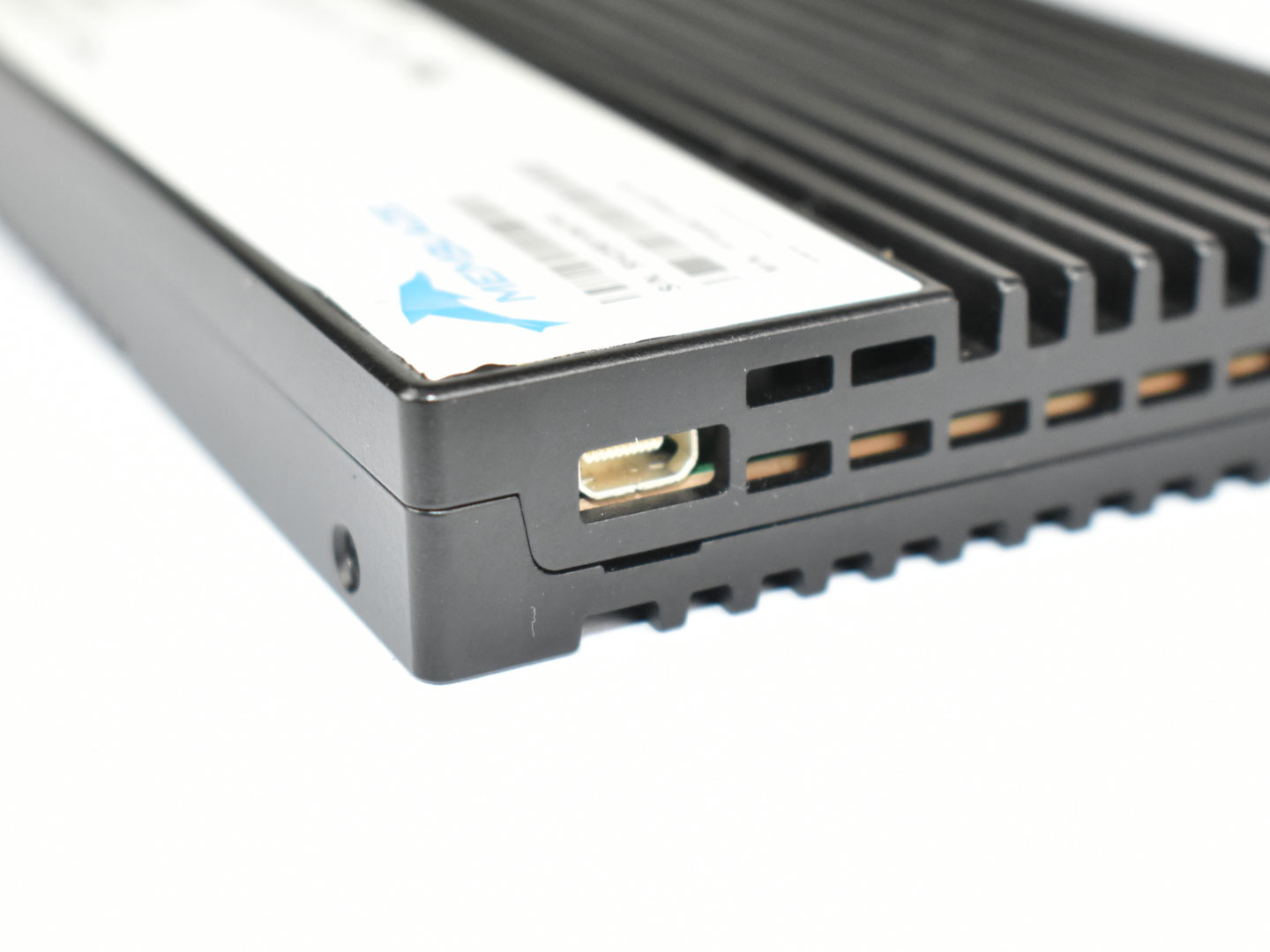
PCI-Express 5.0 x4 is used as the host interface to the rest of the system, alongside the NVMe 2.0 protocol.
Teardown
Upon opening the SSD, we see that it's secured with four Torx T-6 screws. Once removed, the back side of the PCB is revealed, firmly attached to the metal housing via several thermal pads that help dissipate heat from key components.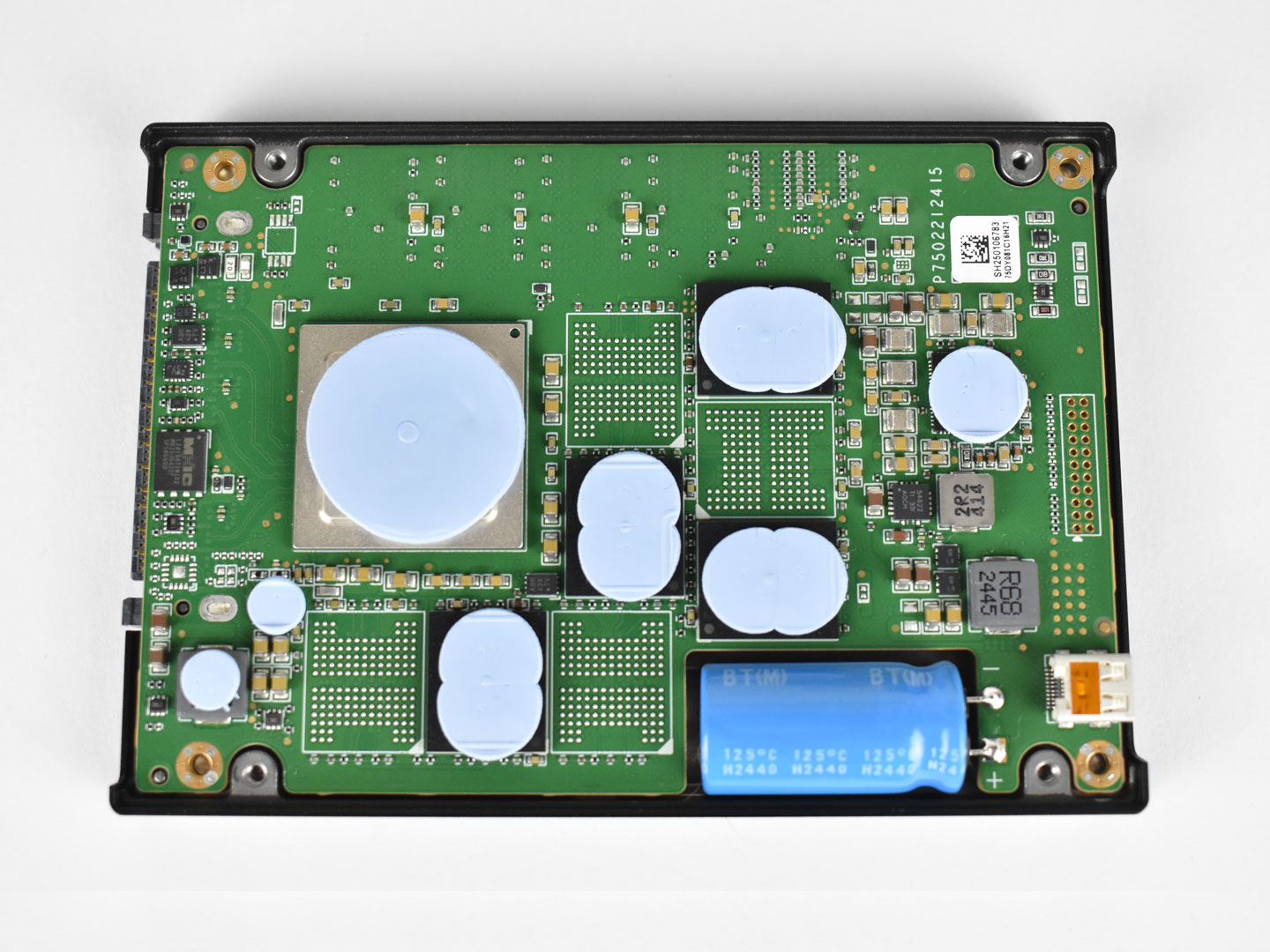
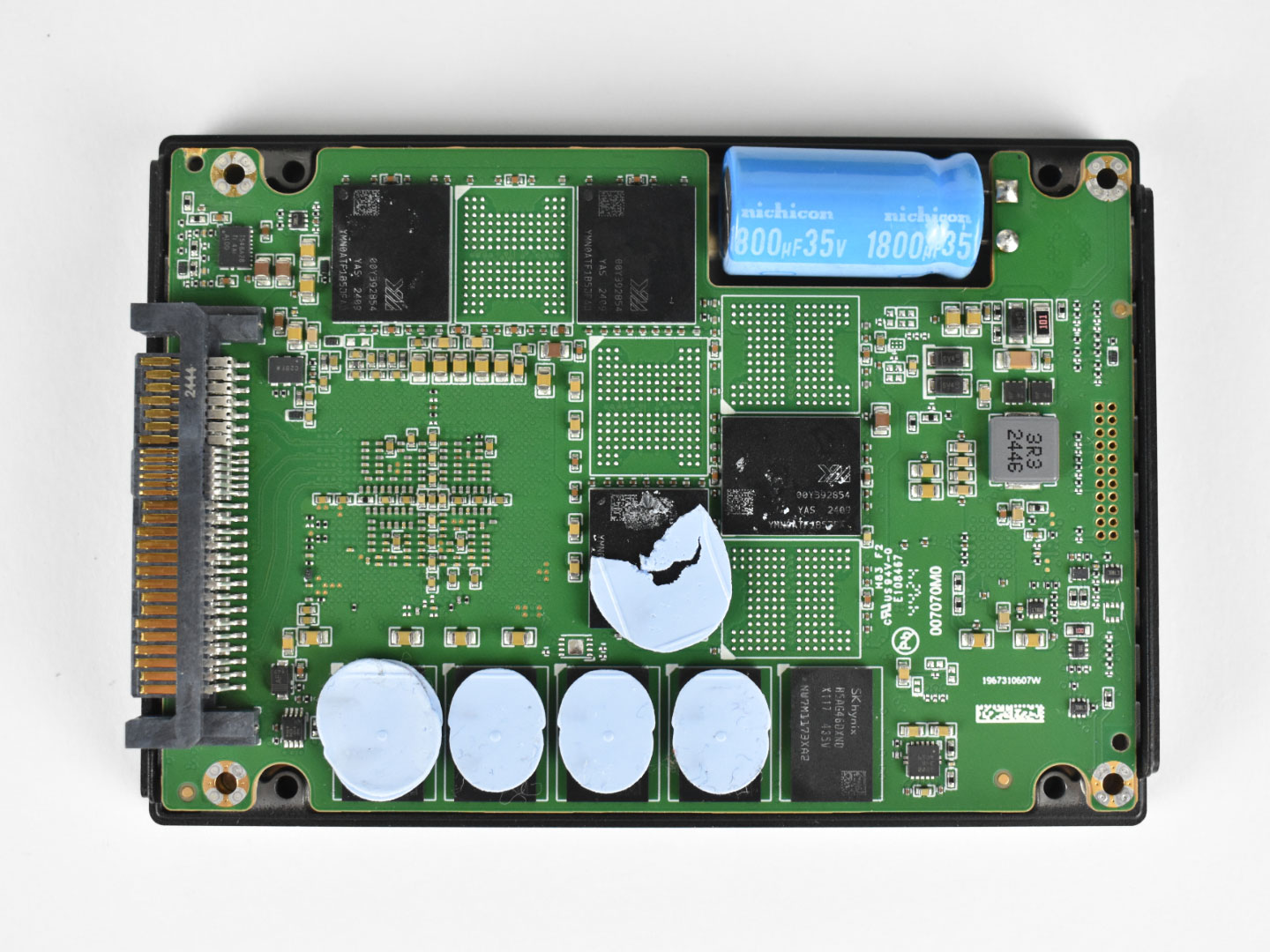
After removing all four screws, we can detach the PCB from its metal enclosure, revealing both the front and rear PCBs. On the front side, we find four NAND flash packages along with the controller and several VRM components. On the rear side, there are four additional NAND packages, five DRAM cache ICs, the power-loss protection capacitor, and more VRM components.
Controller
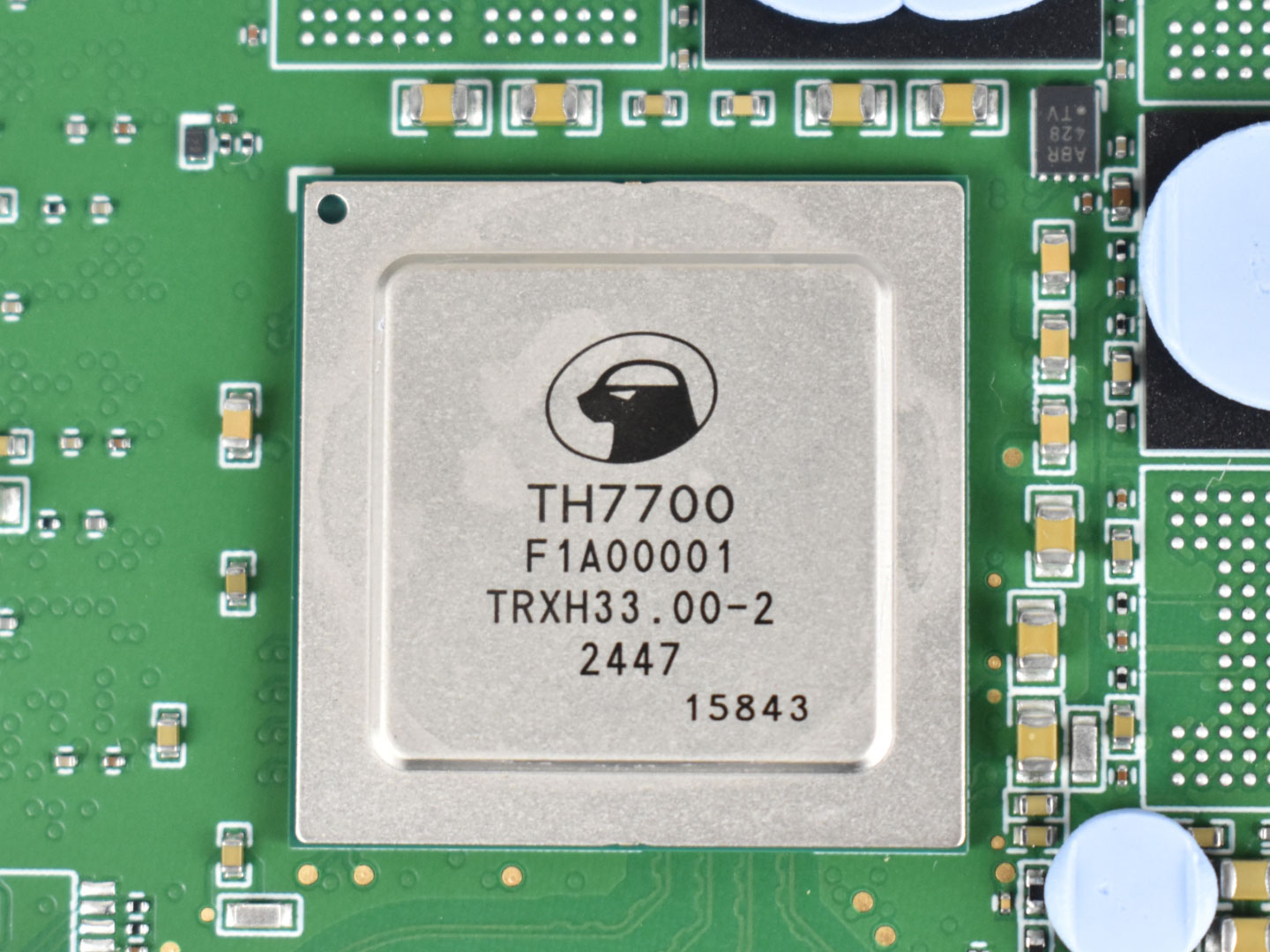
This SSD features an in-house developed controller from the Chinese company T-Head, a chip company from Alibaba, known as the Zhenyue 510 also labeled as "TH7700". It is a 16-channel controller built on TSMC's 12 nm FinFET process. The architecture is based on the T-Head 64-bit Xuantie R910, making it a RISC-V design, which sets it apart from most other SSD controllers we've analyzed that typically rely on Arm architectures. Additionally, it is equipped with 8 cores running at 1.6 GHz, providing strong computational capability for enterprise workloads.
Its 16 channels enable direct communication with the NAND flash at speeds of up to 1600 MT/s, a common value for controllers in this class. The controller also supports interleaving with up to four or eight chip enables per channel, improving parallelism and NAND access efficiency, although the precise number is unknown.
RISC-V cores, such as T-Head's Xuantie R910, are becoming increasingly common across the industry, appearing not only in SSD controllers but also in data center accelerators, IoT devices, networking equipment, and various embedded platforms. As an open-standard architecture, RISC-V offers greater flexibility and customization compared to traditional designs, allowing companies to tailor performance and features to specific workloads. This combination of scalability, efficiency, and architectural freedom makes it particularly well-suited for modern, high-performance and specialized hardware solutions.
Our Patreon Silver Supporters can read articles in single-page format.
Nov 20th, 2026 13:35 PST
change timezone
Latest GPU Drivers
New Forum Posts
- Honestly, do you care about GTA VI? (206)
- WarpCoreBench scores! (80)
- GTA VI (20)
- Anthrophics IPO (25)
- GeekMagic Ultra Smart WiFi Weather Station (8)
- Very unusual two gaming-pc scenarios. (35)
- Can i play GTA 6 now? (Joke) (14)
- How to prevent OLED burn damage due to PC freezes or power outtages? (47)
- Zen 3 IF/IMC degradation (239)
- The Final Upgrade for Legacy AiO's (10)
Popular Reviews
- AMD Zen 6 Technical Deep Dive
- Ugreen NASync DXP4800 GT Review
- Microsoft Surface Laptop Ultra Review - The Next-gen Arm Laptop
- Corsair RM1200e (Second Generation) Review
- Acemagic Retro X3 Review
- Upcoming Hardware Launches 2027 (Updated Nov 2026)
- Pulsar Office Tour & First Look at P1 Dual-Sensor Mouse
- Biwin Black Opal NV7400 2 TB Review
- AMD Ryzen 7 9800X3D Memory Performance Scaling
- AMD Ryzen 7 9800X3D Review - The Best Gaming Processor
TPU on YouTube
Controversial News Posts
- NVIDIA Co-Founder and CEO Jensen Huang Officially Resigns (490)
- Report: Jensen Huang Eyes NVIDIA Comeback (254)
- Open Letter Asking NVIDIA to Reinstate Jensen Huang Passes 115,000 Signatures (184)
- OpenAI CEO Argues Home PCs Waste the World's Limited DRAM Supply (152)
- NVIDIA Launches Investigation Into Jensen Huang's Relationship With Suspected Chinese Spy (136)
- Intel "Raptor Lake Next" 16-Core and 20-Core CPUs Surface (130)
- Legendary Game Studio BioWare Shuts Down Following EA Layoffs (104)
- Dell CEO Says the Memory Shortage Will Get Worse in 2027 (95)