 1
Microsoft Surface Laptop Ultra Review - The Next-gen Arm Laptop
Packaging & Contents »Agentic AI
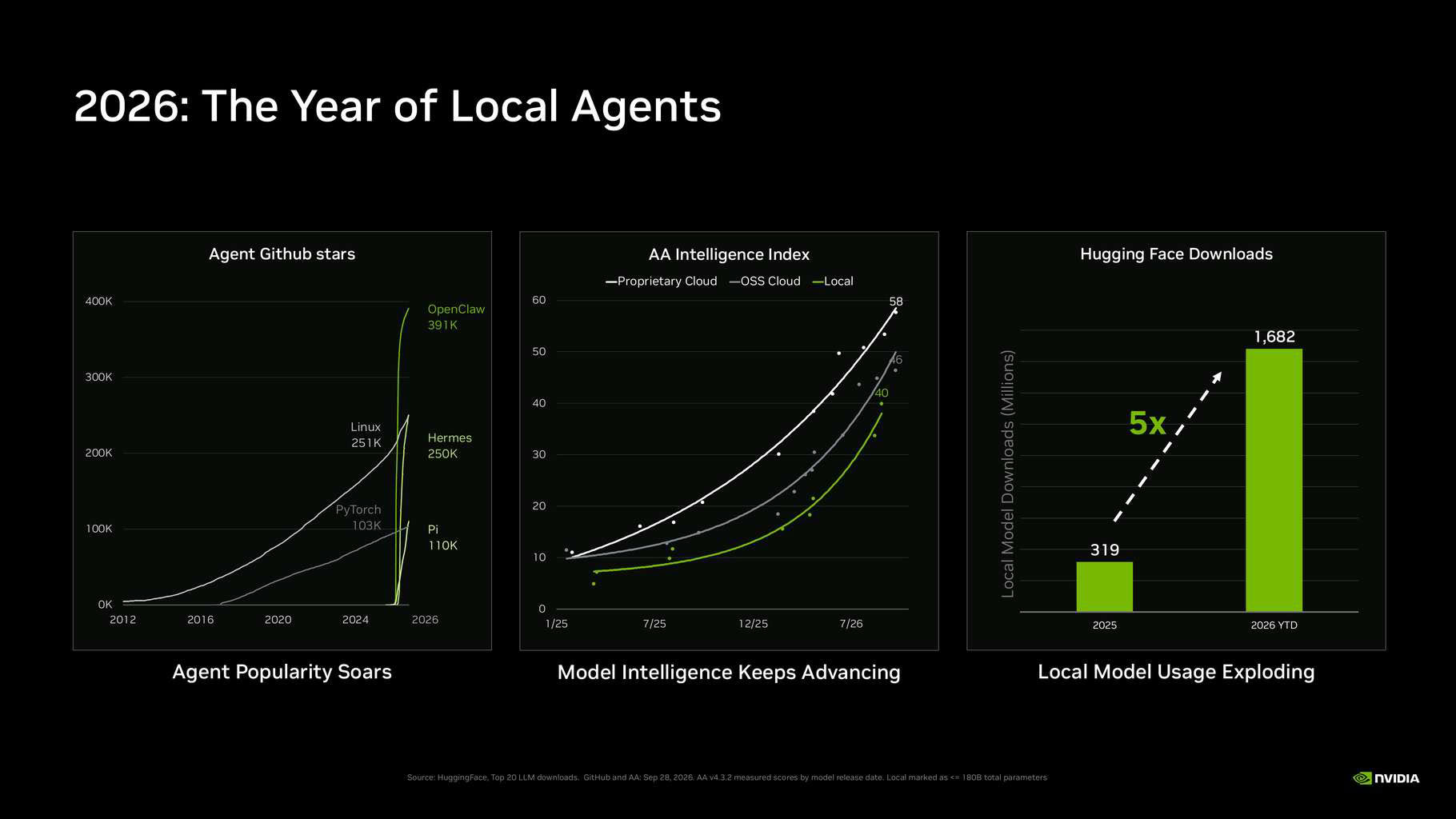
If NVIDIA wants you to remember RTX Spark for one thing, it's local AI agents. The idea is simple: the AI model and the agent that uses it to actually do stuff on your computer both run on the laptop, not in somebody's data center. NVIDIA's arguments are hard to dismiss. It works offline once everything is installed, your data stays on the device, there are no per-request cloud fees, and you choose the models yourself. Nothing breaks when a cloud service has a bad day, either.
Why does that need a premium machine? Because a capable model needs a lot of fast memory and a strong GPU at the same time, and most laptops have one or the other. A gaming laptop has a fast GPU but only 8 to 24 GB of VRAM. A thin-and-light has plenty of RAM but a weak iGPU. RTX Spark has both, and that's NVIDIA's whole pitch.
The Agents
The agents themselves come from other companies. NVIDIA worked with OpenClaw, Perplexity, WorkBuddy, and others to optimize them for local AI. To get started, NVIDIA offers Playbooks. You begin with the agent setup and then pick a Productivity, Creators, or Developers track.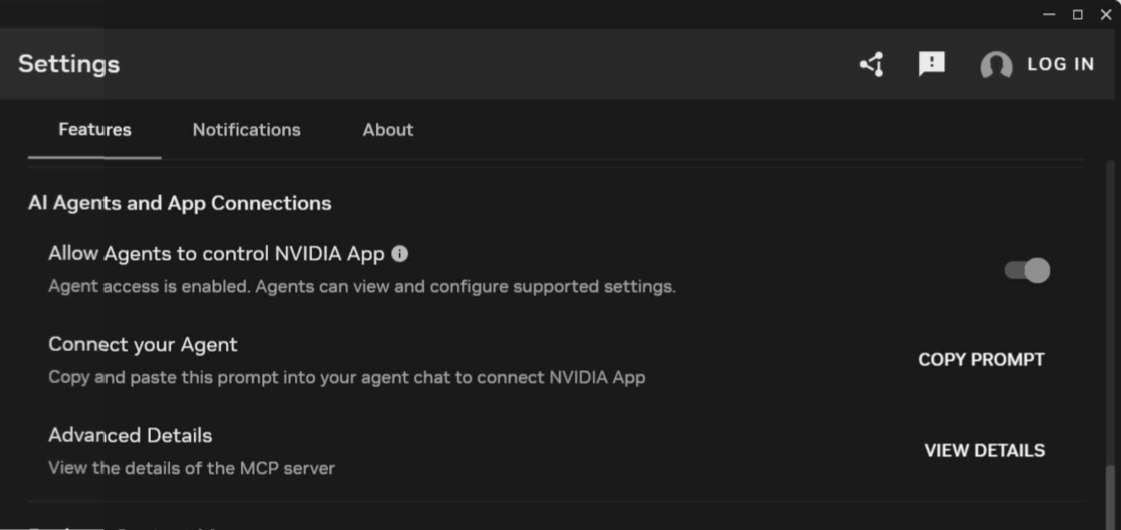
There's also an NVIDIA App connection, so an agent can list your games, change settings, start a recording, or check your driver version on request. The wider ecosystem includes skills and MCP connections for Blender, DaVinci Resolve, Photoshop, Outlook, Excel, VS Code, and many more. A logo wall isn't a test, though, and how well an agent drives each app will vary a lot.
Here's where I hit the brakes. To do something useful, the productivity playbooks want access to your mail, calendar, and other personal apps. I'm not handing my accounts to an agent just to time a benchmark, so I skipped the hands-on Hermes tasks this time and went for a repeatable test instead. More on that below.
Agent Security
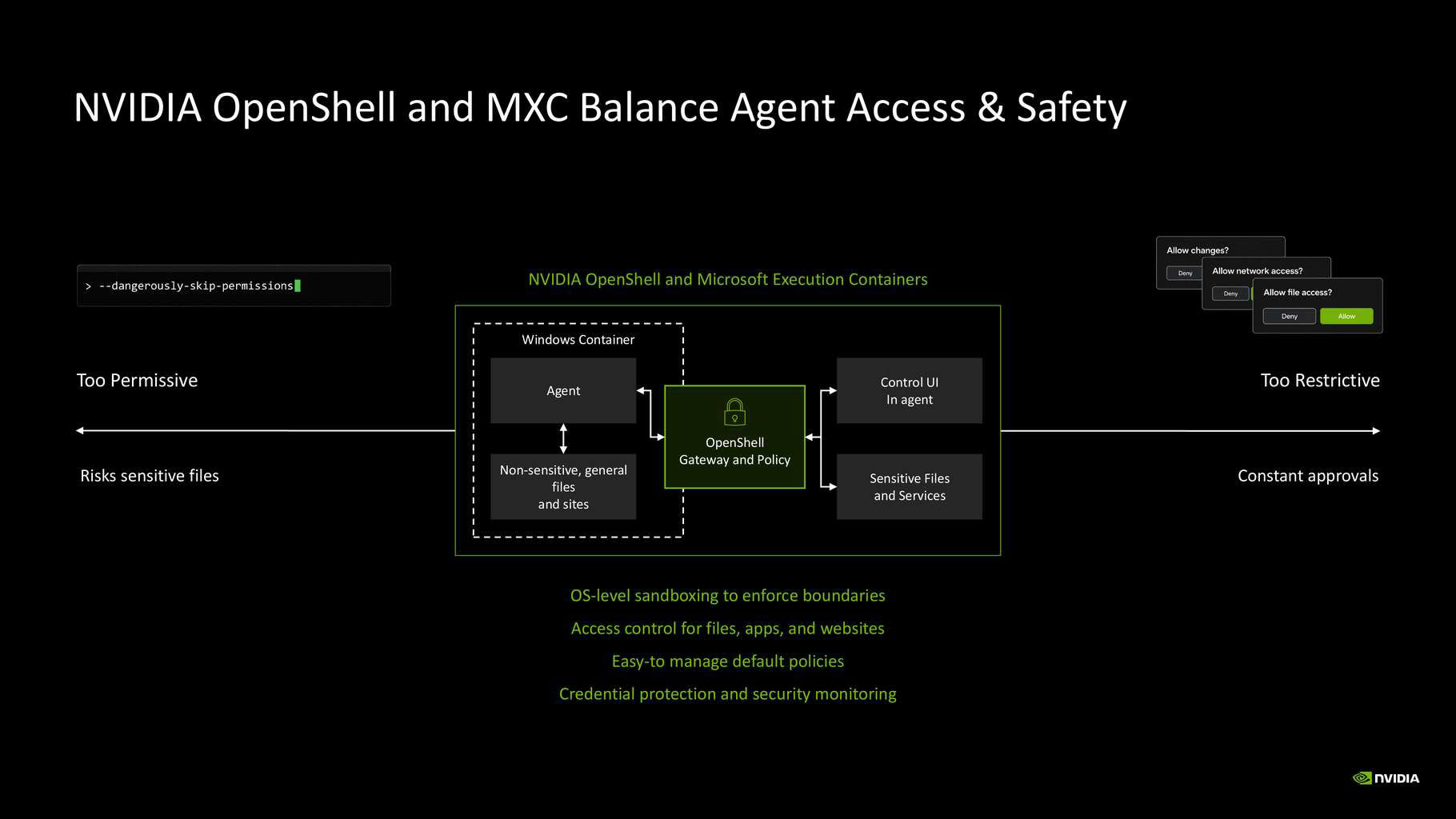
NVIDIA knows that an agent clicking around your PC deserves some suspicion. Its answer is OpenShell plus Microsoft Execution Containers (MXC), which keep an agent's activity separate from yours and let developers define exactly which files, apps, and websites it can touch. It's a promising idea, but what you get depends on the Windows build, the SDK, and the agent itself.
Routing AI Calls
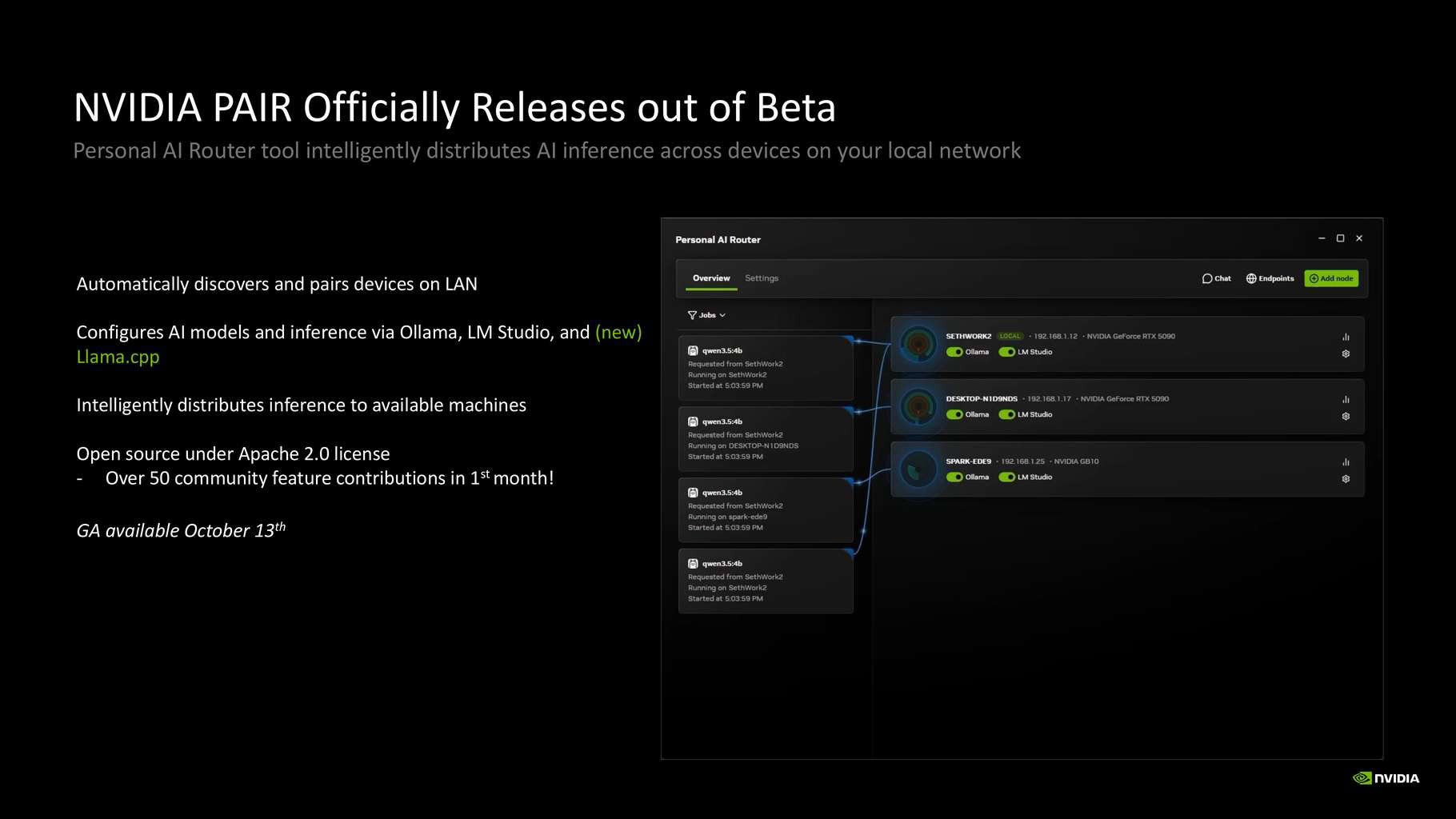
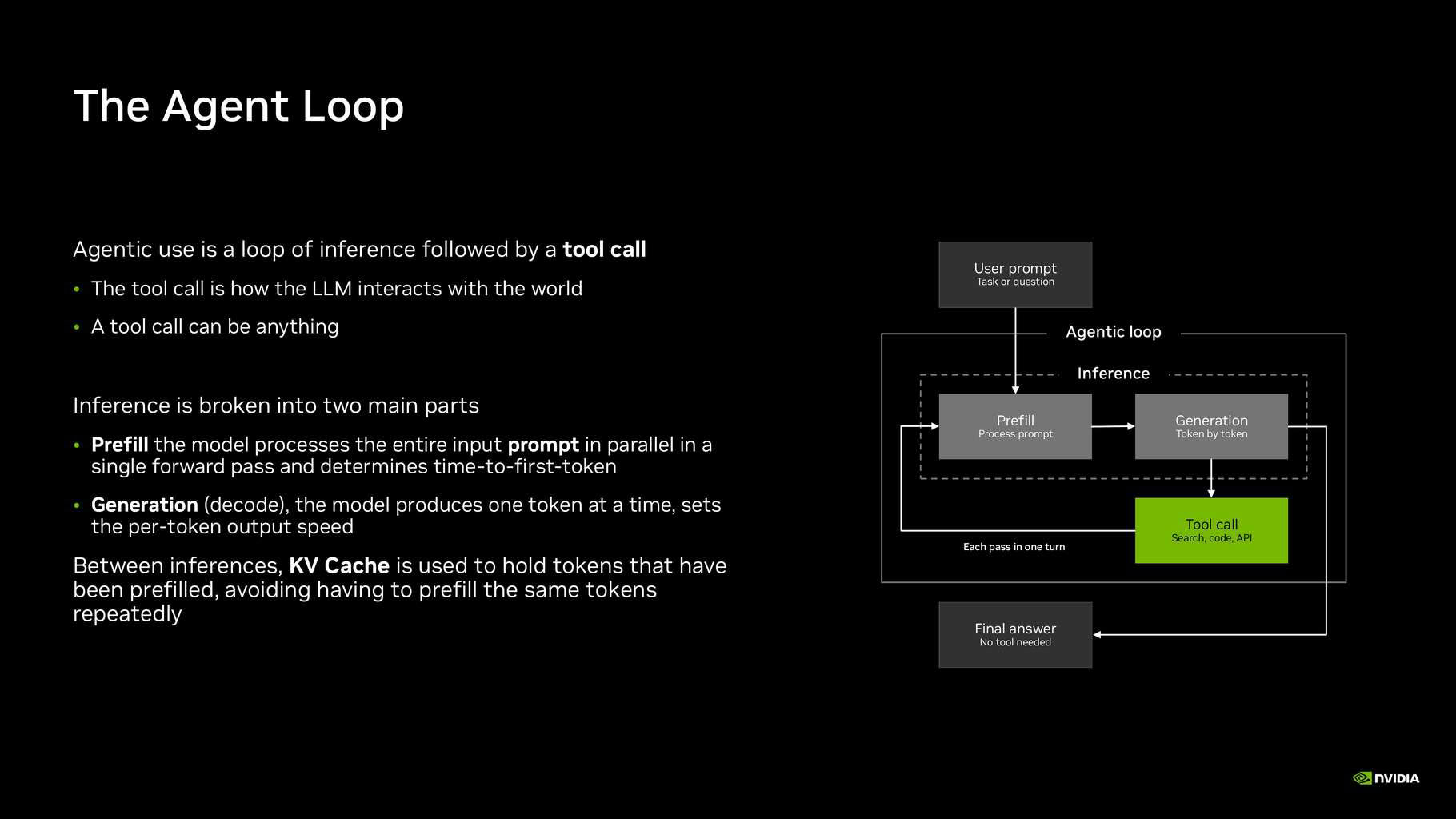
Two more tools are worth knowing. NeMo Switchyard routes prompts between local and cloud models: the local model answers first, and only the tasks it can't finish go to the cloud. NVIDIA PAIR (Personal AI Router) goes the other way. It splits independent inference requests across other machines on your home network, so an RTX desktop can help out a laptop.
So, how fast is RTX Spark when an agent actually runs on it? You'll find the MLPerf agentic results on the AI Performance page, where I compare the Surface with four other laptops.
Nov 20th, 2026 11:13 PST
change timezone
Latest GPU Drivers
New Forum Posts
- Very unusual two gaming-pc scenarios. (31)
- Last game you purchased? (1410)
- Honestly, do you care about GTA VI? (186)
- TechPowerUp Screenshot Thread (MASSIVE 56K WARNING) (4387)
- How to prevent OLED burn damage due to PC freezes or power outtages? (44)
- SATA drive 1.4 GBps with Intel X25-E on Windows 98! (35)
- RX 9000 series GPU Owners Club (2245)
- Zen 3 IF/IMC degradation (238)
- What's your latest tech Freebie? (79)
- Tell me about your favourite graphics card (85)
Popular Reviews
- AMD Zen 6 Technical Deep Dive
- Ugreen NASync DXP4800 GT Review
- Corsair RM1200e (Second Generation) Review
- Acemagic Retro X3 Review
- Microsoft Surface Laptop Ultra Review - The Next-gen Arm Laptop
- Upcoming Hardware Launches 2027 (Updated Nov 2026)
- Pulsar Office Tour & First Look at P1 Dual-Sensor Mouse
- Biwin Black Opal NV7400 2 TB Review
- AMD Ryzen 7 9800X3D Memory Performance Scaling
- AMD Ryzen 7 9800X3D Review - The Best Gaming Processor
TPU on YouTube
Controversial News Posts
- NVIDIA Co-Founder and CEO Jensen Huang Officially Resigns (490)
- Report: Jensen Huang Eyes NVIDIA Comeback (245)
- Open Letter Asking NVIDIA to Reinstate Jensen Huang Passes 115,000 Signatures (184)
- OpenAI CEO Argues Home PCs Waste the World's Limited DRAM Supply (152)
- NVIDIA Launches Investigation Into Jensen Huang's Relationship With Suspected Chinese Spy (136)
- Intel "Raptor Lake Next" 16-Core and 20-Core CPUs Surface (130)
- Legendary Game Studio BioWare Shuts Down Following EA Layoffs (104)
- Dell CEO Says the Memory Shortage Will Get Worse in 2027 (95)