 3
MOAIPLAY ORA PRO G1 1000 Review
Test Methodology »Internals
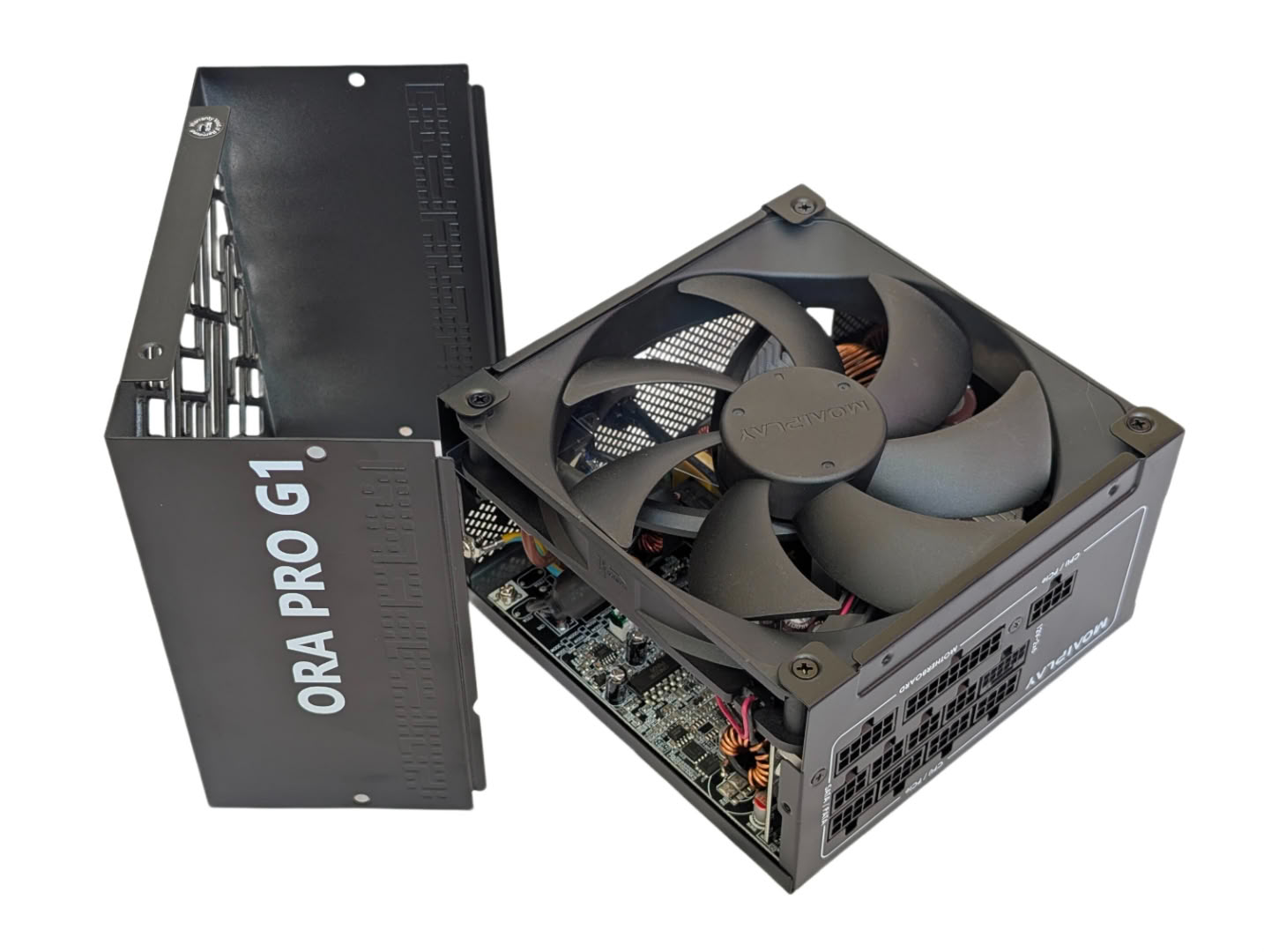
There are a total of eight screws to get the top panel off, and a further four screws to remove the fan from its mounting tabs.
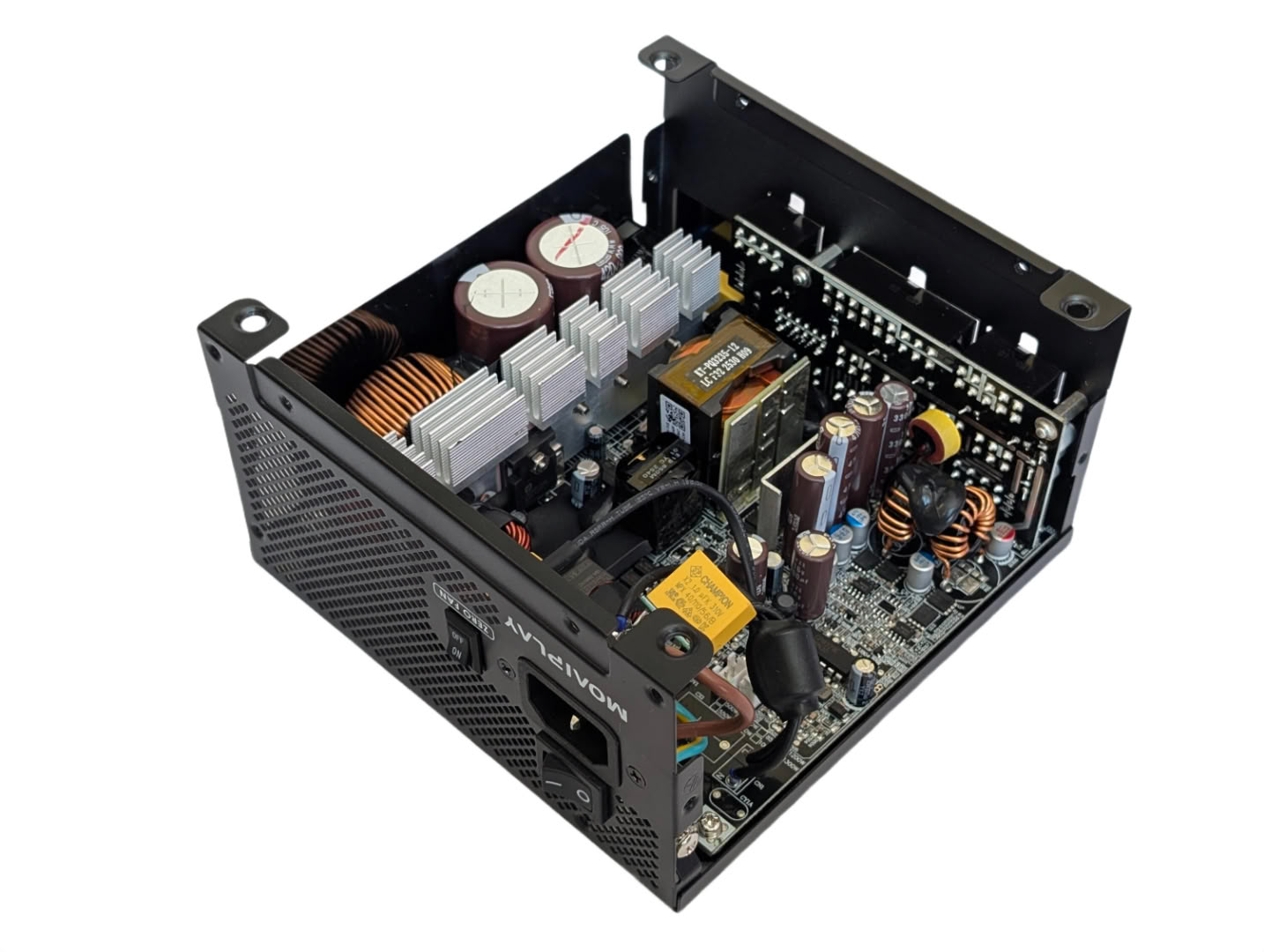
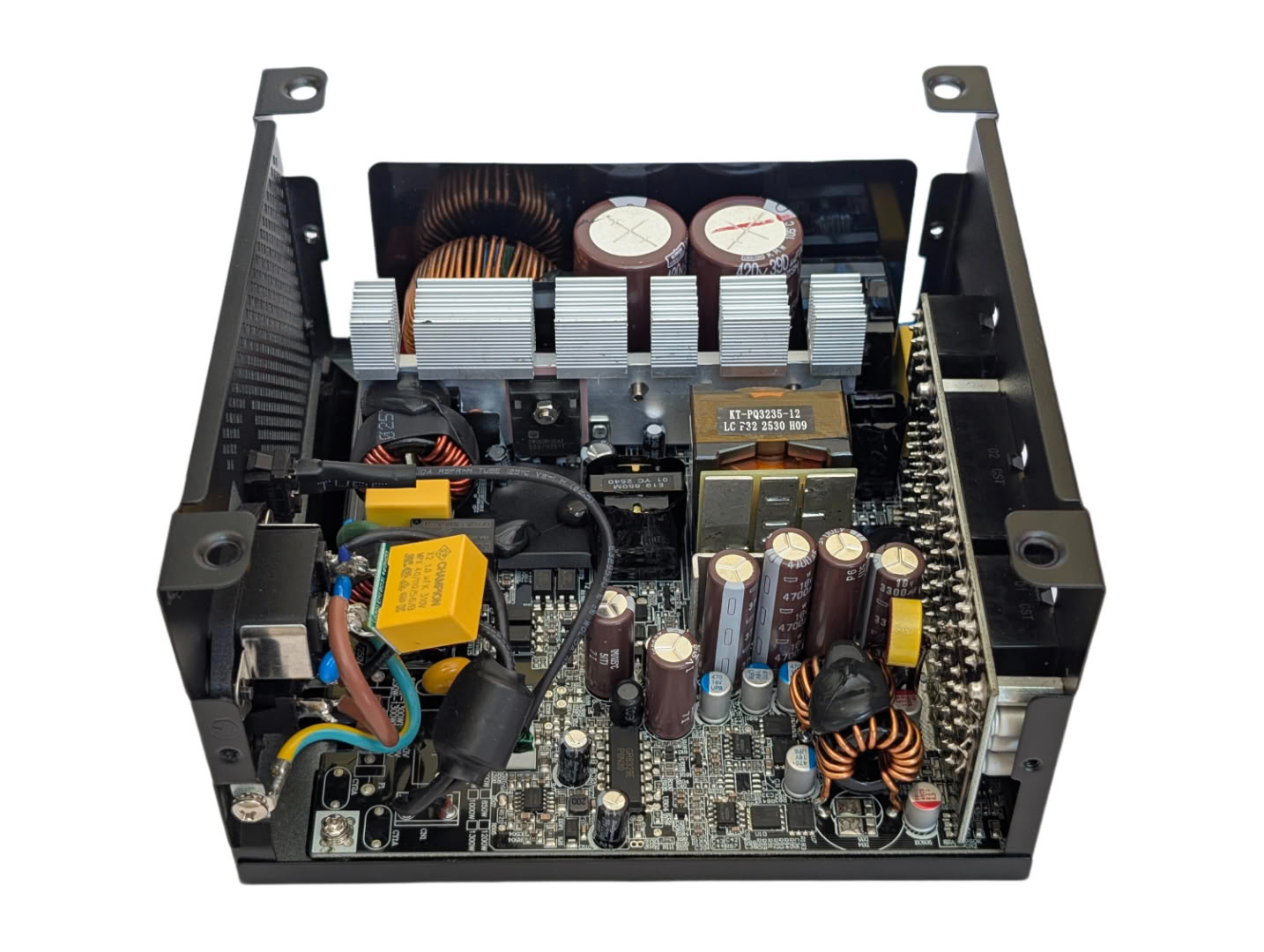
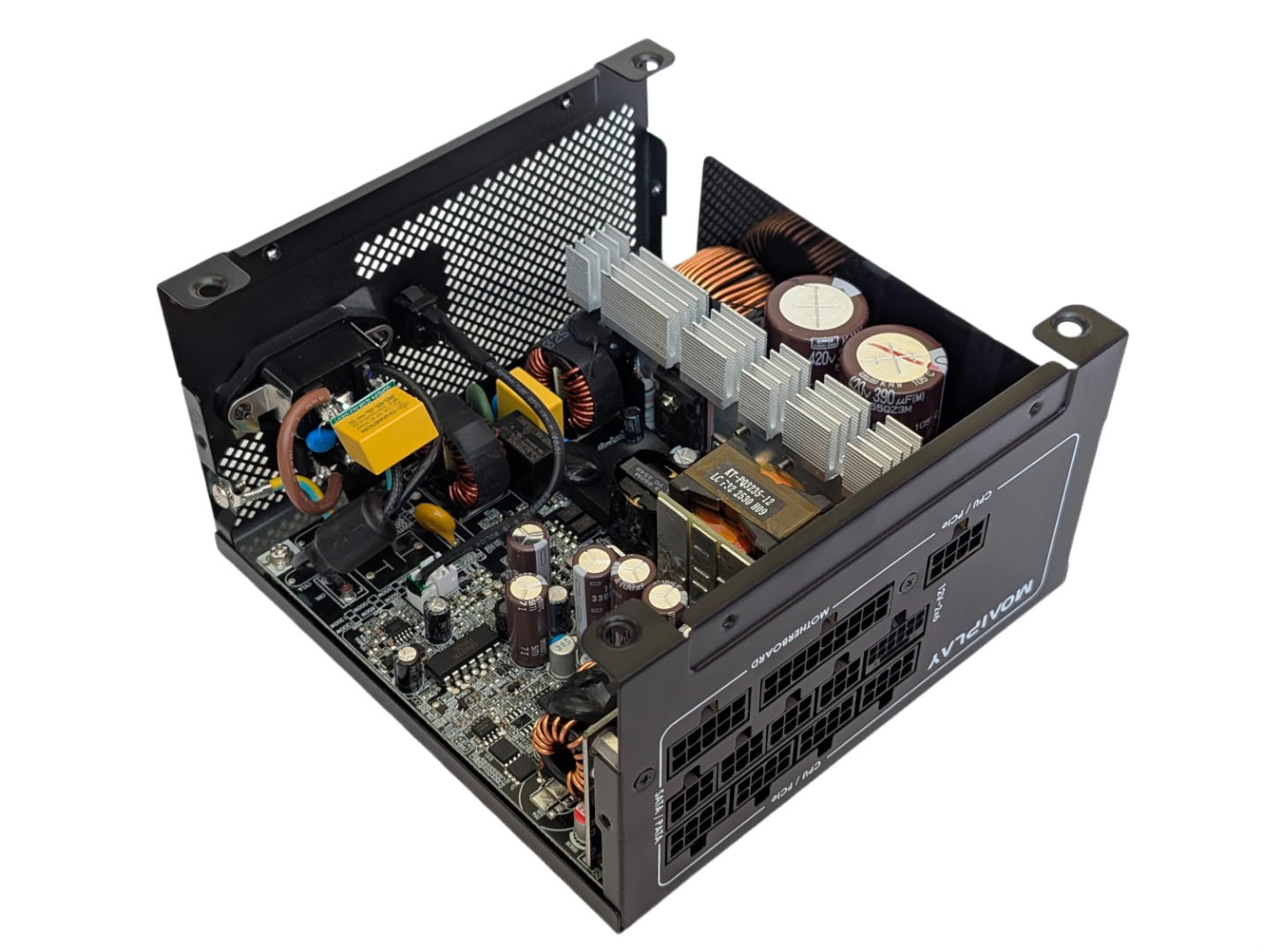
Our first impressions of the internals are that they look somewhat familiar - in fact an identical layout to our recently reviewed Formula V Line FV-1200GM. Given this model is rated for 200 W less, it will be interesting to go through the component selection and see what has changed.
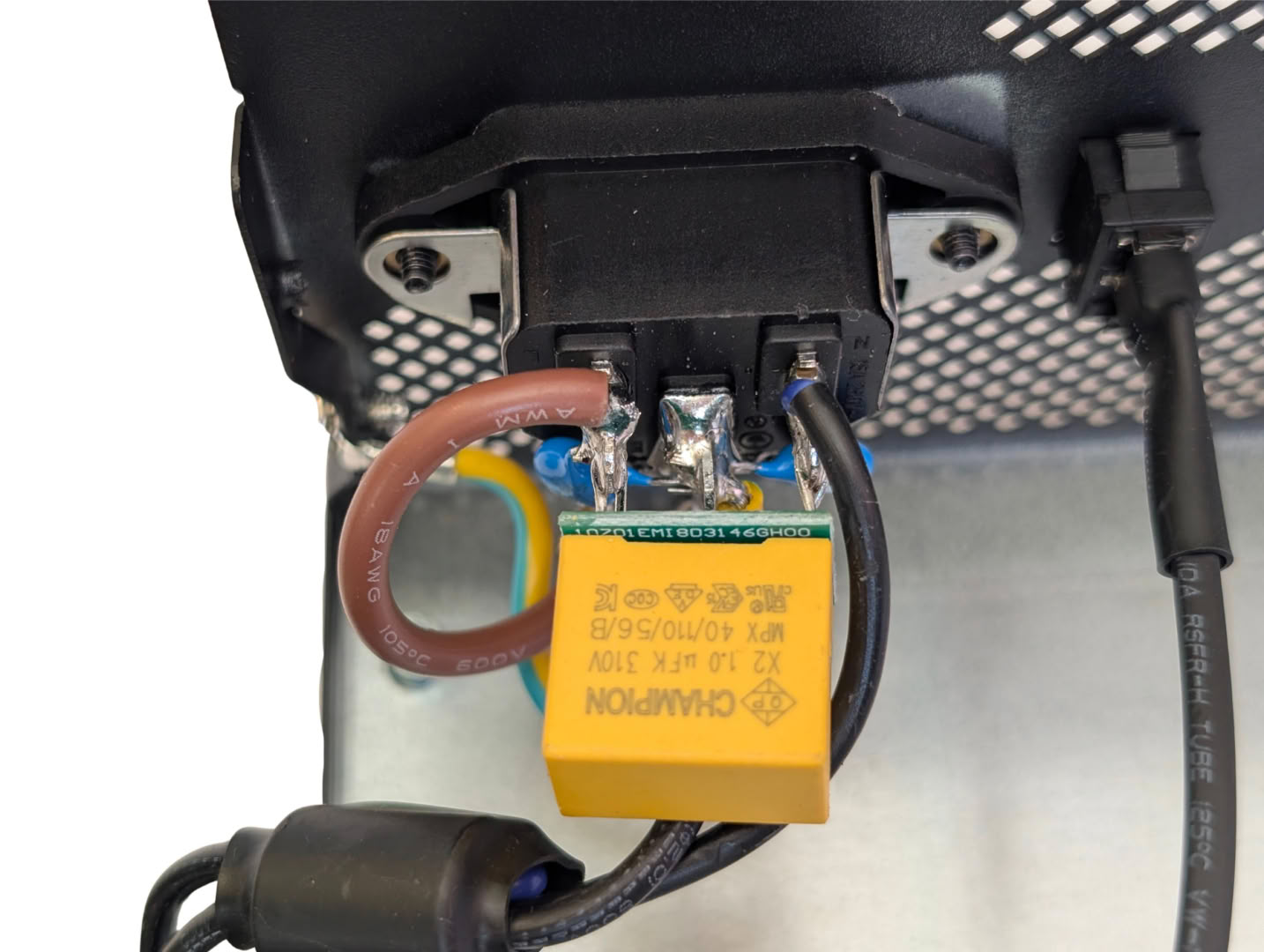
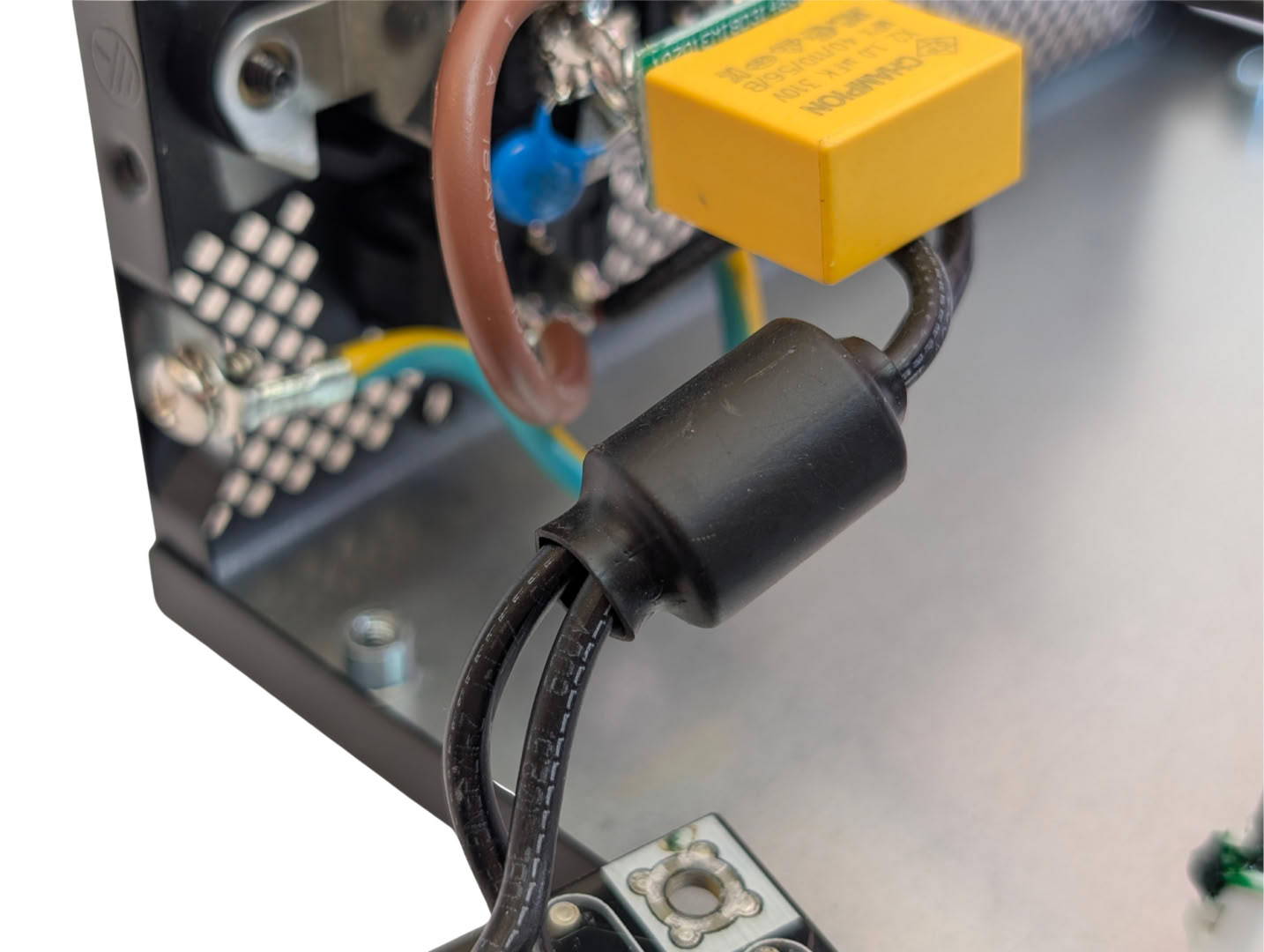
Soldered directly to the power connector we find a pair of Y caps and an X cap, and a ferrite choke along the power cable to the main PCB.
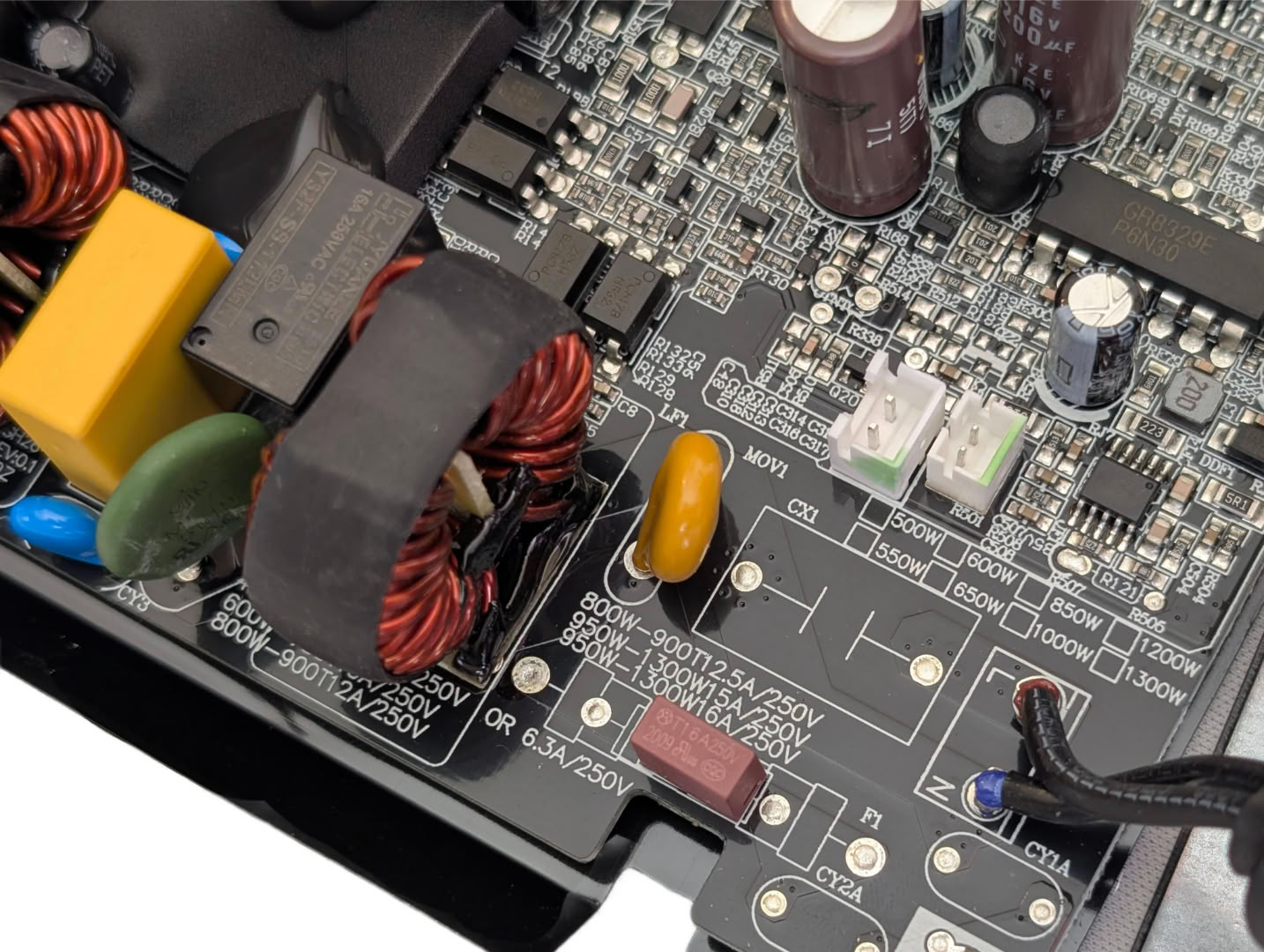
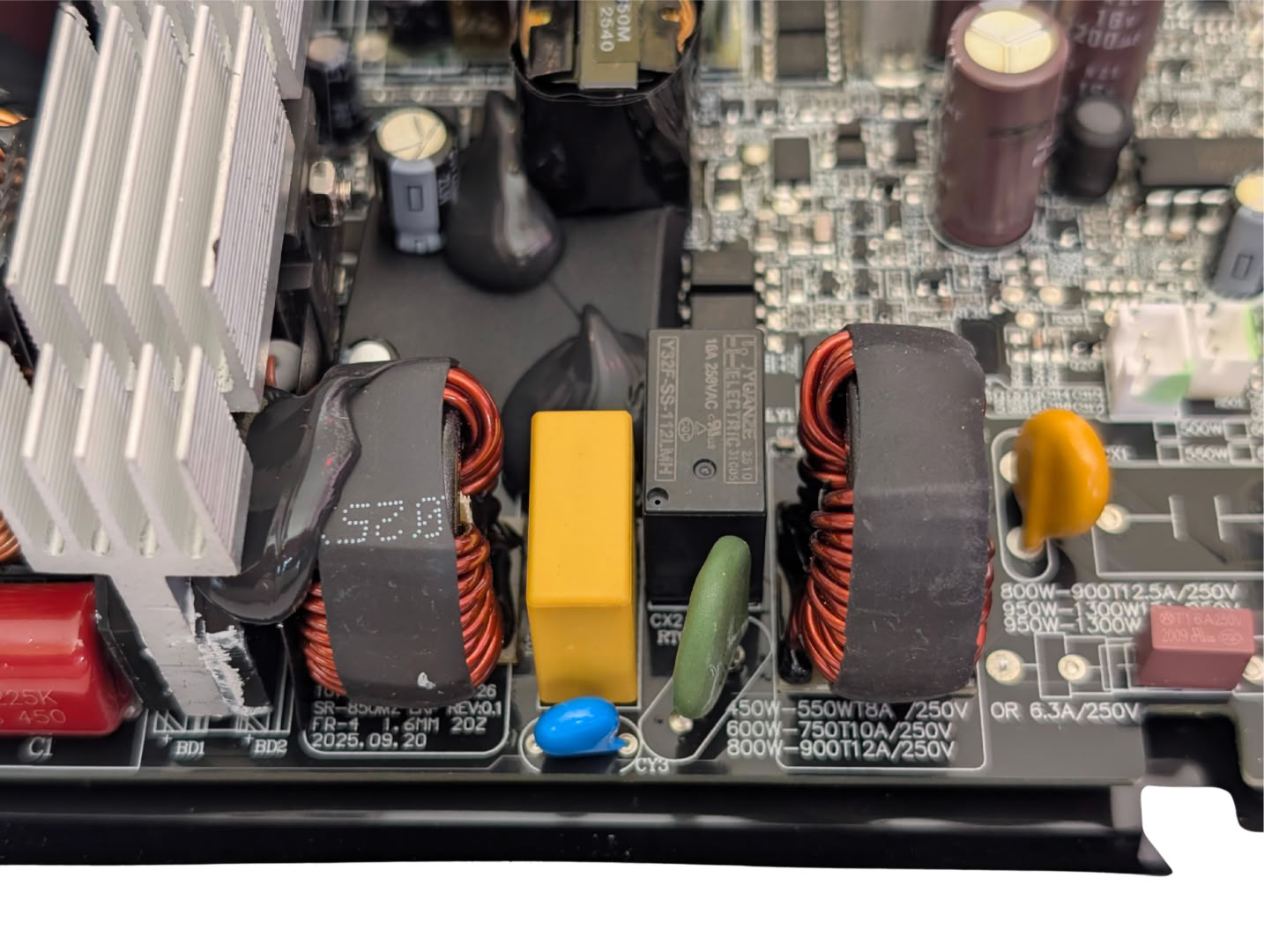
Like we saw in the Formula V Line, not all capacitor spots here are populated, but there are a further X and Y cap after inrush suppression, handled by the thermistor and relay.
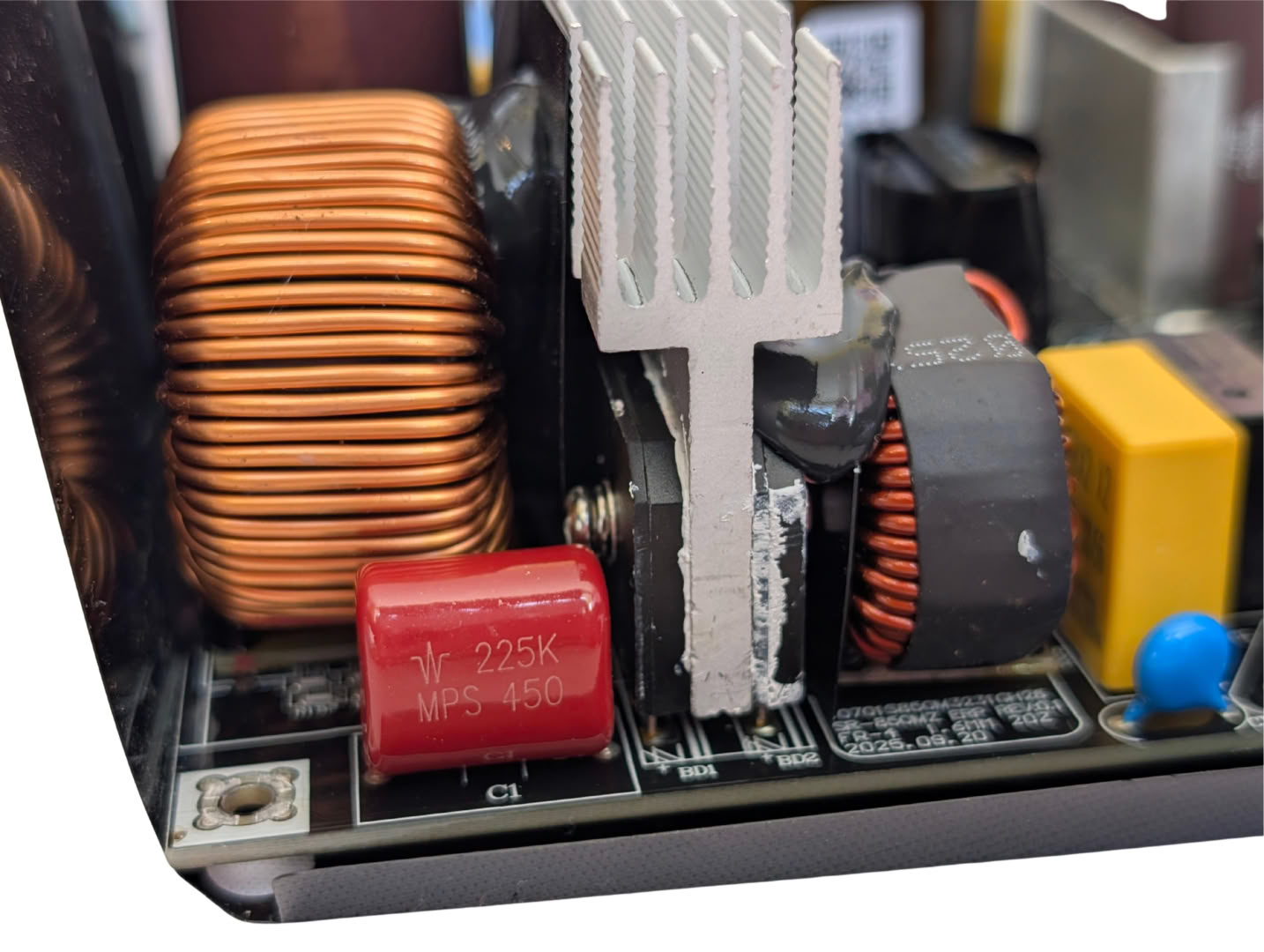
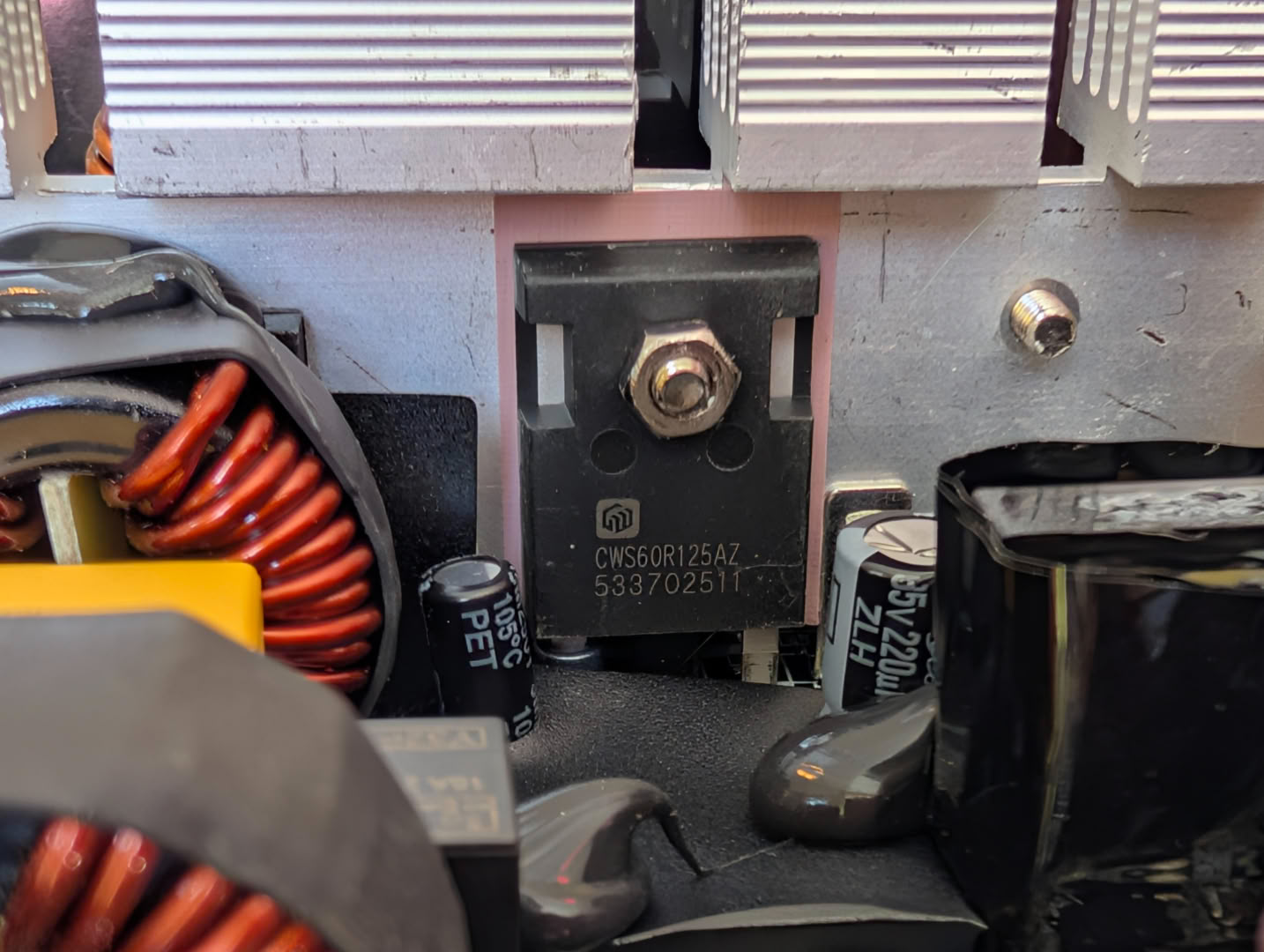
A pair of full bridge rectifiers sandwich a small heatsink, also shared by the APFC MOSFETs.
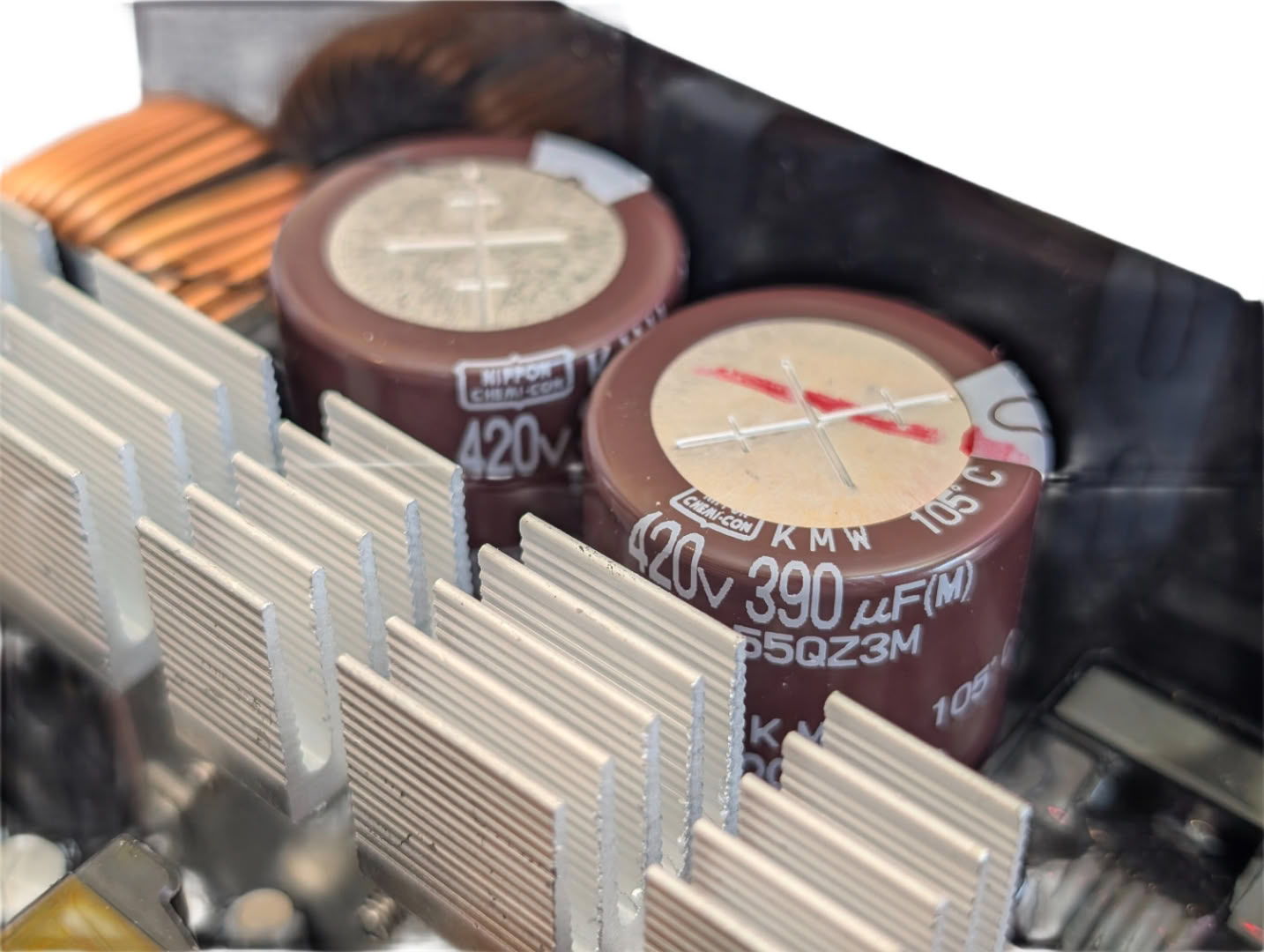
This is our first main difference we see to the Formula V Line; a pair of higher quality Nippon Chemi-Con bulk caps rated 420 V, 390 uF each or 780 uF between them.
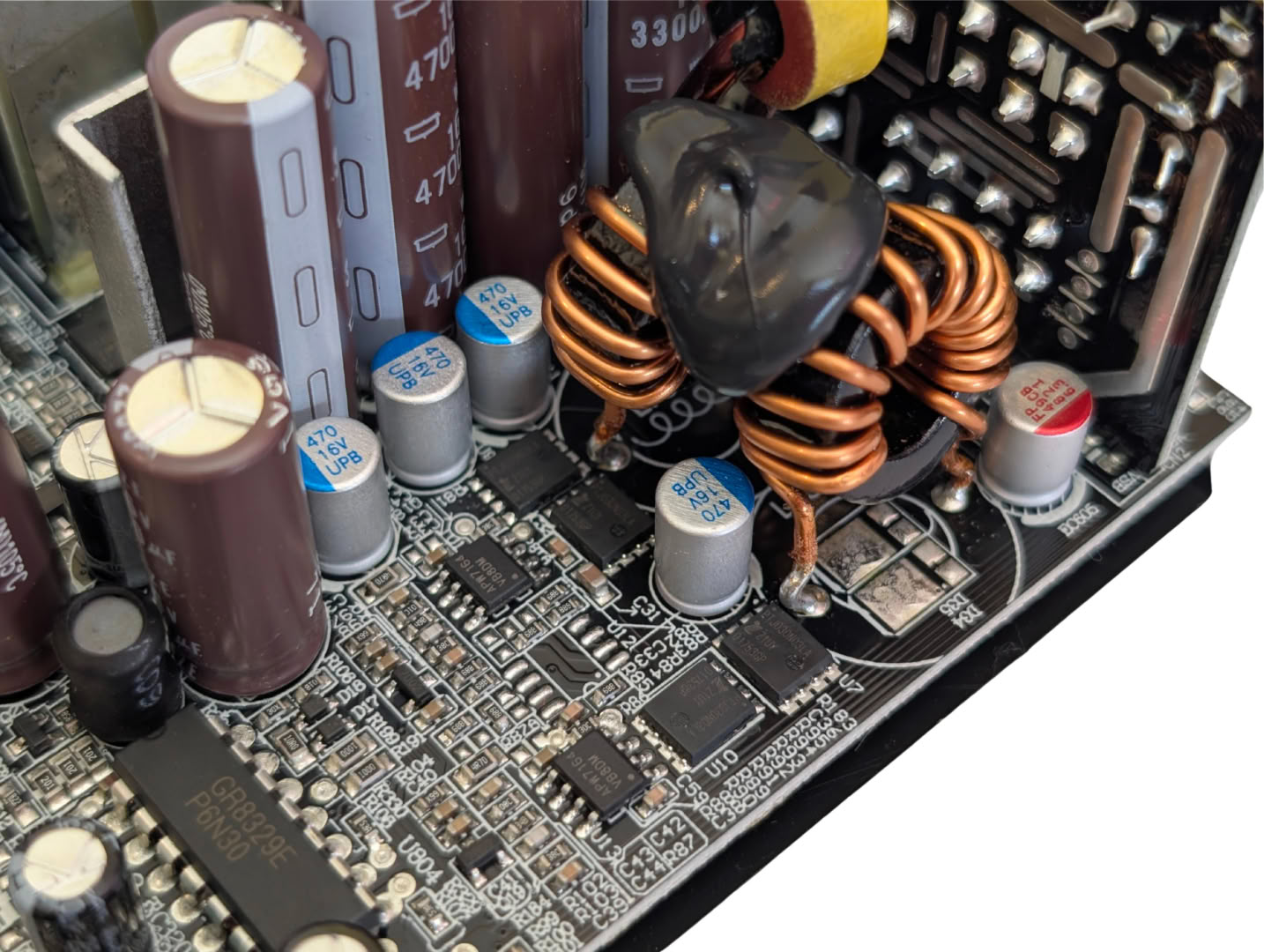
The low voltage rails are generated by the same DC-DC converter circuit, using the same HYG030N03LQ1C2 MOSFETs, rated for 30 V 100 A, with an RDS of 2.4 mΩ. The inductors are also mounted in this upright orientation as opposed to flat on the board like we are used to seeing.
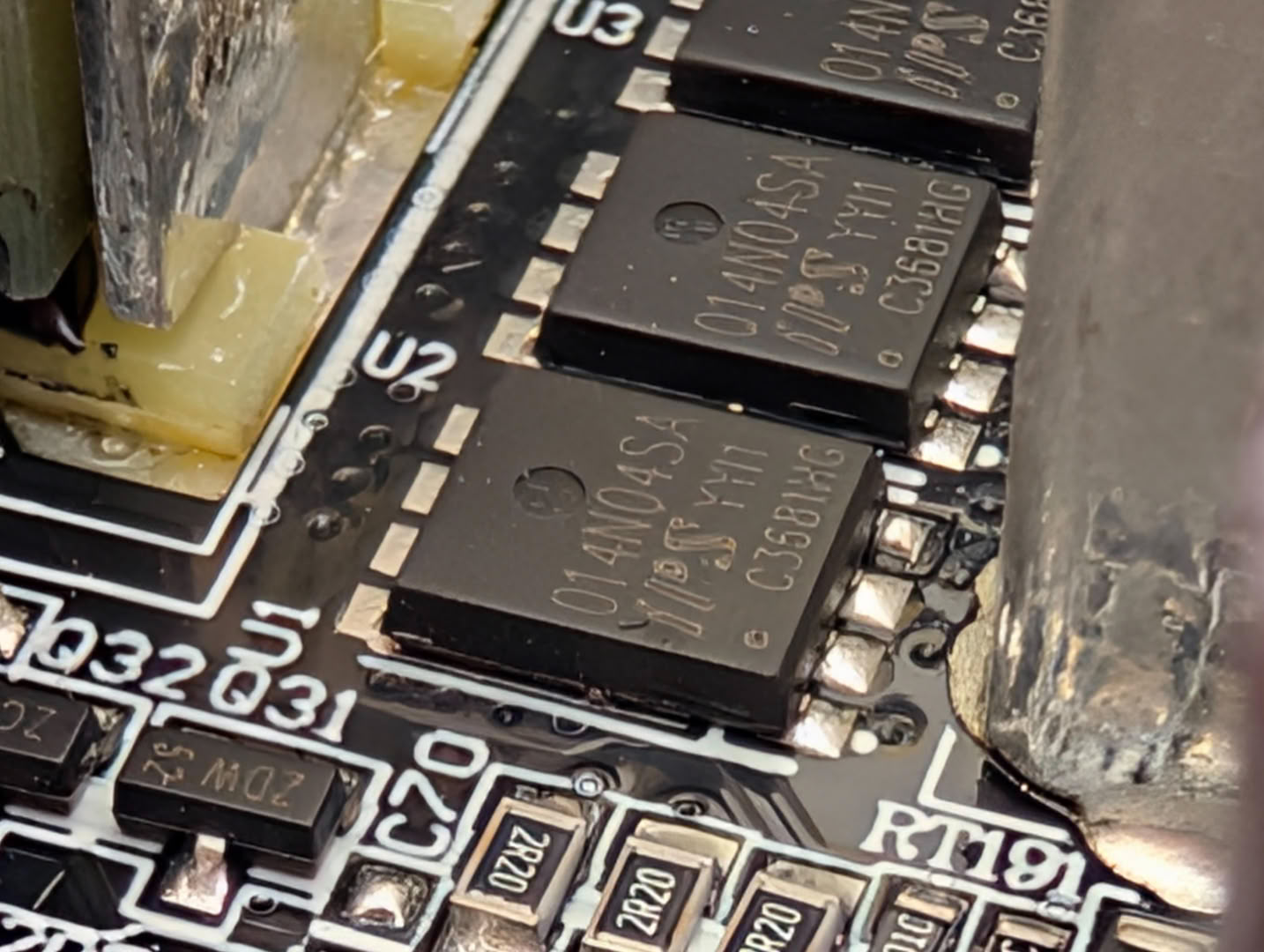
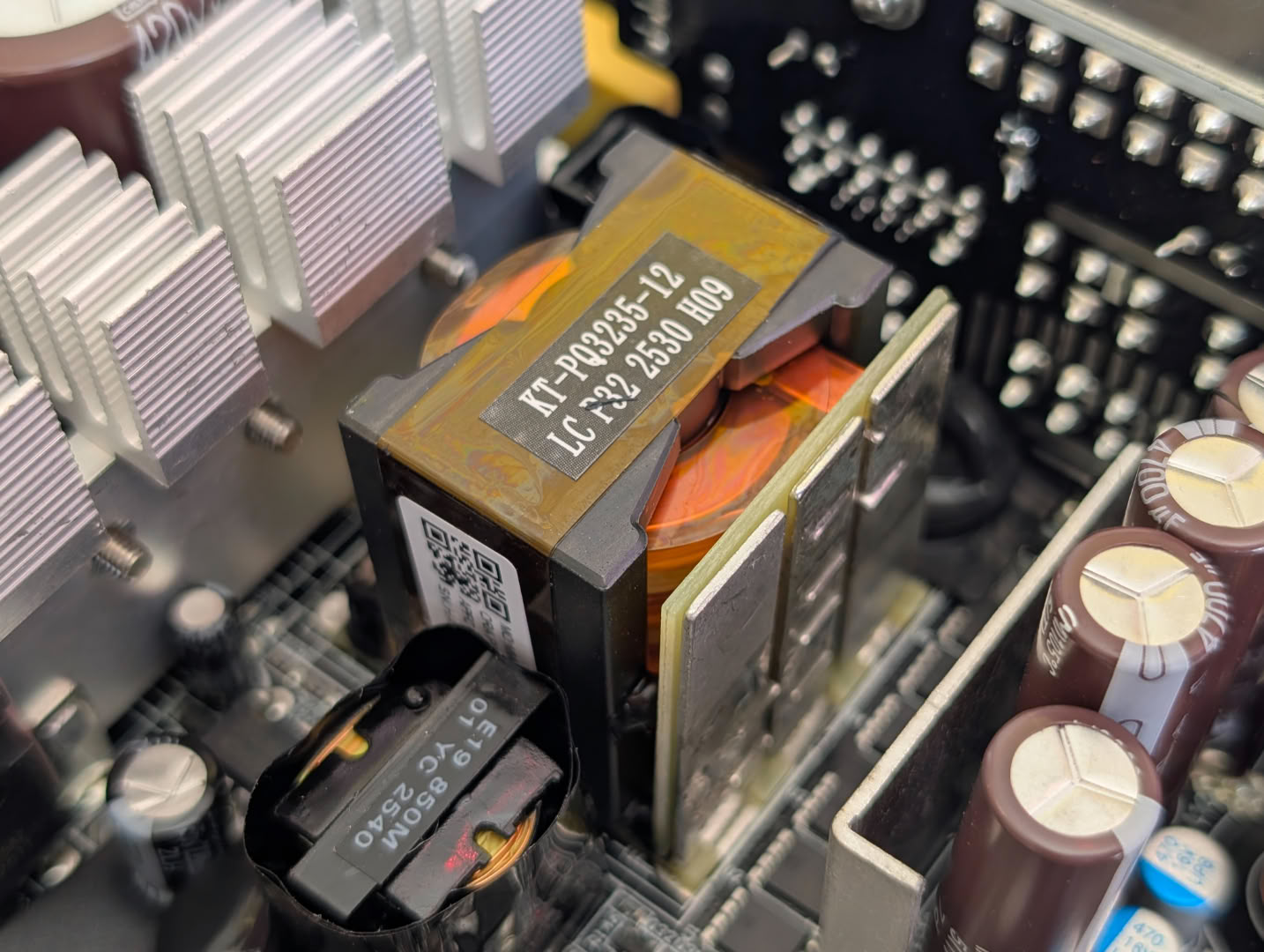
Looking at the 12 V rail MOSFETs, we spot another difference. The model used in the Moaiplay are x4 FTG014N04SA, rated 40 V, 205 A and about twice the RDS(on) of 1.4 mΩ. Still very low, but more heat will be generated during operation. The transformer features the single core flat wire as before, with an identical model number to the one used in the Formula V Line.
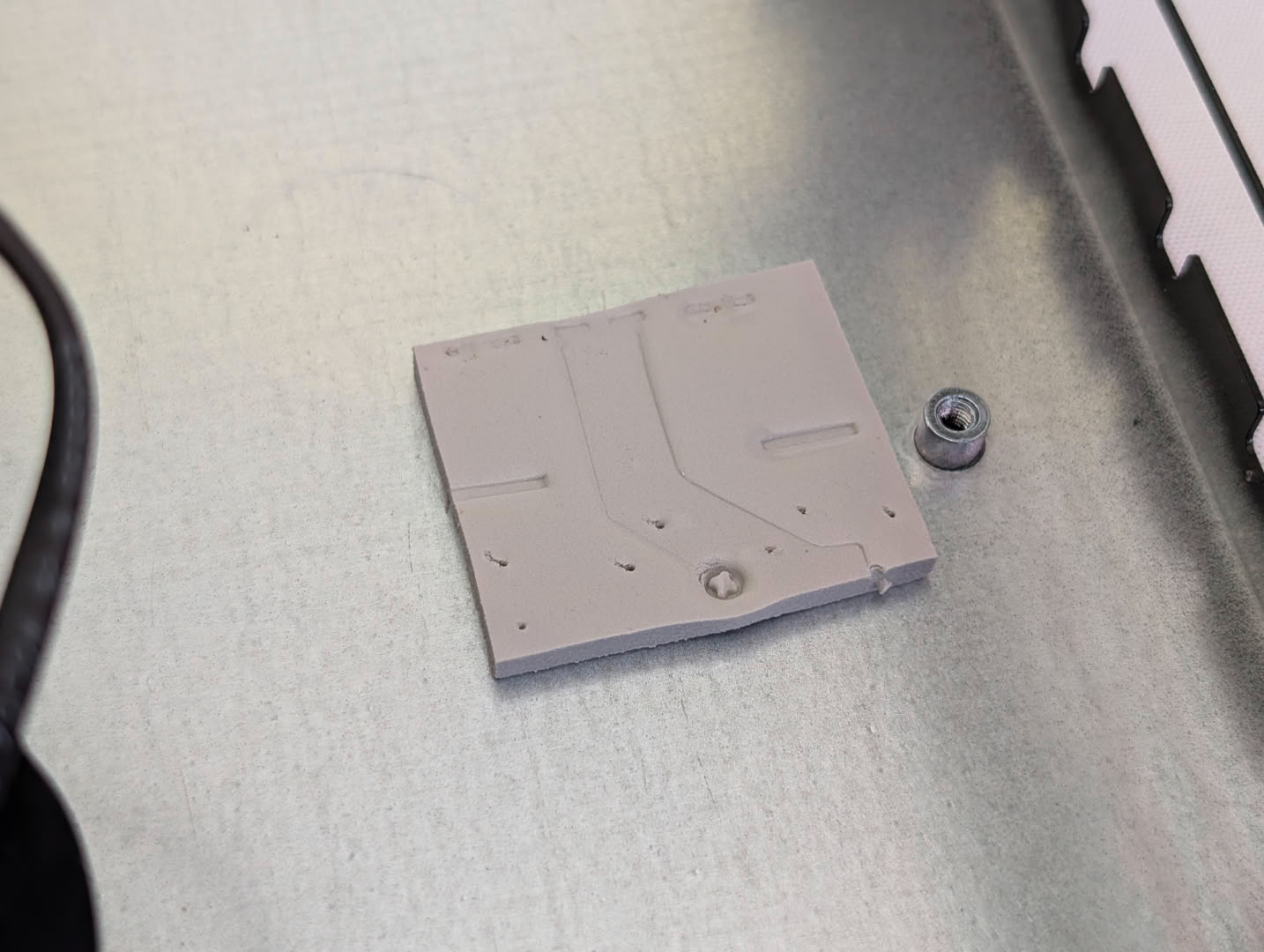
Additional heat from the 12 V MOSFETs is sunk to the case through a thermal pad on the underside of the board.
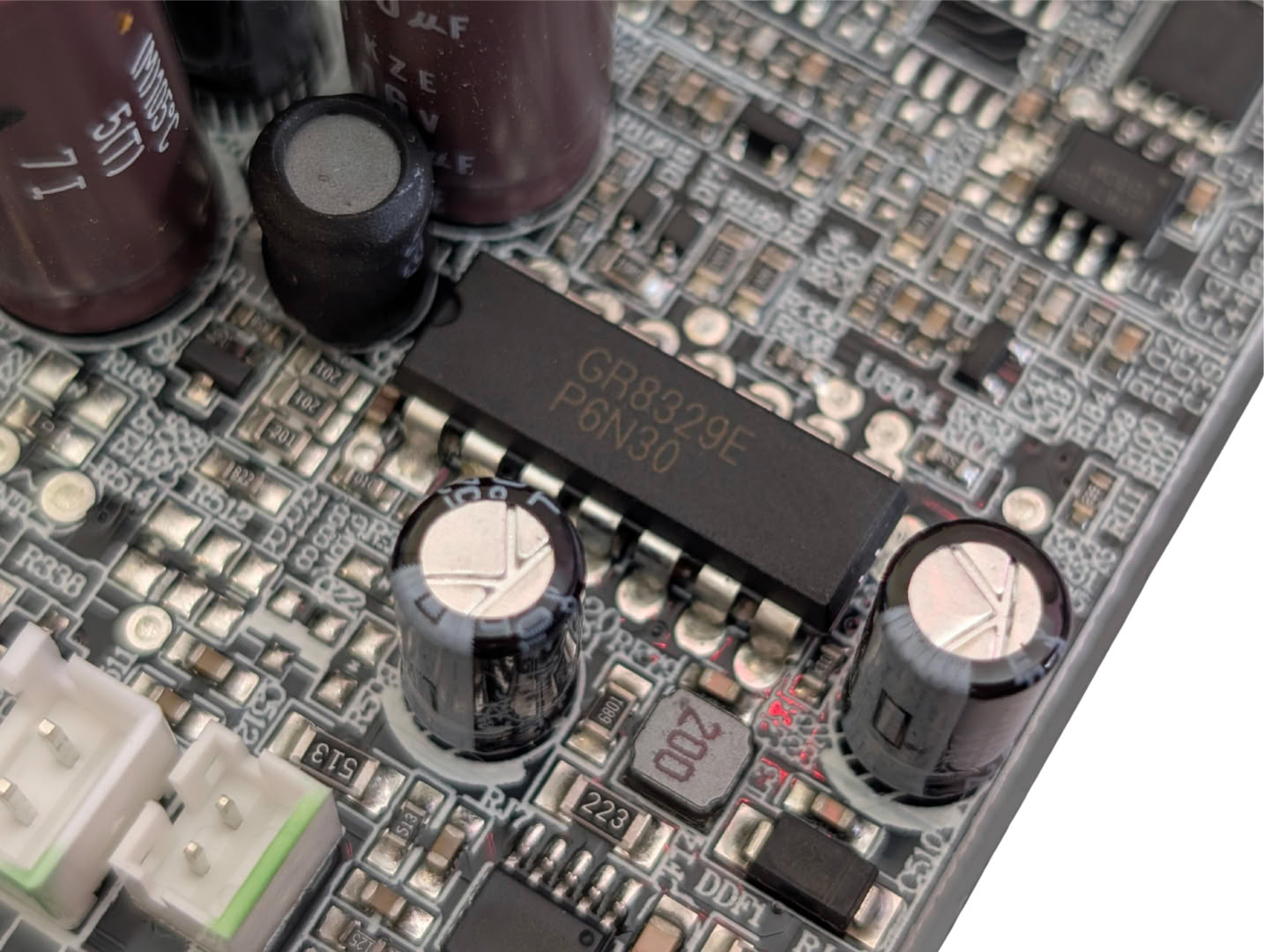
The supervisor is in a lesser-seen P-DIP package chip, the Grenergy Opto GR8329E.
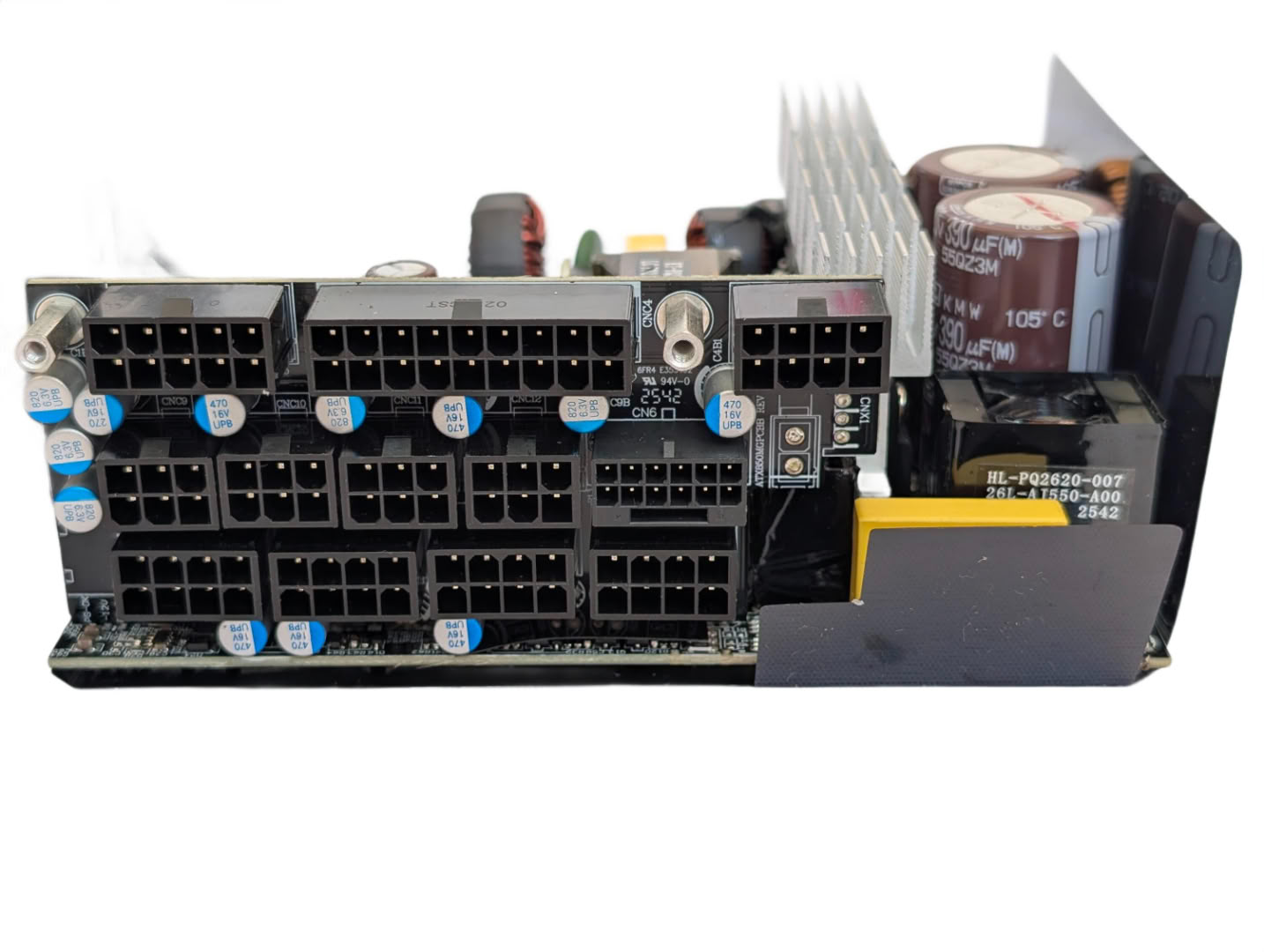
The connector board uses the same quantity and layout, with the only difference being the brand of caps, with Rubycon and Nippon Chemi-Con being used throughout this supply.
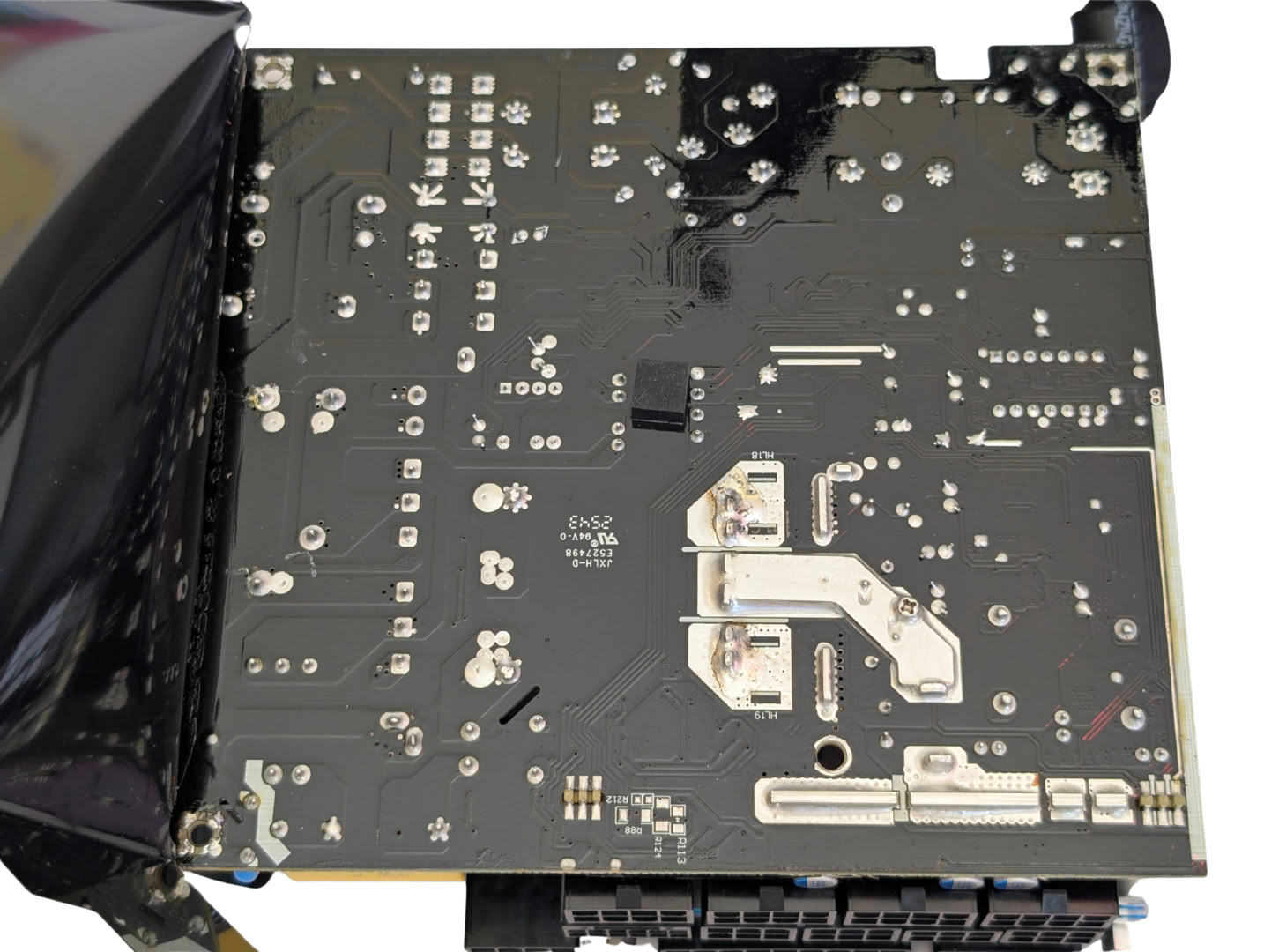
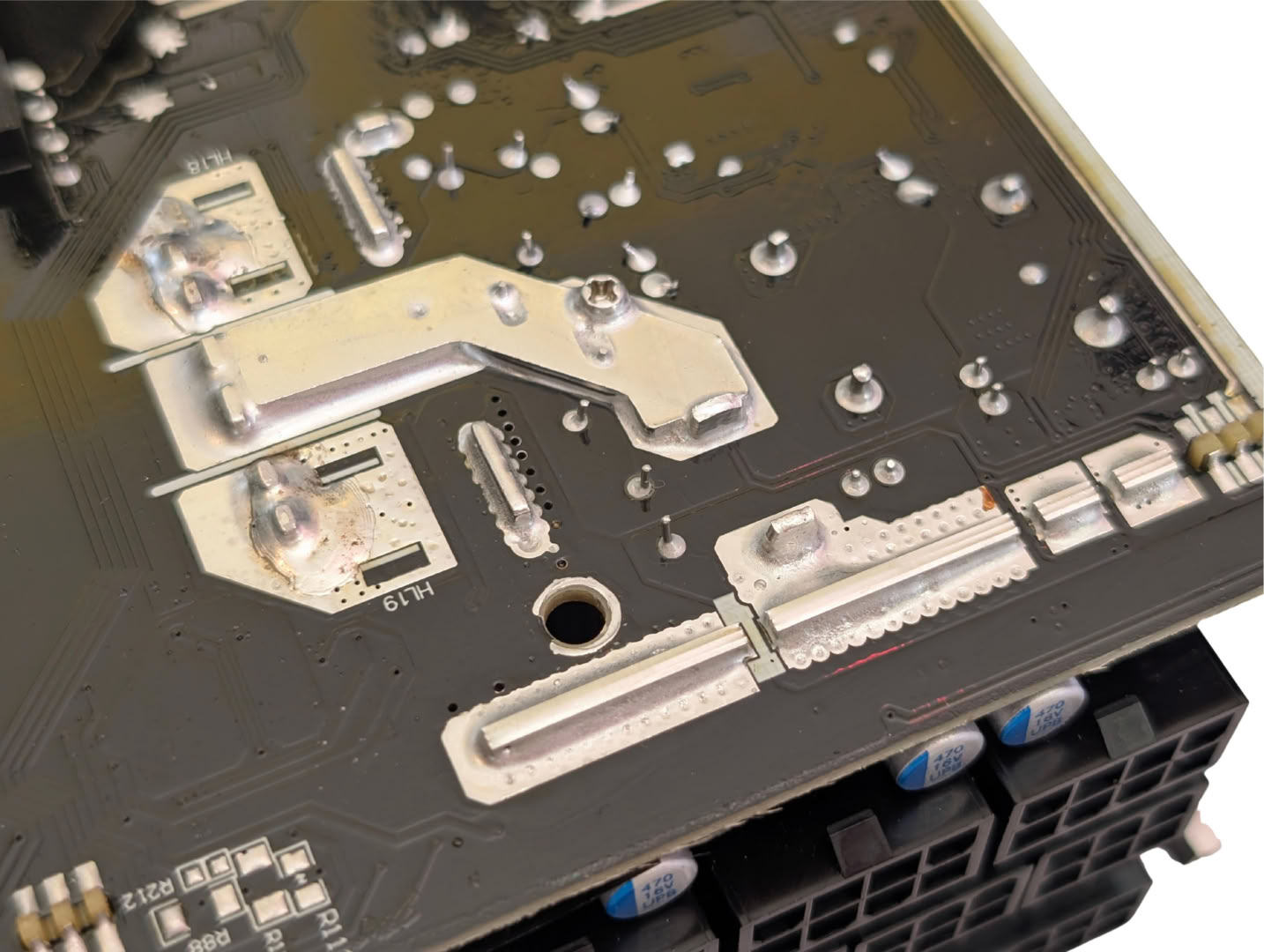
The underside of the board features very limited components, with only a handful of ceramic caps visible. The mounting tabs for the connector board are strong and soldered very neatly.
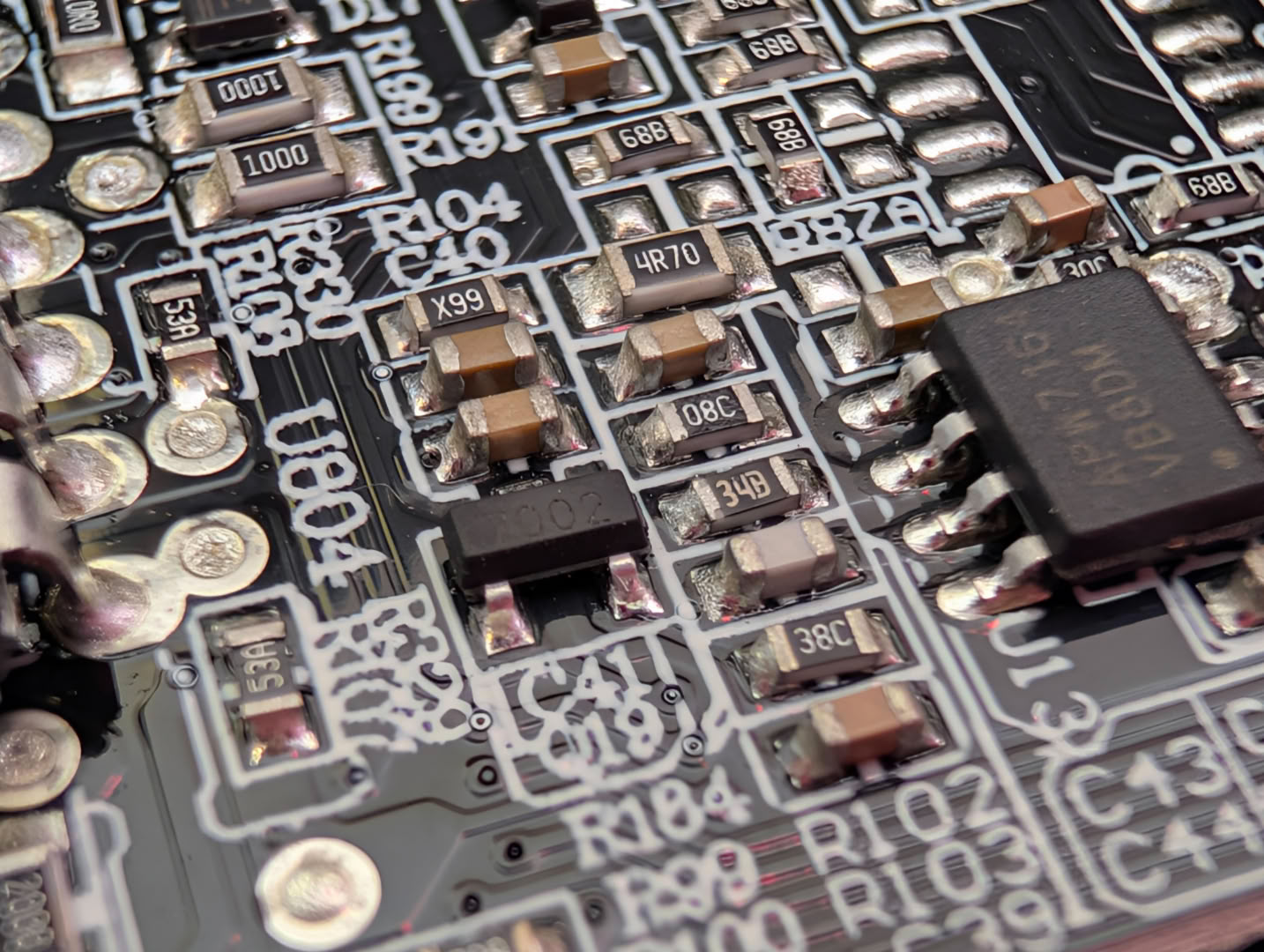
The overall soldering quality from this OEM is consistently good.
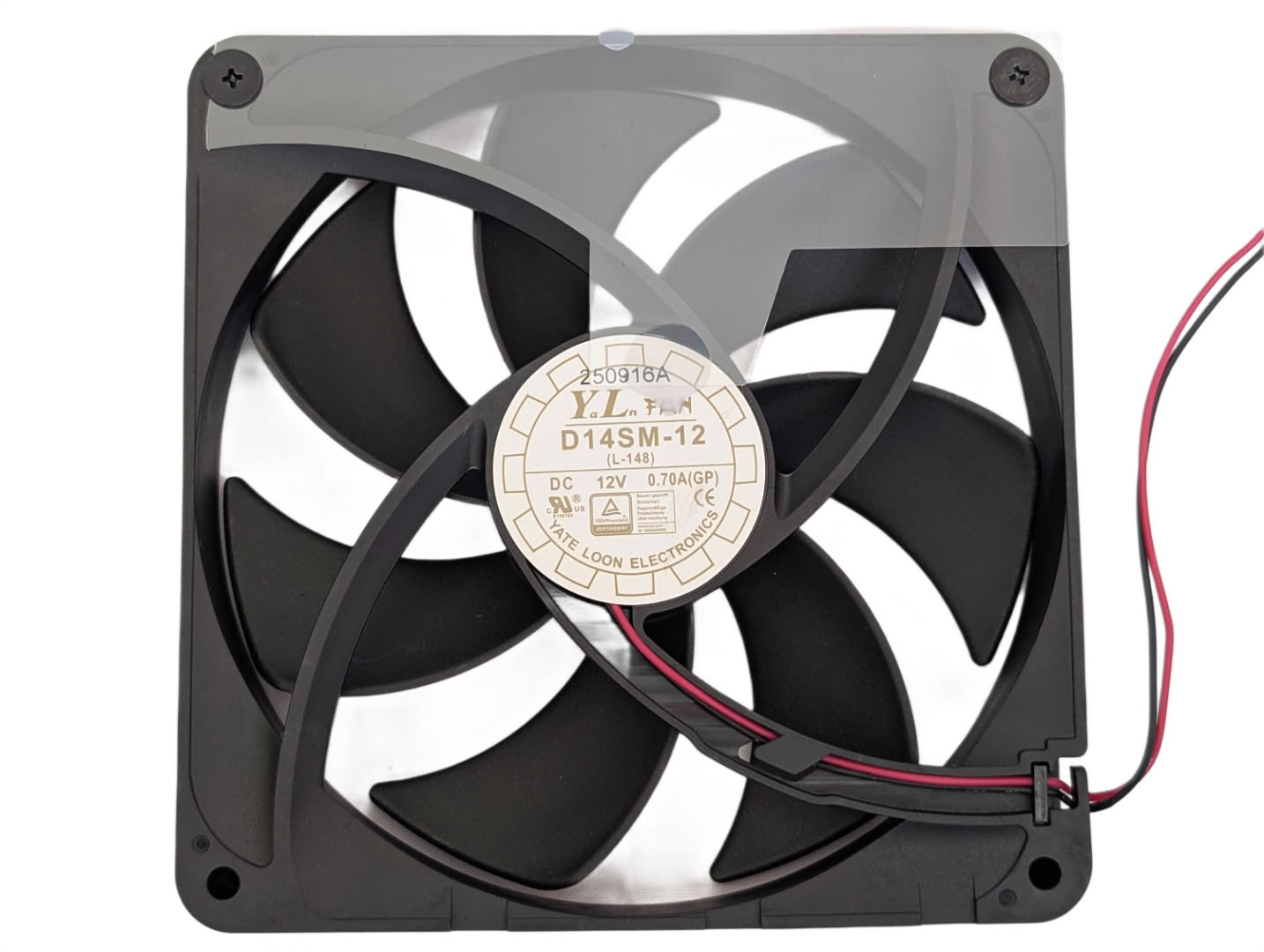
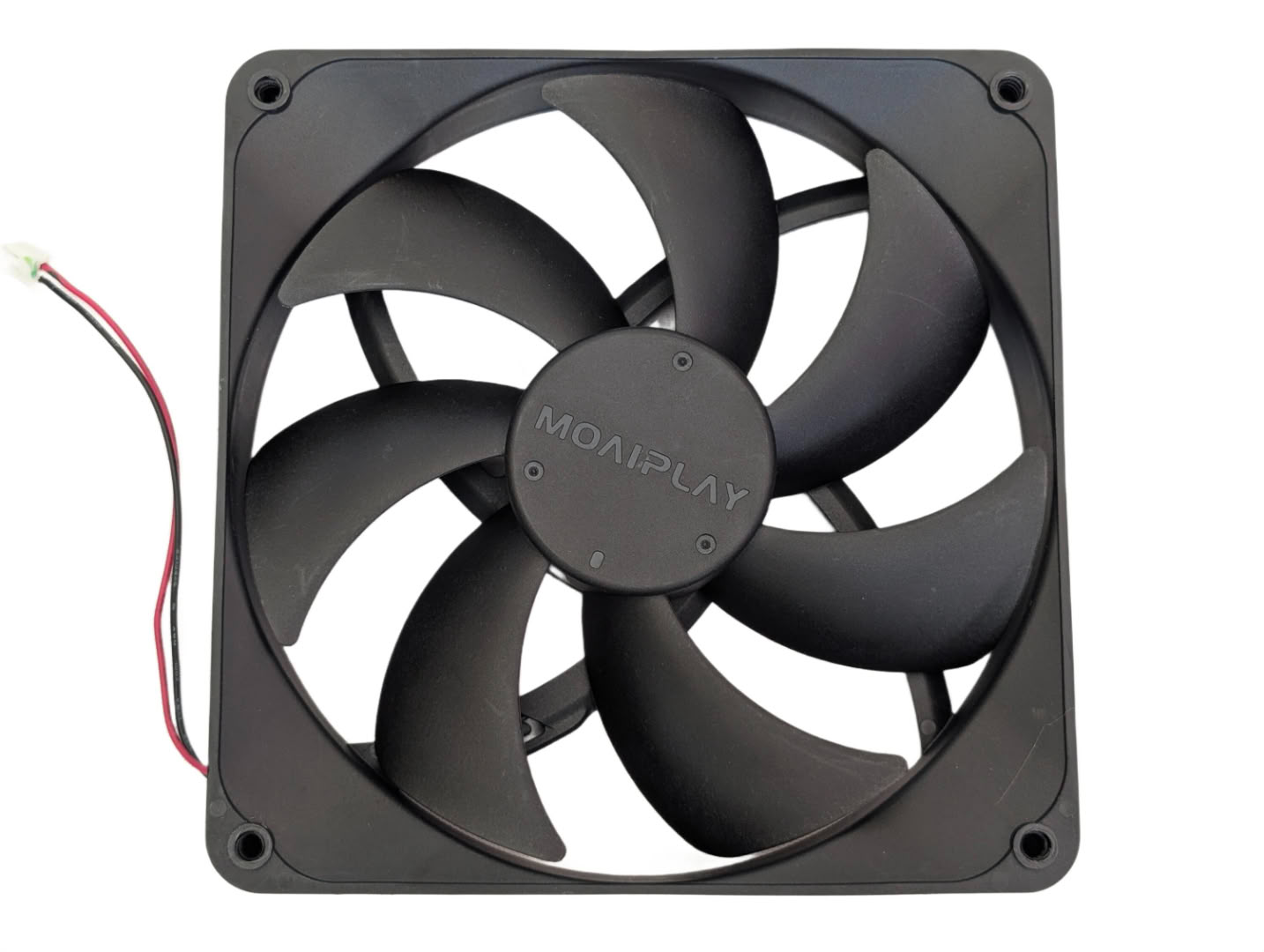
The fan, which is the main selling point of this supply, is a Yate Loon D14SM-12 Fluid Dynamic Bearing Fan, measuring 148 mm, and will draw 0.70 A at full power.
Nov 21st, 2026 04:47 PST
change timezone
Latest GPU Drivers
New Forum Posts
- Anthrophics IPO (29)
- WarpCoreBench scores! (88)
- What's your latest tech Freebie? (86)
- TPU's Nostalgic Hardware Club (22179)
- [Poll] 12V-2x6 Connector Protection: What Are You Using? (WireView / Ampinel / Equalizer / Other / Nothing) (50)
- UPS what one to get? (1)
- RX 9000 series GPU Owners Club (2252)
- Windows 11 General Discussion (7743)
- Without Jensen, PC gaming will be (52)
- Zen 3 IF/IMC degradation (242)
Popular Reviews
- Microsoft Surface Laptop Ultra Review - The Next-gen Arm Laptop
- Ugreen NASync DXP4800 GT Review
- Corsair RM1200e (Second Generation) Review
- Pulsar Office Tour & First Look at P1 Dual-Sensor Mouse
- Upcoming Hardware Launches 2027 (Updated Nov 2026)
- Acemagic Retro X3 Review
- Biwin Black Opal NV7400 2 TB Review
- AMD Ryzen 7 9800X3D Review - The Best Gaming Processor
- AMD Zen 6 Technical Deep Dive
- Chieftec Iceberg PRO 360 DARK Review
TPU on YouTube
Controversial News Posts
- NVIDIA Co-Founder and CEO Jensen Huang Officially Resigns (491)
- Report: Jensen Huang Eyes NVIDIA Comeback (257)
- Open Letter Asking NVIDIA to Reinstate Jensen Huang Passes 115,000 Signatures (184)
- OpenAI CEO Argues Home PCs Waste the World's Limited DRAM Supply (152)
- NVIDIA Launches Investigation Into Jensen Huang's Relationship With Suspected Chinese Spy (136)
- Intel "Raptor Lake Next" 16-Core and 20-Core CPUs Surface (130)
- Legendary Game Studio BioWare Shuts Down Following EA Layoffs (104)
- NVIDIA GeForce RTX 50-Series Scheduled for up to $500 Price Hike This Week (89)