 16
MSI Raider A18 HX A9W Review - The Bottleneck Resolver
(16 Comments) »Introduction

MSI has been making gaming laptops for a long time, and they offer a wide range of devices. They go from simple, all-plastic 15-inch models to 18-inch giants like the one we're looking at today. It's called the MSI Raider A18 HX A9W and relies on the mighty 16-core AMD Ryzen 9 9955HX3D. This CPU features second generation AMD 3D V-Cache technology, and if you're into tech you'll know this offers superb gaming performance, the desktop counterparts which use the same silicon have proven this.
When I previously reviewed the Razer Blade 16 (2025) with a Ryzen AI 9 HX 370 and RTX 5090, I noticed that the GPU wasn't being fully utilized in some games, particularly at resolutions lower than 4K. This was evident when compared to the SCHENKER KEY 18 Pro (E25), which had an Intel CPU and the same graphics card. Yes, that's a bottleneck caused by the processor. Even the Intel system struggled in some scenarios, for instance in games like Baldur's Gate 3, where the 4K FPS was nearly identical to the 1440p result.
What I'm trying to explain is that if you get a system with an GeForce RTX 5090/5080, you may experience non-optimal gaming performance on 1600p/1440p resolution (or if DLSS Performance/Ultra Performance is applied) if the CPU isn't punchy enough. You're spending a fortune on a high-end laptop, and a GPU bottleneck means you're literally wasting money. This is where the Fire Range-HX CPU with its 128 MB L3 3D V-Cache comes into play. After spending a few days playing with this gem, I can confirm that I have fallen in love with its performance.
The Raider A18 HX A9W is a high-end machine, and that's why you can find it only with high-refresh-rate IPS displays. For starters, you can choose between two 1200p units with 144 Hz/165 Hz. These two screens are a decent choice if you mainly play competitive titles like CS2 or Call of Duty at low resolution and details to minimize input lag, and they'll save you a bit of money. Speaking of which, in these described conditions, the 9955HX3D will help a lot to push the FPS as high as possible. But let's get back to the screen options. The 1600p 240 Hz model is maybe the sweet spot in terms of budget and crisp picture. For those with thicker wallets, MSI has prepared two 2400p panels; one regular IPS with a 240 Hz refresh rate, and the top dog is a 120 Hz Mini LED unit that supports DisplayHDR 1000.
Moving to potential upgrades it seems that everything is okay here. You get a pair of DDR5 SODIMM and two M.2 slots, one of which supports Gen 5 SSDs. The Wi-Fi 7 + Bluetooth v5.4 connectivity is up to par, and for those who prefer a wired connection, there's also 2.5 GbE LAN.
For security, you even get a fingerprint reader, which is an unusual but welcome addition for a gaming laptop. Other features include an IR webcam, fTPM 2.0, a privacy shutter, Kensington Lock, and Microsoft Pluton Security. Note that some laptops are configured with dTPM 2.0.
Under the bonnet, you'll find a hefty 99.99 Wh battery to power the thirsty hardware. This reminds me that the GeForce RTX 5090 and 5080 come with a generous 175 W TGP, and the 12 GB RTX 5070 Ti offers a 140 W power limit.
Audiophiles aren't left behind, as a combination of four 2 W speakers and two 2 W woofers is hidden inside the chassis. Last but not least, the premium gaming experience is boosted by a per-key RGB keyboard by Steelseries and a rich port selection.
Specifications
| Specifications | |
|---|---|
| Manufacturer: | MSI |
| Model: | Raider A18 HX A9W |
| Weight: | 3.60 kg |
| Processor: | AMD Ryzen 9 9955HX3D / Fire Range-HX 16 Cores / 32 threads up to 5.4 GHz, 128 MB L3 cache 55 W Default TDP |
| Chipset: | AMD Promontory/Bixby FCH |
| Display: | Default Display: 18.0" / 1920×1200 (16:10) / IPS / 144 Hz Optional Display: 18.0" / 1920×1200 (16:10) / IPS / 165 Hz Optional Display: 18.0" / 2560×1600 (16:10) / IPS / 240 Hz Optional Display: 18.0" / 3840×2400 (16:10) / IPS / 220 Hz Optional Display: 18.0" / 3840×2400 (16:10) / Mini LED IPS / 120 Hz ~1000 nits / 100% sRGB /matte DisplayHDR 1000 support |
| Operating System: | Windows 11 Pro / Windows 11 Home |
| Integrated Graphics: | AMD Radeon 610M |
| Dedicated Graphics: | NVIDIA GeForce RTX 5070 Ti (mobile): 12 GB GDDR7, 192 Bit, 2000 MHz effective clock 5888 CUDA Cores 184 TMUs 64 ROPs 46 RT Cores 184 Tensor Cores L1: 5.8 MB, L2: 48 MB Up to 140 W TGP NVIDIA GeForce RTX 5080 (mobile): 16 GB GDDR7, 256 Bit, 1750 MHz effective clock 8192 CUDA Cores 256 TMUs 96 ROPs 64 RT Cores 256 Tensor Cores L1: 8 MB, L2: 64 MB Up to 175 W TGP NVIDIA GeForce RTX 5090 (mobile): 24 GB GDDR7, 256 Bit, 1750 MHz effective clock 10496 CUDA Cores 328 TMUs 112 ROPs 82 RT Cores 328 Tensor Cores L1: 10.3 MB, L2: 64 MB Up to 175 W TGP |
| Memory: | 2x SO-DIMM RAM slots Up to 96 GB of DDR5 at 5600 MT/s |
| Storage: | 1x M.2 2280 PCI Express 5.0 x4 / 1x M.2 2280 PCI Express 4.0 x4 |
| Optical Drive: | None |
| Connectivity: | 2x 5 Gbps USB Type-A / 3.2 Gen. 1 1x 10 Gbps USB Type-A / 3.2 Gen. 2 2x 40 Gbps USB4 / Thunderbolt 4 with DP and PD 3.1 SD Card reader 1x HDMI 2.1 Audio combo jack LAN DC-in |
| Communications: | Wi-Fi 7 + Bluetooth 5.4 1080p IR HDR webcam |
| Audio: | 4x 2 W speaker + 2x 2 W woofers sound by Dynaudio, support for Nahimic and Hi-Res Audio |
| Input device: | Multitouch touchpad Per-Key RGB Gaming Keyboard by SteelSeries |
| Power: | 1x 400 W AC adapter 99.99 Wh battery |
| Warranty: | Two years |
| MSRP: | Starting at $3799 for the RTX 5080-based models |
Packaging

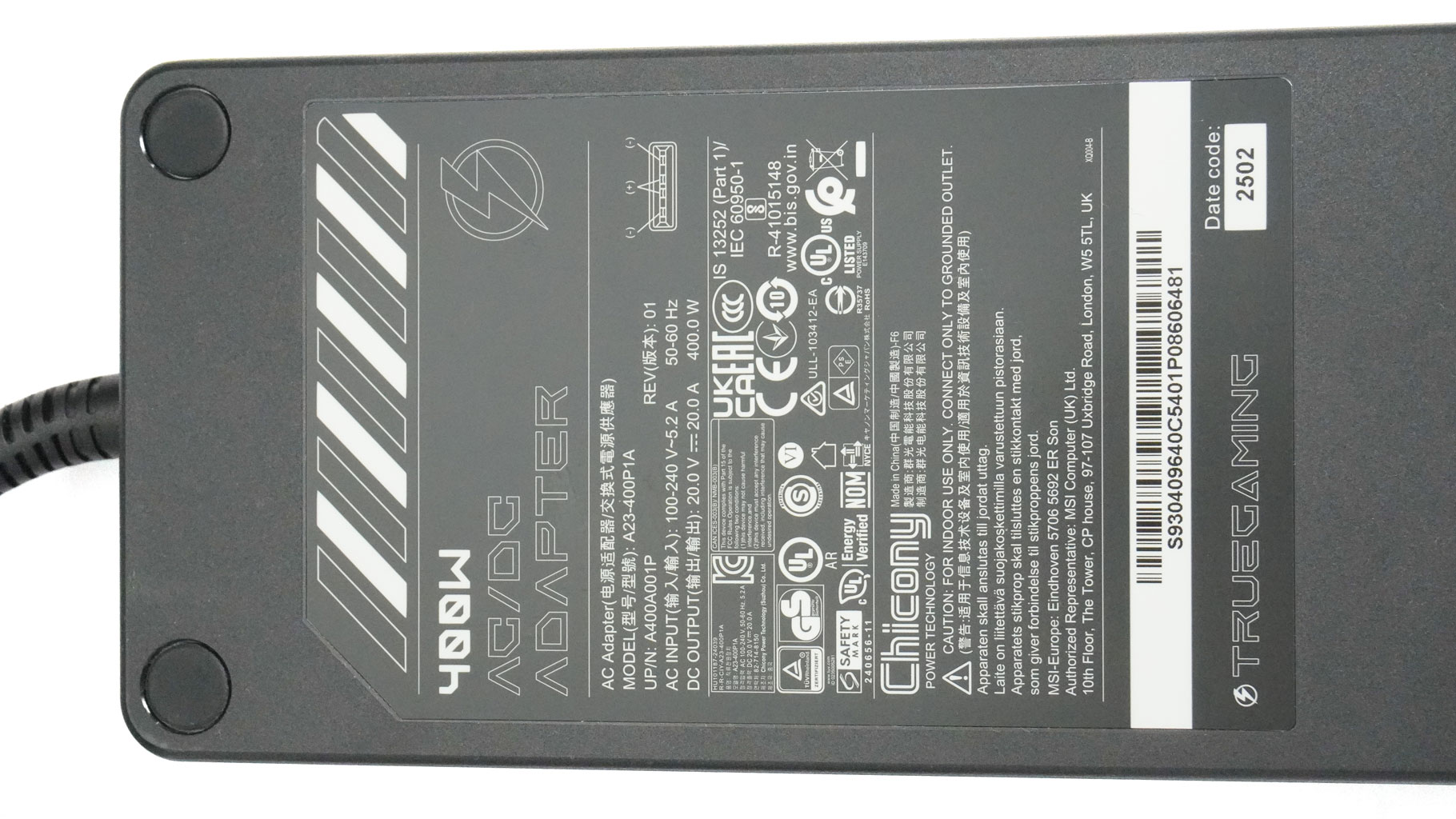
The large, glossy box contains the huge 18-inch laptop, a few manuals, and an enormous 400 W power adapter.
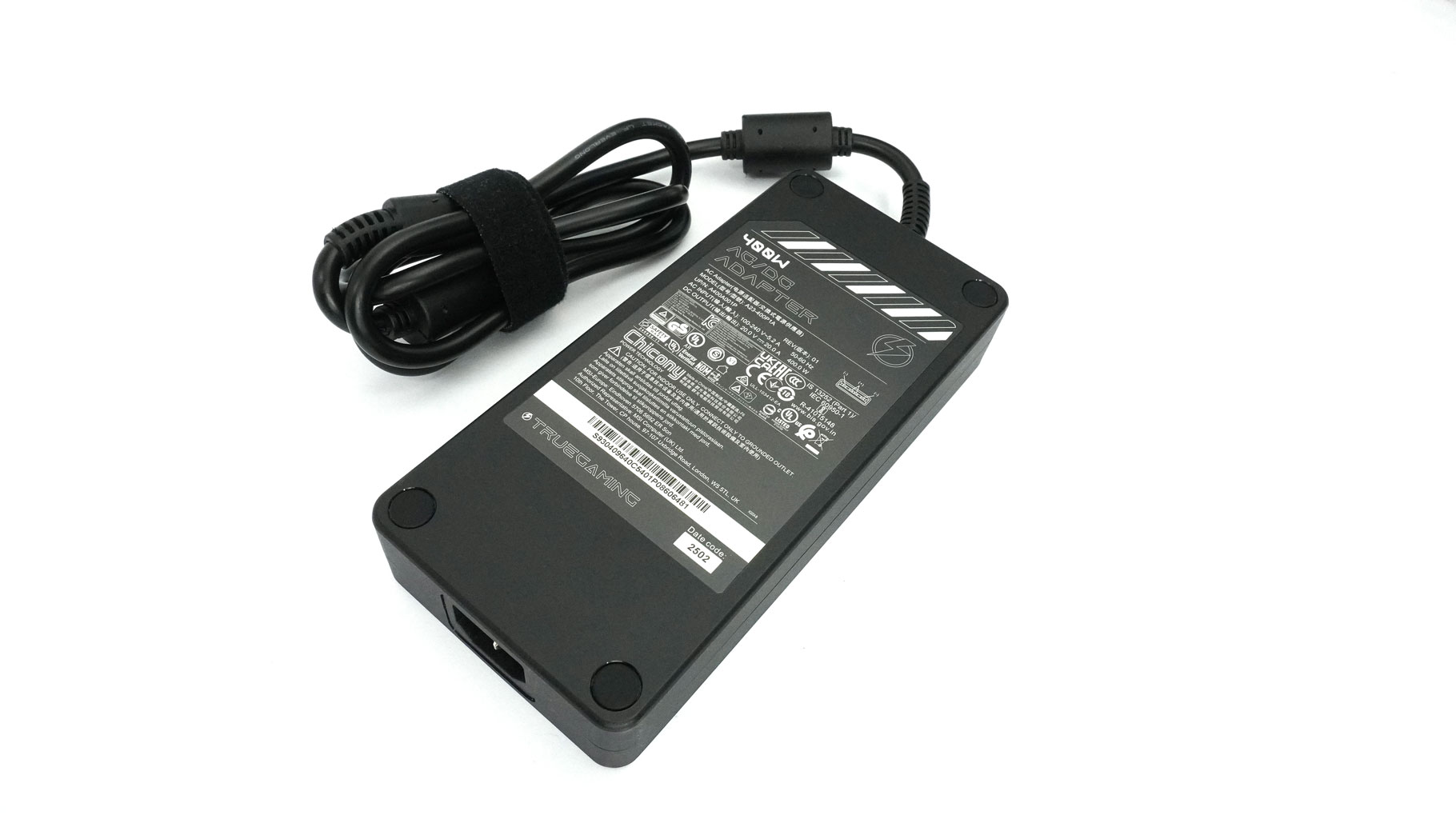
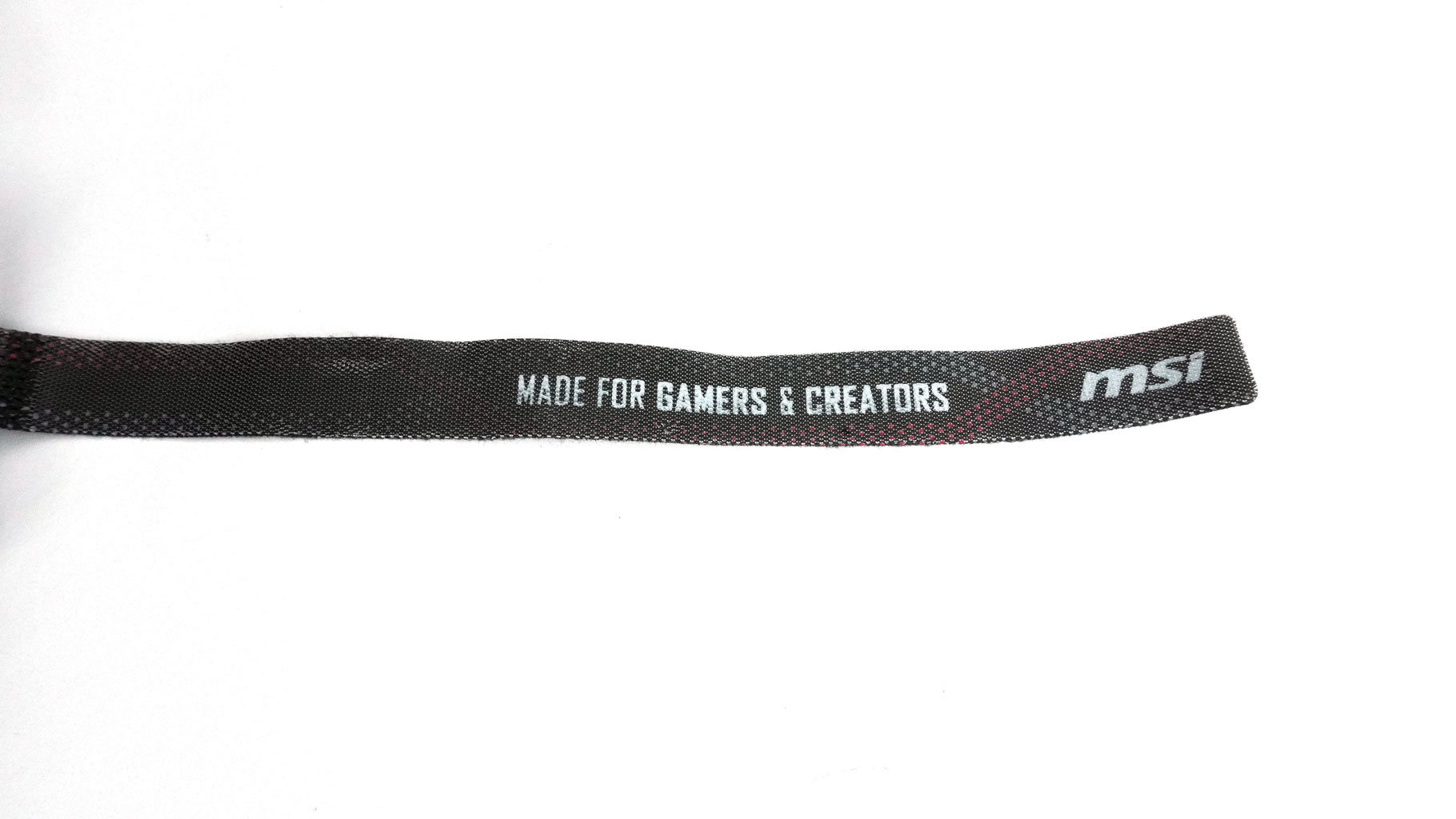
The charger alone weighs 1188 grams and measures 18.8 x 8.8 x 3.3 cm. That means the charger is as big as a compact tablet and as heavy as an ultrabook. The charger's cable has a Velcro strap with the inscription "Made for Gamers & Creators," indicating the target audience for this machine.
A Closer Look - Outside
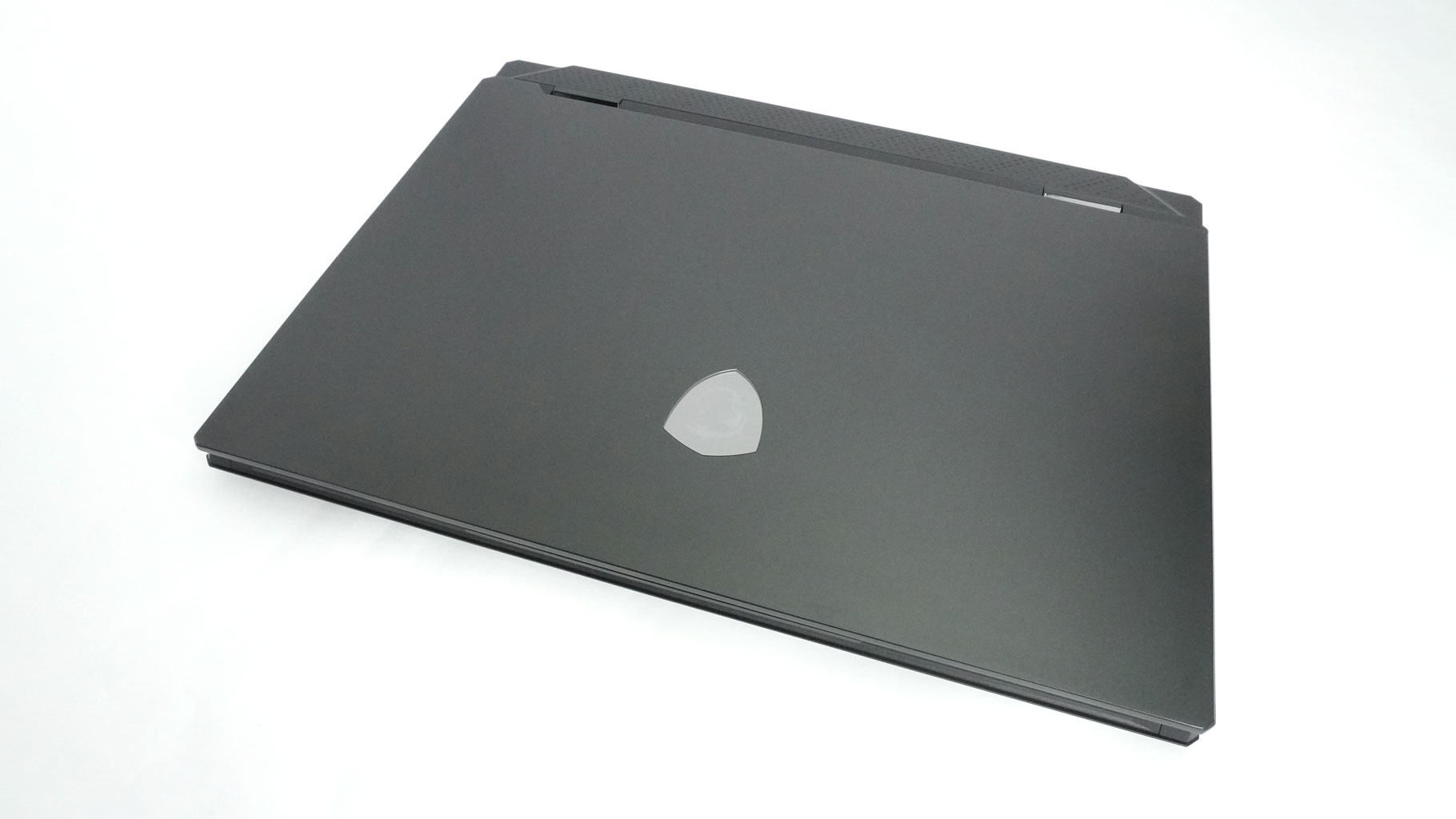
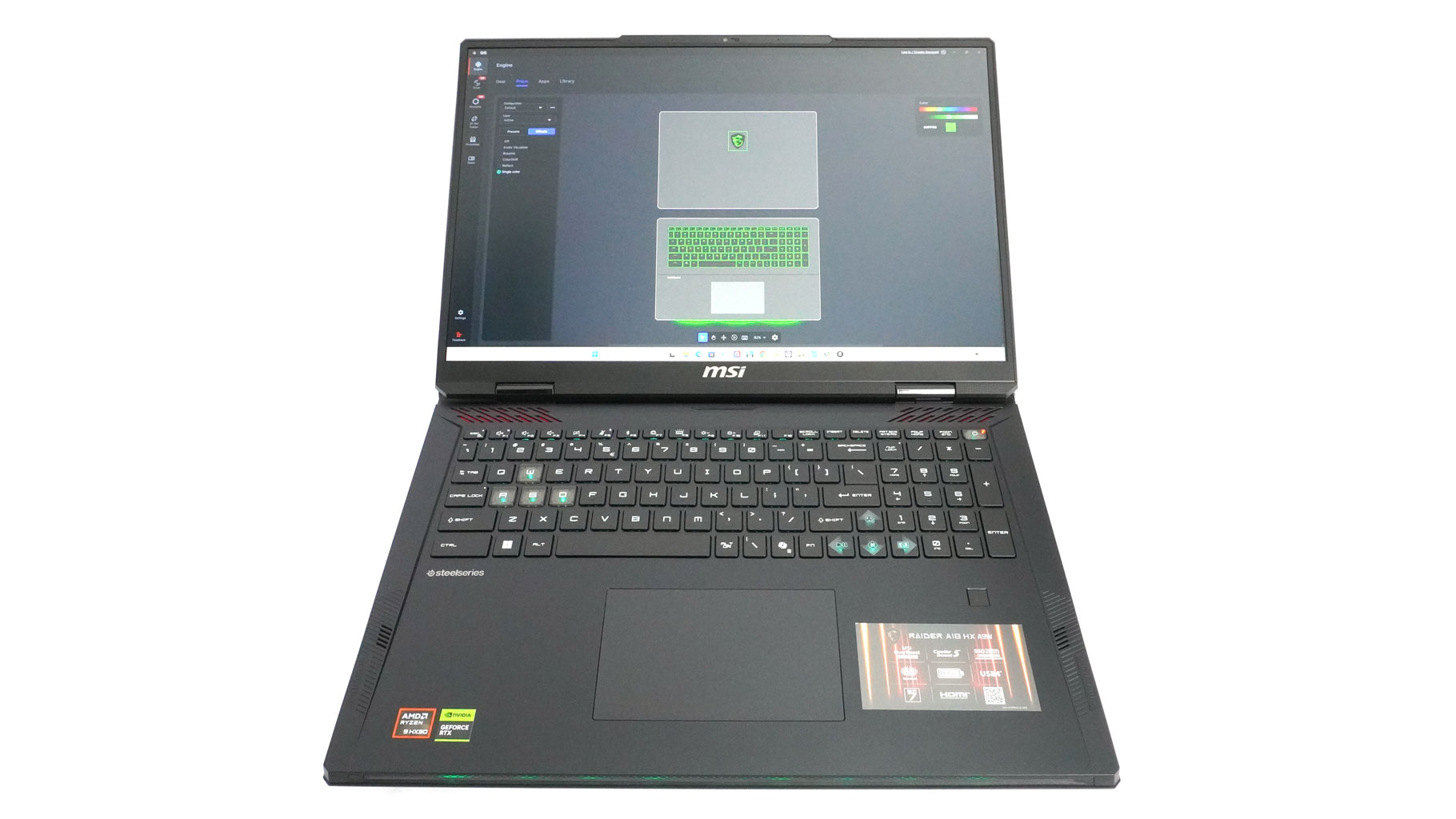
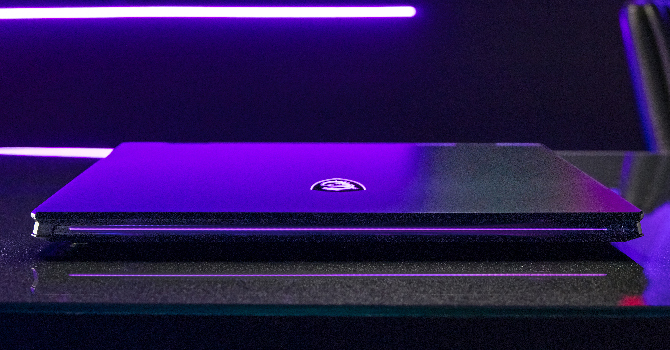
The whole chassis is executed in a Core Black finish. It gives the laptop a stealthy and classy look. This giant weighs 3.60 kg and its profile is between 24 and 32 mm thick. It's definitely a big beast, but it's a looker as well.
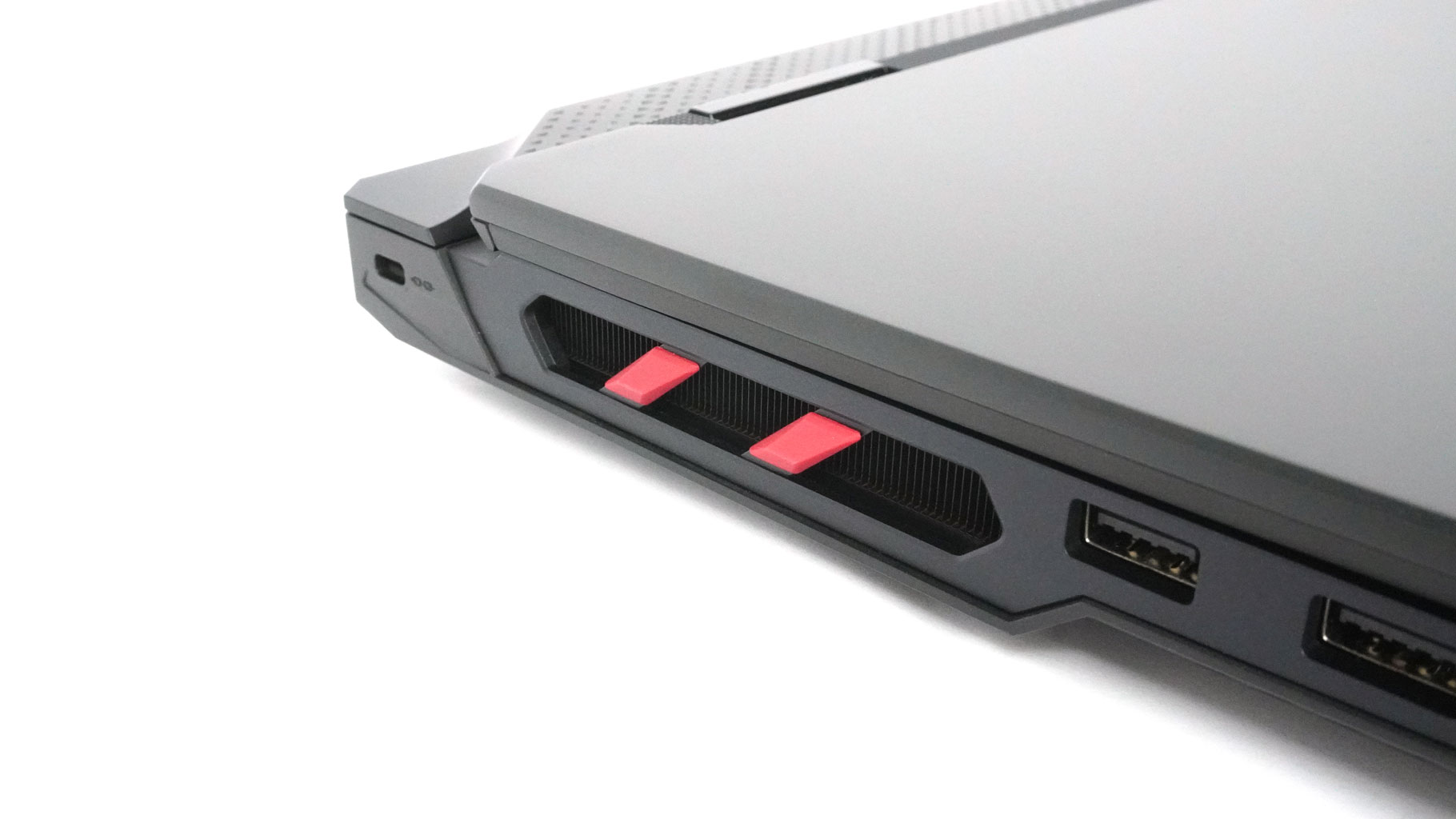
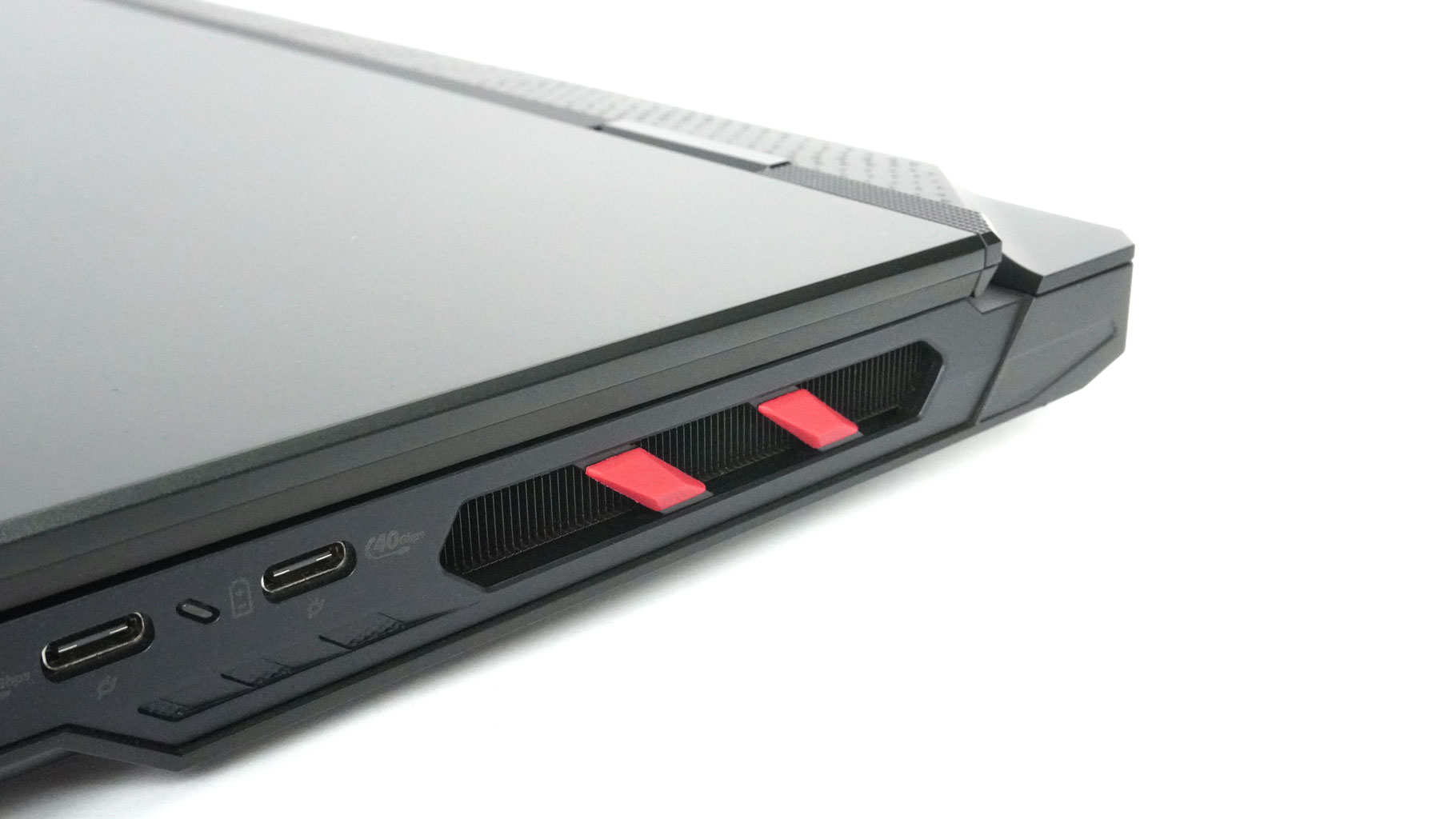
If not for the red stripes on the exhausts, some people might have mistaken this machine for a fancy-looking workstation.
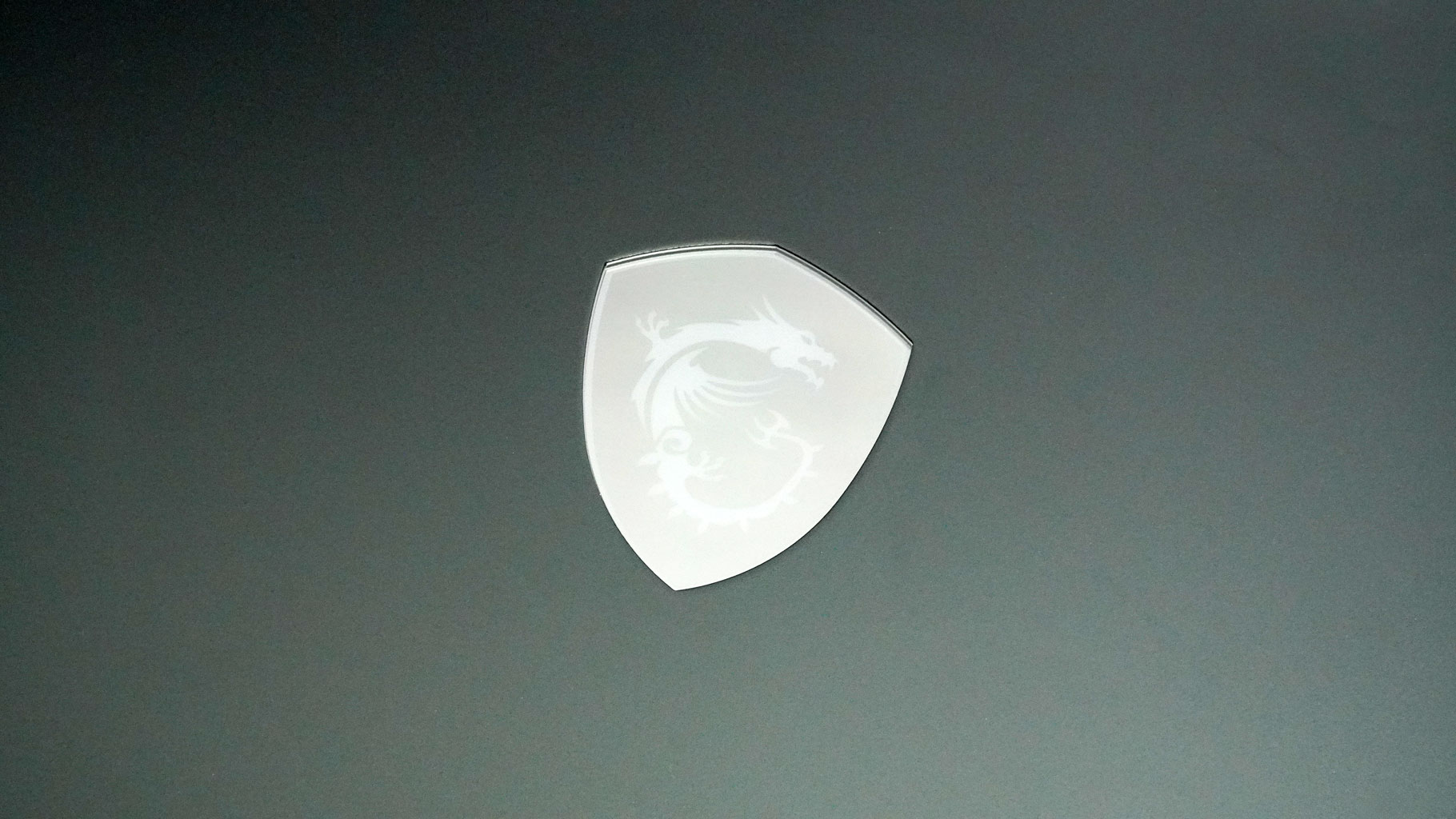
The illuminated Dragon logo on the lid looks great even when the RGB backlight is off, as its light glass surface contrasts nicely with the dark chassis.
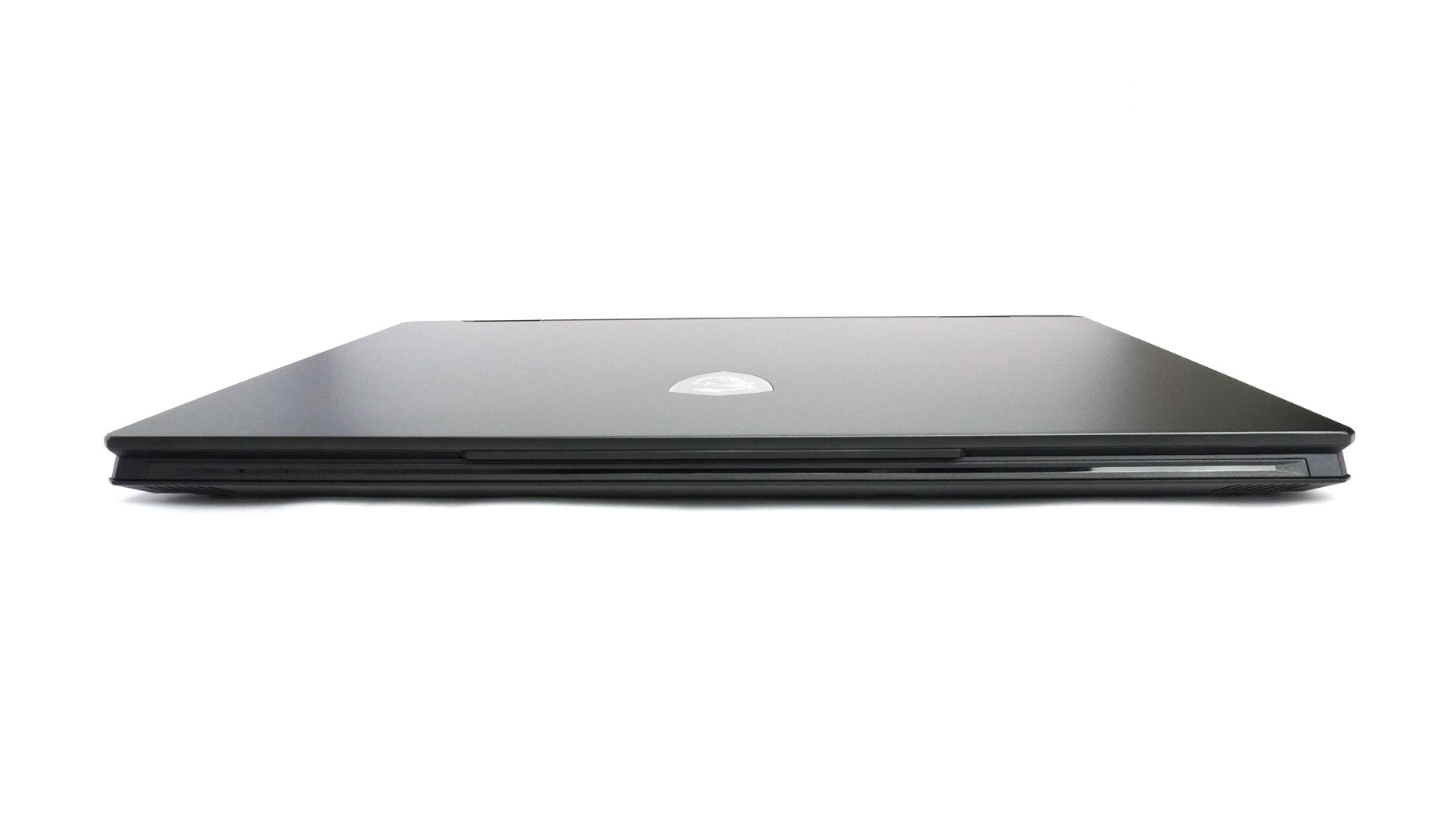
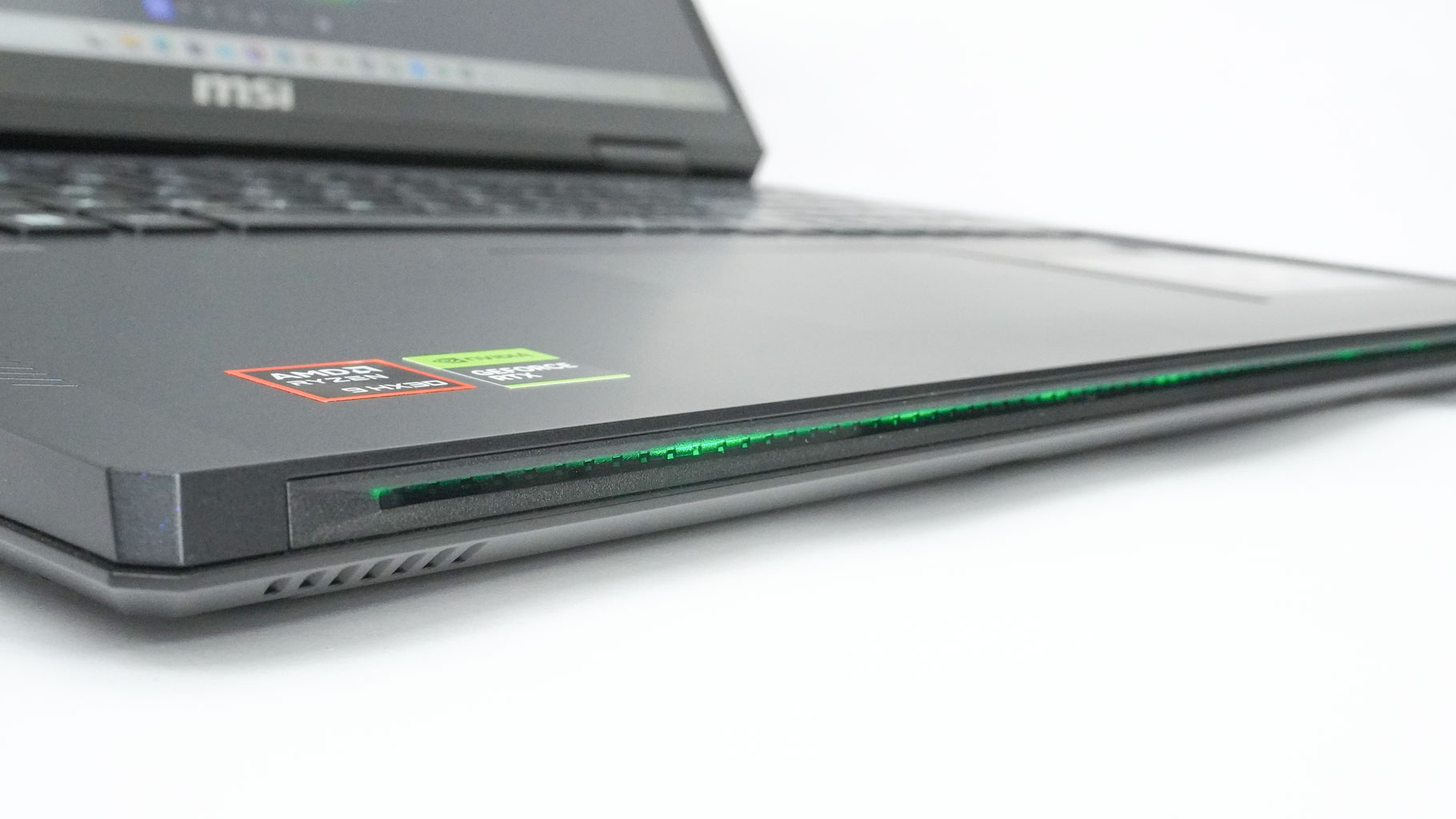
The section around the webcam slightly sticks out of the lid, while the matrix light bar underneath is positioned a bit deeper into the chassis. This creates a small space where you can comfortably place your thumb before opening the machine with one hand.
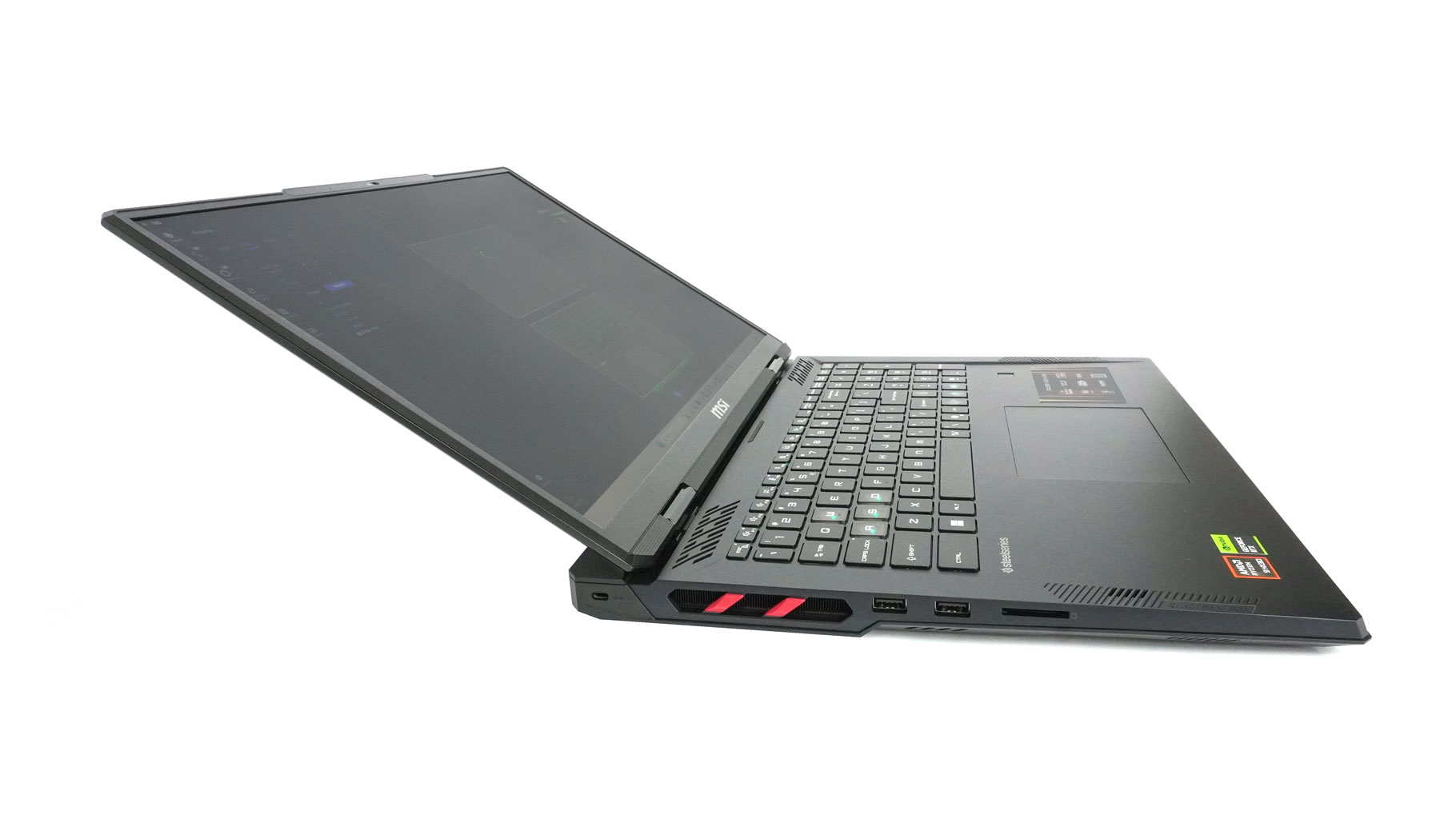
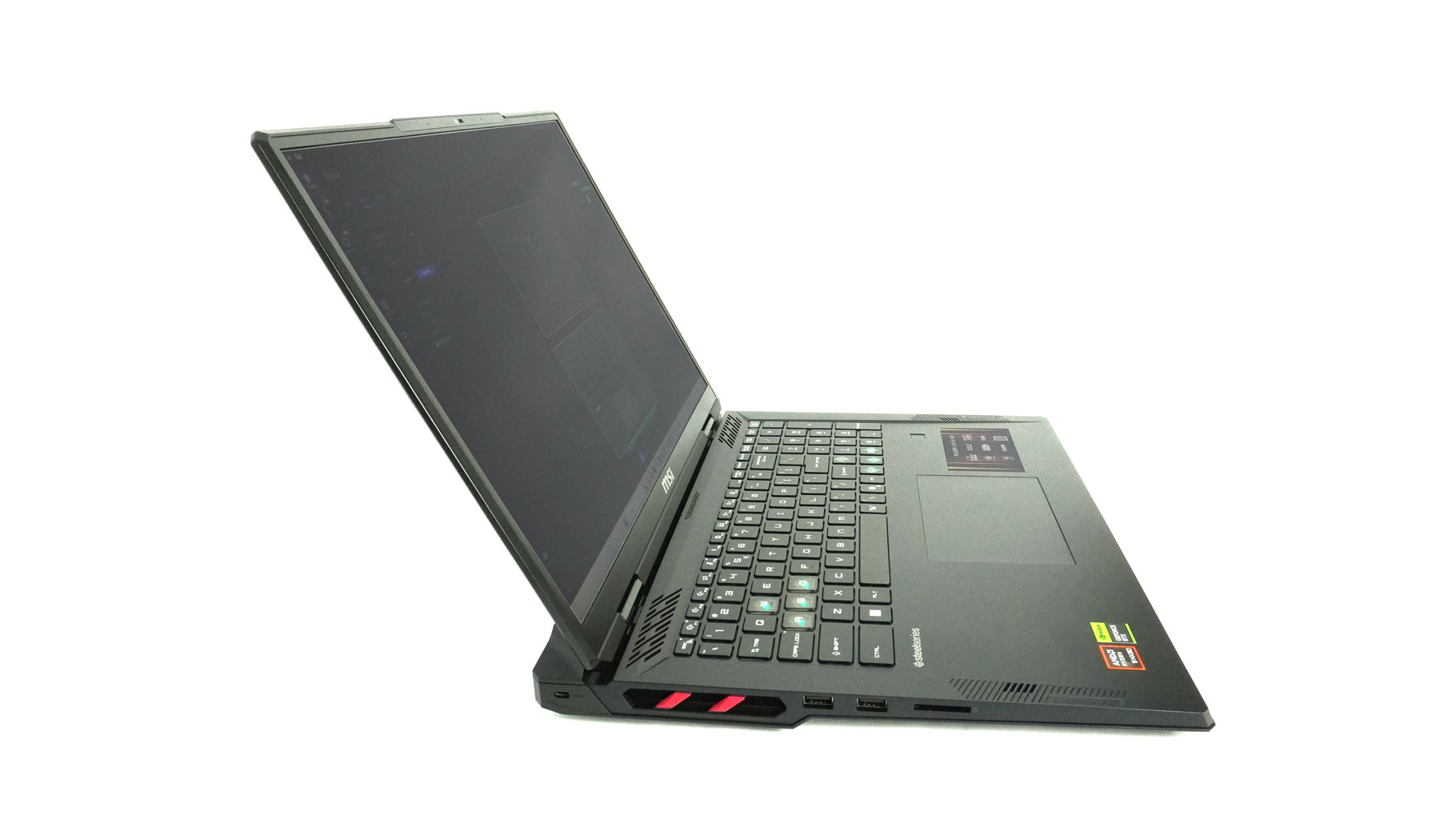
This happens without too much effort; the stable hinges are stiff without being over the top. The lid itself feels quite solid, which is impressive given its size. While you can flex it a bit in the middle or twist it slightly on purpose, the unit feels rigid enough for everyday use.
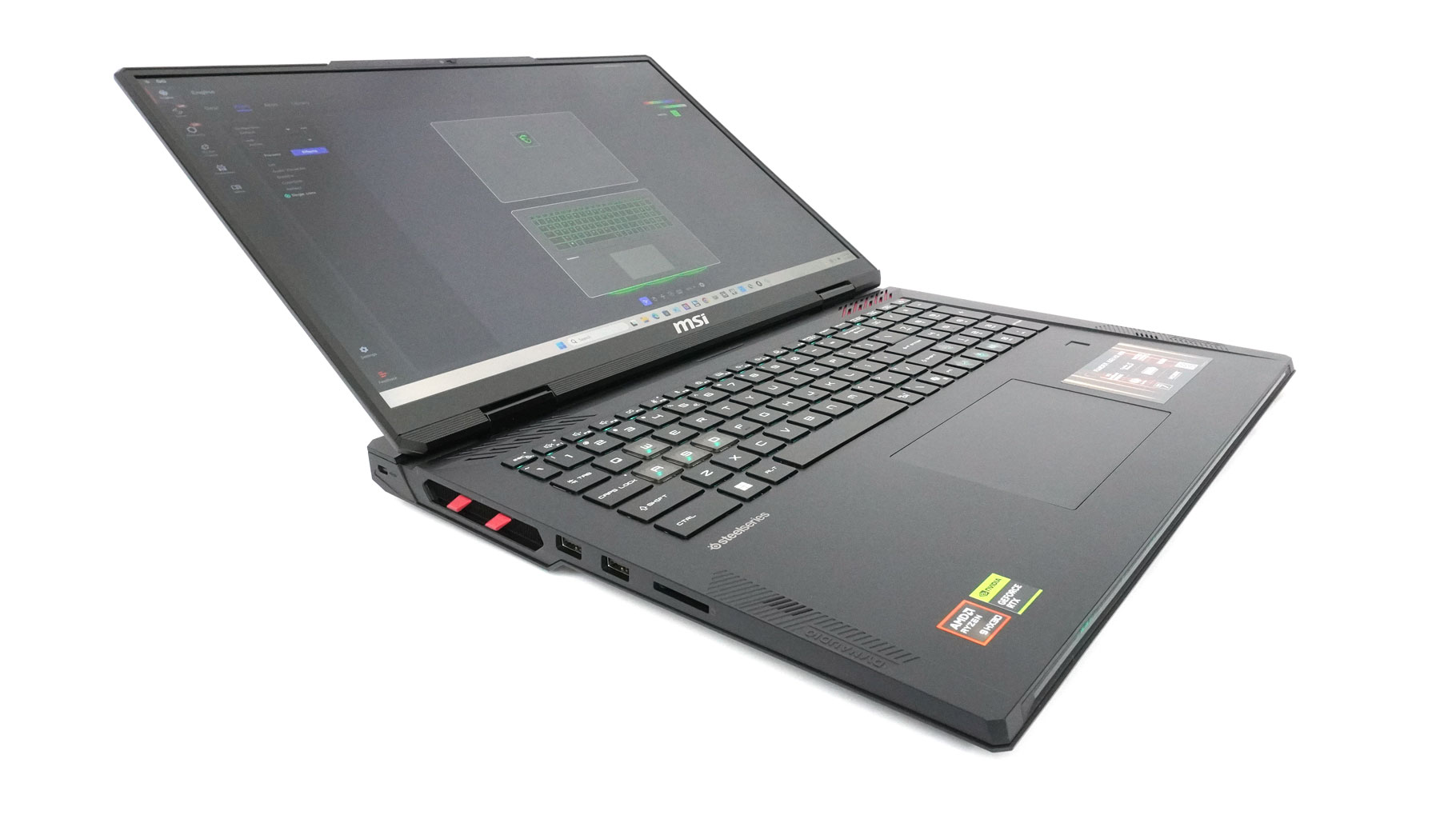
The main body is strengthened on the inside by a magnesium frame, which is why the base is rock solid with one small exception, but we'll talk about it a bit later on. The exterior of the device is made of both aluminium and plastic, I personally prefer a fully metal build.
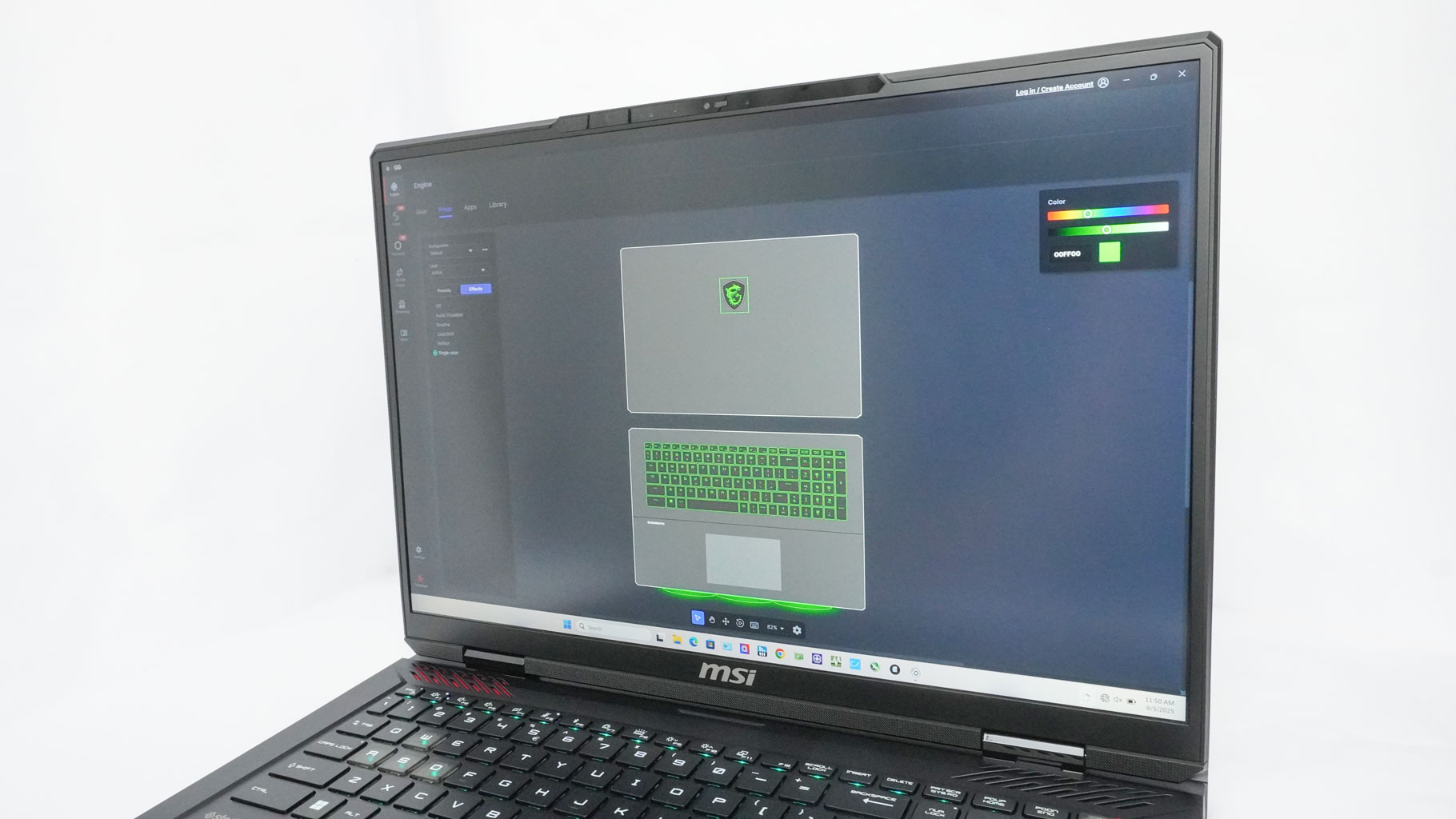
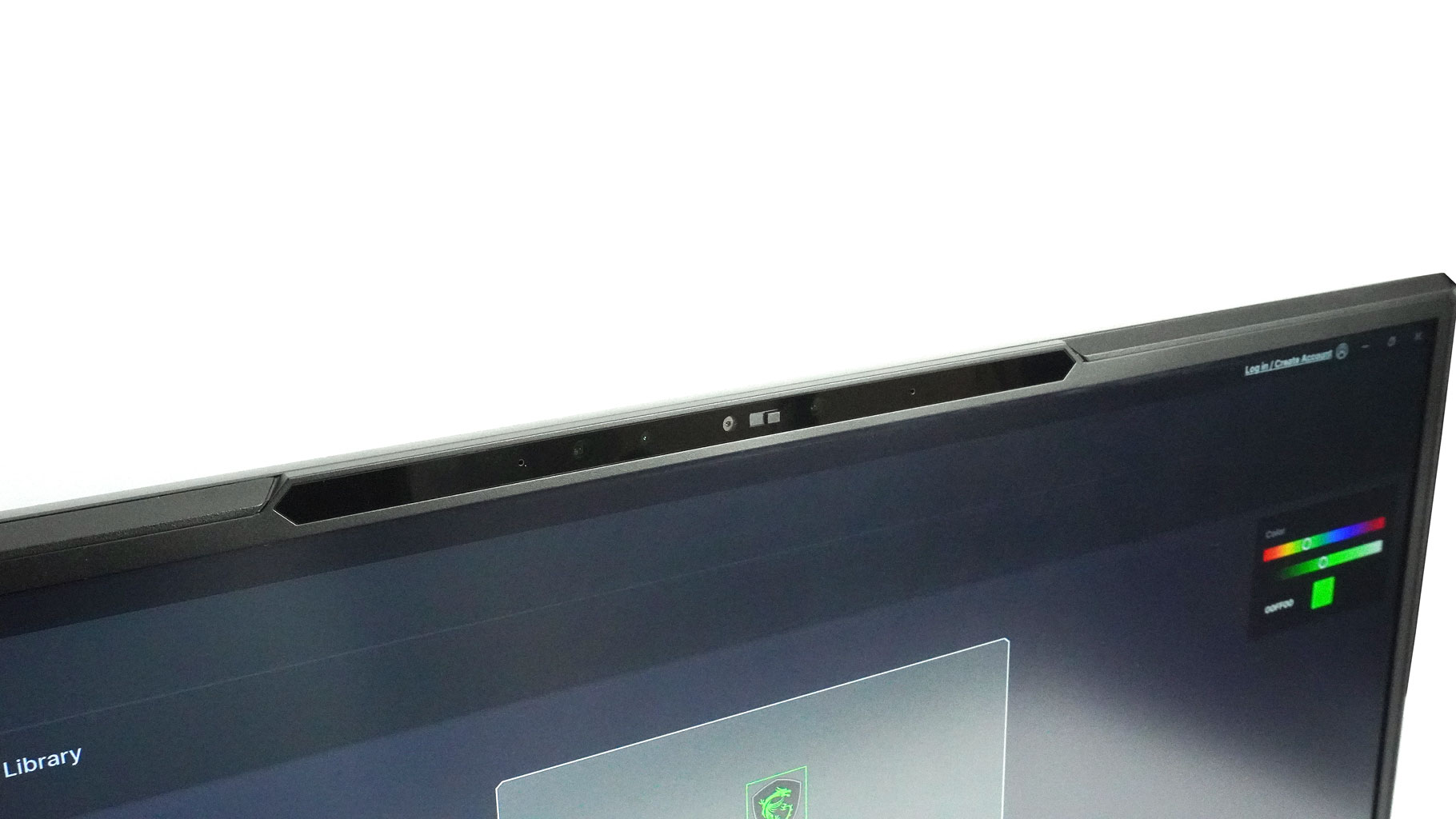
The glossy bar on top of the upper bezel is a bit thicker than the side ones because it houses the 1080p IR webcam that supports Windows Hello. For extra security, a privacy shutter is also included.
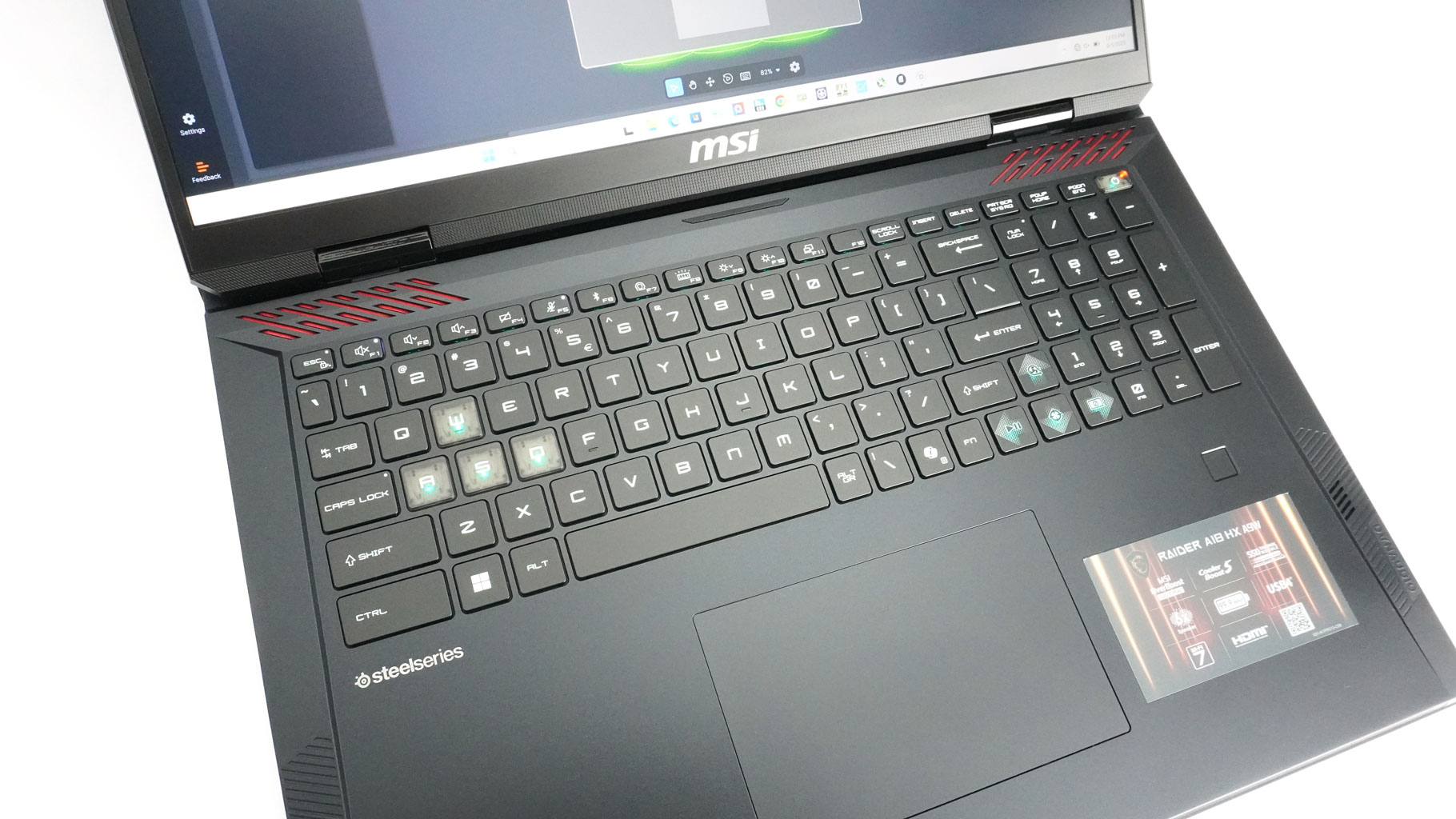
The keyboard is a fantastic SteelSeries per-key configurable RGB unit.
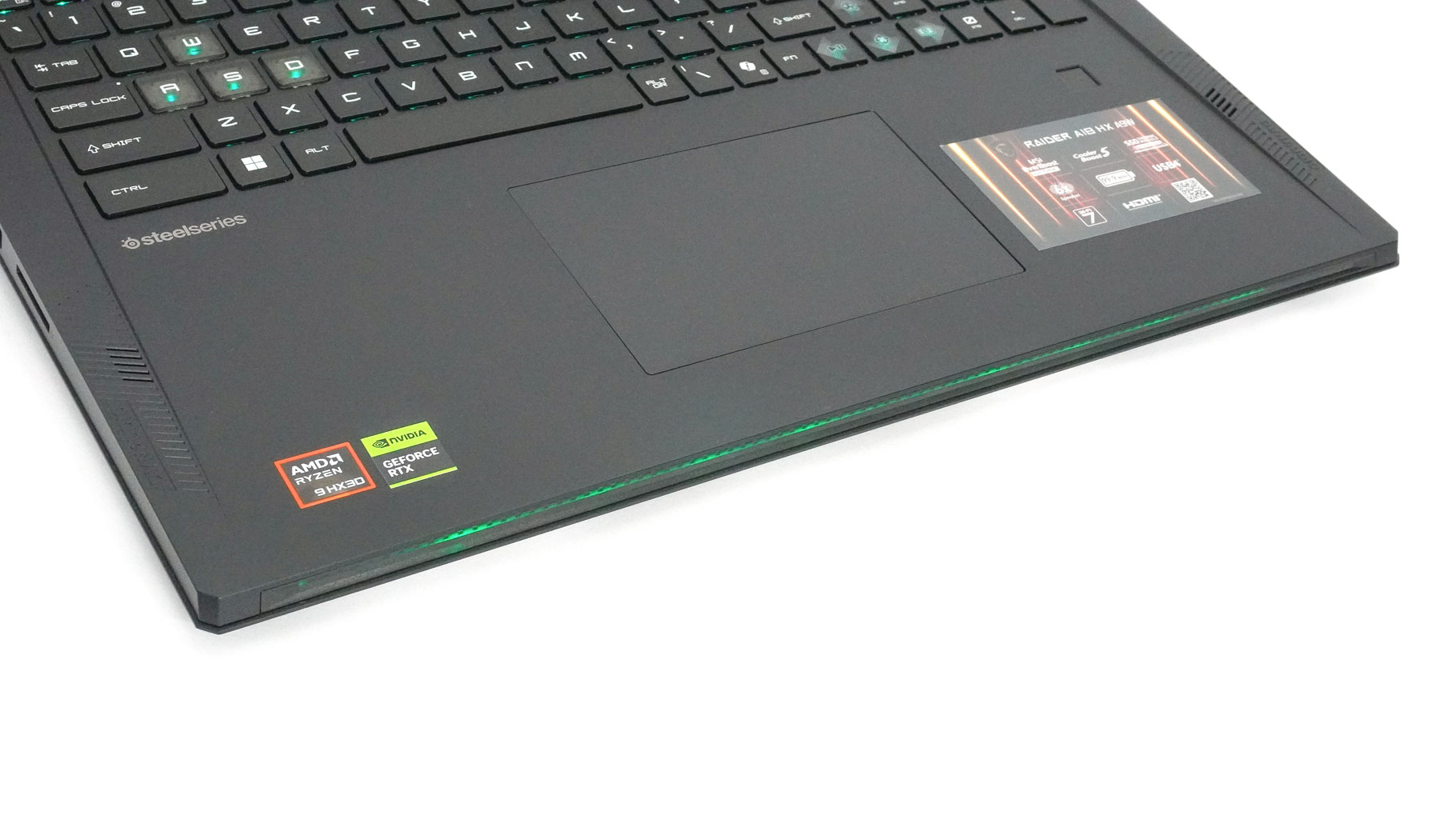
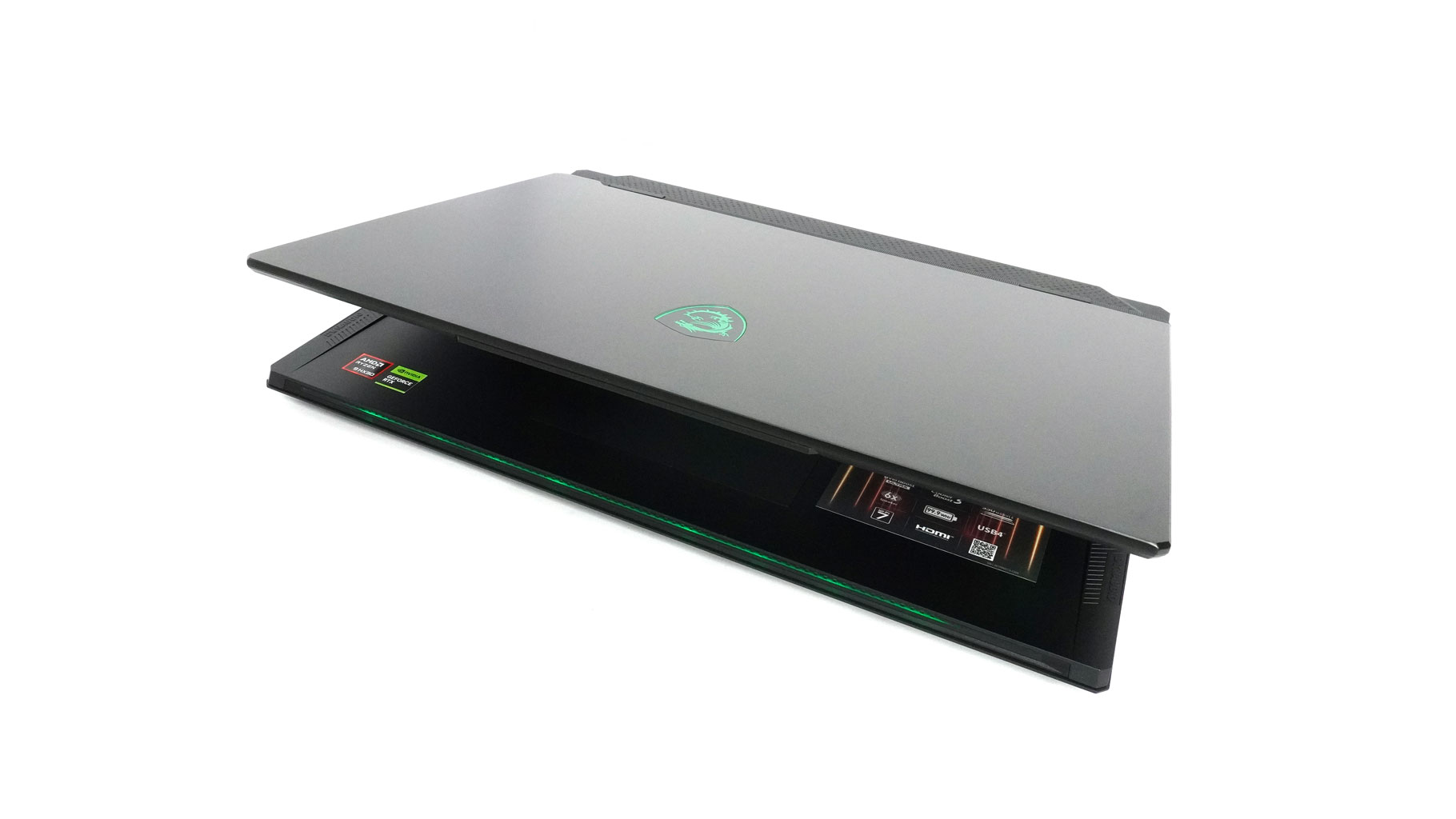
It's highly customizable via the SteelSeries GG app, which controls the lighting for the front light bar and the lid logo. I really like the spacious 4-row NumPad whose keys are as big as the main ones. All keycaps are large, well spaced and grippy, with nicely long travel and feedback that just feels good. It's a great combination for typing, gaming, or work.
I only wish the Fn key was on the left, the Enter key was bigger, and the arrow keys were separated from the main keyboard.
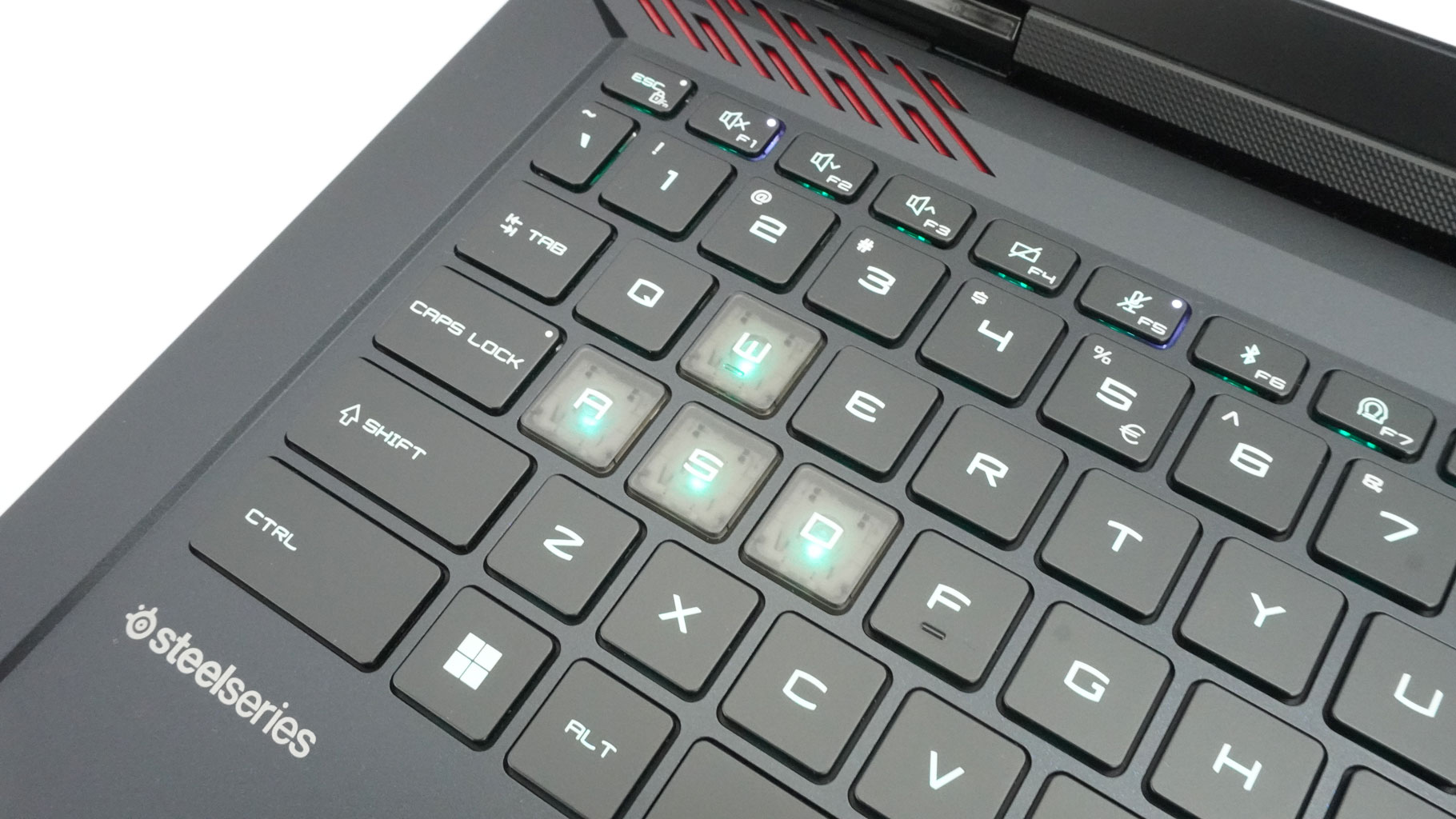

The WASD section and the Power key are translucent. The Power key changes color based on the GPU mode, glowing white when the integrated GPU is active and amber when the discrete GPU is enabled. Now it's time for a little complaining, it's strange that when you press certain keys to the right of the WASD section (specifically E, R, T, F, G), there's some visible flex.
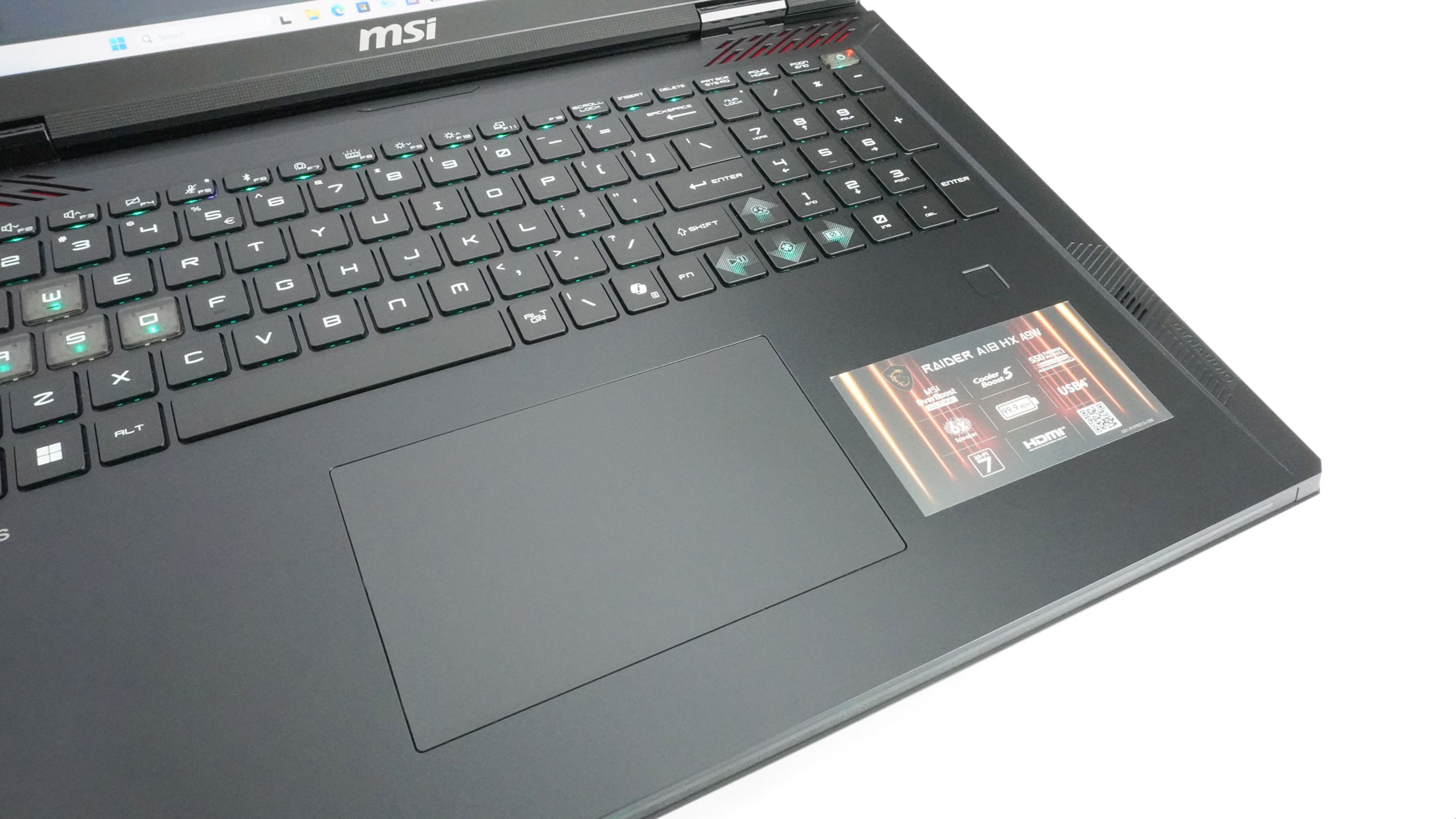
The touchpad isn't huge, but its size feels sufficient for comfortable usage. Overall, it's a decent pad that is precise, reasonably smooth, and with quiet operation. Still, its surface is made of plastic, which doesn't suit well with the premium feel of the whole laptop. Since the pad is centered, your palm won't get in the way while you're gaming.
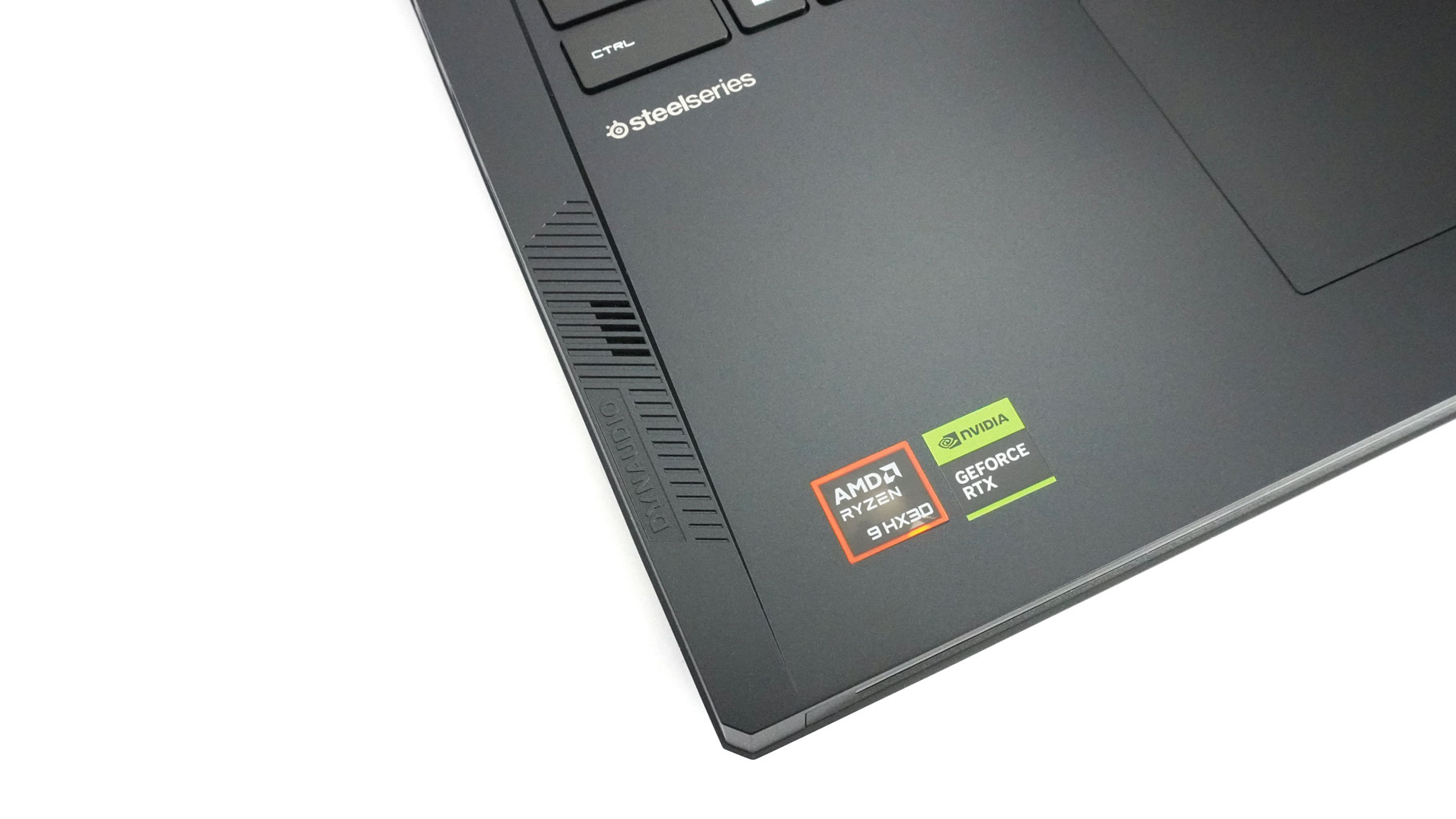
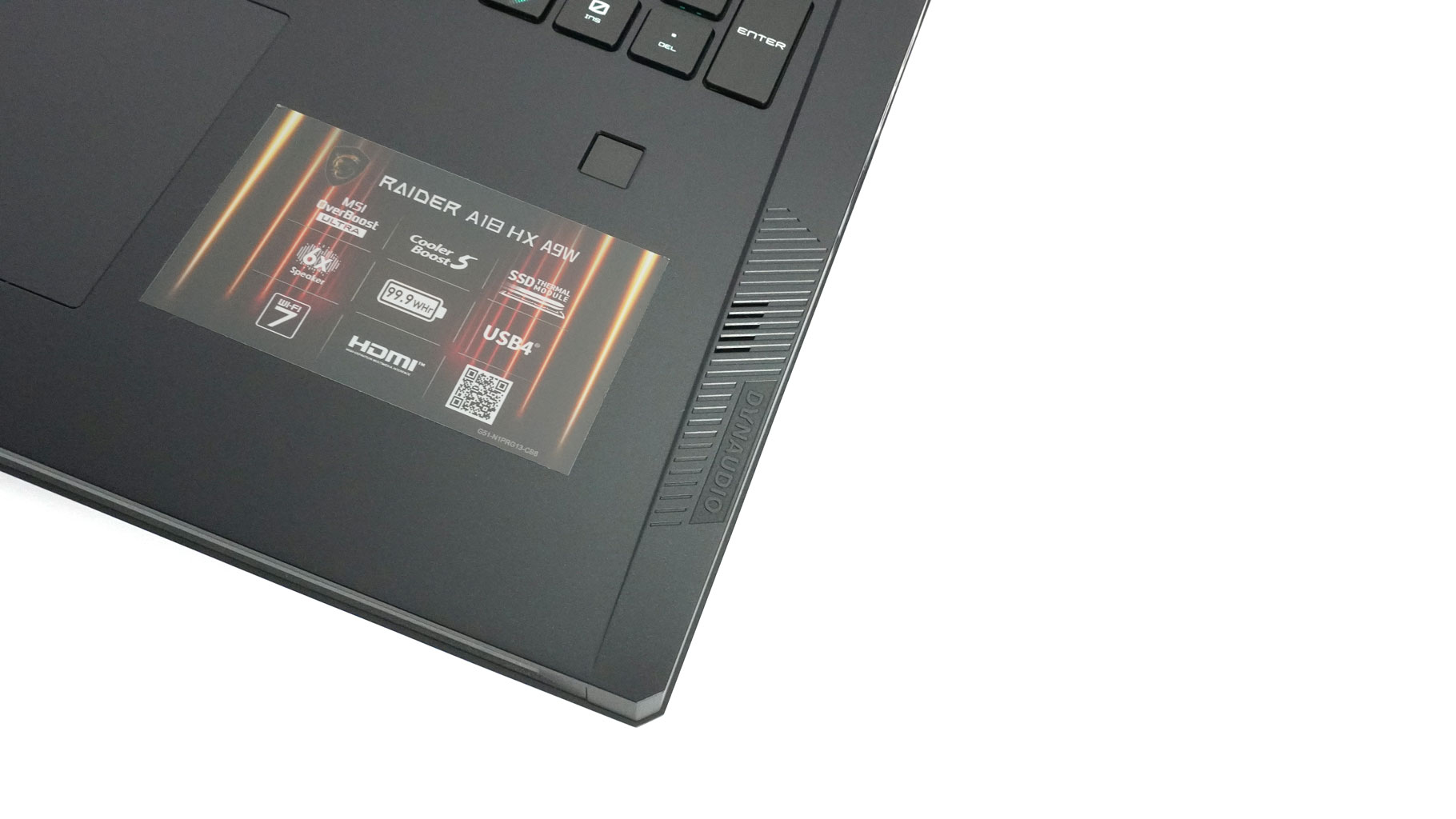
The cutouts for the front-firing subwoofers are on the sides and are marked with the Dynaudio inscription.
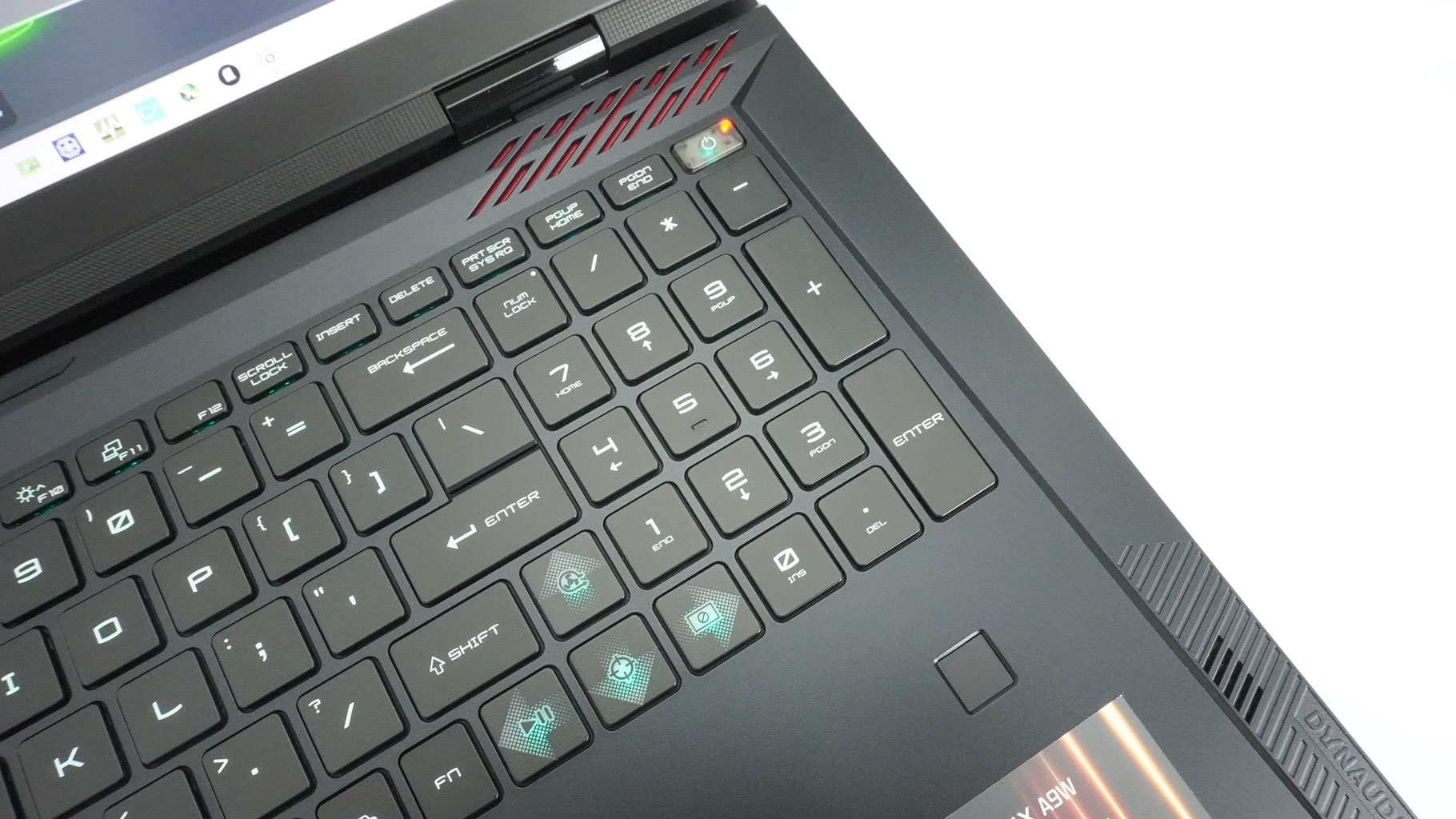
Hold your horses! There's a fingerprint reader under the NumPad! This is a rare find for a gaming laptop, but a great one. The reader works lightning fast, which is crucial—nobody likes sluggish logins.
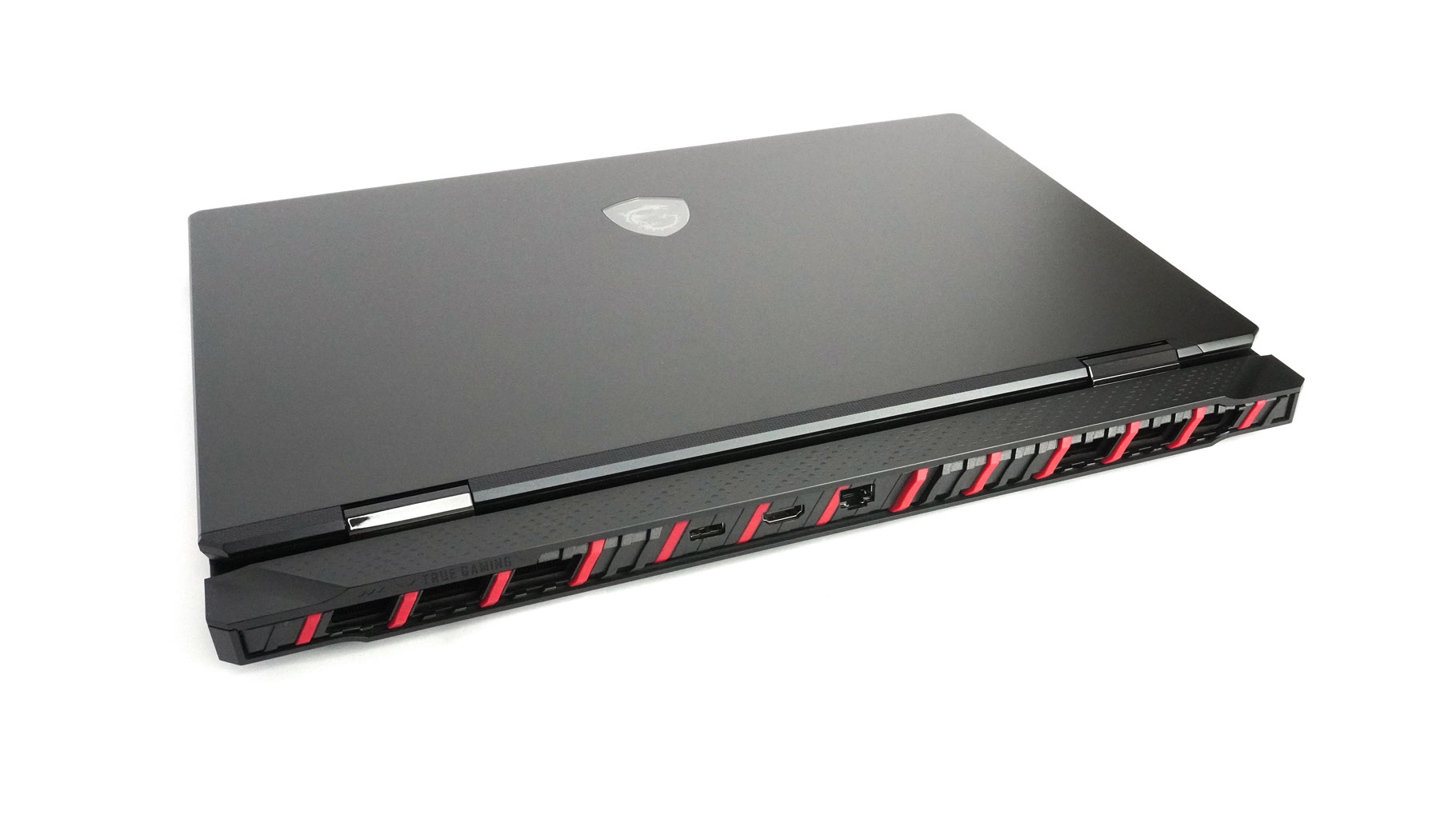
The back is characterized by a more aggressive gamer-centric design with red and black bumped stripes around the exhausts.
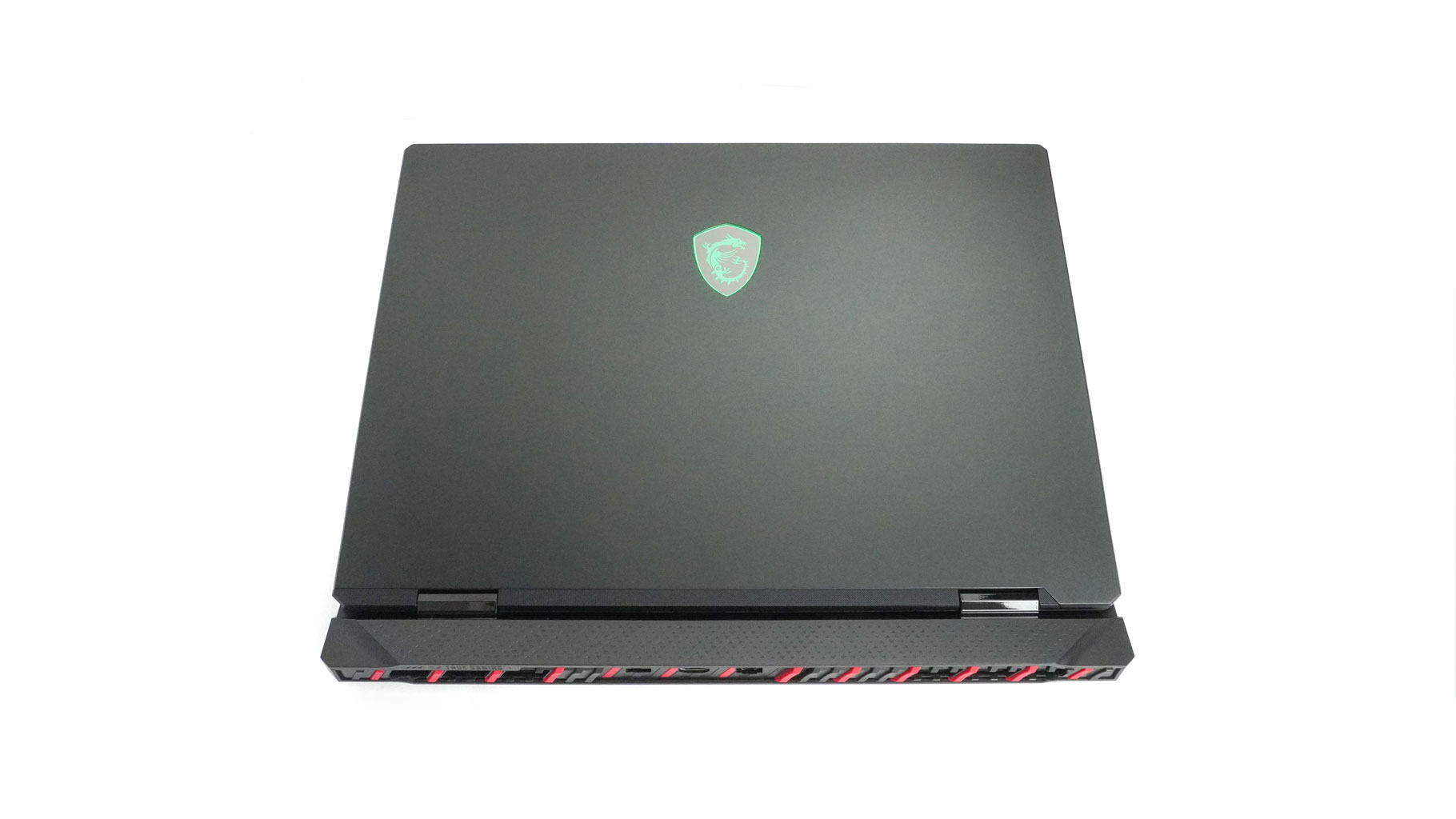
I definitely wish there were port indicators on the top of the rear hinge cover.
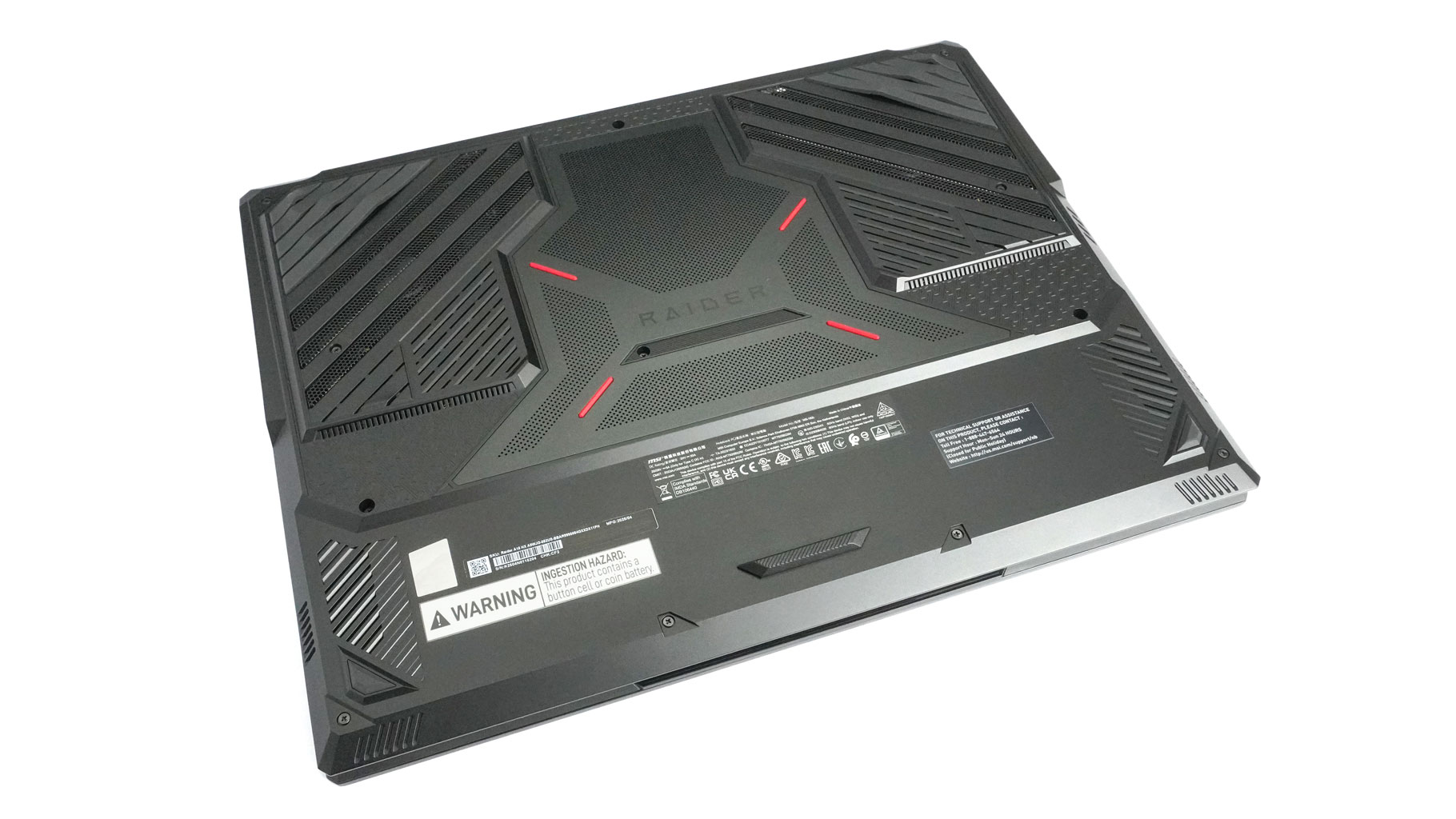
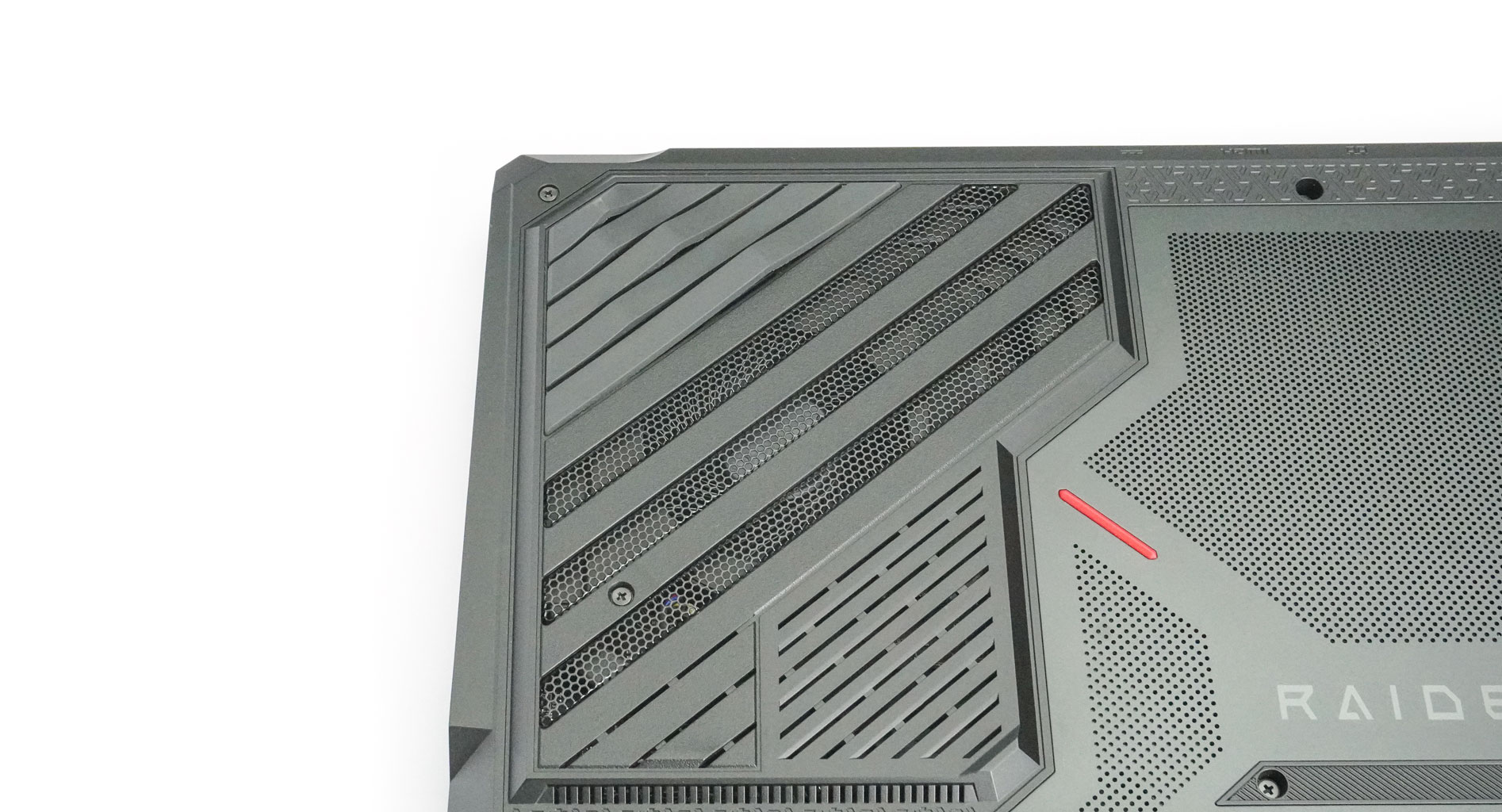
The bottom definitely reveals the gaming nature of this laptop. It boasts many vents and feet in different sizes and shapes. MSI calls the design of the rear feet "3D Stand."
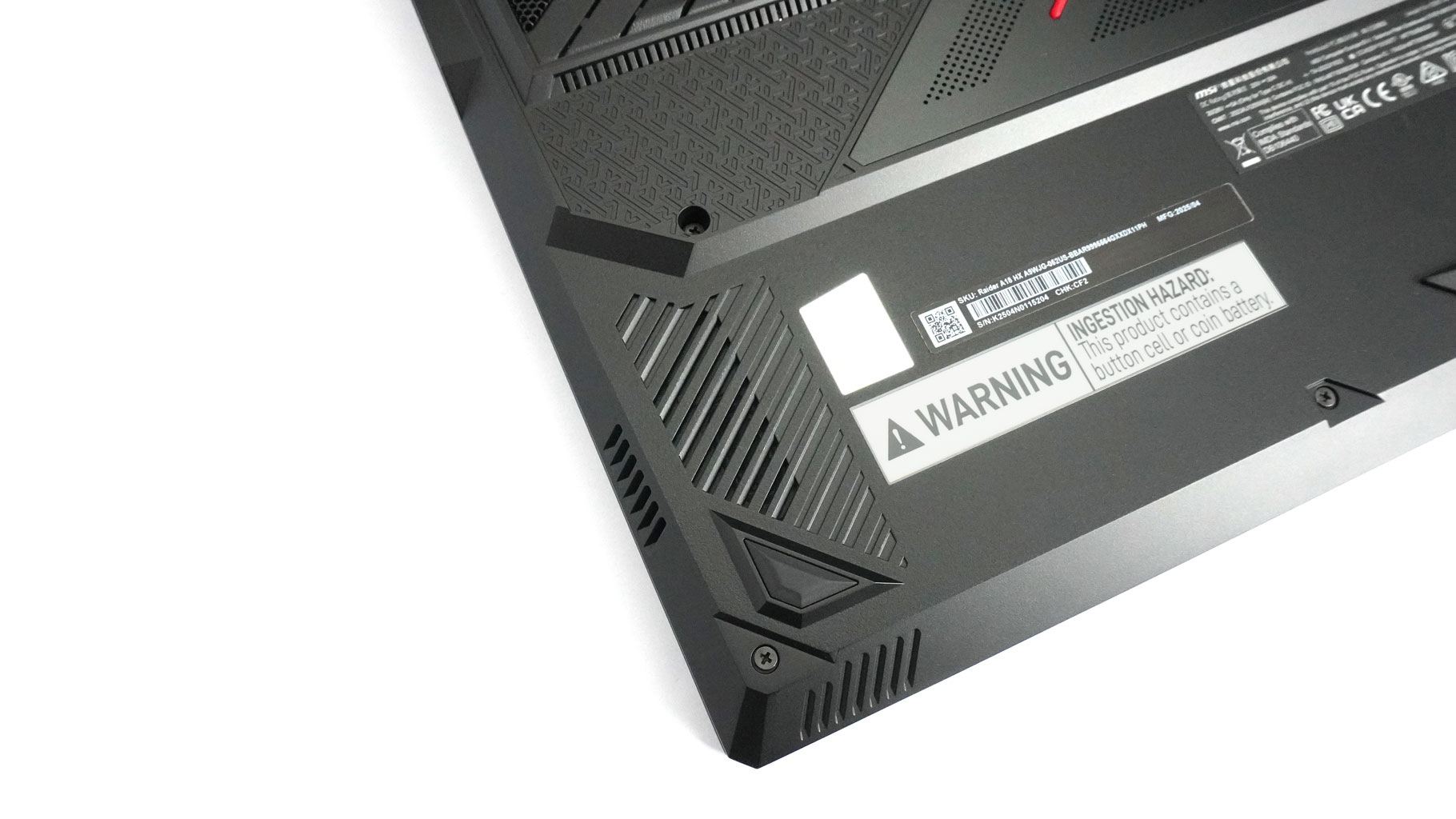
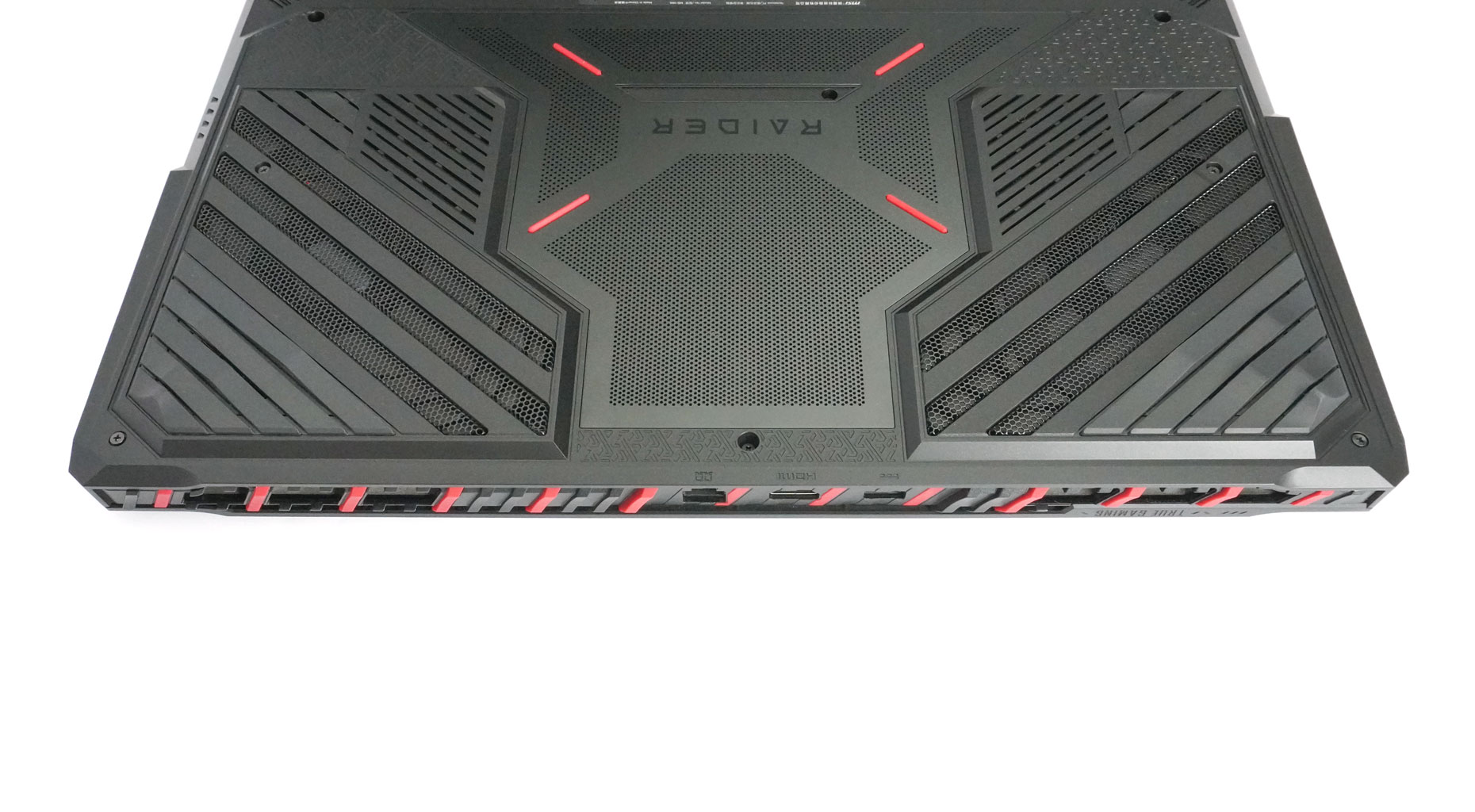
The lower side of the plate houses two-way speaker cutouts. The hot air is dissipated via four exhausts—two on the sides and two on the back.
Ports and Connectivity

On the left, you'll find a Kensington Lock slot, two 5 Gbps USB Type-A 3.2 Gen. 1 ports, and an SD Express Card Reader.

The right side looks more interesting thanks to its audio combo jack, 10 Gbps USB Type-A 3.2 Gen. 1 port, and two 40 Gbps USB4 / Thunderbolt 4 ports that support DisplayPort and up to 140 W USB Power Delivery 3.1.
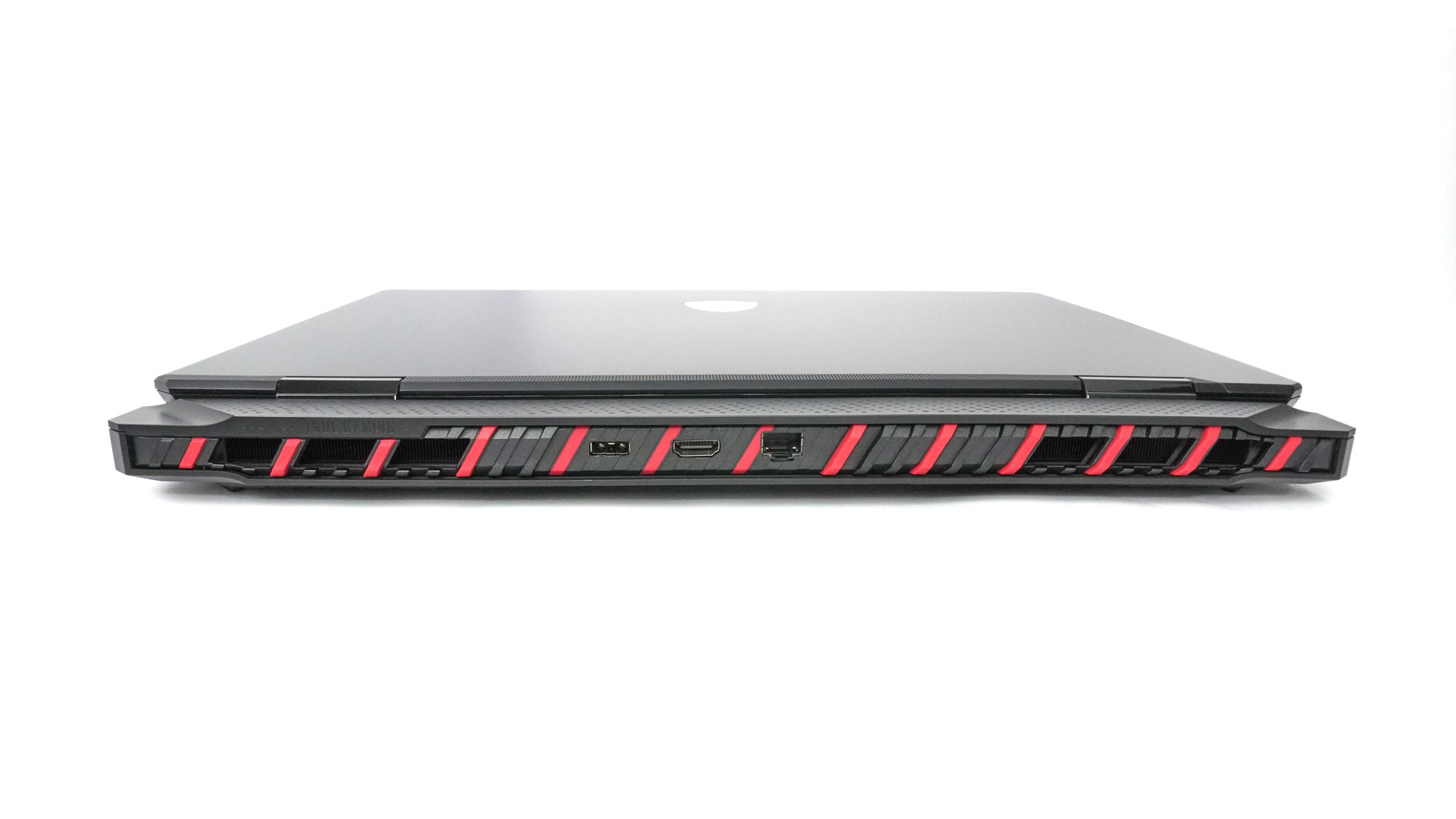
In the middle of the rear side, a Power connector, an HDMI 2.1 for up to 8K @ 60 Hz / 4K @ 120 Hz external displays, and a 2.5 Gbps LAN port can be seen.
Our Patreon Silver Supporters can read articles in single-page format.
Nov 24th, 2026 17:22 CST
change timezone
Latest GPU Drivers
New Forum Posts
- Which ryzen am5 cpu ? (207)
- X79 and/or rampage IV OC'ing thread for those of us still left.... (2453)
- The time has come to upgrade...my desktop (8)
- {NA} 2026 Black November prices / deal (1)
- Help finding Xbox Series X manual fan controller. (0)
- WireView Pro II GPU Alignment: Wired | Variant: Black (7)
- AMD ULL settings tinkering thread - post settings and Zen pics (89)
- Your PC ATM (36500)
- Linpack Xtreme Released (510)
- Asus ROG Strix XG27AQWMG compared to XG27AQWMG-R what changed? (0)
Popular Reviews
- Microsoft Surface Laptop Ultra Review - The Next-gen Arm Laptop
- ASRock X870E Challenger Wi-Fi White Review
- Upcoming Hardware Launches 2027 (Updated Nov 2026)
- Corsair RM1200e (Second Generation) Review
- AMD Ryzen 7 9800X3D Review - The Best Gaming Processor
- VZMORE AX9 Max Review
- AMD Zen 6 Technical Deep Dive
- AMD Ryzen 7 7700X3D Review
- Pulsar Office Tour & First Look at P1 Dual-Sensor Mouse
- Phantom Blade Zero Performance Benchmark Review - 35 GPUs Tested
TPU on YouTube
Controversial News Posts
- Jensen Huang Reinstated as CEO of NVIDIA (525)
- NVIDIA Co-Founder and CEO Jensen Huang Officially Resigns (492)
- Report: Jensen Huang Eyes NVIDIA Comeback (281)
- Open Letter Asking NVIDIA to Reinstate Jensen Huang Passes 115,000 Signatures (184)
- OpenAI CEO Argues Home PCs Waste the World's Limited DRAM Supply (152)
- NVIDIA Launches Investigation Into Jensen Huang's Relationship With Suspected Chinese Spy (136)
- Intel "Raptor Lake Next" 16-Core and 20-Core CPUs Surface (130)
- Intel Razor Lake Gets a 12 P-Core bLLC Chip With No E-Cores, Per Leak (93)