 24
NVIDIA GeForce GTS 450 SLI Review
(24 Comments) »Introduction

Today, NVIDIA launched its GeForce GTS 450 graphics processor, with all its partners bringing out their implementations. If you haven't read our reviews of the AXLE GeForce GTS 450 OC, ASUS ENGTS450 DirectCu TOP, MSI N450GTS Cyclone OC, Zotac GeForce GTS 450 AMP!, or the Palit GeForce GTS 450 Sonic Platinum, please do so, to understand what the card is worth in its single GPU form, it will factor heavily in your decision to buy one card first and add one in SLI later, or even buying two cards at once, for the kicks.
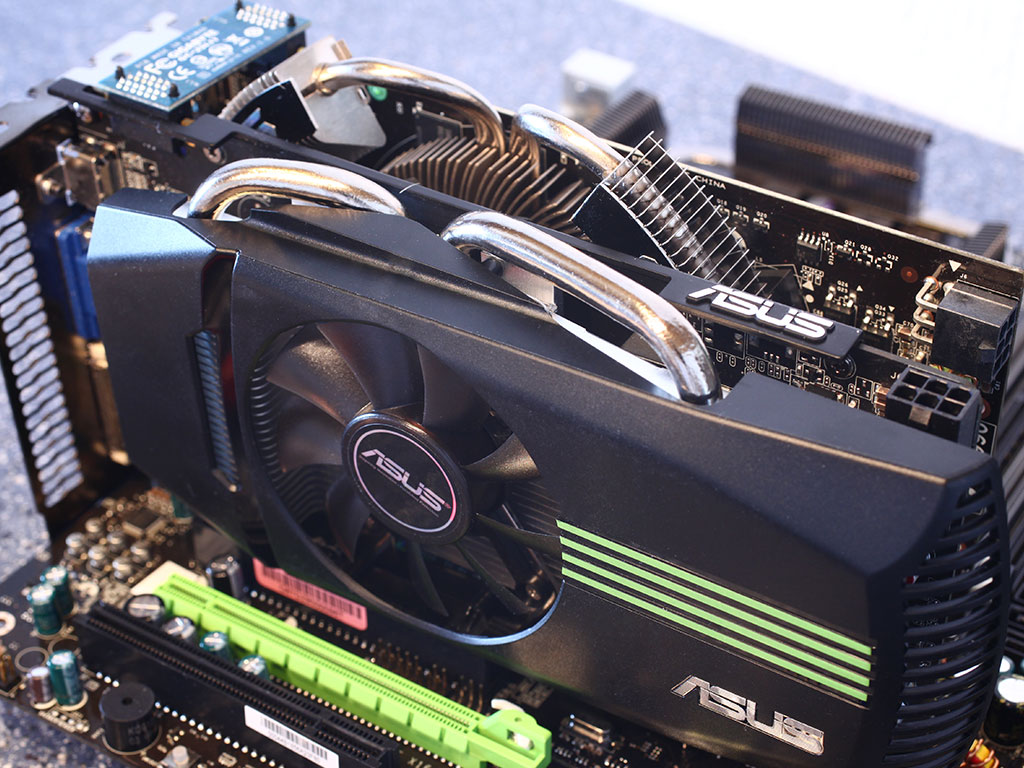
The GeForce GTS 450 supports 2-way NVIDIA SLI multi-GPU technology, which allows you to upscale performance by pairing your GTS 450 card with another GTS 450 of any other make. Since this is a mid-range, mainstream GPU, you will be hard pressed to buy two cards in one go, because for the same money you can buy a high-end single-GPU graphics card. What makes SLI a viable thing is the flexibility it offers to value-conscious buyers. If you have an SLI-compatible motherboard, you can just buy one GeForce GTX 460 card now and get gaming right away, later (we're talking months down the line), you can buy another of these cards to significantly increase graphics performance, which will also allow you to step up resolutions and eye-candy or keep up with the ever more complex games of the day.
In this review we're going to show you what to expect from NVIDIA's GeForce GTS 450 SLI, a roughly $260 solution at present. But don't be alarmed with the $260 figure, because by the time you're ready to buy your second card, you can expect the prices of these cards to go down by a good bit.
In addition to testing two cards at the NVIDIA reference clock speeds of 783 MHz core and 900 MHz memory, we also reviewed two cards running at 850 MHz core and 1000 MHz memory which represents the combination of two typical factory-overclocked GTS 450 cards.
Test System
| Test System - VGA Rev. 10 | |
|---|---|
| CPU: | Intel Core i7 920 @ 3.8 GHz (Bloomfield, 8192 KB Cache) |
| Motherboard: | Gigabyte X58 Extreme Intel X58 & ICH10R |
| Memory: | 3x 2048 MB Mushkin Redline XP3-12800 DDR3 @ 1520 MHz 8-7-7-16 |
| Harddisk: | WD Caviar Black 6401AALS 640 GB |
| Power Supply: | akasa 1200W |
| Software: | Windows 7 64-bit |
| Drivers: | NVIDIA: 258.96 ATI: Catalyst 10.7 GTS 450: 260.52 |
| Display: | LG Flatron W3000H 30" 2560x1600 |
- All video card results were obtained on this exact system with the exact same configuration.
- All games were set to their highest quality setting
- 1024 x 768, No Anti-aliasing. This is a standard resolution without demanding display settings.
- 1280 x 1024, 2x Anti-aliasing. Common resolution for most smaller flatscreens today (17" - 19"). A bit of eye candy turned on in the drivers.
- 1680 x 1050, 4x Anti-aliasing. Most common widescreen resolution on larger displays (19" - 22"). Very good looking driver graphics settings.
- 1920 x 1200, 4x Anti-aliasing. Typical widescreen resolution for large displays (22" - 26"). Very good looking driver graphics settings.
- 2560 x 1600, 4x Anti-aliasing. Highest possible resolution for commonly available displays (30"). Very good looking driver graphics settings.
Aliens vs. Predator

Aliens vs. Predator is based on a merger of the Aliens and the Predators franchise: two legendary alien species that are in conflict with each other, fighting to the death with human marines caught in between. The first person shooter game was developed by Rebellion Studios, who also developed the first AVP PC title and released in February 2010. It was one of the first DirectX 11 games with support for new features like Tesselation, which is why AMD heavily promoted it at the time of their DX 11 card launches. We used the AVP benchmark utility with tesselation and advanced DX11 shadows enabled.


Our Patreon Silver Supporters can read articles in single-page format.
Nov 12th, 2026 18:43 PST
change timezone
Latest GPU Drivers
New Forum Posts
- Microsoft Exchange/365 outages? (13)
- AI generated images... (223)
- Classic Blizzard games (WarCraft 1-2, Diablo 1-2, StarCraft 1) (7)
- WarpCoreBench scores! (26)
- Ryzen 7 8700G OC (5)
- Your PC ATM (36412)
- When you could finally run Crysis maxed out? (61)
- Warning for Windows 10 and 11 users running newer AMD GPU drivers (52)
- The program has not been updated for 533 days. (10)
- Minimax H3 bench (4)
Popular Reviews
- AMD Zen 6 Technical Deep Dive
- NZXT C1200 Platinum Review
- Upcoming Hardware Launches 2027 (Updated Nov 2026)
- Corsair HX1000i Shift Crystal Review
- NZXT H7 RGB+ Review
- Montech King 95 3D PRO Review
- NZXT H5 Review
- Phantom Blade Zero Performance Benchmark Review - 35 GPUs Tested
- XPG NIMBUS PLUS Review - Mid-range Chair With Strong Competitors
- Gigabyte Z890I Aorus Ultra Review
TPU on YouTube
Controversial News Posts
- NVIDIA Co-Founder and CEO Jensen Huang Officially Resigns (272)
- OpenAI CEO Argues Home PCs Waste the World's Limited DRAM Supply (152)
- NVIDIA Launches Investigation Into Jensen Huang's Relationship With Suspected Chinese Spy (136)
- Intel "Raptor Lake Next" 16-Core and 20-Core CPUs Surface (130)
- Legendary Game Studio BioWare Shuts Down Following EA Layoffs (104)
- Dell CEO Says the Memory Shortage Will Get Worse in 2027 (95)
- NVIDIA GeForce RTX 50-Series Scheduled for up to $500 Price Hike This Week (89)
- Modder Fits RTX 5090 With Four 8-Pin Connectors, Halving Current per Wire (80)