 2
Ocypus lota P1000 Review
Test Methodology »Internals
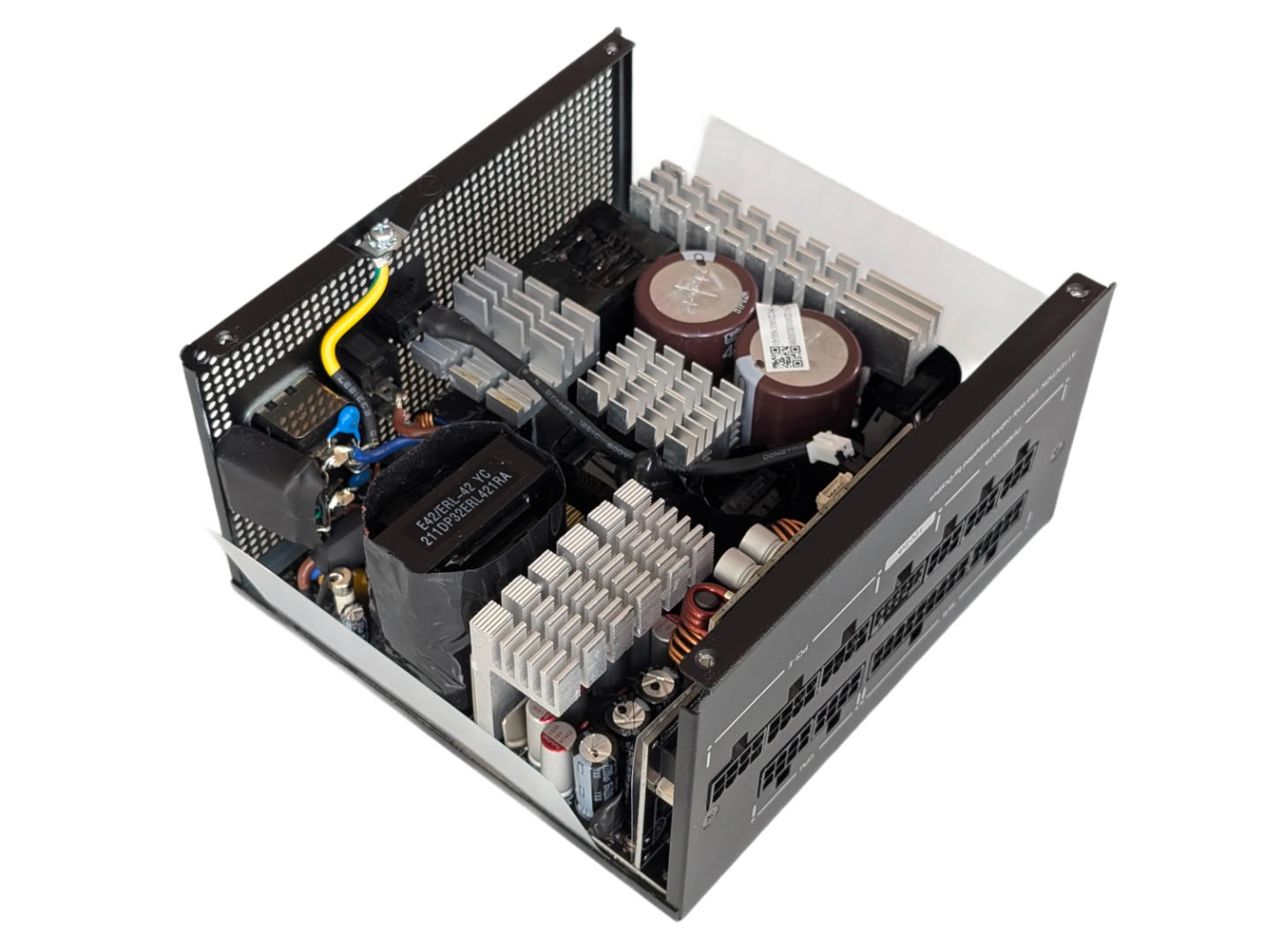
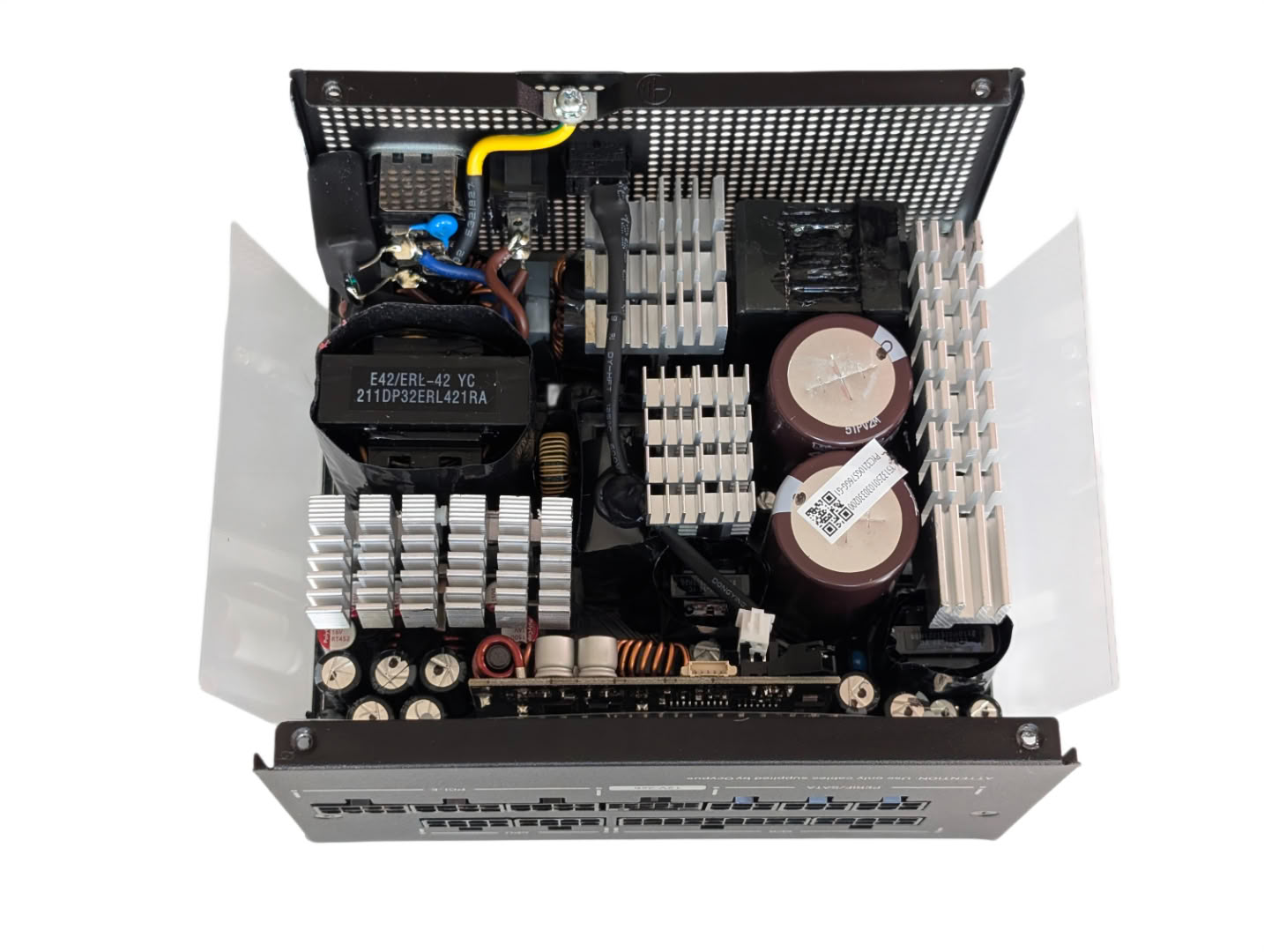
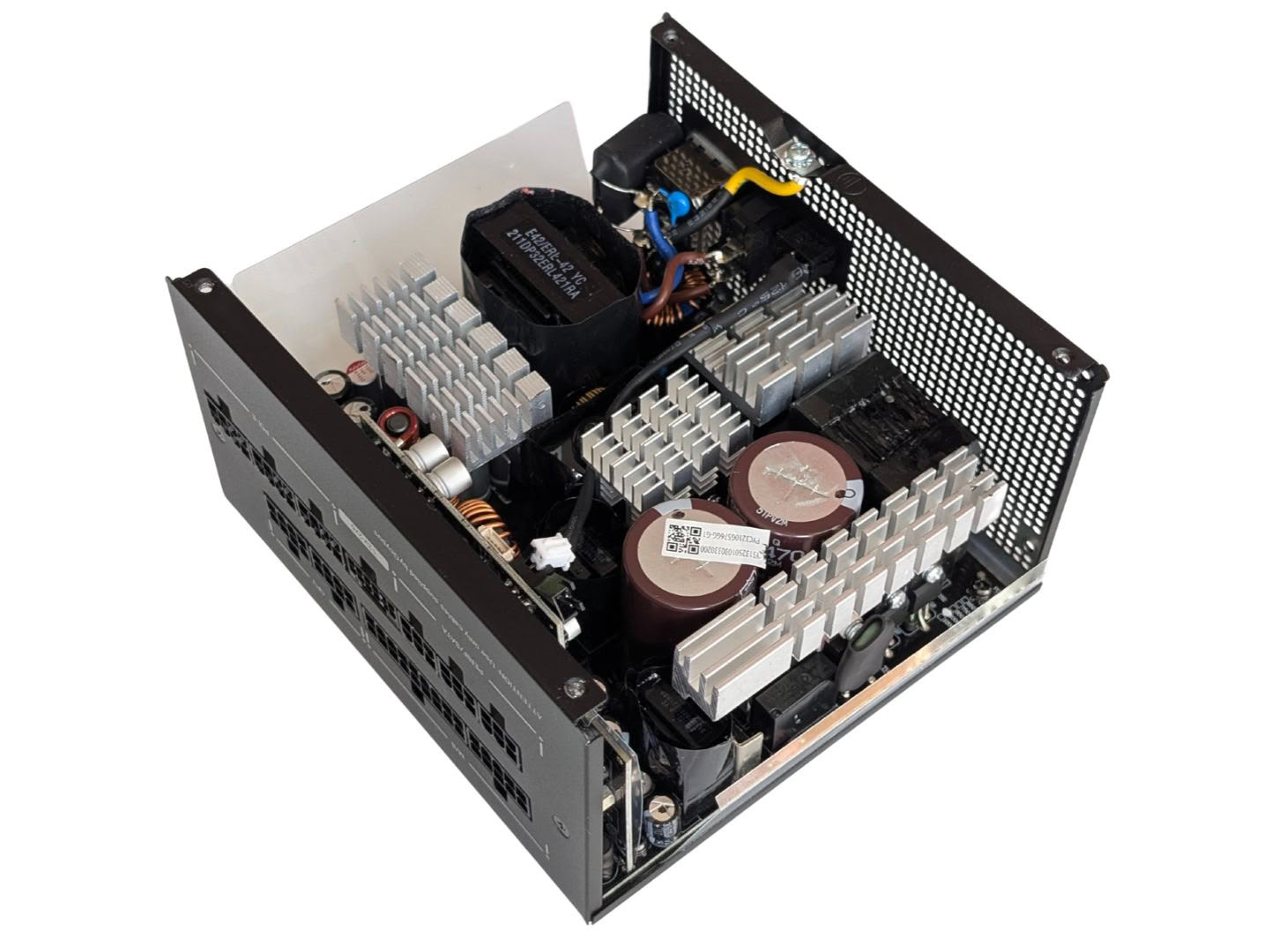
In stark contrast to opening the box, opening the PSU itself reveals dense, solid and quality internals.
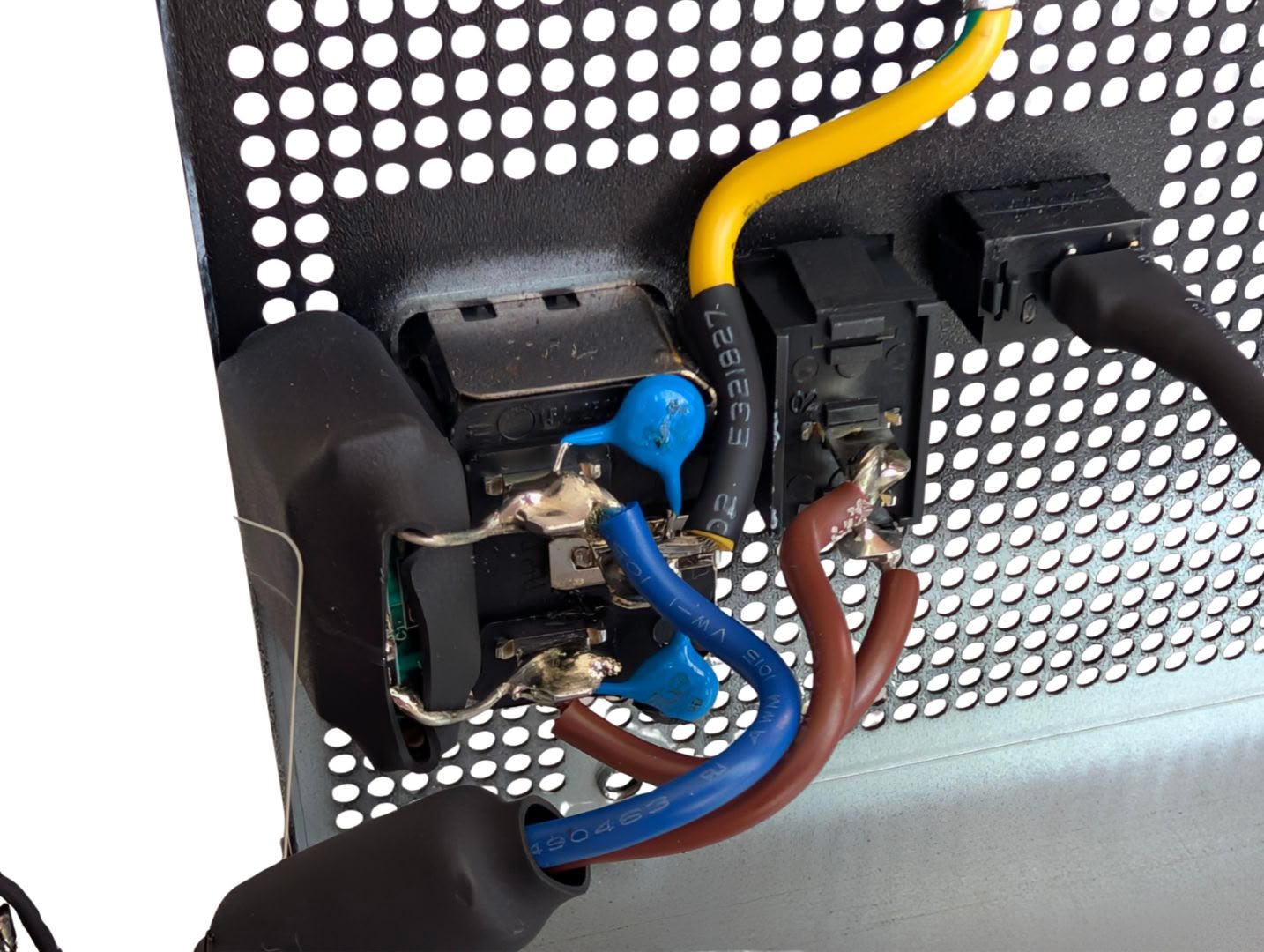
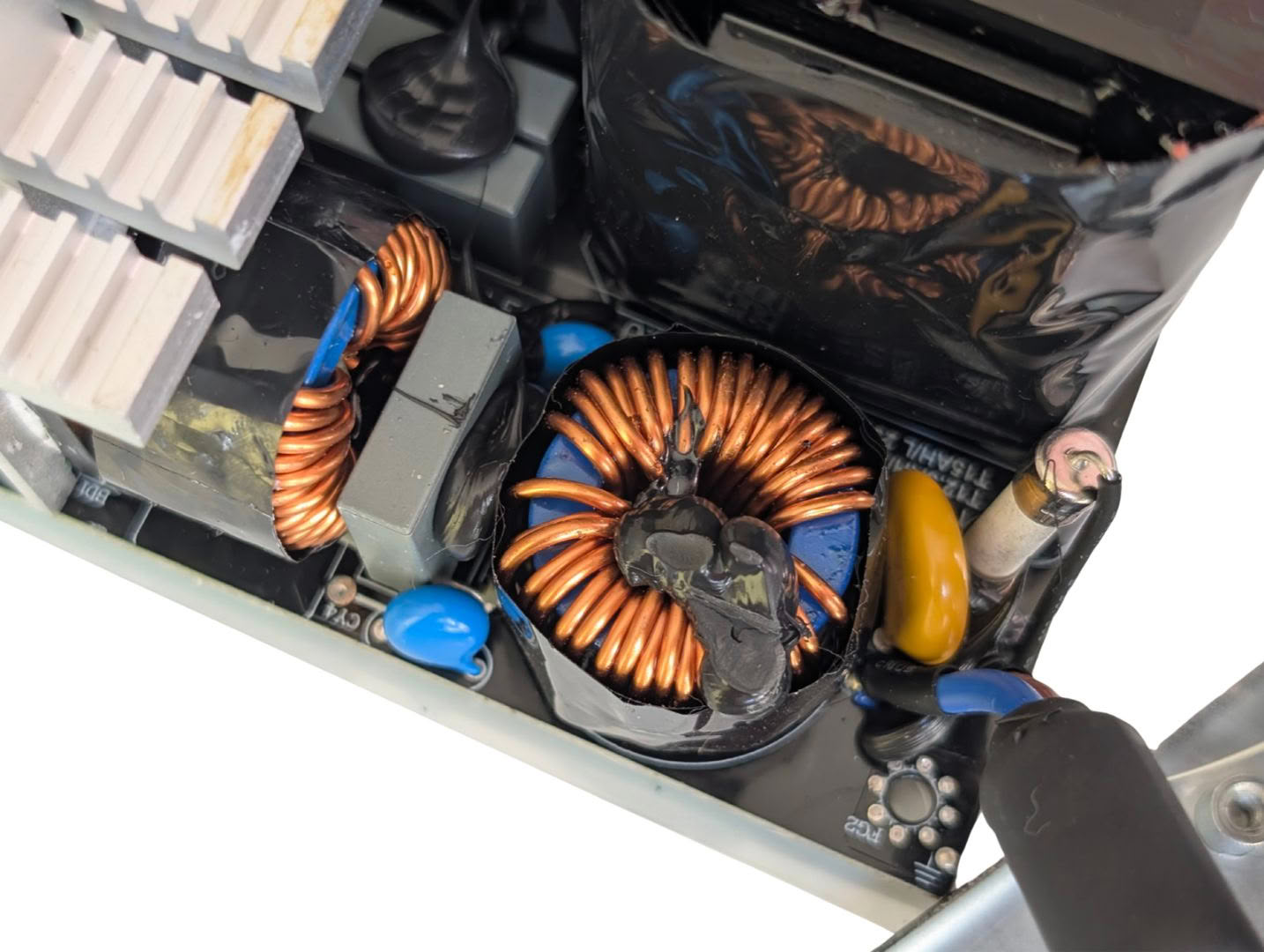
The mains connector has a pair of Y caps and an X cap soldered directly to it, with active discharge circuitry on the X cap. There is also a ferrite filter on the mains cables going to the main board. Immediately on the PCB we find the fuse and MOV, followed by a CM choke, two more Y caps, an X cap, and another CM choke.
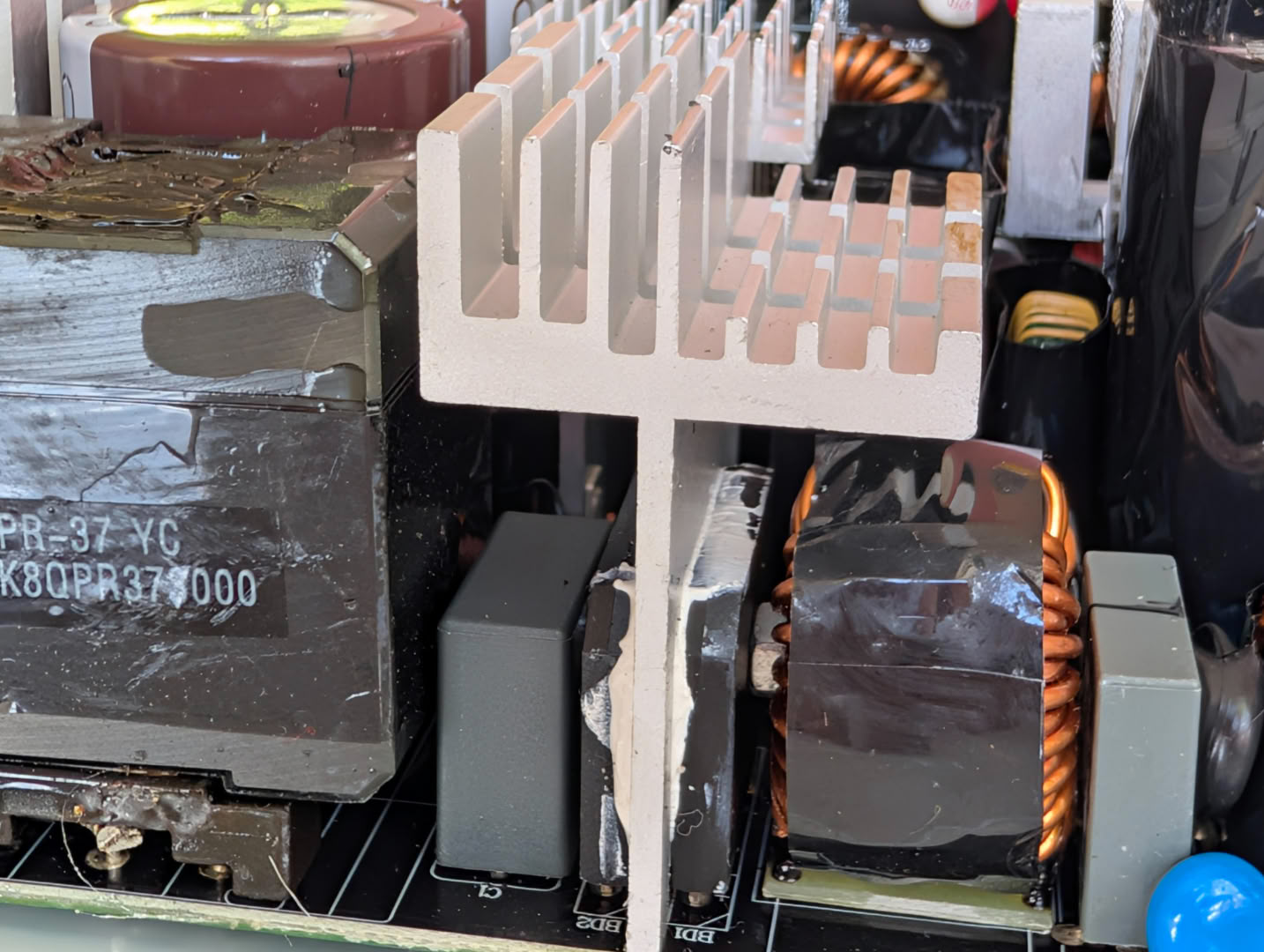
As with most 1000 W+ supplies, this uses a pair of full bridge rectifiers either side of an upright heatsink. There is plenty of surface area on this heatsink, which, through better temperatures, improves the efficiency of the diodes.
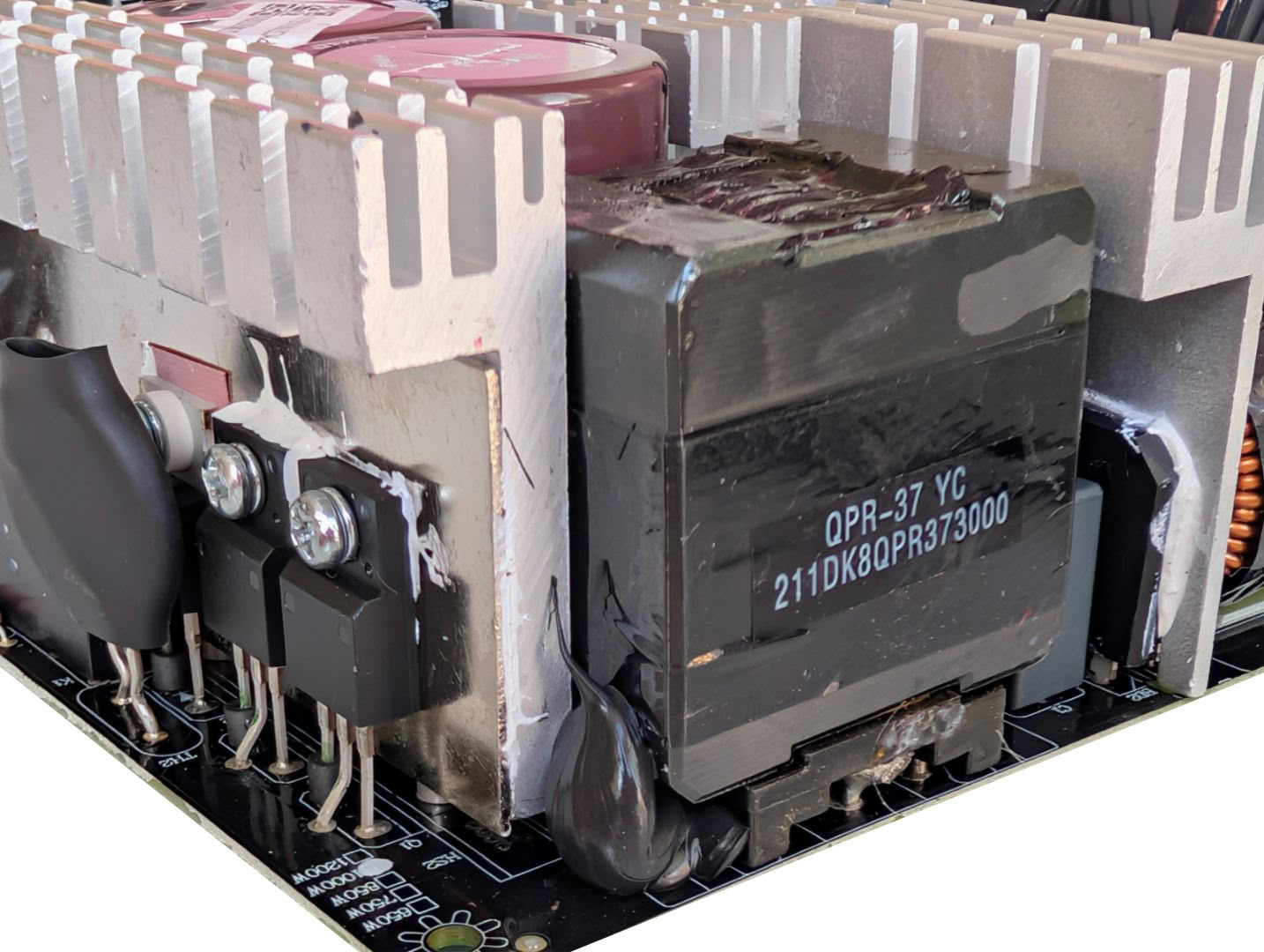
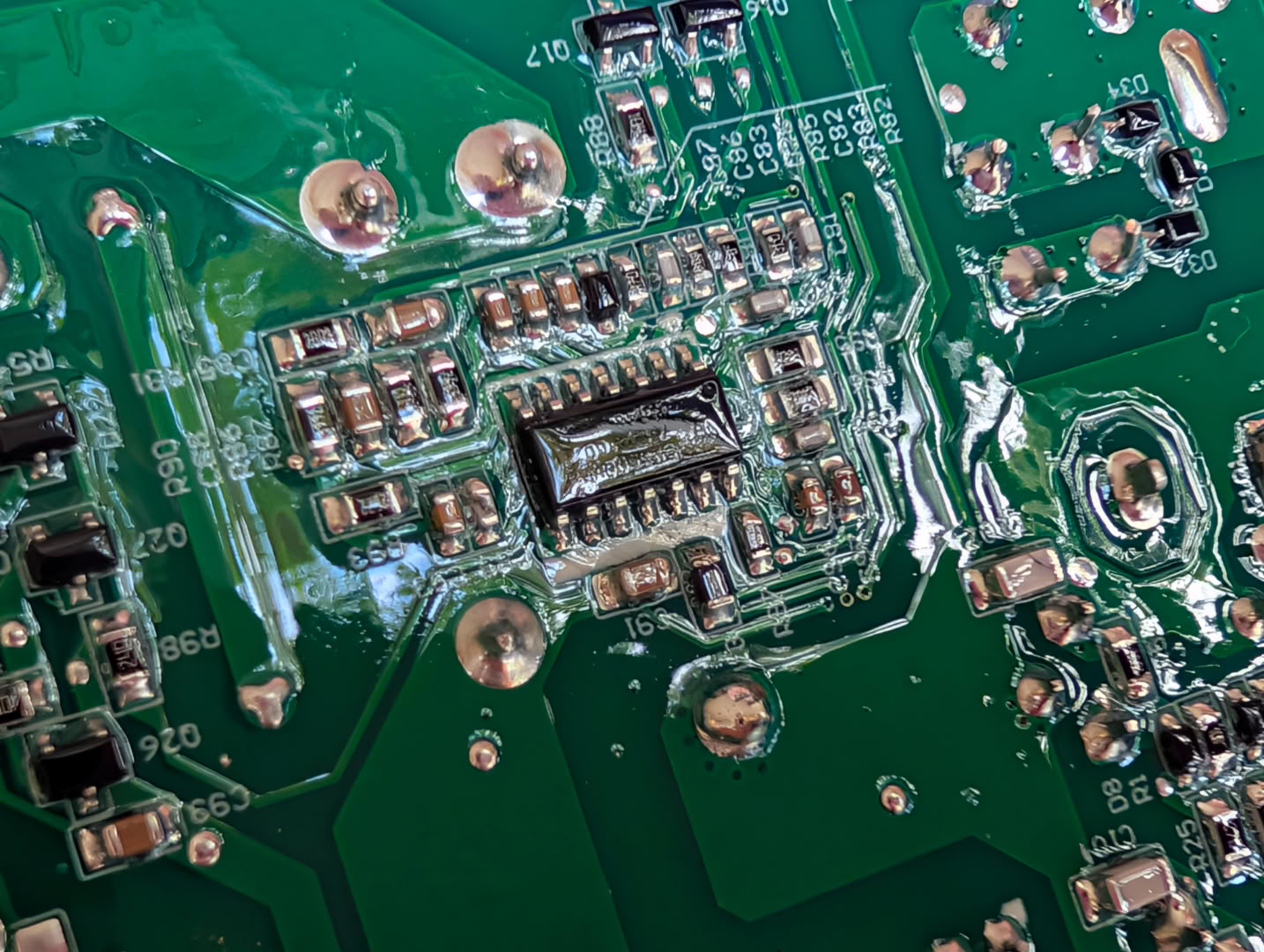
Active power factor correction is handled by the commonly used CM6500UNX, mounted to the back of the PCB.
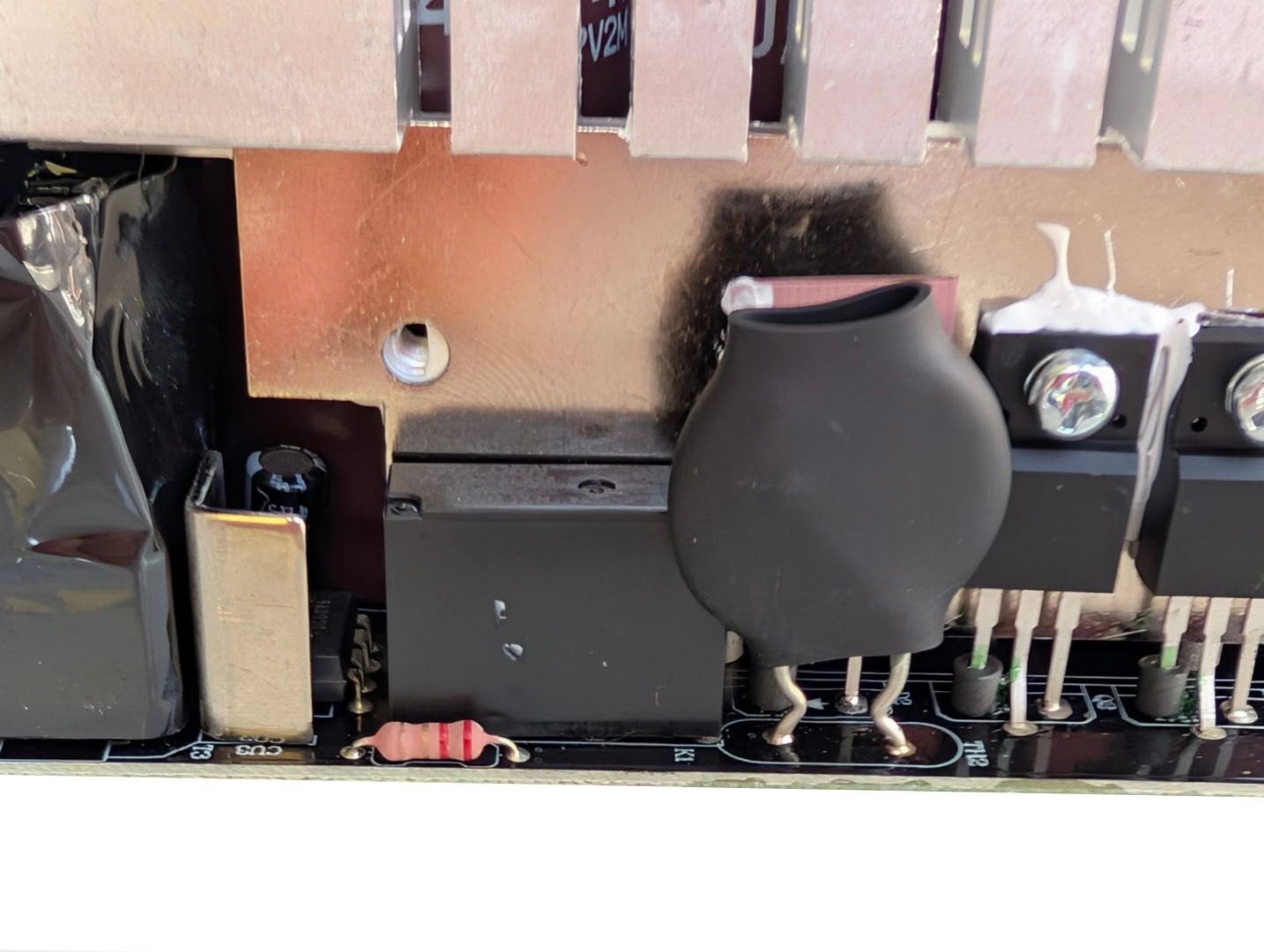
Inrush suppression is located alongside the PFC components, as are this relay and thermistor.
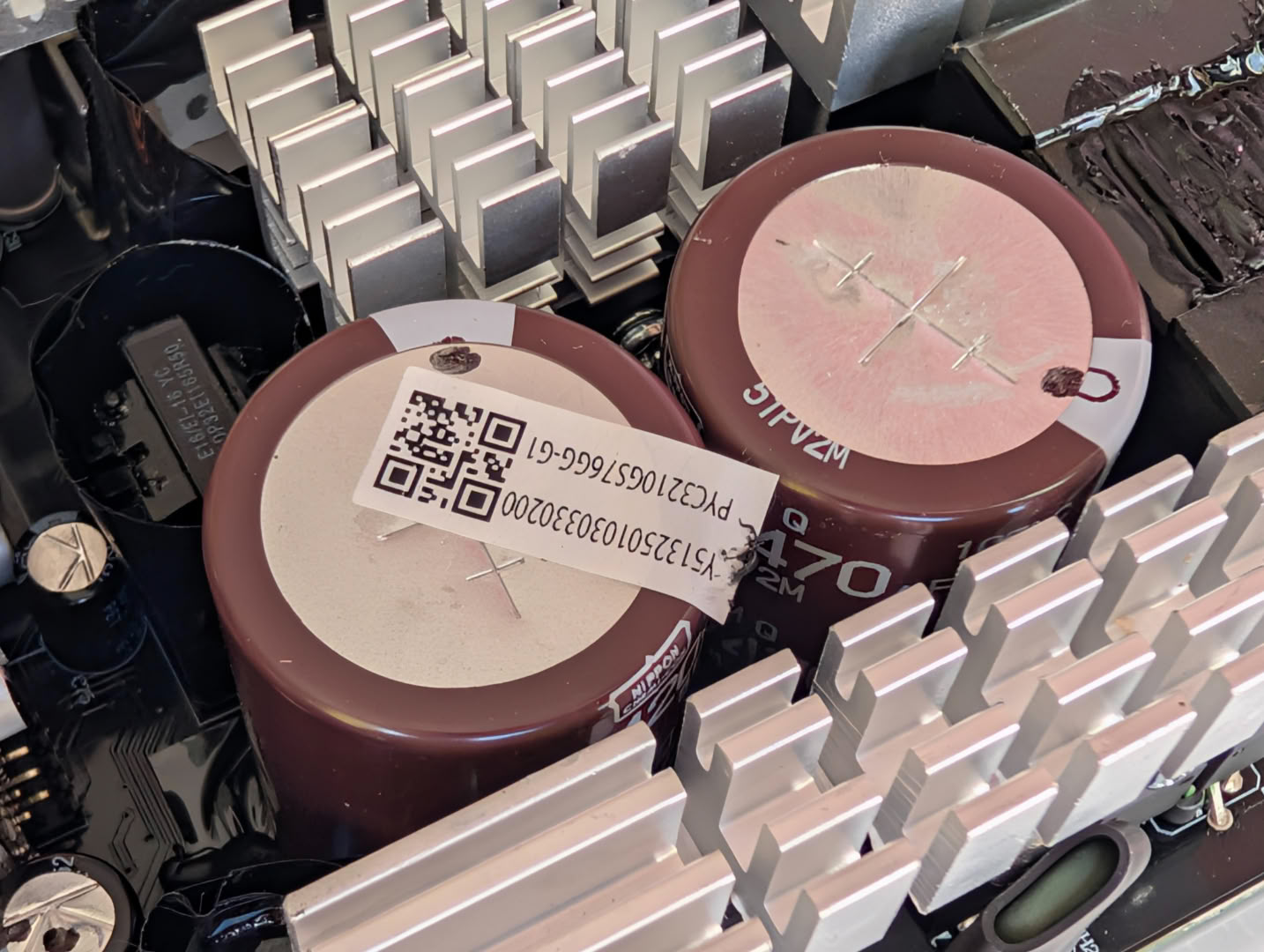
A pair of large high quality bulk caps are used by Ocypus. These are 470 µF 420 V 105 °C rated models from Nippon Chemi-Con.
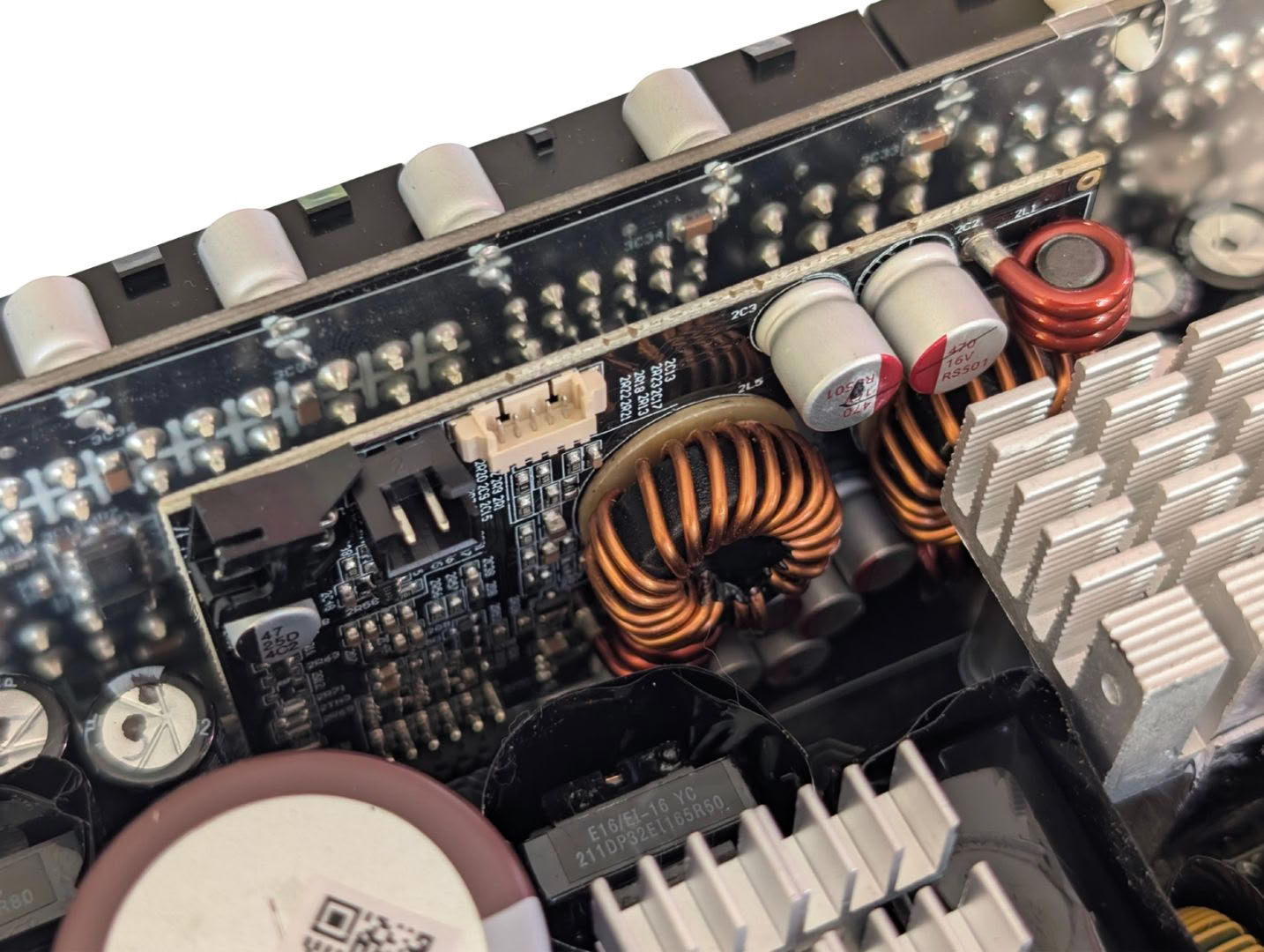
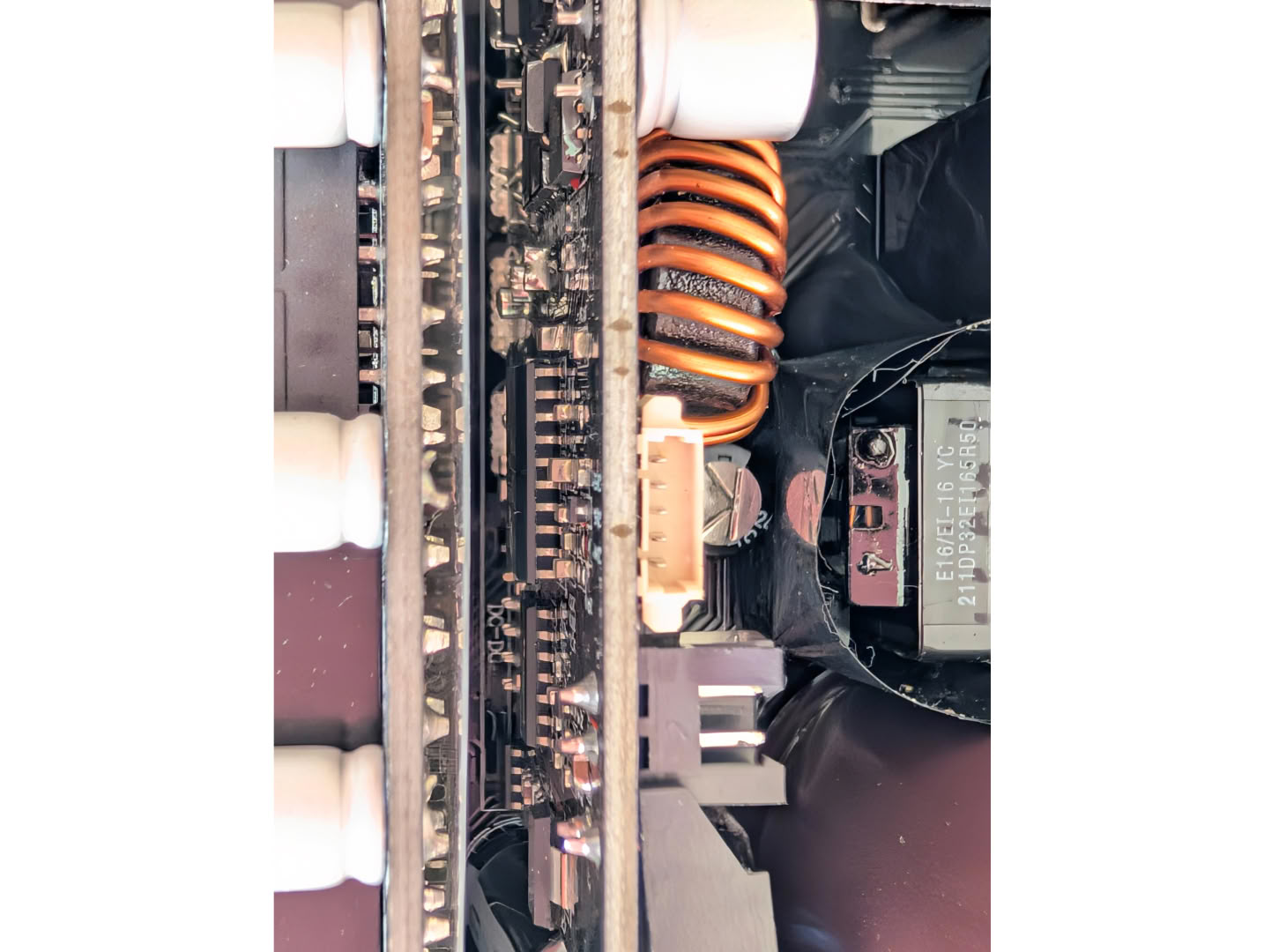
The minor rails are generated by DC-DC conversion on this upright PCB. The fan control circuit is also present here. The IC and MOSFET models are too hard to read due to board clearance.
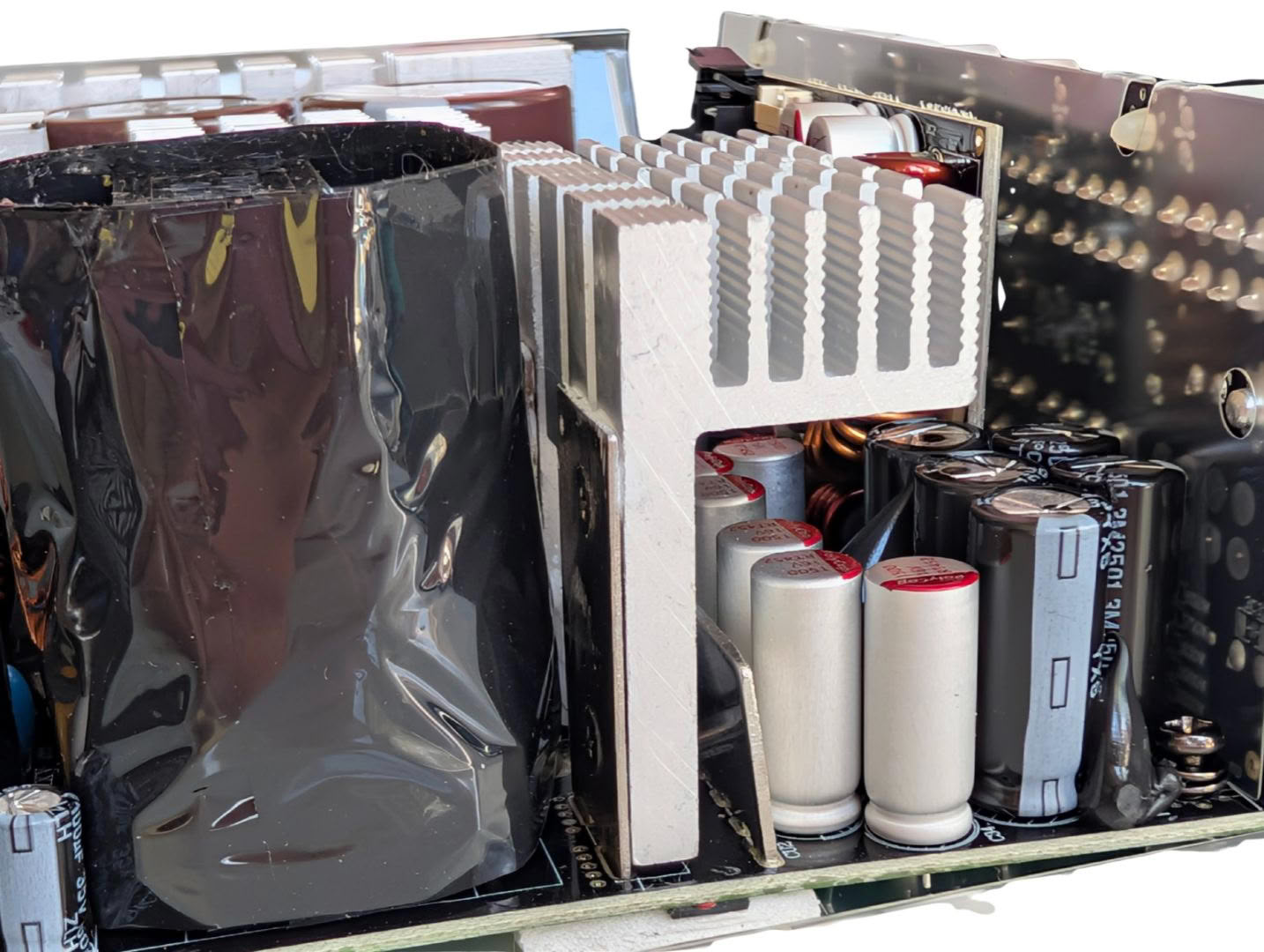
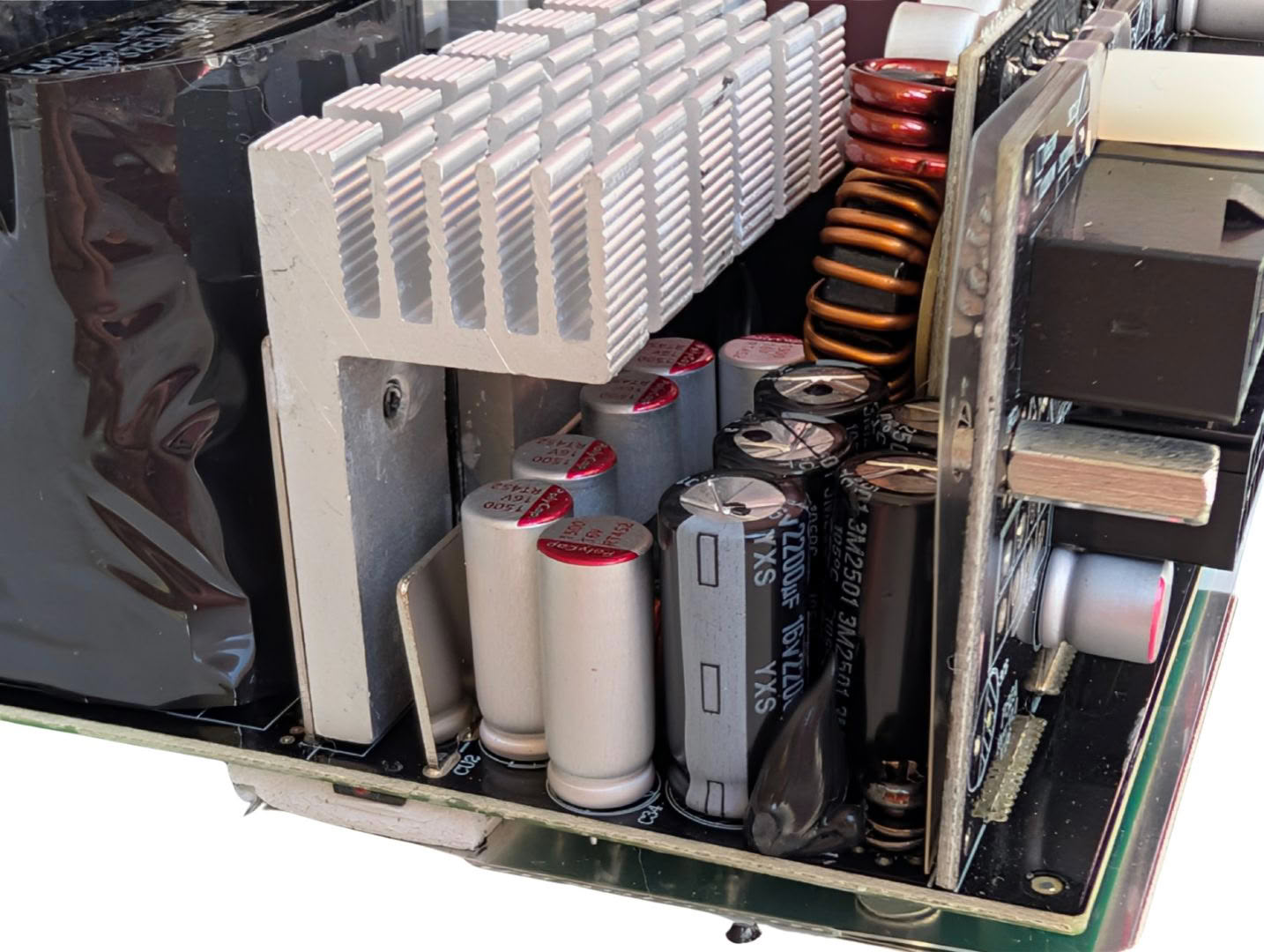
The heatsink for the 12 V rail MOSFETs takes up as much space as possible, extending over some quality filter caps. The heatsink is finned and ribbed for higher surface area.
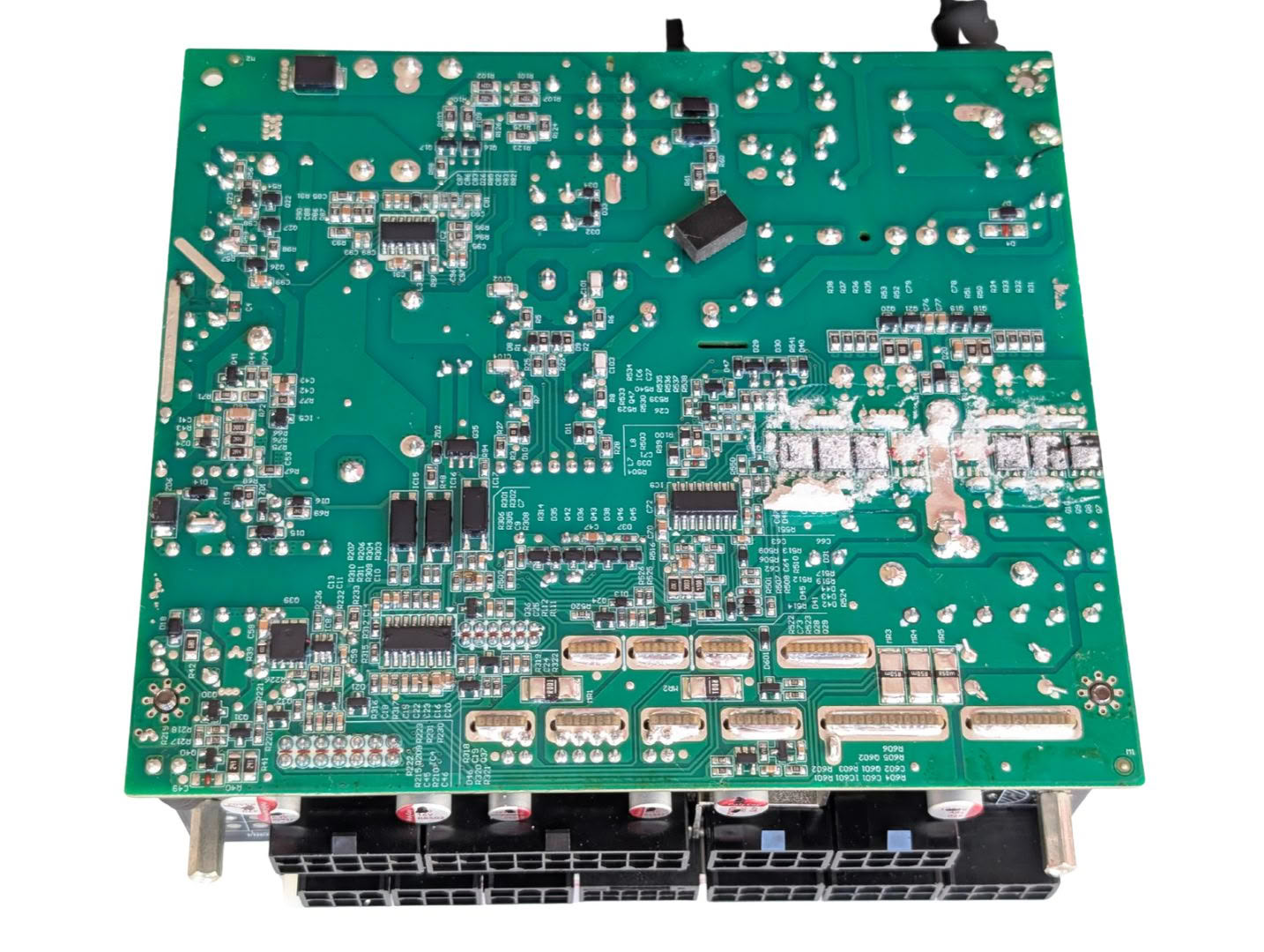
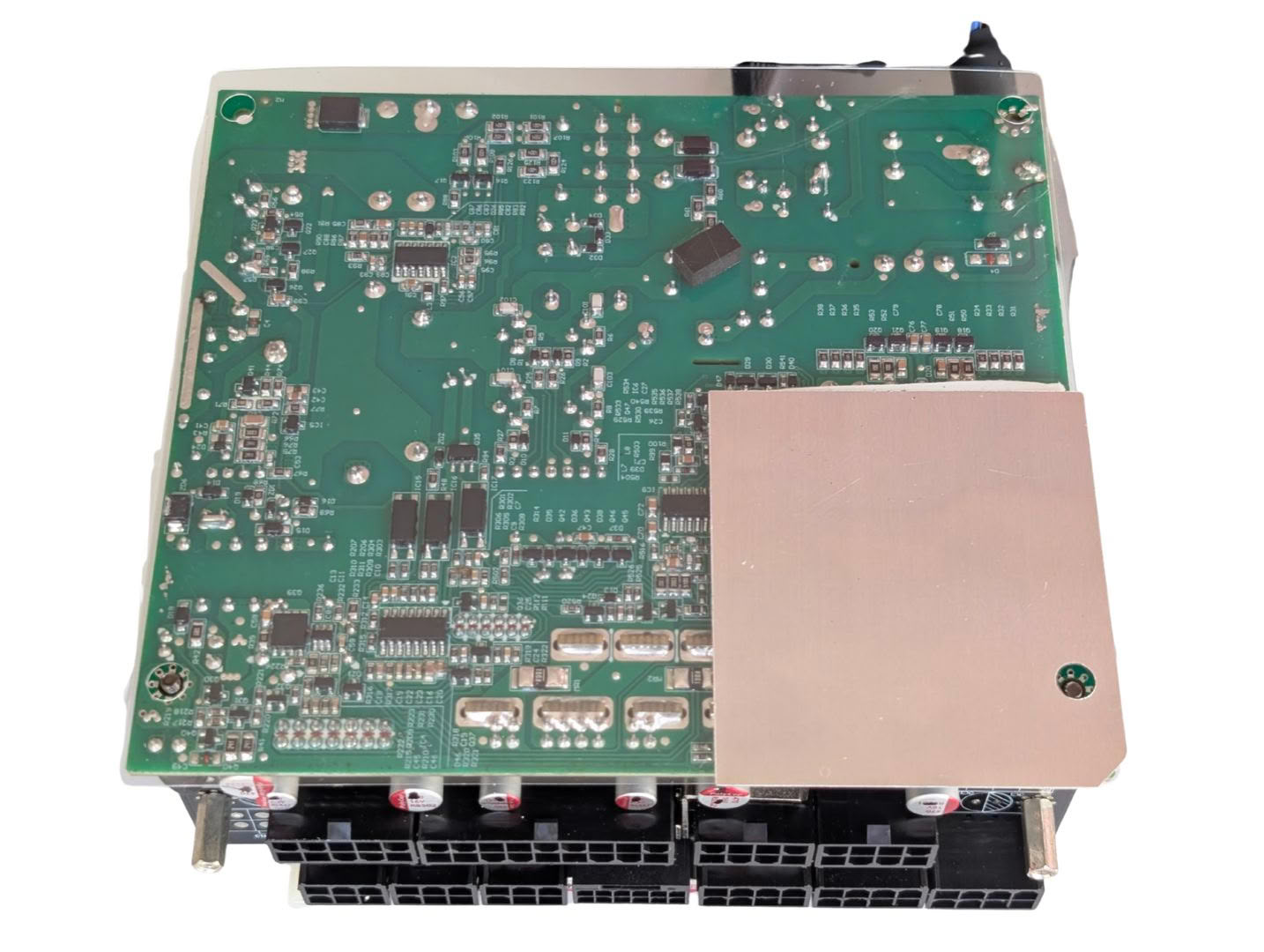
Under the board there is a plastic shroud and metal plate which thermally couples to the 12 V MOSFETs with a thick thermal pad. This plate isn't directly adhered to the main case, but heat will radiate to it through convection. There are plenty of surface mount components on the rear of the PCB.
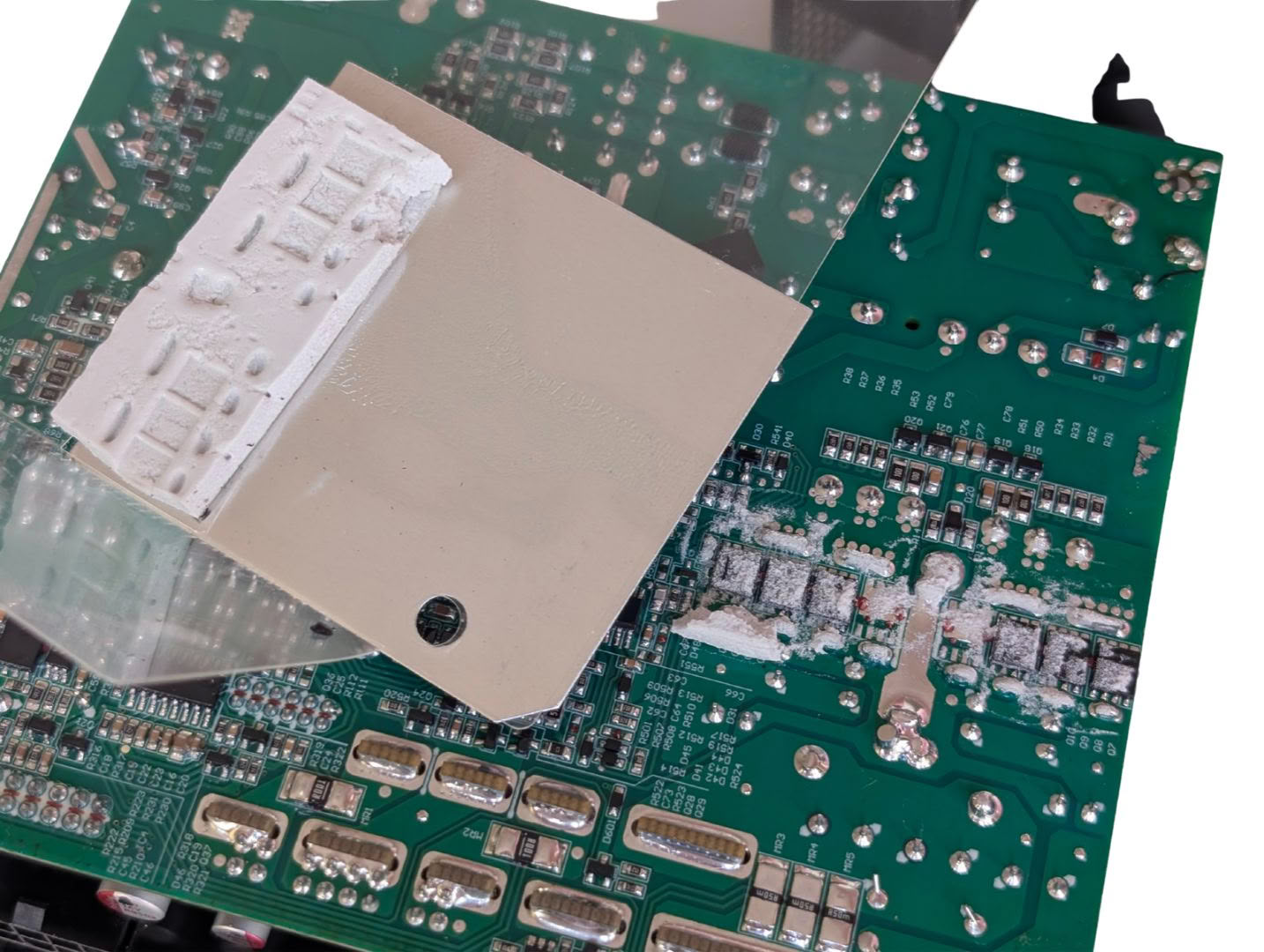
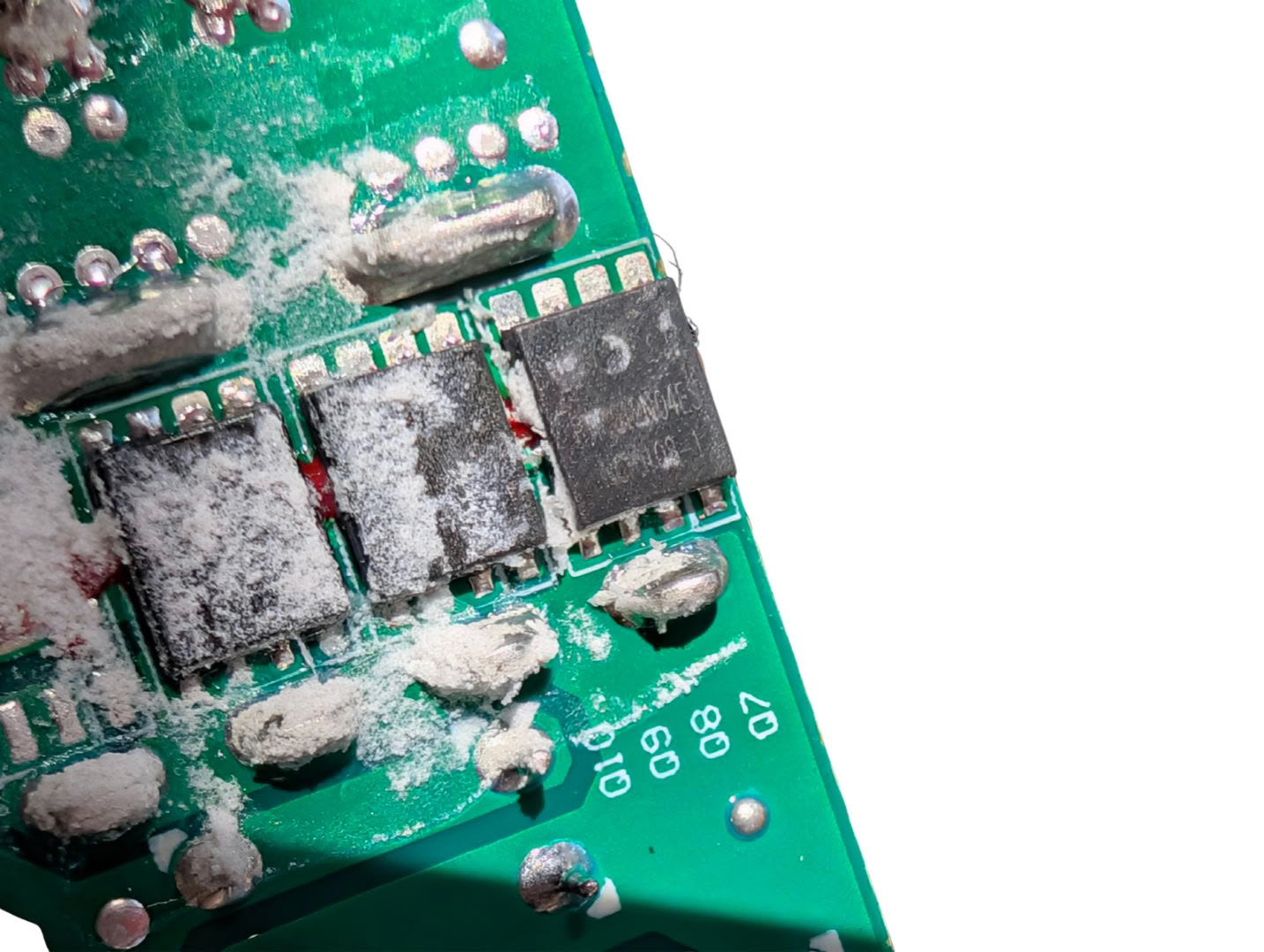
Under the thermal pad we find six PWC012N04ES MOSFETs, rated 40 V, 238 A, with a typical RDS(on) of just 1.0 mΩ. There is space for another two, these are reserved for higher power models using this same PCB.
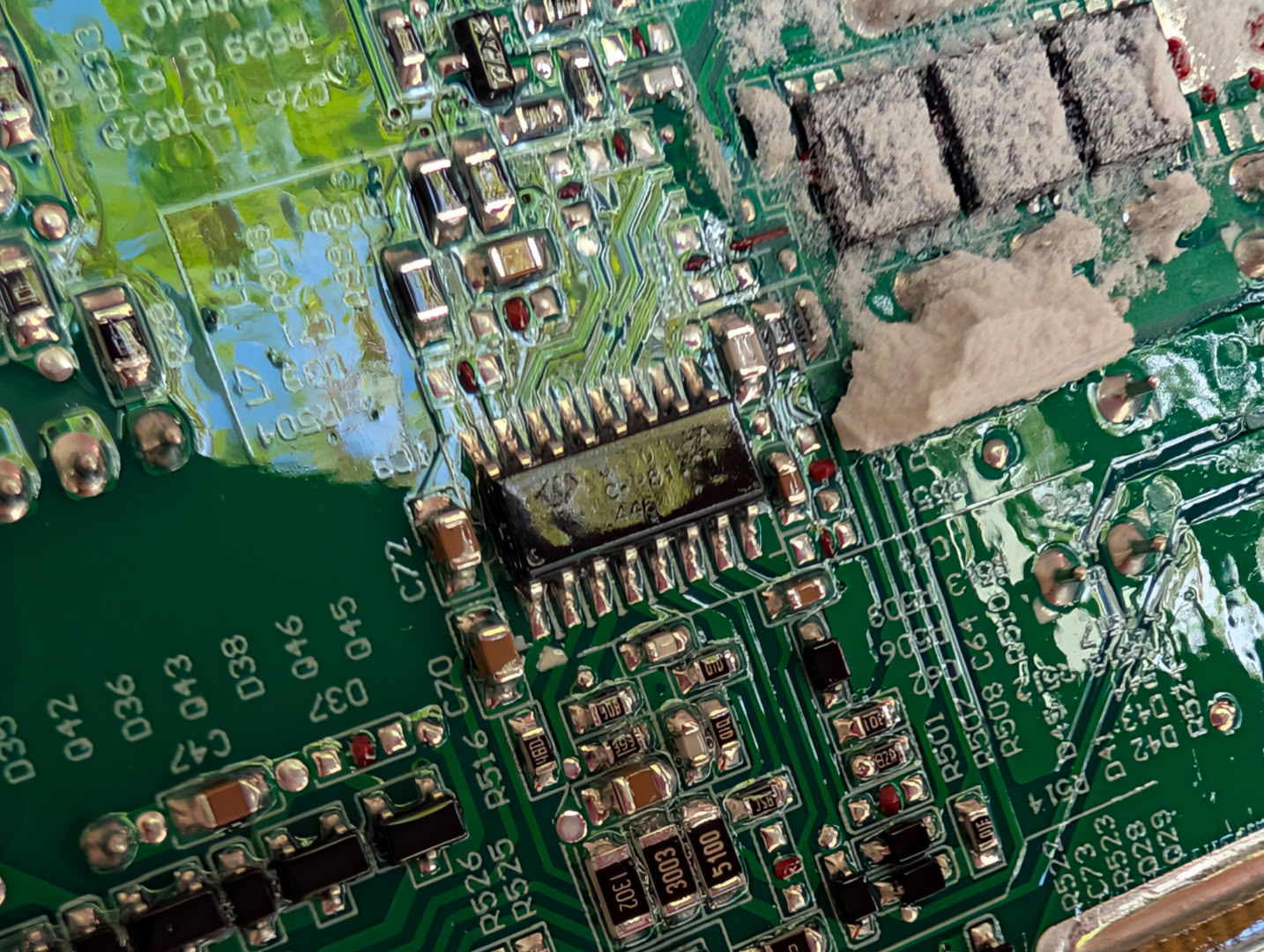
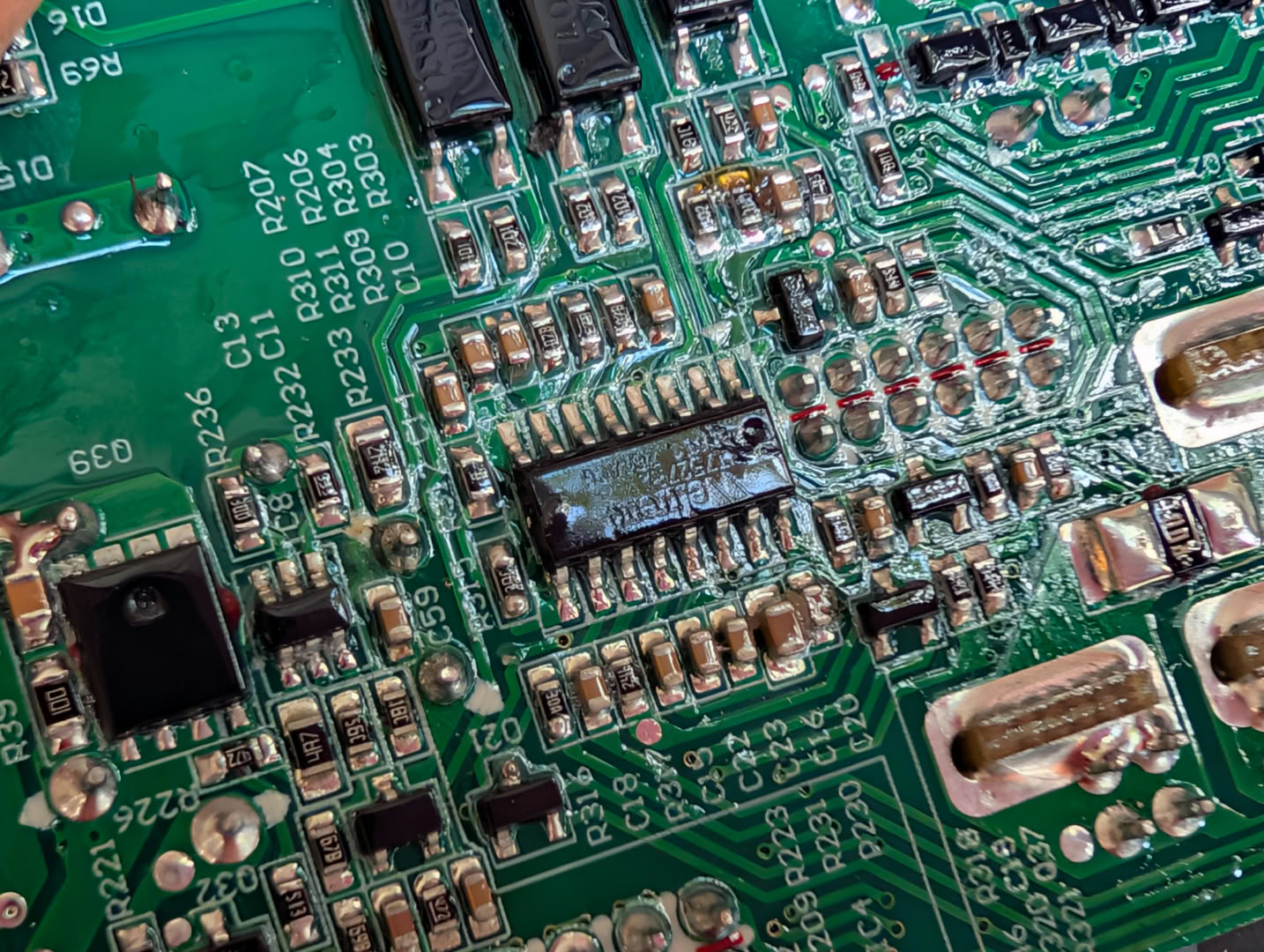
Also mounted to the rear of the PCB is the CM6901 resonant controller running the PWM, and the Weltrend WT7527RA supervisor managing protection modes and PWR-OK.
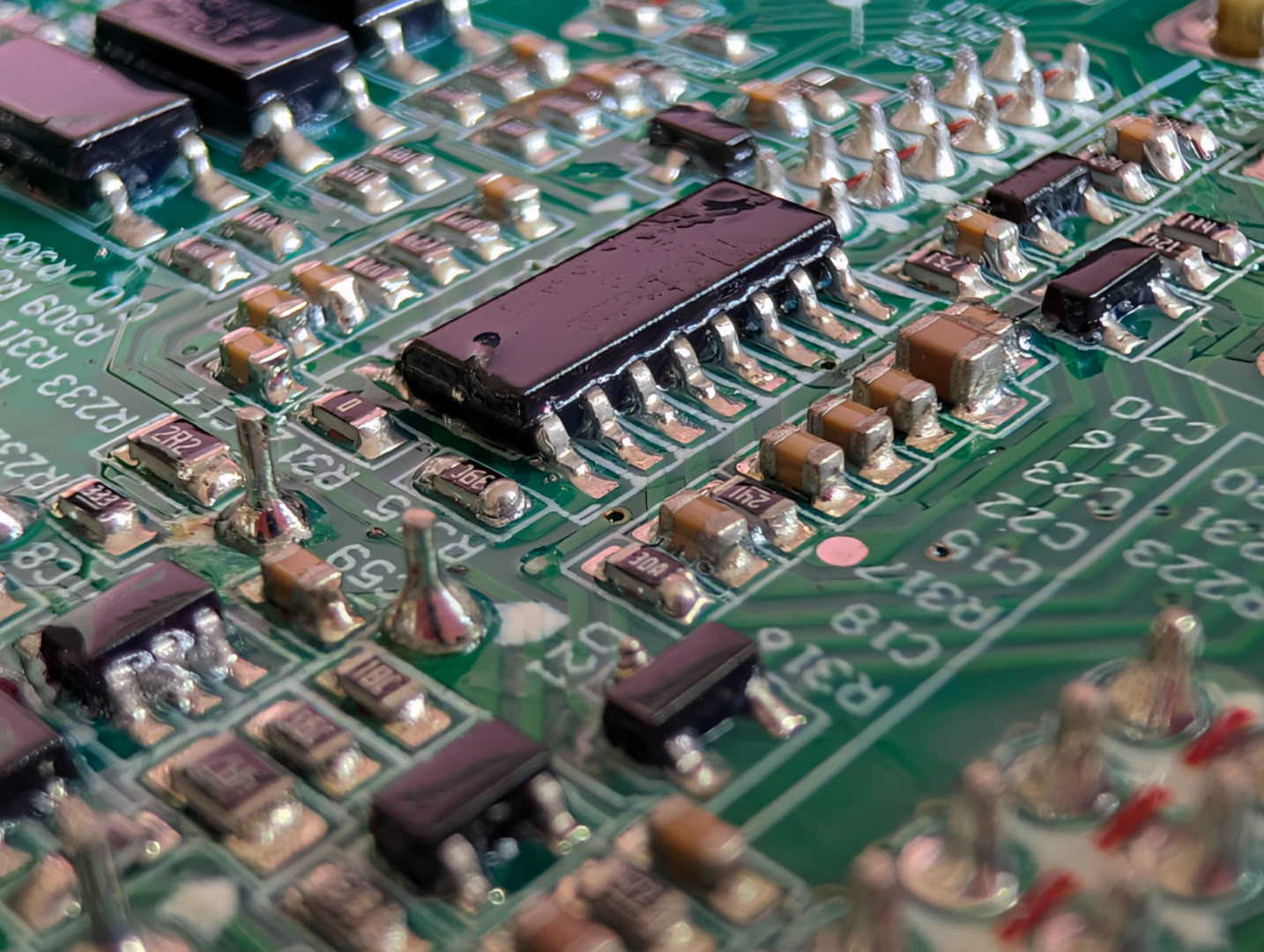
The soldering quality is relatively consistent throughout, with components held in place with adhesive to prevent shifting when the solder is flowing. The entire board is also conformal coated to protect against moisture and debris; this is often a feature reserved for high-end flagship models, so it is very nice to see here.
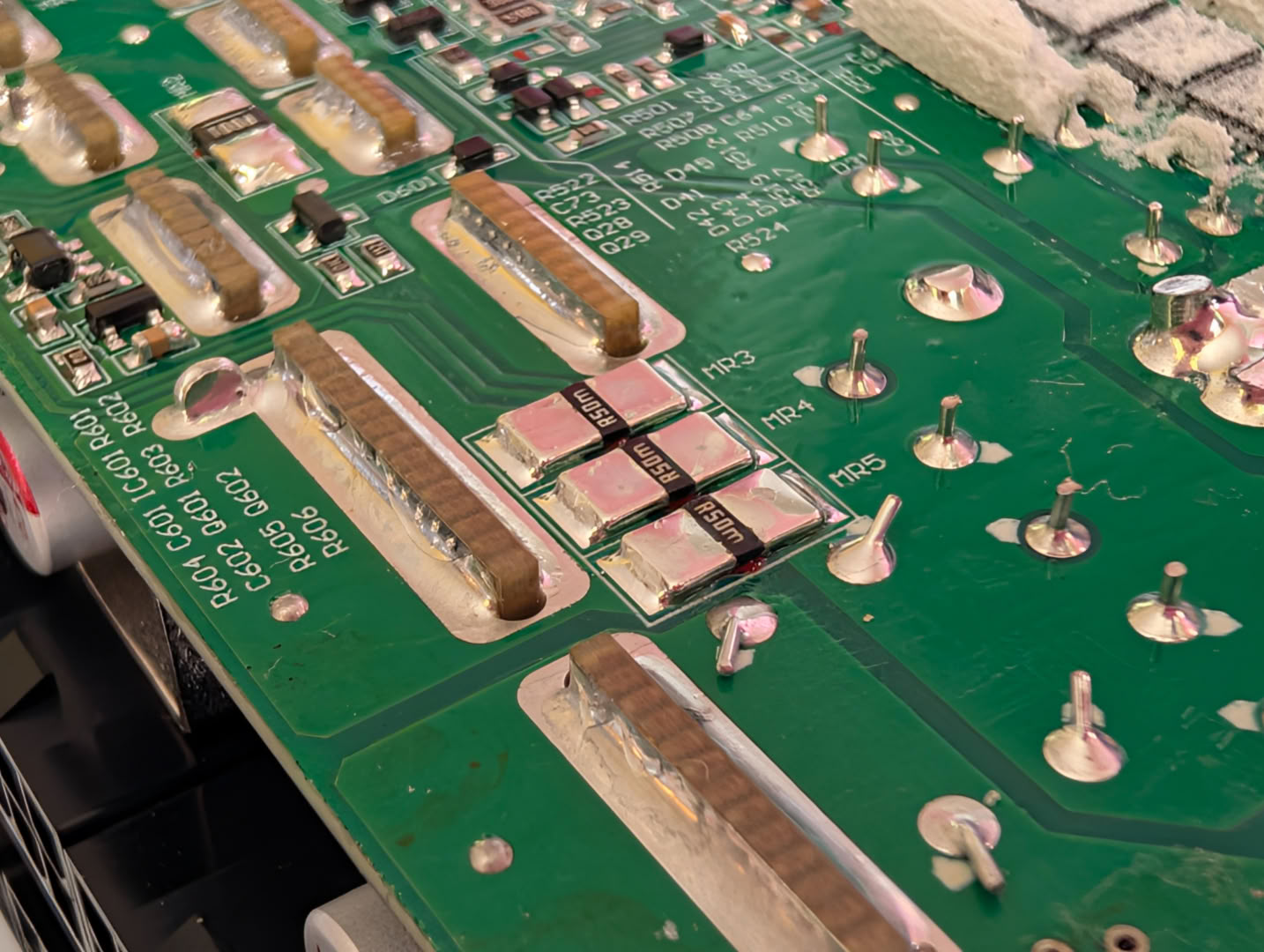
The connection to the output board is okay, but strength relies entirely on the right angle solder joint, this type is prone to cracking under stress.
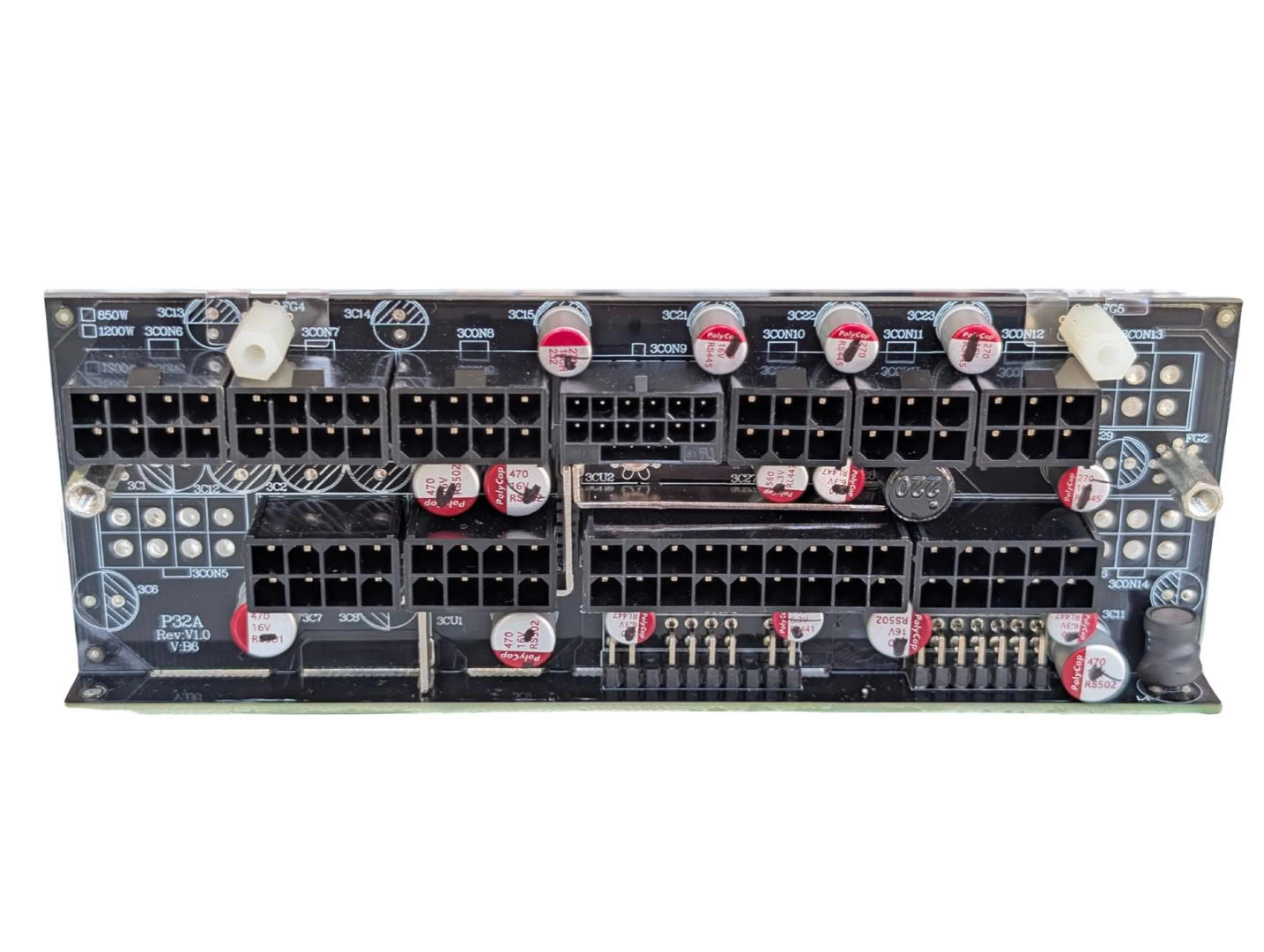
The connector board does have a few final filter caps by the connectors themselves. There are some empty spots for additional connectors, likely reserved for higher power models using the same PCB.
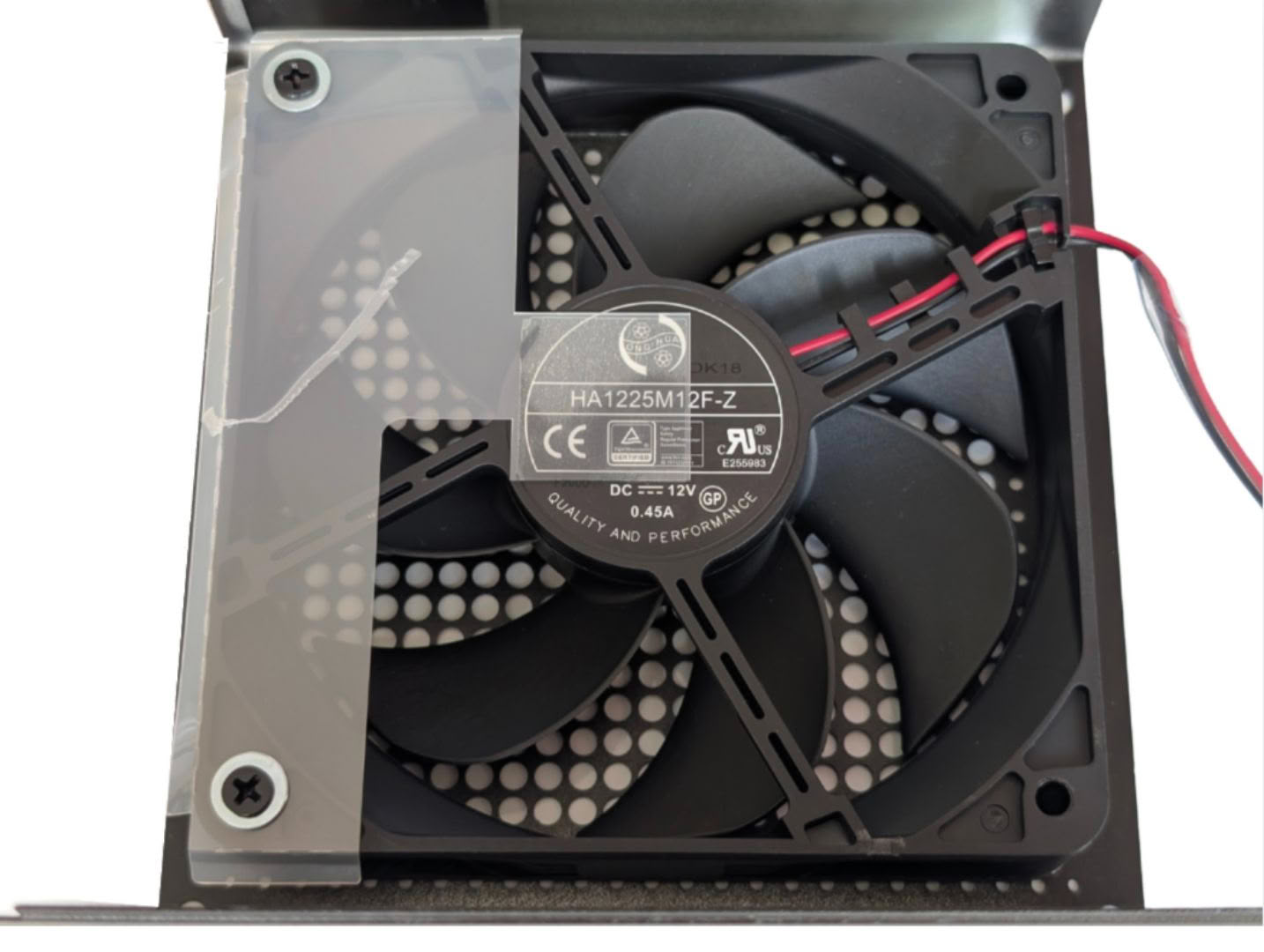
The fan used is a typical model by Hong Hua, the 120 mm HA1225M12F-Z. This is purely voltage controlled, so its minimum operating speed is limited, but it is regarded as a solid quiet workhorse, ideal for use in dense PSU layouts requiring high static pressure and the quietness and reliability of a fluid dynamic bearing.
Nov 19th, 2026 17:42 CST
change timezone
Latest GPU Drivers
New Forum Posts
- How to prevent OLED burn damage due to PC freezes or power outtages? (30)
- TPU's Nostalgic Hardware Club (22170)
- Security Apps (3)
- Got the EOL 32GB TridentZ 6000 CL26 1.4V (12)
- Honestly, do you care about GTA VI? (167)
- Dell Workstation Owners Club (3517)
- Making a game in Godot engine (6)
- Introducing DST Bench : one of the most advanced disk benchmark and storage analyzer real-time software (6)
- Windows 11 General Discussion (7736)
- Current Sales, Bundles, Giveaways (10448)
Popular Reviews
- Acemagic Retro X3 Review
- Ugreen NASync DXP4800 GT Review
- Upcoming Hardware Launches 2027 (Updated Nov 2026)
- Pulsar Office Tour & First Look at P1 Dual-Sensor Mouse
- AMD Zen 6 Technical Deep Dive
- Biwin Black Opal NV7400 2 TB Review
- Corsair RM1200e (Second Generation) Review
- Sapphire Radeon RX 7700 XT Pure Review
- Sapphire Radeon RX 7700 XT Pulse Review
- AMD Ryzen 7 9800X3D Review - The Best Gaming Processor
TPU on YouTube
Controversial News Posts
- NVIDIA Co-Founder and CEO Jensen Huang Officially Resigns (489)
- Report: Jensen Huang Eyes NVIDIA Comeback (223)
- Open Letter Asking NVIDIA to Reinstate Jensen Huang Passes 115,000 Signatures (184)
- OpenAI CEO Argues Home PCs Waste the World's Limited DRAM Supply (152)
- NVIDIA Launches Investigation Into Jensen Huang's Relationship With Suspected Chinese Spy (136)
- Intel "Raptor Lake Next" 16-Core and 20-Core CPUs Surface (130)
- Legendary Game Studio BioWare Shuts Down Following EA Layoffs (104)
- Dell CEO Says the Memory Shortage Will Get Worse in 2027 (95)