 35
PNY GeForce RTX 5070 Ti Epic-X RGB Plus OC Review
(35 Comments) »Introduction

PNY GeForce RTX 5070 Ti EPIC-X RGB Plus OC is the company's premium custom design graphics card based on NVIDIA's top-spec performance segment graphics card from the RTX 50-series Blackwell generation. PNY has been in the graphics card segment for decades, but only recently ramped up its presence in the custom-design gaming GPU market, with a fully in-house team. The company's RTX 40-series XLR8 graphics cards won big for their contemporary cooler design and good pricing, and the company hopes to repeat that feat with the RTX 50-series. The PNY RTX 5070 Ti EPIC-X RGB Plus OC is designed to both offer the company's top factory overclock and best fan noise tuning; plus look high-end when installed in your rig. The GeForce RTX 5070 Ti from NVIDIA sits in the middle, between the performance- and enthusiast segments. It's technically being offered for 1440p maxed out high refresh-rate gaming, but we've known this GPU to be abundantly capable of 4K Ultra HD gaming, with a little effort spent with the NVIDIA App to optimize your games, and to leverage new technologies such as DLSS 4 and Multi Frame Generation.

The GeForce RTX 5070 Ti is powered by the Blackwell graphics architecture. This architecture introduces a potentially revolutionary concept called Neural Rendering, where a generative AI model running in tandem with the game's graphics rendering stack creates richly detailed objects, which are then combined with conventional raster 3D, in the same way as ray traced objects. You know the incredible power of generative AI, which has crossed the uncanny valley, so you should have some idea what the possibilities of Neural Rendering could be. Blackwell also introduces hardware preparation for ray tracing Mega Geometry—the ability for real time ray traced objects to have higher geometric detail, and all that detail to interact with light.
The new generation Blackwell CUDA core comes with generationally increased IPC. The Blackwell streaming multiprocessor (SM) comes with concurrent INT and FP32 execution capability on all cores present in the SM, the previous Ada SM only had INT+FP32 on half its cores, while the rest were only FP32-capable. The new 5th generation Tensor core comes with FP4 capability for even more throughput by tracing in precision. Lastly, the 4th generation RT core, as we mentioned, comes with more fixed function hardware to specific ray tracing scenarios, and preparation for Mega Geometry. The AI Management Processor (AMP) is a hardware scheduler that makes it possible for the GPU to acceleration AI models and render graphics concurrently, which is what makes Neural Rendering exclusive to Blackwell. Then there's the big update to DLSS.
The new DLSS 4 feature set being introduced with Blackwell replaces the convoluted neural networks (CNN) based AI models, with newer transformers-based ones, which are more accurate, and increase image quality at every performance tier. These new AI models accelerate super resolution (upscaling), ray reconstruction, and frame generation. With Blackwell, NVIDIA is introducing Multi Frame Generation, or the ability for the GPU to create up to 3 frames following each conventionally rendered one entirely using AI. This feature relies on hardware flip-metering for the display engine, which is exclusive to Blackwell.
The GeForce RTX 5070 Ti is based on the same GB203 silicon powering the RTX 5080, but is slightly cut down. While the RTX 5080 enables all 84 SM present on the GB203, the RTX 5070 Ti gets 70 out of these 84 enabled, which works out to 8,960 CUDA cores, 280 Tensor cores, 70 RT cores, and 280 TMUs. The GPU gets 96 out of the 112 ROPs, and 48 MB out of the 64 MB L2 cache present. The RTX 5070 Ti has its biggest upgrade over the previous-gen RTX 4070 Ti in terms of memory—the card gets 16 GB of memory across a 256-bit wide memory bus, compared to the 12 GB across 192-bit of its predecessor. NVIDIA also implemented faster 28 Gbps GDDR7 memory, for 896 GB/s of memory bandwidth, a 77% increase.
The PNY GeForce RTX 5070 Ti Epic-X RGB Plus OC comes with a heavy triple-slot cooling solution that uses a trio of large axial airflow fans to ventilate a large aluminium fin-stack heatsink. The card offers overclocked speeds of 2640 MHz, an increase over the 2452 MHz reference boost frequency. PNY is pricing the RTX 5070 Ti at $925, a big premium over the $750 baseline price of the RTX 5070 Ti.
| Price | Cores | ROPs | Core Clock | Boost Clock | Memory Clock | GPU | Transistors | Memory | |
|---|---|---|---|---|---|---|---|---|---|
| RTX 4070 | $400 | 5888 | 64 | 1920 MHz | 2475 MHz | 1313 MHz | AD104 | 35800M | 12 GB, GDDR6X, 192-bit |
| RX 7800 XT | $540 | 3840 | 96 | 2124 MHz | 2430 MHz | 2425 MHz | Navi 32 | 28100M | 16 GB, GDDR6, 256-bit |
| RTX 4070 Super | $600 | 7168 | 80 | 1980 MHz | 2475 MHz | 1313 MHz | AD104 | 35800M | 12 GB, GDDR6X, 192-bit |
| RX 7900 GRE | $650 | 5120 | 160 | 1880 MHz | 2245 MHz | 2250 MHz | Navi 31 | 57700M | 16 GB, GDDR6, 256-bit |
| RTX 4070 Ti | $700 | 7680 | 80 | 2310 MHz | 2610 MHz | 1313 MHz | AD104 | 35800M | 12 GB, GDDR6X, 192-bit |
| RTX 5070 | $600 | 6144 | 80 | 2325 MHz | 2512 MHz | 1750 MHz | GB205 | 31100M | 12 GB, GDDR7, 192-bit |
| RTX 4070 Ti Super | $860 | 8448 | 96 | 2340 MHz | 2610 MHz | 1313 MHz | AD103 | 45900M | 16 GB, GDDR6X, 256-bit |
| RX 7900 XT | $720 | 5376 | 192 | 2000 MHz | 2400 MHz | 2500 MHz | Navi 31 | 57700M | 20 GB, GDDR6, 320-bit |
| RX 9070 | $615 | 3584 | 128 | 2070 MHz | 2520 MHz | 2518 MHz | Navi 48 | 53900M | 16 GB, GDDR6, 256-bit |
| RX 9070 XT | $710 | 4096 | 128 | 2400 MHz | 2970 MHz | 2518 MHz | Navi 48 | 53900M | 16 GB, GDDR6, 256-bit |
| RTX 5070 Ti | $840 | 8960 | 96 | 2295 MHz | 2452 MHz | 1750 MHz | GB203 | 45600M | 16 GB, GDDR7, 256-bit |
| PNY RTX 5070 Ti Epic-X RGB Plus OC | $925 | 8960 | 96 | 2295 MHz | 2640 MHz | 1750 MHz | GB203 | 45600M | 16 GB, GDDR7, 256-bit |
| RX 7900 XTX | $750 | 6144 | 192 | 2300 MHz | 2500 MHz | 2500 MHz | Navi 31 | 57700M | 24 GB, GDDR6, 384-bit |
| RTX 4080 | $1250 | 9728 | 112 | 2205 MHz | 2505 MHz | 1400 MHz | AD103 | 45900M | 16 GB, GDDR6X, 256-bit |
| RTX 4080 Super | $1300 | 10240 | 112 | 2295 MHz | 2550 MHz | 1438 MHz | AD103 | 45900M | 16 GB, GDDR6X, 256-bit |
| RTX 5080 | $1120 | 10752 | 112 | 2295 MHz | 2617 MHz | 1875 MHz | GB203 | 45600M | 16 GB, GDDR7, 256-bit |
| RTX 4090 | $1800 | 16384 | 176 | 2235 MHz | 2520 MHz | 1313 MHz | AD102 | 76300M | 24 GB, GDDR6X, 384-bit |
| RTX 5090 | $2700 | 21760 | 176 | 2017 MHz | 2407 MHz | 1750 MHz | GB202 | 92200M | 32 GB, GDDR7, 512-bit |
NVIDIA Blackwell Architecture
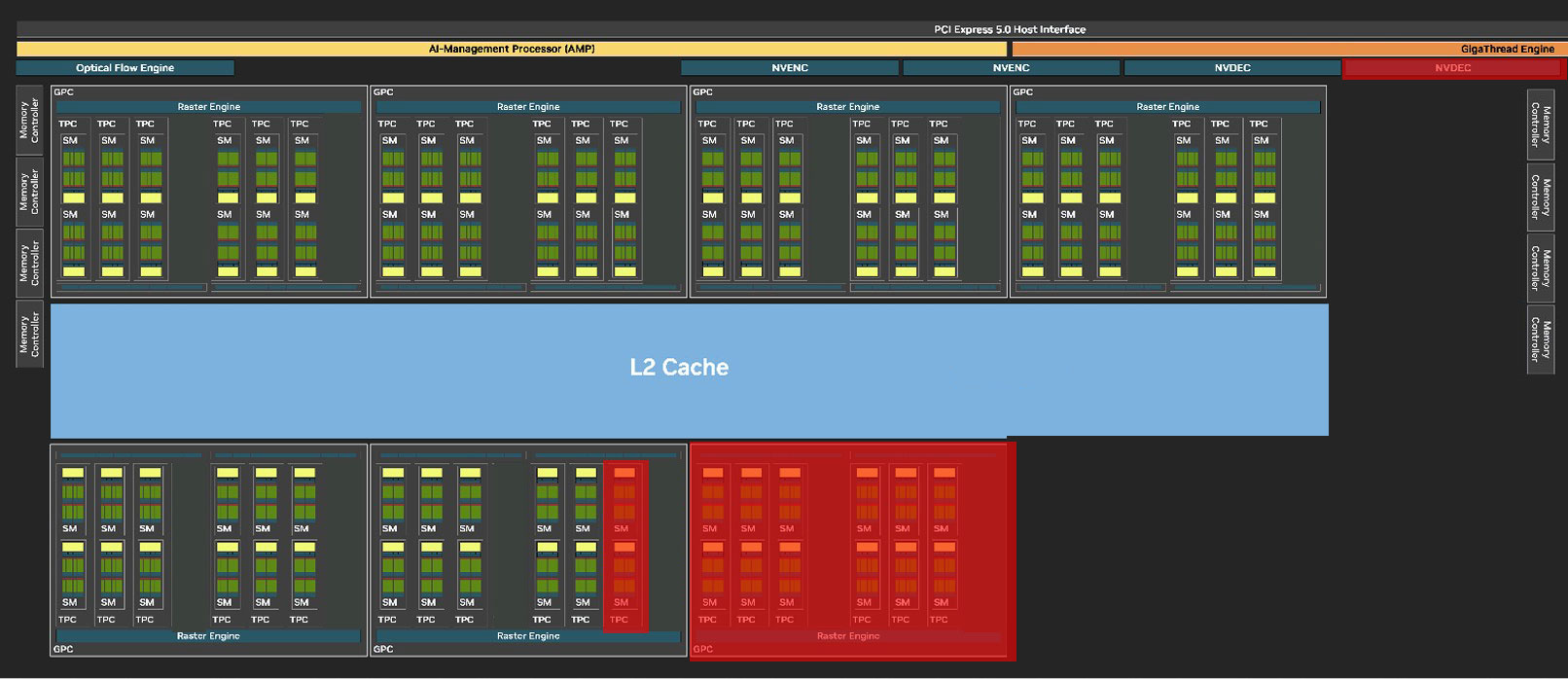
NVIDIA does not provide a block diagram for the GB203 GPU (we asked), so we had to quickly hack one out from the GB202 diagram. This is accurate just not as pretty.
The GeForce Blackwell graphics architecture heralds NVIDIA's 4th generation of RTX, the late-2010s re-invention of the modern GPU that sees a fusion of real time ray traced objects with conventional raster 3D graphics. With Blackwell, NVIDIA is helping add another dimension, neural rendering, the ability for the GPU to leverage a generative AI to create portions of a frame. This is different from DLSS, where an AI model is used to reconstruct details in an upscaled frame based on its training date, temporal frames, and motion vectors. Today we are reviewing the RTX 5070 Ti. At the heart of this graphics card is the new 5 nm GB203 silicon, the same chip that powers the RTX 5080. This chip has very similar die size and transistor counts to the previous generation AD103 powering the RTX 4080, because both chips are built on the exact same process—TSMC's "NVIDIA 4N", or 5 nm EUV with NVIDIA-specific characteristics—but is based on the newer Blackwell graphics architecture. The GB203 measures 378 mm² in die-area and rocks 45.6 billion transistors (compared to the 378.6 mm² die-area and 45.9 billion transistors of the AD103). This is where the similarities end.
The GB203 silicon is laid out essentially in the same component hierarchy as past generations of NVIDIA GPUs, but with a few notable changes. The GPU features a PCI-Express 5.0 x16 host interface. PCIe Gen 5 has been around since Intel's 12th Gen Core "Alder Lake" and AMD's Ryzen 7000 "Zen 4," so there is a sizable install-base of systems that can take advantage of it. The GPU is of course compatible with older generations of PCIe. The GB203 also features the new GDDR7 memory interface that's making its debut with this generation. The chip features a 256-bit wide memory bus, which is half the bus width of the GB202 powering the RTX 5090. NVIDIA is using this to drive 16 GB of memory at 30 Gbps speeds, yielding 960 GB/s of memory bandwidth, which is a 34% increase over the RTX 4080 and its 22.5 Gbps GDDR6X.
The GigaThread Engine is the main graphics rendering workload allocation logic on the GB203, but there's a new addition, a dedicated serial processor for managing all AI acceleration resources on the GPU, NVIDIA calls this AMP (AI management processor). Other components at the global level are the Optical Flow Processor, a component involved in older versions of DLSS frame generation and for video encoding; and an updated media acceleration engine consisting of two NVENC encode accelerators, and two NVDEC decode accelerators. On the RTX 5070 Ti, one of these two NVDEC units is disabled. The new 9th Gen NVENC video encode accelerators come with 4:2:2 AV1 and HEVC encoding support. The central region of the GPU has the single largest common component, the 64 MB L2 cache. The RTX 5070 Ti is configured with 48 MB of this cache.
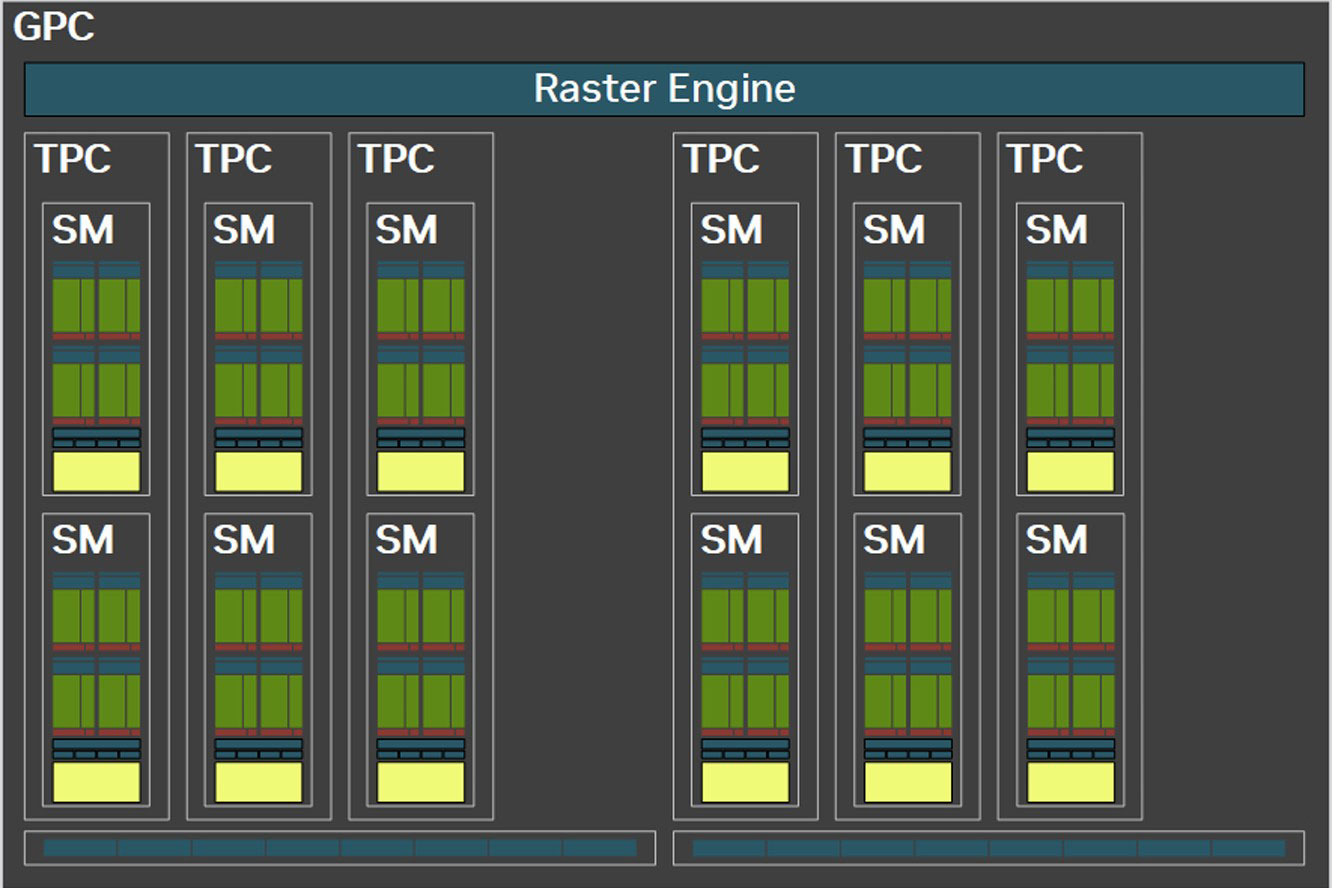
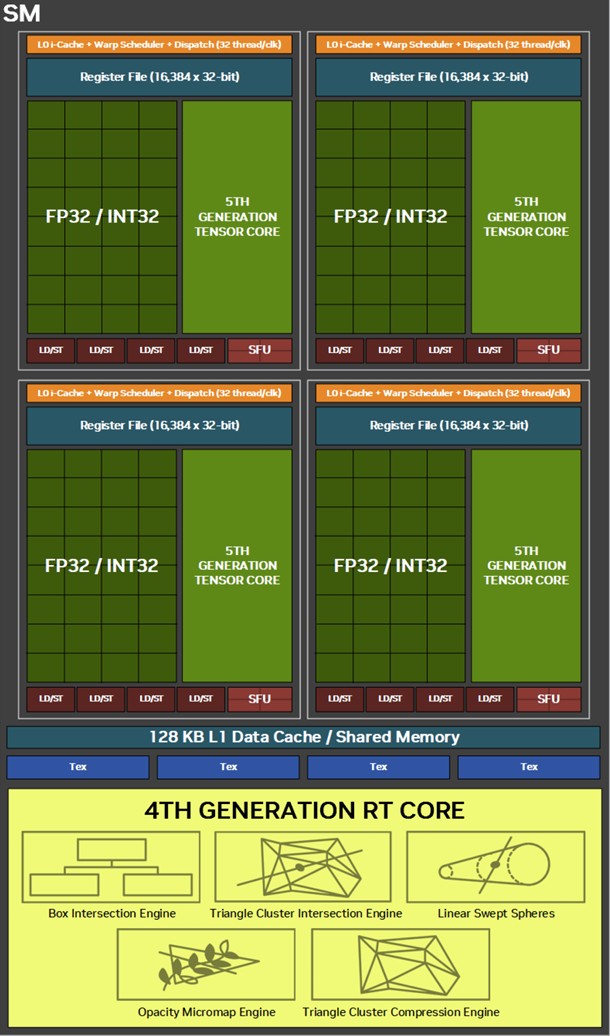
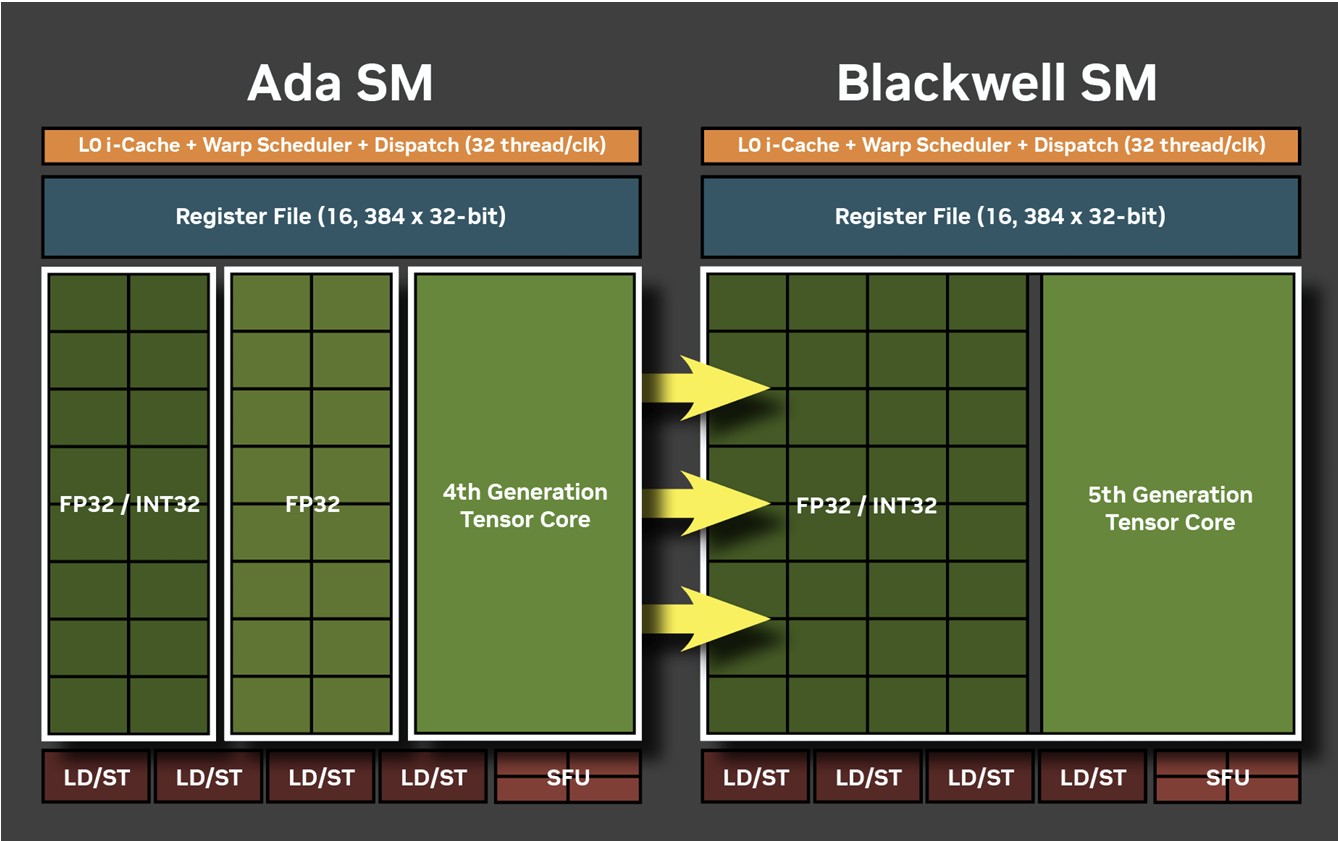
Each graphics processing cluster (GPC) is a subdivision of the GPU with nearly all components needed for graphics rendering. On the GB203, a GPC consists of 12 streaming multiprocessors (SM) across 6 texture processing clusters (TPCs), and a raster engine consisting of 16 ROPs. Each SM contains 128 CUDA cores. Unlike the Ada generation SM that each had 64 FP32+INT32 and 64 purely-FP32 SIMD units, the new Blackwell generation SM features concurrent FP32+INT32 capability on all 128 SIMD units. These 128 CUDA cores are arranged in four slices, each with a register file, a level-0 instruction cache, a warp scheduler, two sets of load-store units, and a special function unit (SFU) handling some special math functions such as trigonometry, exponents, logarithms, reciprocals, and square-root. The four slices share a 128 KB L1 data cache, and four TMUs. The most exotic components of the Blackwell SM are the four 5th Gen Tensor cores, and a 4th Gen RT core. The RTX 5070 Ti is carved out from the GB203 by disabling an entire GPC, plus one TPC from the remaining six GPCs, resulting in 70 SM. You hence end up with 8,960 CUDA cores, 280 Tensor cores, 70 RT cores, 280 TMUs, and 96 ROPs.
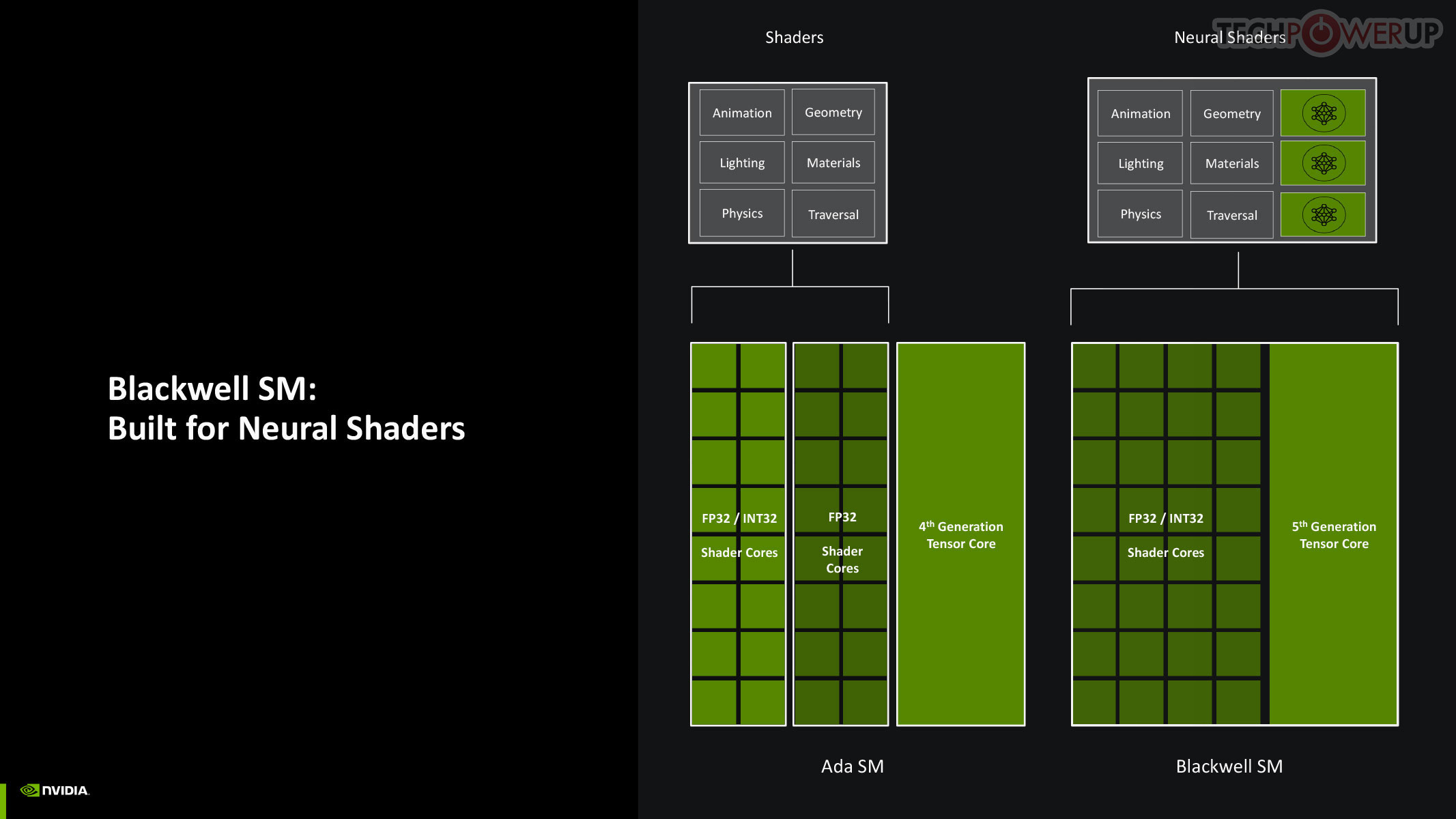

Perhaps the biggest change to the way the SM handles work introduced with Blackwell is the concept of neural shaders—treating portions of the graphics rendering workload done by a generative AI model as shaders. Microsoft has laid the groundwork for standardization of neural shaders with its Cooperative Vectors API, in the latest update to DirectX 12. The Tensor cores are now accessible for workloads through neural shaders, and the shader execution reordering (SER) engine of the Blackwell SM is able to more accurately reorder workloads for the CUDA cores and the Tensor core in an SM.
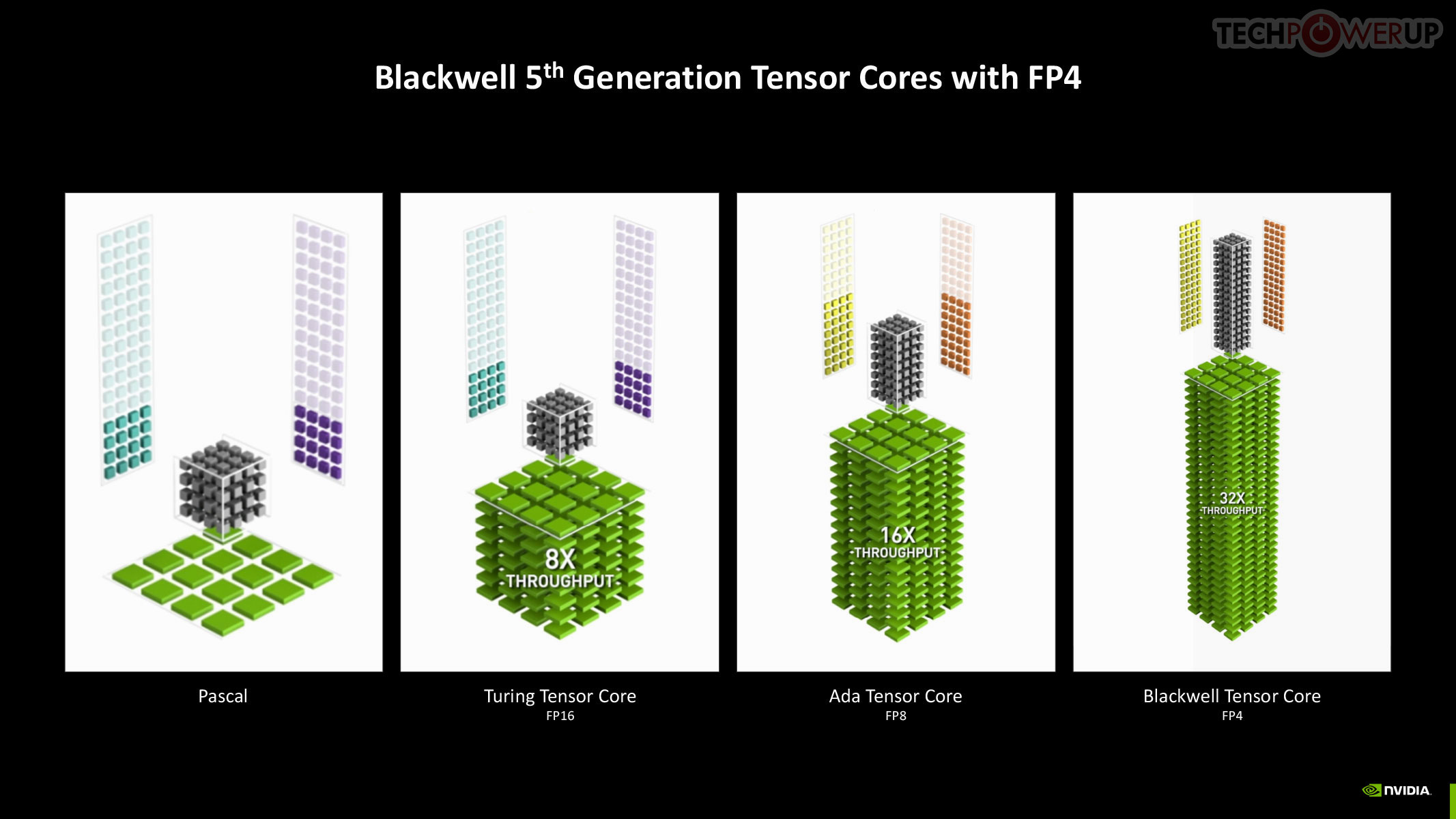
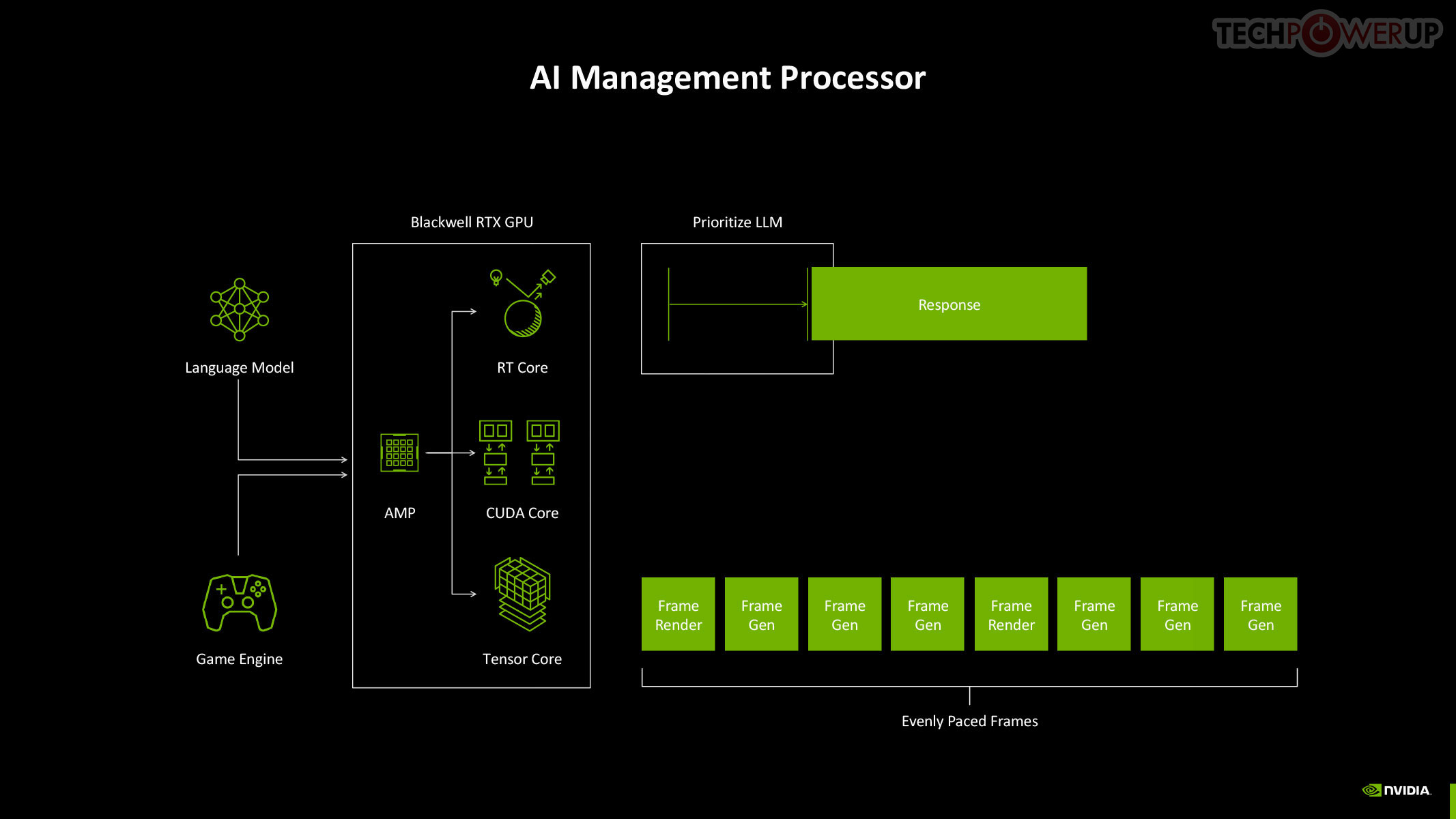
The new 5th Gen Tensor core introduces support for FP4 data format (1/8 precision) to fast moving atomic workloads, providing 32 times the throughput of the very first Tensor core introduced with the Volta architecture. Over the generations, AI models leveraged lesser precision data formats, and sparsity, to improve performance. The AI management processor (AMP) is what enables simultaneous AI and graphics workloads at the highest levels of the GPU, so it could be simultaneously rendering real time graphics for a game, while running an LLM, without either affecting the performance of the other. AMP is a specialized hardware scheduler for all the AI acceleration resources on the silicon. This plays a crucial role for DLSS 4 multi-frame generation to work.
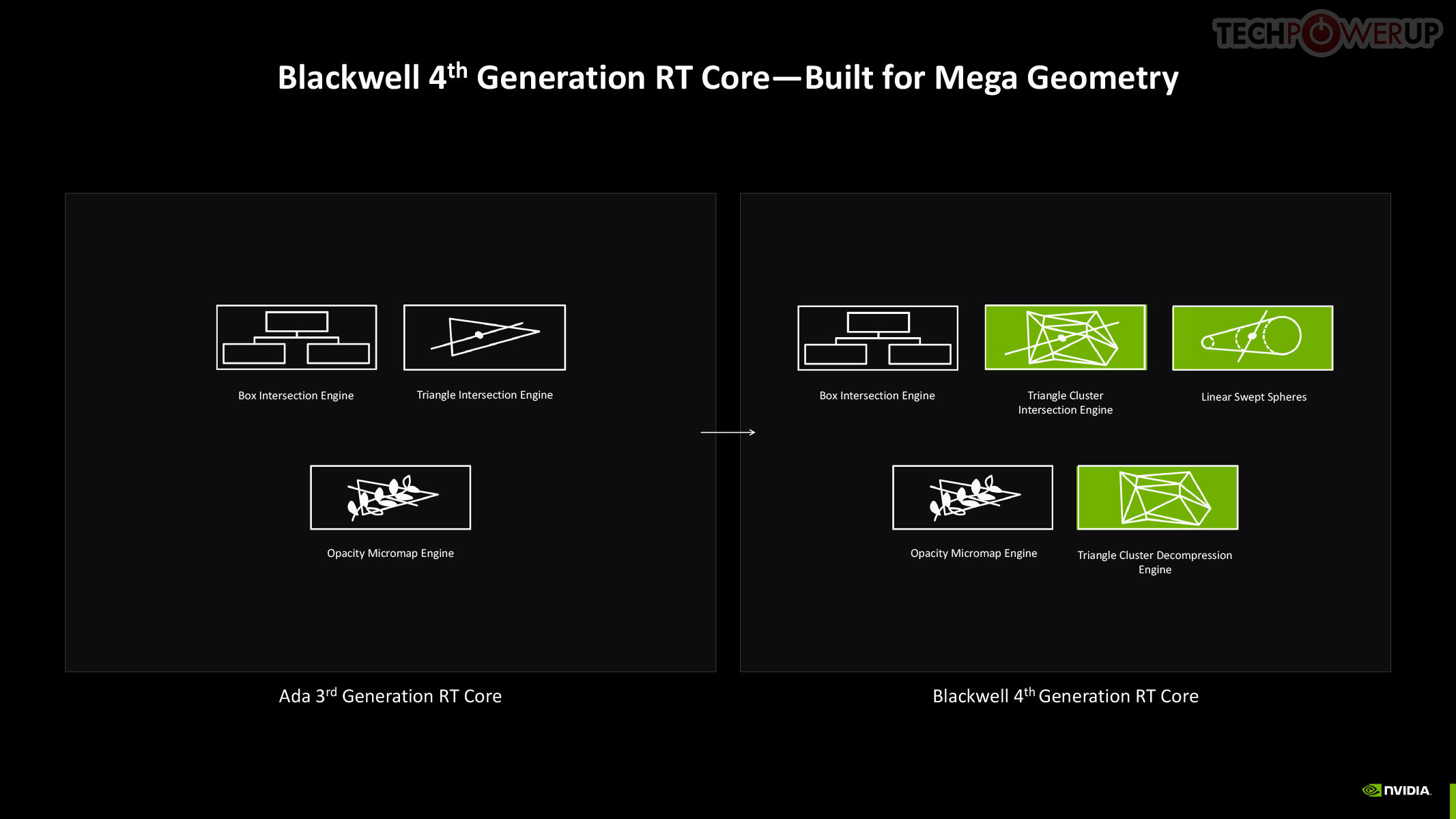
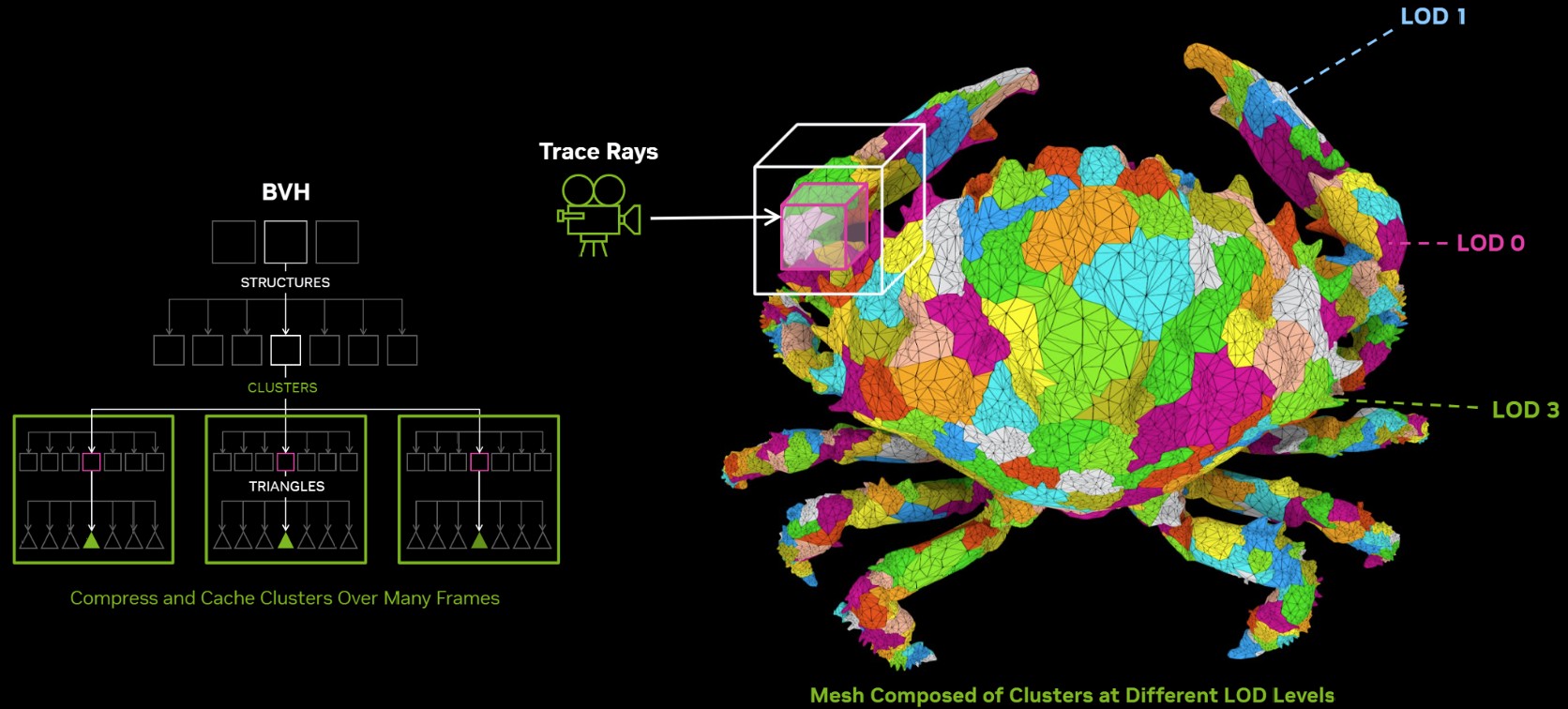
The 4th Gen RT core not just offers a generational increase in ray testing and ray intersection performance, which lowers the performance cost of enabling path tracing and ray traced effects; but also offers a potential generational leap in performance with the introduction of Mega Geometry. This allows for ray traced objects with extremely high polygon counts, increasing their detail. Poly count and ray tracing present linear increases in performance costs, as each triangle has to intersect with a ray, and there should be sufficient rays to intersect with each of them. This is achieved by adopting clusters of triangles in an object as first-class primitives, and cluster-level acceleration structures. The new RT cores introduce a component called a triangle cluster intersection engine, designed specifically for handling mega geometry. The integration of a triangle cluster compression format and a lossless decompression engine allows for more efficient processing of complex geometry.
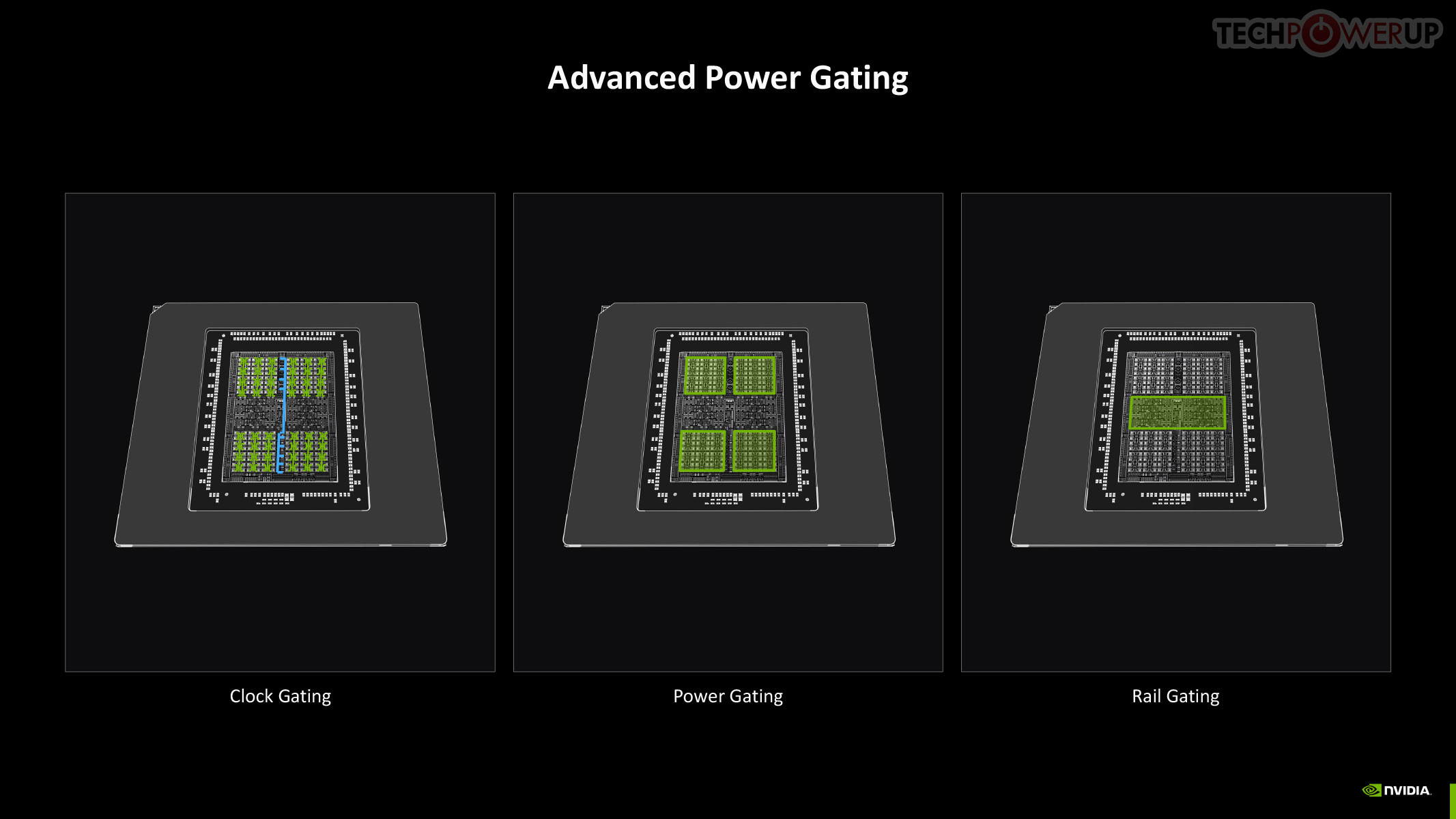
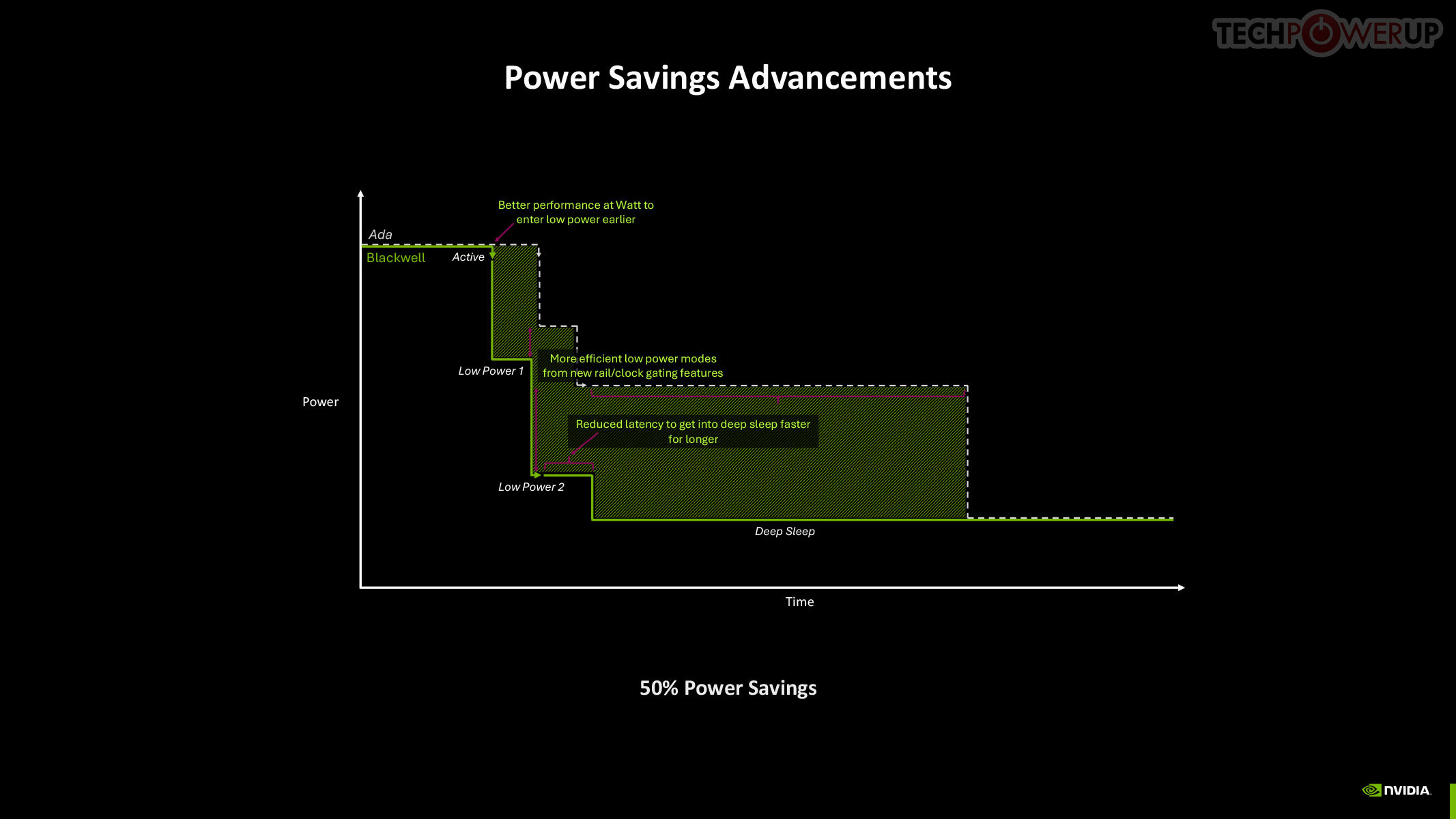
The GB203 and the rest of the GeForce Blackwell GPU family is built on the exact same TSMC "NVIDIA 4N" foundry node, which is actually 5 nm, as previous-generation Ada, so NVIDIA directed efforts to finding innovative new ways to manage power and thermals. This is done through a re-architected power management engine that relies on clock gating, power gating, and rail gating of the individual GPCs and other top-level components. It also worked on the speed at which the GPU makes power-related decisions.
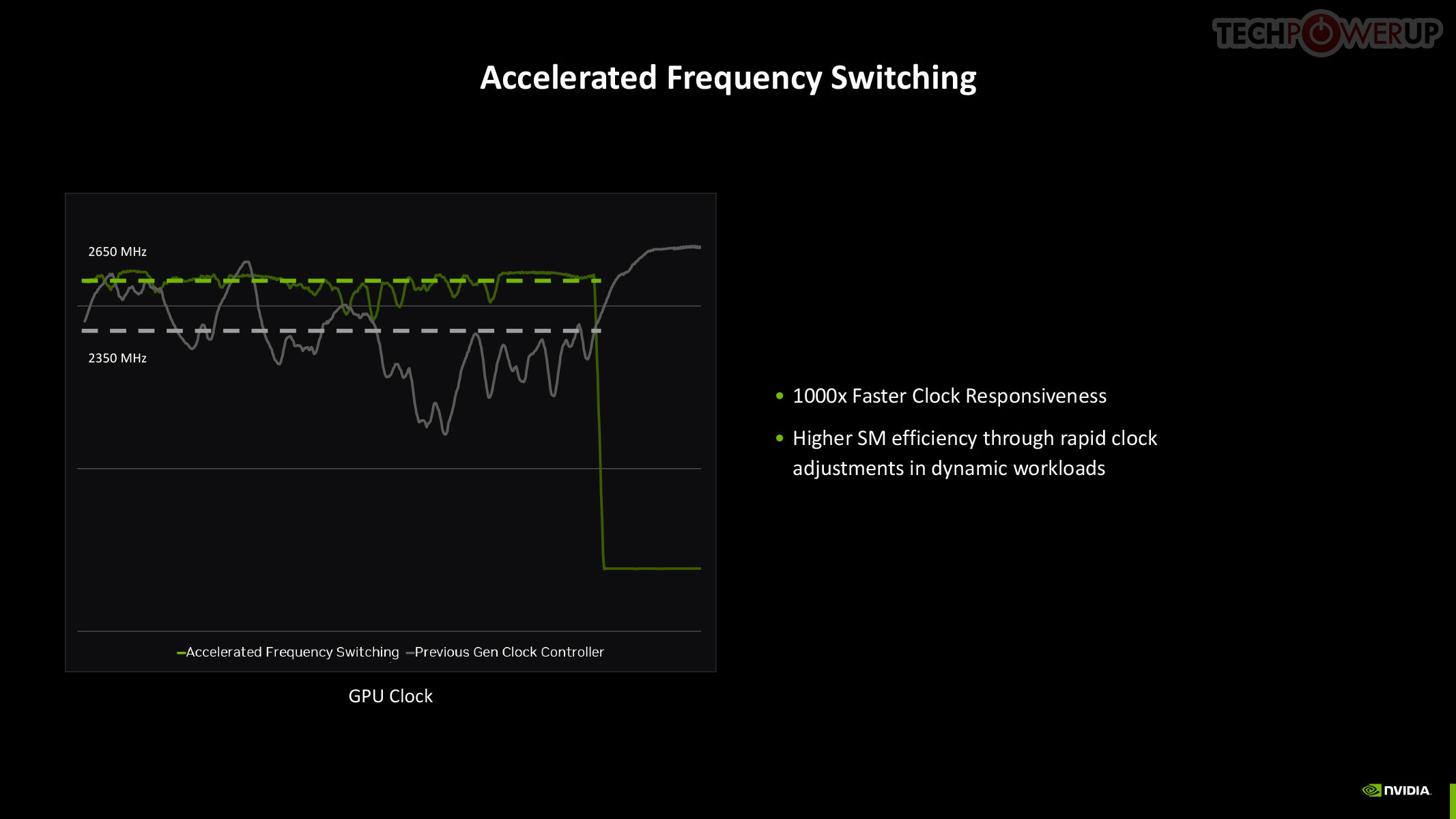
The quickest way to drop power is by adjusting the GPU clock speed, and with Blackwell, NVIDIA introduced a means for rapid clock adjustments at the SM-level.
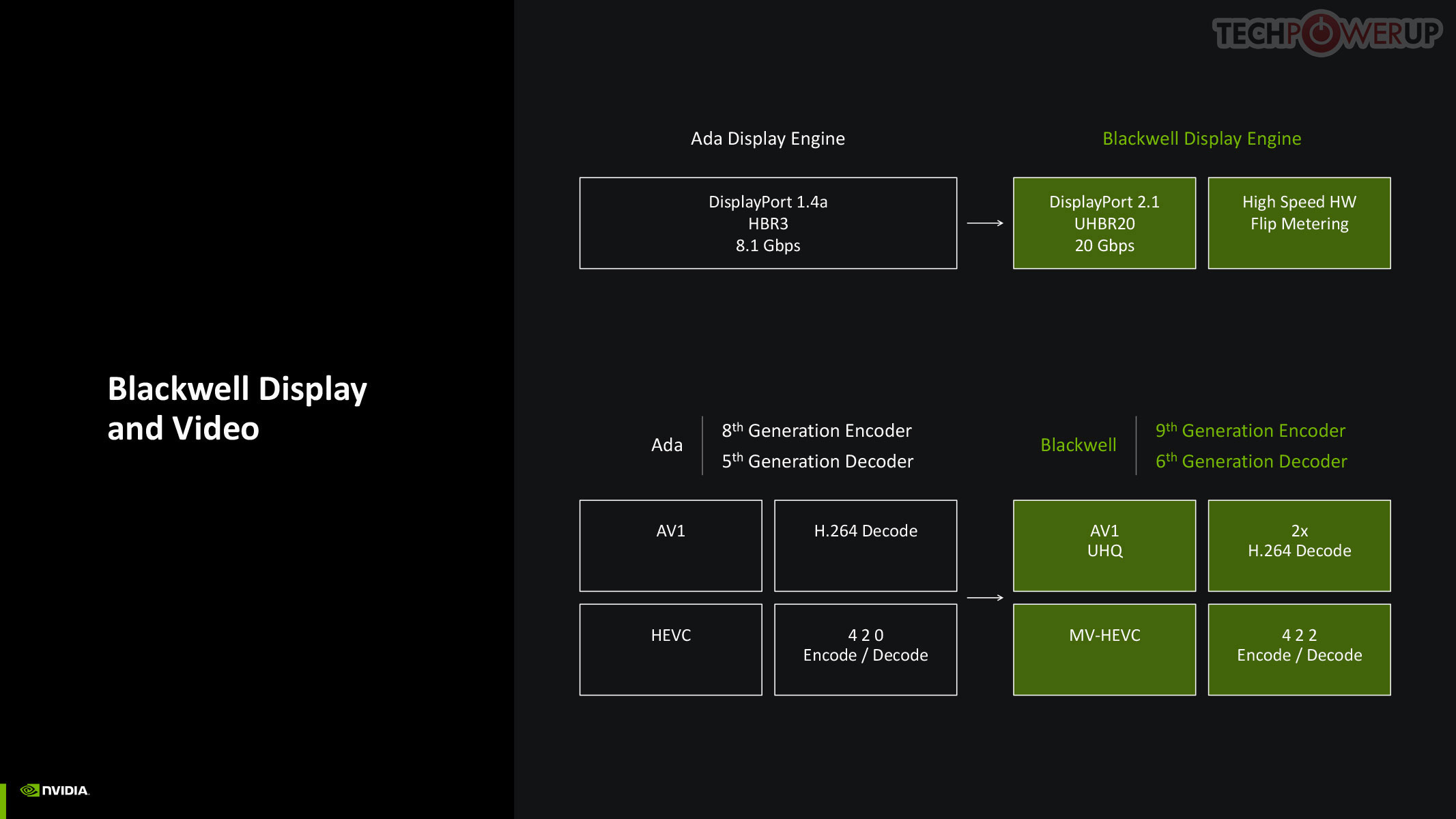
NVIDIA updated both the display engine and the media engine of Blackwell over the previous generation Ada, which drew some flack for holding on to older display I/O standards such as DisplayPort 1.4, while AMD and Intel had moved on to DisplayPort 2.1. The good news is that Blackwell supports DP 2.1 with UHBR20, enabling 8K 60 Hz with a single cable. The company also updated NVDEC and NVENC, which now support AV1 UHQ, double the H.264 decode performance, MV-HEVC, and 4:2:2 formats.
Neural Rendering
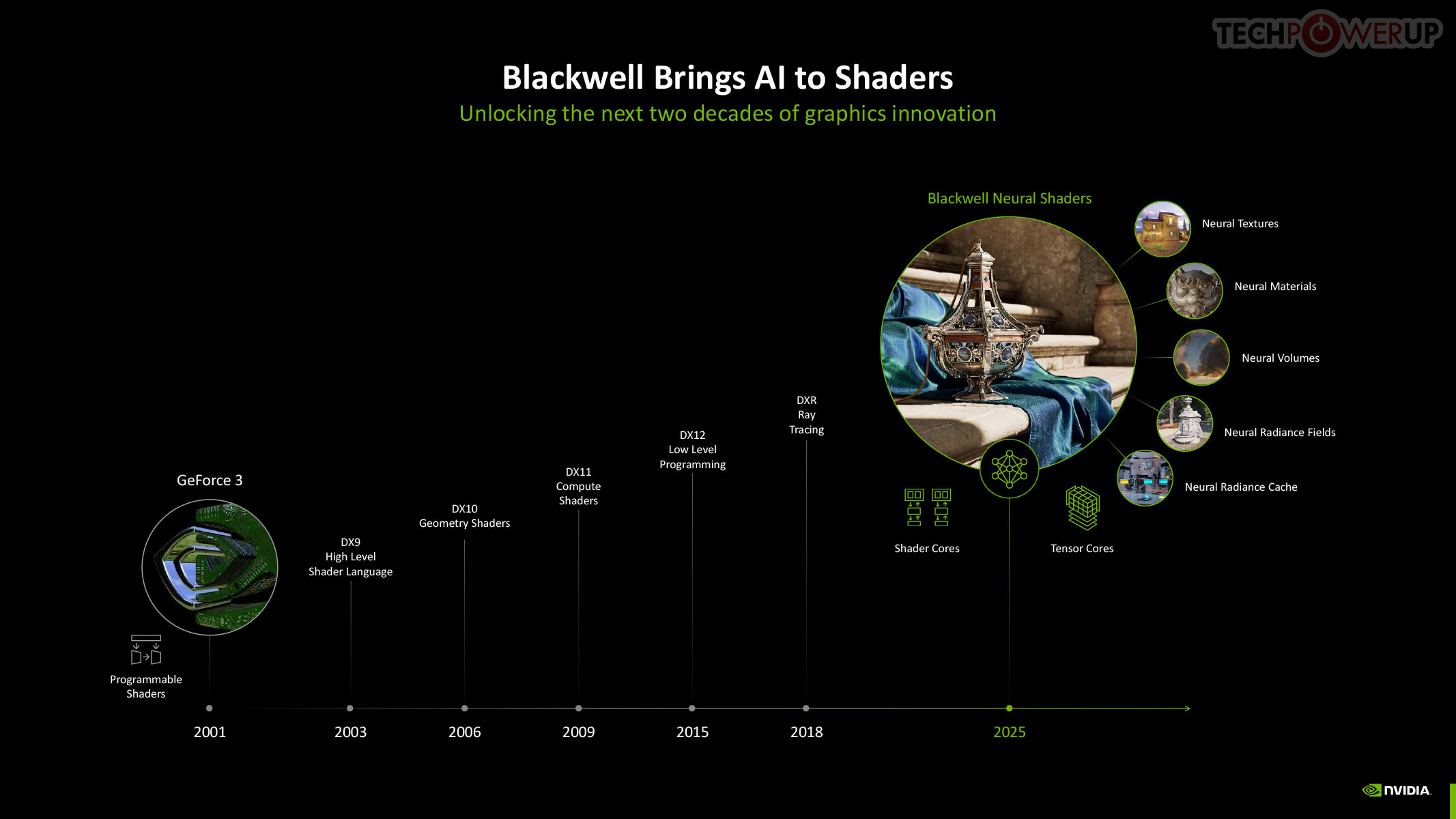
Neural Rendering promises to be as transformative to modern graphics as programmable shaders itself. 3D Graphics rendering evolved from fixed-function over the turn of the century, to programmable shaders, HLSL, geometry shaders, compute shaders, and ray tracing, over the past couple of decades. In 2025, NVIDIA is writing the next chapter in this journey with Blackwell neural shaders. This allows for a host of neural-driven effects, including neural materials, neural volumes, and even neural radiance fields. Microsoft introduced the new Cooperative Vectors API for DirectX in a recent update, making it possible to access Tensor cores within a graphics API. Combined with a new shading language, Slang, this breakthrough enables developers to integrate neural techniques directly into their workflows, potentially replacing parts of the traditional graphics pipeline. Slang splits large, complex functions into smaller pieces that are easier to handle. Given that this is a DirectX standard API feature, there is nothing that stops AMD and Intel from integrating Neural Rendering (Cooperative Vectors) into their graphics drivers.
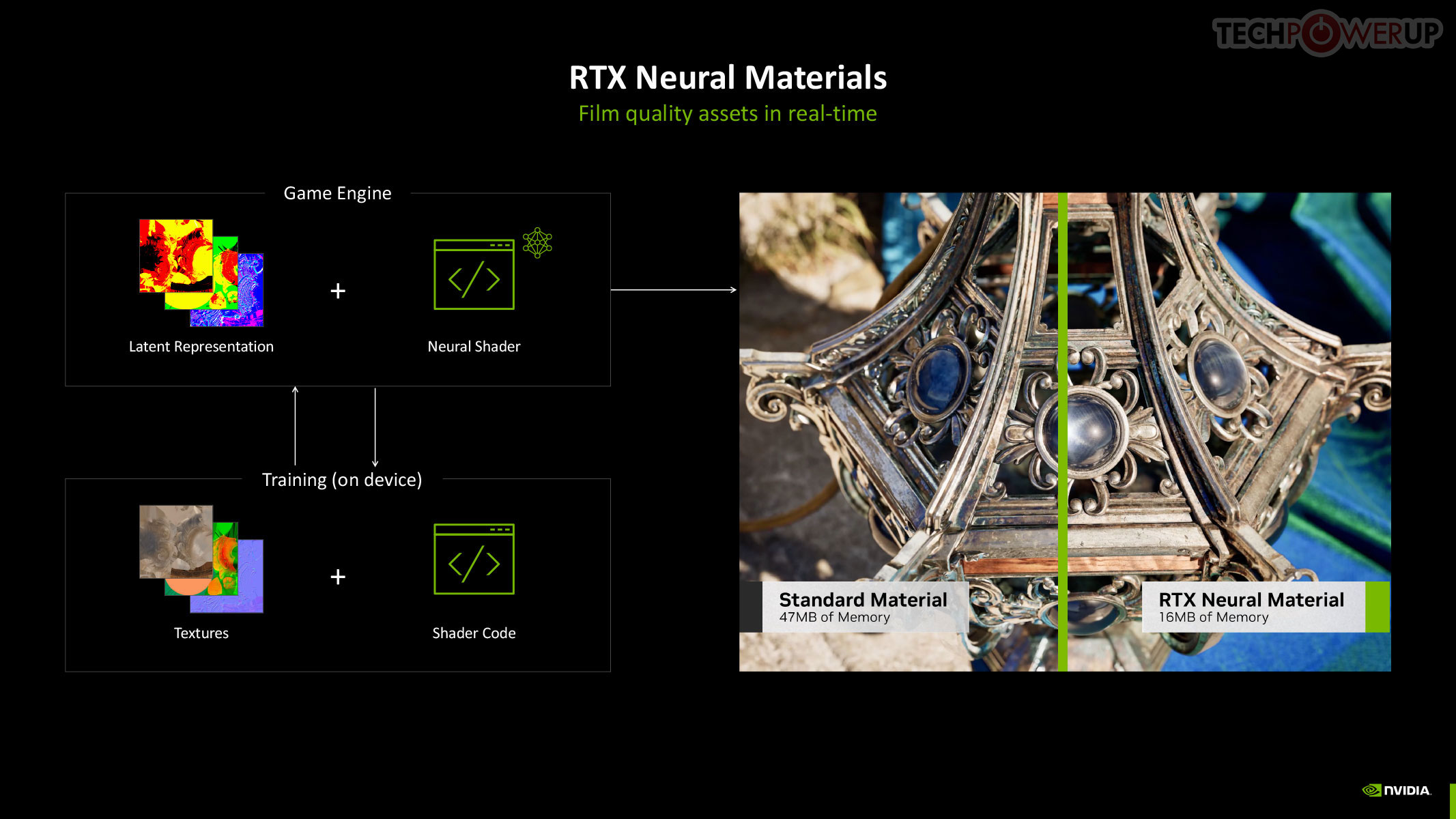
RTX Neural Materials works to significantly reduce the memory footprint of materials in 3D scenes. Under conventional rendering, the memory footprint of a material is bloated from complex shader code. Neural materials convert shader code and texture layers into a compressed neural representation. This results in up to a 7:1 compression ratio and enables small neural networks to generate stunning, film-like materials in real-time. For example, silk rendered with traditional shaders might lack the multicolored sheen seen in real life. Neural materials, however, capture intricate details like color variation and reflections, bringing such surfaces to life with unparalleled realism—and at a fraction of the memory cost.
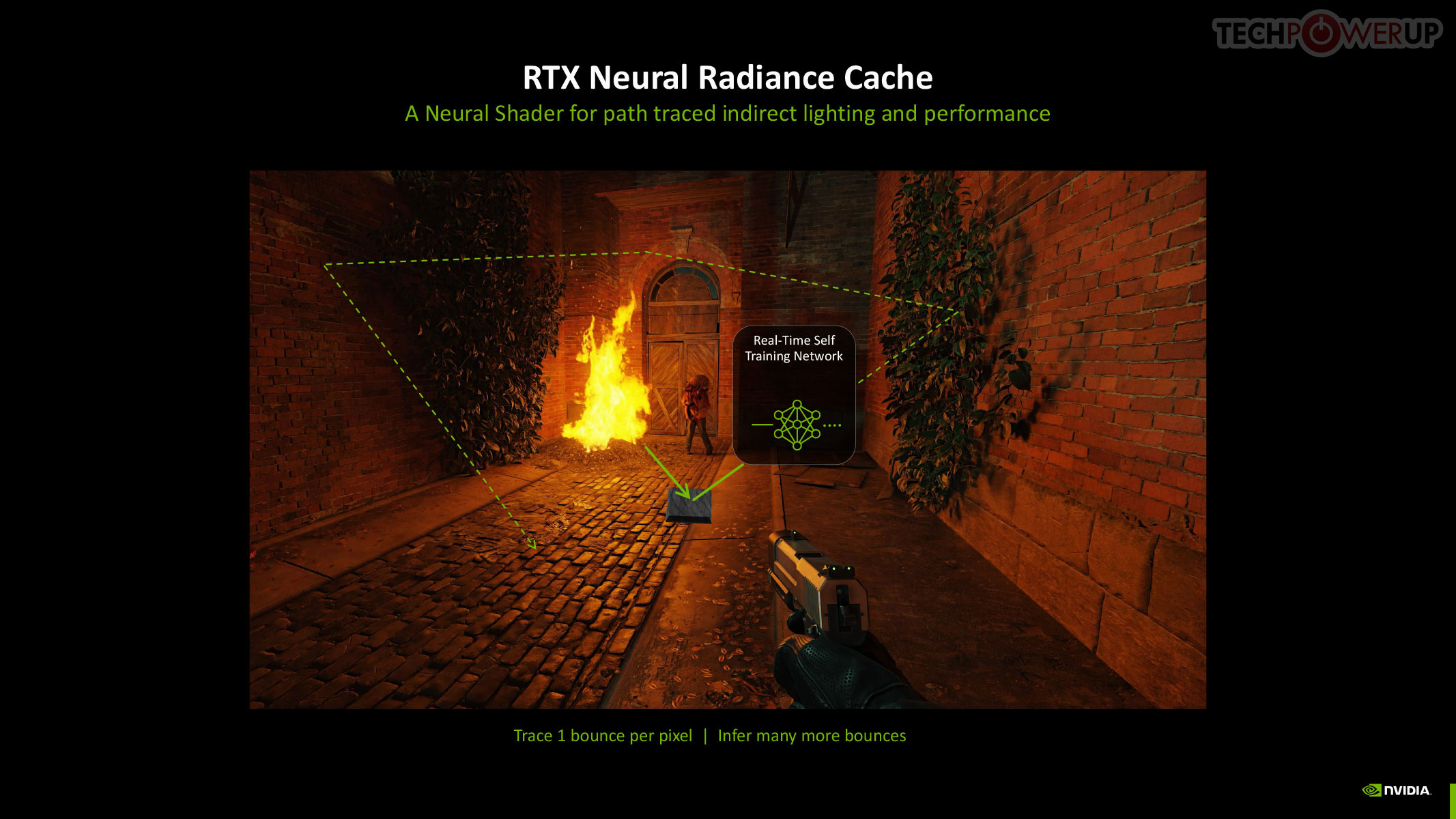
The new Neural Radiance Cache, which dynamically trains a neural network during gameplay using the user's GPU, allowing light transport to be cached spatially, enabling near-infinite light bounces in a scene. This results in realistic indirect lighting and shadows with minimal performance impact. NRC partially traces 1 or 2 rays before storing them in a radiance cache, and infers an infinite amount of rays and bounces for a more accurate representation of indirect lighting in the game scene.
DLSS 4 and Multi Frame Generation
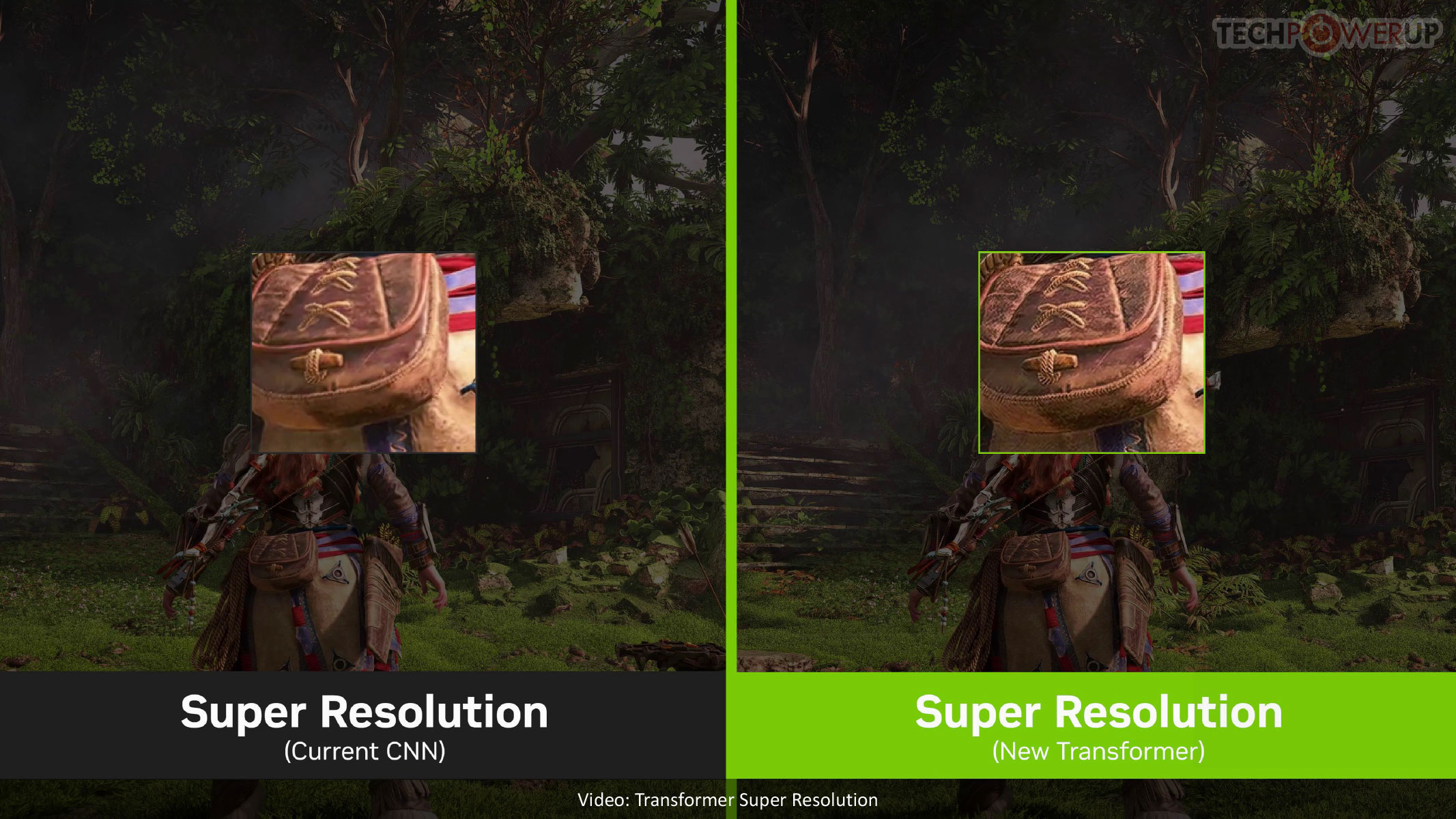
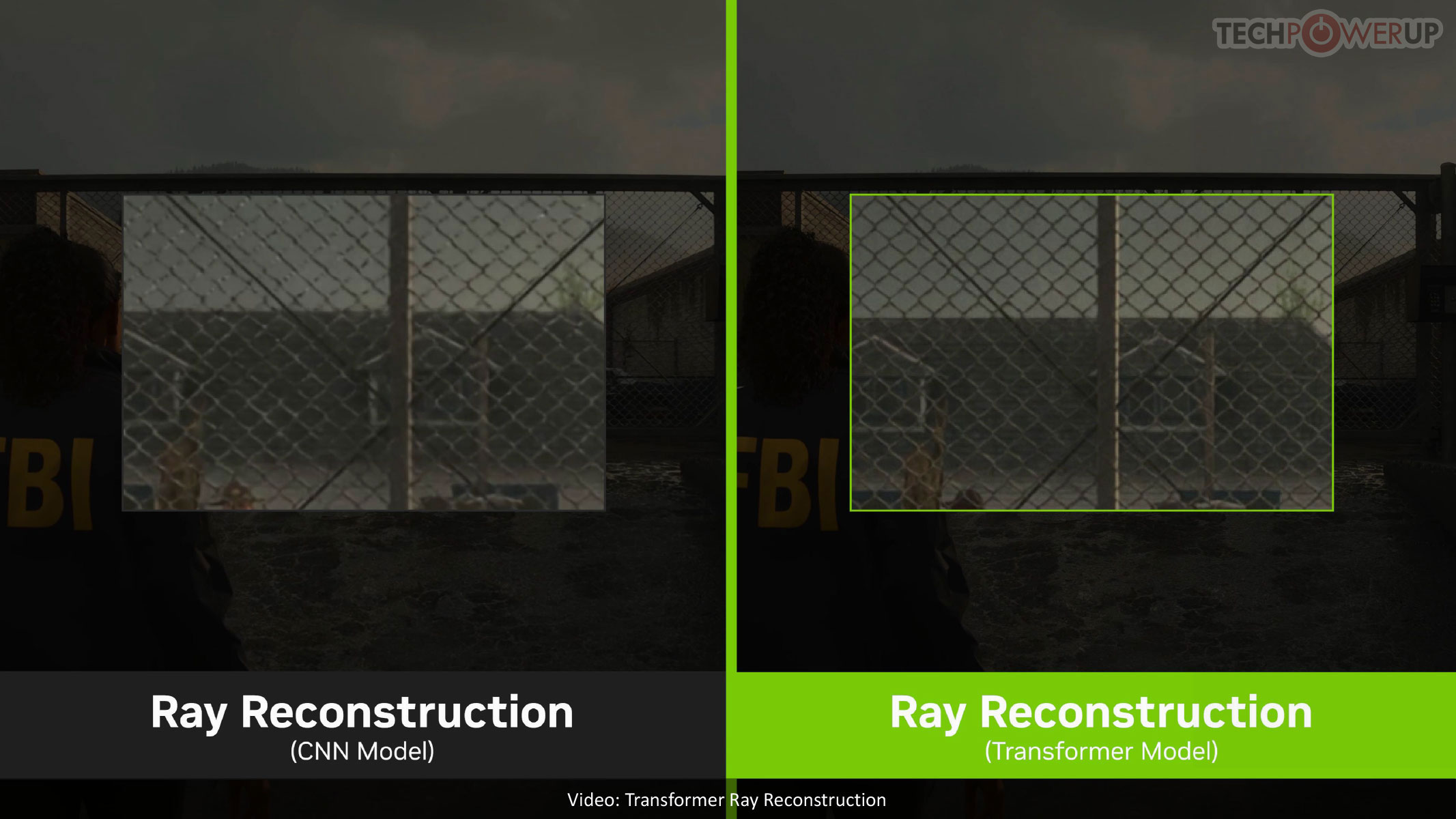
DLSS 4 introduces a major leap in image quality and performance. It isn't just a version bump with the introduction of a new feature, namely Multi Frame Generation, but introduces updates to nearly all DLSS sub-features. DLSS from its very beginning relied on AI to reconstruct details in super resolution, and with DLSS 4, NVIDIA is introducing a new transformer-based AI model to succeed the convolutional neural networks previous used, for double the parameters, four times the compute performance, and significantly improved image quality. Ray Reconstruction, introduced with DLSS 3.5, gets a significant image quality update with the new transformer-based model.
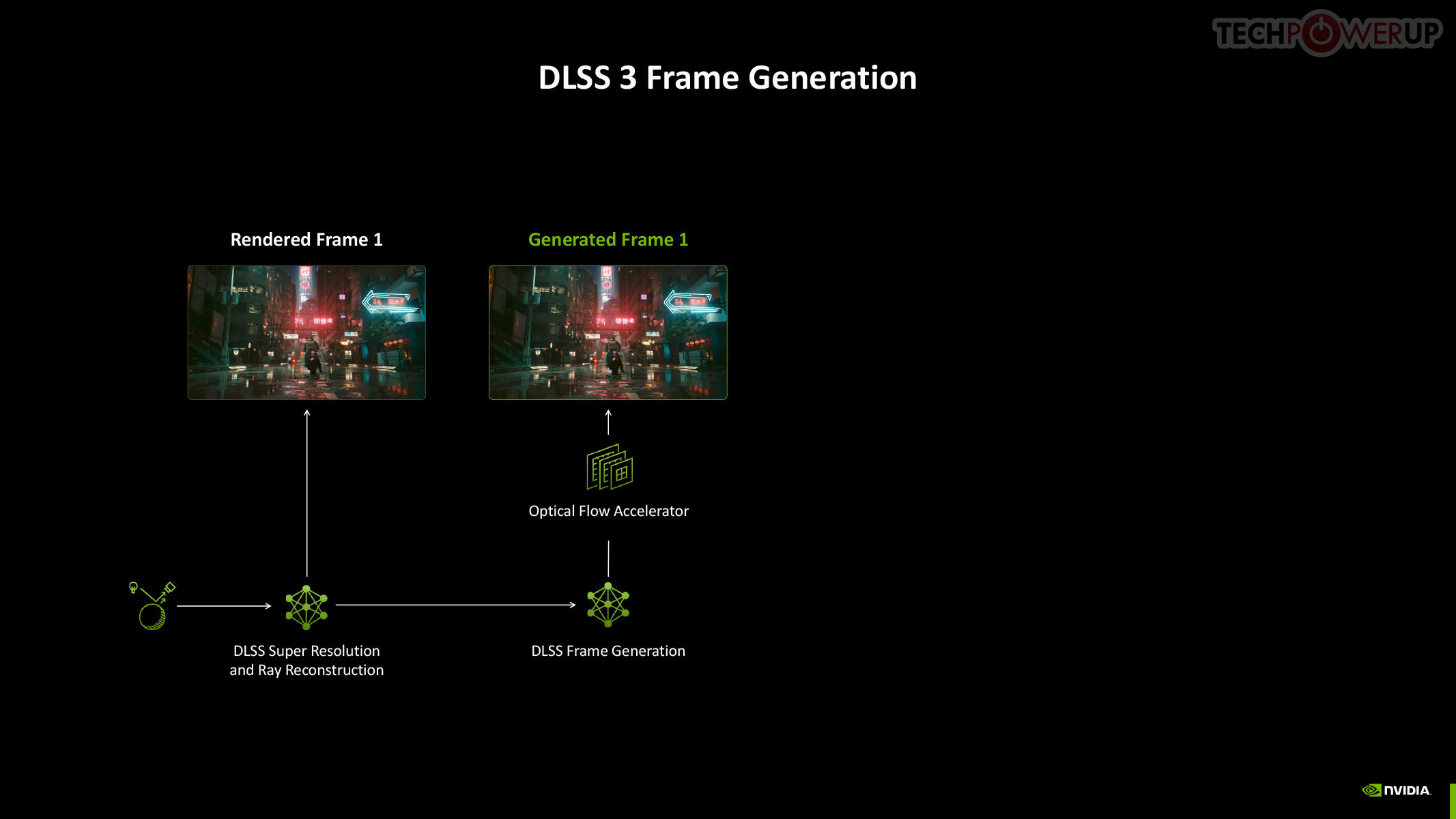

To understand Multi Frame Generation, you need to understand how DLSS Frame Generation, introduced with GeForce Ada, works. An Optical Flow Accelerator component gives the DLSS algorithm data to generate an entire frame using a neural network, using information from a previous rendered frame, effectively doubling frame rate. In Multi Frame Generation, AI takes over the functions of optical flow, to predict up to three frames following a conventionally rendered frame, effectively drawing four frames form the rendering effort of one.
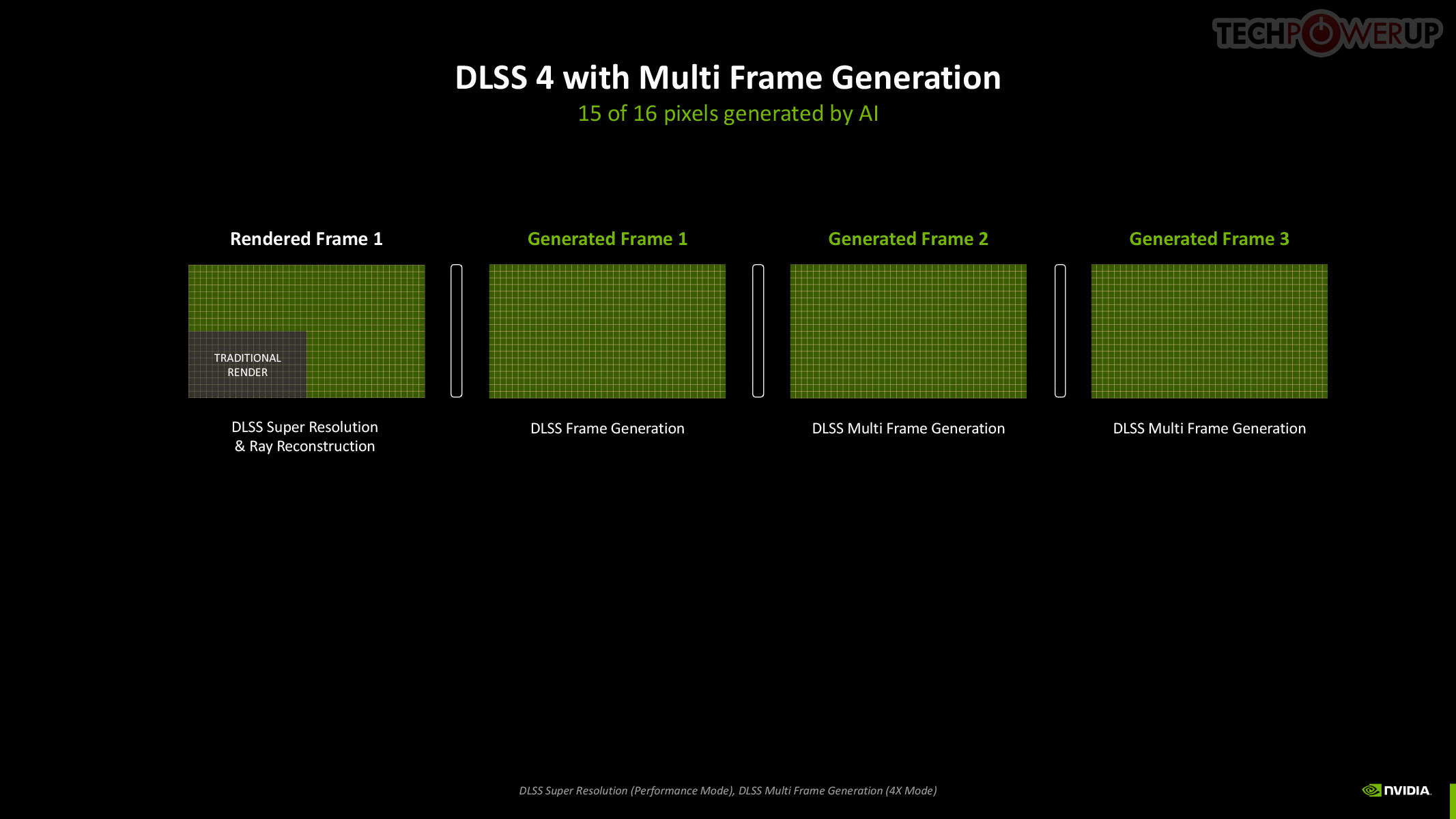
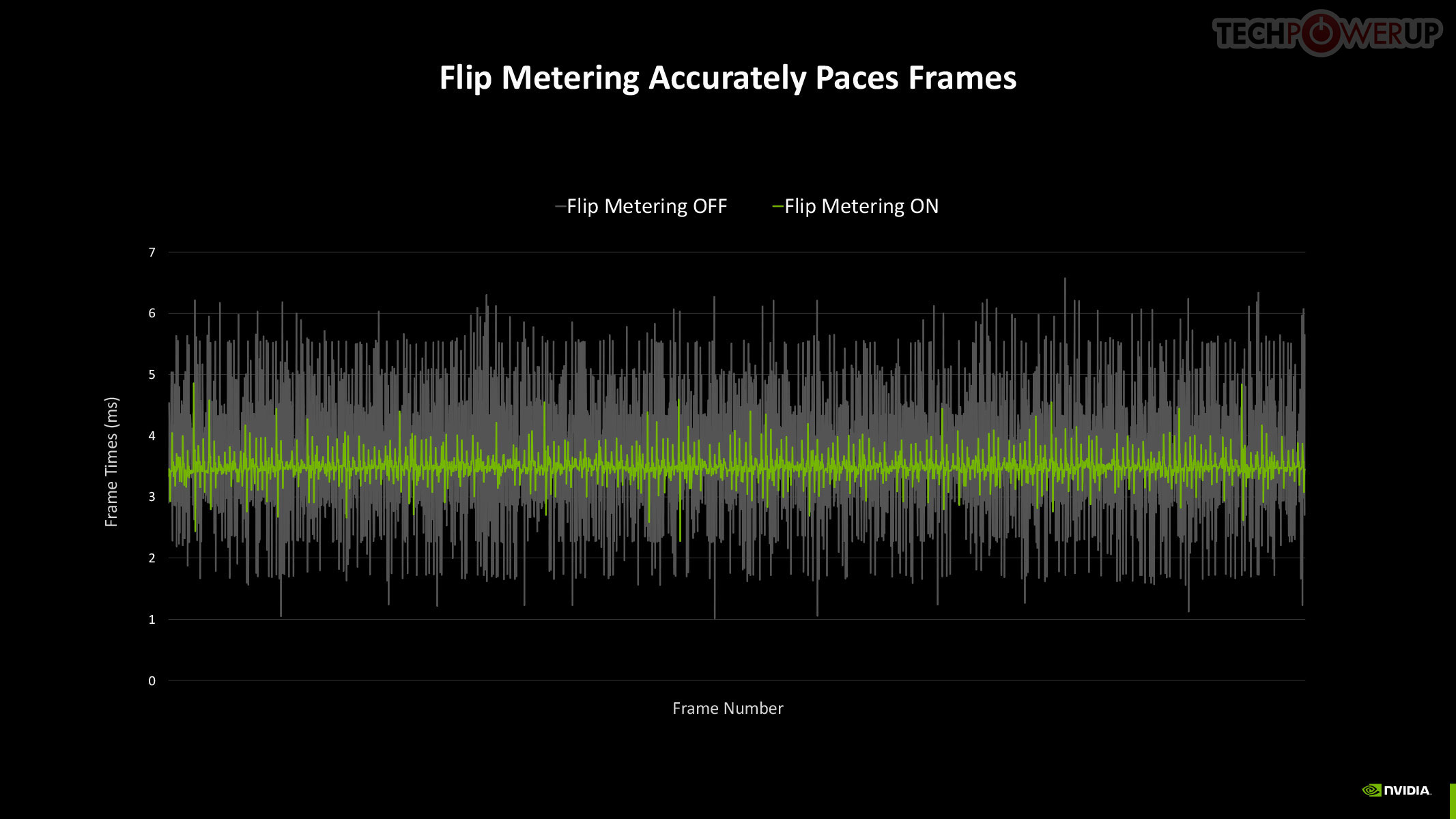
Now, assuming this rendered frame is a product of Super Resolution, with the maximum performance setting generating 4x the pixels from a single rendered pixel, you're looking at a possibility where the rendering effort of 1/4th a frame goes into drawing 4 frames, or 15 in every 16 pixels being generated entirely by DLSS. When generating so many frames, Frame Pacing becomes a problem—irregular frame intervals impact smoothness. DLSS 4 addresses these issues by using a dedicated hardware unit inside Blackwell, which takes care of flip metering, reducing frame display variability by 5-10x. The Display Engine of Blackwell contains the hardware for flip metering.
NVIDIA Reflex 2
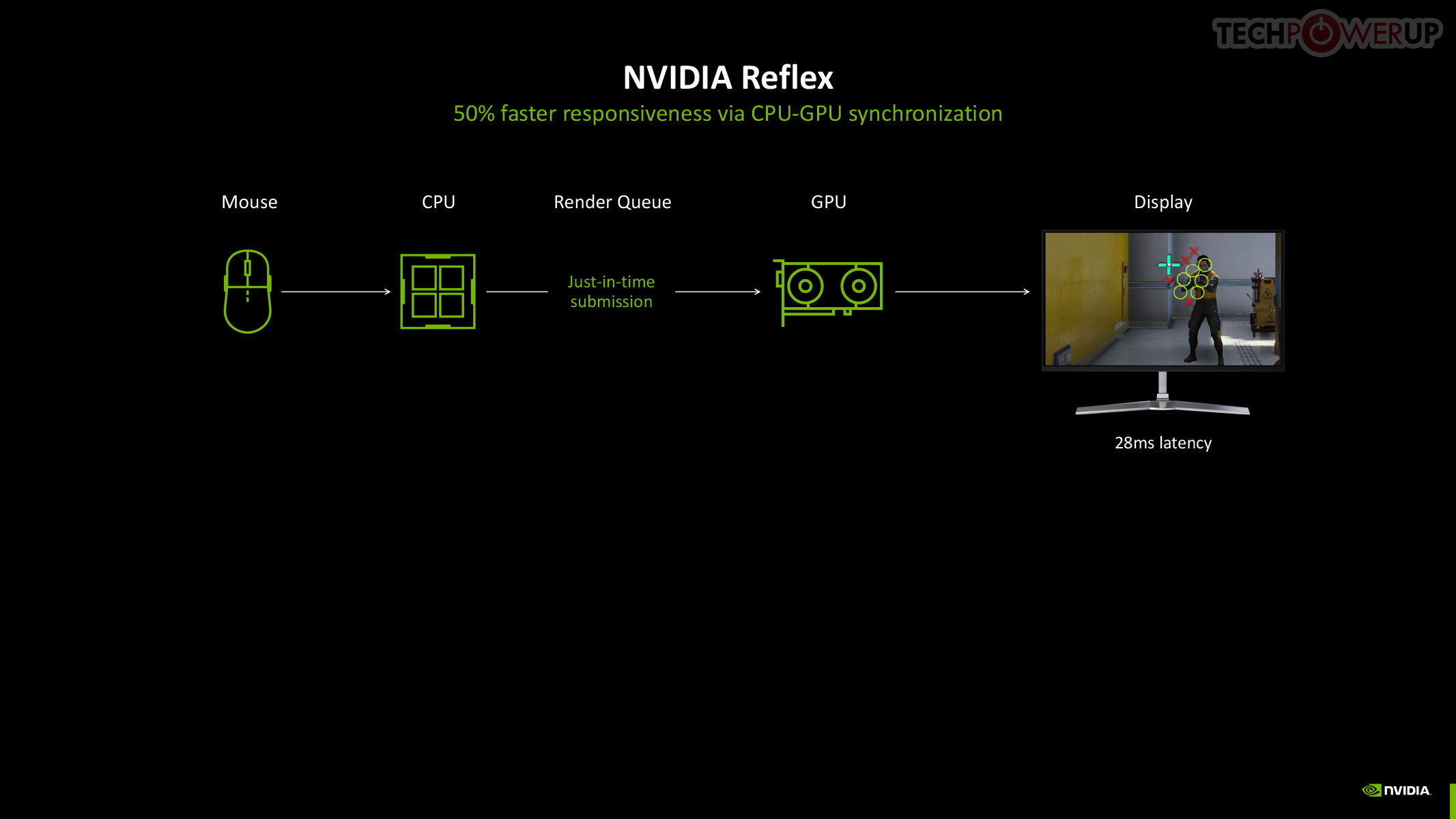
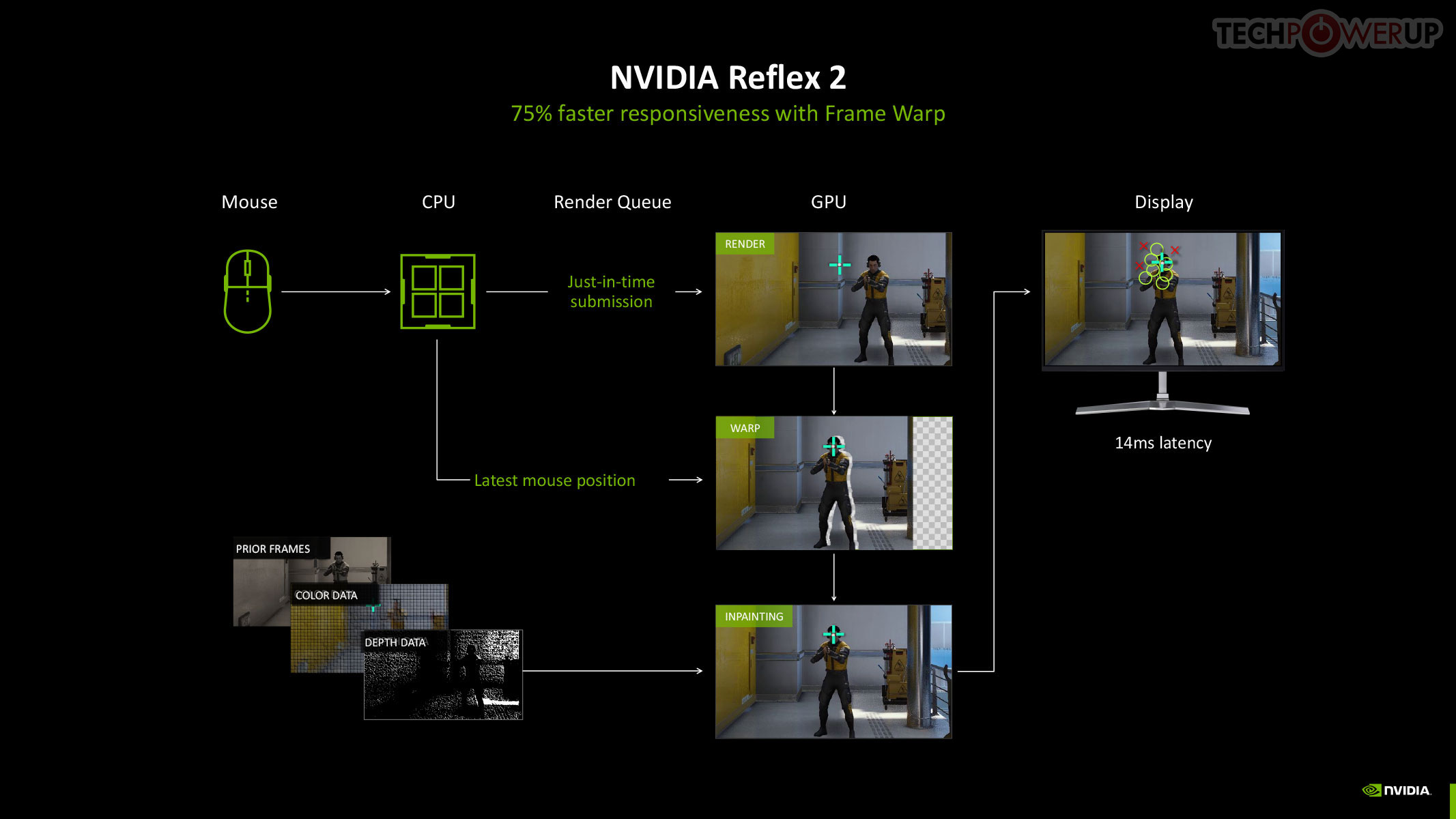
The original NVIDIA Reflex brought about a significant improvement to the responsiveness of maxed out graphics in competitive online gameplay, by compacting the rendering queue with the goal of reducing the whole system latency by up to 50%. Reflex is mandatory in DLSS 3 Frame Generation, given the latency cost imposed by the technology. Multi-frame generation calls for an equally savvy piece of technology, so we hence have Reflex 2. NVIDIA claims to have achieved a 75% reduction in latency with Frame Warp, which updates the camera (viewport) positions based on user inputs in real-time, and then uses temporal information to reconstruct the frame to display.
Packaging


The Card
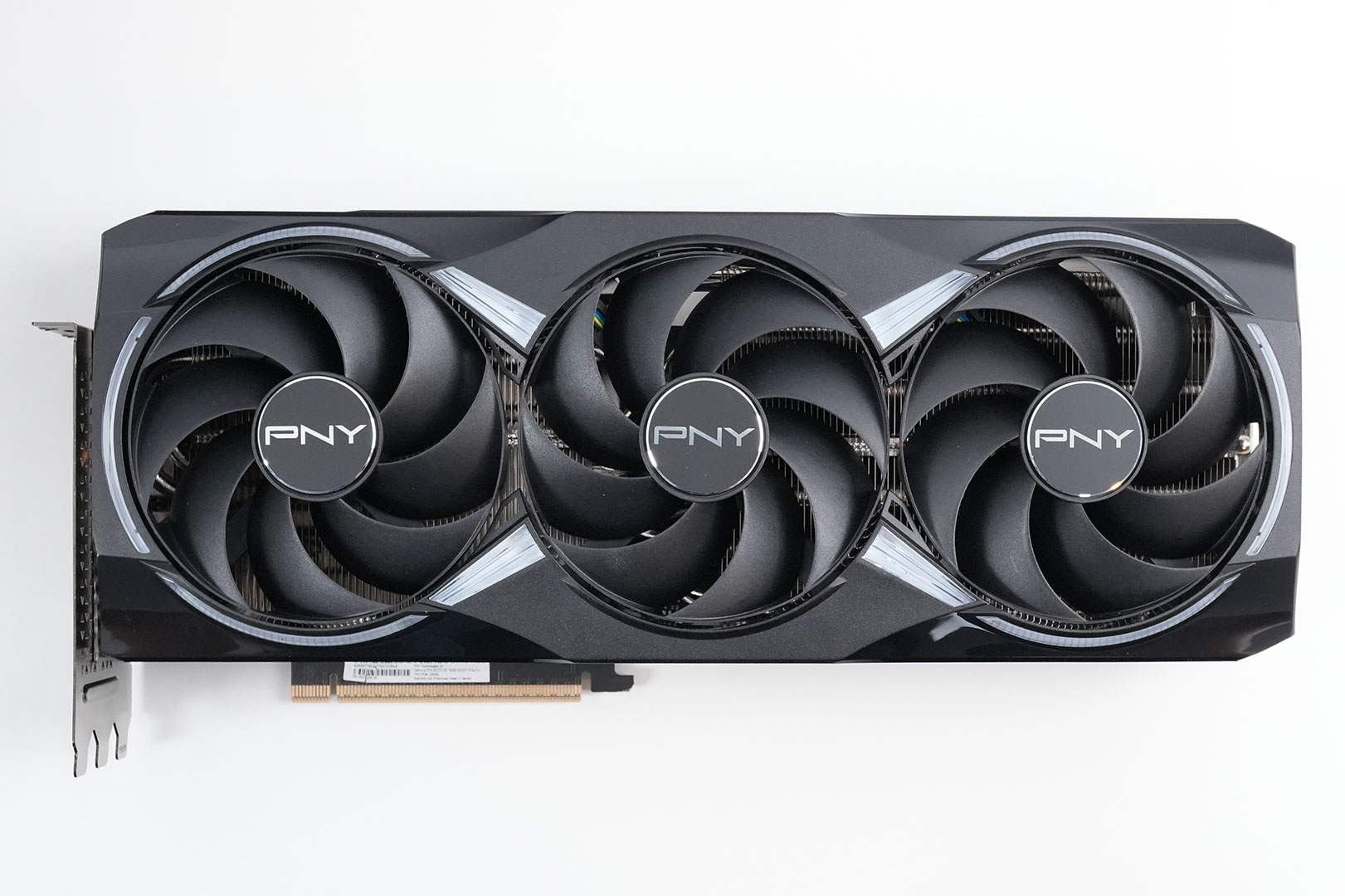


PNY has refreshed their design theme for GeForce 50-series. The primary color is still black with white highlights, but there are now shiny surfaces on the cooler front and highlights around the fans. On the back you get a metal backplate with a matte paint job that looks and feels fantastic, it has a cutout for air to flow through.

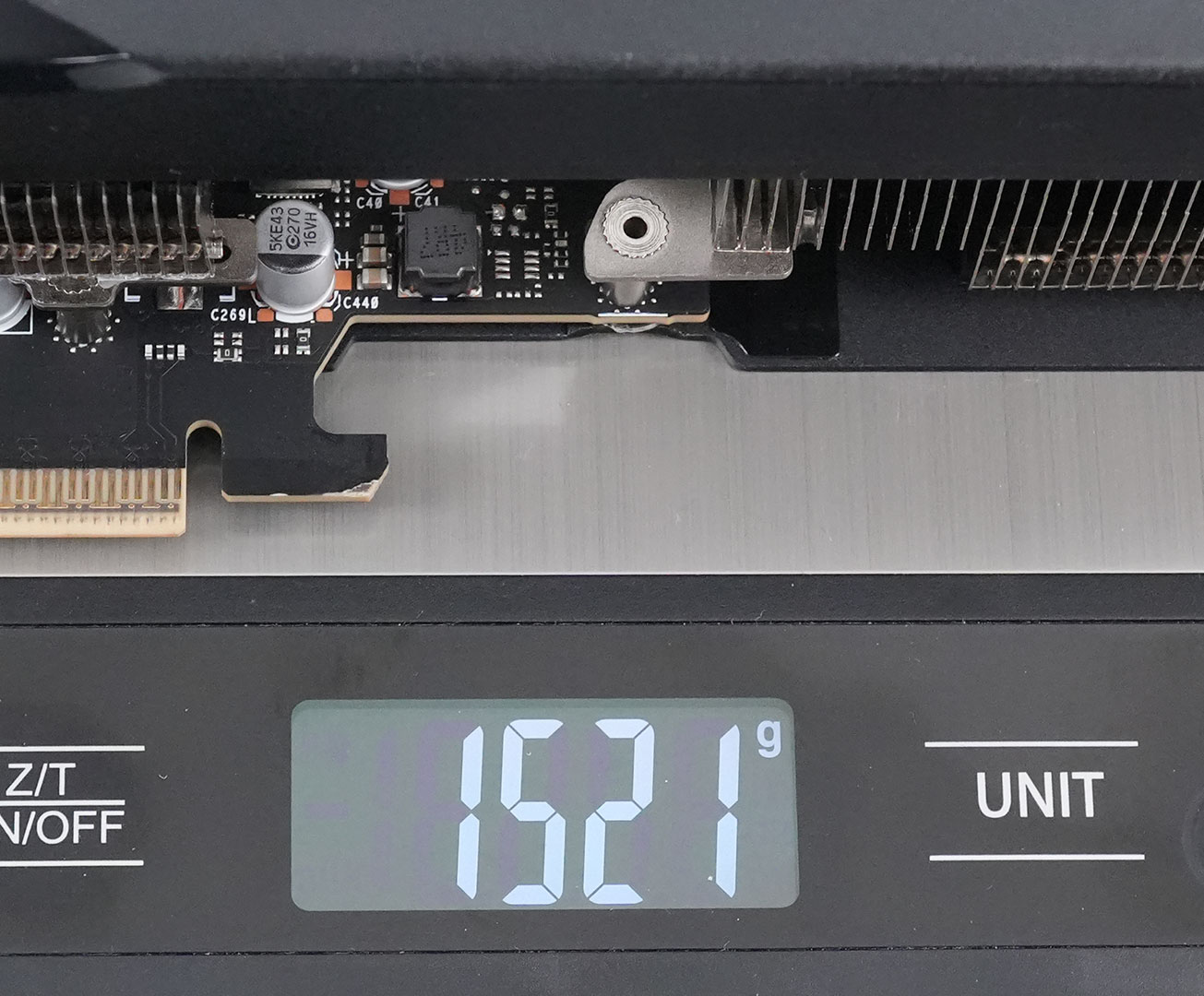
Dimensions of the card are 33.0 x 14.0 cm, and it weighs 1521 g.
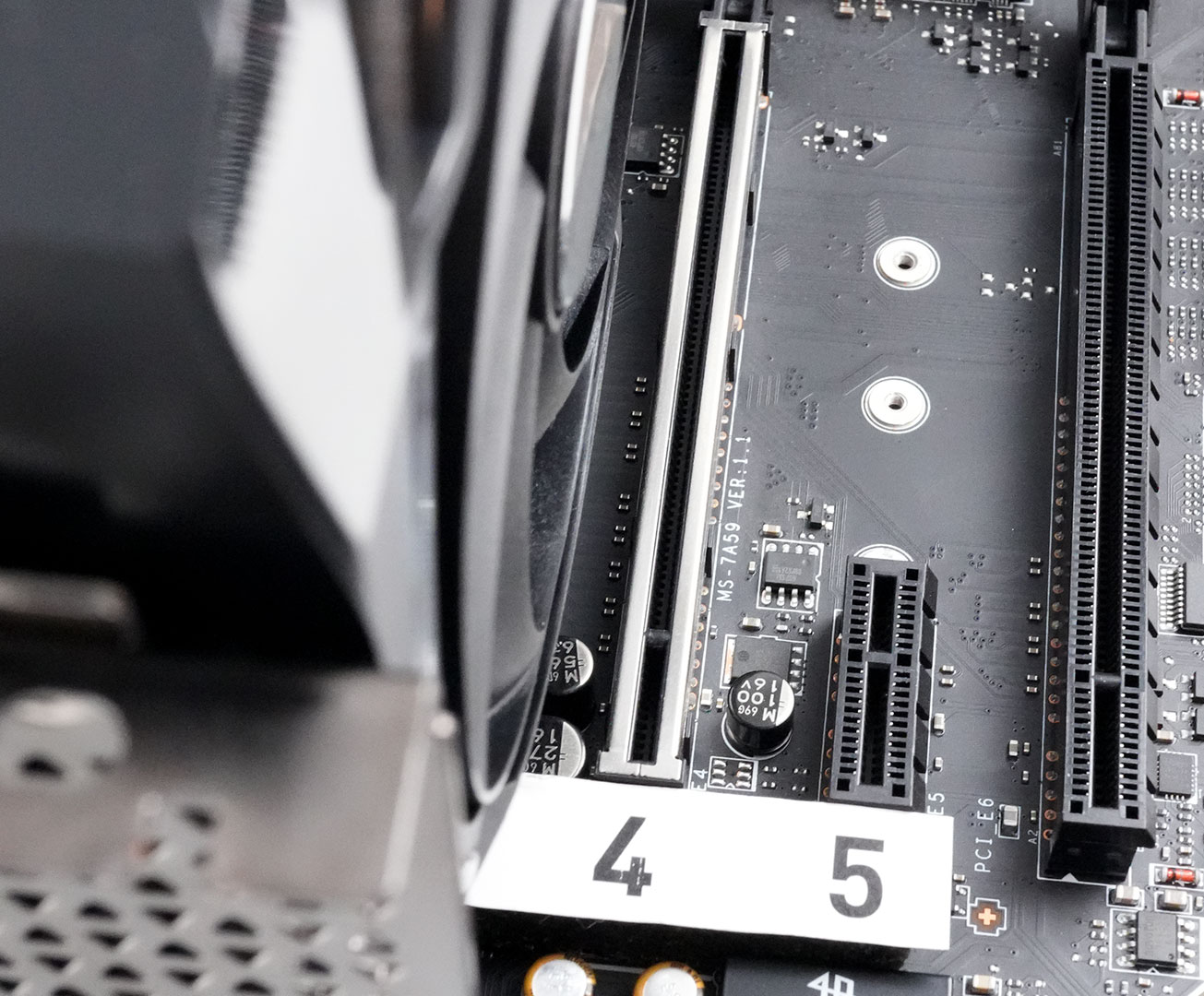
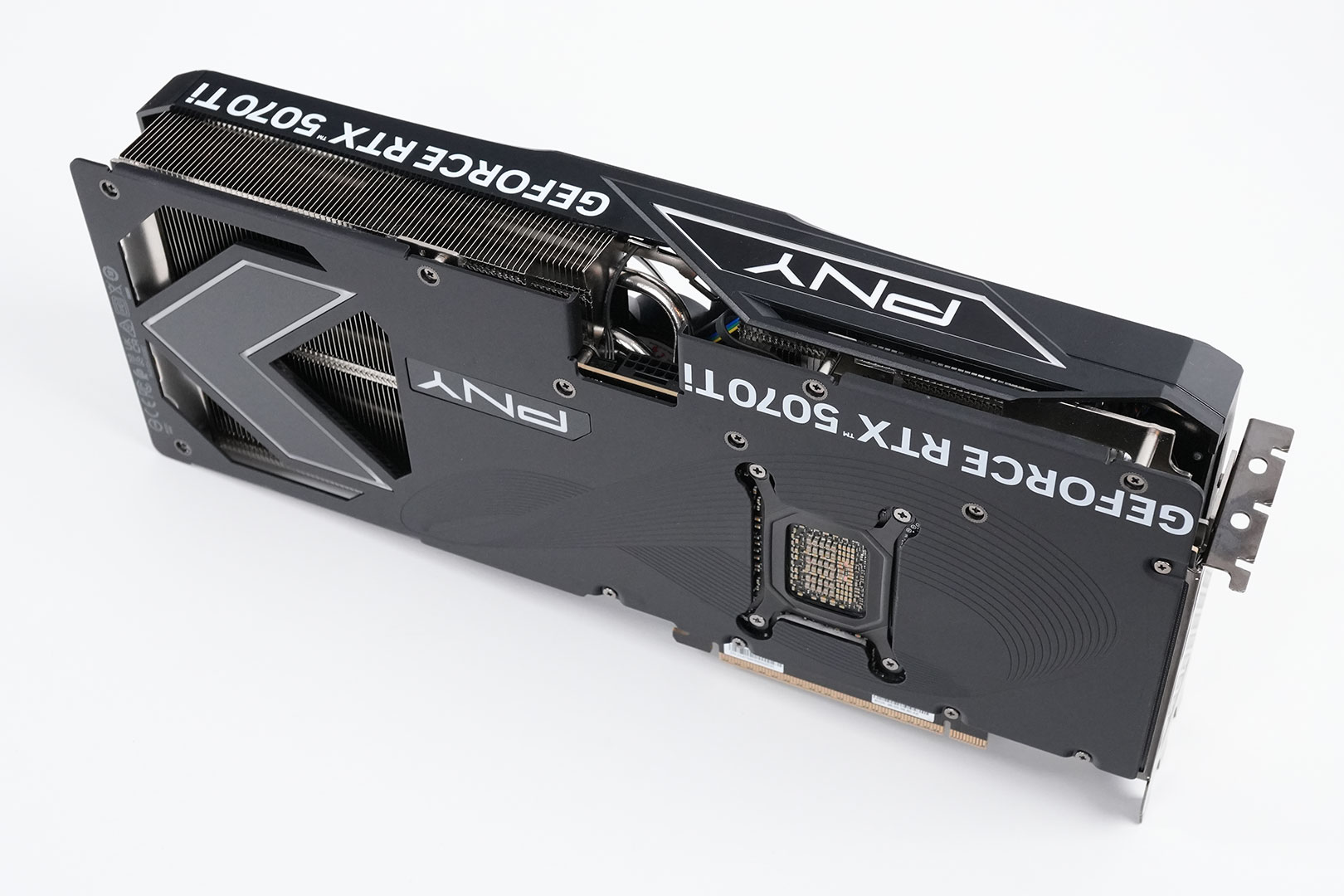
Installation requires three slots in your system. We measured the card's width to be 59 mm.

Display connectivity includes three standard DisplayPort 2.1b and a HDMI 2.1b.
All GeForce RTX 50-series Blackwell cards feature a new display engine supporting DisplayPort 2.1b with UHBR20, as well as HDMI 2.1a. Both interfaces support DSC (display stream compression). With DSC enabled, a single DisplayPort on this card can drive 4K 12-bit HDR at 480 Hz; or 8K 12-bit HDR at up to 165 Hz. The RTX 5070 Ti features an updated media acceleration engine with support for 4:2:2 video formats, AV1 UHQ, and MV-HEVC. There are two independent NVENC and NVDEC units.
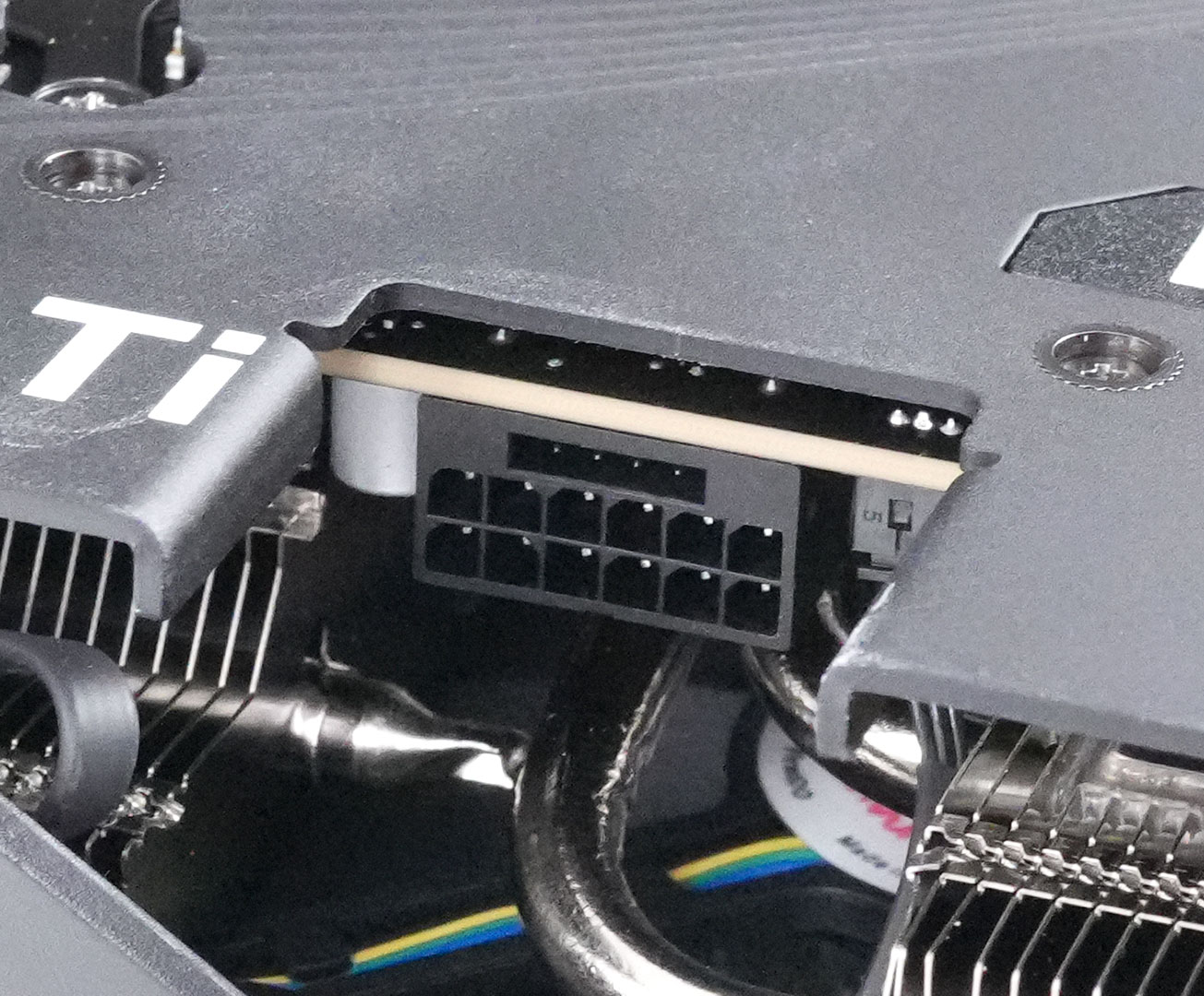
The card uses a single 16-pin connector, which allows a maximum power draw of 600 W, but the board power limit is set much lower of course.
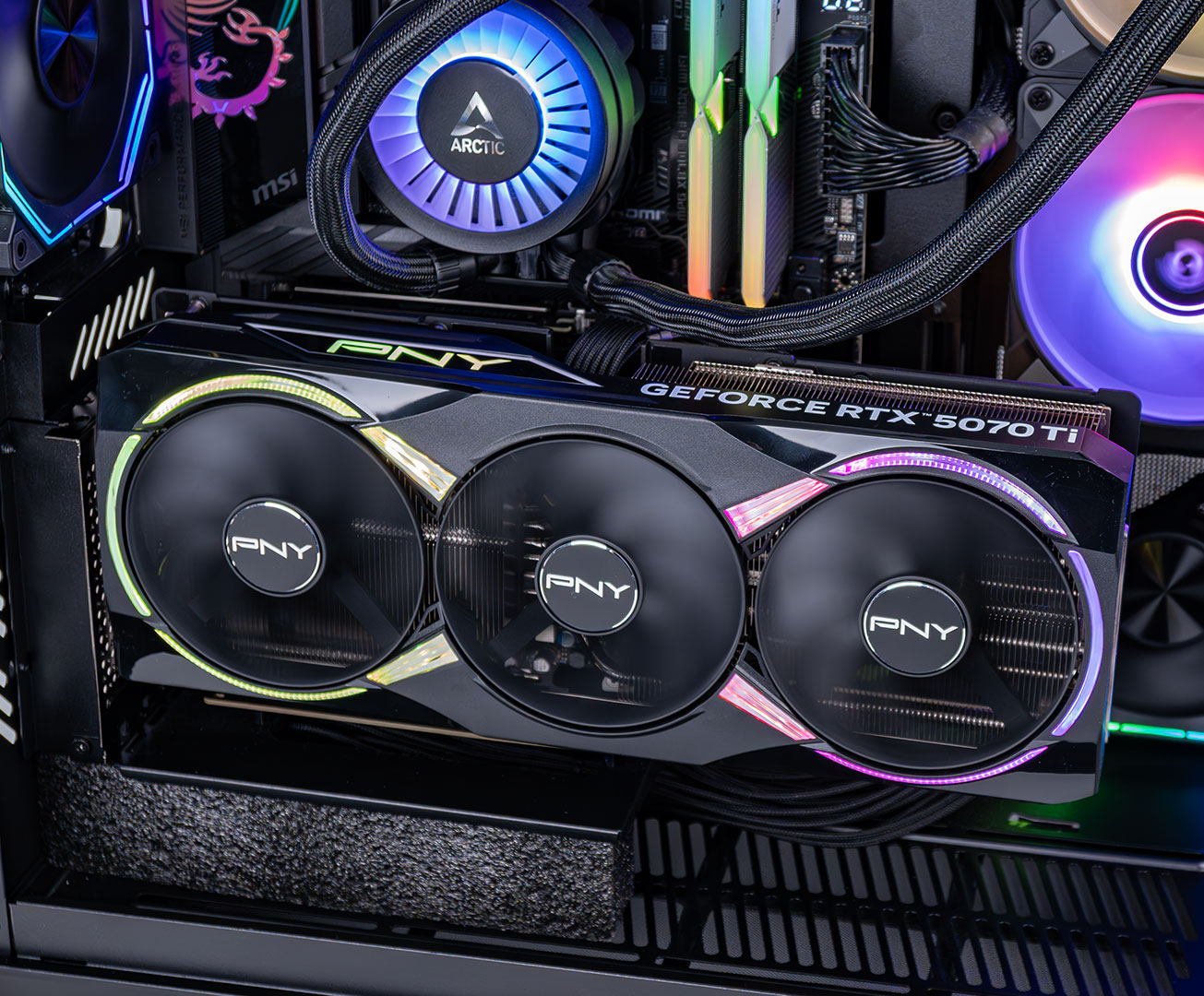

PNY has added an RGB illumination zone on the PNY logo along the top edge of the card, and another one around the fans on the front.
Our Patreon Silver Supporters can read articles in single-page format.
Nov 15th, 2026 22:31 CST
change timezone
Latest GPU Drivers
New Forum Posts
- The Official Thermal Interface Material thread (2301)
- Asus Rog Maximus Z890 Extreme. (Various questions). (26)
- GPU Temperatures Rise Very Quickly in FurMark – Is This Normal? (7)
- Will zen 6 mobos have anything extra vs current ones? (46)
- Your PC ATM (36435)
- It’s been fascinating times in Retro agian r36s isn’t even worth 50-65 dollars no more and newly listed Rm36 64gb 4in IPS models for only 34 dollars. (6)
- Power supply noise stops when I move the mouse (10)
- Can you guess Which game it is? (320)
- What is the latest game you finished or 100% (203)
- HP Office Jet 7740 Pro - Supply system problem with replacement cartridge (4)
Popular Reviews
- ASUS ROG Strix B850-I Gaming Wi-Fi7 W Review
- Corsair HX1000i Shift Crystal Review
- AMD Zen 6 Technical Deep Dive
- Upcoming Hardware Launches 2027 (Updated Nov 2026)
- Montech King 95 3D PRO Review
- NZXT C1200 Platinum Review
- Phantom Blade Zero Performance Benchmark Review - 35 GPUs Tested
- AMD Ryzen 7 9800X3D Review - The Best Gaming Processor
- NZXT H5 Review
- NZXT H7 RGB+ Review
TPU on YouTube
Controversial News Posts
- NVIDIA Co-Founder and CEO Jensen Huang Officially Resigns (430)
- Open Letter Asking NVIDIA to Reinstate Jensen Huang Passes 115,000 Signatures (184)
- OpenAI CEO Argues Home PCs Waste the World's Limited DRAM Supply (152)
- NVIDIA Launches Investigation Into Jensen Huang's Relationship With Suspected Chinese Spy (136)
- Intel "Raptor Lake Next" 16-Core and 20-Core CPUs Surface (130)
- Legendary Game Studio BioWare Shuts Down Following EA Layoffs (104)
- Dell CEO Says the Memory Shortage Will Get Worse in 2027 (95)
- NVIDIA GeForce RTX 50-Series Scheduled for up to $500 Price Hike This Week (89)