 3
Pulsar Susanto-X Review
Sensor & Performance »Build Quality
Overall build quality is very solid. There is no rattle when shaking the mouse. When applying lateral pressure, minor creaking but no flexing of the shell can be observed. Activating the side buttons by squeezing the sides is impossible. Lastly, accidental clicks when slamming down the mouse do not occur.Buttons

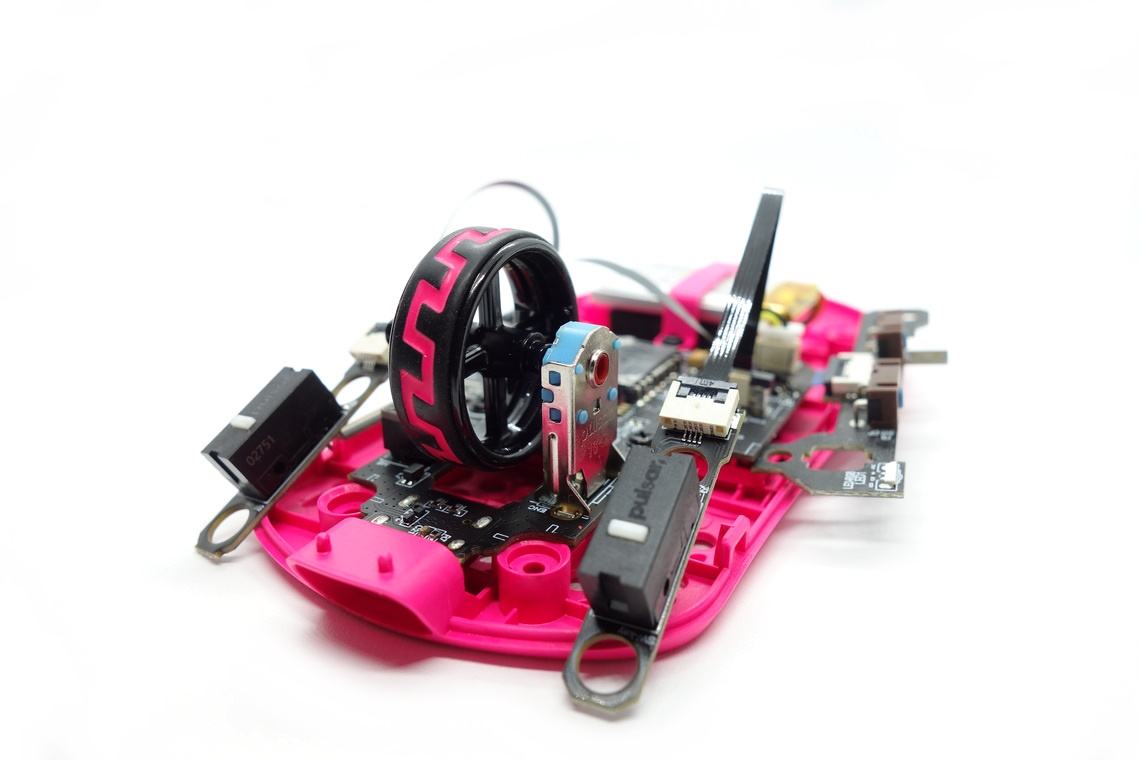
Main buttons on the Susanto-X are good. Pre-travel is moderate to high and post-travel low, resulting in a firm and snappy button response regardless. Being visually separated from the shell, button movement is low when provoked. Button stiffness is medium. A pair of Pulsar-branded 5-pin optical switches (white plunger) are used.

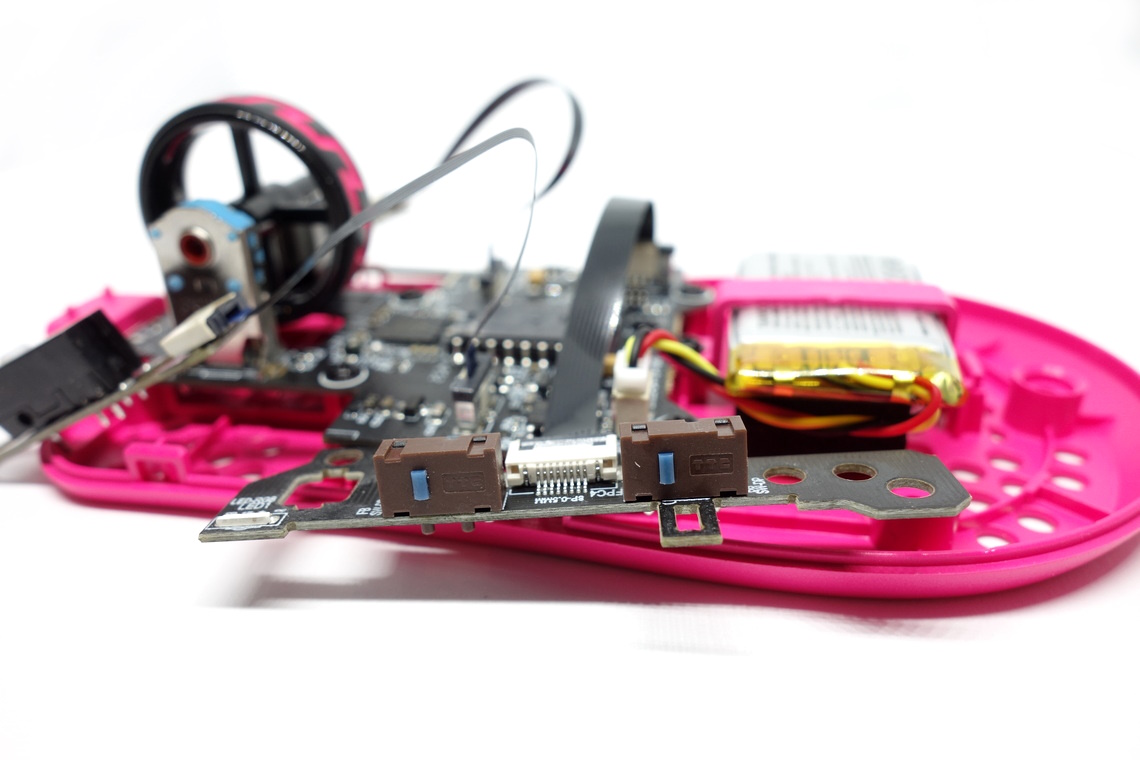
Side buttons are excellent (forward button) to good (back button). Pre- and post-travel are very low on the forward button, whereas the back button has low pre- and moderate post-travel, and the actuation point isn't entirely even, either. Button size and placement are good, as actuation is possible rather easily by rolling one's thumb across. A set of 2-pin, low-profile switches from TTC (brown, blue plunger) are used for these.
At the bottom of the mouse is a button for cycling through the set CPI levels, which works fine. A seemingly unbranded tactile switch is used for this one. A slider at the bottom switches between on and off-state, which also works fine.
Scroll Wheel
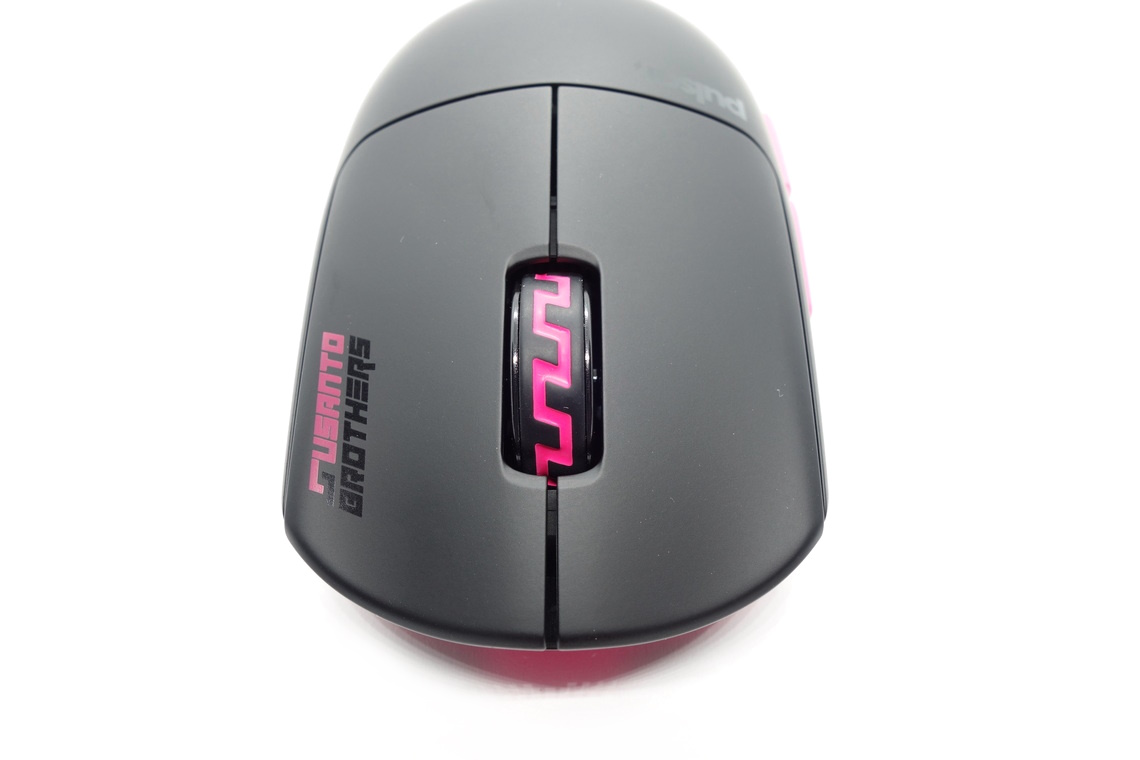
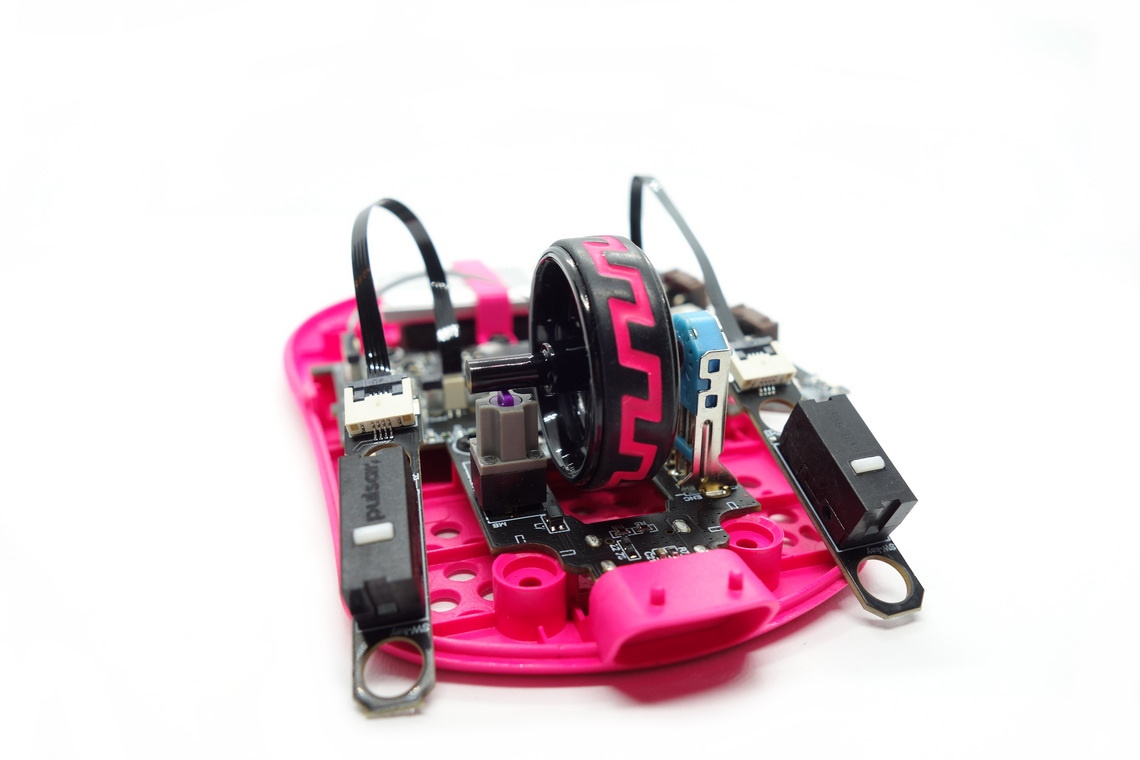
The scroll wheel is good. Noise levels are elevated when scrolling up in particular, but tactility is quite good, with each step being rather well-separated. The encoder has Pulsar branding, but comes from F-Switch (blue, red core), and has a height of 13 mm. The middle (scroll wheel) click requires medium to high force for actuation. A seemingly unbranded tactile switch (purple plunger) is used for this one.
Surface
The Susanto-X has a matte surface all over. Grip is fine, and it doesn't attract fingerprints or dirt too much. It is fairly easy to clean, and there are barely any signs of wear left after doing so. All in all, very good materials.Button Sound Test
Disassembly

Disassembling the Susanto-X is easy. The screws are found beneath the front and rear skate. After removing those, four clips placed around the entire base also need to be dislodged, which may require wedging a credit card or something similar in. Caution needs to be applied when separating the top and bottom shell to avoid ripping the cables connecting the two. Of note is that all screws posts are reinforced with metal inserts.
The internal design is efficient. Both the side and main buttons sit on their own PCBs, each screwed into the top shell and connected through a ribbon cable to the main PCB. The battery is stuck to the bottom towards the rear. Everything else sits on the very thin and reasonably compact main PCB, which has been affixed to the bottom with four screws in total. The MCU is a Nordic nRF52840, whose datasheet is found here. The Bluetooth capability of the chip remains unused. Production date for the main PCB is the 24th week of 2025.
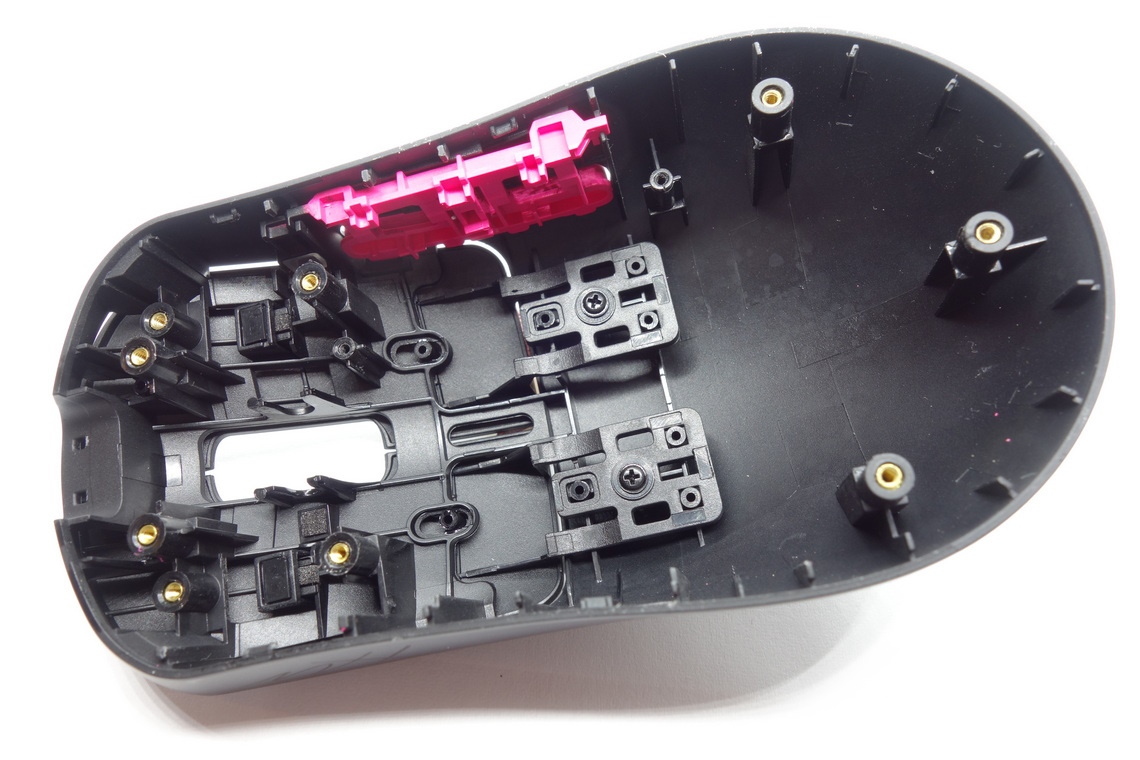
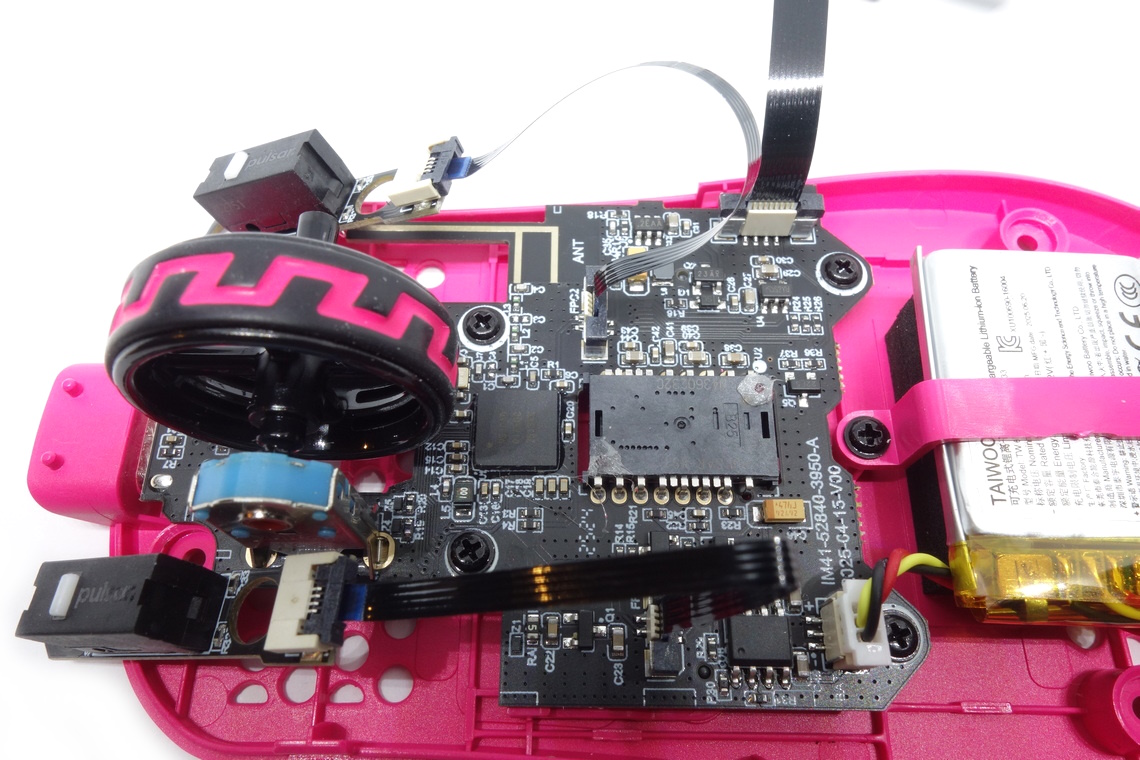
As for the soldering and general quality of the PCB, I'm unable to find any noteworthy flaws.
Nov 27th, 2026 03:28 CST
change timezone
Latest GPU Drivers
New Forum Posts
- Mouse Pad advice - Shidenkai out of production? (8)
- Using sodimm+adapter instead of full size dimm DDR5? (103)
- SABRENT AIC's (no bifurcation) Black Friday deals (0)
- What's your main Black Friday / Cyber Monday purchase? (27)
- Found Out Why My FygoOS Transfers Were Stuck at 11 MB/s (0)
- Wireless Internet sharing between PC and router both-ways, is it possible? (28)
- X79 and/or rampage IV OC'ing thread for those of us still left.... (2461)
- Will zen 6 mobos have anything extra vs current ones? (63)
- Dell Dimension E510 Retro Gaming PC Upgrade & Modification (3)
- Gacha Games - Discussions, Pulls, Updates, etc. (1166)
Popular Reviews
- VZMORE AX9 Max Review
- Upcoming Hardware Launches 2027 (Updated Nov 2026)
- ASRock X870E Challenger Wi-Fi White Review
- AMD Ryzen 7 9800X3D Review - The Best Gaming Processor
- Microsoft Surface Laptop Ultra Review - The Next-gen Arm Laptop
- AMD Zen 6 Technical Deep Dive
- Montech CyberFlow ARGB 360 Review
- Phantom Blade Zero Performance Benchmark Review - 35 GPUs Tested
- Corsair RM1200e (Second Generation) Review
- Pulsar Office Tour & First Look at P1 Dual-Sensor Mouse
TPU on YouTube
Controversial News Posts
- Jensen Huang Reinstated as CEO of NVIDIA (617)
- NVIDIA Co-Founder and CEO Jensen Huang Officially Resigns (492)
- Report: Jensen Huang Eyes NVIDIA Comeback (281)
- Open Letter Asking NVIDIA to Reinstate Jensen Huang Passes 115,000 Signatures (184)
- OpenAI CEO Argues Home PCs Waste the World's Limited DRAM Supply (152)
- NVIDIA Launches Investigation Into Jensen Huang's Relationship With Suspected Chinese Spy (136)
- Intel Razor Lake Gets a 12 P-Core bLLC Chip With No E-Cores, Per Leak (94)
- NVIDIA GeForce RTX 50-Series Scheduled for up to $500 Price Hike This Week (89)