 37
QNAP TS-470 Review
Administration Interface: App Center »Station Manager
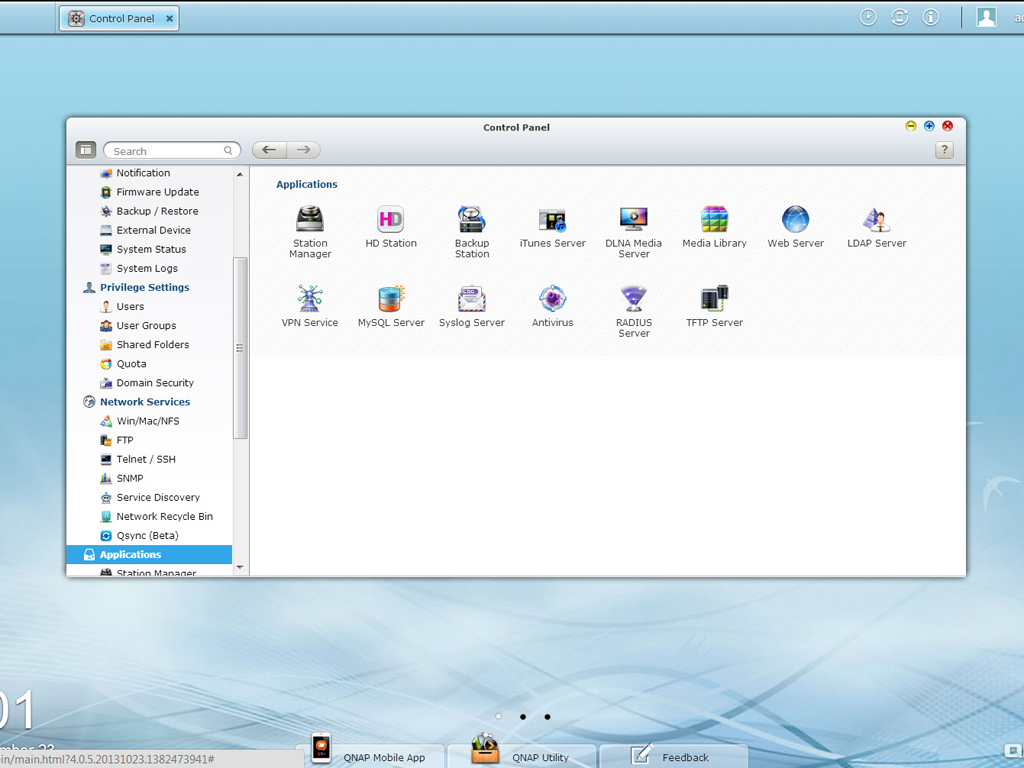
The applications menu is incredibly interesting, so we decided to devote a whole page to it. We will begin our tour in the Station Manager's menu.
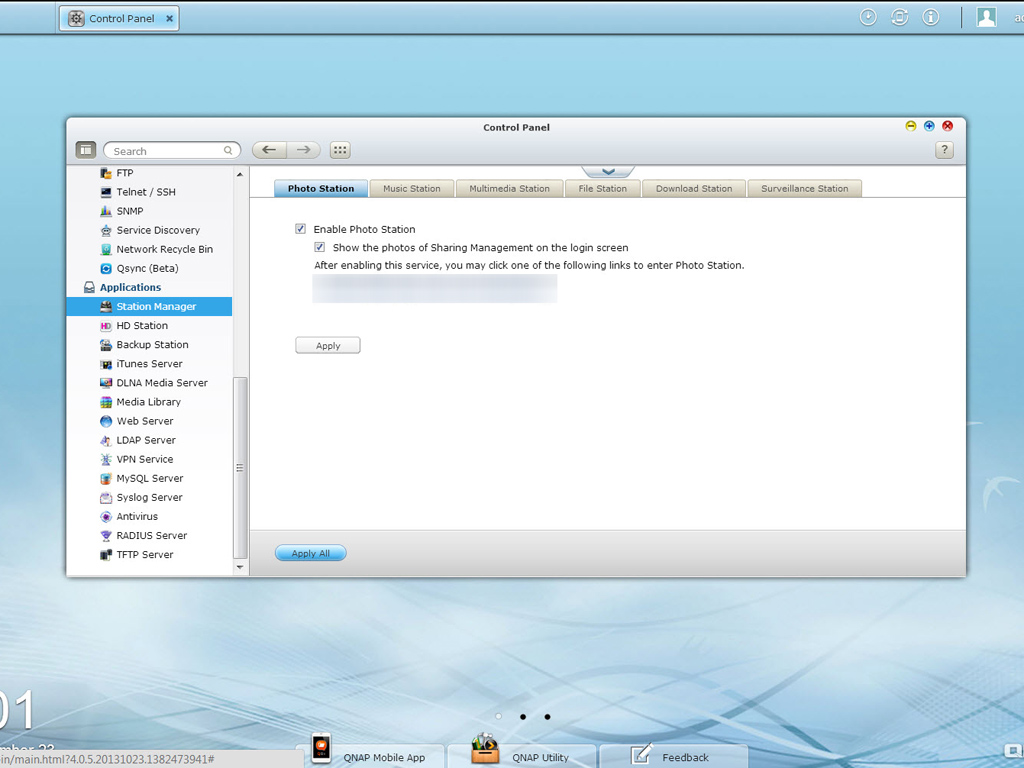
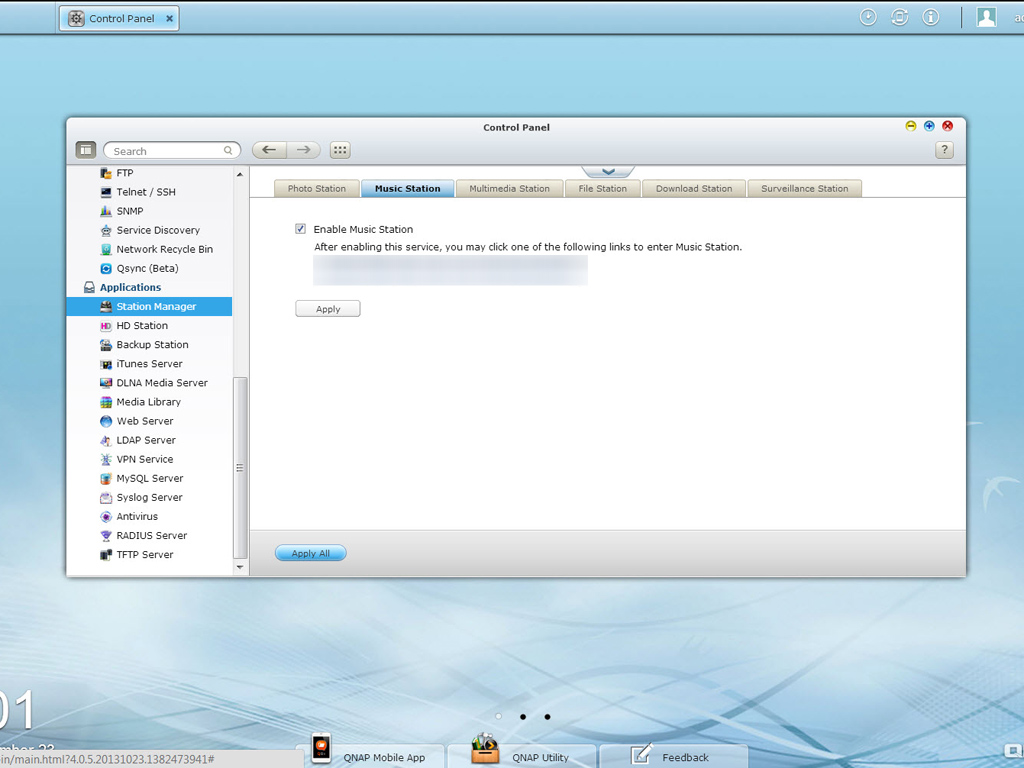
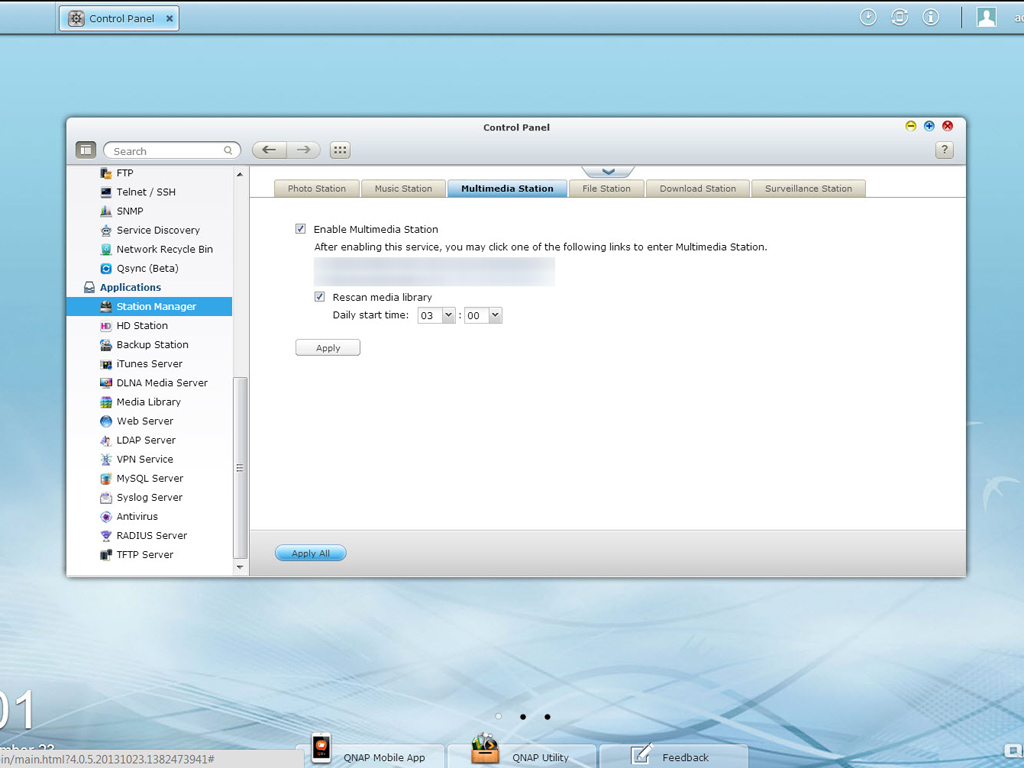


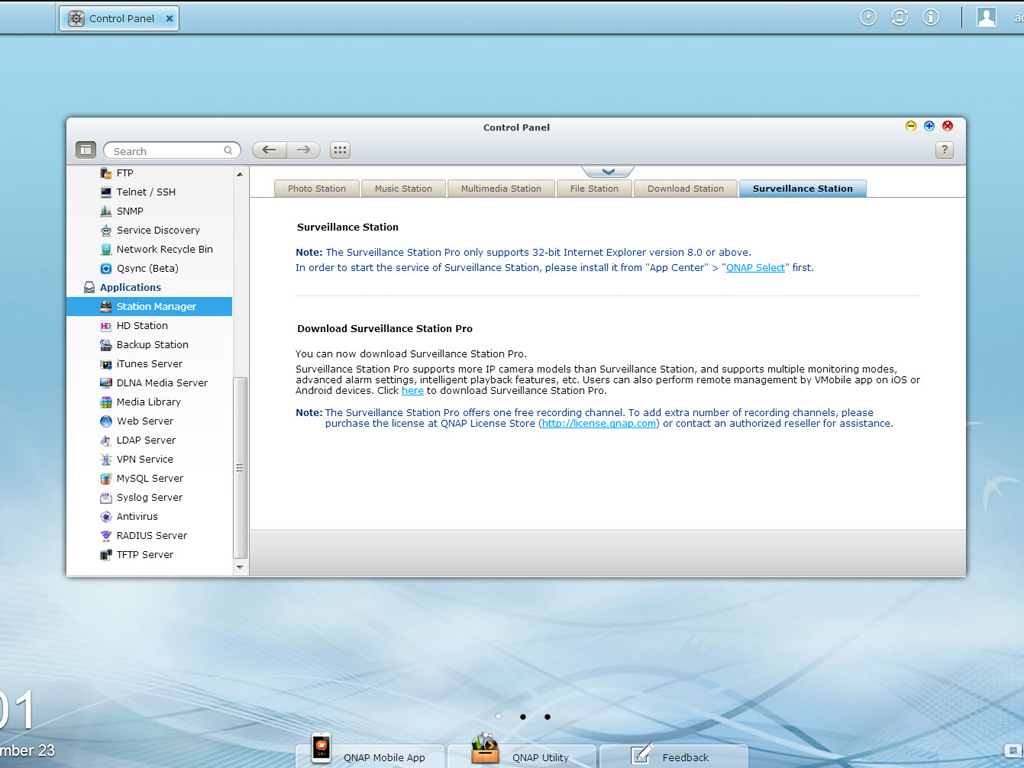
You can enable or disable all QNAP Stations (Photo, Music, Multimedia, File, Download, and Surveillance Station Pro) from the Station Manager. We already looked at the above Stations in previous pages.
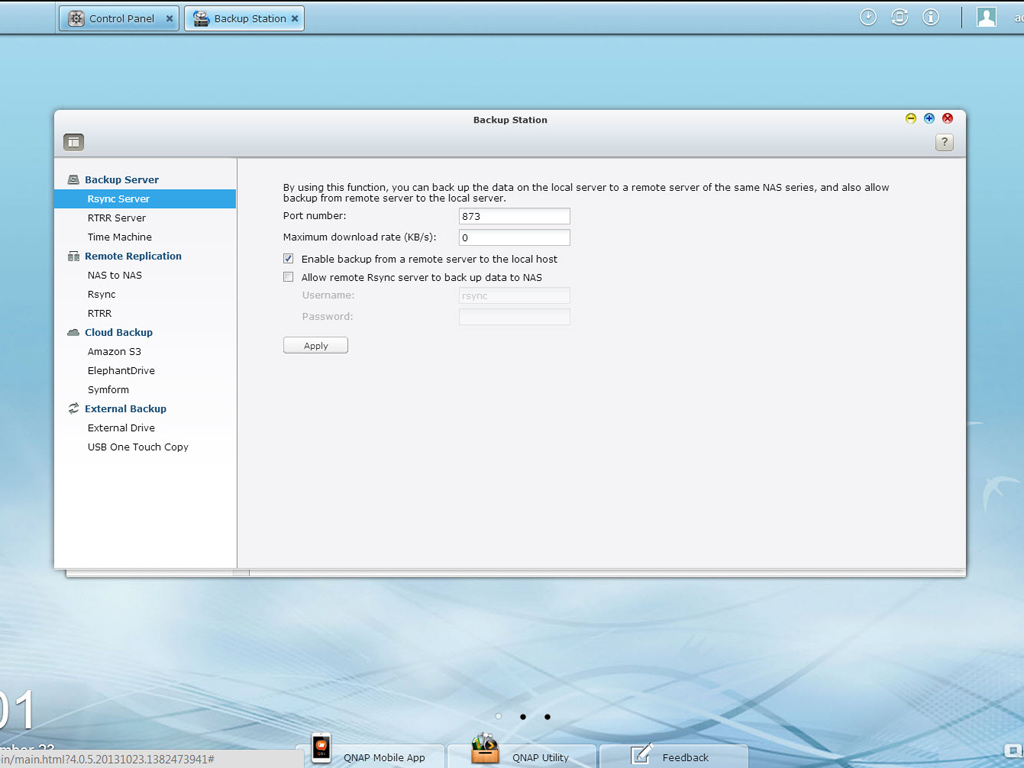
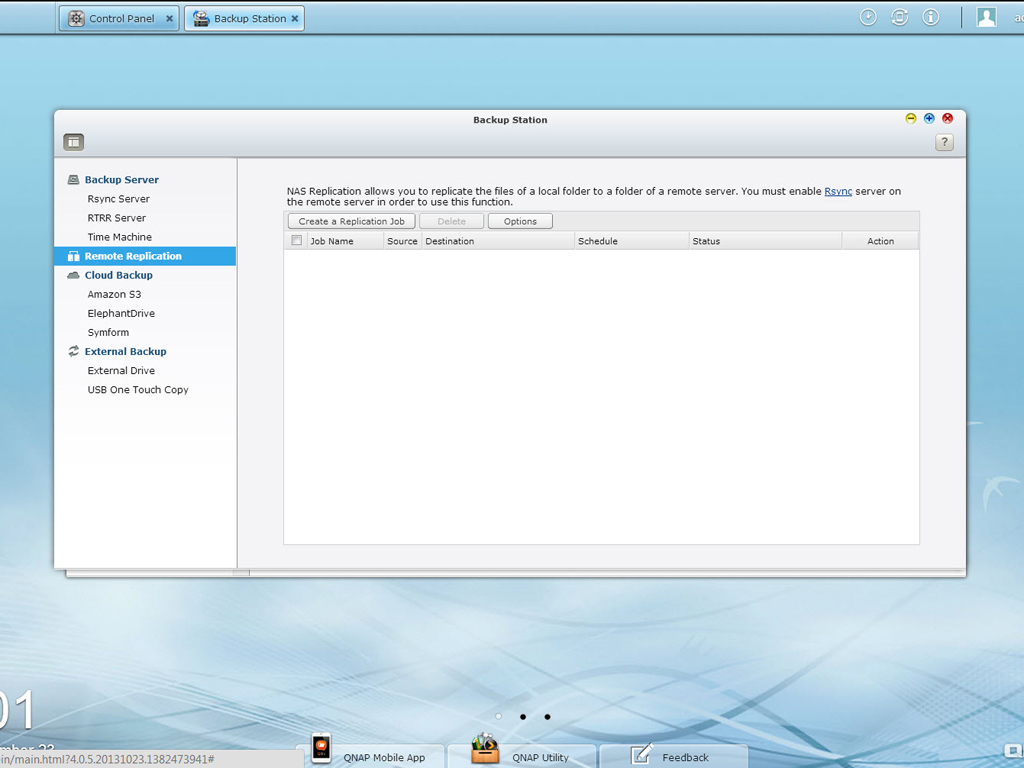
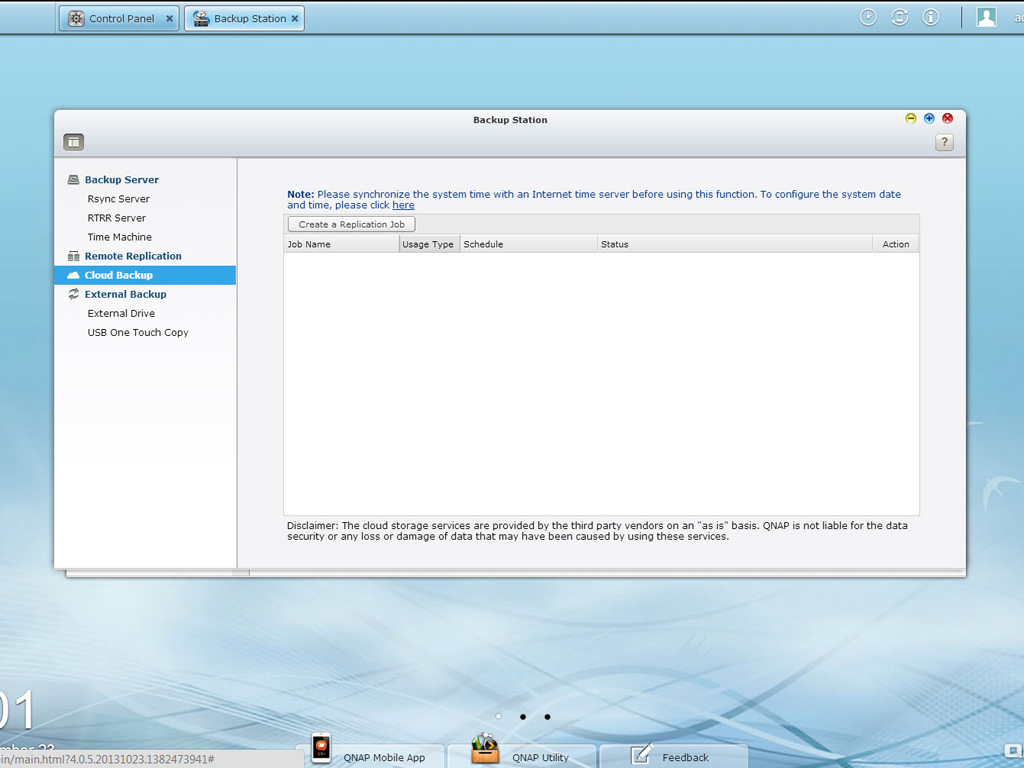
Backup Station offers a rich variety of backup functions, which allows the NAS to serve as a backup server that provides backup space for all connected clients. Also, the files that are stored onto the NAS can be backed up to external storage devices, remote devices, or the cloud. This group of options even allows you to enable the USB one touch copy button at the front of the NAS. Through it, you can easily back data from USB devices up to the NAS and vice versa.
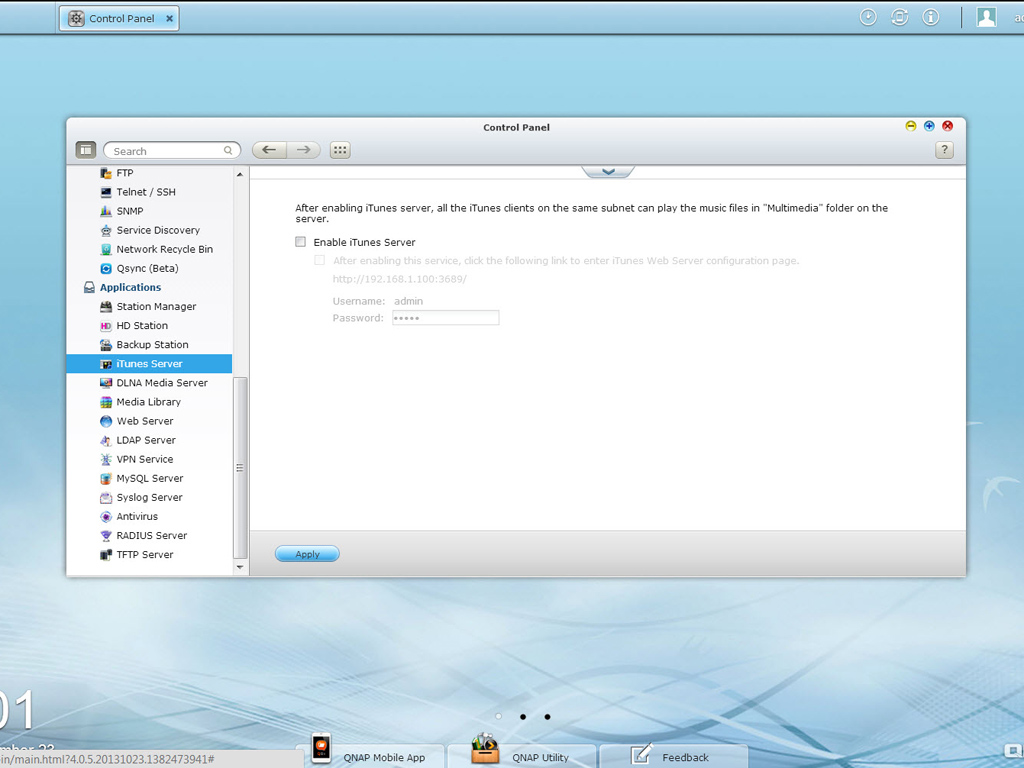
All MP3 files located in the NAS's Multimedia folder can be shared through iTunes with this service.
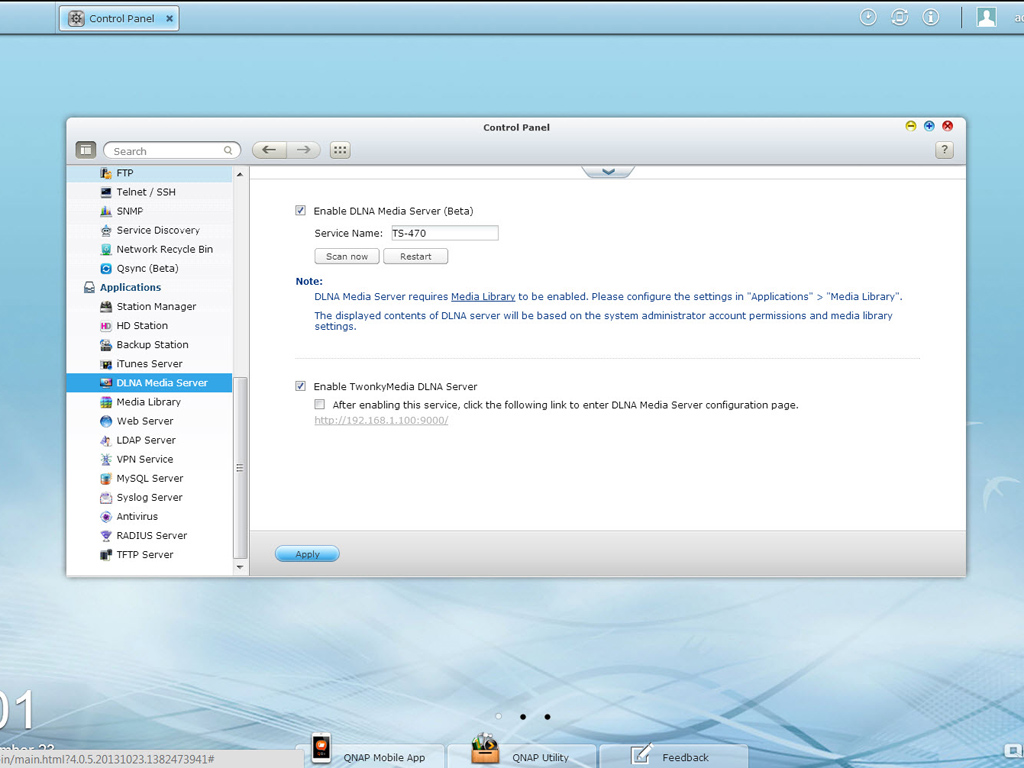
Multimedia content can be streamed to DLNA media players (e.g. TVs) from the NAS if you enable the QNAP Media Server or the TwonkyMedia DLNA Server.
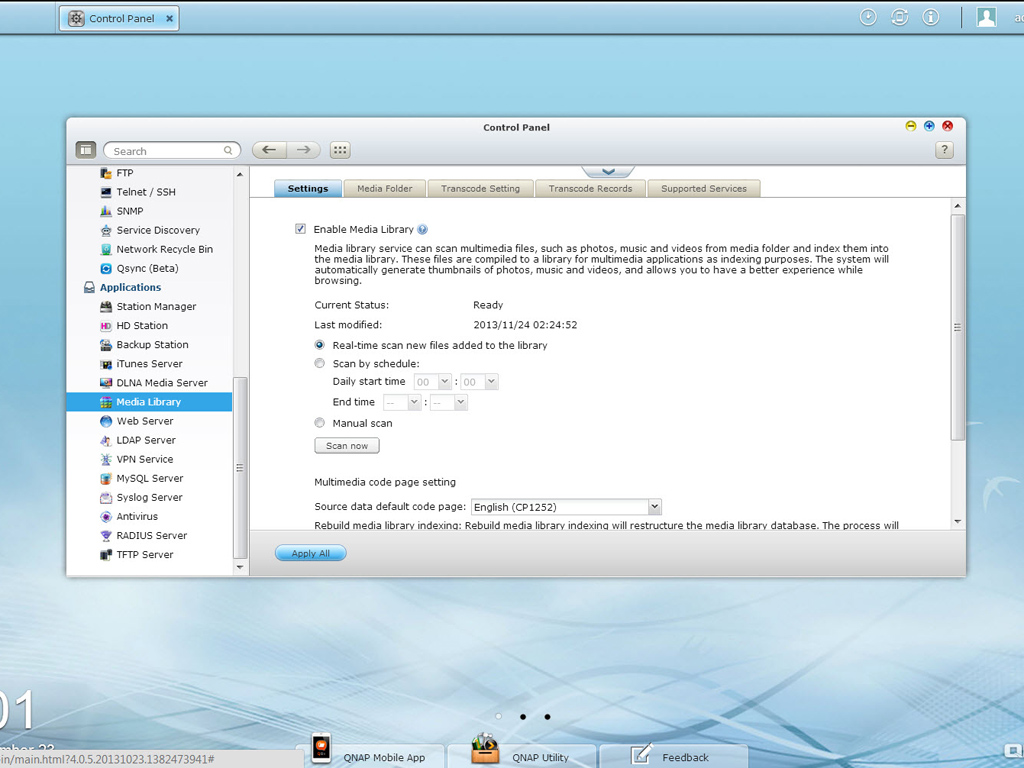
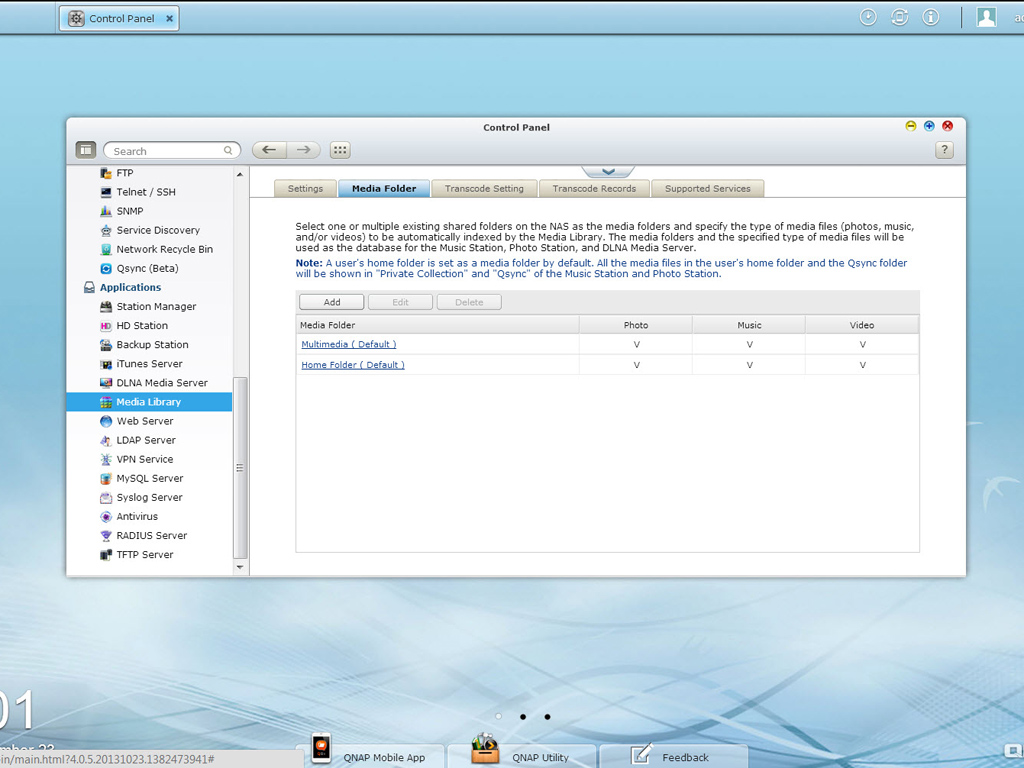
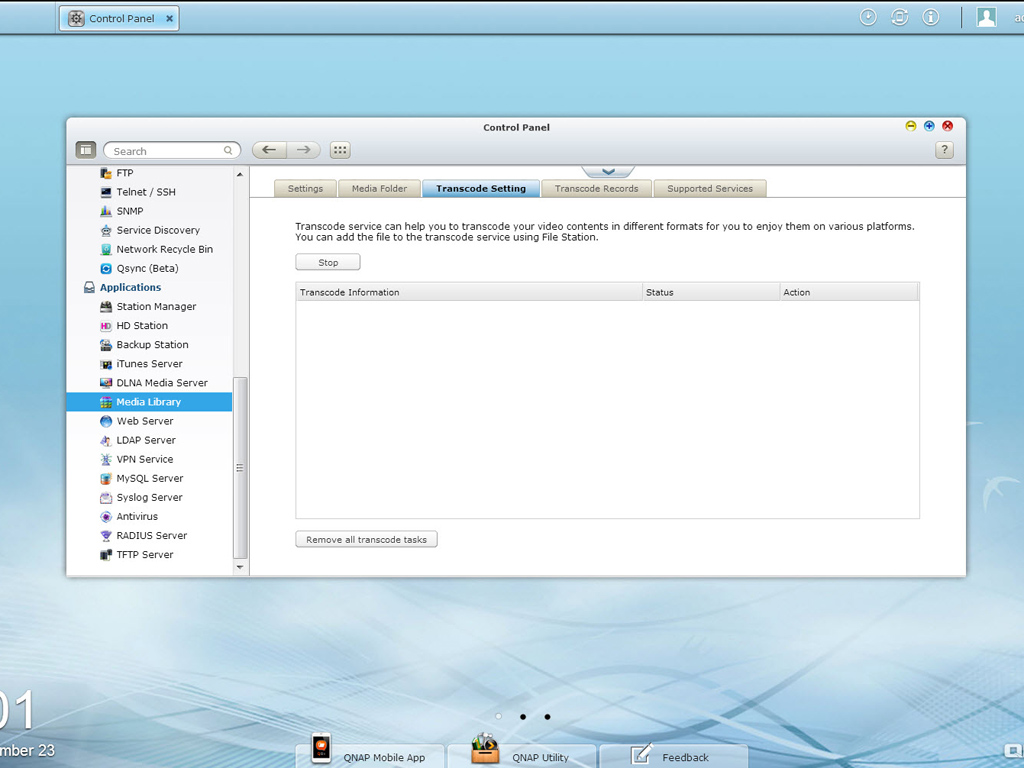
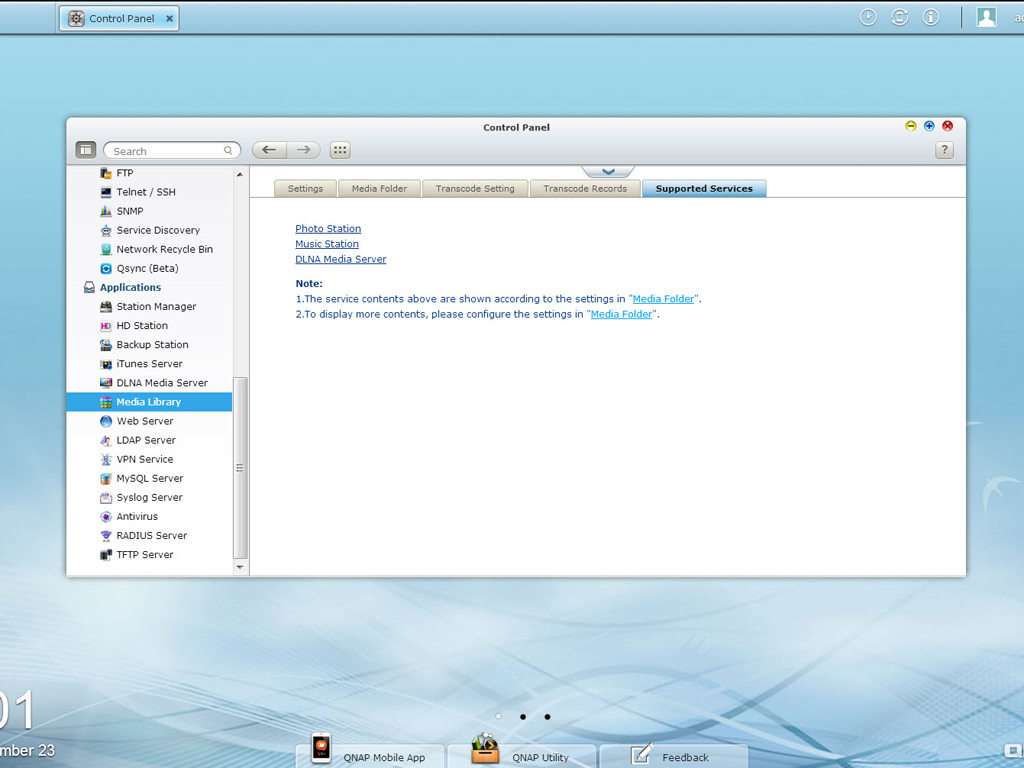
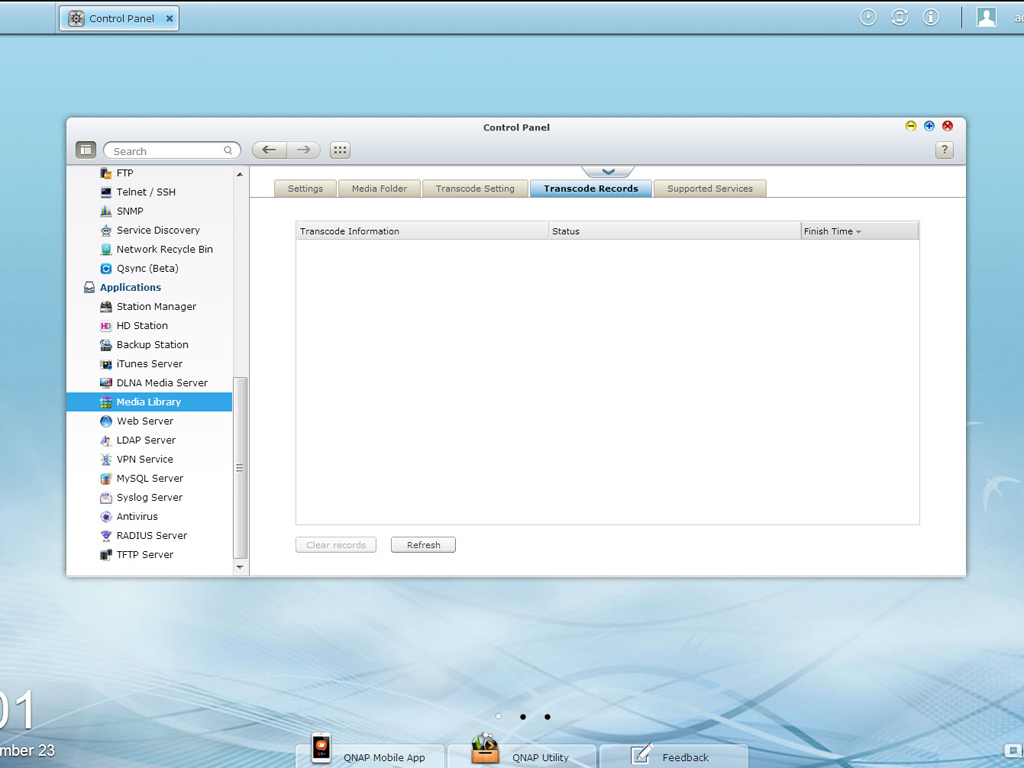
The Media Library service scans designated folders for multimedia files, like photos, music, or videos, and indexes them into the media library. You should be careful with the options of this menu since frequent scans can significantly affect NAS performance, especially when combined with heavy network transfers. This service should ideally stop automatically once the network or CPU load is above a specified threshold, though the dual-core CPU will most likely not have any problems coping with the additional load.
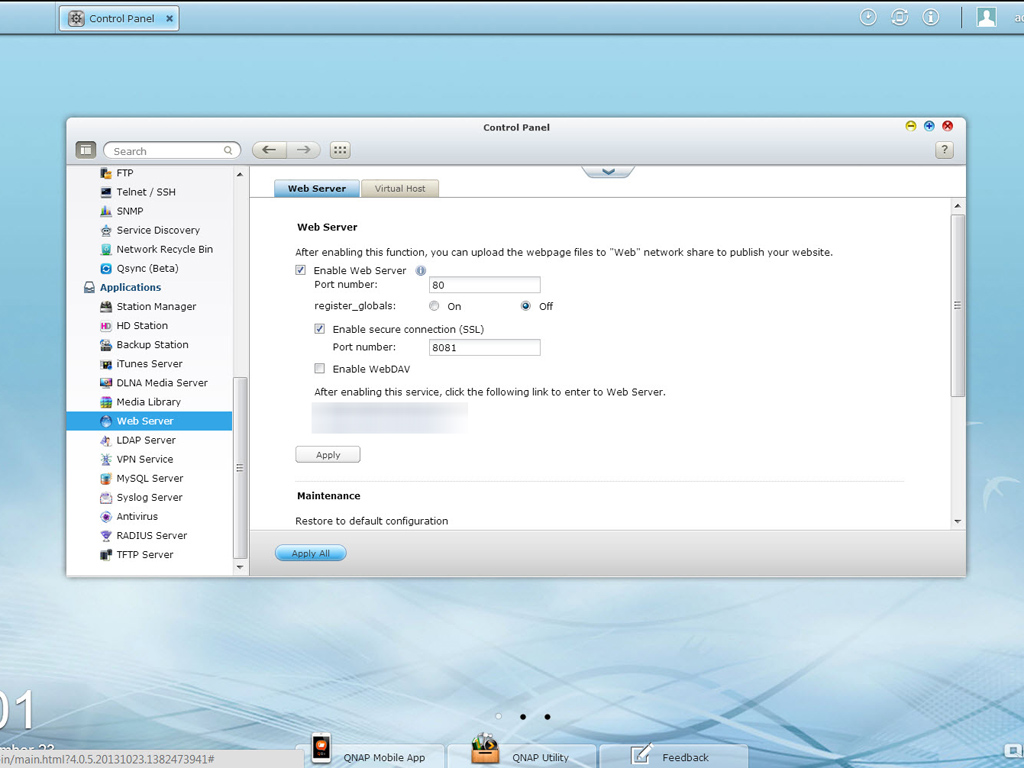
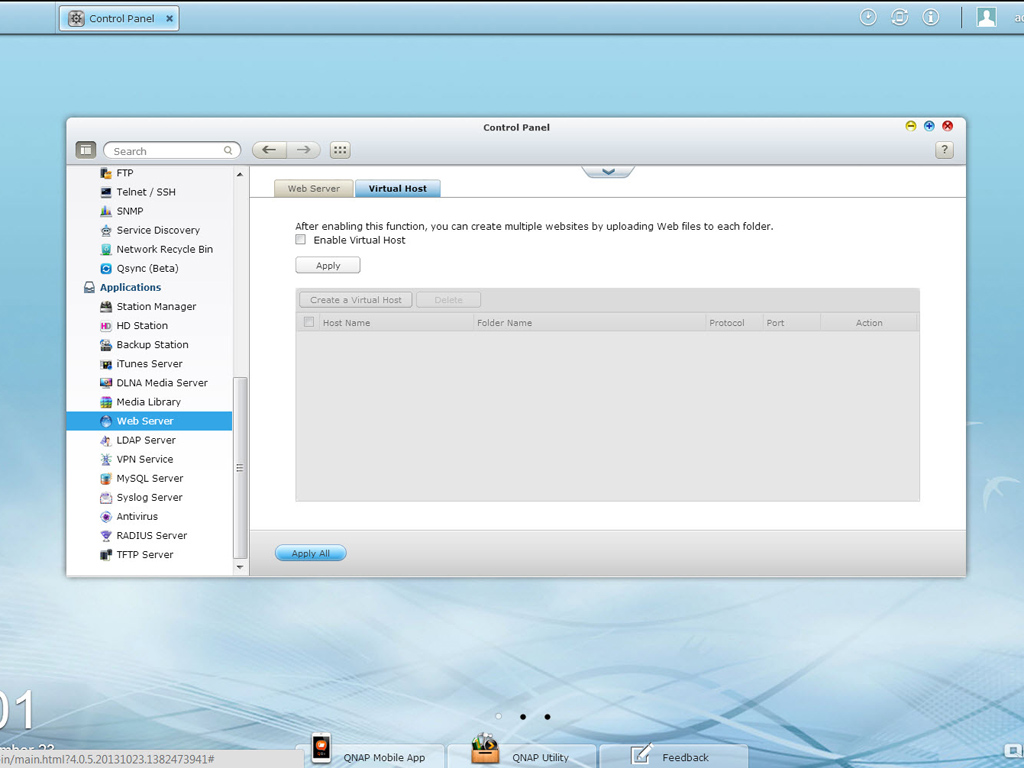
You can host a web site on the NAS and manage it. The web server also supports Joomla!, PHP, and MySQL/SQLite.
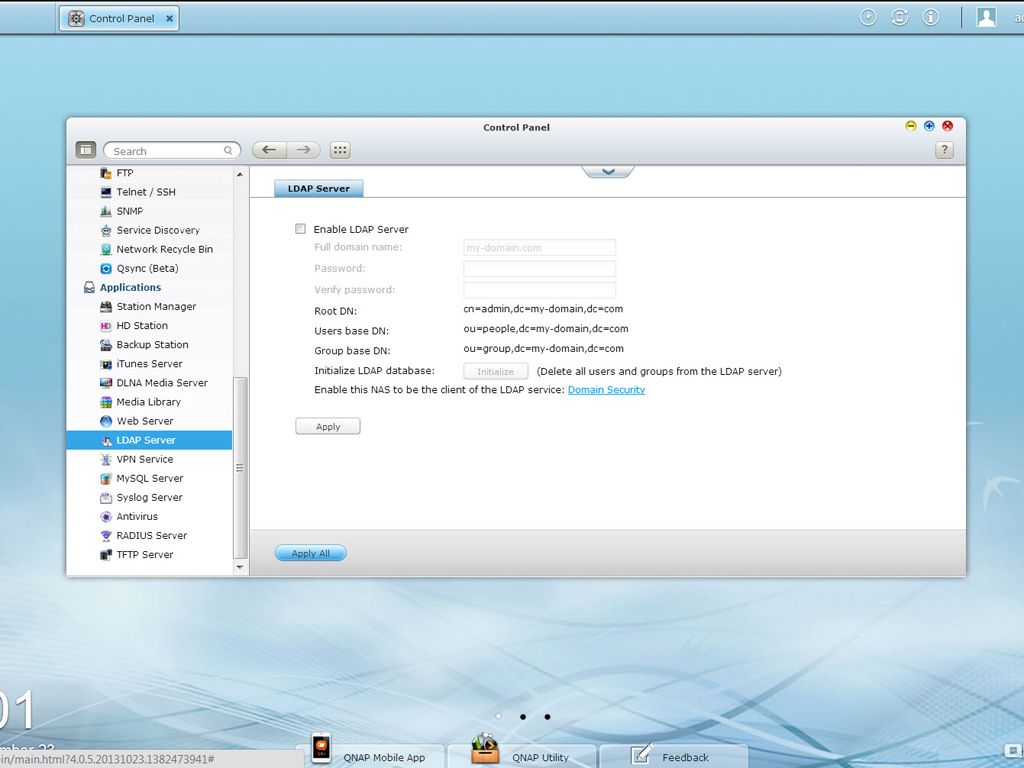
This service allows the administrator to create users with access to multiple NAS servers, with the same username and password.
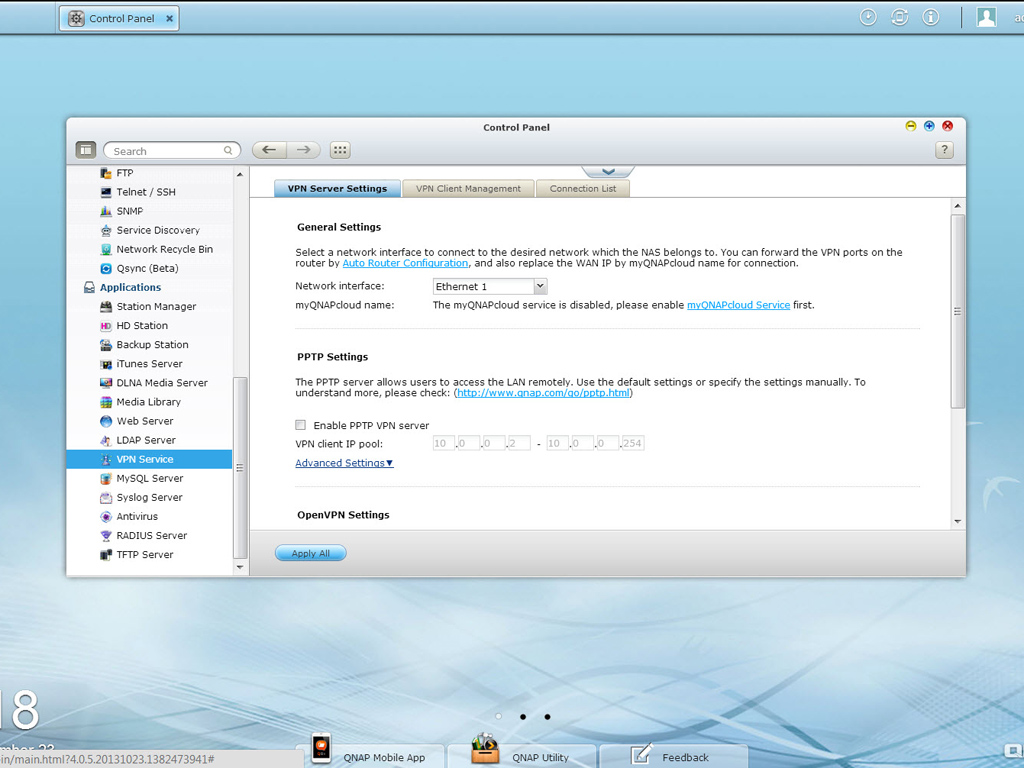
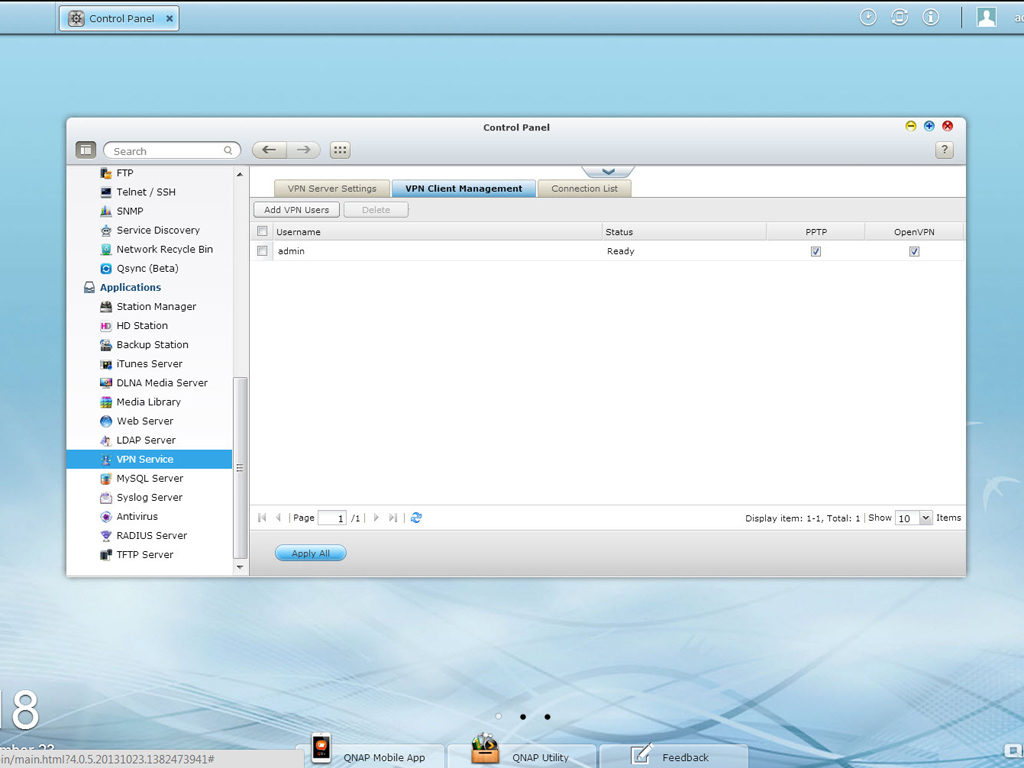
VPN (Virtual Private Network) service is also supported by QTS, through which users can access the NAS and its resources on a private network over the Internet. Both PPTP and OpenVPN services are supported. You should configure your router and open the corresponding ports (port forwarding) for VPN to operate normally. This can be done automatically if you have a UPnP router.

This option allows you to configure a MySQL server on the NAS. It will act as a database server of another web server on a remote site.
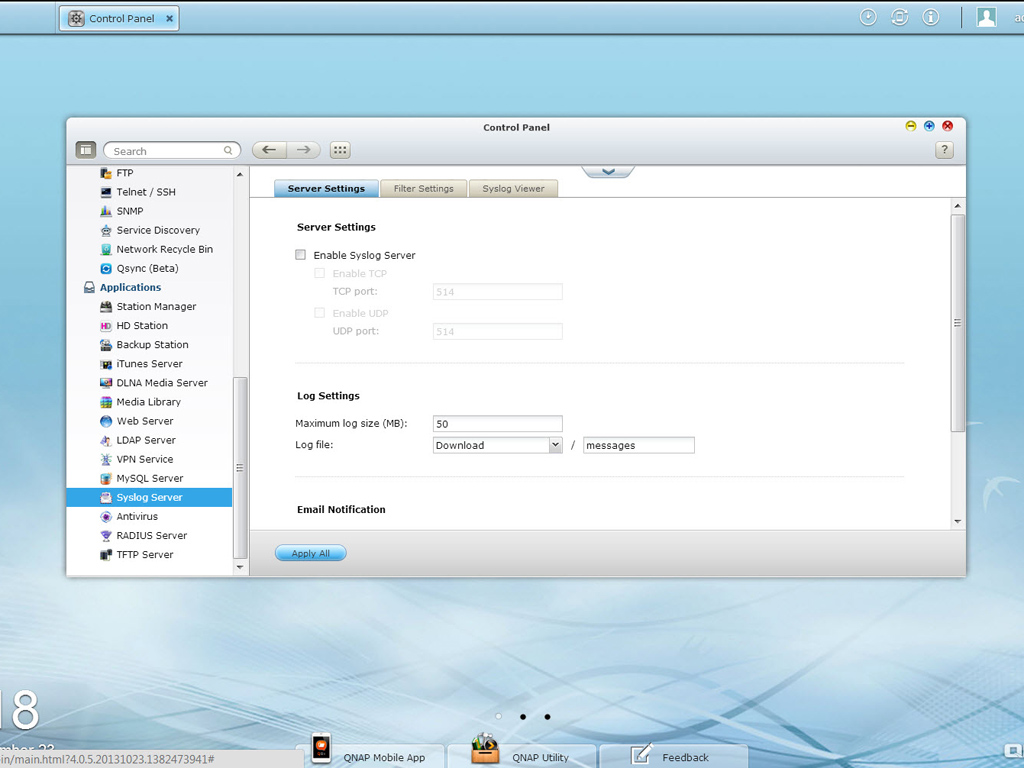
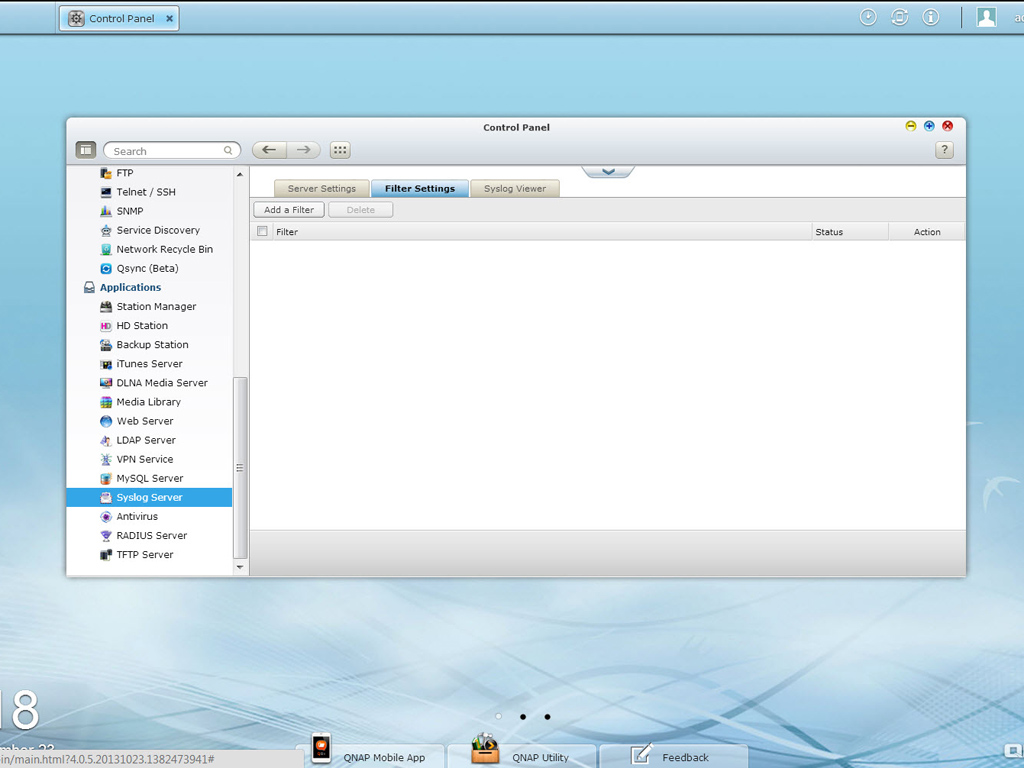
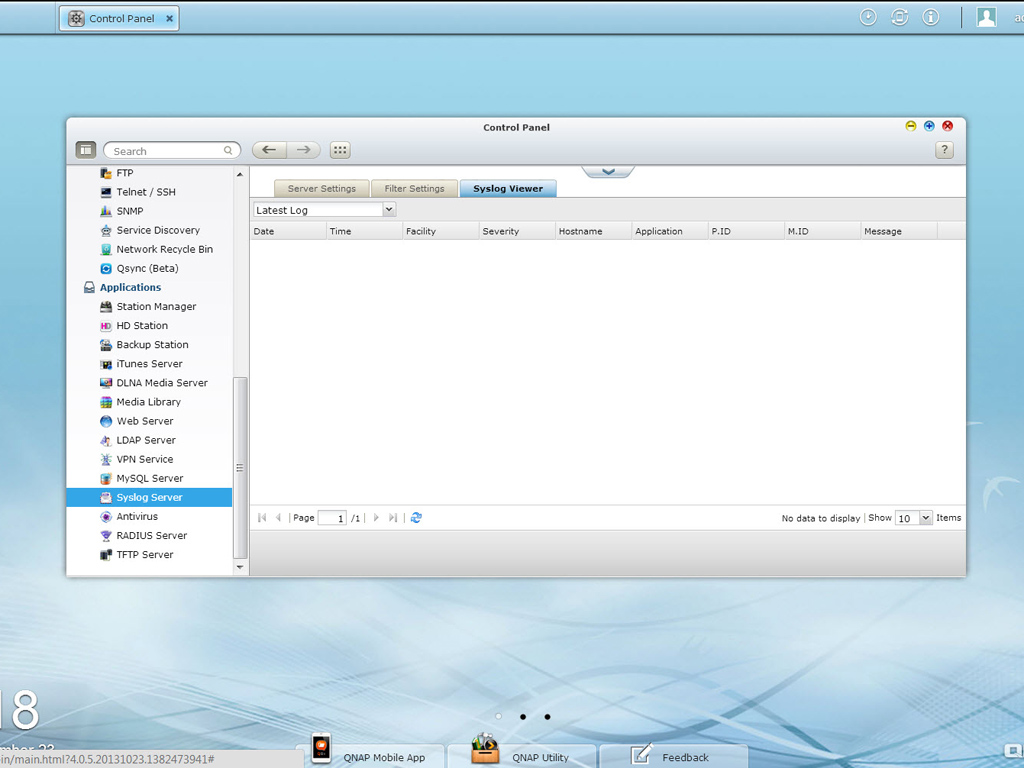
The Syslog server will allow you to receive Syslog messages from clients.
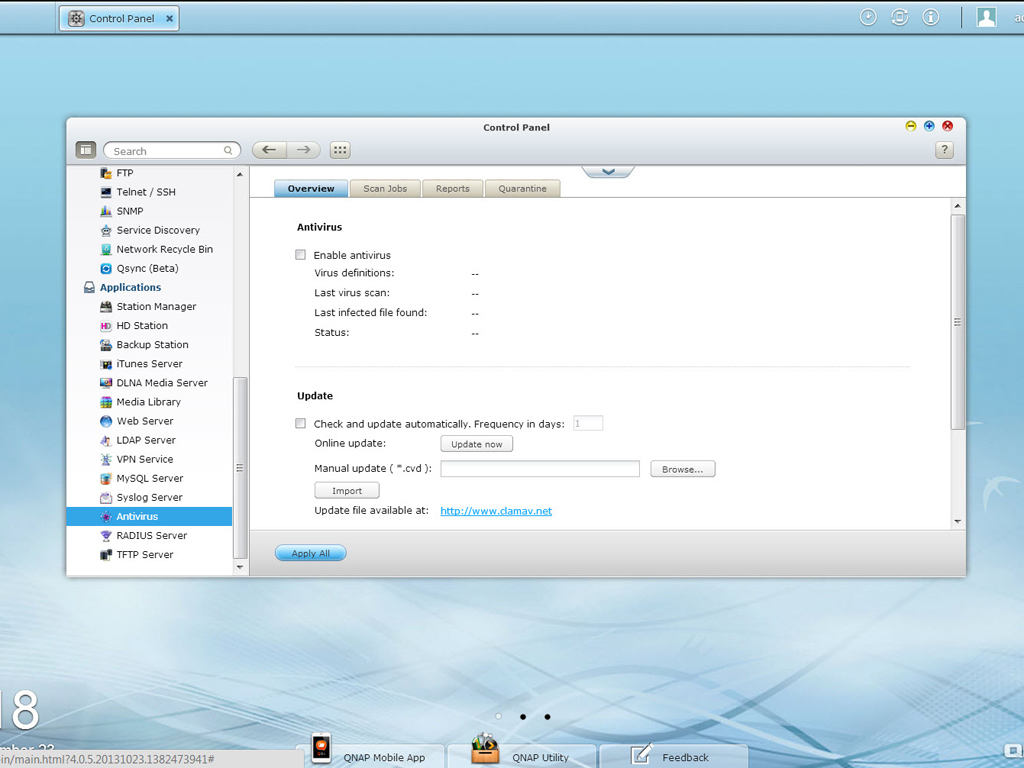
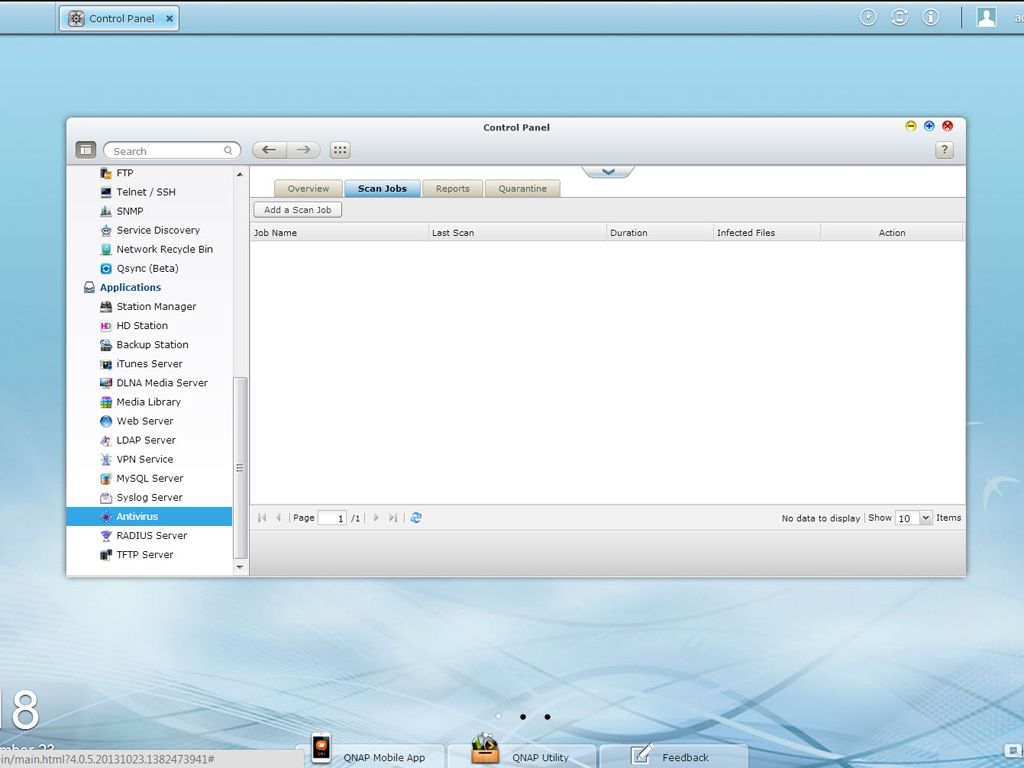
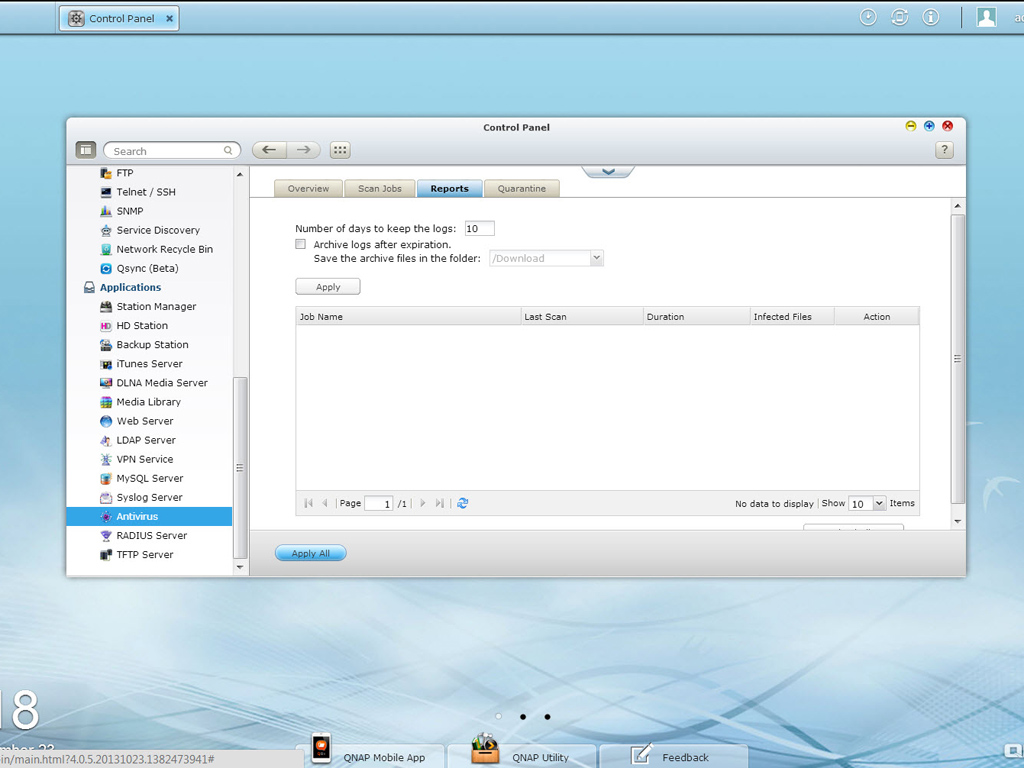
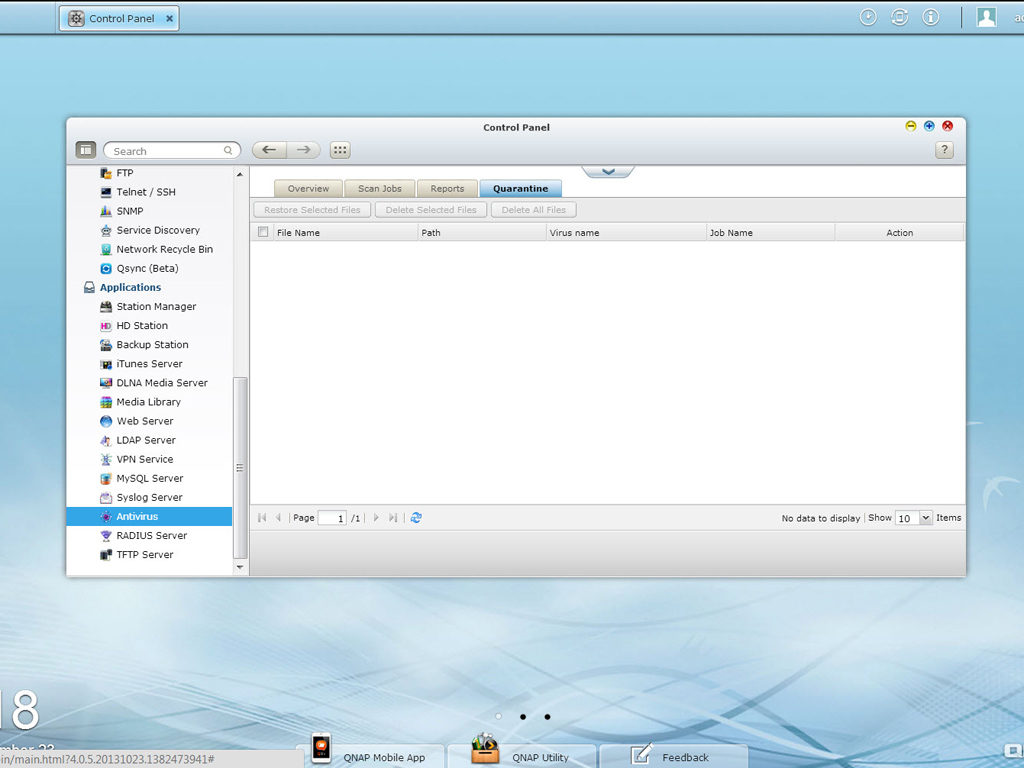
The operating system includes an Anti-virus program that will scan the NAS manually or on a schedule for infected files, malware, trojans, and other threats. This feature has to be enabled for use as it is disabled by default.
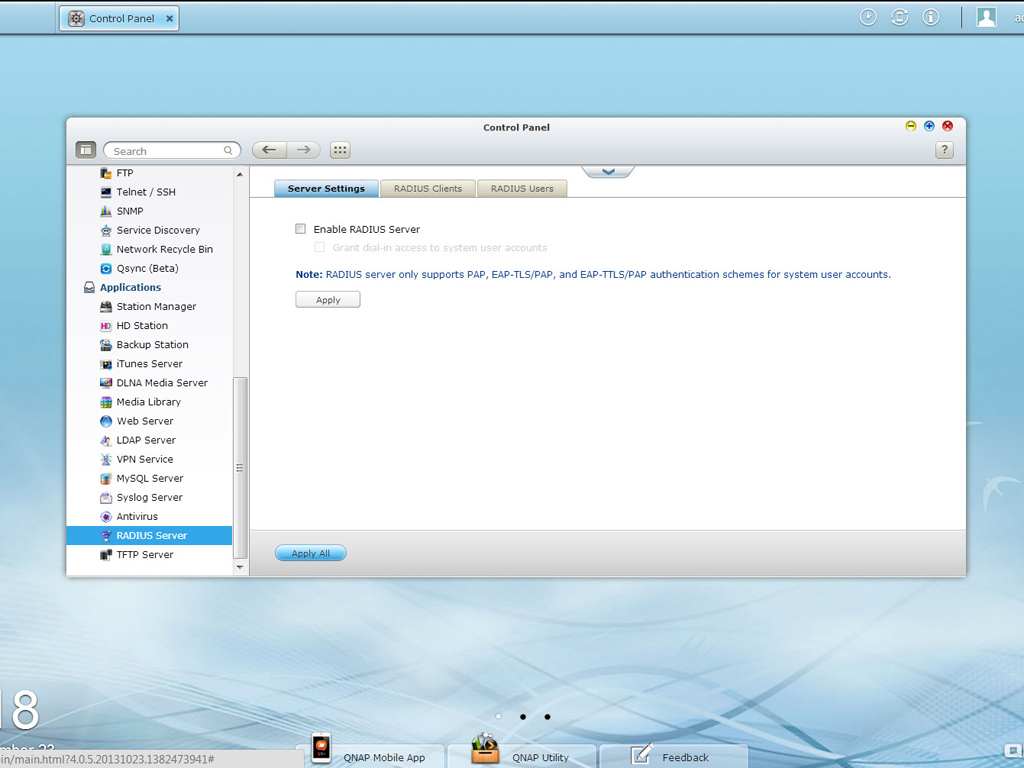
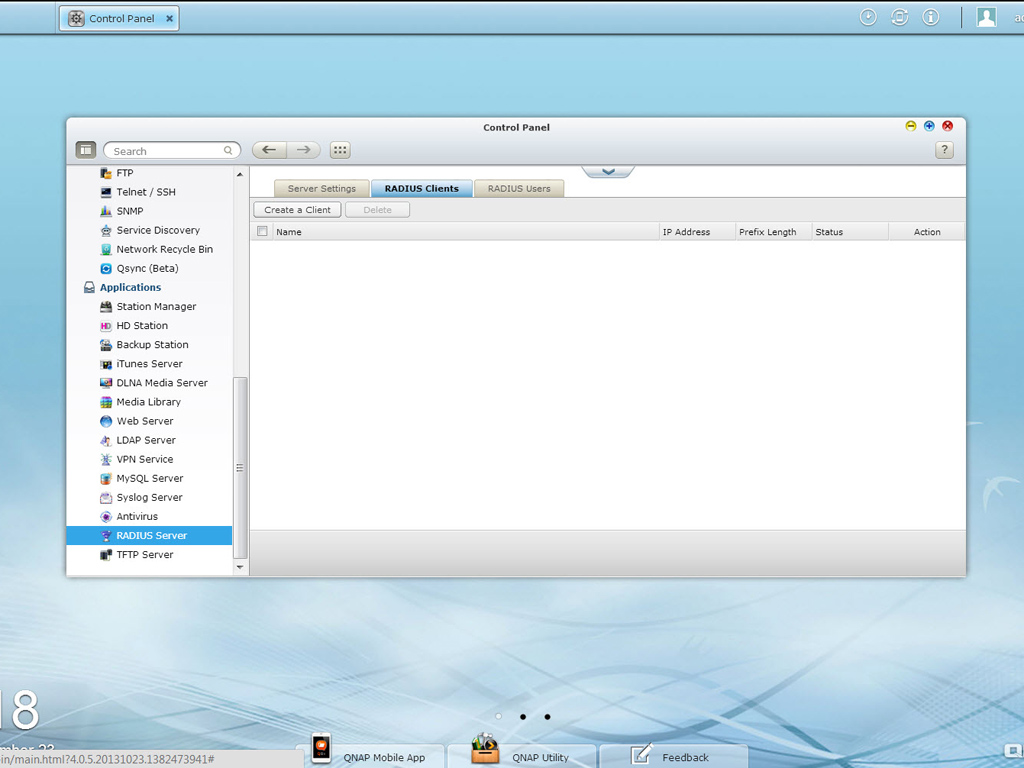
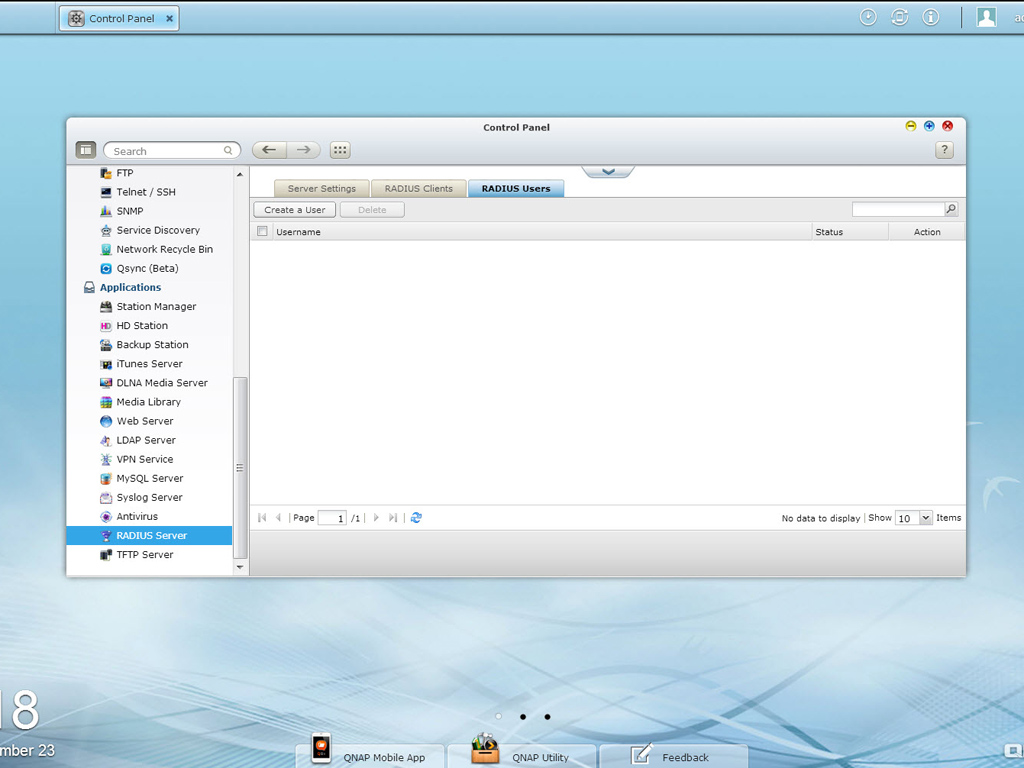
The NAS can be used as a RADIUS (Remote Authentication Dial-in User Service) server to provide centralized authentication, authorization, and accounting management for network clients.
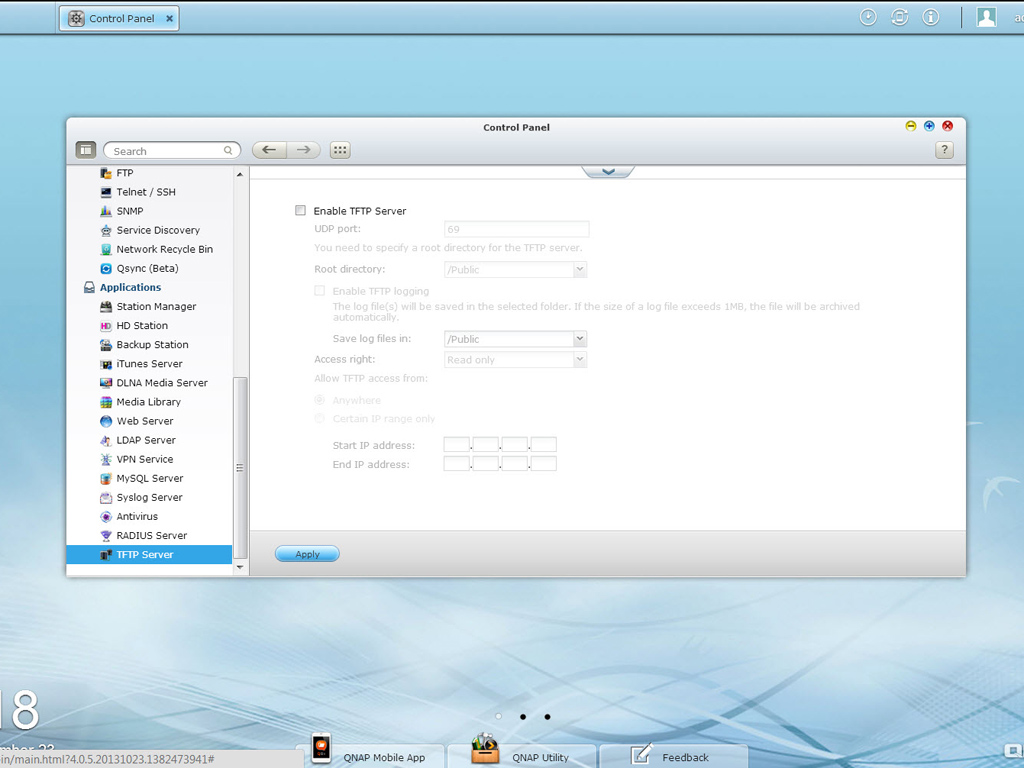
The TFTP (Trivial File Transfer Protocol) server allows for configuration management of network devices and remote network booting of computers for recovery or system imaging.
Nov 19th, 2026 12:53 CST
change timezone
Latest GPU Drivers
New Forum Posts
- My Final Barrier to Exclusively Using Linux has Fallen (Azure Virtual Desktops) (10)
- How to prevent OLED burn damage due to PC freezes or power outtages? (16)
- Anthrophics IPO (5)
- Windows HDR on = Tinted colors (8)
- Dual B70 or Dual R9700 Pro on Linux (10)
- GTA VI (5)
- FINAL FANTASY XIV: Dawntrail Official Benchmark (226)
- Help with fixing Overclock (11)
- Why my RX 6800 XT read that it operate at x8 not x16 ? (47)
- Got the EOL 32GB TridentZ 6000 CL26 1.4V (10)
Popular Reviews
- Acemagic Retro X3 Review
- Ugreen NASync DXP4800 GT Review
- Upcoming Hardware Launches 2027 (Updated Nov 2026)
- Pulsar Office Tour & First Look at P1 Dual-Sensor Mouse
- AMD Zen 6 Technical Deep Dive
- Biwin Black Opal NV7400 2 TB Review
- Sapphire Radeon RX 7700 XT Pure Review
- Sapphire Radeon RX 7700 XT Pulse Review
- AMD Ryzen 7 9800X3D Review - The Best Gaming Processor
- Chieftec Iceberg PRO 360 DARK Review
TPU on YouTube
Controversial News Posts
- NVIDIA Co-Founder and CEO Jensen Huang Officially Resigns (484)
- Report: Jensen Huang Eyes NVIDIA Comeback (221)
- Open Letter Asking NVIDIA to Reinstate Jensen Huang Passes 115,000 Signatures (184)
- OpenAI CEO Argues Home PCs Waste the World's Limited DRAM Supply (152)
- NVIDIA Launches Investigation Into Jensen Huang's Relationship With Suspected Chinese Spy (136)
- Intel "Raptor Lake Next" 16-Core and 20-Core CPUs Surface (130)
- Legendary Game Studio BioWare Shuts Down Following EA Layoffs (104)
- Dell CEO Says the Memory Shortage Will Get Worse in 2027 (95)