 28
Reyee RG-E5 WiFi 6 Router Review
(28 Comments) »Introduction

If you have not heard of Reyee yet, chances are high that you are not alone. This is a sub-brand of China-based Rujie Networks, which itself was formed in 2000 and is the manufacturer behind quite a few networking products you may have seen sold under different, more recognizable names. Reyee itself was created in 2014 to focus on switches and routers and has made enough of a name for itself in markets including the USA and Germany to where I got quite a few reader requests to cover the brand's products. Serendipitously, a representative from Reyee happened to reach out recently and here we today taking a look at the Reyee RG-E5 WiFi 6 router.

The Reyee E5, as more commonly referred to, is a mesh-capable WiFi 6 router in that you could purchase two or more of the same device and run them together as a mesh system. It's not using an open or universal protocol so you can't simply pair it with, say, a compatible ASUS router, but I still like that we get the choice of choosing a device as a router or satellite (or bridge) based on your needs. It allows for you to not just dispose of older router hardware when you decide to upgrade. This is a formidable looking router with eight external antennas, although closer examination of the product page shows it's more on the budget-friendly side in terms of both the retail price and the feature set. Incidentally, I will point out that Reyee has had nearly eight years to set up a functional website and yet it is filled with non-working links and Lorem ipsum placeholder text. I suppose there's a good reason it uses the Amazon product page to host relevant documents too! Speaking of which, let's thank Reyee for providing a review sample to TechPowerUp and we begin our coverage with a look at the product specifications in the table below.
Specifications
| Reyee RG-E5 WiFi 6 Router | |
|---|---|
| WiFi Technology: | 3200 (800 + 2,400) Mbps, simultaneous dual-band WiFi |
| Radio 1: | IEEE 802.11b/g/n/ax 2.4 GHz 4x4 |
| Radio 2: | IEEE 802.11a/n/ac/ax 5 GHz 4x4 |
| Antennas: | Eight high-performance external antennas |
| MU-MIMO: | Bi-directional MU-MIMO WiFi 6 throughput |
| Beamforming: | Implicit/Explicit Beamforming for 2.4 GHz and 5 GHz bands |
| Ports: | One 1 Gbps WAN port and four 1 Gbps LAN ports |
| Dimensions (antennas folded in): | 19 x 19 x 4.1 cm |
| Weight: | 1.29 kg / 2.86 lbs |
| Warranty: | One year in US, two years in Europe |
Packaging and Accessories


Reyee does not make a version of the RG-E5 specific to the UK and I was sent the US version instead. This just differs in the power supply as seen below, but otherwise is going to be a representative of the RG-E5 anywhere it sells. The product box is nothing fancy to look at but does the job just fine. It uses thick cardboard in a glossy blue banderole that has the company logo and product name on the front to go with salient features and a render of the router itself. There is more marketing talk on the back along with the first indicator of the mesh network capabilities of the device, but keep in mind that I only have one of these units to test as a standalone router. A sticker on the side has more item-specific information and we also see a QR code that leads you to the Reyee mobile app the company would like you to use to set up and monitor the router with.


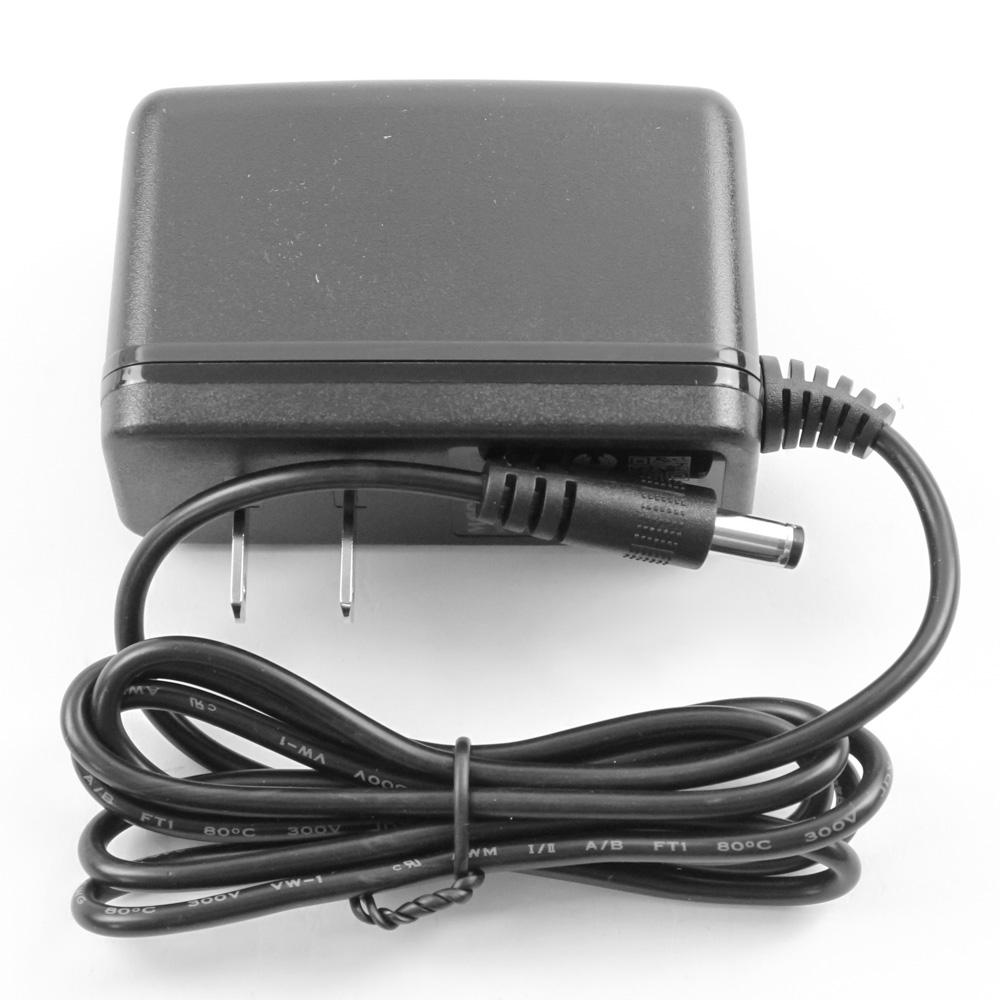
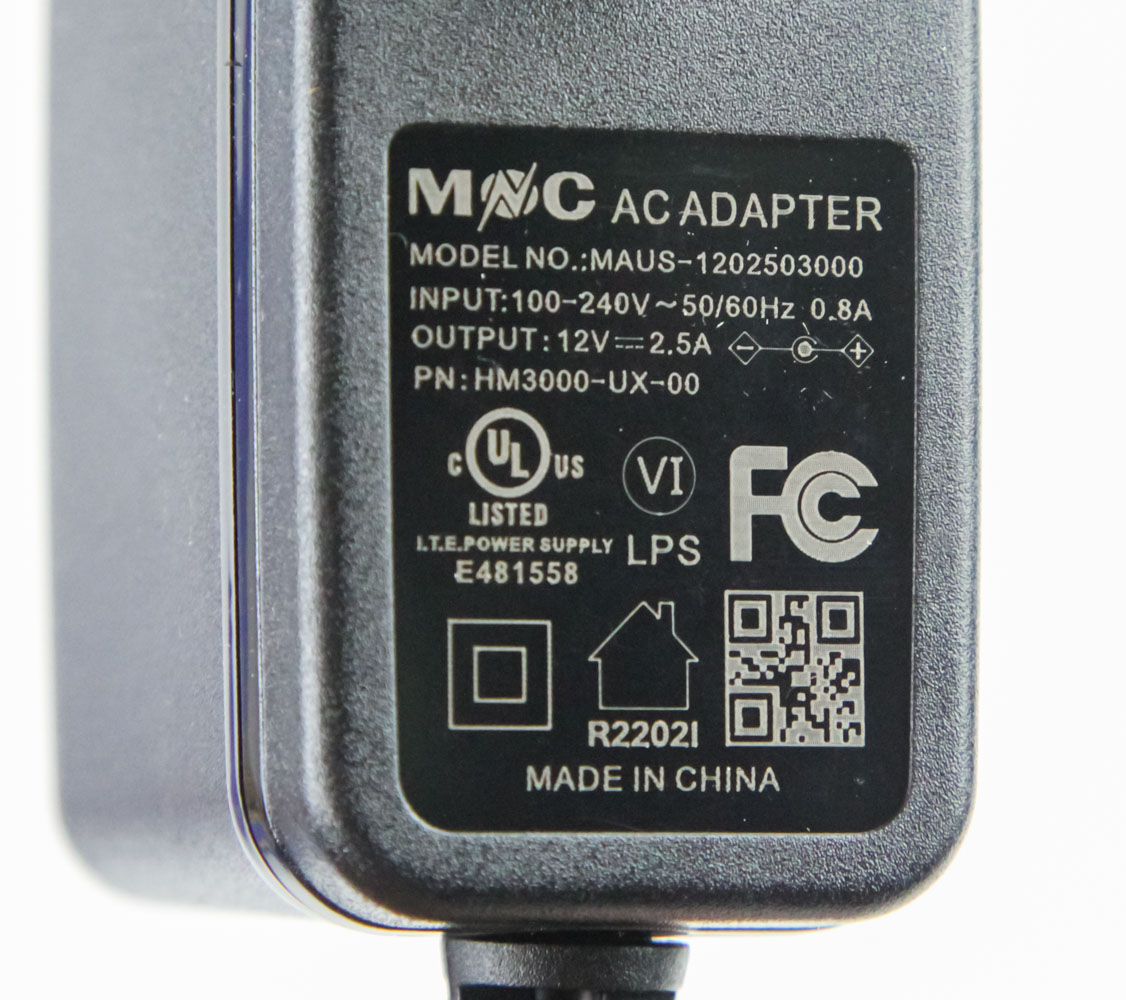
Two side flaps help keep the contents in place on their way to you and opening the box reveals the router inside a plastic wrap and surrounded by more carton-style cardboard for added protection. We get paperwork in the form of a user manual (online copy here) that goes over the initial setup of the router as well as adding in multiple units for a mesh network. For those interested, Reyee has also made available a far more detailed 67-page user guide which you can find here. Underneath the router are the other accessories including the expected power supply. This is a transformer unit that accepts AC mains power from 100-240 V at 50/60 Hz, meaning I could simply use a US to UK wall adapter plug here, and outputs a maximum of 2.5 A over the 12 VDC rail (30 W max). The RG-E5 is rated for a max power draw of 24 W so this will do nicely to meet the power requirements of the router.


Helping wrap up the unboxing section is a flat Ethernet cable of two meters in length, which allows for a decent amount of room for cable management along a wall if needed. It feeds the internet signal from your modem or gateway to the router and is terminated in a standard RJ45 connector on either end. The cable is compatible with the 1 Gigabit Ethernet ports on the router in case you already have a more suitable cable and wish to use this with the LAN ports instead.
Our Patreon Silver Supporters can read articles in single-page format.
Nov 22nd, 2026 11:19 CST
change timezone
Latest GPU Drivers
New Forum Posts
- Honestly, do you care about GTA VI? (253)
- Zen 3 IF/IMC degradation (245)
- Ryzen or Intel system (21)
- Your PC ATM (36452)
- The TPU UK Clubhouse (27291)
- Can you guess Which game it is? (346)
- Making a game in Godot engine (17)
- TPU's Nostalgic Hardware Club (22197)
- Intel D270 (1)
- Gigabyte AORUS RTX 5080 MASTER – Up to 30°C GPU Hotspot Delta! Is This Normal, a Cooling Defect, or Should I RMA? (14)
Popular Reviews
- Microsoft Surface Laptop Ultra Review - The Next-gen Arm Laptop
- Corsair RM1200e (Second Generation) Review
- Pulsar Office Tour & First Look at P1 Dual-Sensor Mouse
- Upcoming Hardware Launches 2027 (Updated Nov 2026)
- Ugreen NASync DXP4800 GT Review
- AMD Ryzen 7 9800X3D Review - The Best Gaming Processor
- Biwin Black Opal NV7400 2 TB Review
- AMD Zen 6 Technical Deep Dive
- Phantom Blade Zero Performance Benchmark Review - 35 GPUs Tested
- AMD Ryzen 7 5800X3D 10th Anniversary Review
TPU on YouTube
Controversial News Posts
- NVIDIA Co-Founder and CEO Jensen Huang Officially Resigns (492)
- Report: Jensen Huang Eyes NVIDIA Comeback (263)
- Open Letter Asking NVIDIA to Reinstate Jensen Huang Passes 115,000 Signatures (184)
- OpenAI CEO Argues Home PCs Waste the World's Limited DRAM Supply (152)
- NVIDIA Launches Investigation Into Jensen Huang's Relationship With Suspected Chinese Spy (136)
- Intel "Raptor Lake Next" 16-Core and 20-Core CPUs Surface (130)
- NVIDIA GeForce RTX 50-Series Scheduled for up to $500 Price Hike This Week (89)
- Intel Razor Lake Gets a 12 P-Core bLLC Chip With No E-Cores, Per Leak (86)