 14
Sapphire HD 4850 Toxic 512 MB Review
(14 Comments) »Introduction

A while back AMD has launched their Radeon HD 4850 and 4870 Series. Both cards were quickly accepted by enthusiasts and gamers as one of the best new product releases this year. Now AMD has given permission to the AIBs to create their own customized and overclocked products, first of the HD 4850 and later of the HD 4870.
Sapphire as the biggest AMD AIB has released several HD 4850 Toxic variants. We have the overclocked 512 MB version with a Zalman cooler on our test bench today.
| Radeon HD 3850 | Radeon HD 3870 | GeForce 9600 GT | GeForce 8800 GT | GeForce 9800 GT | Radeon HD 4850 | Sapphire HD 4850 Toxic | GeForce 9800 GTX | GeForce 9800 GTX+ | GeForce 8800 GTX | GeForce GTX 260 | Radeon HD 4870 | GeForce GTX 280 | |
| Shader units | 320 | 320 | 64 | 112 | 112 | 800 | 800 | 128 | 128 | 128 | 192 | 800 | 240 |
| ROPs | 16 | 16 | 16 | 16 | 16 | 16 | 16 | 16 | 16 | 24 | 28 | 16 | 32 |
| GPU | RV670 | RV670 | G94 | G92 | G92 | RV770 | RV770 | G92 | G92 | G80 | GT200 | RV770 | GT200 |
| Transistors | 666M | 666M | 505M | 754M | 754M | 956M | 956M | 754M | 754M | 681M | 1400M | 956M | 1400M |
| Memory Size | 256 MB | 512 MB | 512 MB | 512 MB | 512 MB | 512 MB | 512 MB | 512 MB | 512 MB | 768 MB | 896 MB | 512 MB | 1024 MB |
| Memory Bus Width | 256 bit | 256 bit | 256 bit | 256 bit | 256 bit | 256 bit | 256 bit | 256 bit | 256 bit | 384 bit | 448 bit | 256 bit | 512 bit |
| Core Clock | 670 MHz | 777 MHz | 650 MHz | 600 MHz | 600 MHz | 625 MHz | 675 MHz | 675 MHz | 738 MHz | 575 MHz | 576 MHz | 750 MHz | 602 MHz |
| Memory Clock | 828 MHz | 1126 MHz | 900 MHz | 900 MHz | 900 MHz | 993 MHz | 1100 MHz | 1100 MHz | 1100 MHz | 900 MHz | 999 MHz | 900 MHz | 1107 MHz |
| Price | $99 | $125 | $110 | $140 | $160 | $170 | $210 | $185 | $200 | $295 | $270 | $275 | $430 |
Packaging & Contents


The high-gloss package looks very unspectacular. On a crowded shelf it's very easy to miss. All the important specs and product highlights are listed on the back of the package, only missing are the actual overclocked frequencies.

You will receive:
- Graphics card
- Manual + Driver CD + 3DMark full version + PowerDVD
- DVI Adapter + HDMI Adapter + S-Video Adapter
- PCI-Express power adapter
- TV out cable
- CrossFire Bridge
The Card


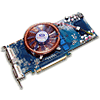
Sapphire has chosen to use a blue PCB instead of the red ATI PCB. The cooler on the graphics card is the Zalman VF900. In addition to the GPU cooler small blue ramsinks have been placed on the GDDR3 memory. I find the fan cable routing a bit messy, especially the small adapter cable doesn't look very professional, 5 cm longer and properly routed would definitely look better.

The card has two DVI ports, basically the most common output configuration these days. In case you need an analog VGA port you can use the included DVI adapter. When using an HDMI adapter (also included), you will also have access to HDMI+HDCP+Audio, which allows easy setup of a media PC. All recent ATI Radeon cards have a Realtek HD Audio device integrated inside the GPU silicon. This means that you don't have to connect any additional cabling to the graphics card for HDMI Audio. A new feature of the HD 4xxx Series is support for 7.1 HDMI audio, the older HD 3xxx cards supported only 5.1.
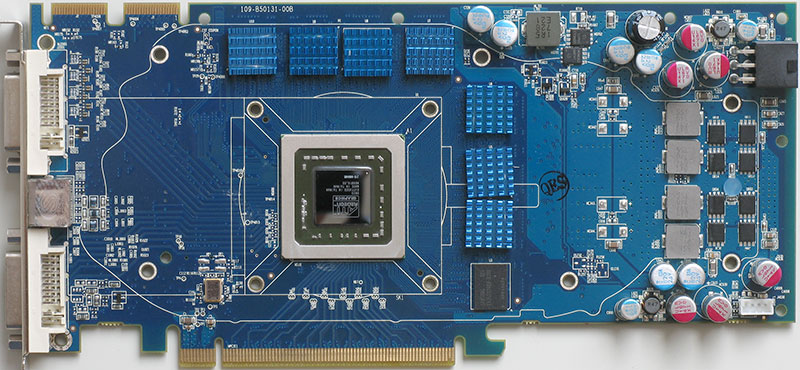

Here are the front and the back of the card, high-res versions are also available (front, back). If you choose to use these images for voltmods etc, please include a link back to this site or let us post your article.
A Closer Look


The cooler is the Zalman VF900 with a Sapphire sticker on the fan hub. It uses two heatpipes that go around the fan blades for optimum heat transfer.
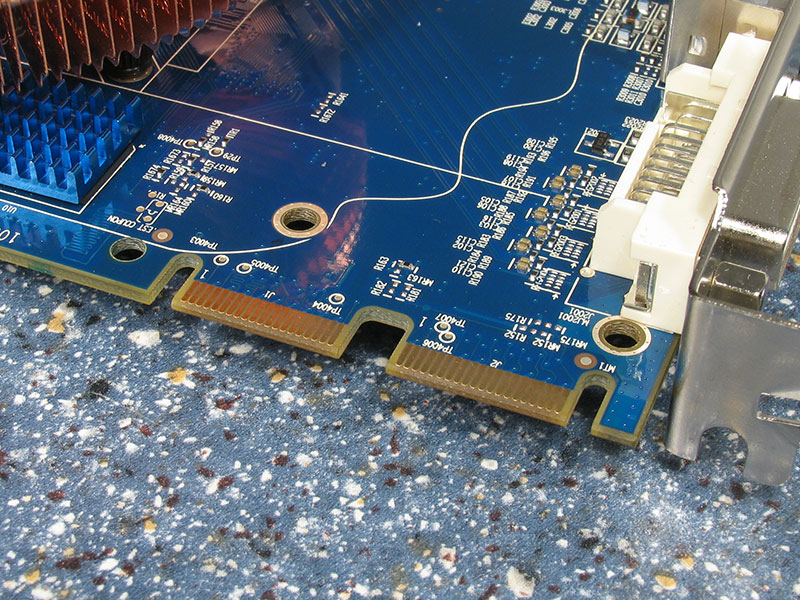
CrossFire configurations with up to four cards are supported by the HD 4850 Series.

A single six-pin PCI-Express power connector supplies the required power to the card.
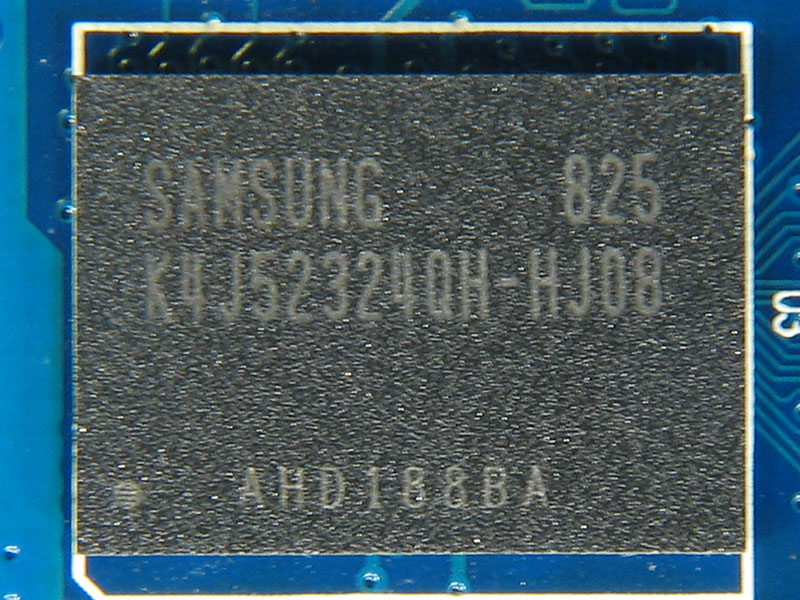
The GDDR3 chips are made by Samsung and have the model number K4J52324QH-BJ08. They are rated for 1200 MHz operation (0.8 ns cycle time).

The RV770 graphics processor used on the HD 4850 Toxic is the same as on any other Radeon HD 4850 and HD 4870.
Our Patreon Silver Supporters can read articles in single-page format.
Nov 15th, 2026 16:32 CST
change timezone
Latest GPU Drivers
New Forum Posts
- What are you playing? (26222)
- WarpCoreBench scores! (51)
- Asus Rog Maximus Z890 Extreme. (Various questions). (25)
- Power supply noise stops when I move the mouse (9)
- TPU's Nostalgic Hardware Club (22165)
- HP Office Jet 7740 Pro - Supply system problem with replacement cartridge (3)
- Recommendations Wanted - Affordable Enterprise SSD for Boot (9)
- Folding Pie and Milestones!! (10204)
- What can the FX 8320 do today? Here is the answer. (59)
- How do you get games for PC? (59)
Popular Reviews
- AMD Zen 6 Technical Deep Dive
- ASUS ROG Strix B850-I Gaming Wi-Fi7 W Review
- Corsair HX1000i Shift Crystal Review
- Upcoming Hardware Launches 2027 (Updated Nov 2026)
- Montech King 95 3D PRO Review
- NZXT C1200 Platinum Review
- NZXT H7 RGB+ Review
- NZXT H5 Review
- Phantom Blade Zero Performance Benchmark Review - 35 GPUs Tested
- AMD Ryzen 7 9800X3D Review - The Best Gaming Processor
TPU on YouTube
Controversial News Posts
- NVIDIA Co-Founder and CEO Jensen Huang Officially Resigns (421)
- Open Letter Asking NVIDIA to Reinstate Jensen Huang Passes 115,000 Signatures (184)
- OpenAI CEO Argues Home PCs Waste the World's Limited DRAM Supply (152)
- NVIDIA Launches Investigation Into Jensen Huang's Relationship With Suspected Chinese Spy (136)
- Intel "Raptor Lake Next" 16-Core and 20-Core CPUs Surface (130)
- Legendary Game Studio BioWare Shuts Down Following EA Layoffs (104)
- Dell CEO Says the Memory Shortage Will Get Worse in 2027 (95)
- NVIDIA GeForce RTX 50-Series Scheduled for up to $500 Price Hike This Week (89)