 13
Seagate FireCuda 540 2 TB Review
(13 Comments) »Introduction

Seagate is one of the world's largest and most established manufacturers of hard drives and storage solutions. Throughout decades of innovation, they have been at the forefront of data storage technology, pioneering advancements in HDDs, SSDs, and enterprise storage systems. Their renowned products include the BarraCuda and FireCuda series for consumers, as well as the IronWolf and Exos lines tailored for NAS and data centers.
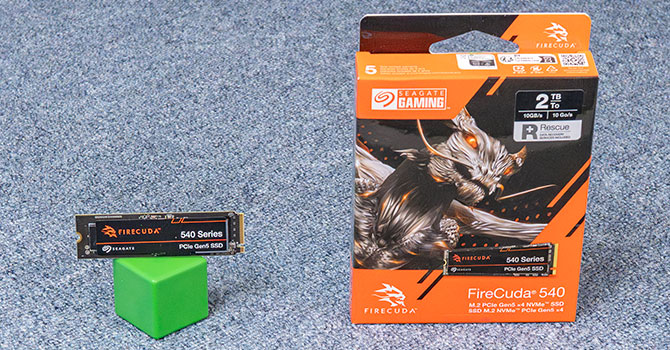
The Seagate FireCuda 540, released in 2023, has been on the market for some time. It features the Phison E26 controller, which is the company's flagship PCI-Express 5.0 controller. With the E26, Phison brought high-end transfer rates to consumer storage. However, since its release in 2022, competition has intensified. Although InnoGrit has introduced controllers with limited success, the recently released Silicon Motion SM2508 presents a strong challenge to the E26, especially in terms of energy efficiency.
Seagate has combined their FireCuda 540 SSD with Micron's 232-layer 3D TLC NAND flash, which runs at 1600 MT/s. They have also added a dedicated DRAM cache for the SSD's mapping tables.
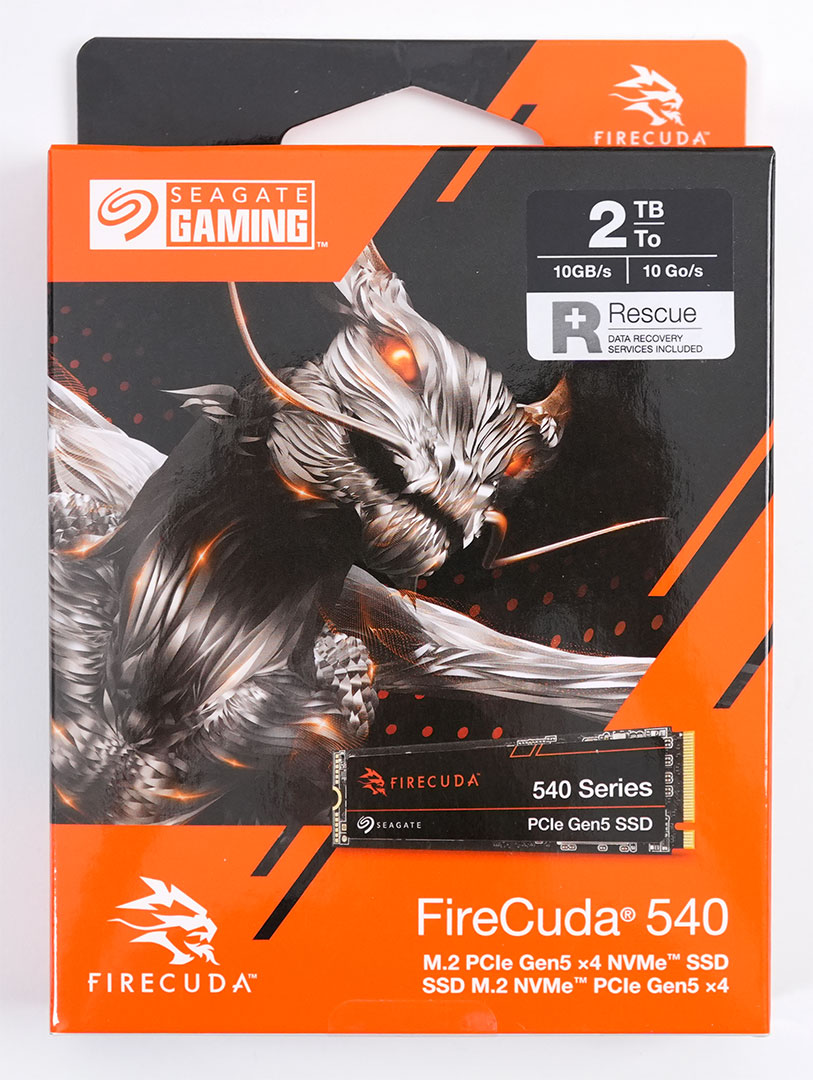
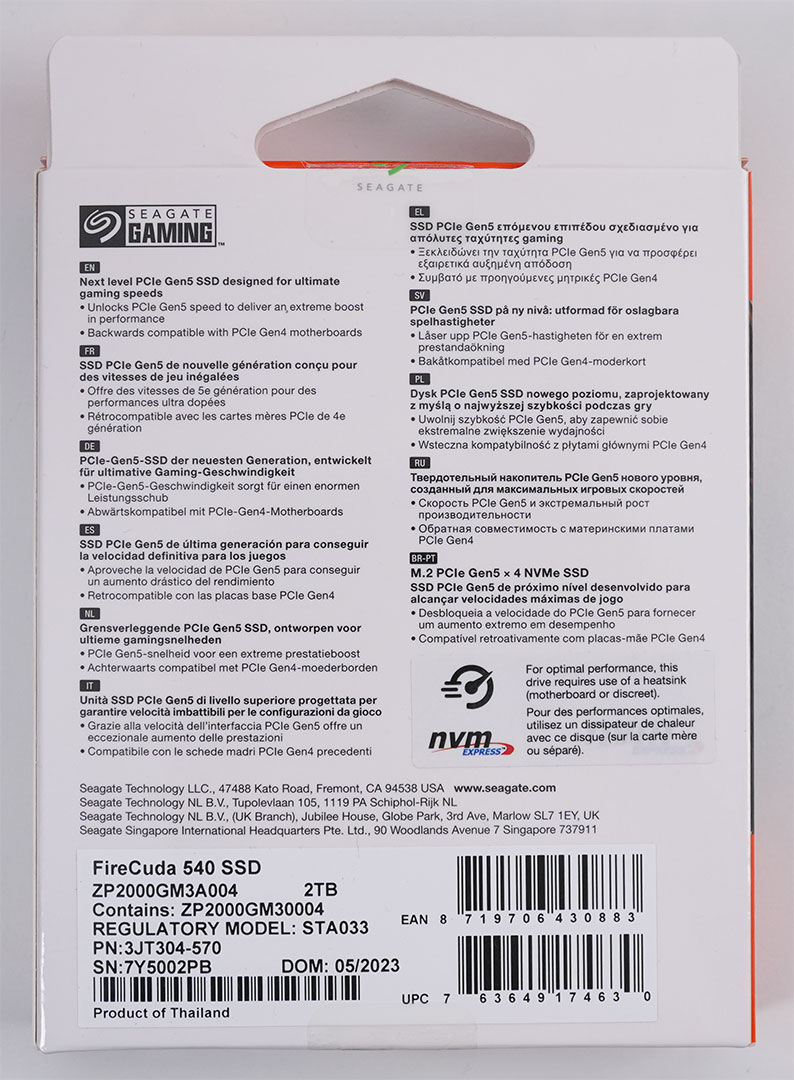
The FireCuda 540 is available in capacities of 1 TB ($150) and 2 TB ($230). The endurance is set to 1000 TBW and 2000 TBW respectively. Seagate includes a five-year warranty with the FireCuda 540 SSD.
| Specifications: Seagate FireCuda 540 2 TB SSD | |
|---|---|
| Brand: | Seagate |
| Model: | ZP2000GM30004 |
| Capacity: | 2000 GB (1862 GB usable) 48 GB additional overprovisioning |
| Controller: | Phison E26 |
| Flash: | Micron 232-layer 3D TLC / B58R |
| DRAM: | 4 GB Hynix LPDDR4-4266 H9HCNNNCPUMLXR-NEE |
| Endurance: | 2000 TBW |
| Form Factor: | M.2 2280 |
| Interface: | PCIe Gen 5 x4, NVMe 2.0 |
| Device ID: | Seagate ZP2000GM30004 |
| Firmware: | SUESR101 |
| Warranty: | Five years |
| Price at Time of Review: | $230 / $115 per TB |
Packaging
The Drive

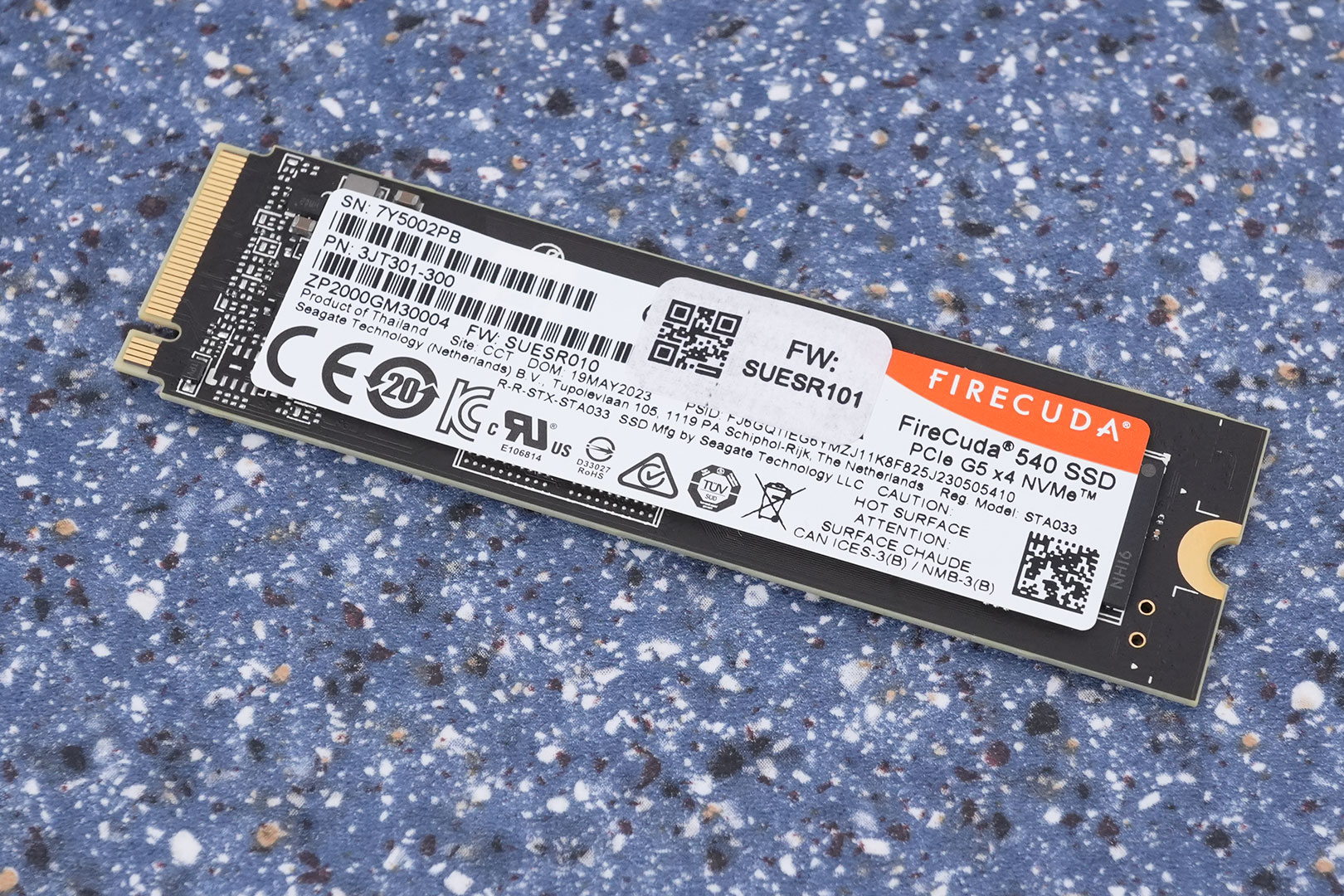
The drive is designed for the M.2 2280 form factor, which makes it 22 mm wide and 80 mm long.
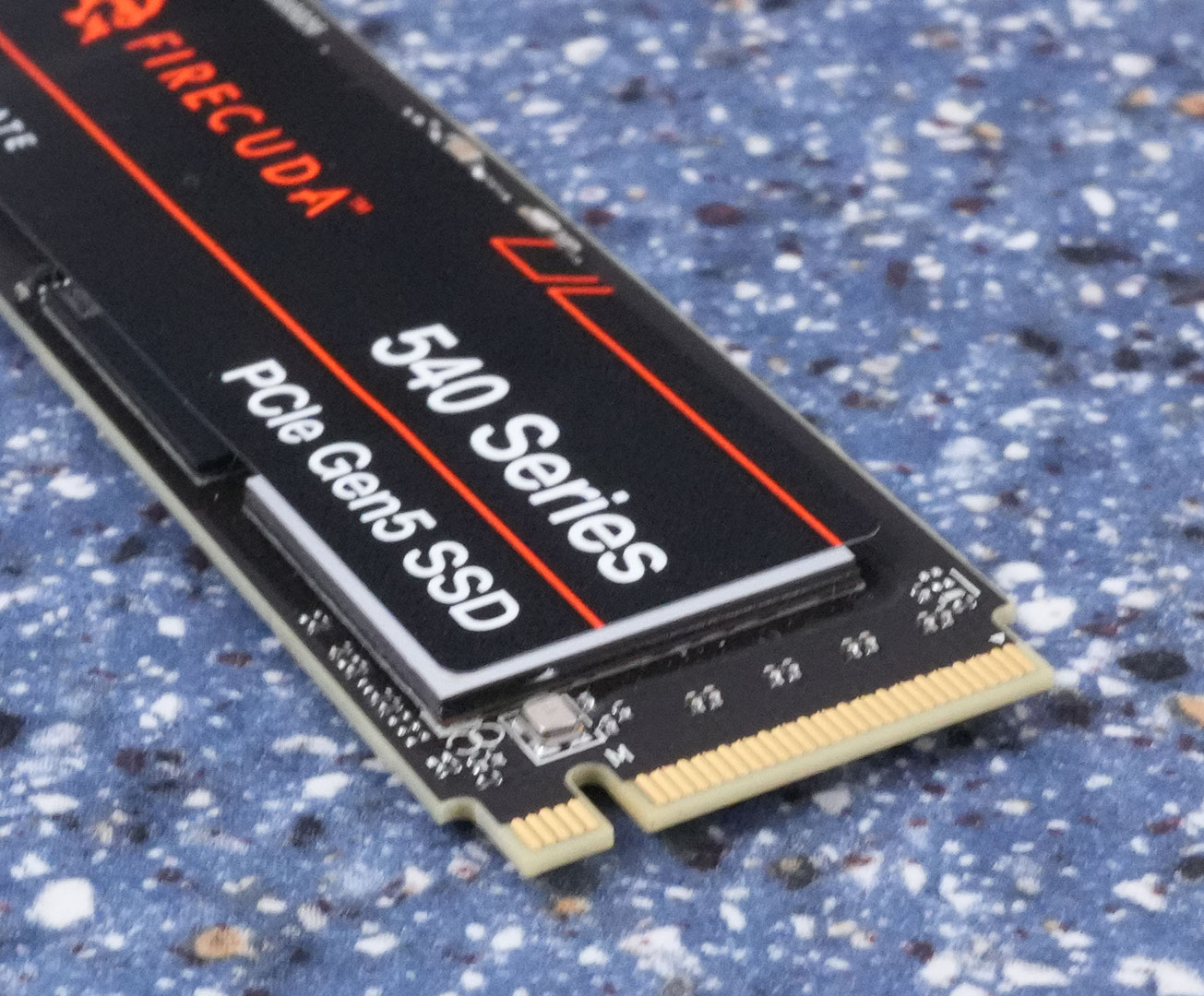
PCI-Express 5.0 x4 is used as the host interface to the rest of the system, which doubles the theoretical bandwidth compared to PCIe 4.0 x4.
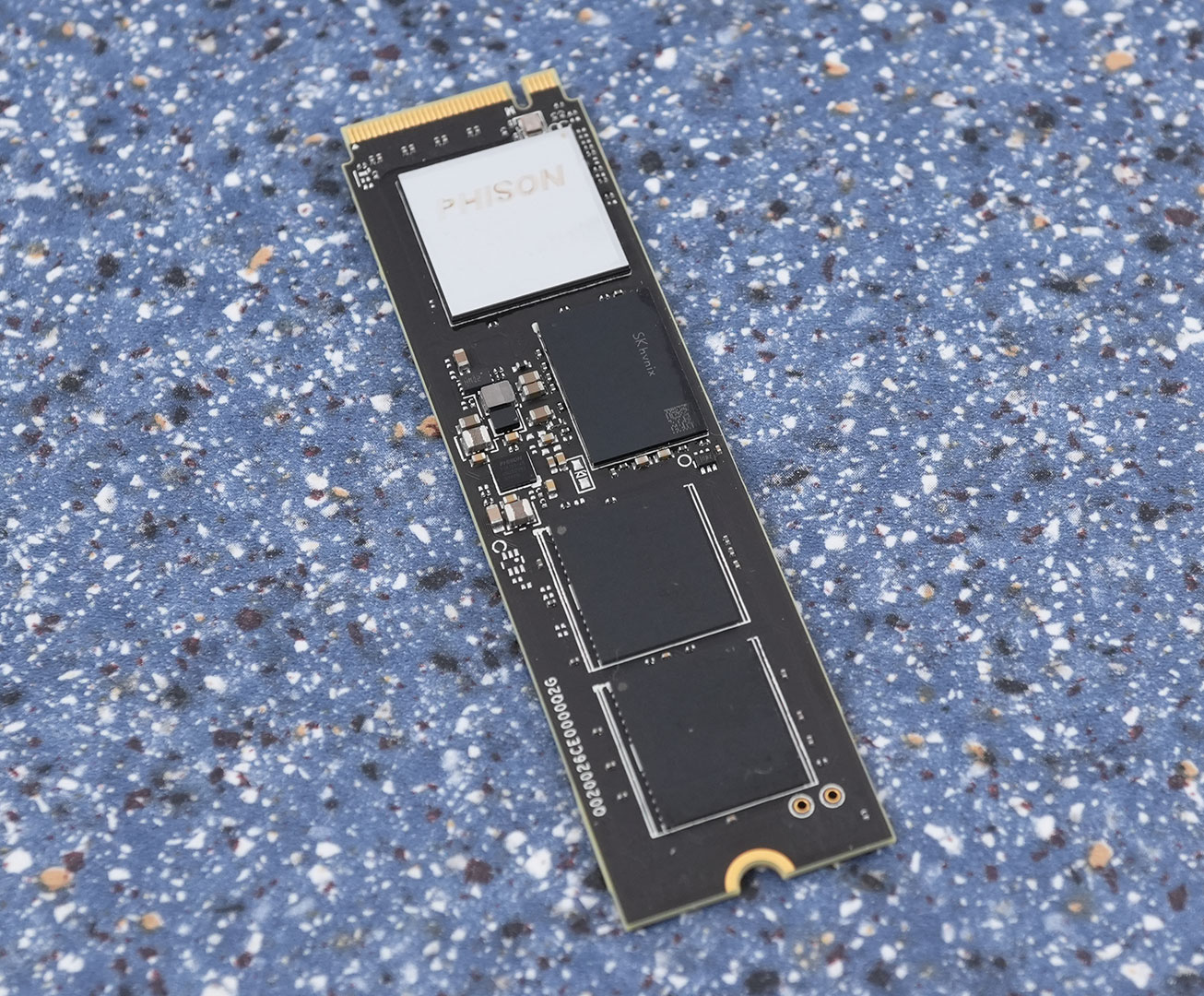
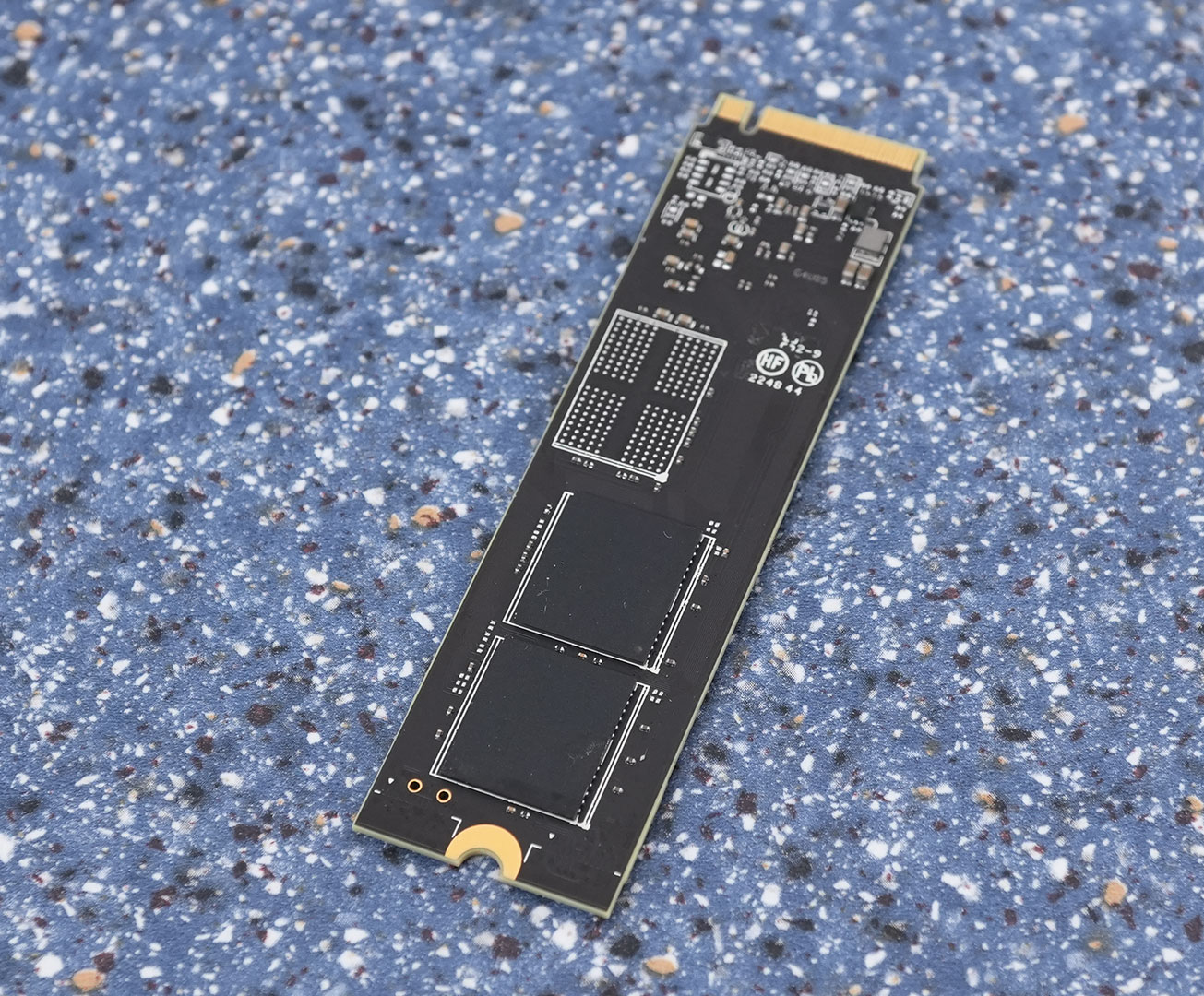
On the PCB you'll find the controller and four flash chips, a single DRAM cache chip is included, too.
Chip Component Analysis
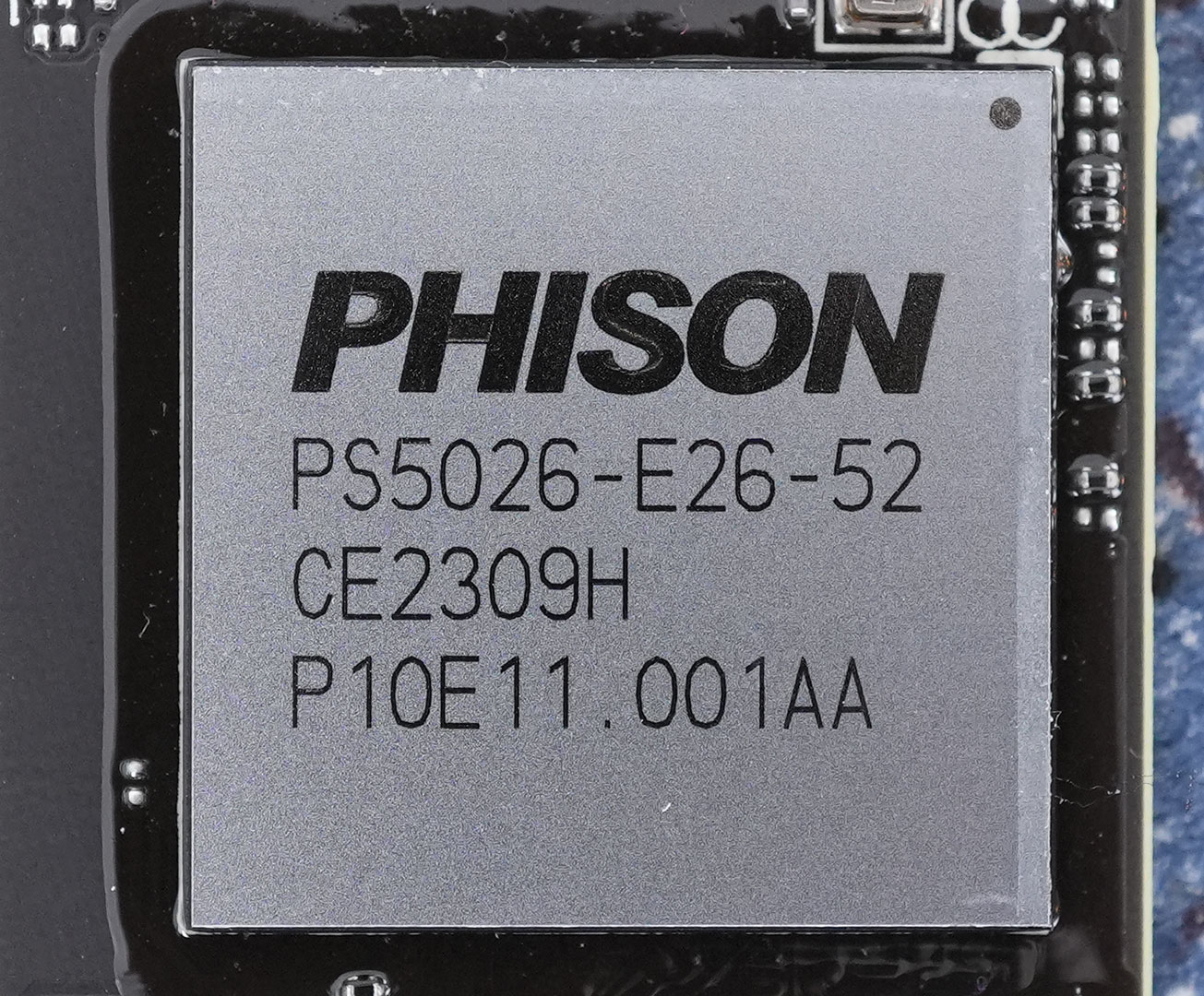
The Phison PS5026-E26 is Phison's first PCI-Express 5.0 controller. It is the company's current flagship with support for eight flash channels and NVMe 2.0, using an Arm Cortex design. The controller itself is fabricated using a 12 nanometer process at TSMC Taiwan.
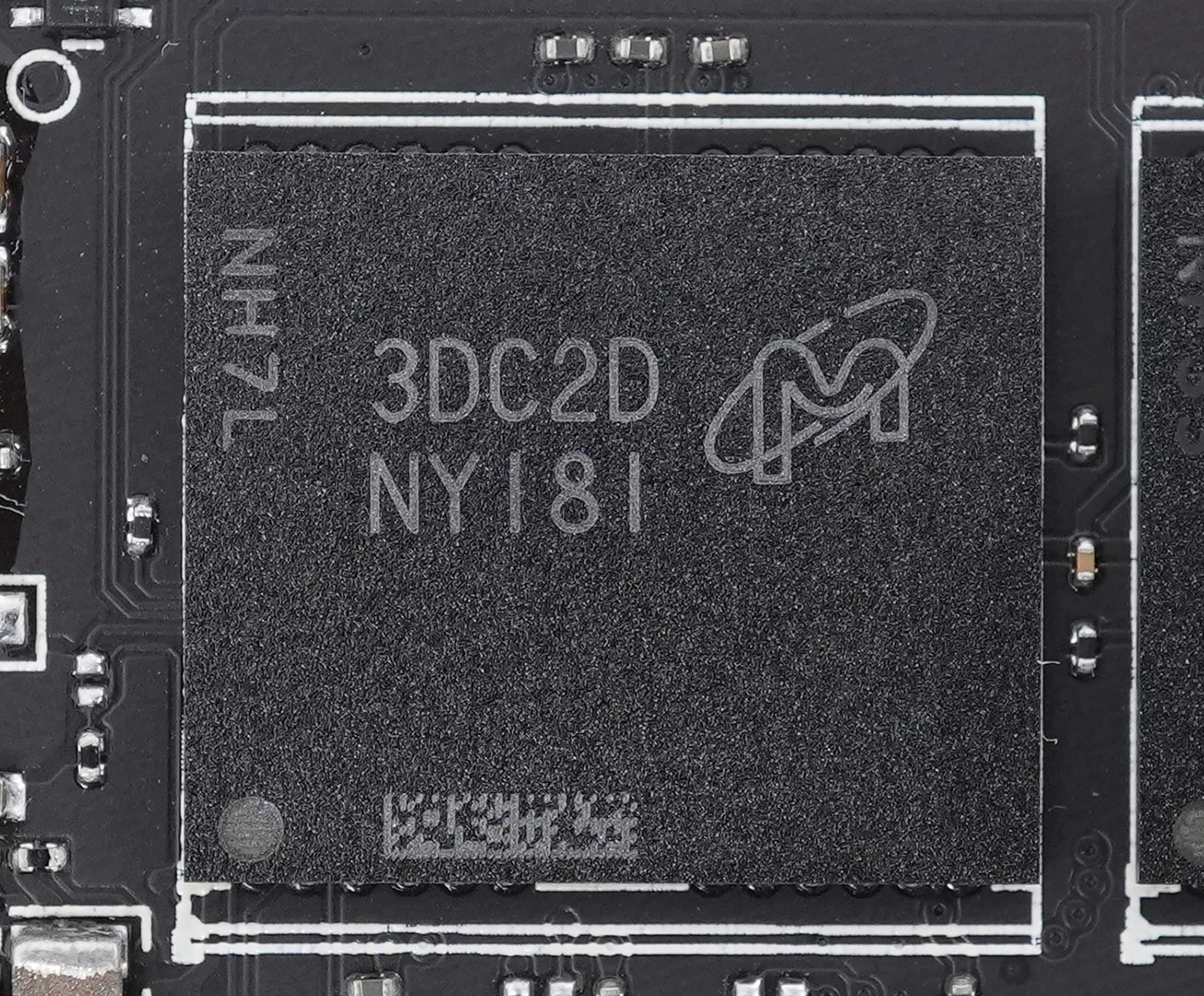
The four flash chips are Micron 232-layer 3D TLC NAND. Each chip has a capacity of 512 GB.
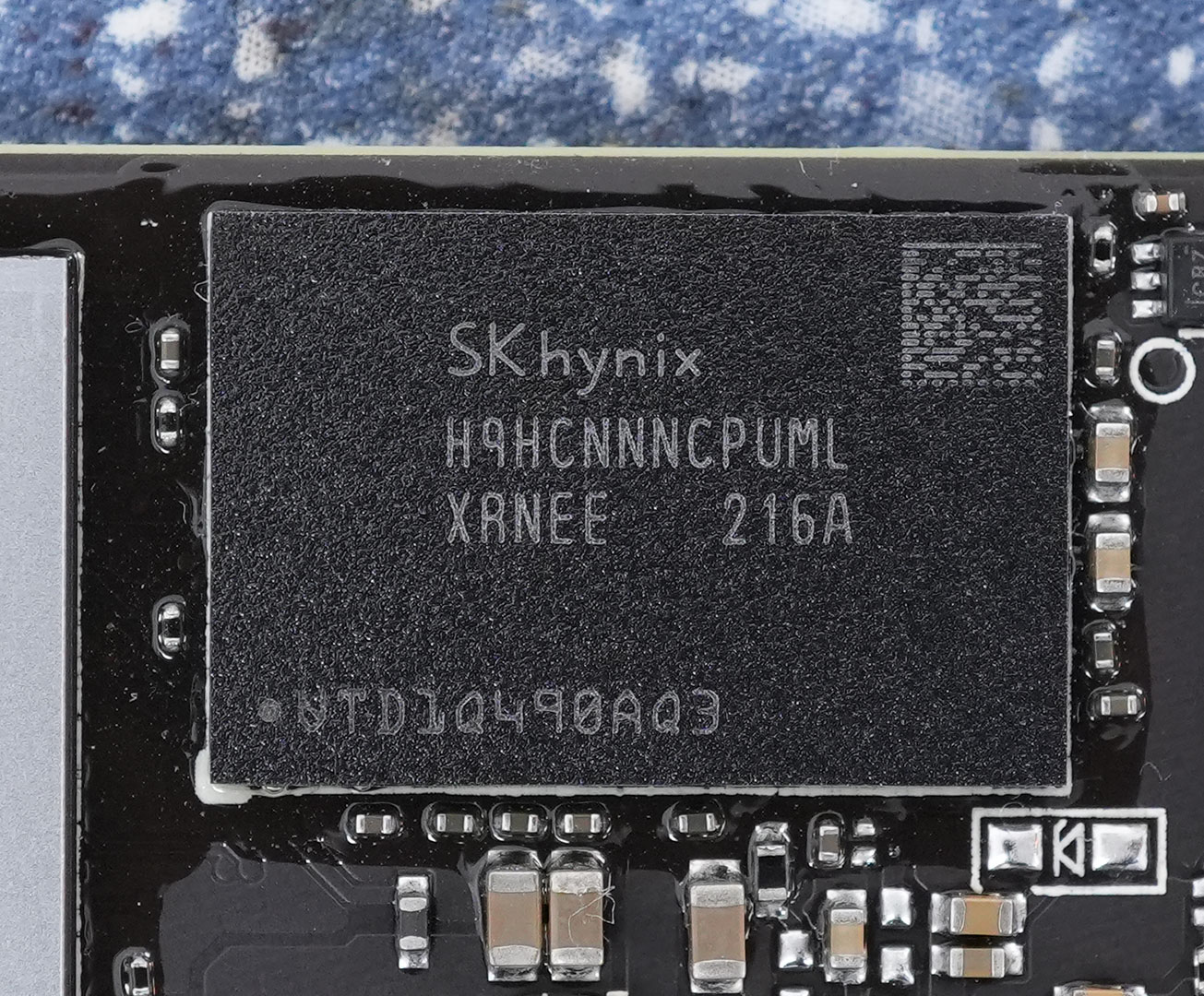
One Hynix DDR4-4266 chip provides a total of 4 GB of fast DRAM storage for the controller to store the mapping tables.
Test Setup
| Test System SSD 2024 | |
|---|---|
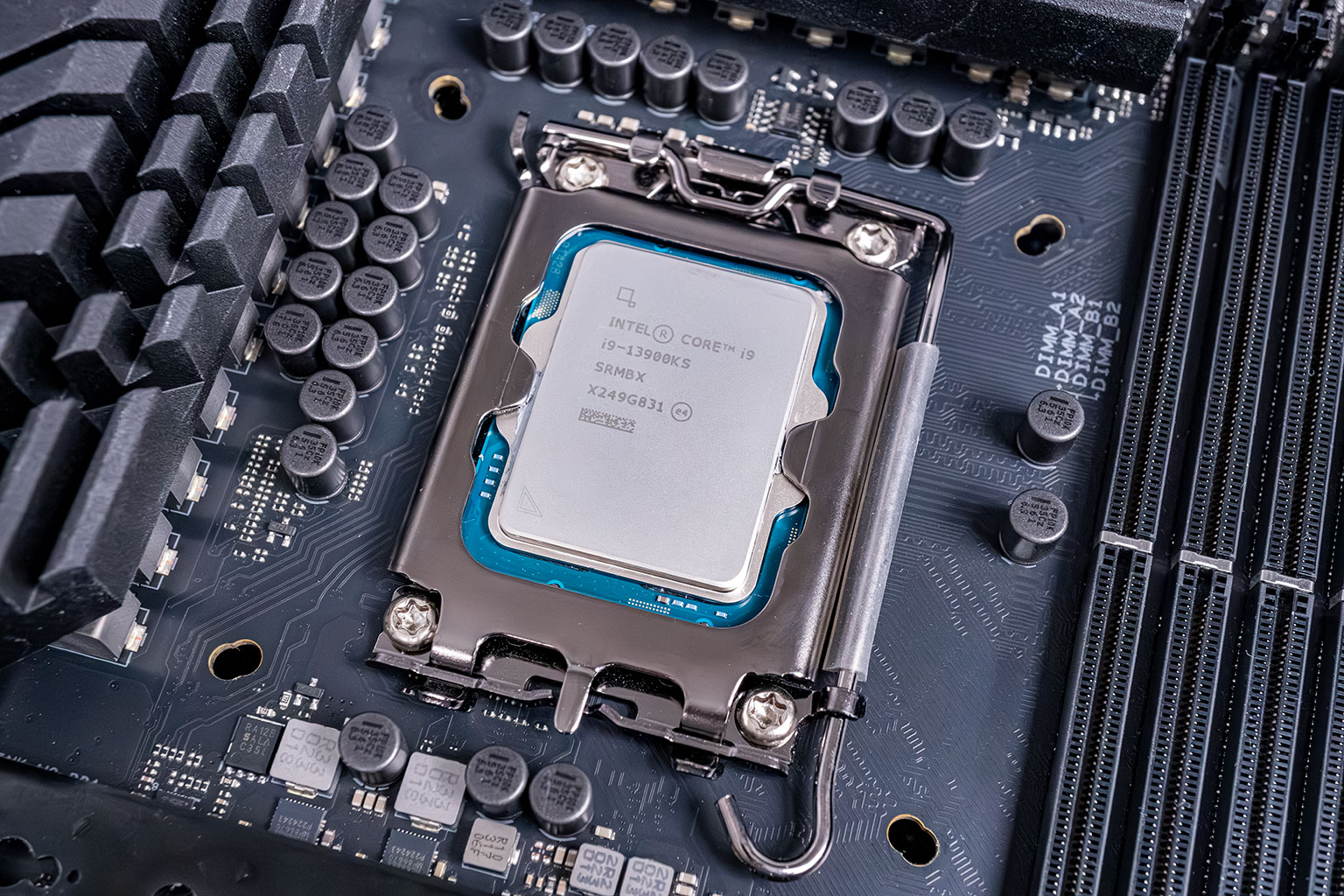
| Processor: | Intel Core i9-13900KS Raptor Lake 6.0 GHz, 8+16 cores / 32 threads |
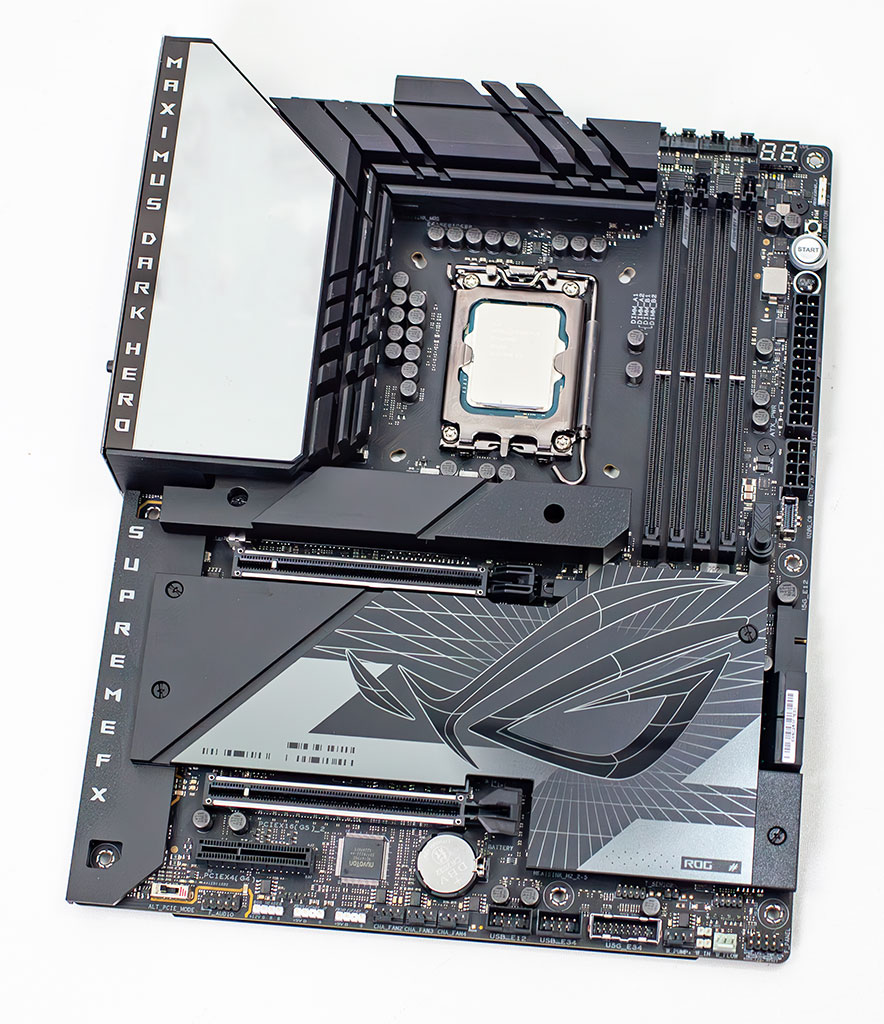
| Motherboard: | ASUS ROG Z790 Dark Hero BIOS 1102 |
| Memory: | 2x 16 GB DDR5-6000 |
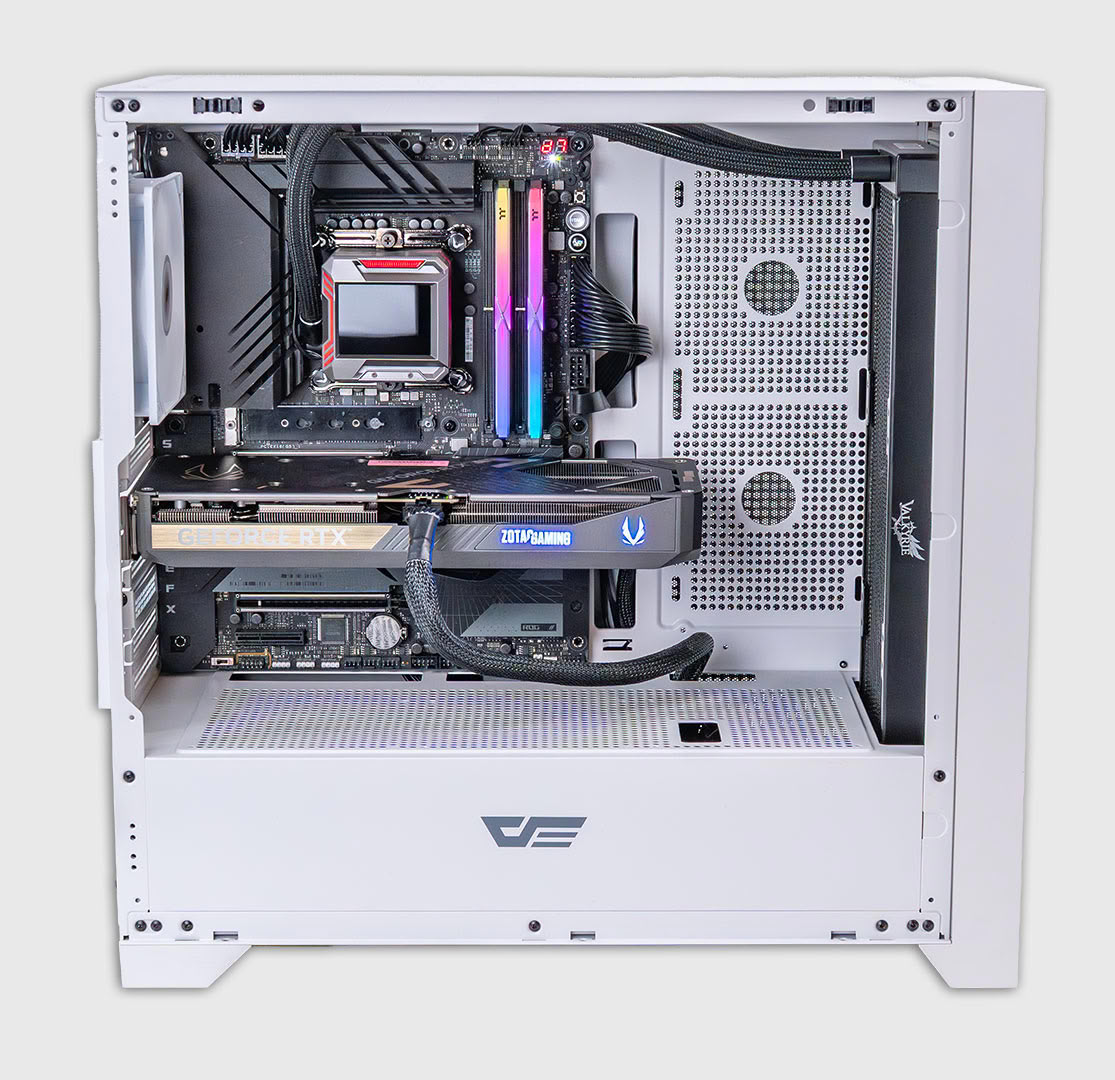
| Graphics: | Zotac GeForce RTX 5070 Solid |
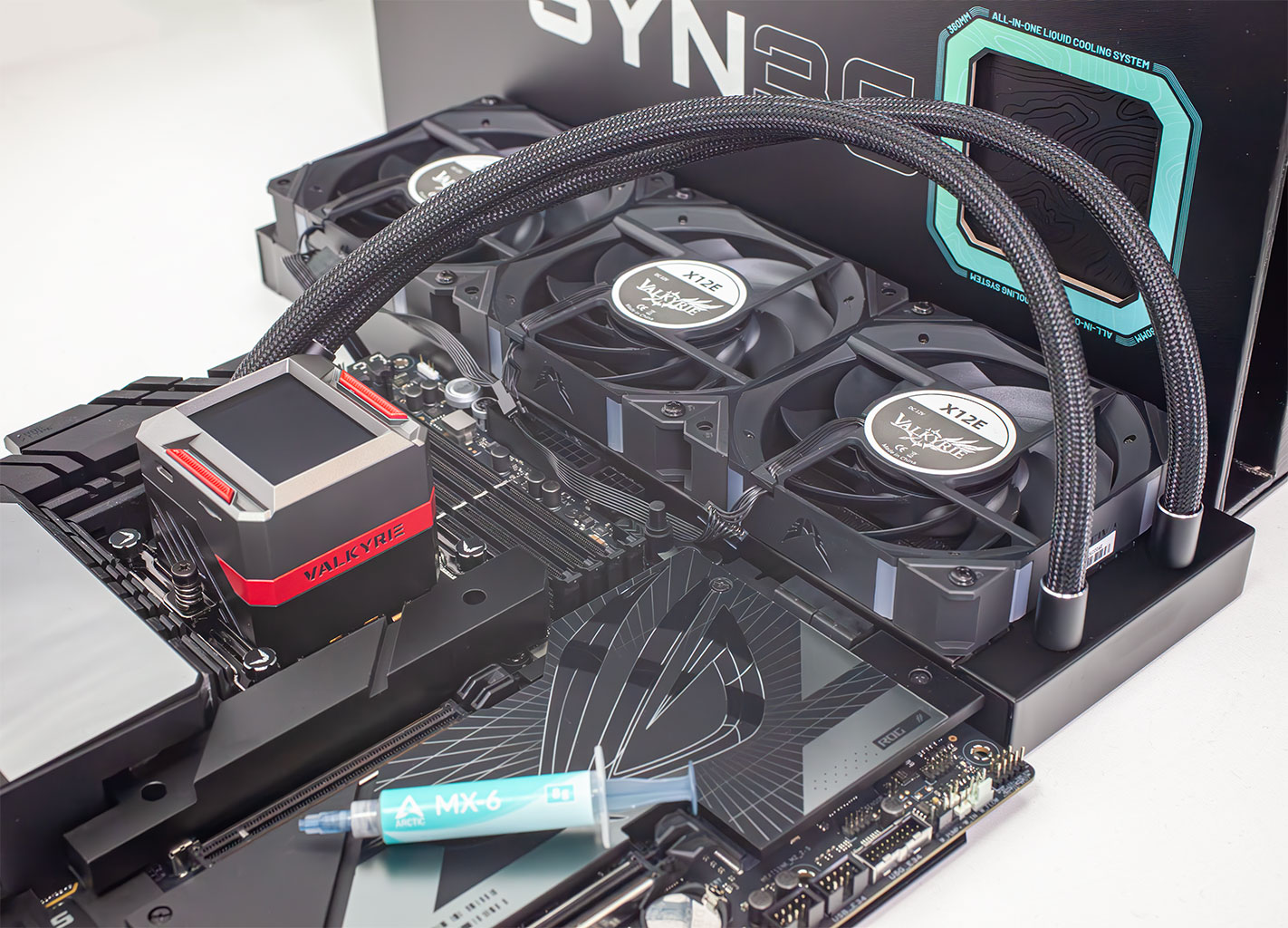
| Cooling: | Valkyrie Syn 360 mm AIO |
| Thermal Paste: | Arctic MX-6 |
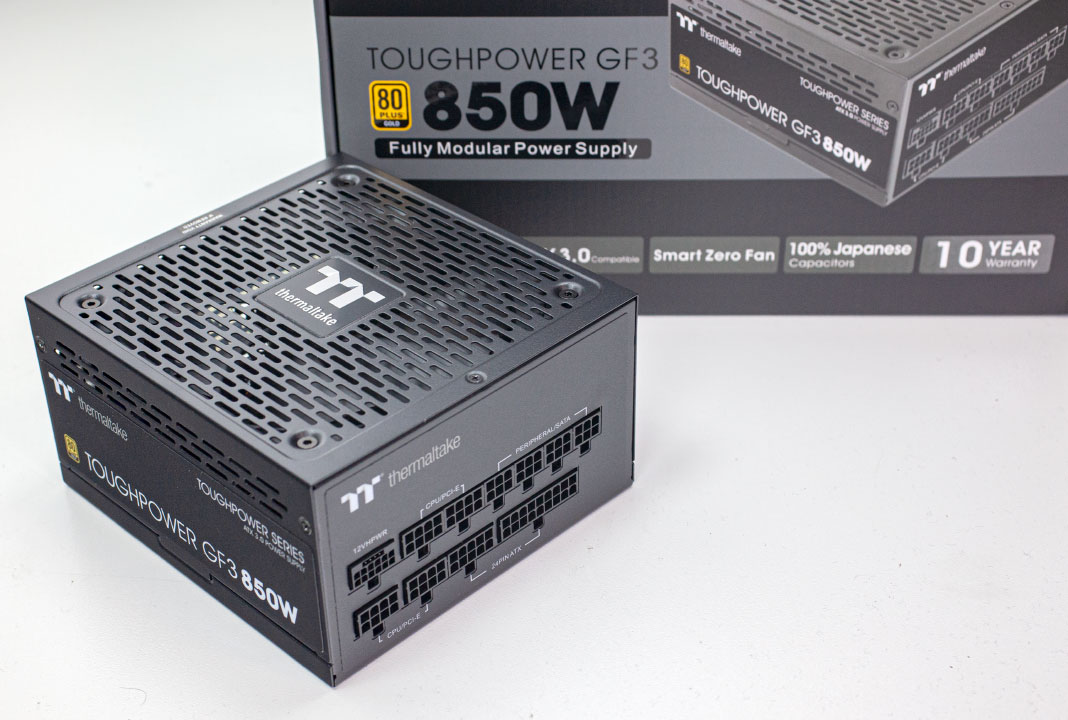
| Power Supply: | Thermaltake Toughpower GF3 850 W ATX 3.0 / 16-pin 12VHPWR |
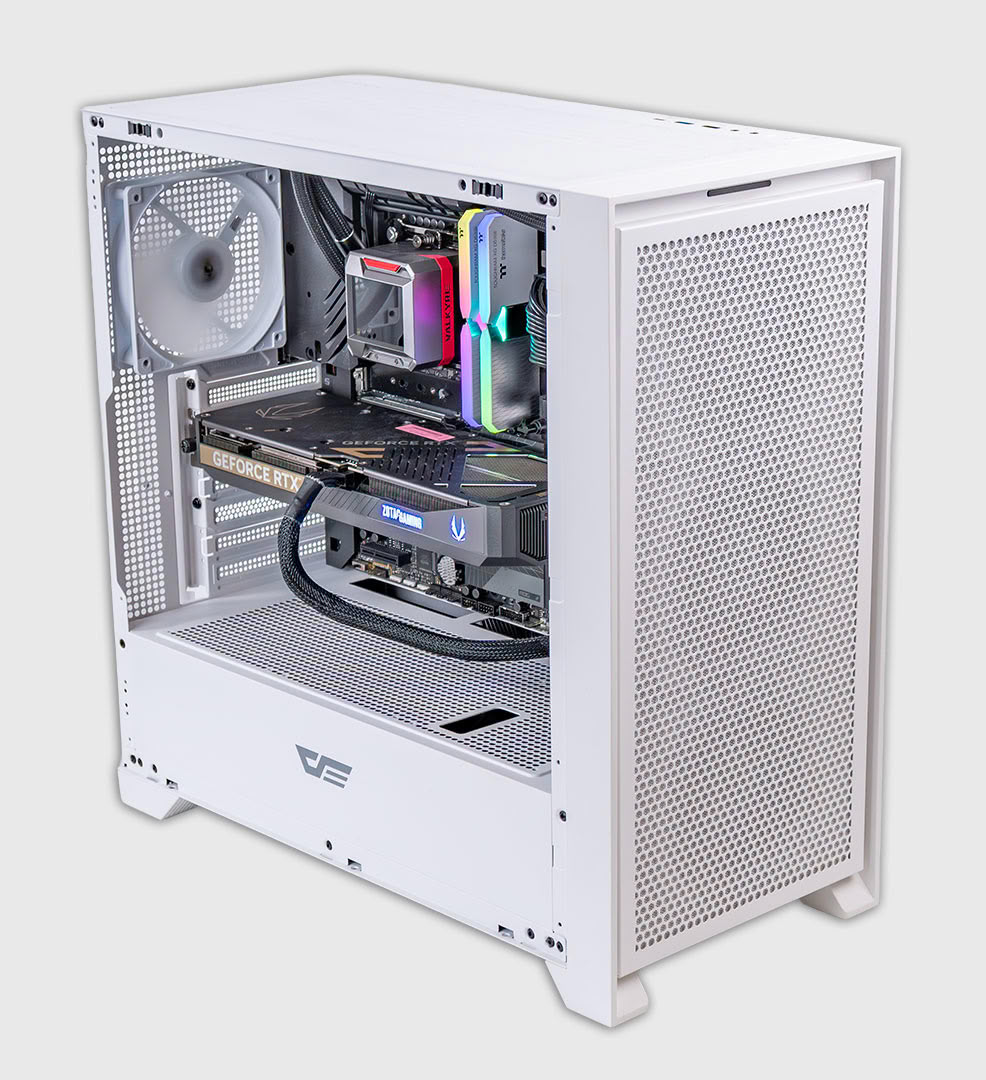
| Case: | darkFlash DRX70 White |
| Operating System: | Windows 11 Professional 64-bit 23H2 VBS enabled (Windows 11 default) |
| Drivers: | NVIDIA: 552.12 WHQL |

Synthetic Testing
- Tests are run with a 20-second-long warm-up time (result recording starts at second 21).
- Between each test, the drive is left idle for 60 seconds, to allow it to flush and reorganize its internal data.
- All write requests contain random, incompressible data.
- Disk cache is flushed between all tests.
- During these tests, M.2 drives are tested with additional active fan-cooling, to ensure thermal throttling can't happen.
Real-life Testing
- After initial configuration and installation, a disk image is created; it is used to test every drive.
- Automated updates are disabled for the OS and all programs. This ensures that—for every review—each drive uses the same settings, without interference from previous testing.
- Our disk image consumes around 700 GB—partitions are resized to fill all available space on the drive.
- All drives are filled with random data to 85% of their capacity. This is intentional, to run the drive in realistic operating conditions—nobody uses a nearly-empty SSD in their system. It also puts additional stress on the pseudo-SLC cache subsystem, because there is less free NAND space to work with.
- Partitions are aligned properly.
- Disk cache is flushed between all tests.
- In order to minimize random variation, each real-life performance test is run several times, with reboots between tests to minimize the impact of disk cache.
- All application benchmarks run the actual application and do not replay any disk traces.
- Our real-life testing data includes performance numbers for a typical high-performance HDD, using results from a Western Digital WD Black 1 TB 7200 RPM 3.5" SATA. HDDs are significantly slower than SSDs, which is why we're not putting the result in the chart, as that would break the scaling, making the SSDs indistinguishable in comparison. Instead, we've added the HDD performance numbers in the title of each test entry.
- During these tests, M.2 drives are tested with additional active fan-cooling, to ensure thermal throttling can't happen.
Our Patreon Silver Supporters can read articles in single-page format.
Nov 24th, 2026 17:26 CST
change timezone
Latest GPU Drivers
New Forum Posts
- Which ryzen am5 cpu ? (208)
- X79 and/or rampage IV OC'ing thread for those of us still left.... (2453)
- The time has come to upgrade...my desktop (8)
- {NA} 2026 Black November prices / deal (1)
- Help finding Xbox Series X manual fan controller. (0)
- WireView Pro II GPU Alignment: Wired | Variant: Black (7)
- AMD ULL settings tinkering thread - post settings and Zen pics (89)
- Your PC ATM (36500)
- Linpack Xtreme Released (510)
- Asus ROG Strix XG27AQWMG compared to XG27AQWMG-R what changed? (0)
Popular Reviews
- Microsoft Surface Laptop Ultra Review - The Next-gen Arm Laptop
- ASRock X870E Challenger Wi-Fi White Review
- Upcoming Hardware Launches 2027 (Updated Nov 2026)
- Corsair RM1200e (Second Generation) Review
- AMD Ryzen 7 9800X3D Review - The Best Gaming Processor
- VZMORE AX9 Max Review
- AMD Zen 6 Technical Deep Dive
- AMD Ryzen 7 7700X3D Review
- Pulsar Office Tour & First Look at P1 Dual-Sensor Mouse
- Phantom Blade Zero Performance Benchmark Review - 35 GPUs Tested
TPU on YouTube
Controversial News Posts
- Jensen Huang Reinstated as CEO of NVIDIA (525)
- NVIDIA Co-Founder and CEO Jensen Huang Officially Resigns (492)
- Report: Jensen Huang Eyes NVIDIA Comeback (281)
- Open Letter Asking NVIDIA to Reinstate Jensen Huang Passes 115,000 Signatures (184)
- OpenAI CEO Argues Home PCs Waste the World's Limited DRAM Supply (152)
- NVIDIA Launches Investigation Into Jensen Huang's Relationship With Suspected Chinese Spy (136)
- Intel "Raptor Lake Next" 16-Core and 20-Core CPUs Surface (130)
- Intel Razor Lake Gets a 12 P-Core bLLC Chip With No E-Cores, Per Leak (93)