 9
Sharkoon OfficePal C10 Review - Affordable and Decent
User Experience »Backrest
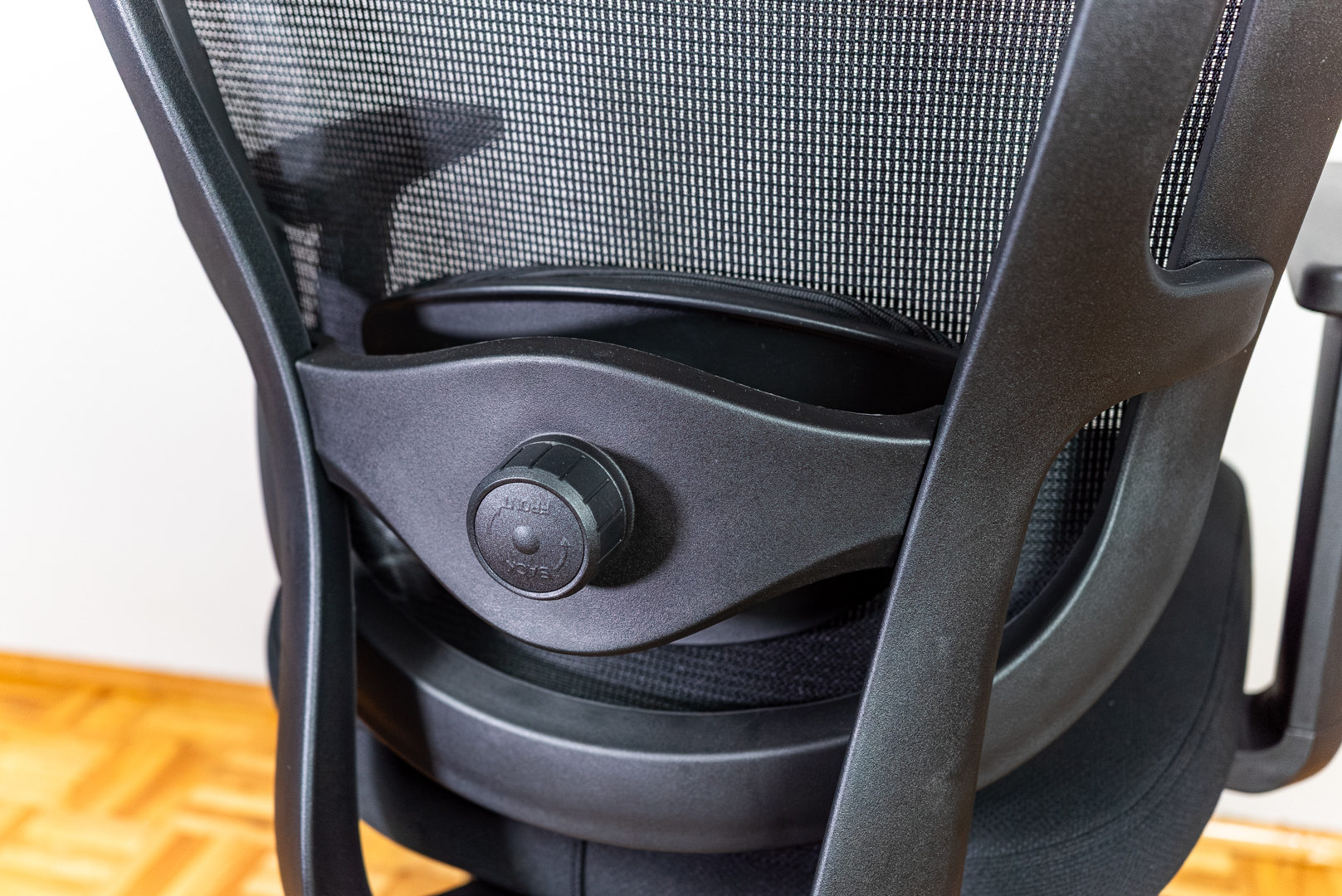
Let's take a closer look at the individual components of the Sharkoon OfficePal C10, starting with the backrest. Unlike some models, it isn't integrated with the headrest, but it does feature built-in lumbar support, which can be adjusted in two planes: forward-backward and up-down. Unfortunately, at my height (190 cm / 6'2"), the lumbar support sat too low, and the backrest itself felt noticeably short. As a result, it didn't provide sufficient support, making longer sessions less comfortable compared to chairs better suited to my body type.
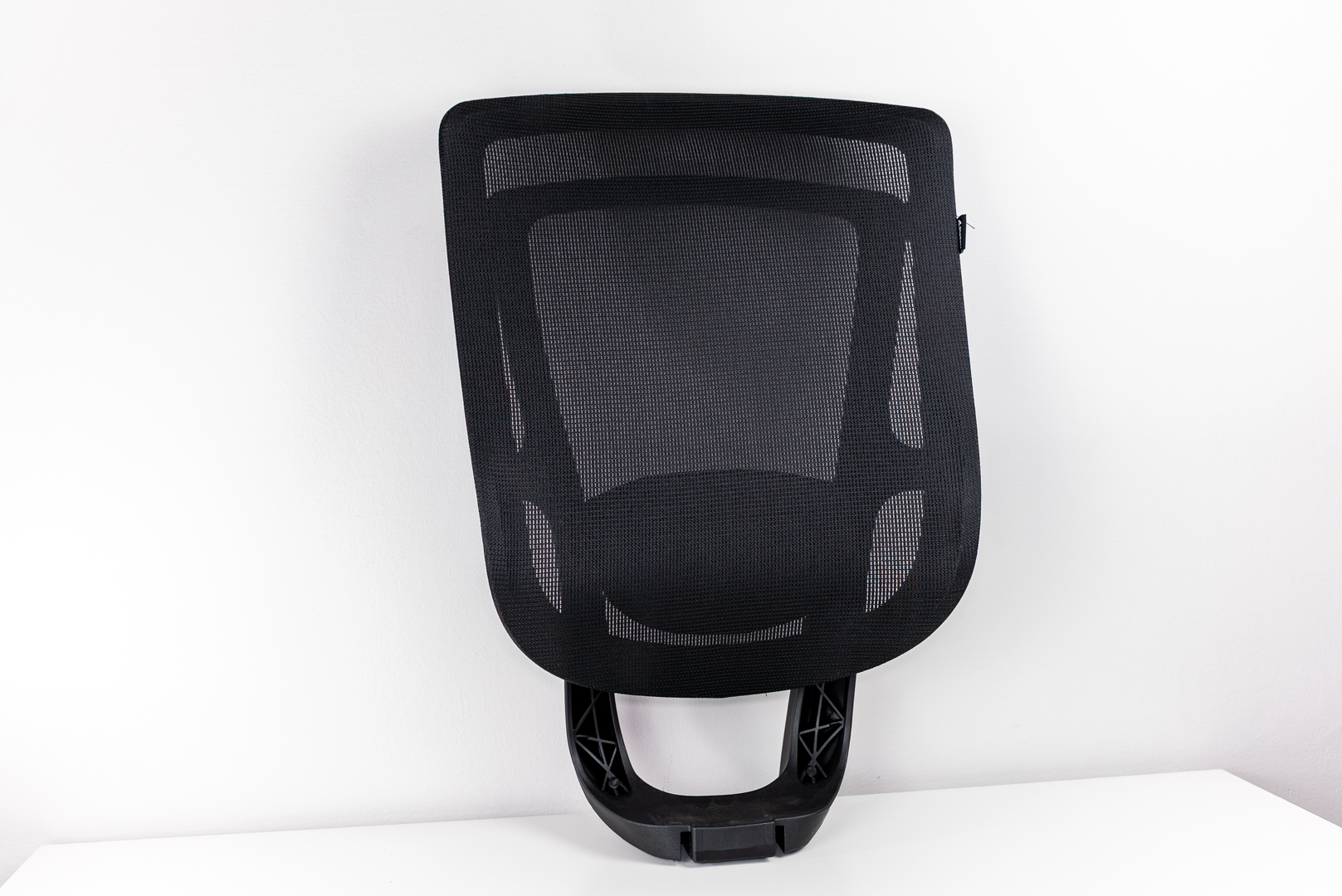
The backrest connects to the seat using a stand that slides into the tilt mechanism—a clever and sturdy design, at least from a usability standpoint. However, its only real adjustment is tilt; there's no way to customize height or depth beyond that. As with several other components of this chair, the finishing leaves something to be desired. Some of the edges are sharp, which detracts from overall comfort. On the plus side, the mesh is well-balanced—not too soft, not too stiff—which makes it a decent choice in terms of breathability and feel.
It's also worth noting that users with broader shoulders may find the backrest too narrow for full comfort.
Seat
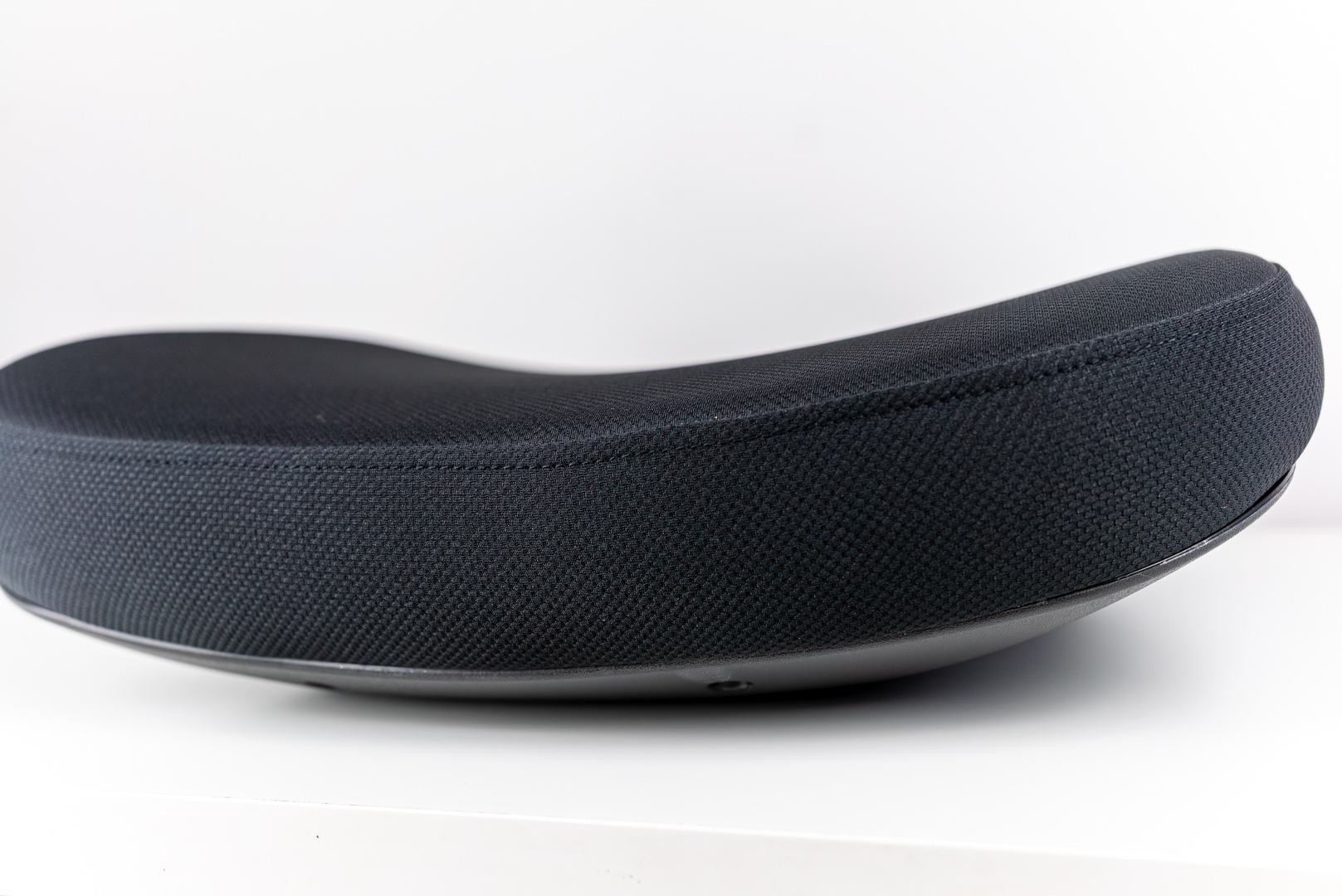
The seat itself doesn't stand out for its softness—in fact, despite having a foam filling, it leans more toward the medium-firm end of the spectrum. For some users, it may even feel outright hard. That said, the dimensions—50 x 50 cm (19.7 x 19.7 in)—are generous enough to allow for a reasonably comfortable seating position in terms of space. The upholstery is a fabric that, interestingly, feels somewhat similar to a thick mesh. Unfortunately, it's not the most pleasant material to the touch.
On the positive side, the seat cover is well-fitted and neatly stitched, which isn't something that can be said for all parts of this chair, as highlighted earlier in the review. During assembly, the seat proved to be very lightweight, and from underneath, you can spot what appears to be a layer of wood or plywood. This likely serves as structural reinforcement, though it also contributes to the firm overall feel of the seat.
Armrests
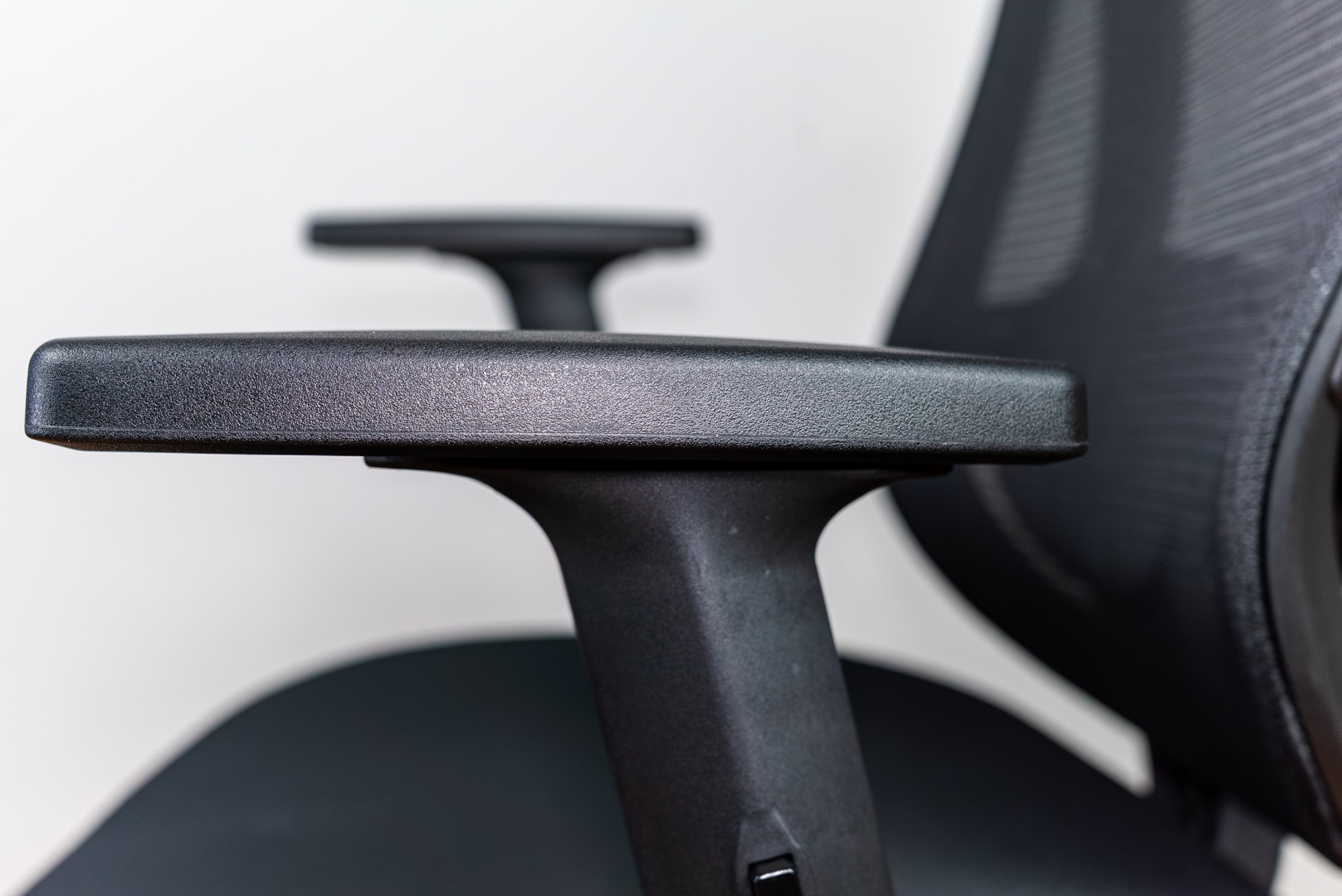
Moving on to the armrests, these are arguably the cheapest-feeling component of the entire Sharkoon OfficePal C10. Their functionality is limited to a single plane of adjustment—up and down—offering none of the multidirectional flexibility seen in higher-end chairs. Additionally, I found them to be positioned too far forward and noticeably narrow, which compromises overall comfort. In terms of length, however, they are adequate.
Build quality leaves something to be desired. The previously mentioned imperfections in finish are also evident here, particularly around the upholstery, where unevenly edged seams are both visible and tactile. That said, the upholstery material itself feels pleasant to the touch, even if the internal padding is on the firmer side and lacks the softness some users may prefer.
Base and Wheels
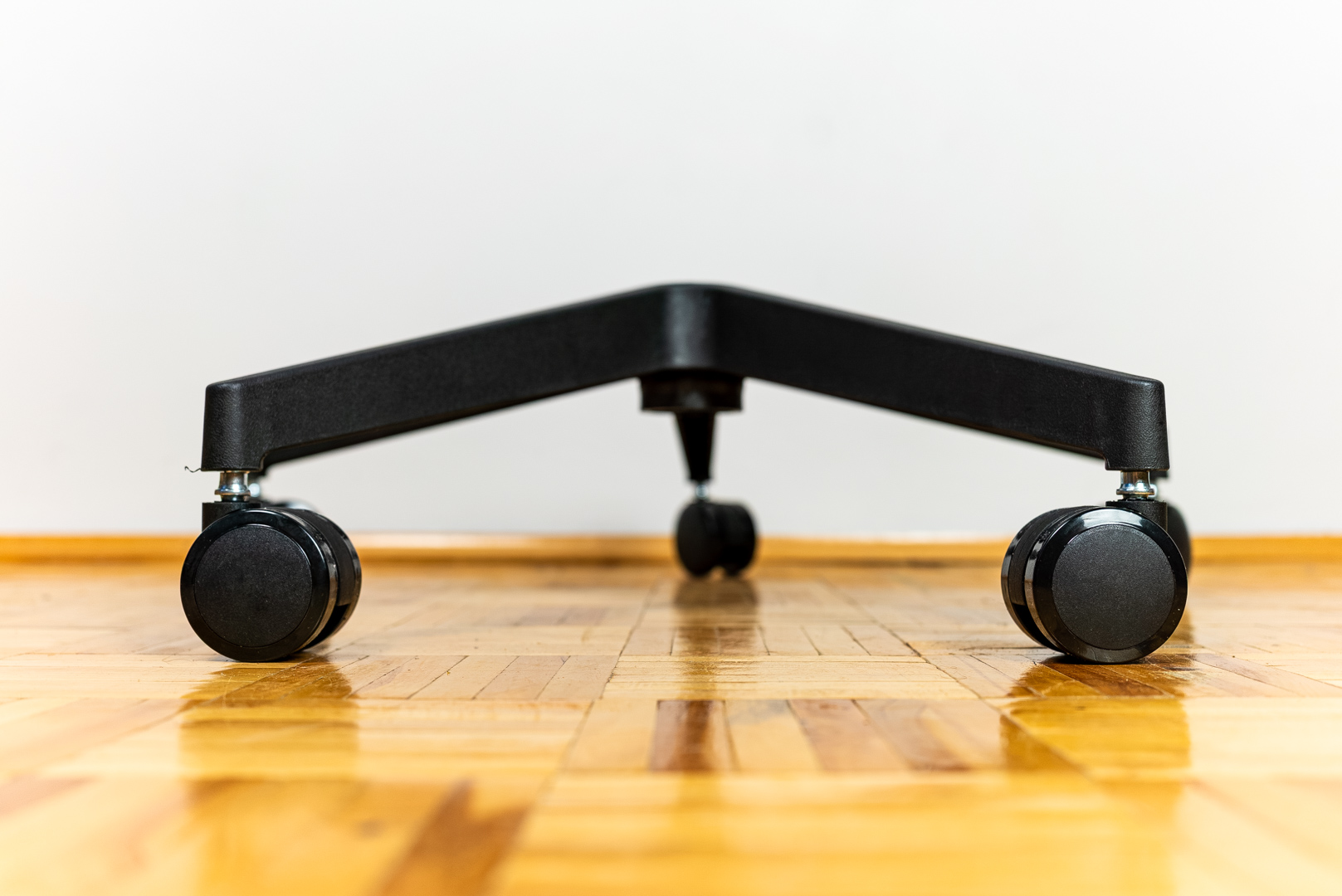
Like many components of the Sharkoon OfficePal C10, the base is made of nylon (plastic). While this might not sound particularly premium, it doesn't negatively impact the chair's functionality. It performs its role well and shows minimal signs of manufacturing defects or structural weaknesses.
As for the casters, they are entirely average. There's little to either criticize or praise—they do their job adequately. One positive note is that installation was quick and hassle-free. In terms of performance, they produce a slight amount of noise during movement, but nothing that would bother most users—especially those wearing headphones.
Headrest
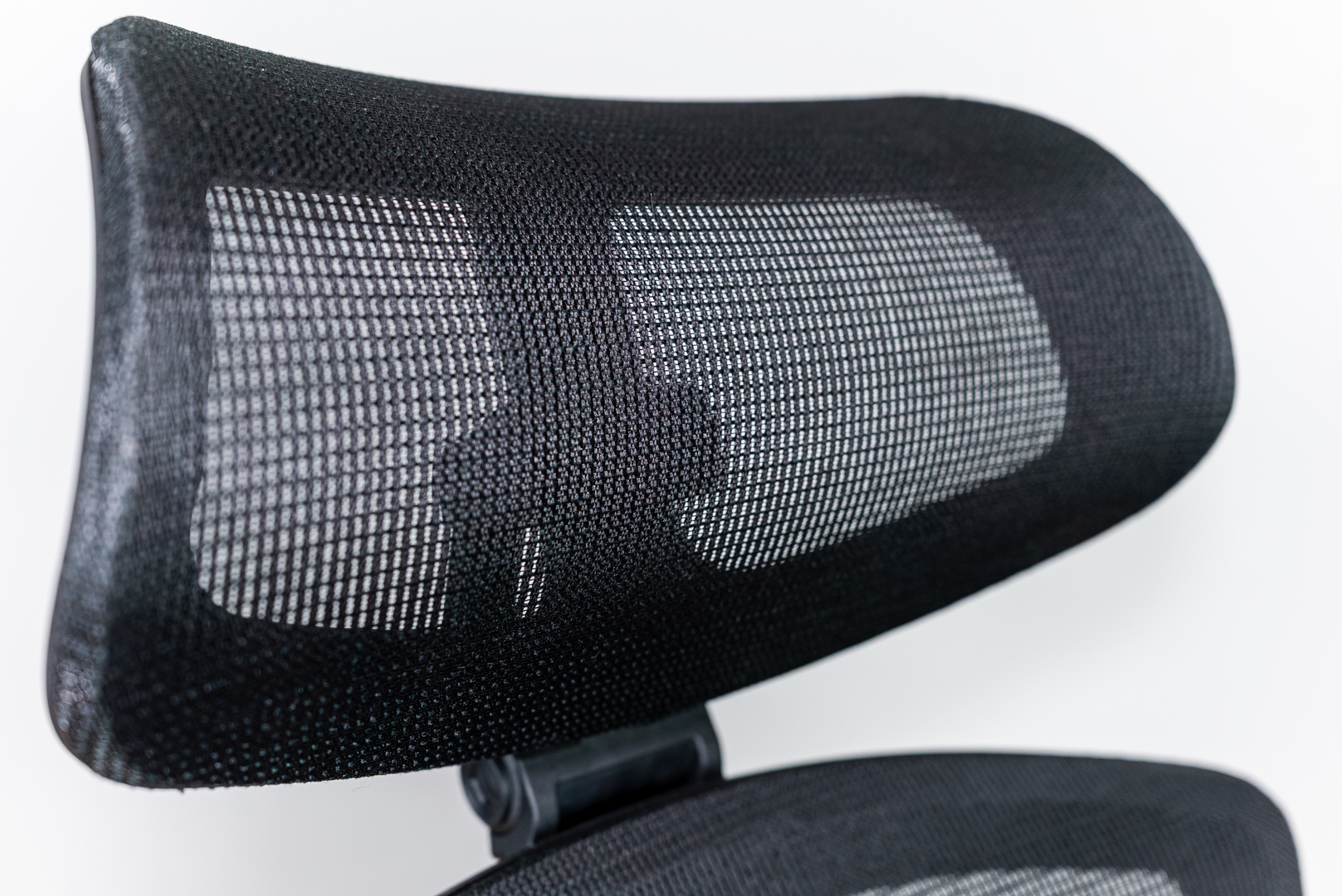
Now let's talk about the headrest. It offers adjustment in two main planes—up/down and front/back—as well as the ability to tilt, which puts it somewhere in the range of "two and a half" axes of customization. However, adjusting it requires a fair bit of force, which might not be ideal for everyone. Additionally, the mechanisms aren't quiet: the up/down movement produces an audible skipping sound from the adjustment teeth, while the other movements can cause metallic clattering as it locks into place.
As with several other components, there's an issue with how the mesh upholstery is fitted—it lacks precision and neatness. But when it comes to comfort, the bigger concern is its positioning. For taller users, the headrest sits far too low, making it essentially unusable. That said, if you're within the height range recommended by the manufacturer (<180 cm / 5'11"), it should offer a decent degree of adjustability to meet your needs. The mesh itself is on the firmer side, and the headrest is relatively wide, which may help in providing better support for the head and neck.
Nov 25th, 2026 08:24 CST
change timezone
Latest GPU Drivers
New Forum Posts
- Increasing Power Limit? (35)
- Claude credits purchased on or after Dec. 7 now have an expiry date (0)
- Ryzen Owners Zen Garden (8566)
- WarpCoreBench scores! (104)
- Sexy Hardware Close-Up Pic Clubhouse. (10344)
- {NA} 2026 Black November prices / deal (6)
- Smokin Hot Lappy (1)
- What is the latest game you finished or 100% (205)
- The time has come to upgrade...my desktop (20)
- Can you guess Which game it is? (358)
Popular Reviews
- ASRock X870E Challenger Wi-Fi White Review
- Microsoft Surface Laptop Ultra Review - The Next-gen Arm Laptop
- VZMORE AX9 Max Review
- Upcoming Hardware Launches 2027 (Updated Nov 2026)
- AMD Ryzen 7 9800X3D Review - The Best Gaming Processor
- AMD Zen 6 Technical Deep Dive
- Corsair RM1200e (Second Generation) Review
- Phantom Blade Zero Performance Benchmark Review - 35 GPUs Tested
- Pulsar Office Tour & First Look at P1 Dual-Sensor Mouse
- Ocypus lota P1000 Review
TPU on YouTube
Controversial News Posts
- Jensen Huang Reinstated as CEO of NVIDIA (555)
- NVIDIA Co-Founder and CEO Jensen Huang Officially Resigns (492)
- Report: Jensen Huang Eyes NVIDIA Comeback (281)
- Open Letter Asking NVIDIA to Reinstate Jensen Huang Passes 115,000 Signatures (184)
- OpenAI CEO Argues Home PCs Waste the World's Limited DRAM Supply (152)
- NVIDIA Launches Investigation Into Jensen Huang's Relationship With Suspected Chinese Spy (136)
- Intel "Raptor Lake Next" 16-Core and 20-Core CPUs Surface (130)
- Intel Razor Lake Gets a 12 P-Core bLLC Chip With No E-Cores, Per Leak (94)