 31
Silicon Motion MonTitan 7.68 TB Review
(31 Comments) »Introduction

Silicon Motion is a global leader in NAND flash controllers powering a vast range of SSDs, from consumer devices to enterprise storage solutions. Known for its innovative controller architectures and firmware optimization, the company enables high performance, reliability, and energy efficiency across diverse storage applications, and has gained even greater recognition in the consumer market with its latest Gen 5 controller lineup.

The MonTitan series marks Silicon Motion's first venture into the PCIe 5.0 segment for enterprise SSDs, available in both 1 DWPD and 3 DWPD variants. These drives offer broad compatibility with the latest NAND flash technologies on the market, making them a flexible choice for a wide range of deployment needs.
The MonTitan SSD is available in capacities ranging from 3.84 TB to ultra-high densities of up to 128 TB, supporting the latest NAND flash dies on the market. Unfortunately, Silicon Motion does not disclose estimated pricing for these units. Unlike how Phison operates, this model is not sold directly by Silicon Motion; instead, it will appear in future products from other manufacturers. A similar example would be Seagate's U.2 Nytro series, which leverages Phison's own designs. The unit we are testing is the 7.68 TB SKU, rated for 1 DWPD, which translates to 14,016 TB of total endurance. Other capacities, such as 3.84 TB and 15.36 TB, provide 7,008 TB and 28,032 TB of endurance, respectively.
| Specifications: MonTitan SM8366 SSD | |
|---|---|
| Brand: | Silicon Motion |
| Model: | MonTitan Enterprise PCIe Gen 5 SSD |
| Capacity: | 7680 GB (7152 GB usable) 7% overprovisioning |
| Controller: | Silicon Motion SM8366 MonTitan |
| Flash: | Micron 3D eTLC 232-Layer B58R FortisMax 1 Tb C-Die MT29F8T08EULCHD5-T:C (NY183) |
| DRAM: | 12 GB (6x 2 GB) DDR5-5600 SK Hynix H5CG46AGBDX-017 |
| Sequential Read Speeds: | 14,200 MB/s |
| Sequential Write Speeds: | 9,400 MB/s |
| Random Read Speeds: | 3,500 K IOPS |
| Random Write Speeds: | 450 K IOPS |
| Endurance: | 14016 TBW 1.0 DWPD |
| MTBF: | 2 Million |
| Form Factor: | U.2 15 mm |
| Interface: | PCIe Gen 5 x4, NVMe 2.0 |
| Firmware: | TNBSA060 |
| Warranty: | Five years |
| Price at Time of Review: | N/A |
Packaging

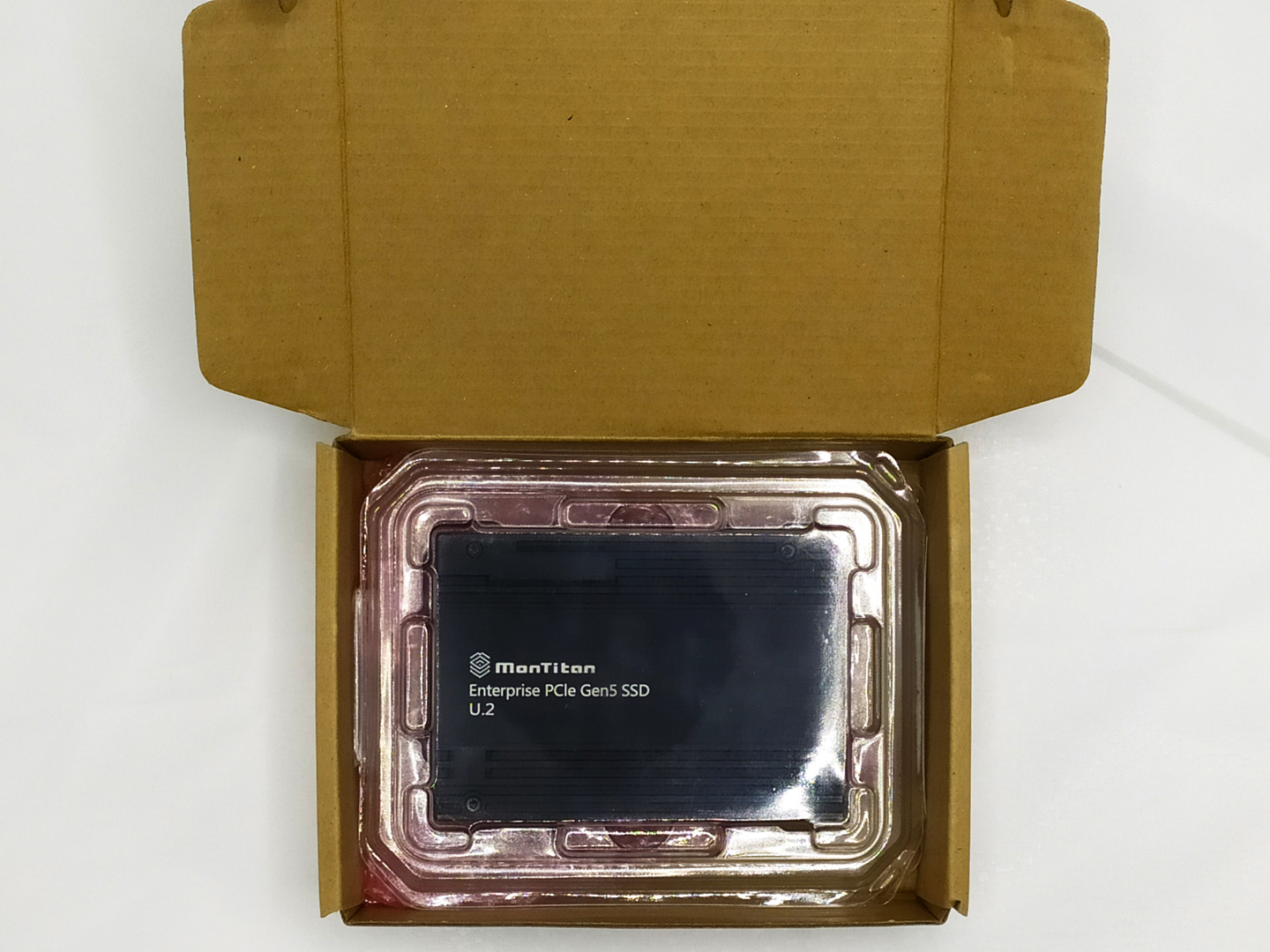
The SSD comes packaged in a plain brown cardboard box with protective foam inserts on both sides to safeguard the drive during transit. It's a simple and utilitarian presentation—typical for enterprise-grade products, where flashy consumer-style packaging with elegant designs is generally unnecessary.
The Drive
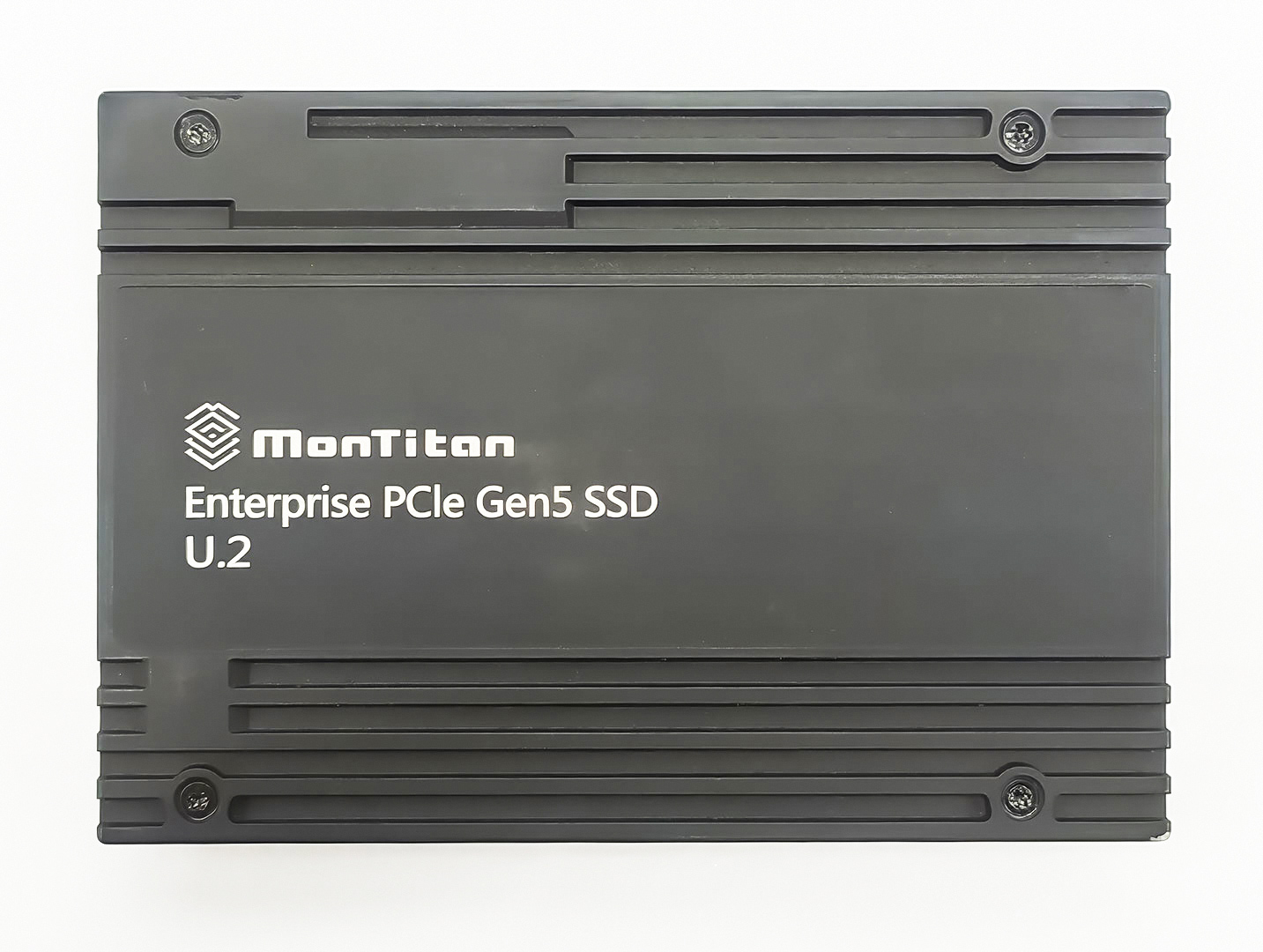
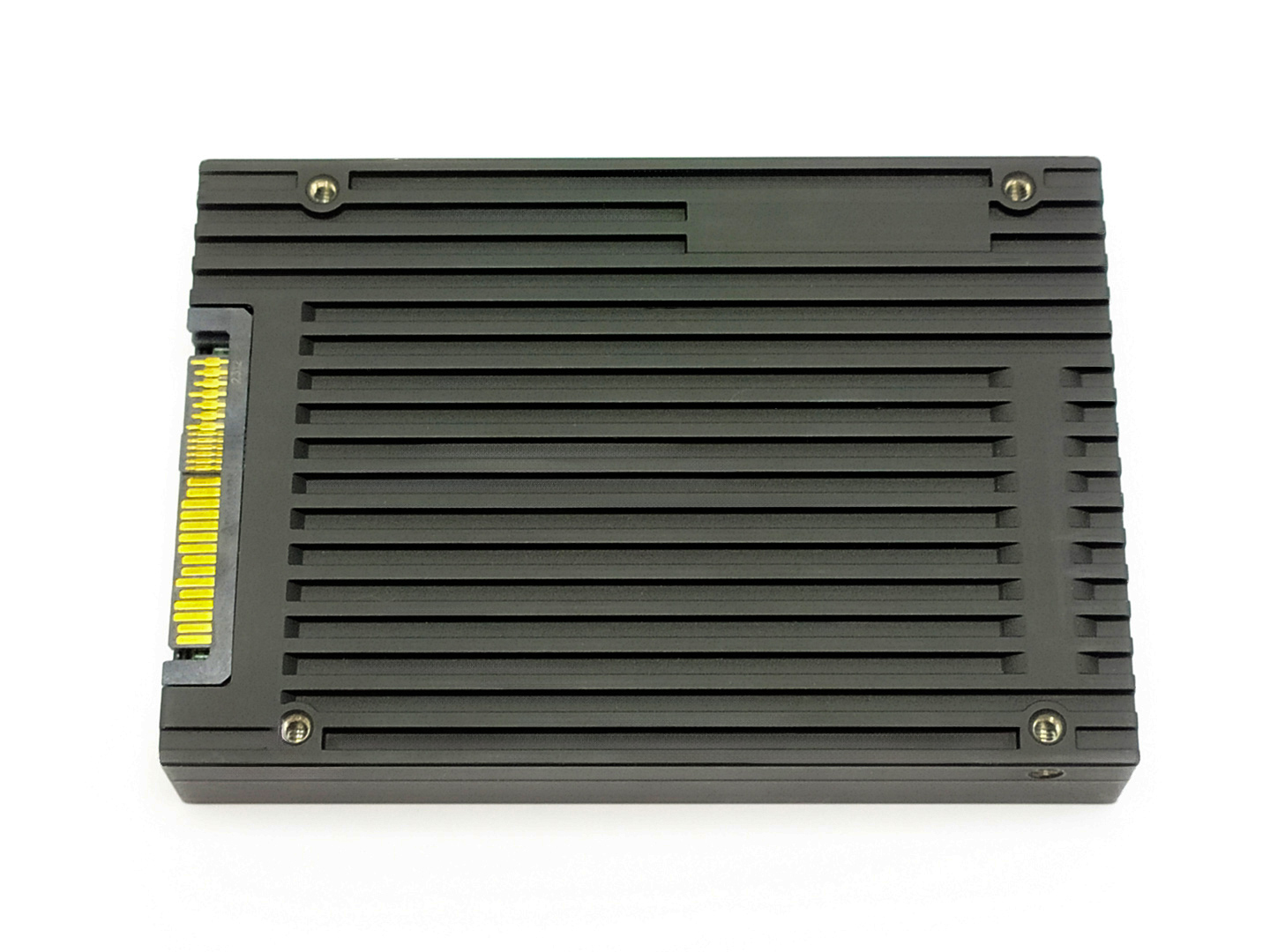
These SSDs are available in multiple form factors. The unit we received uses the U.2 15 mm format with the SFF-8639 connector, although Silicon Motion offers these SSDs in multiple form factors, such as the EDSFF E1.S and E3.S families, the front of the drive features nothing more than its name, etched directly onto the aluminium casing. The back, on the other hand, is completely clean, with no markings or information at all.
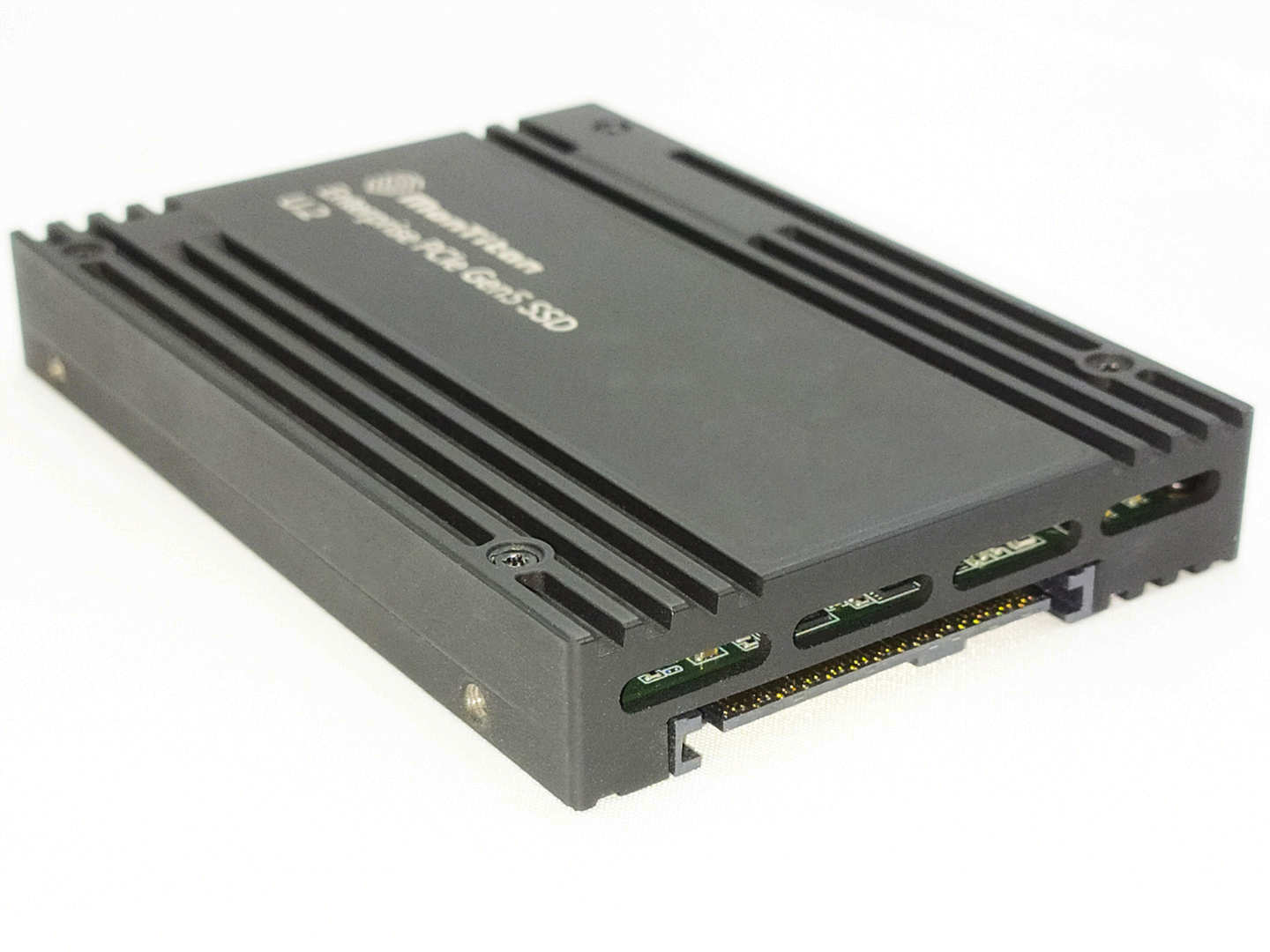
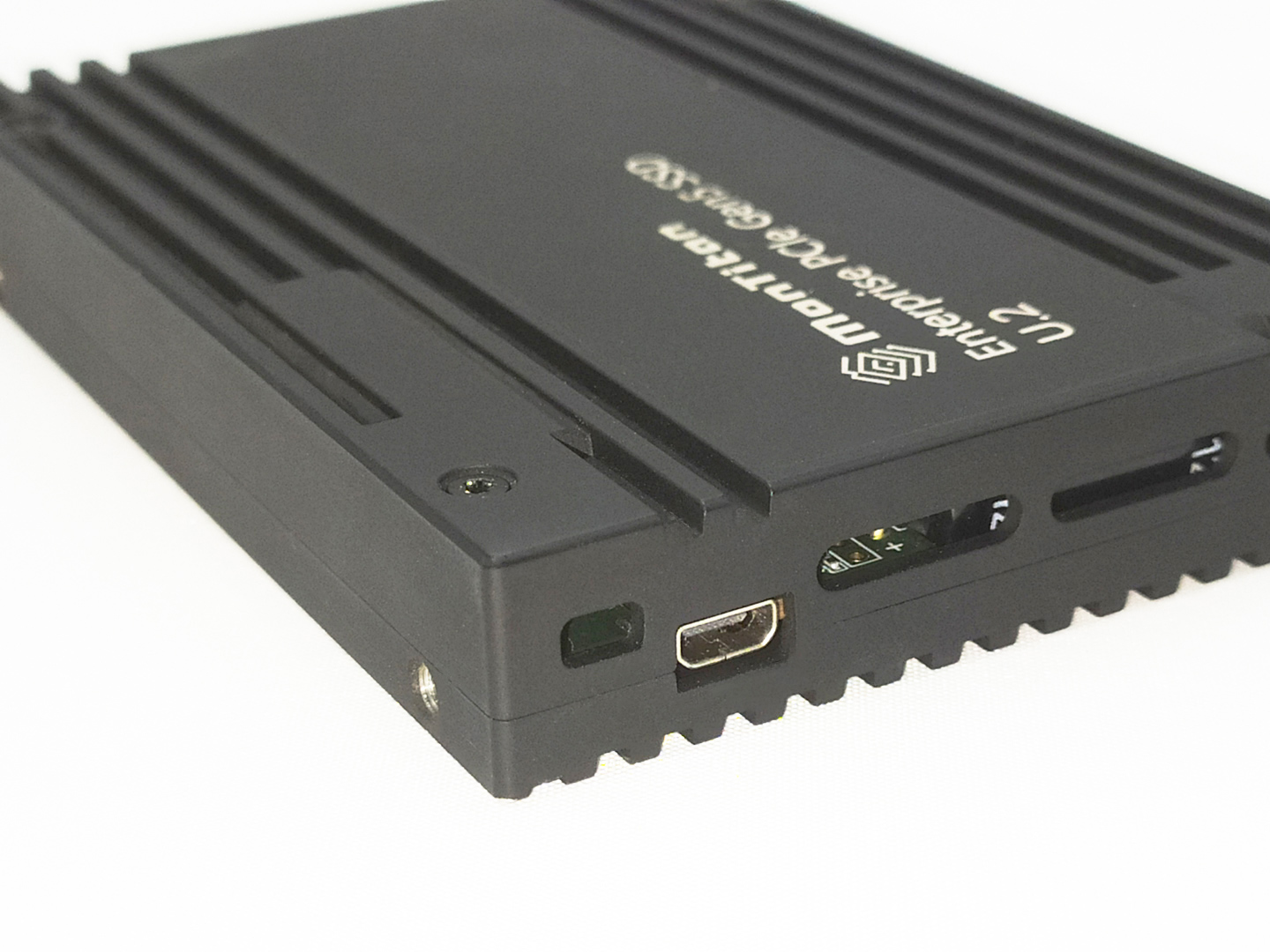
PCI-Express 5.0 x4 is used as the host interface to the rest of the system, alongside the NVMe 2.0 protocol. In addition, on the opposite side of the U.2 connector, there is a micro-USB port used for debugging via the UART protocol.
Teardown
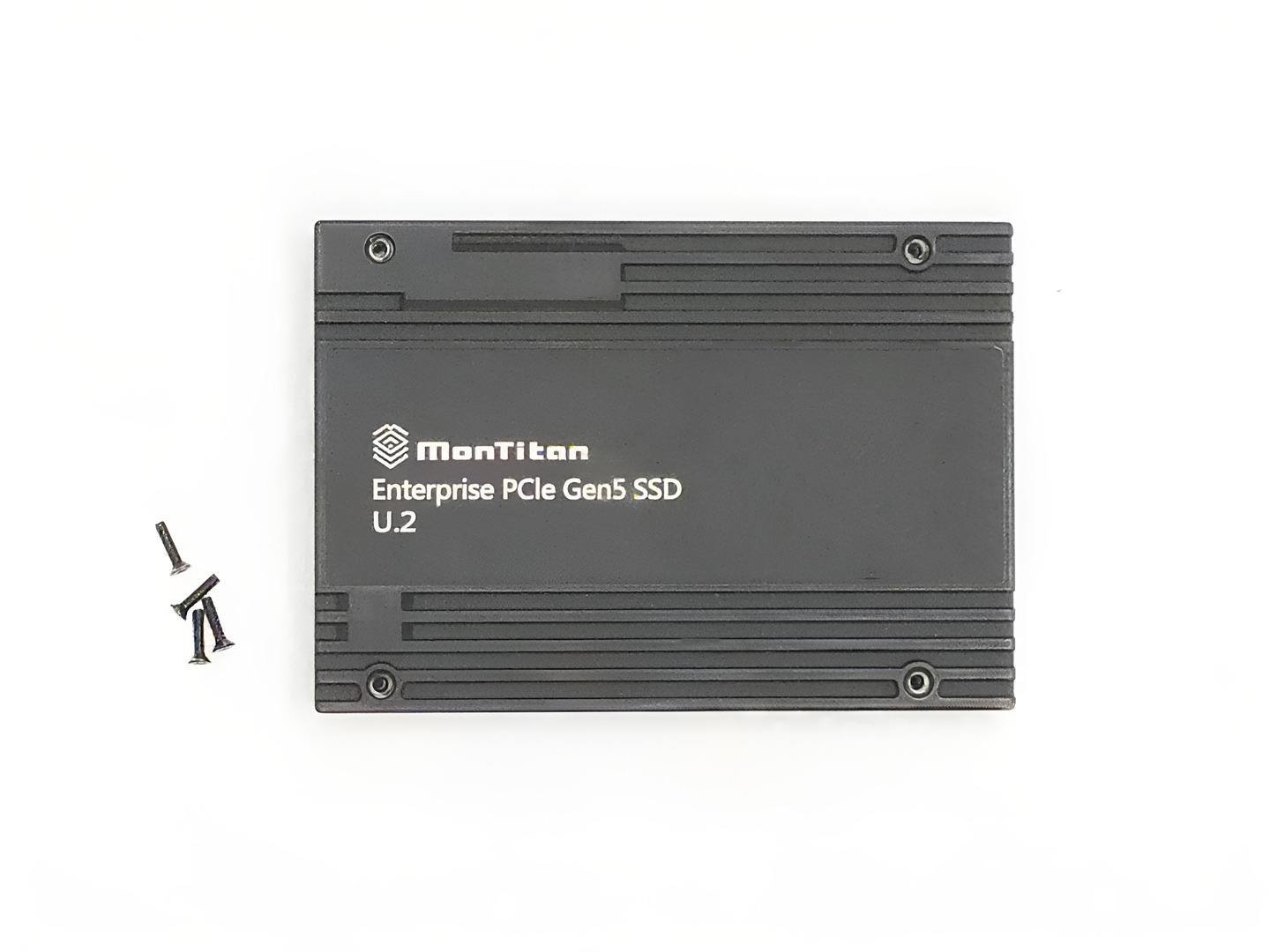
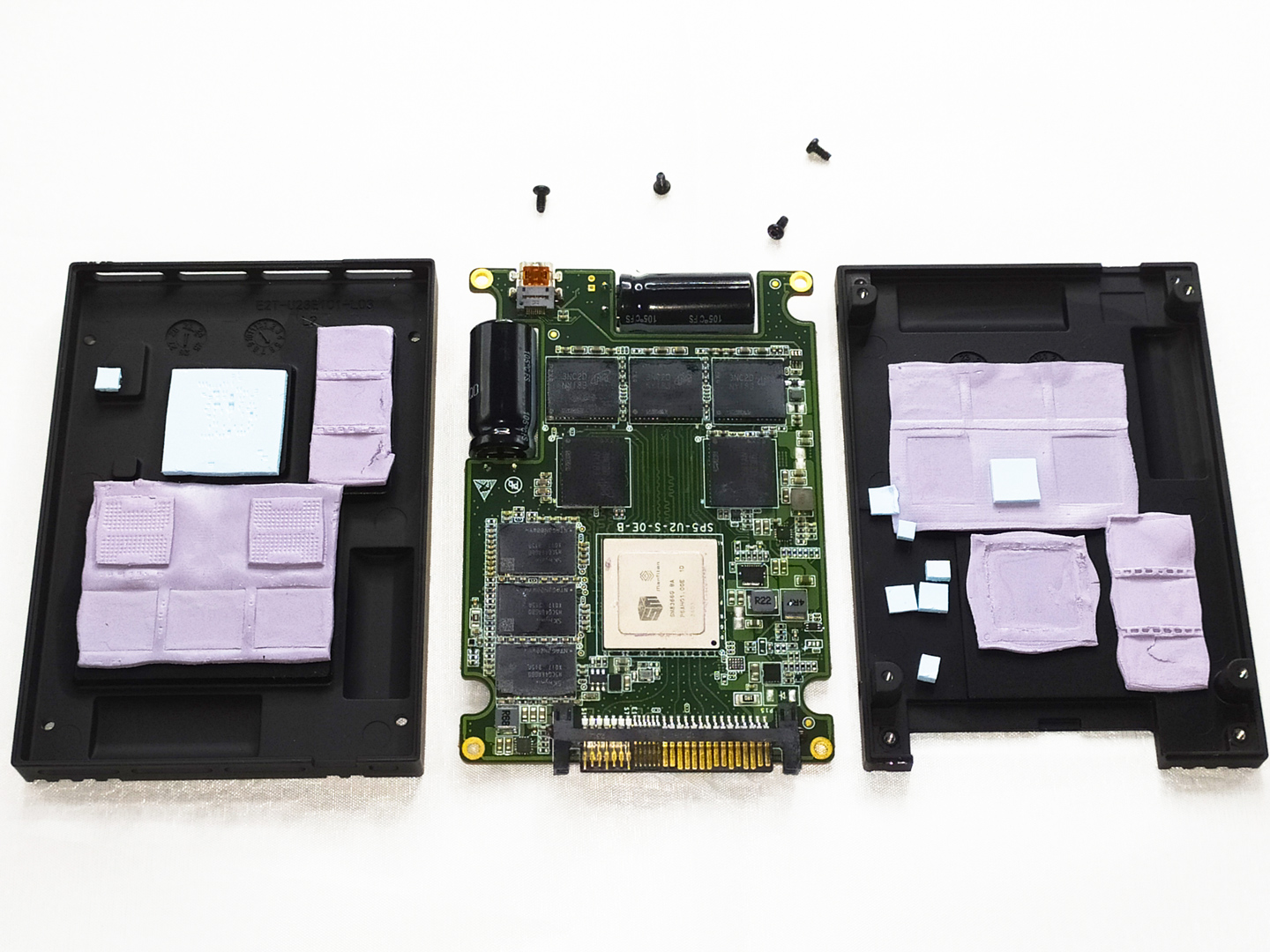
Upon opening the SSD, we see that it's secured with four Torx T-6 screws. Once removed, the front side of the PCB is revealed, firmly attached to the metal housing via several thermal pads that help dissipate heat from key components.


Next, after detaching the PCB from the enclosure, both sides of the board become visible, besides the interior of the metal casing. The opposite side is also lined with what appear to be high-performance thermal pads, further emphasizing the design's focus on effective cooling.
Controller
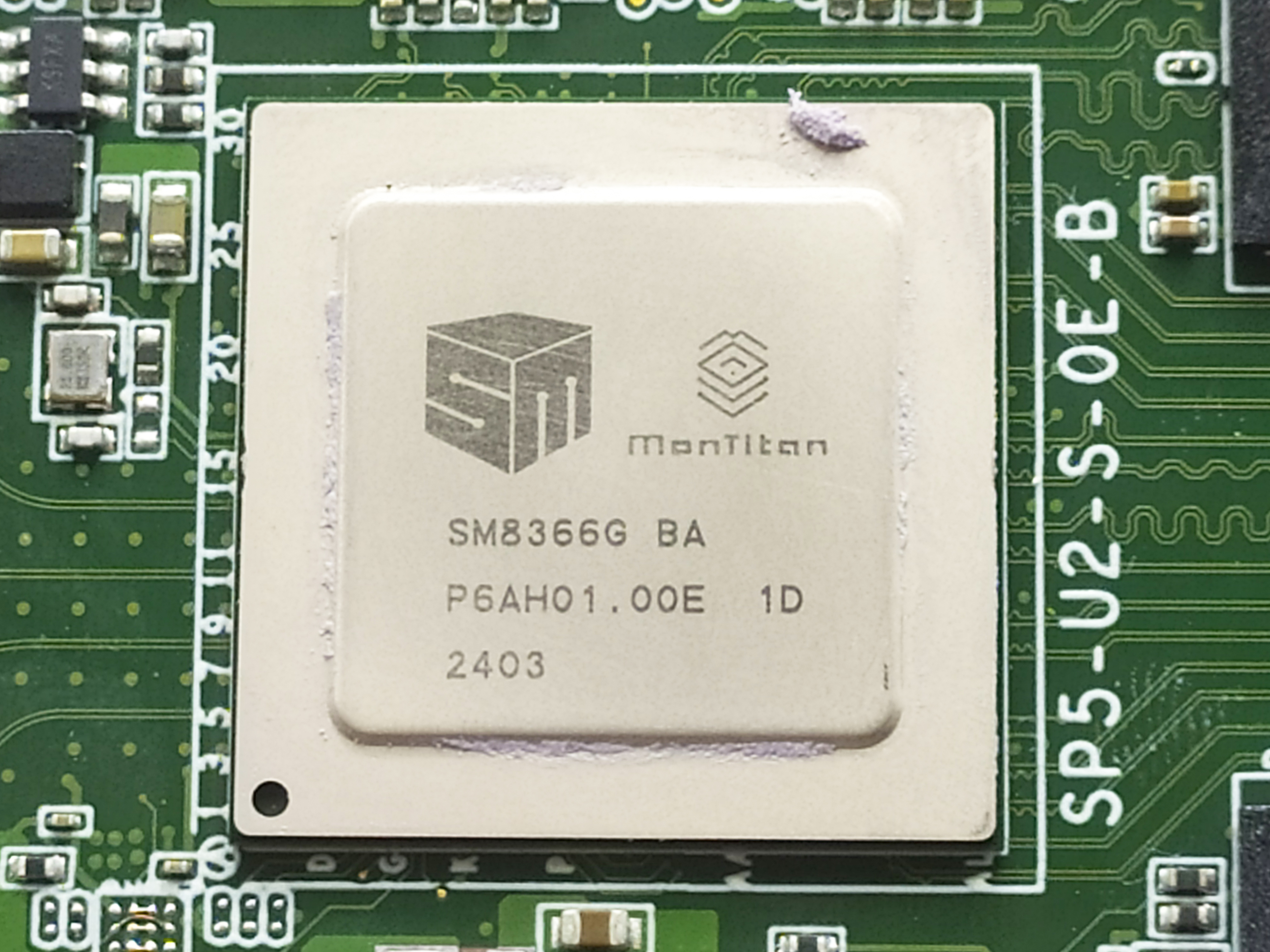
This MonTitan SSD lineup features Silicon Motion's new SM8366 Gen 5 enterprise controllers. Built on a 64-bit Arm architecture, the SM8366 integrates eight Cortex-A55 cores running at 1.4 GHz. It supports up to 16 NAND Flash channels with interface speeds of up to 2400 MT/s—enabling it to fully leverage the performance of nearly all modern NAND dies available today. The controller is also compatible with DRAM cache using DDR4 (up to 3200 MT/s) or DDR5 (up to 4800 MT/s), ensuring fast and efficient data handling.
The controller is manufactured using TSMC's well-known and widely adopted 12 nm FinFET process, offering a good balance between power efficiency and performance for enterprise-grade SSD applications.
It's interesting to see a Cortex-A series core like the 64-bit Arm Cortex-A55 used in an enterprise U.2 SSD controller, as most consumer-grade SSDs typically rely on real-time Cortex-R cores like the R5 or R8. The Cortex-A55, however, brings a higher level of processing power with out-of-order execution, a richer instruction set, and support for multithreaded operations. This makes it ideal for handling complex enterprise tasks such as advanced LDPC error correction, real-time telemetry, power management, and I/O coordination across many NAND channels. Its ability to support large DRAM caches, encryption, and workload balancing is crucial in data center environments where reliability, consistency, and scalability take priority over the alternative performance focuses of consumer drives.
The Cortex-A55 core isn't exclusive to enterprise hardware, it's also commonly found in smartphones and tablets. Designed for power efficiency and capable performance, it strikes a balance between low energy consumption and computational throughput, making it well-suited for mobile devices as well as high-end SSD controllers that demand both efficiency and parallel processing capabilities.
Our Patreon Silver Supporters can read articles in single-page format.
Nov 22nd, 2026 11:01 CST
change timezone
Latest GPU Drivers
New Forum Posts
- Honestly, do you care about GTA VI? (251)
- The TPU UK Clubhouse (27291)
- Can you guess Which game it is? (346)
- Your PC ATM (36451)
- Making a game in Godot engine (17)
- TPU's Nostalgic Hardware Club (22197)
- Ryzen or Intel system (20)
- Intel D270 (1)
- Gigabyte AORUS RTX 5080 MASTER – Up to 30°C GPU Hotspot Delta! Is This Normal, a Cooling Defect, or Should I RMA? (14)
- How to prevent OLED burn damage due to PC freezes or power outtages? (55)
Popular Reviews
- Microsoft Surface Laptop Ultra Review - The Next-gen Arm Laptop
- Corsair RM1200e (Second Generation) Review
- Pulsar Office Tour & First Look at P1 Dual-Sensor Mouse
- Upcoming Hardware Launches 2027 (Updated Nov 2026)
- Ugreen NASync DXP4800 GT Review
- AMD Ryzen 7 9800X3D Review - The Best Gaming Processor
- Biwin Black Opal NV7400 2 TB Review
- AMD Zen 6 Technical Deep Dive
- Phantom Blade Zero Performance Benchmark Review - 35 GPUs Tested
- AMD Ryzen 7 5800X3D 10th Anniversary Review
TPU on YouTube
Controversial News Posts
- NVIDIA Co-Founder and CEO Jensen Huang Officially Resigns (492)
- Report: Jensen Huang Eyes NVIDIA Comeback (263)
- Open Letter Asking NVIDIA to Reinstate Jensen Huang Passes 115,000 Signatures (184)
- OpenAI CEO Argues Home PCs Waste the World's Limited DRAM Supply (152)
- NVIDIA Launches Investigation Into Jensen Huang's Relationship With Suspected Chinese Spy (136)
- Intel "Raptor Lake Next" 16-Core and 20-Core CPUs Surface (130)
- NVIDIA GeForce RTX 50-Series Scheduled for up to $500 Price Hike This Week (89)
- Intel Razor Lake Gets a 12 P-Core bLLC Chip With No E-Cores, Per Leak (86)