 8
Super Flower Leadex III ARGB Gold 650 W Review
(8 Comments) »Introduction

We would like to thank Super Flower for supplying the review sample.

Since I have evaluated every Super Flower Leadex III ARGB Gold (ETA-A on the Cybenetics scale) PSU but the 650 W unit, I felt it needed some love too. 650 W is enough to build a strong gaming system equipped with an Nvidia RTX 3070 or the upcoming AMD RX 6800. Besides the RGB fan, crystal cube connectors, and two instead of three ECO modes, there are no differences between the ARGB and non-ARGB Leadex III models. The latter are notably more affordable, with price differences ranging from €20 to €24. If you fancy RGB lighting, this is a small premium to pay, and you get the cube connectors, which look much better than the standard Molex connectors.
The Leadex III ARGB Gold 850 W, 750 W, and 550 W units performed excellently, so I have high expectations from the 650 W model.
Since no longer bound by their now expired EVGA "pact," Super Flower has entered the US market on its own. You will find their products on Newegg, but there might not be enough stock because of COVID. In Europe, two major online stores import Super Flower PSUs, Overclockers.co.uk and Caseking.de, and prices for the four Leadex III ARGB models with 550 W to 850 W maximum power output range from €110 to €150 including VAT.
Specifications
| Features & Specifications | |
|---|---|
| Max. DC Output | 650 Watt |
| PFC | Active PFC |
| Efficiency | 80 PLUS Gold, ETA-A (88%–91%) |
| Noise | LAMBDA-A (20–25 dBA) |
| Modular | Yes (fully) |
| Intel C6/C7 Power State Support | Yes |
| Operating Temperature | 0–50 °C |
| Protections | Over Voltage Protection Under Voltage Protection Over Power Protection Over Temperature Protection Over Current Protection Short Circuit Protection |
| Cooling | 130 mm fluid dynamic bearing fan (S1302412L) |
| Semi-passive Operation | Yes (selectable) |
| Dimensions (W x H x D) | 150 x 85 x 160 mm |
| Weight | 1.51 kg (3.33 lb) |
| Compliance | ATX12V v2.4, EPS 2.92 |
| Warranty | 7 years |
| Price at Time of Review (excl. VAT) | $140 |
| Power Specifications | |||||||
|---|---|---|---|---|---|---|---|
| Rail | 3.3 V | 5 V | 12 V | 5 VSB | -12 V | ||
| Max. Power | 20 A | 20 A | 54.1 A | 3 A | 0.5 A | ||
| 100 W | 649.2 W | 15 W | 6 W | ||||
| Total Max. Power | 650 W | ||||||
Photos
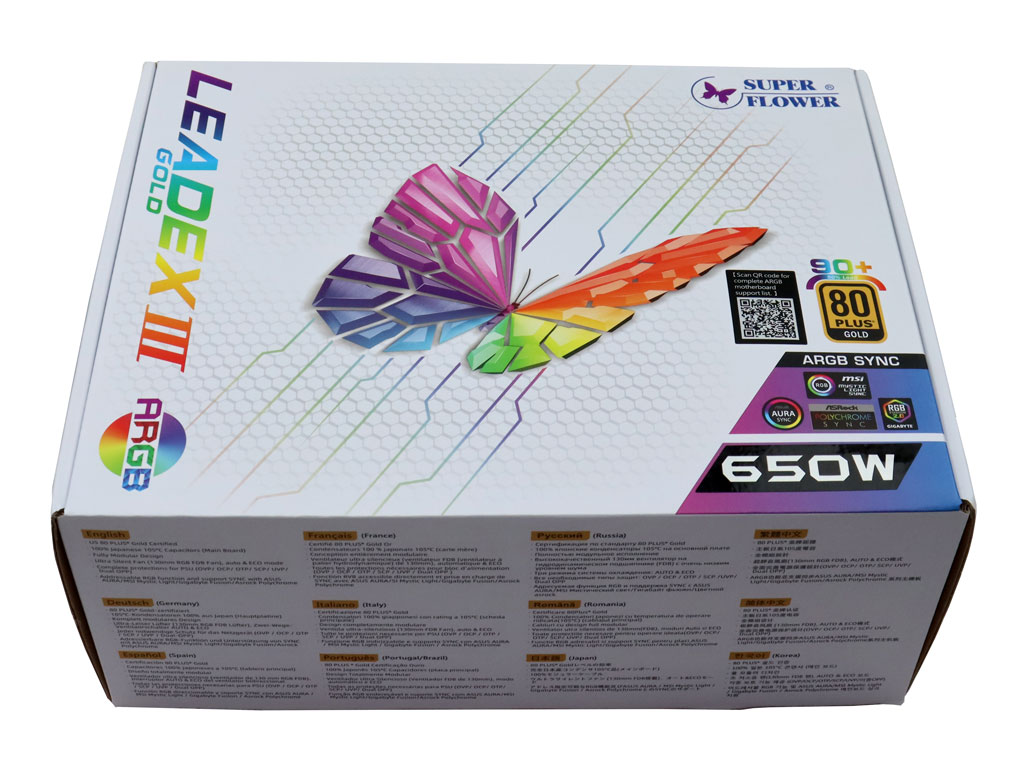
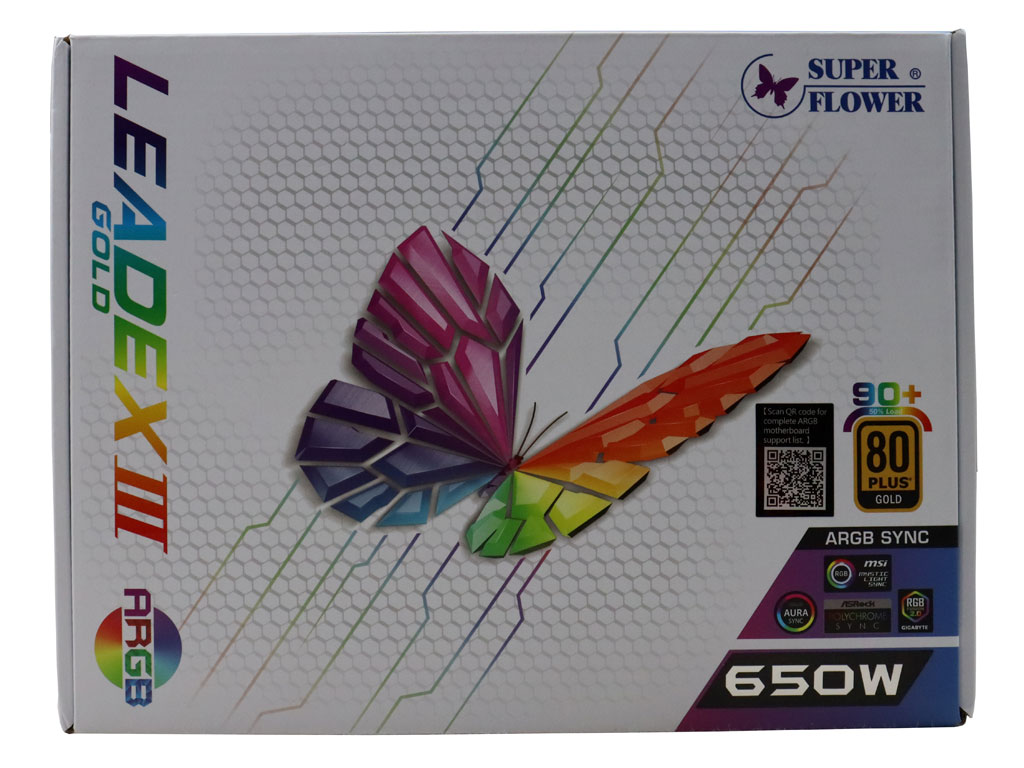

The box has an interesting design that focuses on the RGB colors.
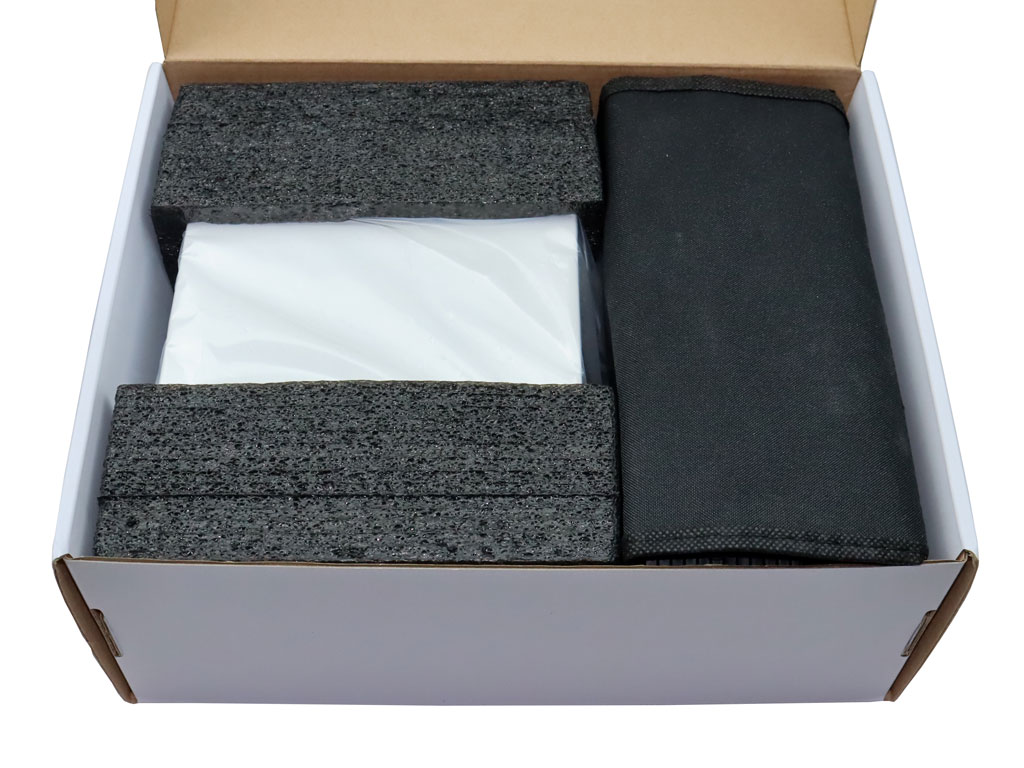
Protection for the product inside the box is adequate.
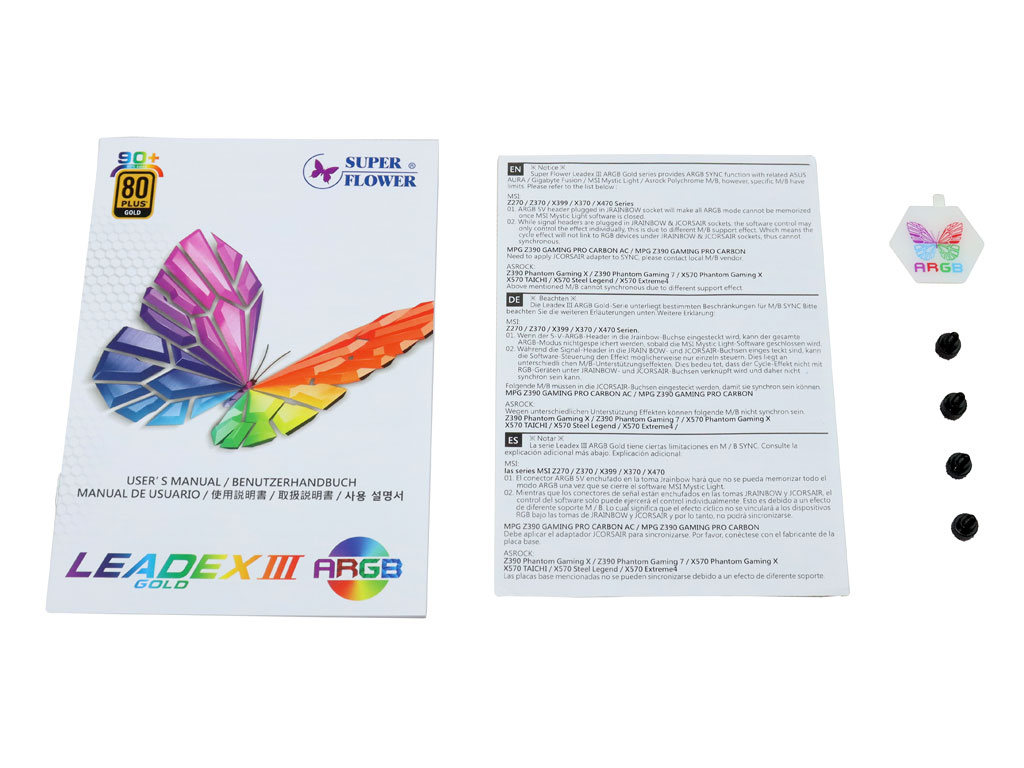
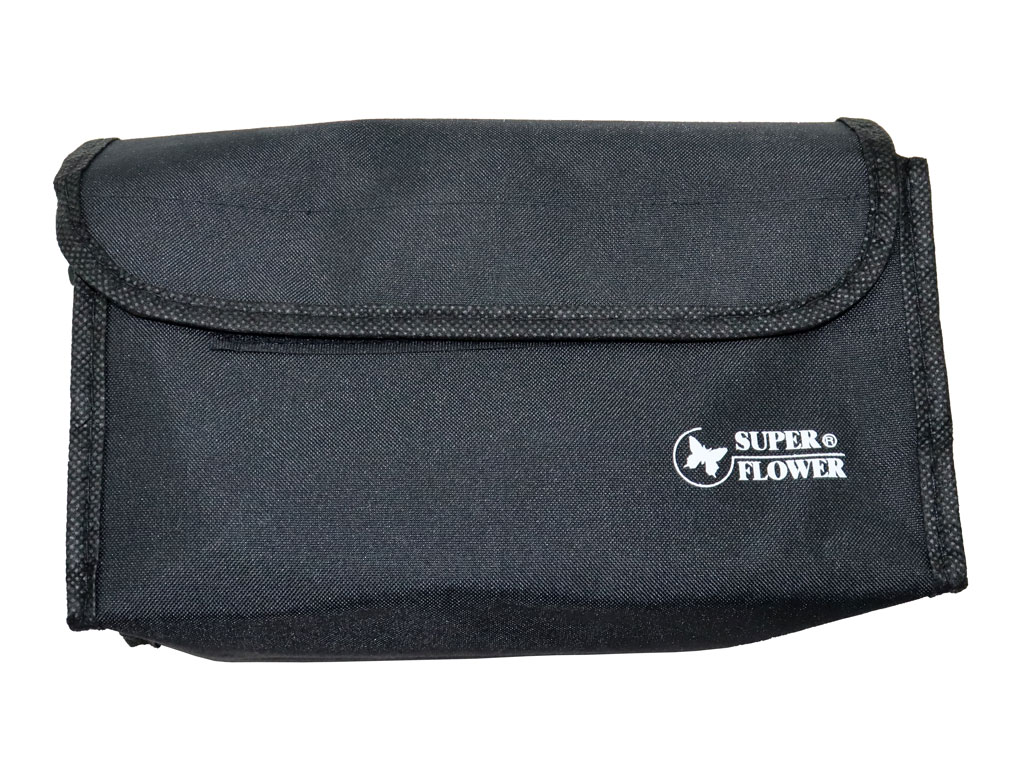
Besides the paperwork and a set of screws, you will also get a nice butterfly sticker, as well as a pouch containing all the modular cables.


With the addition of Corsair's CX-F line, you now have more options should you want a PSU featuring a white paint job. The only problem with the Corsair units is that they are nearly as much as their respective Super Flower Leadex III ARGB Gold counterparts, with the latter offering higher performance and increased efficiency.

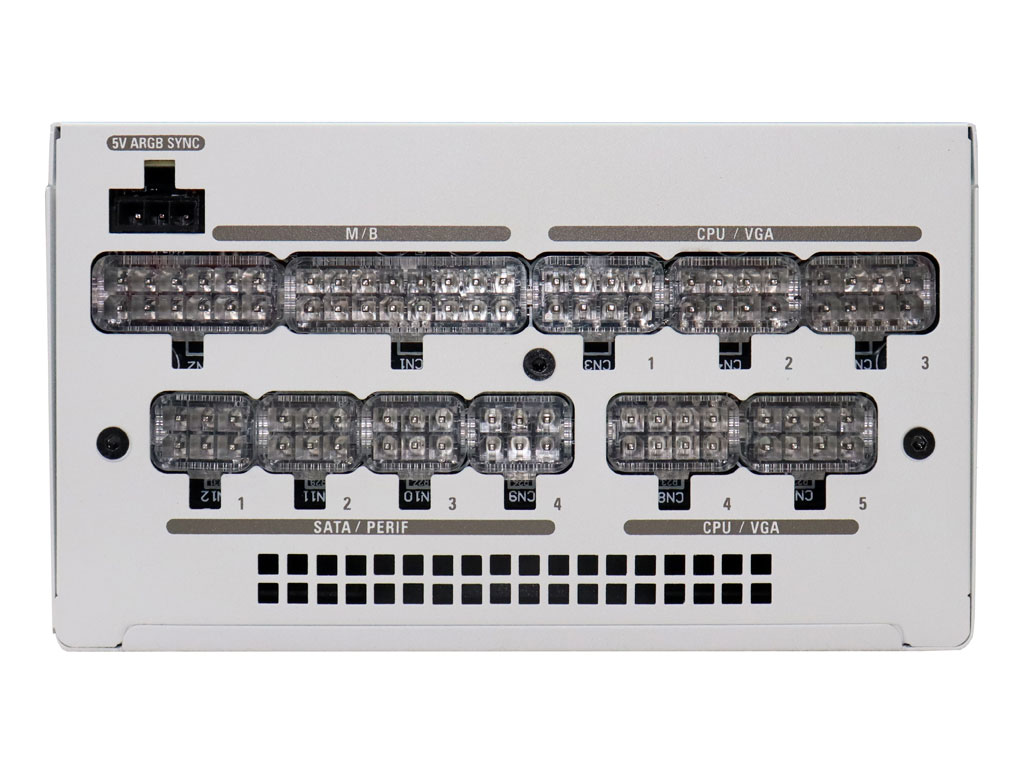

The cube-shaped modular connectors look nice, and lighting effects make them even more appealing.

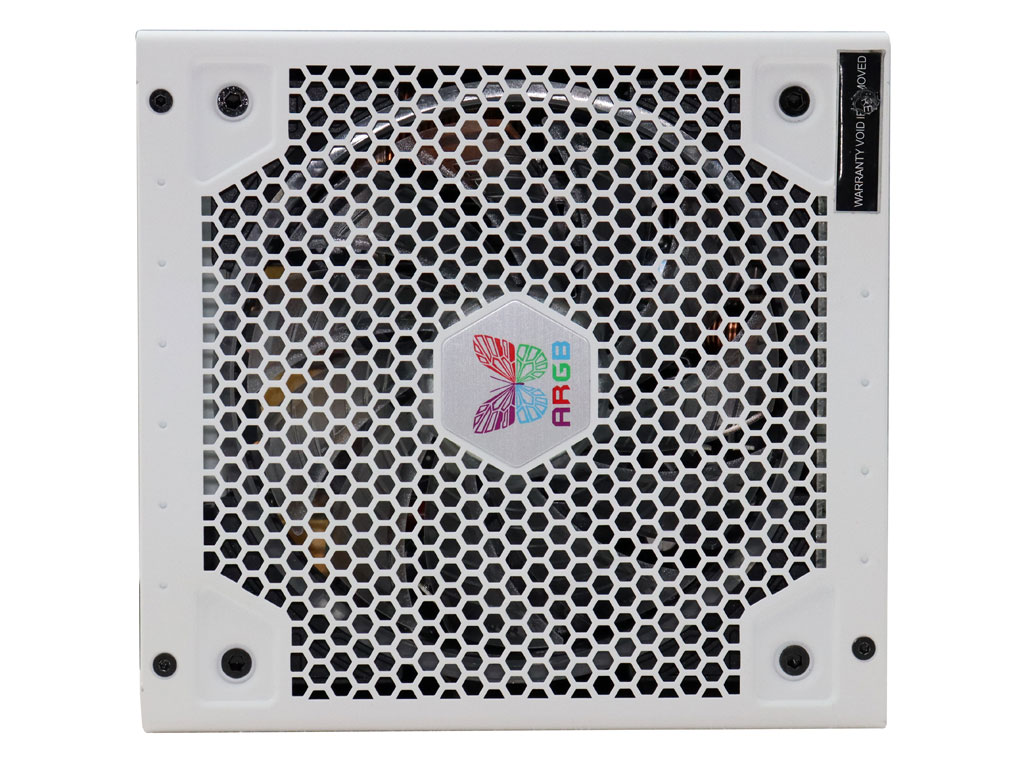

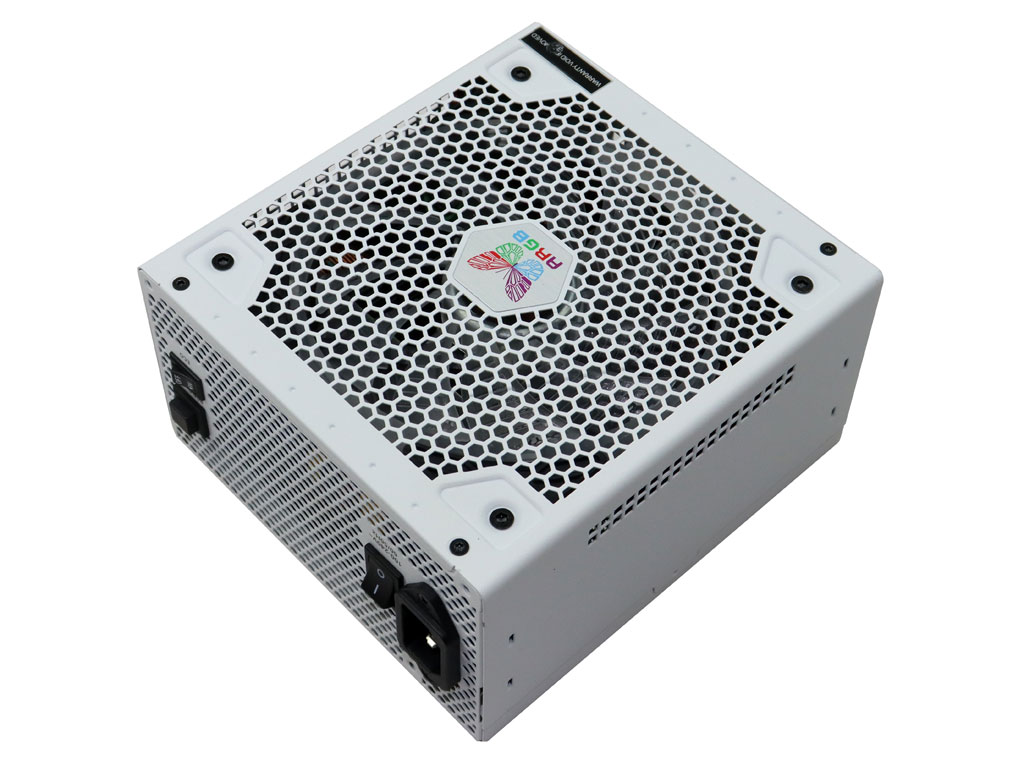
Dimensions are normal, so you won't run into installation issues with this PSU if you have an ATX-compatible case.
Cables and Connectors
| Modular Cables | ||||
|---|---|---|---|---|
| Description | Cable Count | Connector Count (Total) | Gauge | In Cable Capacitors |
| ATX connector 20+4 pin (590 mm) | 1 | 1 | 18-22AWG | Yes |
| 4+4 pin EPS12V (690 mm) | 2 | 2 | 18–22AWG | Yes |
| 6+2 pin PCIe (540 mm+150 mm) | 2 | 4 | 18–22AWG | Yes |
| SATA (550 mm+120 mm+120 mm) | 2 | 6 | 18AWG | No |
| 4-pin Molex (550 mm+100 mm+100 mm+100 mm) | 1 | 4 | 18AWG | No |
| ARGB Sync cable (550 mm+180 mm) | 1 | 2 | 28AWG | No |
| AC Power Cord (1380 mm) - C13 coupler | 1 | 1 | 18AWG | - |

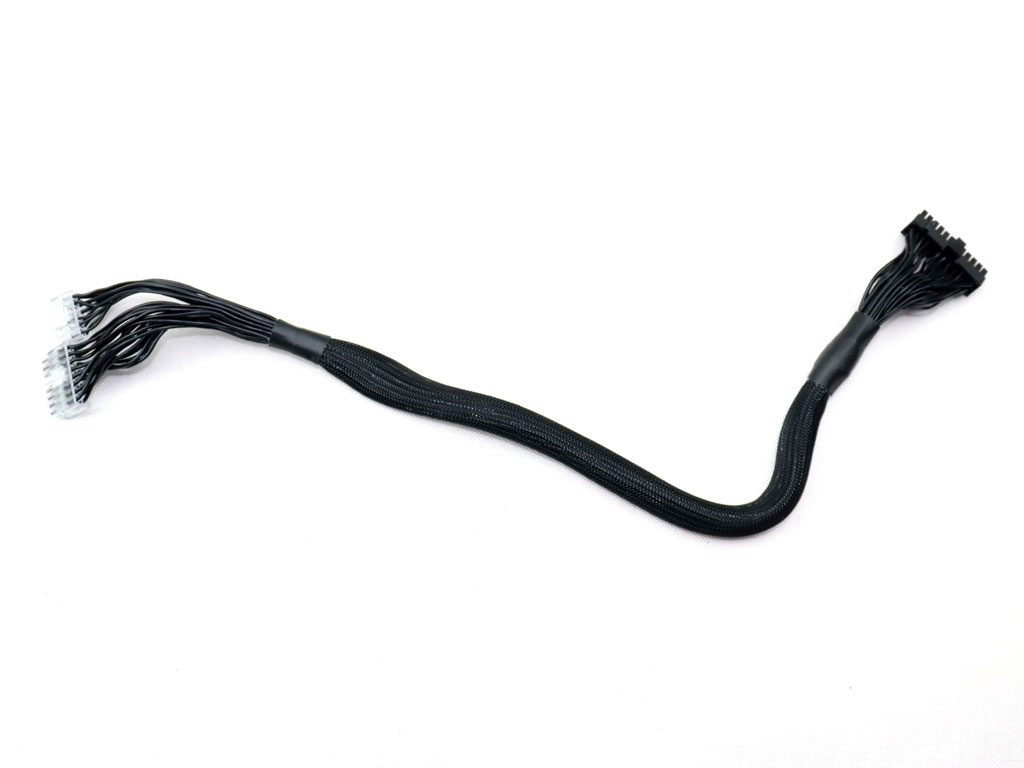
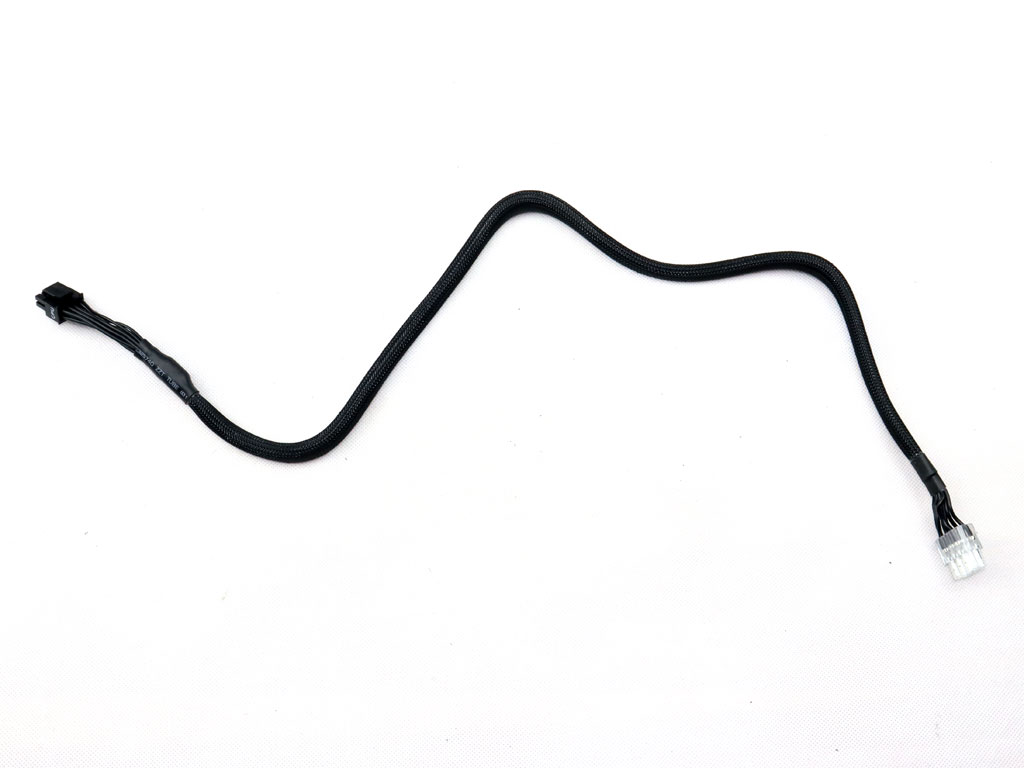
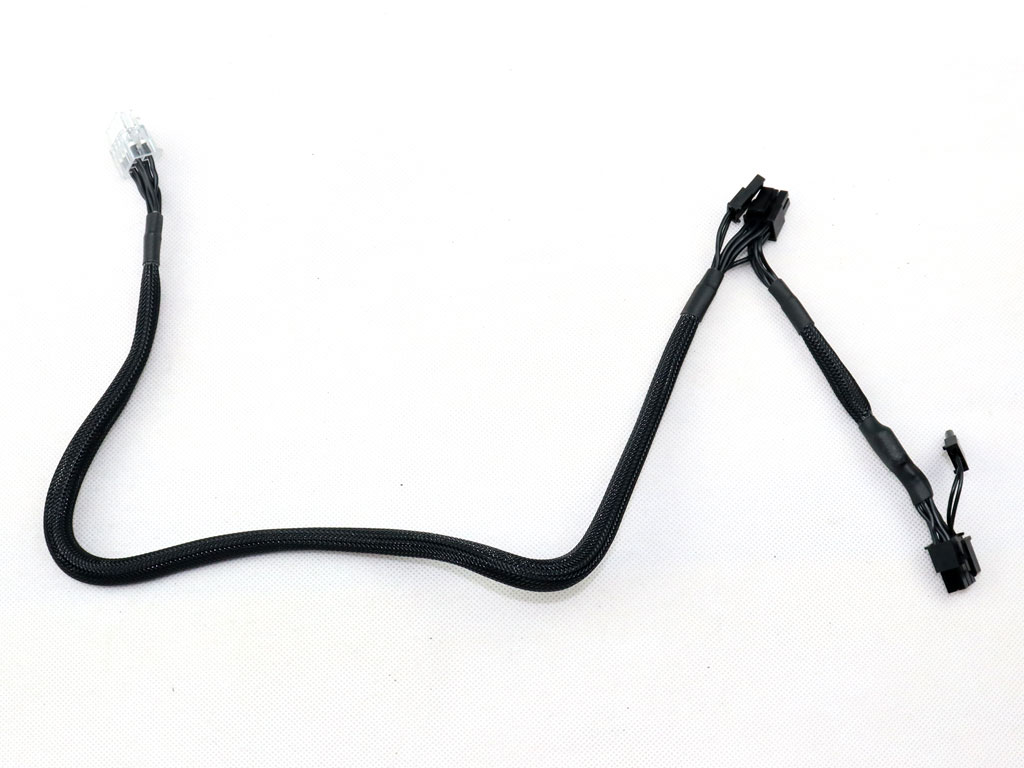
There are two EPS connectors on dedicated cables. Super Flower didn't use 16AWG gauges, which would offer better load regulation. On the other hand, thicker gauges would make the cables far less flexible. The only downside is installing in-line cables, making the cables bulky and tougher to route through narrow holes. If it were up to me, I would ditch these caps and use ribbon cables everywhere. Matching colors would have been nice as well, which Corsair has done with its white CX-F units.
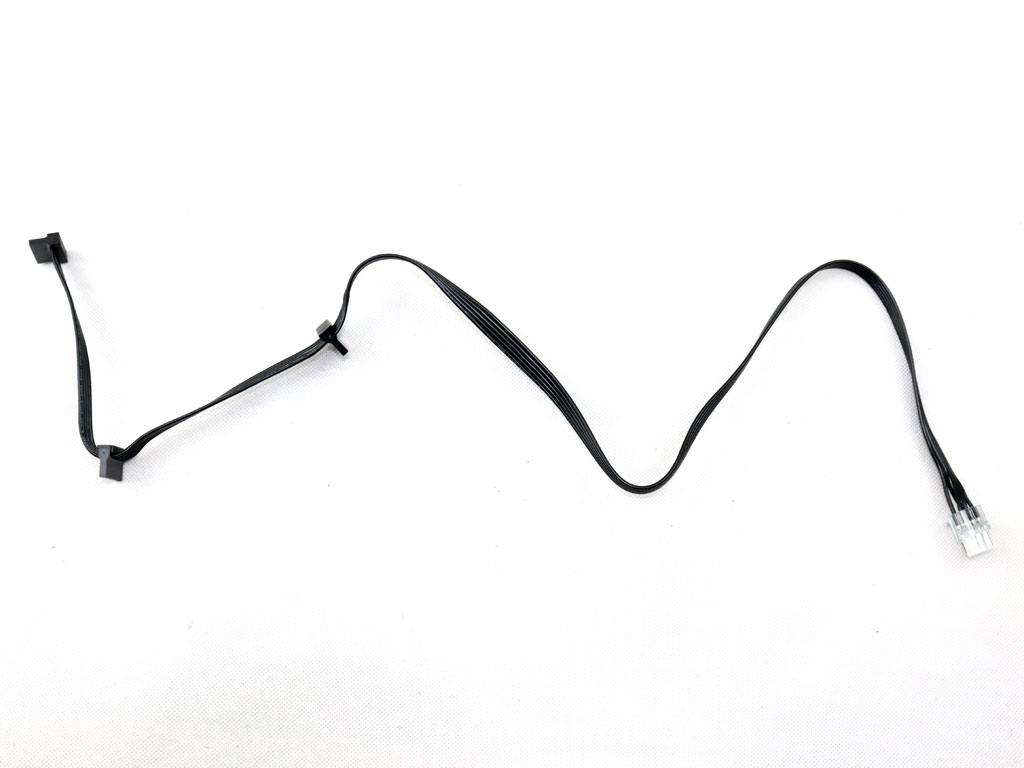
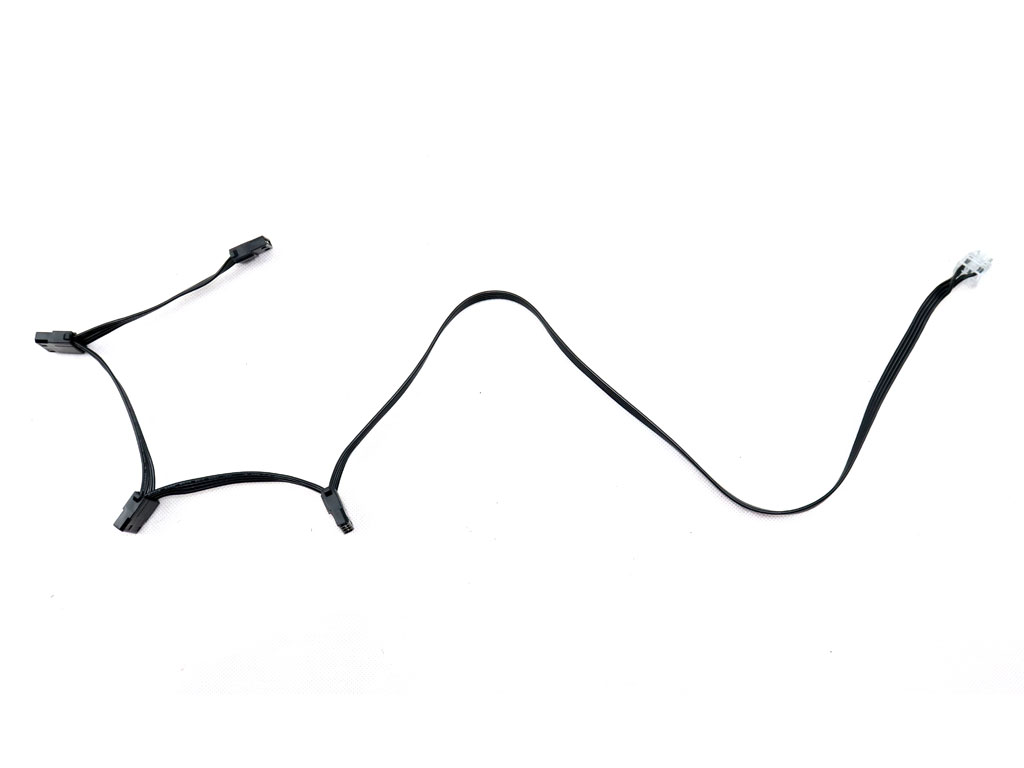
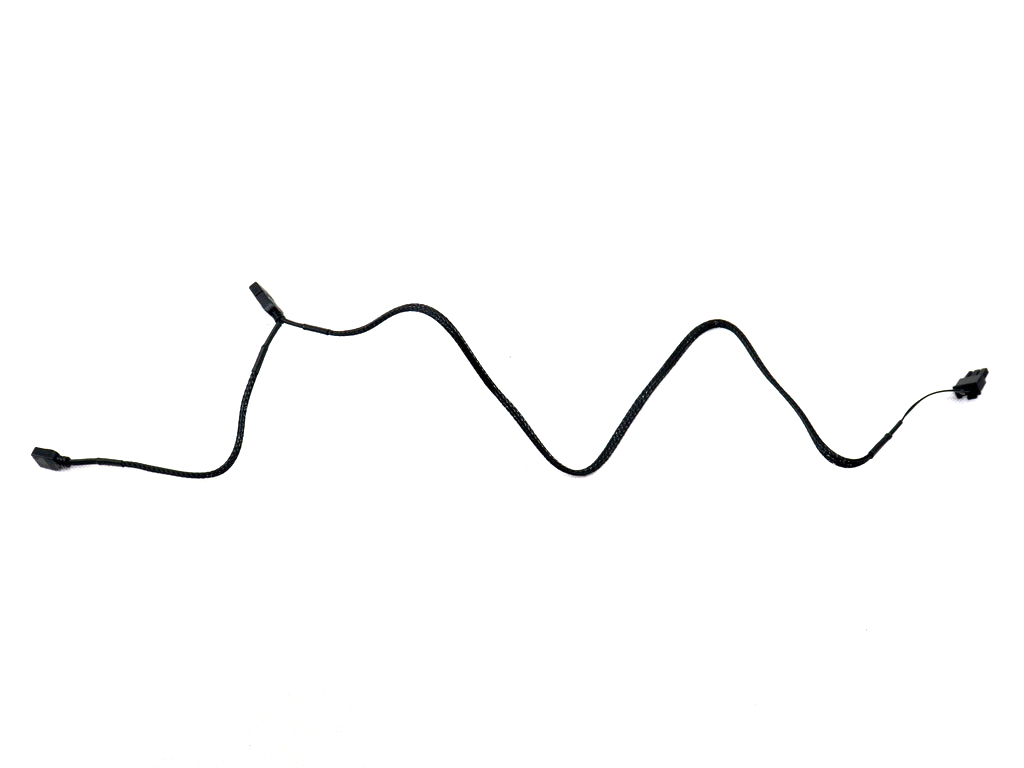

The peripheral cables are flat, which I prefer. The problem here is the small distance of 100 mm between 4-pin Molex connectors.
Component Analysis
Before reading this page, we strongly suggest a look at this article, which will help you understand the insides of a PSU better.| Super Flower SF-650F14RG Parts Description | |
|---|---|
| General Data | |
| Manufacturer (OEM) | Super Flower |
| Platform Model | Leadex III |
| PCB Type | Single Sided |
| Primary Side | |
| Transient Filter | 3x Y caps, 3x X caps, 2x CM chokes, 1x MOV |
| Bridge Rectifier(s) | 1x |
| Inrush Current Protection | NTC thermistor & relay |
| APFC MOSFETs | 2x Infineon IPA50R199CP (550 V, 11 A @ 100 °C, 0.199 ohm) & 1x SPN5003 FET (for reduced no-load consumption) |
| APFC Boost Diode | 1x STMicroelectronics STTH8R06D (600 V, 8 A @ 130 °C) |
| Hold-up Cap(s) | 1x Nippon Chemi-Con (400 V, 470 uF, 2,000 h @ 105 °C KMQ) |
| Main Switchers | 2x Infineon IPA50R199CP (550 V, 11 A @ 100 °C, 0.199 ohm) |
| APFC Controller | SF29603 & S9602 |
| Resonant Controller | SF29605 |
| Topology | Primary side: Half-bridge & LLC converter Secondary side: Synchronous rectification & DC-DC converters |
| Secondary Side | |
| +12V | 4x Infineon IPP041N04N (40 V, 80 A @ 100 °C, 4.1 mOhm) |
| 5V & 3.3V | |
| Filtering Capacitors | |
| Supervisor IC | SF29603 & LM339A |
| Fan Controller | STMicroelectronics STM8S003F3 |
| Fan Model | Globe Fan S1302412M (130 mm, 12 V, 0.40 A, fluid dynamic bearing fan) |
| 5VSB Circuit | |
| Rectifiers | 1x PFC Device PFR20L60CT (60 V, 20 A) |
| Standby PWM Controller | SF29604 |

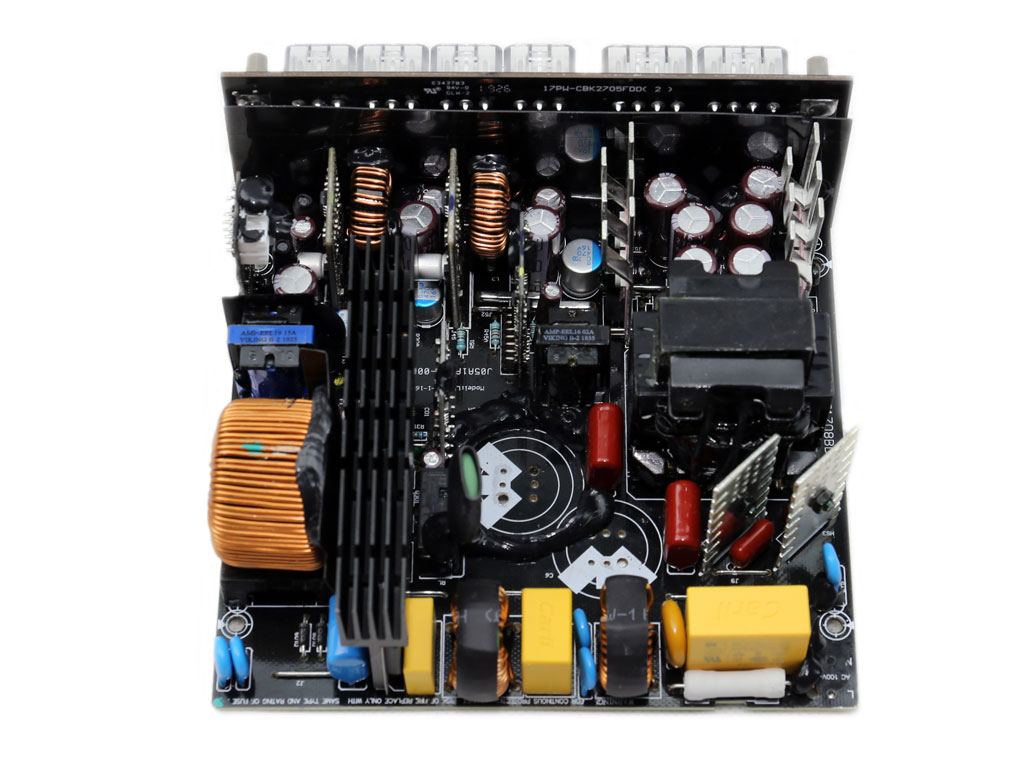
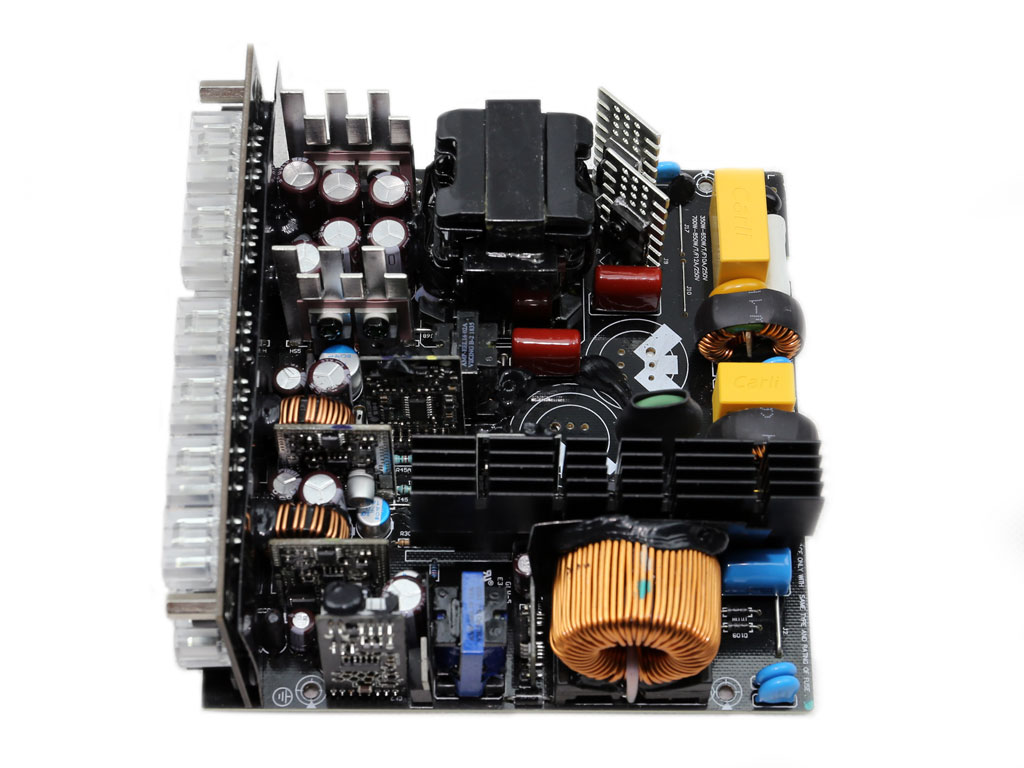

There are no significant differences between the plain Super Flower Leadex III and Leadex III ARGB platforms, besides an ARGB fan and the single semi-passive mode—as there are two in the former. On the primary side is a half-bridge topology supported by an LLC resonant converter for higher efficiency. The secondary side utilizes a synchronous rectification scheme, and the minor rails are generated through two VRMs. Soldering quality is not the best I have seen from Super Flower, but rest assured that it won't create any problems, and it doesn't seem to affect performance.
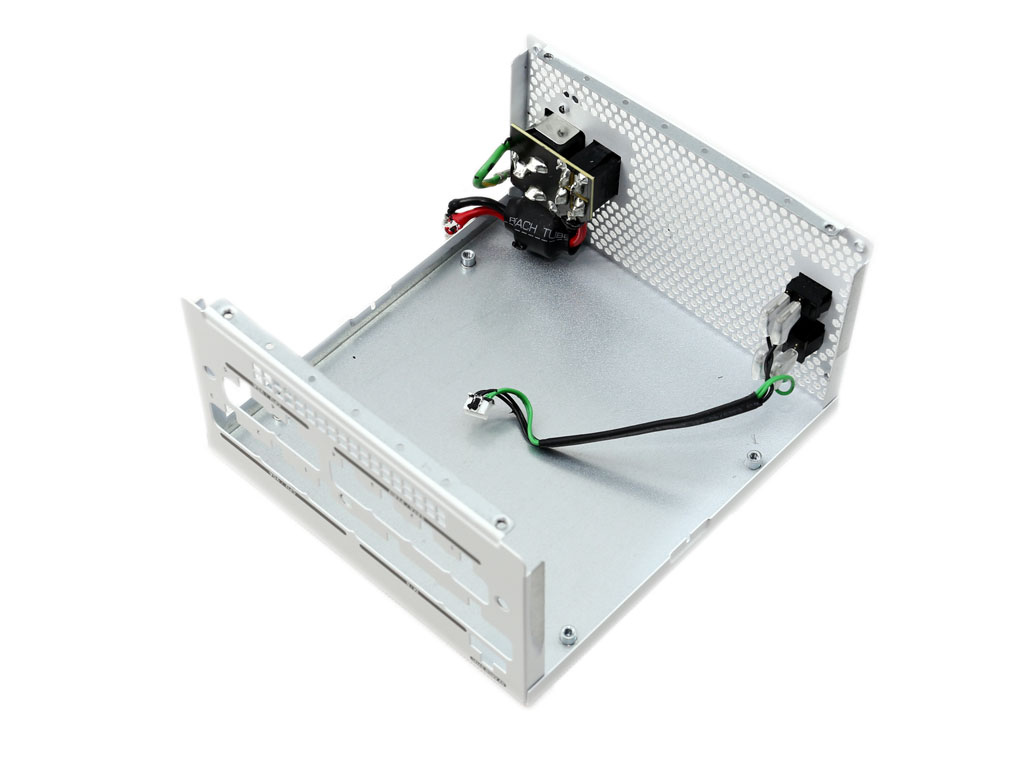
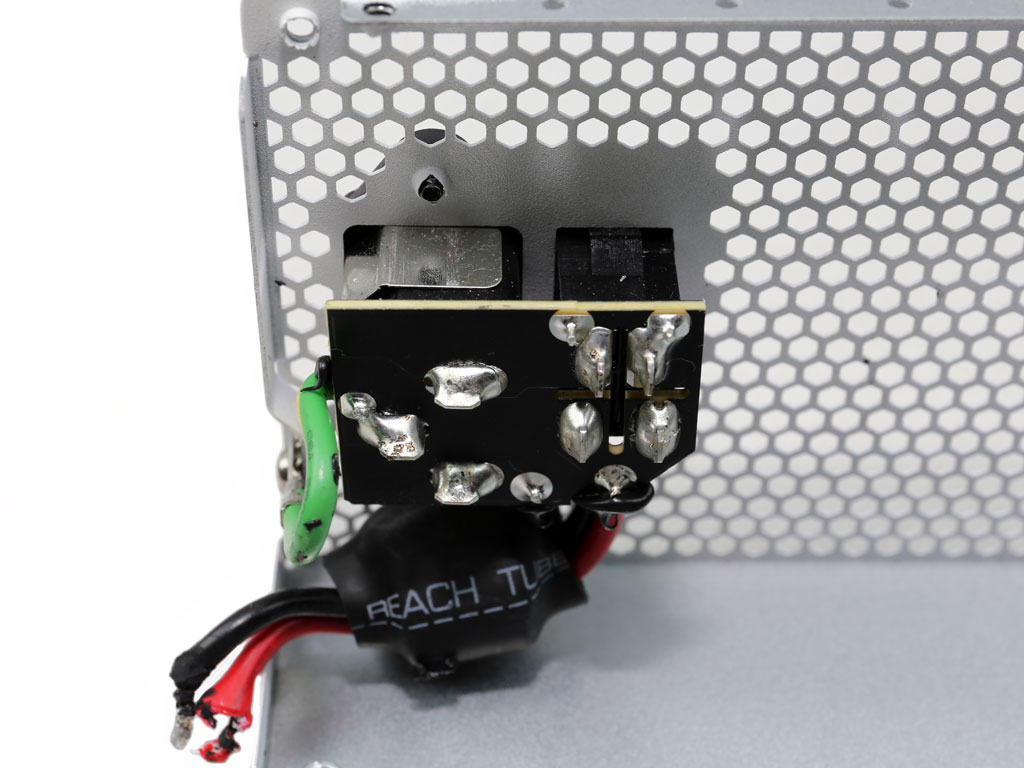
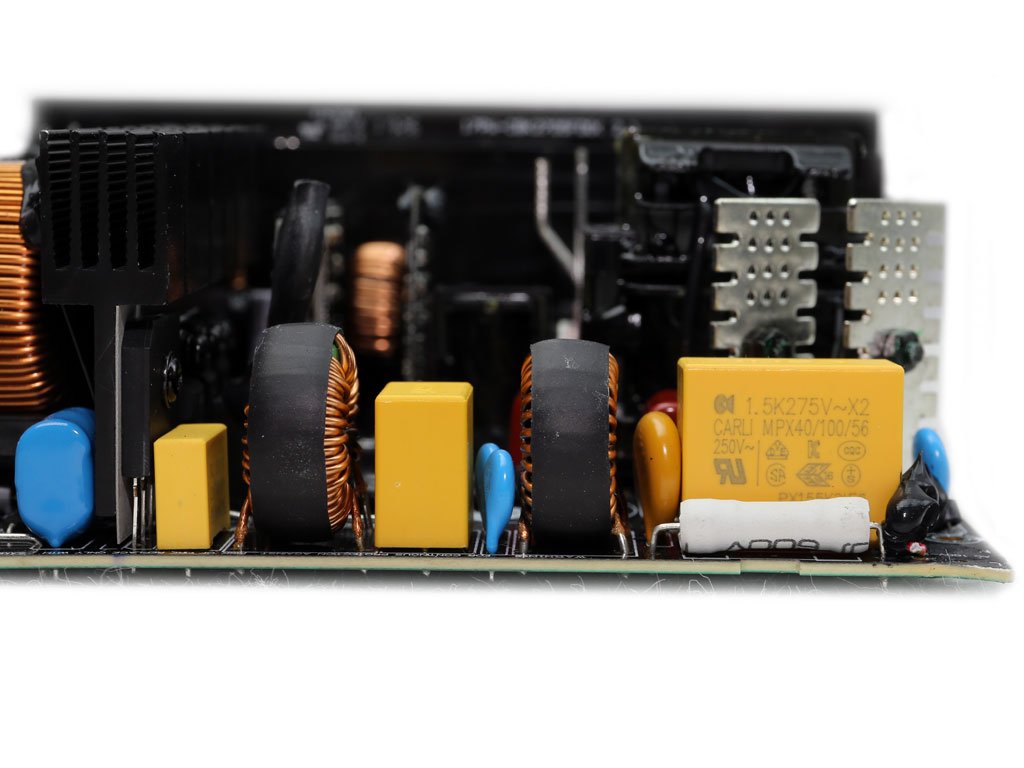
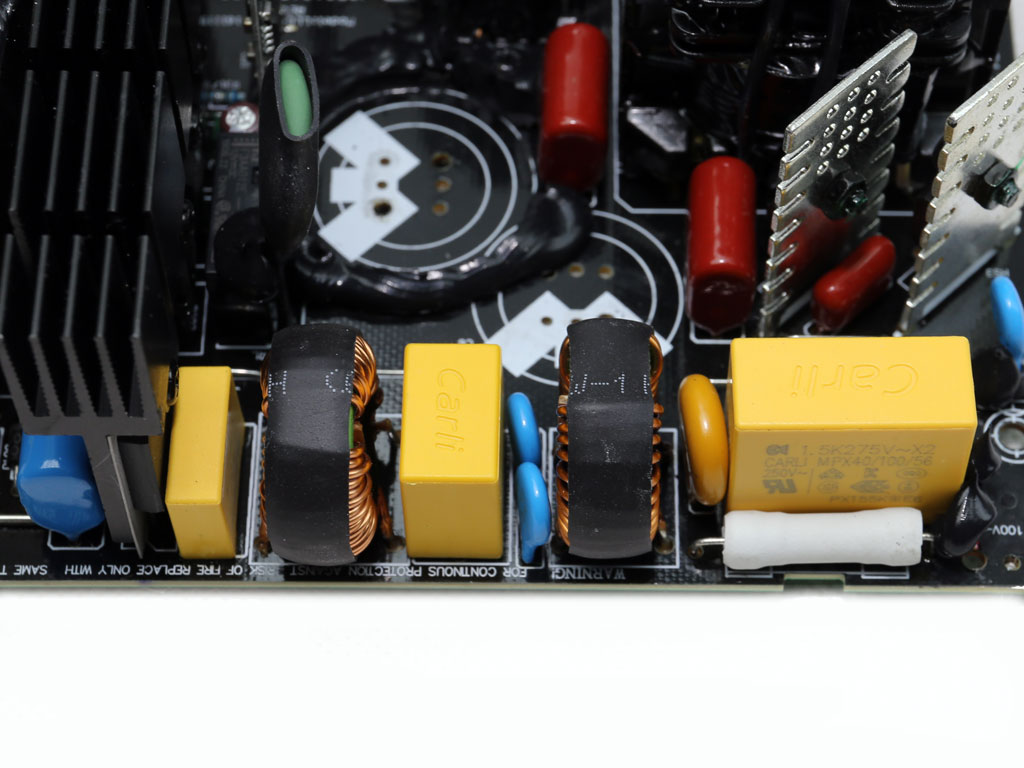
The transient filter has all the necessary parts and does a good job of suppressing both incoming and outgoing EMI.
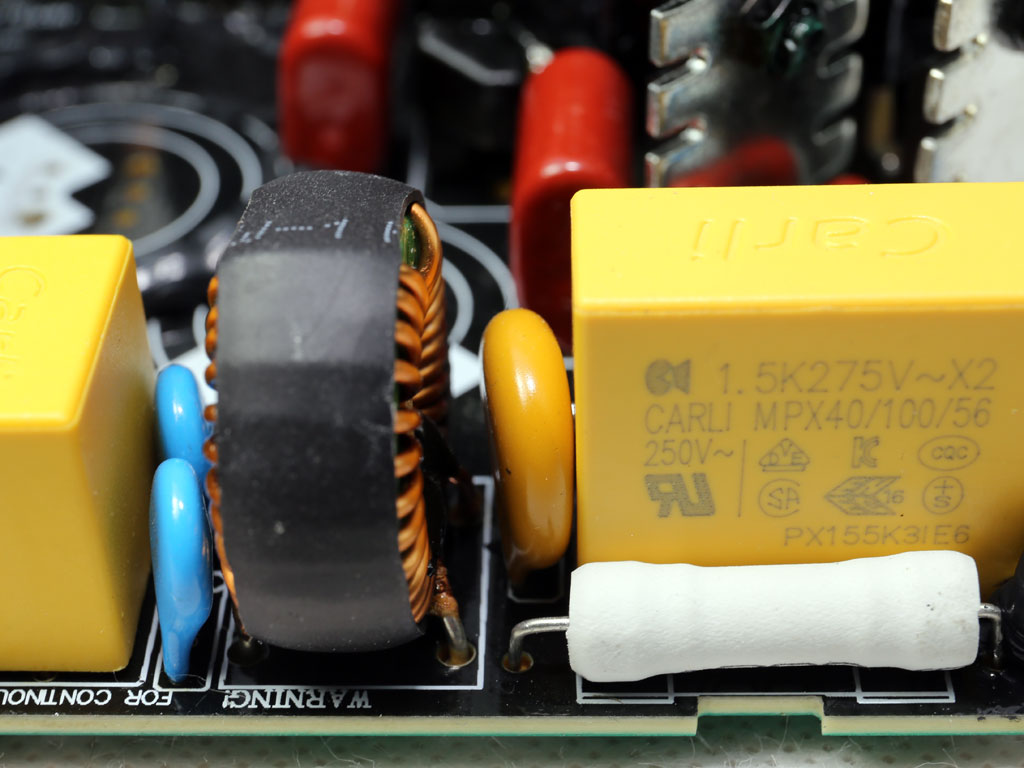
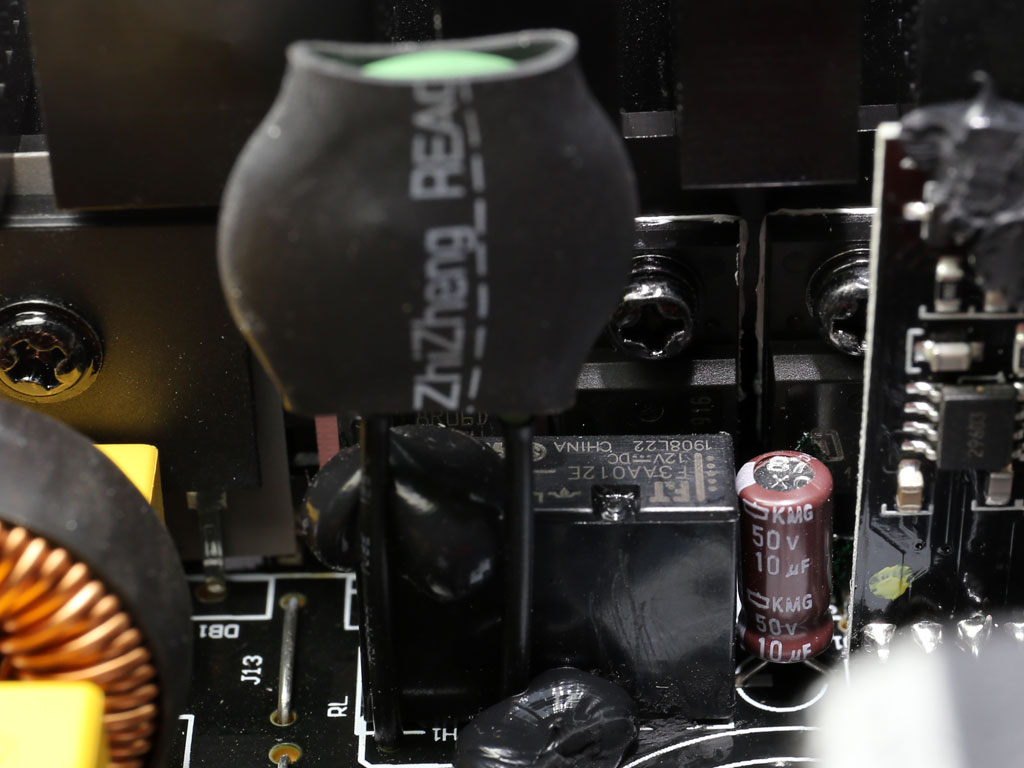
An MOV handles voltage surges, and an NTC thermistor-relay combo protects against large inrush currents.
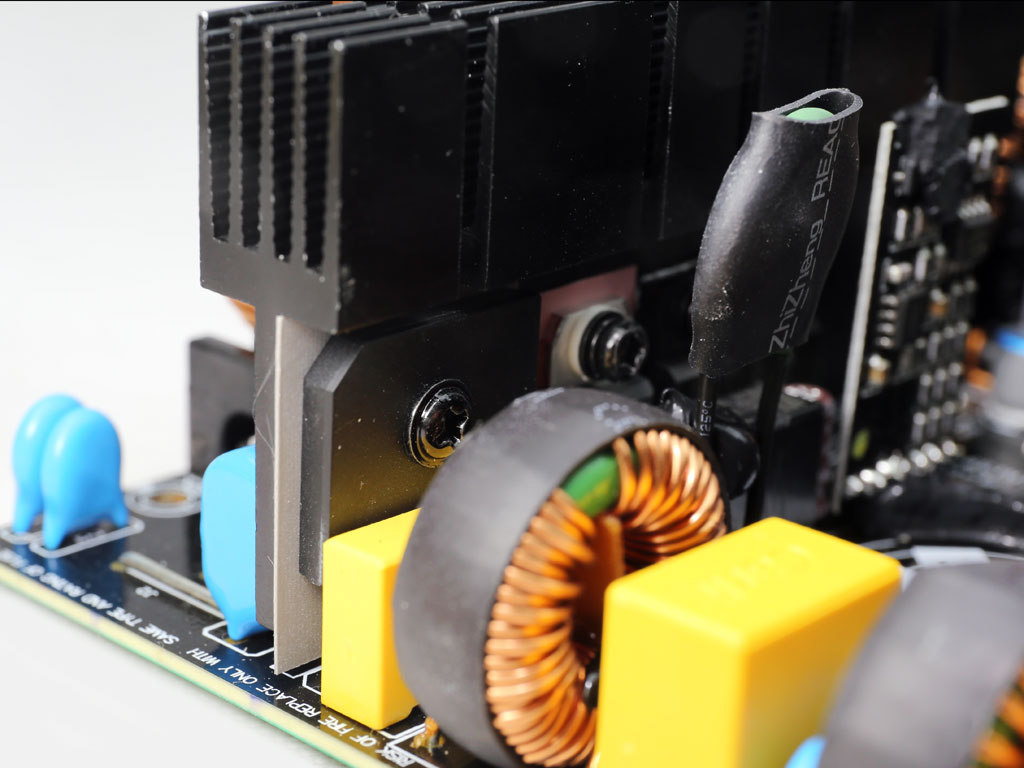
The bridge rectifier which fully rectifies the incoming AC signal feeding the PSU's APFC converter.
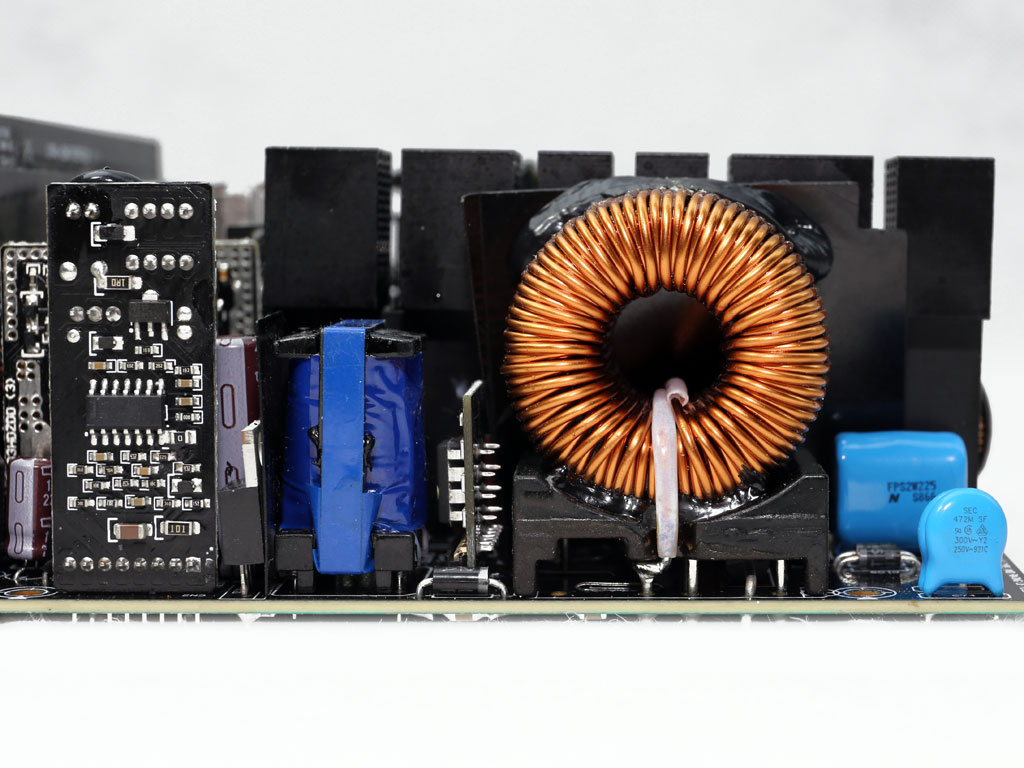
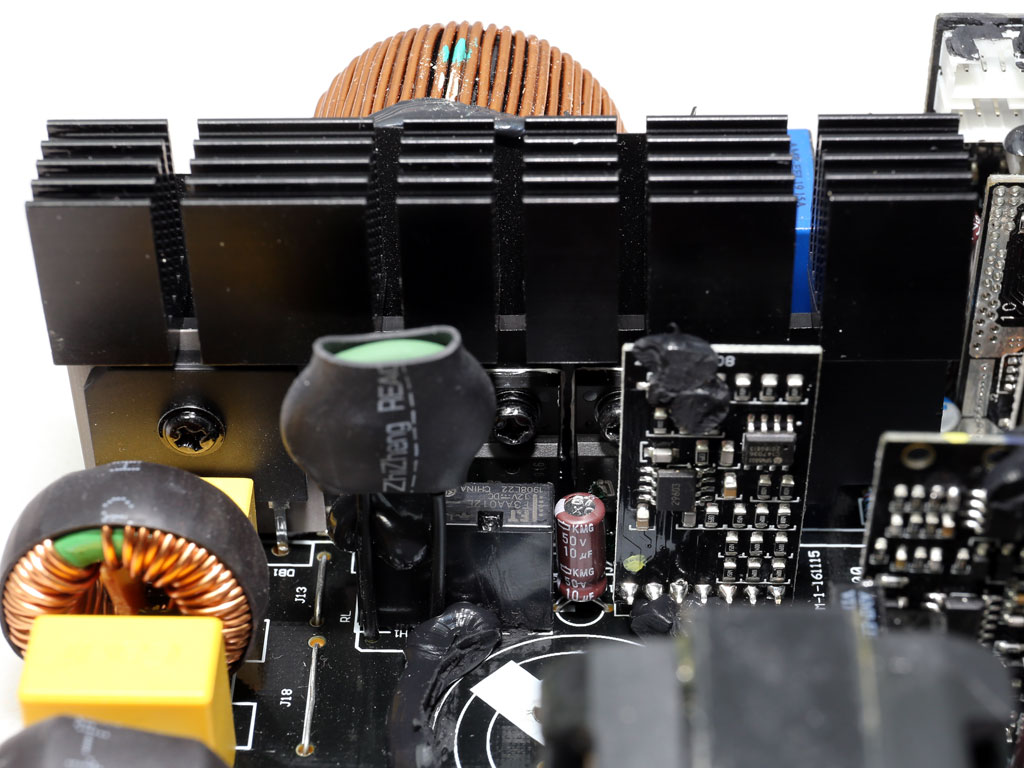
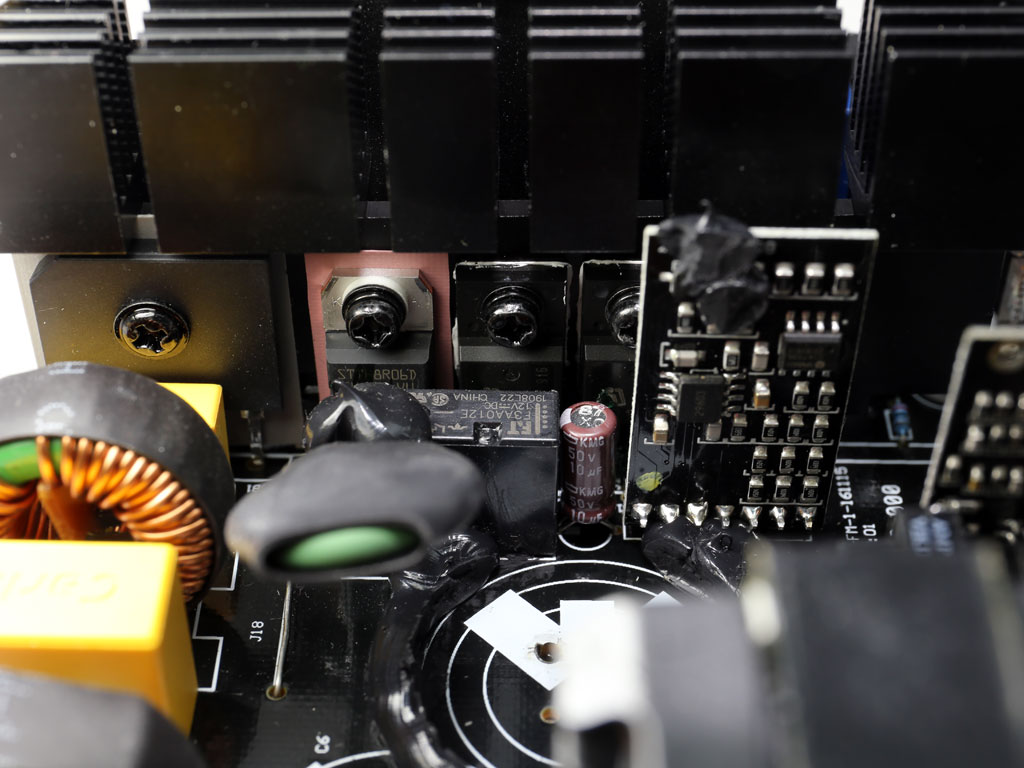
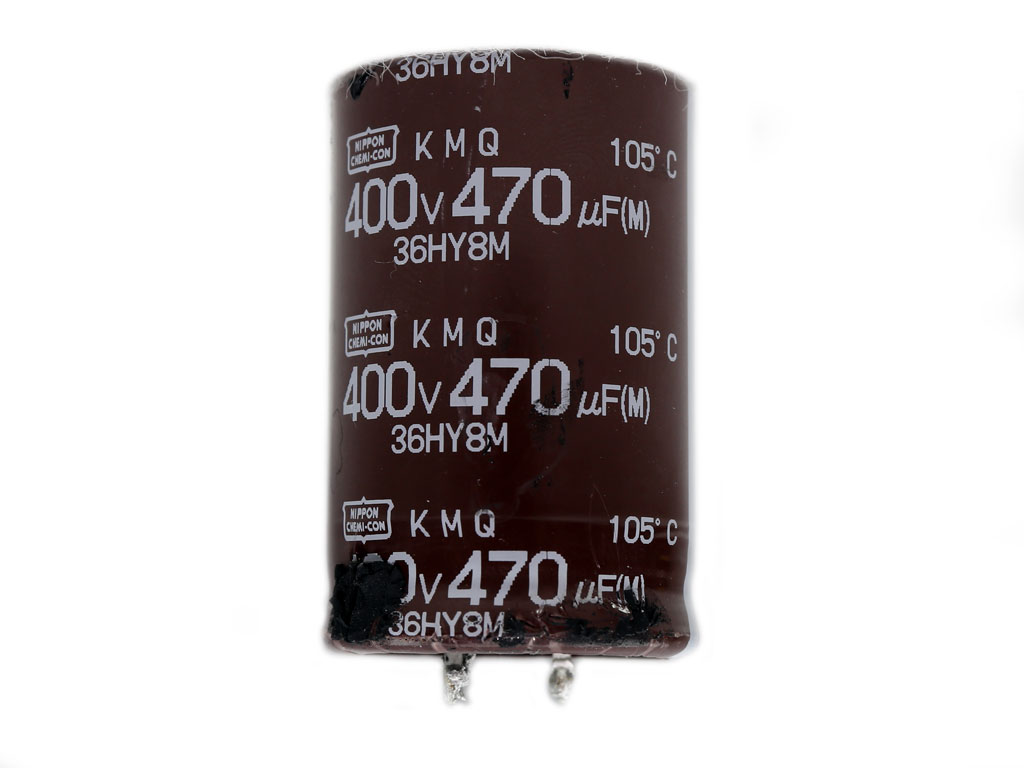
The APFC converter uses two Infineon IPA50R199CP FETs and a STTH8R06D boost diode by STMicroelectronics. The bulk cap is by Chemi-Con and has enough capacity to provide a hold up time of over 17 ms. Programming of the LLC resonant converter also plays a major role in the hold up time.
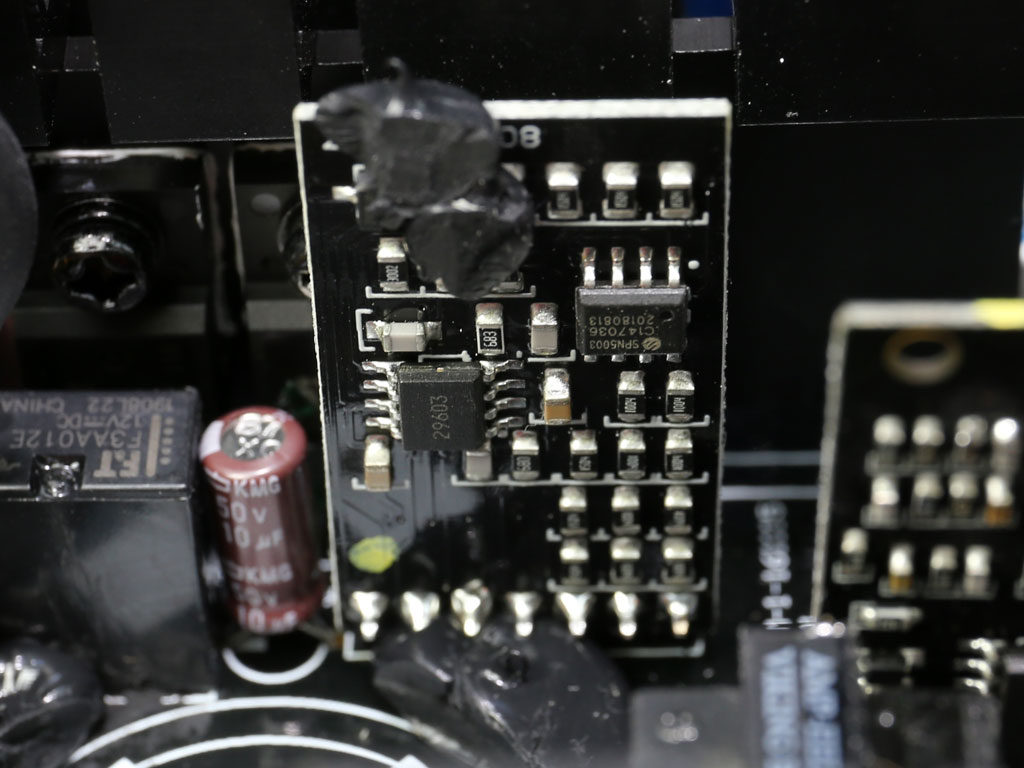
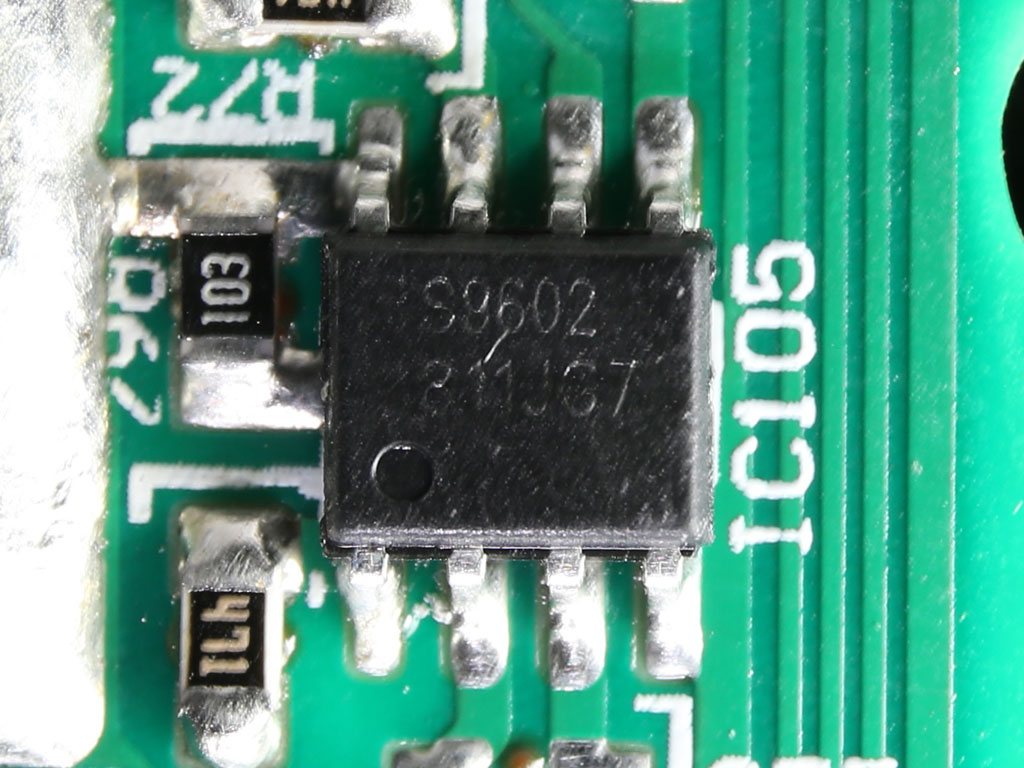
An SPN5003 FET isolates the APFC converter while the PSU is in standby to lower vampire power. On the board that hosts this FET is the APFC controller consisting of an SF29603 IC supported by another IC with model number S9602. After all this time, I still don't have any detailed information on these ICs.
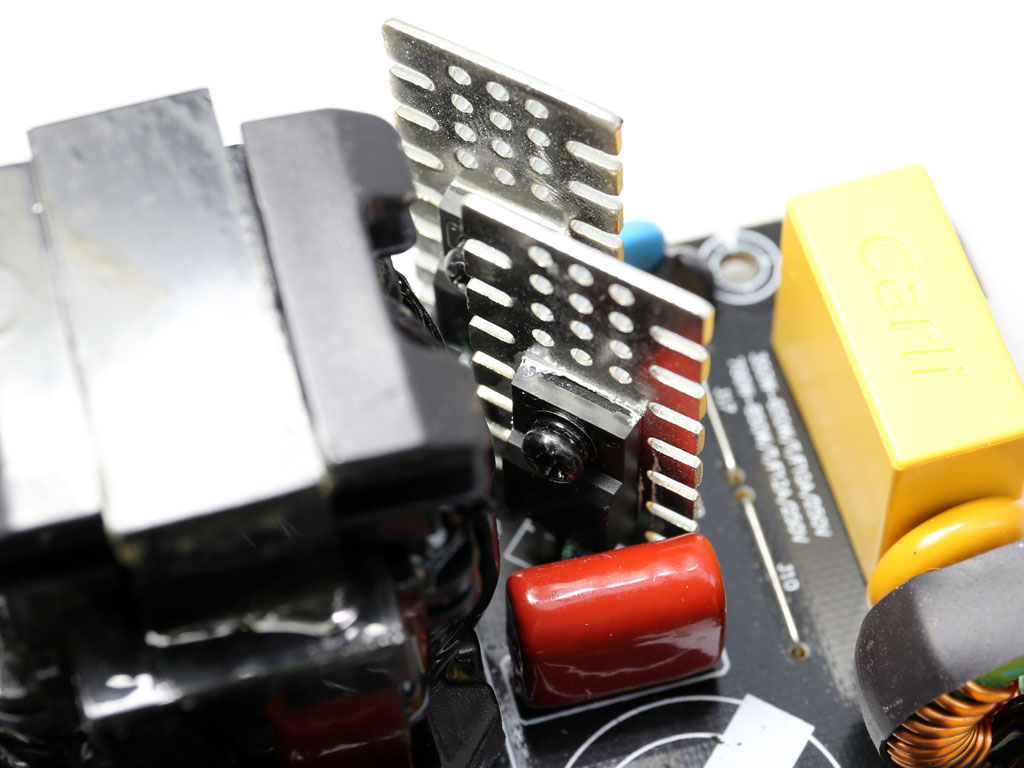
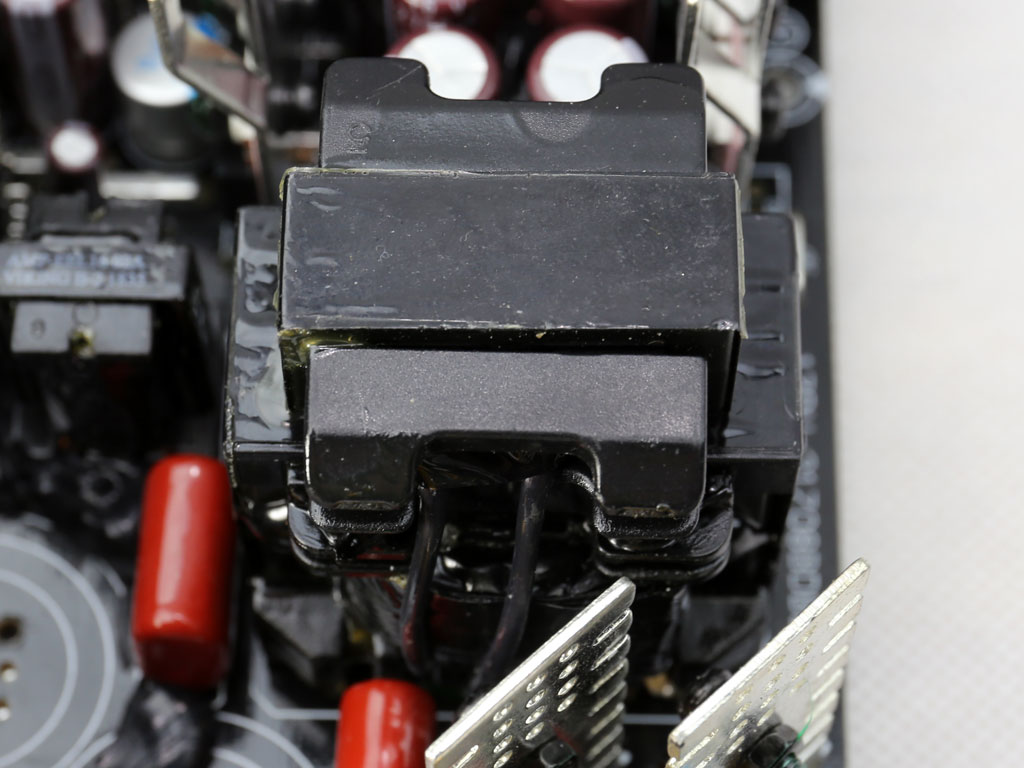
The main switching FETs are arranged in a half-bridge topology. Similar to the APFC converter, two Infineon IPA50R199CP are used in this stage.
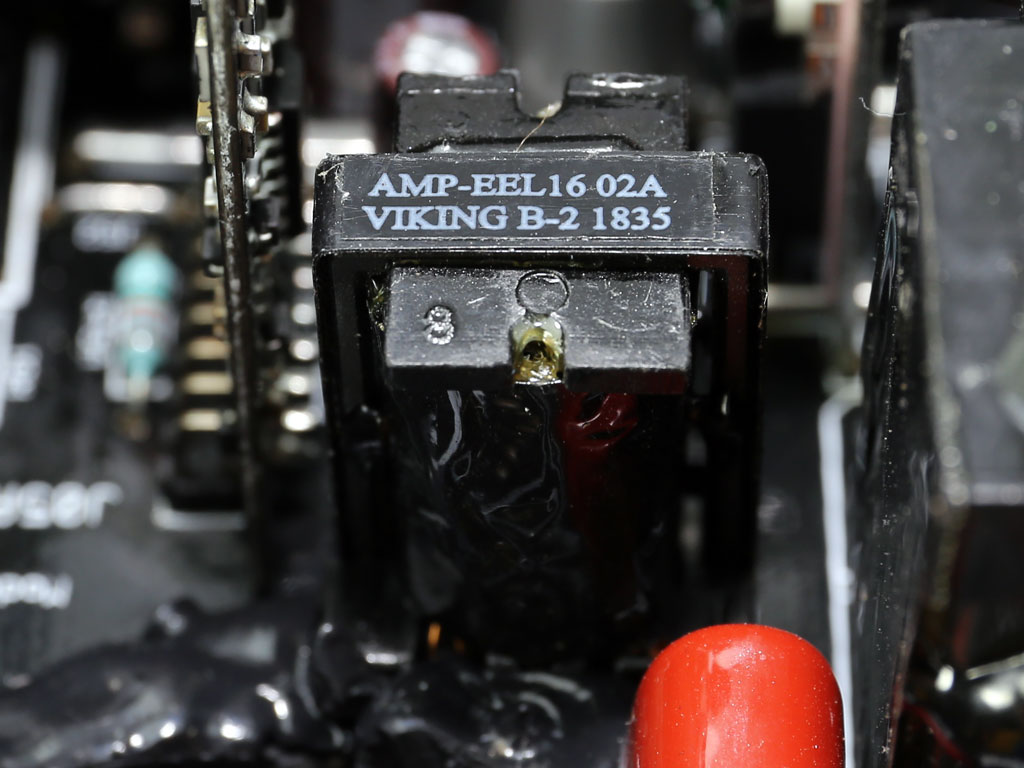
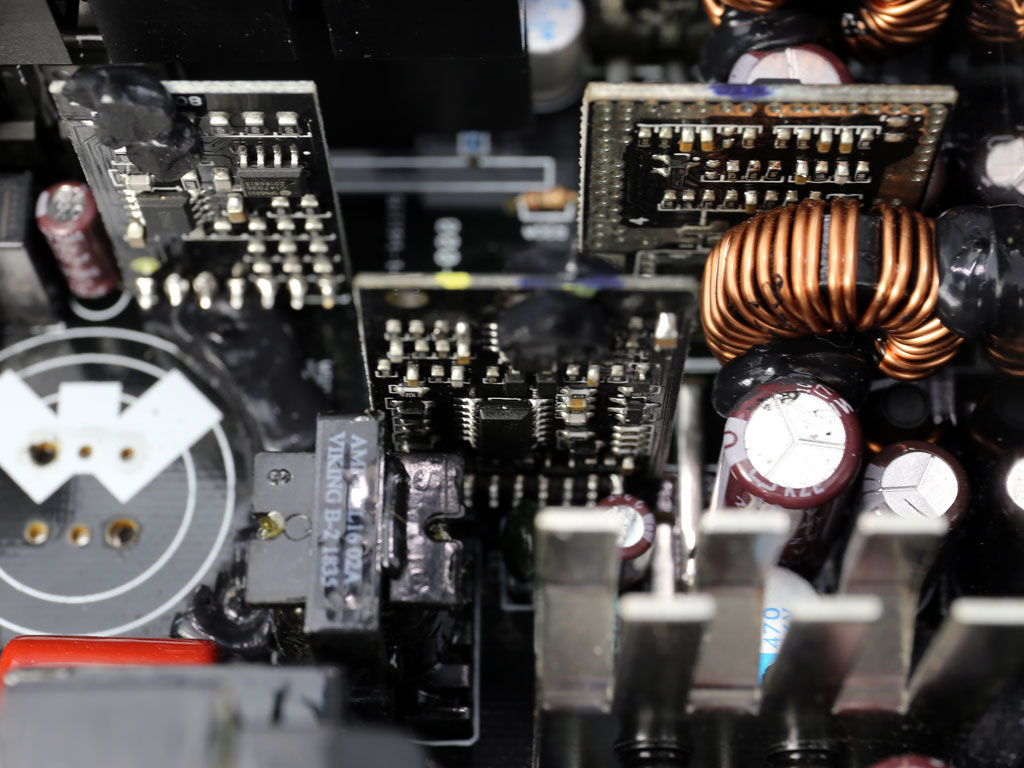
These photos depict the resonant tank and resonant controller, an SF29605 IC. The latter controls the primary switching FETs and those generating the +12 V rail.
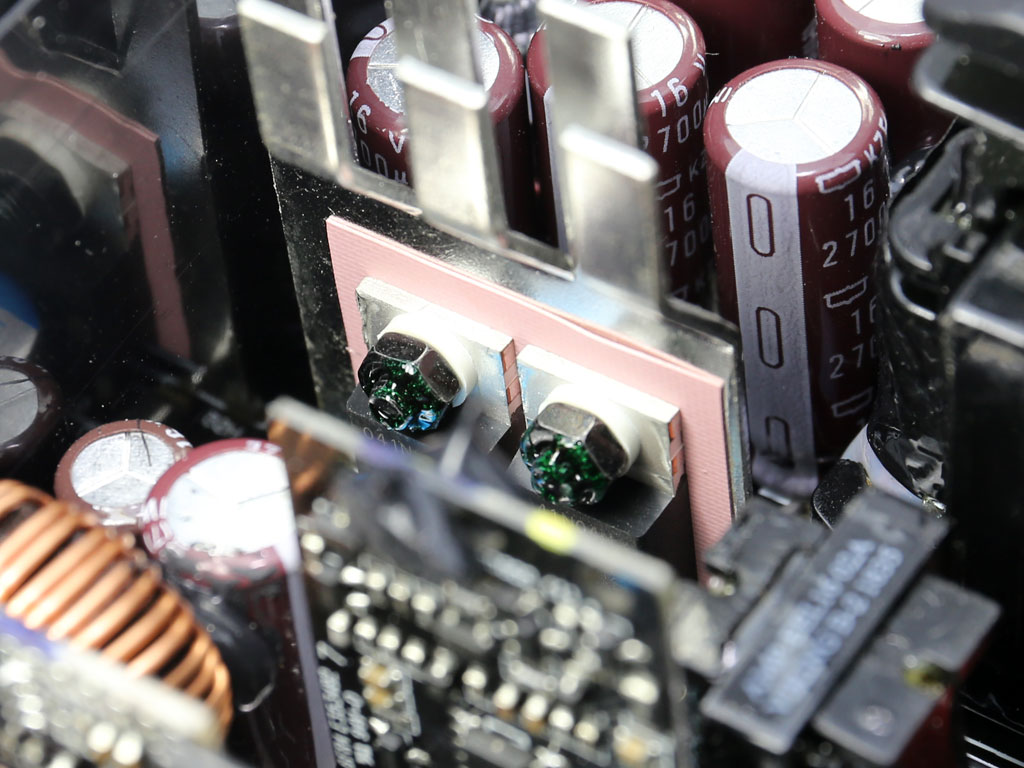
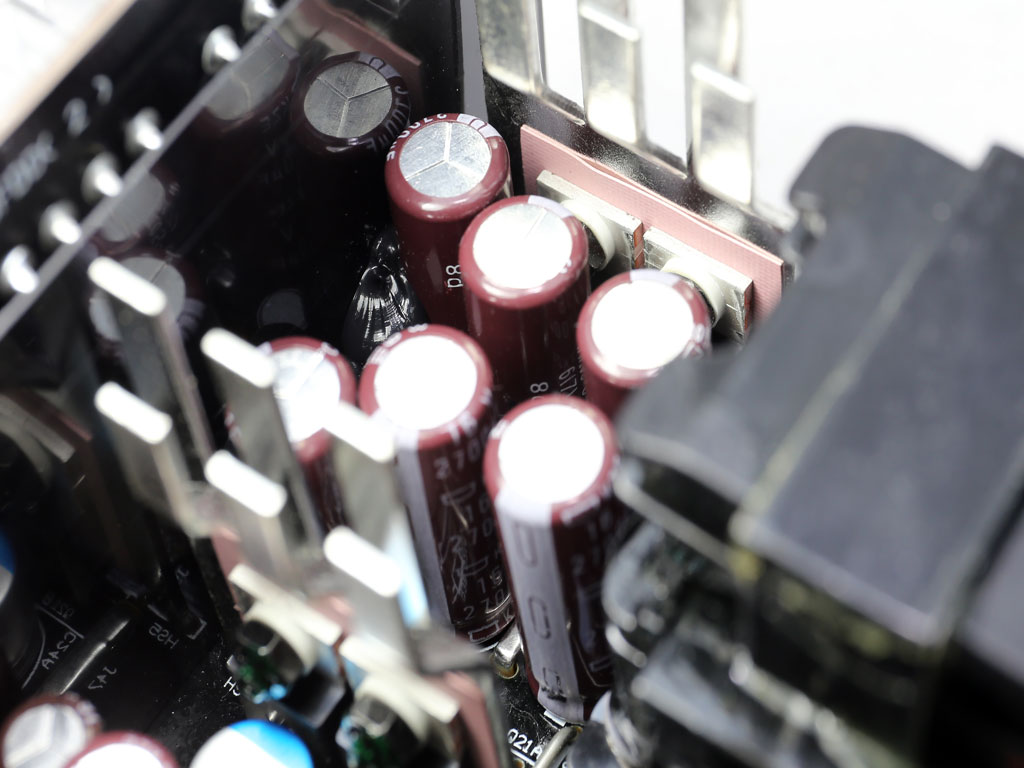
Four Infineon FETs handle the +12 V rail.
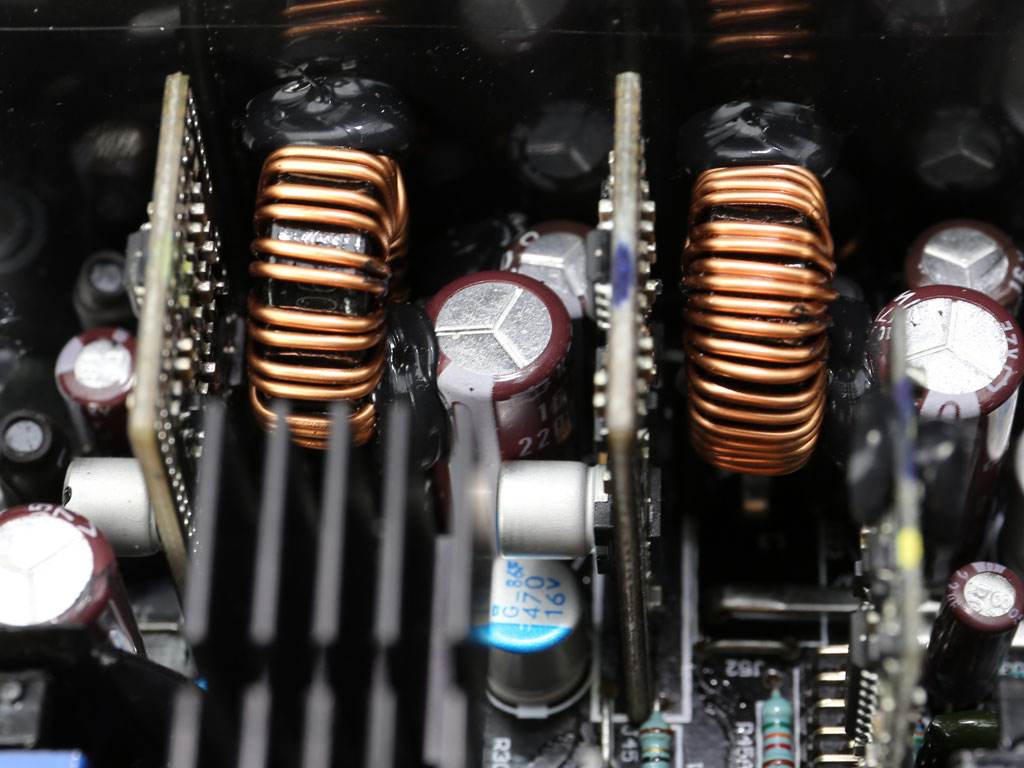
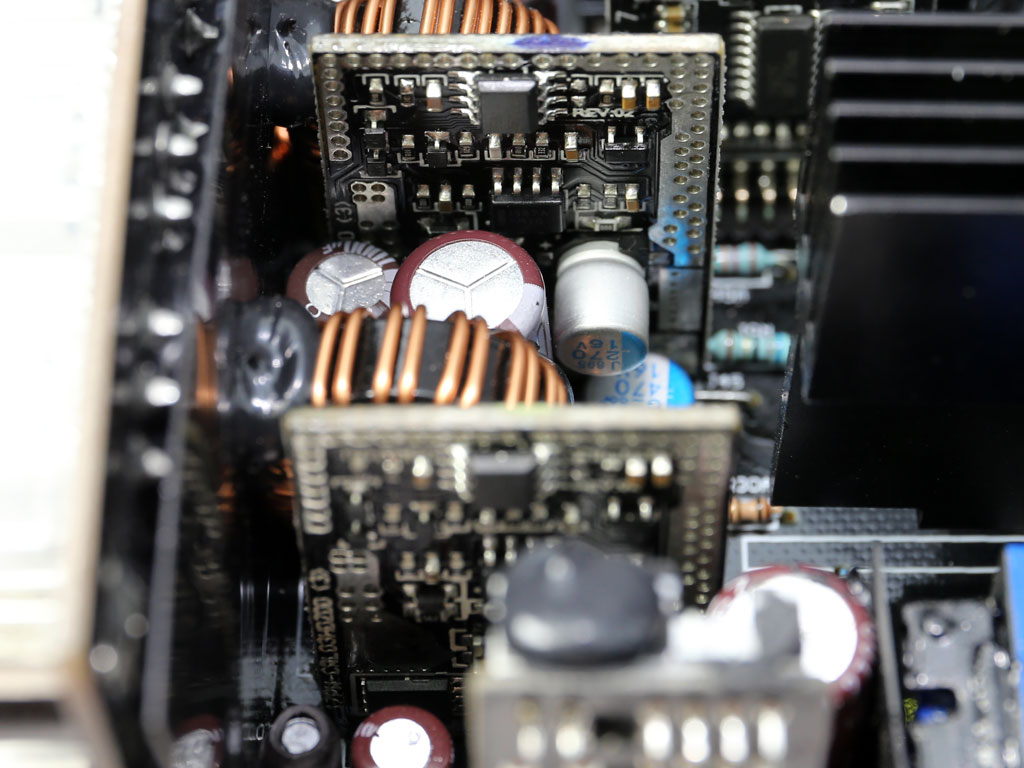
Two DC-DC converters are powered by the +12 V rail to generate the minor rails. In total, eight AON6516 FETs are used, along with a pair of NCP1587A PWM controllers.
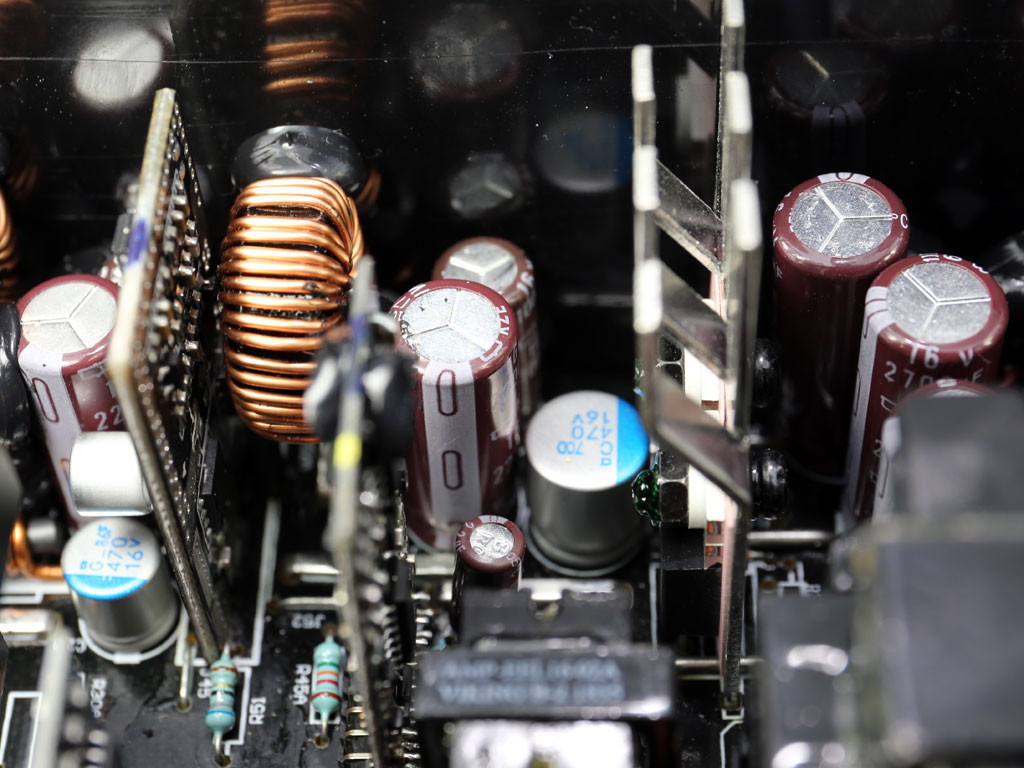
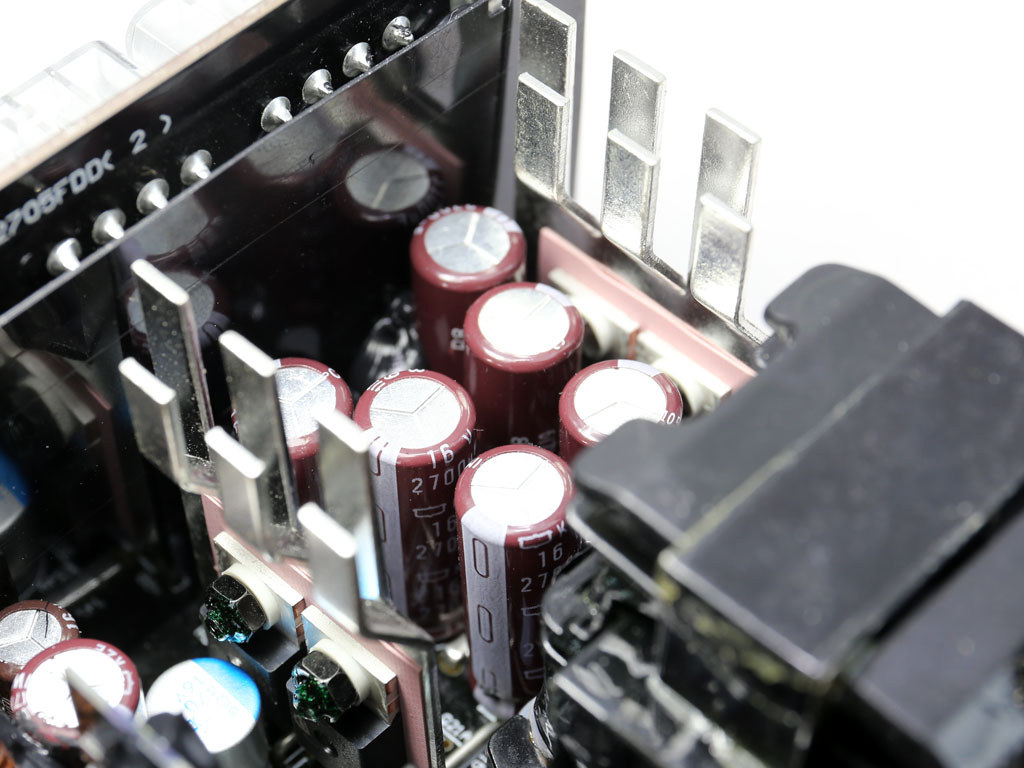
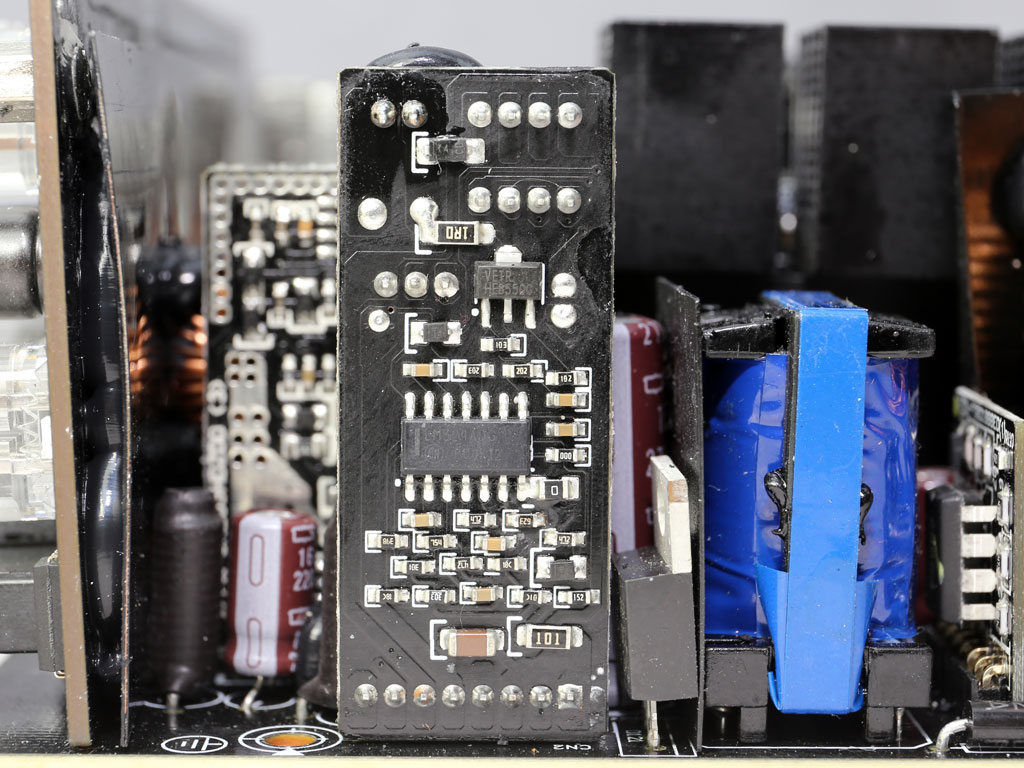
Japanese manufacturers provide all the electrolytic filtering caps. Not all of these have a high lifetime, though. The heaviest burden falls to the Chemi-Con KZE caps, which are widely used in higher-end PSUs. Besides electrolytic caps, several polymers are also used. Most of these are installed on the modular PCB.
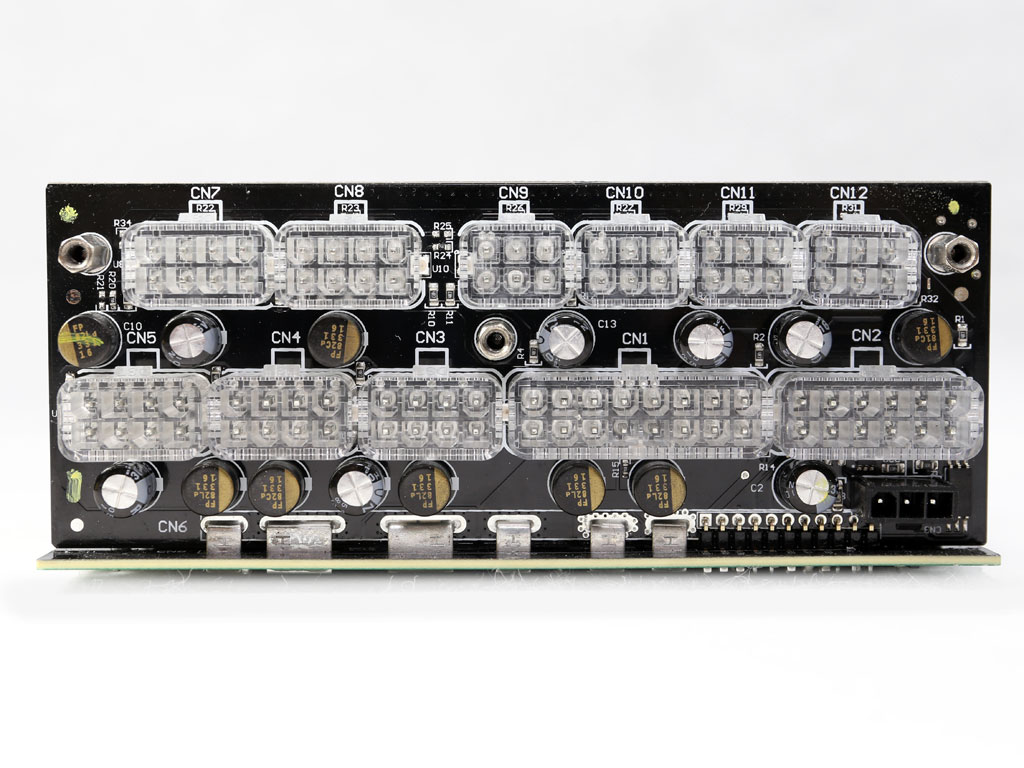
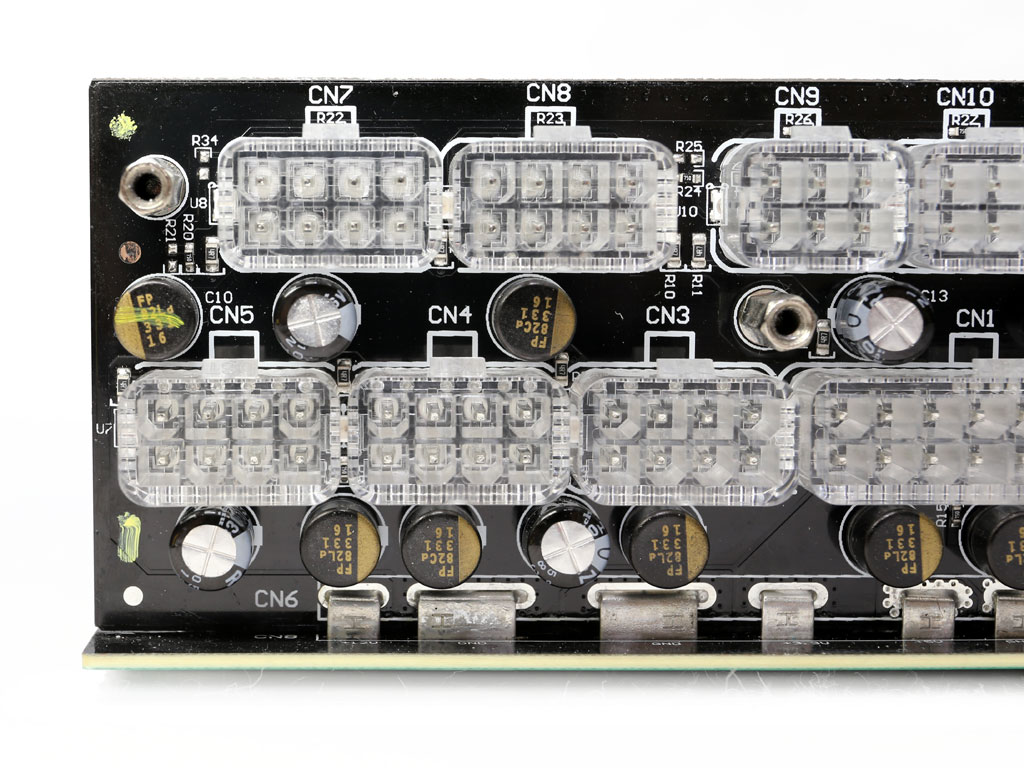
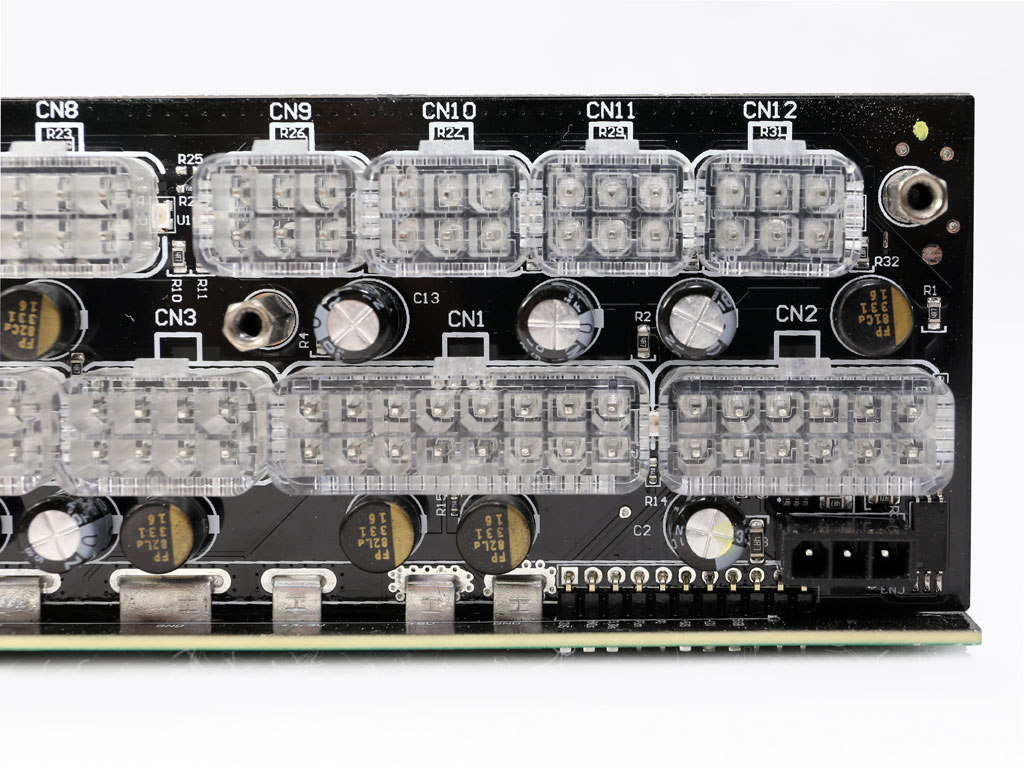
The Nichicon RZ caps, which have a lifetime of 1000 hours at 105 °C, are installed where they won't be highly stressed, forming a second ripple-filtering layer.


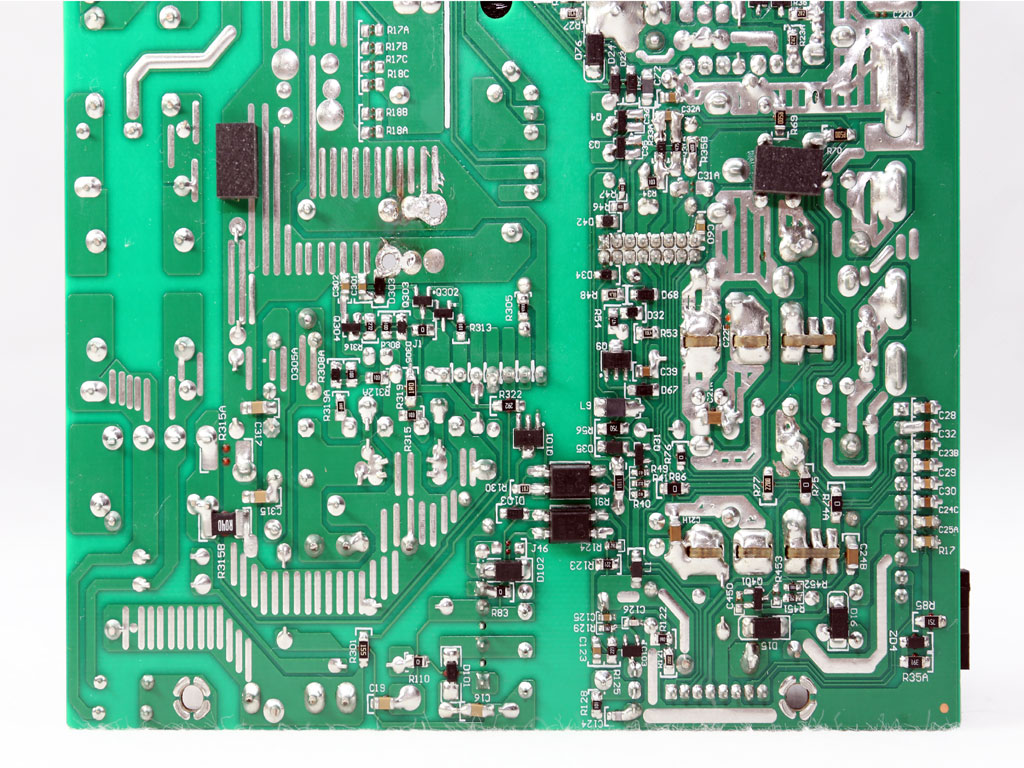
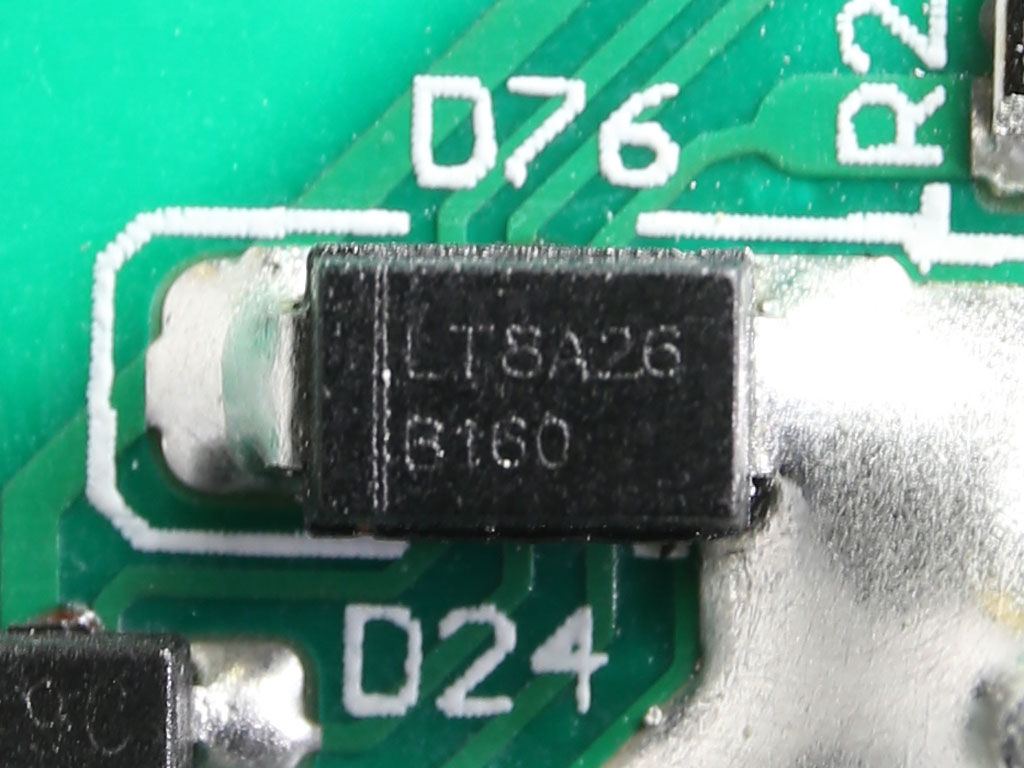
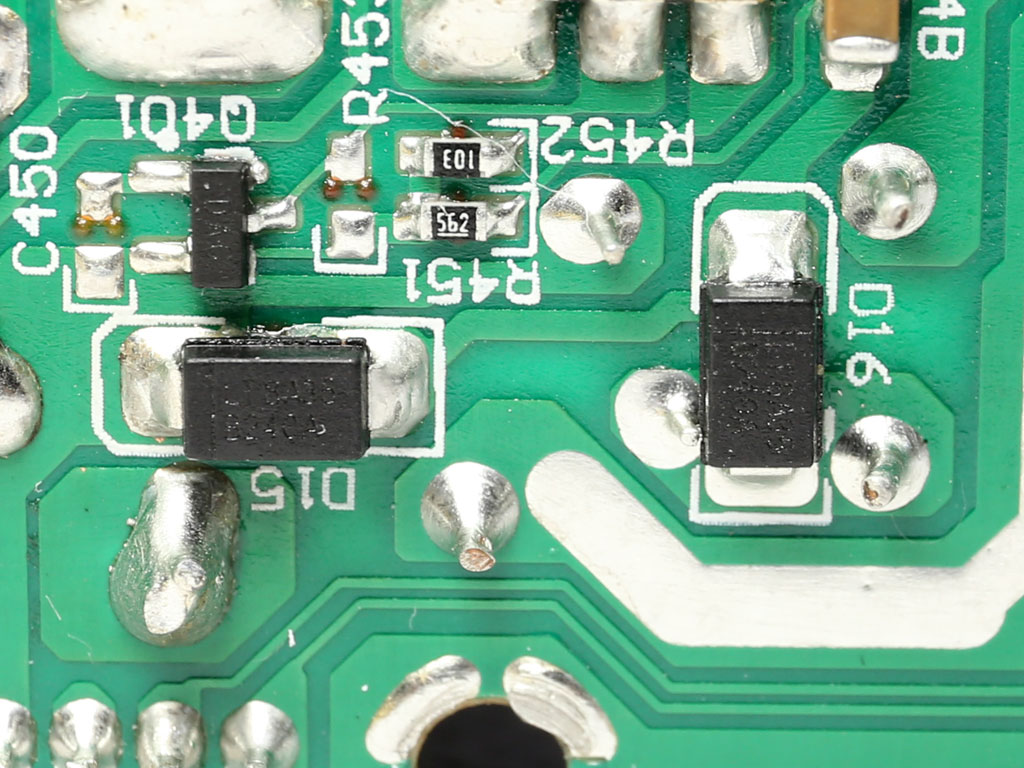
As I have already mentioned, soldering quality is not the best I have seen from Super Flower. In some areas on the secondary side, soldering look sloppy. That said, it won't create any issues.
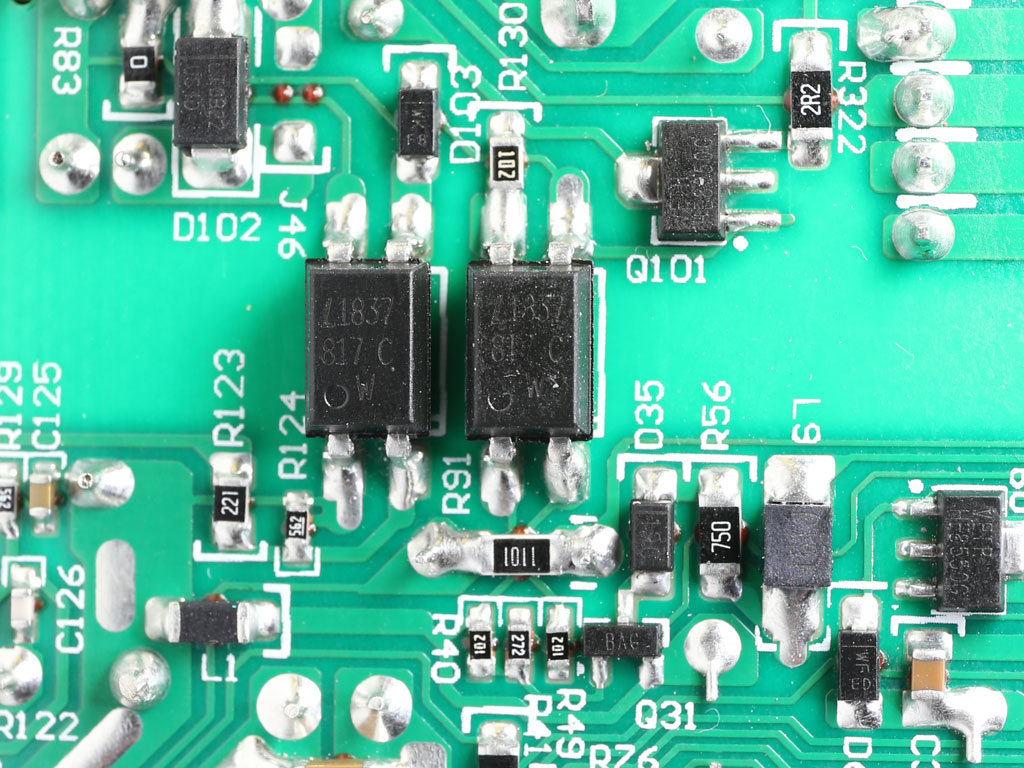
My photographer likes to shoot optocouplers, so I have to deal with these photos in every review.
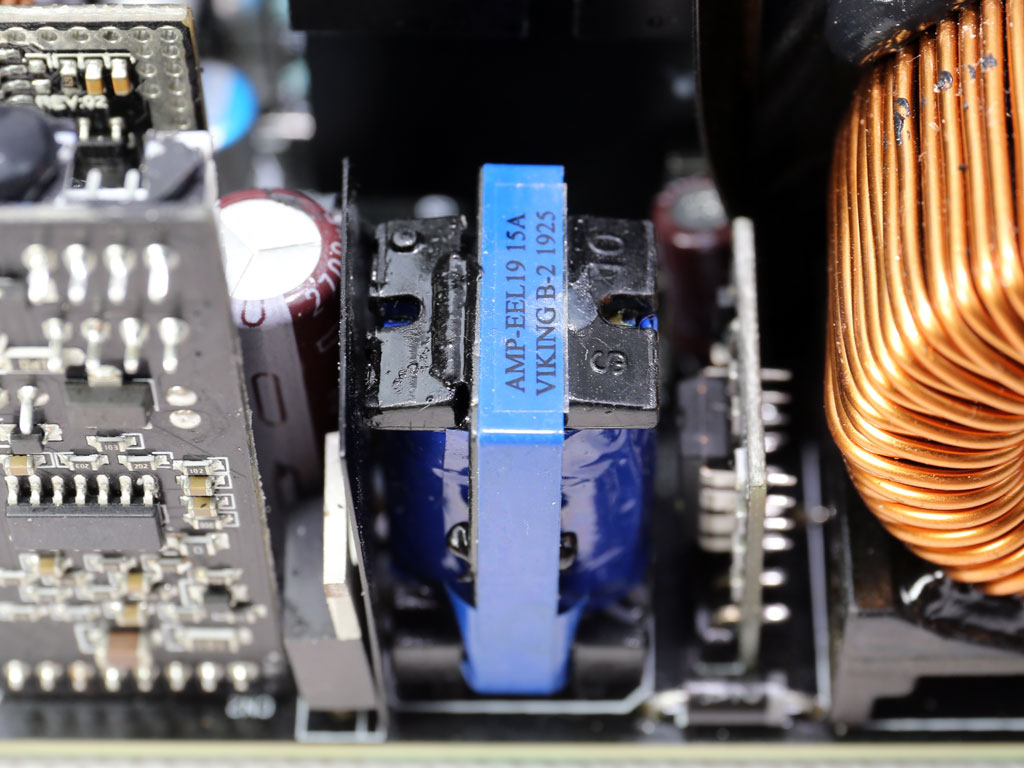
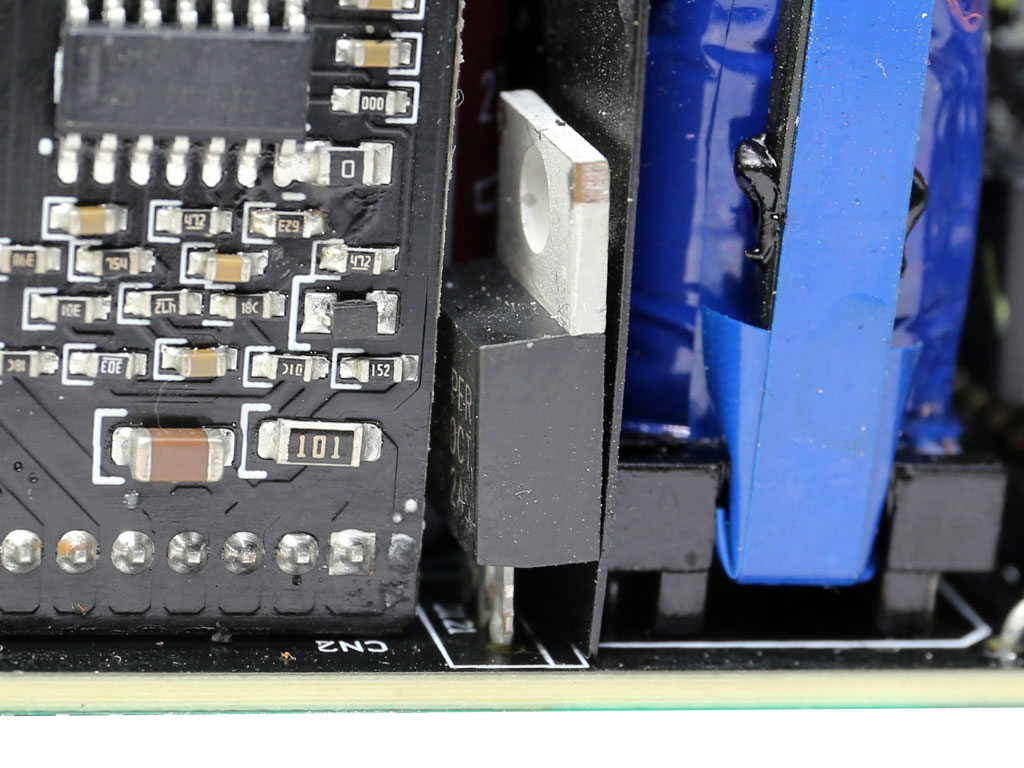
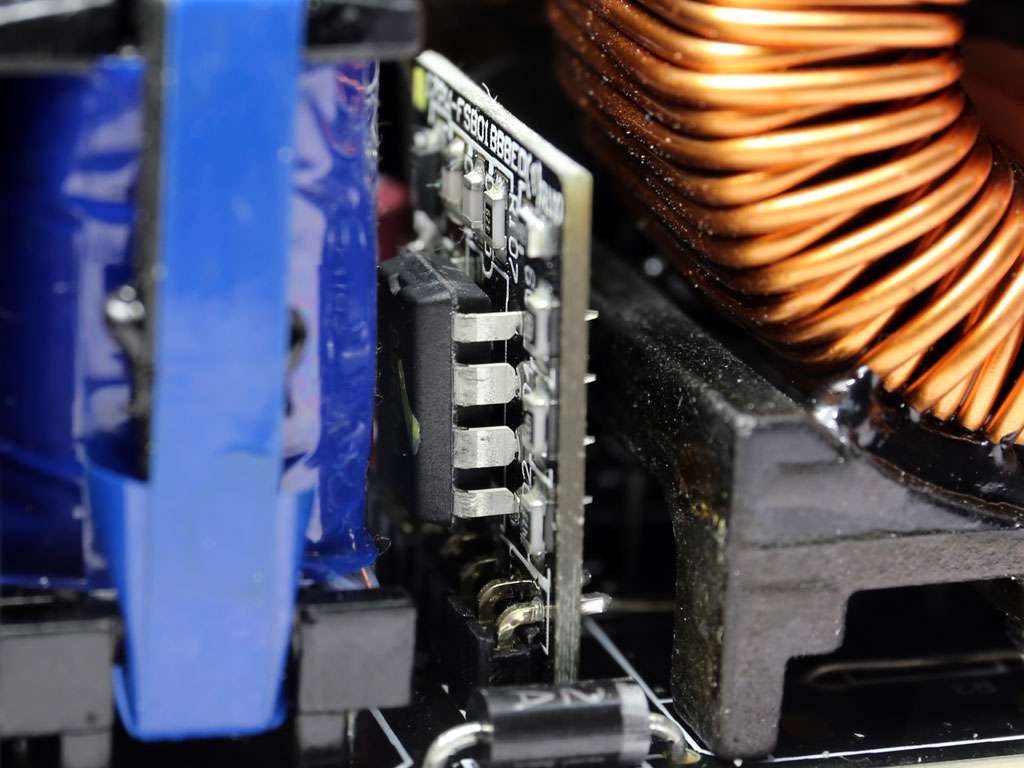
The 5VSB rectification circuit uses a PFC Device PFR20L60CT SBR on its secondary side. The standby PWM controller is an SF29604 IC.
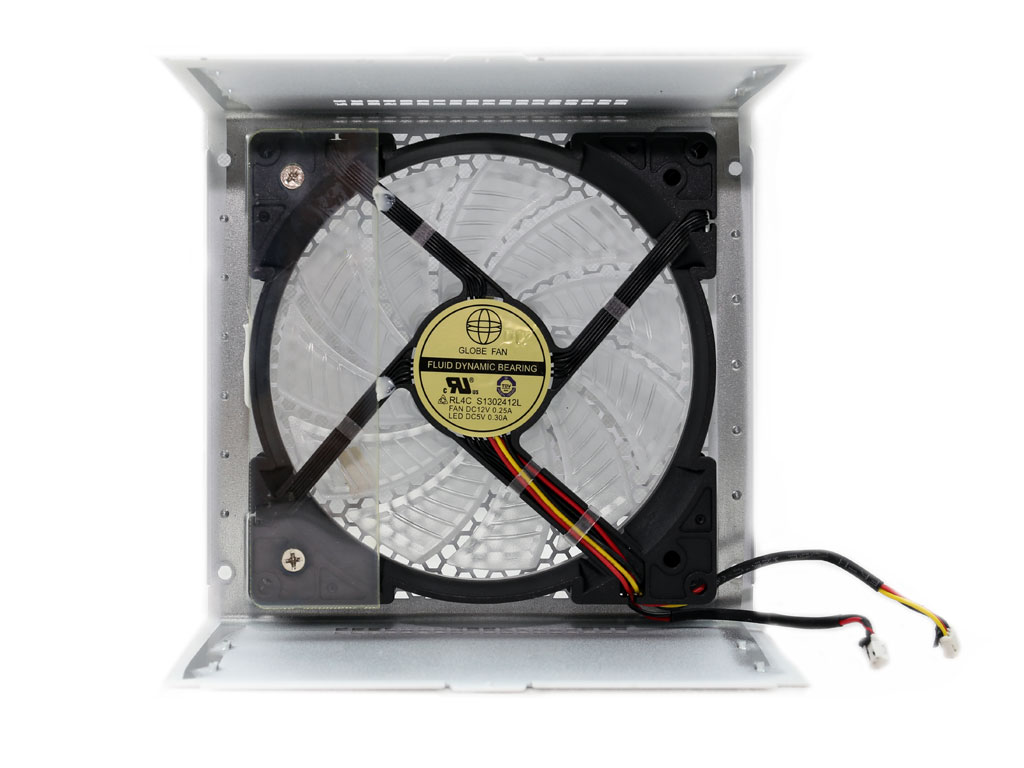
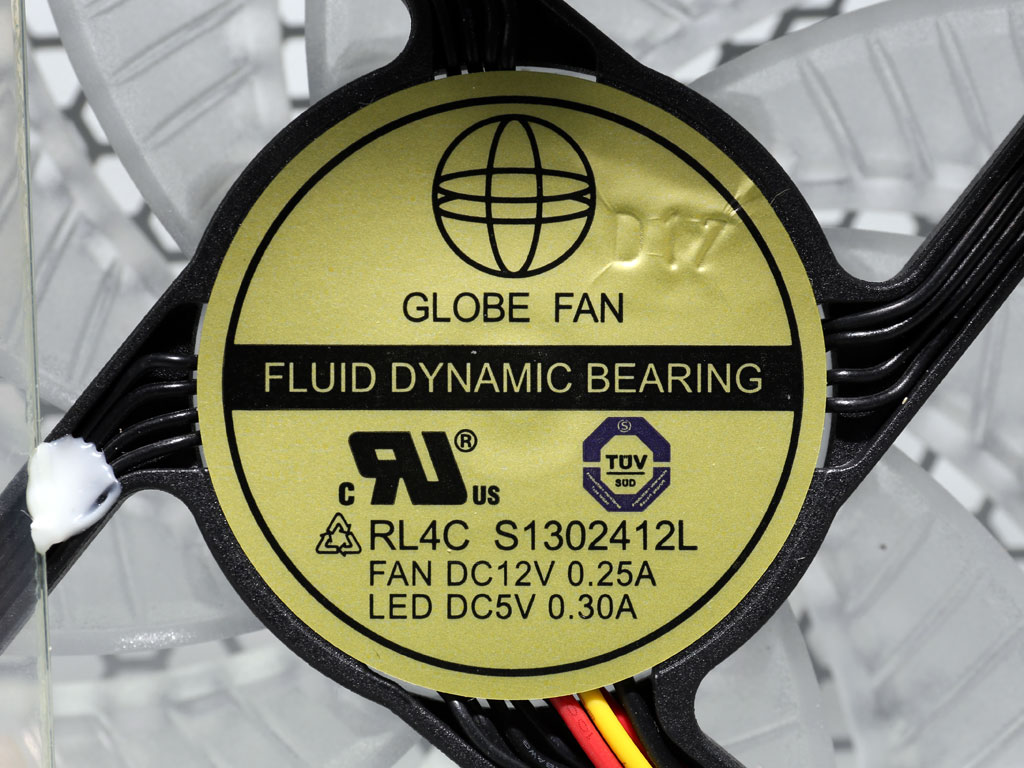
The cooling fan measures 130 mm across and uses a fluid dynamic bearing.
Our Patreon Silver Supporters can read articles in single-page format.
Nov 13th, 2026 18:49 PST
change timezone
Latest GPU Drivers
New Forum Posts
- I'll flash a ASUS ROG Strix RX480 O8G in Cause of Code 43, as a Newbie (1)
- Opinion on Monitor Replacement (6)
- Tell me about your favourite graphics card (25)
- TMOG - post your benchmark results here (16)
- no "PhysX" workable (7)
- Microsoft Exchange/365 outages? (61)
- Unallocated space in ssd , is it normal? (18)
- Last game you purchased? (1401)
- Game Soundtracks You Love (1286)
- WarpCoreBench scores! (28)
Popular Reviews
- AMD Zen 6 Technical Deep Dive
- Corsair HX1000i Shift Crystal Review
- NZXT C1200 Platinum Review
- Upcoming Hardware Launches 2027 (Updated Nov 2026)
- ASUS ROG Strix B850-I Gaming Wi-Fi7 W Review
- Montech King 95 3D PRO Review
- NZXT H7 RGB+ Review
- NZXT H5 Review
- Phantom Blade Zero Performance Benchmark Review - 35 GPUs Tested
- XPG NIMBUS PLUS Review - Mid-range Chair With Strong Competitors
TPU on YouTube
Controversial News Posts
- NVIDIA Co-Founder and CEO Jensen Huang Officially Resigns (378)
- OpenAI CEO Argues Home PCs Waste the World's Limited DRAM Supply (152)
- NVIDIA Launches Investigation Into Jensen Huang's Relationship With Suspected Chinese Spy (136)
- Intel "Raptor Lake Next" 16-Core and 20-Core CPUs Surface (130)
- Legendary Game Studio BioWare Shuts Down Following EA Layoffs (104)
- Dell CEO Says the Memory Shortage Will Get Worse in 2027 (95)
- NVIDIA GeForce RTX 50-Series Scheduled for up to $500 Price Hike This Week (89)
- Modder Fits RTX 5090 With Four 8-Pin Connectors, Halving Current per Wire (80)