 3
Synology DS1621+ 6-bay NAS Review - Meant For Business
(3 Comments) »Introduction

I would like to thank Synology for supplying the review sample.

Synology released the DS1621+, its first Ryzen-based NAS, a while ago, and after exhaustive testing, I have all the results in hand to finally finish this review. Every NAS evaluation takes over a month because I run extended tests to check on not only performance, but reliability and how it operates under various conditions. This is why I cannot deliver a lot of NAS reviews. These products are meant to operate around the clock, so checking on how they behave after many hours of continuous use and under high loads before you come to any conclusions is immensely important.
The DS1621+ uses a quad-core AMD Ryzen V1500B CPU based on the ZEN Microarchitecture, clocked at 2.2 GHz. This is quite a strong CPU for a NAS server. In total, it has four cores and eight threads. At 16 W, its TDP is extremely low, so no active cooling is required, which makes it ideal for a NAS. The only downside is that it doesn't have an embedded GPU, which means it lacks hardware video encoding and decoding capabilities.
With six bays and the option to connect up to two optional DX517 expansion units, the potential storage capacity on offer with the DS1621+ is huge. It can also take two NVMe drives for cache acceleration. Although it doesn't have a 10G port, you have the option of installing the corresponding network card; that said, included out-of-the-box 10G capability would have been ideal. The trays also feature locks. While not of high quality, these make for a nice feature in business environments. Finally, the power supply is internal, so you won't have to mess with power adapters, which take up additional space. However, it is easier to replace a power adapter if it has a problem.
Specifications
| Synology DS1621+ Specifications | |
|---|---|
| Processor | AMD Ryzen V1500B (quad-core, 2.2 GHz) |
| Operating System | Embedded Linux |
| Memory | 4 GB DDR4 ECC SODIMM |
| Maximum Memory Capacity | 32 GB (2x 16 GB) |
| Drive Bays | 6x 3.5"/2.5" SATA II/III |
| Maximum Drive Bays with Expansion Unit | 16x (with 2x DX517) |
| M.2 Drive Slots | 2x (NVMe) |
| RAID Levels: | Single Disk, JBOD, SHR, and RAID 0, 1, 5, 6, 10 |
| File System (internal drives) | btrfs and EXT4 |
| File System (external drives) |
|
| iSCSI | Target & Initiator |
| Hot-Swap | 6x |
| Networking | 4x 10/100/1000 Mbit Ethernet |
| I/O Ports | 3x USB 3.0 and 2x eSATA |
| PCIe Expansion | 1 x Gen3 x8 slot (x4 link); supports 10GbE network interface cards |
| IP cameras | Up to 40x (two are included for free) |
| VPN Server (maximum connections) | 30x |
| Dimensions | 166 (H) x 282 (W) x 243 (D) mm |
| Weight | 5.1 kg |
| Power Consumption | Access: 51.22 W HDD Hibernation: 25.27 W (with 6x WD10EFRX installed) |
| Power Supply | Internal: Delta DPS-250AB, 250 W, 100–240 V; |
| Fan | 2x 92mm (FD129225EB-N, DBB) |
| Warranty | 3-years (option for 5-years, EW201) |
| Price excluding VAT (at time of review) | $799.99 |
This an expensive NAS, but it is meant for businesses, where budget-orientated solutions aren't the top priority. A three-year warranty has been included, and around an additional $100 will get you their EW201 bundle, which extends it to five years.
Contents and Bundle


As per usual, a plain cardboard holds this Synology NAS. The only colored item is a sticker with a photo of the product and a brief description of its features. It has a top handle, which comes in handy.


Packing protection is excellent, so the product will most likely arrive at your doorstep in pristine condition. This bundle includes the basic stuff: a quick installation guide, two Ethernet cables, screws, plastic keys for the disk trays, and a power cable.


Most of the front real estate consists of trays. Thankfully, there is also a front USB port.


There are several LED indicators at the face of the NAS, for LAN usage, Status, and Alert. The power button is between these.

The Synology logo punched into the side also acts as an exhaust grille.


You will find the access door to the RAM slots on the bottom, along with the power specifications sticker.


The cooling fans, most I/O ports, and the AC receptacle are at the back.


The eSATA, USB 3.0, and all four Ethernet ports.

A scheme of the NAS, provided by Synology, depicting all points of interest.


A look at the NAS with its trays removed.


There are no vibration damping pads, which may increase HDD noise. The installation of 3.5" disks is toolless, but this is not the case for 2.5" disks, like those I used.
A Look Inside
Taking apart this NAS is tough. I had to deal with dozens of screws, so it is best to shoot lots of photos or a video of the whole procedure to keep track of which screws go where once you put it back together.

The mainboard is quite large for a NAS. It has three PCIe slots and all the necessary I/O ports.


A look at the AMD CPU.
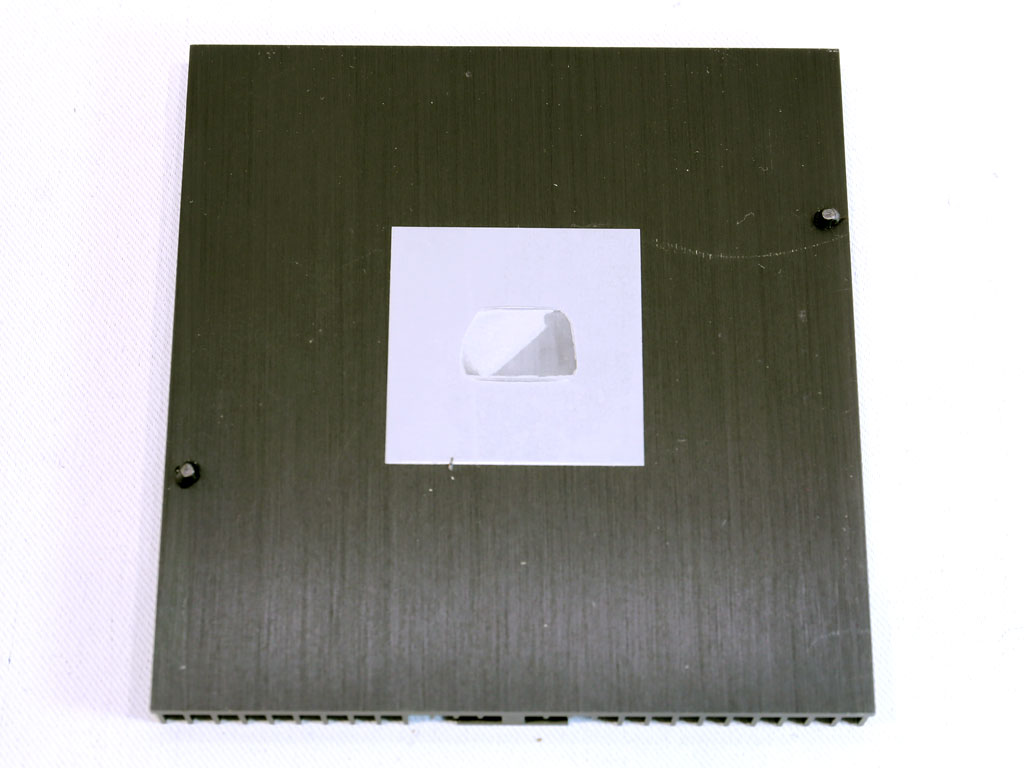
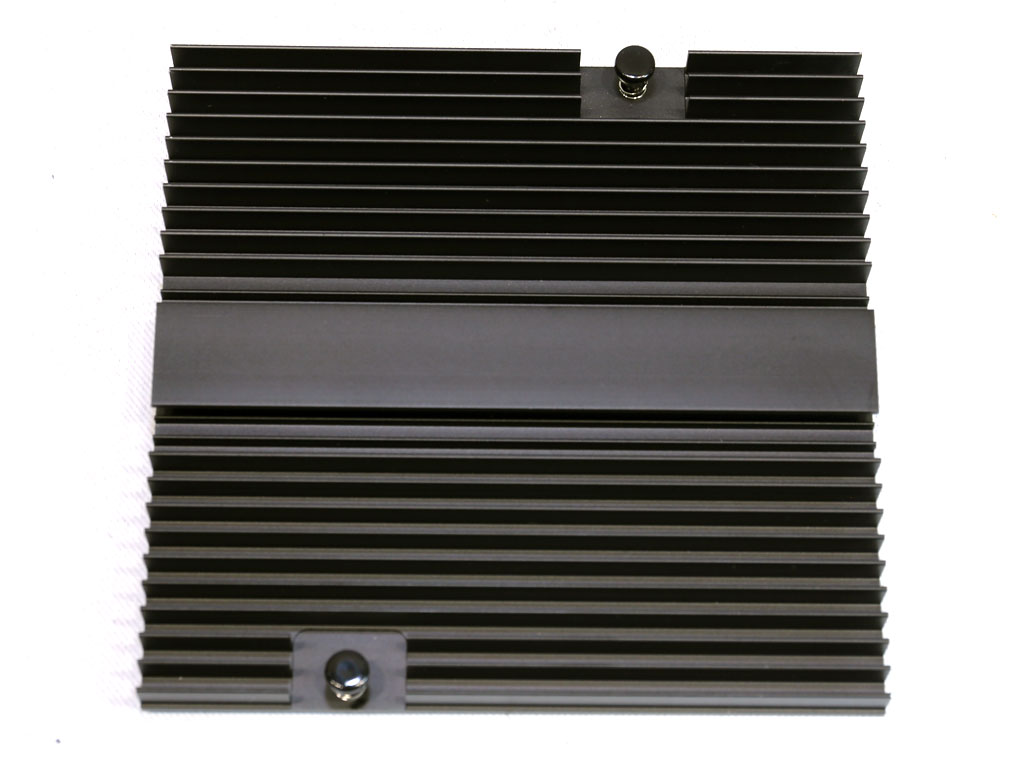
The heatsink is large, but doesn't use any active cooling.
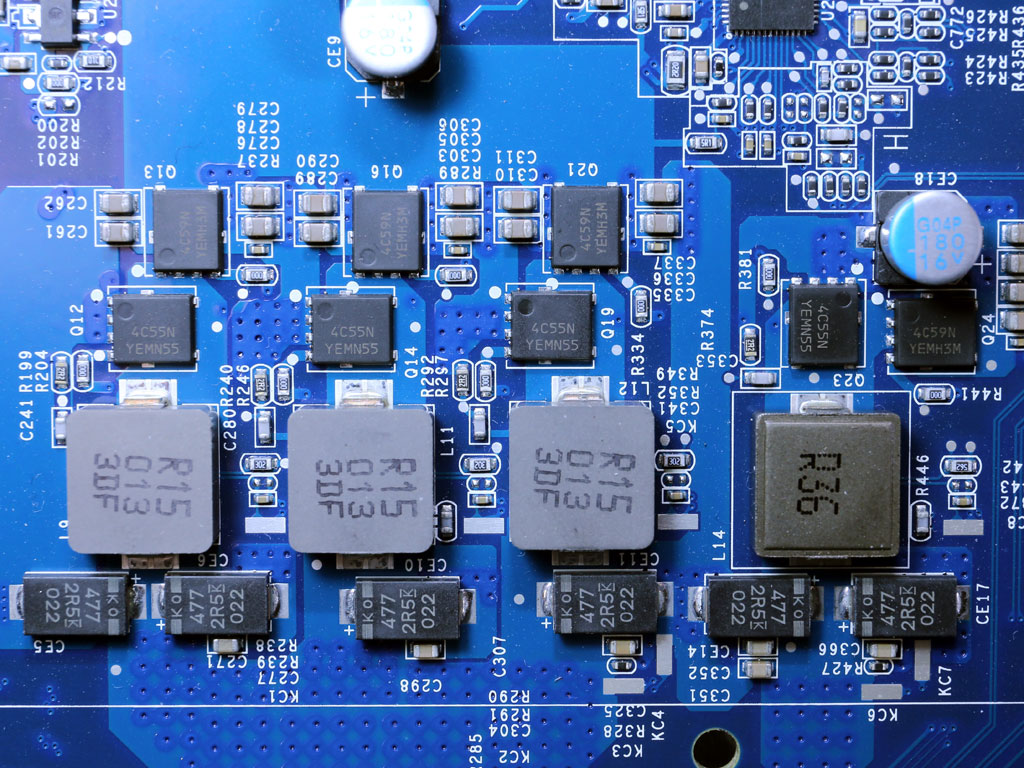

There are four power phases for the CPU's energy needs. The PWM controller is an RT3663BM IC.
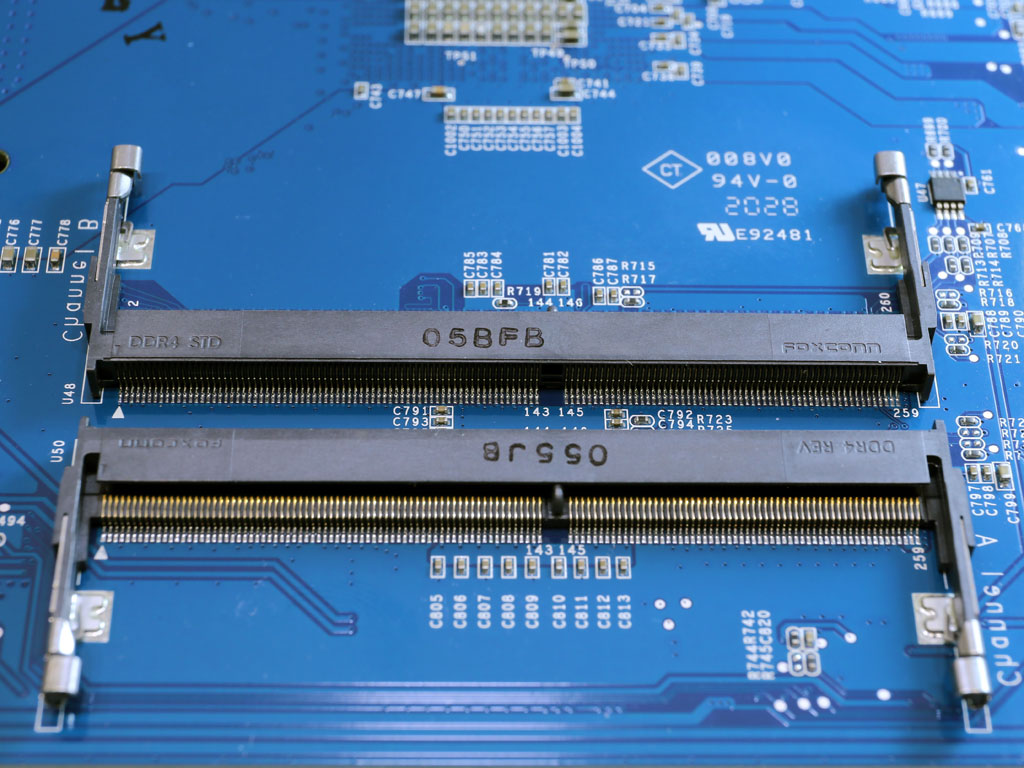
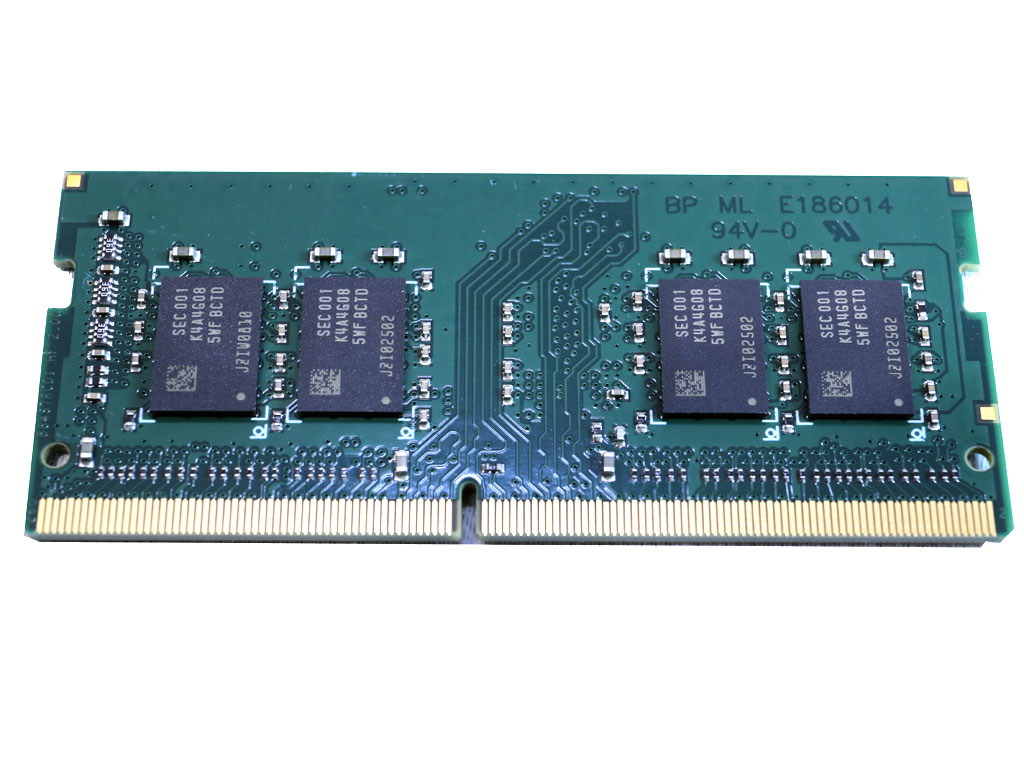
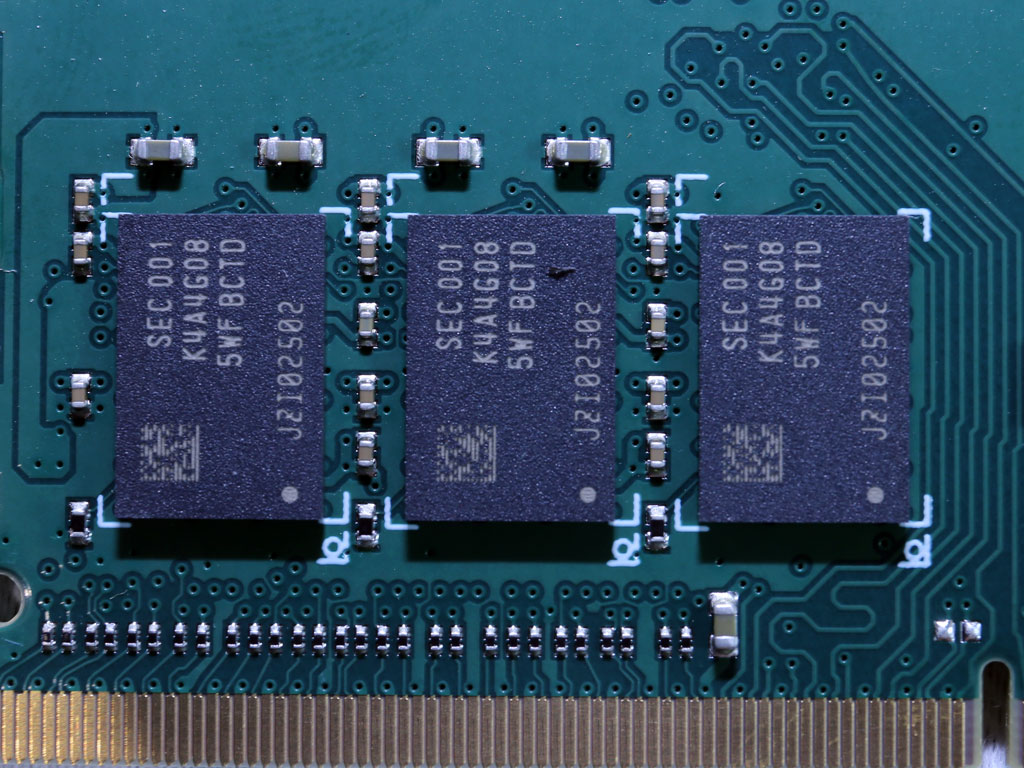
Only one of the two RAM slots is occupied, housing a 4 GB DDR4 2666 MHz ECC SO-DIMM.

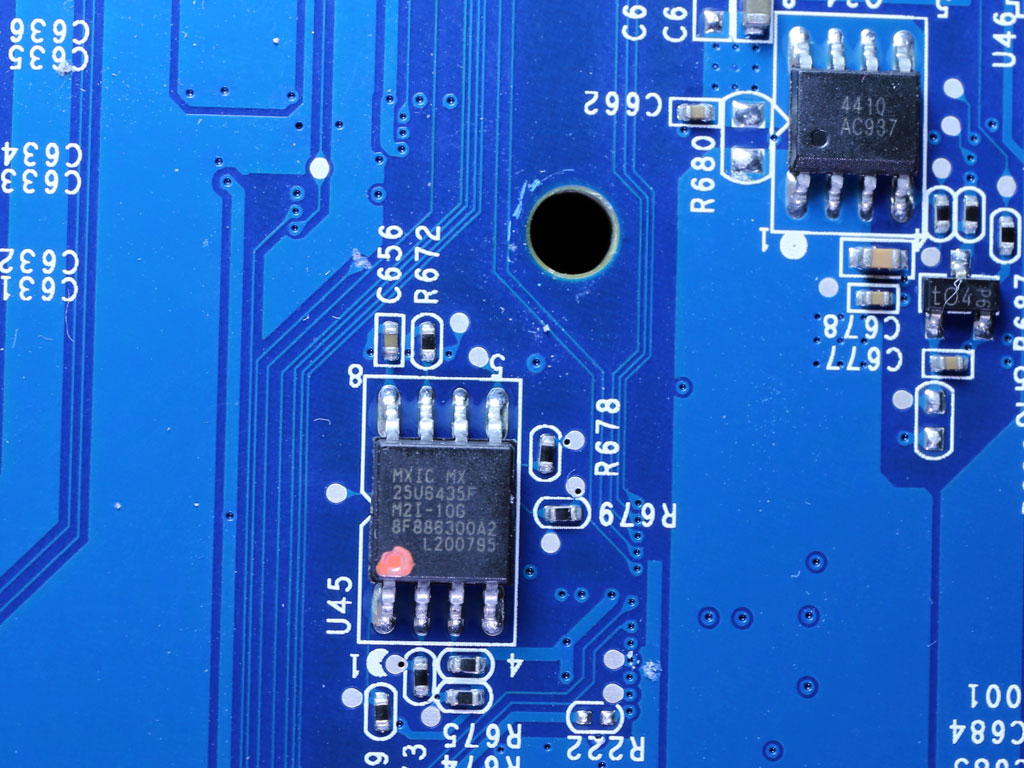
The mainboard's BIOS chip is a Macronix MX30LF1G18AC with a capacity of 1 Gbit. It stores the core of the DSM OS. There is also a Macronix MX25U6435F 64 MB flash memory chip on board.
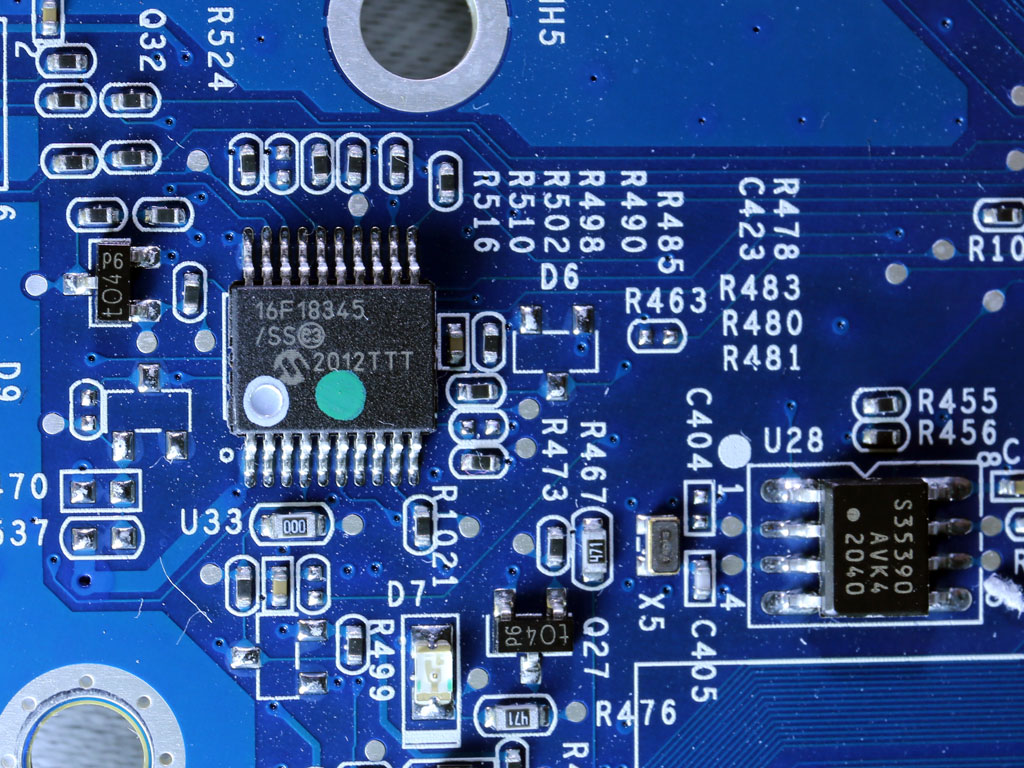
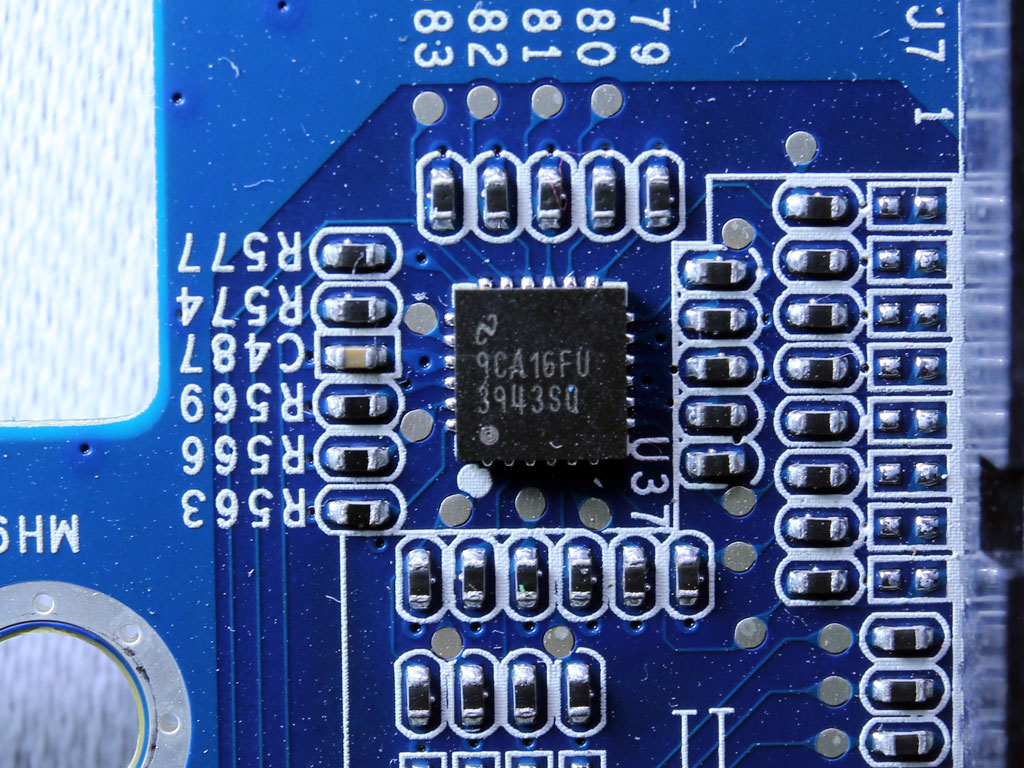
An 8-bit microcontroller by PIC—its model number is PIC16F18345. It handles the server's LED indicators. The driver for the latter is a Texas Instruments LP3943 IC.
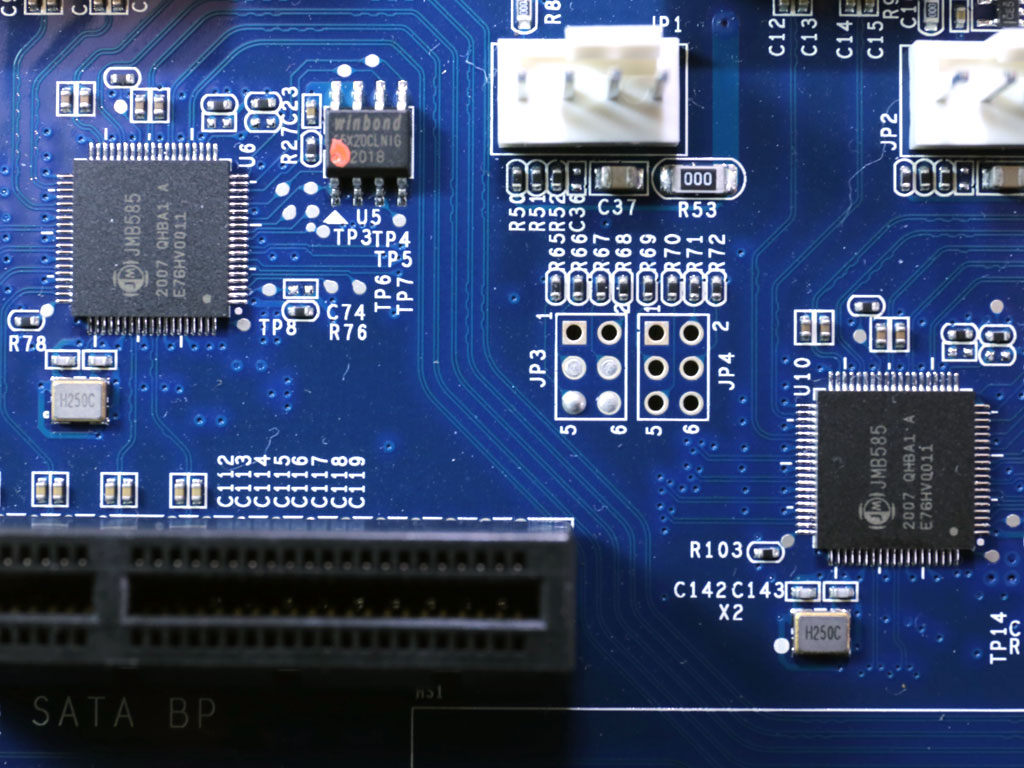
A pair of JMicron JMB585 PCIe to SATA bridge ICs.
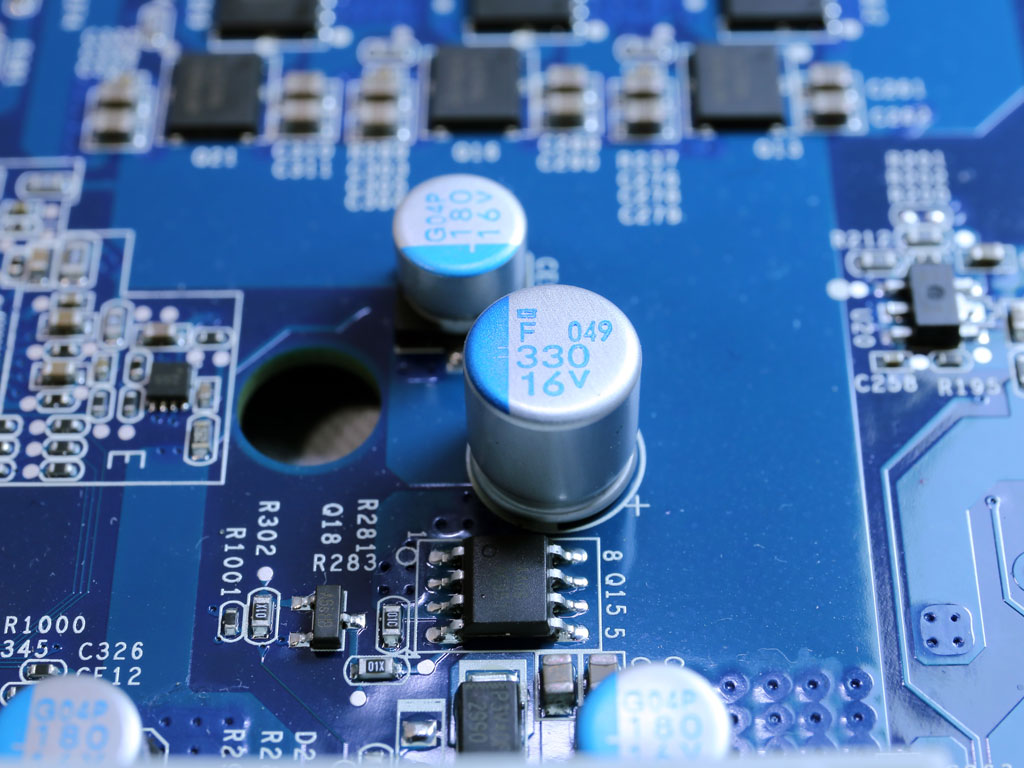
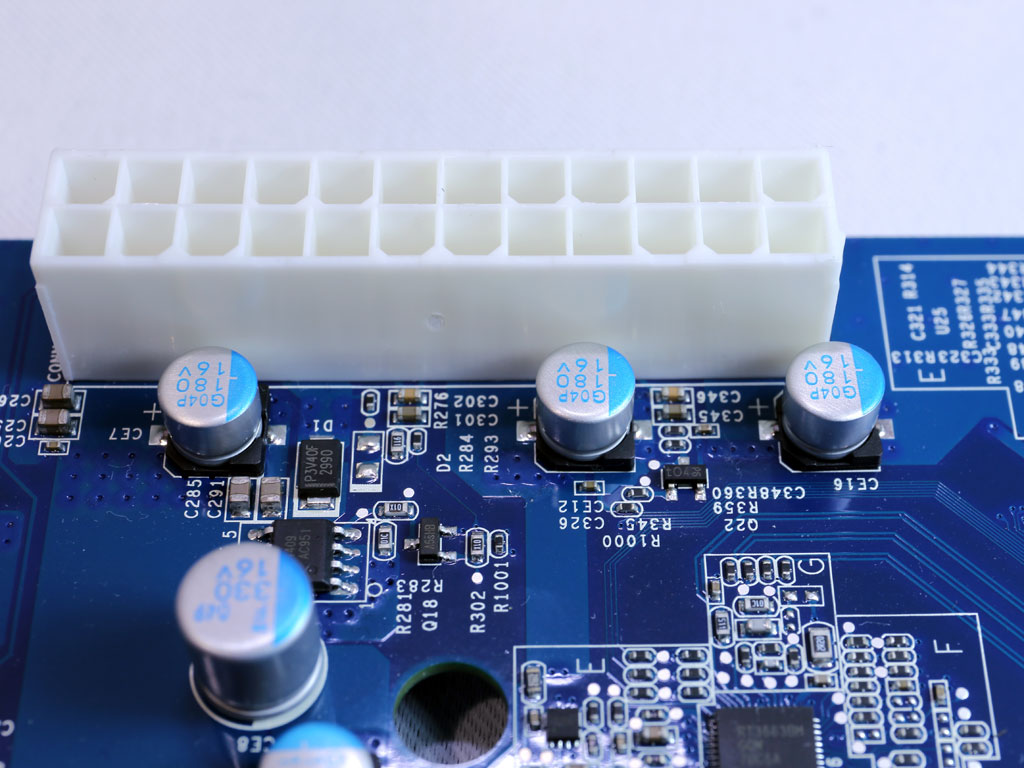
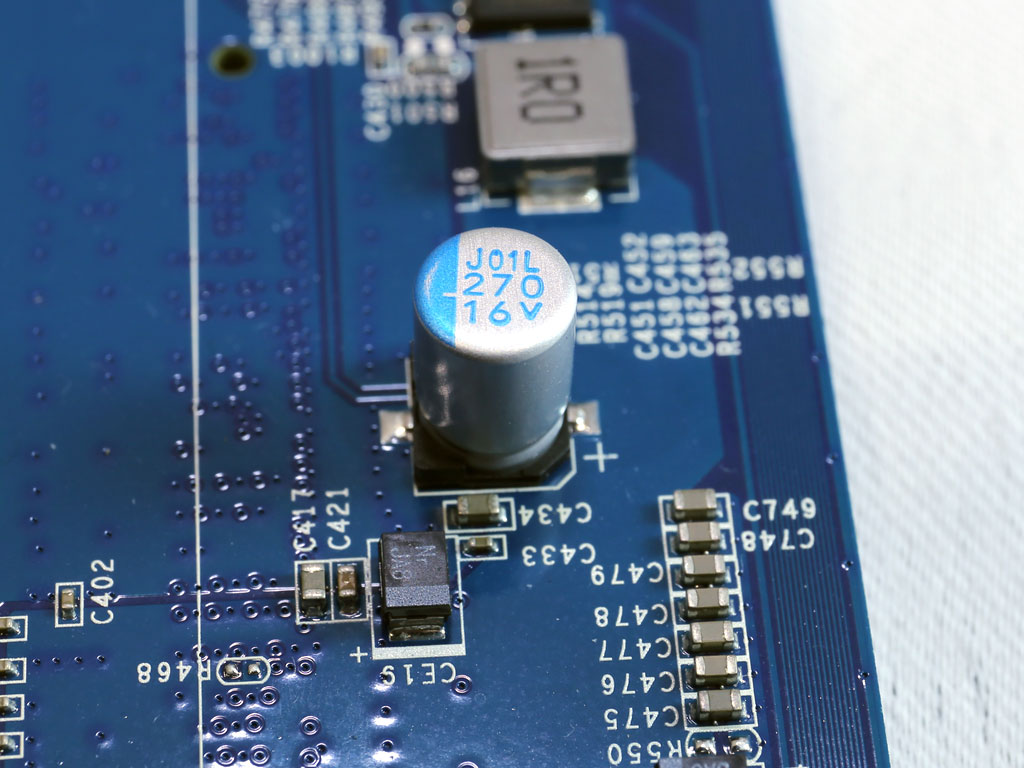
There are no electrolytic caps on the mainboard. The polymer caps are by United Chemi-Con, which means they are of high quality.
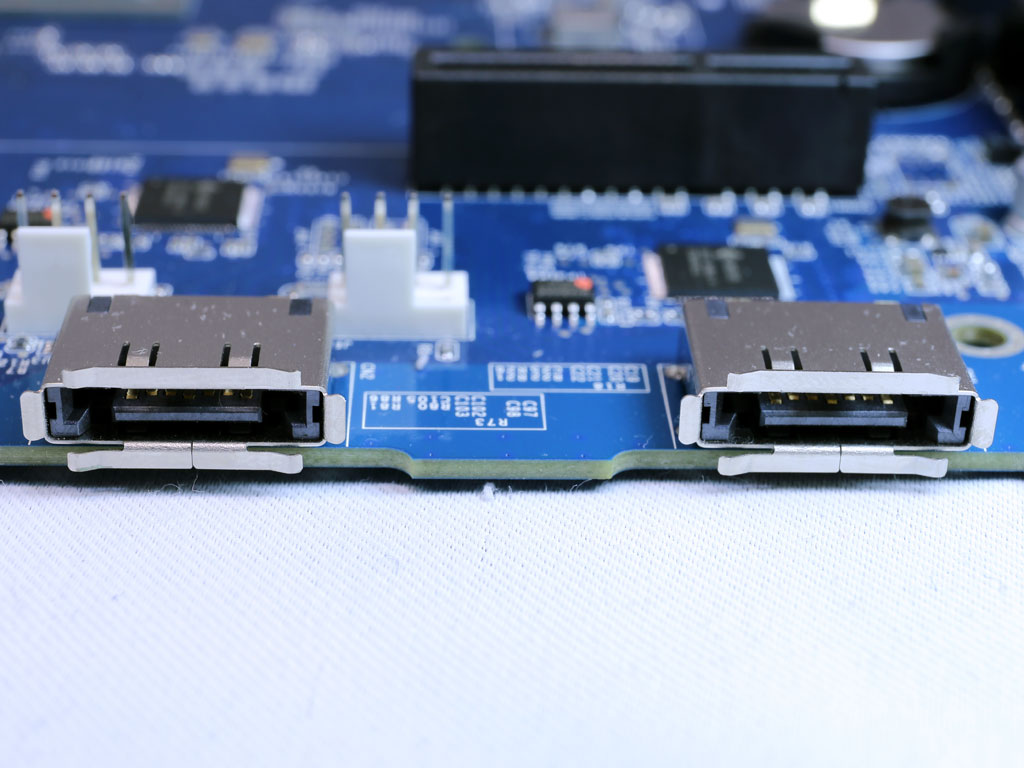

The eSATA and USB ports on the mainboard's rear side. There is another USB 3.0 port at the front.

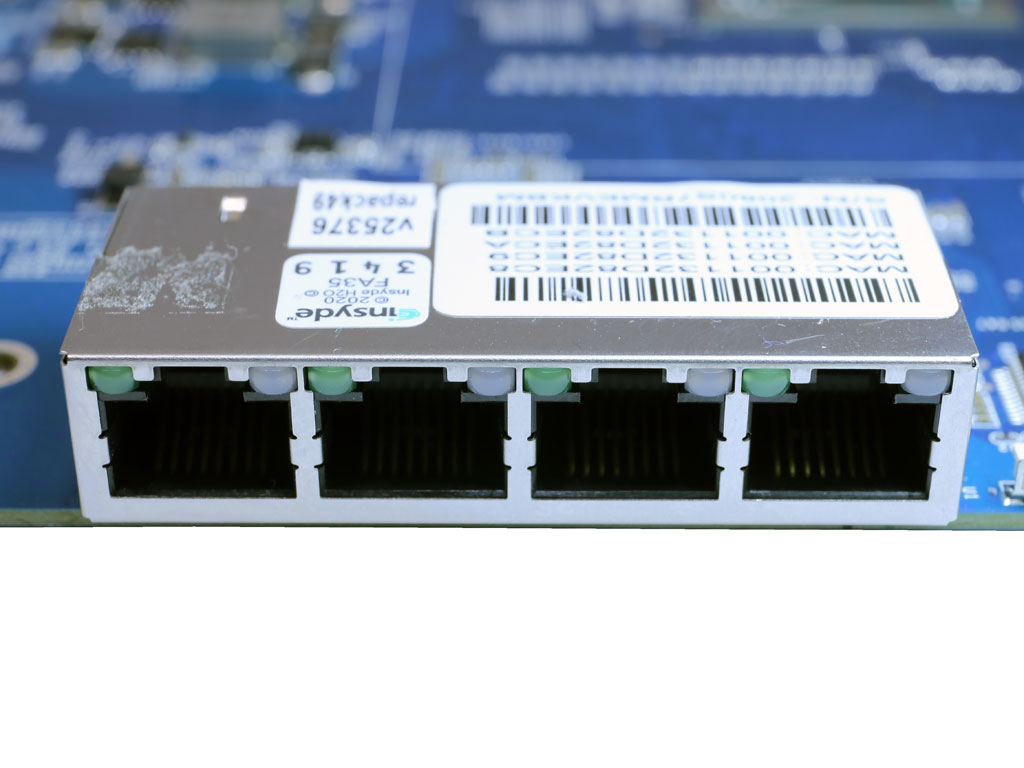
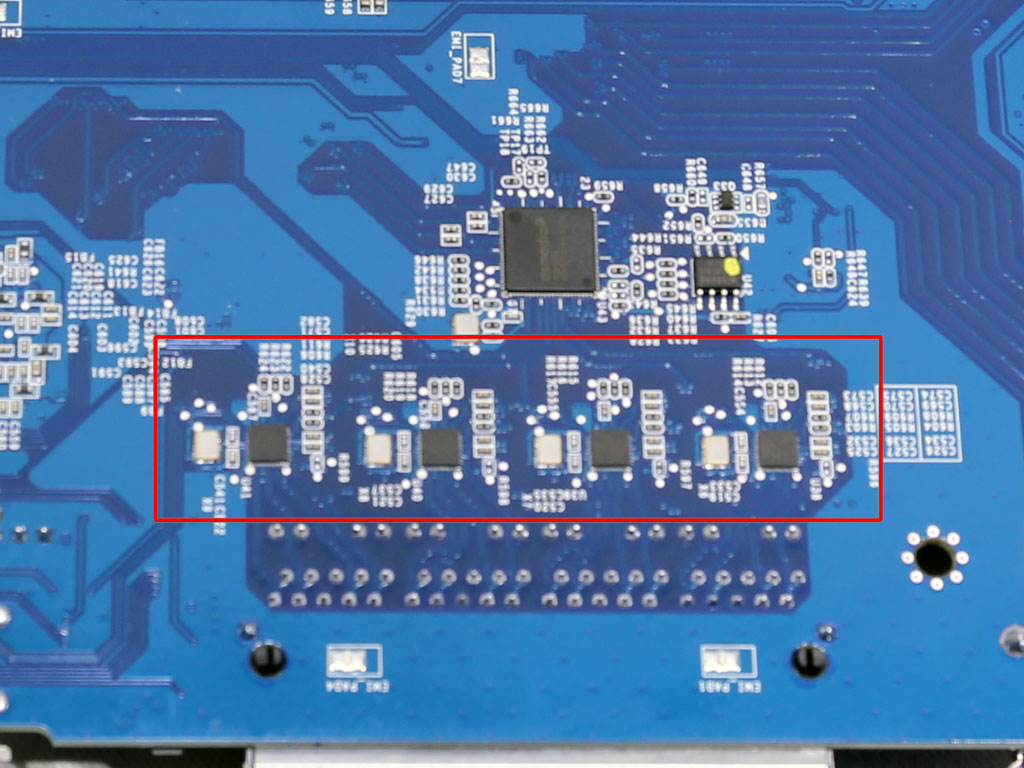
All four Ethernet ports. The controllers are four Realtek RTL8111H ICs.
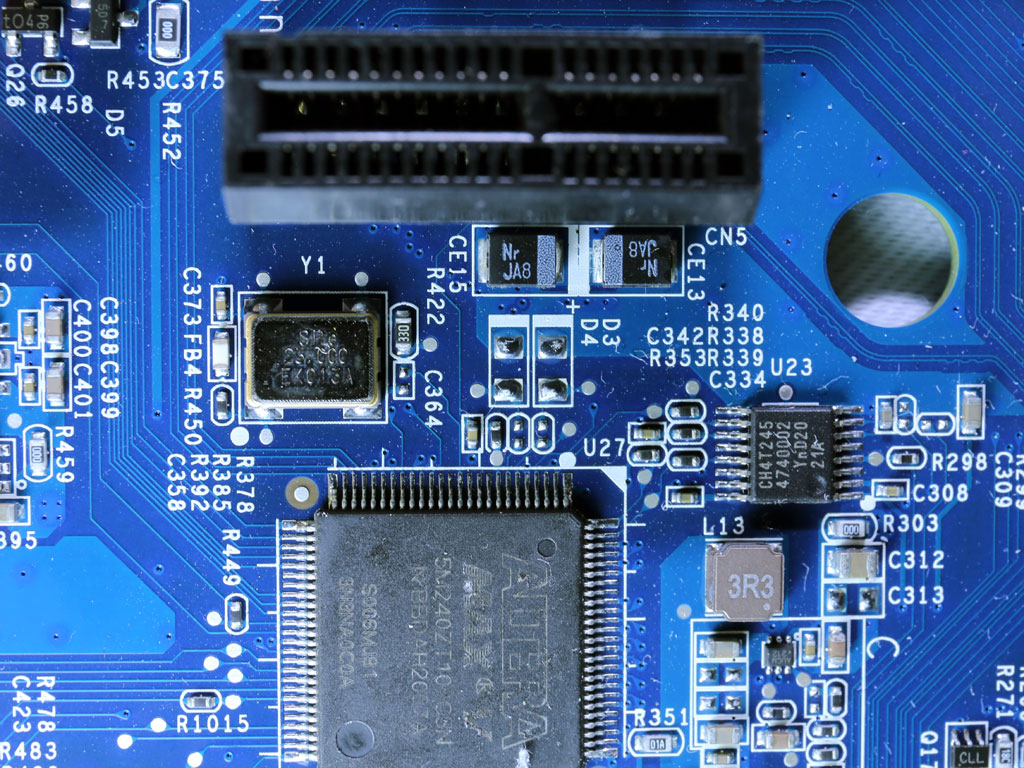
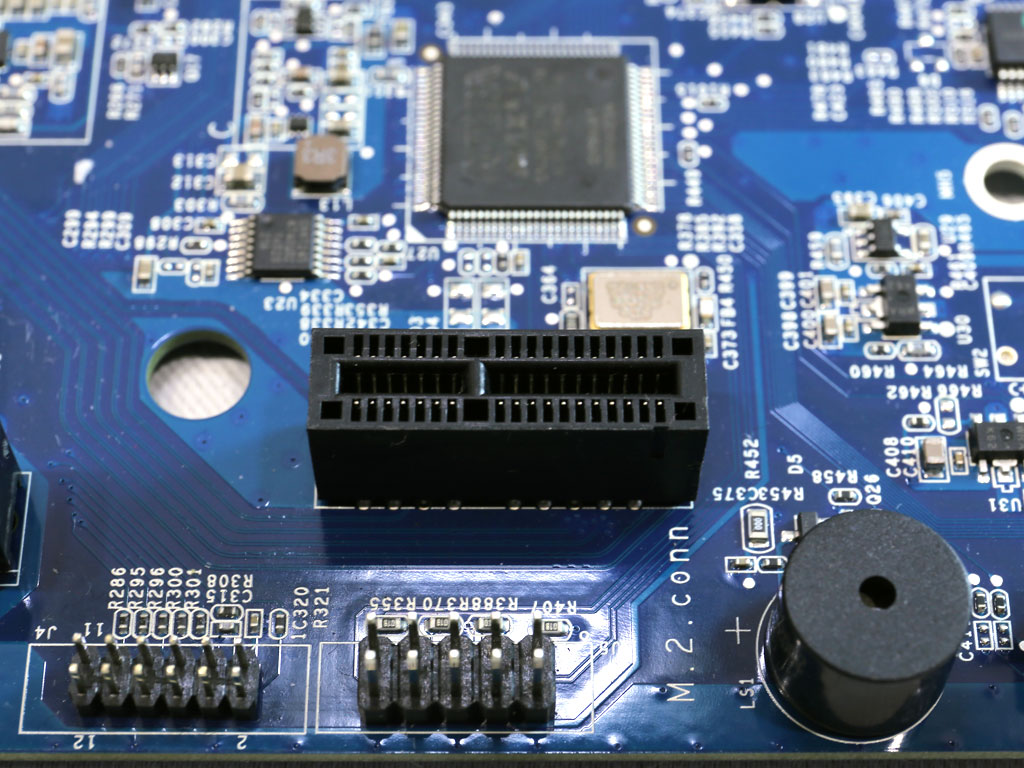
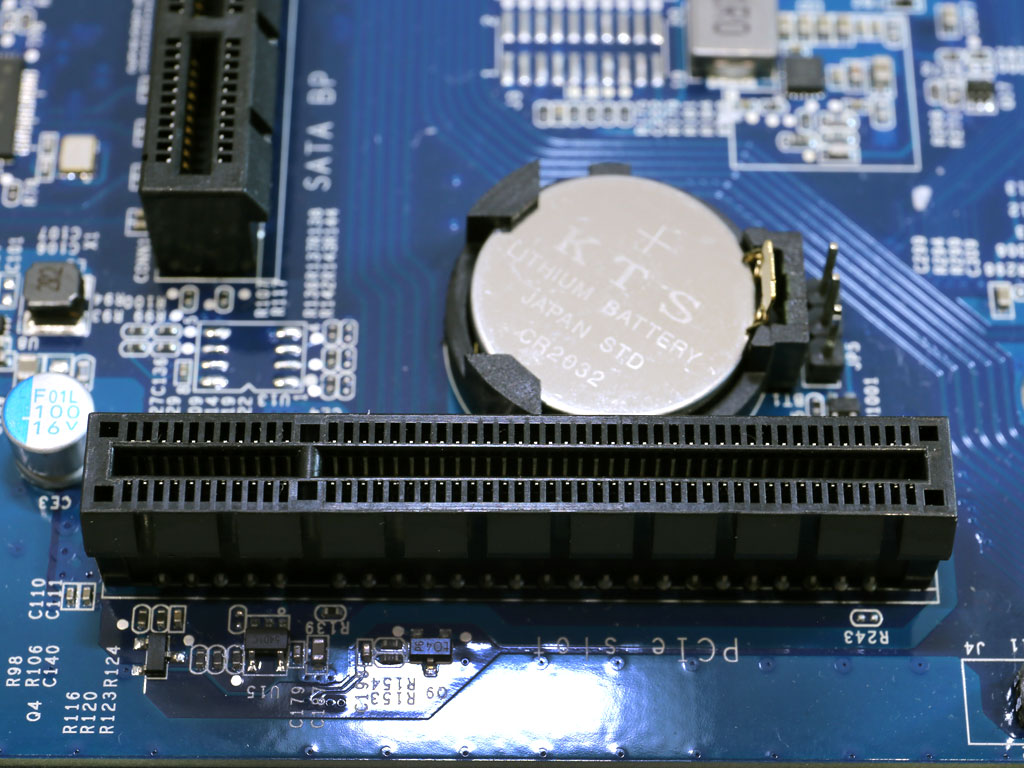
All three PCIe slots of the mainboard. Two of these are occupied by the SATA expansion card and NVMe board. The PCIe3.0 x8 slot on the left is for the optional 10G Ethernet card. Its actual bandwidth is restricted to x4. You can select between two PCIe cards: the E10G18-T2 or E10G18-T if you only need one 10 Gbit port.
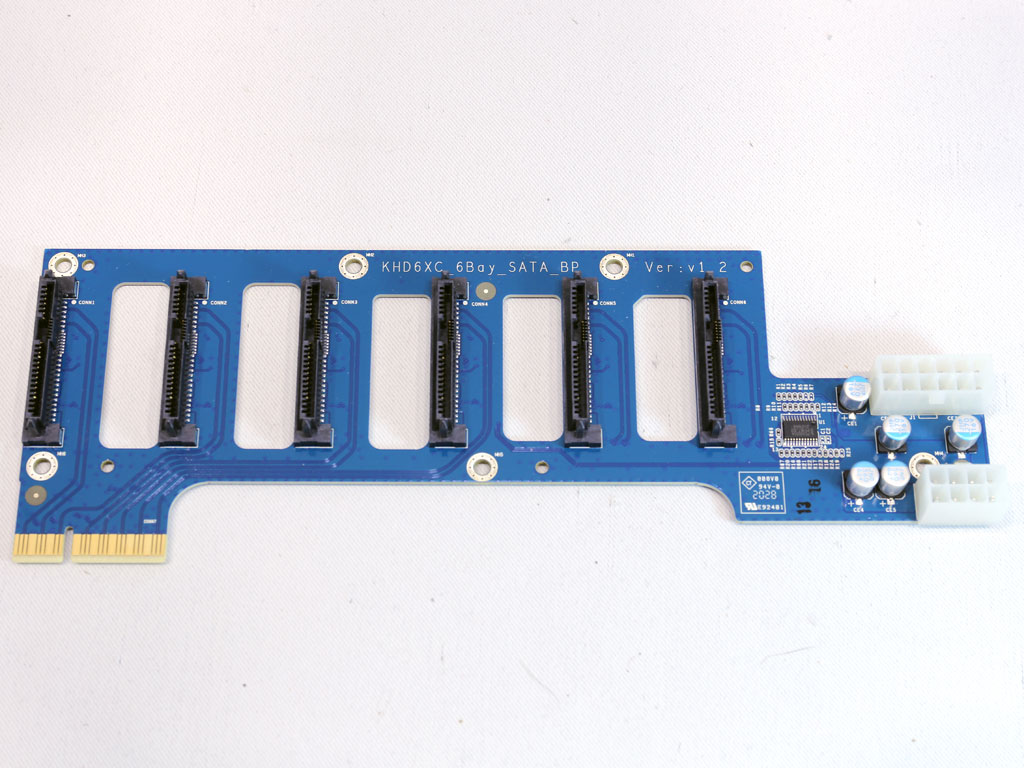

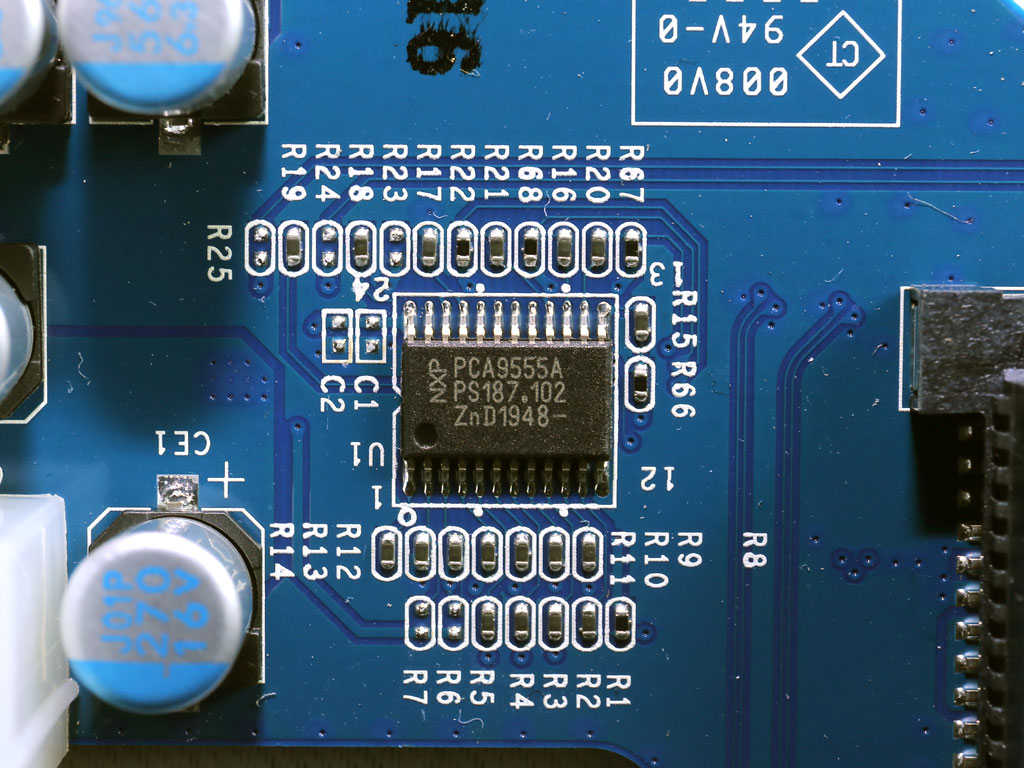
The SATA card uses a PCA9555A GPIO expander IC.
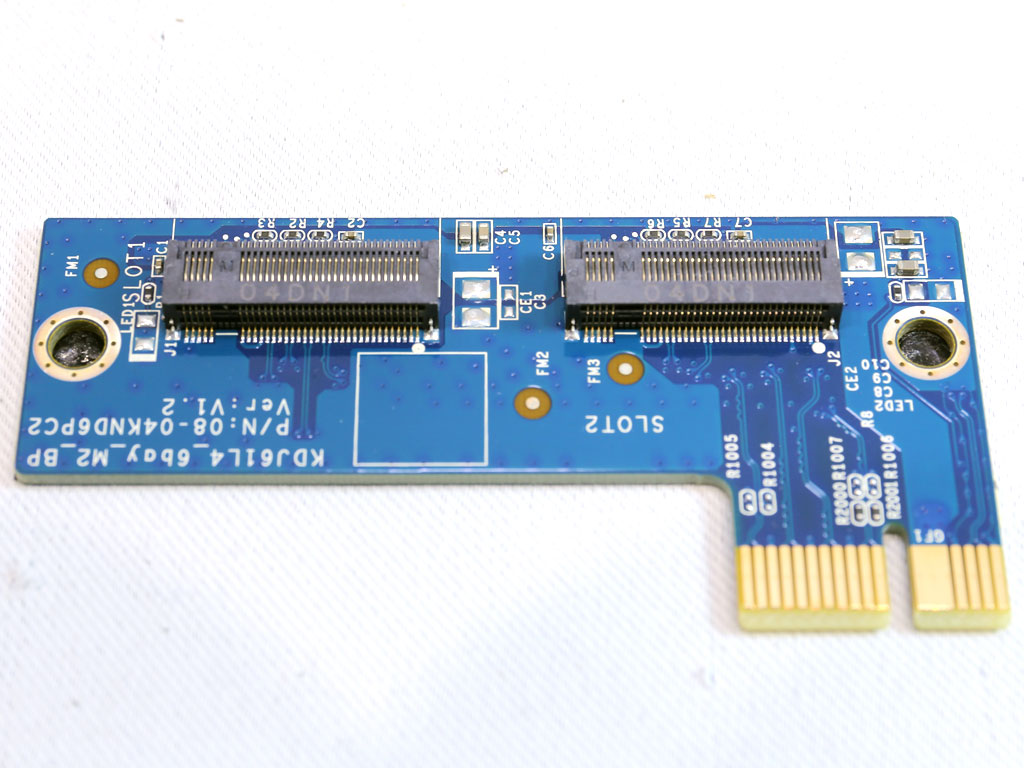
The card for the optional NVMe drives.
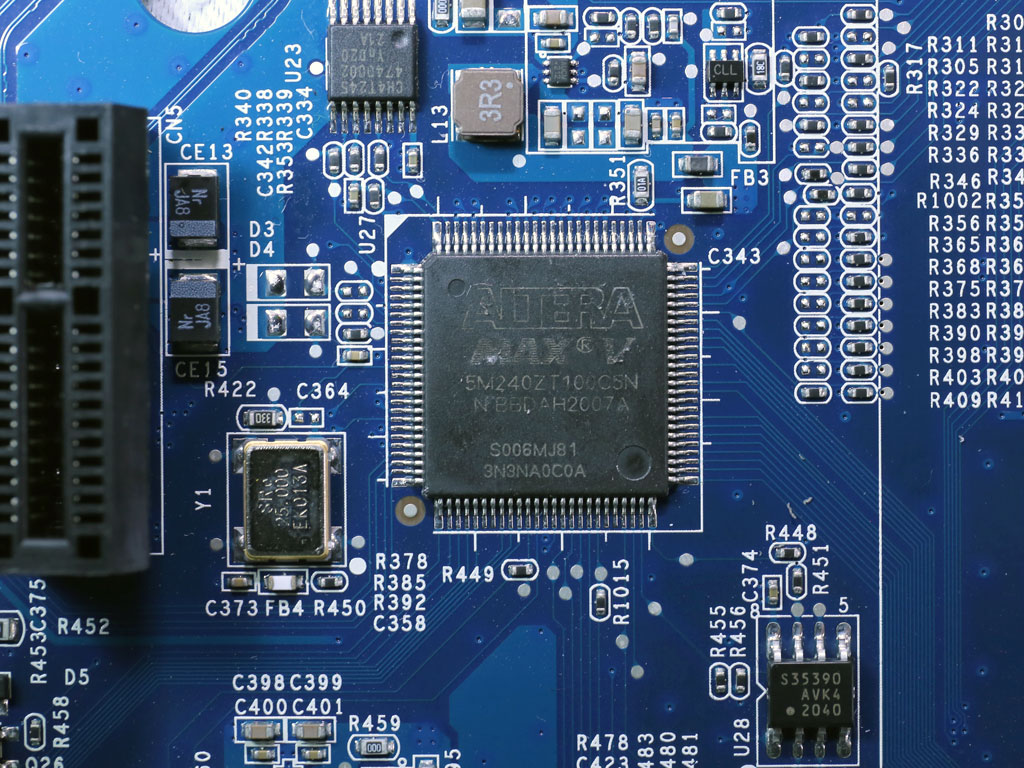
An Altera 5M240ZM100C5N Complex Programmable Logic Device, or CPLD for short, stores the server configuration. As you can see in the first photo above, the IC was hiding behind a sticker we had to remove to identify it.
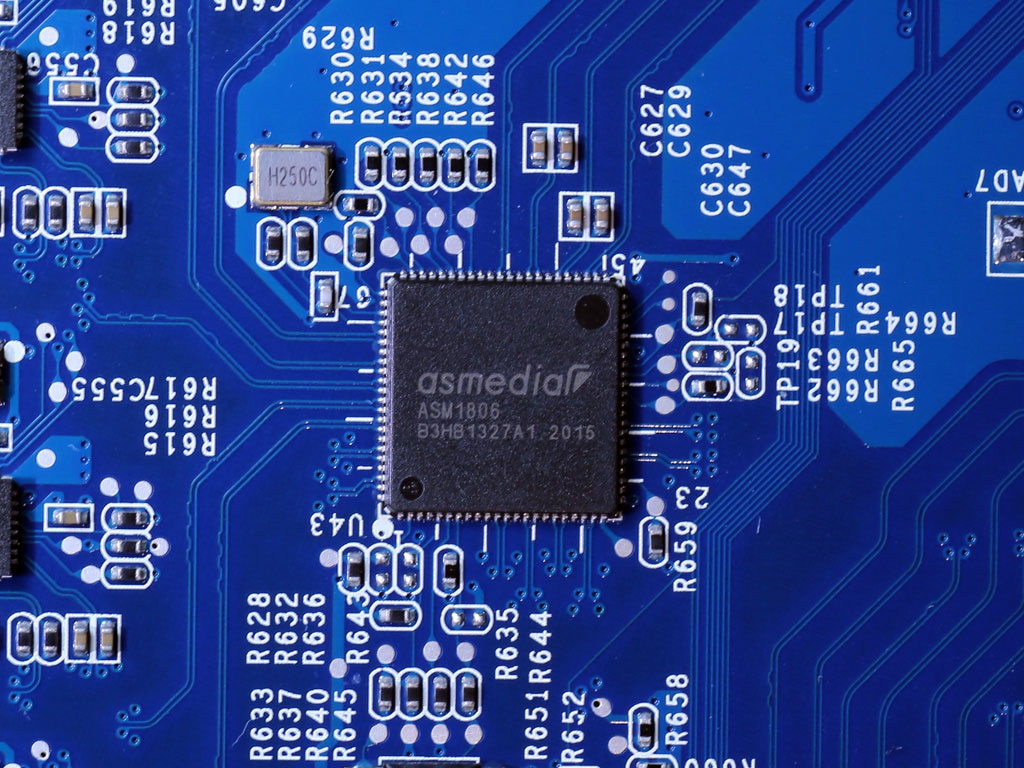
An Asmedia ASM1806 PCIe Gen2 packet switch chip.
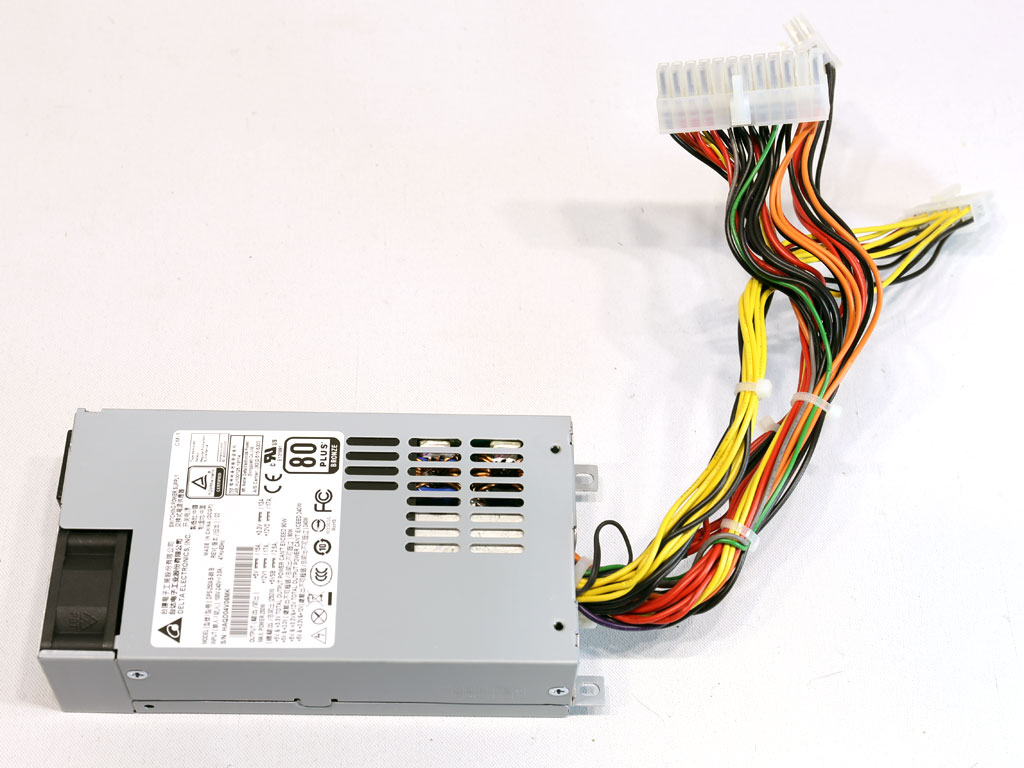
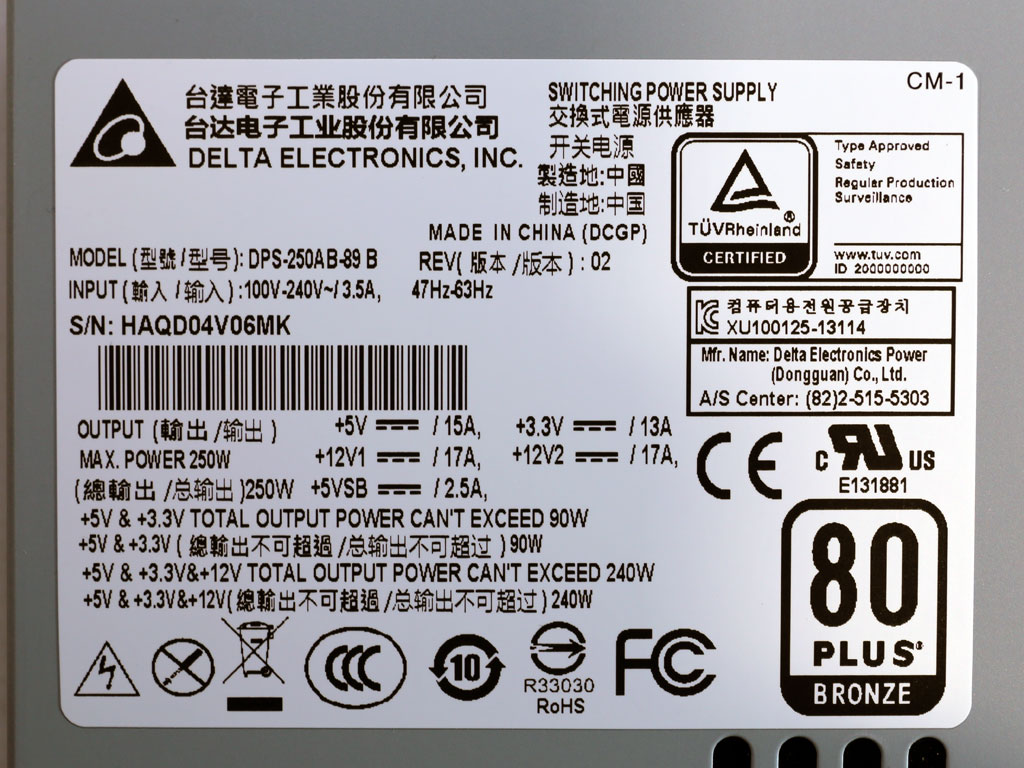
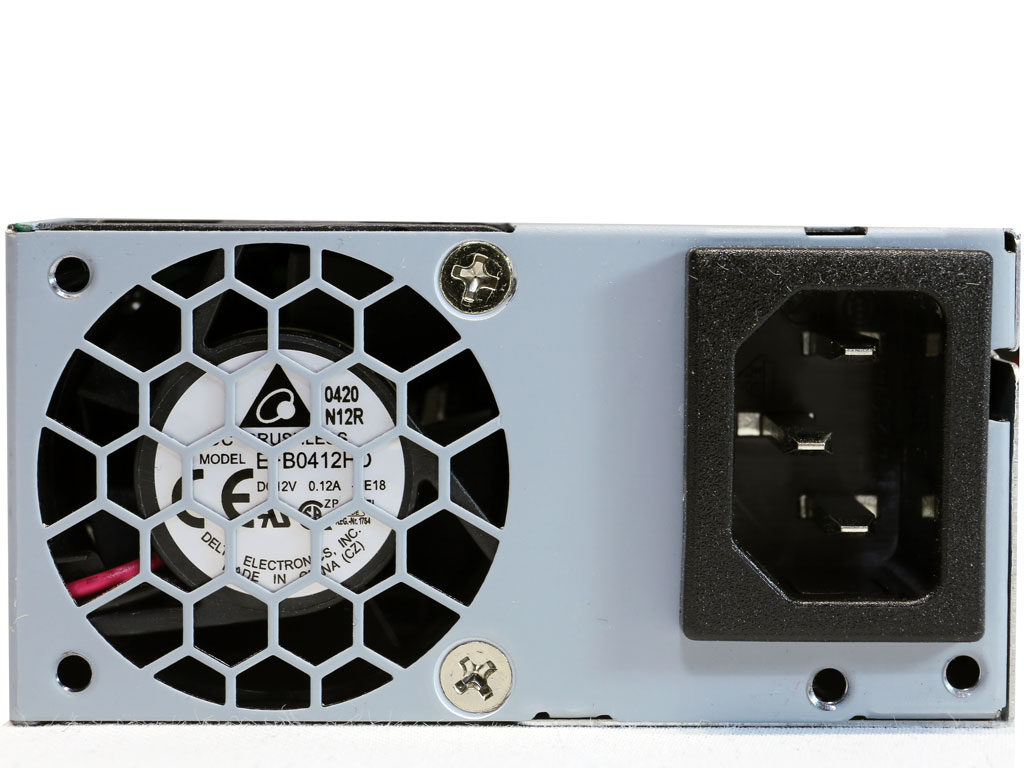
The PSU is the widely used Delta DPS-250A. This unit can deliver up to 250 W and has two +12 V rails with a maximum current of 17 A on each.
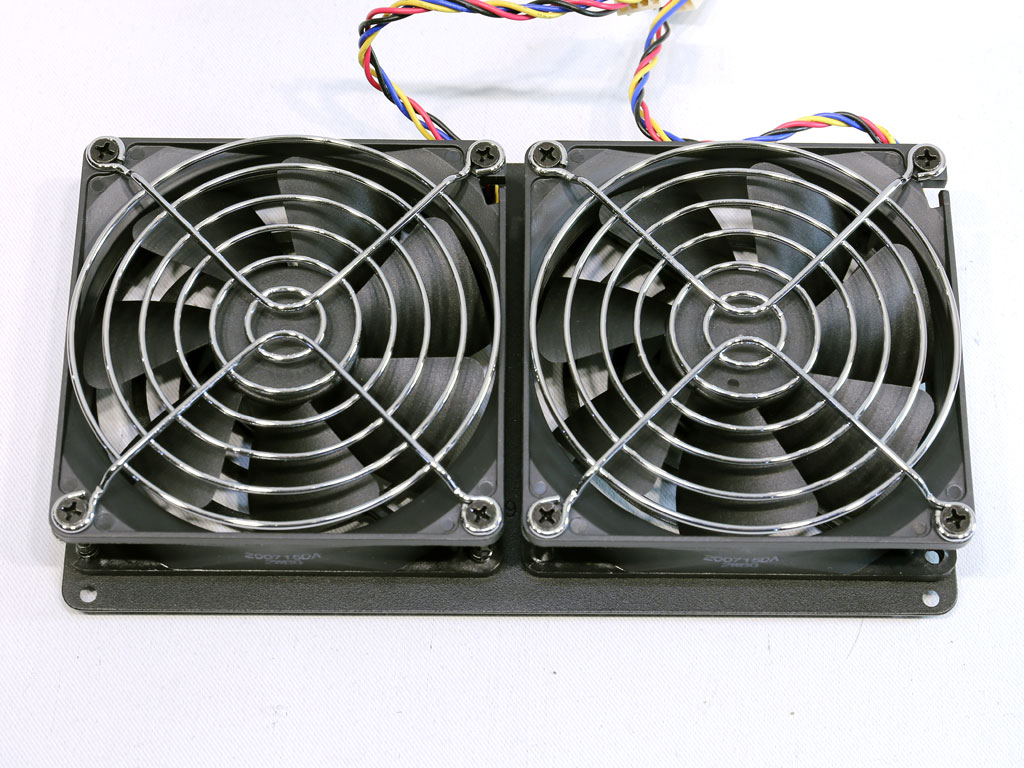

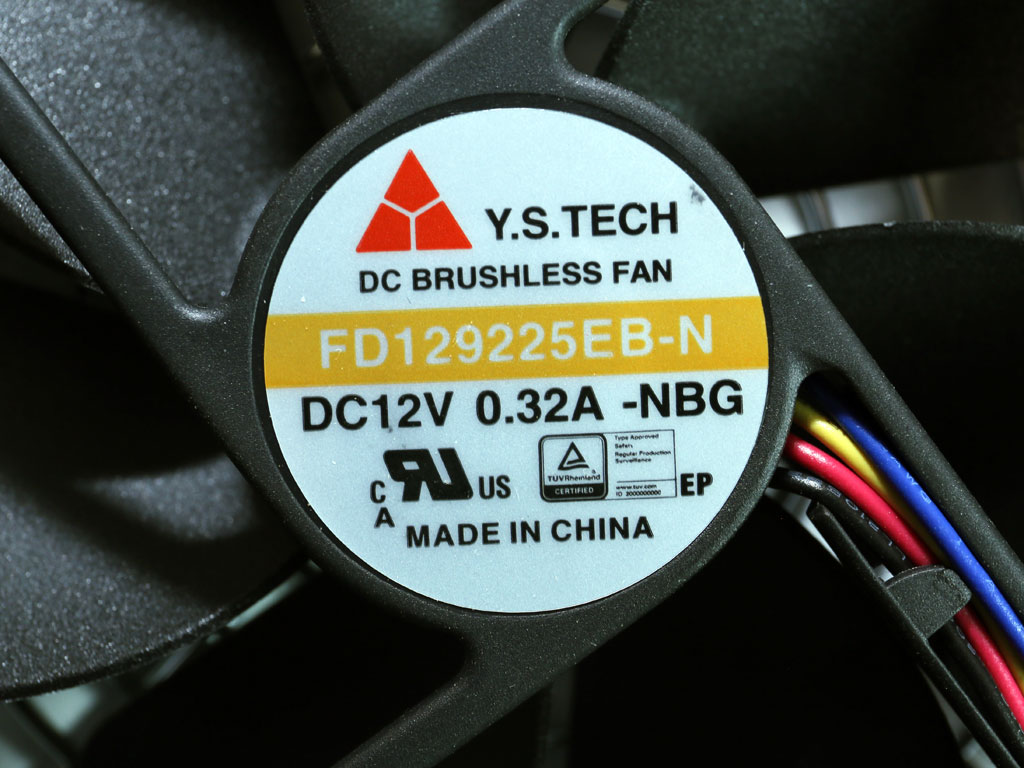
Two Yuanshan Technology fans with model number FD129225EB-N are used. They measure 92 mm across and use double ball-bearing. As such, they won't have a problem operating under high temperatures.
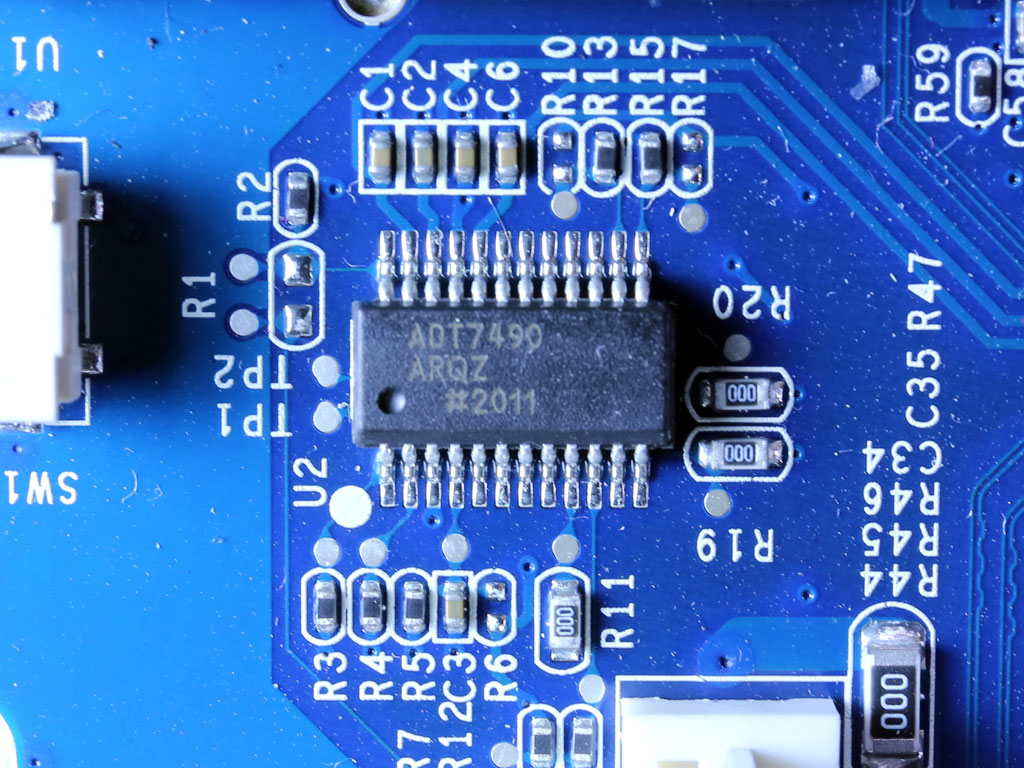
The fans are controlled by an ADT7490 IC.
Our Patreon Silver Supporters can read articles in single-page format.
Nov 11th, 2026 20:28 CST
change timezone
New Forum Posts
- Classic Blizzard games (WarCraft 1-2, Diablo 1-2, StarCraft 1) (3)
- TPU's Nostalgic Hardware Club (22144)
- When you could finally run Crysis maxed out? (45)
- Your PC ATM (36401)
- Gacha Games - Discussions, Pulls, Updates, etc. (1149)
- Steam Deck Owners Clubhouse (618)
- Ryzen 7 8700G OC (0)
- Case to fit 2X Alphacool NexXxoS UT60 Rads (5)
- AAF Optimus Modded Driver For Windows 10 & 11 - Only for HDAUDIO Chips [WINDOWS 11 RECOMMENDED] (1153)
- Samsung 870 EVO - Beware, certain batches prone to failure! (1487)
Popular Reviews
- AMD Zen 6 Technical Deep Dive
- Upcoming Hardware Launches 2027 (Updated Nov 2026)
- XPG NIMBUS PLUS Review - Mid-range Chair With Strong Competitors
- NZXT H7 RGB+ Review
- NZXT H5 Review
- NZXT C1200 Platinum Review
- Phantom Blade Zero Performance Benchmark Review - 35 GPUs Tested
- Montech King 95 3D PRO Review
- Gigabyte Z890I Aorus Ultra Review
- INNOCN 45C1R Review - Two QHD Screens, Zero Bezels
TPU on YouTube
Controversial News Posts
- OpenAI CEO Argues Home PCs Waste the World's Limited DRAM Supply (152)
- NVIDIA Launches Investigation Into Jensen Huang's Relationship With Suspected Chinese Spy (136)
- Intel "Raptor Lake Next" 16-Core and 20-Core CPUs Surface (130)
- Legendary Game Studio BioWare Shuts Down Following EA Layoffs (104)
- Dell CEO Says the Memory Shortage Will Get Worse in 2027 (95)
- NVIDIA GeForce RTX 50-Series Scheduled for up to $500 Price Hike This Week (89)
- AMD Radeon Owners Can Now Run Nearly Every DLSS Feature Through Fan-Made Mod (80)
- Modder Fits RTX 5090 With Four 8-Pin Connectors, Halving Current per Wire (80)