 40
Team Group T-FORCE Dark AirFlow I SSD Cooler Review
Value & Conclusion »Performance
For thermal testing, I'm using our thermal stress test from the SSD reviews. The drive is hammered by non-stop incoming writes and temperatures and write speeds are recorded. There is no additional airflow in the M.2 area (CPU is watercooled, no case exhaust case fan).As test drive I'm using the Corsair MP700 Pro SE, a 14 GB/s Gen 5 SSD based on the Phison E26—basically the fastest you can buy—with the highest heat output. It is expected that this drive will throttle in a lot of scenarios tested below.
Bare Drive

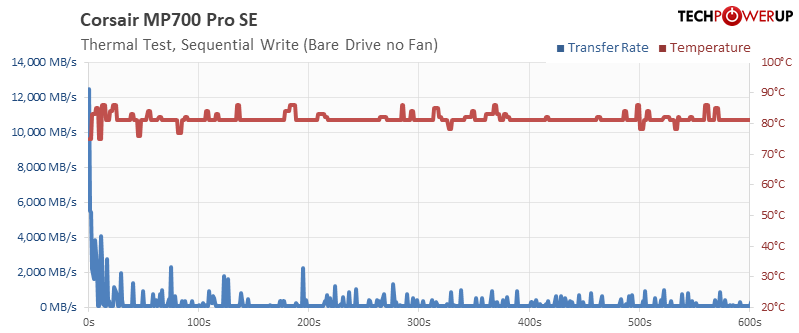
This is the baseline, naked drive without any cooling. This configuration is definitely not recommended—you must pair the MP700 with a heatsink. Still, it's interesting to see how quickly it throttles.
Bare Drive with Fan
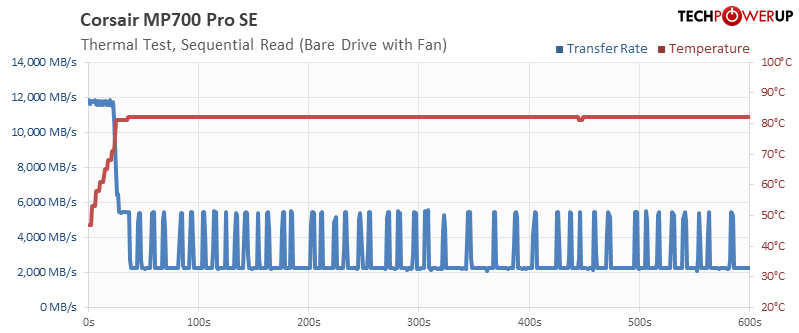
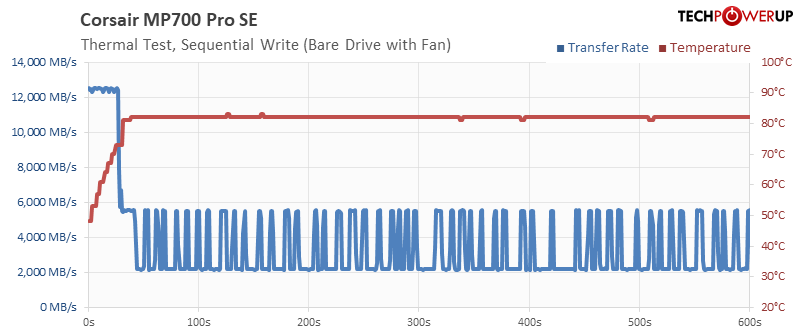
Next up, the naked drive with a big 80 mm fan blowing on it. Surprisingly, still a lot of throttling—this really needs a heatsink to spread the heat from the controller over a larger area.
T-FORCE Dark Airflow I
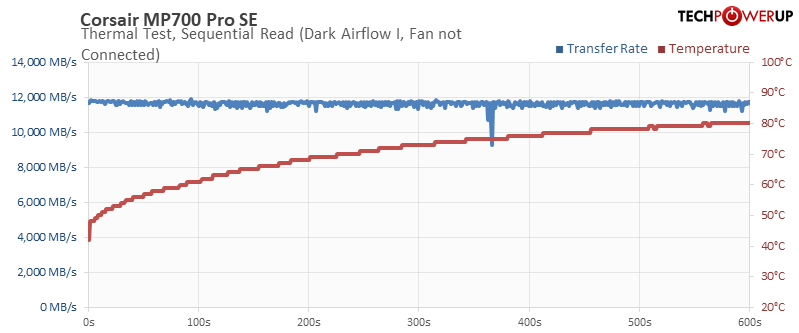
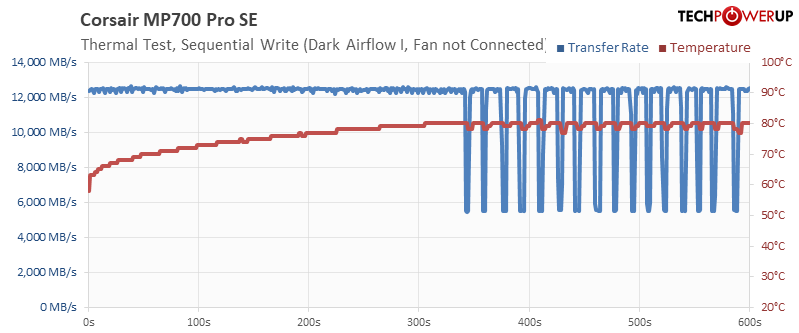
Now, the subject of this review, the Airflow I from Team Group, but with the fan NOT connected to the motherboard, so it's silent. Pretty good, no throttling in reads, and almost no throttling in writes, and it takes over 5 minutes of non-stop writes for throttling to begin.
T-FORCE Dark Airflow I with Fan
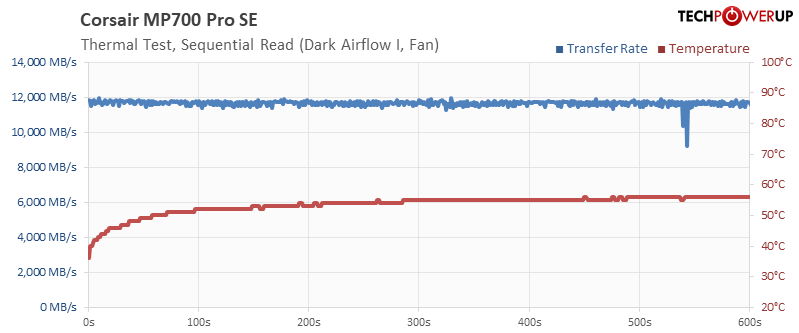
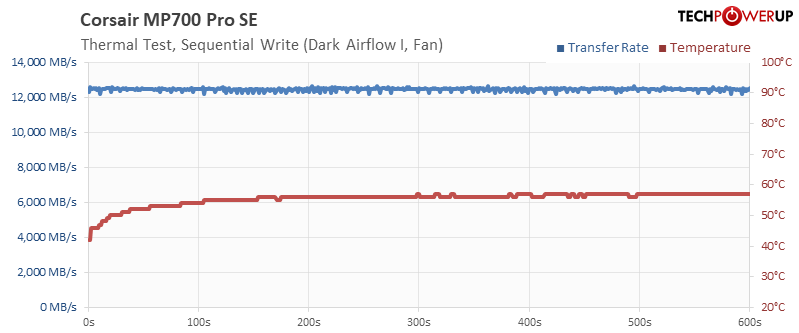
With the fan connected to the motherboard, and running at full speed, there is no more throttling and temperatures are very low.
Thermalright TR-M.2
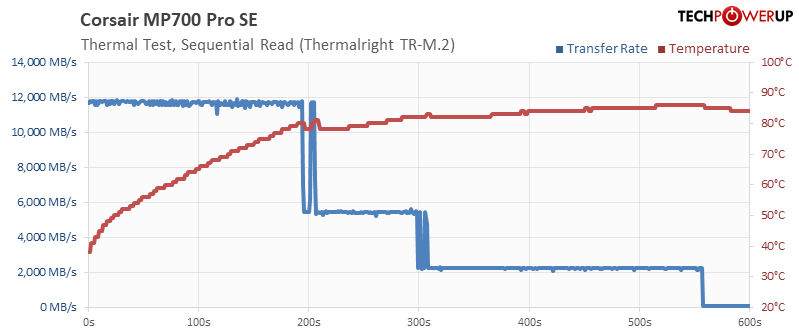
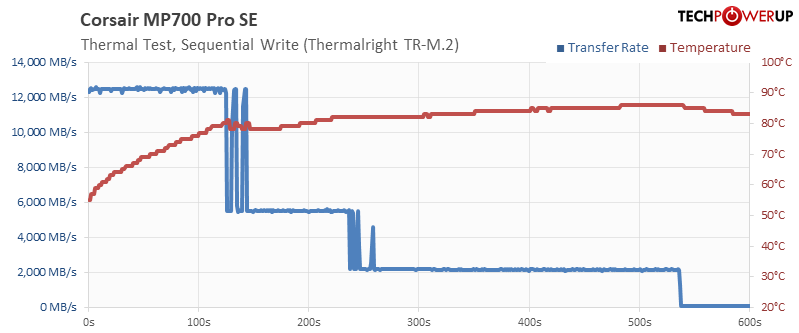
For comparison, here's the same drive with a Thermalright TR-M.2, a compact affordable M.2 heatsink.
Thermalright HR-10
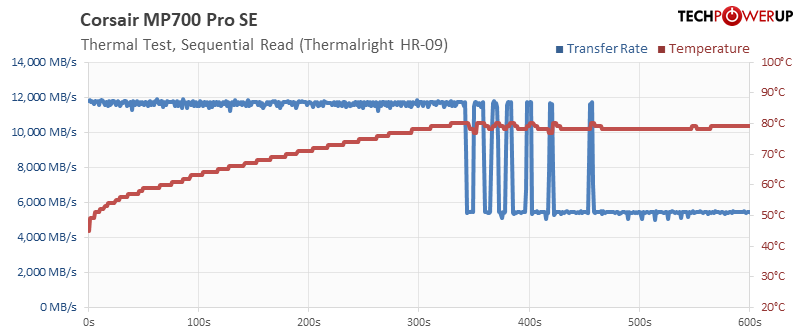
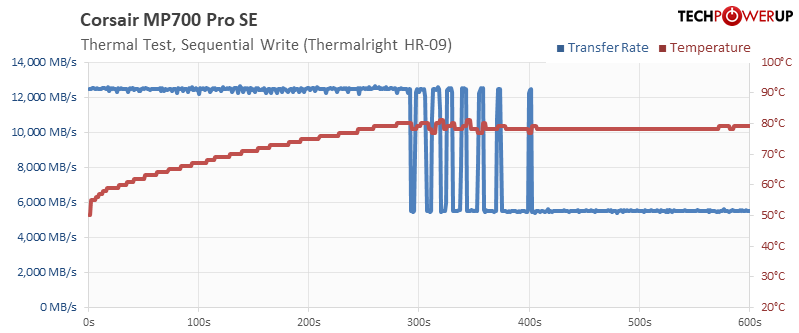
Even the big Thermalright HR-10 cannot cool the drive completely passively. (The chart title says HR-09, this is typo).
Nov 26th, 2026 23:33 CST
change timezone
Latest GPU Drivers
New Forum Posts
- Using sodimm+adapter instead of full size dimm DDR5? (102)
- Will zen 6 mobos have anything extra vs current ones? (62)
- What's your main Black Friday / Cyber Monday purchase? (25)
- Dell Dimension E510 Retro Gaming PC Upgrade & Modification (3)
- X79 and/or rampage IV OC'ing thread for those of us still left.... (2460)
- Gacha Games - Discussions, Pulls, Updates, etc. (1166)
- Wireless Internet sharing between PC and router both-ways, is it possible? (27)
- WarpCoreBench scores! (116)
- Can you guess Which game it is? (371)
- ASUS Prime 5060 ti 16gb x4 instead of x8 PCIe (12)
Popular Reviews
- VZMORE AX9 Max Review
- Upcoming Hardware Launches 2027 (Updated Nov 2026)
- ASRock X870E Challenger Wi-Fi White Review
- AMD Ryzen 7 9800X3D Review - The Best Gaming Processor
- Microsoft Surface Laptop Ultra Review - The Next-gen Arm Laptop
- AMD Zen 6 Technical Deep Dive
- Montech CyberFlow ARGB 360 Review
- Phantom Blade Zero Performance Benchmark Review - 35 GPUs Tested
- Corsair RM1200e (Second Generation) Review
- Pulsar Office Tour & First Look at P1 Dual-Sensor Mouse
TPU on YouTube
Controversial News Posts
- Jensen Huang Reinstated as CEO of NVIDIA (615)
- NVIDIA Co-Founder and CEO Jensen Huang Officially Resigns (492)
- Report: Jensen Huang Eyes NVIDIA Comeback (281)
- Open Letter Asking NVIDIA to Reinstate Jensen Huang Passes 115,000 Signatures (184)
- OpenAI CEO Argues Home PCs Waste the World's Limited DRAM Supply (152)
- NVIDIA Launches Investigation Into Jensen Huang's Relationship With Suspected Chinese Spy (136)
- Intel Razor Lake Gets a 12 P-Core bLLC Chip With No E-Cores, Per Leak (94)
- NVIDIA GeForce RTX 50-Series Scheduled for up to $500 Price Hike This Week (89)