 88
TechPowerUp Best of 2023 - The Best in Hardware & Gaming this Year, Ranked
(88 Comments) »Introduction
TechPowerUp wishes you a Happy and Prosperous 2024! As the curtain falls on another exhilarating year in the ever-evolving realm of hardware and gaming, it's time to look back at the groundbreaking tech that has redefined the landscape. From cutting-edge processors that shattered performance barriers to graphics cards that restored value in the PC as a gaming platform, 2023 has been a year of remarkable advancements. The past year in particular has been when the world re-emerged fully from the horrors of the COVID pandemic and its crippling restrictions on our way of life. The pandemic applied strain on the semiconductor and ICT supply-chains, but more importantly, it coincided with the crypto-currency boom that kept GPUs away from the consumers they were designed for—us gamers.The relentless pursuit of innovation has propelled the industry forward, with hardware enthusiasts and gamers alike witnessing the birth of transformative technologies. The buzzword with the post-COVID tech landscape has really been accelerated generative AI, propelled by cloud-based text and image generative services. We will witness a bend in the river in 2024, as AI acceleration goes local. Pulling off localized AI acceleration is easier said than done, but the latest GPUs already have AI accelerators, and now the latest mobile processors do, too.

The GPU landscape saw focus squarely back on gaming performance, with both of the top GPU brands introducing frame generation technologies, and advancing their image quality tech further. The switch to newer 5 nm-class foundry nodes brings a generational jump in performance/Watt. While the latest generation of GPUs missed the bus on the PCIe Gen 5 interface introduced by new processors; SSDs didn't, and 2023 has been the year of the Gen 5 NVMe SSD. PC cases have grown wider and deeper to accommodate not just more radiators, but also the latest crop of very large enthusiast-segment graphics cards. The cooling scene saw aesthetic innovations beyond RGB, such as useful real-time monitoring displays on the AIO pump-block and fans. DDR5 memory has finally become affordable, crossed the insane 8000 MT/s mark, and now comes in odd 24 GB and 48 GB DIMM densities, to create more value.
This retrospective journey by TechPowerUp will explore the standout moments and breakthroughs that have left an indelible mark on the tech landscape. From the race for supremacy among GPU titans to the emergence of novel storage solutions, join us as we revisit the achievements that defined the year in computer hardware and PC gaming technologies. In this article, we will look back at the best PC hardware we tested. We have also ranked the best hardware that we didn't test, by digging into the rich TechPowerUp Review Database for top rated hardware by other leading tech publications. We have categorized our ratings by hardware type, with one winner, a runner up, and notable mentions in each category. Let's get cracking!
TechPowerUp Processor of the Year
AMD Ryzen 7 7800X3D
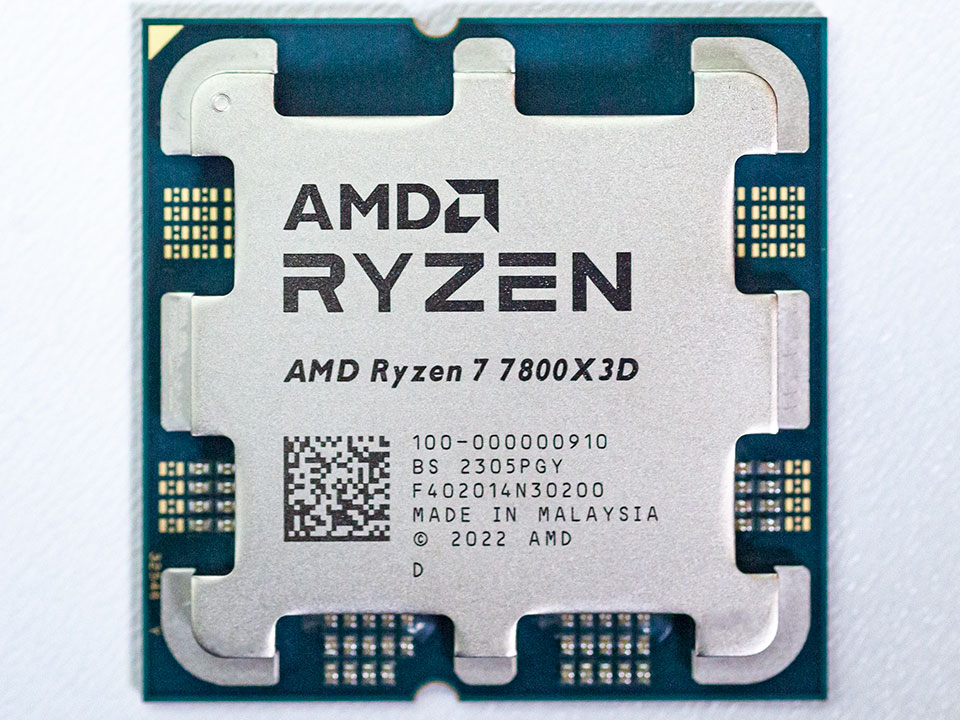
The AMD Ryzen 7 7800X3D is the best processor for gaming PCs by leaps. This chip consistently provides the best frame-rates in games across all resolutions, beating even the fastest competing Intel Core processors, and even the Special Edition Intel "KS" processor that commands double its price. Games are memory intensive workloads, and it really helps to have a large amount of cache memory close to the CPU cores that's an order of magnitude faster than the main memory, and with a tiny fraction of its latency.
The 7800X3D debuts AMD's second generation of 3D Vertical Cache, an innovation that sees 3D stacking of additional L3 cache above the on-die L3 cache of the CPU chiplet, linearly scaling it into a continuously addressable cache block with uniform performance. The 7800X3D ends up with 96 MB of L3 cache, which is plenty of size for a large amount of frame data as the CPU is working its share of the graphics rendering pipeline. The 7800X3D ends up faster than even the 16-core 7950X3D, because all of its cores are on a single chiplet, with no scope for movement of gaming workloads to a neighboring one, and all of the processor's power budget being allocated to a single chiplet.
Speaking of power, the 7800X3D offers jaw-dropping gaming power figures of just 49 W, with Intel processors of comparable gaming performance pulling close to 130 W in comparison. The 7800X3D is also very reasonably priced, around $350, and is based on Socket AM5, a platform AMD intends to support till 2025 and beyond with new processor launches. The platform has a superior PCIe Gen 5 implementation, with two dedicated Gen 5 x4 connections from the processor without cutting into the x16 PEG interface. For this reason and more, the AMD Ryzen 7 7800X3D is the TechPowerUp Processor of the Year—2023.
TechPowerUp Hardware of 2023 Runner Up
Intel Core i9-14900K

The Intel Core i9-14900K is our runner-up for 2023. Based on the "Raptor Lake Refresh" silicon, this Hybrid architecture processor packs 8 P-cores with 16 E-cores. The 8 P-cores boost up to 6.00 GHz under the right cooling conditions, to serve up gaming performance that's almost as fast as the 7800X3D, but it's the 16 E-cores that vastly shore up multi-threaded productivity performance. With these, Intel is able to beat 16-core Ryzen 7000-series chips, such as the Ryzen 9 7950X3D and 7950X in productivity workloads, despite the E-cores being lean, low-power cores, in contrast to the AMD chips being made up entirely of what Intel would consider P-cores.
From a technical perspective the 14900K is really a 13900K with a clock frequency bump. While this is sad and more of a "rebrand" than a "refresh," the 14900K is still a formidable processor—just like the 13900K. In our testing the Core i9-14900K was found to roughly match the performance levels of the Special Edition Core i9-13900KS, but at a $200 or 25% lower price. A unique feature with this chip is APO (application optimization), a software-based extension of Intel Dynamic Tuning technology that fine-tunes the processor in real-time for a game or application's workload. This can result in an up to 15% improvement in performance, but Intel only has a small list of games that are supported, with more in the pipeline. The Core i9-14900K is based on the Intel 7 (10 nm Enhanced SuperFin) foundry process, while AMD has moved on to TSMC N5. This results in the i9-14900K drawing much more power than competing AMD chips, with a gaming power draw that's almost three times higher than the 7800X3D. The i9-14900K is also 70% pricier than the 7800X3D. The LGA1700 platform it is based on will likely not see any new processor generations, as Intel looks to transition to the LGA1851 socket. So, the i9-14900K takes the second spot in our list. Perhaps the biggest reason this is #2 on our list is because Intel is once again slacking with innovation in the desktop processor space, and the 14th Gen is a near-complete rehash of the "Raptor Lake" silicon.
Notable Mentions


There are several processor models that offer decent levels of value and performance that didn't quite make it to our top spots. These include the Intel Core i7-14700K, priced just $60 above the 7800X3D, with 2% lower gaming performance, but over 20% higher productivity performance thanks to the 12 E-cores that place this chip halfway between the i7-13700K and the i9-13900K. The Core i5-14600K is another such chip, with 9% higher productivity performance thanks to its 6P+8E design, albeit with close to 9% lower gaming performance from the two fewer P-cores and lower frequency. The year also saw the introduction of AMD's Ryzen Threadripper 7000 series catering both to the HEDT and workstation crowd; and of course Intel Core Ultra "Meteor Lake," an innovative new chiplet-based processor.
TechPowerUp Graphics Card of the Year
NVIDIA GeForce RTX 4070
NVIDIA's GeForce RTX 4070 is our pick for the GPU of the year. At a starting price of $600 it offers a well-rounded feature-set, maxed out gaming at AAA, and the ability to play at 4K, taking advantage of features such as DLSS. Given how popular DLSS has become over the years, and with the entry of DLSS 3 Frame Generation, the RTX 4070 packs a serious proposition.Say you play at 1080p, the RTX 4070 has all it takes for 165 Hz competitive e-sports gameplay. Play at 1440p? Go ahead and max out all the game settings, and play at native resolution for a smooth 60 FPS. Got something tougher like 4K? The RTX 4070, while not wholly recommended as a 4K gaming card, has the chops to support gameplay at 4K with fairly high settings, if you know your way around them, or use GeForce Experience to find the right settings.
Then there's DLSS—for the vast majority of DLSS titles that support DLSS 2, you're assured playable frame rates at 4K between Balanced and Quality presets. For some of the newer games that take advantage of DLSS 3 Frame Generation and DLSS 3.5 Ray Reconstruction, you stand to get a near-doubling in frame-rates. And then there's energy efficiency. The "Ada" graphics architecture leverages TSMC 5 nm to build these monolithic GPUs, and with a TGP of 200 W, most RTX 4070 cards come with just one good old 8-pin PCIe power connector.
The Best GeForce RTX 4070 We Tested—PNY GeForce RTX 4070 XLR8

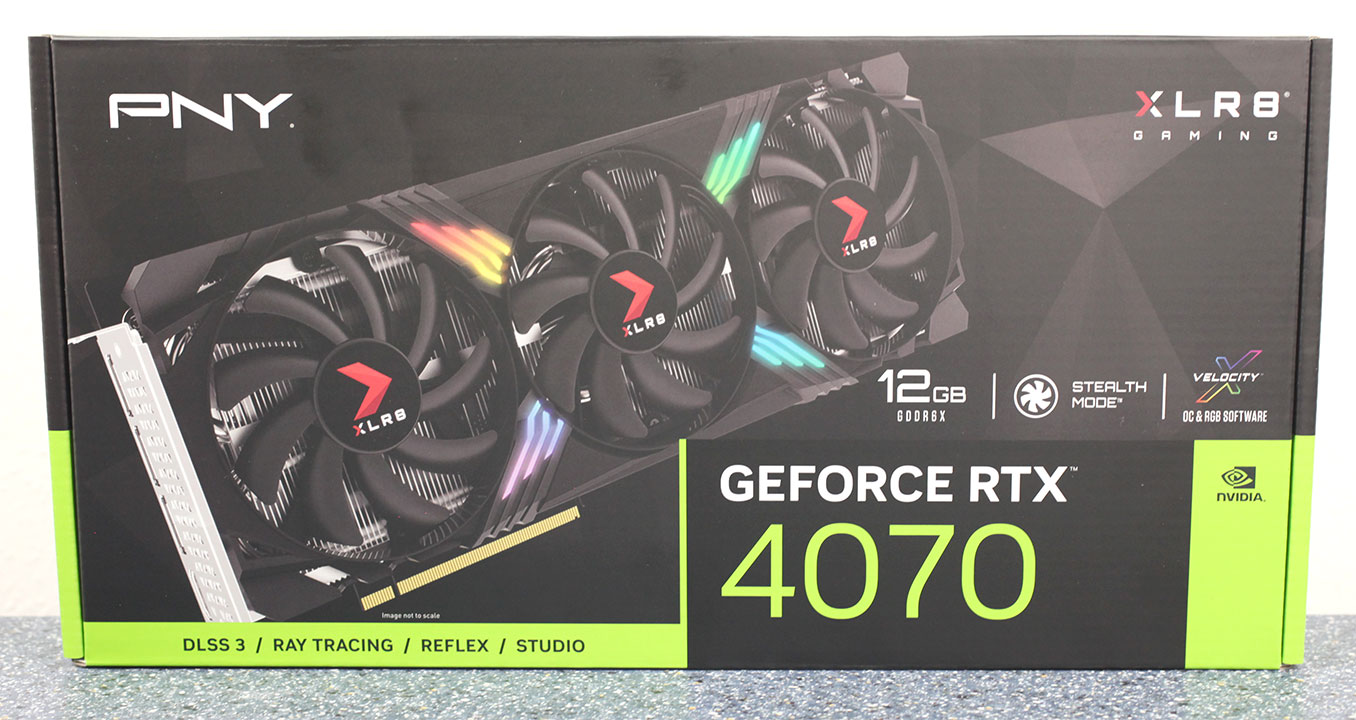
PNY makes the best custom-design GeForce RTX 4070 that we tested—and we've reviewed 11 of them. With a peak gameplay noise of just 24 dBA, you will likely never hear this card, your PSU and case fans will end up louder than it. This is as close as it gets to silence without being fanless. The PNY RTX 4070 XLR8 uses a large aluminium fin-stack heatsink that's overkill for the 200 W GPU, which PNY combines with an aggressively tuned triple-fan setup that places low noise above all else. The GPU still ends up with a reasonable 79°C that doesn't impact its boosting behavior. But for all this, you pay a $50 (8%) premium over the MSRP. We highly recommend you do, because you need to "hear" this thing to believe it!
TechPowerUp Hardware of 2023 Runner Up
AMD Radeon RX 7800 XT
AMD's Radeon RX 7800 XT, with a impressive $500 price-tag, undercuts our winner, the RTX 4070, with superior raster performance at all resolutions. Armed with 16 GB of video memory across a wider 256-bit memory bus, and the latest RDNA 3 graphics architecture, the RX 7800 XT will plow through anything at 1080p and 1440p, giving you the highest frame-rates for e-sports titles at 1080p when paired with high refresh-rate monitors; or maxed out gaming at 1440p. Its 16 GB memory and higher bandwidth also gives it a definite edge over the RTX 4070 at 4K gameplay, where you can get Radeon Software to find the best settings for you, if you don't know your way around them. AMD has had reasonable success with FSR 2 support across a wide selection of games, though not as much as DLSS 2.So why is the RX 7800 XT sitting in the runner-up position? Two key reasons. The first is ray tracing. RT is no longer the novelty it used to be between 2018 to 2020, most AAA games implement it to various extents—for something as trivial as ray traced global illumination, to motion blur. Nearly all AAA titles implement DXR standardized ray tracing effects for shadows, reflections, and lighting. This is where the RX 7800 XT falls behind the RTX 4070, with the NVIDIA GPU being as much as 16% ahead at 1080p, 14% at 1440p, and 13% at 4K. AMD made noticeable progress in increasing the RT performance of its GPUs with RDNA 3, but this is only its second GPU generation to implement it—NVIDIA is on its third. In pure raster (non-RT) gameplay, the RX 7800 XT averages just 2% higher than the RTX 4070 at 1080p, 4% higher at 1440p, and 6% higher at 4K. The second reason by the RX 7800 XT trails the RTX 4070 in our contest is power—this GPU can draw around 250 W of power at gaming, compared to 200 W for the RTX 4070. Every RX 7800 XT card we've come across needs two 8-pin power connectors. The RX 7800 XT is still a formidable challenger to the RTX 4070, helped a big deal by its $100 lower price, if you're willing to overlook the RT performance and power-draw.
The Best Radeon RX 7800 XT We Tested—PowerColor Radeon RX 7800 XT Hellhound


PowerColor has been at the top of its game with quality control and board design, as we learned in our recent tour of their new manufacturing facility. The RX 7800 XT Hellhound isn't the fastest RX 7800 XT from PowerColor (a feat that goes to its Red Devil), but is the most well-optimized product in terms of noise. The card features a dual-BIOS. With its default BIOS (out of the box), the card posts gaming noise figures of 25 dBA, which is in the same league as the PNY RTX 4070 XLR8 that we described above. This even more impressive considering the 25% higher gaming power draw. PowerColor has simply picked an overpowered heatsink and gone to town with noise optimization for the fans. There is a "Quiet" BIOS that lowers the noise further down to just 23.4 dBA—amazing! PowerColor is selling the RX 7800 XT Hellhound at a street price of $530, and we would highly recommend spending the $30 above the AMD MSRP for what's on offer here.
Our Patreon Silver Supporters can read articles in single-page format.
Nov 19th, 2026 03:17 PST
change timezone
Latest GPU Drivers
New Forum Posts
- Without Jensen, PC gaming will be (49)
- Time to upgrade CPU and MOBO (49)
- Very unusual two gaming-pc scenarios. (14)
- Will zen 6 mobos have anything extra vs current ones? (57)
- GIGABYTE - H55N-USB3 ITX Upgrade experience (5)
- 3DMARK "LEGENDARY" (475)
- [Poll] 12V-2x6 Connector Protection: What Are You Using? (WireView / Ampinel / Equalizer / Other / Nothing) (43)
- Windows HDR on = Tinted colors (5)
- WarpCoreBench scores! (68)
- Honestly, do you care about GTA VI? (155)
Popular Reviews
- Acemagic Retro X3 Review
- Ugreen NASync DXP4800 GT Review
- Upcoming Hardware Launches 2027 (Updated Nov 2026)
- AMD Zen 6 Technical Deep Dive
- Pulsar Office Tour & First Look at P1 Dual-Sensor Mouse
- Biwin Black Opal NV7400 2 TB Review
- Sapphire Radeon RX 7700 XT Pure Review
- Sapphire Radeon RX 7700 XT Pulse Review
- Chieftec Iceberg PRO 360 DARK Review
- AMD Ryzen 7 9800X3D Review - The Best Gaming Processor
TPU on YouTube
Controversial News Posts
- NVIDIA Co-Founder and CEO Jensen Huang Officially Resigns (484)
- Report: Jensen Huang Eyes NVIDIA Comeback (200)
- Open Letter Asking NVIDIA to Reinstate Jensen Huang Passes 115,000 Signatures (184)
- OpenAI CEO Argues Home PCs Waste the World's Limited DRAM Supply (152)
- NVIDIA Launches Investigation Into Jensen Huang's Relationship With Suspected Chinese Spy (136)
- Intel "Raptor Lake Next" 16-Core and 20-Core CPUs Surface (130)
- Legendary Game Studio BioWare Shuts Down Following EA Layoffs (104)
- Dell CEO Says the Memory Shortage Will Get Worse in 2027 (95)