 4
Varmilo MA108 Forest Fairy Review - Tranquil Clicks
Value & Conclusion »Software
There is no dedicated software driver support for the Varmilo MA108 Forest Fairy at this time—all functionality is hardware based. As such, I have chosen to combine the Software and Performance pages into one.Performance

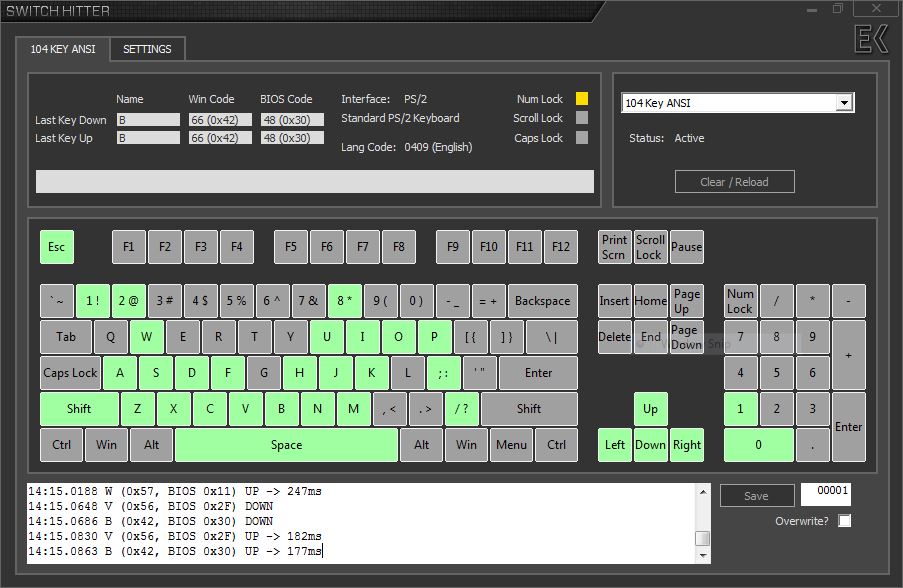
The Varmilo MA108 keyboard supports N-key rollover USB, which tested successfully using Aqua's test. Switch Hitter confirmed no chatter with these keys either, and as is usually the case with mechanical keyboards these days, the right Windows keys is replaced by an Fn key.
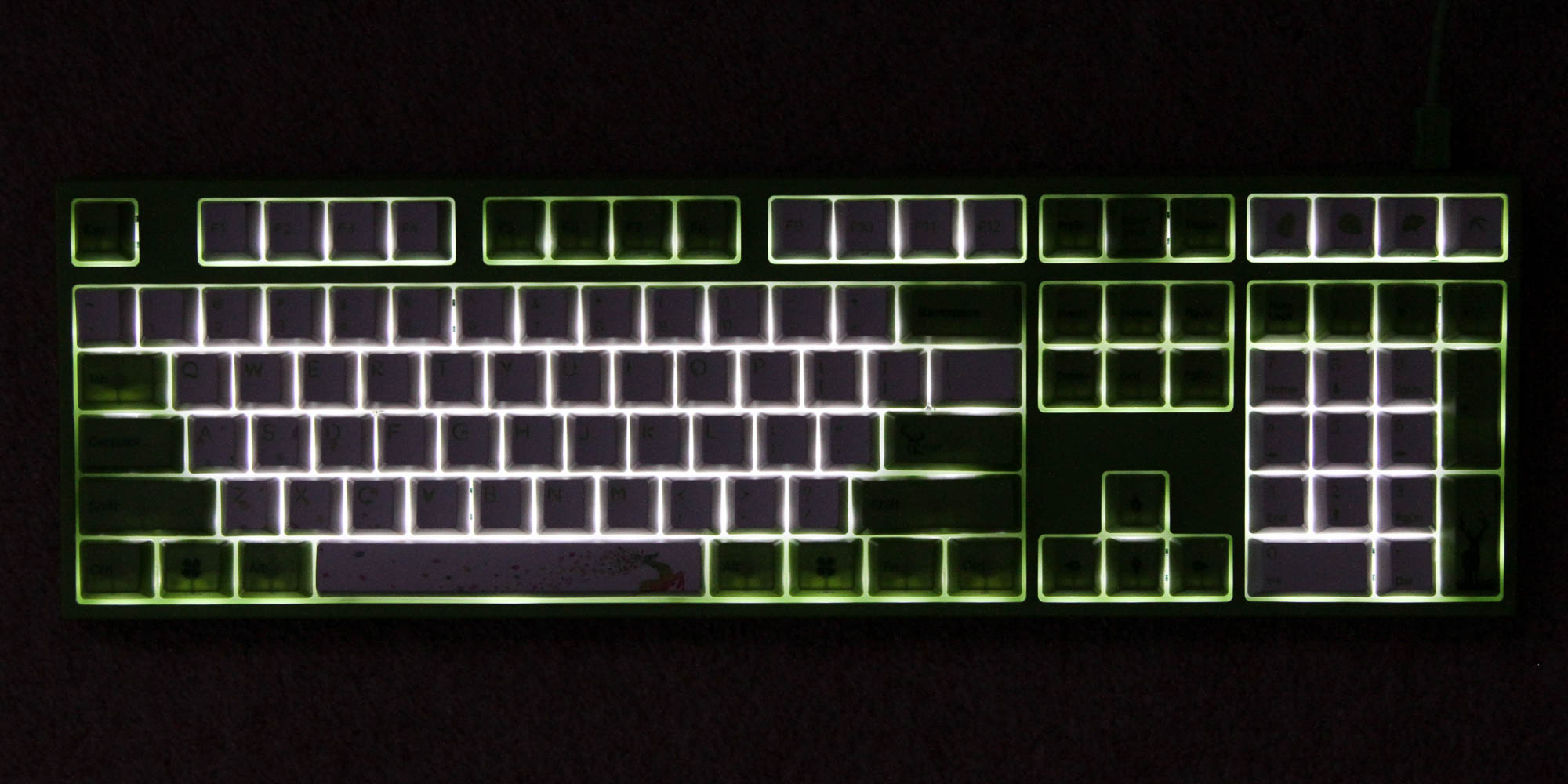

When first powered on and connected, the LEDs onboard the MA108M Forest Fairy light up white. Aside from the three replacement indicator keycaps, the keycaps are not backlighting compatible, so the lighting is situated more between the keycaps. It is useless functionally and will only work as a form of accentuation. Fn + right arrow toggles through a static light or breathing mode, and the Fn + up/down arrows either changes the brightness in static mode or effect speed in breathing mode. Should you prefer it, Fn + X turns the lighting off entirely. In addition to these lighting controls, there are a few other pre-programmed functions aboard the Varmilo MA108. The manual goes over these, and keep in mind that some are specific to other models, such as the MA87. Those that do apply include being able to switch over to macOS mode with the usual macOS Fn row secondary functions, turning off the Win key, enabling the Menu function if needed, and swapping Caps Lock and L. CTRL, in addition to the safety blanket of a software reset.
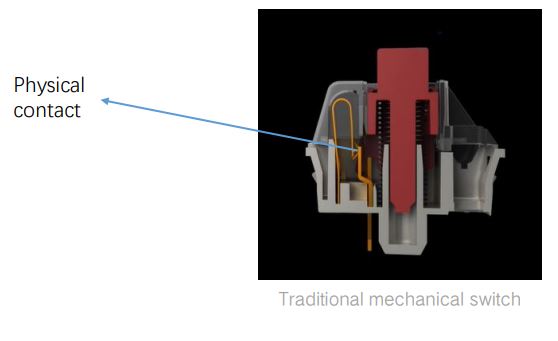

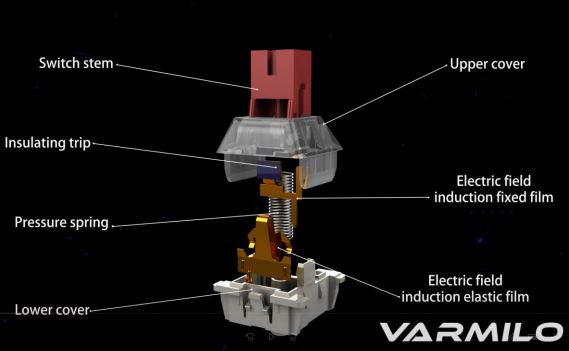
Let's talk switches since that is another new thing. If you have read my keyboard reviews here, you will have noted that the vast majority use mechanical switches. These, as mentioned on the previous page, use metal stem contacts for actuation and reset, wherein metal pieces physically touch each other. Switch makers have improved on the reliability of these switches throughout, including the metal stems by using gold cross-point contacts to reduce oxidation-related issues. In recent years, we have had other means of actuation, including optical switches and electrostatic capacitive switches. It is in the latter that Varmilo is showcasing their EC V2 switches, the second iteration of their EC switches from before. These switches, as the name suggests, rely on a contact-less electrostatic capacitance generated by electric field induction. This means switch lifetime is theoretically much higher, and you can decouple actuation from actuation feedback. Varmilo has three linear EC V2 switches, of which we have seen one before, and a fourth tactile and clicky switch that was just released and is used in my sample of the MA108 Forest Fairy here.


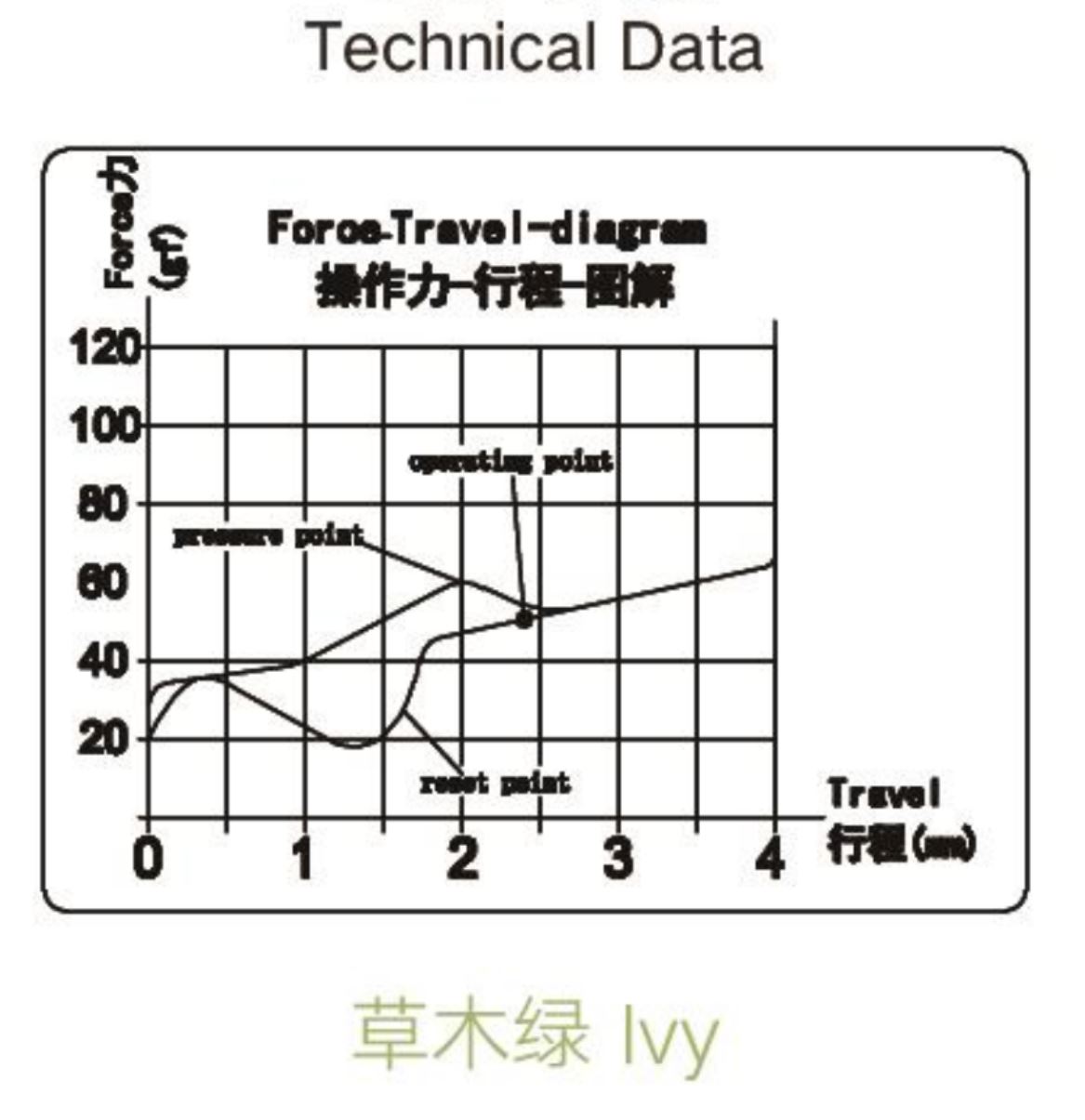
With a rated actuation of 50 gf at 2 mm travel and a termination force of a whopping 60 gf at 4 mm, the Varmilo EC Ivy V2 is definitely based on the Cherry MX Blue, and Varmilo says as much right on the product page of the keyboard. It is lighter than the EC Rose V2 we saw before with the MA87 Beijing Opera and would be characterized as a medium-force switch in general. That said, the EC of the EC Ivy V2 is a big part of the typing experience. Indeed, even the most ardent Cherry MX fan would admit that the MX Blue is popular, though not on top of most popularity lists, with several offerings from Kailh and Gateron at least generally considered better for typing and smooth travel. Cherry has updated the molds for the popular linear and tactile switches recently and even updated them to a lifetime of 100 M keystrokes before any perceivable differences in switch functionality. The MX Blue has not got this love yet even though it has been over a year since the other switches have been announcement, and I will say that the EC Ivy V2 beat the socks off the MX Blue in pretty much every way as I was using it. I thought the integrated bumpers providing the tactile and clicky feedback might be disruptive to the smoother travel successfully demonstrated with the linear switches, but the pre-lubed switches help a lot; as does the time taken to make the molds for the various components tight, with low tolerances for pieces moving along each other. The general actuation mechanism involves moving a metal stem slightly away from the switch as it is depressed, and the metal pieces don't touch each other anymore, either.
Varmilo says they tested a bunch of switch materials and lube for each specific switch option, and the wall design around the stem was also incorporated to keep wobble with their thicker PBT keycaps minimal. They also market specifically chosen Japanese springs and flat metal prongs to minimize any scratching or scraping. So what does this mean with my keyboard sample using the EC Ivy V2 switches? For one, I did enjoy typing and gaming all the more. Working mostly from home meant I did not need to worry about potentially bothering others with the clicky feedback here, and the tactile bump at ~2 mm is easily appreciated. The actuation point itself is slightly past 2 mm, closer to 2.3 mm based on my testing, but the drop in the force curve here means you will inevitable actuate once you get past the feedback mechanism point. It helps with making more deliberate keystrokes, but I do wish Varmilo would have tuned the switch to where the bottoming-out peak force was higher than 60 gf. I understand that the company sought to target the MX Blue directly, but bottoming out is not that hard given the small difference in peak force. Tense gaming sessions with the EC Ivy V2 are not the best idea, and you may prefer a lighter switch, such as the EC Daisy V2. I am curious to try out the other switches to round off the set, and will hopefully be able to do so too!
As always, the sound of a keyboard is based on more than just the switch type. So when comparing sound clips, consider the keyboard as a whole. In this case, I have provided above an example sound clip of me typing on the Varmilo MA108 Forest Fairy keyboard sample at ~105 WPM as it comes out of the box with the Varmilo EC Ivy V2 switches. For context, you can find sound clips from other keyboards here, including those with tactile and clicky switches. I do like the sound here, especially with the lubricated switches and stabilizers paired with the thick PBT keycaps and sound-absorbing foam, all of which contribute to making the click from the switches the primary source of sound. Bottoming out is audible too, especially against the steel plate, but you can hear that the pings are not that high-pitched, either.
Nov 15th, 2026 11:55 CST
change timezone
Latest GPU Drivers
New Forum Posts
- WarpCoreBench scores! (48)
- How do you get games for PC? (59)
- WireView Pro II GPU Alignment: Wired | Variant: Black (5)
- What is the latest game you finished or 100% (202)
- Honestly, do you care about GTA VI? (61)
- Power supply noise stops when I move the mouse (7)
- HP Office Jet 7740 Pro - Supply system problem with replacement cartridge (1)
- Recommendations Wanted - Affordable Enterprise SSD for Boot (5)
- budget home NAS – X79, X99 or another platform? (149)
- Planning for Prolonged High Prices and Maintaining What You Already Have (74)
Popular Reviews
- AMD Zen 6 Technical Deep Dive
- ASUS ROG Strix B850-I Gaming Wi-Fi7 W Review
- Corsair HX1000i Shift Crystal Review
- Upcoming Hardware Launches 2027 (Updated Nov 2026)
- Montech King 95 3D PRO Review
- NZXT C1200 Platinum Review
- NZXT H7 RGB+ Review
- NZXT H5 Review
- Phantom Blade Zero Performance Benchmark Review - 35 GPUs Tested
- AMD Ryzen 7 9800X3D Review - The Best Gaming Processor
TPU on YouTube
Controversial News Posts
- NVIDIA Co-Founder and CEO Jensen Huang Officially Resigns (415)
- Open Letter Asking NVIDIA to Reinstate Jensen Huang Passes 115,000 Signatures (158)
- OpenAI CEO Argues Home PCs Waste the World's Limited DRAM Supply (152)
- NVIDIA Launches Investigation Into Jensen Huang's Relationship With Suspected Chinese Spy (136)
- Intel "Raptor Lake Next" 16-Core and 20-Core CPUs Surface (130)
- Legendary Game Studio BioWare Shuts Down Following EA Layoffs (104)
- Dell CEO Says the Memory Shortage Will Get Worse in 2027 (95)
- NVIDIA GeForce RTX 50-Series Scheduled for up to $500 Price Hike This Week (89)