 5
XMG Apex 17 (M25) Review - RTX 5070 12 GB Tested
(5 Comments) »Introduction

With the ongoing global memory and storage shortage, it's getting difficult to spot actual good deals on the market. It's hard to tell if there are any left compared to mid-2025. Unfortunately, it is what it is—if you need a gaming laptop right now, you have to choose carefully.
Still, the mid-range mobile segment gets a nice boost from the debut of the 12 GB non-Ti RTX 5070. It was about time! That's the familiar RTX 5070 enhanced by 3 GB GDDR7 memory modules. So, for the first time, this GPU won't be crippled by an 8 GB VRAM buffer in demanding titles at high resolutions and maxed-out settings.
To be honest, the 8 GB RTX 5060 and 5070 are still decent for up to 1600p gaming—especially with DLSS when you need to squeeze out extra FPS or lower input lag. However, the 2026 version of the RTX 5070 and its 50% VRAM bump really show what this chip can do. No, you won't match its Ti sibling, but you can expect smoother gaming and much better performance in AI tasks or creative apps like video editing.
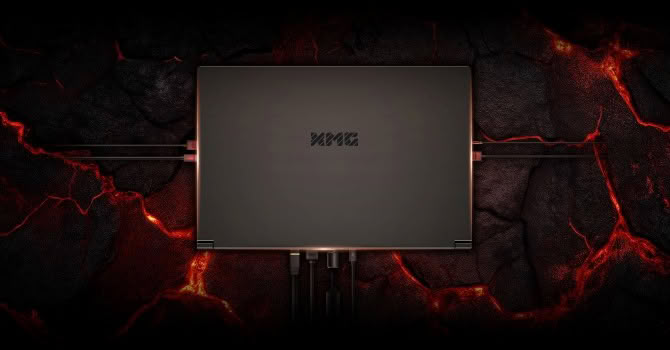
The XMG Apex 17 (M25) is one of the first notebooks to hit shelves equipped with that new 12 GB RTX 5070. On the outside, this device is practically a twin to the XMG Focus 17 (M25). The display is identical—a 17.3" 1440p panel with vivid colors and a 240 Hz refresh rate. For a pure gaming laptop, I'm still a big fan of 16:9. Simply because human vision naturally favors the horizontal plane. I'm not saying 16:10 displays are bad—they're actually super handy for hybrid work, gaming, and everyday web browsing. But for pure gaming, I'll take a larger 17.3" 1440p screen over a smaller 16" 1600p panel every time if the price is close. The Apex 17 shares a similar I/O layout with the Focus 17, and even the internal cooling setup is almost identical. However, while the main hero of this article is offered with slightly less punchy GPU options, its CPU is total overkill even for this 12 GB card—and I absolutely love that!
The AMD Ryzen 9 9955HX might lack the 3D V-Cache of the 9955HX3D, but it's still a monster of a mobile chip. As you'll see in the benchmarks, it lets the 12 GB RTX 5070 punch well above its weight class—especially at 1080p and 1440p, where even a few high-end Team Blue chips struggle. Here's a quick preview: pay close attention to the Baldur's Gate 3, Cyberpunk 2077, Elden Ring, Indiana Jones, and Space Marine results.
The rest is standard fare for a modern machine in this class—solid upgradeability with two M.2 slots and a pair of SODIMMs. That means you can spec a setup with up to 128 GB of DDR5 and 16 TB of SSD storage. Though given component prices in 2026, you'd have to spend a small fortune to max it out.
Specifications
| Specifications | |
|---|---|
| Manufacturer: | XMG |
| Model: | XMG Apex 17 (M25) |
| Weight: | 2.8 kg |
| Processor: | AMD Ryzen 9 9955HX/Fire Range-HX 16 Cores/32 threads Up to 5.4 GHz, 64 MB L3 cache 55 W Default TDP |
| Chipset: | AMD Promontory/Bixby FCH |
| Display: | 17.3"/2560×1440 (16:9)/IPS/240 Hz ~330 nits/100% sRGB/non-glare |
| Operating System: | No OS/Microsoft Windows 11 Home/Pro |
| Integrated Graphics: | AMD Radeon 610M |
| Dedicated Graphics: | NVIDIA GeForce RTX 5060 (mobile): 8 GB GDDR7, 128 Bit, 1500 MHz effective clock 3328 CUDA Cores 104 TMUs 48 ROPs 26 RT Cores 104 Tensor Cores L1: 3.3 MB, L2: 32 MB Up to 115 W TGP NVIDIA GeForce RTX 5070 (mobile): 12 GB GDDR7, 128 Bit, 1500 MHz effective clock 4608 CUDA Cores 144 TMUs 48 ROPs 36 RT Cores 144 Tensor Cores L1: 4.6 MB, L2: 32 MB Up to 115 W TGP |
| Memory: | 2× SO-DIMM RAM slots Up to 128 GB of DDR5 at 5600 MT/s | Storage: | 2× M.2 2280 PCI Express 4.0 x4 RAID 0/1 support |
| Optical Drive: | None |
| Connectivity: | 1× 5 Gbps USB Type-A/3.2 Gen. 1 1× 10 Gbps USB Type-A/3.2 Gen. 2 2× 10 Gbps USB Type-C/3.2 Gen. 2 with DP 2.1 and G-SYNC support (the one on the right side supports 100 W PD) 1× HDMI 2.1 VRR/G-SYNC compatible Audio combo jack Gigabit LAN DC-in |
| Communications: | Wi-Fi 6E + Bluetooth 5.3 1080p webcam |
| Audio: | 2× speakers with Creative SoundBlaster Studio+ |
| Input device: | Microsoft Precision Touchpad, integrated buttons Backlit Keyboard with 15 color options |
| Power: | 1× 230 W AC adapter 73.0 Wh battery |
| Warranty: | Two years |
| MSRP: | Starting at €2249 (1 TB SSD+32 GB RAM) |
Packaging
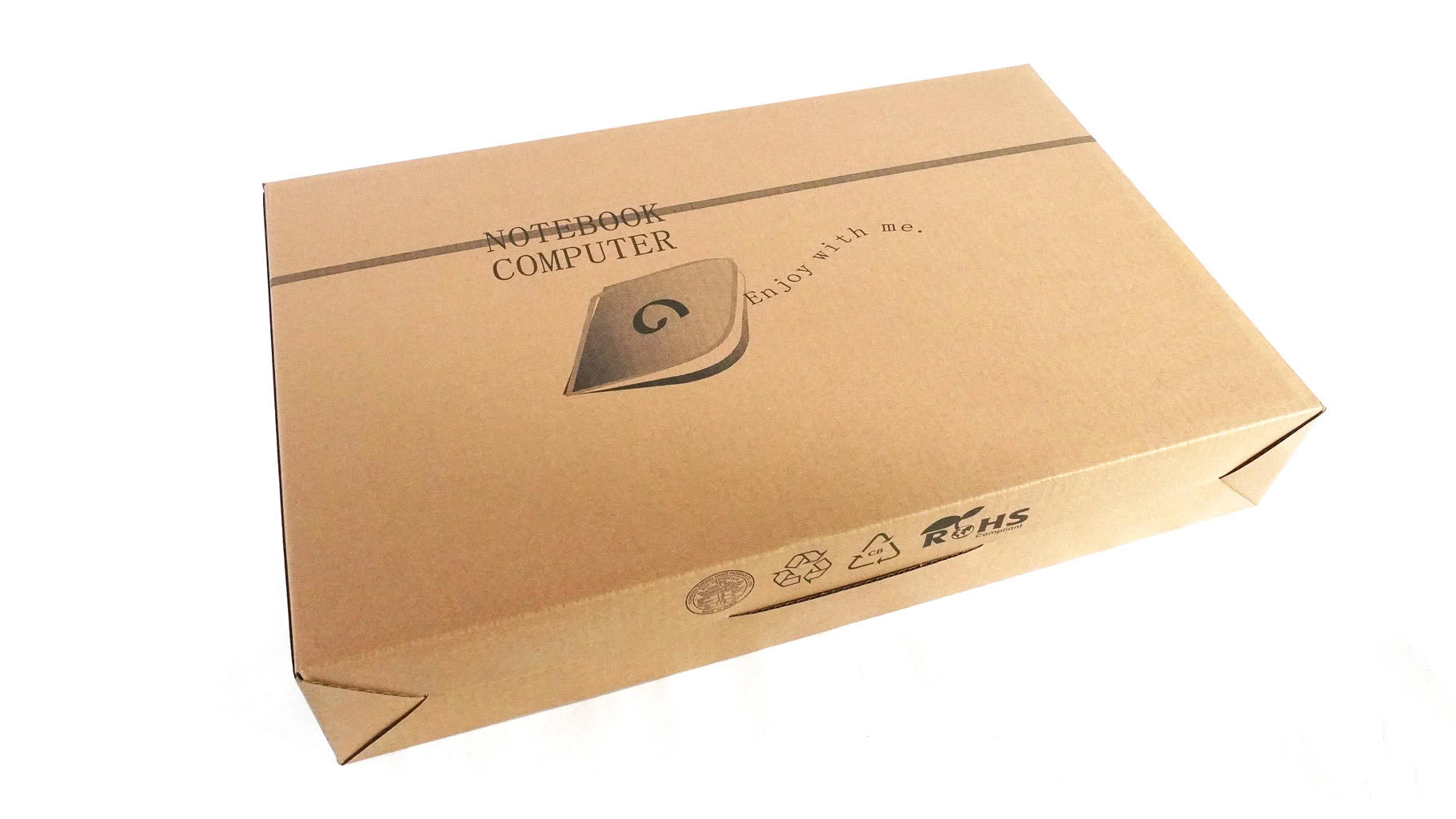
The big box is actually pretty sturdy, which deserves a thumbs up!
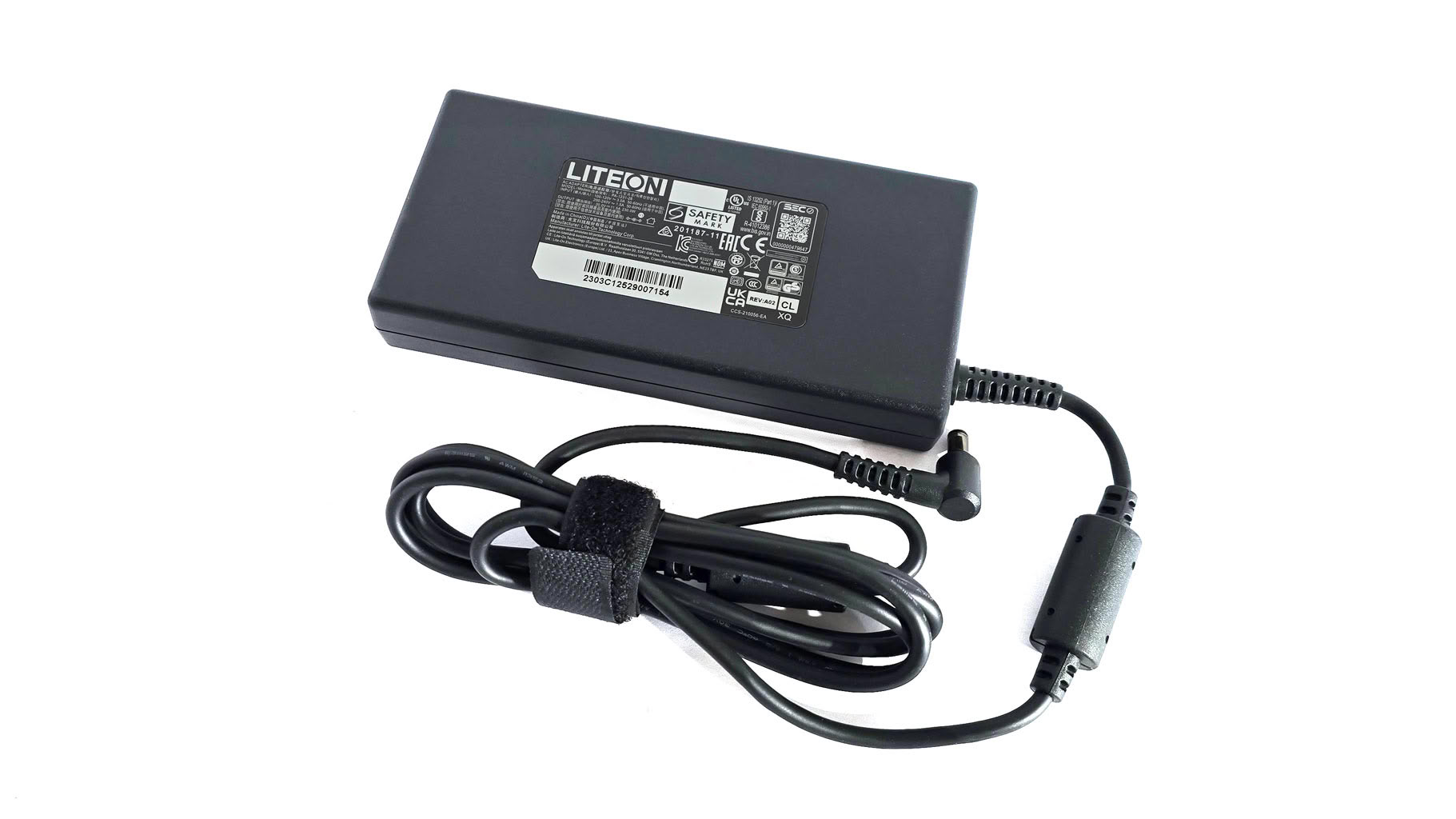
The 230 W charger is a barrel plug unit.
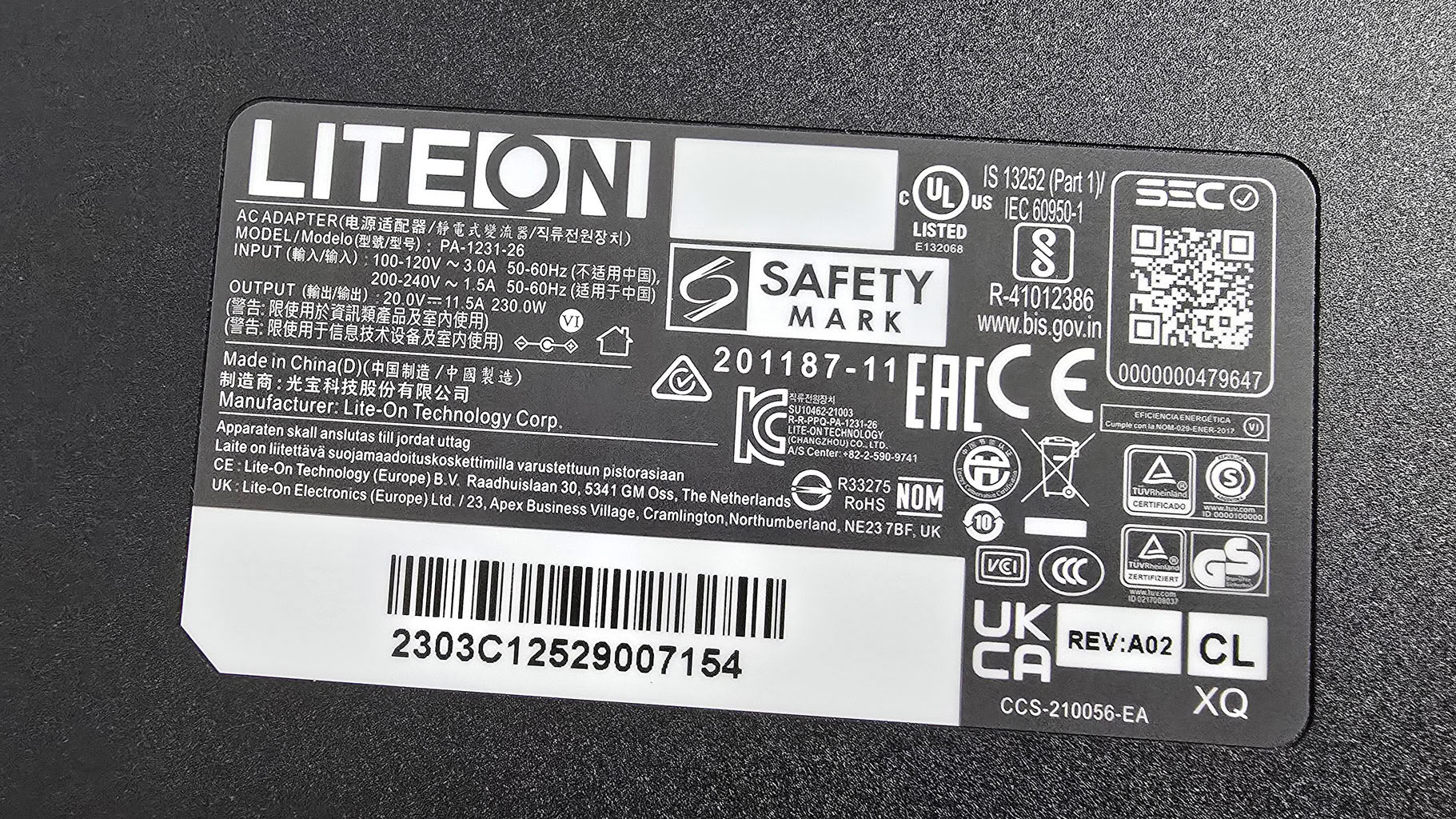
The charger is manufactured by Lite-On.
A Closer Look - Outside
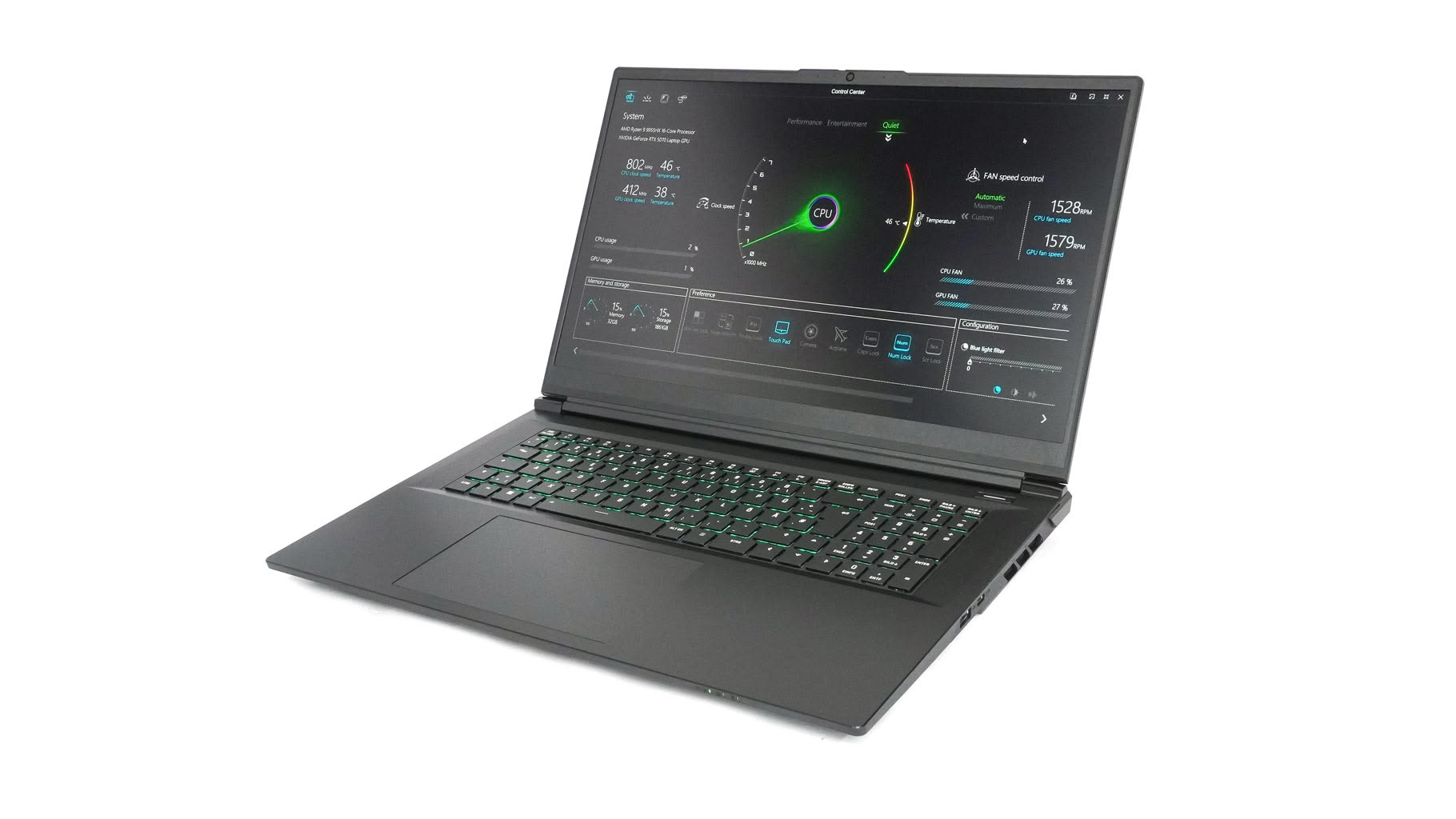
Wait, haven't we seen this one already? That's right—visually, the XMG Apex 17 (M25) is almost a carbon copy of the Focus 17 (M25). I'm perfectly fine with this, thanks to its mature, stealthy design and solid build quality.
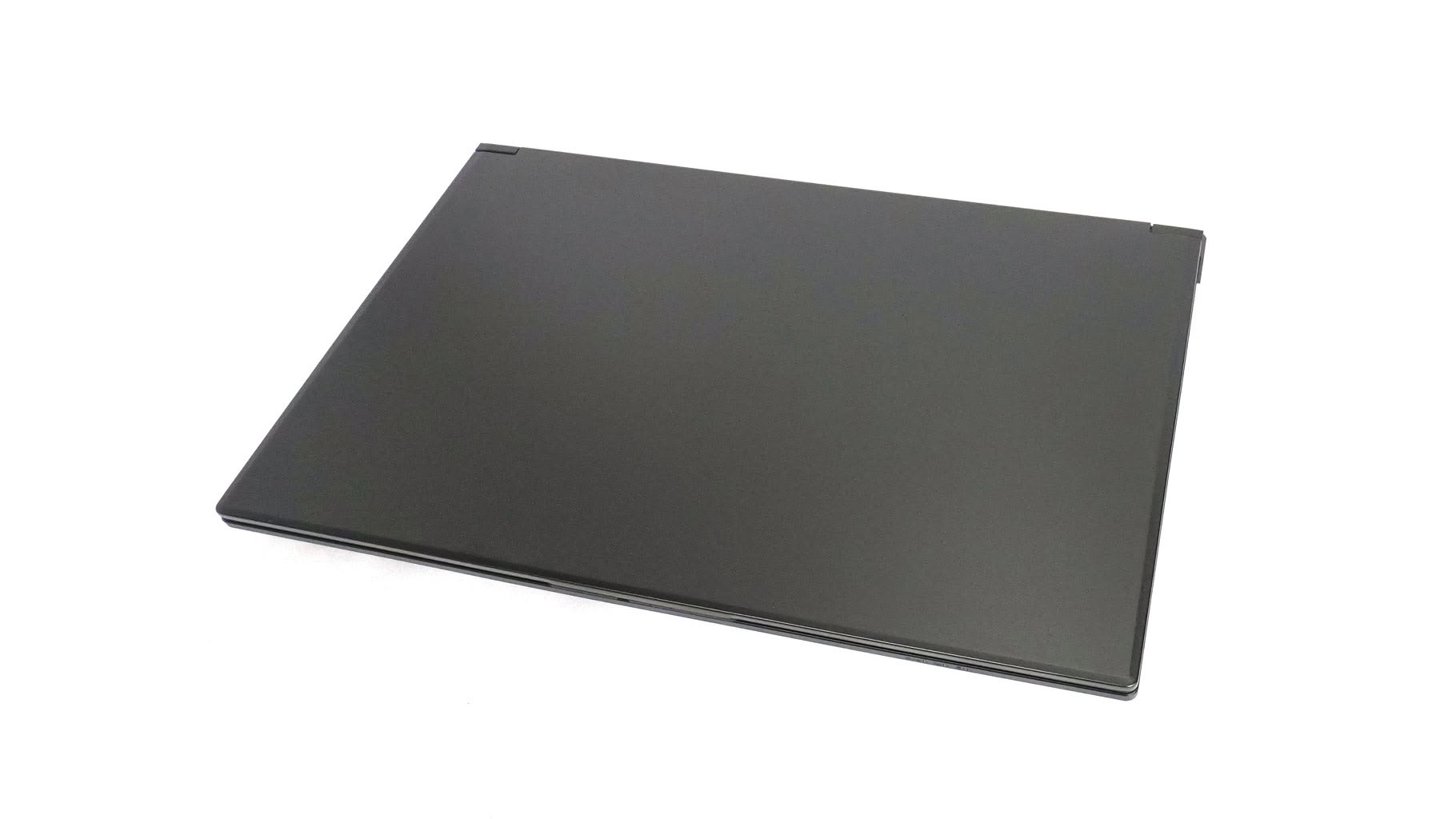
It's a straightforward gaming laptop with no extra RGB bells and whistles. The large chassis with its dark coating gives off workstation vibes, and considering the powerful CPU and solid upgradeability, you can definitely use it as one.
You can open the solid metal lid with one hand. The top cover feels a bit heavy, which might explain why the hinges feel slightly stiff—though not overly so. The lid's finish feels more premium to the touch than the main body.
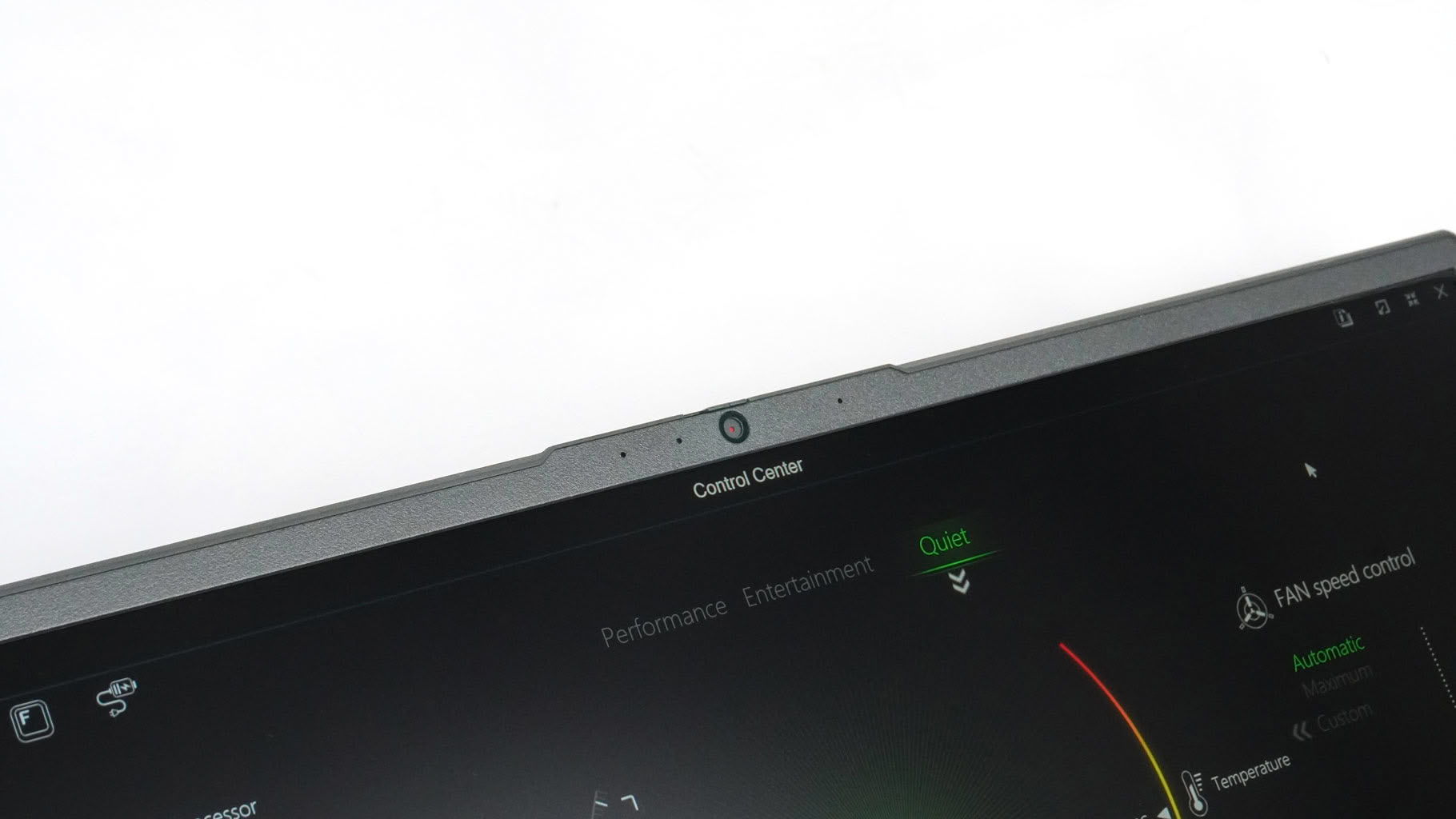
The 1080p webcam sits in its usual spot on the top bezel. It includes a privacy shutter, though there's no IR camera for Windows Hello—pretty standard fare for a gaming laptop.
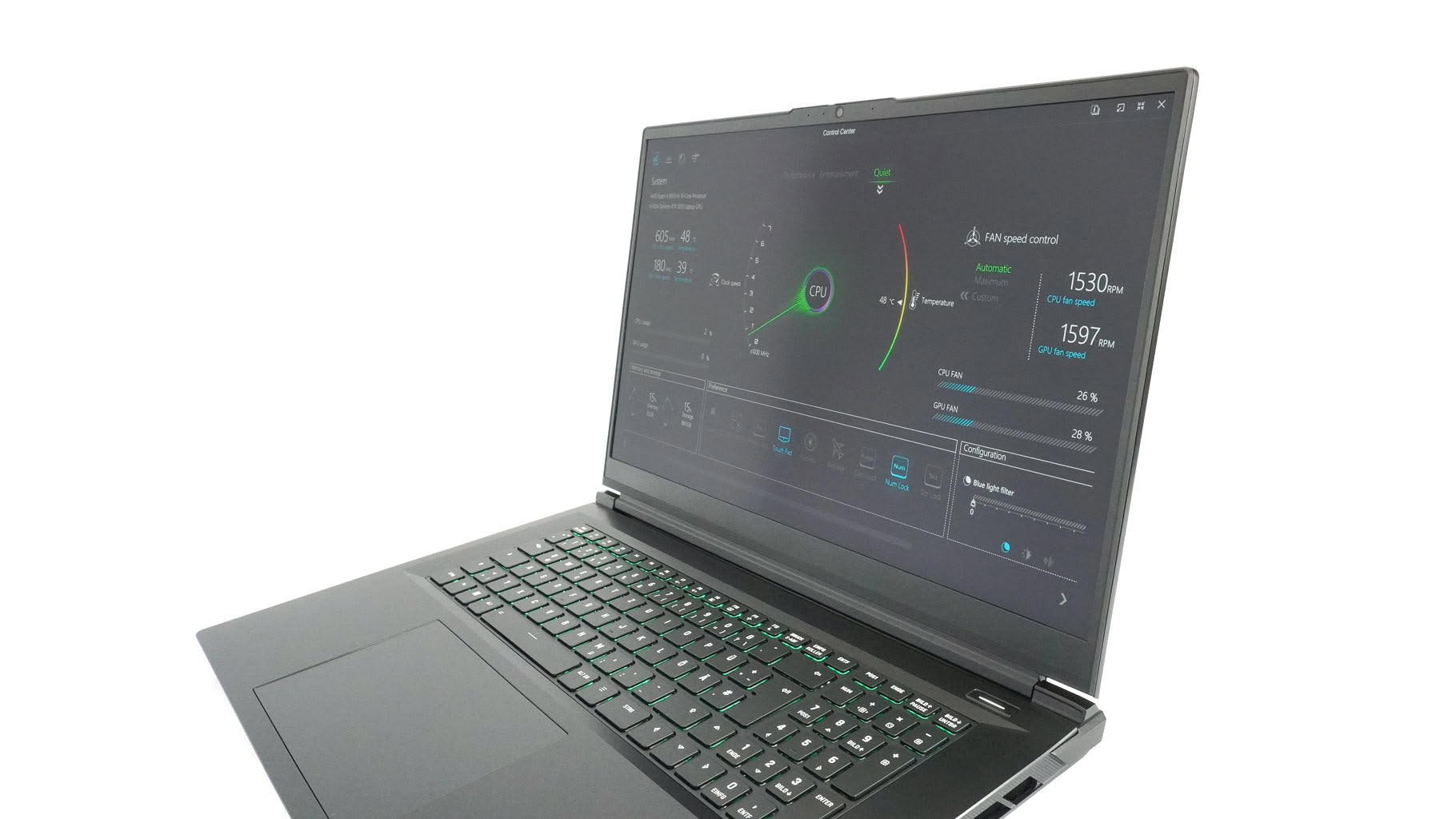
The bottom chin below the display is noticeably thicker than the side and top bezels.
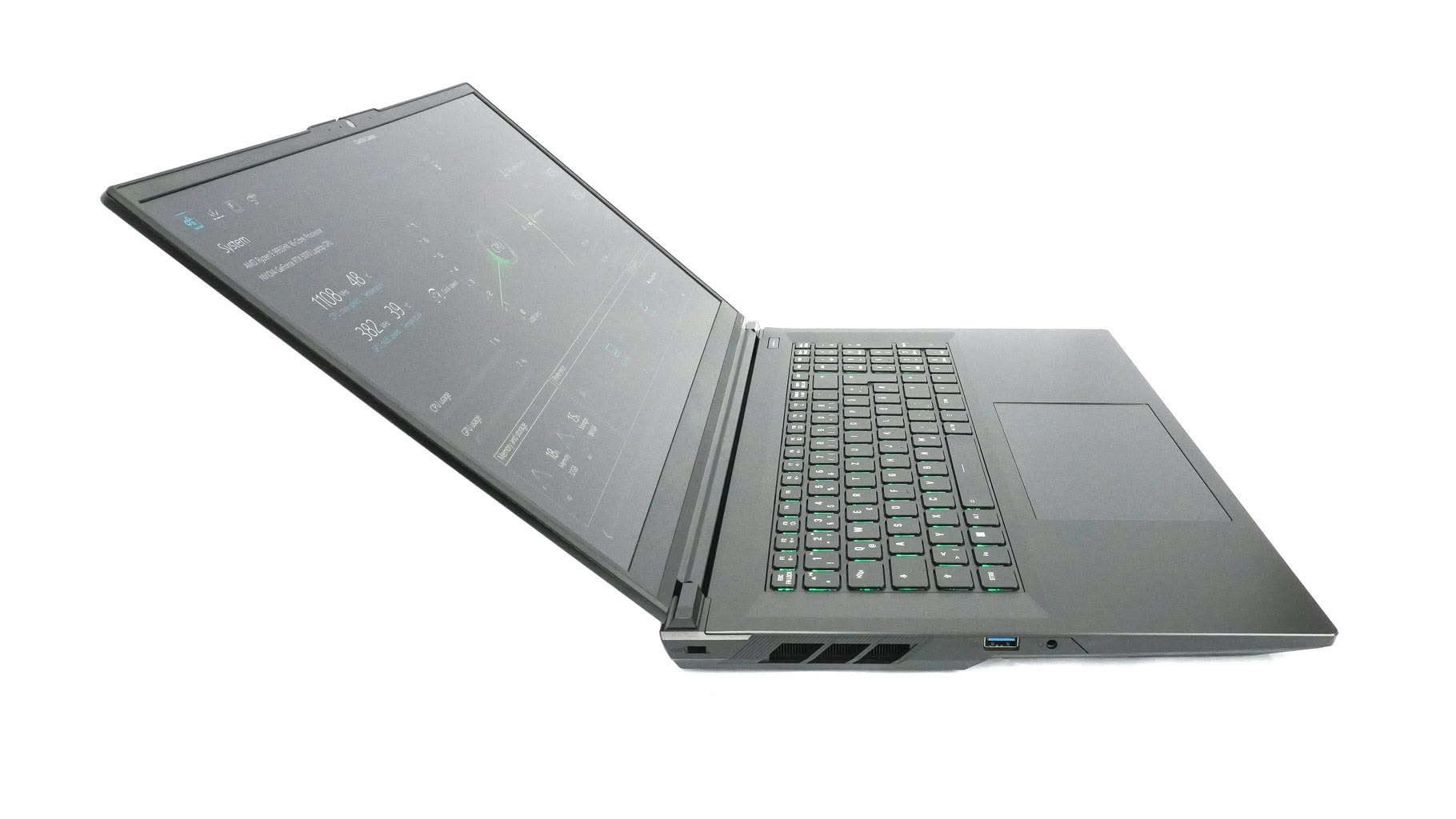
The display opens up to 130 degrees. That's fine for desktop gaming and daily work, but not ideal for sharing content with someone sitting next to you.
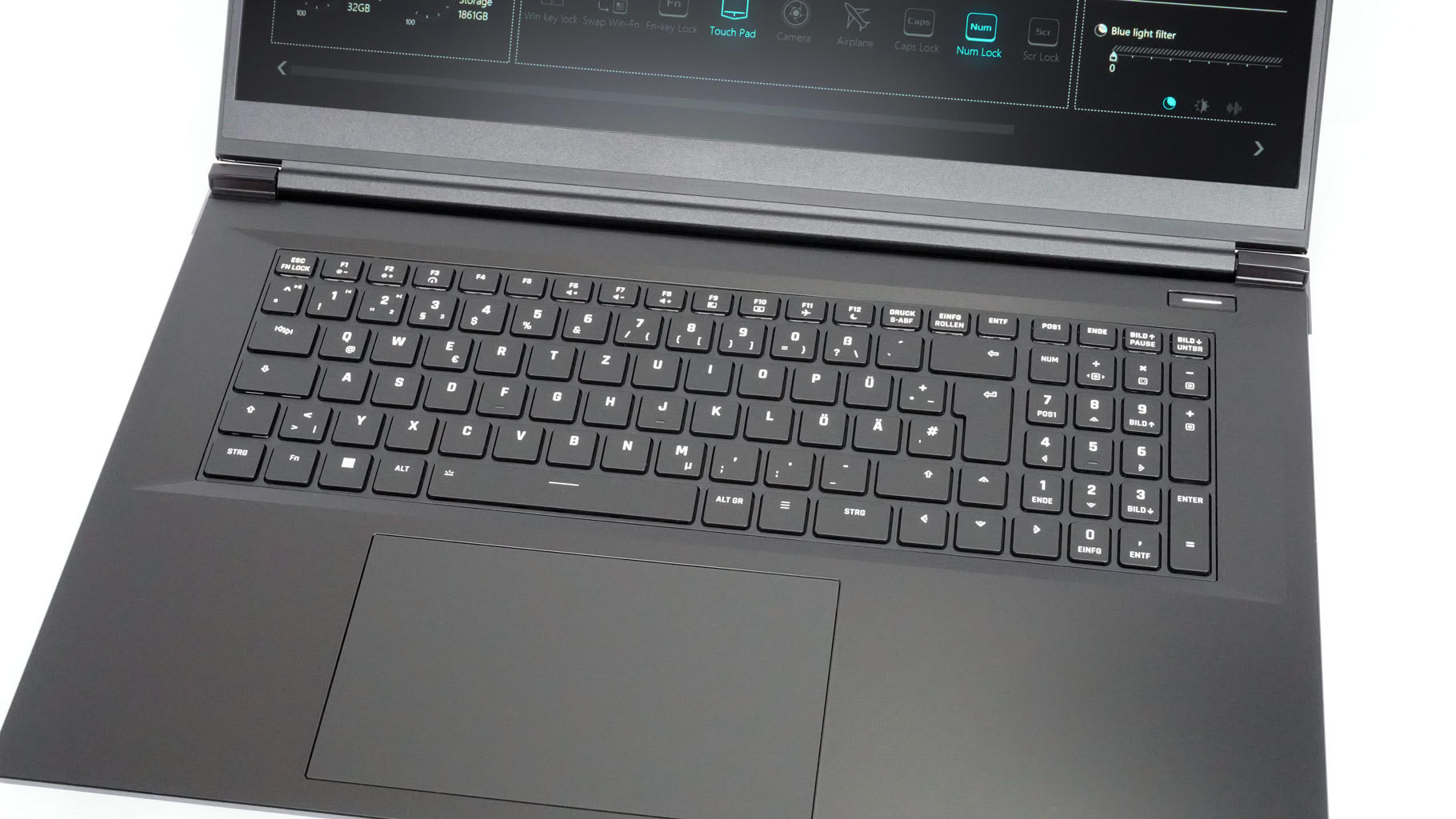
Overall, the keyboard is solid for daily work, but I still prefer the decks on the XMG Pro series—mainly because the full-sized arrow keys are separated from the main cluster, making them more comfortable and preventing accidental presses. On the plus side, you get full-sized arrow keys, a 4-row numpad, and 15 backlight color options. Since this is a mid-range machine, N-key rollover and anti-ghosting aren't part of the package. It's also nice to see that the main enter key and backspace aren't undersized.
Key travel sits somewhere between "above average" and "long," and tactile feedback is quite satisfying. Still, I noticed a bit of flex in the middle and right sections of the deck. It's not a dealbreaker, but it's worth noting—especially since the Focus 17 didn't have this issue. The motherboard layout here is different, and the cooling setup has been tweaked, which might explain why internal structural support isn't quite the same. A strategically placed support foot under the center of the keyboard could probably fix the flex. Don't get me wrong—overall, the keyboard is more than good enough for gaming, typing, or everyday tasks.
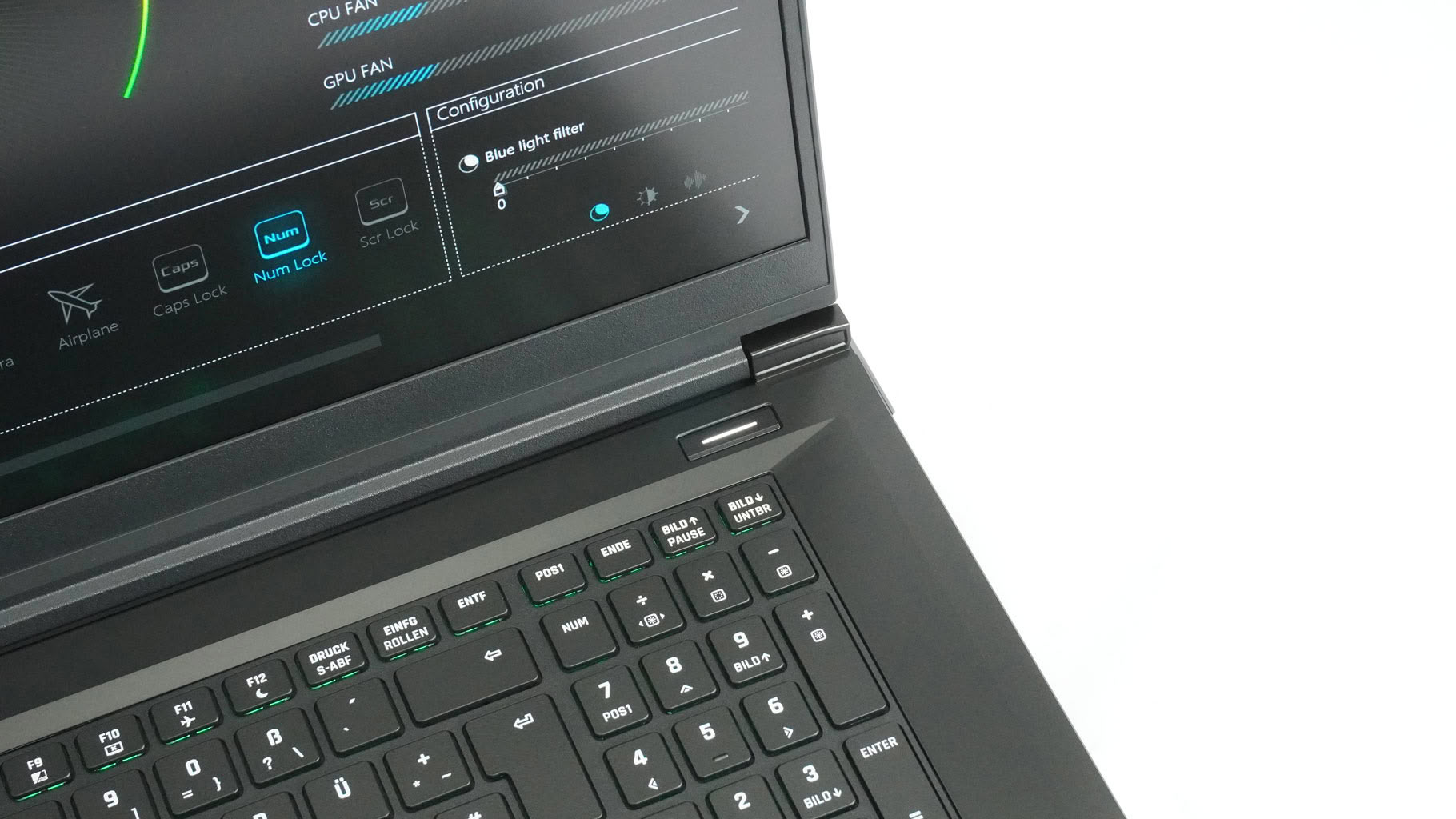
The power button sits in the top-right corner, away from the keyboard deck. You have to hold it down for slightly longer than a second before the LED indicator springs to life.
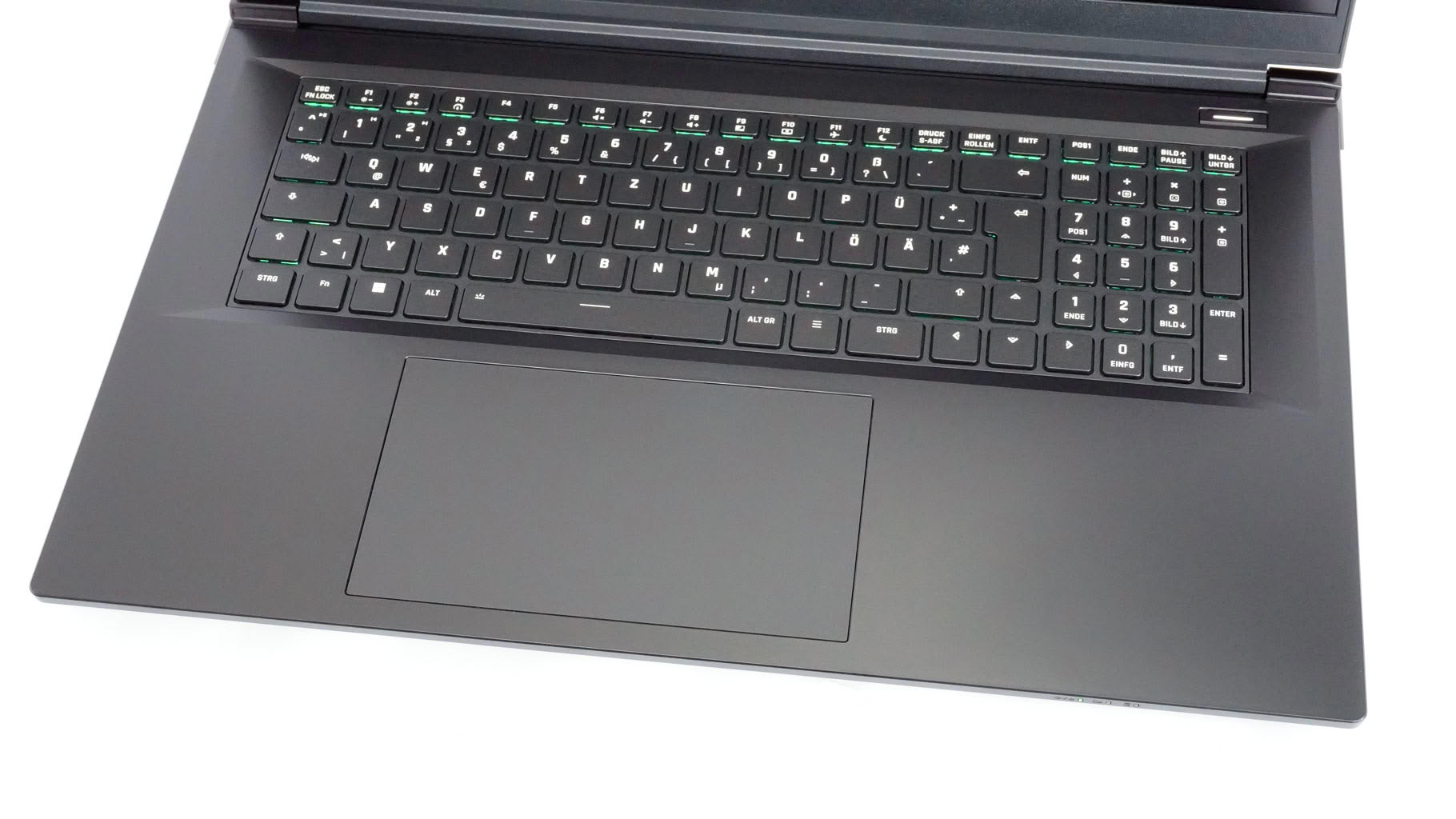
The touchpad is large, which is always a welcome plus. I just wish it were centered. The trackpad surface is described as an "innovative surface material with optimized glide characteristics." Let me translate that for you: while the pad isn't made of glass, it feels almost glass-smooth during use. While not class-leading, tracking precision is surprisingly good. Palm rejection and multitouch gestures work as intended. The physical click mechanisms are clearly audible, but not overly noisy.
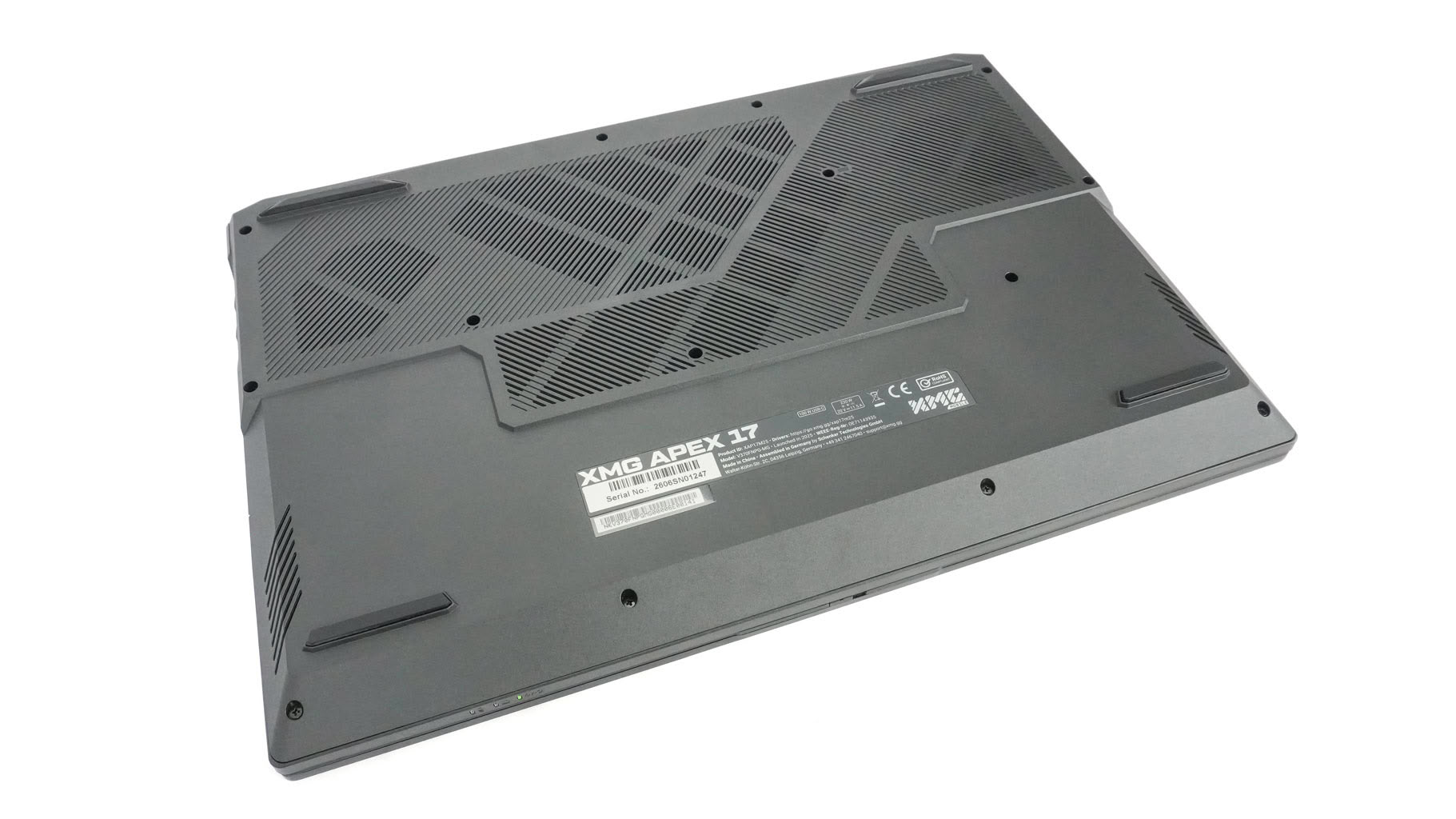
This is how the bottom of a gaming laptop should look: packed with ventilation grilles directly above the motherboard so fresh air can easily reach the fans, RAM, and SSDs. As is typical for XMG, the rubber feet offer great grip, even on polished surfaces.
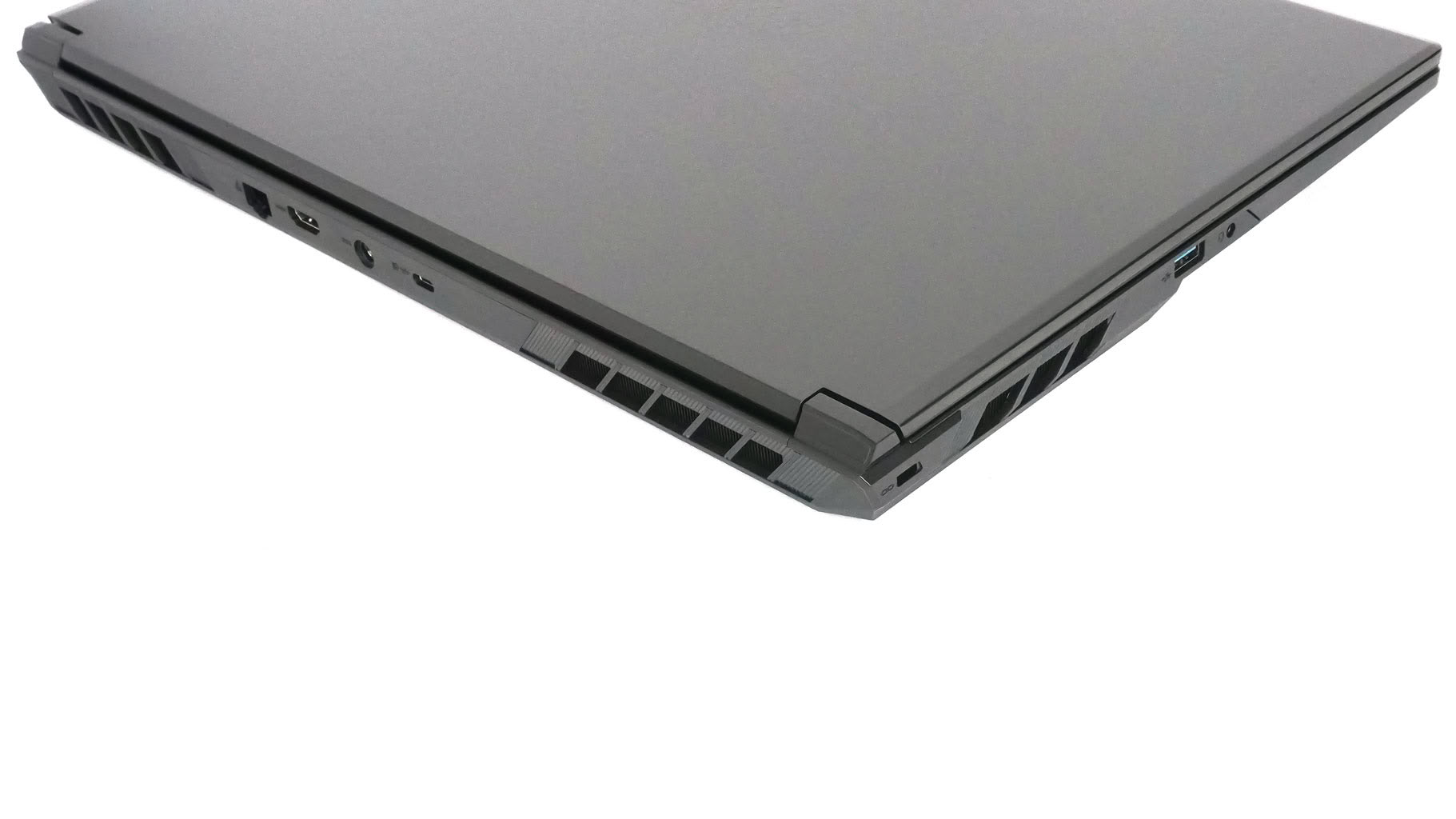
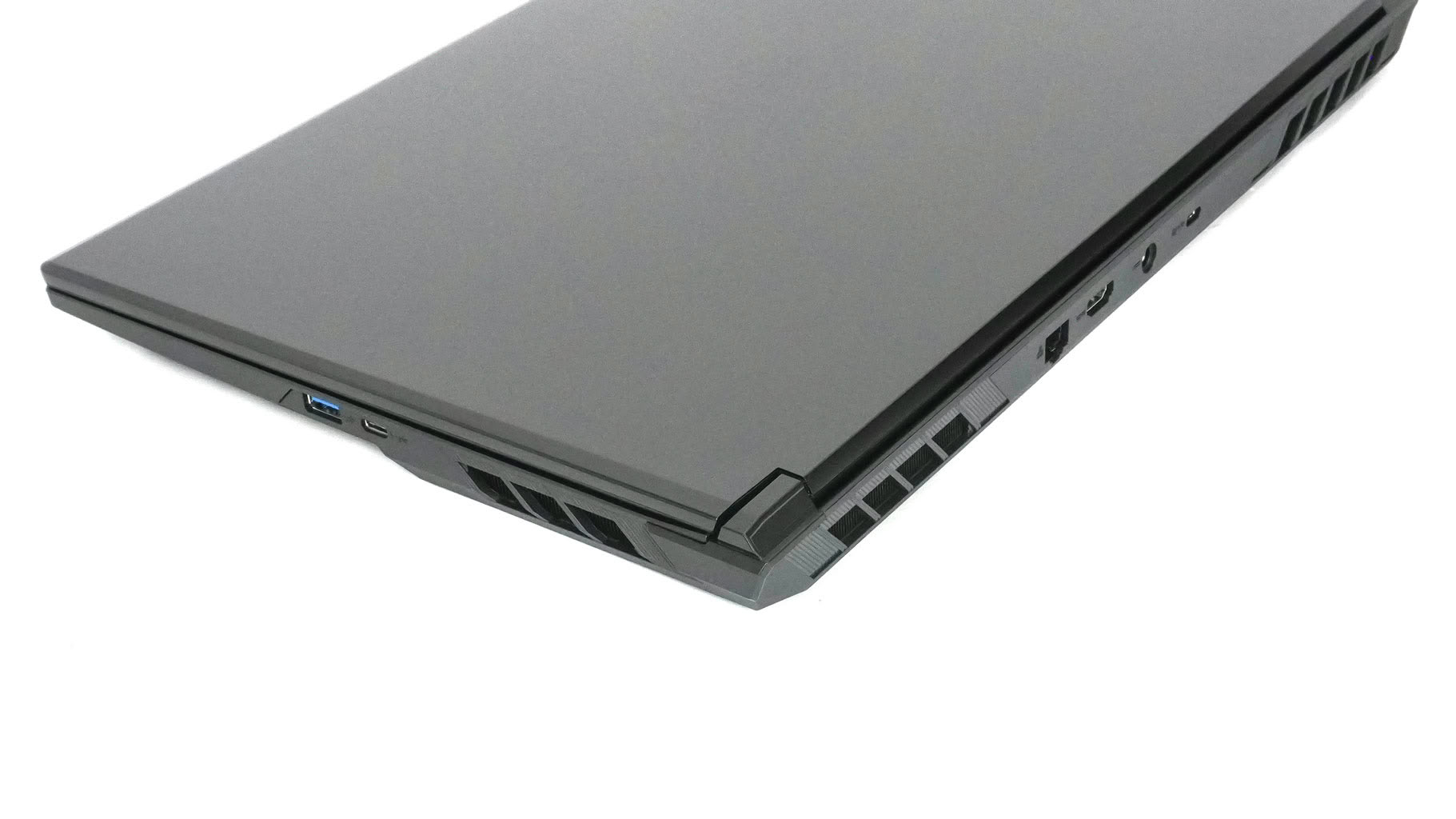
Exhaust air escapes through two side vents and another pair at the rear.
Ports and Connectivity
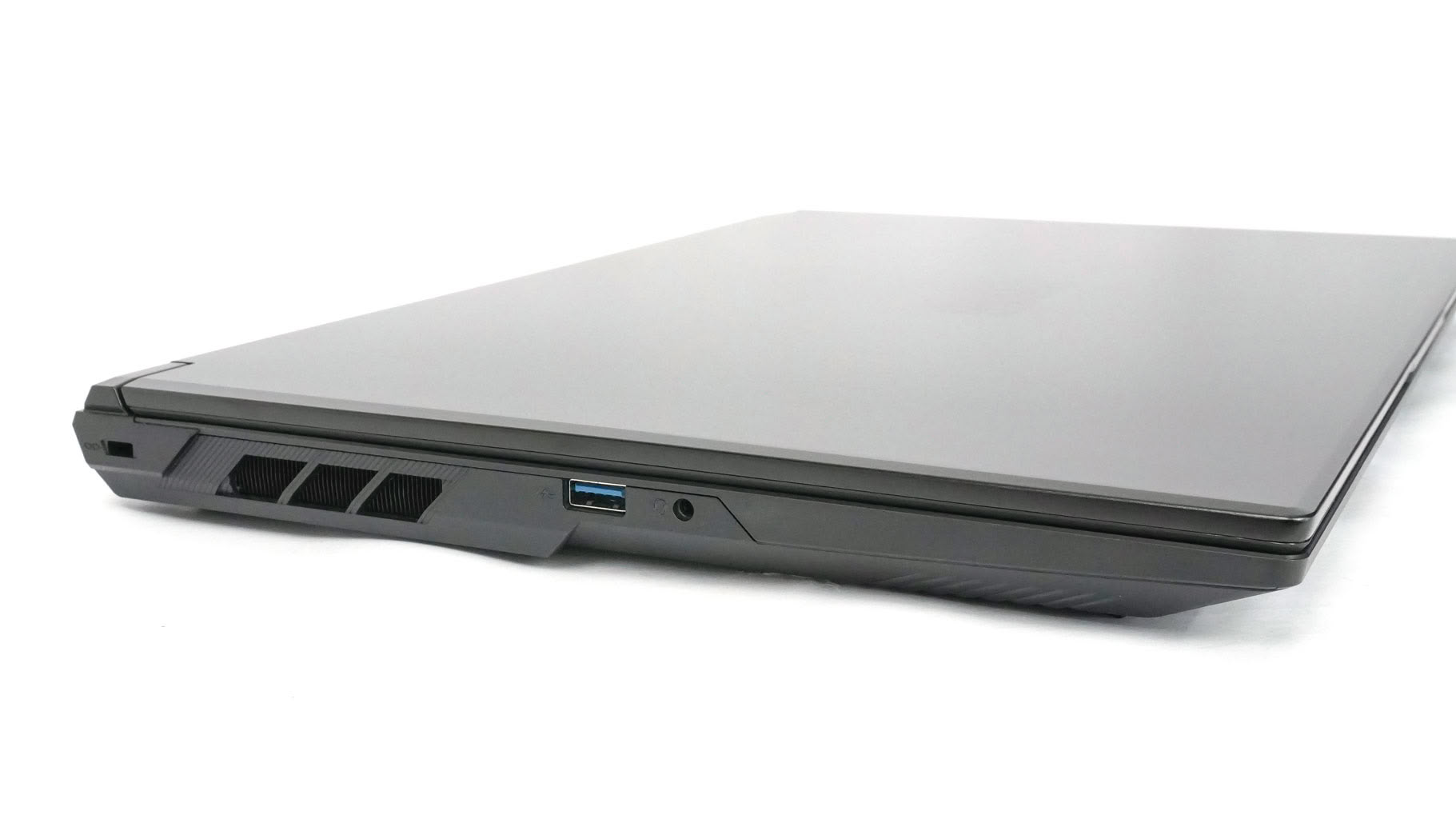
The left side houses a Kensington Lock, a 5 Gbps USB Type-A 3.1 Gen. 1 port, and an audio combo jack.
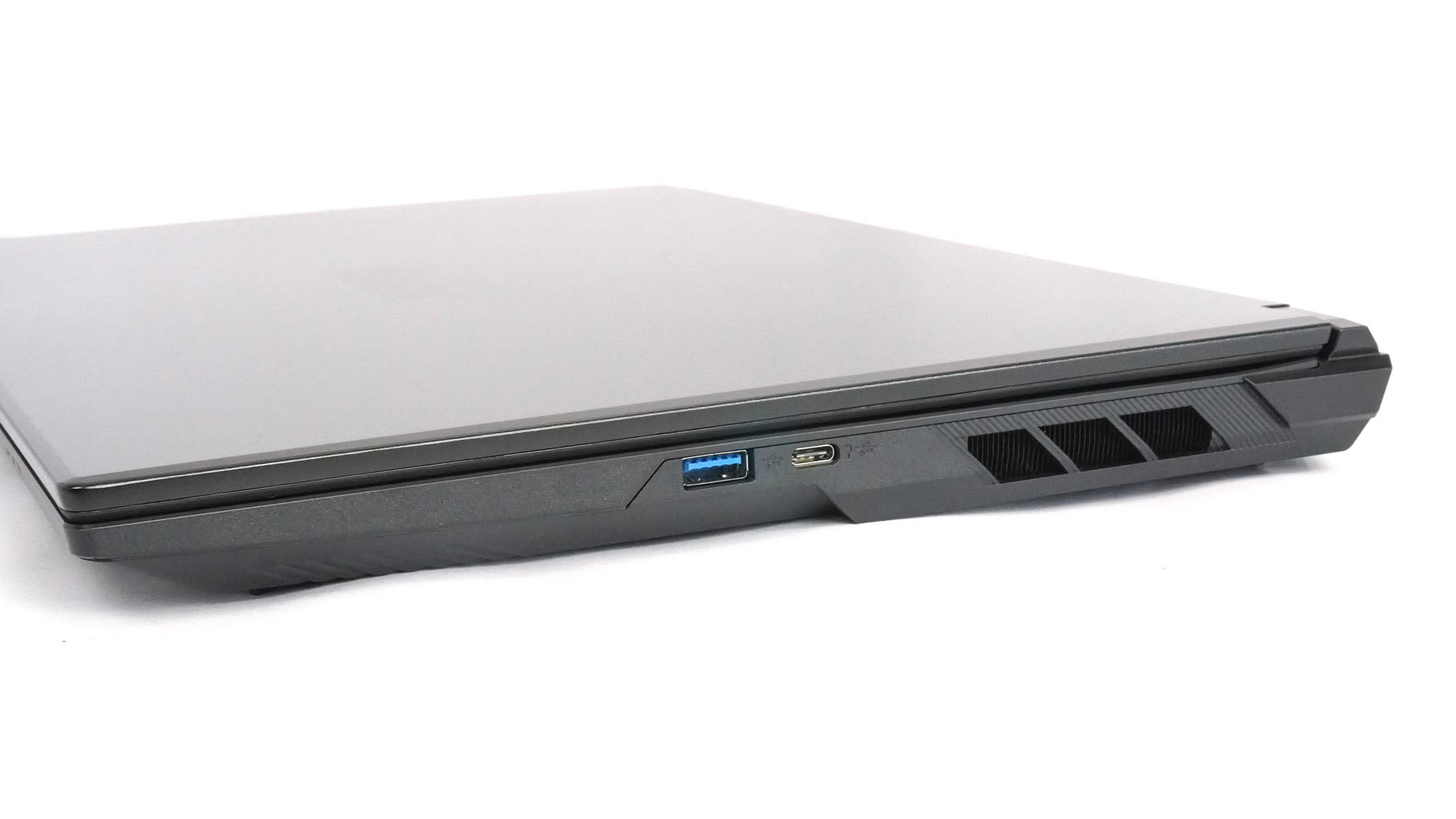
The right side is populated by a 10 Gbps USB Type-C 3.2 Gen. 2 port with 100 W PD and DP 2.1, and a 10 Gbps USB Type-A 3.2 Gen. 2 port.
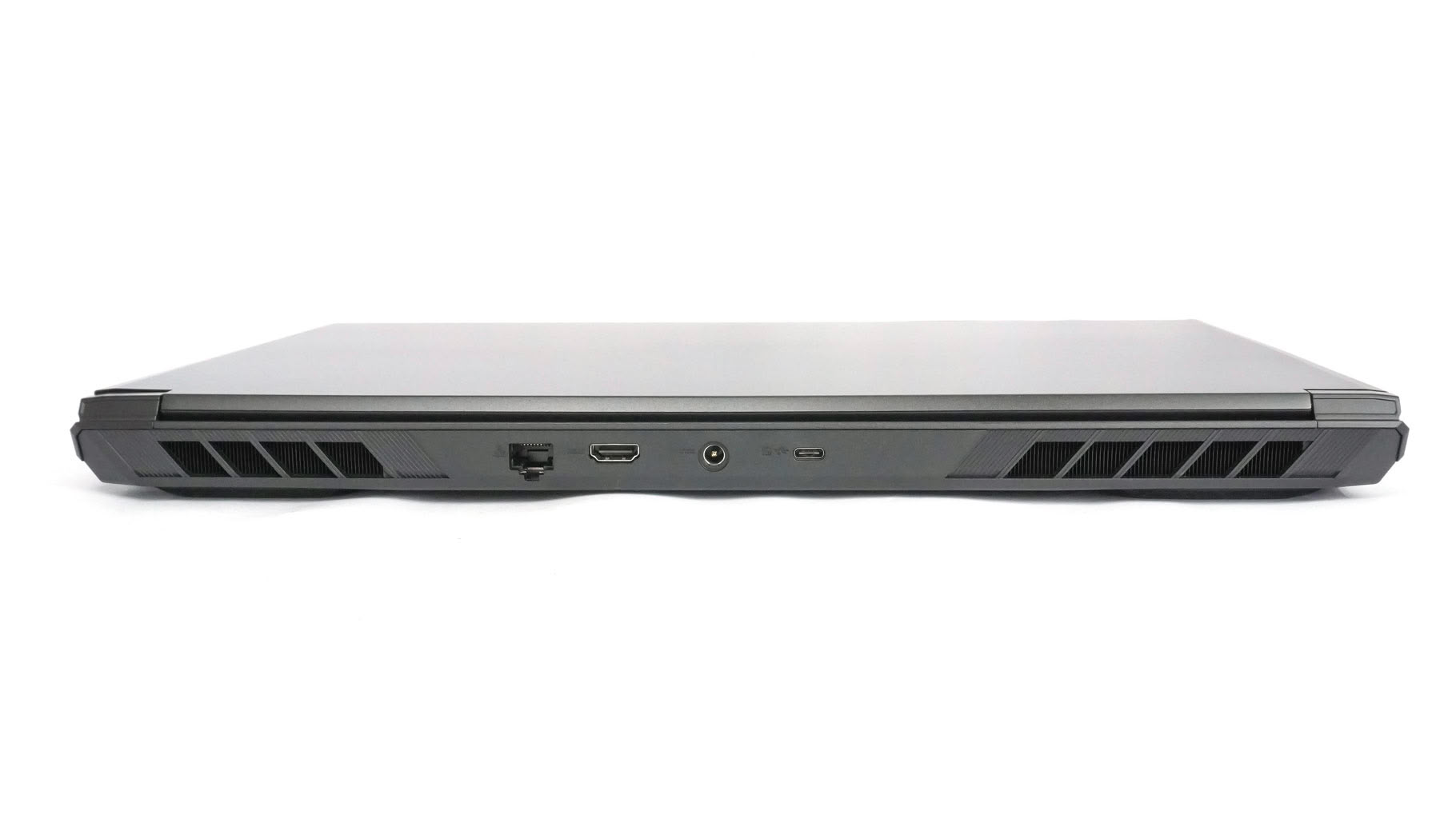
On the back, you get a Gigabit LAN, a 48 Gbps HDMI 2.1 port with VRR/G-SYNC support, a power plug, and another 10 Gbps USB Type-C 3.2 Gen. 2 port with DP 1.4a.
Our Patreon Silver Supporters can read articles in single-page format.
Nov 21st, 2026 04:19 PST
change timezone
Latest GPU Drivers
New Forum Posts
- What's your latest tech Freebie? (86)
- TPU's Nostalgic Hardware Club (22179)
- [Poll] 12V-2x6 Connector Protection: What Are You Using? (WireView / Ampinel / Equalizer / Other / Nothing) (50)
- UPS what one to get? (1)
- Anthrophics IPO (28)
- RX 9000 series GPU Owners Club (2252)
- Windows 11 General Discussion (7743)
- Without Jensen, PC gaming will be (52)
- Zen 3 IF/IMC degradation (242)
- AI generated images... (230)
Popular Reviews
- Microsoft Surface Laptop Ultra Review - The Next-gen Arm Laptop
- Ugreen NASync DXP4800 GT Review
- Corsair RM1200e (Second Generation) Review
- Pulsar Office Tour & First Look at P1 Dual-Sensor Mouse
- Upcoming Hardware Launches 2027 (Updated Nov 2026)
- Acemagic Retro X3 Review
- Biwin Black Opal NV7400 2 TB Review
- AMD Ryzen 7 9800X3D Review - The Best Gaming Processor
- AMD Zen 6 Technical Deep Dive
- Chieftec Iceberg PRO 360 DARK Review
TPU on YouTube
Controversial News Posts
- NVIDIA Co-Founder and CEO Jensen Huang Officially Resigns (491)
- Report: Jensen Huang Eyes NVIDIA Comeback (257)
- Open Letter Asking NVIDIA to Reinstate Jensen Huang Passes 115,000 Signatures (184)
- OpenAI CEO Argues Home PCs Waste the World's Limited DRAM Supply (152)
- NVIDIA Launches Investigation Into Jensen Huang's Relationship With Suspected Chinese Spy (136)
- Intel "Raptor Lake Next" 16-Core and 20-Core CPUs Surface (130)
- Legendary Game Studio BioWare Shuts Down Following EA Layoffs (104)
- NVIDIA GeForce RTX 50-Series Scheduled for up to $500 Price Hike This Week (89)