 5
XMG Pro 16 (M25) Review - The Mini LED Rocketship
(5 Comments) »Introduction

Not much has changed with mobile GPUs between 2025 and 2026. The GeForce RTX 5090 sits at the top of the food chain, followed by the 16 GB RTX 5080—which remains a solid choice for 4K gaming. The RTX 5070 Ti remains the people's champ. It packs enough punch and offers a 12 GB VRAM buffer, unlike its 8 GB non-Ti sibling. Expect things to shift once the non-Ti RTX 5070 12 GB—using 3 GB modules in place of 2 GB—becomes more widespread. Still, its bigger cousin will stay the go-to for anyone chasing extra oomph without dropping big cash on an RTX 5080.
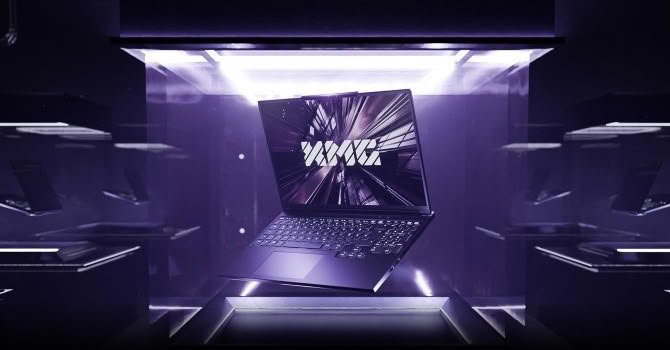
Last year, we reviewed the XMG Pro 16 (E25), which came with both Raptor Lake and Arrow Lake CPUs. Unlike that model, the XMG Pro 16 (M25) drops the i9-13900HX, leaving the Core Ultra 9 275HX as your only option. That's actually fine, since the E25's specs could get confusing for less tech-savvy buyers. Port selection, storage, and memory compatibility all varied depending on the CPU you picked. The M25 avoids this headache altogether: every model gets the full feature set of the E25, along with a few minor upgrades.
The most notable change is the optional Mini-LED 1600p display. From my testing, it's the exact same panel used in XMG's water-cooled Neo 16 series. It's a great display with near-OLED punch, featuring high peak brightness in SDR and HDR, a 300 Hz refresh rate, and pro-grade color coverage. That said, if XMG kept the same base IPS screen, it's still a solid panel whether you're gaming or creating content. If budget isn't a concern, that Mini-LED display is well worth the upgrade—at least in my opinion.
Wi-Fi 7 is available this time around, though only as an option. Not a dealbreaker since you still get 2.5 GbE LAN, but if you want to avoid desk clutter, spending €14 for Wi-Fi 7 is a no-brainer. As for I/O, it's still packed with ports, including five USBs.
The rest of the spec sheet mirrors the Arrow Lake E25 package. No complaints here—you get a beefy cooling system, Gen 5 SSD support, and fast CSO-DIMMs. If you don't mind hauling around a 2.5 kg gaming beast, the iGPU-only mode gives battery life a welcome bump.
The XMG Pro 16 (M25) is a high-end machine hiding an RTX 5070 Ti under the hood. Personally, I'm curious to see how it stacks up against the Apex 17 (M25) loaded with a Ryzen 9 9955HX and RTX 5070 12 GB.
Specifications
| Specifications | |
|---|---|
| Manufacturer: | XMG |
| Model: | XMG Pro 16 (M25) |
| Weight: | Starting at 2.45 kg |
| Processor: | Intel Core Ultra 9 275HX/Arrow Lake-HX 8 P-Cores + 16 E-cores/24 threads (No HT) up to 5.4 GHz, 36 MB cache 55 W Base Power |
| Chipset: | Intel HM870 |
| Display: | Default Display: 16.0"/2560×1600 (16:10)/IPS/300 Hz ~500 nits/100% sRGB/non-glare Optional Display: 16.0"/2560×1600 (16:10)/Mini LED IPS/300 Hz ~750 nits/100% sRGB/non-glare |
| Operating System: | No OS/Microsoft Windows 11 Home/Pro |
| Integrated Graphics: | Intel Arc Graphics (64 EU) |
| Dedicated Graphics: | NVIDIA GeForce RTX 5070 Ti (mobile): 12 GB GDDR7, 192 Bit, 2000 MHz effective clock 5888 CUDA Cores 184 TMUs 64 ROPs 46 RT Cores 184 Tensor Cores L1: 5.8 MB, L2: 48 MB 140 W TGP |
| Memory: | 2× SO-DIMM RAM slots Up to 128 GB of DDR5 CSO-DIMM support at 6400 MT/s |
| Storage 275HX: | 1× M.2 2280 PCI Express 5.0 x4 1× M.2 2280 PCI Express 4.0 x4 RAID 0/1 support |
| Optical Drive: | None |
| Connectivity: | 3× 5 Gbps USB Type-A/3.2 Gen. 1 (one of which supports charging) 1× 10 Gbps USB Type-C/3.2 Gen. 2 1× 40 Gbps Thunderbolt 4 (both with DP and PD) SD Card reader 1× HDMI 2.1 VRR/G-SYNC compatible Mini DisplayPort 2.1 Audio combo jack 2.5 GbE LAN DC-in |
| Communications: | Wi-Fi 6E + Bluetooth 5.3 Wi-Fi 7 + Bluetooth 5.4 (optional) 1080p IR webcam |
| Audio: | 2× speakers Nahimic by SteelSeries Software |
| Input device: | Microsoft Precision Touchpad, integrated buttons Per-key RGB Keyboard |
| Power: | 1× 280 W AC adapter 99.9 Wh battery |
| Warranty: | Two year |
| MSRP: | Starting at €2699 |
Packaging
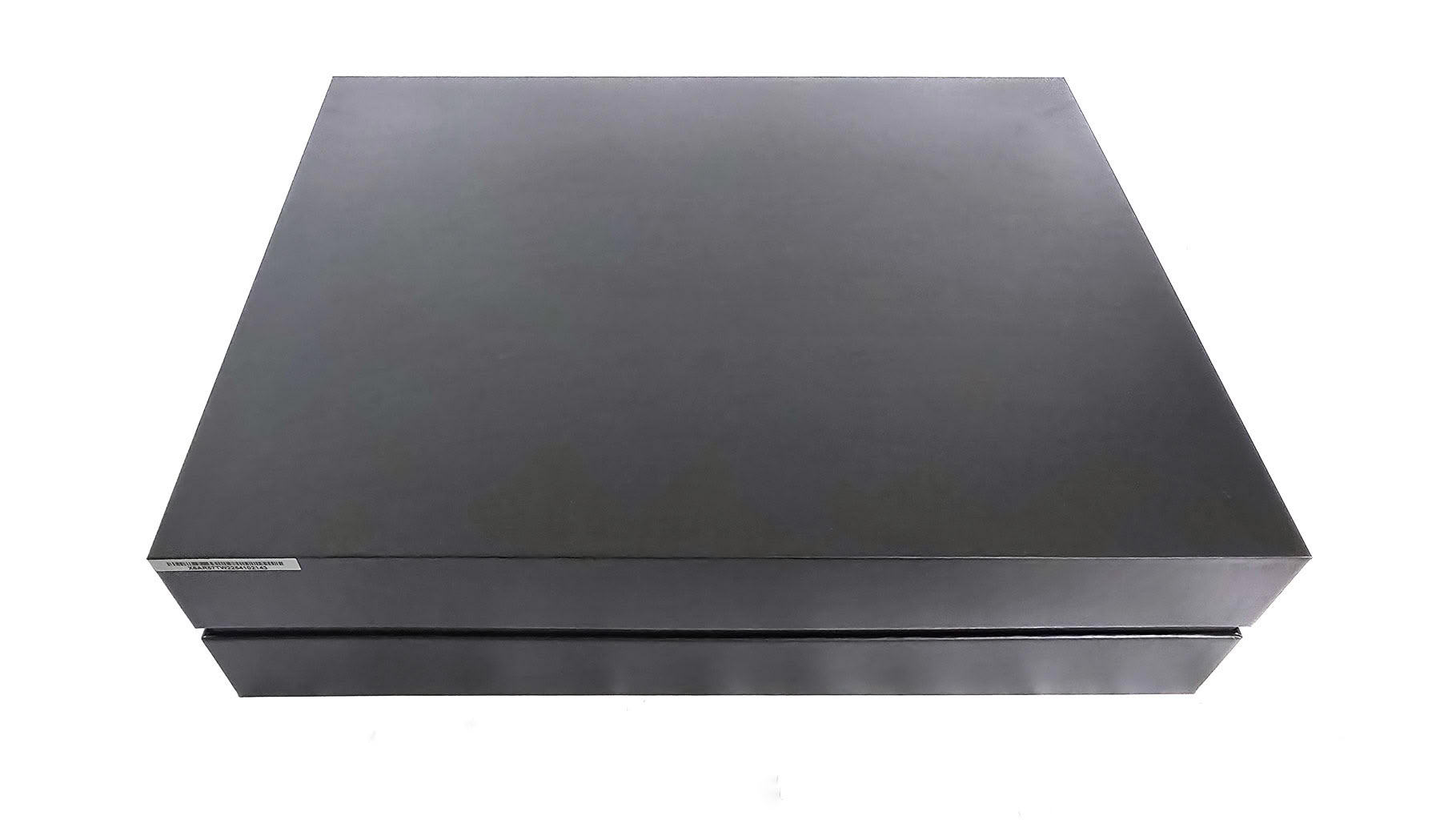
The compact black box is rock-solid which deserves a praise!
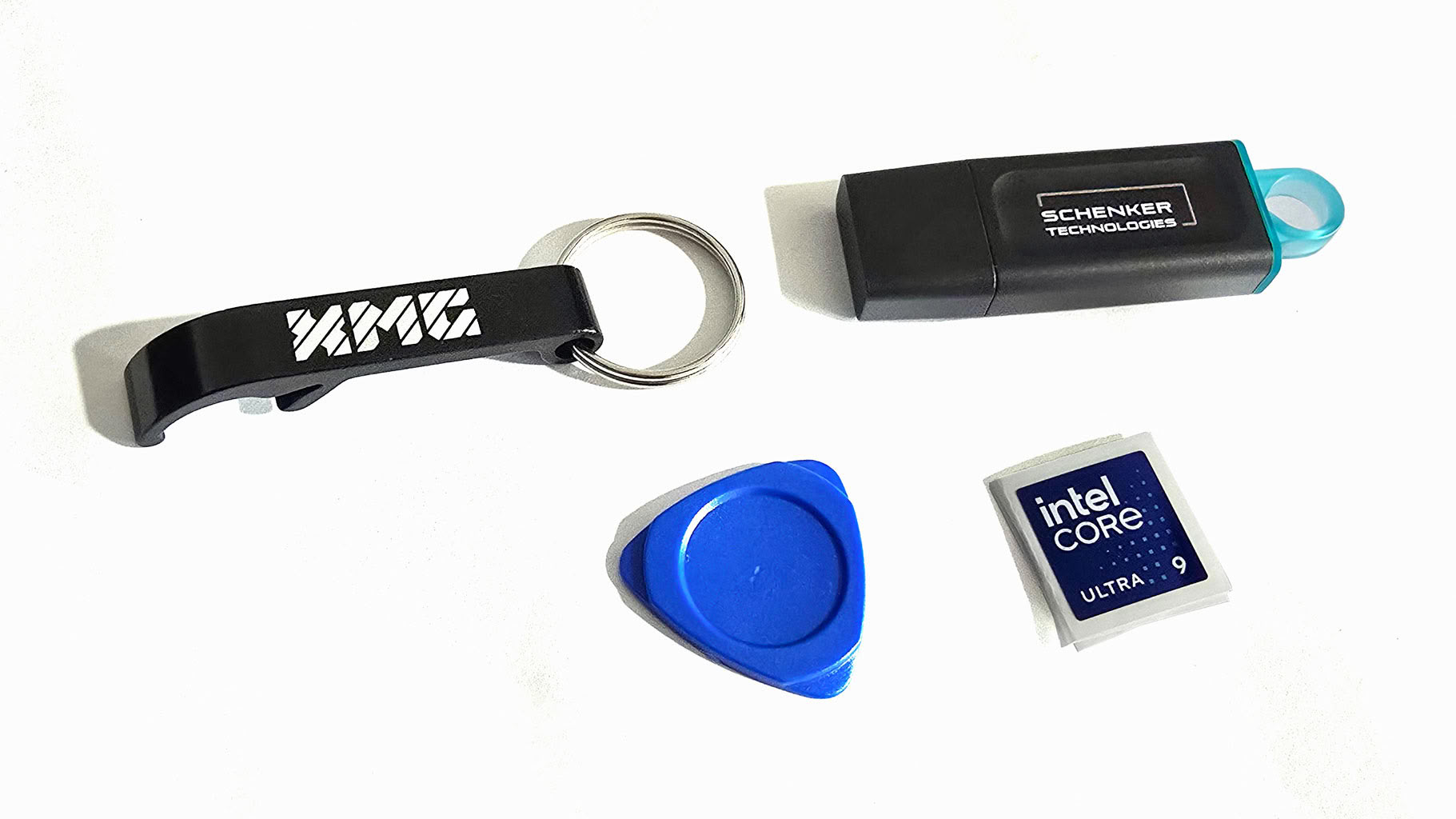
Inside, you'll find a bunch of manuals and stickers related to the CPU and GPU models. You can glue them to the chassis, but if you ask me - don't bother, leave it as is. You also get a USB with drivers and an XMG-branded key holder.
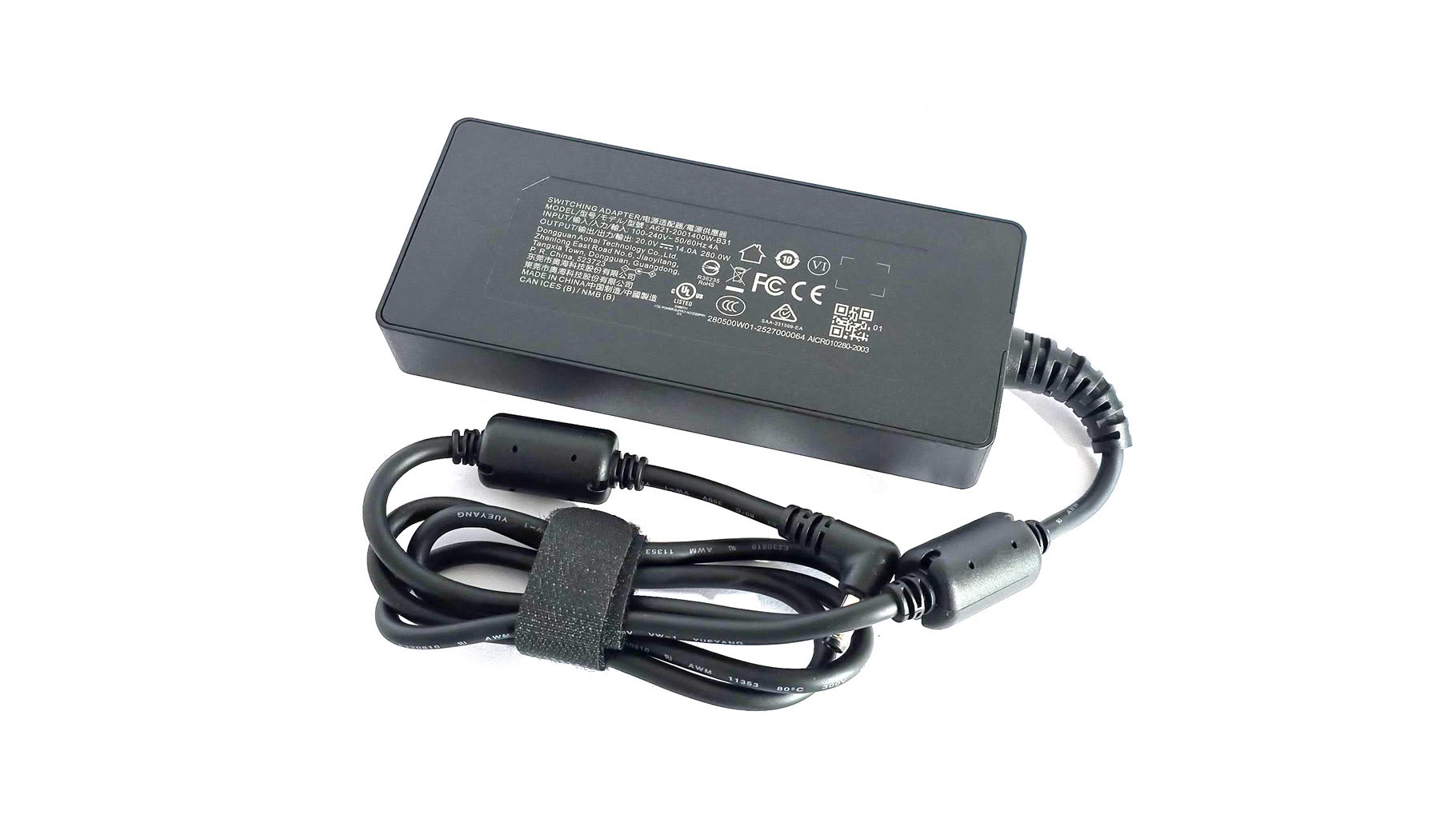
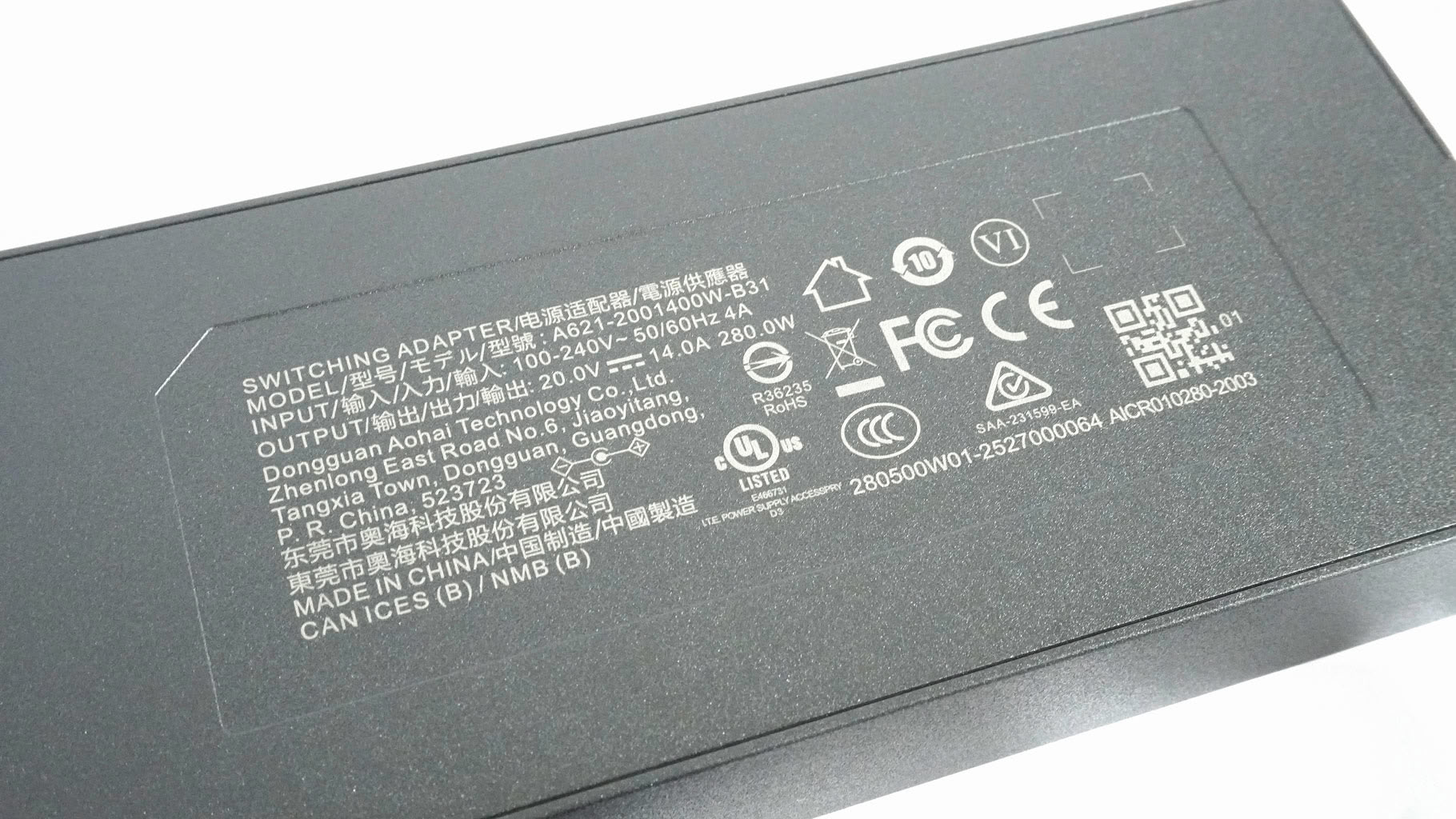
Here, we have an adapter made by Dongguan Aohai Technology Co. Ltd.
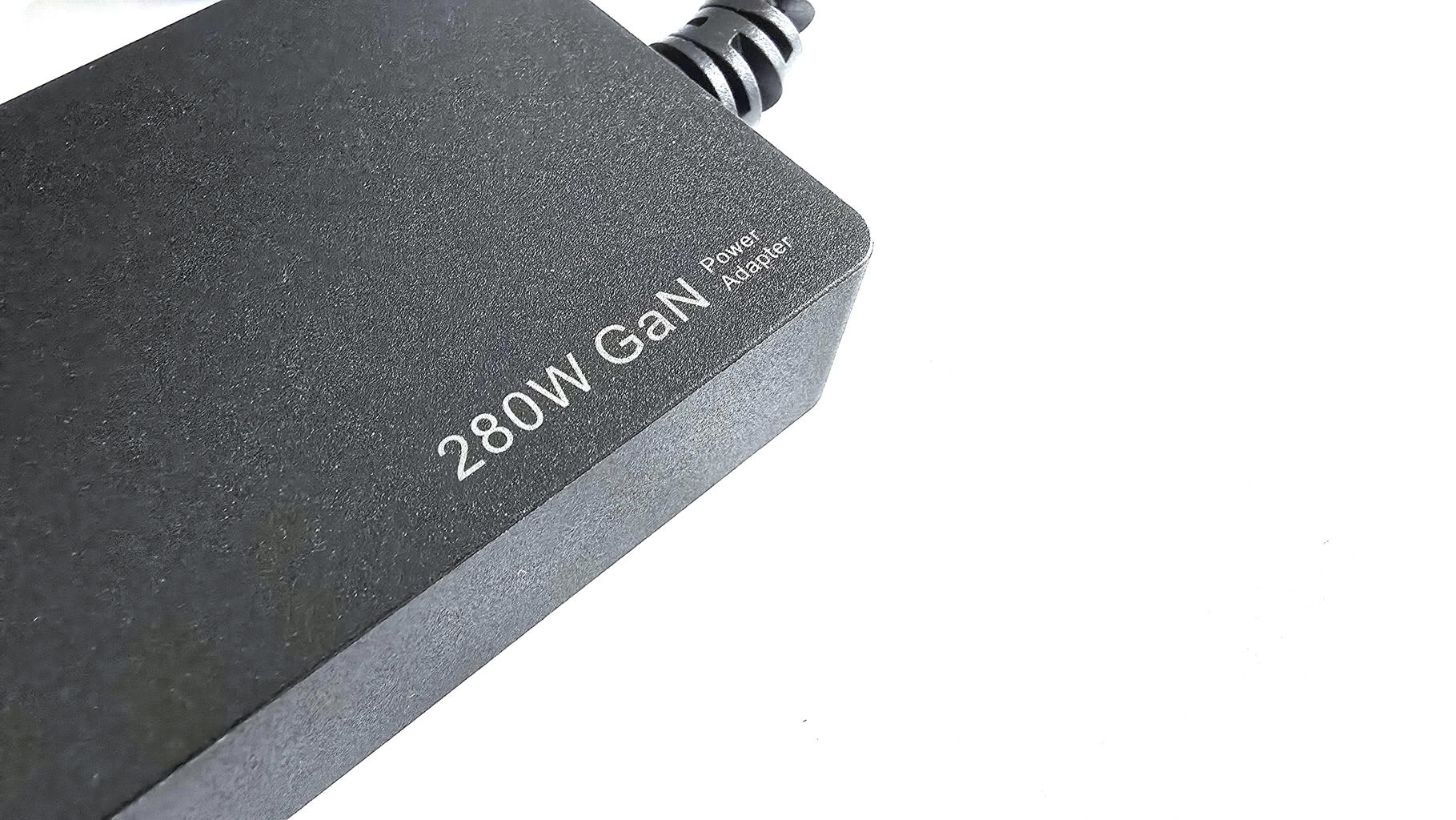
It's a 280 W GaN charger.
A Closer Look - Outside
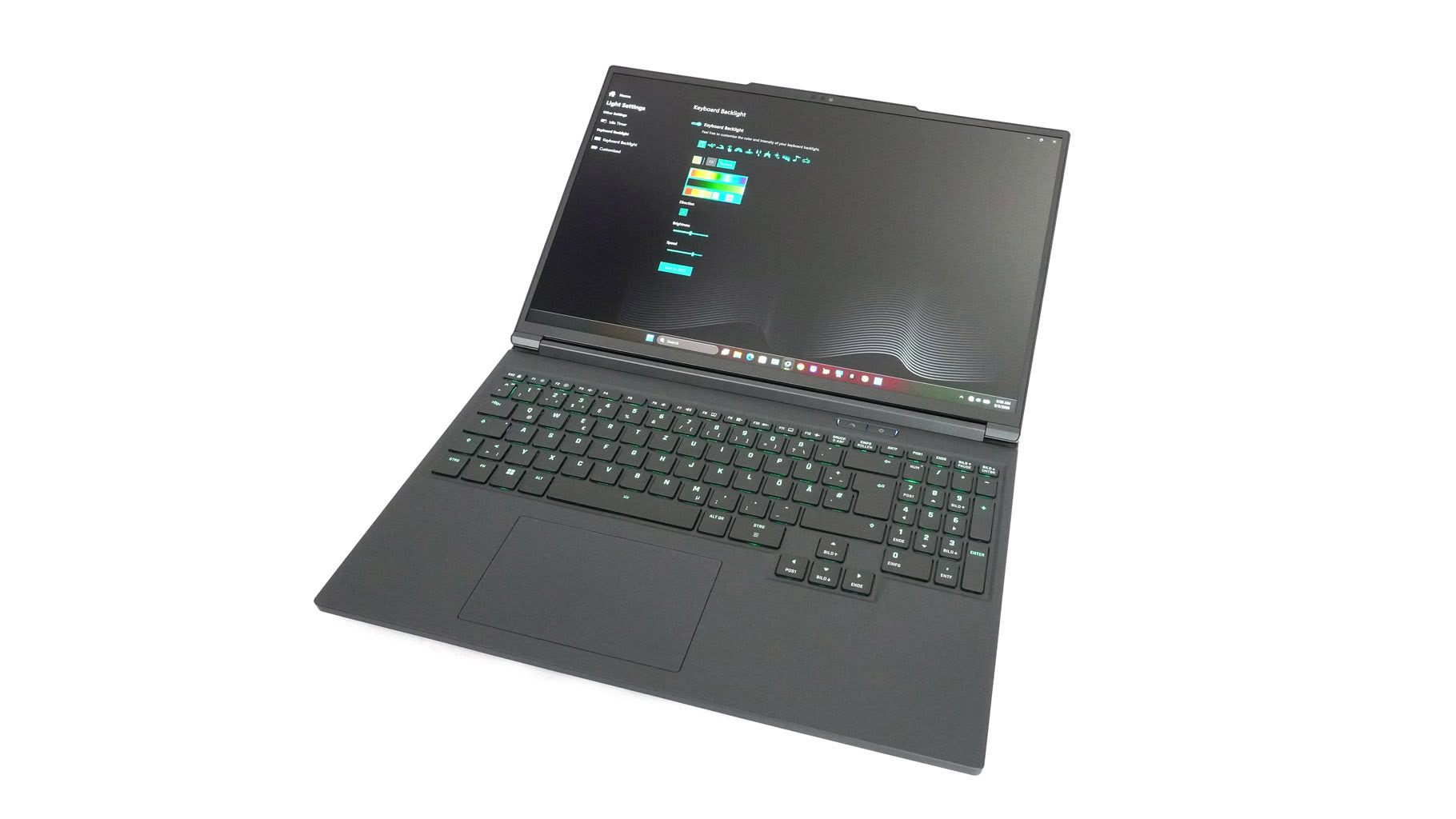
Wait, is that the XMG Pro 16 (E25)? Nope—that's the XMG Pro 16 (M25), but the two are absolute carbon copies. Everything I said about chassis quality in the E25 review applies 100% to the M25. But since this article covers a different model series, I'll review everything from scratch while keeping the core points intact.
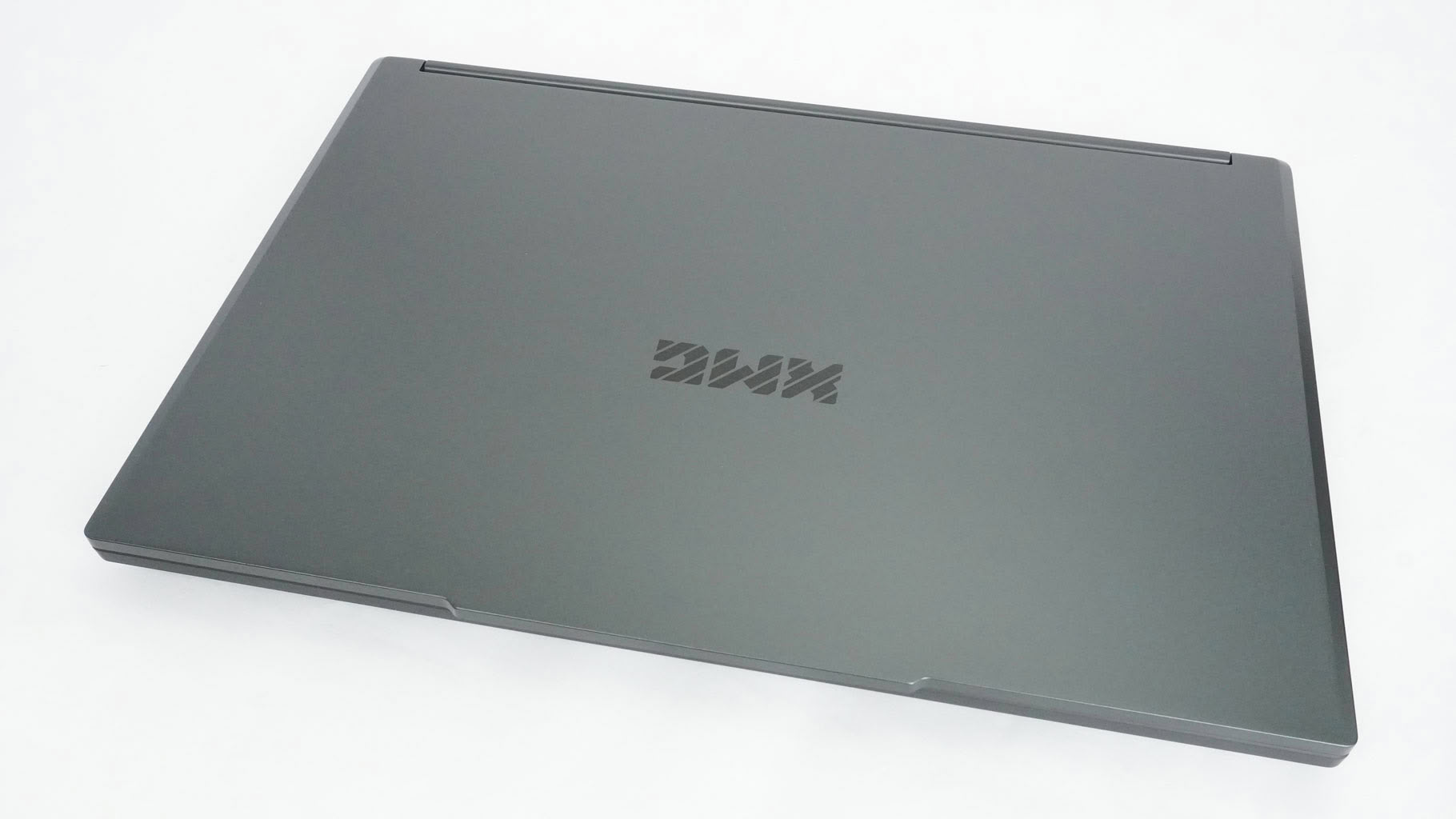
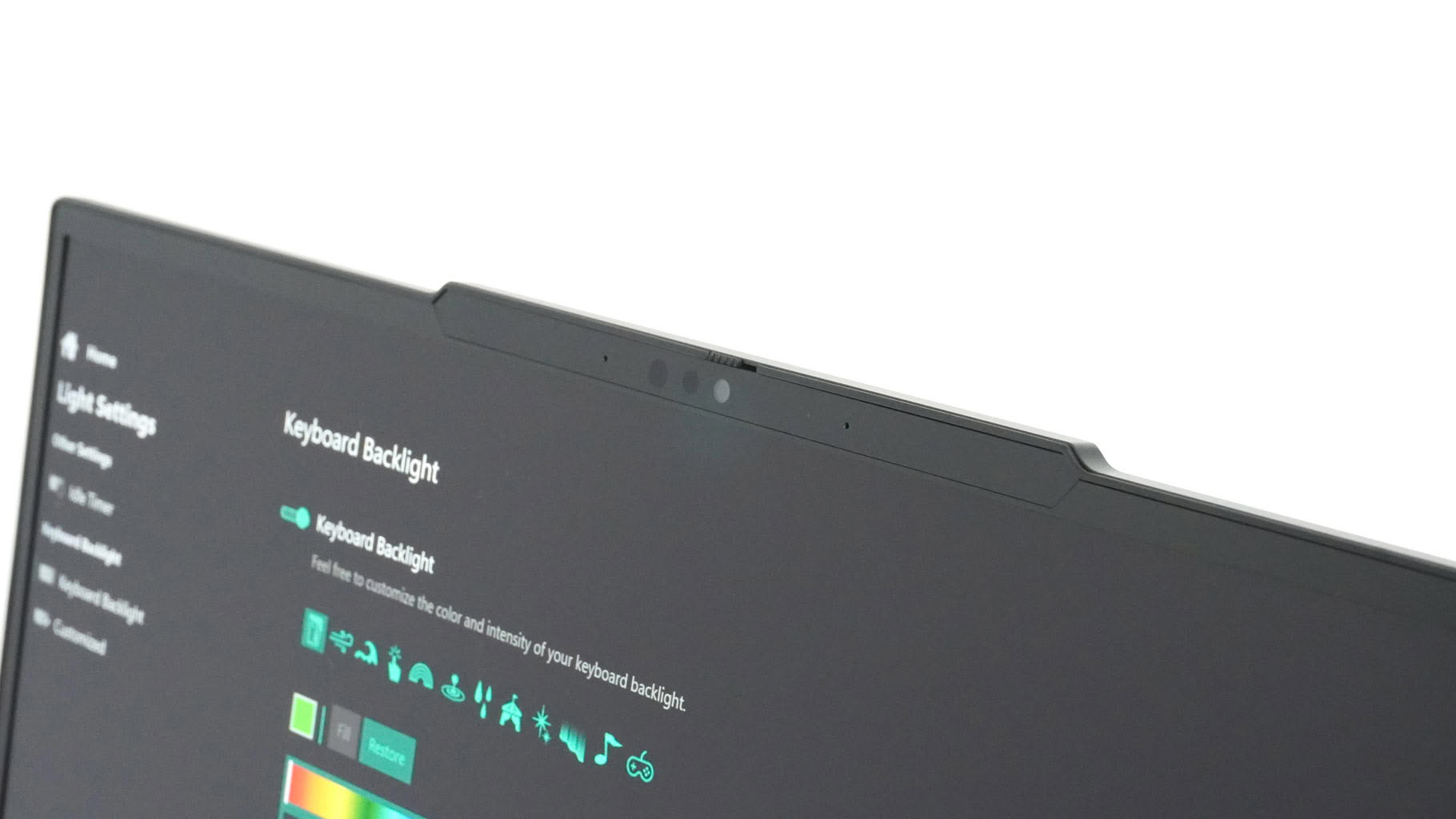
In a world full of body RGB, XMG offers a gaming laptop so clean and neutral that James Bond could bring it in his Aston Martin for video briefings with M—complete with a secure 1080p webcam, facial recognition, and a privacy shutter on the lid bump.
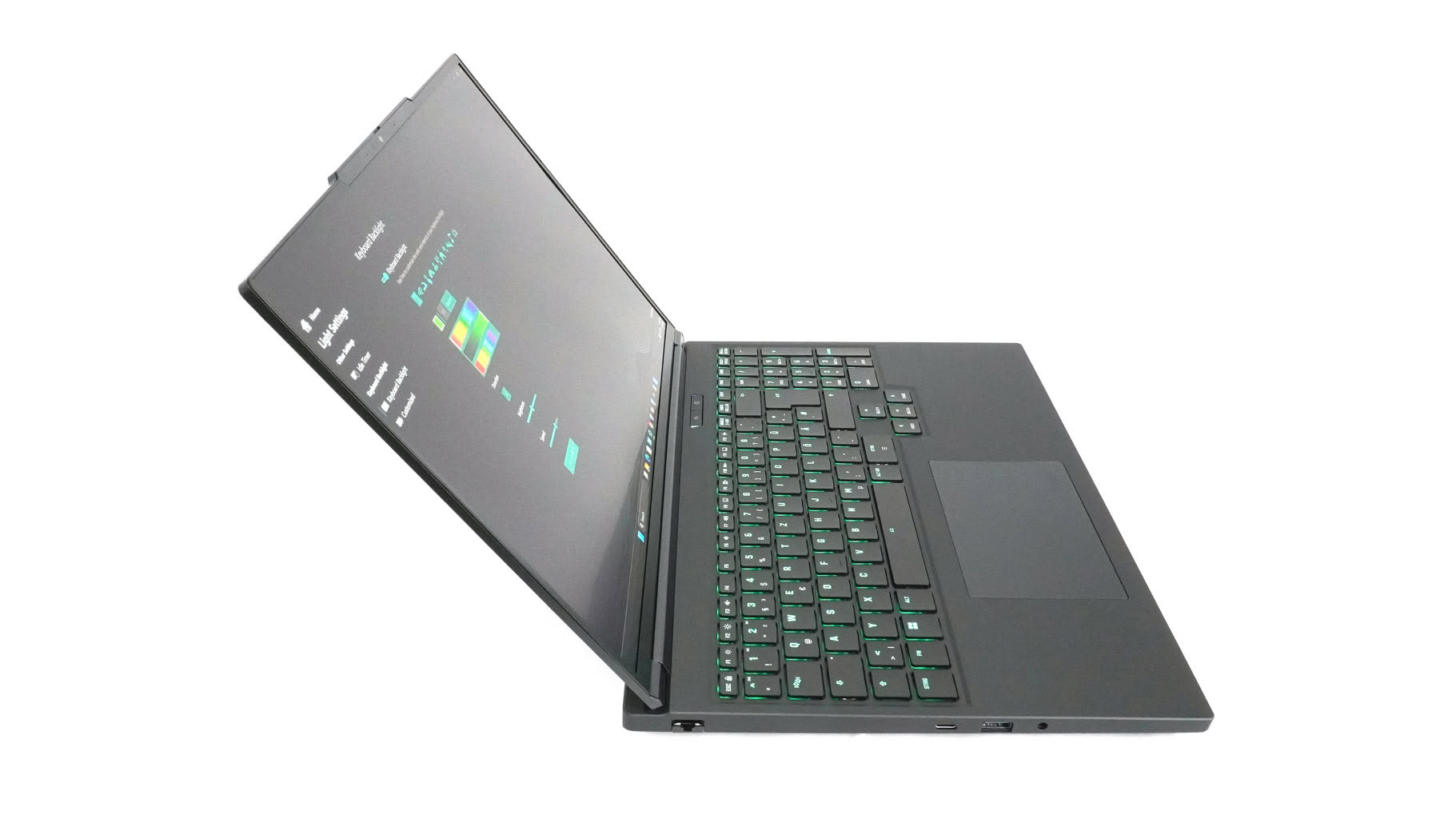
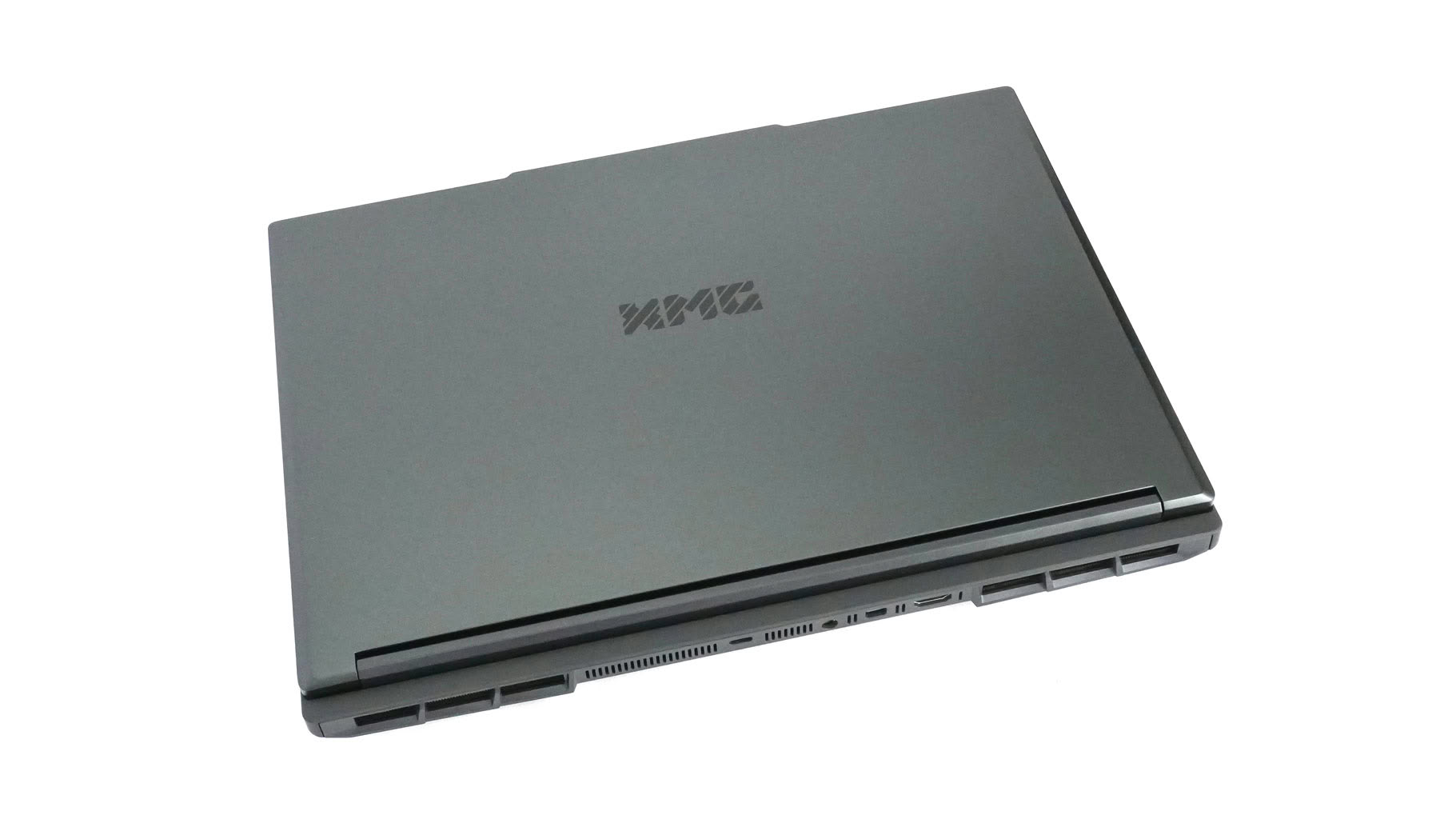
007 could probably use it in a fight scene, too. When closed, this laptop is virtually untwistable. If the British Secret Service agent hit the bad guys with this thing, a concussion would be guaranteed. Jokes aside, the 2.6 kg chassis—with its metal lid and plastic base—is impressively sturdy. Configurations with the base IPS screen are 150 grams lighter. The profile measures 26.5 mm thick, which makes sense given the substantial cooling system inside.
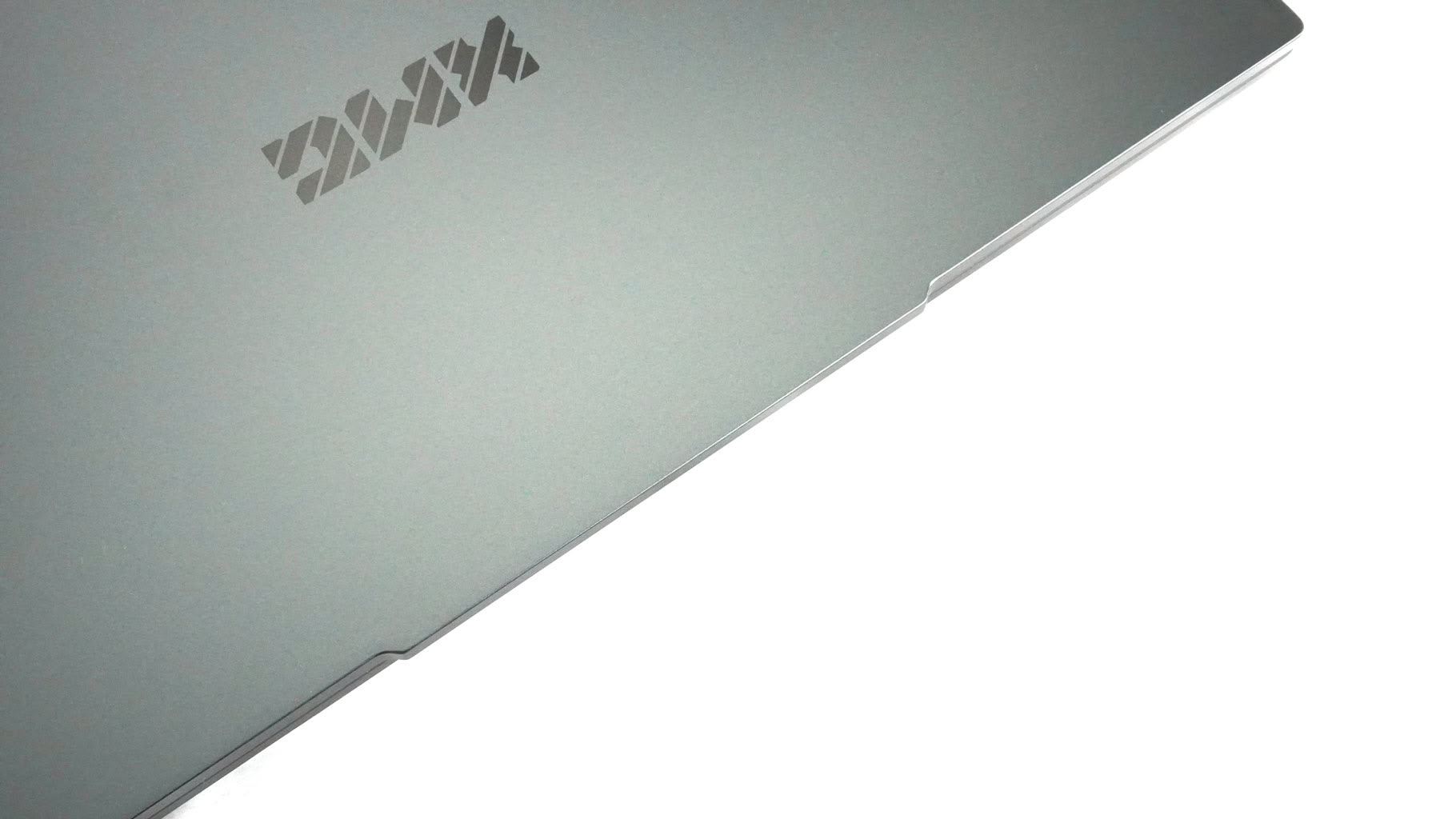
The lid opens easily with one hand—or even a single finger—all the way back to an almost flat position. XMG claims the lid can lay flat, but it feels just shy of 180 degrees—not that it's a real issue.
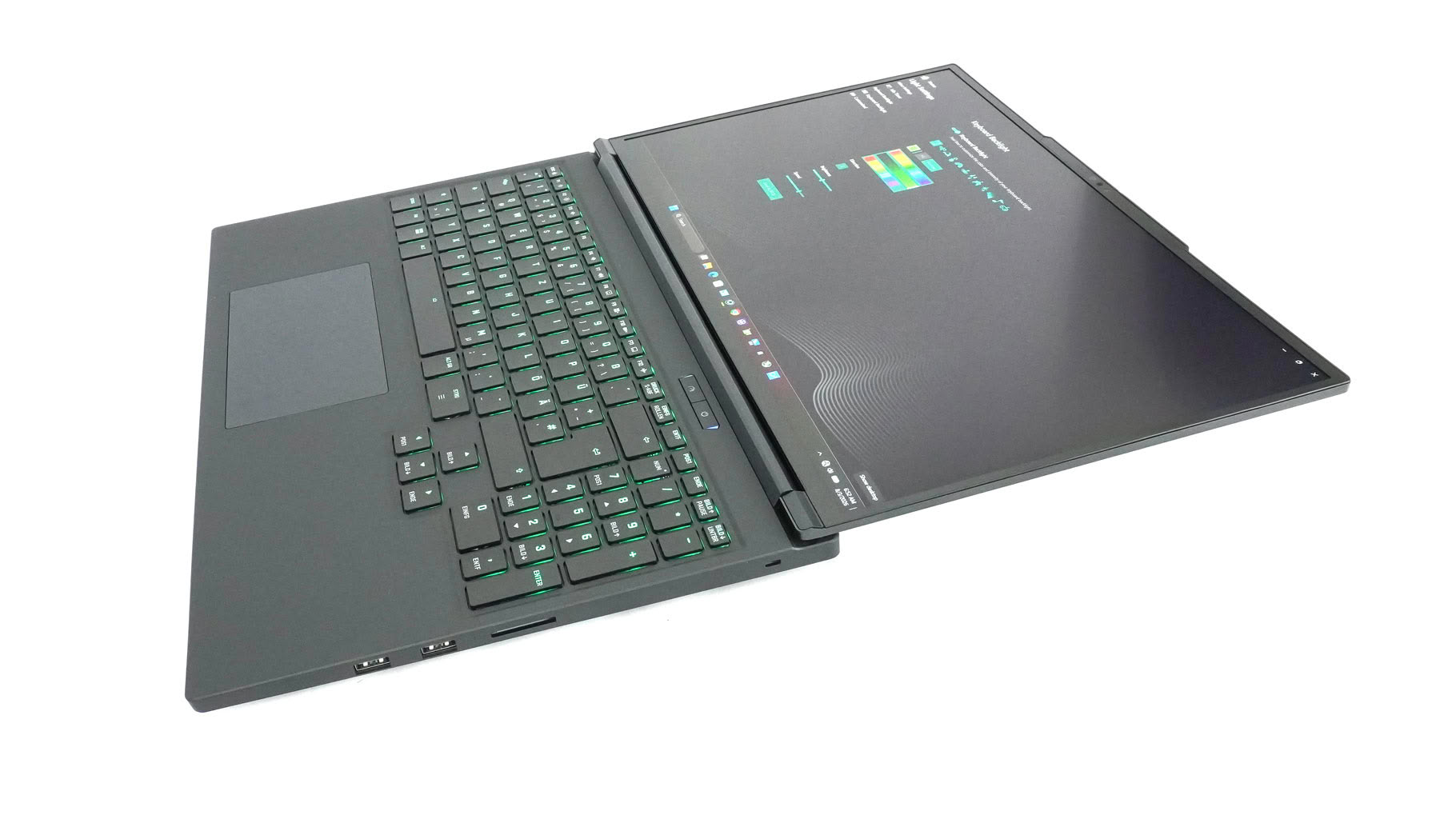
Sharing content with colleagues or friends is completely effortless. That makes it a great office companion if you need serious horsepower to boost productivity. The hinges feel nicely firm, though I noticed a slight squeak on the left side again when opening the lid quickly.
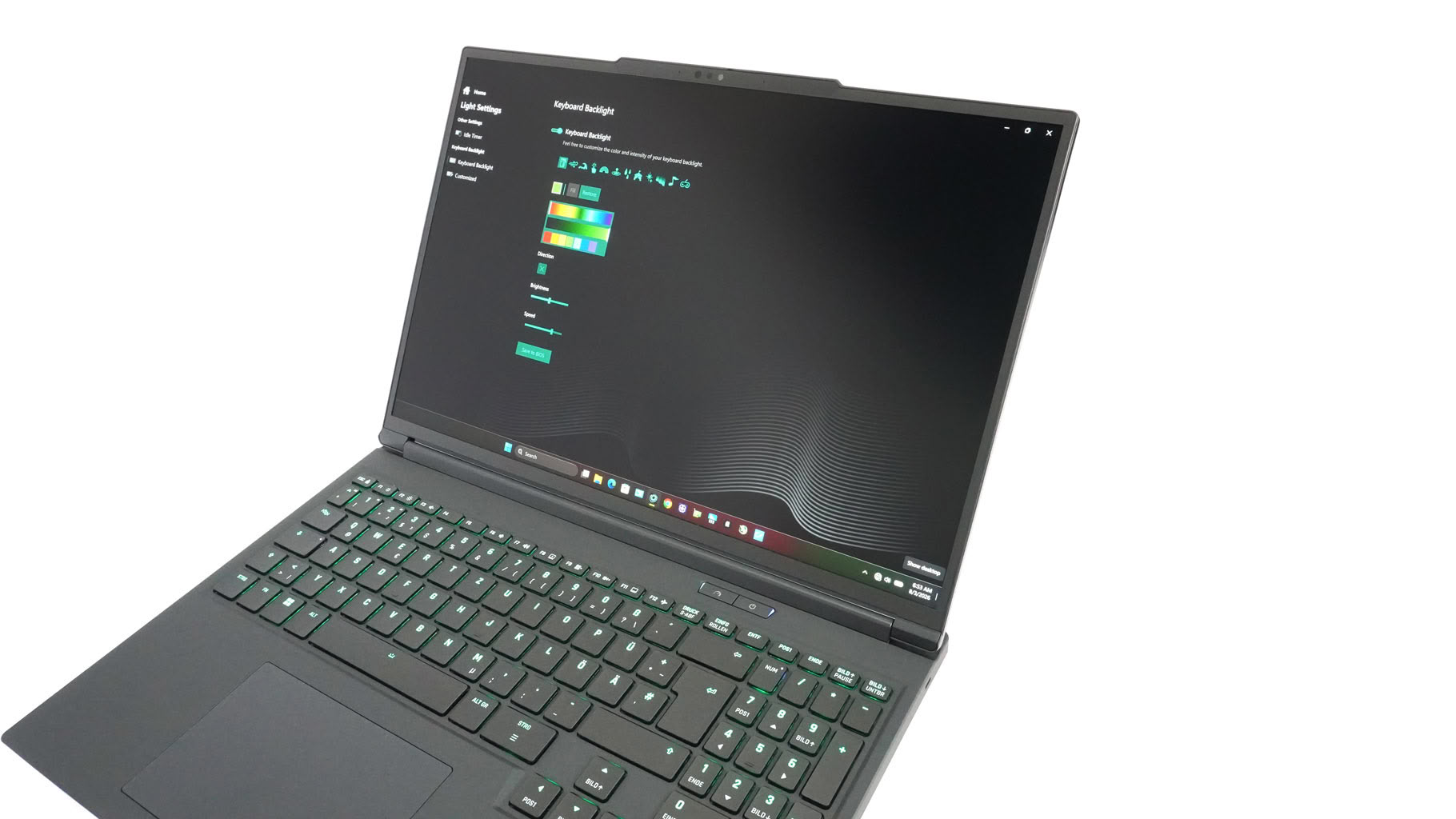
Thin display bezels give a modern touch to the laptop's stealthy aesthetic.
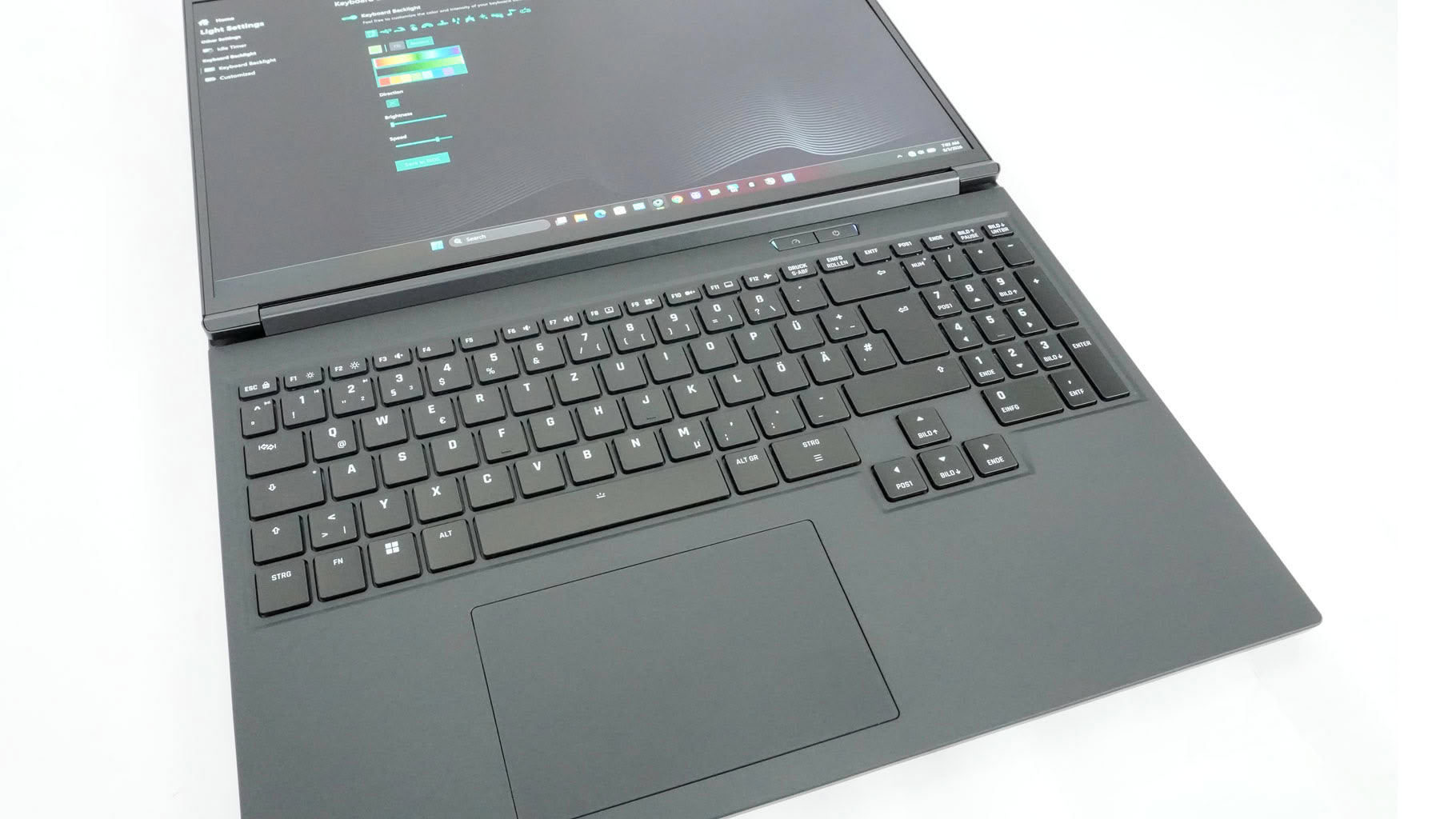
Just look at the keyboard layout XMG squeezed into a 16-incher!
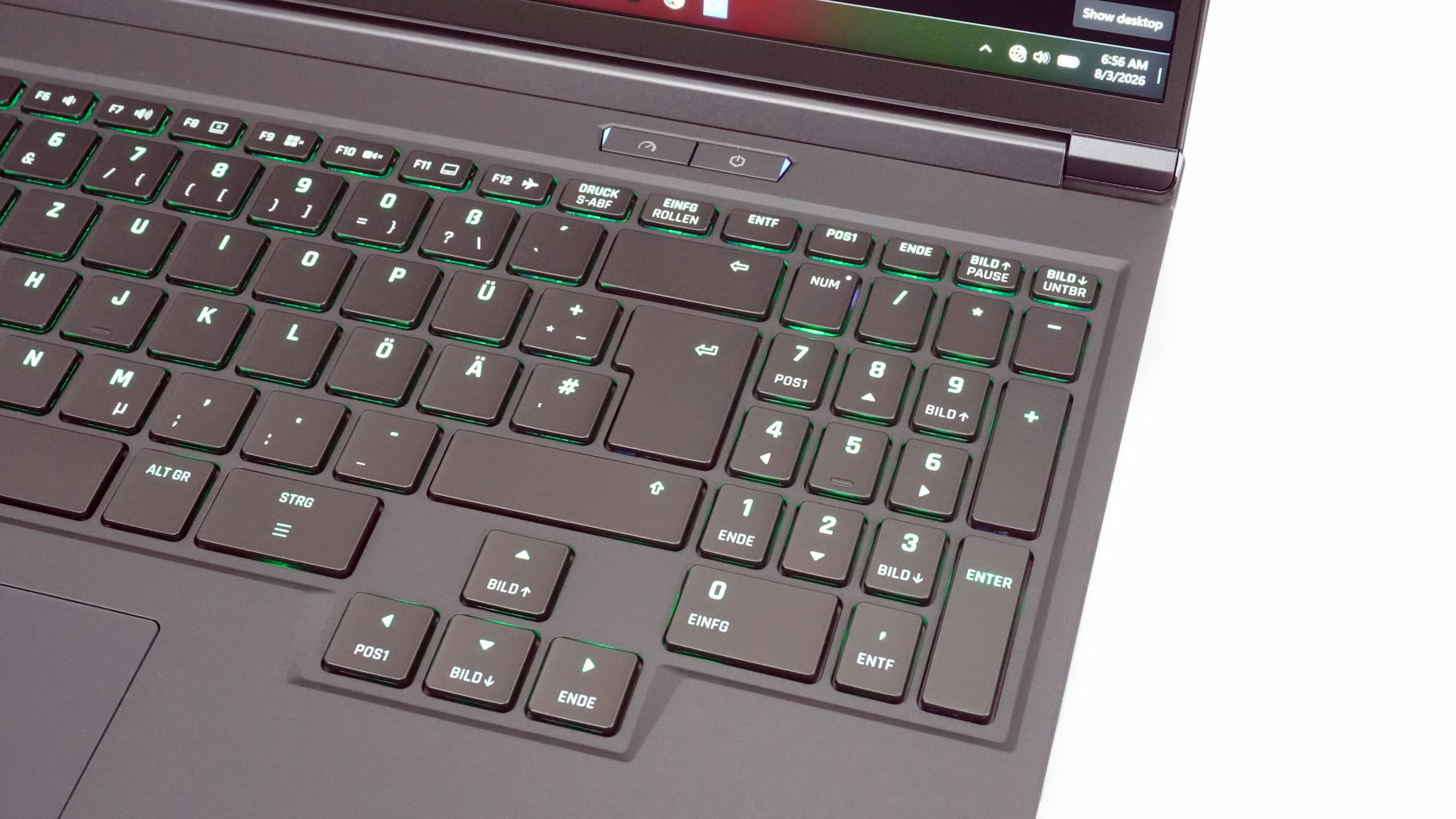
You get per-key RGB lighting, a spacious 4-row numpad, dedicated full-sized arrow keys, and generously sized backspace, enter, and shift keys. Combined with good key travel and crisp tactile feedback, it's great for both work and gaming. My only excuse to fire up Call of Duty was testing the N-key rollover and anti-ghosting—both of which worked flawlessly. The power button sits isolated above the keyboard, just below the hinge. Next to it is a dedicated shortcut key to switch power profiles or trigger max fan speed.
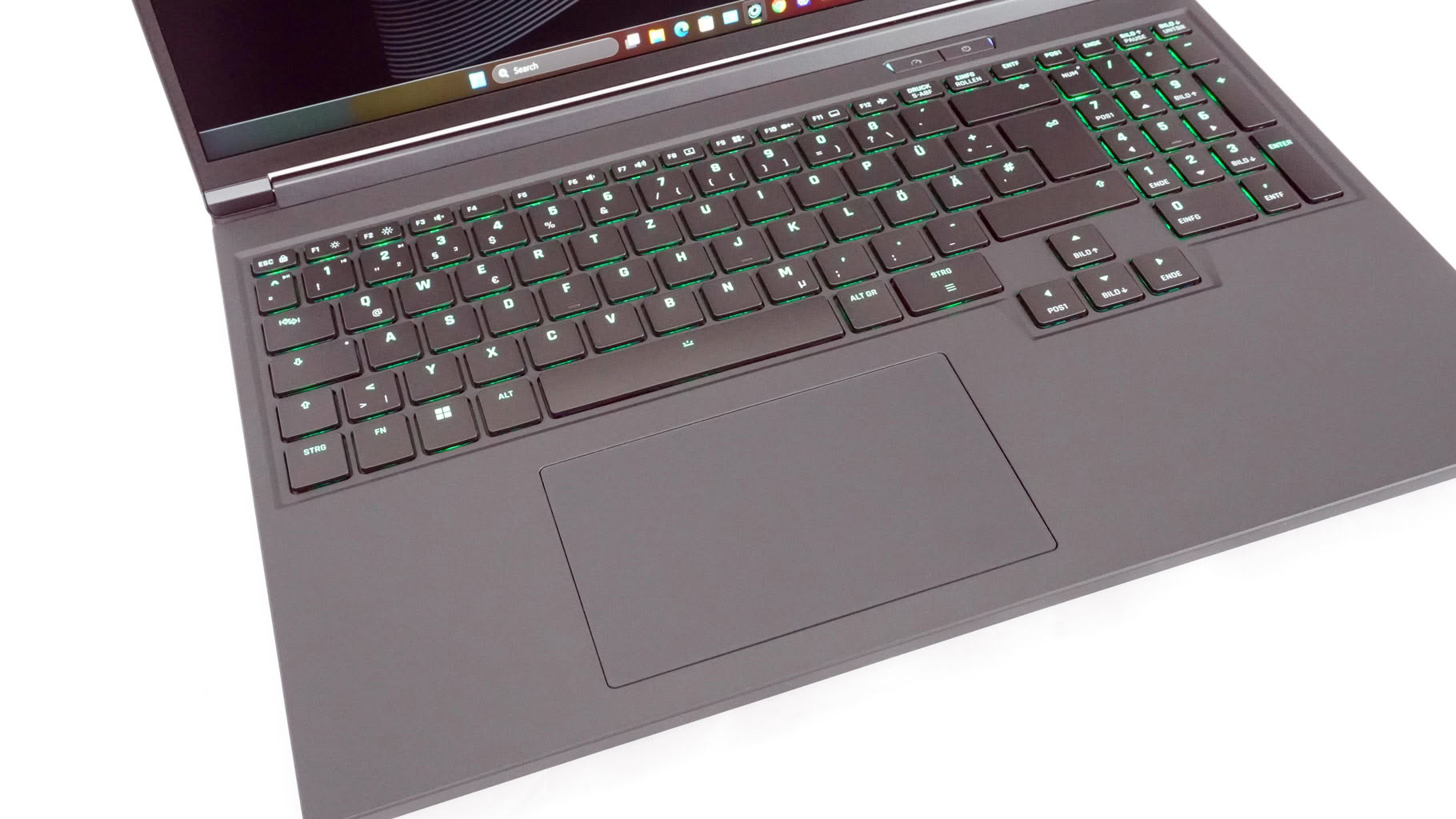
The touchpad isn't huge and isn't quite as centered as I'd like, but it's smooth and precise. Clicking is on the louder side, though. Palm rejection held up well during typing sessions. As a reminder, you can toggle the trackpad off if you're using an external mouse.
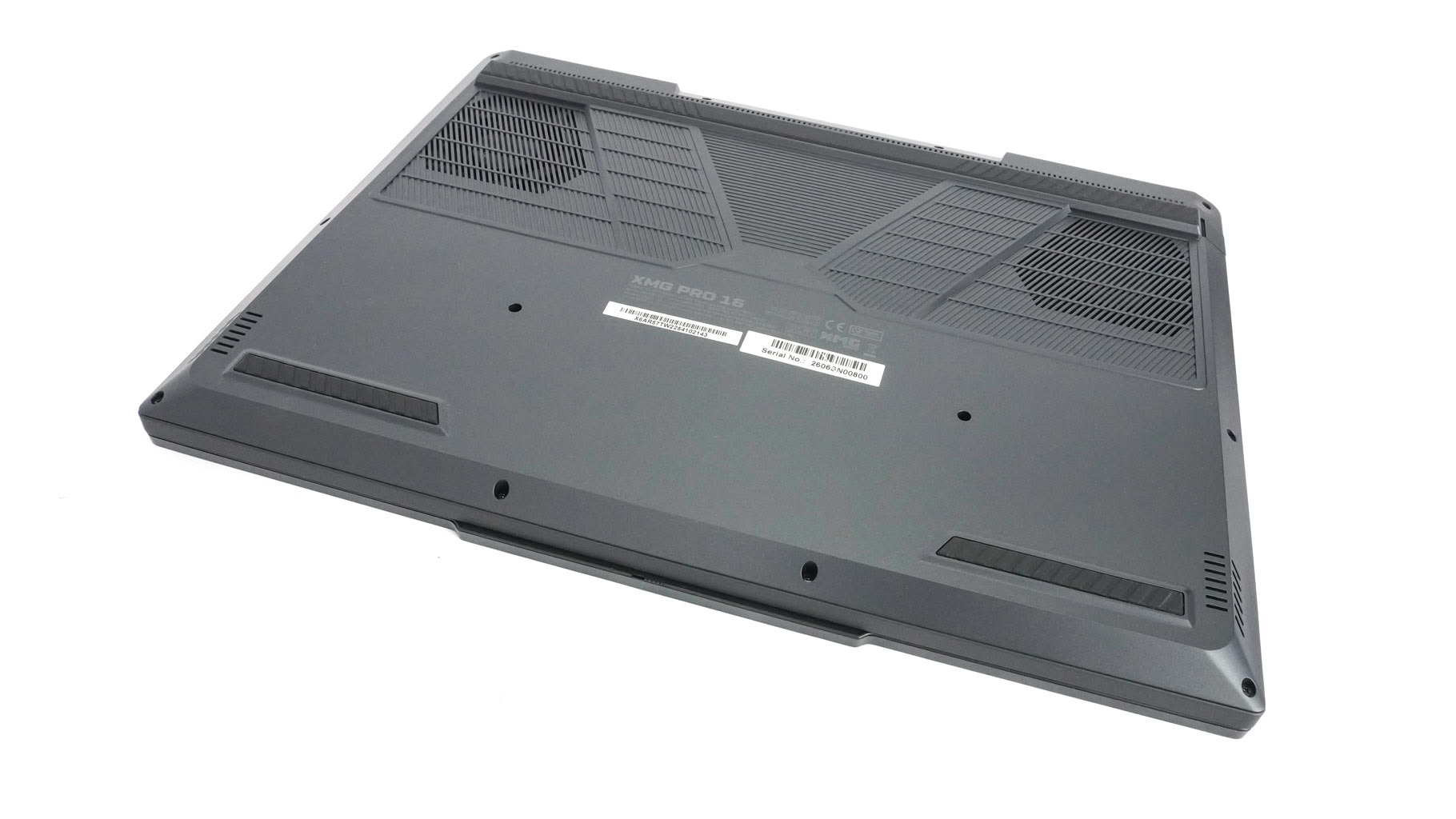
On the bottom, you'll find grippy rubber feet, speaker cutouts, and intake grilles positioned over the fans.
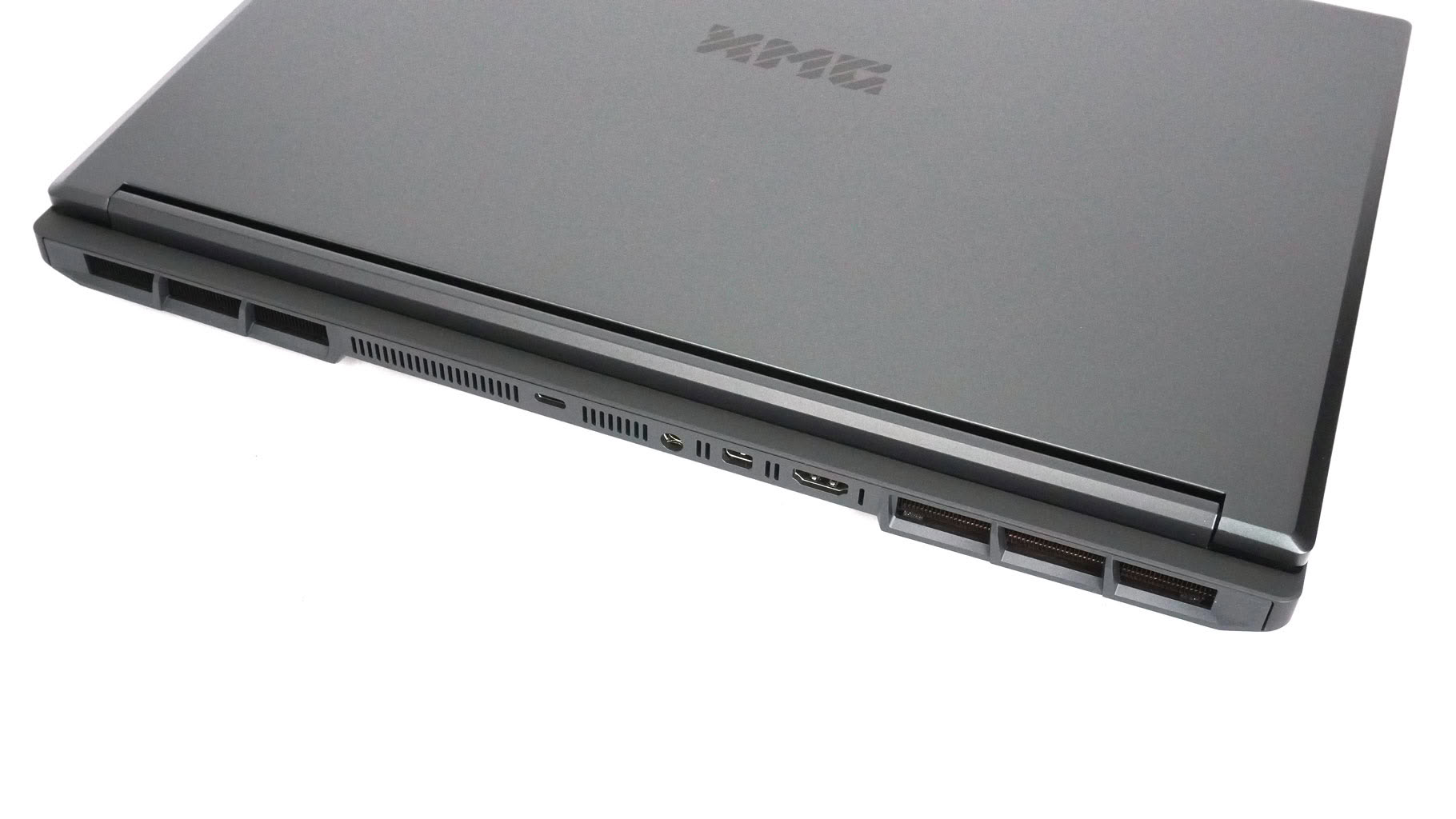
Heat exhausts through the back via aggressively designed, Lamborghini-esque vents.
Ports and Connectivity
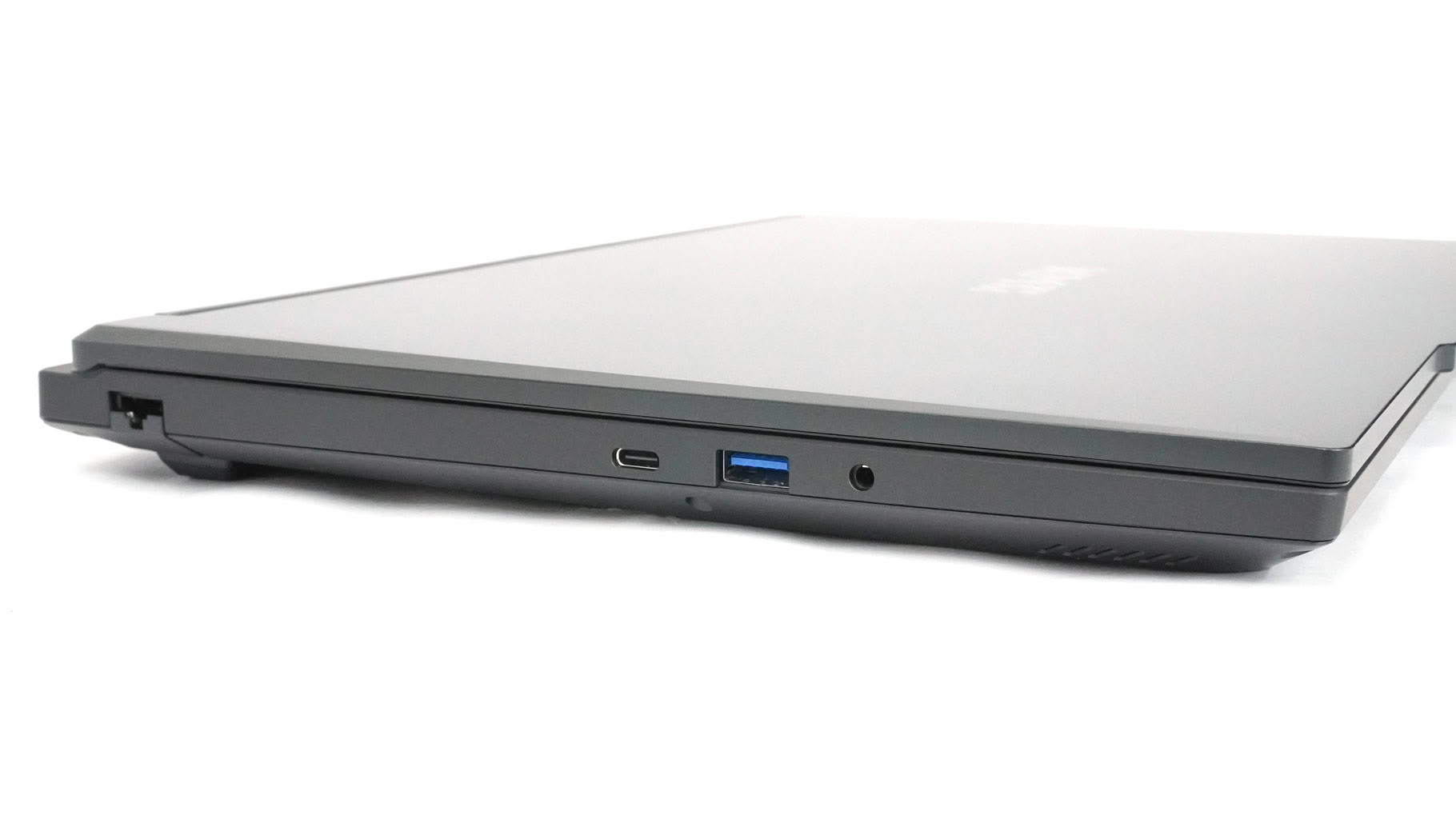
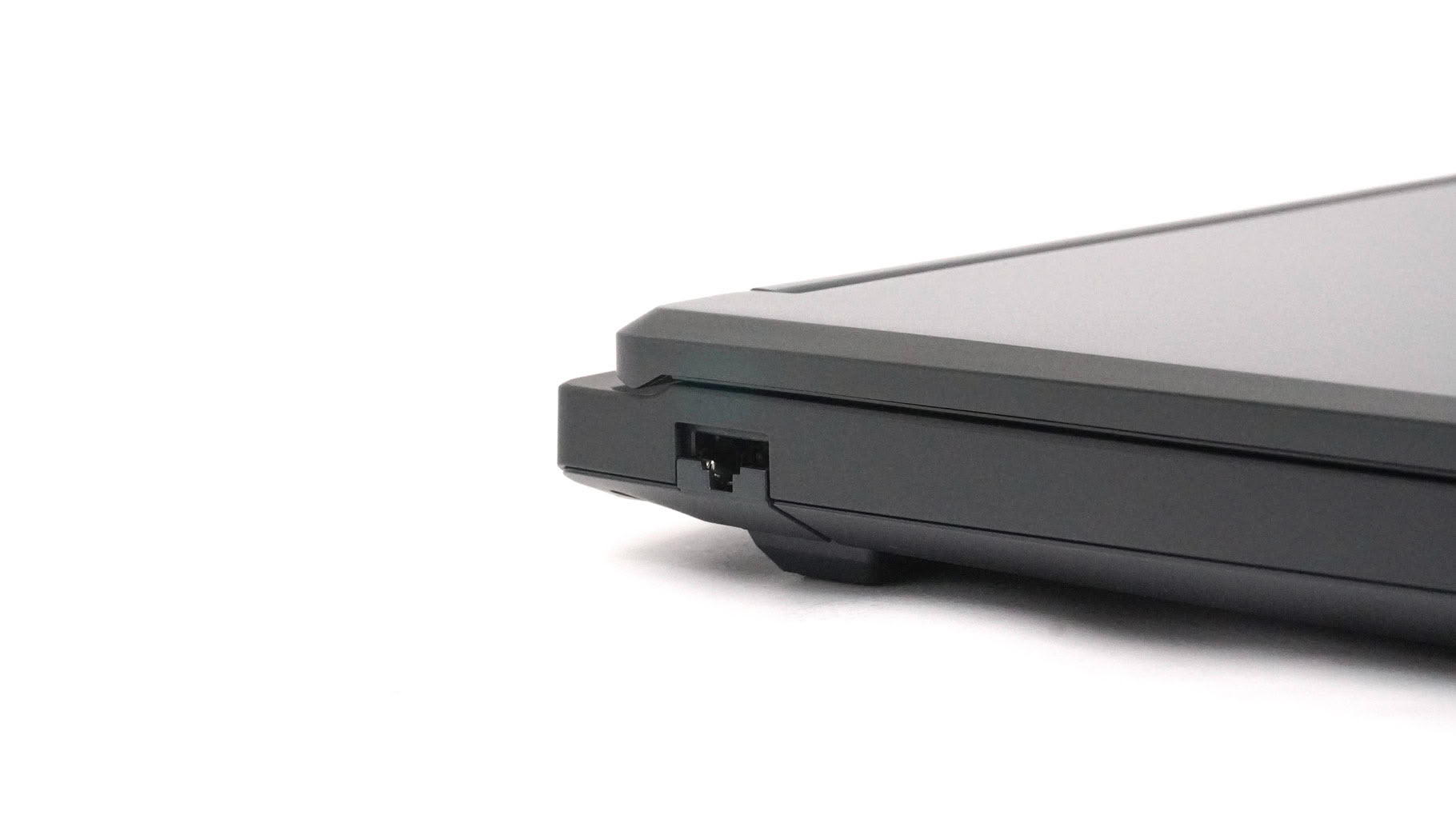
The left features an audio combo jack, a 5 Gbps USB-A 3.2 Gen 1 port, a 10 Gbps USB-C 3.2 Gen 2 port with DisplayPort 1.4a and 100 W PD, and a 2.5 GbE LAN port.
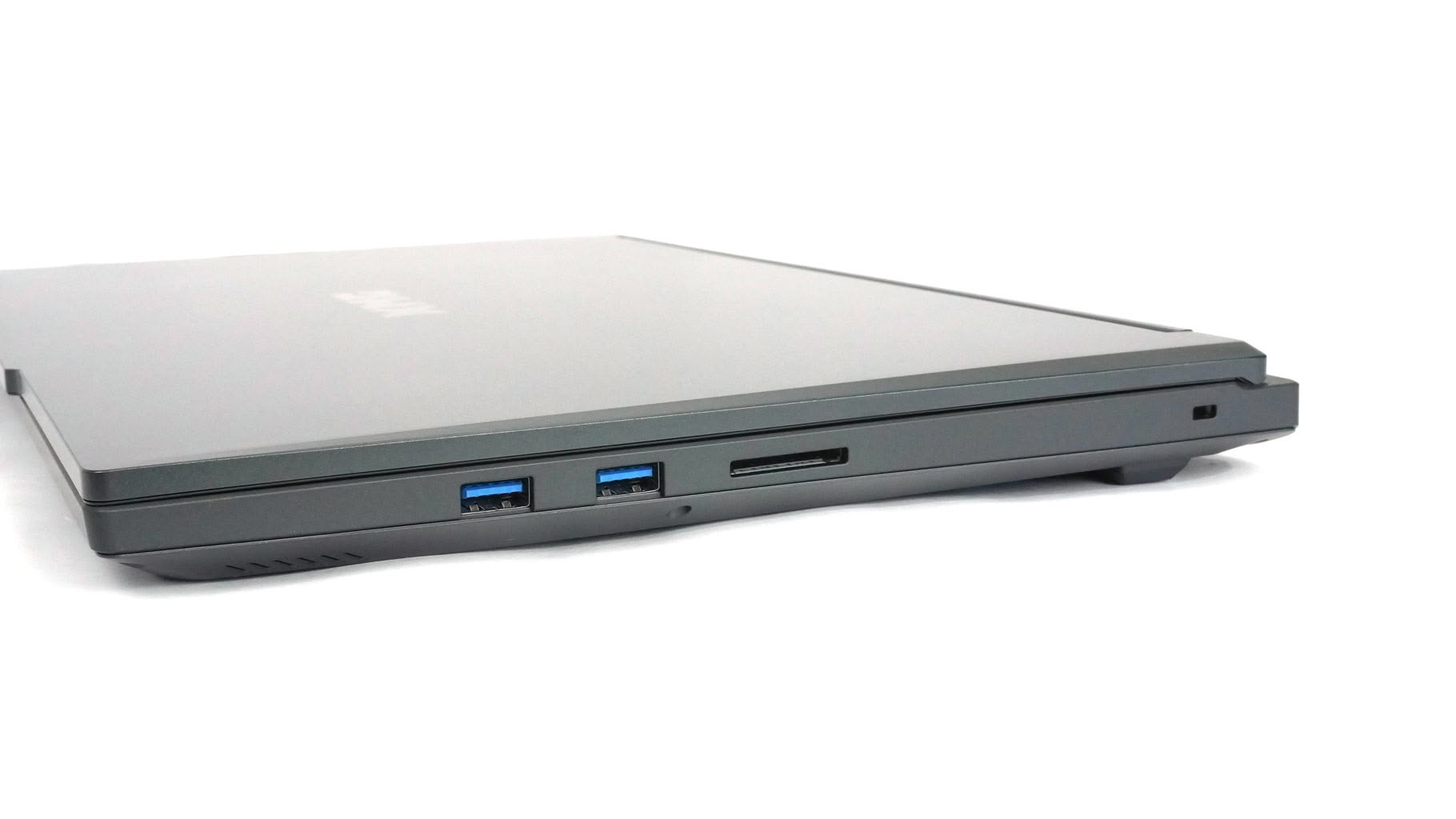
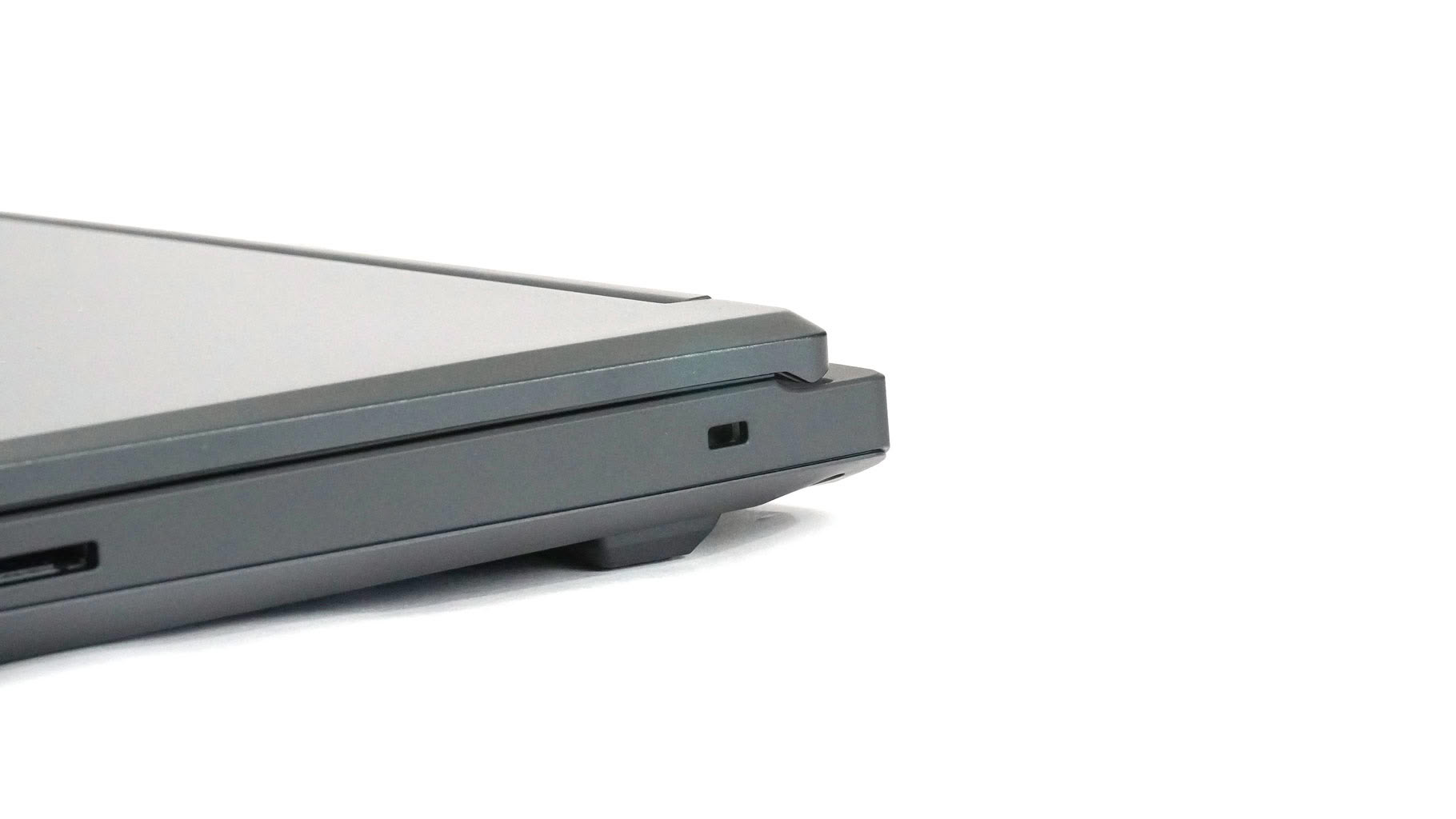
There's a pair of 5 Gbps USB-A 3.2 Gen 1 ports, an SD Card reader, and a Kensington lock slot on the right.
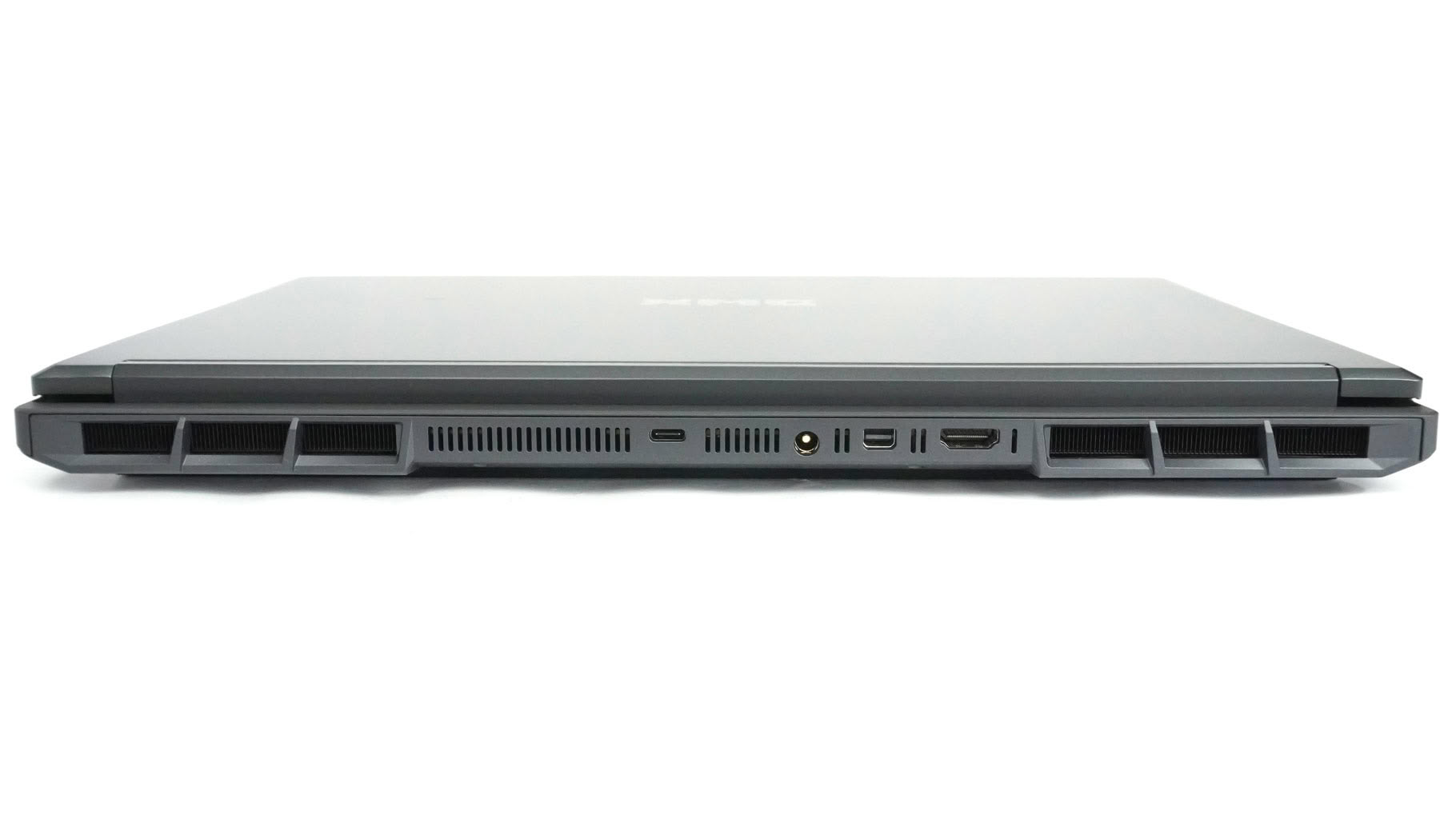
On the back, you get a full size HDMI 2.1 port that comes with VRR/G-SYNC compatibility, a Mini DisplayPort 2.1 port, a DC-in jack, and a 40 Gbps Thunderbolt 4/USB4 port with DisplayPort 2.1 and 140 W Power Delivery.
Our Patreon Silver Supporters can read articles in single-page format.
Nov 17th, 2026 16:30 CST
change timezone
Latest GPU Drivers
New Forum Posts
- Help with fixing Overclock (5)
- ProArt X870E-CREATOR WIFI - Bifurcation~Complication (13)
- Last game you purchased? (1403)
- Without Jensen, PC gaming will be (33)
- [Poll] 12V-2x6 Connector Protection: What Are You Using? (WireView / Ampinel / Equalizer / Other / Nothing) (27)
- What is the latest game you finished or 100% (204)
- 9070 GRE 3.9ghz validation reached. (15)
- USB 3.0 90 Degree Adapter (2)
- Latest method for DTS/DDL for Logitech Z906 (0)
- What are you playing? (26232)
Popular Reviews
- Acemagic Retro X3 Review
- Corsair HX1000i Shift Crystal Review
- AMD Zen 6 Technical Deep Dive
- Upcoming Hardware Launches 2027 (Updated Nov 2026)
- ASUS ROG Strix B850-I Gaming Wi-Fi7 W Review
- Phantom Blade Zero Performance Benchmark Review - 35 GPUs Tested
- AMD Ryzen 7 9800X3D Review - The Best Gaming Processor
- Chieftec Iceberg PRO 360 DARK Review
- Montech King 95 3D PRO Review
- NZXT C1200 Platinum Review
TPU on YouTube
Controversial News Posts
- NVIDIA Co-Founder and CEO Jensen Huang Officially Resigns (457)
- Open Letter Asking NVIDIA to Reinstate Jensen Huang Passes 115,000 Signatures (184)
- OpenAI CEO Argues Home PCs Waste the World's Limited DRAM Supply (152)
- NVIDIA Launches Investigation Into Jensen Huang's Relationship With Suspected Chinese Spy (136)
- Report: Jensen Huang Eyes NVIDIA Comeback (135)
- Intel "Raptor Lake Next" 16-Core and 20-Core CPUs Surface (130)
- Legendary Game Studio BioWare Shuts Down Following EA Layoffs (104)
- Dell CEO Says the Memory Shortage Will Get Worse in 2027 (95)