 23
XPG Lancer Blade RGB DDR5-5600 16 GB CL46 Review - Low Profile
Value & Conclusion »Intel Memory Overclocking
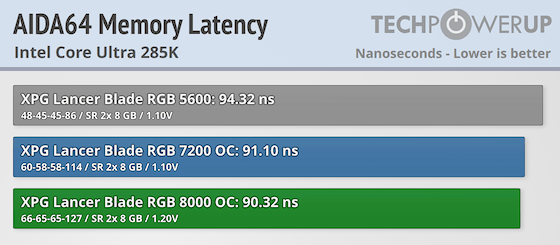
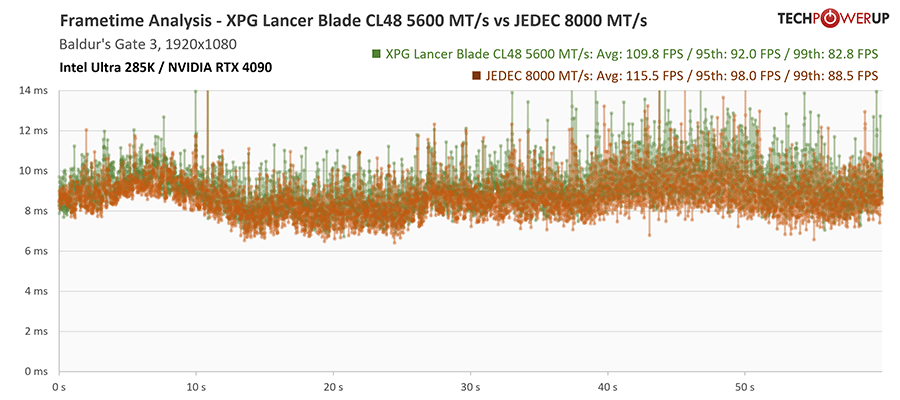
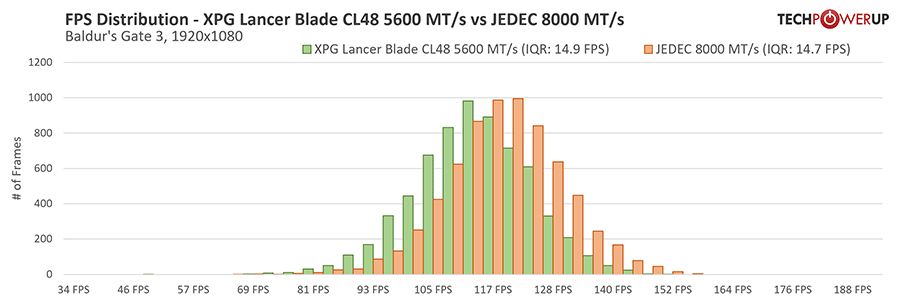
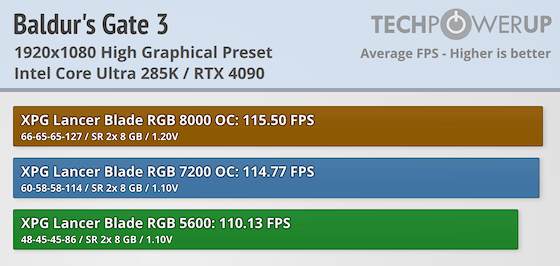
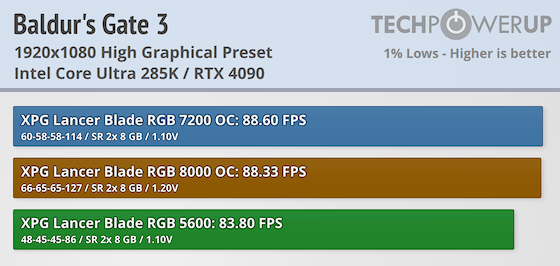
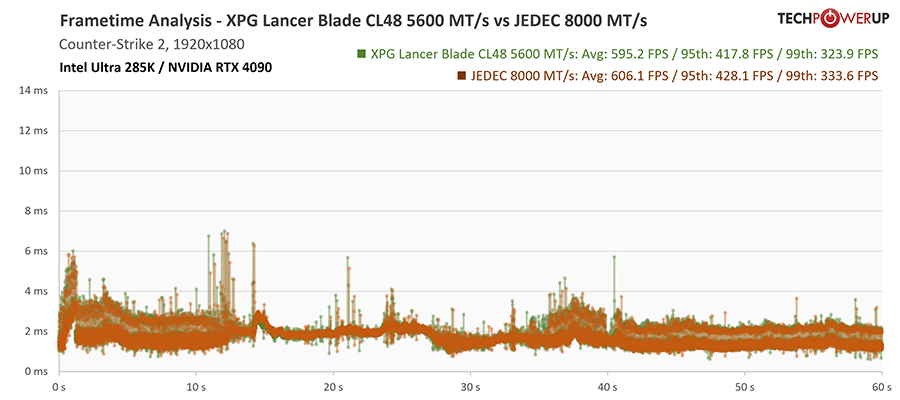
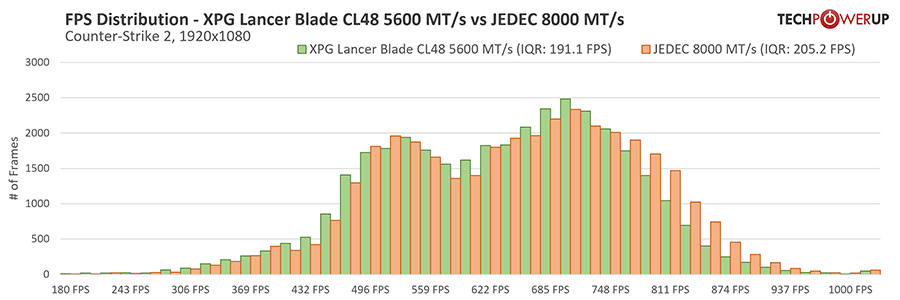
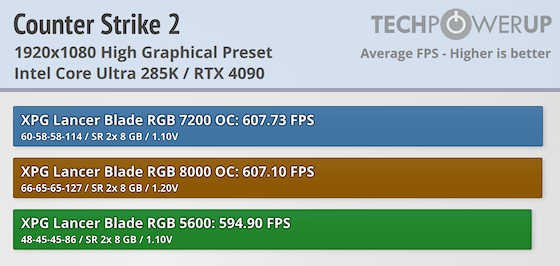
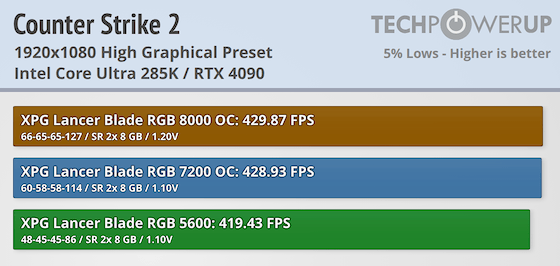
After a year of using Intel's Ultra 285K CPU, we've gained a solid grasp of memory overclocking and the platform's specific quirks. This overclocking section will focus on a combination of adjusting the memory frequency and fine-tuning the primary, secondary, and tertiary timings, alongside increasing the CPU Ring Cache, Die-to-Die (D2D), and NGU (Next-Generation Uncore) to extract maximum performance without pushing the voltages too far. Our goal is to achieve an overclock suitable for long-term use, not world records.Normally, we would push the memory a bit harder, but we quickly encountered a hard wall. This memory kit didn't respond well to increased voltage or lower CAS latency. Since it's a whitewashed Micron IC, overclocking is challenging without knowing the specific revision. We decided to take a different approach by exploring how high the JEDEC frequency could go. We managed to reach DDR5-7200 with 1.1 V. Beyond this, a small bump to 1.2 V was needed before hitting another wall at 8000 MT/s. Looking at the results, there was no benefit in going beyond 7200 MT/s because, at the end of the day, it still operates with JEDEC timings. It was a fun experiment, but not a practical memory overclock.

DDR5-8000 CL66 y-cruncher 2.5B HWBot Submission
AIDA64 OC Results
Baldur's Gate 3 Results

Counter-Strike 2 Results

Nov 18th, 2026 21:56 PST
change timezone
Latest GPU Drivers
New Forum Posts
- Honestly, do you care about GTA VI? (152)
- Windows HDR on = Tinted colors (4)
- Without Jensen, PC gaming will be (46)
- TPU's Nostalgic Hardware Club (22168)
- Dual B70 or Dual R9700 Pro on Linux (7)
- Time to upgrade CPU and MOBO (40)
- Windows 11 General Discussion (7730)
- 26.11.2 Adrenalin Edition is out (0)
- [Poll] 12V-2x6 Connector Protection: What Are You Using? (WireView / Ampinel / Equalizer / Other / Nothing) (42)
- Got a new laptop! What should I do with it? (6)
Popular Reviews
- Acemagic Retro X3 Review
- Upcoming Hardware Launches 2027 (Updated Nov 2026)
- Ugreen NASync DXP4800 GT Review
- AMD Zen 6 Technical Deep Dive
- Pulsar Office Tour & First Look at P1 Dual-Sensor Mouse
- Biwin Black Opal NV7400 2 TB Review
- Sapphire Radeon RX 7700 XT Pure Review
- Sapphire Radeon RX 7700 XT Pulse Review
- Chieftec Iceberg PRO 360 DARK Review
- ASUS ROG Strix B850-I Gaming Wi-Fi7 W Review
TPU on YouTube
Controversial News Posts
- NVIDIA Co-Founder and CEO Jensen Huang Officially Resigns (483)
- Report: Jensen Huang Eyes NVIDIA Comeback (196)
- Open Letter Asking NVIDIA to Reinstate Jensen Huang Passes 115,000 Signatures (184)
- OpenAI CEO Argues Home PCs Waste the World's Limited DRAM Supply (152)
- NVIDIA Launches Investigation Into Jensen Huang's Relationship With Suspected Chinese Spy (136)
- Intel "Raptor Lake Next" 16-Core and 20-Core CPUs Surface (130)
- Legendary Game Studio BioWare Shuts Down Following EA Layoffs (104)
- Dell CEO Says the Memory Shortage Will Get Worse in 2027 (95)