 23
XPG Lancer Blade RGB DDR5-5600 16 GB CL46 Review - Low Profile
Test System Setup »A Closer Look

XPG offers a variety of product lines, and some of these can be a bit confusing due to overlapping names. The Lancer series is a prime example, as it includes both the standard Lancer and the Lancer Blade series. The Lancer Blade is specifically designed as a low-profile option. The Lancer Blade RGB features a reduced DIMM height, being 3 mm shorter than the standard Lancer, which can be crucial for setups with tight air cooler clearance. This model is available in both White and Black, providing users with more options to match their build aesthetics.

Similar to the rest of XPG's lineup, each memory module has the XPG branding on both sides of each memory DIMM, though the placement is different for each series.

On one side of each DIMM module is an identification sticker listing the product number, rated XMP/EXPO operating frequency, voltage, and primary timings. The only thing that is a bit confusing is the frequency on the sticker. It seems to be a combination of 5600 MT/s, CL46 with extra product information for XPG.

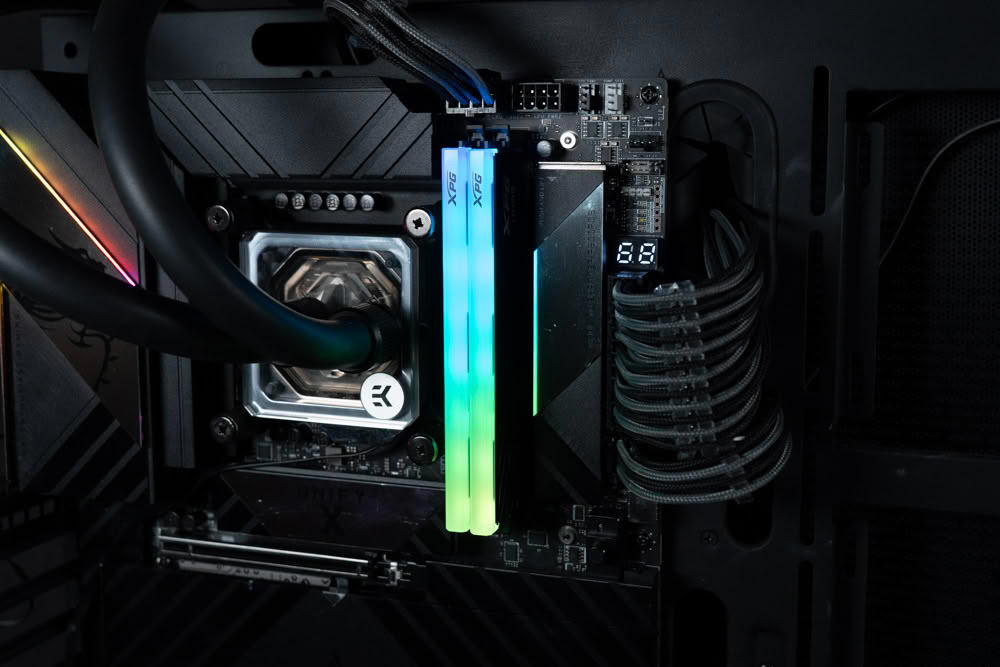
Laying the DIMMs on the side, you can see "XPG" written in black on one corner. The entire plastic strip in the middle will be illuminated when the system is powered on and lighting can be controlled with supported motherboard software.
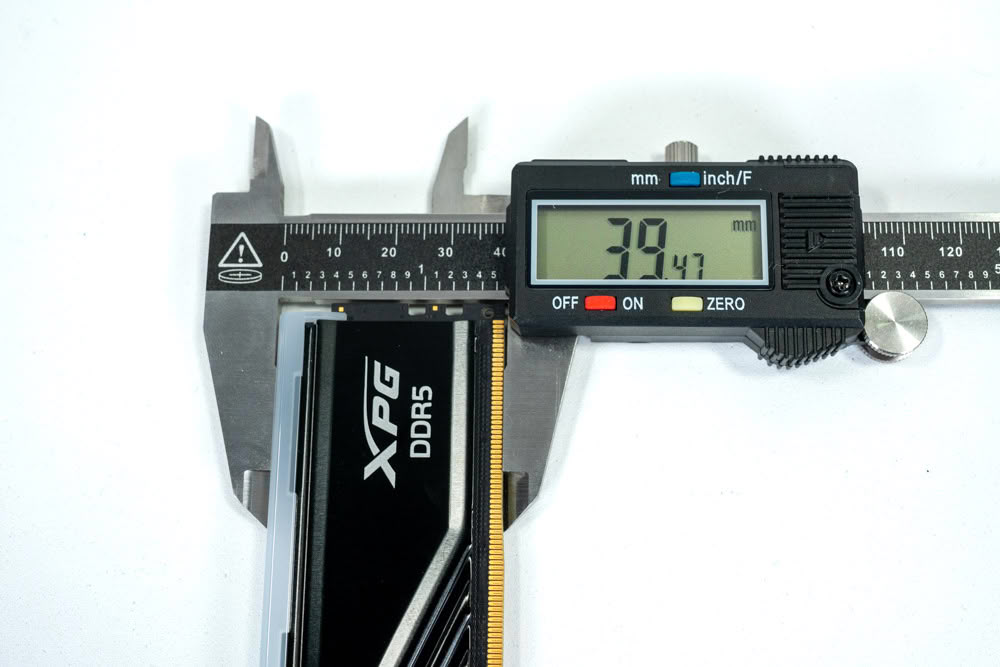
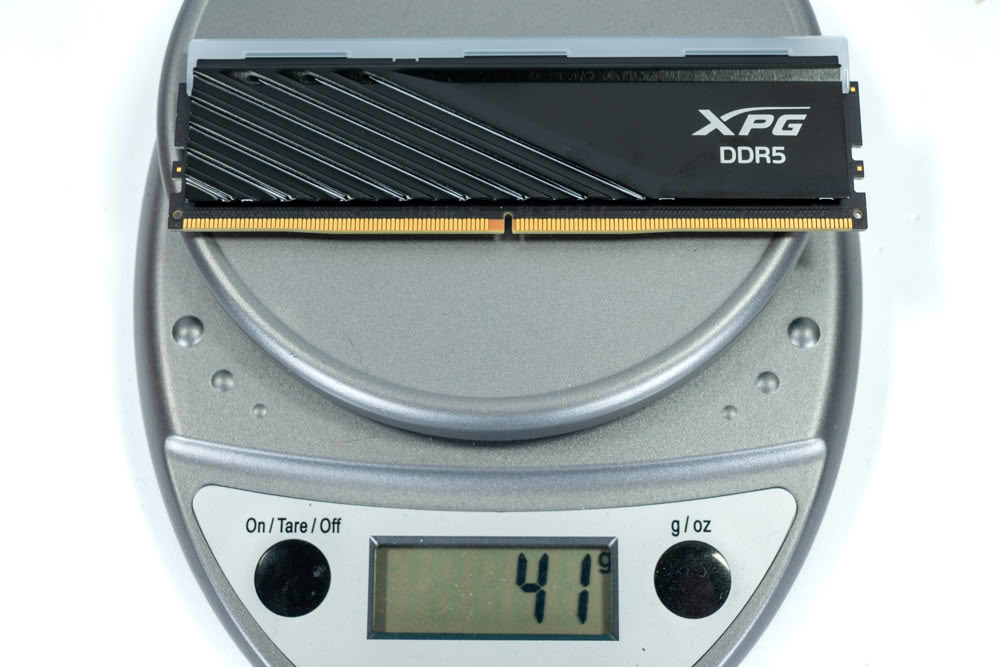
The XPG Lancer Blade RGB DDR5-5600 kit tips the scales at a modest 41 grams. When it comes to Z-Height, it stands at 39.5 mm. For those who require a bit more clearance, the non-RGB version offers a reduced Z-Height of 33.8 mm.

With the heatspreaders removed, we observe that these are single-sided DIMMs featuring four 2 GB ICs. 8 GB DIMMs can be configured in various IC setups. In our reviews, we've encountered configurations like 8× 1 GB and 4× 2 GB. Additionally, 8 GB can be arranged as a single sub-channel (HU-DIMM), with four ICs on one side. This XPG Lancer Blade memory maintains both 32-bit sub-channels intact and is not a HU-DIMM. However, in terms of raw bandwidth, having fewer ICs can affect read and write speeds, as evidenced by some of our benchmark results.
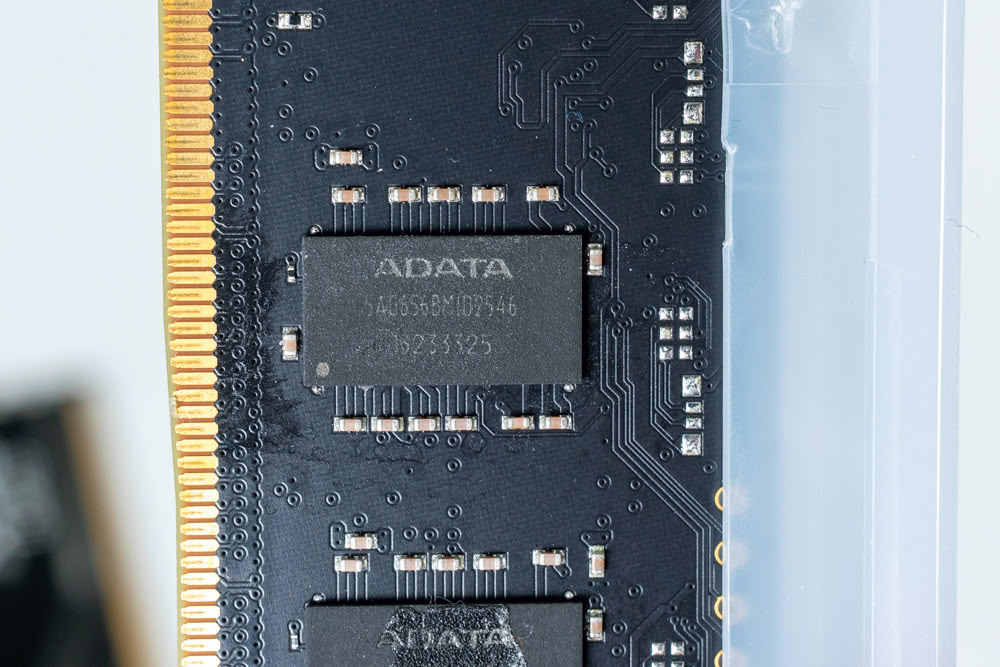
The DDR5 market is dominated by the big three: Micron, Samsung, and SK hynix. Together, they control the majority of the supply, leaving only a small 3% market share for Nanya and CXMT combined. In the case of XPG, while they rebrand these ICs with the ADATA logo, software diagnostics reveal that these are indeed Micron ICs. Unfortunately, the specific revision of these ICs remains undetermined.
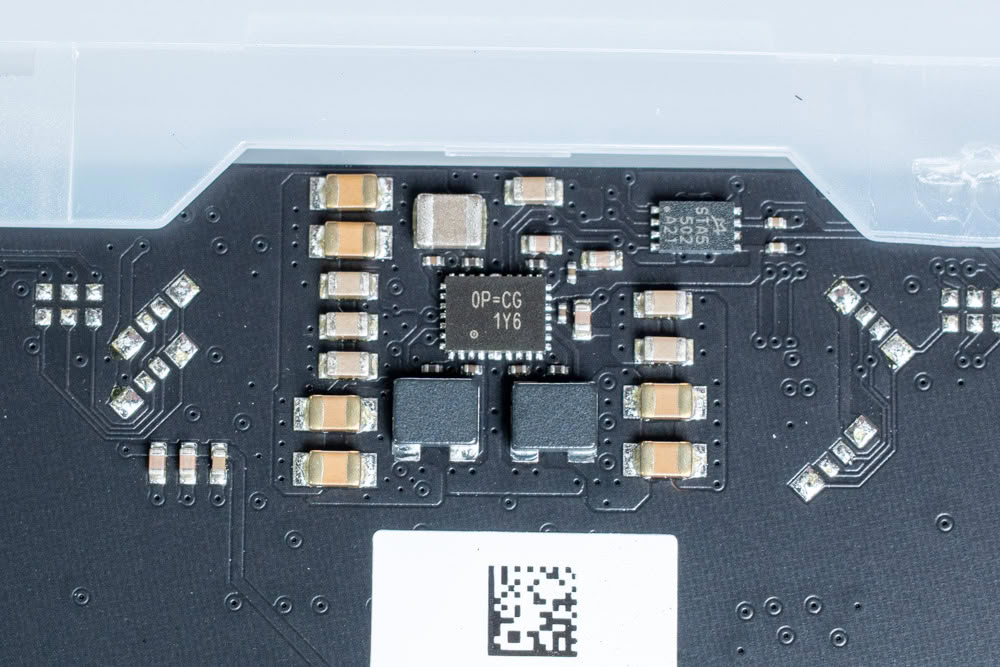
With DDR5, one of the major changes is how the motherboard directly provides 5 V to the memory module's PMIC, which is then stepped down and split accordingly. No longer is the motherboard responsible for regulating the voltages, as with DDR4. The PMIC has the part number "OP=CG 1Y6," software reports this as Richtek being the manufacturer.
Nov 18th, 2026 18:09 PST
change timezone
Latest GPU Drivers
New Forum Posts
- Honestly, do you care about GTA VI? (149)
- Without Jensen, PC gaming will be (45)
- Dual B70 or Dual R9700 Pro on Linux (5)
- [Poll] 12V-2x6 Connector Protection: What Are You Using? (WireView / Ampinel / Equalizer / Other / Nothing) (42)
- Time to upgrade CPU and MOBO (36)
- Got a new laptop! What should I do with it? (6)
- What are you playing? (26235)
- Can i play GTA 6 now? (Joke) (8)
- Dell Workstation Owners Club (3514)
- Making a game in Godot engine (2)
Popular Reviews
- Acemagic Retro X3 Review
- Upcoming Hardware Launches 2027 (Updated Nov 2026)
- AMD Zen 6 Technical Deep Dive
- Ugreen NASync DXP4800 GT Review
- Pulsar Office Tour & First Look at P1 Dual-Sensor Mouse
- Biwin Black Opal NV7400 2 TB Review
- Sapphire Radeon RX 7700 XT Pure Review
- Chieftec Iceberg PRO 360 DARK Review
- Sapphire Radeon RX 7700 XT Pulse Review
- ASUS ROG Strix B850-I Gaming Wi-Fi7 W Review
TPU on YouTube
Controversial News Posts
- NVIDIA Co-Founder and CEO Jensen Huang Officially Resigns (482)
- Report: Jensen Huang Eyes NVIDIA Comeback (196)
- Open Letter Asking NVIDIA to Reinstate Jensen Huang Passes 115,000 Signatures (184)
- OpenAI CEO Argues Home PCs Waste the World's Limited DRAM Supply (152)
- NVIDIA Launches Investigation Into Jensen Huang's Relationship With Suspected Chinese Spy (136)
- Intel "Raptor Lake Next" 16-Core and 20-Core CPUs Surface (130)
- Legendary Game Studio BioWare Shuts Down Following EA Layoffs (104)
- Dell CEO Says the Memory Shortage Will Get Worse in 2027 (95)