 34
Zotac GeForce RTX 5070 Solid Review
(34 Comments) »Introduction

Zotac GeForce RTX 5070 Solid is the company's new value orientated custom-design graphics card based on the RTX 5070. The Solid series makes its entry with the RTX 50-series Blackwell generation. It covers all the essentials that make the Zotac brand, such as its design scheme, and a focus on low noise. The company segments this from its more premium AMP and AMP Extreme lines that come with factory overclocks and RGB LED lighting. The Zotac RTX 5070 Solid does this without coming across as compromising on aesthetics. The GeForce RTX 5070 is designed for maxed out gameplay at 1440p, including with ray tracing and path tracing. It also introduces the latest features being introduced with the Blackwell graphics architecture, such as Neural Rendering, DLSS 4 Multi Frame Generation, and ray tracing with Mega Geometry.

The Blackwell architecture introduces a potentially revolutionary concept for consumer 3D graphics, called Neural Rendering, where a generative AI model running in tandem with the game generates photorealistic objects that are combined with a conventional raster 3D graphics much in the same way as ray traced objects. You already know the incredible power of generative AI and can guess where this is going. Neural Rendering taps into the AI Management Processor (AMP), a hardware scheduler being introduced with Blackwell, which lets the GPU utilize its resources for AI acceleration and graphics rendering in tandem.
DLSS 4 introduces new transformer AI models replacing older convoluted neural networks based ones, which vastly improve image quality at every performance tier. While DLSS 4 upscaling is compatible with older RTX 40-series and RTX 30-series, the RTX 50-series gets the exclusive Multi Frame Generation feature, which lets the GPU utilize AI to draw up to three frames following every conventionally rendered one, for an effective quadrupling in frame-rates. This feature relies on hardware flip-metering, a new component of the display engine of Blackwell.
The Blackwell graphics architecture improves in all areas of the GPU despite the chips themselves being built on the same NVIDIA 4N foundry node as the older RTX 40-series Ada generation. The new CUDA cores come with increased IPC and support for Neural Rendering and shader execution reordering that's aware of Neural shaders. The new generation RT cores come with generational improvements to the ray intersection performance, further lowering the cost of ray tracing on your frame rates, it also comes with preparation for Mega Geometry, a feature with which the geometric detail of ray traced objects can be significantly increased (think what tessellation did to poly counts in raster graphics).
The GeForce RTX 5070 is based on the new GB205 silicon, which it nearly maxes out, enabling 48 out of 50 SM (streaming multiprocessors) physically present, which amount to 6,144 CUDA cores, 192 Tensor cores, 48 RT cores, 192 TMUs, and the chip's full complement of 80 ROPs. It also gets the chip's full 48 MB of L2 cache, which cushions the memory sub-system. You get 12 GB of 28 Gbps GDDR7 memory across a 192-bit wide memory interface, yielding an impressive 672 GB/s of memory bandwidth. NVIDIA's switch to GDDR7 is timed well given its pivot to Neural Rendering, and the memory-intensive nature of AI acceleration workloads. NVIDIA also implements certain other new standards, such as a PCI-Express 5.0 x16 host interface, ATX 3.1 (PCIe 5.1 CEM) power architecture, and support for the newer 12V-2x6 power connector.
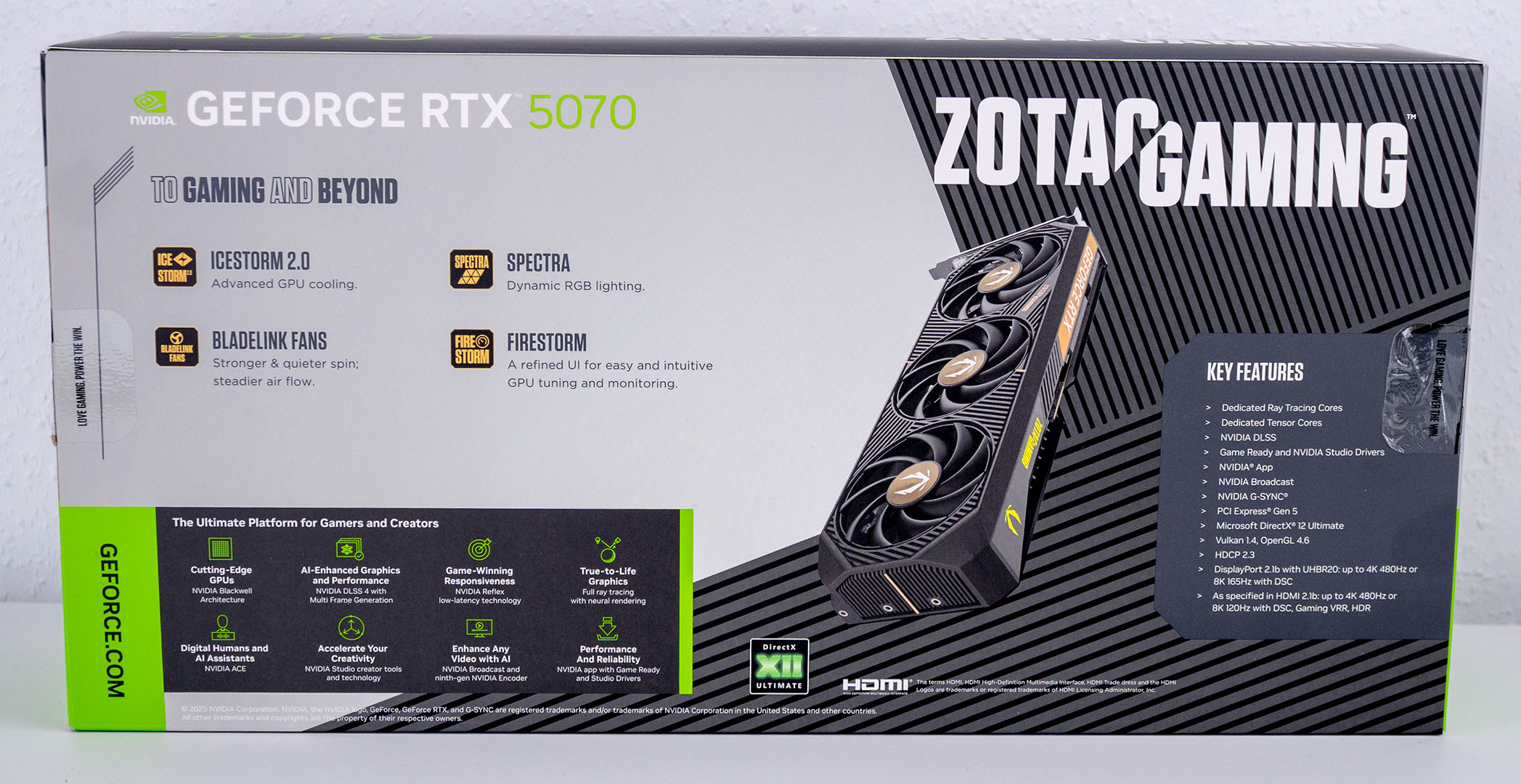
The Zotac GeForce RTX 5070 Solid comes with NVIDIA reference clock speeds of 2325 MHz base, 2512 MHz boost, and 28 Gbps (GDDR7-effective) memory. The new IceStorm 2.0 cooling solution by Zotac comes with a large aluminium fin-stack heatsink with a heatpipe direct-touch base, and a trio of BladeLink fans ventilating it. Much of the airflow from the third fan flows through the heatsink and out the backplate through cutouts. While there's no serious RGB bling on this card, there's still an RGB illuminated Zotac Gaming logo. Zotac is pricing the RTX 5070 Solid very close to NVIDIA's $550 baseline price, the card is going for $570.
| Price | Cores | ROPs | Core Clock | Boost Clock | Memory Clock | GPU | Transistors | Memory | |
|---|---|---|---|---|---|---|---|---|---|
| RTX 4070 | $500 | 5888 | 64 | 1920 MHz | 2475 MHz | 1313 MHz | AD104 | 35800M | 12 GB, GDDR6X, 192-bit |
| RX 7800 XT | $470 | 3840 | 96 | 2124 MHz | 2430 MHz | 2425 MHz | Navi 32 | 28100M | 16 GB, GDDR6, 256-bit |
| RTX 4070 Super | $600 | 7168 | 80 | 1980 MHz | 2475 MHz | 1313 MHz | AD104 | 35800M | 12 GB, GDDR6X, 192-bit |
| RX 7900 GRE | $550 | 5120 | 160 | 1880 MHz | 2245 MHz | 2250 MHz | Navi 31 | 57700M | 16 GB, GDDR6, 256-bit |
| RTX 4070 Ti | $700 | 7680 | 80 | 2310 MHz | 2610 MHz | 1313 MHz | AD104 | 35800M | 12 GB, GDDR6X, 192-bit |
| RTX 5070 | $550 | 6144 | 80 | 2325 MHz | 2512 MHz | 1750 MHz | GB205 | 31100M | 12 GB, GDDR7, 192-bit |
| Zotac RTX 5070 Solid | $570 | 6144 | 80 | 2325 MHz | 2512 MHz | 1750 MHz | GB205 | 31100M | 12 GB, GDDR7, 192-bit |
| RTX 4070 Ti Super | $750 | 8448 | 96 | 2340 MHz | 2610 MHz | 1313 MHz | AD103 | 45900M | 16 GB, GDDR6X, 256-bit |
| RX 7900 XT | $620 | 5376 | 192 | 2000 MHz | 2400 MHz | 2500 MHz | Navi 31 | 57700M | 20 GB, GDDR6, 320-bit |
| RX 9070 | $550 | 3584 | 128 | 2070 MHz | 2520 MHz | 2518 MHz | Navi 48 | 53900M | 16 GB, GDDR6, 256-bit |
| RX 9070 XT | $615 | 4096 | 128 | 2400 MHz | 2970 MHz | 2518 MHz | Navi 48 | 53900M | 16 GB, GDDR6, 256-bit |
| RTX 5070 Ti | $750 | 8960 | 96 | 2295 MHz | 2452 MHz | 1750 MHz | GB203 | 45600M | 16 GB, GDDR7, 256-bit |
| RX 7900 XTX | $750 | 6144 | 192 | 2300 MHz | 2500 MHz | 2500 MHz | Navi 31 | 57700M | 24 GB, GDDR6, 384-bit |
| RTX 4080 | $850 | 9728 | 112 | 2205 MHz | 2505 MHz | 1400 MHz | AD103 | 45900M | 16 GB, GDDR6X, 256-bit |
| RTX 4080 Super | $1000 | 10240 | 112 | 2295 MHz | 2550 MHz | 1438 MHz | AD103 | 45900M | 16 GB, GDDR6X, 256-bit |
| RTX 5080 | $1000 | 10752 | 112 | 2295 MHz | 2617 MHz | 1875 MHz | GB203 | 45600M | 16 GB, GDDR7, 256-bit |
Packaging

The Card


Zotac's RTX 5070 Solid comes with a color theme and style that definitely looks like Zotac. It's a middle-ground between the mostly-black cards that we've seen from other vendors and more colorful designs with tons of bling. On the back you get a metal backplate with a large cutout.

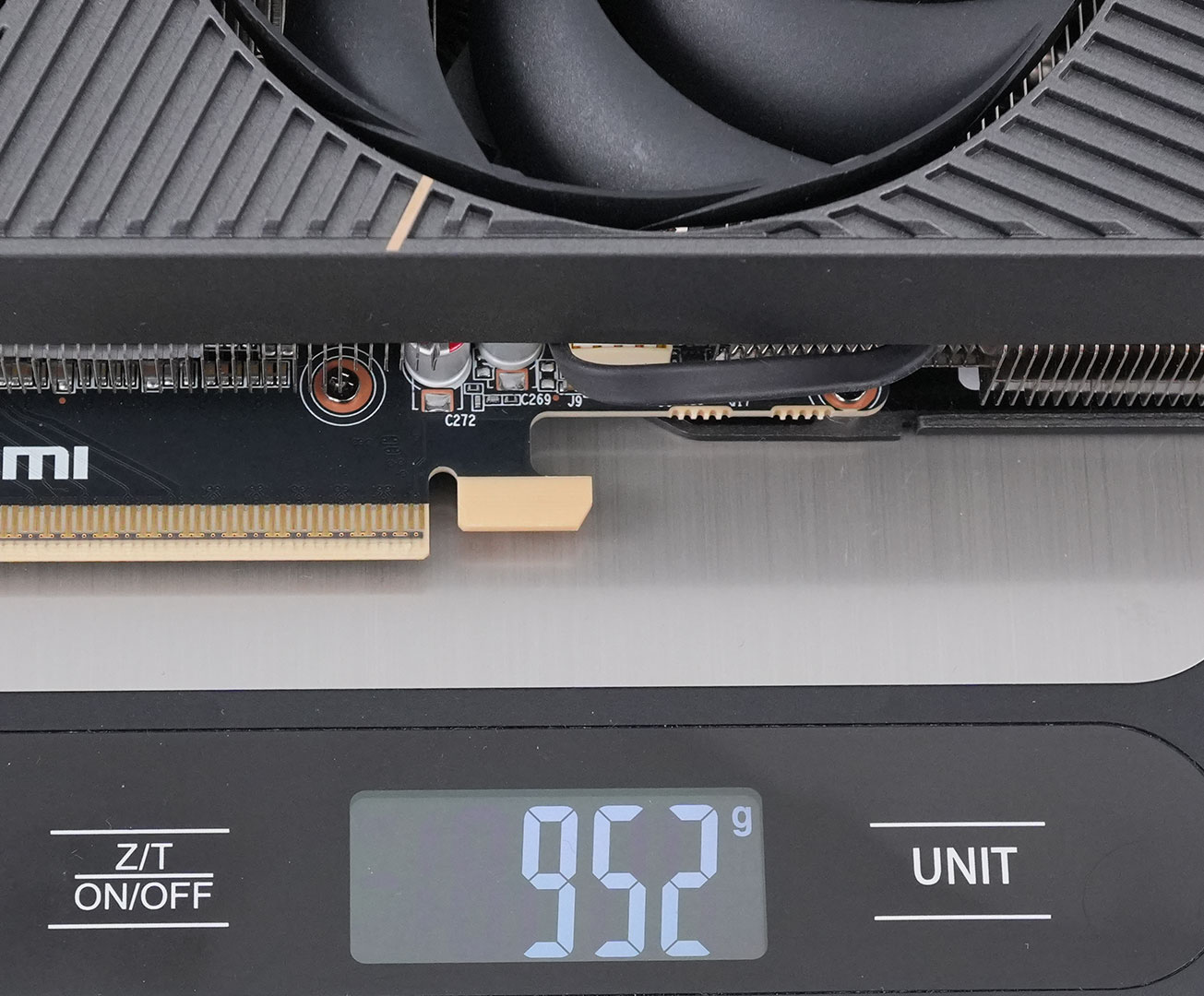
Dimensions of the card are 30.5 x 11.5 cm, and it weighs 952 g.
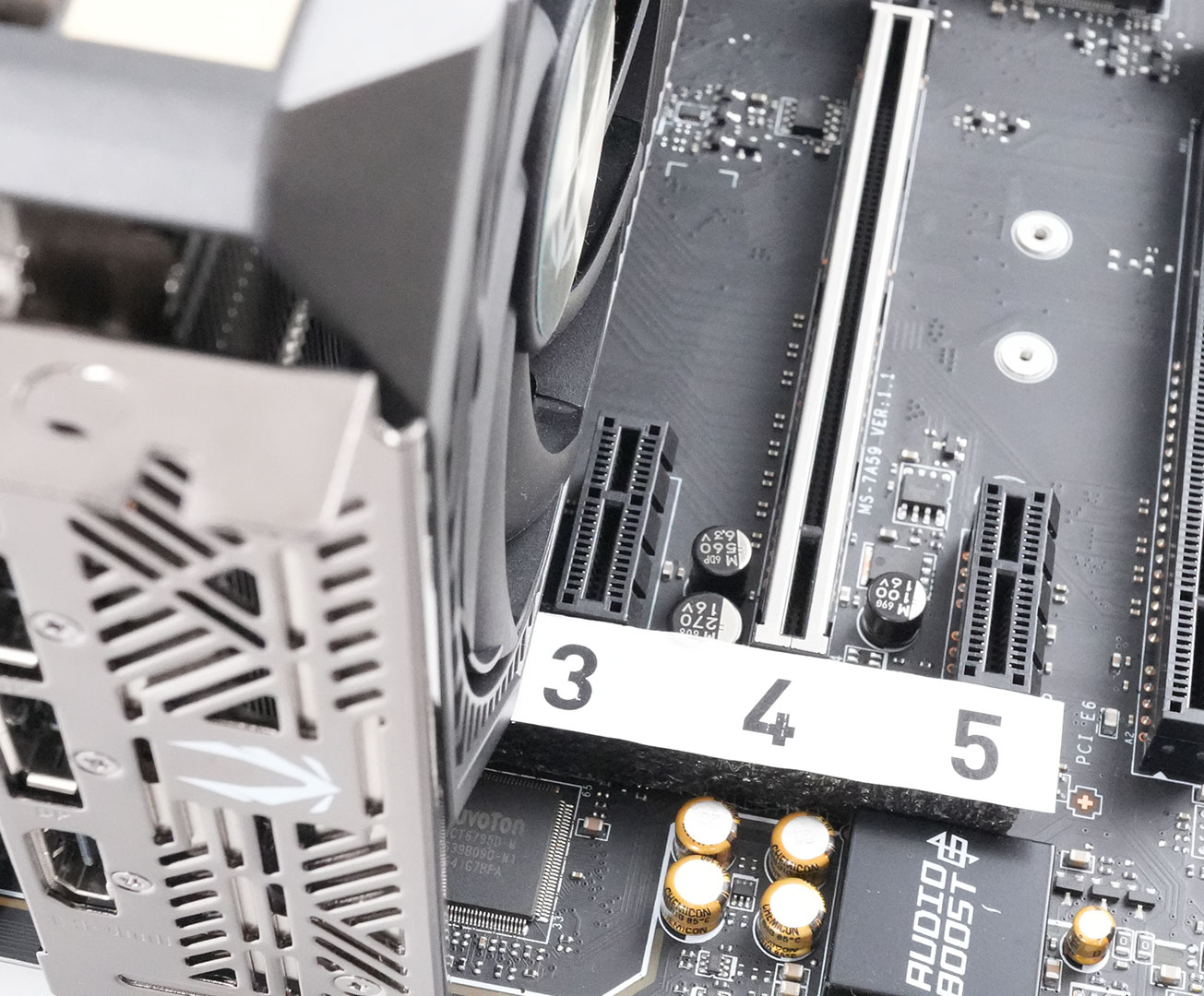
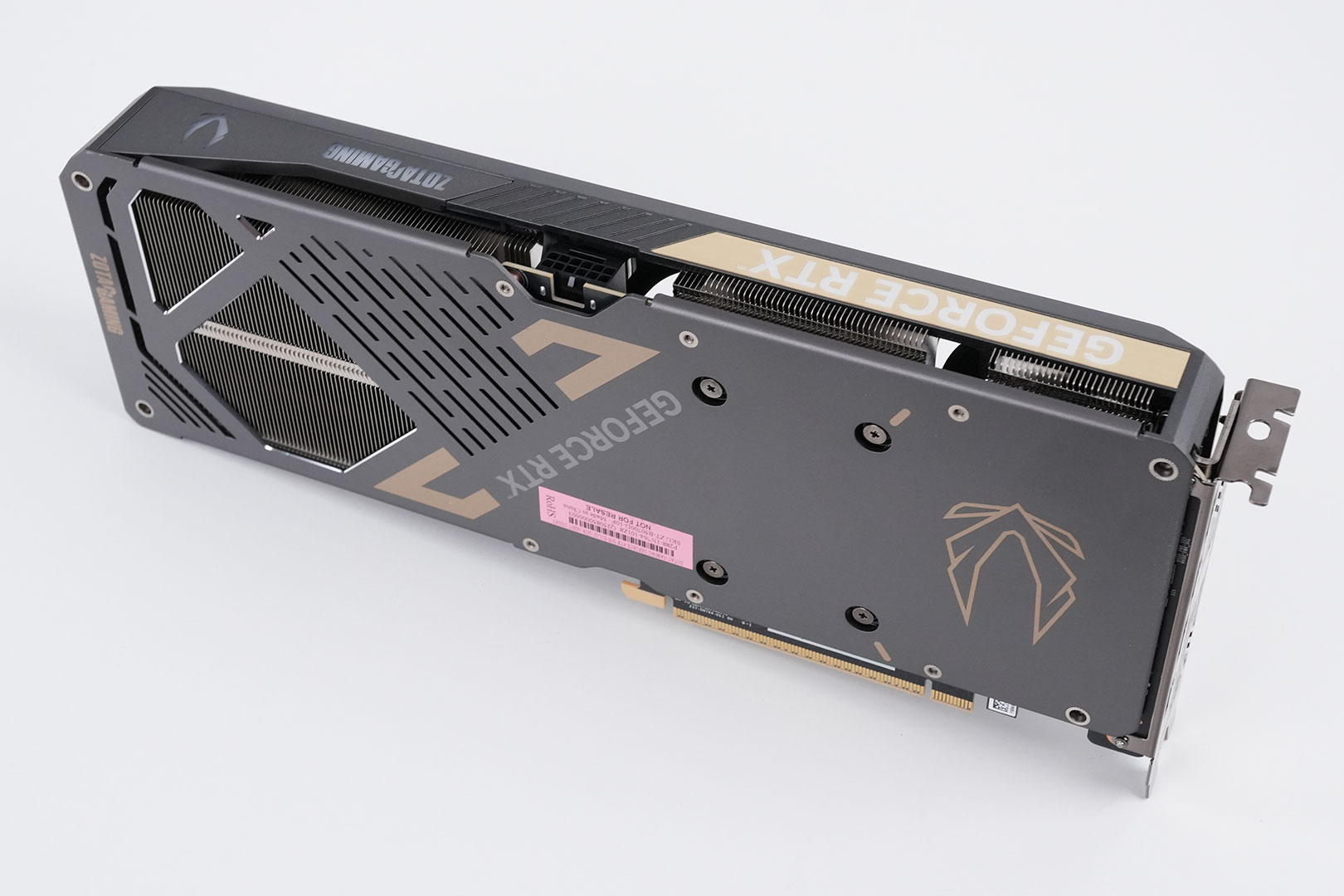
Installation requires two slots in your system. We measured the card's width to be 42 mm.
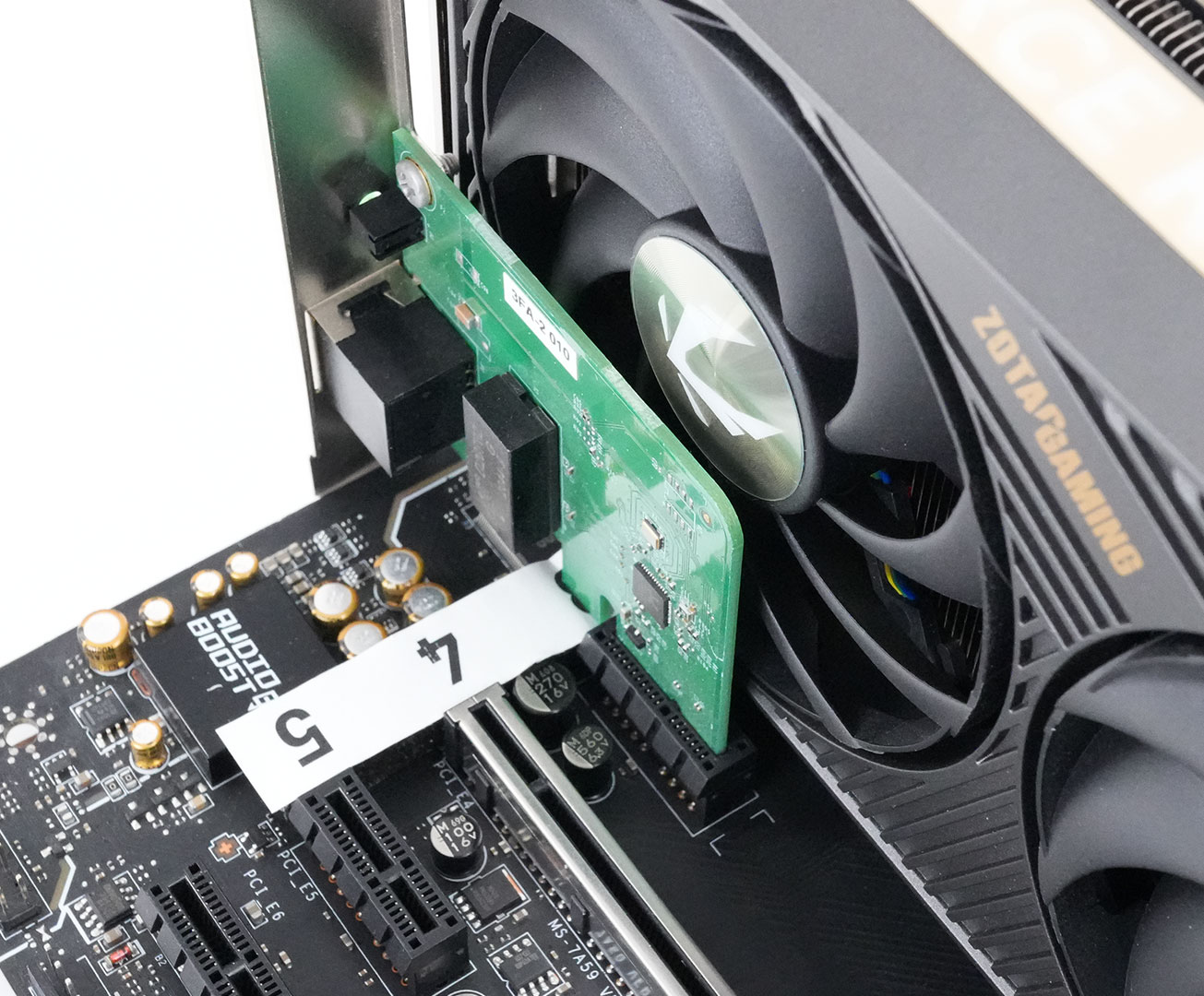
Zotac designed their card to make the most of the available space with two slots. I tested installing another card next to it, and although it's a tight fit, it fits perfectly.
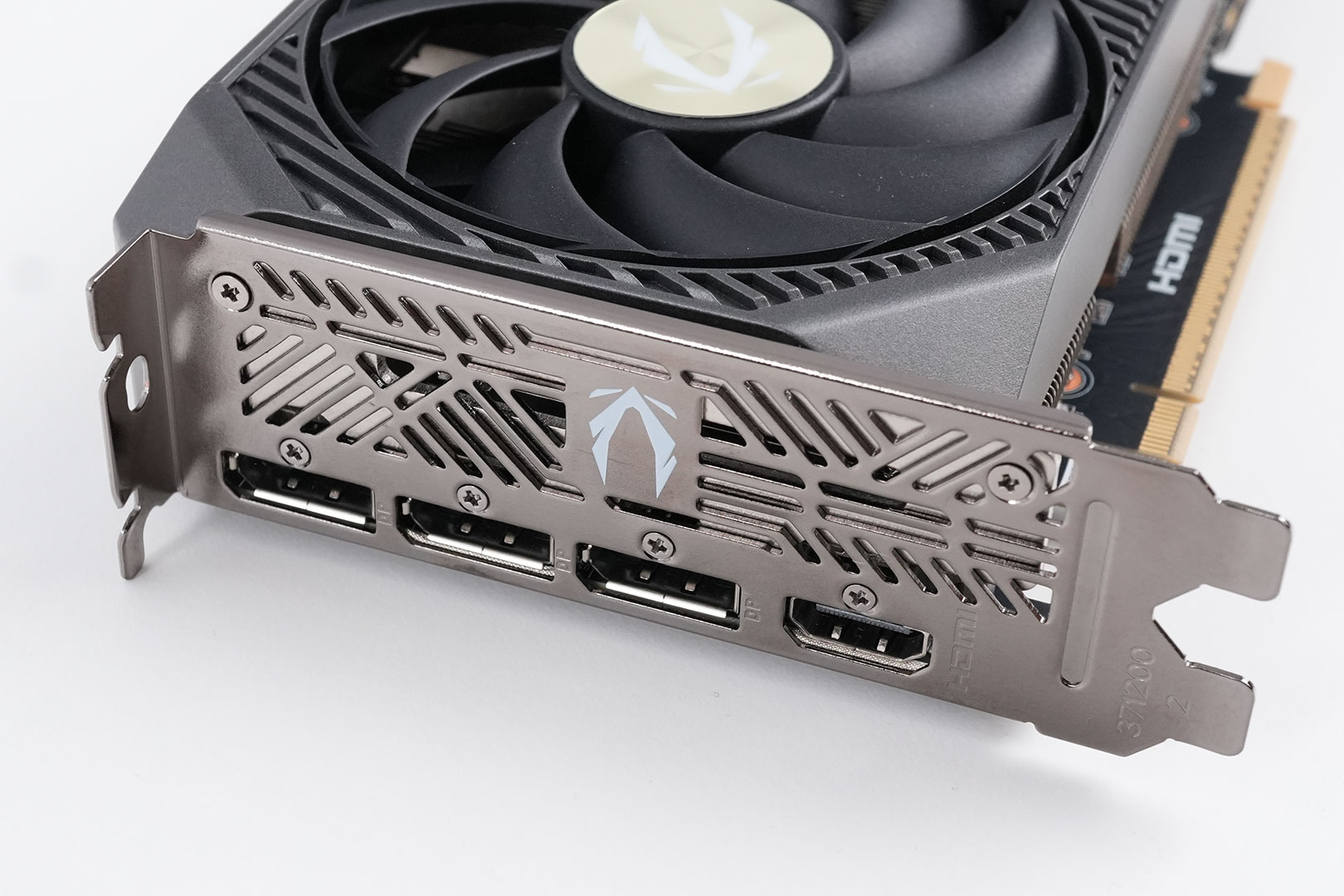
Display connectivity includes three standard DisplayPort 2.1b and one HDMI 2.1b port.
All GeForce RTX 50-series Blackwell cards feature a new display engine supporting DisplayPort 2.1b with UHBR20, as well as HDMI 2.1a. Both interfaces support DSC (display stream compression). With DSC enabled, a single DisplayPort on this card can drive 4K 12-bit HDR at 480 Hz; or 8K 12-bit HDR at up to 165 Hz. The RTX 5070 features an updated media acceleration engine with support for 4:2:2 video formats, AV1 UHQ, and MV-HEVC. Unlike the bigger RTX 50-series models, which have two, there is a single NVENC and NVDEC unit each.

The card uses a single 16-pin connector, which allows a maximum power draw of 600 W, but the board power limit is set much lower of course at 250 W, with a manual adjustment range allowing up to 275 W.
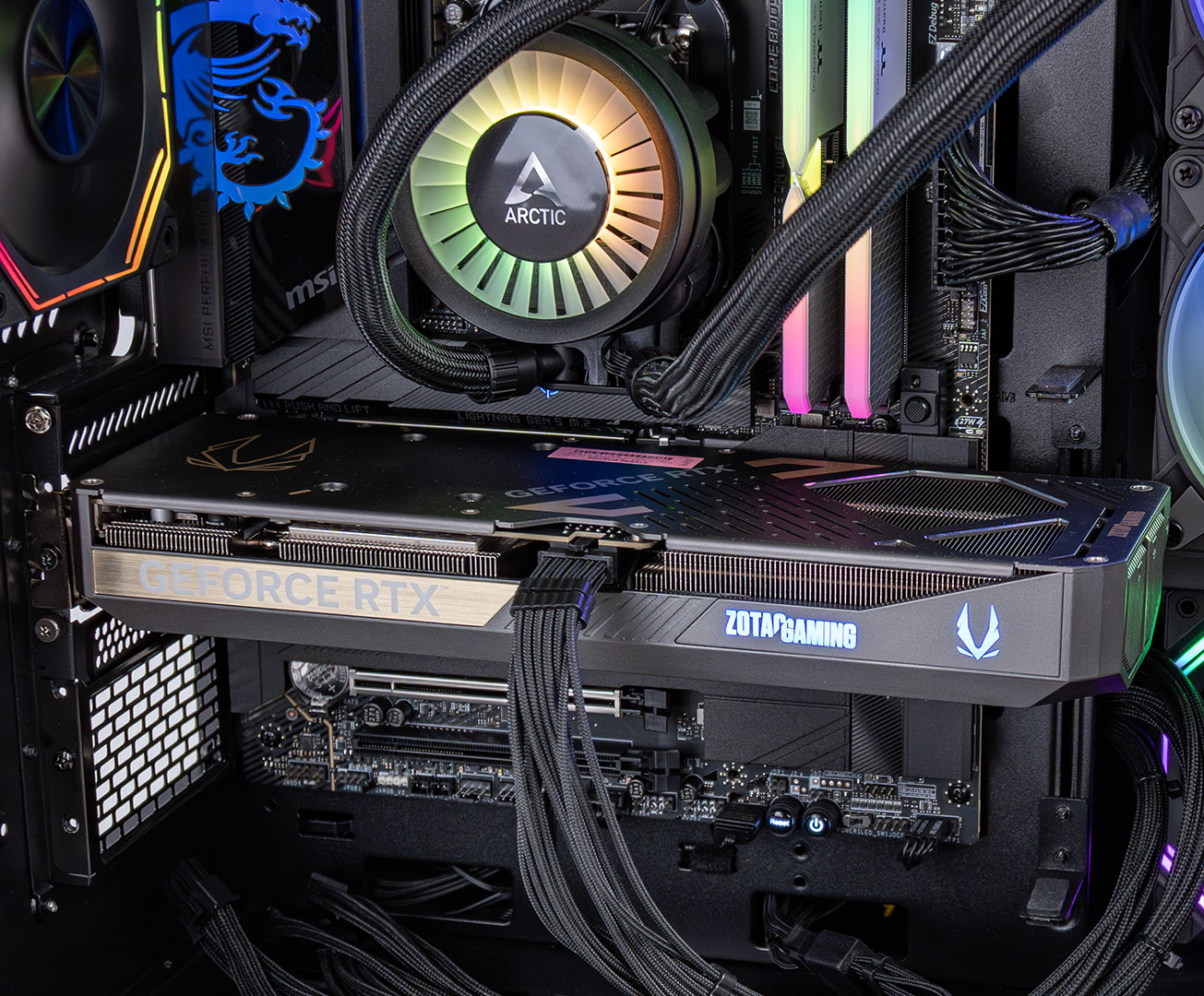
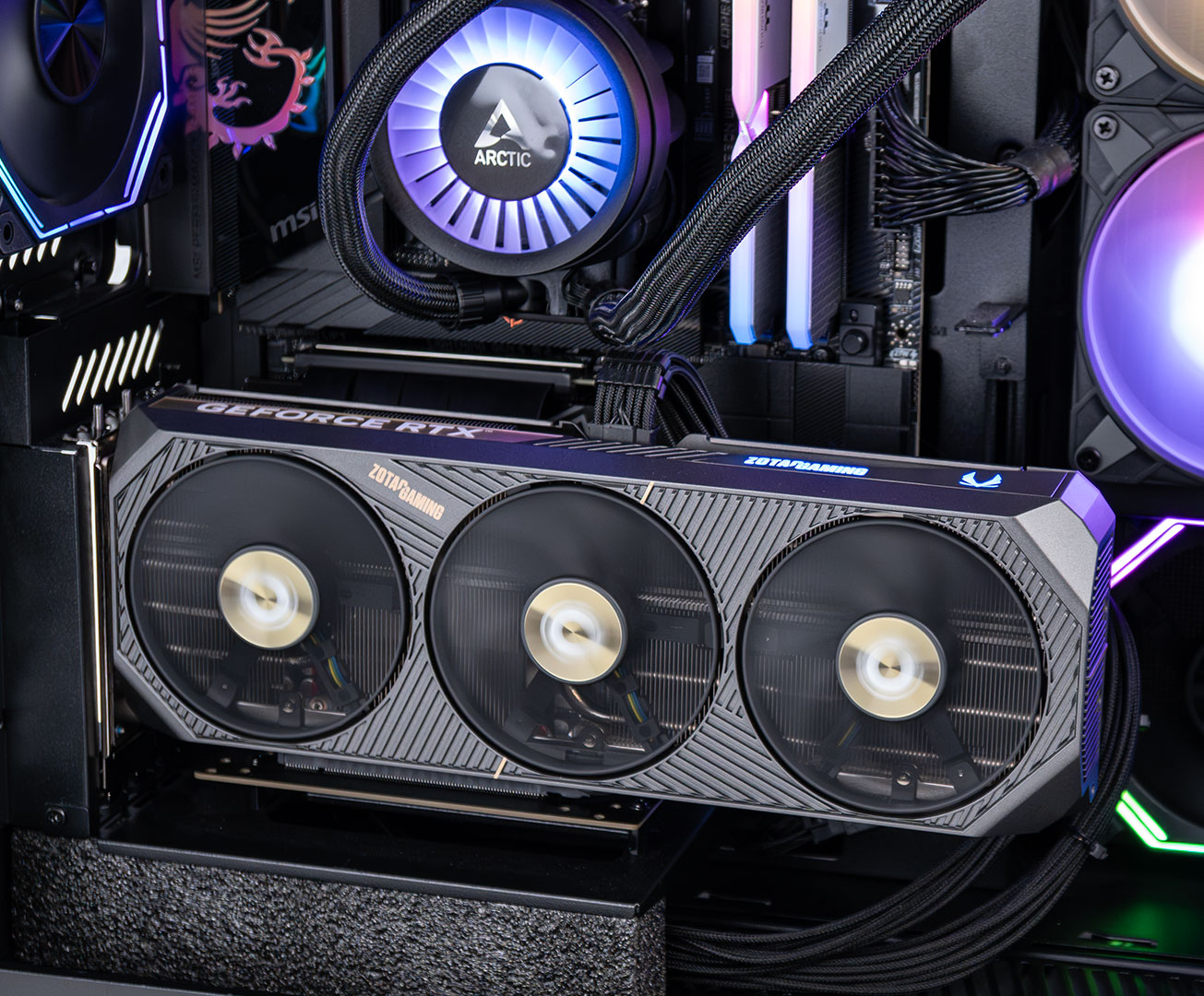
Zotac has added an RGB illumination zone along the long edge, near the "Zotac Gaming" text and logo.
Teardown
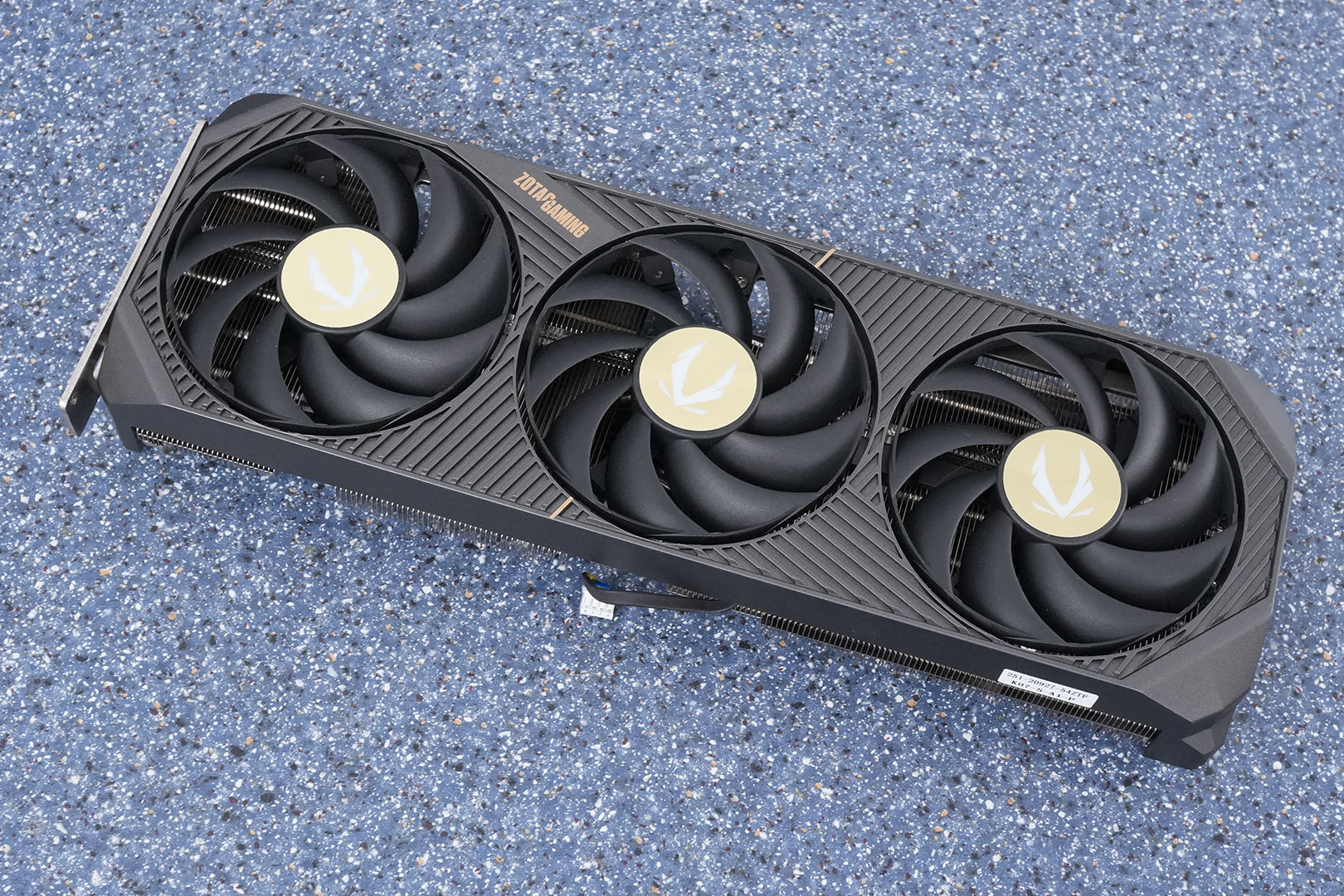

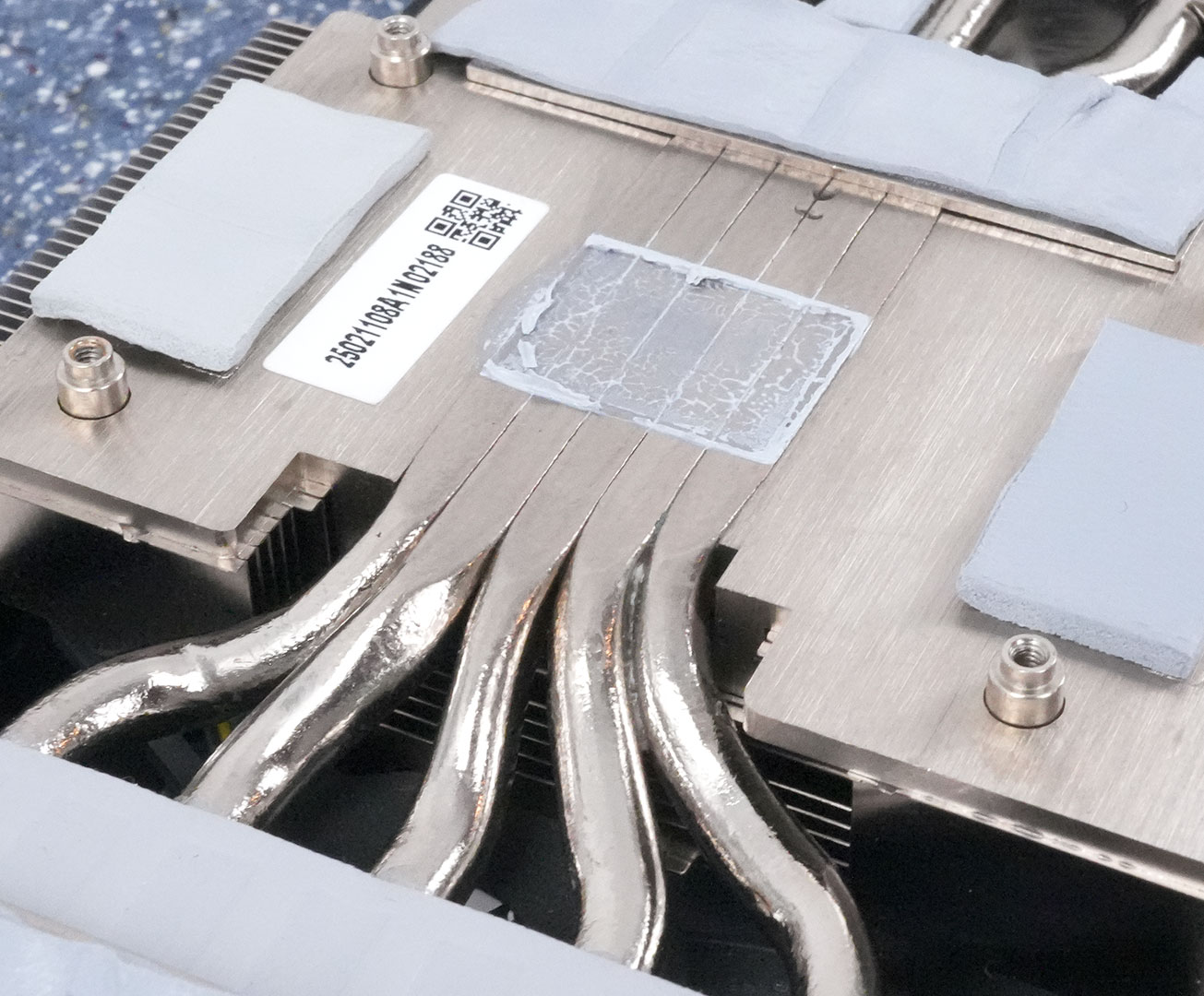
Zotac's thermal solution uses five heatpipes. It provides cooling not only for the GPU, but also for the memory chips and VRM circuitry.
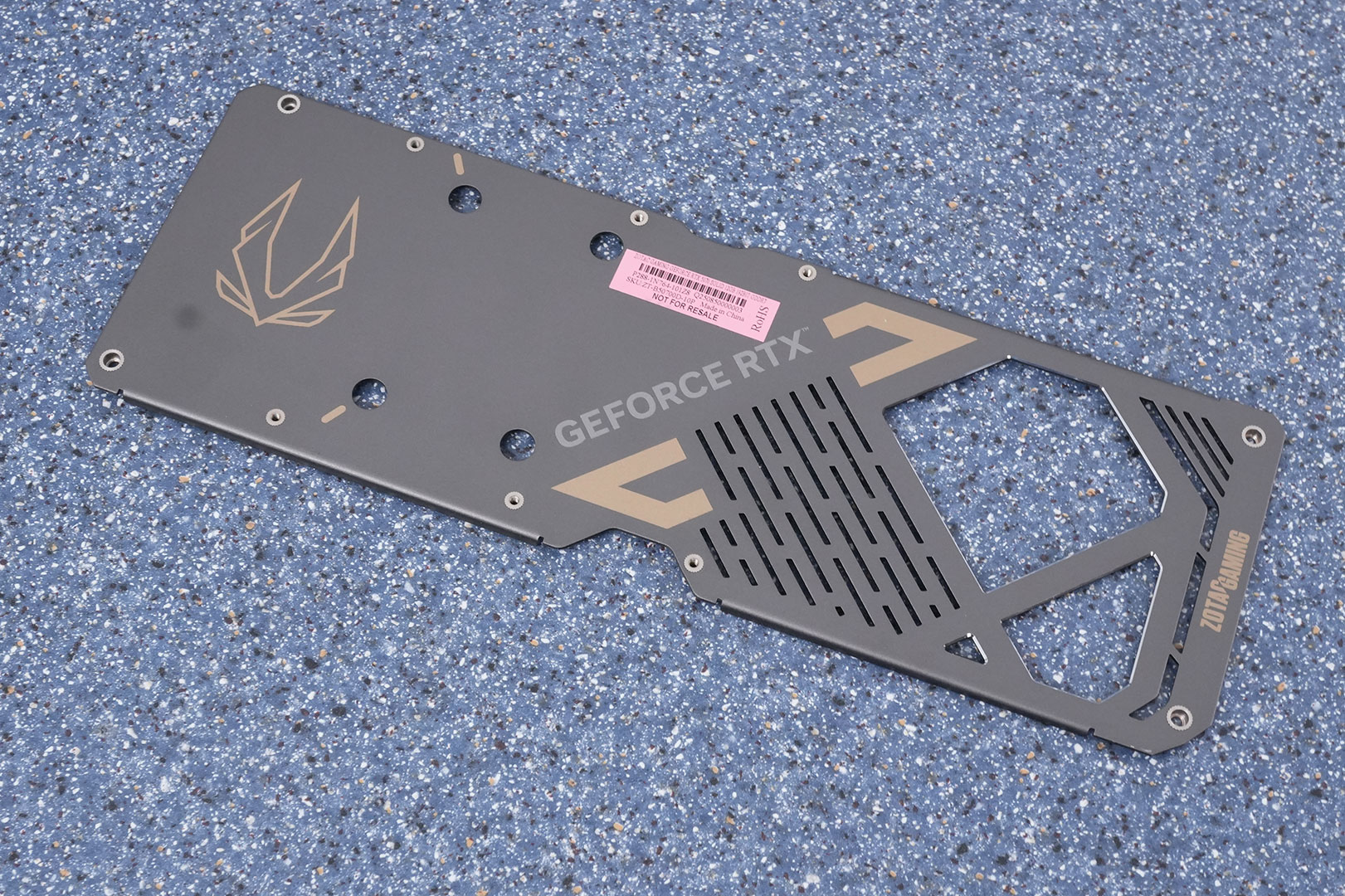
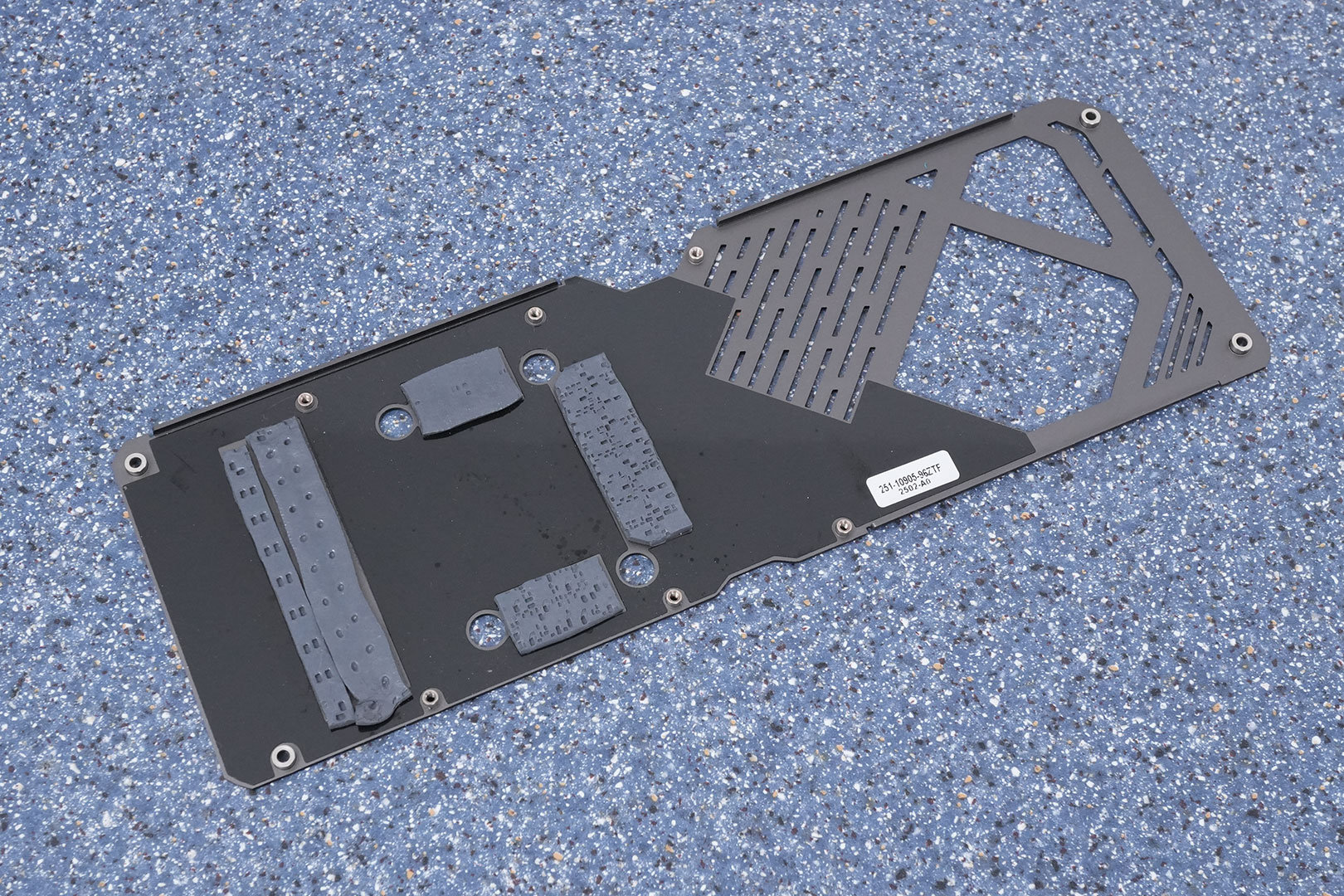
The backplate protects against damage during installation and handling.
High-resolution PCB Pictures
These pictures are for the convenience of volt modders and people who would like to see all the finer details on the PCB. Feel free to link back to us and use these in your articles, videos or forum posts.
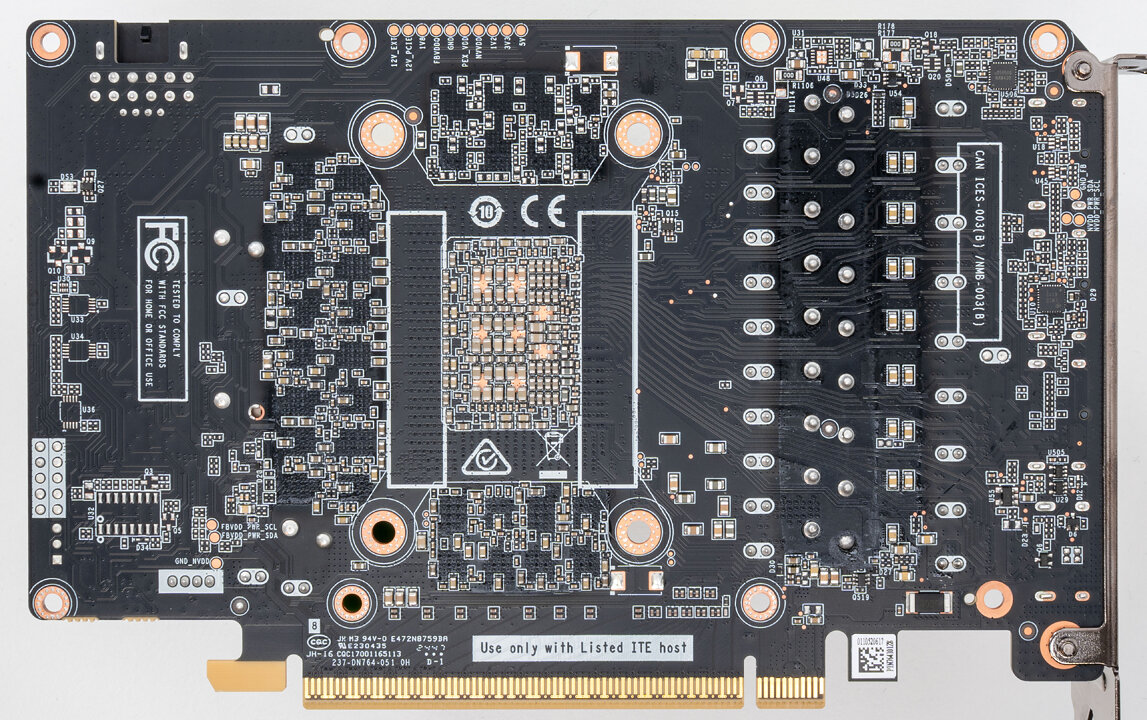
High-resolution versions are also available (front, back).
Circuit Board (PCB) Analysis

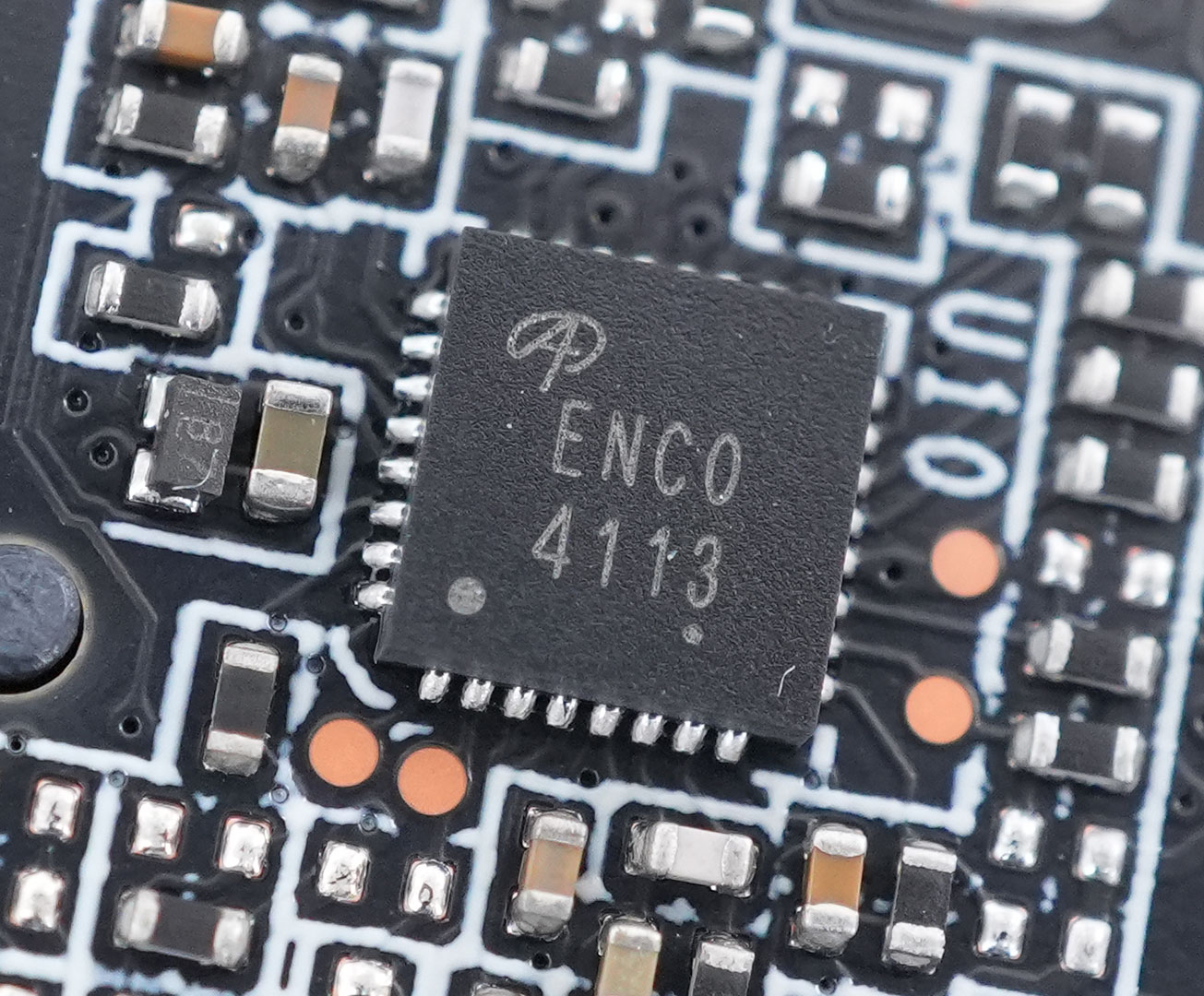
A 9-phase VRM powers the GPU, highlighted in the red rectangles above. These are controlled by an Alpha & Omega AOZ73004CQI (ENC0) voltage controller.

All GPU power phases use Alpha & Omega DNN0 AOZ5310NQI DrMOS with a rating of 60 A.
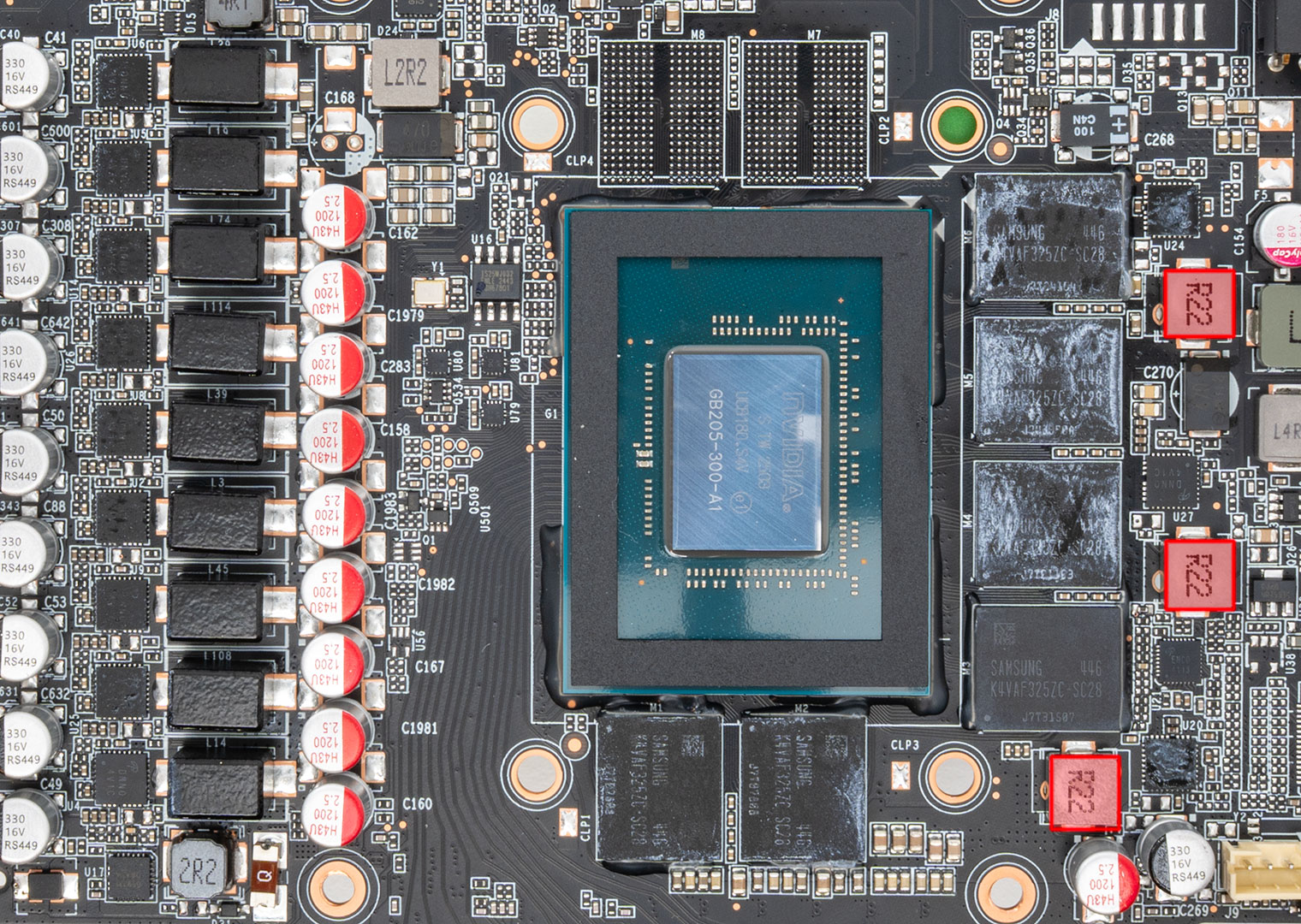

Powering the six GDDR7 memory chips is a 3-phase VRM driven by another Alpha & Omega AOZ73004CQI voltage controller.
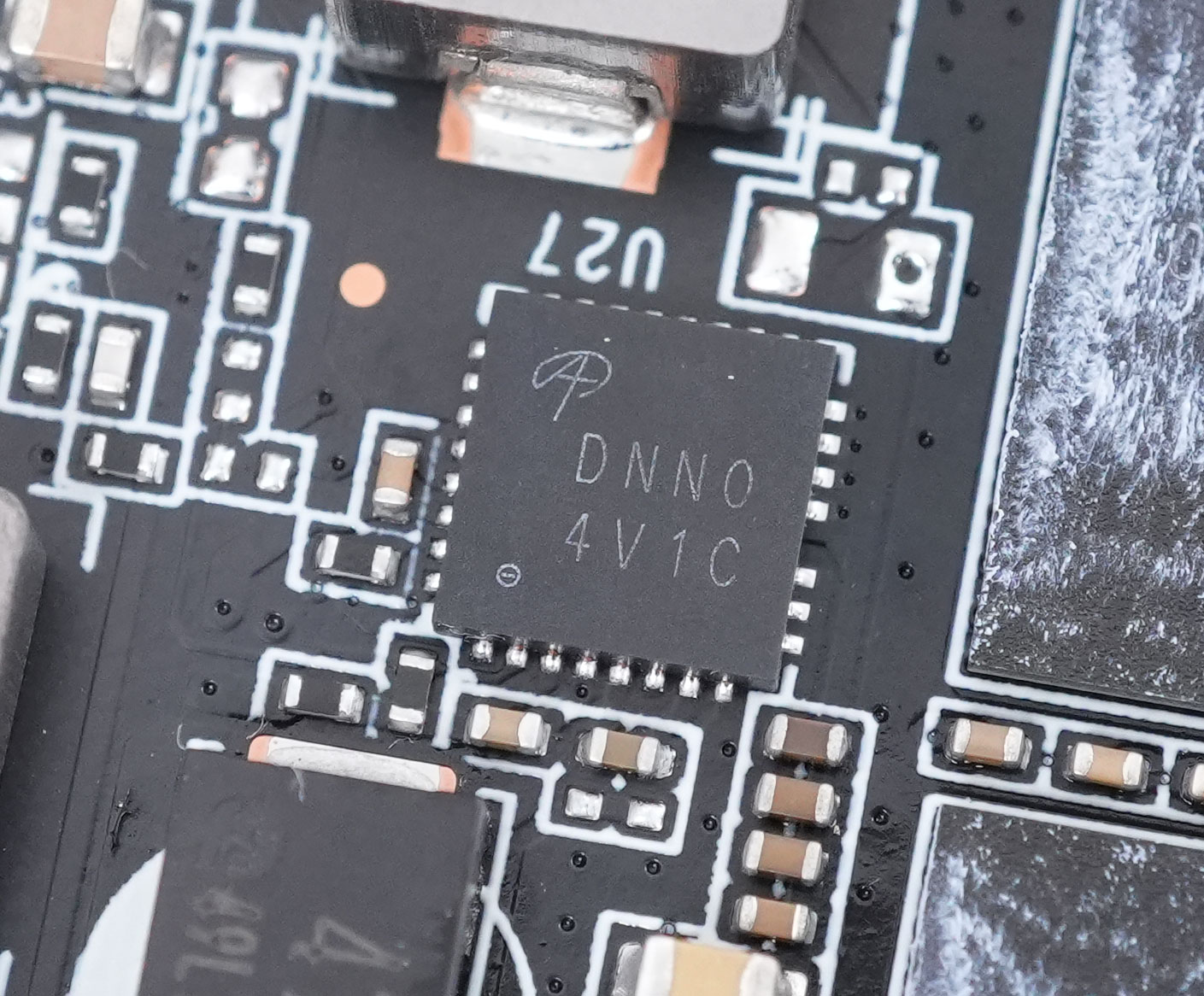
Just like GPU, the memory is handled by Alpha & Omega DNN0 AOZ5310NQI DrMOS with a rating of 60 A.

The GDDR7 memory chips are made by Samsung, and bear the model number K4VAF325ZC-SC28, they are rated for 28 Gbps.
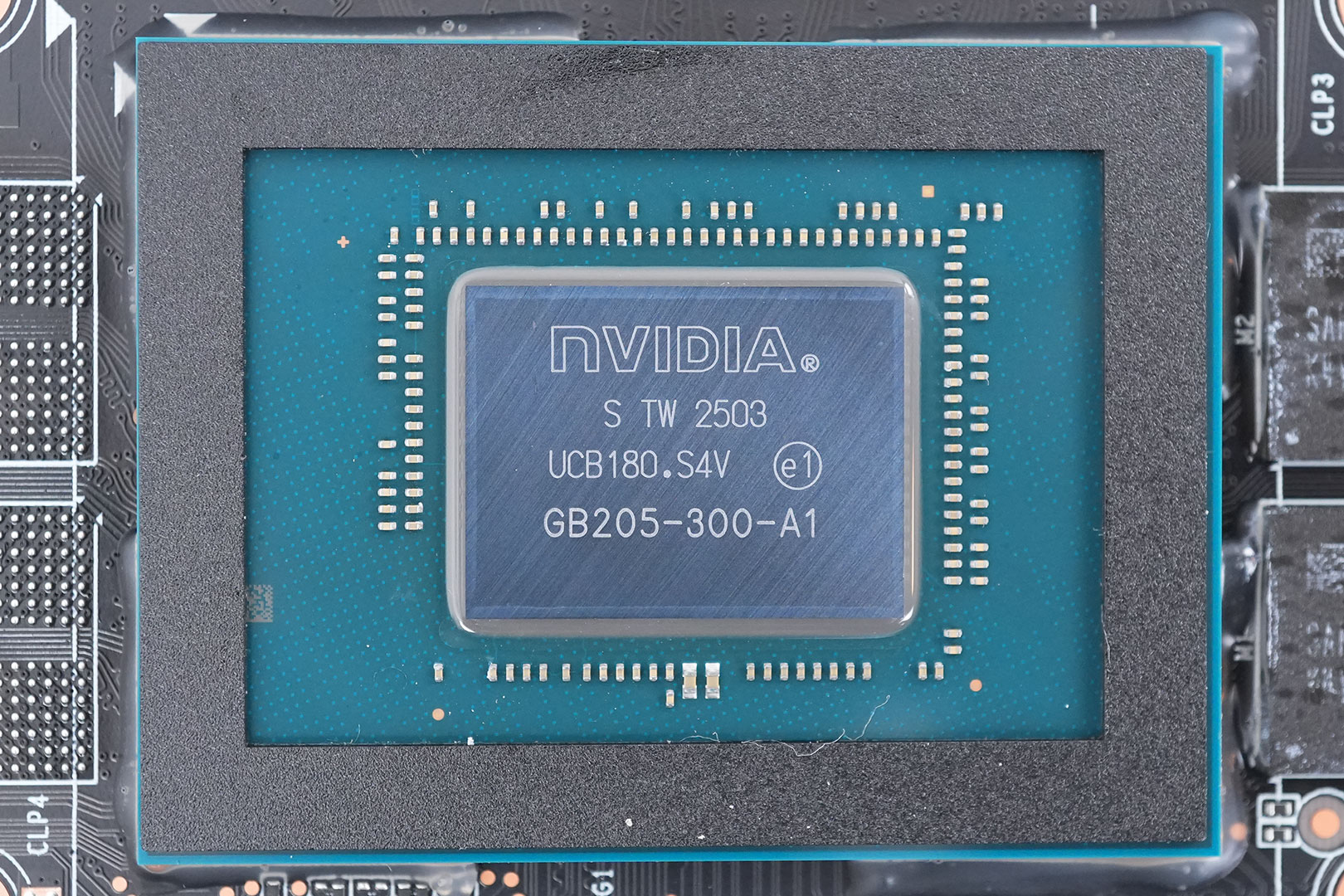
The NVIDIA GB205 GPU at the heart of the GeForce RTX 5070 is much smaller than the GB203 chip used on the RTX 5070 Ti and RTX 5080, or the GB202 of the RTX 5090. It is fabricated using a 5 nanometer "NVIDIA 4N" process at TSMC Taiwan (same process as Ada). The die measures 263 mm², and comes with a transistor count of 31.1 billion.
Our Patreon Silver Supporters can read articles in single-page format.
Nov 16th, 2026 01:41 CST
change timezone
Latest GPU Drivers
New Forum Posts
- GPU Temperatures Rise Very Quickly in FurMark – Is This Normal? (10)
- Your PC ATM (36442)
- Will zen 6 mobos have anything extra vs current ones? (47)
- [Community Benchmark] MrH OpenCL Benchmark 2.0e (Windows Only – CPU & GPU) (3)
- The Official Thermal Interface Material thread (2301)
- Asus Rog Maximus Z890 Extreme. (Various questions). (26)
- It’s been fascinating times in Retro agian r36s isn’t even worth 50-65 dollars no more and newly listed Rm36 64gb 4in IPS models for only 34 dollars. (6)
- Power supply noise stops when I move the mouse (10)
- Can you guess Which game it is? (320)
- What is the latest game you finished or 100% (203)
Popular Reviews
- ASUS ROG Strix B850-I Gaming Wi-Fi7 W Review
- Corsair HX1000i Shift Crystal Review
- AMD Zen 6 Technical Deep Dive
- Upcoming Hardware Launches 2027 (Updated Nov 2026)
- Montech King 95 3D PRO Review
- NZXT C1200 Platinum Review
- Phantom Blade Zero Performance Benchmark Review - 35 GPUs Tested
- AMD Ryzen 7 9800X3D Review - The Best Gaming Processor
- NZXT H5 Review
- NZXT H7 RGB+ Review
TPU on YouTube
Controversial News Posts
- NVIDIA Co-Founder and CEO Jensen Huang Officially Resigns (430)
- Open Letter Asking NVIDIA to Reinstate Jensen Huang Passes 115,000 Signatures (184)
- OpenAI CEO Argues Home PCs Waste the World's Limited DRAM Supply (152)
- NVIDIA Launches Investigation Into Jensen Huang's Relationship With Suspected Chinese Spy (136)
- Intel "Raptor Lake Next" 16-Core and 20-Core CPUs Surface (130)
- Legendary Game Studio BioWare Shuts Down Following EA Layoffs (104)
- Dell CEO Says the Memory Shortage Will Get Worse in 2027 (95)
- NVIDIA GeForce RTX 50-Series Scheduled for up to $500 Price Hike This Week (89)