Thursday, February 18th 2021

Lian Li Announces Four New Case Prototypes at 2021 Digital Expo
LIAN LI Industrial Co. Ltd., a leading manufacturer of aluminium chassis and PC accessories, hosts its second online event with the LIAN LI 2021 DIGITAL EXPO, which premiers February 18th, 9 am EST on YouTube (here). The 2021 DIGITAL EXPO unveils soon to be launched products, with new editions of the O11D MINI and UNI FANS, as well as exclusive looks at four prototypes. Each prototype will receive an in-depth look from case reviewers.
Q58: The Q58, a 14.3L SFF case, is equipped with split hinged panels made of tempered glass and aluminium mesh, and a dual-tone front solid aluminium panel. With support for MINI-ITX, 320 mm long GPUs, and up to 280 mm radiators, the Q58 is capable of supporting a variety of configurations with SFX PSUs or ATX PSUs due to an adjustable motherboard tray that can be moved for more clearance.


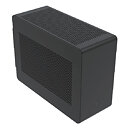 A4-H2O: A collaboration with DAN Cases from Germany, the A4-H2O is an SFF case at only 10.4L. Inspired by the original A4-SFX, the all-aluminium A4-H2O offers a refined look and sleek design. Compatible with Mini-ITX motherboards and SFX or SFX-L power supplies, the A4-H2O can fit in any GPU up to 315 mm in length and 2.7 slots in thickness, and any 240 AIO with CPU block clearance of 56 mm. The A4-H2O's mesh at the top, right, and left panels offer plenty of airflow for proper thermal management. In addition, the A4-H20 has lots of storage space with mounts for 2 SSDs behind the front panel.
V3000+: A redesign of the original V3000, the V3000+ is a modernized aluminium full tower case that masters water cooling, airflow, modularity, storage, and high-performance component compatibility. With support for up to three 480 mm radiators plus a 360 mm radiator, sixteen 120 mm fans, two systems, two PSUs, and horizontal or vertical GPU up to 420 mm in length, the V3000+ is the ultimate case for the performance systems. Up to 16 HDDs or 19 SSDs can be fitted in the V3000+, enough to turn this case into a powerful storage server. With a tempered glass panel on the left, meshed top panel and shroud panels, solid front and right side panels, the V3000+ also includes accents of RGB around the front panel which can be controlled by a magnet-mount remote control.
O11D EVO: Designed as an airflow optimized O11 Dynamic, the O11D EVO offers features of the O11D XL in the footprint of the O11 Dynamic. The 2 aluminium panels at the top and right side feature a redesigned mesh that acts as a dust filter while providing the system with unparalleled airflow. The aluminium strip at the front of the case is a flip panel that covers the case-control buttons, as well as an optional SDD case for two 2.5" SSDs or HDDs. In terms of compatibility, the O11D EVO supports motherboards ranging from E-ATX to MINI ITX, GPUs up to 445 mm long, and PSUs up to 200 mm in length. Users now have the option to place their GPU beside the motherboard, in an upright position. As for radiators, fans, and storage support, three modular brackets which can be arranged for either 280/360 radiators/fans, or 2.5"/3.5" SSDs/HDDs are included.
LIAN LI also has updates of its award-winning products that will launch in the coming months. The O11D MINI adds a Snow Edition with an all-white interior and exterior, removing black accents from the previous white version. SFX power supplies will be bundled with the O11D MINI in the SP750 and SP850 editions. In addition, the second generation of the innovative interconnecting fan series, UNI FAN AL120 and AL140, and an update on L-Connect with more software options and the ability to control all LIAN LI RGB devices.
To catch the full 2021 DIGITAL EXPO, make sure to subscribe to the LIAN LI YouTube channel.
Q58: The Q58, a 14.3L SFF case, is equipped with split hinged panels made of tempered glass and aluminium mesh, and a dual-tone front solid aluminium panel. With support for MINI-ITX, 320 mm long GPUs, and up to 280 mm radiators, the Q58 is capable of supporting a variety of configurations with SFX PSUs or ATX PSUs due to an adjustable motherboard tray that can be moved for more clearance.


V3000+: A redesign of the original V3000, the V3000+ is a modernized aluminium full tower case that masters water cooling, airflow, modularity, storage, and high-performance component compatibility. With support for up to three 480 mm radiators plus a 360 mm radiator, sixteen 120 mm fans, two systems, two PSUs, and horizontal or vertical GPU up to 420 mm in length, the V3000+ is the ultimate case for the performance systems. Up to 16 HDDs or 19 SSDs can be fitted in the V3000+, enough to turn this case into a powerful storage server. With a tempered glass panel on the left, meshed top panel and shroud panels, solid front and right side panels, the V3000+ also includes accents of RGB around the front panel which can be controlled by a magnet-mount remote control.
O11D EVO: Designed as an airflow optimized O11 Dynamic, the O11D EVO offers features of the O11D XL in the footprint of the O11 Dynamic. The 2 aluminium panels at the top and right side feature a redesigned mesh that acts as a dust filter while providing the system with unparalleled airflow. The aluminium strip at the front of the case is a flip panel that covers the case-control buttons, as well as an optional SDD case for two 2.5" SSDs or HDDs. In terms of compatibility, the O11D EVO supports motherboards ranging from E-ATX to MINI ITX, GPUs up to 445 mm long, and PSUs up to 200 mm in length. Users now have the option to place their GPU beside the motherboard, in an upright position. As for radiators, fans, and storage support, three modular brackets which can be arranged for either 280/360 radiators/fans, or 2.5"/3.5" SSDs/HDDs are included.
LIAN LI also has updates of its award-winning products that will launch in the coming months. The O11D MINI adds a Snow Edition with an all-white interior and exterior, removing black accents from the previous white version. SFX power supplies will be bundled with the O11D MINI in the SP750 and SP850 editions. In addition, the second generation of the innovative interconnecting fan series, UNI FAN AL120 and AL140, and an update on L-Connect with more software options and the ability to control all LIAN LI RGB devices.
To catch the full 2021 DIGITAL EXPO, make sure to subscribe to the LIAN LI YouTube channel.
29 Comments on Lian Li Announces Four New Case Prototypes at 2021 Digital Expo
Sometimes the PCMR feels ancient, while the ATX standard works, it's also preventing any kind of real advancement in case design. The death of the 5.25" bay and the rise of SSD were the biggest contributor of recent change.
(And even with the current "true and tried ATX" standard, some are still finding a way to fail at making a case that perform well. )