Wednesday, December 3rd 2025

ECS Reaches a Major Milestone in Space Electronics
Elitegroup Computer Systems (ECS), a long-established leader in embedded systems and motherboard design, has been actively expanding into aerospace technologies and space electronics in recent years. Since 2023, ECS has collaborated with National Cheng Kung University (NCKU) on CubeSat technologies and jointly participated in the Taiwan Lilium-2 (Lilium-2) and Taiwan Lilium-3 (Lilium-3) missions. The two satellites were successfully launched aboard a SpaceX Falcon 9 rocket from Vandenberg Space Force Base in California at 2:44 a.m. (Taiwan Time), Saturday, November 29, 2025. They enter a 520-km low Earth orbit to perform various technological validations, including Earth surface imaging, real-time object recognition, and inter-satellite communication tests.
For this mission, ECS's independently developed On-Board Computer (OBC) makes its debut on Lilium-3, marking a significant milestone in the company's advancement in space electronics. Designed with a "hosted payload" concept, the OBC distributes the power load of the main satellite and manages communication between the bus and payload. Through this in-orbit verification, the ECS OBC will attain critical flight heritage—a key foundation for future commercial space applications and international collaborations.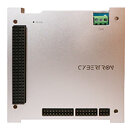 At the same time, ECS's OBCC6M7R high-reliability satellite motherboard began receiving orders in late 2024 and will support more domestic and international satellite missions as well as commercial space programs. Both Lilium-2 and Lilium-3 are 6-unit (6U) CubeSats, and this mission will also validate a range of Taiwan-developed technologies, including Ku-band high-speed communication, intelligent telemetry edge computing, and vacuum-arc thrusters. ECS will participate in Lilium-3's in-orbit testing and leverage real operational experience to accelerate product maturity, further demonstrating its R&D strength and technological advantages in space electronics.
Looking ahead, ECS will continue to build on its hardware-software integration capabilities, product verification expertise, and space electronics design experience to contribute to more low Earth orbit missions and other space initiatives—supporting the long-term growth of Taiwan's aerospace industry.
For this mission, ECS's independently developed On-Board Computer (OBC) makes its debut on Lilium-3, marking a significant milestone in the company's advancement in space electronics. Designed with a "hosted payload" concept, the OBC distributes the power load of the main satellite and manages communication between the bus and payload. Through this in-orbit verification, the ECS OBC will attain critical flight heritage—a key foundation for future commercial space applications and international collaborations.

Looking ahead, ECS will continue to build on its hardware-software integration capabilities, product verification expertise, and space electronics design experience to contribute to more low Earth orbit missions and other space initiatives—supporting the long-term growth of Taiwan's aerospace industry.
3 Comments on ECS Reaches a Major Milestone in Space Electronics
I know PCChips isn't directly EliteGroup, but they were the majority shareholder during the merger of 2005 and the PCChips President took the reins of the new merged company. This is PCChips of fake cache chips, fake chipset labelling, and a >20% DOA rate on boards leaving the factory. The merger made me give ECS a very wide berth as the one ECS board I tried for a budget Socket 754 build was also cheap and failed within 30 days.
So yeah, in space?
And making money 👀