Wednesday, May 20th 2026

NVIDIA Announces Financial Results for First Quarter Fiscal 2027
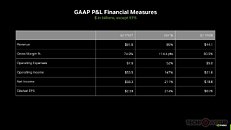
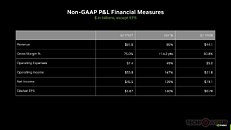
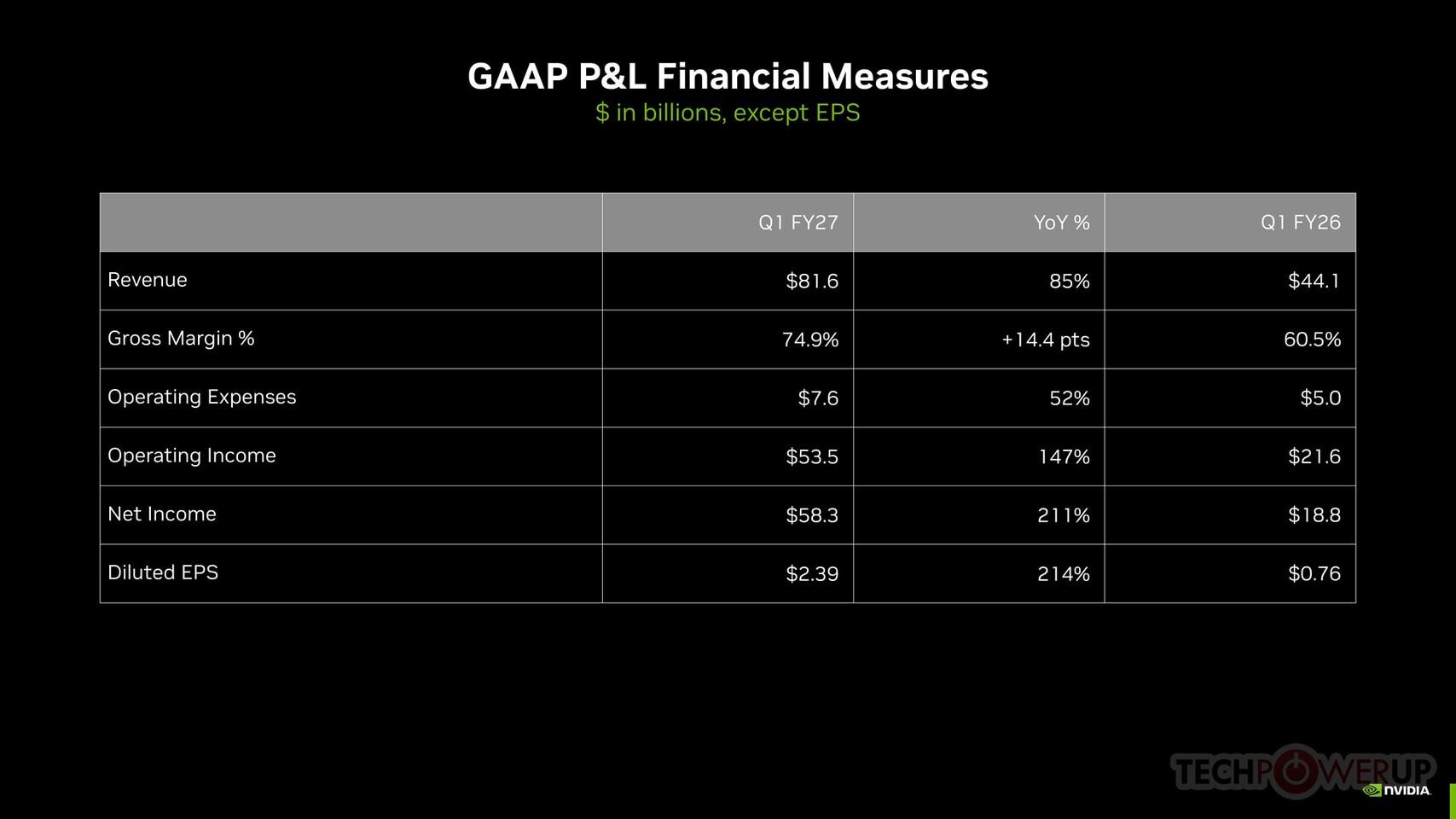
NVIDIA (NASDAQ: NVDA) today reported record revenue for the first quarter ended April 26, 2026, of $81.6 billion, up 20% from the previous quarter and up 85% from a year ago.
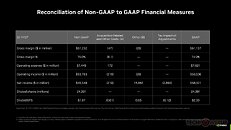
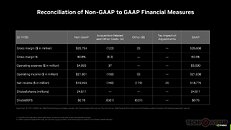
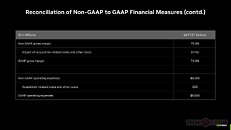
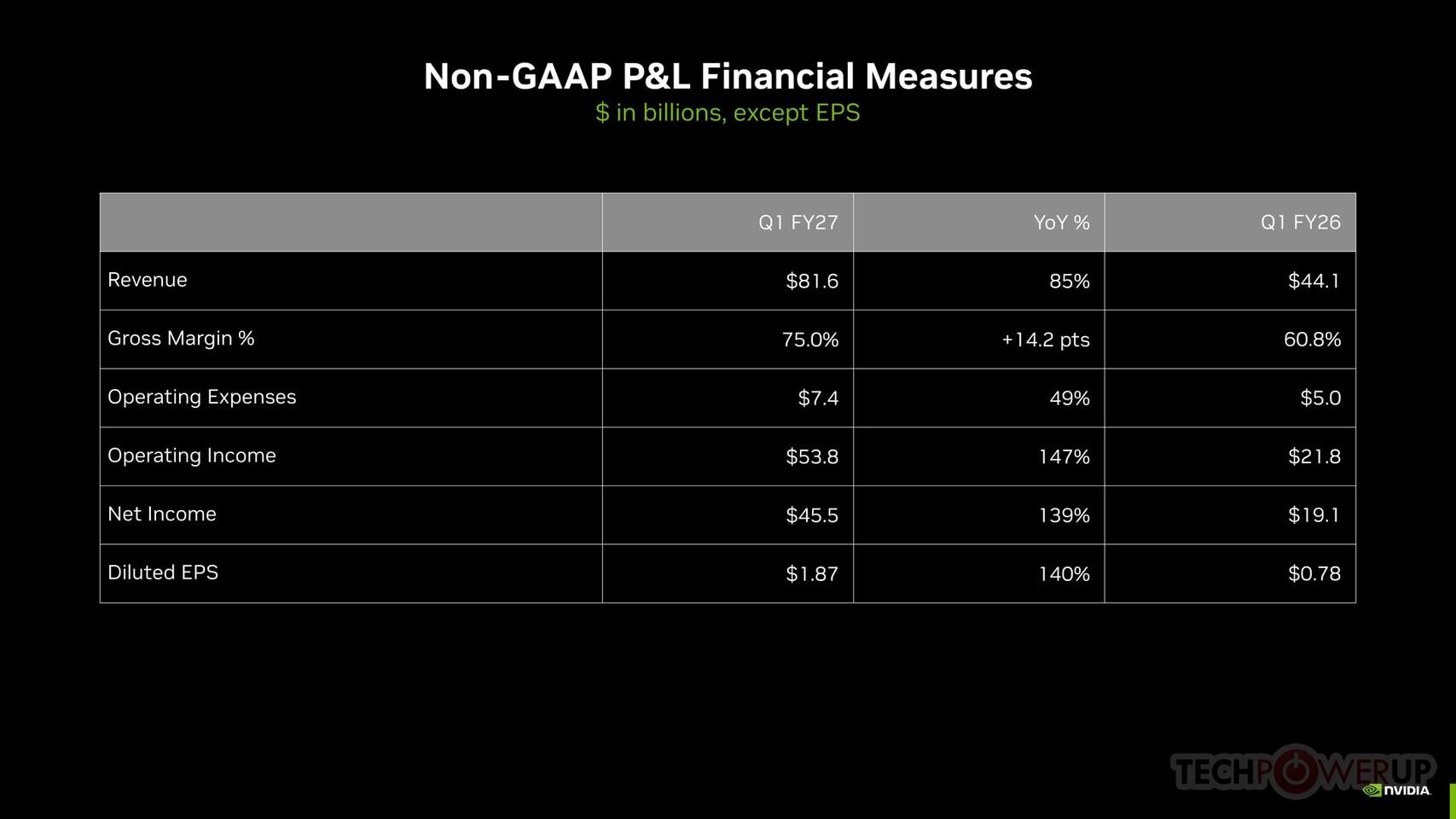
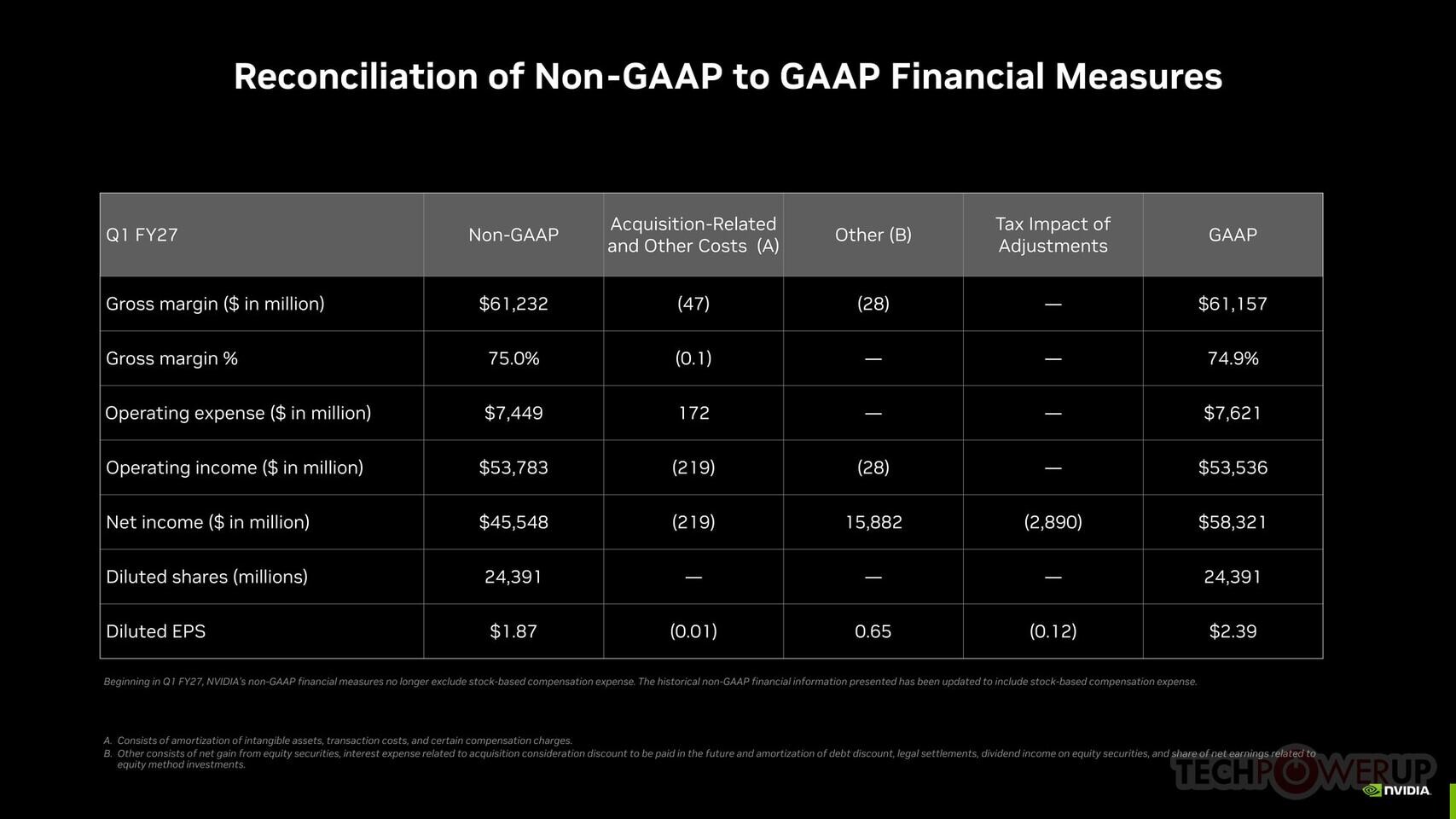
For the quarter, GAAP and non-GAAP gross margins were 74.9% and 75.0%, respectively.
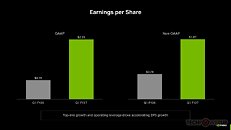
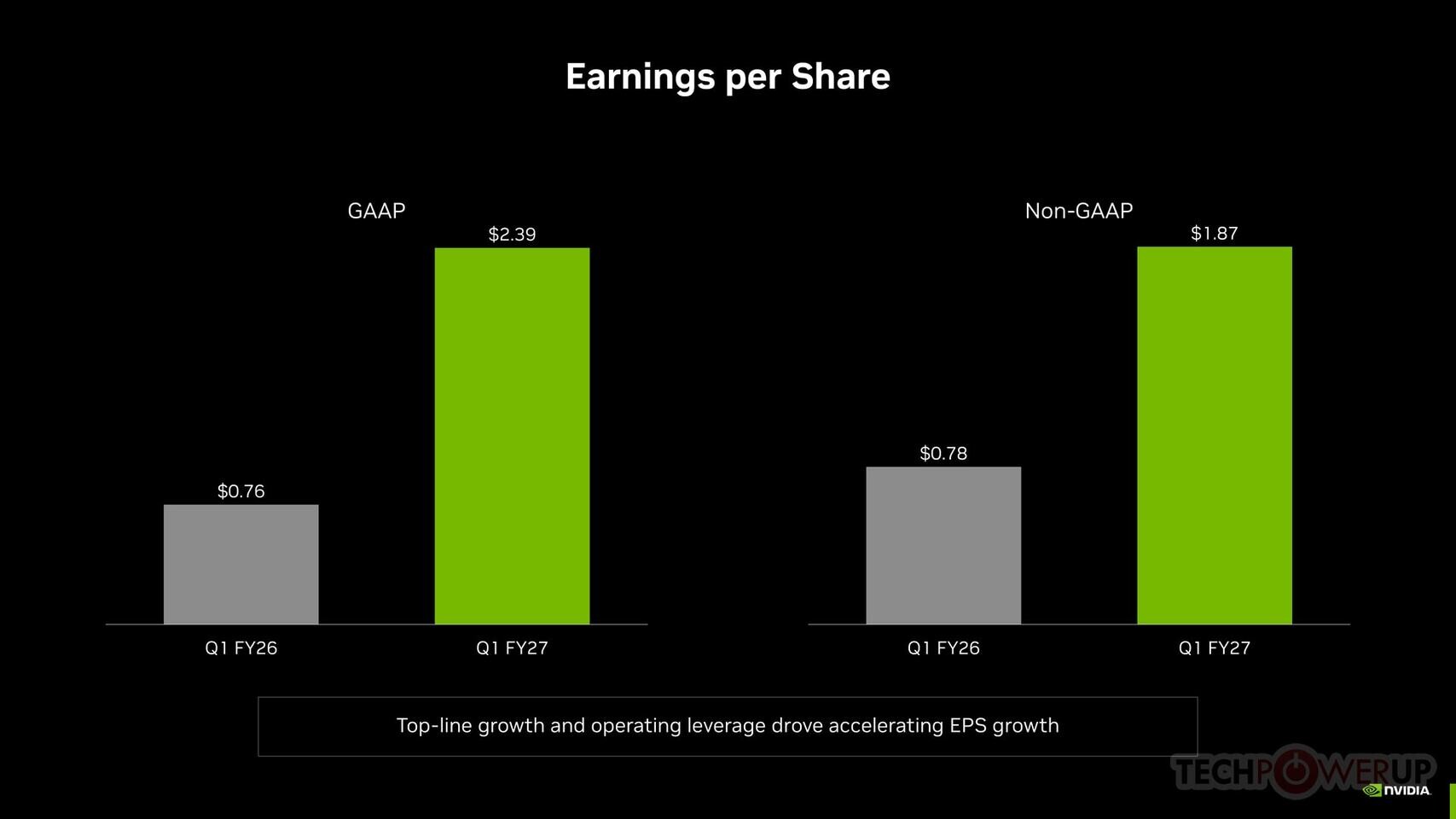
For the quarter, GAAP and non-GAAP earnings per diluted share were $2.39 and $1.87, respectively.
"The buildout of AI factories—the largest infrastructure expansion in human history—is accelerating at extraordinary speed," said Jensen Huang, founder and CEO of NVIDIA. "Agentic AI has arrived, doing productive work, generating real value and scaling rapidly across companies and industries. NVIDIA is uniquely positioned at the center of this transformation as the only platform that runs in every cloud, powers every frontier and open source model, and scales everywhere AI is produced—from hyperscale data centers to the edge."


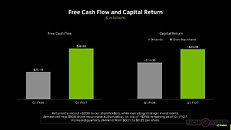
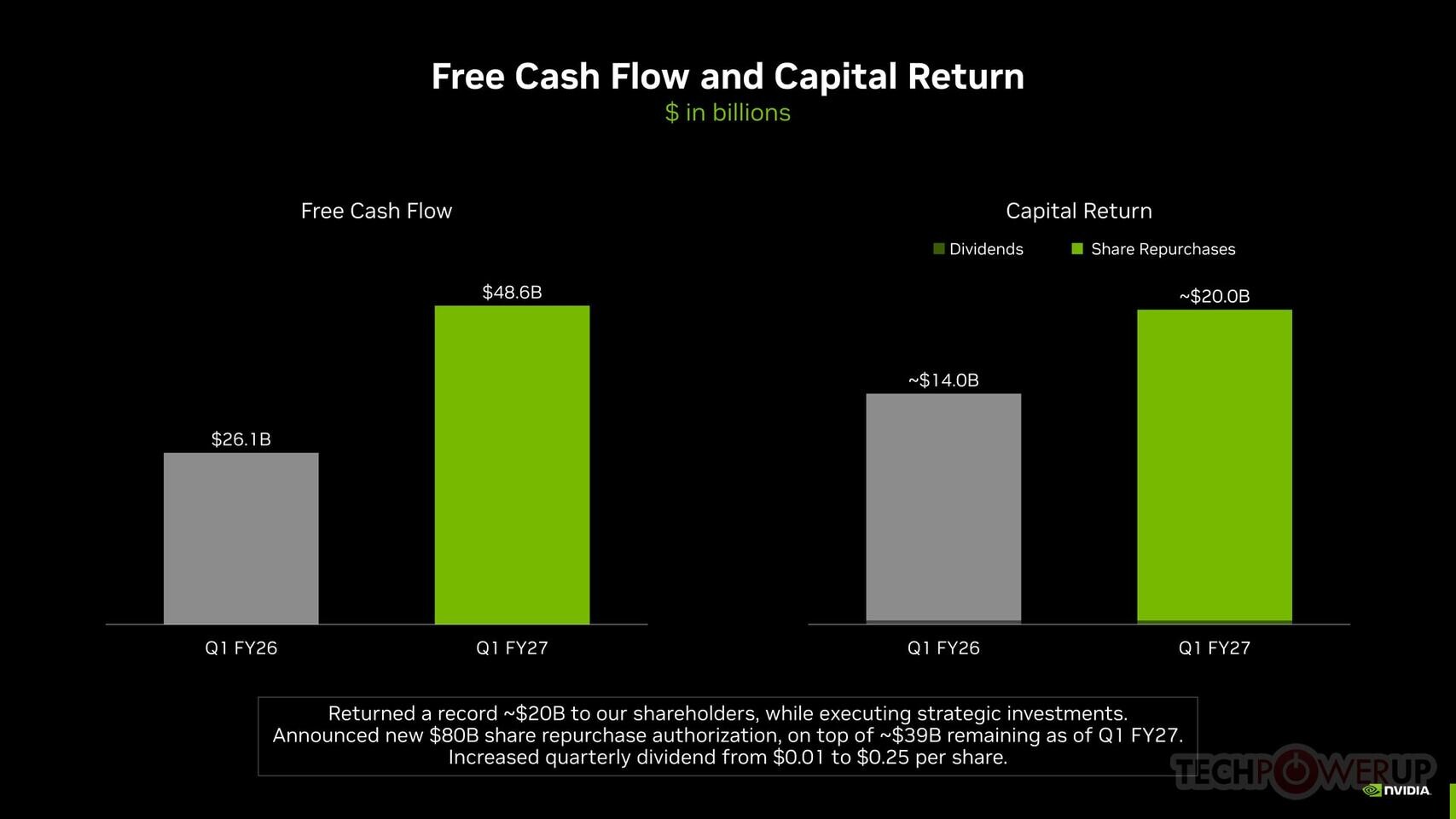
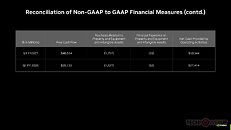 During the first quarter of fiscal 2027, NVIDIA returned a record level of approximately $20.0 billion to shareholders in the form of shares repurchased and cash dividends. As of the end of the first quarter, the company had $38.5 billion remaining under its share repurchase authorization. On May 18, 2026, the Board of Directors approved an additional $80.0 billion to the Company's share repurchase authorization, without expiration. NVIDIA is increasing its quarterly cash dividend from $0.01 per share to $0.25 per share of common stock, which will be paid on June 26, 2026, to all shareholders of record on June 4, 2026.
NVIDIA is transitioning to a new reporting framework that better reflects its current and future growth drivers. NVIDIA will have two market platforms—Data Center and Edge Computing. Within Data Center, NVIDIA will report two sub-markets, Hyperscale and ACIE, which incorporates AI Clouds, Industrial and Enterprise. Hyperscale will include revenue from the public clouds and the world's largest consumer internet companies, while ACIE addresses NVIDIA's growth opportunity in diverse AI purpose-built data centers and AI factories across industries and countries. Edge Computing highlights data processing devices for agentic and physical AI including PCs, game consoles, workstations, AI-RAN base stations, robotics and automotive.
Under the previous sub-markets, Data Center compute revenue was a record $60.4 billion, up 77% from a year ago and up 18% sequentially. Data Center networking revenue was a record $14.8 billion, up 199% from a year ago and up 35% sequentially.
Outlook
NVIDIA's outlook for the second quarter of fiscal 2027 is as follows:
Highlights
Data Center
Commentary on the quarter by Colette Kress, NVIDIA's executive vice president and chief financial officer, is available at investor.nvidia.com.
Source:
NVIDIA
For the quarter, GAAP and non-GAAP gross margins were 74.9% and 75.0%, respectively.
For the quarter, GAAP and non-GAAP earnings per diluted share were $2.39 and $1.87, respectively.
"The buildout of AI factories—the largest infrastructure expansion in human history—is accelerating at extraordinary speed," said Jensen Huang, founder and CEO of NVIDIA. "Agentic AI has arrived, doing productive work, generating real value and scaling rapidly across companies and industries. NVIDIA is uniquely positioned at the center of this transformation as the only platform that runs in every cloud, powers every frontier and open source model, and scales everywhere AI is produced—from hyperscale data centers to the edge."


NVIDIA is transitioning to a new reporting framework that better reflects its current and future growth drivers. NVIDIA will have two market platforms—Data Center and Edge Computing. Within Data Center, NVIDIA will report two sub-markets, Hyperscale and ACIE, which incorporates AI Clouds, Industrial and Enterprise. Hyperscale will include revenue from the public clouds and the world's largest consumer internet companies, while ACIE addresses NVIDIA's growth opportunity in diverse AI purpose-built data centers and AI factories across industries and countries. Edge Computing highlights data processing devices for agentic and physical AI including PCs, game consoles, workstations, AI-RAN base stations, robotics and automotive.
Under the previous sub-markets, Data Center compute revenue was a record $60.4 billion, up 77% from a year ago and up 18% sequentially. Data Center networking revenue was a record $14.8 billion, up 199% from a year ago and up 35% sequentially.
Outlook
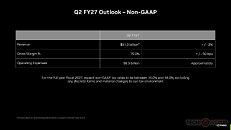
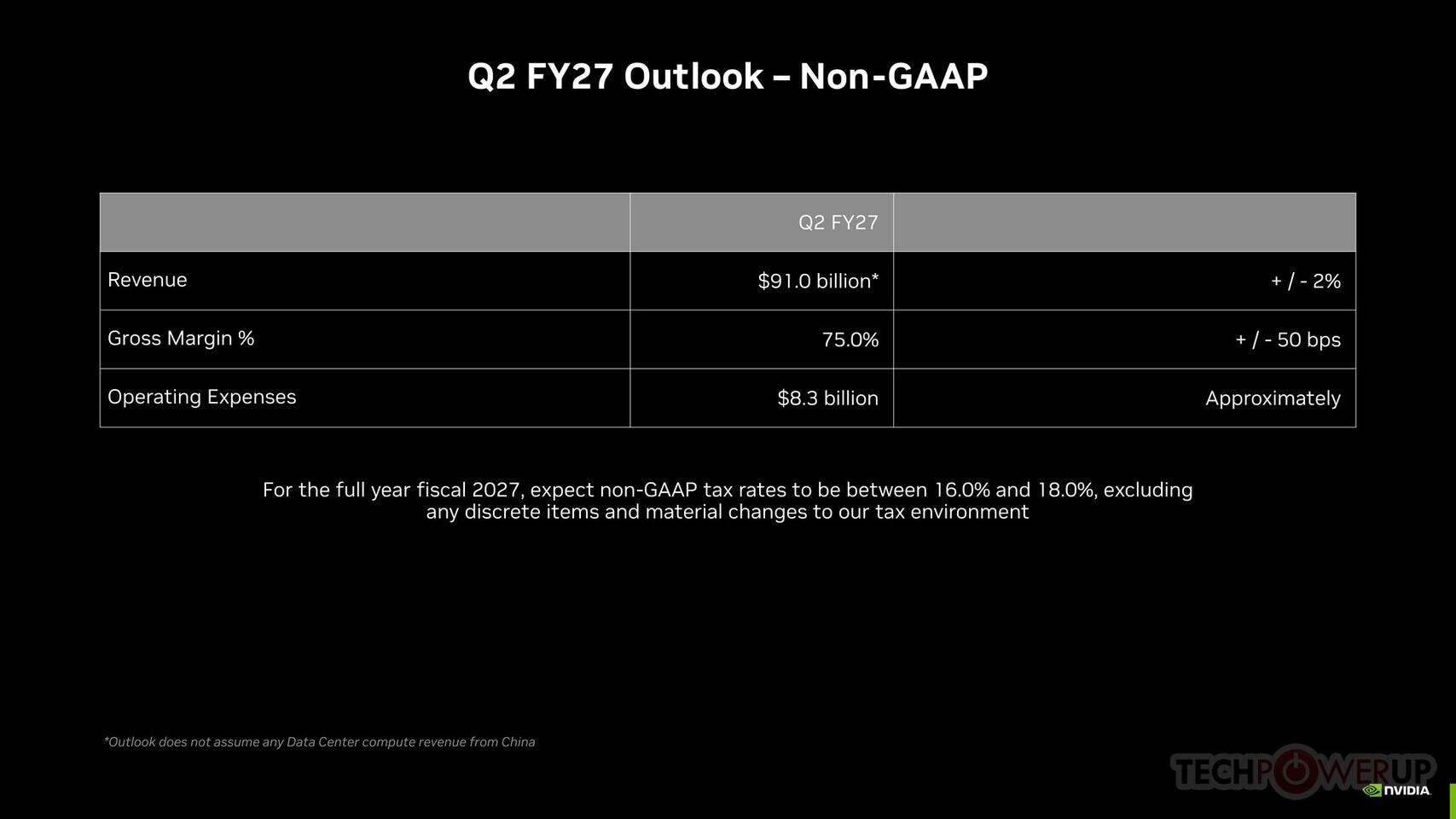
NVIDIA's outlook for the second quarter of fiscal 2027 is as follows:
- Revenue is expected to be $91.0 billion, plus or minus 2%. NVIDIA is not assuming any Data Center compute revenue from China in its outlook.
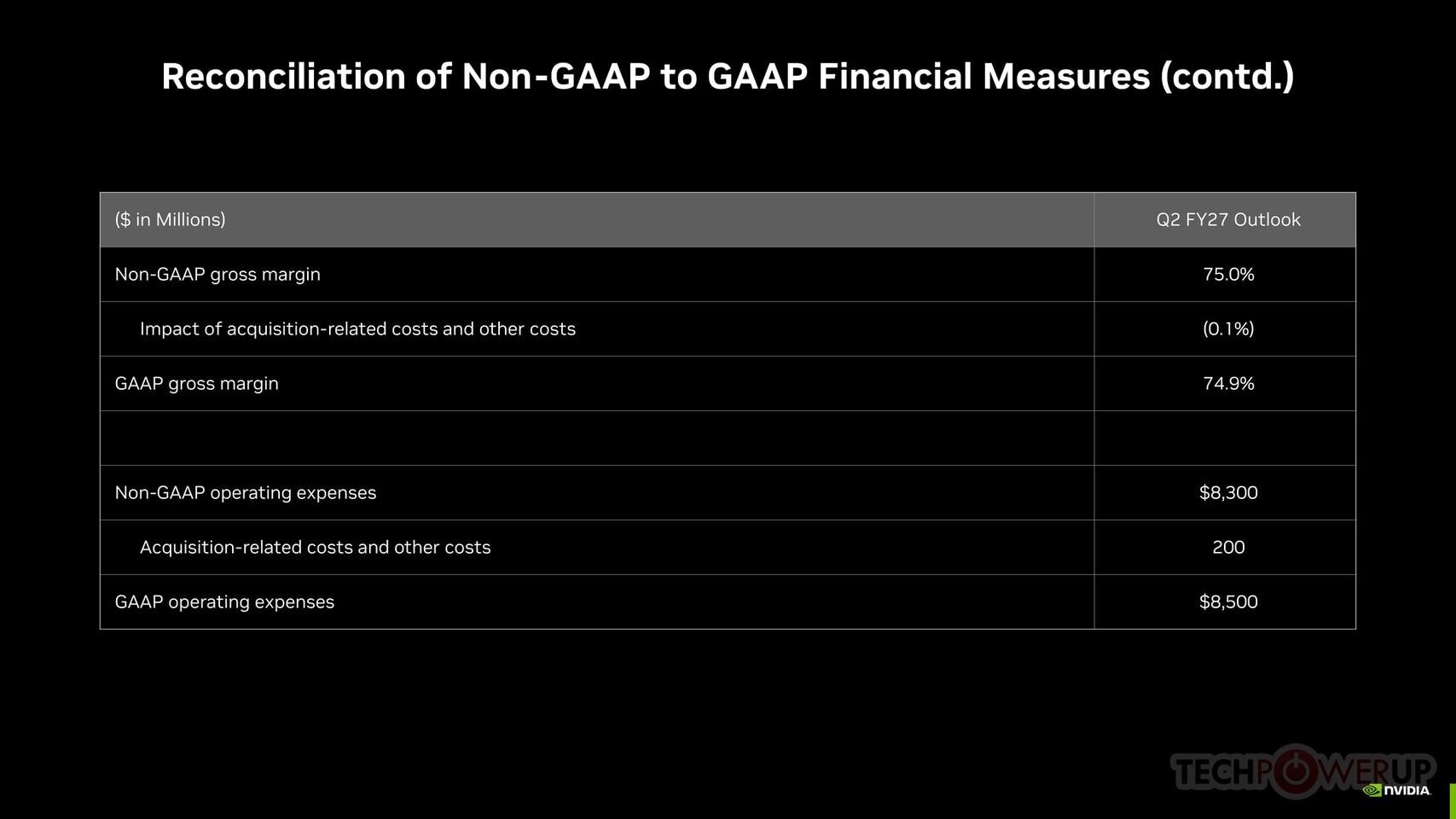
- GAAP and non-GAAP gross margins are expected to be 74.9% and 75.0%, respectively, plus or minus 50 basis points.
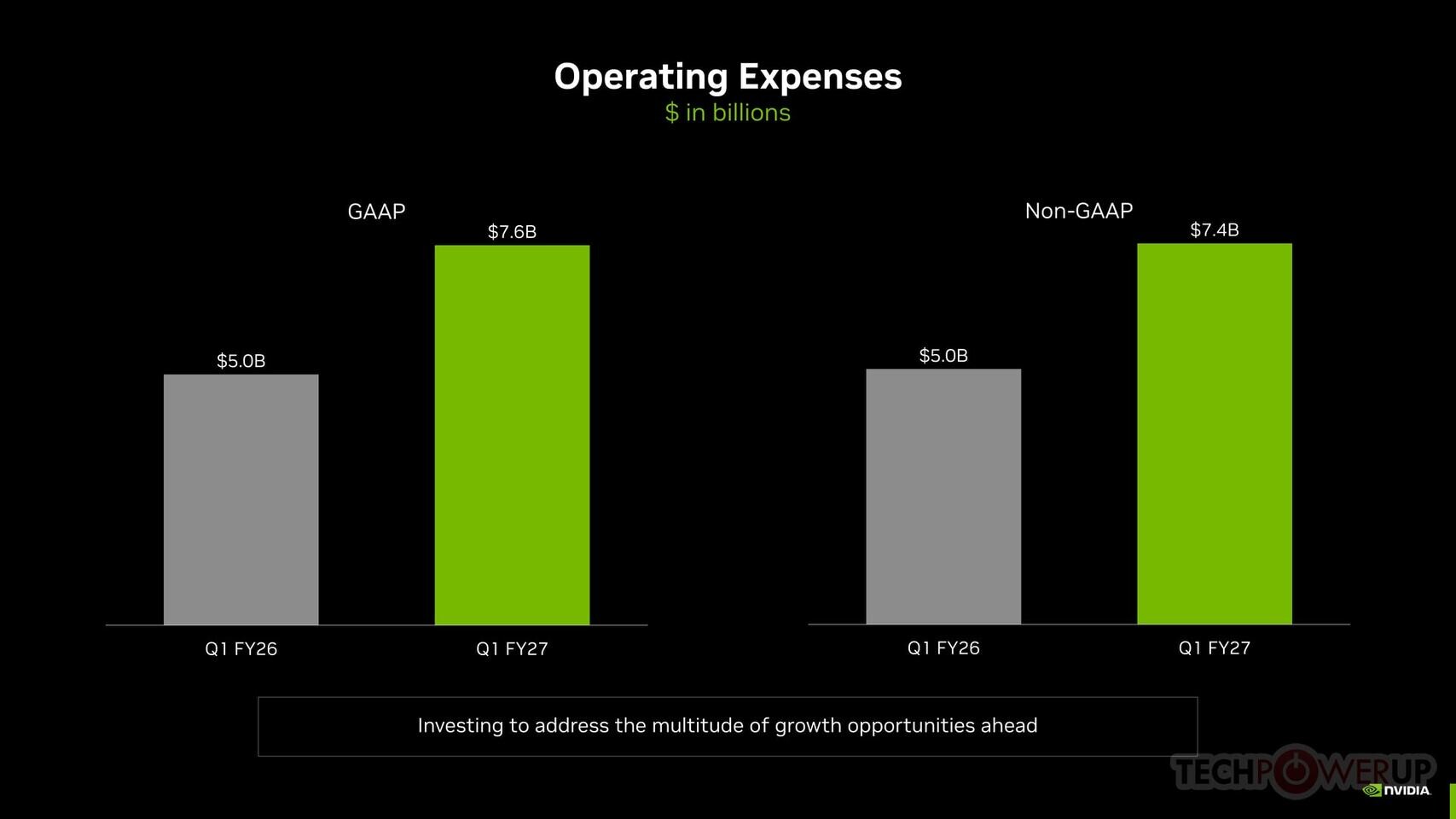
- GAAP and non-GAAP operating expenses are expected to be approximately $8.5 billion and $8.3 billion, respectively.
Highlights
Data Center
- First-quarter revenue was a record $75.2 billion, up 21% from the previous quarter and up 92% from a year ago.
- Announced the NVIDIA Vera Rubin platform, including the NVIDIA Vera CPU, the world's first processor purpose-built for agentic AI, and NVIDIA BlueField -4 STX, accelerated storage infrastructure for agentic AI factories.
- Entered production with NVIDIA Dynamo 1.0, open source software that boosts generative and agentic inference on NVIDIA Blackwell GPUs by up to 7x, with widespread global adoption.
- Announced NVIDIA NemoClaw for the OpenClaw agent platform, NVIDIA OpenShell with privacy and security controls for autonomous AI agents, and NVIDIA Agent Toolkit, an open source platform for building autonomous enterprise AI agents.
- Advanced open AI model development with new NVIDIA Nemotron, NVIDIA BioNeMo and NVIDIA Ising models, and the launch of the NVIDIA Nemotron Coalition.
- Expanded collaboration with Google Cloud to advance agentic and physical AI, including new NVIDIA Vera Rubin-powered A5X instances and a preview of Google Gemini models on Google Distributed Cloud running on NVIDIA Blackwell and Blackwell Ultra GPUs.
- Expanded the AI ecosystem through a strategic partnership with Marvell via NVIDIA NVLink Fusion, and collaboration on silicon photonics technology.
- Announced multi-year strategic agreements with Coherent, Corning and Lumentum to accelerate innovation in advanced optics technologies.
- Announced the NVIDIA RTX PRO 4500 Blackwell Server Edition GPU.
- First-quarter Edge Computing revenue was $6.4 billion, up 10% from the previous quarter and up 29% from a year ago.
- Released NVIDIA DLSS 4.5 Dynamic Multi Frame Generation and previewed the next generation of DLSS 3D-guided neural rendering model, DLSS 5, NVIDIA's most significant graphics breakthrough since ray tracing in 2018.
- Accelerated and optimized key local agentic models, including Gemma 4, Qwen, Mistral and NVIDIA Nemotron for NVIDIA RTX and edge devices.
- Announced the NVIDIA Alpamayo 1.5 open model and NVIDIA Omniverse NuRec technologies that enable autonomous driving systems at scale.
- Expanded partnership with Hyundai Motor Company and Kia for next-generation autonomous driving built on the NVIDIA DRIVE Hyperion platform, and expanded partnership with Uber to launch a fleet of autonomous vehicles powered by full-stack NVIDIA DRIVE AV software.
- Announced that BYD, Geely, Isuzu and Nissan are building level 4-ready vehicles on the NVIDIA DRIVE Hyperion platform, and introduced NVIDIA Halos OS, a unified safety architecture for AI-driven vehicles.
- Announced new NVIDIA Cosmos and NVIDIA Isaac GR00T N models, new Isaac simulation frameworks, the general availability of NVIDIA IGX Thor and physical AI leaders building on NVIDIA technology.
- Partnered with global industrial software leaders to accelerate AI-driven design, engineering and manufacturing using NVIDIA CUDA-X, NVIDIA Omniverse and accelerated computing.
- Announced collaboration with T-Mobile and Nokia to integrate physical AI applications on AI-RAN-ready infrastructure, as well as a commitment with global telecom leaders to build 6G wireless networks on AI-native, open and secure platforms.
Commentary on the quarter by Colette Kress, NVIDIA's executive vice president and chief financial officer, is available at investor.nvidia.com.
36 Comments on NVIDIA Announces Financial Results for First Quarter Fiscal 2027
Niche products that are getting all the crumbs from what AI is bulldozing. They likely won't care too much to invest much at all in these niche categories. Whatever chip that doesn't sell in those categories they can sell for multiples more if they can move that sale to their datacenter category. Nvidia will price these niche categories at a "go away" price. Hence, why their GPUs cost so much. They are telling gamers to "Go Away".
Intel is trying to get their feet wet, but sorta giving up already. I think it was done more so they could enter datacenter anyways with GPUs. AMD isn't really focused on gaming too hard either and really only seem to be in it because of consoles. The gaming side of things is still worth billions. At this point, we likely need a company dedicated only to gaming to make video cards.
$26 billion in inventory despite "AI compute shortages"
No viable path to profitability.
Actually, it is very obvious, that there is no viable path to profitability, just as you said.
But they are building them anyway 👁️
Data centers are on hold because the real shortage is electricity to power them. Literally the US grid is at capacity (and has been since 2014). Once the utility buildout catches up with demand then we’ll see if there’s any kind of bubble.
Google took how many years to become profitable, 6 I think. Amazon took 8.
This isn’t the 90’s when the telecoms spent half a trillion dollars laying fiber when everyone was on dialup, resulting in “dark fiber”. Every single resource being deployed today is being put to use.
Whether they are considered a product of 'this' or "that' on a companies revenue report doesn't mean anything but that.
Frankly I could care less about the terminology. Just keep making them.
AI is just getting started. Those who are waiting for a bubble to burst still have years to wait. Sorry.
Technology has to continue to evolve...it's the way nature works.
Tim
ARS N9NU
AI is the biggest developments in tech in decades, and we're in the shake-up period resulting from that. Nobody knows for sure how it will all pan out, but that's what makes it so fascinating and should generate interesting discussions. Alas...
Will the AI "end us"? It's certainly possible, though I think that in the shorter run it will just become yet another thing with huge downsides but with some positives too (just like the internet). It's also possible it will "save us" by helping to develop some technologies that could solve Earth's current biggest problems. The most important being able to get off this rock and colonize other planets. I don't see thsi happening with our current science, which has been kinda stuck on the same level for quite some time now.
As for gaming, yeah it sucks that it's no longer Nvidia's priority. But is it really the case? That will most likely show within the next 2 GPU generations. So far DLSS and FG did carry the increasing needs for more visual fidelity, but it’s not something that can be relied on ad infinitum and some pure computing boost is also needed on the HW level.
Also, I’m 100% sure that most of these crying about Nvidia "abandoning gamers" would do exactly the same if their company was in position to be a leader of a new tech frontier and also able to boost its worth to stratospheric levels.