Wednesday, June 3rd 2026

Channel Well Technology (CWT) at Computex 2026: High-Wattage PSUs for Inference PCs
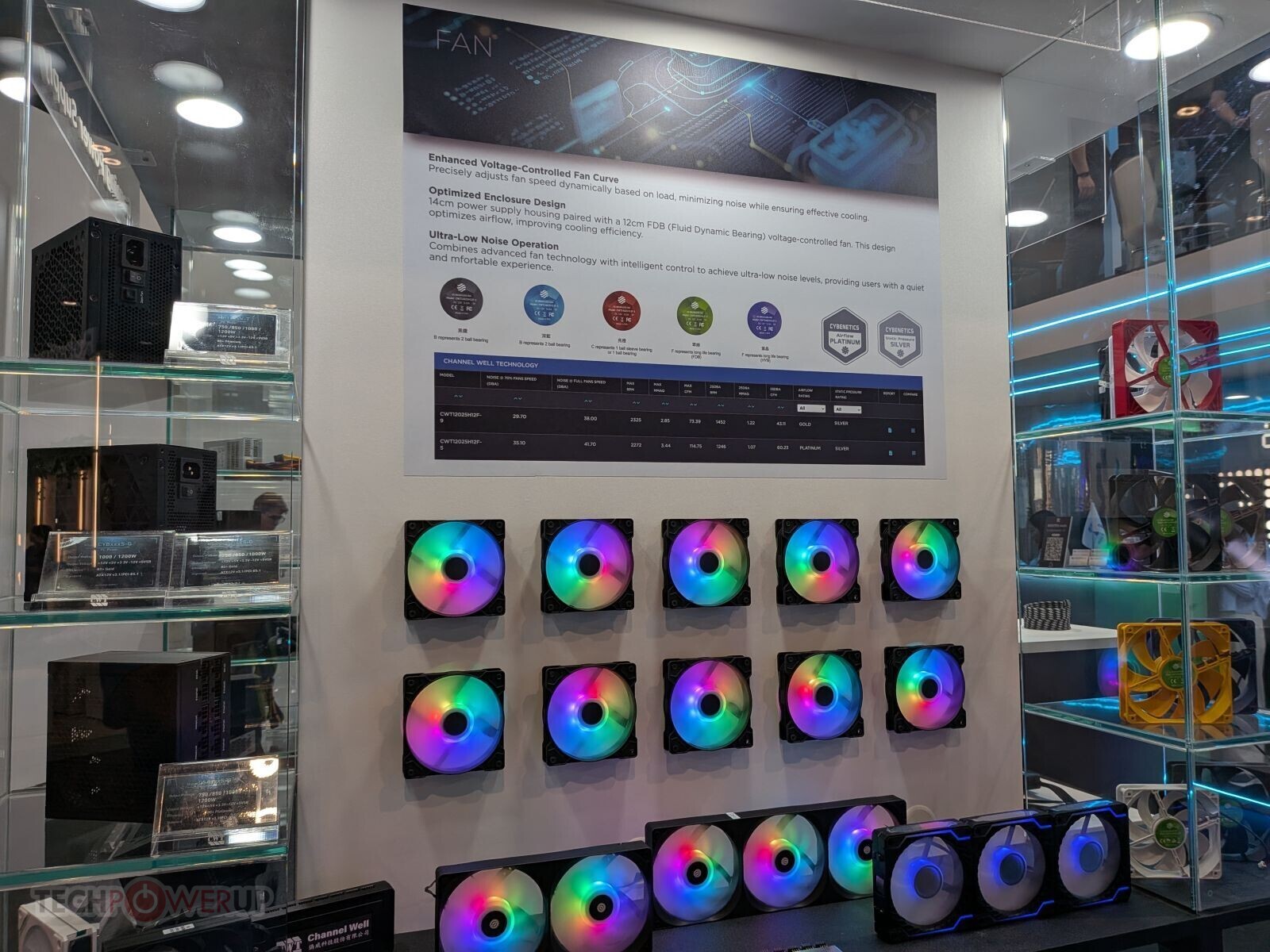
Channel Well Technology (CWT), unlike Seasonic and Fortron, had for much of its history limited itself to being an OEM of power supplies for other brands, not entering the consumer PC hardware under its own brand. This changed around 2024, when the company set out to build its own portfolio of PSUs targeting PC enthusiasts, gamers, and power-users (workstation or AI inferencing users). At Computex 2026, not only did it show us an expanded lineup of PSUs compared to last year, but it also showcased some of the PSU components of its own brand, and branched out into fans for use in cases, coolers, and PSUs.
We begin our tour with the CTH VP-Series of high-wattage PSUs for GPU inferencing workstations. It comes in four models, the CTH2500V-P (2500 W), CTH2800V-P (2800 W), CTH3000V-P (3000 W), and the top-spec CTH3200V-P (3200 W). It meets ATX 3.1 and PCIe 5.1 CEM specifications, and offers 80 Plus Platinum efficiency when connected to 230 V mains. The PSU offers DC-to-DC switching to lower voltage domains. All four of these high-Wattage models offer four 12V-2x6 connectors.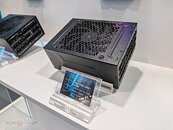
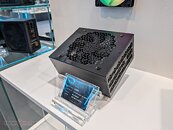
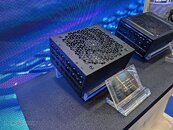
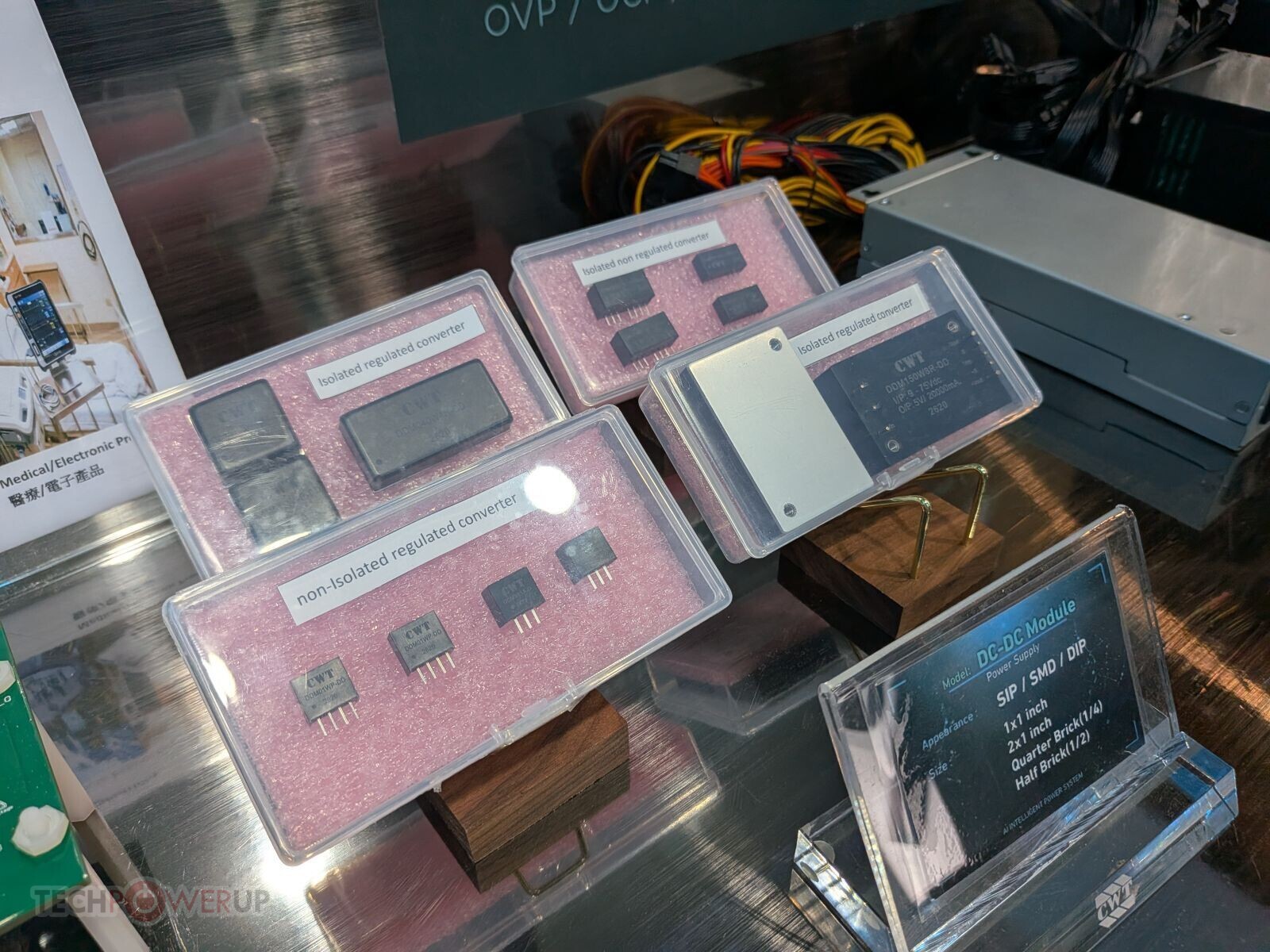
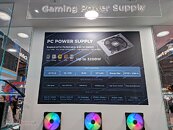 Next up is the CTH VL-Series high-wattage PSUs, which come in a more compact, reduced depth body. There are two variants in the series, the CTH2500V-L (2500 W), and the CTH2800V-L (2800 W). Both offer 80 Plus Platinum (230 V) efficiency, and four 12V-2x6 connectors. The CTT1650V-P is targeted more toward PC enthusiasts than the inferencing crowd. It offers 1650 W, 80 Plus Platinum efficiency, and two 12V-2x6 connectors. The company also displayed some of its own branded PSU components as it looks to localize its parts bin further.
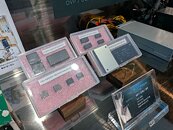
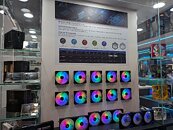
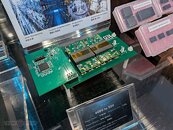 Lastly, we got a tease of CWT's ARGB LED-illuminated fans with hydro dynamic bearings, including individual, easy daisy-chaining fans with interlocks, and compound fans.
We begin our tour with the CTH VP-Series of high-wattage PSUs for GPU inferencing workstations. It comes in four models, the CTH2500V-P (2500 W), CTH2800V-P (2800 W), CTH3000V-P (3000 W), and the top-spec CTH3200V-P (3200 W). It meets ATX 3.1 and PCIe 5.1 CEM specifications, and offers 80 Plus Platinum efficiency when connected to 230 V mains. The PSU offers DC-to-DC switching to lower voltage domains. All four of these high-Wattage models offer four 12V-2x6 connectors.



17 Comments on Channel Well Technology (CWT) at Computex 2026: High-Wattage PSUs for Inference PCs
120v 15a standard countries are going to have a hard time if they plan to sustain this load.
But whatever, if you have money for PC components that can consume 3200W (minus a small margin), and can pay for the energy consumed, you can probably bear the cost of new wiring too.
And no I don’t imagine they could afford it. It would cost thousands for an electrician to run this for you in a lot of states.
Though there aren't installed wall outlets except maybe in garage. Kitchen and sauna stove use fixed wiring.
i see other issues also in regards of fuse, diameter of the wall cables, overload etc.
i do not want to use a too big fuse. it was not my decision, but i agree that 12 amps or 16 amps single phase 230V AC should be enough for a wall socket.
the few consumers which need more have extra lines in 3 phase.
i do not see the issue, does the 110V AC countries do not have 3 phases?
There is plenty of juice coming from outside inside my house.
Multi Power Supply units + multi outlets and wiring will solve the 10KW PC Power consumption issue.
--
paul hardware, seems he got another sponsorship from Thermaltake, was showing pc cases with very small motherboards but two of those in a case.
Two tiny motherboards with no expansion ports in the same fish tank case with bad cooling but one nice shiny bend glass panel which does not shield the user from the electromagnetic radiation.
one computer these days easily can use 1500 Watts, make it double and there you have your needs for a 3KW Power supply unit.
It's the same issue with EV chargers.
Electric Vehicles need far more power than measly 3KW like my hair dryer does. Or my water kettle for boiling water for my teapot.
car chargers always needs new wiring and fuse boxes. if you do not I will not argue about that.
igorslab had a few videos about 3kW power supply units and the use cases. lots of local "AI" gpus in computer cases was one use case for such 3kw power supply unit. it seems the smallest power supply unit mentioned was only 850Watts