Thursday, October 1st 2026

AMD Ryzen Z3 Reportedly Packs 6 CPU Cores and 12 RDNA 4m GPU CUs

AMD may be preparing a significant update to its Ryzen Z-Series processors designed for handheld devices, with the latest Z3 processor bringing substantial changes over the previous generation. At the core of everything will be the CPU architecture. For the standard Ryzen Z3, AMD plans to use four "Zen 6" cores and two "Zen 5" low-power cores. The Ryzen Z3 Extreme will share the same CPU core configuration, resulting in a total of six cores and twelve threads in the CPU cluster. Alongside this, there will be a cluster with an integrated graphics solution, featuring up to 12 Compute Units of RDNA 4m. This version reportedly derives from RDNA 3.5 but includes RDNA 4-style ALUs for matrix operations that power technologies like FSR 4.

Compared to the previous Ryzen Z2 Extreme's eight-core CPU cluster and 16 CU RDNA 3.5 integrated graphics cluster, the new solution focuses on extracting extra performance from the new "Zen 6" cores and optimizing for RDNA 4m. This ensures the software stack is mostly new, without needing any backporting to older RDNA generations. The difference between the two Z3 variants will be in power limits, with the Z3 catering to the 15-watt segment, while the Z3 Extreme will be optimized for a 25-watt power envelope.
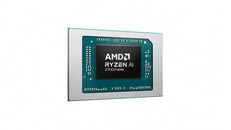
Ryzen Z3 Extreme
Finally, this processor generation is reportedly designed for AMD's FF6 package, measuring 25 × 25 mm, specifically for handheld gaming consoles. We have yet to see which handheld gaming devices will implement this, so we need to wait a few more months before anything new hits the market. With improved single-threaded CPU performance and the intriguing RDNA 4m graphics, we hope to see a significant generational leap from the previous Ryzen Z2 version.
Source: via VideoCardz
Add your own comment

62 Comments on AMD Ryzen Z3 Reportedly Packs 6 CPU Cores and 12 RDNA 4m GPU CUs

#2
oxrufiioxo
AusWolfSo definitely no Steam Deck 2, then.
My guess is whatever ships inside steamdeck 2 will be semi custom like the ps5/series consoles, maybe a derivative of what's going into the PS6 handheld which is 6 zen6c cores and 16 RDNA5 compute units which would be massively faster than steam decks current hardware.

Rumored specs but console leaks have been pretty accurate since consoles went to more traditional hardware vs fully custom.
Posted on Reply
#4
Jermelescu
AusWolfSo definitely no Steam Deck 2, then.
They should not bother releasing something that's not at least 50% faster/watt than what's currently the best on the market, since they'll not release another one for a long time afterwards. That being said, 2028 at least with a true next-gen GPU from AMD most probably and LPDDR6, as they'll need faster RAM.
Posted on Reply
#5
dgianstefani
TPU Proofreader
Wait what? Zen 6 mixed with Zen 5c?
Posted on Reply
#6
theonlyrobert
dgianstefaniWait what? Zen 6 mixed with Zen 5c?
Probably like Intel's P and E-cores.
Posted on Reply
#7
dgianstefani
TPU Proofreader
theonlyrobertProbably like Intel's P and E-cores.
That's fine, and expected. My confusion is from surprise they would mix current and previous gen cores I.e. Why not use Zen 6 and Zen 6c? Both exist as server products, so it's not like they're forced to use Zen 5c with Zen 6.
Posted on Reply
#8
_roman_
So Videocardz now is trused with such wannabe rumour hoax posters?
According to information shared by Gotou_3rd and CaptainMcShotgun,
I wonder if the personal ID says Gotou_3rd or CaptainMcShotgun. I wonder if these are really involved in any of the manufacturing process to even have access to such data.

Edit: not worth arguing or discussing, as most likely hoax post without foundations. Just because videocardz shared it, does not imply it is a given fact.
Posted on Reply
#9
theonlyrobert
dgianstefaniThat's fine, and expected. My confusion is from surprise they would mix current and previous gen cores I.e. Why not use Zen 6 and Zen 6c? Both exist as server products, so it's not like they're forced to use Zen 5c with Zen 6.
I see, they probably used it to reduce costs? I'm not really sure myself.
Posted on Reply
#10
THANATOS
RDNA4m is a letdown considering It's still RDNA3.5 with some extra stuff.

I want a new architecture preferably RDNA5 or at least RDNA4.
Then also more cache. Intel performs much better also thanks to 16MB L2 cache.
Posted on Reply
#11
RejZoR
It's so weird AMD doesn't make it based on flagship compute units. Like, who wants last last gen GPU with new name in a brand new handheld?
Posted on Reply
#12
GenericUsername2001
RejZoRIt's so weird AMD doesn't make it based on flagship compute units. Like, who wants last last gen GPU with new name in a brand new handheld?
The rumors are that Radeon "4m" will add FP8 hardware for better FSR4 support, but skimp on boosting the raytracing side of things, to save on die space. The rational is that while going from say 24 fps to 48 fps while raytracing is super useful on higher end hardware (using the Cyberpunk 1080p RT benches of the RX 7600 vs RX 9060XT on this site) scaling that down to iGPU levels would be more like 8 fps vs 16 fps, so not really playable anyways. If this chip is real, it should be super small and relatively cheap to make, so a decent option for the more budget handhelds. AMD does seem to be planning higher end iGPUs with RDNA 5 (Medusa Halo with 48 CU and Halo Mini with 24 CU) that will certainly make their way into the higher end of the hand held market.
Posted on Reply
#13
kondamin
dgianstefaniWait what? Zen 6 mixed with Zen 5c?
That should have been the main reason not to post this obvious fake bs.
No one mixes arch’s
Posted on Reply
#14
AusWolf
JermelescuThey should not bother releasing something that's not at least 50% faster/watt than what's currently the best on the market, since they'll not release another one for a long time afterwards. That being said, 2028 at least with a true next-gen GPU from AMD most probably and LPDDR6, as they'll need faster RAM.
And I fully support that decision.
Posted on Reply
#15
Darmok N Jalad
dgianstefaniThat's fine, and expected. My confusion is from surprise they would mix current and previous gen cores I.e. Why not use Zen 6 and Zen 6c? Both exist as server products, so it's not like they're forced to use Zen 5c with Zen 6.
Perhaps 5c is smaller or more low power efficient on a lower node, or AMD had this product earlier in the product development stack. It could be a variety of reasons, but power efficiency is critical here, and every little bit saved can be used elsewhere. These C cores aren’t likely to be doing any heavy lifting anyway.
kondaminThat should have been the main reason not to post this obvious fake bs.
No one mixes arch’s
It’s hardly that big of a mix. Besides, Intel has been mixing arch’s since the 5 core Lakefield back in 2020.
Posted on Reply
#16
Chrispy_
Ugh, so maybe 25-50% gain over the old Z1 thanks to RDNA4 being better than RDNA3.
Yes, I know RDNA4 desktop cards are more than 30-50% faster than their RDNA3 counterparts with similar CU counts, but they also use a load more power. Locked at 15 or 25W, a lot of that advantage vanishes.

I'm not even sure it's going to match the Z2 Extreme, which already benefits from TSMC 4nm, and RDNA3.5 takes most of the architectural improvements of RDNA4, but without the raytracing upgrades. Ain't nobody raytracing on a 25W APU! All else being equal, the 16CU on the Z2 Extreme is probably going to be faster at 25W than the 12CU on the Z3 Extreme.
Posted on Reply
#17
Rulumi
More RDNA 3.5 derived graphics in mobile until 2028 or a little later when everyone else already is continuing to update their mobile graphics technologies feels very underwhelming.
Chrispy_Ugh, so maybe 25-50% gain over the old Z1 thanks to RDNA4 being better than RDNA3.
Yes, I know RDNA4 desktop cards are more than 30-50% faster than their RDNA3 counterparts with similar CU counts, but they also use a load more power. Locked at 15 or 25W, a lot of that advantage vanishes.
RDNA4m is not really RDNA4, it seems to be RDNA 3.5 with a few backports. So actual performance improvement is likely to be considerable lower outside some specific compute and AI tasks that rely on matrix operations. But at least AMD should support FSR4 and all of that officially on it from release unlike the current situation for RDNA 3 and RDNA 3.5 integrated graphics (still not supported officially and the Windows driver specifically blacklists them).
Posted on Reply
#18
Darmok N Jalad
Chrispy_Ugh, so maybe 25-50% gain over the old Z1 thanks to RDNA4 being better than RDNA3.
Yes, I know RDNA4 desktop cards are more than 30-50% faster than their RDNA3 counterparts with similar CU counts, but they also use a load more power. Locked at 15 or 25W, a lot of that advantage vanishes.

I'm not even sure it's going to match the Z2 Extreme, which already benefits from TSMC 4nm, and RDNA3.5 takes most of the architectural improvements of RDNA4, but without the raytracing upgrades. Ain't nobody raytracing on a 25W APU! All else being equal, the 16CU on the Z2 Extreme is probably going to be faster at 25W than the 12CU on the Z3 Extreme.
Just depends how much the Z3's CUs are like RDNA4 (but they aren't fully RDNA4). The 9070XT has 33% less CUs than the 7900XTX, but they are quite similar in terms of overall performance. 12CUs is only a 25% reduction over Z2, so the architectural changes and probably a clock speed boost might more than make up for those lost CUs. I can't imagine the Z3 will be a regression. Maybe it will just be a side grade with better power consumption.
Posted on Reply
#19
AusWolf
Chrispy_RDNA4 desktop cards are more than 30-50% faster than their RDNA3 counterparts with similar CU counts, but they also use a load more power.
Which ones? The 9060 XT is a good 30% faster than the 7600 while having the same TDP. The 9070 XT has a 20% lower TDP than the 7900 XTX, while it goes almost head to head in performance.

Anyway, everything can be tuned for efficiency. Notice how your CPU overclock gives you 5-10% extra performance for sometimes double the power consumed.
Posted on Reply
#20
iosonolucaio
The hypothetical new Steam Deck 2 should support GTA 6 at 1080p60 (possibly without upscaling) otherwise lots of people won't buy it.
Posted on Reply
#21
RejZoR
GenericUsername2001The rumors are that Radeon "4m" will add FP8 hardware for better FSR4 support, but skimp on boosting the raytracing side of things, to save on die space. The rational is that while going from say 24 fps to 48 fps while raytracing is super useful on higher end hardware (using the Cyberpunk 1080p RT benches of the RX 7600 vs RX 9060XT on this site) scaling that down to iGPU levels would be more like 8 fps vs 16 fps, so not really playable anyways. If this chip is real, it should be super small and relatively cheap to make, so a decent option for the more budget handhelds. AMD does seem to be planning higher end iGPUs with RDNA 5 (Medusa Halo with 48 CU and Halo Mini with 24 CU) that will certainly make their way into the higher end of the hand held market.
I'd realistically not expect RT on handhelds, it's just too taxing on battery and thermals for something you realistically can't appreciate on such small displays. Faked "legacy" lighting and shadowing will do just fine at fraction of thermal and power cost.
Posted on Reply
#22
LittleBro
dgianstefaniThat's fine, and expected. My confusion is from surprise they would mix current and previous gen cores I.e. Why not use Zen 6 and Zen 6c? Both exist as server products, so it's not like they're forced to use Zen 5c with Zen 6.
Low power Zen 5 cores don't exist. Low power Zen cores don't exist.
There are regular Zen cores and compact Zen cores which are same as regular but sticked into chiplet with reduced (halved) L3 cache.

I don't think AMD wants to mix different architectures (different IPC), as that would introduce headaches (scheduling problems).

Take that rumor with tons of salt.
iosonolucaioThe hypothetical new Steam Deck 2 should support GTA 6 at 1080p60 (possibly without upscaling) otherwise lots of people won't buy it.
No chance.
Posted on Reply
#23
Chrispy_
AusWolfWhich ones? The 9060 XT is a good 30% faster than the 7600 while having the same TDP. The 9070 XT has a 20% lower TDP than the 7900 XTX, while it goes almost head to head in performance.

Anyway, everything can be tuned for efficiency. Notice how your CPU overclock gives you 5-10% extra performance for sometimes double the power consumed.
The 7900XTX isn't even close to the 9070XT in terms of core config or architecture - The 7900XTX is a behemoth with literally 50% more of every primary resource than the 9070XT.
The closest match to the 9070XT from RDNA3 is probably the 7800XT - much close CU count, ROP count, bus width, and memory bandwidth.

9060XT vs 7600 is a big gain but the 7600 is little more than a rebadged RDNA2 chip so many of us (including me) don't class Navi33 as true RDNA3. RDNA3's wider vector registers, wider SIMDs, decoupled clock domains, Infinity Cache latency and clock improvements are all absent on Navi33, plus it's made on cheap and slow N6 which is just a half-node shrink of 2019's N7 node.
Posted on Reply
#24
AusWolf
LittleBroLow power Zen 5 cores don't exist. Low power Zen cores don't exist.
There are regular Zen cores and compact Zen cores which are same as regular but with reduced L3 cache.
You're right about the first part. The only part I'd correct is that no Zen or Zen compact core has any L3 cache. The entire CPU does regardless of core types in it.
Chrispy_The 7900XTX isn't even close to the 9070XT in terms of core config or architecture - The 7900XTX is a behemoth with literally 50% more of every primary resource than the 9070XT.
The closest match to the 9070XT from RDNA3 is probably the 7800XT - much close CU count, ROP count, bus width, and memory bandwidth.
Well, if you look at it that way, then the 9070 XT is miles ahead of the 7800 XT. If you want lower power, you have the non-XT eating the same amount as the 7800 XT while still maintaining a massive gap in performance.
Chrispy_9060XT vs 7600 is a big gain but the 7600 is little more than a rebadged RDNA2 chip so many of us (including me) don't class Navi33 as true RDNA3. RDNA3's wider vector registers, wider SIMDs, decoupled clock domains, Infinity Cache latency and clock improvements are all absent on Navi33, plus it's made on cheap and slow N6 which is just a half-node shrink of 2019's N7 node.
And that matters how?
Posted on Reply
#25
iosonolucaio
LittleBroNo chance.
Valve said they wanted a "true generational leap" so I'd say a handheld capable of running late 2026 / early 2027 titles should be the minimum. the original Steam Deck came out in Q1 2022 and could barely play AAA games, even those that came out in 2022 and 2023. GoW Ragnarok 2024 on PC for example requires you to set everything to Low and enable FSR to Performance to get stable 30fps without frame drops. Another problem would be battery life, so RT is out of the question. upscale algorithms and frame generation can be beneficial without impacting on battery if set correctly.

Edit: since most handhelds use 720p/800p rendering, a larger L3 cache would be beneficial, both for CPU heavy games and the GPU. Something along 16 or 32MB would be best, instead of the current 4MB of the Steam Deck.
Posted on Reply
Add your own comment
Nov 12th, 2026 04:39 CST change timezone

New Forum Posts

Popular Reviews

TPU on YouTube

Controversial News Posts