Thursday, November 19th 2026

AMD "Zen 6" for Desktop Reportedly Pushed to Computex 2027
AMD's upcoming Ryzen processors based on the new "Zen 6" core architecture are reportedly delayed until Computex 2027, according to the latest information from Chiphell. The "Zen 6" EPYC lineup will utilize TSMC's N2 node, with the standard version for "Venice" and the enhanced N2P for "Verano." However, for the desktop "Zen 6" Ryzen family, codenamed "Olympic Ridge," AMD is switching to TSMC's N2X node, an enhanced variant of the standard N2 that targets higher frequencies. This switch results in delayed mass production and rollout of desktop Ryzen. TSMC plans to begin mass production of its N2X node in 2027, meaning "Olympic Ridge" will likely arrive a few months later, with Computex 2027 being the probable announcement date.
AMD likely chose the N2X node for its higher clock potential. Originally, TSMC targeted HPC workloads, but desktop processors can also benefit from high clock speeds for maximum performance. The N2X node offers two advantages over the standard N2: an ultra-high performance standard cell that delivers a 5% higher clock speed, and a high-speed device, which provides an additional 5% boost, resulting in a combined 10% speed increase.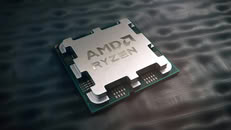 For CES 2027, AMD is likely preparing one of its mobile "Zen 6" SoCs from the "Medusa" family. This means we can see some of the "Zen 6" potential on consumer devices at CES 2027, but proper desktop chips remain a mystery for a few more months. "Zen 6" not only provides an IPC increase but also a significant multithreaded performance boost, thanks to a 50% increase in CPU core counts per CCD over "Zen 5." The standard "Zen 6" CCD features 12 CPU cores and 48 MB of shared L3 cache, with the option for 96 MB of stacked 3D V-Cache memory in select models, resulting in a total of 144 MB L3 cache on the SKU that will succeed the current Ryzen 7 9850X3D.
Sources:
Chiphell, Kepler L2, via VideoCardz
AMD likely chose the N2X node for its higher clock potential. Originally, TSMC targeted HPC workloads, but desktop processors can also benefit from high clock speeds for maximum performance. The N2X node offers two advantages over the standard N2: an ultra-high performance standard cell that delivers a 5% higher clock speed, and a high-speed device, which provides an additional 5% boost, resulting in a combined 10% speed increase.
4 Comments on AMD "Zen 6" for Desktop Reportedly Pushed to Computex 2027
A shame Razor lake and AMD zen 6 X3D will not release face to face so that I could choose for the next upgrade, my 7600X did its time, didn't want to switch to 9800X3D before Zen 6, I knew Z6 would bring a big jump.