News Posts matching #2026

Return to Keyword Browsing

PC Motherboard Sales Face Sharp 25%+ Decline Amid Weak Demand

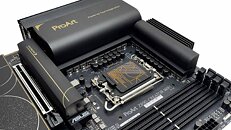
PC motherboard sales are on track for some of the biggest corrections in recent times as manufacturers struggle with weak demand, according to a DigiTimes report. What began as AI data center expansion quickly started affecting consumer PC DIY endeavors, as severe silicon shortages across the industry drove DRAM and CPU demand so high that prices have increased significantly for DDR4 and DDR5 memory kits, while regular CPUs have also seen a large price increase. In response, PC motherboard makers are caught in the middle of this shortage, seeing their motherboard unit sales revised down significantly. The report notes that all Taiwanese motherboard makers have significantly lowered their 2026 shipment targets, with some experiencing more than a 25% decrease in projected unit sales.

Interestingly, it's not only CPU and memory shortages driving this lowered demand; there are indications that consumers have slowed down their NVIDIA GPU upgrade cycles, which is impacting new motherboard sales. Particularly with the "Blackwell" GPU generation, consumers began purchasing PCIe 5.0 motherboards to achieve the greatest performance increase. However, as these GPUs became rarer and more expensive due to the global DRAM shortage, consumers have become reluctant to upgrade. ASUS is projected to sell about 10 million motherboards in 2026, while MSI and GIGABYTE are now projecting sales of less than 10 million units each. This represents about a 25% yearly decrease from 2025 sales. The worst position is estimated for ASRock, which is expected to see a 30% decrease according to the report.

AMD to Expand EPYC Lineup With Specialized CPUs for AI, HPC, and Cloud

AMD's CPU offerings will soon expand into more categories, specializing in different tasks and use cases. During the latest Q1 earnings call, AMD CEO Dr. Lisa Su confirmed that customers are increasingly interested in specialized EPYC solutions and that future CPU generations will cater to different customer needs. This means that agentic AI will receive a dedicated EPYC CPU SKU, HPC workloads will have their own EPYC CPU SKU, AI training and inference will get a separate EPYC SKU, and cloud workloads will have a distinct SKU. This expansion of task-specialized CPU designs will go beyond the "Venice" CPU platform, which is expected to be released this year. At CES 2026, AMD confirmed that EPYC "Venice" will be a highly dense CPU package with up to 256 cores and 512 threads of "Zen 6c" cores, while the regular "Zen 6" configuration will have a maximum of 96 cores and 192 threads.

With this generation of EPYC CPUs based on the "Zen 6" core IP, AMD will promote "Venice" CPUs broadly, while the "Venice" CPU generation will be complemented by the "Verano" CPUs. These appear to use the same "Zen 6" microarchitecture but have optimizations specifically designed for AI infrastructure. Contrary to previous assumptions that "Verano" would be a "Zen 7" IP, it is now confirmed to be part of the 6th-generation EPYC CPU family. This indicates that AMD is starting its CPU customization for different workloads as early as this year. As the server CPU market is projected to reach $120 billion by the end of this decade, less than 3.5 years away in 2030, it makes sense to have different CPU SKUs for each task and capture a significant portion of that revenue. Server CPUs are also expected to grow at a 35% compound annual growth rate, which is impressive for a relatively mature market.

AMD Says Agentic AI Could Put More CPUs Than GPUs in Compute Nodes

AMD reported impressive first-quarter 2026 earnings, and during the earnings call, CEO Dr. Lisa Su shared some intriguing insights about the agentic AI era. This era is driving CPU usage to unprecedented levels, to the extent that the number of CPUs in a single compute node is becoming almost equal to the number of GPUs. In response to a question from an analyst, Dr. Lisa Su explained that the traditional setup of one CPU paired with four or even eight GPUs is shifting towards a one-to-one ratio of CPUs to GPUs. This change indicates a surge in CPU demand due to the agentic features, which require large language models to utilize the host CPU for continuous updates and orchestration of these agents. Previously, CPUs primarily served as hosts to initiate GPU operations for training and inferencing AI models. However, as AI becomes more agentic, the CPU's role is becoming significantly more important.
AMD's Lisa Su...We certainly see the movement towards where in the past, the CPU to GPU ratio was primarily just as a host node in like a 1:4 or 1:8 configuration node, now changing and getting closer to a 1:1 configuration or even -- you can even imagine if you get lots and lots of agents that you could have more CPUs and GPUs...

Xbox Axes Copilot on Consoles, Winds Down Copilot Mobile Development

In a recent post on X, Xbox CEO, Asha Sharma, announced that Copilot on console will officially exit active development, while Copilot on mobile will also be wound down. Copilot for Gaming was previously announced in March 2025, with the feature first making its way to mobile and later announcements predicting that Copilot would be coming to Xbox Series consoles sometime in 2026. Copilot was slated to land on Xbox consoles in the form of an AI that effectively watches you game by taking screenshots and monitoring inputs and then providing suggestions and recommendations based on that data. Judging by the wording in the announcement, this appears to be another move by Xbox Gaming CEO, Asha Sharma, to earn back the trust of gamers in what she calls "a return to Xbox." It's unclear what this means for the rest of the Xbox Gaming software suite, especially when it comes to devices like the ASUS ROG Xbox Ally and its Xbox Game Bar, but it seems likely at this point that those integrations may also eventually be removed.

The full post by Sharma reads:
Xbox needs to move faster, deepen our connection with the community, and address friction for both players and developers.
Today, we promoted leaders who helped build Xbox, while also bringing in new voices to help push us forward. This balance is important as we get the business back on track.
As part of this shift, you'll see us begin to retire features that don't align with where we're headed. We will begin winding down Copilot on mobile and will stop development of Copilot on console.

Mouse Brands Line Up Magnetic Mouse Switches To Compete With Logitech HITS

Logitech's HITS (haptic inductive trigger system), introduced with the G Pro X2 Superstrike gaming mouse in late 2025, made serious waves in enthusiast gaming mouse spaces, but, as is the case with many of Logitech's innovations, the mouse the tech came with was imperfect and commanded a premium price. Now, it seems as though at least two Chinese peripheral makers are lining up to challenge at least some of Logitech's capabilities with their own magnetic switch tech. First, and the one we know the least about, is Keychron, surprisingly enough who is apparently preparing a micro switch called the MagOpt. The MagOpt switch was teased by Keychron on the brand's own YouTube channel, where it showed off a switch design that looks to use a hybrid optical and magnetic sensing mechanism combined with a traditional click leaf. It seems as though Keychron's MagOpt switch will attempt to mimic some of the functionality of the HITS system—like rapid trigger, adjustable actuation, and better longevity—but without a lot of the adjustability enabled by the haptic feedback of Logitech's HITS system.

The other incoming contender is Snaptiq, a product by a Russian streamer (shared by @goonerfps on X), and this system appears to have much more feature parity with Logitech HITS. The sensors in Snaptiq are analogue, like those found in Logitech's implementation, but these use magnets and either Hall effect or TMR sensor in place of Logitech's inductive switches. More importantly, Snaptiq will also mimic the tactile feedback with vibration motors, similar to HITS. How this pans out remains to be seen, but Lunacy claims that it will be able to detect movement as fine as 1 micron (0.001 mm) and that the mouse clicks themselves will be completely silent. Lunatic's Snaptiq is slated to launch by the end of 2026, although it is unlikely to launch in Western markets. However, this and Keychron's implementation may be the start of a wave of Chinese brands adopting similar tech to Logitech HITS.

Asustor at Computex 2026 - Local AI, USB4 Networking, Expansion Units and 24 Bays

Asustor Inc. today is announcing that it will unveil a range of new products at Computex 2026 in Taipei, to showcase its superior network storage prowress with numerous models in addition to its award winning lineup of network storage solutions.

Flashstor Gen3 Series - Flagship Flash NAS for Creators with Optional AI
The all-flash NAS, highly praised by professional photographers and video creators, is receiving a significant upgrade. The new Flashstor Gen3 series is equipped with an AMD Ryzen 5 Pro 8640U Six-Core processor, providing 16 TOPs of AI computing power.

WD Reports Fiscal Third Quarter 2026 Financial Results

Western Digital Corporation (Nasdaq: WDC) today reported fiscal third quarter 2026 financial results for the period ended April 3, 2026.

"WD started calendar year 2026 with great execution, driving strong sequential and year-over-year revenue growth in all our end markets, while expanding gross and operating margins. Gross margin exceeded 50%, reflecting our continued delivery of innovation across an expanding set of customers. Given our confidence in the durability of our business, we are also announcing a 20% increase in the quarterly cash dividend on the company's common stock to $0.15 per share," said Irving Tan, CEO of WD. "The demand drivers are clear: Virtually every AI workload, from training, inference, agentic AI to physical AI, creates data that is stored persistently and cost-efficiently on HDDs."

Control Resonant Will Rely on Build Diversity and Experimentation for New Game Plus

Remedy Entertainment revealed Control Resonant near the end of 2025, later revealing that the sequel to the atmospheric, sci-fi, third-person action-adventure shooter would launch around Q2 2026. Now, presumably in the lead-up to the official launch of Resonant, Remedy has shown off some of what's to come in the game's New Game Plus gameplay. According to the PlayStation Blog post, Remedy will rely on more than just more power and increased damage counters for the New Game Plus gameplay, instead giving players more control over their builds in order to face off against more challenging enemies.

Instead, in Control Resonant, when players have finished the game and start a new playthrough in the same save, the game changes how the player and enemies interact, but players keep many of the upgrades they've earned—Aberrant upgrades, health improvements, supernatural abilities, talents, and artifacts will all still be there. "One of the goals for New Game Plus is to give players more room to experiment with builds that weren't possible during the first playthrough, as you cannot unlock everything in your arsenal in one go," Remedy explains. For starters, the player character has an extra artifact slot that allows for both increased damage output and more build diversity, and players will be able to equip more than one combat ability from the same boss for new synergies. The game also unlocks more artifacts and crafting options, making it easier to adapt builds to different scenarios and tougher enemies.

Intel "Arc G3 Extreme" Makes It to Handhelds in Leaked MSI Claw 8 EX AI+ Retail Listing

MSI's Claw line-up of gaming handhelds has gone from being overpriced and underperforming in the original Intel-powered Claw 8 A1M to being widely regarded as solid performers in both the new AMD- and Intel-powered variants. Now, however, an Italian retail listing on Ollo Store has tipped an updated version of the Intel-powered Claw handheld, this time appearing as the MSI Claw 8 EX AI+ for a price of €1,599, which is €300 more than the current-gen Claw 8 AI+ A2VM with the same memory and storage specs on the same site.

[Editor's note: Our in-depth review of the MSI Claw 8 AI+ A2VM can be found here]

The new Claw 8 EX AI+ will feature Intel's new Arc G3 Extreme CPU, which has been reported to be a 14-core (2× P-Core, 8× E-Core, 4× LPE-Core) CPU. The G3 Extreme's graphics will rely on the Intel Arc B380 iGPU, which is slated to have 12 Xe3 cores at 2.3 GHz. The only real difference between the B390 and the B380 is the GPU core clocks, which are 200 MHz lower on the B380, so performance shouldn't be too far off what we've seen on the flagship Intel Core Ultra X9 388H in our recent Intel Panther Lake review. The rest of the Claw 8 EX AI+ looks to be pretty standard fare for MSI's gaming handhelds these days, with 32 GB of RAM, an 8-inch, 16:10 IPS display with 500 nits of brightness and 100% sRGB coverage, an 80 WHr battery, Wi-Fi 7, and an included carrying case.

Samsung Q1 2026 Results: Memory Profit Up Nearly 50x, Warns of 2027 Shortage

Samsung has reported a record quarterly profit for Q1 2026, with chip division operating income jumping to 53.7 trillion won ($36.15 billion), a 49% increase from the 1.1 trillion won ($745 million) posted in the same quarter last year. That figure accounted for 94% of the company's total operating profit of 57.2 trillion won ($38.7 billion), which itself was up from 6.69 trillion won a year prior. Overall revenue rose 69% year over year to 133.9 trillion won ($90.6 billion). Its record profit came mostly from the AI data center sector that pushed demand for advanced memory well beyond what Samsung and its peers can supply. The company has signed multi-year binding supply contracts with customers looking to lock in capacity, though it hasn't disclosed names or terms. Samsung's memory chief Kim Jaejune told analysts that supply is already falling well short of demand, and that based on orders already received, the gap in 2027 is expected to be even wider than in 2026.

On HBM specifically, Samsung said it began mass-production sales of HBM4 for NVIDIA's Vera Rubin platform in February and is on track to more than triple HBM revenue this year versus last. However, rising memory prices are affecting the profit of other Samsung businesses. Mobile and network division profit fell 35% to 2.8 trillion won, due to higher component costs, and the display division saw operating profit drop 20% to 400 billion won ($270 million). Reuters also reports the risk of a strike, with unions representing a large portion of Samsung's South Korean chip workforce considering work stoppages over pay disputes. For the rest of 2026, Samsung expects that increasing demand will keep pushing memory, foundry, and display businesses.

Intel 18A-P Node Delivers 9% Performance Increase, 18% Power Savings

Intel's next-generation 18A node is ready, and the company has tested it, showcasing some impressive results. At the VLSI 2026 Symposium in Honolulu, Hawaii, Intel will present its new research on the capabilities of the upcoming 18A-P node. According to the paper, the 18A-P node can deliver a 9% performance increase at the same power level or achieve 18% power savings at the same performance level compared to the standard 18A. However, there is more to this than meets the eye. Typically, node generations show similar performance and power improvements across generations. What would be expected in terms of power and performance improvements when transitioning from 18A to 14A is now already available with the 18A-P node, but without any density improvements. This makes the 18A-P node a very attractive option for external customers who expect the transistor density of the 18A node found in "Panther Lake," but with significantly better characteristics.

For reference designs, Intel uses an Arm core sub-block to test frequency and power scaling. The new 18A-P node can yield much better results on paper, but one of the most interesting improvements is in manufacturing, specifically in something called skew corners. When a node is manufactured, no two transistors are identical due to the inherent physics of the manufacturing process, especially at today's scale. These variations are measured between fast and slow "corners," meaning faster and slower transistors. The skew refers to how wide the performance and power gap is between these transistors. Intel has managed to improve the skew corners on the 18A-P node by 30% compared to the standard 18A, meaning that power and performance characteristics are now more predictable, especially for parametric yields. This means that chip functions are now more predictable, and Intel has to deal with far fewer variations with the new node.
Below is Intel's paper abstract about the 18A-P node.

Intel Stock Surges to All-Time High on Foundry Revival and Strong CPU Demand

Intel's stock is one of the best-performing semiconductor-related names in 2026, with the company's share price reaching a new all-time high of $94.10 per share at the time of writing. This is remarkable news, considering that about a year ago, Intel's stock hit a decade-low of $17.67 per share. This marks a growth of more than 400% in a single year for a company that is one of the most strategically important in the United States' sovereign semiconductor manufacturing. Intel's rise began with investment from the United States government, aimed at supporting the only company left in the U.S. conducting R&D and advanced silicon manufacturing. Since then, Intel has been on an upward trajectory, and the share price shows no signs of slowing down.

Contributing to this success is the revival of Intel's Foundry business, which is on track to attract many external customers. Intel Foundry recently achieved a significant milestone by improving yields across all major foundry nodes currently in high-volume manufacturing. This includes the Intel 4, Intel 3, and 18A nodes, which power the majority of Intel's product portfolio. In the latest Q1 2026 earnings call, Intel CFO David Zinsner noted that the company continues to improve yields on its older nodes, such as Intel 4 and Intel 3, while refining the yield of the current top-performing 18A node to reduce waste and increase the number of functional chips, even in larger dies. Additionally, Tesla signed on as Intel's first major 14A customer for Elon Musk's Terafab AI chip complex in Austin, indicating that the foundry's success in attracting external clients is just beginning.

SEMI Reports Worldwide Silicon Wafer Shipments Increase 13% Year-on-Year in Q1 2026

The SEMI Silicon Manufacturers Group (SMG) reported today, in its quarterly analysis of the silicon wafer industry, that worldwide silicon wafer shipments increased 13.1% year-on-year to 3,275 million square inches (MSI) from the 2,896 MSI recorded during the same quarter of 2025. Sequentially, shipments declined 4.7% quarter-over-quarter from the 3,437 MSI recorded during the fourth quarter of 2025 in line with typical seasonality.

"Silicon wafer demand related to AI data centers continues to be strong, including advanced logic and memory, and also now extending to power management devices," said Ginji Yada, Chairman of SEMI SMG and Managing Executive Officer, General Manager, Sales and Marketing Division at SUMCO Corporation. "Overall, silicon wafer demand has improved, but the recovery is not uniform. Many device companies have noted improvements in the industrial semiconductor segment, and this is creating a more broad-based recovery as wafer inventory is absorbed. Weaker smartphone and PC shipments in the first quarter of this year may show the impact of tighter supply of memory due to AI high bandwidth memory (HBM) allocation decisions."

Seagate Technology Reports Fiscal Third Quarter 2026 Financial Results

Seagate Technology Holdings plc (NASDAQ: STX) (the "Company" or "Seagate"), a leading innovator of mass-capacity data storage, today reported financial results for its fiscal third quarter ended April 3, 2026.

"Seagate delivered outstanding March quarter results, exceeding the high end of our revenue and EPS guidance, achieving record margin performance, and generating close to $1 billion in free cash flow," said Dave Mosley, Seagate's chair and chief executive officer.

ASUS Opens Pre-orders for the 2026 ROG Zephyrus Duo

ASUS Republic of Gamers (ROG) today opens pre-orders for the all-new ROG Zephyrus Duo, the world's first 16-inch dual-screen OLED gaming laptop. Powered by the latest Intel Core Ultra 9 386H processor and paired with up to an NVIDIA GeForce RTX 5090 Laptop GPU running at 135 W TGP, enabling flagship gaming and content creation. This ultra-premium machine is housed in a CNC-milled aluminium chassis with a stunning Stellar Grey colorway and comes complete with a detachable magnetic keyboard to keep users gaming and creating wherever life takes them.

The world's first 16" dual-screen gaming laptop
The Zephyrus Duo is the world's first 16-inch dual-screen gaming laptop. Boasting two 3K ROG Nebula HDR OLED touchscreens, with over 21 inches of total diagonal screen space available on one laptop, the Duo reimagines what a portable personal workstation is capable of. Both panels offer a 0.2 ms response time, paired with a 120 Hz refresh rate, and the main screen supports NVIDIA G-SYNC, bringing crisp motion and nearly zero ghosting in games. With 1100 nits of peak HDR brightness and a VESA DisplayHDR True Black 1000 certification, HDR games and content looks spectacular. For the creators out there, a color accuracy of Delta E < 1i and 100% coverage of the DCI-P3 color space offers twin professional-grade screens right out of the box.

Apple Set to Become Third-Biggest Laptop Maker This Year

Apple is reportedly set to become the third-largest laptop vendor by the end of 2026, according to market research firm Sigmaintell. Their projections indicate that Apple-made laptops will surpass the industry staple Dell, securing the third spot. This is a remarkable achievement for Apple, which will capture significant unit sales with its newly released, affordable MacBook Neo. According to the market research, the largest vendor by unit sales in 2026 is expected to be Lenovo with 43 million units, followed by HP with 39 million units. Apple is anticipated to sell 28 million MacBooks that year, an impressive number considering the firm sold about 23 million MacBooks in 2025.

The latest MacBook Neo is projected to sell around 10 million units, while the remaining 18 million units are expected to come from the MacBook Air and MacBook Pro 14/16 variants. With its current product portfolio, Apple covers a wide range of market segments, from the entry-level $599 MacBook Neo (or $499 with a student discount) to mid-range offerings like the thin and light MacBook Air, and high-end options for professionals with the MacBook Pro lineup. By catering to every segment from entry-level to high-end, Apple enhances its market visibility and provides users with options to fit their budgets.

Digital Extremes Announces Warframe's "Jade Shadows: Constellations" Update as Big Annual Content Drop

Digital Extremes has long teased an upcoming update for mid-2026, and the game studio has finally put a name on the update and given gamers an idea of what to expect when it rolls out in June. The details about the upcoming update are still scant, but Digital Extremes did reveal that the Jade Shadows: Constellations quest would be a follow-up to the Jade Shadows quest that saw players delve into the backstory and relationships that motivate the enigmatic Stalker. Jade Shadows: Constellations will see players return to Stalker's lair, although this time, the action seems to center on Stalker's children, Orion and Sirius. Digital Extremes released an animated short for Jade Shadows: Constellations, showing off Orion and Sirius battling it out on a desolate world, with the Protoframes of Garuda and Ash, Vena and Ryoku, respectively, also making an appearance in the trailer. By the way Digital Extremes is framing the introduction, it seems as though players will be offered a choice of which of Stalker's children to side with during the quest.

The update will also introduce two new Railjack missions in the Uranus Proxima sector, and both of these Railjack missions will be tied to Vena and Ryoku. Nidus, a stalwart Warframe tied to the game's Infected faction lore, will also receive a minor rework in Jade Shadows: Constellations, in which he will get increased health and an overall buff to his abilities. Finally, DE also confirmed that, starting on May 4, Operation: Belly of the Beast will be returning until June 1, giving players a chance to access new and returning rewards. More details about Belly of the Beast are available here, but players wishing to participate—at least those who have completed The New War quest—will be able to play through two operation missions on Uranus, one of which will be in the new Brutus node and feature classic Ascension-style defense mission types, but with special Jade Light Eximus units spawning in for an extra challenge. The animated Jade Shadows: Constellations trailer follows.

Intel Posts Strong Q1 2026 Results, Lands Tesla as First 14A Node Major Customer

Intel has posted better-than-expected Q1 2026 results, with $13.58 billion in revenue, up 7.2% year over year and well ahead of the $12.42 billion analysts had forecast. Adjusted earnings per share hit 29 cents against an expectation of just one cent, sending the stock up more than 15% in after-hours trading. Data center and AI were strong performers, bringing in $5.1 billion against estimates of $4.41 billion. The foundry division revenue generated $5.4 billion, though the vast majority of that was Intel's own internal business. External customer revenue was less than $200 million, mostly legacy wafer work. Also, Intel ASIC business is on track for more than $1 billion in revenue this year. Part of the Q1 surprising results came from Intel clearing out finished goods inventory it hadn't expected to move, according to CFO David Zinsner. The company is also raising chip prices to offset rising production costs, which is reflected in its Q2 guidance of $13.8 to $14.8 billion, a bit more than the $13 billion Wall Street had estimated.

Going back to the foundry side, Intel scored two notable wins on this front. Tesla signed on as Intel's first major 14A customer for Elon Musk's Terafab AI chip complex in Austin, however, the details of this deal are still unknown. The most logical scenario is that Terafab will license the Intel 14A process, but neither side has confirmed it. The second win came earlier this month when Intel expanded its AI CPU deal with Google, the two companies extending their co-development of custom ASIC-based IPUs.

LG Display Reports First Quarter 2026 Results

LG Display today reported unaudited earnings results based on consolidated K-IFRS (International Financial Reporting Standards) for the three-month period ending March 31, 2026.
  • Revenues in the first quarter of 2026 decreased by 23% to KRW 5,534 billion from KRW 7,201 billion in the fourth quarter of 2025 and decreased by 9% from KRW 6,065 billion in the first quarter of 2025.
  • Operating profit in the first quarter of 2026 decreased by 13% to KRW 146.7 billion from KRW 168.5 billion in the fourth quarter of 2025 and increased by 338% from KRW 33.5 billion in the first quarter of 2025.
  • EBITDA in the first quarter of 2026 was KRW 1,141 billion, compared with EBITDA of KRW 1,162 billion in the fourth quarter of 2025 and KRW 1,231 billion in the first quarter of 2025.
  • Net loss in the first quarter of 2026 was KRW 576 billion, compared with the net loss of KRW 351 billion in the fourth quarter of 2025 and with the net loss of KRW 237 billion in the first quarter of 2025.

End of an Era: macOS 27 Drops Support for Intel-Based Macs

Apple is making its latest macOS 26 release the last official operating system that will run on Intel-powered Macs. This means that starting with next year's macOS 27 release, new operating system updates will be available only on the M-Series of Apple Silicon. For macOS 26, codenamed "Tahoe," several Intel-based Macs will still support this latest release. These include the 2019 Mac Pro, 2019 MacBook Pro 16-inch, 2020 MacBook Pro 13-inch, and the 2020 release of the 27-inch iMac. These models will receive the latest macOS "Tahoe" operating system support this year, while next year's macOS 27 will officially end the rollout for Intel-based Macs. This marks the end of an era for Intel-based Macs and represents the Hackintosh community's final efforts to get this operating system on non-Apple PCs.

The transition to Apple Silicon officially began in late 2020 with the introduction of the M1 SoC—Apple's first custom silicon processor that features an in-house developed CPU, GPU, and much of the surrounding IP that make up an SoC. This initiated a series of M-Series designs over the years, with the current latest being the M5 generation, led by the M5 Pro and M5 Max. The Cupertino giant has been creating custom silicon for years with its A-Series of smartphone SoCs, but only recently started a special line for Macs. The company even offers the A18 Pro-based MacBook Neo, incorporating some smartphone silicon into a $599 Mac computer for basic PC work.

Intel Promises Overclocking on Budget CPUs in the Future

Intel's Robert Hallock, a vice president and general manager of the enthusiast section at the company, has announced plans to expand overclocking support to a much wider range of processors in the future. This is a significant move for Intel's product business, which has been producing CPUs unlocked for overclocking for years but typically reserved this capability for its K and KF SKUs. Robert Hallock argues that enabling this feature across a broader range of CPUs will allow enthusiasts at different price points to access one of the most appealing features of the K/KF SKUs. Just because a PC enthusiast buys at a different price point doesn't mean their enthusiasm is any less, and Intel aims to support that going forward. In an exclusive interview with PC Games Hardware, we learn more about this initiative and get a quote below.
Robert HallockWhat you will see is more and more unlocked SKUs over time. That is the goal. That should not be a feature that is exclusively reserved for the people paying the most amount of money. Not everyone can afford the most amount of money...and that doesn't make them any less an enthusiastic than the person who can spend 500 USD on a CPU. They are still PC enthusiasts, and they deserve the same level of features, and that is what we intend to deliver in our roadmap.

Valve Uploads Steam Controller Unboxing Video, Launch Imminent

Valve has quietly uploaded a Steam Controller unboxing video to the Steam platform. However, the video is currently unavailable for viewing, as attempting to play it results in a "This video has not been processed for streaming" message. This occurred late last night when one of the Valve watchers noticed, via a SteamDB entry, that Valve had uploaded a video titled "steam_controller_unboxing_2026" on April 20. It makes it seem as one of the clearest indications that the launch of this new hardware from Steam is imminent, possibly just days away.

This follows another confirmation from the same industry insider, @SadlyItsBradley on X, who noted recent shipping documents indicating that Valve has received its first large volume imports of a new wireless controller. The company may be stocking up warehouses in preparation for the Steam Controller's launch. Since this happened early last week, Valve's stockpiling of the new Steam Controller may be complete, and the first unboxing materials are about to be released for streaming. Additionally, this might coincide with the launch and pricing update, as we currently have no information about the Steam Controller's price. For now, all we know is that the launch is imminent, and we expect to hear the news any day now.

NVIDIA GeForce RTX 3060 12 GB Returns in June, RTX 5050 9 GB Edition on Pause

NVIDIA's GeForce RTX 3060 12 GB "Ampere" GPU, which is two generations old, is expected to make a comeback in June this year. Meanwhile, the rumored RTX 5050 9 GB edition is reportedly on hold. According to well-known hardware leaker MEGAsizeGPU on X, NVIDIA is pausing the transition from its 8 GB RTX 5050 "Blackwell" version to a 9 GB model due to the reintroduction of the GeForce RTX 3060 12 GB "Ampere" GPU. Since both of these GPUs compete in the budget segment, the company will reportedly only release the older GeForce RTX 3060 12 GB SKU with a 192-bit wide memory bus. For this, NVIDIA will once again use Samsung's 8 nm DUV node, as it has in the past. The entire NVIDIA "Ampere" architecture lineup was produced on the 8 nm DUV node, and its return after several years was unexpected. However, since NVIDIA has transitioned to TSMC for manufacturing its "Ada Lovelace" and latest "Blackwell" GPUs, becoming TSMC's largest customer using the 5 nm node, this move is intriguing.

The NVIDIA GeForce RTX 3060 features 3,584 CUDA cores and 12 GB of GDDR6 memory. In contrast, the GeForce RTX 5050 has newer CUDA cores on a smaller node with 2,560 cores on the GB207 die, but it has less memory, with only 9 GB of the rumored GDDR7. Since the resurrected GeForce RTX 3060 will use the older GDDR6 memory, sourcing GDDR6 may have been easier for NVIDIA, leaving the more expensive GDDR7 for its other GPUs.

TSMC Reports First Quarter 2026 Financial Results

TSMC (TWSE: 2330, NYSE: TSM) today announced consolidated revenue of NT$1,134.10 billion, net income of NT$572.48 billion, and diluted earnings per share of NT$22.08 (US$3.49 per ADR unit) for the first quarter ended March 31, 2026.

Year-over-year, first quarter revenue increased 35.1%, while net income and diluted EPS both increased 58.3%. Compared to fourth quarter 2025, first quarter results represented an 8.4% increase in revenue and a 13.2% increase in net income. All figures were prepared in accordance with TIFRS on a consolidated basis.

Metro 2039 Breaks Cover As New Post-Apocalyptic Sequel to Shooter Series

4A Games and Deep Silver just announced Metro 2039, the next installment in the post-apocalyptic first-person shooter, calling the game "the darkest Metro chapter yet." Metro 2039 follows Metro Exodus and returns to the tunnels of Moscow, where survivors of nuclear war eke out a living in the Metro tunnels. The narrative-driven single-player game will put players in the shoes of The Stranger, a new voiced protagonist, as he contends with life under the new totalitarian leader of Metro and all the risks that stem from that.

Metro 2039 promises a return to the claustrophobic atmosphere and the psychological horror that earned it its fan base. 4A has built Metro 2039 on its custom game engine, which the studio says is "purpose-built for the games we want to make." Although no release date has yet been attached to the game, Metro 2039 is slated to launch in winter 2026, suggesting a launch towards the end of the year. There is a Steam page for Metro 2039, where players can go to wishlist the game for more information closer to launch, but pricing, again, has not yet been revealed. It will launch for PC on Epic Games and Steam and on the Xbox Series and PlayStation 5 consoles. The Metro 2039 gameplay reveal trailer follows.

Return to Keyword Browsing
Nov 28th, 2026 11:12 CST change timezone

New Forum Posts

Popular Reviews

TPU on YouTube

Controversial News Posts