News Posts matching #AM4

Return to Keyword Browsing

SilverStone Presents XE02-AM5B & XE02-TR5B SFF CPU Coolers

SilverStone has quietly expanded its comprehensive range of CPU cooling solutions with a myriad of brand-new designs, across both air and liquid cooling lines. A pair of 2U small form factor server/workstation CPU cooling solutions have gained the most media attention. As expected, the Taiwanese manufacturer has not issued any press material for this pair of freshly introduced AMD-oriented products. The SST-XE02-AM5B cooler's naming scheme clearly states that it is intended for deployment on Team Red's AM5 socket, although SilverStone's specification sheet mentions compatibility with the older AM4 platform. The SST-XE02-TR5B SKU's credentials list support of AMD's sTR5, SP6, TR4, and SP3 socket types.

The newest AM5B and TR5B models share similar traits; mainly a provision of five 6 mm heat-pipes combined with aluminium fins—marketed as offering "excellent heat conducting efficiency"—and a centrally-positioned 60 mm PWM dual ball bearing fan. This fan model's specification sheet lists an RPM range of 2000 to 14,000, a 72.8 CFM maximum airflow rating, and max. air pressure of 47.18 mmH2O. Mean Time To Failure (MTTF) is estimated at 70,000 operational hours. Despite featuring the same fan, the two low-profile SST-XE02 models deviate in terms of CPU TDP ratings—the AM5/AM4 compatible cooler is rated up to 170 W, while the ever so slightly larger/heavier sibling (sTR5/SP6/TR4/SP3) is capable of tempering up to 350 W. Naturally, the more capable unit is tasked with handling (for example) EPYC 8004 and Ryzen Threadripper 7000 processors.

Antec Unveils the Vortex View 360 AIO Liquid CPU Cooler

Antec Inc., a global leader in high-performance computer components and accessories, proudly announces the launch of the Antec VORTEX VIEW 360, an advanced All-in-One (AIO) liquid cooler engineered for PC enthusiasts who demand both performance and personalization. At the heart of the Vortex View 360 is a striking integrated LCD, transforming the pump head into a customizable visual centerpiece. From real-time system stats to custom graphics and animations, users can make their build truly their own—without compromising thermal performance.

Built for modern high-core CPUs and intense workloads, the Vortex View 360 pairs its immersive display with a high-efficiency 360 mm radiator and optimized airflow fans engineered for sustained cooling under pressure. Whether powering competitive gaming sessions, creative workflows, or showcase builds, the Vortex View 360 is designed to stay cool, quiet, and visually unforgettable.

Akasa Shows First Fanless Enclosures with LCD Screens

At Integrated Systems Europe (ISE) 2026 in Barcelona, Akasa showcased its latest solutions that embed LCD screens in passively-cooled cases. There are three versions, including "Kepler," "Maxwell Pro Plus," and "Euler CMX," all of which come with an LCD screen for monitoring or providing a visual interface that a user might need. First on the list is the new "Kepler" chassis, which is a 2U rack-mountable design with support for microATX and Mini-ITX boards, compatible with either Intel LGA1851 or LGA1700 sockets, capable of running anything from 12th to 14th Generation Intel Core processors, or Core Ultra in the latest 15th Generation "Arrow Lake." The system limits the CPU TDP to 35 W, which makes sense since it is a completely passively cooled enclosure. Kepler includes a 150 W AC-to-DC converter to power the system, and there is the possibility to install up to four single-slot low-profile PCIe cards or anything that fits within four slots of low-profile PCIe space.

NEXTGEAR Clear Shift PC Enclosure's Glass Panel Transitions From Transparent to Opaque

Japan's Mouse Computer has introduced a NEXTGEAR Clear Shift PC case that can toggle: "the glass panel on (this) chassis between transparent and opaque (modes) with the push of a button." A local publication, PC Watch, has covered this unusual product, although interested buyers will have to consider the cost of a full pre-built system. The "direct shop" exclusive NEXTGEAR EG Series gaming desktop system consists of a configurable set of hardware and the aforementioned special case design. A PC Watch evaluated an EG-A7G60 pre-build, advertised as starting at 224,800 yen (~$1472 USD) for a standard configuration. The review sample's fairly unremarkable spec sheet included an AMD Ryzen 7 5700X CPU, an MSI GeForce RTX 5060 SHADOW 2X 8 GB graphics card, 16 GB (2 x 8 GB) of DDR4-3200 memory, a 1 TB NVMe SSD, and an unspecified B550 chipset-based mainboard.

The Japanese publication seemed to be more interested in checking out the NEXTGEAR enclosure's new "unique gimmick." The front half of their article is mostly dedicated to an exploration of Mouse Computer's dimming panel tech. As mentioned before, the case's panoramic section features a "stealth" mode—easily activated or deactivated by a button that is positioned alongside a row of I/O ports. A "white smoked tint" is removed when a user selects the Clear Shift's transparent "clear mode"—resulting in an unobstructed showcase of internal components. PC Watch noted that this system works: "when the PC is turned on, and remains in 'opaque stealth mode' when the power is (switched) off." It is possible that another manufacturer could be inspired by NEXTGEAR's "Clear Shift" design, and release their own interpretations, beyond Japanese shores in the near future.

Amid Memory Crisis, AMD Considers AM4 Zen 3 Revival

An elevation of computer memory prices—throughout late 2025 and early 2026—has prompted revisits of older generation hardware. After all, cheaper DDR4 memory offers an alternative route in the current climate. Prime examples turned up last week, when Gigabyte unveiled and launched four new AM4 socket-based motherboard models. At the end of December, ASUS was reportedly engaged in a bolstering of its AM4 motherboard production lines. Pleasingly, AMD seems to considering similar steps with its compatible Ryzen desktop processor families. Tom's Hardware gathered relevant information during a pre-CES 2026 round-table discussion.

During an interview session, David McAfee—Team Red's VP and GM of client channel business—reportedly dropped a hint about potential revivals of AM4 CPU products. In the recent past, AMD has continued to roll out (sort of) new chips based on "Zen 3" architecture. Conversely, supplies of popular SKUs—like the gaming-centric Ryzen 7 5700X3D model—have dried up. When asked about a possible older generation re-release strategy, McAfee stated that the Red Team: "(is) certainly looking at everything that (it) can do to bring more supply and kind of reintroduce products back into the (AM4) ecosystem to satisfy the demands of gamers that maybe want that significant upgrade in their AM4 platform, without having to rebuild their entire system." Elaborating a tad more, he said: "(it is) definitely something (AMD is) very actively working on." According to the TechPowerUp news archive and GPU database, Team Red's most recent new "Zen 3" desktop releases include the Ryzen 5 5600F (last September) and Ryzen 5 5500X3D (mid-2025) SKUs.

GIGABYTE Releases Four New AMD Socket AM4 Motherboards

GIGABYTE just released four new AMD Socket AM4 motherboard models as gamers seek out older PC platforms supporting DDR4 memory that's available at more affordable prices. This aligns with our recent report that talks about how acute shortage of DDR5 memory is driving consumers to older platforms with DDR4, such as AMD Socket AM4, and Intel LGA1700. AMD has been releasing new Ryzen 5000 series processor models throughout these past few years even with the advent of the DDR5-exclusive Socket AM5, meanwhile, Intel's 12th Gen through 14th Gen Core desktop processors support DDR4, and there are motherboards based on Intel 600 series and 700 series chipset with DDR4 slots.

Among the motherboards released by GIGABYTE are the A520M H ARGB, the B550I AORUS Pro AX 1.4, B550M H ARGB, and A520I AC 1.5. These are all based on entry or midsegment chipset models. The A520M H ARGB comes with a single PCI-Express 3.0 x16 slot, HDMI display output, and supports all Socket AM4 processors out of the box. The B550I AORUS Pro AX 1.4 is a premium Mini-ITX board based on B550, with PCI-Express 4.0 x16, and a modern Wi-Fi 6E WLAN solution. The B550M H ARGB is essentially the same board as A520M H ARGB, but with B550 and PCI-Express Gen 4 for the PEG and M.2 slots. The A520I AC 1.5 is an interesting entry-level Mini-ITX board with Gen 3 PCIe and older Wi-Fi 5 (AC) WLAN.

Long Live AM4: ASUS Rumored To Increased DDR4 Motherboard Production

Perhaps in response to the overwhelming demand for DDR5 and the resulting price increase for PC hardware, ASUS is apparently planning to increase production of its B550 AM4 motherboards, which still rely on aging DDR4 RAM. This is according to a leak posted to Board Channels (via Videocardz), which claims that ASUS will make changes to its supply chain and production in the first quarter of 2026 in order to increase DDR4 motherboard production. This may be an indication that ASUS doesn't expect DDR5 supply and pricing to return to normal anytime soon, which lines up with recent rumors that console makers are considering postponing next-gen console launches until DRAM supply has stabilized.

These plans will include both AMD's B550 and A520 motherboards, both of which use the venerable AM4 socket, and Intel's B760M and H610M-G, and the increased supply will apparently be dedicated to e-commerce channels rather than physical retailers. These motherboards will cover up to AMD's Ryzen 5000 CPUs and Intel 14th-Gen CPUs. At the time of writing, there has been no confirmation from ASUS that these rumors are true, but the AM4 platform has continued to receive support from AMD, with the most recent AM4 CPU, the Ryzen 5 5600F, launching as recently as September 2025.

AMD Continues AM4 Support with New Ryzen 5 CPU

AMD has announced the Ryzen 5 5600F, a new six cores processor for the AM4 platform, nearly nine years after the socket's initial launch. According to VideoCardz, the 5600F is a lower-clocked variant of the existing Ryzen 5 5600, featuring a 3.0 GHz base clock and 4.0 GHz boost clock—300 MHz and 400 MHz lower than the standard 5600, respectively. The processor uses Vermeer (Zen 3 architecture) silicon instead of mobile Cezanne architecture, which means proper PCIe support and desktop-level performance features. It adds to AMD's extensive AM4 lineup, which now has over 24 processors just from the Ryzen 5000 series.

AMD launched its AM5 platform in 2022 with Ryzen 7000 series processors; however, to upgrade, you need new DDR5 memory and PCIe 5.0 motherboards. The ongoing AM4 support helps users who don't want to switch platforms. This makes sense because high-end AM4 processors like the Ryzen 7 5800X3D can still handle modern graphics cards at 1440p and 4K resolutions. AMD seems to aim the Ryzen 5 5600F at OEMs and system integrators for budget builds, not enthusiast upgrades. This new processor (probably the last for the AM4 platform) is another example of AMD keeping affordable options on its well-established platform, especially as any other higher-tier AM4 processors will most likely not be released.

Corsair Launches NAUTILUS RS LCD AIO CPU Cooler

Corsair is delighted to announce the launch of the NAUTILUS RS LCD, the latest addition to its NAUTILUS RS family of all-in-one (AIO) CPU coolers. Building on the proven performance of the original NAUTILUS RS, the NAUTILUS RS LCD adds a vibrant 2.1" IPS LCD screen to the pump cap, a native resolution of 480x480 pixels, a bright 600cd/m² backlight, and support for over 16.7 million colors. Expanding on the popular NAUTILUS RS family of coolers, the NAUTILUS RS LCD offers premium customization features to a wider audience.

More Than Just a Pretty Face
The NAUTILUS RS LCD also delivers real-time system monitoring and customization and can display system stats such as CPU temperatures and fan speeds, or custom images and animations, all easily configured through Corsair iCUE software. Whether you're monitoring performance or adding a personal touch to your build, the NAUTILUS RS LCD delivers both function and flair. At its core, the cooler retains the same high-performance cooling capabilities of the popular NAUTILUS RS. A low-noise pump and slightly convex copper cold plate, pre-applied with our XTM60 thermal interface material, ensures efficient thermal transfer and quiet operation. Available in black and white as well and in 240 mm and 360 mm radiator sizes, the NAUTILUS RS LCD CPU Coolers come equipped with Corsair RS120 fans to keep your CPU cool and prevent the dreaded thermal throttling.

AMD Ryzen 7 5700X3D Disappears from the Market

AMD has reportedly retired the Ryzen 7 5700X3D Socket AM4 desktop processor with 3D V-Cache technology. The 8-core/16-thread chip was launched in January 2024 as a lower priced alternative to the 5800X3D, which AMD retired later that year in October 2024. Towards the end of 2024, the 5700X3D was among the bestselling processors on Amazon. Its retirement sees AMD finally draw the curtains on the Socket AM4 platform. The 5800X3D and 5700X3D, while based on the older "Zen 3" microarchitecture and only supporting the older DDR4 memory standard, offered gaming performance rivaling 12th Gen Core i9-12900K "Alder Lake" or "Zen 4" Ryzen 7600 processors with newer DDR5 memory, giving those on the 8-year-old platform a cost-effective upgrade path.

SAMA Expands CPU Cooling Lineup with A60 and A40 Series Air Coolers

SAMA, a global leader in performance PC hardware, today announced the launch of its latest A60 and A40 series CPU air coolers, offering optimized thermal solutions for gamers, content creators, PC builders, and enthusiasts. With dual-tower (A60) coolers available in Black, White, Essential, and ARGB editions, and the single-tower (A40) models available in Black, Essential, and ARGB editions. The new series delivers quiet performance, wide socket compatibility, as well as the latest Intel Core Ultra and AMD Ryzen 8000 series CPUs. From compact gaming rigs to fully loaded creator workstations, SAMA's A60 and A40 series coolers bring affordable, premium-grade thermal control to today's most demanding PC builds.

"SAMA's A60 and A40 series combine refined thermal design with user-friendly installation and broad socket support," said Frank Wang, VP of SAMA. "They're purpose-built for users upgrading to newer CPUs who want quiet, stable performance without compromise—and without overspending."

AMD Silently Releases the Ryzen 5 5500X3D CPU

A little over a year has passed since we last heard rumors about AMD releasing a sub-$200 chip for price-conscious gamers, the Ryzen 5 5500X3D for AM4. Well those rumors recently became reality as leaker @Zed__Wang on X spotted it on AMD's website. The "new" AMD Ryzen 5 5500X3D is a six-core, twelve-thread processor built on the Zen 3 architecture using TSMC's 7 nm process. It operates at a base clock of 3 GHz with boost speeds up to 4 GHz (the old 5600X3D runs 3.3 GHz base and 4.4 GHz boost clocks), with a 105 W power budget. The processor features 384 KB of L1 cache, 3 MB of L2 cache, and a substantial 96 MB of L3 cache.

The 5500X3D's main selling point is its 3D V-Cache technology combined with AM4 socket compatibility for existing systems. If you already have an AM4 system and aren't ready for a complete upgrade, the 5500X3D could be worth considering as a drop-in performance boost. The decision will largely depend on pricing when it becomes available since currently it isn't yet listed on any e-commerce websites. For new builds, a modern AM5 processor like the Ryzen 5 7600X or 9600X would be a better choice, offering more future upgrade paths.

Arctic Unveils New Freezer 8 Compact CPU Cooler Series

Arctic presents the new Freezer 8, which is available in different socket variants. The air cooler series offers a convincing upgrade for boxed coolers and small cases at an excellent price-performance ratio. With a height of just 136 mm, the Freezer 8 fits easily into various cases and is ideal for systems with limited space and high RAM modules. Two offset direct-touch heatpipes and a pressure-optimized 100 mm PWM fan ensure quiet and powerful operation. If required, a maximum speed of 2,300 rpm can be achieved.

The compact air cooler is available in four versions for different sockets and applications:
  • Freezer 8A: Supports AMD's AM5 and AM4.
  • Freezer 8i: Compatible with Intel's LGA1851 and 1700 sockets.
  • CO models: For continuous operation with double ball bearings.

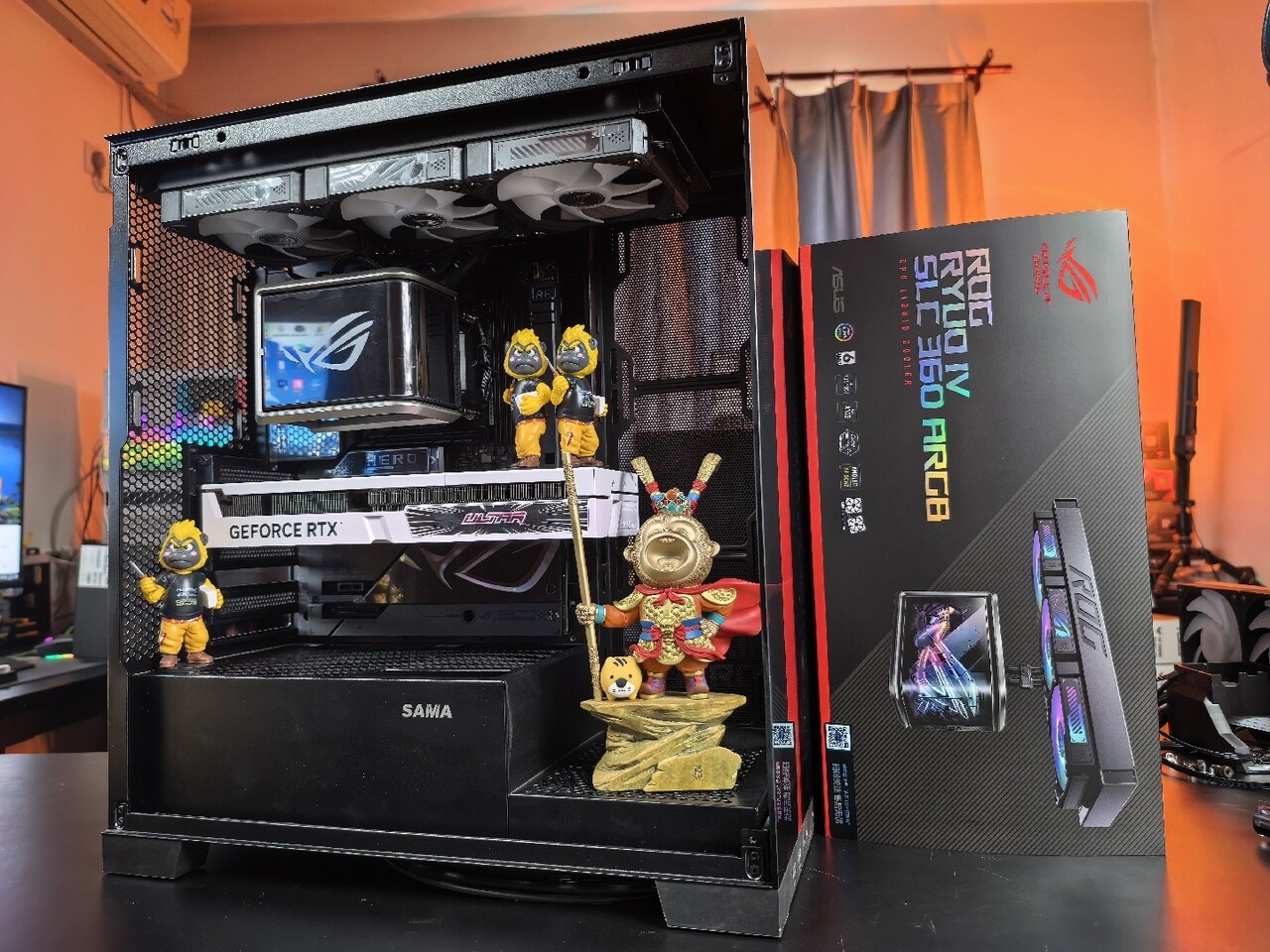
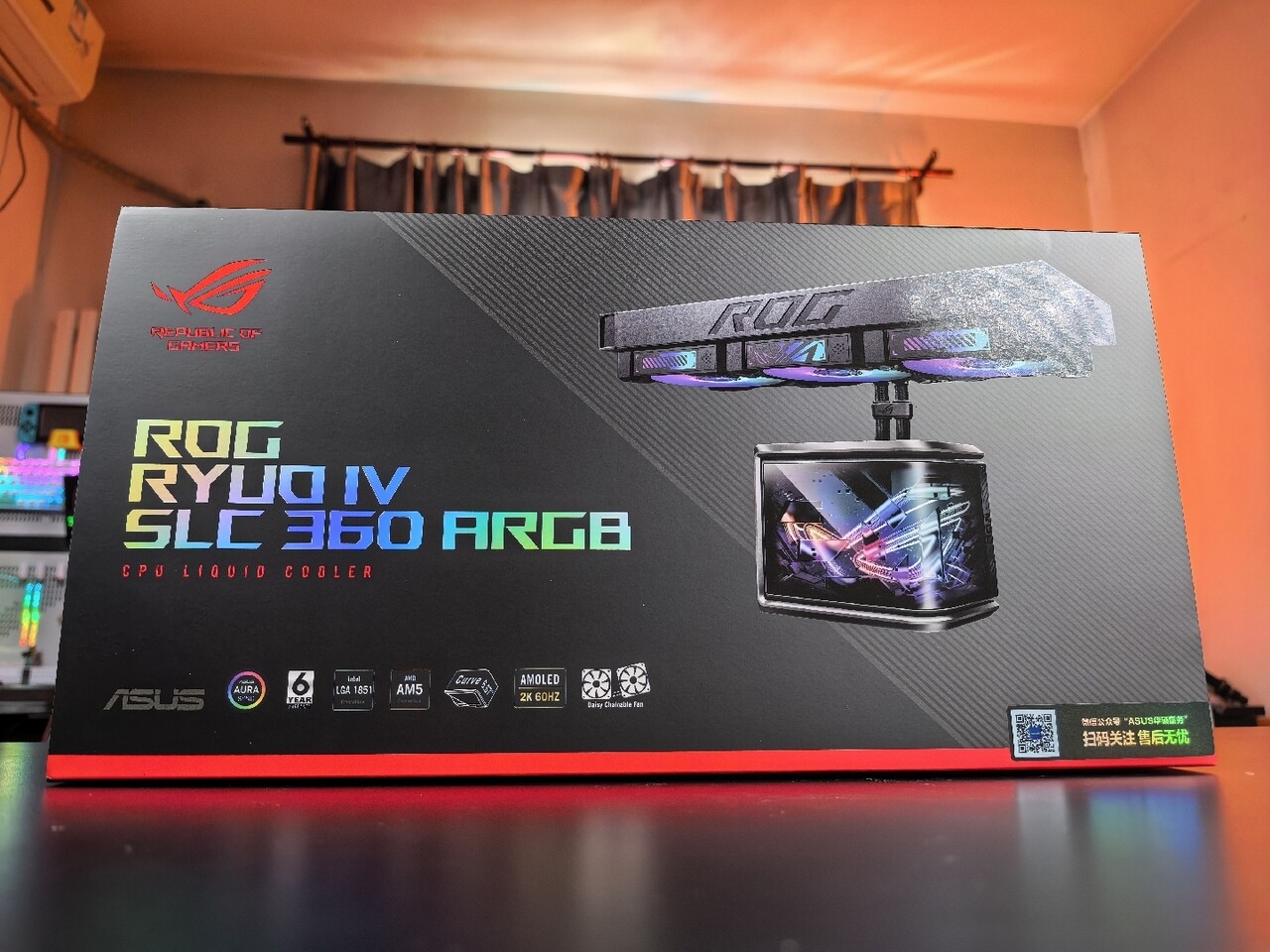
ASUS Readies Curved Screen AIO Water Cooler: ROG RYUO IV SLC

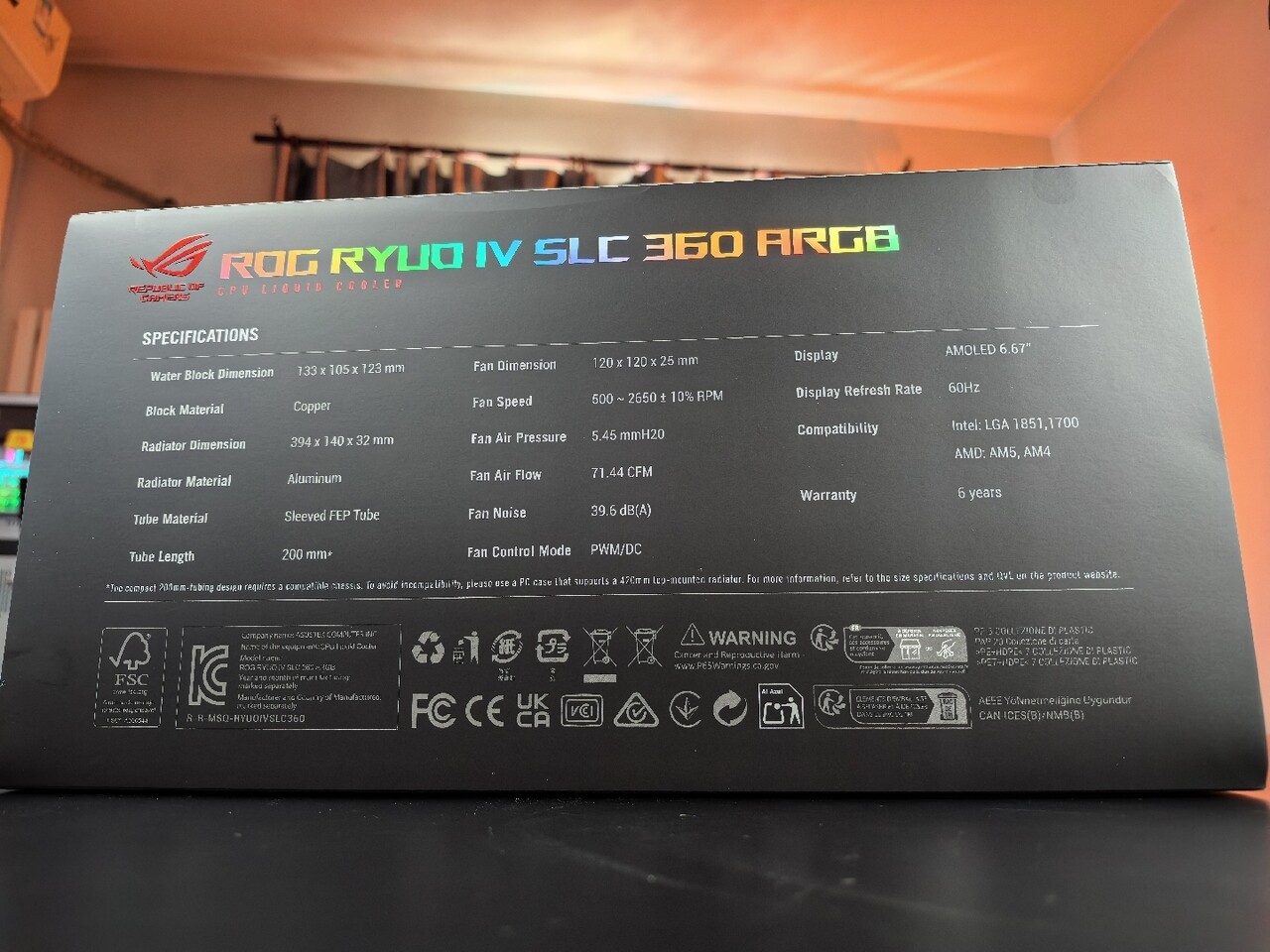
ASUS has readied its first all-in-one water cooler with a built-in curved AMOLED screen called ROG RYUO IV SLC 360 ARGB. The upcoming ASUS ROG RYUO AIO cooler integrates a 6.67-inch 60 Hz AMOLED display for system monitoring, significantly larger than any commercial AIO cooler with a built-in display on the pump/water block combo. The cooler operates at 39.6 dB while its 120 mm fans deliver 71.4 CFM airflow at speeds between 500-2650 RPM through PWM/DC control. A copper water block connected to a 360 mm aluminium radiator forms the thermal transfer system, joined by 200 mm FEP sleeved tubing. Socket compatibility includes current-generation Intel LGA-1851/1700 and AMD AM4/AM5 platforms, with no support for legacy sockets.

The expanded display provides real-time data visualization during intensive computational workloads without requiring additional monitoring software. ASUS plans to release the cooler before the "618" Mid-Year Shopping Festival. While the initial product features a 360 mm radiator, smaller variants may follow for space-constrained builds. No pricing details have been announced. A similar solution to this is TRYX Panorama AIO, which features a 6.5-inch L-shaped 3D screen as well, but ASUS has outdone it with a 6.7-inch screen variant now. We are curious how this cooler will look in real life, and some photos are already available below.

AMD Launches Socket AM4 Ryzen 5005 Series APUs

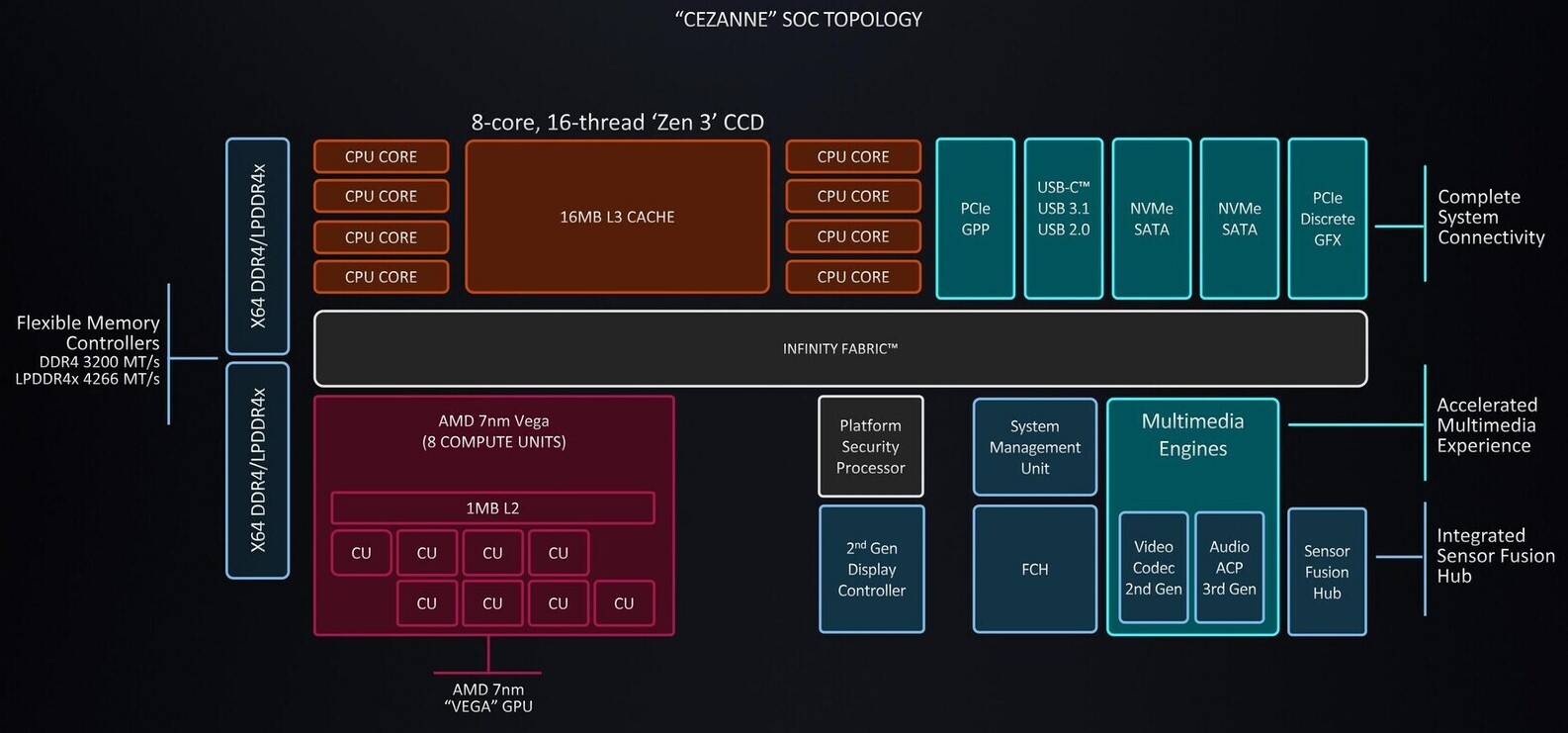
AMD is launching new Socket AM4 processor SKUs well into 2025, eight years into the platform's lifecycle. The company just launched six new processor models under the Ryzen 5005G series. These span the Ryzen 7, Ryzen 5, and Ryzen 3 tiers, and are all desktop APUs based on the 7 nm "Cezanne" monolithic silicon that combines up to 8 "Zen 3" CPU cores with an iGPU based on the "Vega" graphics architecture, featuring up to 8 compute units (CU). There's nothing [much] to report about the 5005G series, except that they are iGPU speed bumps of existing SKUs. These are not meant to be confused with the 5000GT series, which were CPU speed-bumps of the chips AMD launched in 2024.

Among the six new SKUs, the top-spec part is the Ryzen 7 5705G, which maxes out the silicon, enabling the full 8-core/16-thread "Zen 3" CPU with 512 KB of L2 cache per core and 16 MB of shared L3 cache; and the iGPU with all 8 CUs. This chip comes with CPU clock speeds of 3.80 GHz base with 4.60 GHz boost, with 2.20 GHz max engine clock for the iGPU. The CPU clock speeds are unchanged compared to the Ryzen 7 5700G, but the iGPU gets a 10% increase in max engine clock. The Ryzen 7 5705GE is an energy efficient variant with 3.20 GHz base and 4.60 GHz boost for the CPU to achieve a 35 W TDP, but the iGPU engine clock gets the same 200 MHz speed bump.

Processors in EU Retail Channel Could Lose "Unnecessary Packaging," Possibly even Stock Coolers

The EU could influence the mobile phone industry to ditch bundling wall chargers with their phones, and got them to standardize the USB-C connector, with the goal of minimizing the number of wall chargers people would have to own, which could last years, spanning many phones. It even got Apple to ditch its proprietary Lightning connector in favor of USB-C. The European Commission could be turning its attention to the way products such as desktop PC processors are sold in the retail channel. In the OEM channel, things are golden—processors are sold by the 1,000 units in trays that aren't all that different from the way eggs are sold to restaurants. In the retail channel, these processors put on elaborate packaging material that includes boxes that are about 20 times the size of the processor itself, and include stock cooling solutions that can run the processors at stock settings.

This could change, as the EU's Packaging and Packaging Waste Regulation (PPWR) came into effect on February 11, 2025. This regulation gives manufacturers an 18-month grace period for compliance, and it affects desktop processor packaging in the retail channel. The first casualty will be special edition or flagship SKUs that come with swanky acrylic packaging, like Intel's large dodecahedron that shipped with the Core i9-9900K. Intel has already made the switch, and its current flagship, the Core Ultra 9 285K, comes in much simpler paperboard boxes. AMD's flagship processors also comply, as they come in compact paperboard boxes even for the top Ryzen 9 9950X. Then there's the issue of stock CPU coolers included in these boxes, at least for the 65 W processor models.

AMD Dominates Black Friday Motherboard Sales, Capturing Nearly 90% Market Share at German Retailer

AMD has emerged as the clear winner in this year's Black Friday motherboard sales, securing an impressive 87.36% of unit sales and 86.5% of revenue share. Thanks to the nicely compiled data from TechEpiphany, we see that German retailer Mindfactory sold 3,800 AMD-socketed motherboard units compared to Intel's 550 units during the shopping event. The success story is particularly evident in AMD's newest AM5 socket platform, which accounted for 2,730 units sold, representing nearly 72% of AMD's total sales. This strong adoption rate of the AM5 platform suggests consumers are increasingly investing in AMD's latest technology despite the typically higher platform costs associated with newer generations. The older AM4 socket maintained a relevant market presence, with 1,070 units sold.

Meanwhile, Intel's sales were primarily driven by their LGA 1700 socket, which moved 490 units, with minimal movement in their newer LGA 1851 and older LGA 1200 platforms, selling just 40 and 20 units, respectively. The average selling price (ASP) comparison reveals an interesting dynamic, with Intel commanding a slightly higher ASP at $183 compared to AMD's $170. However, AMD's substantially higher sales volume resulted in a total revenue of $644,584 (about 86.5%), dwarfing Intel's revenue of $100,564 (13.5%). This sales distribution reflects AMD's successful strategy of offering competitive performance across various price points while maintaining strong platform compatibility and future support. The overwhelming preference for AMD's AM5 platform also indicates consumer confidence in the company's future upgrade path and platform longevity, which AMD also delivered with AM4.

Corsair Announces iCUE LINK TITAN RX LCD Family of Liquid CPU Coolers

Corsair today announced an expansion to its popular family of next-generation all-in-one (AIO) CPU coolers, the iCUE LINK TITAN RX LCD. Maintaining the outstanding CPU cooling performance of the TITAN RX RGB products, the TITAN RX LCD features a custom 2.1" IPS LCD screen with 480x480 resolution, ultra-bright 600cd/m² backlight, 30 frames per second, and support for over 16.7 million colors. The screen can be quickly configured and allows users to choose from a predefined set of data displays and backgrounds within the iCUE software.

PERFORMANCE WHERE IT COUNTS
Driving the TITAN RX LCD's phenomenal performance is the new FlowDrive cooling engine, powered by a three-phase motor that offers improved power efficiency, quieter operation, and a higher flow rate than its predecessors. This, combined with a precision-engineered cold plate surface profile that ensures optimal contact with your CPU's integrated heat spreader, results in consistently lower temperatures even under extreme conditions.

Cryorig Intros Monster XX Dual Fin-stack CPU Cooler Capable of 300W Thermal Loads

Cryorig today introduced the Monster XX, a premium dual fin-stack (D-type) CPU cooler. The cooler's claim to fame is its thermal capacity of 300 W, rivaling 240 mm AIO CLCs. It measures 120 mm x 133 mm x 159 mm (WxDxH). Its design involves a copper base, from which ten 6 mm-thick copper heat pipes arranged in two rows emerge, and pass through the two aluminium fin-stacks, each with 86 fins. The heatsinks are ventilated by a pair of included 120 mm ARGB-illuminated fans, arranged in a push-pull configuration.

Each of the two included 120 mm fans turns at speeds ranging between 800 and 1,800 RPM, pushing up to 58.47 CFM of airflow at 1.35 mm H₂O of static-pressure, and up to 31.5 dBA of noise. The fan takes in 4-pin PWM for its main function, and 3-pin ARGB for lighting. Among the CPU socket types supported are the new LGA1851, LGA1700, AM5, AM4, and LGA1200/115x. The company didn't reveal pricing.

AMD Set to Extend AM4 Platform with New Ryzen 5 5600XT and 5600T Processors

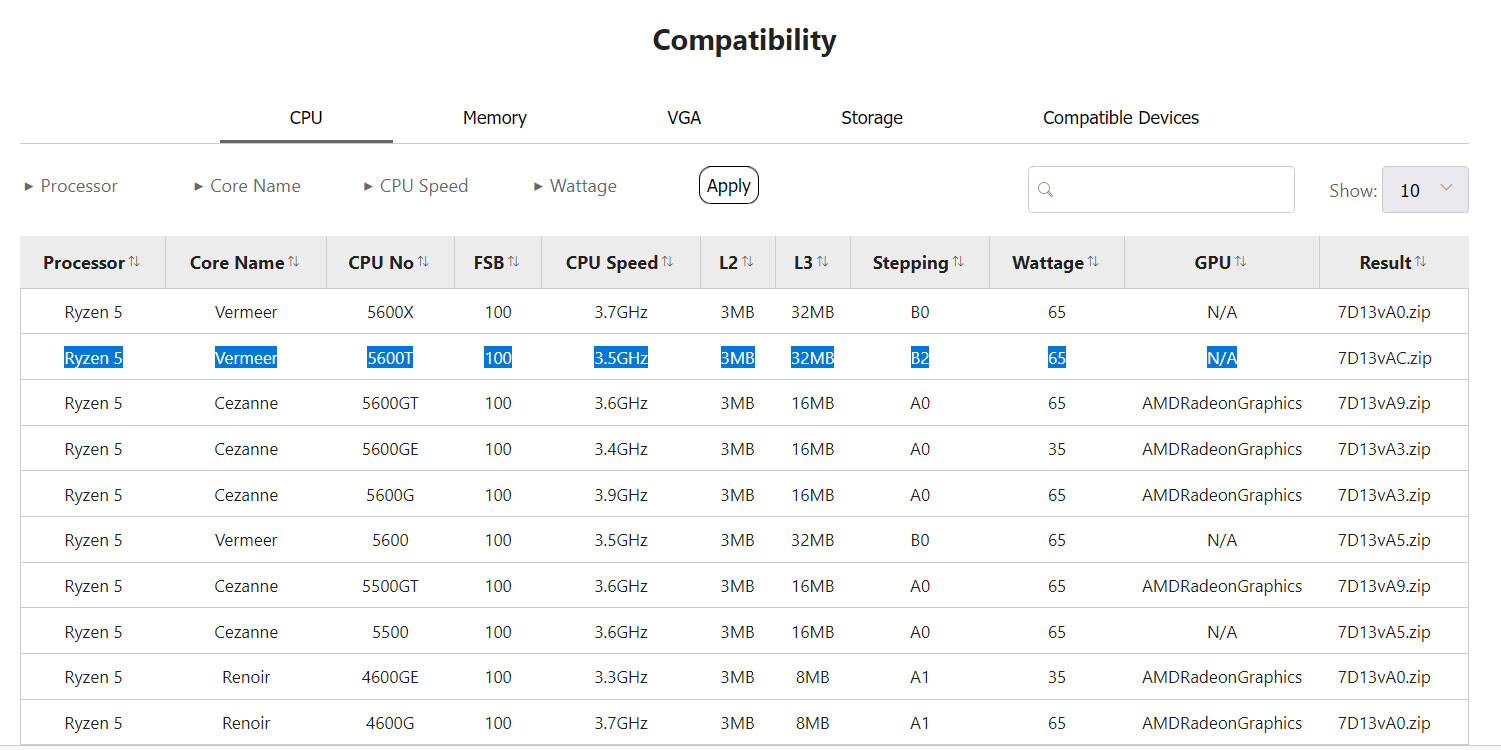
AMD continues to expand the AM4 platform with new processors, despite having already released 145 AM4 SKUs over the past nine years. According to Videocardz, citing a post from @momomo_us on the X platform, AMD plans to launch two new ones: the Ryzen 5 5600T and 5600XT. The leak was later confirmed on ASUS and MSI websites, with these 6-core CPUs appearing on lists of supported motherboards. The MSI page confirms that (at least) the 5600T is a Vermeer processor without integrated graphics. Additionally, AMD intends to make the Ryzen 3 5300G available to consumers as a boxed retail product; until now, this model has been available exclusively for OEM markets since its launch in 2021.

Going into more detail, these new SKUs have the following specifications: The Ryzen 5 5600XT features a 6-core design, 32 MB L3 cache, 65 W TDP, and a base frequency of 3.8 GHz. The Ryzen 5 5600T also has a 6-core design, 32 MB L3 cache, and 65 W TDP, but with a lower base frequency of 3.5 GHz. The Ryzen 3 5300G comes with a 4-core design, 8 MB L3 cache, 65 W TDP, a base frequency of 4 GHz, and is equipped with 6CU scale core graphics (no information regarding turbo clocks for any of these SKUs yet). As mentioned, the current lineup for the AM4 platform includes 145 SKUs, with the Ryzen 5000 series alone already having 20 models. While AMD's dedication to supporting the AM4 platform is admirable, a simple question arises: who will buy or distinguish these new AM4 SKUs from such a vast offering?

AMD Ryzen 7 5800X3D AM4 Processor Hits End-of-Life

AMD Ryzen 7 5800X3D has hit end-of-life, according to a ComputerBase.de report. Introducing the new 3D V-cache technology, the 5800X3D breathed life back into the Socket AM4 platform as Intel debuted its 12th Gen Core "Alder Lake" processors, while there was still some time to go before AMD could mount up a defense with Ryzen 7000 "Zen 4." AMD figured out a way to augment the 32 MB on-die L3 cache with an additional 64 MB stacked cache that appears as a contiguous 96 MB addressable block to software. Having such a large fast cache next to the CPU cores greatly enhances performance in gaming workloads.

The 5800X3D was able to match the gaming performance of Intel's flagship Core i9-12900K despite being based on the generationally older "Zen 3" microarchitecture, and being restricted with older DDR4 memory. It would go on to be an incredible upgrade option for those still on the Socket AM4 platform, giving them performance in league with Intel's 12th- and 13th Gen processors. As of this writing, US retailer Newegg no longer has the 5800X3D in stock. Amazon has it, and so do some of the smaller retailers. Across the pond, the chip is vanishing from European retailers. In the absence of the 5800X3D, users still have the option of the Ryzen 7 5700X3D and the 6-core 5600X3D, which were both launched in the last year.

AMD Readies Ryzen 5 5500X3D Socket AM4 Processor with 3D V-Cache

If you're on the Socket AM4 platform, AMD is never gonna give you up, never gonna let you down, never gonna run around and desert you; never gonna make you cry, never gonna say goodbye, never gonna tell a lie, and hurt you. The company is reportedly giving finishing touches to a firecracker of a sub-$200 chip for price-conscious gamers, the Ryzen 5 5500X3D. That's right, AMD is bringing 3D V-cache technology to the mid-range, with a new 6-core processor based on the "Zen 3" microarchitecture, but enjoying the gaming performance boost from 96 MB of L3 cache on tap.

AMD already has a 6-core X3D Socket AM4 chip, the Ryzen 5 5600X3D, which joined the product stack a couple of years after AMD's original Ryzen 7 5800X3D took the gaming PC processor scene by storm, matching the then swanky new Core i9-12900K "Alder Lake" despite being based on an older-generation "Zen 3" architecture. Not much else is known about the 5500X3D, except that it could have a lower clock speed than the 5600X3D. Back in November 2023, when news of the 5700X3D first hit the scene, the 5500X3D was rumored to be a 6-core/12-thread chip with 3.00 GHz base frequency and 4.00 GHz maximum boost, compared to the 3.30 GHz base and 4.40 GHz boost frequency of the 5600X3D. Given that AMD launched the 5600X3D at $230, AMD could target a sub-$200 price point to wow gamers on AM4, such as $199.

Thermalright Intros Royal Knight 120SE CPU Cooler with Design Focus on Memory Clearance

Thermalright introduced the Royal Knight 120SE, a dual fin-stack CPU cooler with a design focus on clearance with the memory area of your motherboard. It does this by offsetting its two fin-stacks away from the memory area, with one of them being almost directly above the CPU base, and by using a slim 15 mm-thick intake fan. The heatsink measures 122 mm × 114 mm × 155 mm (DxWxH), with the intake fan adding another 15 mm depth. The cooler features a nickel-plated copper base, from which six 6 mm-thick copper heatpipes pass through, skewering the two aluminium fin-stacks on both ends.

The intake fan is a Thermalright TL-C12015B. This 15 mm-thick 120 mm spinner features a 2nd generation fluid dynamic bearing, turns at up to 1,800 RPM, pushing up to 59 CFM of airflow at 1.24 mm H₂O static pressure, and 26.1 dBA maximum noise. The second fan is meant to be installed between the two fin-stacks. It is a TL-C12B V2, a 120 mm fan of conventional 25 mm thickness, and featuring a fluid dynamic bearing. It turns at speeds of up to 1,500 RPM, pushing up to 66.17 CFM of airflow, at 1.53 mm H₂O static pressure, and 25.6 dBA maximum noise. Both fans lack any kind of lighting, and use a standard 4-pin PWM power input. Among the CPU socket types supported are LGA1851, LGA1700, AM5, and AM4. The company didn't reveal pricing.

Alphacool Introduces ES 1 Series 1U CPU Water Block

Alphacool presents the ES 1 1U. This cooler was specially designed for the requirements of server cooling and is based on the proven technology of the Core 1. Alphacool combines the best of two worlds with the ES 1 1U. The innovative 3D jetplate in combination with the proven cross-slot technology ensures that the coolant is distributed evenly across the cooler base. Inside the cooler, an O-ring ensures a precise flow of water and thus guarantees reliable cooling.

The cooler has a particularly compact design. With side connections and a flat profile, the ES 1 1U can be easily installed in small systems with limited space, including 1U server casings. The new mounting system and use of acetal for the housing reduce both assembly effort and costs for large-scale production. The ES 1 1U is now available in the Alphacool online store.

AMD Outs Ryzen 5000XT Processors for Socket AM4, an 8-year Old Socket

AMD Socket AM4 is now an 8-year-old platform, since its debut back in 2016. AMD objectively went above and beyond for this platform, launching processors powered by the original "Zen," the refreshed "Zen+," the "Zen 2," and the Intel-beating "Zen 3" microarchitecture, including 3D V-cache versions of the "Zen 3" that were competitive even with Intel's 12th Gen Core "Alder Lake" processors in gaming. Those on older processors on AM4 are spoiled for choice with upgrades within the platform, without having to change it, with AMD releasing new processor models every year for the past 8 years. The 2024 launches include the Ryzen 5000XT series.

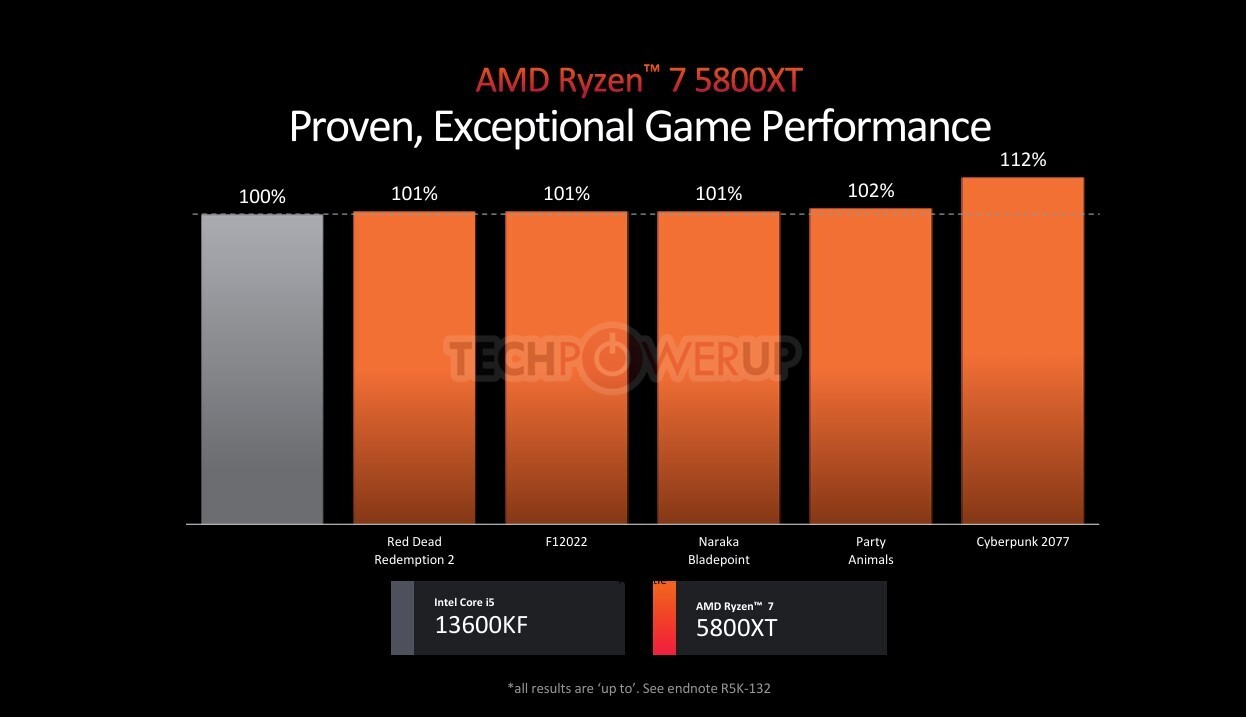
It's hard to call the Ryzen 5000XT a "series," since there are only two SKUs—the Ryzen 9 5900XT, and the Ryzen 7 5800XT. Neither of the two feature 3D V-cache, but push clock speeds up. The Ryzen 9 5900XT is a 16-core/32-thread part, and is not meant to be confused with the 5900X, which is a 12-core/24-thread part. The 16-core 5900XT comes with a maximum boost frequency of 4.80 GHz, which is 100 MHz less than that of the 5950X. It has the same 105 W TDP, and a significantly lower $360 price. The Ryzen 7 5800XT, on the other hand, is an 8-core/16-thread chip with 4.80 GHz maximum boost frequency, compared to the 4.70 GHz of the 5800X, and the same 105 W TDP. It's priced around $260. Both chips include an AMD Wraith Prism RGB cooler that's capable of handling 140 W TDP processors. The Ryzen 9 5900XT is claimed by AMD to offer similar gaming performance to the Intel Core i7-13700K; while the 5800XT is claimed to play games competitively to the Intel Core i5-13600KF. Both chips should be available sometime in July, 2024.

Return to Keyword Browsing
Nov 17th, 2026 13:53 CST change timezone

New Forum Posts

Popular Reviews

TPU on YouTube

Controversial News Posts