News Posts matching #Analog Control

Return to Keyword Browsing

Everglide Announces 49 g Wireless Gaming Mouse With Magnetic Switches

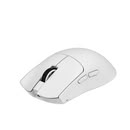
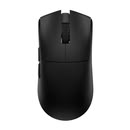
It seems as though the Logitech G Pro X2 Superstrike opened the floodgates for a deluge of gaming mice with magnetic switches and all the benefits that come with the tech, like adjustable actuation distance and rapid trigger. The latest brand to join the magnetic mouse race is the keyboard maker, Everglide.

Revealed in a post on X, Everglide will be releasing a lightweight wireless gaming mouse that closely mimics likes of the Razer Viper series. The mouse will be available in both white and black colorways, and although not a lot is known about the mouse's internals, Everglide has confirmed the existence of magnetic switches and that it will weigh noticeably less than Logitech's magnetic mouse implementation.

Turtle Beach Launches New H.O.T.A.S., Flight Stick II and Dual Throttle Flight Sim Peripherals

Leading gaming accessories maker Turtle Beach Corporation (Nasdaq: TBCH), today revealed the all-new VelocityOne Flightstick II, VelocityOne Dual Throttle, VelocityOne H.O.T.A.S. for XBOX and PC, and VelocityOne Universal Sim Mount. Individually, the Flightstick II and Dual Throttle represent among the most advanced flight sim peripherals on the market today. Together, as the VelocityOne H.O.T.A.S. flight simulation system, they set a new standard for sim enthusiasts striving for richer realism and precision control across all of today's flight simulators.

The all-new VelocityOne Flightstick II features an ambidextrous design with next-gen 16-bit Hall-effect sensors for ultra-precise stick control, a real-time Flight Management display, and 38 programmable functions that meaningfully increase confidence during landings or dogfights no matter the conditions. The VelocityOne Dual Throttle delivers ultra-smooth, accurate control through dual levers with 10-bit resolution, 7-axes control in twin-engine or single-engine modes. Together they become the formidable VelocityOne H.O.T.A.S. system, built for any flight sim fan looking to go deeper—whether flying through clouds or to distant exoplanets.

Epomaker Launches NEX Pro Gaming Mouse and HE65 V2 TMR Keyboard

After teasing the HE65 V2 in early June, Epomaker has finally released the compact 65% TMR gaming keyboard, making it available in black or white for $99.99 on the Epomaker online shop or at Amazon. The HE65 V2 TMR, as the name suggests, is a 65% TMR keyboard with an 8 kHz polling rate, wireless connectivity, an ABS plastic case. The keyboard features a gasket mount and an FR4 plate, and it has four layers of sound damping (latex switch foam, an IXPE switch pad, EPDM case foam, and a silicone case pad). The HE65 V2 TMR uses TMR sensors to make it compatible with N-pole magnetic switches—it ships with Epomaker's Creamy Jade Hall Effect switches by default—but it is also compatible with three- and five-pin MX-style mechanical switches, allowing buyers to choose between the classic mechanical sound and feel or the performance and adjustability benefits of analogue input. The keycaps on both versions of the HE6 V2 TMR are matte translucent polycarbonate Cherry profile keycaps with silk-screened lettering. Despite the compact design, there is a three-key navigation column and a modular, customizable knob on the right edge of the keyboard. Wireless connectivity on the HE65 V2 TMR is powered by a 4,000 mAh battery, but Epomaker makes no claims of battery life.

The Epomaker NEX Pro is the peripheral maker's latest lightweight wireless gaming mouse, and it packs the flagship-tier PixArt PAW3950 sensor and the ever-popular Nordic 54L15 MCU, which enables 8 kHz polling, up to 42,000 DPI, 750 IPS tracking, and up to 50 G acceleration. The NEX Pro has a right-handed, mild ergonomic design with two extra programmable side buttons and an extra button on the top behind the scroll wheel. Epomaker says that the NEX Pro is designed for medium-to-large hands, with dimensions of 122 × 65 × 42 mm (L × W × H) and a claimed weight of 65 g, which isn't particularly heavy but is also by no means "ultra-lightweight," as Epomaker claims. The brand has not revealed what microswitches the NEX Pro uses, but it does specify that the switches have a lifetime of 100 million clicks. The Epomaker NEX Pro features both 2.4 GHz and Bluetooth wireless connectivity, and it has a 500 mAh battery that should deliver a claimed 50 hours of use at 8 kHz. The NEX Pro also comes with a color-matched magnetic charging dock with customizable RGB underglow. The NEX Pro launched at $79.99, and it's available on Epomaker's online shop or on AliExpress.
Keychron Launches Q1 HE 8K All-Aluminium 65% TMR Gaming Keyboard

Keychron recently unveiled the first keyboards in the 8K refresh of its Q series analog gaming keyboards, and now it has revealed the Q2 HE 8K, which is a 65% version of the Q1 HE 8K. Much like the bigger versions that launched in November, the Keychron Q2 HE 8K features an all-aluminium chassis with a gasket mount, and it uses Keychron's OSA profile double-shot PBT keycaps for a slightly different look than the regular Cherry or OEM profile. It also uses the Keychron Ultra-Fast Lime Magnetic switches, which are lightweight, short-throw magnetic switch, coming in at just 35 gf actuation force and 3.35 mm of total travel. It also features an updated controller, which now delivers 8,000 Hz polling rate, although it has sacrificed the wireless connection of the prior Q HE series keyboards for the reduced latency. The updated sensors in the Q2 HE 8K also make the Q2 HE 8K keyboard compatible with a wider assortment of magnetic switches, rather than being limited to the south-pole Gateron Double-Rail Magnetic switches like previous Keychron HE keyboards.

The Keychron Q2 HE 8K is available from Keychron directly for $229.99, and it is available in both white and black colorways, both of which feature purple accents on the enter and escape keys and the CNC-machined aluminium knobs. The 65% layout is a slight variation of the traditional 65% layout, in the sense that it only features two navigation keys to the right of the alpha column, instead of the regular four keys. This is partially to accommodate the knob, but it is also because the Q2 HE 8K uses an exploded 65% layout, with space between the alpha cluster and the arrow keys and the navigation column. The Q2 HE 8K is fully customizable in Keychron Launcher, with support for analog features like Rapid Trigger, SOCD, Snap Tap, controller emulation, and Mod Tap, but there are also traditional mechanical keyboard customization options, like macro recording, layer setup, and key remapping. Actuation point customization is adjustable from 0.01 mm to 3.35 mm, with a minimum sensitivity of 0.001 mm.

Nintendo Confirms That Switch 2 Joy-Cons Will Not Utilize Hall Effect Stick Technology

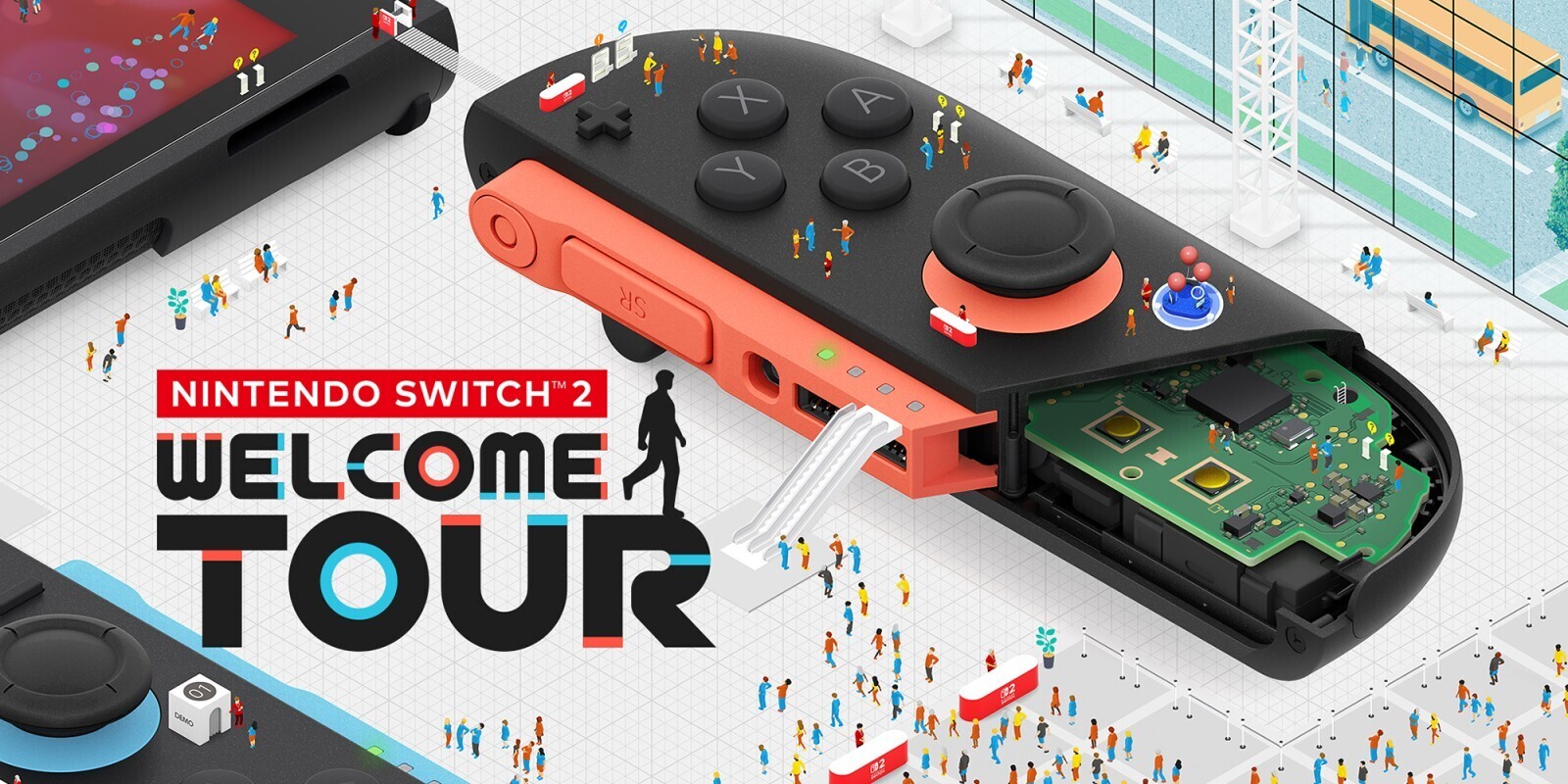
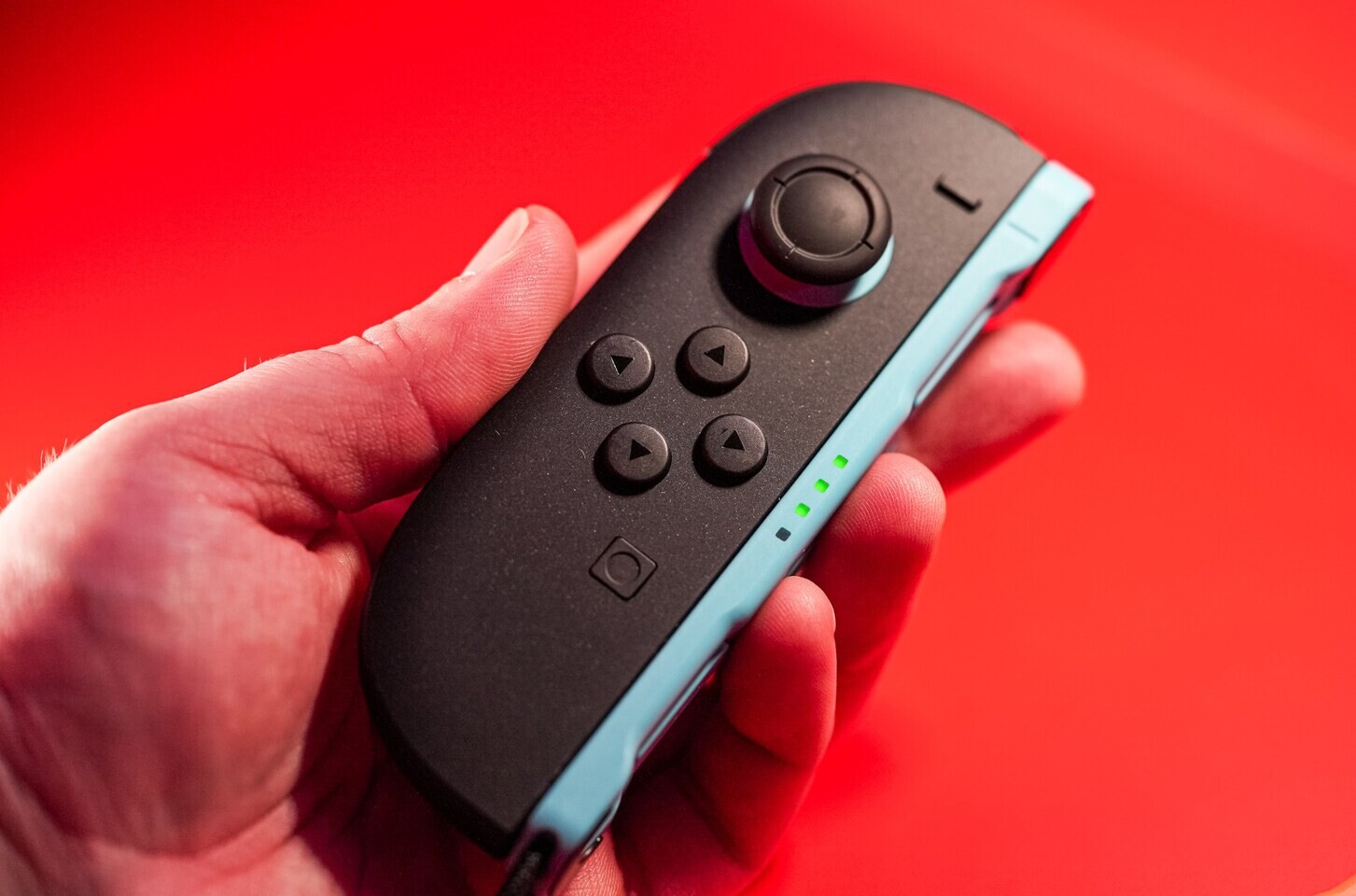
Following last week's jam-packed Switch 2 presentation, Nintendo staffers engaged in conversation with media outlets. To the surprise of many, a high level member of the incoming console's design team was quite comfortable with his name-dropping of NVIDIA graphics technologies. Meanwhile, Team Green was tasked with the disclosing of Switch 2's "internal" workings. Attention has turned to the much anticipated-hybrid console's bundled-in detachable Joy-Cons—in the lead up to official unveilings, online debates swirled around potential next-gen controllers being upgraded with Hall Effect joystick modules. Many owners of first-gen Switch systems have expressed frustration regarding faulty Joy-Cons—eventually, Nintendo was coerced into offering free repairs for customers affected by dreaded "stick drift" issues. Unfortunately, it seems that the House of Mario has not opted to outfit its Gen 2.0 Joy-Cons with popular "anti-drift" tech.

As reported by Nintendo Life, Nate Bihldorff—senior vice president of product development and publishing at Nintendo of America—"outright confirmed the exclusion" of Hall Effect. Up until the publication of Nintendo Life's sit down interview, other company representatives have opined that Switch 2's default control system features very "durable feeling" sticks. When asked about the reason behind "new-gen modules (feeling) so different to the original Switch's analog stick," Bihldorff responded with: "well, the Joy-Con 2's controllers have been designed from the ground up. They're not Hall Effect sticks, but they feel really good. Did you experience both the Joy-Con and the Pro Controller?" The interviewer confirmed that they had prior experience with both new models. In response, Bihldorff continued: "so, I like both, but that Pro Controller, for some reason the first time I grabbed it, I was like, 'this feels like a GameCube controller.' I was a GameCube guy. Something about it felt so familiar, but the stick on that especially. I tried to spend a lot of time making sure that it was quiet. I don't know if you tried really whacking the stick around, but it really is (quiet)...(The Switch 2 Pro Controller) is one of the quietest controllers I've ever played." Nintendo will likely not discuss the "ins and outs" of its proprietary stick design, but inevitable independent teardowns of commercial hardware could verify the provenance of underlying mechanisms. Nowadays, hardcore game controller snobs prefer third-party solutions that sport Tunneling Magnetoresistance (TMR) joysticks.

Razer Adds Analog Switch Support to Huntsman Mini 60% Keyboard

Razer has been quietly updating its peripheral lineup, including its Huntsman series of keyboards that used to be exclusively mechanical and using Razer-branded linear, tactile, or clicky switches. Then came optical switch versions that theoretically promise zero debounce and smoother travel owing to no mechanical components for the stem to physically move into, and this time it was either a linear Razer switch or a clicky one. It would be no surprise then that the natural progression of this was via analog switch versions of its popular keyboards. The full-size Huntsman V2 Analog was the first of these to launch a few months ago, with the use of "Razer Analog Optical Switches" to complete the set. These analog switches rely on optical sensors to detect the travel of the stem downward, akin to what the likes of Wooting have been doing for a while now, and aim to finally be the one peripheral to address the strengths of keyboards and game controllers collectively.

Perhaps the 100% form factor was too large for consumers, especially given analog switches have rarely found an established use case outside of gaming even today, so a smaller keyboard size may be what you are looking for. Razer certainly thinks as much, as today it introduced the Huntsman Mini Analog—a 60% form factor keyboard now employing the same Razer analog switches. With customization over the analog actuation in Razer Synapse between 1.5 and 3.6 mm, and plenty of games already good to go on Windows, the Huntsman Mini Analog might be also a dedicated game/macro pad in the making. It costs $149.99 in the US, which is a $20-30 hike over the equivalent Huntsman Mini keyboards with optical switches, and is a reasonable price increase with said context. Hit the link in the source to learn more, and perhaps purchase one if this is to your liking.

Wooting Launches New 60% Analog Keyboard- Wooting 60HE

Wooting is a brand that is near and dear to me in that it brought about the most innovating keyboard feature in ages with its analog control Flaretech switches a few years ago. It's debut product—the Wooting One—is a tenkeyless (TKL) form factor keyboard, which was then supported by the full-size Wooting Two. New switches and an updated software suite came about earlier this year with the Wooting Two HE, whose review is in the works as we speak, but that did not stop the company from seeing everyone else come out with a 60% form factor keyboard this past year too. Enter then the Wooting 60HE, and it's already a commercial success!

Wooting went the crowdfunding route with the 60HE, but hosted the campaign on its own website rather than going the Kickstarter or Indiegogo route and giving a cut to the platform. It was a risk that paid off big time clearly, with the campaign meeting its goal within 12 hours and now stretch goals in the consideration, with the first one being a differently color USB cable. If you fancy being a founder, hit up the link below and see some other cool features available, including founder's only swag and even an Easter egg on the PCB itself. The Wooting 60HE can be backed starting from €154.99 (inc. VAT), which in itself is a 10% discount over the eventual MSRP of €169.99, and delivery is slated for Q2 of 2022.

The Keystone- a Magnetic Analog Mechanical Keyboard with AI-enabled Adaptive Typing

The Input Club Keystone Mechanical Keyboard is an unparalleled leap forward in typing and gaming technology. It will launch on Kickstarter on July 16th, 2019 at 8 AM PST, at this link - kty.pe/keystone. The Keystone combines two new keyboard features - High Definition Analog Control and per-key fast Hall Effect (magnetic) sensing - for supreme performance. Our magnetic switch technology enables near-infinite customization, billion-press (Source: Honeywell Testing Article) durability (20x the industry standard), and analog control benefits for everyone. Full firmware programmability and RGB lighting round out its features.

This project is the future of mechanical keyboards. We believe that there is more to the main tool everyone uses for work, playing games, and connecting with others. Input Club is a group of engineers and designers who drive innovation in the field of input devices. The team formed in 2014 because there was very little innovation in the keyboard space. Our team has developed special mechanical keyswitches, open source keyboard firmware, and some of the more iconic keyboard designs to hit the marketplace. The Keystone is the next technological lead forward for keyboards - it is our flagship keyboard showcasing the best and most sought after features in a keyboard.

Wooting Explores Hall Effect and Inductive Sensing for Analog Keyboards

Readers of our website may be familiar with the Wooting brand for their then, and now, excellent Wooting One analog keyboard that we examined in late 2017. It impressed us enough to be the top keyboard for the year as well, and still remains one of the few keyboards to offer analog control at all, let alone on every single switch it is on. The company has since come out with a full-size Wooting Two, along with another switch option using a heavier spring. Their switches to date are linear optical switches manufactured by Flaretech to Wooting's design, and the company admitted there was not much more they could do with the current design. This brought us to Computex 2019, wherein they demonstrated their next generation switches for analog control, gave us some samples to take apart, and also showed off a neat prototype technology for the future- if it pans out, anyway.

The Hall effect has been used for keyboard switches in the past, as much as nearly four decades ago, no matter what some people may tell you when describing Steelseries' new switch from Computex also based off the Hall effect. Indeed, it had a small resurgence a couple of years ago in the enthusiast keyboard arena when "Ace Pad" and "XMIT" worked together for a Massdrop-exclusive keyboard, but 2019 does seem to be the year they come back in the public eye. Wooting's take is called the Lekker switch, a word in Dutch that can stand for different things depending on the context but generally stands for something impressive. Read past the break for more on the Lekker switch, as well as other things that might interest you.

Input Club Announces the Keystone Mechanical Keyboard: Hall Effect + Analog Control Switches

The Input Club Keystone Mechanical Keyboard is an unparalleled leap forward in typing and gaming technology. The Keystone combines two new keyboard features - High Definition Analog Control and per-key fast Hall Effect (magnetic) sensing - for supreme performance. Our magnetic switch technology enables near-infinite customization, billion-press durability (20x the industry standard), and analog control benefits for everyone. Full firmware programmability and RGB lighting round out its features. This project is the future of mechanical keyboards; join our waitlist to have the future of keyboards at your fingertips.

The Keystone brings novel features together to continue pushing keyboard invention further - with its SILO Hall Effect and High Definition Analog Switches. These are both keyboard switch technologies that have been produced in the past, separately, but this implementation takes them to the next level. With Hall Effect switches, instead of relying on a bending piece of metal for actuation, your keyboard tracks the movement of a magnet. This allows you to change when and where the keyboard receives the signal, while also providing a billion press switch lifespan that simply cannot be competed with.

Cooler Master Releases Gaming Keyboard with Aimpad : MK850

[Editor's note: Our own review of the Cooler Master MK850 is published here for those interested to know more.]

Cooler Master, a global leader in designing and manufacturing innovative gaming peripherals and computer components, today announces the release of its new analog mechanical gaming keyboard, the MK850. "The MK850 is the world's first mechanical keyboard, using Cherry MX switches, capable of sensing exactly how far down you press the key," says Lance Madsen, Aimpad Principle Engineer. "It provides unparalleled control in even the most demanding PC games."

"We wanted to implement Aimpad technology to provide gamers with an extra tool and to push our innovation efforts to the next level," says Bryant Nguyen, Peripheral General Manager. " What sets the MK850 apart is that it is the only analog keyboard that uses prestigious Cherry MX switches and can sense the entire 4mm range of a key press versus competitor analog keyboards that are only capable of measuring 2mm of analog movement and do not utilize Cherry MX switches.
Return to Keyword Browsing
Nov 13th, 2026 23:22 CST change timezone

New Forum Posts

Popular Reviews

TPU on YouTube

Controversial News Posts