
News Posts matching #B30A

Return to Keyword Browsing

China Blocks Tech Firms from Buying NVIDIA AI Accelerators

China has reportedly banned its domestic technology firms from purchasing NVIDIA AI accelerators to promote the adoption of domestic AI accelerators. According to sources close to the Financial Times, the Cyberspace Administration of China (CAC) instructed several technology giants, including Alibaba, Baidu, and Tencent, to stop their independent evaluation and procurement of NVIDIA's export-modified AI accelerators. This includes chips like the RTX PRO 6000D, a variant of the RTX PRO 6000 designed for the Chinese market. There is no mention of the modified "Blackwell Ultra" single-die B30A accelerators, which were intended as a China-specific alternative to the GB300, offering half the compute power.

This directive from Beijing indicates that, despite Chinese tech giants' interest in NVIDIA-supplied AI accelerators due to their superior software and computing capabilities, regulators aim to promote domestic AI accelerators from companies like Huawei and Cambricon. These domestic chips are built on older technology nodes, primarily because of China's limited access to cutting-edge manufacturing and the absence of modern EUV tools for its domestic fabs. An insider told the Financial Times that "the top-level consensus now is there's going to be enough domestic supply to meet demand without having to buy NVIDIA chips." This suggests that the current ambitions of Chinese AI labs could be fully met with domestic chips. However, training and running frontier-level models on non-NVIDIA hardware remains a persistent challenge.
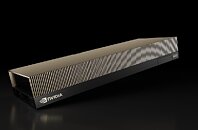
NVIDIA's Export-Compliant B30A for China Priced at Roughly Twice the H20

As NVIDIA acquired an export license for its "Hopper" H20 GPU, the company immediately prepared to ship a modified "Blackwell" B30A design. Interestingly, sources close to Reuters note that the demand from Chinese companies is massive even for the older H20 GPU, despite Beijing regulators warning against the use of NVIDIA-supplied hardware in new data center buildouts. As H20 in China sells for around $10,000- $12,000, the new B30A will be priced at double that amount, around $20,000-$24,000, with the lower range possibly reserved for larger volume shipments. Sources also note that Chinese firms believe this is a good deal, given the performance and software compatibility that NVIDIA brings with its hardware.

Designed as a single-die design, it utilizes the same base die as the dual-die B300 and embeds a single one into the package, achieving half the performance to comply with export regulations. Based on the Blackwell Ultra (B300) numbers, the export-compliant single-die B30A would be expected to deliver roughly 7.5 PetaFLOPS FP4, 3.75 PetaFLOPS FP6/FP8, 1.875 PetaFLOPS FP16/BF16, and 0.94 PetaFLOPS at TF32, about half the peak throughput of the dual-die B300. Additionally, NVIDIA could generate a substantial amount of sales in the Chinese market, as rewriting the entire infrastructure to use Chinese domestic accelerators would require more time, which could significantly offset China's AI ambitions. Hence, while domestic accelerators mature in design and software, NVIDIA's GPUs are in everlasting demand. While the timeline for B30A GPU shipment is unknown, we expect to see the first Chinese AI labs getting their hands on these accelerators in the next few weeks.

NVIDIA Reportedly Ends H20 GPU Production, Makes Room for B30A

According to sources close to The Information, NVIDIA has reportedly halted manufacturing of the H20 "Hopper" GPU for the Chinese market. NVIDIA has instructed its key suppliers, including Samsung Electronics and Amkor Technology of Arizona, to halt production of their components required for the H20 chip. Team green is preparing a transition to a more powerful "Blackwell" series for the Chinese market. NVIDIA has designed a new SKU called B30A, based on the B300 "Blackwell Ultra." Designed as a single-die design, it utilizes the same base die as the dual-die B300 and embeds a single one into the package, achieving half the performance to comply with export regulations.

The H20 chip was under scrutiny from the Chinese government, which urged domestic companies not to use it. Chinese authorities, including the nation's internet watchdog, reportedly raised national security concerns, suggesting the chips could contain hidden "backdoor" vulnerabilities that pose an information security risk. NVIDIA CEO Jensen Huang has publicly addressed the concerns, stating the company's chips do not contain backdoors. However, we are yet to see if Chinese authorities will allow domestic firms like ByteDance, Alibaba, and Tencent to purchase the new B30A GPUs and use them in the most critical infrastructure, or if the damage has already been done and domestic alternatives, such as Huawei Ascend accelerators, prevail. Both can coexist, as NVIDIA chips are valued for their software stack, while Huawei chips are valued for their lower cost. The ultimate endgame of accelerators is wait and see, as Chinese AI labs need all the compute they can get.

NVIDIA Prepares Cut-Down B30A "Blackwell" AI Accelerator for Chinese Market

NVIDIA's China-specific accelerators are not unknown by now, and the last export-modified accelerator the company prepared was H20, which recently got an export license. However, Chinese AI labs are on the lookout for a more performant design, and NVIDIA is here to deliver. According to Reuters, NVIDIA has designed a new SKU called B30A, based on the B300 "Blackwell Ultra." Designed as a single-die design, it takes the same base die from the dual-die B300, and just embeds a single one onto the package for half the performance to comply with export regulations.

As the Blackwell Ultra, in its B300 dual-die configuration, features 15 PetaFLOPS of FP4, 7.5 PetaFLOPS at FP6/FP8, 3.75 PetaFLOPS at FP16/BF16, and 1.88 PetaFLOPS at TF32 precision, we can expect the single-die B30A to halve these numbers. This yields roughly 7.5 PetaFLOPS FP4, 3.75 PetaFLOPS FP6/FP8, 1.875 PetaFLOPS FP16/BF16, and 0.94 PetaFLOPS at TF32. Additionally, NVIDIA will not skimp on the mission-critical features like HBM and NVLink, which enable AI training and inference in a much easier way. These chips may be sufficient to counter any current Chinese-designed AI accelerator with a superior software stack and higher performance. As the U.S. administration decided to grant NVIDIA access to the export license, NVIDIA is again serving the Chinese market with a high-performance accelerator for their domestic needs and AI labs.
Return to Keyword Browsing
Nov 13th, 2026 04:01 PST change timezone

New Forum Posts

Popular Reviews

TPU on YouTube

Controversial News Posts