Friday, October 16th 2026

Modder Fits RTX 5090 With Four 8-Pin Connectors, Halving Current per Wire

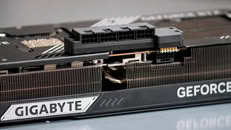
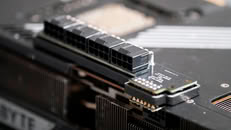
Reddit user DallasGrave, who recently soldered a dual 8-pin board to an RTX 5090's 16-pin header, is back with a more ambitious take on the same idea. The new "Quad 2x8 Header Conversion" mounts four 8-pin PCIe connectors right on the card, tapping the contact points of the 12V-2x6 header, so the 16-pin connector can either stay in use alongside it or be skipped entirely. Each 8-pin carries three 12 V conductors, which spreads the load over twelve wires instead of six.

According to the modder, current per conductor is "almost perfectly halved" compared to the native connector, landing at roughly 4.1 to 4.4 A per wire at 600 W, with wire temperatures dropping by around 20°C. The sense pins are set for 600 W, and the board has apparently been tested up to 800 W on a shunt-modded card, where the PCB itself reportedly sat at about 45°C. Videos covering installation, live current data, and a 24-hour sustained load test are apparently being shot now, and custom backplates are in the works to make the mod look more factory-made. Versions for nearly every card, Founders Edition included, are also going into production.
Modding efforts like this one continue to be made as reports of the 12V-2x6 connector melting pile up, whether on a reviewer's RTX 5090 or during DLSS 5 testing. Modders have also gotten the RTX 5090 running purely on 8-pin connectors, while off-the-shelf safeguards haven't fared much better. MSI's yellow-tipped "safety-oriented" connector has shown burn marks, and ASUS' $50 ROG Equalizer cable, sold specifically to prevent these burns, also reportedly burned. Even ASRock's TempGuard failed to stop a meltdown on a $15,000 RTX PRO 6000 rig.
Sources: DallasGrave on Reddit, via Wccftech
Add your own comment

80 Comments on Modder Fits RTX 5090 With Four 8-Pin Connectors, Halving Current per Wire

#1
lambda
Not sure if this has any load balancing, will need to review the reddit post.
Posted on Reply
#2
EnviousFrog
How is it that a random Redditor can come up with a better and safer long term solution than multiple multi-million dollar corporations?
Posted on Reply
#3
dj-electric
*raises hand*

Yes, its not about dry current, its about poor contacts, lack of unified resistance between cables which causes spillage of current for cause overloads and generally hidden weak points.
This is about mechanics of contact more than about spreading the current to more cables. Admittedly, both work in the tragic case of the astoundingly dumbfounding decision behind the use of original connector.

It would have been ugly, but the world could have stayed a better place if NVIDIA found a design that offers three traditional 8PIN connectors on its high end GPUs.
Posted on Reply
#4
freeagent
But that would mean a bigger PCB, and longer traces.. cant have that.
Posted on Reply
#5
Athena
EnviousFrogHow is it that a random Redditor can come up with a better and safer long term solution than multiple multi-million dollar corporations?
it's not that the multi-million dollar company can't design something "safer", it's that they thought it was good enough, they wanted less wires, instead of an octopus going into the card

there are still no solid numbers on how many 5090s have melted connectors, it's most likely less than 1%

we will see what they will do for the 6090, that is, if they ever release a consumer version of it
Posted on Reply
#6
AsRock
TPU addict
freeagentBut that would mean a bigger PCB, and longer traces.. cant have that.
I be worried about snapping the connector or even the PCB, handle with care.
Posted on Reply
#7
Lycanwolfen
Leave it to Nvidia to make a whole new connector. The old connectors was better overall for wattage.
Better balance.
Athenait's not that the multi-million dollar company can't design something "safer", it's that they thought it was good enough, they wanted less wires, instead of an octopus going into the card

there are still no solid numbers on how many 5090s have melted connectors, it's most likely less than 1%

we will see what they will do for the 6090, that is, if they ever release a consumer version of it
Who cares about wires vs function. I care less about looks of a computer vs does it bloody work.

If Nvidia would make a full size PCB and put the 8 pin connectors on the back of the card then cabling would not be an issue period.
Posted on Reply
#8
JustBenching
Look how safe 8pin is, we replaced a single 12vhp with 4 of them. That's how safe they are.... :roll:
Posted on Reply
#9
soul4kills
lambdaNot sure if this has any load balancing, will need to review the reddit post.
It's not about load balancing really, it kinda is but not really. It's about spreading the load across more pins/wires where even if one connection was faulty, it doesn't carry enough load to fail and burn. So more pins/wires less load each wire has to deal with. A completely simple and analog solution that doesn't require any type of digital management. Nvidia's issue is they designed their cards to max out the spec of the cable they designed it to use. Usually you're supposed to leave a buffer in the event of any type of faults it doesn't catastrophically fail. They didn't have that buffer because it was maxed out.
Posted on Reply
#10
john_
I wonder if board partners could do something similar on their graphics cards with two 12V-2x6 connectors. I don't mean placing them side by side, but rather, like the mod mentioned above, placing them on opposite sides of the GPU's PCB. Even if they end up sharing the exact same pins on the board(can they?), this would double the wiring leading to each pin. I know Nvidia wouldn't like it, but it could be yet another viable solution—and perhaps aesthetically pleasing enough to overcome Nvidia's potential objections.

EnviousFrogHow is it that a random Redditor can come up with a better and safer long term solution than multiple multi-million dollar corporations?
Why fix a problem when it creates an opportunity for others to sell extra trinkets at a 400% profit margin? That's pretty much how Apple makes money, too—by selling overpriced accessories that everyone else throws in for free. On top of that, Nvidia's marketing department, and likely the CEO himself, seems to prefer advertising sleek, compact PCBs with a single power connector. We saw this firsthand in KINGPIN's recent disclosures regarding how Nvidia dictated exactly how many power inputs an EVGA-designed card could feature.
JustBenchingLook how safe 8pin is, we replaced a single 12vhp with 4 of them. That's how safe they are.... :roll:
What is safer?

Posted on Reply
#11
londiste
So, a 4x8pin to 16-pin adapter? granted, its not using the connector but is soldered to traces under 16-pin.
The question remains, is there any better balancing or OCP? Or is the whole idea srelying on simply more wires?
Posted on Reply
#12
melkor_unlimited
JustBenchingLook how safe 8pin is, we replaced a single 12vhp with 4 of them. That's how safe they are.... :roll:
2x6-12V connector has safety margin around +5%
8-pin? +90%

Translated to easily comprehensible numbers it says, at the same safety margin as 16-pin provides, you could use
1x 8-pin ... 330W ... 5050, 5060, 5060Ti, 5070
2x 8-pin ... 600W ... OC 5070, 5070 Ti, 5080, OC 5080, 5090D, 5090DD, 5090
3x 8-pin ... 870W ... OC 5090, heavily OC 5090

And the final joke:
2x6-12V is limited to 20 reconnection.
8-pin does not need that limit.
Posted on Reply
#13
Vayra86
melkor_unlimited2x6-12V connector has safety margin around +5%
8-pin? +90%

Translated to easily comprehensible numbers it says, at the same safety margin as 16-pin provides, you could use
1x 8-pin ... 330W ... 5050, 5060, 5060Ti, 5070
2x 8-pin ... 600W ... OC 5070, 5070 Ti, 5080, OC 5080, 5090D, 5090DD, 5090
3x 8-pin ... 870W ... OC 5090, heavily OC 5090

And the final joke:
2x6-12V is limited to 20 reconnection.
8-pin does not need that limit.
Its so braindead obvious what the issue is, and the solution. Margins. More specifically, profit margins to delete safety margins. They simply just want to sell you lessfor more, all you got more of, is risk.
Posted on Reply
#14
dj-electric
Well, considering the actual price of these connectors, crimps and cables are literal cents. I think that the real obvious problem is a combination of ego and insisting on a retail design that looks as compact and "sleek" as possible. The melting connector's biggest sin is the fact that they decided to go with it despite its potential mechanical problems just so the products will look "cooler". What ended up happening is that nearly all third party design cards are gigantic anyway because everyone wanted to shove gigantic coolers, fans and RGB onto it, that the whole connector part was left in a comedic state.

And now the whole power supply ecosystem has aligned itself to the idea of including those, and we're just deep at the sunken cost fallacy state of this burning mess.
Posted on Reply
#15
Broken Processor
Or you know just stop buying products with poorly designed components that are know to self immolate.
Posted on Reply
#16
FinlandApollo
melkor_unlimited2x6-12V connector has safety margin around +5%
8-pin? +90%

Translated to easily comprehensible numbers it says, at the same safety margin as 16-pin provides, you could use
1x 8-pin ... 330W ... 5050, 5060, 5060Ti, 5070
2x 8-pin ... 600W ... OC 5070, 5070 Ti, 5080, OC 5080, 5090D, 5090DD, 5090
3x 8-pin ... 870W ... OC 5090, heavily OC 5090

And the final joke:
2x6-12V is limited to 20 reconnection.
8-pin does not need that limit.
Okay, let me correct few things:

Firstly:
Where in hell do you get the safety margin?
The 1 x 8 pin can produce 330W, aka 27.5A which is roughly 9.16A per wire (8 pin has 3 +12VDC pins). By Molex documentation, Mini Fit connector has current rating of 6-8A, up to 9 with 2-3 Ckts. Technically, at worst case, the 8pin actually exceeds the rating of the connector specification, hence resulting negative safety margin. Technically, 2x6-12V has marginally higher current maximum of 9.2A but that difference isn't dramatic. Both of the connectors are rated for maximum of 10mOhms of resistance in proper contact so that is no difference.

But pushing 870W with 3 x 8pin means that ~8A of 12VDC. Even that is borderline exceeding the rating of the connector.

Second:
Have you actually checked the limit of reconnection of 8-pin aka Molex Mini Fit -connector? It has rating of 30 with the basic pins, but with copper alloy or gold plated pins, it's either 100 or 250. While this is higher, it is hard to see visually which ones the manufacturers use. If it's an older stock of crimps, at worst case it could be that it's the 30. But still, 20 insertions is low, really low, which I heavily agree.

But: I don't want to defend the 2x6-12V situation: It's a shitshow, I heavily agree.

But, I don't see that this shitshow is solely cause of the connector. The connector isn't the faulty thing here, it's the lack of load stabilization. I don't see how 3 x 8pin would help that if suddenly 2 out of 9 pins pull 12-15A while others barely 5A. It's not going to change the fact that connector will melt and fail, since 8pins are designed with same material and same operating temperature. The sole reason is that AIB and Nvidia are such cheapskates that they don't implement any load balancing on the card end. It's nothing but a big freaking joke.

Also, it's just insanely stupid that we did 2x6-12V standard with 12VDC for +650W. At these amp ranges, 12VDC is dead, we should go with 24VDC and these problems would not exist. 650W would be ~27A which would be only ~4.5A per pin, which connector handles. I don't get why the 2x6 was designed with 12V in mind since at the spot where it was standardized, we already were facing with these +500W workloads.
Posted on Reply
#17
Jism
john_I wonder if board partners could do something similar on their graphics cards with two 12V-2x6 connectors. I don't mean placing them side by side, but rather, like the mod mentioned above, placing them on opposite sides of the GPU's PCB. Even if they end up sharing the exact same pins on the board(can they?), this would double the wiring leading to each pin. I know Nvidia wouldn't like it, but it could be yet another viable solution—and perhaps aesthetically pleasing enough to overcome Nvidia's potential objections.
Technically you are still capable of doing it yourself. Solder directly onto the PCB and you are able to load balance the thing. It breaks your warranty tho. Actually silly that people have to come up with a solution to a problem that Nvidia denies exists. Sigh.
Posted on Reply
#18
JustBenching
melkor_unlimited2x6-12V connector has safety margin around +5%
8-pin? +90%

Translated to easily comprehensible numbers it says, at the same safety margin as 16-pin provides, you could use
1x 8-pin ... 330W ... 5050, 5060, 5060Ti, 5070
2x 8-pin ... 600W ... OC 5070, 5070 Ti, 5080, OC 5080, 5090D, 5090DD, 5090
3x 8-pin ... 870W ... OC 5090, heavily OC 5090

And the final joke:
2x6-12V is limited to 20 reconnection.
8-pin does not need that limit.
You know everyone can just make stuff up right?

Of course the 8pin has a mating cycle limit as any molex connector. Here you go


I don't get why we have to make stuff up everytime nvidia is on the title of a thread. We get it, they are ivil. Show us how ivil they are without lying, would be trivial, right? From now on you are obviously going to be crapping on 8pin every other thread cause it has a low mating cycle, right? Right? :D
FinlandApolloOkay, let me correct few things:

Firstly:
Where in hell do you get the safety margin?
The 1 x 8 pin can produce 330W, aka 27.5A which is roughly 9.16A per wire (8 pin has 3 +12VDC pins). By Molex documentation, Mini Fit connector has current rating of 6-8A, up to 9 with 2-3 Ckts. Technically, at worst case, the 8pin actually exceeds the rating of the connector specification, hence resulting negative safety margin. Technically, 2x6-12V has marginally higher current maximum of 9.2A but that difference isn't dramatic. Both of the connectors are rated for maximum of 10mOhms of resistance in proper contact so that is no difference.

But pushing 870W with 3 x 8pin means that ~8A of 12VDC. Even that is borderline exceeding the rating of the connector.

Second:
Have you actually checked the limit of reconnection of 8-pin aka Molex Mini Fit -connector? It has rating of 30 with the basic pins, but with copper alloy or gold plated pins, it's either 100 or 250. While this is higher, it is hard to see visually which ones the manufacturers use. If it's an older stock of crimps, at worst case it could be that it's the 30. But still, 20 insertions is low, really low, which I heavily agree.

But: I don't want to defend the 2x6-12V situation: It's a shitshow, I heavily agree.

But, I don't see that this shitshow is solely cause of the connector. The connector isn't the faulty thing here, it's the lack of load stabilization. I don't see how 3 x 8pin would help that if suddenly 2 out of 9 pins pull 12-15A while others barely 5A. It's not going to change the fact that connector will melt and fail, since 8pins are designed with same material and same operating temperature. The sole reason is that AIB and Nvidia are such cheapskates that they don't implement any load balancing on the card end. It's nothing but a big freaking joke.

Also, it's just insanely stupid that we did 2x6-12V standard with 12VDC for +650W. At these amp ranges, 12VDC is dead, we should go with 24VDC and these problems would not exist. 650W would be ~27A which would be only ~4.5A per pin, which connector handles. I don't get why the 2x6 was designed with 12V in mind since at the spot where it was standardized, we already were facing with these +500W workloads.
Thing is the internet is all over low power cards (like below 200w) with their 8pins completely melted, something that has never happened with the 12vhp. There is not a single incident of a low powered card melting it's 12vhp. The 8pin is a fire hazard, good riddance with that paleolithic prone to melting connector. I aint going to miss it
Posted on Reply
#19
john_
JustBenchingYou know everyone can just make stuff up right?

Of course the 8pin has a mating cycle limit as any molex connector. Here you go


I don't get why we have to make stuff up everytime nvidia is on the title of a thread. We get it, they are ivil. Show us how ivil they are without lying, would be trivial, right? From now on you are obviously going to be crapping on 8pin every other thread cause it has a low mating cycle, right? Right? :D
"I don't get why we have to make stuff up everytime nvidia is on the title of a thread" just so we can defend the 6 trillion dollars company?
How about not spreading misinformation pointing only on the numbers of the cycle limit?


Question: Under which circumstances is there a higher probability of a significant problem occurring due to contact plating wear? In a Molex connector powering a drive, a PCIe 8-pin connector, or the 12V-2x6? For what reason?
Answer:
The highest probability of a significant and dangerous problem due to plating wear is clearly found in the 12V-2x6 connector (and its predecessor, the 12VHPWR).
The risk hierarchy from worst to best is:
  1. 12V-2x6 (Maximum Risk)
  2. PCIe 8-pin (Medium Risk)
  3. 4-pin Molex (Minimal Risk)


The 3 reasons why the 12V-2x6 is the most vulnerable:

1. Extreme Current Density
The 12V-2x6 is designed to push up to 600 Watts (and up to 675W during spikes) through just 6 power pins. This translates to roughly 8.3 to 9.5 Amperes per pin.
  • In contrast, a hard drive powered by a Molex connector draws minimal wattage (usually under 10-15W, which is about 1-2 Amperes).
  • The classic PCIe 8-pin delivers up to 150W across 3 lines of 12V (approximately 4.1 Amperes per pin).
2. Joule's Law (P=I^2\R)
When the protective plating (tin or gold) wears off due to multiple mating cycles, the underlying base metal oxidizes, drastically increasing the electrical resistance (R) at the contact point.
According to physics, the heat generated (P) increases with the square of the current (I^2). Because the 12V-2x6 carries more than double the current per pin compared to a PCIe 8-pin, the heat generated by a bad contact is quadrupled! This heat can quickly exceed 150°C, leading to melted plastic and shorts.

3. Microscopic Size and Mechanical Tolerance
The pins in a 12V-2x6 connector are extremely small and tightly packed. If the cable is tightly bent or strained near the connector, the contact points shift. If the plating is already worn, this shifting causes micro-arcing, which rapidly destroys the connector. Molex and PCIe 8-pin connectors have much larger, thicker pins that maintain a larger surface contact area even when partially worn.

Summary
On a Molex drive connector, plating wear will likely just cause a minor voltage drop, making the drive disconnect without catastrophic damage. On a PCIe 8-pin, there is some risk, but the safety margins are wide. On the 12V-2x6, because it operates at the absolute physical limits of the materials, plating wear can easily lead to a ruined graphics card or a fire hazard.


I am pretty sure that the RTX owner who is really careful with the 2x6-12v connector, will manage to avoid damaging their RTX card while the warranty period is still in effect.
Posted on Reply
#20
demirael
JustBenchingLook how safe 8pin is, we replaced a single 12vhp with 4 of them. That's how safe they are.... :roll:
They are safe, because their spec is so much lower than what they can safely pull. That 8s, they're overbuilt.
Posted on Reply
#21
JustBenching
john_"I don't get why we have to make stuff up everytime nvidia is on the title of a thread" just so we can defend the 6 trillion dollars company?
How about not spreading misinformation pointing only on the numbers of the cycle limit?


Question: Under which circumstances is there a higher probability of a significant problem occurring due to contact plating wear? In a Molex connector powering a drive, a PCIe 8-pin connector, or the 12V-2x6? For what reason?
Answer:
The highest probability of a significant and dangerous problem due to plating wear is clearly found in the 12V-2x6 connector (and its predecessor, the 12VHPWR).
The risk hierarchy from worst to best is:
  1. 12V-2x6 (Maximum Risk)
  2. PCIe 8-pin (Medium Risk)
  3. 4-pin Molex (Minimal Risk)


The 3 reasons why the 12V-2x6 is the most vulnerable:

1. Extreme Current Density
The 12V-2x6 is designed to push up to 600 Watts (and up to 675W during spikes) through just 6 power pins. This translates to roughly 8.3 to 9.5 Amperes per pin.
  • In contrast, a hard drive powered by a Molex connector draws minimal wattage (usually under 10-15W, which is about 1-2 Amperes).
  • The classic PCIe 8-pin delivers up to 150W across 3 lines of 12V (approximately 4.1 Amperes per pin).
2. Joule's Law (P=I^2\R)
When the protective plating (tin or gold) wears off due to multiple mating cycles, the underlying base metal oxidizes, drastically increasing the electrical resistance (R) at the contact point.
According to physics, the heat generated (P) increases with the square of the current (I^2). Because the 12V-2x6 carries more than double the current per pin compared to a PCIe 8-pin, the heat generated by a bad contact is quadrupled! This heat can quickly exceed 150°C, leading to melted plastic and shorts.

3. Microscopic Size and Mechanical Tolerance
The pins in a 12V-2x6 connector are extremely small and tightly packed. If the cable is tightly bent or strained near the connector, the contact points shift. If the plating is already worn, this shifting causes micro-arcing, which rapidly destroys the connector. Molex and PCIe 8-pin connectors have much larger, thicker pins that maintain a larger surface contact area even when partially worn.

Summary
On a Molex drive connector, plating wear will likely just cause a minor voltage drop, making the drive disconnect without catastrophic damage. On a PCIe 8-pin, there is some risk, but the safety margins are wide. On the 12V-2x6, because it operates at the absolute physical limits of the materials, plating wear can easily lead to a ruined graphics card or a fire hazard.


I am pretty sure that the RTX owner who is really careful with the 2x6-12v connector, will manage to avoid damaging their RTX card while the warranty period is still in effect.
TLDR. Im not going through that wall. If anywhere in that wall you are disagreeing with the fact that 8pin has a mating cycle limit, you are wrong. Period.
Posted on Reply
#22
john_
JustBenchingTLDR. Im not going through that wall. If anywhere in that wall you are disagreeing with the fact that 8pin has a mating cycle limit, you are wrong. Period.
Translation: "I am not here to talk facts that prove me wrong".
Yeah, we know that.
Posted on Reply
#23
pcmaker
Beautiful work. Hats off. 👍
Posted on Reply
#24
JustBenching
john_Translation: "I am not here to talk facts that prove me wrong".
Yeah, we know that.
Kk, 8pins don't have a mating cycle limit. I was wrong. You win, gj sir.
Posted on Reply
#25
john_
JustBenchingKk, 8pins don't have a mating cycle limit. I was wrong. You win, gj sir.
You sit there answering as if you're talking to idiots. You are on a tech forum, not on the forum of a fashion magazine. So the question is: what happens when the connector wears out after multiple plug-and-unplug cycles? In the case of the 4-pin Molex, nothing special. In the case of the 8-pin, likely nothing dangerous because the connector has a massive safety margin. In the case of the 12V-2x6 connector... well, every single week we see at least one new thread about a melted socket, and potentially a burned graphics card or power supply.
Posted on Reply
Add your own comment
Nov 26th, 2026 02:52 CST change timezone

New Forum Posts

Popular Reviews

TPU on YouTube

Controversial News Posts