News Posts matching #DDR5

Return to Keyword Browsing

Micron Unveils New CUDIMM and CSODIMM DDR5 Memory With Speeds up to 6,400 MT/s

Micron Technology, Inc., today announced the availability of a brand-new category of clock driver memory with the launch of its Crucial DDR5 clocked unbuffered dual inline memory modules (CUDIMM) and clocked small outline dual memory modules (CSODIMM), which are now shipping in volume. The JEDEC-standard solutions run at speeds up to 6,400 MT/s (megatransfers per second), more than twice as fast as DDR4 and 15% faster than traditional non-clock-driver-based DDR5. Designed to provide more speed stability, faster downloads and better refresh rates, these solutions represent a completely new frontier of memory form factors for next-generation PCs. Micron's CUDIMM and CSODIMM solutions are the industry's first commercially available JEDEC-standard DDR5 CUDIMM and CSODIMM solutions to hit the market since JEDEC standardized the specification earlier this year.

In addition, Intel has validated Micron DDR5 CUDIMM and CSODIMM solutions up to capacities of 64 gigabytes (GB) for use with its Intel Core Ultra processors (Series 2), which were launched last week on Oct. 10.

Rambus Unveils Industry-First Complete Chipsets for Next-Generation DDR5 MRDIMMs and RDIMMs

Rambus Inc., a premier chip and silicon IP provider making data faster and safer, today unveiled industry-first, complete memory interface chipsets for Gen 5 DDR5 RDIMMs and next-generation DDR5 Multiplexed Rank Dual Inline Memory Modules (MRDIMMs). These innovative new products for RDIMMs and MRDIMMs will seamlessly extend DDR5 performance with unparalleled bandwidth and memory capacity for compute-intensive data center and AI workloads.

"The voracious memory demands of AI and HPC require the relentless pursuit of higher performance through continued innovation and technology leadership," said Sean Fan, chief operating officer at Rambus. "With our 30-plus years of renowned high-speed signal integrity and memory system expertise, the Rambus Gen5 RCD, and next-generation MRCD, MDB, and PMIC will be critical enabling chips in future-generation servers leveraging DDR5 RDIMM 8000 and MRDIMM 12800."

AMD EPYC "Turin" with 192 Cores and 384 Threads Delivers Almost 40% Higher Performance Than Intel Xeon 6

AMD has unveiled its latest EPYC processors, codenamed "Turin," featuring Zen 5 and Zen 5C dense cores. Phoronix's thorough testing reveals remarkable advancements in performance, efficiency, and value. The new lineup includes the EPYC 9575F (64-core), EPYC 9755 (128-core), and EPYC 9965 (192-core) models, all showing impressive capabilities across various server and HPC workloads. In benchmarks, a dual-socket configuration of the 128-core EPYC 9755 Turin outperformed Intel's dual Xeon "Granite Rapids" 6980P setup with MRDIMM-8800 by 40% in the geometric mean of all tests. Surprisingly, even a single EPYC 9755 or EPYC 9965 matched the dual Xeon 6980P in expanded tests with regular DDR5-6400. Within AMD's lineup, the EPYC 9755 showed a 1.55x performance increase over its predecessor, the 96-core EPYC 9654 "Genoa". The EPYC 9965 surpassed the dual EPYC 9754 "Bergamo" by 45%.

These gains come with improved efficiency. While power consumption increased moderately, performance improvements resulted in better overall efficiency. For example, the EPYC 9965 used 32% more power than the EPYC 9654 but delivered 1.55x the performance. Power consumption remains competitive: the EPYC 9965 averaged 275 Watts (peak 461 Watts), the EPYC 9755 averaged 324 Watts (peak 500 Watts), while Intel's Xeon 6980P averaged 322 Watts (peak 547 Watts). AMD's pricing strategy adds to the appeal. The 192-core model is priced at $14,813, compared to Intel's 128-core CPU at $17,800. This competitive pricing, combined with superior performance per dollar and watt, has resonated with hyperscalers. Estimates suggest 50-60% of hyperscale deployments now use AMD processors.

Team Group Launches T-Force Xtreem CKD DDR5-8800 Gaming Memory

As a global leader in memory solutions, Team Group Inc. today unveiled its latest T-Force CKD (Client Clock Driver) DDR5 Gaming Memory. Following the worldwide attention received for the 7200 MHz T-CREATE EXPERT Ai CKD DDR5 showcased at COMPUTEX 2024, the T-Force gaming brand takes performance to new heights with the upcoming T-Force XTREEM CKD DDR5 8200 to 9000 (Gear 2) 2x24GB, featuring overclocking capabilities reaching up to 9600 MHz (Gear 4). Consumers can now push the limits of CUDIMM overclocking on the Intel Z890 platform with next-generation CKD DDR5 overclocking memory, achieving unprecedented performance breakthroughs.

Team Group continues to lead the industry in pushing boundaries by crafting the T-Force XTREEM CKD DDR5, which breaks beyond JEDEC frequency specifications. Utilizing CKD components and Intel XMP profiles on the Intel Z890 motherboard, users can effortlessly overclock to DDR5 speeds beyond 9000 MHz with a single click. Unlike JEDEC-compliant memory modules, the T-Force XTREEM CKD DDR5 leverages CKD components to enhance and buffer high-frequency signals from the CPU, ensuring more stable signal transmission to the memory modules. This enables DDR5 to push overclocking performance to even higher frequencies, surpassing traditional U-DIMM overclocking limitations.

AMD Launches 5th Gen AMD EPYC CPUs, Maintaining Leadership Performance and Features for the Modern Data Center

AMD (NASDAQ: AMD) today announced the availability of the 5th Gen AMD EPYC processors, formerly codenamed "Turin," the world's best server CPU for enterprise, AI and cloud. Using the "Zen 5" core architecture, compatible with the broadly deployed SP5 platform and offering a broad range of core counts spanning from 8 to 192, the AMD EPYC 9005 Series processors extend the record-breaking performance and energy efficiency of the previous generations with the top of stack 192 core CPU delivering up to 2.7X the performance compared to the competition.

New to the AMD EPYC 9005 Series CPUs is the 64 core AMD EPYC 9575F, tailor made for GPU powered AI solutions that need the ultimate in host CPU capabilities. Boosting up to 5 GHz, compared to the 3.8 GHz processor of the competition, it provides up to 28% faster processing needed to keep GPUs fed with data for demanding AI workloads.

ADATA Releases First DDR5 CUDIMM Fully Supporting Intel Core Ultra Desktop Processors

The world's leading brand for memory modules and flash memory and long-term Intel partner, ADATA Technology and its gaming brand XPG (Xtreme Performance Gear) today announced the launch of new DDR5 CUDIMM memory, including XPG LANCER RGB DDR5 CUDIMM gaming memory and ADATA DDR5 CUDIMM memory, supporting the latest Intel Core Ultra Desktop Processor (Series 2) and providing a variety of options that satisfy the needs of extreme gamers and general users.

DDR5 CUDIMM features a base clock speed starting at 6,400MT/s and is equipped with a key CKD (Clock Driver) component which ensures stable operation at high frequencies. It is compatible with existing Intel Core Desktop Processors and memory speed can easily top 9,000MT/s when overclocked on a Z890 motherboard. This DDR5 CUDIMM is expected to be a powerful next-generation DDR5 memory, greatly improving the processing efficiency and stability of desktop platforms.

Enter The New Era of Taichi with ASRock Z890 Series Motherboards

ASRock has unveiled a full lineup of Z890 motherboards, led by the new Taichi series flagship models. This series offers a powerful mix of options for extreme enthusiasts, including the ASRock Z890 Taichi AQUA, Taichi OCF, Taichi, and Taichi Lite. Other ASRock Z890 motherboards include the gaming-focused Phantom Gaming series, featuring the Nova, Riptide, and Lightning models, as well as the popular Steel Legend, LiveMixer, and Pro series for mainstream users. The new Z890 motherboards support the latest Intel Core Ultra 200 series processors, offering more high-speed expansion such as PCI-Express 5.0 support for a graphics card, as well as M.2 SSD, and more importantly up to two Thunderbolt 4 ports for all Z890 motherboards.

The New Era of Taichi
The white-styled ASRock Z890 Taichi AQUA introduces a unique hybrid thermal design developed in collaboration with Alphacool, which combines air and water cooling for the VRM and M.2 block. The Z890 Taichi AQUA also features the first detachable M.2 water block for Gen-5 SSDs, simplifying and streamlining installation.

COLORFUL Presents Intel Z890 Motherboard Lineup for the Intel Core Ultra 200 Series

Colorful Technology Company Limited, a leading brand in gaming PC components, gaming laptops, and HiFi audio products, introduces its lineup of Intel Z890 motherboards to the newly launched Intel Core Ultra 200 Series processors. The new Intel Z890 motherboards feature several technological improvement including 40 Gbps USB4 connectivity, Wi-Fi 7, and higher DDR5 memory support among others. Upon launch, COLORFUL presents seven Z890 motherboards designed to cater a wide range of users from casual desktop users to more demanding users such as gamers and content creators.

For high-end PC builders, COLORFUL introduces the iGame Z890 VULCAN X/W, iGame Z890 FLOW and iGame Z890 ULTRA motherboards. The iGame Z890 VULCAN X/W is the flagship motherboard, packed with premium features designed to deliver performance and aesthetics - available in black and white models. For mainstream users, the CVN Z890 ARK FROZEN, CVN Z890M GAMING FROZEN and BATTLE-AX Z890M-PLUS motherboard offer a great balance of features and latest technologies.

ScaleFlux Announces Two New SSD Controllers and One CXL Controller

In the past 13 years, global data production has surged, increasing an estimated 74 times. (1) Looking forward, McKinsey projects AI to spur 35% annual growth in enterprise SSD capacity demand, from 181 Exabytes (EB) in 2024 to 1,078EB in 2030. (2) To address this growing demand, ScaleFlux, a leader in data storage and memory technology, is announcing a significant expansion of its product portfolio. The company is introducing cutting-edge controllers for both NVMe SSDs and Compute Express Link (CXL) modules, reinforcing its leadership in innovative technology for the data pipeline. "With the release of three new ASIC controllers and key updates to its existing lineup, ScaleFlux continues to push the boundaries of SSD and memory performance, power efficiency, and data integrity," points out Hao Zhong, CEO and Co-Founder of the company.

Three New SoC Controllers to Transform Data Center Storage
ScaleFlux is proud to unveil three new SoC controllers designed to enhance data center, AI and enterprise infrastructure:

Slowing Demand Growth Constrains Q4 Memory Price Increases

TrendForce's latest findings reveal that weaker consumer demand has persisted through 3Q24, leaving AI servers as the primary driver of memory demand. This dynamic, combined with HBM production displacing conventional DRAM capacity, has led suppliers to maintain a firm stance on contract price hikes.

Smartphone brands continue to remain cautious despite some server OEMs continuing to show purchasing momentum. Consequently, TrendForce forecasts that Q4 memory prices will see a significant slowdown in growth, with conventional DRAM expected to increase by only 0-5%. However, benefiting from the rising share of HBM, the average price of overall DRAM is projected to rise 8-13%—a marked deceleration compared to the previous quarter.

Gigabyte Unveils Ground Breaking Z890 Motherboards

GIGABYTE Technology, one of the top global manufacturers of motherboards, graphics cards, and hardware solutions, today announced the launch of its revolutionary Z890 motherboards. These next-generation motherboards are set to redefine the standards in performance, AI integration, and user experience for enthusiasts and professionals alike. Powered by state-of-the-art artificial intelligence, these motherboards push the boundaries of what's possible in computing.

Infinite Memory Performance
GIGABYTE Z890 lineup equips the D5 Bionic Corsa technology to create phenomenal new peaks in memory performance to DDR5 XMP 9500 and above. A true marvel of AI-enhanced overclocking technology for DDR5 memory, D5 Bionic Corsa boasts four key technologies from software, hardware to firmware side. The AORUS AI SNATCH and AI SNATCH Engine present AI-overclocking for ultimate performance, while AI-Driven PCB Design and HyperTune BIOS deliver AI-design for signal enhancement on motherboards. The AORUS AI SNATCH is an auto-overclocking software by AI model, and enables users to unleash utmost performance with one-click activation. The AI SNATCH Engine is the AI model served as the core of AORUS AI SNATCH software, trained by AI TOP on diverse overclocking datasets to improve precision and optimize performance with stability. The AI-Driven PCB Technology employs AI algorithms to optimize vias, routing and stackups, while the Hypertune BIOS uses AI to optimize MRC and adapt to signals for peak efficiency, significant memory clock boost, and enhanced overall performance.

Intel's Arrow Lake-S Launch Line-up Confirmed in New Leak

Intel's Arrow Lake-S launch line-up has been confirmed courtesy of serial leaker @9550pro on X/Twitter and although the leaked Intel product slide doesn't contain any real surprises by now, it does confirm that Intel will launch five different SKUs later this month. The Core 200S-series should be unveiled on Thursday by Intel, but retail availability isn't expected until the 24th of October. The Initial five CPU SKUs will be the Core Ultra 9 285K, the Core Ultra 7 265K and 265KF and finally the Core Ultra 5 245K and 245KF. As noted earlier today in the performance leak of the Core Ultra 9 285K, the entire Arrow Lake-S series will lack Hyper-Threading in favour of more E-cores. The Core Ultra 9 285K features eight Lion Cove P-cores and 16 Skymont E-cores, followed by the Core Ultra 7 265 SKUs which retain the Lion Cove core count, but ends up with only 12 Skymont cores. Finally, the Core Ultra 5 SKUs have six Lion Cove P-cores and eight Skymont E-cores. All the upcoming SKUs feature Intel's Thermal Velocity Boost, a feature that used to be exclusive to the Core i9 tier of CPUs in the past, but only the Core Ultra 9 and Ultra 7 SKUs support Intel Turbo Boost Max Technology 3.0. The Core Ultra 9 and Ultra 7 SKUs have a maximum TDP of 250 W, with the Core Ultra 5 SKUs peaking at 159 W. All five processors have a base power of 125 W.

As such, we're looking at boost speeds of up to 5.7 GHz for the Core Ultra 9, 5.5 GHz for the Core Ultra 7 and 5.2 GHz for the Core Ultra 5 processors. The Core Ultra 5 has the highest base frequency of the three SKUs with the P-cores clocking in at 4.2 GHz and the E-cores at 3.6 GHz. The Core Ultra 7 follows at 3.9 GHz for the P-Cores and 3.3 GHz for the E-cores and finally the Core Ultra 9 has a base frequency of 3.7 GHz for the P-Cores and 3.2 GHz for the E-cores. Intel has upped the JEDEC memory support to DDR5-6400, which is an 800 MHz jump in the officially supported memory speed from its 14th Gen Core i processors. Up to 192 GB of RAM is supported, which is the same as the previous generation of desktop CPUs from Intel. The IGP sports four Xe-cores across the board of the K SKU CPUs, with a base clock of 300 MHz and a boost clock of up to 2 GHz, although the Core Ultra 5 SKUs end up with an IGP that only boosts to 1.9 GHz. All SKUs also feature a third generation NPU capable of 13 TOPS, which is a lot weaker than the mobile Core Ultra 200V Lunar Lake CPUs which have an NPU capable of up to 48 TOPS, depending on the SKU. As this leak appears to be from the same original source as the performance figures that leaked earlier, we'd assume the information is correct, especially as it lines up with earlier leaks, but it should still be taken with a pinch of salt until everything has been confirmed by Intel.

ASUSTOR Launches Lockerstor Gen3 NAS Series Powered by AMD Ryzen CPUs

It's finally here! ASUSTOR NAS devices with AMD Ryzen CPUs have finally launched! With four to ten drive bays; the Lockerstor Gen3 series arrives with both flexibility and performance. The Lockerstor Gen3 series is designed for extreme performance while maintaining extreme efficiency. In a first for ASUSTOR, the Lockerstor Gen3 features a Quad-Core AMD Ryzen Embedded SoC that boosts to 3.8 GHz. Take advantage of four to ten drive bays, and four M.2 slots for NVMe SSDs that use PCIe 4.0, dual 10GbE, dual 5GbE, and dual USB4. 16 GB of ECC DDR5-4800 memory that's expandable to 64 GB. This combination of powerful hardware is not only faster, but sets the new performance standard.

The AMD Ryzen V3C14 SoC is built on a 6 nm process for maximum performance and efficiency. At a 25 W maximum TDP, it achieves energy savings even when crunching high-performance tasks. All Lockerstor Gen3 devices are equipped with dual 10GbE and dual 5GbE network ports, with single-port 10 GbE read/write speeds reaching up to 1176 MB/s and 1018 MB/s, while SMB multi-channel performance using RAID 5 can reach up to 2005 MB/s and 1090 MB/s respectively.

AMD Granite Ridge "Zen 5" Processor Annotated

High-resolution die-shots of the AMD "Zen 5" 8-core CCD were released and annotated by Nemez, Fitzchens Fitz, and HighYieldYT. These provide a detailed view of how the silicon and its various components appear, particularly the new "Zen 5" CPU core with its 512-bit FPU. The "Granite Ridge" package looks similar to "Raphael," with up to two 8-core CPU complex dies (CCDs) depending on the processor model, and a centrally located client I/O die (cIOD). This cIOD is carried over from "Raphael," which minimizes product development costs for AMD at least for the uncore portion of the processor. The "Zen 5" CCD is built on the TSMC N4P (4 nm) foundry node.

The "Granite Ridge" package sees the up to two "Zen 5" CCDs snuck up closer to each other than the "Zen 4" CCDs on "Raphael." In the picture above, you can see the pad of the absent CCD behind the solder mask of the fiberglass substrate, close to the present CCD. The CCD contains 8 full-sized "Zen 5" CPU cores, each with 1 MB of L2 cache, and a centrally located 32 MB L3 cache that's shared among all eight cores. The only other components are an SMU (system management unit), and the Infinity Fabric over Package (IFoP) PHYs, which connect the CCD to the cIOD.

ASRock Intel Z890 Motherboard Series Pictured—OC Formula, Taichi, PG Nova, Steel Legend

ASRock has a pretty comprehensive lineup of upcoming Socket LGA1851 motherboards based on the top Intel Z890 chipset, which the company will launch alongside the new Intel Core Ultra 2-series "Arrow Lake-S" desktop processors later this month. The company's Z890 lineup has been leaked to the web by VideoCardz. The lineup covers nearly every brand extension by ASRock, addressing a wide category of PC users, from the entry level that just wants an office desktop to harness the CPU power of the new processors, to the two distinct classes of the enthusiast segment—one which overclocks, and the other that needs every possible premium I/O from this platform, with the bulk of the lineup targeting gaming PC builders across price-segments.

At the very top are ASRock Z890 Taichi OCF and the ASRock Z890 Taichi. The Taichi OCF is the spiritual successor to the OC Formula series by ASRock targeting professional overclockers. It has the strongest possible CPU VRM solution from the company, the largest selection of overclocker-friendly features, and a 1 DIMM per channel (1DPC) memory configuration, for the highest possible memory overclocks. The Taichi OCF has most if not all of the I/O goodies ASRock has to offer. For this, you'll have to seek out the regular ASRock Z890 Taichi, with its four DDR5 memory slots, nearly the same overclocking feature-set as the Taichi OCF, but some added toys, such as Thunderbolt 4. The Z890 Taichi Lite is an interesting product—it has nearly all features that place it into the high-end segment, such as that 8-layer PCB, a strong CPU VRM, and premium onboard audio, among others; but skips on the bulk of the dramatic flair of the Z890 Taichi.

AMD Announces New AGESA 1.2.0.2, 105W cTDP for 9700X and 9600X, Intercore Latency Improvements

AMD today made four key announcements for its Ryzen 9000 series "Granite Ridge" desktop processors based on the "Zen 5" microarchitecture. These mainly aim to improve upon the products as originally launched in August. To begin with, AMD announced a 105 W cTDP (configurable TDP) mode for the Ryzen 7 9700X and Ryzen 7 9600X processors, with full warranty coverage. This setting can be enabled in the UEFI setup program of a motherboard running its latest version of UEFI firmware, which encapsulates the AGESA ComboAM5 PI 1.2.0.2 microcode. The setting raises the PPT (package power tracking) value of the 9700X and 9600X to 140 W, and treats them as if they were 105 W TDP processors. These chips were originally launched by AMD with 65 W (88 W PPT), and as reviewers quickly found out, unlocking power improves performance at stock clock speeds, as it improves boost frequency residence of these chips.

Next up, is the AGESA PI 1.2.0.2 microcode itself, which introduces the 105 W cTDP mode for the 9700X and 9600X along with warranty coverage, which we just talked about; plus works to improve the core-to-core latency on the Ryzen 9 9900X and Ryzen 9 9950X. These are processors with two CPU complex dies (CCDs), each with either 8 or 6 cores enabled. To the software, this is still a single-socket (1P) CPU with 12 or 16 cores. Although some awareness of the dual-CCD architecture is added to the OS scheduler to help it localize certain kinds of workloads (such as games) to a single CCD, reviewers noted that core-to-core latency on the dual-CCD chips was still too high, which should affect performance when a software's threads are migrating between cores, or if a workload is multithreaded, such as media encoding. AMD addressed exactly this with the new AGESA PI 1.2.0.2 update.

AMD Introduces Energy-Efficient EPYC Embedded 8004 Series Processors

AMD continually sets the industry standard with its EPYC Embedded processors, offering exceptional performance, efficiency, connectivity, and innovation for networking, storage, and industrial applications. Today we are extending that leadership with the fourth-generation, AMD EPYC Embedded 8004 Series processors.

The AMD EPYC Embedded 8004 Series processor is designed for compute-intensive embedded systems, delivering exceptional performance for high-demand workloads while maximizing power efficiency in a compact form factor for space- and power-constrained applications. It also integrates a comprehensive suite of embedded features to further enhance system performance and reliability. Engineered to excel in the most demanding embedded environments, the AMD EPYC Embedded 8004 Series is perfectly suited for networking systems, routers, security appliances, enterprise and cloud warm/cold storage, and industrial edge applications, ensuring seamless handling of dynamic workloads.

G.SKILL Reaches DDR5-9000 With 48GB (24GBx2) Overclocked Memory Kit

G.SKILL International Enterprise Co., Ltd., the world's leading brand of performance overclock memory and PC components, is thrilled to showcase an incredibly high-speed overclock of G.SKILL DDR5 memory at DDR5-9000 CL44-56-56 with 48 GB (24 GB x2) kit capacity, featuring AMD EXPO overclock profile and demonstrating the memory overclock capability of the ASUS ROG CROSSHAIR X870E HERO motherboard and the AMD Ryzen 7 8700G processor.

A New High-Speed Frontier with 24 GB x2 Continuing to explore the overclock limits of DDR5 memory speed in conjunction with the new ASUS NitroPath DRAM technology that provides enhanced DDR5 memory overclock performance, G.SKILL demonstrates an amazing DDR5-9000 CL44-56-56 with two 24 GB capacity modules. Refer to the screenshot below to see this G.SKILL memory kit reaching the astounding overclocked memory speed on the ASUS ROG CROSSHAIR X870E HERO motherboard with an AMD Ryzen 7 8700G processor

ASRock Formally Launches its AMD X870E and X870 Chipset Motherboards

ASRock, the global leading manufacturer of motherboards, graphics cards, mini PCs, and gaming monitors, today announced a full line-up of flagship to mainstream motherboards using the AMD X870E/X870 series chipset, which is designed expressly for the latest AMD Ryzen 9000 series processors using AM5 socket. New motherboards include the flagship series X870E Taichi and Taichi Lite, newly introduced flagship Phantom Gaming X870E Nova WiFi, mainstream gaming X870 Riptide WiFi, plus the always popular X870 Steel Legend WiFi, X870 Pro RS and Pro RS WiFi, which are both now available in a white design.

All the new ASRock X870E/X870 motherboards, from the flagship Taichi series to the mainstream Steel Legend and Pro RS WiFi, feature a highly robust design for extreme performance. The Taichi series combines SPS Dr.MOS power delivery of up to 24+2+1 phases, server-grade 8-layer PCBs enabling excellent memory overclocking up to DDR5-8200, and exclusive low-ripple 1000μf 20K black capacitors that guarantee stable and superior performance for the CPU.

BIOSTAR Launches its Flagship X870E Valkyrie Socket AM5 Motherboard

BIOSTAR, a leading manufacturer of motherboards, graphics cards, IPC solutions, and storage devices, today is excited to unveil the shiny new X870E VALKYRIE flagship motherboard designed to run the latest "Zen 5" architecture based AMD Ryzen 9000 series processors. Built on BIOSTAR's top-of-the-line VALKYRIE platform, the X870E VALKYRIE delivers exceptional features and functionality, catering to gamers, content creators, and PC enthusiasts alike.

Meticulously crafted to cater to the modern-day professional, the X870E VALKYRIE motherboard offers unparalleled power and stability across the most demanding applications. Whether you're designing immersive 3D worlds, rendering high-definition animations, editing ultra-high-resolution videos, or pushing the limits of AAA gaming, this motherboard is engineered to deliver. Powered by the latest AMD Ryzen 9000 series processors built on "Zen 5" architecture, with support for up to 192 GB of DDR5 memory and PCIe 5.0 technology, the X870E VALKYRIE ensures seamless, high-speed performance for even the most intensive tasks, including generative AI computing. With support for AMD EXPO & Intel XMP technologies, it can extract the maximum capability out of all hardware to deliver the best user experience.

Team Group's T-FORCE and T-CREATE DDR5 Memories Unveil Dual-Mode For One-Click Stable Overclocking

T-FORCE, Team Group's gaming brand, and T-CREATE, its creator-focused brand, are launching dual-mode DDR5 overclocking memory modules for Intel and AMD platforms with speeds up to 8000 MHz. This highlights Team Group's industry-leading overclocking capabilities, delivering the ultimate performance for gamers and creators.

T-FORCE, known for pushing the boundaries of performance, and T-CREATE, focused on stable and efficient performance, will offer a range of DDR5 dual-mode overclocking memory modules under their product portfolio. These modules will come in eight speeds, ranging from 6400 MHz to 8000 MHz, catering to diverse needs and providing optimal performance for gaming enthusiasts and content creators managing complex workflows. The dual-mode memory modules will be available in 2x16GB and 2x24GB capacity options. A single 24 GB stick significantly expands memory capacity for handling large workloads, leading to smoother and more efficient performance. The memory modules are fully compatible with Intel XMP 3.0 (Extreme Memory Profile) and AMD EXPO (Extended Profiles for Overclocking) profiles, ensuring seamless one-click overclocking on the latest AMD X870E and Intel Z790 platforms, delivering an exceptional user experience across both platforms.

V-COLOR and ASRock Industrial Strengthen Partnership with Compatibility on Latest Industrial Motherboards

V-COLOR Technology Inc. is pleased to announce an expanded partnership with ASRock Industrial, with a focus on full compatibility between V-COLOR's high-performance memory solutions and ASRock Industrial's latest line of motherboards and mini-PCs. This collaboration reaffirms both companies' commitment to providing optimal memory performance for industrial applications, including models such as the SBC-374, IMB-X1900 (R-DIMM), 4X4 BOX-8840U (SO-DIMM), and IMB-A1002 (U-DIMM), that support memory capacities of up to 96 GB.

V-COLOR's memory lineup is now fully integrated with ASRock Industrial's newest motherboards, ensuring superior performance, reliability, and scalability. With compatibility across DDR5 SO-DIMM, U-DIMM, and R-DIMM configurations, the supported devices—including SBC-374, IMB-X1900, 4X4 BOX-8840U, and IMB-A1002—are equipped to handle industrial workloads. These Intel-powered and AMD Ryzen -driven systems offer exceptional versatility for high-performance industrial computing.

HP Showcases New AI Solutions at HP Imagine Event

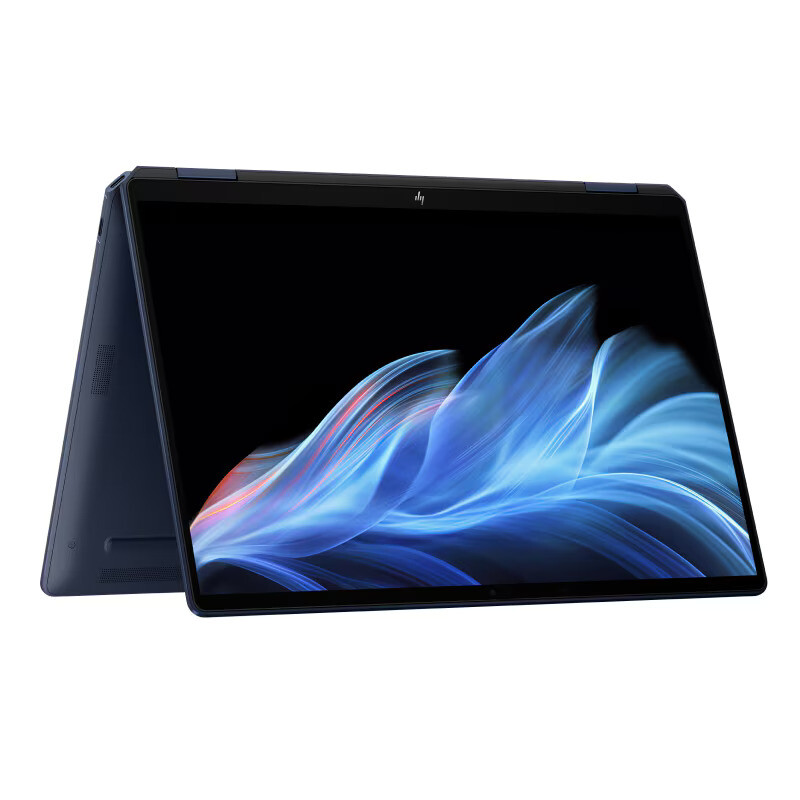
Today at HP Imagine, HP Inc. (NYSE: HPQ) announced the company's newest innovations, including next-gen AI PCs, AI-enabled video conferencing solutions, and a scalable GPU performance sharing solution for AI developers - all designed to transform the future of work.

"HP is deeply ambitious in its commitment to reshape the way people work, fostering growth, nurturing creativity, and unleashing limitless innovation," said Alex Cho, President of Personal Systems at HP Inc. "We're bringing AI to life and delivering powerful new experiences through our next-gen AI PCs, advanced audio and video solutions, and innovative AI development platform."

ASUS Introduces All-New Intel Xeon 6 Processor Servers

ASUS today announced its all-new line-up of Intel Xeon 6 processor-powered servers, ready to satisfy the escalating demand for high-performance computing (HPC) solutions. The new servers include the multi-node ASUS RS920Q-E12, which supports Intel Xeon 6900 series processors for HPC applications; and the ASUS RS720Q-E12, RS720-E12 and RS700-E12 server models, embedded with Intel Xeon 6700 series with E-cores, will also support Intel Xeon 6700/6500 series with P-cores in Q1, 2025, to provide seamless integration and optimization for modern data centers and diverse IT environments.

These powerful new servers, built on the solid foundation of trusted and resilient ASUS server design, offer improved scalability, enabling clients to build customized data centers and scale up their infrastructure to achieve their highest computing potential - ready to deliver HPC success across diverse industries and use cases.

Nintendo Switch 2 Allegedly Not Powered by AMD APU Due to Poor Battery Life

Nintendo's next-generation Switch 2 handheld gaming console is nearing its release. As leaks intensify about its future specifications, we get information about its planning stages. According to Moore's Law is Dead YouTube video, we learn that Nintendo didn't choose AMD APU to be the powerhouse behind Switch 2 due to poor battery life. In a bid to secure the best chip at a mere five watts of power, the Japanese company had two choices: NVIDIA Tegra or AMD APU. With some preliminary testing and evaluation, AMD APU wasn't reportedly power-efficient at 5 Watt TDP, while the NVIDIA Tegra chip was maintaining sufficient battery life and performance at target specifications.

Allegedly the AMD APU was good for 15 W design, but Nintendo didn't want to place a bigger battery so that the device remains lighter and cheaper. The final design will likely carry a battery with a 20 Wh capacity, which will be the main power source behind the NVIDIA Tegra T239 SoC. As a reminder, the Tegra T239 SoC features eight-core Arm A78C cluster with modified NVIDIA Ampere cores in combination with DLSS, featuring some of the latest encoding/decoding elements from Ada Lovelace, like AV1. There are likely 1536 CUDA cores paired with 128-bit LPDDR5 memory running at 102 GB/s bandwidth. For final specifications, we have to wait for the official launch, but with rumors starting to intensify, we can expect to see it relatively soon.
Return to Keyword Browsing
Nov 13th, 2026 10:36 PST change timezone

New Forum Posts

Popular Reviews

TPU on YouTube

Controversial News Posts