News Posts matching #External GPU

Return to Keyword Browsing

OCuLink Dev Kit Gives Framework Laptop 16 Desktop-Class PCIe Expansion

Alongside the Framework 13 Pro that was just announced, Framework also released the OCuLink Dev Kit, which is a new modular adaptor that replaces the Framework Laptop 16's Graphics Module with an external OCuLink port, allowing you to connect high-performance peripherals and hardware across a PCIe 5.0×8 interface and offering a theoretical maximum bandwidth of 128 GT/s. Framework suggests that users could use the OCuLink port to build out their Framework Laptop 16 as a lightweight on-the-go laptop, removing the dGPU and using that in an eGPU setup while docked at a desk and relying on the iGPU in the laptop for work away from the desk.

The Framework OCuLink Dev Kit includes the hardware that goes into the laptop itself, an OCuLink Expansion Bay adaptor, as well as the external bits, including a Graphics Module OCuLink Dock, for mounting your Framework Graphics Module externally, a PCIe OCuLink Dock with a full-size PCIe slot for hardware like GPUs, networking cards, capture cards, and whatever else goes into a PCIe slot; and an OCuLink 8i cable to connect the dock to the laptop itself. In order to use the external graphics module, you'll need to supply your own desktop PSU, since Framework does not include one in the package, and it should also be noted that the OCuLink port does not support the same charging capabilities as USB4 or Thunderbolt, so you'll still need to run at least two cables when using the Dev Kit.

Minisforum EU & UK Stores Start Selling EOP4A OCuLink External GPU Card

Minisforum's UK and Europe webstores have listed a brand-new EOP4A OCuLink external GPU card. The tiny—80 mm x 40 mm (not including bracket)—adapter's interface is advertised as offering native high-performance. According to the manufacturer's typo and error-laden promo material, this design: "delivers lossless PCIe (4.0) to OCuLink conversion," thus "unleashing the full potential of external NVMe storage and compute accelerators." The Chinese tech specialist's EOP4A model seems destined for deployment in desktop setups, with externally connected graphics card boosting performance across content creation, AI development, and gaming applications.

The item's product specification sheet mentions a TO OCuLink SF8611/8612 interface, compatible PCIe slot types (x1, x4, x8, & x16), and support for (up to)
PCIe 4.0 ×4 bandwidths. The adapter is bundled with low-profile and full-height brackets. Plug-and-play functionality—e.g, driverless operation—is a big selling point. Currently, the EOP4A is listed with a tidy discount—for prospective UK buyers, £20 has been deducted from the standard price £89 tag (including VAT). A similar launch promotion is in effect at the Minisforum EU webshop, albeit with local taxes applied at checkout. The premium constructed EOP4A can be picked up for £69 (~$93 USD) or €55 + VAT (~$65 USD). By contrast, Minisforum's North American webstore directs potential customers to a placeholder product page. At the time of writing, this listing bears no pricing or stock availability info.

External GPU Connection Battle: OCuLink Beats Thunderbolt 5 by About 16%

External graphics enclosures rely on external PCIe delivery to make sure that desktop-class GPUs aid laptop users in their quest for maximum performance. Usually, this is delivered over OCuLink or Thunderbolt 4/5 connectors. Independent testing by Try Some Tech found that a direct PCIe connection over OCuLink delivers the highest sustained throughput, while Thunderbolt 4 and 5 trade some performance for convenience and compatibility. In lab measurements, OCuLink reached roughly 6.6 GB/s host to device and 6.7 GB/s device to host. Thunderbolt 5 recorded about 5.6 GB/s host to device and 5.8 GB/s on the return. Those bandwidth gaps translated into measurable differences in real applications, especially storage workloads and sustained transfers, where sustained throughput matters more than peak bursts.

For testing, Try Some Tech mounted an NVIDIA GeForce RTX 5070 Ti in an enclosure and compared three setups: native PCIe, external via OCuLink, and external via Thunderbolt 5 using an Intel Core Ultra 7 265K testbed. The test included the following titles: Clair Obscur: Expedition 33, Indiana Jones, The Talos Principle 2, Days Gone, God of War, Red Dead Redemption 2, Cyberpunk 2077, Ghost of Tsushima, Hogwarts Legacy, Spider-Man: Miles Morales RT, and Spider-Man: Miles Morales. Compared to Thunderbolt 5, OCuLink increased gaming performance by up to 16.28% on average. Additionally, OCuLink is about 7-8% slower than a direct PCIe connection to the motherboard. When comparing direct PCIe to Thunderbolt 5, the TB5 connection lagged by roughly 19-25% on average, with worst cases approaching a 36% drop. OCuLink benefits from lower protocol overhead and lower latency, but it remains a specialist solution with limited laptop support, no hot swap, and no integrated power or display features. Thunderbolt is a more practical choice for most buyers because of its plug-and-play convenience, charging, and display passthrough.

Peladn Unveils Link S-3, Its First Thunderbolt 5 eGPU Dock

Chinese company Peladn is preparing the Link S-3 as its first external GPU dock to feature Thunderbolt 5 connectivity, following its previous Link S-1 and Link S-2 models that used Thunderbolt 4 and OCuLink, respectively. This low-profile dock enables desktop graphics card connectivity for systems lacking dedicated GPUs. The device features dual Thunderbolt 5 ports with up to 80 Gbps bidirectional speeds; however, practical performance is limited to 64 Gbps due to constraints of its PCIe 4.0 x4 slot for the graphics card. The dock supports external ATX or SFX power supplies and 140 W Power Delivery through its Thunderbolt 5 connection. Its open-air design exposes the connected graphics card to ambient air for cooling, eliminating the need for built-in fans.

Peladn Link S-3 includes 2.5 Gigabit Ethernet connection via Realtek's RTL8156B controller, an M.2 2280 slot for PCIe 3.0 x1 SSDs, a USB 3.2 Gen 2 Type-A port at 10 Gbps, and an SD card reader. While Thunderbolt 5 offers higher theoretical bandwidth than OCuLink's 64 Gbps, the practical advantage is minimal due to PCIe constraints. OCuLink connections may still provide lower latency in some scenarios, though the Link S-3's Thunderbolt 5 implementation enables additional connectivity features that OCuLink docks typically lack. The Peladn Link S-3 is available for pre-order in China at CNY 1,599 (approximately $223), with shipping starting on July 26. Global availability has not been announced.

ASUS China Sets February 25 Launch Date for ROG XG eGPU, Featuring GeForce RTX 5090M or 5070M Ti

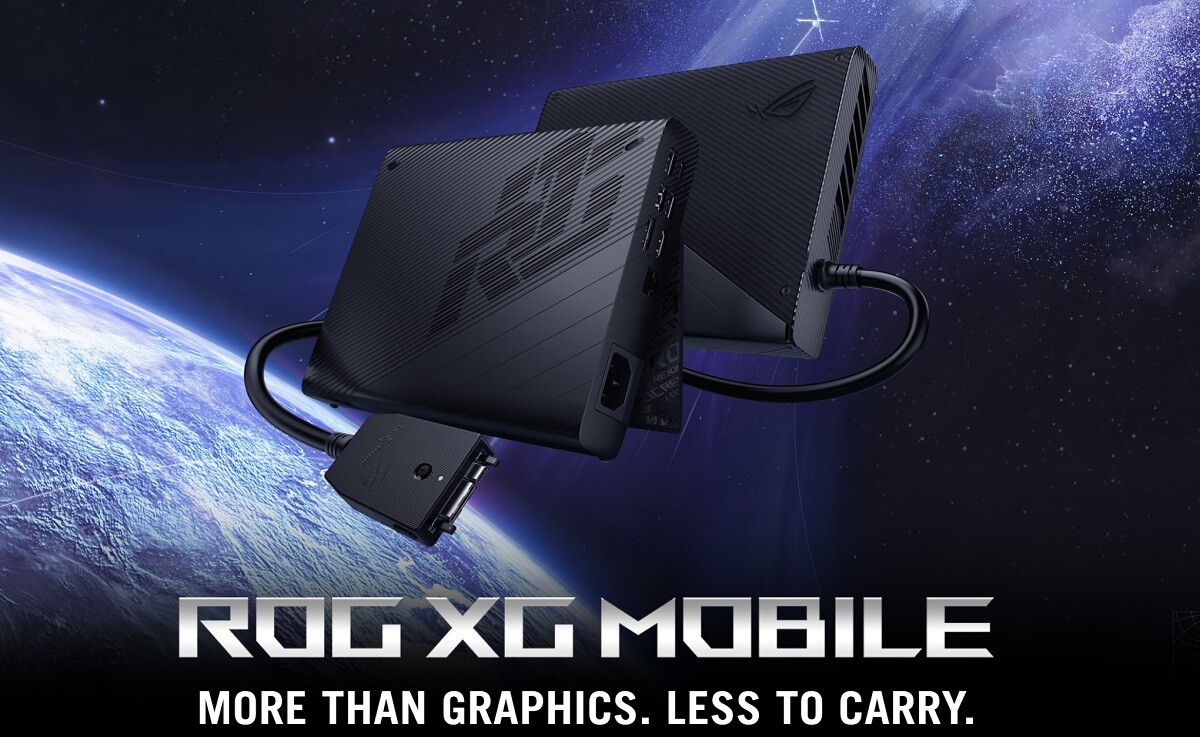
Last month, ASUS revealed its refreshed ROG XG Mobile design at CES 2025. The latest iteration of their premium external GPU dock is prepped for NVIDIA's "Blackwell" GeForce RTX 50 Mobile GPU-series. According to an ITHome report, the new model will be released next week; the manufacturer's Chinese office has seemingly produced marketing material that teases a launch on February 25. The redesigned ROG XG platform leverages an improved vapor chamber system; offering "150% more cooling surface area," and features "pioneering" Thunderbolt 5 connectivity (max. 80 Gbps bidirectional bandwidth). Press material from January indicated that a top configuration would house Team Green's GeForce RTX 5090 Mobile 24 GB GPU.

An updated official product page also lists support for NVIDIA's "GeForce RTX 5070 Ti Laptop" 12 GB GPU. ASUS will bundle in a 330 W AC adapter, according to its spec sheet. The off-black translucent enclosure weighs in at 0.952 kg, and dimensions are listed as: "20.8 x 15.5 x 2.96 cm." ITHome expects ASUS to reveal regional pricing (for China) on February 25; Western markets will be charged $2199.99 (US MSRP) for the flagship configuration, if price hikes do not go into effect at launch. The less potent variant—powered by a GB205 GPU—is priced at $1199.99.

GMKTec AD-GP1: Brand-New Radeon RX 7600M XT eGPU Unveiled With OCuLink

We frequently find ourselves stunned with the sheer number of mini PCs and SFF systems that are hitting the market as of late. This segment of the personal computing market is undeniably expanding at an unprecedented rate, clearly indicating a positive growth in interest surrounding compact systems. However, a majority of such SFF and mini PCs lack the advantage of being able to thermally afford discrete graphics, which makes them rely either on passable iGPU performance, or go the eGPU route. Thankfully, the list of eGPUs available on the market also appear to be on the rise, especially systems with OCuLink support, which allows for a comparatively low performance downgrade as compared to USB4.

GMKTec has now announced its latest offering for the segment, dubbed the AD-GP1. This eGPU, unlike many others, comes pre-installed with a Radeon RX 7600M XT GPU, which means that it is not upgradeable or replaceable down the road. The RDNA 3-based 7600M XT is a decently potent GPU, which is commonly found in gaming laptops. However, the GPU is paired with a paltry 8 GB of GDDR6 memory, which is might not be enough for a number of modern demanding titles, considering that AMD GPUs generally need more VRAM than NVIDIA counterparts (different texture compression methods, for the most part). In terms of ports, the AD-GP1 sports dual HDMI 2.1 ports, dual DisplayPort 2.0 ports, USB4, and the aforementioned OCuLink port. Priced at $460 on GMKTec's official website as of this writing, the AD-GP1 is an interesting option for those on the lookout for a mid-range eGPU with OCuLink support.

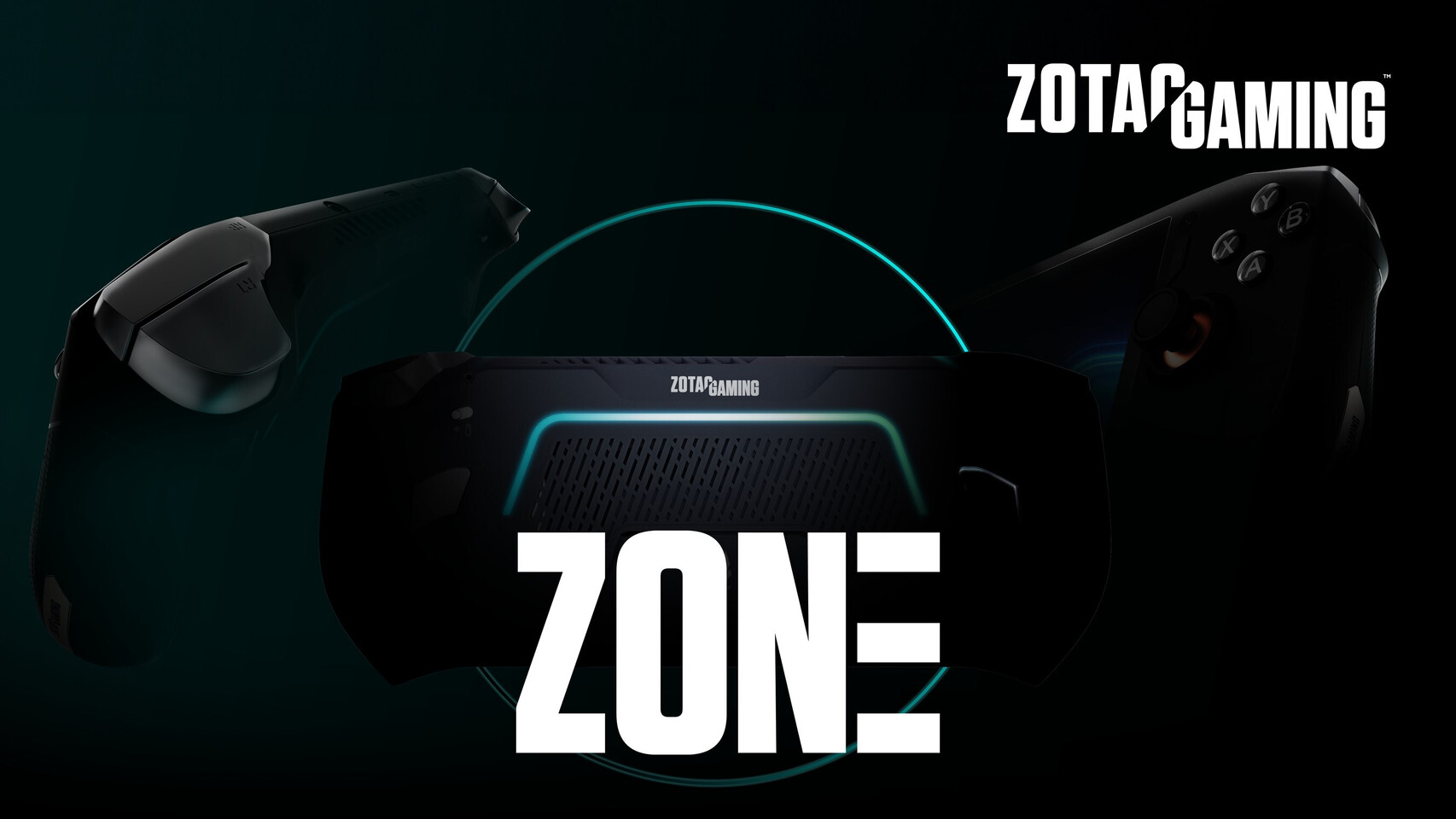
ZOTAC to Debut Limit-Pushing Handheld Gaming PC and Showcase AI-Centric Computing Solutions at Computex 2024

ZOTAC Technology, a global manufacturer focused on innovative and high-performance hardware solutions, will return to COMPUTEX 2024 to showcase its biggest push yet into brand-new product categories. At this year's exhibition, ZOTAC will unveil its first attempt at creating a unique Handheld Gaming PC with advanced controls and features, allowing gamers to enjoy their favorite games on the go like never before with maximum competitive advantage.

Also in ZOTAC's extensive lineup is a full-fledged selection of AI-focused computational hardware, including a new workstation-grade External GPU Box series for hassle-free GPU compute and AI acceleration, ZBOX mini PCs powered by Intel Core Ultra CPUs equipped with integrated neural processing units (NPU), as well as other enterprise-grade solutions, such as GPU Servers and Arm-based NVIDIA Jetson systems, offering users a broad selection of AI accelerators in applications big and small.

ZOTAC to Show Scalable GPU Platforms and Industrial Solutions at Hannover Messe 2024

ZOTAC Technology is announcing a new lineup of enterprise and healthcare-oriented mini PCs designed for specific applications and scalable deployment, as well as a whole new class of external GPU acceleration platforms for Thunderbolt 3-compatible PCs. Aside from the all-new additions, ZOTAC is also refreshing its best-selling performance mini PCs with the newest generations of Intel Core Processors and NVIDIA RTX-enabled GPUs. ZOTAC will debut these rugged, innovative solutions and showcase other AI-ready compute solutions during Hannover Messe 2024, reaffirming ZOTAC's commitment to embrace the AI-driven future.

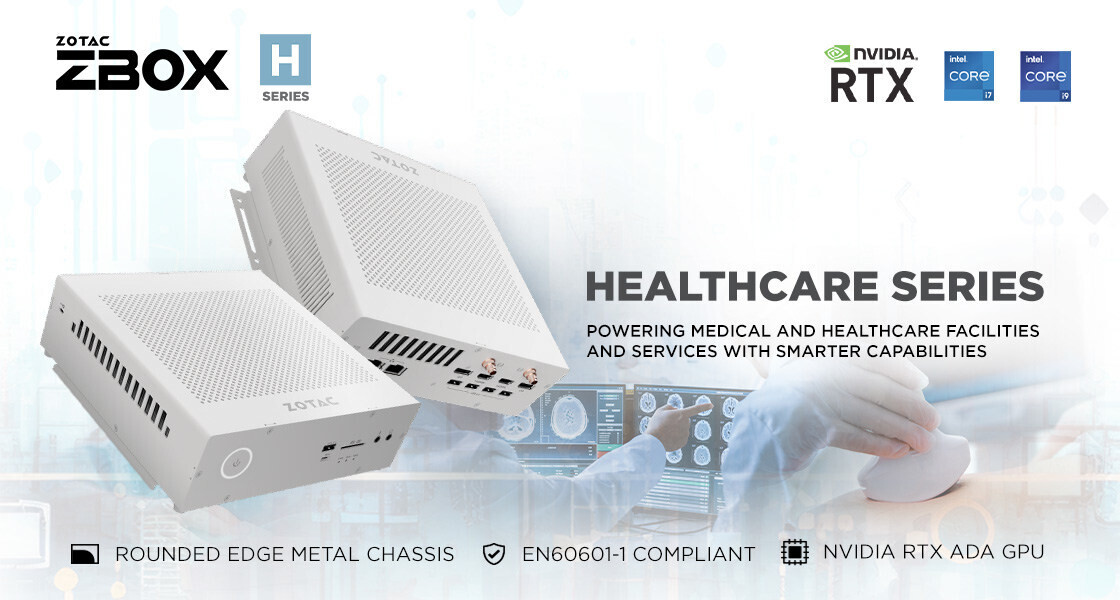
ZOTAC ZBOX Healthcare Series: Medical AI Solution
With the all-new ZOTAC Healthcare Series, ZOTAC is offering the reputed superior quality and performance of ZOTAC ZBOX Mini PCs to the realm of Healthcare. The ZBOX H39R5000W and ZBOX H37R3500W are equipped with 13th Generation Intel Core i9 or i7 laptop processors, as well as professional-grade NVIDIA RTX Ada Generation laptop GPUs. These mini PCs are ready to power medical imaging, algorithms, and more, with some of the latest and greatest hardware currently available.

OneXGPU Launches at $599: World's First Portable eGPU with Storage

OneXPlayer, a trailblazer in portable gaming tech, proudly introduces its latest innovation - the OneXGPU. Redefining the gaming landscape, this cutting-edge external graphics processing unit is set to revolutionize portable computer performance. The highly anticipated OneXGPU, the world's first eGPU with integrated storage, will launch on Indiegogo at 00:00 on November 29th (PST November 28th, 08:00 AM). The introductory pricing for the first 96 hours of launch is set at $599. Additionally, users can opt for upgrade options, including the Oculink Cable and various SSD capacities, to customize their experience.

Designed for ultimate portability without compromising on power, the OneXGPU boasts the AMD Radeon RX 7600M XT. With a magnetic back cover allowing swift access to the M.2-2280 SSD slot and versatile interface support via Oculink, it's a game-changer. The RGB lighting adds a stylish touch to its aesthetic. This breakthrough innovation signifies more than an external graphics card. The OneXGPU marks a new era in gaming, delivering unparalleled performance anytime, anywhere. Its integration of SSD PCIe support significantly enhances both storage capacity and performance, promising seamless computing and unmatched speed.

Visit the OneXGPU Campaign on Indiegogo.

Minisforum PC Features Ryzen 9 7945HX3D and External GPU Interface

During its "Xiamen HighFun" event in China, Minisforum announced the latest addition to its compact series of gaming PCs, this time with no official name. The 6-liter system, code-named "Project RPFXI" for Intel and "Project DRFXI" for AMD, will support up to 100 W TDP and utilize the most powerful Ryzen CPU, the Ryzen 9 7945HX3D. This hybrid mobile/desktop processor combines the desktop-level performance of 16 Zen 4 cores with 144 MB of 3D V-cache, all within a 55 W power limit. Minisforum confirmed the 7945HX3D would be available in the AMD platform version, positioned as a premium model compared to the existing 7945HX system.

Interestingly, the GPU support is literally external, as the potential GPU needs to be attached to the outside part of the case, which is then secured using screws. The case could accommodate the fastest GPUs like NVIDIA GeForce RTX 4090 with a powerful enough power supply. The 6-liter mini PC is expected to launch in late 2023, either in 24-core Intel (HX line) configuration, of 16-core AMD configuration.

ASUS ROG Debuts its RTX 4090 XG Mobile GPU in China and Japan

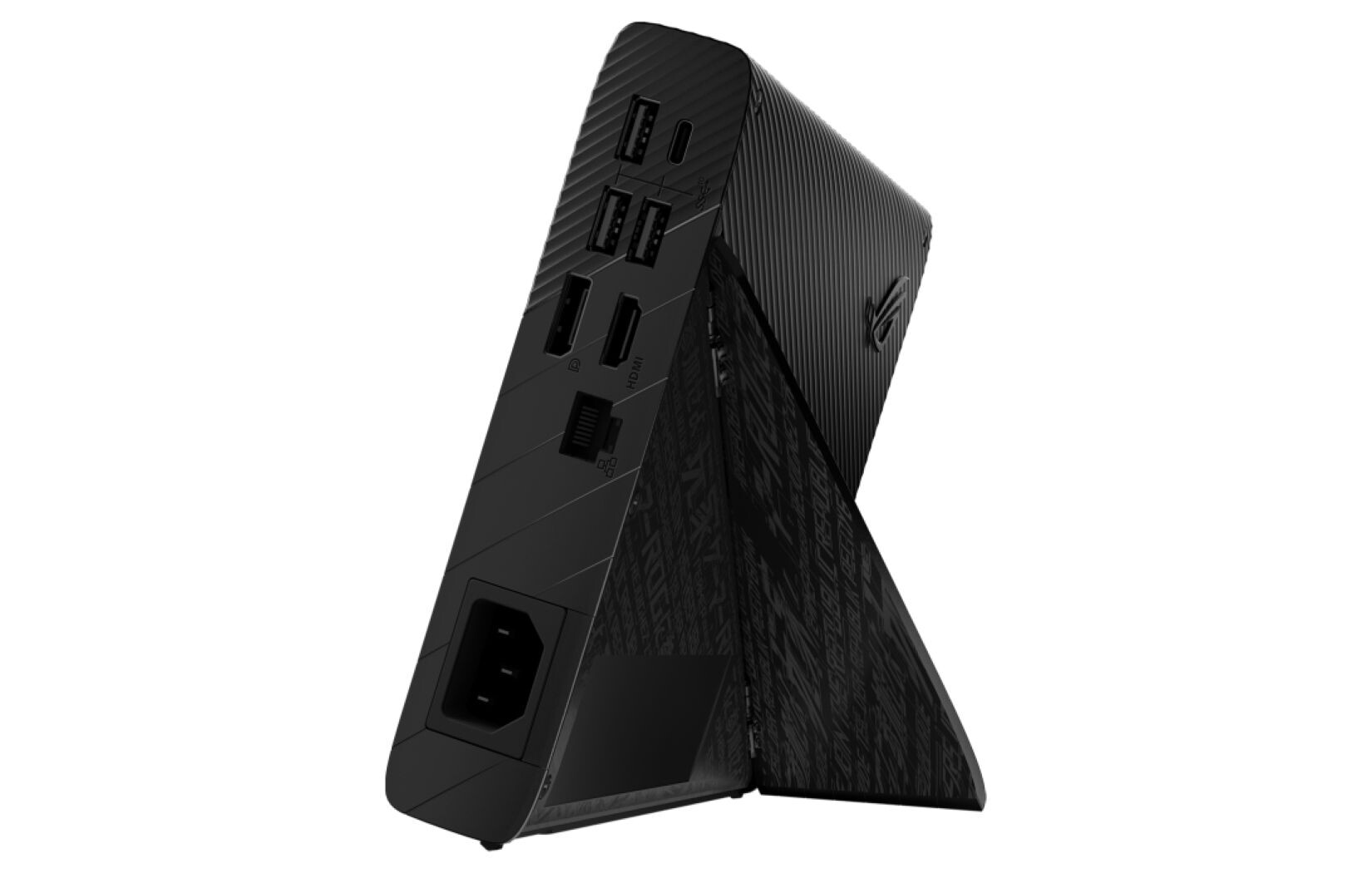
ASUS ROG has started selling its RTX 4090 XG Mobile external graphics card in China and Japan this week. Japanese customers are being charged a cool $3000 for the pint-sized powerhouse external GPU, and Chinese buyers are getting a slightly better deal at $2700. It should be noted that this eGPU is the (GN21-X11) mobile variant of the GeForce RTX 4090, and not the full fat desktop version. The newly updated XG Mobile enclosure can only be connected to an ASUS Flow laptop, which limits the scope of compatibility to an already very expensive range of devices. The proprietary connection standard will keep customers in the ASUS ROG mobile hardware ecosystem - but their higher end laptop models can be configured with the very capable GeForce RTX 4070 mobile GPU, so the RTX 4090 XG Mobile seems to appeal to a very small buying niche.

The XG Mobile interface uses the PCIE Gen 3 x8 standard of connection, and the GPU has access to a dedicated 63 GB/s of bandwidth. This beats the Thunderbolt 4 standard of 40 Gb/s, by a 57% margin. The enclosure acts as a docking station - its features include an up to 2.5 Gbit Ethernet, a single HDMI 2.1 port, one DisplayPort 1.4 with G-Sync support and three USB 3.2 Gen 2 ports (3x Type-A + 1x Type-C). ASUS ROG has engineered the docking station/enclosure to be as compact as possible (21.7 cm x 16.5 cm x 3.26 cm), when compared to competing products from other manufacturers. The whole package weighs in at 1.3 kg, which will ensure decent portability for gamers on the move.
Return to Keyword Browsing
Nov 19th, 2026 21:38 PST change timezone

New Forum Posts

Popular Reviews

TPU on YouTube

Controversial News Posts