News Posts matching #FOXCONN

Return to Keyword Browsing

NVIDIA Expands Commitments With Supply Chain Partners to Support AI Infrastructure Buildout

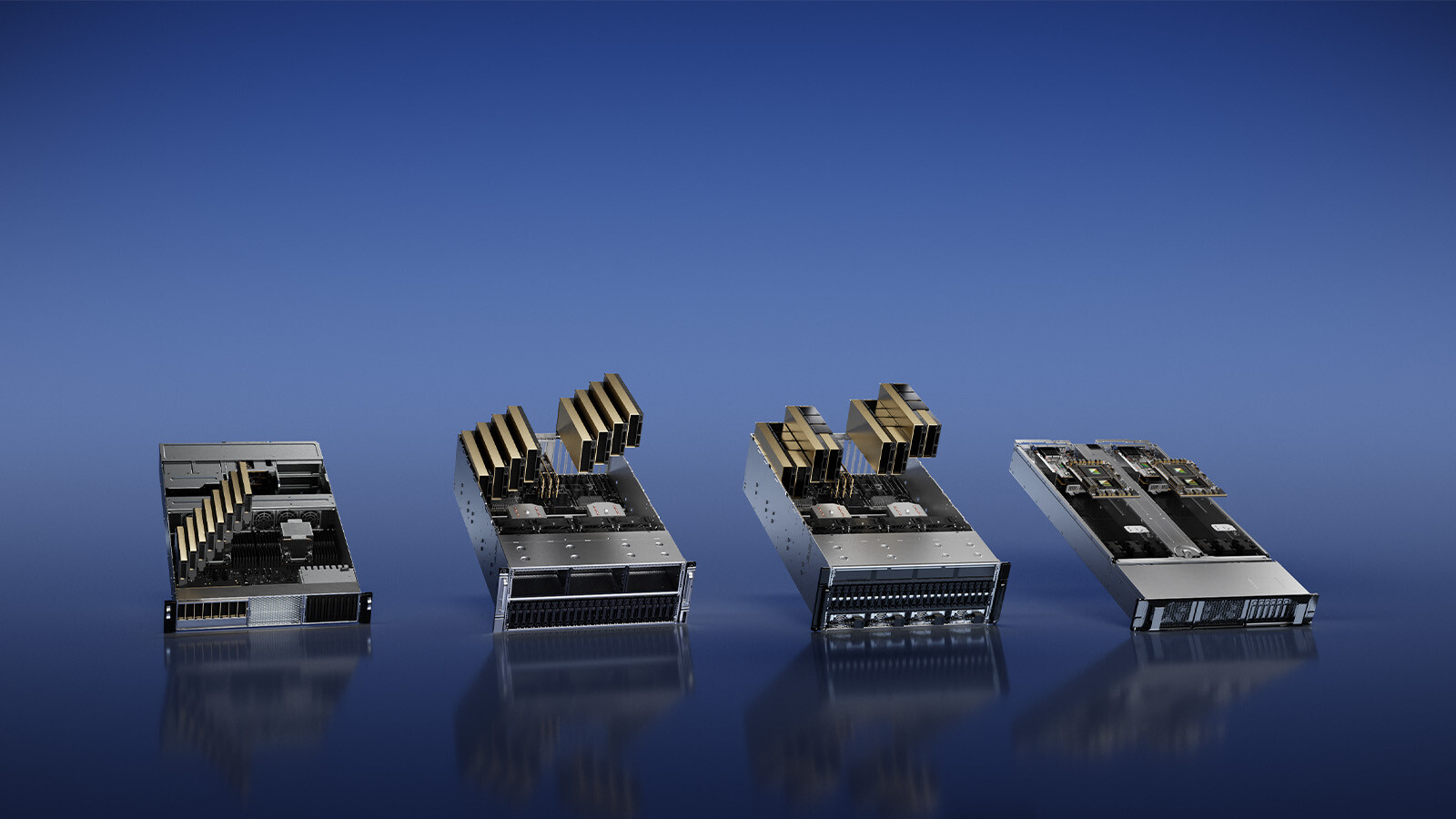
NVIDIA today announced expanded commitments with supply chain partners to support sustainable long-term growth, aligning supply and manufacturing capacity with demand for its accelerated computing and AI infrastructure platforms.

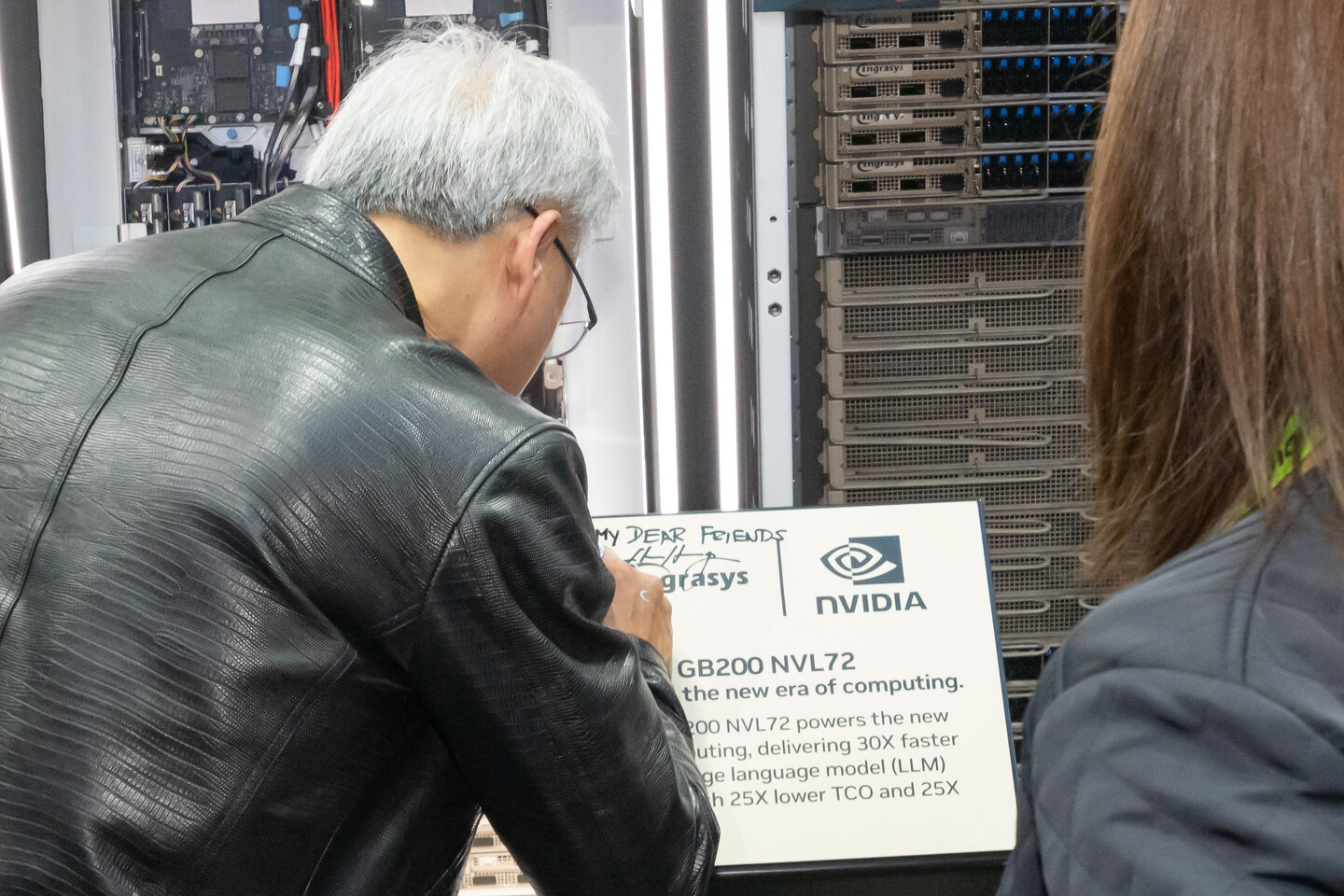
Working with Amkor Technology, Foxconn, Kinsus Interconnect Technology, Samsung Electro-Mechanics, Siliconware Precision Industries (SPIL) and TSMC, NVIDIA is expanding manufacturing capacity across substrates, advanced packaging, wafer and contract manufacturing to scale production of its current and next-generation accelerated computing platforms.


AMD CEO Lisa Su Says 2027 Will Bring a "Substantial" Supply Increase

AMD will "substantially" increase its chip supply in 2027, CEO Lisa Su told reporters in Taipei on Tuesday, while admitting that demand is still running ahead of what the company can ship. Su is on her third trip to Taiwan this year, meeting partners such as Foxconn, Quanta, Acer, and ASUS, with TSMC also on the schedule. She is reportedly heading to South Korea later this week to sit down with memory suppliers Samsung and SK Hynix. Here's what she said:
We've been able to increase our supply as we've gone through 2026, and we're going to substantially increase our supply in 2027, but we can definitely use more. There's very, very high demand for the next several years. We can see very high demand, and so we need more advanced wafer capacity.

Microsoft Reportedly Boosting Xbox Production Output, Linked to Tentative Foxconn Vietnam Expansion

Two days ago, a low-key Reuters news article described recent efforts made by Fushan Technology (a Foxconn subsidiary) and Luxshare-ICT (a Chinese firm) to expand games console production facilities in Vietnam. Insiders believe that Fushan Tech is seeking permission to bolster an existing plant—leaked documents, submitted to a local government body, mention a major manufacturing goal. Once permitted, the Foxconn off-shoot supposedly wants to produce "up to 4.8 million Microsoft Xbox gaming devices (per annum), as well as "parts of the consoles, and other unspecified electromagnetic devices." Allegedly, Luxshare-ICT has lodged a similar request—pending a decision regarding an upgraded facility's annual "(up to) 4.5 million game consoles" production target.

Ongoing trade wars have caused manufacturers to pivot away from a traditional reliance on Chinese hubs. Instead, facilities located in nearby nations offer relief from severe tariffing. Jez Corden, of Windows Central fame, has weighed in on the topic of an alleged geopolitically-motivated change of plans at Microsoft's computer games division. Availability of current-gen Xbox consoles has declined across a fair number of regions, with big name retail outlets no longer selling the big green brand. Corden noted a decline in hardware supplies: "posted nearly every quarter for the past couple of years. To make matters worse, (Xbox leadership) was forced to raise prices a few months ago, making the Xbox Series X, and in some cases, the less powerful Xbox Series S more expensive than some PS5 models. Tariffs have played a huge part in making Xbox Series X|S less competitive."

Foxconn Wisconsin Plant Gets $569 Million Investment Approved

Foxconn's Wisconsin manufacturing hub has received a thumbs up from local government officials; after considering a proposed $569 million investment. Major additional funding will be directed into the expansion of the Taiwanese's giant's Racine County operation. According to a fresh Reuters news article, company officials cited a growing demand for AI server equipment—the facility's upcoming upgrades are deemed necessary to strengthen supply chains in the USA. Foxconn's relationship with the Wisconsin Economic Development Corporation (WEDC) seems to be in a better place nowadays; the two organizations have reportedly tussled over tax credits in the recent past. Within that time frame, the multinational electronics manufacturer has claimed that it has spent roughly $2 billion on upkeep of its Mount Pleasant-based site.

Jerry Hsiao, Foxconn's chief product officer, stated to Reuters (today): "as the demand for more data infrastructure continues to rise, Foxconn will keep responding to our customers' needs with flexibility and at scale in the United States." In addition, the boss estimates that the Wisconsin facility's team accounts for about a fourth of the company's total North American workforce. Looking to the future, he believes that the latest cash injection will spur on the creation of 1300+ new roles—by 2030. Original plans for the mega factory—going back to the mid-2010s—focused on the production of LCD panels, but present day market trends have caused a pivot to the pumping out of AI-oriented datacenter gear.

Foxconn Advances $1.4B NVIDIA GPU Cluster, Deepens Hardware Partnership with OpenAI

During Foxconn's annual tech day in Taipei, the company announced that its $1.4 billion supercomputing center, built in partnership with NVIDIA, will be ready in the first half of 2026. The facility will become Taiwan's largest advanced GPU cluster, powered by NVIDIA Blackwell GB300 hardware and operated under Foxconn's new AI and cloud unit, Visonbay.ai. NVIDIA VP Alexis Bjorlin said that with GPU performance rising so quickly, many companies will find it more economical to rent compute capacity instead of building their own facilities. Foxconn plans to invest $2-3 billion per year in AI as Chairman Young Liu says the company can already build around 1,000 AI racks per week, a number set to rise next year.

In a separate announcement, OpenAI confirmed a new partnership with Foxconn to co-develop hardware for data centers. Foxconn will design and manufacture components such as cabling, power systems, and other infrastructure gear. While the agreement doesn't include purchase commitments, OpenAI will get early access to test the hardware. Foxconn's deepening collaboration with OpenAI mirrors the model it already uses with Google, AWS, and Microsoft. The partnership gives Foxconn better feedback on rack design and helps speed up new system development. OpenAI CEO Sam Altman said that demand for advanced AI infrastructure continues to exceed supply, and that new AI models will require new types of server racks, cooling systems, and power hardware.

NVIDIA "Vera Rubin" NVL144 Servers Set for 2026 Volume Production

Foxconn has begun engineering validation for NVIDIA's "Vera Rubin" NVL144 MGX liquid-cooled racks, with plans for mass production in the latter half of 2026, according to internal supply-chain documents obtained by Taiwan Economics Daily. Each NVL144 unit features 144 Rubin GPUs with HBM4, updated 88-core Vera CPUs, and ConnectX-9 NICs and NVLink 6 interconnect for CPU-to-GPU and GPU-to-GPU communication, effectively doubling the compute density of the current NVL72 platform. The Taiwanese contractor Foxconn currently handles about 60% of NVIDIA's AI server output and is expanding its immersion-cooling and copper-plating lines at its Wisconsin and Houston facilities to meet new domestic manufacturing requirements.

The gap between GB300 peak shipments and Rubin's first silicon will be six to eight months, the shortest generational gap in NVIDIA's history. Despite the accelerated roadmap, Blackwell Ultra remains NVIDIA's main revenue source through mid-2026. Procurement data shows that cloud providers have reserved around 400,000 GB300 nodes for delivery in late 2025 and early 2026, indicating strong near-term demand. At the same time, OpenAI has placed a large preorder for Vera Rubin silicon, securing initial production volumes and supporting Foxconn's capacity investments. The rapid transition from Hopper to Blackwell and then to Rubin within 30 months marks the fastest acceleration of datacenter equipment cycles, leading hyperscale operators to speed up depreciation schedules.

Intel Approaches Apple for Investment Talks as Foundry Partnership Explored

Intel has initiated early-stage discussions with Apple regarding potential investment and collaboration, Bloomberg reports citing industry sources. Team Blue has also approached other companies for similar partnership deals, though no agreements are guaranteed. The Business Korea article suggests that Apple will continue with its custom silicon rather than returning to Intel's processor lineup. The report highlights Apple's reliance on TSMC for chip fabrication and Foxconn for assembly operations in Taiwan, China, and India—things that could pose challenges if U.S. tariffs are reintroduced and if domestic manufacturing demands intensify. MarketWatch analysts suggest Apple's interest focuses primarily on Intel's foundry services as an alternative production source. Given Apple's substantial U.S. manufacturing commitments, supporting Intel could improve the company's relationship with Washington policymakers, the outlet indicates.

Apple recently expanded its domestic investment pledge to $600 billion over four years, up from the previous $500 billion commitment announced at a White House event in August, according to Bloomberg. Intel's investment quest has already attracted significant backing. The U.S. government has taken close to a 10% stake in Intel via $10 billion in CHIPS Act funding, while NVIDIA invested $5 billion for a 4% share. Japan's SoftBank contributed $2 billion through its Stargate partnership with OpenAI and Oracle, securing roughly 2%. According to Investopedia, any potential partnership with Apple, particularly one involving foundry investments would reinforce Intel's efforts to reinvigorate its business.

TECO Electric & Machinery and Hon Hai Technology Group Announce Strategic Alliance Targeting AI Data Center Capabilities

TECO Electric & Machinery Co Ltd ("TECO") and Hon Hai Technology Group ("Foxconn") held a major press conference today (30th) at the Taiwan Stock Exchange to announce a strategic alliance through a board-approved share exchange. This partnership combines TECO's strengths in electromechanical systems with Foxconn's expertise in ICT to seize the global trend of AI data center development toward standardization and modularization, jointly tapping into vast AI data center (AIDC) business opportunities worldwide. Going forward, the strategic alliance will explore the possibility of expanding cooperation in Foxconn's "3+3+3" areas.

According to terms approved by both boards, respectively, TECO will take a 0.519% stake in Foxconn. In turn, Foxconn will own 10% in TECO. The latter will issue 237,644,068 new shares to Foxconn, and Foxconn will issue 72,481,441 new shares to TECO, implying a share exchange ratio of approx. 1 to 0.305. The no-cash transaction is targeted to complete in the fourth quarter of this year, conditional on regulatory approvals.

Humanoid Robots to Assemble NVIDIA's GB300 NVL72 "Blackwell Ultra"

NVIDIA's upcoming GB300 NVL72 "Blackwell Ultra" rack-scale systems are reportedly going to get a humanoid robot assembly, according to sources close to Reuters. As readers are aware, most of the traditional manufacturing processes in silicon manufacturing, PCB manufacturing, and server manufacturing are automated, requiring little to no human intervention. However, rack-scale systems required humans for final assembly up until now. It appears that Foxconn and NVIDIA have made plans to open up the first AI-powered humanoid robot assembly plant in Houston, Texas. The central plan is that, in the coming months as the plant is completed, humanoid robots will take over the final assembly process entirely removing humans from the manufacturing loop.

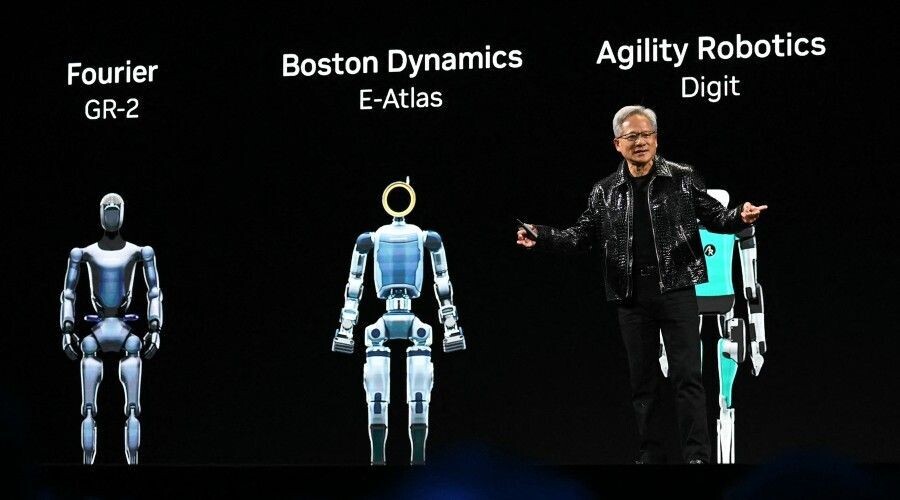
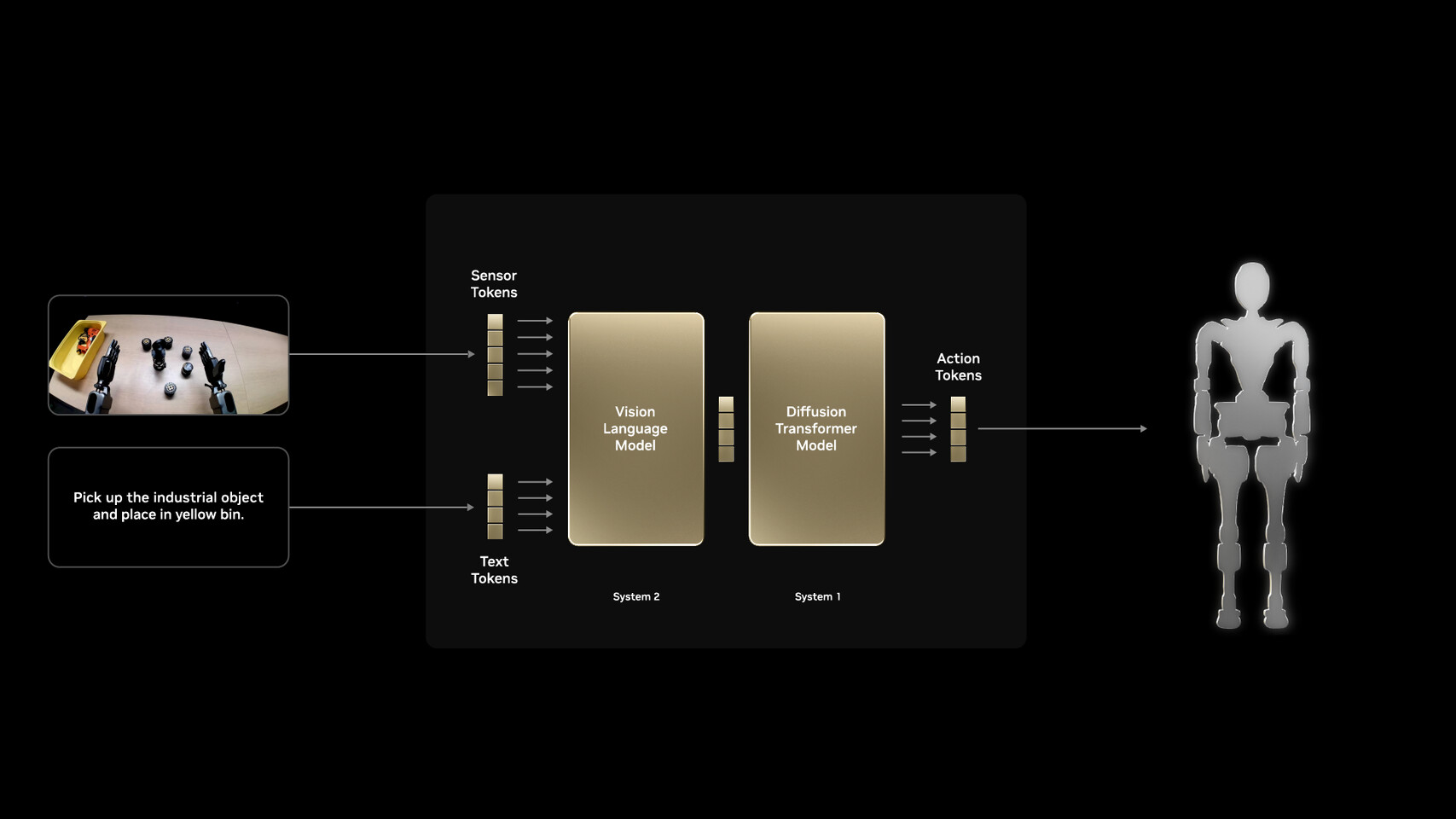
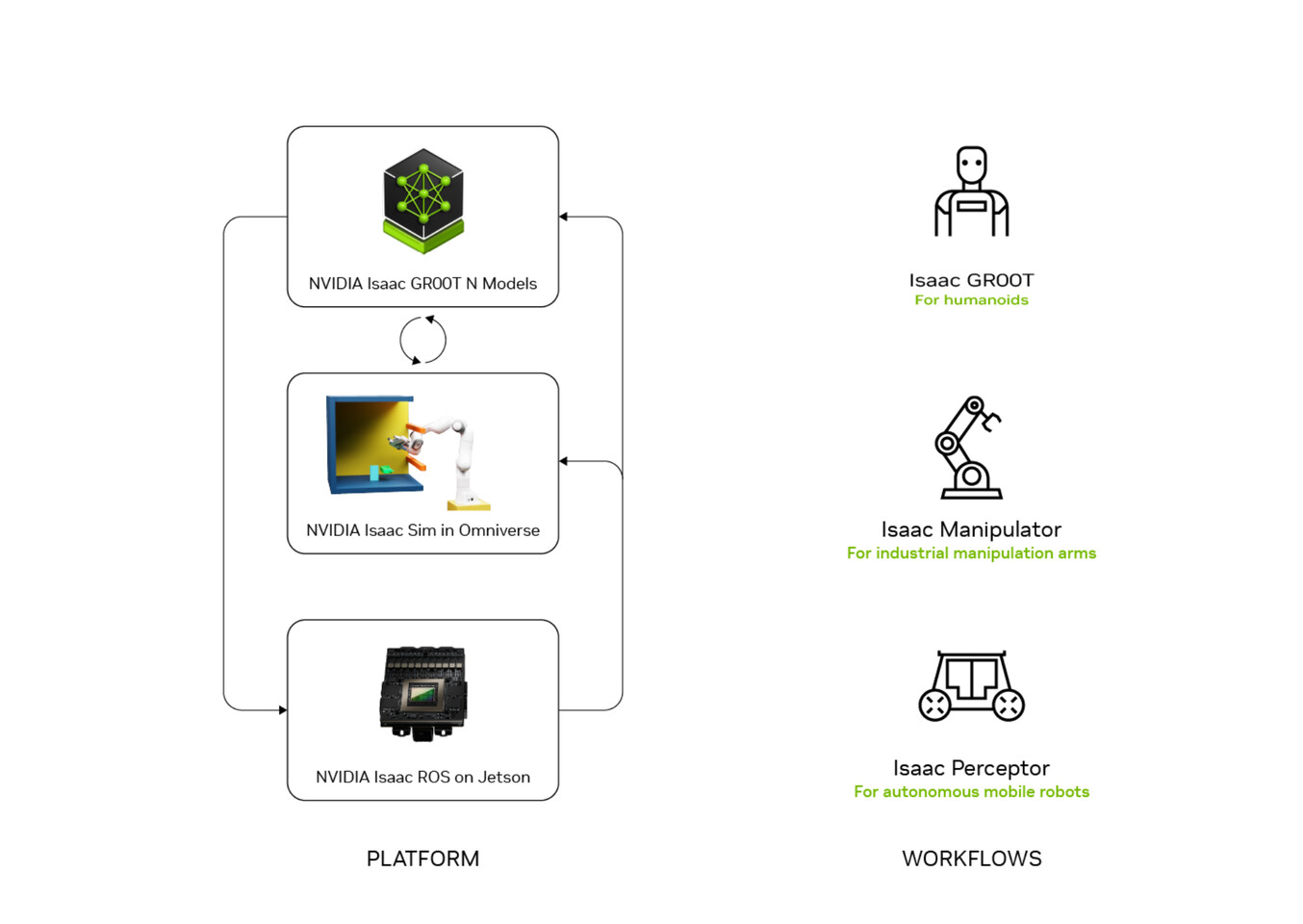
And this is not a bad thing. Since server assembly typically requires lifting heavy server racks throughout the day, the humanoid robot system will aid humans by doing the hard work, thereby saving workers from excessive labor. Initially, humans will oversee these robots in their operations, with fully autonomous factories expected later on. The human element here will primarily involve inspecting the work. NVIDIA has been laying the groundwork for humanoid robots for some time, as the company has developed NVIDIA Isaac, a comprehensive CUDA-accelerated platform designed for humanoid robots. As models from Agility Robotics, Boston Dynamics, Fourier, Foxlink, Galbot, Mentee Robotics, NEURA Robotics, General Robotics, Skild AI, and XPENG require models that are aware of their surroundings, NVIDIA created Isaac GR00T N1, the world's first open humanoid robot foundation model, available for anyone to use and finetune.

Wistron's New U.S. Facilities for NVIDIA Servers to be Operational Next Year

Taiwanese electronics manufacturer Wistron announced on Friday that its new U.S. manufacturing facilities for NVIDIA will be ready next year, confirming they're in discussions with other potential customers as well, Reuters reports. Wistron CEO Jeff Lin made his first public statement since NVIDIA's announcement, saying, "All our progress will follow the customer's lead," and confirmed their timeline aligns with NVIDIA's expectations. The facilities will partly support NVIDIA's ambitious plan to build AI servers worth up to $500 billion in the U.S. over the next four years. NVIDIA revealed in April its strategy to establish supercomputer manufacturing plants in Texas, collaborating with Foxconn in Houston and Wistron in Dallas, with both locations expected to increase production within 12-15 months. Recently Wistron's board has approved a $500 million investment in its new U.S. subsidiary.

The facilities will focus on producing high-performance computing and AI-related products, though Lin declined to name the other companies they're in talks with. When asked about U.S. restrictions on advanced chip exports to China, Lin noted that demand outside China remains robust. "We expect to grow alongside our customers... As for developments in the Middle East, most of them are essentially our indirect customers," he added. This comes as the UAE and U.S. signed an agreement this week to build the largest AI campus outside America, potentially involving the purchase of 500,000 of NVIDIA's most advanced AI chips yearly starting in 2025. Wistron also mentioned it's considering moving notebook production in Mexico in an attempt to avoid tariffs under the United States-Mexico-Canada trade agreement.

Component Shortages Delay Taiwanese Electronics Firms' U.S. Expansion

Taiwan's electronics manufacturing services (EMS) providers are accelerating their North American production plans in response to tariff threats, but component shortages and capacity constraints at US chip plants could hamper the AI server market for years, according to industry sources.

"Since Trump's election, Taiwanese manufacturers have been strategically expanding their US presence," said Yen Chou, an analyst at DIGITIMES Research. "Most server manufacturers are concentrating in Texas, with Foxconn's FII already operating there and planning expansions."

Foxconn Allegedly Moving its iPhone Production to India

The Taiwan media is reporting that Foxconn has been busy moving more and more of its production from China to India, with the main focus being on Apple's iPhone and iPad products for now. Foxconn has been producing iPhones for the Indian market in India since 2019, but the story here is that China has banned Foxconn from sending Chinese staff to India to train the local staff and oversee the production. This has resulted in Foxconn having to send staff from Taiwan to India instead, but they might not be as familiar with the entire production process as the ones that are based in the factories in China.

This is only part of the issue though, as the news reports are also mentioning that China is preventing Foxconn from sending machines and equipment needed for the production to India. The same issue is said to be affecting other Taiwanese companies that are moving some of their production out of China to India, but they've had no issues when it comes to sending equipment to other nations in South East Asia. The equipment is apparently not possible to produce locally in India either, which means that these companies are more or less being forced to keep their production in China. To work around this issue, Foxconn is said to be sending half-finished phones and components to India, to do the final assembly there, to keep up production in India. So far, this is just rumours out of Taiwan, but it looks like China is intent on keeping the production on its shores for as long as it can.

NVIDIA & Partners to Produce American-made AI Supercomputers in US for First Time

NVIDIA is working with its manufacturing partners to design and build factories that, for the first time, will produce NVIDIA AI supercomputers entirely in the U.S. Together with leading manufacturing partners, the company has commissioned more than a million square feet of manufacturing space to build and test NVIDIA Blackwell chips in Arizona and AI supercomputers in Texas. NVIDIA Blackwell chips have started production at TSMC's chip plants in Phoenix, Arizona. NVIDIA is building supercomputer manufacturing plants in Texas, with Foxconn in Houston and with Wistron in Dallas. Mass production at both plants is expected to ramp up in the next 12-15 months. The AI chip and supercomputer supply chain is complex and demands the most advanced manufacturing, packaging, assembly and test technologies. NVIDIA is partnering with Amkor and SPIL for packaging and testing operations in Arizona.

Within the next four years, NVIDIA plans to produce up to half a trillion dollars of AI infrastructure in the United States through partnerships with TSMC, Foxconn, Wistron, Amkor and SPIL. These world-leading companies are deepening their partnership with NVIDIA, growing their businesses while expanding their global footprint and hardening supply chain resilience. NVIDIA AI supercomputers are the engines of a new type of data center created for the sole purpose of processing artificial intelligence—AI factories that are the infrastructure powering a new AI industry. Tens of "gigawatt AI factories" are expected to be built in the coming years. Manufacturing NVIDIA AI chips and supercomputers for American AI factories is expected to create hundreds of thousands of jobs and drive trillions of dollars in economic security over the coming decades.

NVIDIA Plans US Supply Chain Investment Worth Hundreds of Billions, "Blackwell" Already Manufactured in Arizona

NVIDIA's CEO Jensen Huang made some interesting commentary for the Financial Times, stating that the company will procure over half a trillion US Dollars worth of electronics over the next four years, and it it plans to keep hundreds of billions from the supply chain procurement in the US. "Overall, we will procure, over the course of the next four years, probably half a trillion dollars worth of electronics in total. And I think we can easily see ourselves manufacturing several hundred billion of it here in the US," said Jensen for FT. NVIDIA currently manufactures its silicon at TSMC's facilities, as well as electronics like motherboards and servers at Foxconn. However, the geopolitical situation is making NVIDIA reconsider its supply chain dependencies, and the company is looking for more US-based manufacturing.

NVIDIA confirmed that its latest "Blackwell" series of GPUs, including the latest Blackwell Ultra, are being manufactured at TSMC's Arizona facilities. TSMC announced a $100 billion investment in its Arizona expansion, and NVIDIA is ready to take up more of TSMC's capacity to meet its ever-growing demand for GPUs. During the GTC 2025 event, Jensen noted that only four cloud service providers will use 3.6 million GPUs this year. That is without any AI labs and enterprises, which are massive consumers of GPUs (xAI only has 200,000 GPU clusters). To continue manufacturing excellence so customers won't suffer, NVIDIA is also looking at other options for supply chain manufacturing partners. Intel, the only US-based company capable of producing advanced silicon, is a potential target for NVIDIA. "We evaluate their foundry technology on a regular basis, and we are ongoing in doing that... We look for opportunities to be a customer of theirs... I have every confidence that Intel can do it," added Jensen, who also stated that NVIDIA is interested in silicon manufacturing and chip packaging services, as Intel's Foveros 3D packaging and other technologies are attractive for Team Green.

Foxconn Reports 17-Year High in FY2024 & Q4 Financial Results

Hon Hai Technology Group ("Foxconn") today announced its full year and fourth quarter 2024 financial results.

Full year 2024 net profit reached NT$152.7 billion, resulting in earnings per share of NT$11.01, a 17-year-high. At the same time, the Group announced that it will distribute a cash dividend of NT$5.80 per share, a record level since it's listing in 1991. Despite significant changes in global tariff policies, geopolitical risks and monetary policies, the outlook for 2025 is for strong growth. The company also shared key developments around its three major smart platforms, as well as on AI and EV in 2025.

SoftBank, ZutaCore and Foxconn Collaborate on Development of Rack-Integrated Solution

SoftBank Corp., ZutaCore and Hon Hai Technology Group ("Foxconn") today announced they implemented ZutaCore's two-phase DLC (Direct Liquid Cooling) technology in an AI server using NVIDIA accelerated computing, making it the world's first implementation of ZutaCore's two-phase DLC (Direct Liquid Cooling) technology using NVIDIA H200 GPUs. In addition, SoftBank designed and developed a rack-integrated solution that integrates each component of the server, including cooling equipment with two-phase DLC technology, on a rack scale, and conducted an operational demonstration and performance evaluation at its data center in February 2025. The demonstration results indicated the solution passed NVIDIA's temperature test (NVQual), thereby confirming the compatibility, stability and reliability of this rack-integrated solution. The solution also achieved pPUE (partial Power Usage Effectiveness) of 1.03 (actual measured value) per rack for cooling efficiency

With the spread and increased adoption of AI, demand for AI servers and other computing resources is expected to expand significantly, further increasing power consumption at data centers. At the same time, reducing power consumption from the perspective of reducing carbon dioxide (CO2) emissions has become a pressing issue worldwide, requiring data centers to become more efficient, consume less power, and introduce innovative heat removal solutions. Since May 2024, SoftBank has been collaborating with ZutaCore, a global leader in the development and business deployment of two-phase DLC technology, to develop solutions optimized for low power consumption at AI data centers.

Foxconn to Build Taiwan's Fastest AI Supercomputer With NVIDIA Blackwell

NVIDIA and Foxconn are building Taiwan's largest supercomputer, marking a milestone in the island's AI advancement. The project, Hon Hai Kaohsiung Super Computing Center, revealed Tuesday at Hon Hai Tech Day, will be built around NVIDIA's groundbreaking Blackwell architecture and feature the GB200 NVL72 platform, which includes a total of 64 racks and 4,608 Tensor Core GPUs. With an expected performance of over 90 exaflops of AI performance, the machine would easily be considered the fastest in Taiwan.

Foxconn plans to use the supercomputer, once operational, to power breakthroughs in cancer research, large language model development and smart city innovations, positioning Taiwan as a global leader in AI-driven industries. Foxconn's "three-platform strategy" focuses on smart manufacturing, smart cities and electric vehicles. The new supercomputer will play a pivotal role in supporting Foxconn's ongoing efforts in digital twins, robotic automation and smart urban infrastructure, bringing AI-assisted services to urban areas like Kaohsiung.

NVIDIA Announces Generative AI Models and NIM Microservices for OpenUSD Language, Geometry, Physics and Materials

NVIDIA today announced major advancements to Universal Scene Description, or OpenUSD, that will expand adoption of the universal 3D data interchange framework to robotics, industrial design and engineering, and accelerate developers' abilities to build highly accurate virtual worlds for the next evolution of AI.

Through new OpenUSD-based generative AI and NVIDIA-accelerated development frameworks built on the NVIDIA Omniverse platform, more industries can now develop applications for visualizing industrial design and engineering projects, and for simulating environments to build the next wave of physical AI and robots.

Global Server Shipments Expected to Increase by 2.05% in 2024, with AI Servers Accounting For Around 12.1%

TrendForce underscores that the primary momentum for server shipments this year remains with American CSPs. However, due to persistently high inflation and elevated corporate financing costs curtailing capital expenditures, overall demand has not yet returned to pre-pandemic growth levels. Global server shipments are estimated to reach approximately. 13.654 million units in 2024, an increase of about 2.05% YoY. Meanwhile, the market continues to focus on the deployment of AI servers, with their shipment share estimated at around 12.1%.

Foxconn is expected to see the highest growth rate, with an estimated annual increase of about 5-7%. This growth includes significant orders such as Dell's 16G platform, AWS Graviton 3 and 4, Google Genoa, and Microsoft Gen9. In terms of AI server orders, Foxconn has made notable inroads with Oracle and has also secured some AWS ASIC orders.

NVIDIA Grace Hopper Systems Gather at GTC

The spirit of software pioneer Grace Hopper will live on at NVIDIA GTC. Accelerated systems using powerful processors - named in honor of the pioneer of software programming - will be on display at the global AI conference running March 18-21, ready to take computing to the next level. System makers will show more than 500 servers in multiple configurations across 18 racks, all packing NVIDIA GH200 Grace Hopper Superchips. They'll form the largest display at NVIDIA's booth in the San Jose Convention Center, filling the MGX Pavilion.

MGX Speeds Time to Market
NVIDIA MGX is a blueprint for building accelerated servers with any combination of GPUs, CPUs and data processing units (DPUs) for a wide range of AI, high performance computing and NVIDIA Omniverse applications. It's a modular reference architecture for use across multiple product generations and workloads. GTC attendees can get an up-close look at MGX models tailored for enterprise, cloud and telco-edge uses, such as generative AI inference, recommenders and data analytics. The pavilion will showcase accelerated systems packing single and dual GH200 Superchips in 1U and 2U chassis, linked via NVIDIA BlueField-3 DPUs and NVIDIA Quantum-2 400 Gb/s InfiniBand networks over LinkX cables and transceivers. The systems support industry standards for 19- and 21-inch rack enclosures, and many provide E1.S bays for nonvolatile storage.

NVIDIA Partners With Foxconn to Build Factories and Systems for the AI Industrial Revolution

NVIDIA today announced that it is collaborating with Hon Hai Technology Group (Foxconn) to accelerate the AI industrial revolution. Foxconn will integrate NVIDIA technology to develop a new class of data centers powering a wide range of applications—including digitalization of manufacturing and inspection workflows, development of AI-powered electric vehicle and robotics platforms, and a growing number of language-based generative AI services.

Announced in a fireside chat with NVIDIA founder and CEO Jensen Huang and Foxconn Chairman and CEO Young Liu at Hon Hai Tech Day, in Taipei, the collaboration starts with the creation of AI factories—an NVIDIA GPU computing infrastructure specially built for processing, refining and transforming vast amounts of data into valuable AI models and tokens—based on the NVIDIA accelerated computing platform, including the latest NVIDIA GH200 Grace Hopper Superchip and NVIDIA AI Enterprise software.

Foxconn Bets on Growth Within EV Sector in Reaction to Supply Chain Challenges

The BBC has conducted an exclusive interview with Young Liu, the Chief Executive Officer and Chairman of Foxconn. The discussion focused mostly on the Taiwanese multinational electronics contract manufacturer having to navigate choppy waters—it is adapting to cooling international relations with China. Foxconn has many production plants in the region—most notably more than half of Apple products (iPhones and iMacs) are made in these facilities, but Liu's firm has already shifted production bases to other countries and continues to do so. Foxconn has done very well for itself from a traditional strategy of manufacturing US-designed products in China—other lucrative contracts have resulted from partnerships with Sony, Microsoft, Amazon and Dell. Liu acknowledges that some of his Western clients have requested that their products be manufactured outside of China due to political pressures: "They get the push from their government about de-risking, and then they will let us know."

The subject matter changes to Foxconn's ambition in the world of electic vehicles—Liu is less guarded about his company's targeted growth in this market. He cites wanting to gain 5% of the global EV market within the next few years, and is reported to confident about his firm's prospects. He demonstrated a prototype SUV model to the BBC reporter, with emphasis on the car's dashboard: "Look at this - this is a big iPhone, so we're very familiar with this." Foxconn had a small number of EV models on display, but it hopes to target middle-class buyers with eventual product launches. Liu explained that his company's expertise in electronics is a great advantage as they delve into a new market segment: "The reason why we think this is a great opportunity for us is that with the traditional gas engine, you have engines which are mostly mechanical. But with EVs, it's batteries and motors." Foxconn has plans for a global set of car manufacturing facilities—Thailand, Indonesia, India and the USA are mentioned. Liu proposes that his firm's future success will hinge on this diversified location model: "It doesn't make sense for you to make [EVs] in one place, so regionalized production for cars is very natural."

Foxconn to Build New Factories in South India with $500 Million First Phase Investment

Foxconn has commited to $500 million of investments into new operations within Telangana, a southern state located in India. The region's IT minister, K. T. Rama Rao, broke the news earlier today and declared that the Taiwanese multinational electronics contract manufacturer will be building new factory facilities - with the first example breaking ground in Kongara Kalan (a village to the south of Hyderabad) this morning.

The minister estimates that the "first phase" of new Foxconn manufacturing plants will help generate 25,000 "direct jobs" across the state of Telangana. Reuters has previously reported that Foxconn has been granted a new contract for the manufacture of next generation AirPods - Apple is a key client for the company, and executives have pushed for a shift in production locations due to problems encountered in China. Foxconn's move into India is observed as a strategic decision - facilities are less likely to get shutdown (due to health restrictions) and the country is not getting hit with advanced semiconductor sanctions.

Notebook Shipments for 1Q23 Are Projected Reach 10-Year Low for First-Quarter Result, Says TrendForce

Due to the various major events that affected the global economy and politics, the overall demand for consumer electronics made a sharp downward turn in 2022, and global shipments of notebook (laptop) computers began to fall over the quarters. TrendForce's latest analysis finds that global shipments of notebook computers (from ODMs) reached just around 186 million units for 2022, showing a YoY drop of 24.5%. As for 2023, the outlook on the performance of the notebook computer market remains uncertain at this moment. TrendForce expects the YoY decline to moderate to about 7.8%, but shipments are projected to total only 171 million units.

Because market demand was anemic in 4Q22, promotional activities related to the traditional year-end peak season did not generate a lot of sales momentum. Looking at regional markets, notebook brands (PC OEMs) slashed prices in the US and China, but their sales results still did not meet expectations. This development was mainly attributed to factors such as high inflation suppressing consumers' disposable income. Since the sales results for 4Q22 were lackluster, efforts to get rid of the existing stockpile of whole devices might continue through 2Q23. Furthermore, order placements from channels are going to be much more restrained.

Smartphone Production Fell to About 289 Million Units for 3Q22 as Demand Was Not Sufficient to Offset Inventory Pressure and Economic Headwinds

According to TrendForce's latest research, global smartphone production totaled around 289 million units for 3Q22, showing a slight QoQ drop of 0.9% and a YoY drop of 11%. The smartphone market thus exhibited an extremely weak demand situation as the "iron law" of positive growth in the third quarter was broken after being in effect for years. The contraction of smartphone production during this year's peak season was mainly attributed to smartphone brands giving priority to consumption of channel inventory for whole devices and maintaining a fairly conservative production plan for 3Q22. Moreover, they had kept lowering their production targets due to strong global economic headwinds.

Regarding the performances of the major smartphone brands in 3Q22, Samsung posted around 64.2 million units in device production, showing a QoQ increase of just 3.9%. This was the result of the brand scaling back production since 2Q22 and maintaining a conservative outlook on the future market situation. Due to persistent inventory pressure, Samsung is expected to again post a QoQ decline for 4Q22. In the aspect of product development, Samsung has been the leader in foldable smartphones. This year, the global market share of foldable smartphones is estimated to reach 1.1%; and within this segment, Samsung is expected to hold a market share of almost 90%. As for 2023, the global market share of foldable smartphones is forecasted to climb to 1.5%, and Samsung is forecasted to retain a market share of almost 80% in the segment.
Return to Keyword Browsing
Nov 25th, 2026 22:41 CST change timezone

New Forum Posts

Popular Reviews

TPU on YouTube

Controversial News Posts