News Posts matching #FOXCONN

Return to Keyword Browsing

Foxconn Eyeing Malaysia for Semiconductor Fab

Foxconn's ambitions as a semiconductor player are growing with yet another potential joint venture being announced, this time in Malaysia. Hang on, Foxconn doesn't make semiconductors you might be thinking right now, but the company has actually owned semiconductor fabs since 2016, when it acquired Sharp and ended up with an 8-inch fab in Fukuyama in Japan. Foxconn has also tried to buy an 8-inch fab in Malaysia in 2020, as well as trying to take over Taiwanese non-volatile memory manufacturer Macronix at one point. It seems like the company has decided to take a different route this year, with news of a joint venture in India and now plans of another joint venture with Dagang NeXchange Berhad (DNex) in Malaysia.

The two companies have signed a memorandum of understanding (MOU), although it's a subsidiary of Foxconn, Big Innovation Holding Limited (BIH) that actually signed the paperwork. The MOU is about building a 12-inch fab according to Focus Taiwan/CNA which reports that the fab will be making chips using 40 to 28 nm processes. It's possible that this will be for the various EV projects that Foxconn is involved with and it would be a less risky way to enter the semiconductor market for Foxconn. The fab is said to be able to output 40,000 wafers a month once it starts, although when this will be is anyone's guess at the moment. Foxconn's focus is on what the company calls the 3 plus 3 initiative, which relates to electrical vehicles, robotics and healthcare solutions, which are built in AI, semiconductors and communication technologies, all presumably from within Foxconn. Time will tell if Foxconn manages to pull this off, but until the construction of the fab has started, this is nothing more than a potential project for Foxconn.
HPE Build Supercomputer Factory in Czech Republic

Hewlett Packard Enterprise (NYSE: HPE) today announced its ongoing commitment in Europe by building its first factory in the region for next-generation high performance computing (HPC) and artificial intelligence (AI) systems to accelerate delivery to customers and strengthen the region's supplier ecosystem. The new site will manufacture HPE's industry-leading systems as custom-designed solutions to advance scientific research, mature AL/ML initiatives, and bolster innovation.

The dedicated HPC factory, which will become the fourth of HPE's global HPC sites, will be located in Kutná Hora, Czech Republic, next to HPE's existing European site for manufacturing its industry-standard servers and storage solutions. Operations will begin in summer 2022.

India is Pitching Itself as the Next Semiconductor Fab Location to Intel, GlobalFoundries and TSMC

At the end of 2021, there was quite a lot of noise when it came to India's homegrown semiconductor fab initiative, where the nation was trying to win over Intel, as well as some other semiconductor manufacturers. It would appear that the Indian government has stepped up its efforts and is now actively pitching to Intel, GlobalFoundries and TSMC. The main person behind this is said to be Rajeev Chandrasekhar, the minister of state for technology and entrepreneurship and a former Intel engineer. So far it seems like Chandrasekhar hasn't gotten very far according to the article The Economic Times, where he states that "We're meeting the CEOs, talking to them, making presentations."

On the other hand, recent news has suggested that Foxconn is interested in setting up some kind of foundry in India, in a partnership with local Vedanta Group. It's unclear what kind of semiconductors this would be for though, especially as Vedanta is mostly in the mining industry. The various Indian states are said to be very keen on the other hand, both in terms of getting new industry, but also in getting new investments. Earlier this month, during his tour of several Asian countries, Intel's CEO, Pat Gelsinger had a meeting with the Indian Prime Minister, Narendra Modi, but what came of that meeting is unclear. India is hoping to be able to reproduce the success it has had when it comes to manufacturing smartphones locally, with Samsung, Nokia and Xiaomi producing locally, as well as Taiwanese Foxconn, Wistron and Pegatron, who contract manufacture Apple devices. However, semiconductors are far more complex to make than smartphones, so if India isn't willing to play the long game, it's unlikely much will come of its attempts to attract semiconductor foundries.

Foxconn Suspends Shenzhen Plant Amid Fresh COVID-19 Outbreak in China

Foxconn, which is a key supplier of Apple products, announced on Monday, that it is suspending production in its Shenzhen plants to comply with a new COVID-19 lockdown in the region. The company is attempting to minimize the impact of this on the supply-chain, by increasing manufacturing output of its plants in other regions, it said in a statement. China is witnessing its highest surge in COVID-19 cases since 2020, and the fresh outbreak is expected to affect manufacturing across the country, as factories comply with cubs set in place by health officials. Besides Foxconn, two other suppliers of Apple, namely Unimicron and Sunflex, have announced a suspension of manufacturing operations in the Shenzhen area.

Vedanta and Foxconn Sign MOU for Manufacturing Semiconductors in India

Vedanta, one of India's leading multinational groups, and Hon Hai Technology Group ("Foxconn"), world's largest electronics manufacturing company, today announced signing an MOU to form a joint venture company that will manufacture semiconductors in India. This first-of-its-kind joint venture between the two companies will support Indian Prime Minister Narendra Modi's vision to create an ecosystem for semiconductor manufacturing in India.

According to the MOU signed between the two companies, Vedanta will hold the majority of the equity in the JV, while Foxconn will be the minority shareholder. Vedanta Chairman Anil Agarwal will be the Chairman of the joint venture company. The targeted project plans to invest for manufacturing semiconductors. It will provide a significant boost to domestic manufacturing of electronics in India. Discussions are currently ongoing with a few State Governments to finalize the location of the plant. The collaboration between Vedanta and Foxconn follows the India Government's recent policy announcement for Electronics Manufacturing & PLI scheme for incentivizing organizations to contribute towards development of this sector. This will be the first joint venture in the electronics manufacturing space after the announcement of the policy.

India Next in Line With Incentives for Chip Makers

Over the past couple of months there have been a lot of calls for more investment into the semiconductor industry due to the current shortage of many different kinds of semiconductors. As we've seen, several government organizations have already started working on how to woo chip makers to their part of the world and the latest nation to join the fray is India.

Unlike the US and the EU where so far no firm budgets have been approved, India has already approved a US$10 billion incentive plan for semiconductor, as well as display panel manufacturers who are willing to consider India as the next location for their new fabs. According to Reuters, the Indian government is said to cover up to 50 percent of the project cost of new semiconductor and display panel fabs. So far it seems like at least three companies are interested in the scheme for semiconductor manufacturing, namely Tower Semiconductor out of Israel, Foxconn and an unnamed Singaporean consortium.

KIOXIA Announces Production Availability of Native Ethernet Flash-Based SSDs

KIOXIA America, Inc. today announced the production availability of its EM6 Series Enterprise NVMe-oF solid state drives (SSDs) for Ethernet Bunch of Flash (EBOF) systems. Using the Marvell 88SN2400 NVMe-oF SSD converter controller that converts an NVMe SSD into a dual-ported 25Gb NVMe-oF SSD, KIOXIA EM6 Series drives expose the entire SSD bandwidth to the network.

Due to their ability to scale performance of NVMe SSDs, native NVMe-oF architectures are well-suited for applications such as artificial intelligence (AI)/machine learning (ML), high performance computing (HPC) and storage expansion. In the case of HPC, leveraging the Lustre file system, which is used to provide high bandwidth and parallel access to compute clusters, is beneficial to NVMe-oF based storage, such as EBOF systems with EM6 SSDs, that enable high availability (HA) configurations. An HPC HA configuration example consists of multiple and redundant network connections between a compute host and an EBOF with 88SN2400-connected NVMe SSDs, to deliver scalable throughput based on the number of SSDs.

Foxconn Reports Record High Third Quarter Sales

Despite the current shortage of just about everything, Foxconn doesn't appear to be suffering, as the company has reported record sales for the third quarter of this year. The company recorded sales of close to NT$1.4 trillion, or about US$50 billion, with a consolidated revenue of just over NT$585.7 billion or about US$20.9 billion.

Sales revenue for Foxconn increased 8.8 percent compared to the same period last year and a 3.44 percent increase quarter on quarter, with sales in September being the best so far this year for the company. The top grossing product groups included consumer smart devices, computers and cloud networking products. This is likely due to no small part due to Apple launching the iPhone 13, as well as its new tablet products last month. Foxconn is expecting a gross profit of 12 to 13 percent for the second half of 2021, which is a significant increase from around 8 to 9 percent for the first half of the year.

As AMD Ryzen 4000G Kept Out of DIY Retail Channel, Bootlegging of OEM Parts Takes Over

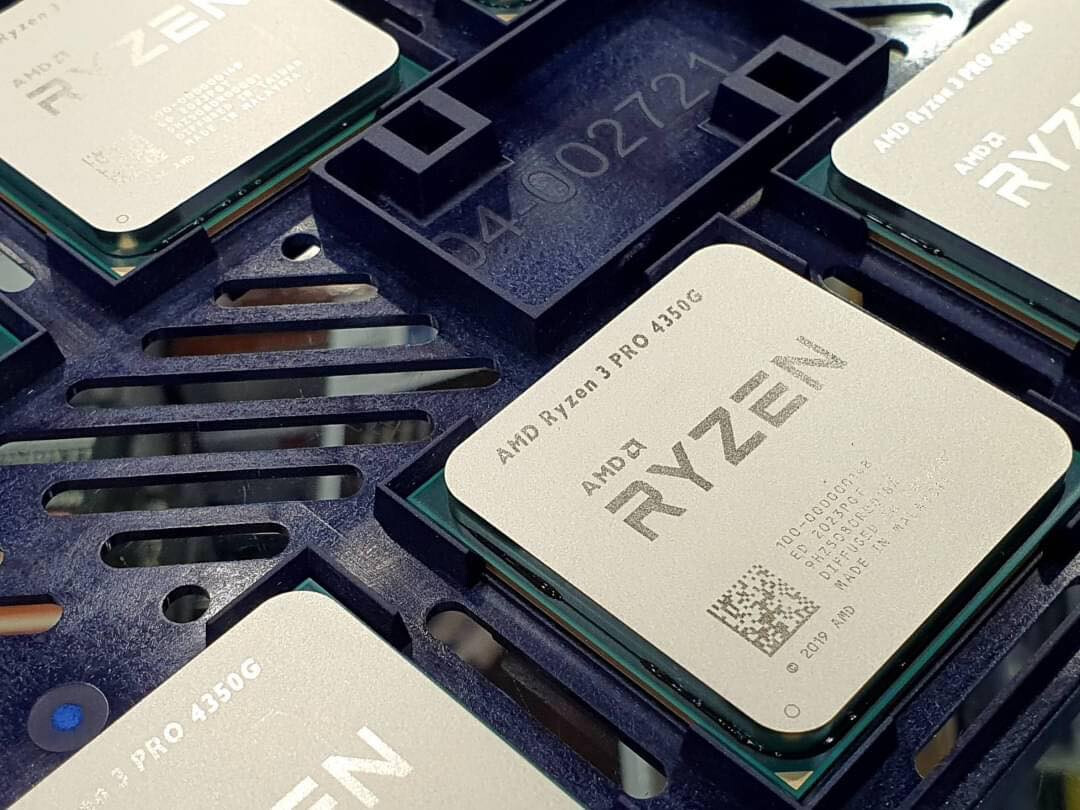
AMD's decision to not launch its Ryzen 4000G "Renoir" Socket AM4 processors in the DIY retail channel has baffled many in the PC enthusiast community. The parts are now exclusively in the OEM channel, however bootlegging of these chips out of the tray is rampant in Asia. A Hong Kong based eBay seller listed several 4000G SKUs, such as the flagship Ryzen 7 PRO 4750G, at a premium.

Apparently trays of 4000G chips - which aren't even supposed to end up with SI (system integrators), and only with big OEMs (think Compal, Foxconn, Dell, Lenovo, HP, etc), have somehow made their way to Asia's PC retail malls, where they're sold piecemeal, and at a premium. You pay for a chip, and the storekeeper pops one out of the tray and hands it over to you, straight up. Don't want to deal with its pins? Why not bundle it with a compatible motherboard from the same retailer, who will install the chip on the socket for you? Listings such as this one, are fraught with all the risks of bootleg commerce - the chip comes with no warranties, and the seller accepts no returns. Your only protection against getting a paperweight in your box is PayPal. It's time AMD put an end to this bovine defecation with a retail launch.

Softbank Approaches TSMC and Foxconn for Potential Arm Buyout

Softbank-owned company Arm Ltd. has been a subject to a round of rumors regarding the potential buyout of the company because Softbank has considered selling it for some time. The company has approached NVIDIA, with their talks getting "advanced", and Samsung wants a piece of the cake as well. It is now reported that Softbank has approached TSMC and Foxconn as well, regarding a potential Arm takeover. In the report by Nikkei Asia, we have found out that Arm has shared the same financial data points and business plan with TSMC and Foxconn, the same way company did with NVIDIA.

If TSMC and Foxconn have any interest in the company, it would be necessary to create a consortium that would operate Arm Ltd. With NVIDIA, Samsung, and these two new players, the consortium would already count four companies. Nikkei sources claim that Apple and Qualcomm have been also included in the poll of potential buyers, which would make the idea of establishing a consortium very valid.

Belkin Completes Thunderbolt 3 Dock Family With New Thunderbolt 3 Dock Core

Belkin, the connected things division within the Belkin International and Foxconn Interconnect Technology entity, today announced the Thunderbolt 3 Dock Core. It completes Belkin's family of Thunderbolt 3 docks, including the Thunderbolt 3 Dock Pro, Thunderbolt 3 Dock Plus and the Thunderbolt 3 Dock Mini.

The Thunderbolt 3 Dock Core, the world's first Thunderbolt -certified, dual-powered dock, offers compatibility to bring the benefits of Thunderbolt 3 technology to both Mac and Windows laptops. Like the entire Belkin Dock family, it's designed for users who need fast transfer rates and a one cable solution to connect laptops to peripherals. The Thunderbolt 3 Dock Core has a small, compact footprint, reducing clutter and multiple cables on a desk.

NVIDIA's Next-Gen Reference Cooler Costs $150 By Itself, to Feature in Three SKUs

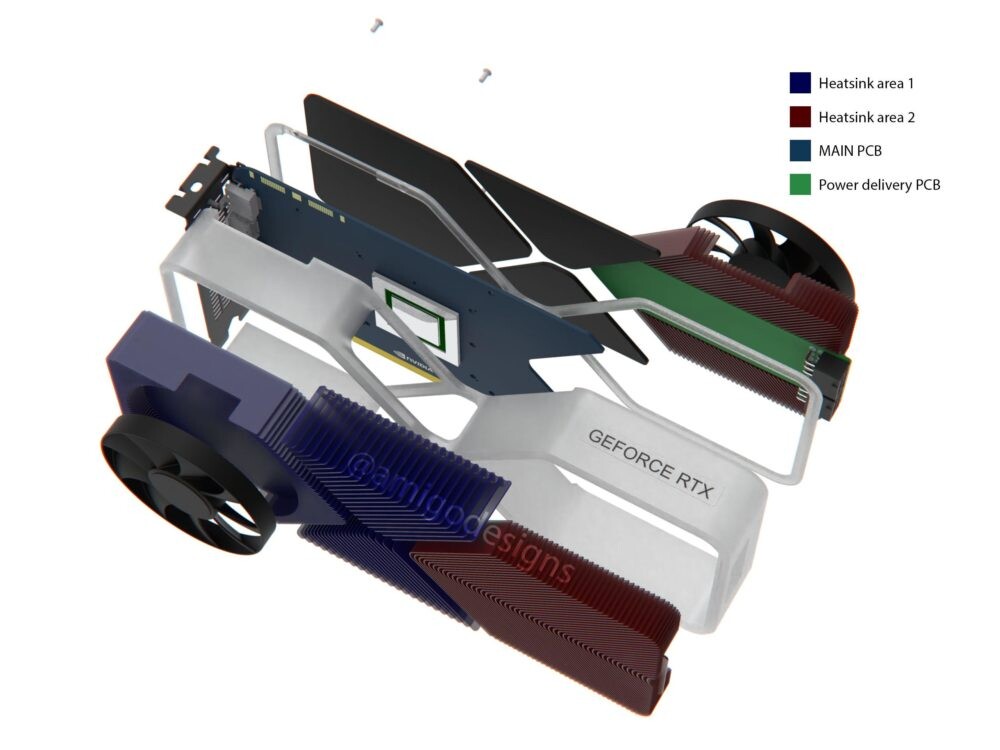
Pictures of alleged next-generation GeForce "Ampere" graphics cards emerged over the weekend, which many of our readers found hard to believe. It's features a dual-fan cooling solution, in which one of the two fans is on the reverse side of the card, blowing air outward from the cooling solution, while the PCB extends two-thirds the length of the card. Since then, there have been several fan-made 3D renders of the card. NVIDIA is not happy with the leak, and started an investigation into two of its contractors responsible for manufacturing Founders Edition (reference design) GeForce graphics cards, Foxconn and BYD (Build Your Dreams), according to a report by Igor's Lab.

According to the report, the cooling solution, which looks a lot more overengineered than the company's RTX 20-series Founders Edition cooler, costs a hefty USD $150, or roughly the price of a 280 mm AIO CLC. It wouldn't surprise us if Asetek's RadCard costs less. The cooler consists of several interconnected heatsink elements with the PCB in the middle. Igor's Lab reports that the card is estimated to be 21.9 cm in length. Given its cost, NVIDIA is reserving this cooler for only the top three SKUs in the lineup, the TITAN RTX successor, the RTX 2080 Ti successor, and the RTX 2080/SUPER successor.

Chinese Government Closes Foxconn and Samsung Factories Amid Coronavirus Outbreak

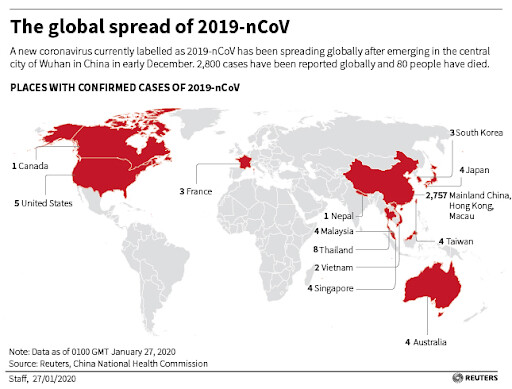
Some of the recent news from China is the stuff of science fiction, with the Central Government there locking down entire cities to contain the deadly Coronavirus outbreak there. When cities with 10+ million populations are under lock-down, it's only natural for factories to run out of workforce. According to a ZeroHedge report, the government has reportedly shut down factories owned or operated by big names in the technology and FMCG (fast-moving consumer goods) industries.

Among these are the ubiquitous Foxconn, which has manufacturing contracts with the biggest silicon valley tech firms for contract-manufacturing their hard-product - including the Apple iPhone; and Samsung Electronics, which makes consumer electronics, home appliances, and certain semiconductor products in China. A third big name in the report is the FMCG and pharmaceutical giant Johnson & Johnson. The closure of factories could wreck tech stocks in the coming trading sessions, not to mention possible impact on prices of electronics. As of now, the closure is stipulated for the next 1-2 weeks.

Intel Recalls Boxed Xeon E-2274G Processors Due to Inadequate Stock Cooler Effectiveness

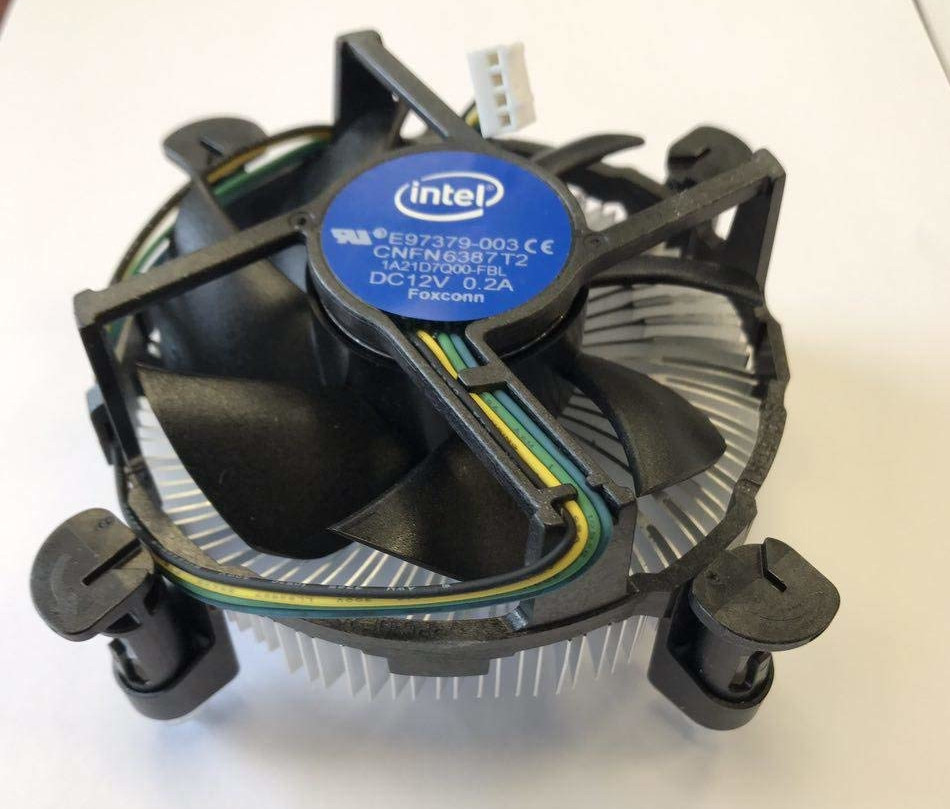
Intel issued a product change notification (PCN) dated November 13, calling for a recall of boxed Xeon E-2274G processors from customers and distributors. The boxed SKU of the E-2274G, which includes a stock cooling solution, has been marked as "discontinued" and "end of life." Intel is offering an E-2274G tray processor (chip-only) as replacement for the returned inventory. The cause for the recall is the cooling solution included in the boxed SKU, which has been found to be insufficient to cool the E-2274G, a 4-core/8-thread processor based on the 14 nm++ "Coffee Lake" microarchitecture, with a rated TDP of 88 W.

The E973708-003 fan-heatsink included with boxed Xeon E-2274G processors is supplied by Foxconn, and has been known to be bundled with Intel's entry-level client-segment processors, such as the Pentium Gold series and Core i3 series (chips with TDP typically rated 65 W or less). It features a thin, circular, all-aluminium heatsink, which lacks a copper core that certain other LGA115x-compatible stock coolers by Intel have. The heatsink makes contact with the CPU over pre-applied TIM on an aluminium surface, with spirally-projecting fins dissipating heat under the fan's airflow. It could be been an oversight bundling such an underpowered cooler with an 88 W TDP processor that's designed for the rigors of mission-critical use-cases such as workstations and small-business servers.
Heatsink images courtesy: AndyKingParts (Amazon seller)

Surging Tech Companies' Inventories Could Spell Trouble for the Industry

Even as we achieve consumerism in scales hitherto unseen, tech companies always want to sell more - there's "always" increased production, there must always be increased, projected demand from customers. However, when demand isn't there, and growth slows down or even stagnates, production takes its time to adjust - and already manufactured products have few opportunities other than going on towards a swelling inventory.

This is what is happening with a myriad of tech companies, such as Apple, Samsung, Xiaomi, Intel, Hon Hai (Foxconn), among others. We could even take a page from our own PC industry and look at NVIDIA's Pascal inventory that is in need of clearing up - and which has resulted in bottoming prices of previous-gen cards as we look towards the new RTX 20-series. Which, coincidentally, have been launched with increased pricing over the previous generation. Perhaps another way of moving old inventory?

Foxconn Acquires Belkin for $866 Million in Cash

Foxconn Interconnect Technology Limited (FIT), a subsidiary of Hon Hai Precision Industry Co., Ltd., and Belkin International, Inc. (Belkin , Linksys , Wemo , Phyn brands) jointly announced today the signing of a definitive agreement under which FIT agreed to acquire Belkin International for approximately US$866 million in cash, creating a global consumer electronics leader.

Leveraging Belkin's strength in research and development capabilities and the consumer products channel, FIT is expected to further tap into premium accessories and the smart home market. The transaction would also fuel the growth of Belkin's portfolio of brands and products and supports further investment in research and development and engineering to expand FIT and Belkin's presence in the U.S. and key markets globally.

"FIT is excited to acquire Belkin and its capabilities in the premium consumer products space," said Sidney Lu, CEO, FIT. "Integrating Belkin's best-in-class capabilities and solutions into FIT, we expect to enrich our portfolio of premium consumer products and accelerate our penetration into the smart home."

Foxconn Eyeing US for $10 billion Investment; Looking After Toshiba Deal

Taiwan-based Foxconn, one of Apple's main suppliers, is looking to expand its operations in the US to the tune of $10 billion. The company is still deciding which state will get the greatest solo investment, in the form of a $7 billion display factory (worth mentioning here is that Foxconn's display manufacturing has seen a recent buff by the acquisition of Sharp.) Reportedly, investments are being considered in Ohio, Pennsylvania, Michigan, Illinois, Wisconsin, Indiana, and/or Texas. There was no given timeframe for the construction's start or finish, but a final decision should be made public in July. Foxconn's CEO Terry Gou also vowed to press on with a bid for Toshiba Corp.'s semiconductor business, although the Japanese company has already selected a preferred buyer in the form of a Japanese and US joint venture. Such a deal could cost $27 billion and introduce Foxconn (and, likely but indirectly, China) into the memory chip business.

Supermicro Announces the C7Z97-M Socket LGA1150 Motherboard

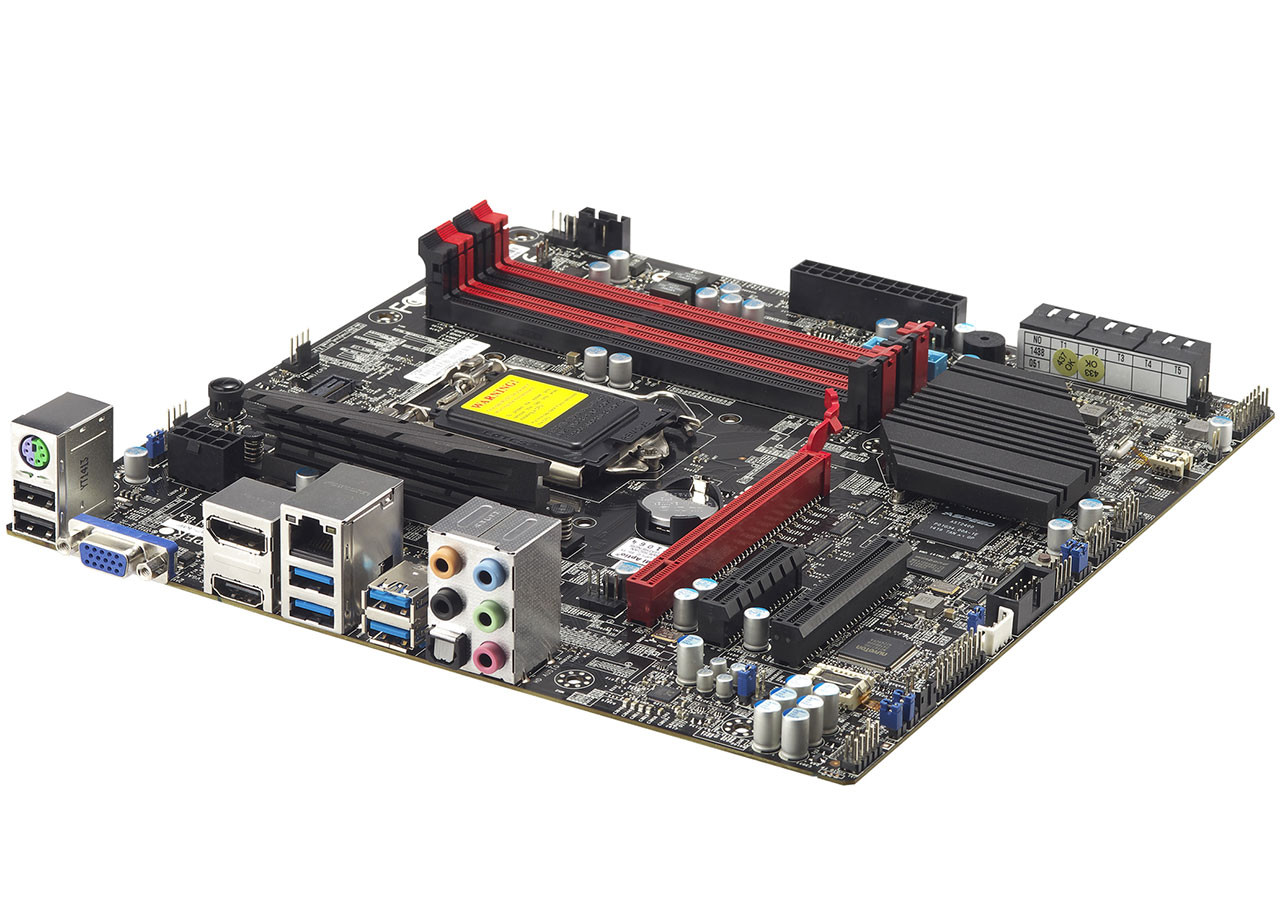
In what's a clear sign of enterprise motherboard manufacturers like Supermicro and TYAN taking an interest in the DIY client-desktop market, Taiwanese company Supermicro launched the C7Z97-M, a micro-ATX, socket LGA1150 motherboard, based on Intel's Z97 Express chipset. It may not be the first motherboard based on the chipset by a traditionally enterprise-hardware company, but it's certainly the first designed to woo the PC enthusiast crowd. The features a matte-black PCB, with matte-black and ruby-red scheme, which bear a strong resemblance to Foxconn, and its Blood-Rage series.

The C7Z97-M features a 6-layer PCB, a digital-PWM CPU power delivery, with ceramic multi-phase bar chokes, and driver-MOSFETs. The board draws power from 24-pin ATX and 8-pin EPS. You can tell it's a board made by an enterprise manufacturer, looking at components such as the ASpeed IPMI 2.0 remote management chip, an LVDS display output, a TPM header, and key toggles being left to manual jumpers. The BIOS setup program is a reference AMI Aptio (not skinned).

Foxconn AT-5570 Mini-PC Detailed

Foxconn Channel brand unveiled the AT-5570, a new mini PC based on the AMD "Brazos" 2.0 platform. Measuring 19 cm x 13.5 cm x 3.8 cm, and weighing 600 g, this VESA-mountable PC is driven by AMD C-70 APU with Radeon HD 7290 graphics. It features one DDR3 SO-DIMM slot, supporting up to 8 GB of memory, and a 2.5-inch SATA 6 Gb/s drive bay.

Connectivity options on the AT-5570 include two USB 3.0 and four USB 2.0/1.1 ports; SD/SDHC/MS/MS Pro/MMC card reader, stereo HD audio, 802.11 b/g/n WLAN, gigabit Ethernet, HDMI, and D-Sub (VGA). The AT-5570 from Foxconn is expected to be launched later this month.

Foxconn Admits to Breach of Anti- Child Labor Laws

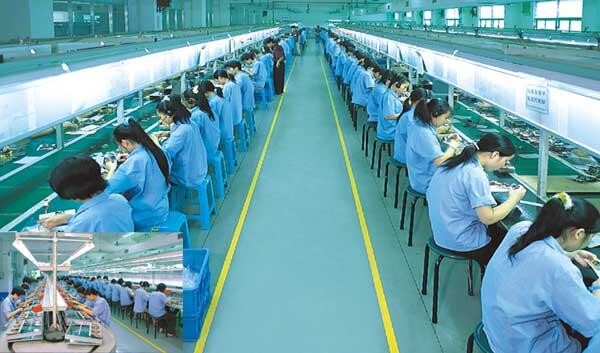
Foxconn admitted to employing interns as young as 14 years, in what is a breach of labor laws in China, where the minimum age for such employment is 16. The company, in a statement accessed by CNET advised that it found the matter "not only a violation of China's labor law, it is also a violation of Foxconn policy," and that "immediate steps have been taken to return the interns in question to their educational institutions." The company launched an investigation and promises action against permanent staff members who allowed the breach in regulations to happen. This development follows a strain of bad PR for Foxconn, which recently suffered riots in some of its facilities due to imposition of strict quality standards in manufacture of iPhone 5.

Workers Riot at Foxconn Chengdu iPhone/iPad Plant

If televised visits by Apple's top-brass to Foxconn's manufacturing facilities, and commitments to improve working conditions were mere PR exercises meant to cover up the issue of dismal working conditions, they failed. About 1,000 workers at Foxconn's manufacturing facility at Chengdu rioted on a large scale, which took the police several hours to subdue. According to media reports, the riot started when the facility guards were trying to stop a thief, while other workers who held grudges against the guards prevented them from catching the thief. Soon, the situation went out of control, as 1,000 workers started a riot. The workers were seen chucking pots, pans, garbage, and even fireworks from their dormitory windows. Public facilities sustained damage, the police made several arrests. The episode reveals that worker-management relations, at least at the Chengdu plant, which manufactures a massive amount of iPhone and iPad products for Apple, are at a breaking point.

Foxconn Channel A85AP Socket FM2 Motherboard Pictured

Foxconn's channel brand is ready with a socket FM2 motherboard of its own, the A85AP. The motherboard is based on the new AMD A85 FCH, and supports next-generation AMD "Trinity" APUs in the FM2 package. The motherboard doesn't add much to the feature-set of the A85 FCH. The APU is powered by a 5-phase VRM. It is wired to four DDR3 DIMM slots, supporting up to 32 GB of dual-channel DDR3-1866 MHz memory, and one PCI-Express 2.0 x16 slot. Other expansion slots include a PCI-Express 2.0 x16 (electrical x4, wired to the FCH), an mPCIe, and two each of PCI-Express 2.0 x1 and legacy PCI.

The AMD A85 FCH gives out eight SATA 6 Gb/s ports, six of which are assigned as internal ports on the A85AP, and two are given out as eSATA. The board also features six USB 3.0 ports, four of which are given out through the rear panel, and two via headers. Display outputs include DVI and D-Sub. 8-channel HD audio and gigabit Ethernet make for the rest of the connectivity. Foxconn A85AP could feature in the first-wave of socket FM2 motherboards to be launched.

Foxconn Intros New Nano PC Models

Foxconn's Channel brand introduced a new line of fanless compact PCs under the Nano PC brand. The two newly launched models include the AT-5300, which is driven by Intel Atom D2700, and the AT-5600, which is driven by by AMD E-450 "Brazos" APU. The two are barebones, and require at least one DDR3 SO-DIMM module (up to 4 GB) and a 2.5-inch HDD or SSD. Both models measure just 190 x 135 x 38 mm, and weigh about 600 g. Connectivity includes two USB 3.0 ports, four USB 2.0 ports, an SD/SDHC/MS/MS Pro/MMC card reader, 802.11 b/g/n, gigabit Ethernet, and display outputs that include D-Sub and HDMI. Available soon, the two Nano PC models will be priced under US $200.

ASUS To Completely End Manufacturing of its Motherboards, Notebooks by Pegatron

ASUS and Pegatron are headed for a complete split as far as motherboards and notebooks are concerned. Following reports of ASUSTek divesting in its former part and partner after split, Pegatron, ASUS plans to end manufacturing of its motherboards by it. ASUS will find other ODMs, such as Cal-Comp, ECS, Global-Brands Manufacture, and Info-Tek Corp. Pegatron is a notable ODM of motherboards, notebooks, AIO PCs, and other PC components. ASUS is also working to get its notebooks manufactured by ODMs such as Foxconn, Quanta, and Compal, while reducing its orders to Pegatron. This move could see further independence of ASUS and Pegatron from each other.

FLA Secures Commitment to Limit Work Hours, Protect Pay at Apple's Largest Supplier

After a thorough, independent investigation found significant issues with working conditions at three factories in China operated by Apple's major supplier Foxconn, the Fair Labor Association secured groundbreaking commitments that will reduce working hours to legal limits while protecting pay, improve health and safety conditions, establish a genuine voice for workers, and will monitor on an ongoing basis to verify compliance. The nearly month-long investigation found excessive overtime and problems with overtime compensation; several health and safety risks; and crucial communication gaps that have led to a widespread sense of unsafe working conditions among workers.

"The Fair Labor Association gave Apple's largest supplier the equivalent of a full-body scan through 3,000 staff hours investigating three of its factories and surveying more than 35,000 workers. Apple and its supplier Foxconn have agreed to our prescriptions, and we will verify progress and report publicly," said Auret van Heerden, President and CEO of the Fair Labor Association, a coalition of universities, non-profit organizations and businesses committed to improving the health, safety, fair treatment and respect of workers worldwide.
Return to Keyword Browsing
Nov 25th, 2026 22:55 CST change timezone

New Forum Posts

Popular Reviews

TPU on YouTube

Controversial News Posts