
SK hynix Eyes Intel Foundry for HBM4E Base Die Manufacturing
Intel Foundry might win the contract to manufacture base dies for HBM4E memory from SK hynix, according to the South Korean Herald. Reportedly, SK hynix is considering diversifying its base die supplier from solely TSMC to a dual sourcing strategy involving both TSMC and Intel, with Intel Foundry potentially securing a significant portion of the contract. As readers may recall, HBM4E memory allows for the implementation of a base die with custom logic, with DRAM dies stacked on top. Until now, SK hynix has only considered TSMC for this application, but now Intel is also being considered.
For instance, customers could implement custom logic like memory controllers and PHYs directly on the HBM4E base die, significantly reducing the area occupied by these components on the main compute chiplet. SK hynix would send the design to Intel, which would then provide these base dies to SK hynix. The South Korean memory giant would subsequently stack DRAM on top. This approach would free up space on the main compute tile in any AI accelerator for more processing units, reduce latency, and significantly improve performance. However, the question remains as to which Intel node would be used. Up until HBM3E, SK hynix used its own nodes to manufacture base dies. However, as those are 10 nm class nodes, customers are now requiring something more advanced.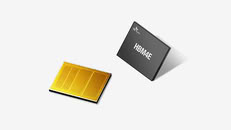
For instance, customers could implement custom logic like memory controllers and PHYs directly on the HBM4E base die, significantly reducing the area occupied by these components on the main compute chiplet. SK hynix would send the design to Intel, which would then provide these base dies to SK hynix. The South Korean memory giant would subsequently stack DRAM on top. This approach would free up space on the main compute tile in any AI accelerator for more processing units, reduce latency, and significantly improve performance. However, the question remains as to which Intel node would be used. Up until HBM3E, SK hynix used its own nodes to manufacture base dies. However, as those are 10 nm class nodes, customers are now requiring something more advanced.



