News Posts matching #Kailh Choc

Return to Keyword Browsing

Google Japan Reveals a Conveyor Belt "Gag" Keyboard for One-Handed Typing

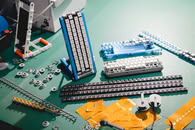
Google Japan has revealed the 15th entry in its joke keyboard series, the Gboard Conveyor Belt Version, and it is not a real product. The Gboard team used to publish these gag designs on April Fools' Day, and moved the tradition to October 1 a few years ago as a nod to 101-key keyboards. The device stands upright and carries its keys on four belts with 29 keys each. The belts keep rotating, so the user rests one hand at the base and presses each key as it rolls past. Waiting for each letter to come around, of course, makes it far slower than a regular keyboard, and that seems to be the whole gag. Google's tongue-in-cheek blog post even suggests building a second unit for two-handed typing. Color variants, a high-speed mode, and longer or shorter versions are said to be under consideration.

As expected, there are no plans to sell it, and the project's GitHub page states that it is not an official Google product. The prank is at least meant to be buildable, as Google has posted 3D-printable STL files, KiCad board data, and firmware. The build guide lists 157 printed parts, 116 Kailh Choc V1 low-profile switches, an M5Stack AtomS3 Lite controller, and a single 6 V N20 gear motor that drives all four belts. The repository still looks unfinished, however. Only the motorized "Moving Keys Edition" is documented so far, while the board documentation and a "functional Bluetooth keyboard" edition are both marked as coming soon. It's not clear whether a fully working unit can be built from the files just yet, but it's a fun bit regardless.


Iqunix Plans Shine-Through Keycap Update for MQ80 and Magi-Series Low-Profile Mechanical Keyboard

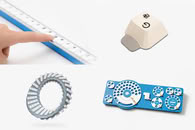
Shine-through keycaps are one of the points of contention where the enthusiast keyboard market and fans of gaming and budget keyboards clash. With the rise of enthusiast-grade pre-built mechanical keyboards, though, things have become complicated, with buyers of mid-range and more affordable enthusiast-tier mechanical keyboards often longing for shine-through keycaps on those keyboards. This was one of the common gripes about Iqunix's Magi and MQ series low-profile mechanical keyboards when they launched, despite the overall positive community sentiment surrounding those keyboards. According to a new post by the official Iqunix team on r/Iqunix on Reddit, the brand has heard the community's feedback regarding shine-through keycaps and is planning to release shine-through keycaps for its MQ80 and Magi-series low profile keyboards.

Iqunix says it has not yet confirmed production with the OEM, but has reached out to the community in an interest check, since it will be small-batch production, and the brand needs 1,000 units spoken for before entering production. The idea with Iqunix prototyping and selling the keycaps itself is that it will color-match the keycaps with the aluminium keyboard cases and ensure compatibility with the Kailh Choc V2 low-profile switches and the north-facing lighting on the MQ and Magi-series keyboards. It has not yet released images of the keycaps on the Magi-series keyboards, but the white versions of the MQ80 and the Magi keyboards are two very different colors, with the Magi taking on a sort of creamy off-white color, suggesting that there will be three colorways for the keycaps. The keycaps will be PBT and follow the same profile as the original Magi and MQ80 keyboards—that is to say, uniform height with a spherical top.

Awekeys Launches All-Metal Low-Profile Keycaps on Kickstarter

Awekeys, one of very few companies making metal keycaps for mechanical keyboards, has just announced the Awekeys Air as its latest addition to the line-up. The Awekeys Air keycaps are low-profile keycaps designed for slim mechanical keyboards, like the Iqunix Magi65 Pro, NuPhy Air series, and even split ergonomic keyboards, like the ZSA Voyager and MoErgo Go60. The Awekeys Air series is available for both cross stems—for Choc V2 and Gateron switches—and Choc V1 stems, which are common on niche low-profile split keyboards, and Early Bird Kickstarter pricing starts at $109 for a 68-key DIY kit, $139 for a 95-key 80% Base kit, and $159 for a 113-key 100% kit. These prices are only for the Ivory White and Obsidian Black, with the Titanium Black and Satin Copper coming in slightly more expensive and the limited edition Satin Silver and Satin Gold costing as much as $249 for the 80% Base kit. These prices will also increase when the keycaps hit retail. The Kickstarter campaign lists MSRP of the Ivory White and Obsidian Black 100% kit colorways as $249, but keyboards and accessories often cost less than anticipated when moving from a Kickstarter to regular retail.

The Awekeys Air keycaps come in six different colors—Titanium Black, Ivory White, Obsidian Black, Satin Copper, Satin Silver, and Satin Gold—and Awekeys is offering a hand-finished brush finish on the Gold, Silver, Copper, and Titanium colorways. The keycaps themselves are made from a recycled alloy called cupronickel, which is predominantly copper and nickel, which resists corrosion, offers some anti-microbial benefits, and is considered low allergy risk—although you may want to avoid it if you have a known nickel allergy. The keycaps are also available with legends or as blanks, and the profile has a uniform height with spherical tops and a total height of 5 mm.
Return to Keyword Browsing
Nov 14th, 2026 19:55 CST change timezone

New Forum Posts

Popular Reviews

TPU on YouTube

Controversial News Posts