News Posts matching #Loot Boxes

Return to Keyword Browsing

PEGI Updates Game Ratings To Address Loot Boxes and Potentially Addictive Gameplay Mechanics

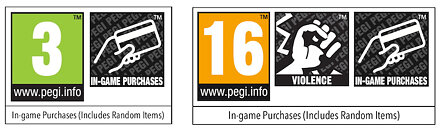
Hot on the heels of Valve's critical public response to the New York State attorney general's lawsuit against the gaming giant over its in-game monetization and loot boxes, the Pan European Game Information (PEGI) ratings body has updated its rating system to address similar concerns over in-game monetization and "interactive risk categories." As of June 2026, new games registered in Europe and rated by PEGI will be subject to additional scrutiny surrounding "purchases of in-game content, paid random items, communication features, and features that incentivize players to continue playing," according to the announcement. In essence, this will examine daily rewards, loot boxes, in-game cosmetics and premium currency purchases, and in-game chat moderation and content control. Chair of the PEGI Council, Beate Våje, says that "with the updated set of age rating criteria, PEGI aims to make parents aware that certain features in games should be carefully assessed, and that parental tools can be a very helpful assistant when doing that."

Under the new criteria, games that feature in-game purchases, specifically those with quantity- or time-limited sale mechanics, will be rated 12+, while games that use NFTs and other blockchain tech will be rated PEGI 18. Games with "random items" will be PEGI 16 by default, although they will be PEGI 18 in some cases. Games with what the ratings body calls "play-by-appointment" mechanics—things like daily quests or login rewards—will be rated PEGI 7, while games that punish players for not playing daily will receive a PEGI 12 rating. Lastly, PEGI is enforcing age restrictions on "safe online gameplay," which will result in games with entirely unrestricted communication receiving a PEGI 18 rating. Conceivably, games with proximity voice chat that cannot be disabled will also fall into this last box, although PEGI specifies that there needs to be a way to block or report users, so it's possible that being able to mute proximity chat may not be enough to escape a PEGI 18 rating on the grounds of online safety.

Valve in Legal Hot Water in New York Over Loot Boxes and Gambling

The State of New York's attorney general, Letitia James, has officially taken gaming giant, Valve, to court in a state court in Manhattan, alleging that the combination of games like Counter-Strike, Team Fortress, and Dota, wherein players can earn and use real money to buy loot boxes, and Steam's Community Market, where rare skins and items can be sold, often for exorbitant prices, amount to "quintessential gambling." There are reports of Counter-Strike: Global Offensive skins selling for as much as $2.5 million, with the game touted as having the biggest in-game economy of any video game. Valve previously adjusted the way it presented loot boxes and their rewards to players, seemingly specifically to avoid EU gambling regulations.

The lawsuit, spotted by Reuters, alleges that "Valve's loot boxes are particularly pernicious because they are popular among children and adolescents," going on to state that these mechanics put children at risk of becoming addicted, with the complaint adding that children are four times more at risk of becoming addicted to gambling in adulthood if they are exposed to gambling before the age of 12. The lawsuit seeks restitution for players and a fine of three times Valve's earnings from any activities deemed to be illegal. Loot boxes are largely looked down on by gamers and lawmakers alike, because players are encouraged to spend money on them, and they provide no guarantee of any return or specific value. If James succeeds against Valve in the lawsuit, it could set a precedent that may result in sweeping changes across both Steam and the gaming industry at large.

ESRB Updates Game Ratings to Include Loot Box Warnings

The Entertainment Software Rating Board (ESRB) is an American regulatory organization that assigns age and content ratings to consumer video games. Today the ESRB announced a new label to indicate games that include in-game purchases of loot-boxes or similar randomized gambling items. This update will compliment the existing In-Game Purchases notice which applies to games with non-randomized purchasable items such as DLC etc.

In April 2018 the ESRB began assigning Interactive Elements to physical video games with the In-Game Purchases and Users Interact notices. The In-Game Purchases Interactive Element informs parents and other consumers of when a game offers the ability to purchase additional items without leaving the game. To provide even greater transparency about the nature of in-game items available for purchase the ESRB will now begin assigning a new Interactive Element: In-Game Purchases (Includes Random Items).

US Senator Proposes a Ban on "Manipulative" Video Games

Yesterday, a US senator called Josh Hawley announced a bill to legalize banning of so-called "manipulative" video game design in the United States. The decision was proposed yesterday to US Congress.

The "Protecting Children from Abusive Games Act" would prohibit all games geared towards children, that implement a "pay to win" model where a player is progressing through the game by paying for it. The Senator also added that titles with paid-for in-game awards, such as loot boxes, are supposed to get banned. For overseeing and enforcing the ban, the Federal Trade Commission would be in charge. The FTC in-turn would hire state attorneys to prosecute companies violating the ban.

FTC to Launch Investigation on Loot Boxes

This has been a long time coming for sure: the Federal Trade Commission (FTC) is looking to launch an investigation into the practice of introducing loot boxes in video games. The issue has already been brought up numerous times in other countries around the globe (Belgium and the Netherlands being the most prominent ones against its implementation). Only now will the FTC investigate openly into this, though, following an official request by Senator Maggie Hassan during a Senate Commerce, Science, and Transportation subcommittee hearing.

Electronic Arts Will Not Remove Loot Boxes from FIFA 18 in Direct Disregard to Belgian Law

Well, well, well. It was only a few days ago that we reported how 2K was being brazen about asking their game players to talk to the Belgian government about keeping loot boxes in their NBA series and turns out Electronic Arts (EA) decided they could do one worse. Belgian newspaper Het Nieuwsblad published a story on how the Belgian Gaming Commission is preparing to take a legal stance against EA for refusing to remove loot boxes from FIFA 18 wherein their game buyers could purchase player packs with real money and not know what they receive in return. As if that was not bad enough, EA has doubled down with FIFA 19 by having the same "feature" again but with an increased roster to further tune the loot box chances against the customer. Andrew Wilson, the CEO of EA, commented that these loot boxes are not gambling as players know exactly how many objects they receive.

As it stands, the Belgian Gaming Commission has sent an official report to EA about their refusal to comply with the act that has been ratified since. The report states that anyone who does not conform will face the risk of legal prosecution, and it is now up to the Brussels public prosecutor's office to decide whether or not they want to charge EA accordingly. EA, meanwhile, is prepared to fight this in court and a judgement here would set a massive precedent to what is allowed in game microtransactions in the future. EA remains the only major game publisher to not make changes as directed, with Valve, Activision Blizzard and 2K, having done so before- albeit begrudgingly in some cases. Loot boxes contributed a major part of EA's annual revenue last year, with some citing online sales to be as much as 67% (which includes other forms of purchases, not just microtransactions). No wonder then that EA would like to keep milking this cow as much as they can, even if that means less milk to everyone else.

2K Brazenly Asks Belgian Fans to Contact Local Government on Loot Box Ban

In a bold, bold move that is already backfiring on them, games publishes 2K put out a statement clarifying their stance on the Belgian Gaming Commission (BGC) ruling against the specific loot box implementations on multiple games. In particular, the gaming commission made it clear that loot boxes were against the gambling laws of the country and several game publishers quickly complied, including Valve with CS:GO. 2K's NBA 2Kxx series (where xx is the year of the current decade) was one of the affected titles, with the "MyTeam" packs using a loot box-based mechanism for microtransactions.

The statement put out says that 2K is working to comply with the ruling and have made changes to the MyTeam mode, but they also disagree with it and are going to be, and I quote, "continuing conversations with the BGC in order to explain our view" to get around the ruling. Furthermore, they are actually asking players to contact their local government representatives, assuming they share this view, to try and get BGC to allow the old loot box system to be placed back in. To no one's surprise, 2K is collecting a ton of flak for this and we can only hope that fans of the NBA 2K franchise vote with their wallet and let the publisher know exactly what they feel about all this.

Obsidian Entertainment: "No microtransactions, of any kind, in our game"

After the media coverage and customer response to some of the latest games to ship with the current gamers industry parasite of microtransactions or loot crates, it's only fair for media outlets to provide coverage for known companies that might take up that path, but choose not to. There's nothing inherently wrong with microtransactions, per se - it's up to each user to choose whether or not they want to take part in that particular economic bit of gaming. That said, it's just the way of the beast that microtransactions' implementation usually end up affecting progression systems and the ability for players to unlock what would otherwise be behind a paywall - just ask Destiny 2 or Star Wars: Battlefront 2 players. But while microtransactions of some kind may not have anything inherently wrong with them, loot boxes, by their very nature, actually might.

As such, here's some free coverage for Obsidian Entertainment, makers of Alpha Protocol, Fallout: New Vegas, Tyranny, and Pillars of Eternity 2: the company has said in a blog post that users should not, will not, can not expect any kind of microtransactions whatsoever to appear in their upcoming, super secret game, being developed in partnership with publisher Private Division. Obsidian's "emoney" said that "We're extremely excited about our upcoming RPG, and we know you are too. We wish we could tell you all about it right now… but we're going to hold off until the time is right. What we did want to talk about was a question a lot of you have been raising: "Will this upcoming game feature any lootboxes or other microtransactions?" To which he added: The answer is simply: "no." No microtransactions, of any kind, in our game." For me, that's one point more for Obsidian (whose Tyranny was actually amazing, in this editor's humble opinion). Vote with your wallet and all that.
Return to Keyword Browsing
Nov 11th, 2026 18:17 CST change timezone

New Forum Posts

Popular Reviews

TPU on YouTube

Controversial News Posts