News Posts matching #M2 Max

Return to Keyword Browsing

Linux Kernel 6.18 Released with Potential LTS Status

Linus Torvalds released Linux kernel 6.18 bringing new hardware support, virtualization improvements, and file system updates. The biggest change is the removal of the Bcachefs file system. Linux 6.18 also adds KVM x86 CET virtualization support, letting virtual machines use Intel and AMD's control-flow security features. The kernel can now run as a guest on FreeBSD's Bhyve hypervisor. AMD gets several virtualization improvements including Secure AVIC support, while a new dm-pcache feature lets persistent memory speed up slower storage devices. File systems see notable updates. Btrfs gets initial support for larger block sizes, while XFS now enables online filesystem checking by default. EXT4 adds new management capabilities, and OverlayFS gains case-folding support for better compatibility. Intel USBIO drivers are now included along with support for Wildcat Lake graphics. Additionally, new Tyr and Rocket drivers, along with more AMD Versal platform drivers, have been added.

Laptops get initial haptic touchpad support, new hardware includes DualSense PlayStation controller audio jacks and Apple M2 Pro, M2 Max, and M2 Ultra chips. Intel's Alder Lake-S processors (Core i7-12700K and Core i5-12600K) also gain support. In terms of performance the new release gets a boost with Sheaves, which speeds up how the kernel allocates memory. Swap handling is faster, NFS servers scale better, and UDP network performance has improved. The Rust Binder driver is now supported, and x86 systems get a new option to control microcode loading. Linux 6.18 could become the next long-term support kernel; however, that hasn't been confirmed yet. Development for Linux 6.19 starts now, with the first test version expected on December 14th.


Apple Introduces M2 Ultra

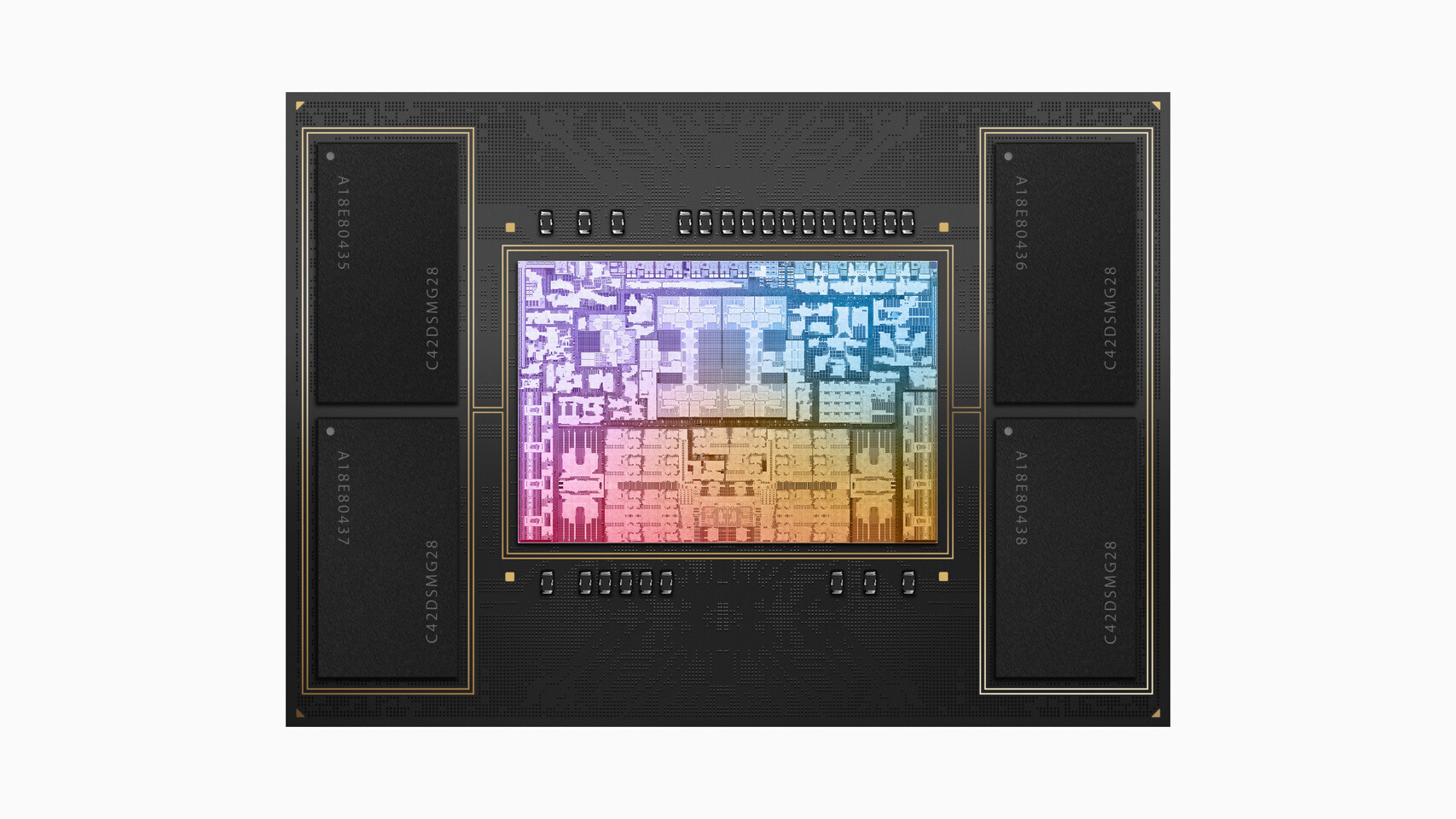
Apple today announced M2 Ultra, a new system on a chip (SoC) that delivers huge performance increases to the Mac and completes the M2 family. M2 Ultra is the largest and most capable chip Apple has ever created, and it makes the new Mac Studio and Mac Pro the most powerful Mac desktops ever made. M2 Ultra is built using a second-generation 5-nanometer process and uses Apple's groundbreaking UltraFusion technology to connect the die of two M2 Max chips, doubling the performance. M2 Ultra consists of 134 billion transistors—20 billion more than M1 Ultra. Its unified memory architecture supports up to a breakthrough 192 GB of memory capacity, which is 50 percent more than M1 Ultra, and features 800 GB/s of memory bandwidth—twice that of M2 Max. M2 Ultra features a more powerful CPU that's 20 percent faster than M1 Ultra, a larger GPU that's up to 30 percent faster, and a Neural Engine that's up to 40 percent faster. It also features a media engine with twice the capabilities of M2 Max for blazing ProRes acceleration. With all these advancements, M2 Ultra takes Mac performance to a whole new level yet again.

"M2 Ultra delivers astonishing performance and capabilities for our pro users' most demanding workflows, while maintaining Apple silicon's industry-leading power efficiency," said Johny Srouji, Apple's senior vice president of Hardware Technologies. "With huge performance gains in the CPU, GPU, and Neural Engine, combined with massive memory bandwidth in a single SoC, M2 Ultra is the world's most powerful chip ever created for a personal computer."

Apple Unveils MacBook Pro Laptops with M2 Pro and M2 Max Processors

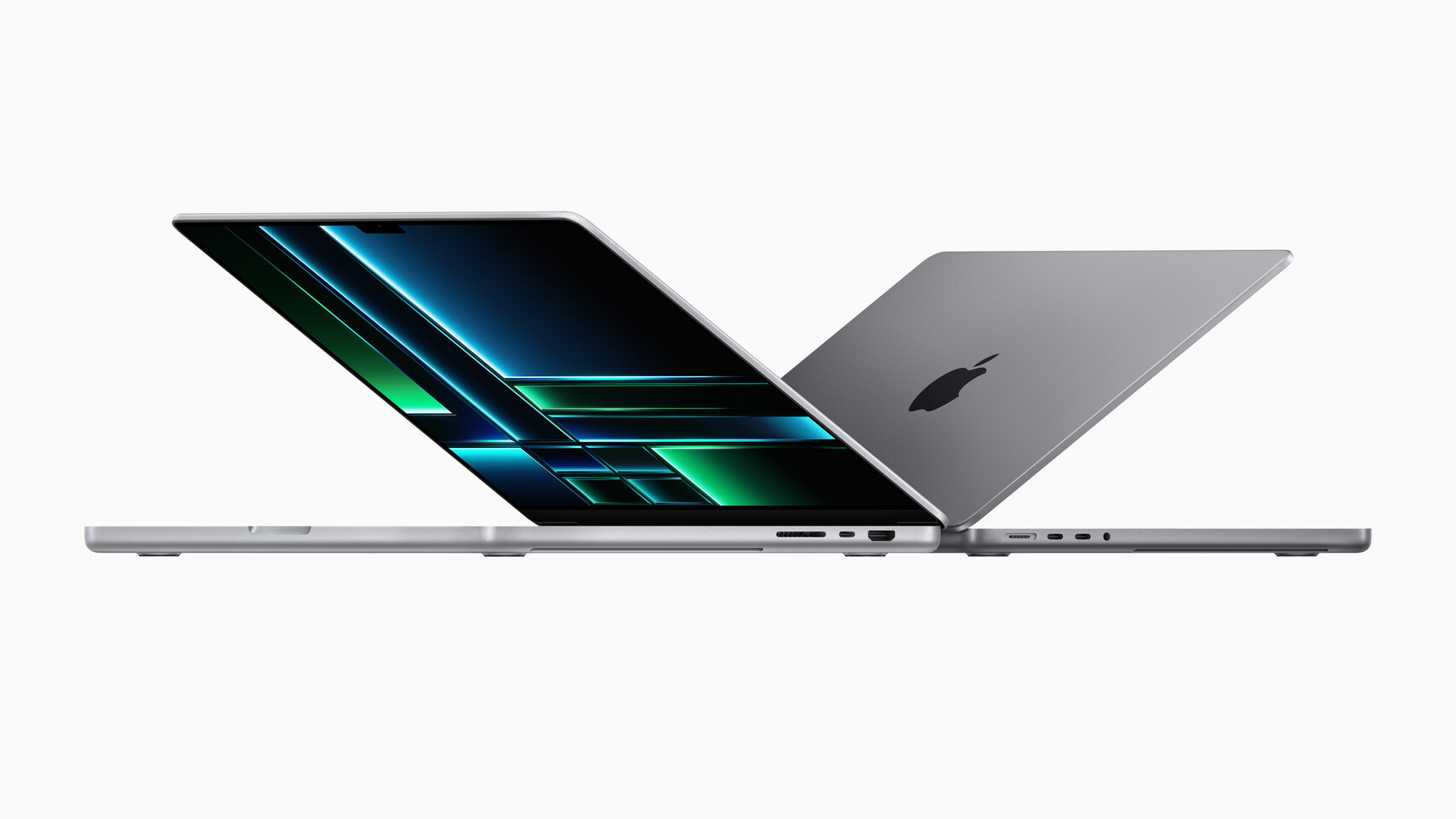
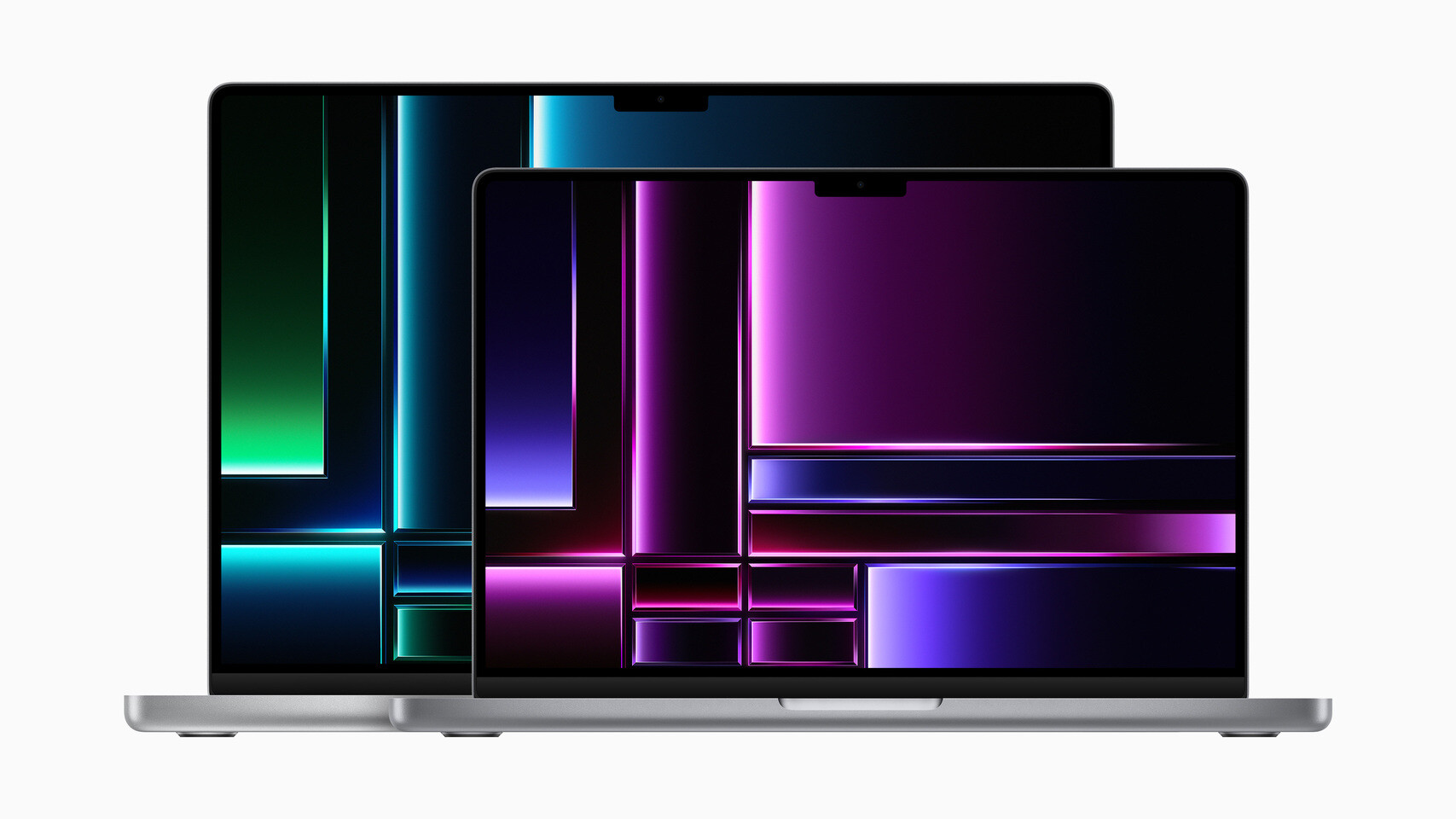
Apple today announced the new 14- and 16-inch MacBook Pro featuring M2 Pro and M2 Max, Apple's next-generation pro silicon that brings even more power-efficient performance and battery life to pro users. With M2 Pro and M2 Max—the world's most powerful and efficient chip for a pro laptop—MacBook Pro tackles demanding tasks, like effects rendering, which is up to 6x faster than the fastest Intel-based MacBook Pro, and color grading, which is up to 2x faster. Building on the unprecedented power efficiency of Apple silicon, battery life on MacBook Pro is now up to 22 hours—the longest battery life ever in a Mac. For enhanced connectivity, the new MacBook Pro supports Wi-Fi 6E, which is up to twice as fast as the previous generation, as well as advanced HDMI, which supports 8K displays for the first time. With up to 96 GB of unified memory in the M2 Max model, creators can work on scenes so large that PC laptops can't even run them. Rounding out the unrivaled features of MacBook Pro are its renowned Liquid Retina XDR display, extensive array of connectivity, 1080p FaceTime HD camera, six-speaker sound system, and studio-quality mics. When combined with macOS Ventura, the MacBook Pro user experience is unrivaled. Customers can order the new 14- and 16-inch MacBook Pro today, with availability beginning Tuesday, January 24.

Apple Unveils M2 Pro and M2 Max: Next-generation chips for Next-level Workflows

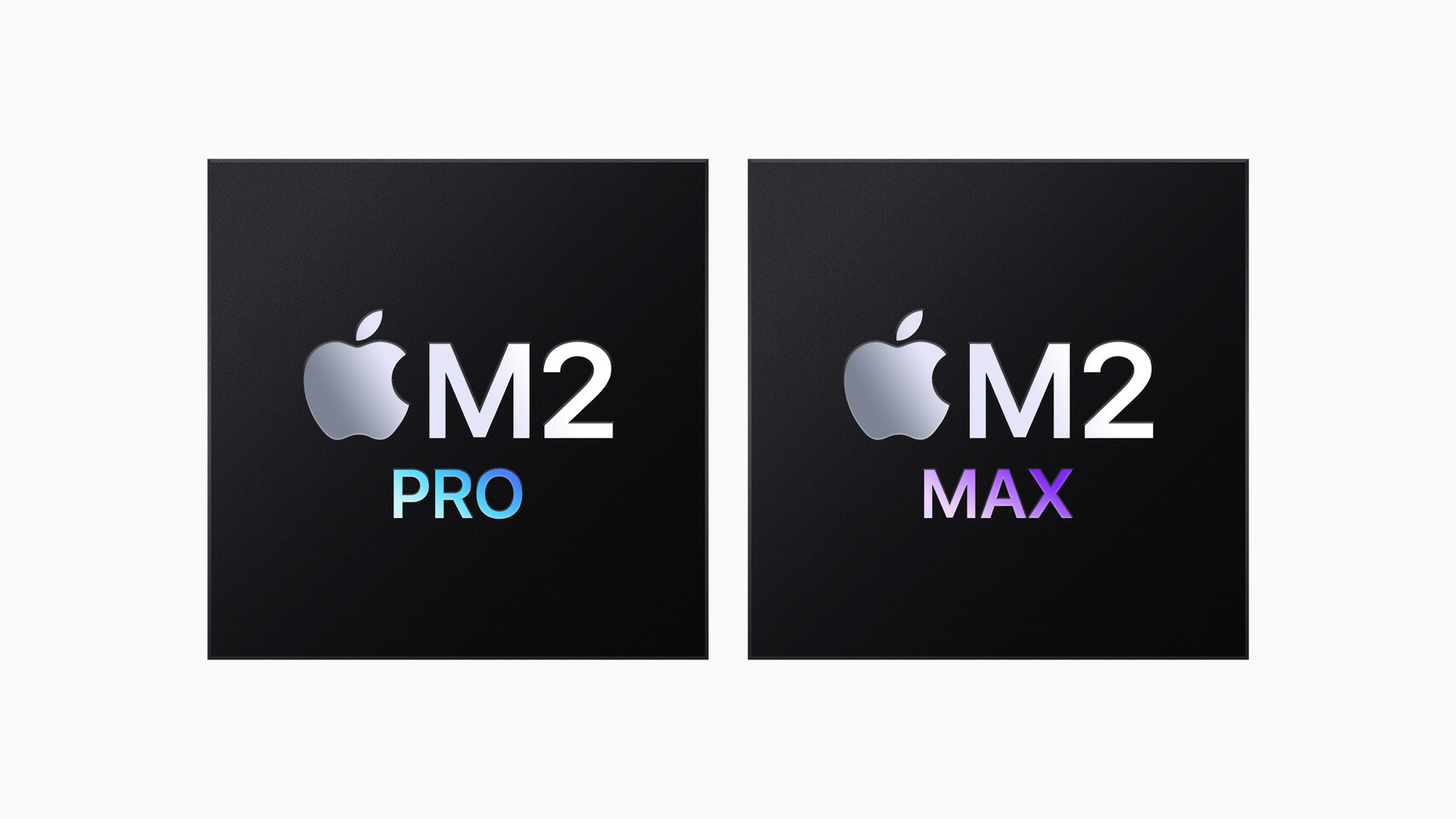
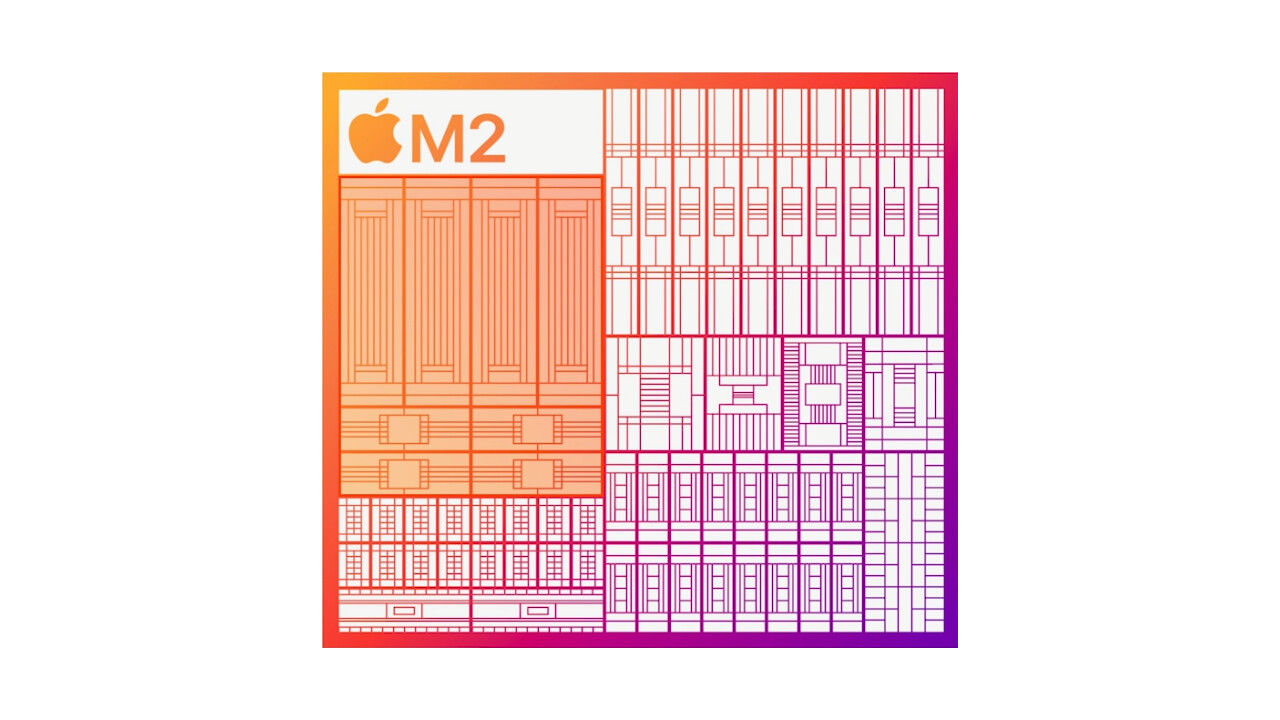
Apple today announced M2 Pro and M2 Max, two next-generation SoCs (systems on a chip) that take the breakthrough power-efficient performance of Apple silicon to new heights. M2 Pro scales up the architecture of M2 to deliver an up to 12-core CPU and up to 19-core GPU, together with up to 32 GB of fast unified memory. M2 Max builds on the capabilities of M2 Pro, including an up to 38-core GPU, double the unified memory bandwidth, and up to 96 GB of unified memory. Its industry-leading performance per watt makes it the world's most powerful and power-efficient chip for a pro laptop. Both chips also feature enhanced custom technologies, including a faster 16-core Neural Engine and Apple's powerful media engine. M2 Pro brings pro performance to Mac mini for the first time, while M2 Pro and M2 Max take the game-changing performance and capabilities of the 14-inch and 16-inch MacBook Pro even further.

"Only Apple is building SoCs like M2 Pro and M2 Max. They deliver incredible pro performance along with industry-leading power efficiency," said Johny Srouji, Apple's senior vice president of Hardware Technologies. "With an even more powerful CPU and GPU, support for a larger unified memory system, and an advanced media engine, M2 Pro and M2 Max represent astonishing advancements in Apple silicon."

Alleged Apple M2 Max Performance Figures Show Almost 20% Single-Core Improvement

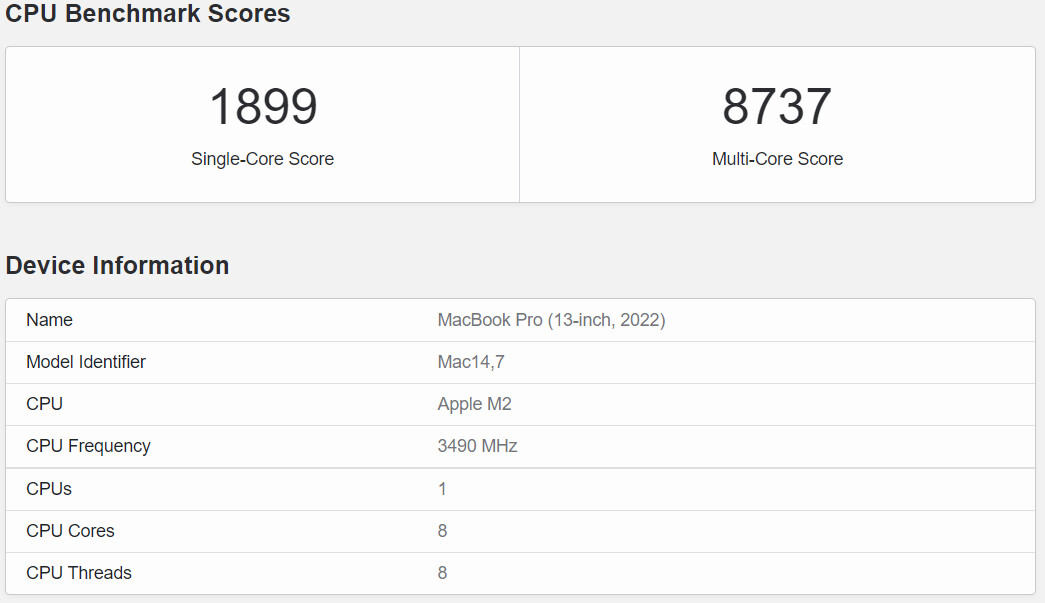
Apple's ongoing pursuit of leading performance in custom silicon packages continues with each new generation of Apple Silicon. Today, we have alleged Geekbench performance figures of the upcoming M2 Max chip, designed for the upcoming Mac devices. Featuring the same configuration with two E-cores and eight P-cores, the chip is rumored to utilize TSMC's 3 nm design. However, that is yet to be confirmed by Apple, so we don't have the exact information. In the GB5 single-thread test, the CPU set a single-core performance target of 1899 points, while the multi-core score was 8737. While last year's M1 Max chips can reach 1787 single-core and 12826 multi-core scores, these configurations are benchmarked in a Mac Studio, which has better cooling and allows for higher clocks to be achieved.

Apples to apples (pun intended) comparison with the M1 Max chip inside of a MacBook Pro version with presumably the same cooling capacity, which gets 1497 single-core and 11506 multi-core score, the new M2 Max chip is 19.4% faster in single-core results. Multi-core improvements should follow, and this M2 Max result should be different from the final product. We await more benchmarks to confirm this performance increase and the correct semiconductor manufacturing node.
Return to Keyword Browsing
Nov 13th, 2026 10:21 PST change timezone

New Forum Posts

Popular Reviews

TPU on YouTube

Controversial News Posts