News Posts matching #Multi-frame Generation

Return to Keyword Browsing

AMD FSR Multi-Frame Generation With Up to 8x Mode in Development

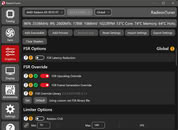
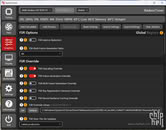
AMD has reportedly been testing a new and highly anticipated FSR multi-frame generation (MFG) technology for its Radeon RX GPUs. This information comes from a third-party software called RadeonTuner, which allows access to Radeon driver settings without using the AMD Software: Adrenalin Edition application. RadeonTuner has revealed that AMD is already incorporating preliminary support for multi-frame generation into its Radeon drivers, though the feature remains hidden until the software is finalized. According to the tool's developer, AMD often places placeholders for features like this well in advance of their release, indicating that the company is extensively testing the multi-frame generation feature with options for 1x to 8x variants, which are expected to be available once the feature is fully developed.

One user attempted to enable the multi-frame generation feature using the latest driver installation and a Radeon RX 9060 XT graphics card to see if it could work with any game. However, the user discovered that the feature is currently non-functional, as AMD has not yet released the necessary model to support multi-frame generation at any setting. This suggests that only the placeholder for the feature has been included, with no underlying driver support to make it operational. Even when testing games that frequently receive FSR updates, such as Forza Horizon 6, Pragmata, Resident Evil 9, Crimson Desert, and Death Stranding 2, the feature could not be activated. It seems we are still months away from the final release of multi-frame generation support.

Latest Intel GPU Drivers Seem to Prolong Arc A770 Card's Modern-day Prospects

This week's release of the Intel Arc 32.0.101.8509 WHQL driver package has benefited many of the company's in-house graphics product lines. Current and past-generations of hardware are enjoying XeSS 3 with multi-frame generation (MFG) support. Earlier today, PC Games Hardware Germany (PCGH.de) published an in-depth article that covers the new feature on Arc "Battlemage" B580 12 GB and an Arc "Alchemist" A770 16 GB desktop graphics card models. The "XeSS Quality" setting was selected across seven game test scenarios, at 2560 x 1440 (QHD) resolutions—involving: Assassin's Creed Shadows, Battlefield 6, Clair Obscur: Expedition 33, Cyberpunk 2077, Dying Light: The Beast, F1 '25, and Hogwarts Legacy.

PCGH.de observed Team Blue's top-end "Alchemist" option doing very well, at least with XeLL (a low latency function) enabled, in particular with the driver overridden MFG three and fours-times modes. Despite launching back in late 2022, their ASRock Arc A770 Phantom OC 16 GB test sample has enjoyed: "something of a second spring thanks to MFG. While the card isn't (yet?) maturing as much as NVIDIA's (GeForce) RTX 2000-series, its usability has been significantly improved overnight. Thanks to 16 GB of memory, there's no need to worry about bottlenecks. The Arc B580 scales even better thanks to the improved hardware, and performs comparably." Despite the pleasing findings, PCGH's reviewer notes that Multi Frame Generation (MFG) is not an all-encompassing property—after all, only a certain selection of titles support XeSS. Due to visual discrepancies being tracked in Battlefield 6 sessions, PCGH preferred the presentation of native frames operation or rival frame generation tech (FSR 4 and DLSS 4.5).

NVIDIA Confirms Dynamic Multi-Frame Generation and 6x Mode Arrive in April

According to HardwareLuxx, NVIDIA has confirmed that Dynamic Multi Frame Generation (MFG) and Multi Frame Generation 6x mode are scheduled for release in April. HardwareLuxx visited NVIDIA's Munich office in Germany and obtained some exclusive information from the company. This includes the exact release date for NVIDIA's latest Dynamic Multi Frame Generation and Multi Frame Generation 6x mode, which are bringing NVIDIA DLSS 4.5 technologies to the public. With DLSS 4.5, NVIDIA can get the GPU to draw up to 5 frames following each traditionally rendered frame, made entirely using generative AI. Using the new MFG 6x mode results in a 6x performance uplift, where a game that traditionally runs at 60 FPS can now run at 360 FPS.

However, for setups where a monitor is maxed out at 240 Hz or 144 Hz, like many gaming panels are, using 6x MFG would be overkill. This is where Dynamic MFG comes into play. This technology will determine which MFG multiplier is needed based on the display's refresh rate capability that is used for the MFG target and the input framerate from the upscaler. The company calls this "automatic transmission" for MFG, making a parallel to modern vehicle automatic transmission systems that also switch gears based on the need. For example, in demanding game scenarios, the MFG multiplier could be 4x, 5x, or 6x, while less demanding game sections like the settings menu or some static scenes will require only a 2x multiplier to achieve the FPS goal. HardwareLuxx tested this and reported smooth transitions while keeping the FPS stable.

Borderlands 4 To Rely on NVIDIA DLSS 4 and FrameGen To Hit High Framerates

NVIDIA has officially shown off Borderlands 4 running with DLSS 4, MFG, and RTX enabled in a YouTube video, although fans of the game's franchise have some concerns that the game will depend entirely on generated frame to hit high frame rates. In the trailer, the POV character is facing off against a boss, and the on-screen frame counter reads "262 FPS, 4K DLSS 4," and RTX is enabled. In theory, this means that the game is running at around 65 FPS with MFG disabled, since MFG can insert three generated frames for every rendered frame. The community response to this has been lukewarm, to put it mildly, with many lamenting the implications for the perceived input latency, even if the motion smoothing technology does help make the game look smoother at higher detail levels. Others see it as a sign to come for what to expect for the future of game optimization, now that developers have frame generation technology to lean on.

Assuming NVIDIA is using its best and brightest for this test, this would mean Borderlands 4 could potentially see some very noticeable frame rate issues on lower-end video cards, especially since the minimum specifications call for an NVIDIA GeForce RTX 2070. Meanwhile, the recommended specifications call for an RTX 3080. Previously, concerns were also raised when it was revealed that Borderlands 4 on the Nintendo Switch 2 would target 30 FPS, with some frame rate dips in heavy action scenes and multiplayer.

NVIDIA Introduces DLSS 4 with Multi-Frame Generation for up to 8X Framerate Uplifts

With the GeForce RTX 50-series "Blackwell" generation, NVIDIA is introducing the new DLSS 4 technology. The most groundbreaking feature being introduced with DLSS 4 is multi-frame generation. The technology relies on generative AI to predict up to three frames ahead of a conventionally rendered frame, which in and of itself could be a result of super resolution. Since DLSS SR can effectively upscale 1 pixel into 4 (i.e. turn a 1080p render into 4K output), and DLSS 4 generates the following three frames, DLSS 4 effectively has a pixel generation factor of 1:15 (15 in every 16 pixels are generated outside the rendering pipeline). When it launches alongside the GeForce RTX 50-series later this month, over 75 game titles will be ready for DLSS 4. Multi-frame generation is a feature exclusive to "Blackwell."
Return to Keyword Browsing
Nov 12th, 2026 07:36 PST change timezone

New Forum Posts

Popular Reviews

TPU on YouTube

Controversial News Posts