News Posts matching #PMR

Return to Keyword Browsing

Western Digital Ultrastar HDD Storage at Computex 2026

Having offloaded its entire consumer flash storage business to Sandisk brand, Western Digital is focusing on the Ultrastar brand of enterprise hard drives, and the G-Drive brand of professional storage solutions. During the exhibition in Taipei, the company highlighted how continuous AI workloads ,ranging from initial training models to active agentic systems, generate massive, compounding volumes of data. WD asserts that managing this exponential data growth while maintaining economic efficiency is the defining challenge for enterprise and cloud computing environments. By treating AI primarily as a data system rather than merely a compute system, the company aims to provide the foundational storage necessary for long-term operational viability.

Central to Western Digital's showcase are several significant advancements in traditional mechanical storage. The company demonstrated its comprehensive Ultrastar hard drive portfolio, which utilizes recording technologies such as UltraSMR, ePMR, and HAMR to achieve massive capacities. To integrate these advanced drives into functional enterprise environments, the company expanded its platform solutions with the introduction of the Ultrastar Data 3000 series JBODs. These scalable enclosures feature twelve ports of 24 Gb/s SAS-4 host connectivity to accommodate increasing bandwidth demands. The 3000 series implements specialized physical engineering, including ArcticFlow multizone cooling and IsoVibe vibration isolation technologies. Western Digital states that these environmental controls can reduce drive return rates by up to sixty-two percent, ensuring dependable operation in high-density deployments.

Western Digital Unveils New Hard Drive Solutions on its Innovation Day

At its Innovation Day 2026, Western Digital today unveiled a new customer-centric storage roadmap that reinvents the hard drive for AI needs, reinforcing its position as a strategic storage infrastructure partner for the AI-driven data economy. The announcements reflect how WD's fundamental business transformation has enabled a new generation of storage technologies spanning scalable capacity, breakthrough performance optimizations, power efficiency innovations and an intelligent platform API with cost-effective economics.

As AI generates massive amounts of data, it has spurred intense demand for data storage. To meet the moment, WD has focused deeply on customer needs, particularly capacity with proven reliability and economics, performance, power efficiency, and faster qualifications without customer business disruptions. During its Innovation Day, WD showcased technologies that address these essential customer requirements and will deliver them at scale.

Project Motor Racing Gets First Post-launch Patch, Devs Still Working on Engine-level Improvements

Launching Project Motor Racing isn't just releasing a game—it's sharing something we've poured our hearts into for 3 long years. We care about this sim, and we care about your experience with it. You've been with us as we went on this journey together, and we want to acknowledge not only your feedback beyond the first day, but your passion and honesty. Behind the studio are people, and it hurts knowing we didn't hit expectations on release. So now, we'd like to take this moment to explain where we are, and what comes next.

In the months leading up to release, we pushed with the intention of gaining a higher level of fidelity and accuracy. At the time, we did not see (nor foresee) performance issues during our testing across platforms and different specs of machines. However, once everything came together, issues have arisen that have soured players' experience of the sim. These are our issues to solve, and we want to be upfront about them and what we're going to do.

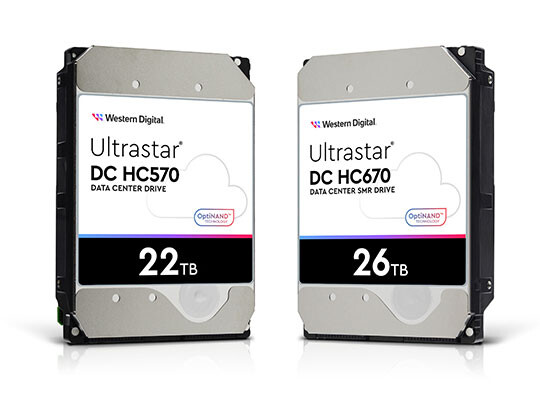
Western Digital UltraSMR HDDs now Available with 22TB CMR and 26TB UltraSMR

Building on significant technology innovations cultivated over decades, Western Digital today announced that it is sampling its new industry-leading 22 TB and 26 TB UltraSMR HDDs to select hyperscale cloud customers, further expanding its areal density leadership and delivering customer value by driving TCO lower. Western Digital's HDD technology portfolio and areal density leadership puts it at the center of storage innovation. Leveraging its unique OptiNAND technology, energy-assisted PMR (ePMR), triple-stage actuator (TSA), HelioSeal and now UltraSMR technologies, Western Digital is on a clear path to delivering 30+ TB with ePMR.

"As a longstanding partner of the industry's leading cloud providers, we understand their unique requirements in building next-generation cloud infrastructure and invested in several HDD innovations we developed alongside our areal density technology," said Ashley Gorakhpurwalla, EVP and GM, HDD Business Unit, Western Digital. "Our intent with taking this development strategy was not only to address the capacity demands of the world's largest cloud titans but to deliver on a roadmap that would also support the evolving economics of their data centers for decades to come. With ePMR, OptiNAND and now UltraSMR as the foundation of Western Digital's HDD roadmap, our cloud customers can continue rapidly scaling their business by taking advantage of our innovations to lower their storage TCO."

Seagate Launching Mass Market 20 TB PMR HDDs in The Coming Months

Seagate has recently announced during their latest earnings call that they are preparing to launch mass-market 20 TB PMR hard drives in H2 2021. Seagate already has several business-focused 20 TB HAMR drives which are available in limited quantities to select partners. These new 20 TB PMR drives will feature two-dimensional magnetic recording and are already sampling with customers. Seagate is also working on SMR 20 TB drives for Hyperscale systems with specialized software. Seagate hopes this growing lineup of 20 TB drives will help them address specific customer needs.
Seagate CEO, Dave MosleyWe expect to begin shipping 20 terabyte PMR drives in the second half of this calendar year.

Seagate: 20 TB HAMR Drives Arrive in December, 50 TB Capacities in 2026

In its latest earnings call, Seagate, a manufacturer of high-capacity drives, has revealed several interesting points about its upcoming releases of next-generation hard drives. More specifically, the company has disclosed a shift to a new generation of HDDs based on so-called heat-assisted magnetic recording (HAMR) technology. This technology is set to bring many improvements compared to the one currently used by Seagate's rivals like Western Digital. The rivaling company uses energy-assisted perpendicular magnetic recording (ePMR) and microwave-assisted (MAMR) technologies and it already has a 20 TB drive in the offering. Seagate announced that they will unveil a 20 TB HDD in December this year, with the use of HAMR technology, which will bring many improvements like better speed and more efficient disk read/write.

"We remain on track to ship 20-TB HAMR drives starting in December, which is an important milestone, as we believe HAMR technology will be the industry's path to scaling a real density and increasing drive capacities," said Dave Mosley, CEO of Seagate. "Seagate will be the first to ship this crucial technology with a path to deliver 50-TB HAMR drives forecast in 2026."

Seagate's Roadmap Shows How We Can Expect 100 TB HDDs in 2025

Do you know what's better than a 10 TB HDD? A 100 TB HDD. Seagate has published a product roadmap showing the evolution of their HDDs in the next few years. According to that roadmap, we'll be able to buy a 100 TB hard drive in 2025. Other makers such as Western Digital talked about 40 TB drives in 2025 thanks to MAMR (Microwave Assisted Magnetic Recording) technology, but it seems Seagate is even more optimistic, and in fact they'll use HDMR (Heated Dot Magnetic Recording), an evolution of the HAMR (Heat Assisted Magnetic Recording) technology.

Seagate expects to have 20 TB HAMR-HDDs by 2020, and from that moment on they'll continue to work on this technology to launch 36 TB HDDs by 2022, 48 TB drives before 2024 and that 100 TB units in 2025. HAMR will enable double areal density growth each 2.5 years according to Seagate. The current PMR (Perpendicular Magnetic Recording) technology could disappear in that future, and it seems HDDs will continue to be a valuable asset for those who look for the cheapest price per GB.

Toshiba to Enable 14 TB, PMR HDDs as Soon as 2018

Toshiba has announced they will begin commercializing HDDs based on Showa Denko K.K.'s (SDK) 9th generation perpendicular magnetic recording (PMR) platter technology. This latest technology brings about improved storage areal densities in both the 2.5" and 3.5" platters, increasing storage capacities without having to resort to Shingled Magnetic Recording 8SMR), which typically reduces performance. The increased areal density of the new generation technology enables 1 TB 2.5" platters and up to 1.8 TB 3.5" platters, opening the door for PMR HDDs with up to 14 TB capacity sometime in 2018.

The first Toshiba drive to make use of this technology is aimed at ultra-portable laptops that require lots of storage space: the MQ04ABF Series features 5,400 RPM spindle speeds, 1TB of data storage capacity in an ultra-compact 2.5-inch 7.0 mm height form factor. This news is particularly interesting for enterprise-class solutions, however. Today's top-of-the-range enterprise-class 3.5" HDDs can store up to 12 TB of data (14 TB solutions have to make use of SMR). These 12 TB HDDs are based on 8x 8th generation PMR platters featuring ~1.5 TB capacities. With the arrival of the 9th gen PMR platters in 2018, hard drive makers will be able to increase capacities of 8x platter models to 14 TB, while designs with 7x platters can go up to 12 TB.

Toshiba Announces Availability of the 8 TB, 7200 RPM TX 300 HDD for $260

Toshiba has announced immediate availability of their new 8 TB solution for you storage-mongers out there. The TX 300 brings an 8 TB, 7200 RPM HDD to an interesting $260 price-point. Yes, we know everyone would love to have that amount of storage even in a good, old SATA III SSD for about the same price - but now is not the time to daydream. For the foreseeable future, the best option for cheap storage in such quantities lies with our old and (somewhat) trusty platter-based storage tech.

Storage options are available at 4 TB, 5 TB, 6 TB and 8 TB with 128 MB cache. These drives feature perpendicular magnetic recording (PMR), which allows for higher areal density than traditional (now seldom used) longitudinal recording. Additional security and reliability features have been baked in on these particular models - the motors are attached to both the top and bottom of the unit and there is an increased attention to shock and vibration dampening. These drives are available now, and the 8 TB option will set you back the aforementioned $260. I'll save you from whipping up the old calculator, because at this storage capacity and pricing, price per GB stands at a mere $0.0318.
Return to Keyword Browsing
Nov 12th, 2026 10:48 PST change timezone

New Forum Posts

Popular Reviews

TPU on YouTube

Controversial News Posts